Article

Brittleness Evaluation Method and Brittle–Plastic Transition Law of Deep Shale Based on Energy Evolution

1
College of Geosciences, China University of Petroleum (Beijing), Beijing 102249, China
2
Sichuan Shale Gas Exploration and Development Co., Ltd., Neijiang 641000, China
3
Institute of Geomechanics, Chinese Academy of Geological Sciences, Beijing 100081, China
4
Shale Gas Research Institute, Southwest Oil & Gas Field Company, PetroChina Co., Ltd., Chengdu 610051, China
5
School of Ocean Sciences, China University of Geosciences, Beijing 100083, China
*
Authors to whom correspondence should be addressed.
Minerals 2026, 16(3), 291; https://doi.org/10.3390/min16030291
Submission received: 24 January 2026 / Revised: 18 February 2026 / Accepted: 3 March 2026 / Published: 10 March 2026
(This article belongs to the Special Issue Element Enrichment and Gas Accumulation in Black Rock Series)

Abstract

In order to accurately evaluate the brittleness and plasticity during hydraulic fracturing of deep shale reservoirs, this study constructs a brittleness evaluation index for deep shales based on the energy evolution features from the complete stress–strain curve. Both the pre- and post-peak elastic energy ratios and the stress drop effect were considered in this index. The brittle–plastic deformation characteristics was fundamentally reflected during rock failure. Due to further comparison between the brittleness index and sample fracture patterns with corresponding stress–strain curves, a quantitative evaluation model (0–1 scale) for deep shale brittleness–plasticity deformation was built. Using this model, the brittle–plastic transition patterns of different shale facies are investigated, creating a three-parameter diagram of the brittleness index, clay mineral content, and depth. The results show that siliceous and carbonate shales undergo a brittle–plastic transition at approximately 4500–5000 m depth, while mixed shales transition at around 3500 m.

1. Introduction

The brittleness of rocks refers to the property of sudden rupture without significant deformation when subjected to stress, which is accompanied by a significant strength drop and light inelastic deformation. On the contrary, plastic rocks usually undergo significant inelastic deformation before failure [1]. Rock mechanics experiments have shown that rocks often transition from brittleness to plasticity with increasing burial depth [2,3]. The brittle–plastic transition has a significant impact on the hydrocarbon accumulation [4], fracture [5], porosity and permeability of shale, sealing ability of cap formation [6], and hydraulic fracturing. Compared to mid-shallow layers, ultra-deep shale formations exceeding 4500 m exhibit higher temperatures and pressures, along with a greater probability of plastic deformation [7], which severely constrains both hydrocarbon storage capacity and reservoir stimulation techniques. However, the brittleness–plasticity law is complex and does not simply correlate positively with depth. For instance, high-quality deep shale reservoirs have been successfully drilled in the 3500~4500 m interval in the southern Sichuan Basin. At the present stage, deep and ultra-deep shale gas has become the focus of exploration and development, making it particularly crucial to understand the brittle–plastic transition law in deep shale formations.
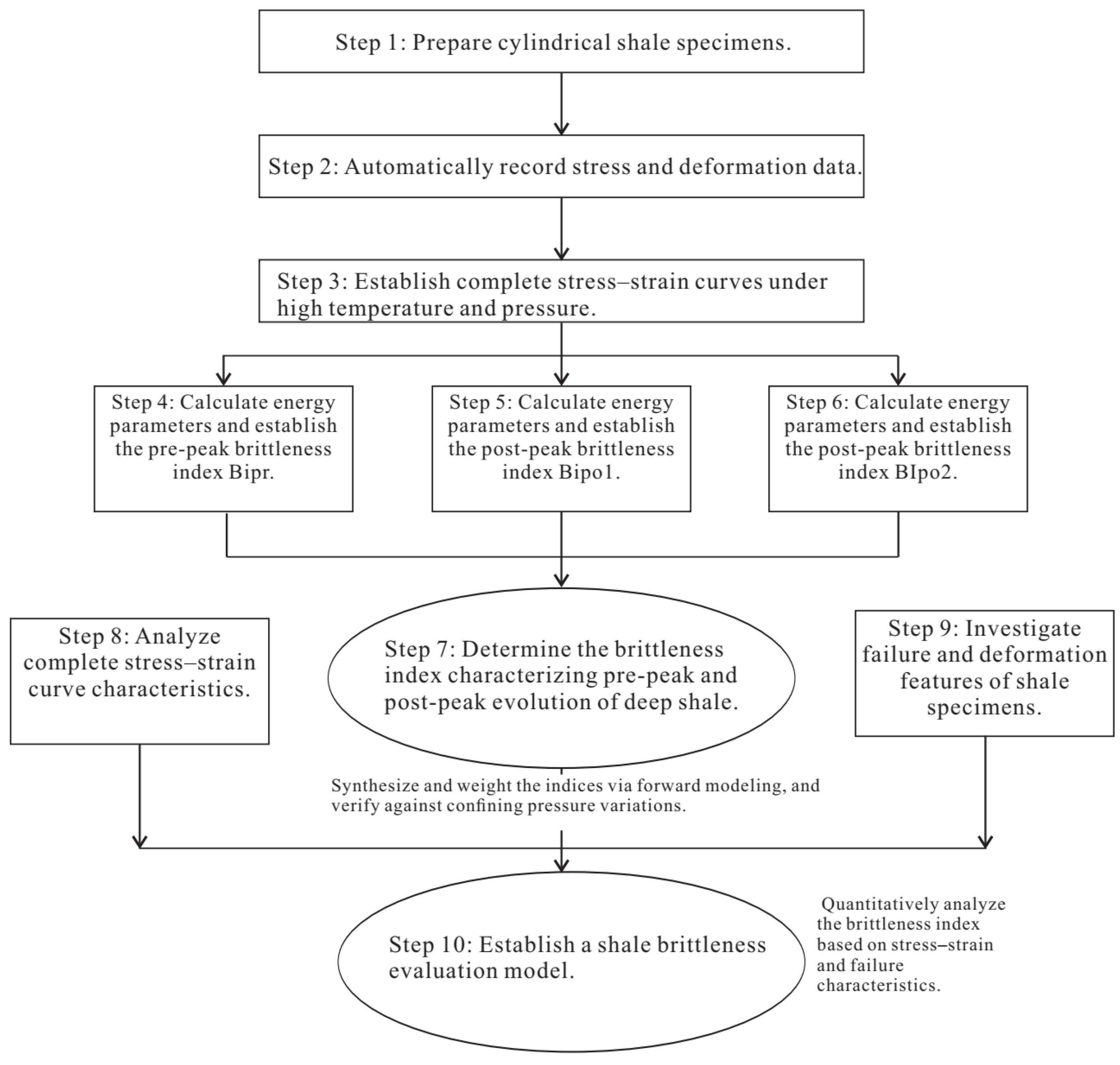
The brittle and plastic properties of rocks are usually quantitatively evaluated using the brittleness index [8,9], whose definition and calculation procedure are shown in Figure 1. The brittleness index is mainly calculated based on two methods, the mineral composition method and rock mechanics test method, whose calculation formulas are shown in Table 1.
The mineral composition method calculates the brittleness index by the content ratio of brittle minerals (such as quartz and feldspar) to plastic minerals (such as clay) [17]. This method is conducted from the perspective of internal factors but neglects the control of external temperature and pressure changes in rock brittleness. The basic principle of the rock mechanics test method is that there is a significant stress drop as the rock fractures during the brittle and brittle–plastic stages [18,19]. The brittleness index is constructed by rock mechanics parameters such as compressive strength, elastic modulus, Poisson’s ratio, and residual strength through uniaxial compression or triaxial compression tests [20,21]. Such methods are simple to operate, but the mechanical parameters involved often vary significantly in magnitude and are difficult to handle. Most critically, it neglects the rock failure process and limits themselves to single-factor, static evaluations of rock brittleness.
Currently, many scholars study the brittleness index of rocks from an energy perspective. Hucka [12] studied rock brittleness in terms of energy, defining the ratio of elastic energy at failure to the total energy at the peak point as an evaluation indicator. Considering the influence of plastic deformation before rock failure on the brittleness expression, Munoz [13] defined the brittleness index as the ratio of the additional energy required post-peak to the consumed elastic strain energy. However, when two stress–strain curves share the same elastic modulus and post-peak drop modulus [22], this index fails to effectively distinguish the brittle deformation characteristics of rocks. The reason lies in the fact that neither of these two brittleness indices accounts for the post-peak deformation stage of rocks. Hou Zhenkun [14] calculated the brittleness index based on the releasable elastic strain energy and the absorbed energy during the post-peak stage. Tarasov [15] analyzed the applicability of various brittleness indicators for rocks under triaxial compression, suggesting that post-peak instability during compression can be regarded as a manifestation of rock brittleness and accordingly established brittleness indicators from an energy perspective. Although both approaches consider the post-peak fracture energy, they neglected the pre-peak failure energy. Additionally, some experts [23] proposed a brittleness index capable of describing the entire failure process of rocks, ranging from fully plastic to completely brittle behavior. However, this index still fails to effectively distinguish the brittleness of rocks when applied to stress–strain curves [24] with different magnitudes of post-peak stress drop.
In summary, the establishment of a brittleness index is a relatively complex process of function construction. Existing brittleness indices fail to fully characterize rock brittleness, primarily because they often neglect certain aspects of energy evolution or have limited applicability. To address this, this study takes deep shale samples from three regions—the Luzhou area, western Chongqing area, and Changning area in the southeastern Sichuan Basin—as examples. Triaxial compression tests were conducted under in situ high-temperature and high-pressure conditions to obtain stress–strain curves of the samples. First, pre-peak and post-peak brittleness indices were established based on the distribution of energy evolution during the failure process. Then, a comprehensive brittleness evaluation index for the entire process was synthesized by integrating the pre-peak and post-peak indices using a parameter-forward modeling method. This approach provides insights into the brittle–plastic transition mechanisms of deep shale.

2. Experiment and Process

The samples in this study were collected from marine shale in the Luzhou area, western Chongqing area, and Changning area. Structurally, these regions are located within the Southern Sichuan Low-steep Structural Belt, the Southwestern Sichuan Low-steep Structural Belt, the Central Sichuan Gentle Structural Belt, and the Loushan Fold Belt [25]. The target interval, from the Wufeng Formation to the Longmaxi Formation, is a significant shale gas-producing layer in southern China. During the deposition period, this area was influenced by both the global-scale Caledonian orogeny and extensive marine transgression, leading to the development of large-scale shelf deposits extending outward from the Leshan–Longnüsi Uplift. The lithology primarily consists of dark or black fine-grained mud shale occurring in thin layers or massive forms, exhibiting rich diversity in chemical composition, mineralogy, paleontology, texture, and sedimentary structures. These characteristics make it an ideal target for studying the brittleness of deep shale [26].
Core samples were collected from wells in the study area, including L220, L221, L211, Z205, Z207, N233, N209, N201, Y203, etc., totaling 59 sets of samples. In terms of depth, the samples have been collected from 2473.8 m (Well N201) to 4933.54 m (Well L211), covering the critical interval for current deep shale exploration. From the perspective of mineral composition: the samples cover three subtypes of shale, mixed, siliceous, and carbonate-rich, with clay content ranging from 9.1% to 47.2%; quartz and feldspar content ranging from 24.1% to 69.5%; and carbonate mineral content ranging from 4.9% to 54.0%. The breadth, depth, and lithological diversity of the sampling ensure the representativeness of the experimental results. Field coring during well drilling uses a hollow coring bit to break the bottom-hole rock annularly, with the cylindrical core retained inside the core barrel and isolated from drilling fluids. The sample processing involved cutting and polishing in accordance with the International Society for Rock Mechanics (ISRM) standards [27], machining the specimens into standard cylindrical samples with a diameter of 25 mm and a length of 50 mm. To avoid the influence of water on cores, a water-free wire cutting method was employed during sample preparation. Both ends of the cylindrical samples were ground into two parallel planes perpendicular to the sample axis, with non-parallelism controlled to less than 0.02 mm, resulting in standard cores of Φ25 × 50 mm suitable for rock mechanics testing. Among these, triaxial compression tests under varying temperature and pressure conditions were conducted using standard cores cut along parallel bedding (0°). This processing standard is implemented to control the effects of anisotropy, replicate the in situ stress conditions of the formation, ensure the comparability and standardization of test results, and provide a control reference for anisotropy investigations.
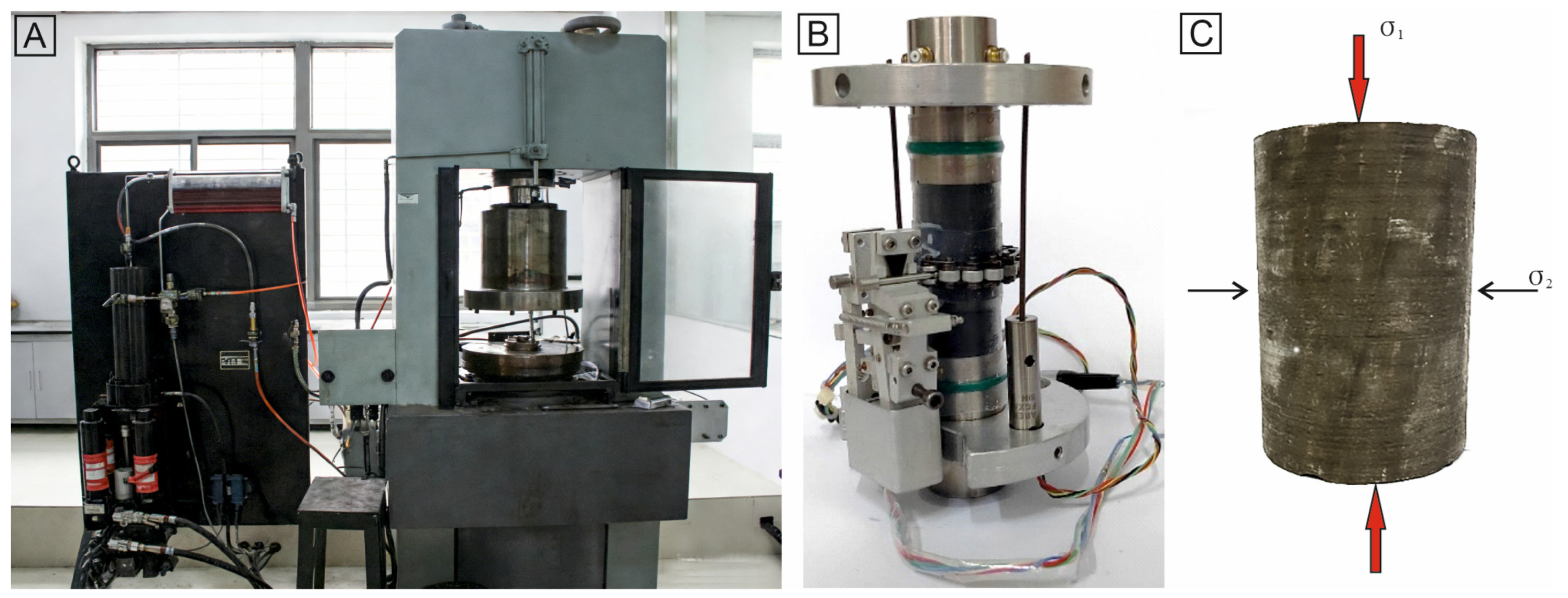
The test was conducted on an MTS 815 Flex Test GT programmable servo rock mechanics test system manufactured by MTS Systems Corporation (Eden Prairie, MN, USA), and the control software used was MTS Flex Test GT (Series 793, Version 5.0B) developed by MTS Systems Corporation (Eden Prairie, MN, USA). (Figure 2). It is equipped with a fully automated servo-controlled triaxial pressure application and measurement system. The system consists of the following components: Loading Part: composed of a hydraulic power source, uniaxial loading frame, triaxial chamber, actuator, servo-valve, intensifier, etc. Testing Part: consists of various sensors for load, pressure, displacement, strain, etc. Control Part: includes feedback control systems, data acquisition units, computers, and related control hardware and software. Program Control Part: comprises the Test Assistant, static testing software, multifunctional testing software, function generator control, etc. Performance Specifications: maximum vertical load capacity: 4600 kN; vertical piston stroke: 100 mm; maximum confining pressure: 140 MPa; strain rate adaptation range: 10−2 to 10−7 1/s, fatigue frequency: 0.001 to 0.5 Hz; overall stiffness of the testing: 11.0 × 10⁹ N/m [28].
The testing system features smooth loading and high precision in measurement and control. It employs a low loading rate of 0.06 mm/min, has a temperature control accuracy of ±0.2 °C, and supports a maximum sampling frequency of 1000 Hz.
During the experiment, the acoustic signal excitation system is first activated, followed by the acoustic signal acquisition system and the experimental loading system. The test temperature of the sample is increased from room temperature (25 °C) to the set temperature value, and the acoustic signals are recorded. Subsequently, the confining pressure is increased from 0 MPa to the set confining pressure value, and the acoustic signals are recorded. Finally, the compression test is conducted, during which acoustic signals are recorded at intervals of 20 MPa axial pressure until the test concludes. All testing processes and data are controlled and collected by a computer, avoiding misreading and errors associated with manual readings. Subsequent processing such as filtering and smoothing is performed in accordance with standard procedures.
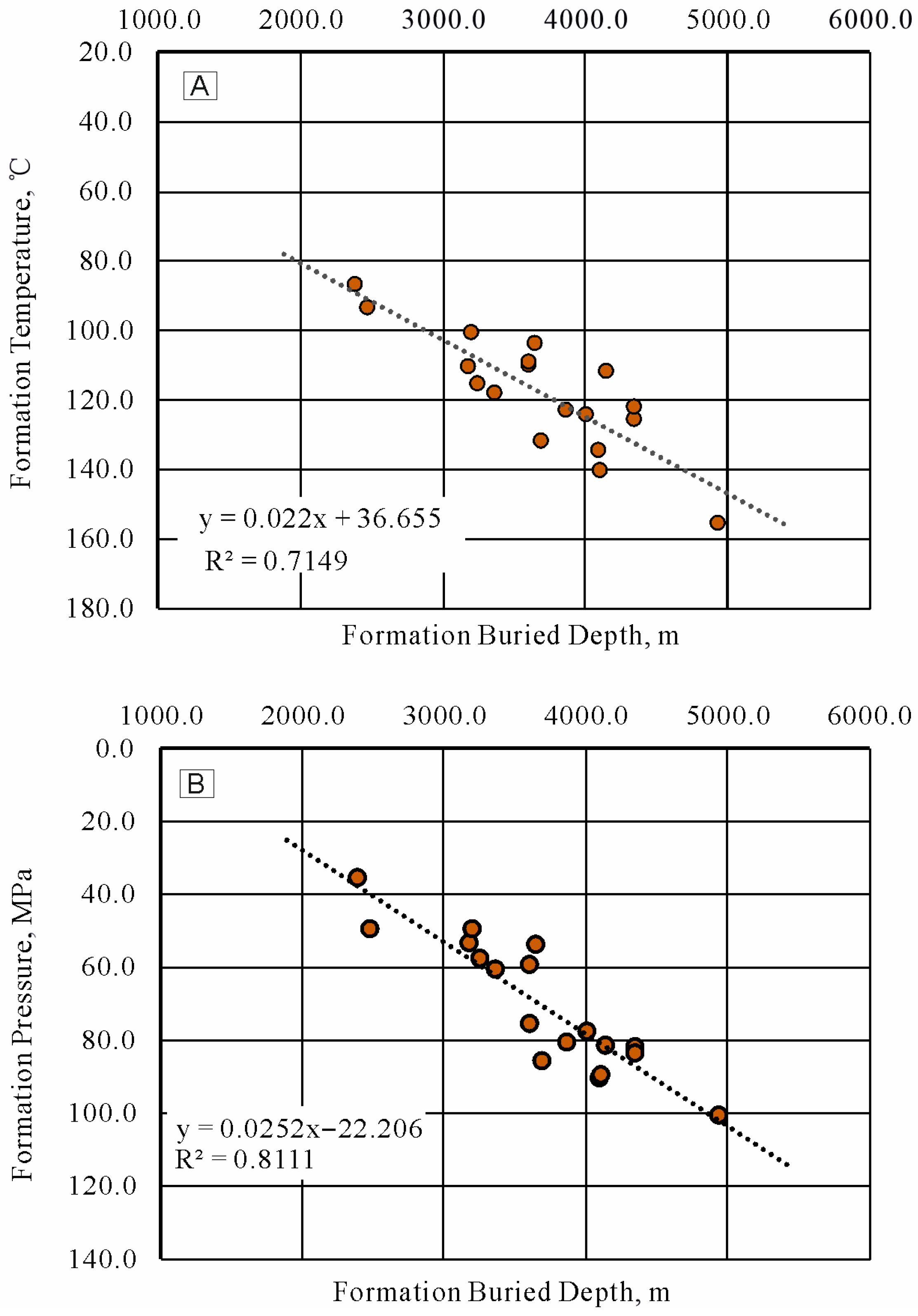
To simulate the rock mechanical properties of deep shale under varying temperature and pressure conditions at different burial depths, the variations in formation temperature and pressure with depth in the target formation (Wufeng Formation–Longmaxi Formation) were analyzed (Figure 3); the results show that the geothermal gradient in the study area is 2.2–2.7 °C/100 m and the formation pressure gradient is 1.8–2.5 MPa/100 m. Based on this analysis, multiple sets of temperature–pressure conditions were designed, with confining pressures ranging from 0 MPa to 120 MPa and temperatures from 25 °C to 160 °C, corresponding to simulated burial depths of 0 m to 5000 m.

3. A Brittleness Evaluation Method for Deep Shale Based on Energy Evolution

3.1. Division of Failure Stages and Energy Evolution Process in Deep Shale

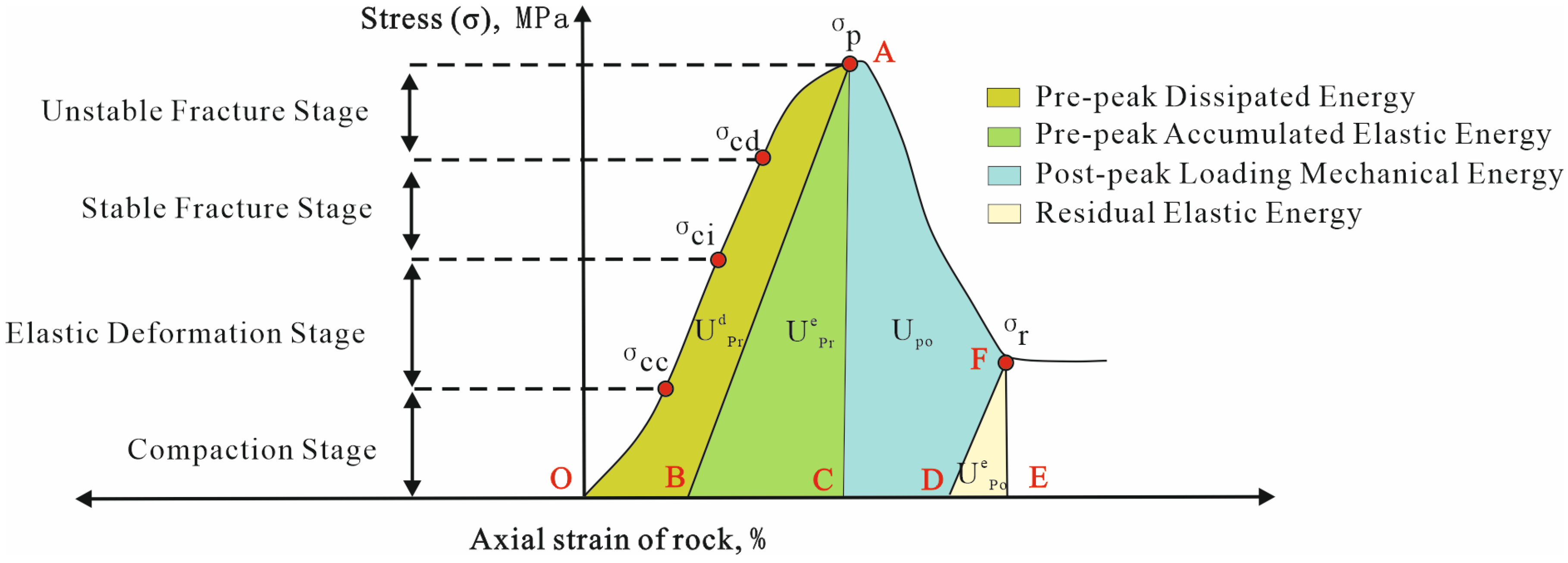
Based on the triaxial compression test curve of shale, the deformation and failure process of shale under load can be broadly divided into five stages: the compaction stage, the stable crack development stage, the unstable crack development stage, and the post-peak failure stage. During the compaction stage, primary fissures within the rock sample gradually close, and the compressive deformation exhibits nonlinear characteristics, resulting in a gently concave stress–strain curve. After compaction, the rock mass transitions from a discontinuous medium to a quasi-continuous medium and enters the elastic deformation stage, the duration of which depends primarily on the hardness of the rock. Beyond the elastic limit (yield strength σci), the rock sample enters the plastic deformation stage, where microcracks begin to form and develop with increasing stress difference; however, crack progression halts if the stress remains constant. Yield strength is accurately determined using the inflection point method of the stress–strain curve (the transition from concave to convex) combined with acoustic emission (AE) monitoring. AE signals are quiescent in the elastic stage. Upon yielding, microcracks initiate and the slope of the cumulative AE count curve increases sharply, corresponding to the yield strength point. When the stress reaches the long-term strength σcd, the specimen enters an unstable fracture propagation stage. Due to significant stress concentration, fractures develop progressively even under constant stress. Since long-term strength is usually obtained from creep tests, which are not performed herein, it is identified with the aid of AE characteristics: the AE event rate remains low and stable, and the long-term strength corresponds to the point where AE energy accumulates and signals become active. The upper stress of the unstable fracture stage is defined as the peak strength σp, corresponding to the apex of the stress–strain curve with the most intense AE activity. In the post-peak stage, internal microfractures evolve into through-going failure planes. The strength drops rapidly while deformation continues until the specimen fails completely into separated blocks, and the corresponding strength is termed the residual strength σr. For brittle rocks, the stress–strain curve drops abruptly to a stable low value after the peak, representing the residual strength. For ductile rocks, the curve declines gently to a plateau after the peak, with AE signals maintained at a minimum level.
The deformation and failure process of rocks involves energy input, storage, accumulation, and dissipation. During the pre-peak stress–strain stage, part of the mechanical energy input by external loads is dissipated through internal damage and plastic deformation of the sample, while the other part is stored in the sample as elastic energy. In the post-peak failure stage of shale, the elastic energy is accumulated before the peak is released. However, the stored elastic strain energy is typically insufficient to sustain crack propagation. Therefore, continuous work from external loads is required to overcome internal cohesion and friction forces to fully break the sample, ultimately leading to energy dissipation. For this Type I failure mode, the slope of the stress–strain curve in the post-peak stage is negative (Figure 4).

3.2. To Construct a Brittleness Evaluation Index for Deep Shale

In summary, before stress reaches the peak value, rocks primarily store energy, while after the peak, they predominantly release energy. In the pre-peak stage, a smaller degree of plastic yielding deformation corresponds to a higher proportion of stored elastic energy, resulting in more intense rock failure and a faster loss of load-bearing capacity, which indicates a higher level of rock brittleness. Conversely, in the post-peak stage, a higher proportion and faster release of elastic energy suggest a stronger self-sustaining ability of the sample to maintain fracturing, reflecting greater rock brittleness. Therefore, based on the principles of energy evolution distribution during rock fracturing, the brittle characteristics of rocks during the failure process can be effectively captured, thereby enabling the construction of a brittleness index.
During the loading process of the triaxial compression test in shale, σ2 = σ3, the energy input U of the sample, the mechanical energy of the external load, and the accumulated elastic strain energy [29] Ue can be calculated using Equations (1) and (2), respectively.
U = 0 ε 1 σ 1 d ε 1 + 2 0 ε 3 σ 3 d ε 3
U e = 1 2 E [ σ 1 2   + 2 σ 3 2 2 μ ( 2 σ 1 σ 3 + σ 3 2 ) ]
In the equation, U is mechanical energy from external loading; Ue is the accumulated elastic strain energy; σ1 and σ3 are the main stresses; ε1 and ε3 are the strains in the main stress direction, respectively; and E and μ are the elastic modulus and Poisson’s ratio in the later stage of the elastic stage.
From Equations (1) and (2), the pre-peak mechanical energy UPr and accumulated elastic energy U P r e in the stress–strain curve can be calculated (Figure 2). Using the proportion of elastic energy, a pre-peak brittleness evaluation index BIpr is constructed (Equation (3)) which is positively correlated with rock brittleness and ranges in value from 0 to 1:
BI pr   =   U P r e U P r
BIpr is the pre-peak brittleness evaluation index; Upr is the pre-peak mechanical energy in the stress–strain curve; and U P r e is the accumulated elastic energy.
Furthermore, by calculating the post-peak loading mechanical energy UPo and the residual elastic energy U P o e from the stress–strain curve (Figure 4), a post-peak brittleness evaluation index BIpo1 is established based on the proportion of elastic energy consumed during the sample’s post-peak failure process (Equation (4)). The value of this index ranges from 0 to 1, where a higher value indicates greater brittleness.
BI p o 1   = U P r e U P o e U P r e + U P o U P o e
BIpo1 is the post-peak brittleness evaluation index; U P r e is the accumulated elastic energy; U P o e is the residual elastic energy; and U P o is the post-peak loading mechanical energy.
An energy drop coefficient D is introduced (Equation (5)) to evaluate the energy release rate during post-peak rock failure. The higher the value of D, the larger the post-peak mechanical energy input UPo, indicating that the rock can absorb more energy during the failure process. This results in reduced elastic energy release efficiency and more pronounced plastic failure behavior. Conversely, a lower D value reflects more brittle characteristics. The range of D is (0,+∞), where a value of 0 represents an ideally brittle state, and a value of +∞ corresponds to a fully plastic state. After normalization, the corresponding brittleness index is defined as BIpo2 (Equation (6)), which ranges from 0 to 1.
D = U P o U P r e U P o e
BIpo2 = exp(-D)
In Equation (5), D is the energy drop coefficient; U P r e is the accumulated elastic energy; U P o e is the residual elastic energy; and U P o is the post-peak loading mechanical energy. In Equation (6), BIpo2 is the corresponding brittleness index after normalization.
Based on the analysis of pre- and post-peak energy evolution distribution in the rock stress–strain curve, three brittleness indices have been established. Each reflects rock brittleness from a different perspective, and all three indices range between 0 and 1, exhibiting a positive correlation with brittleness—meaning that higher values indicate stronger shale brittleness. To precisely quantify the key characteristics of brittle failure discussed above, a new energy-based brittleness index BI [30] is developed using a weighted synthesis method. Within this framework, the brittleness index is defined as follows (Equation (7)):
BI = αBIpr + βBIpo1 + γBIpo2
In the equation, α + β + γ = 1. BI is the new brittleness index based on energy parameters. BIpo1 is the post-peak brittleness evaluation index. BIpo2 is the corresponding brittleness index after normalization.
Therefore, BI can quantitatively describe the brittle–plastic characteristics of shale during the failure process on a scale of 0–1. In the process of establishing the new brittleness index, both pre- and post-peak energy distributions should be considered. BI is a more suitable parameter for evaluating rock brittleness.

3.3. Verification of Brittleness Evaluation Index

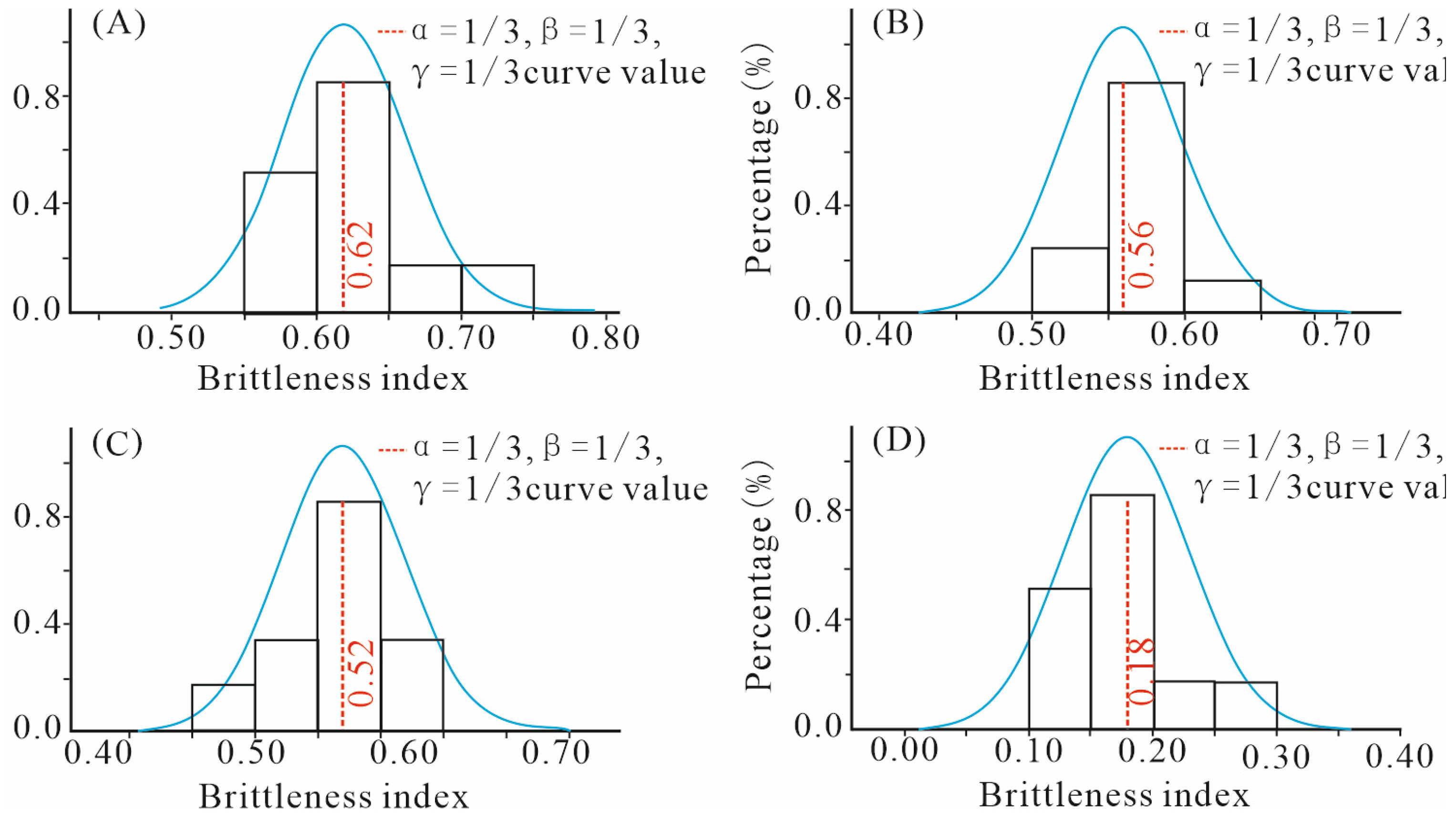
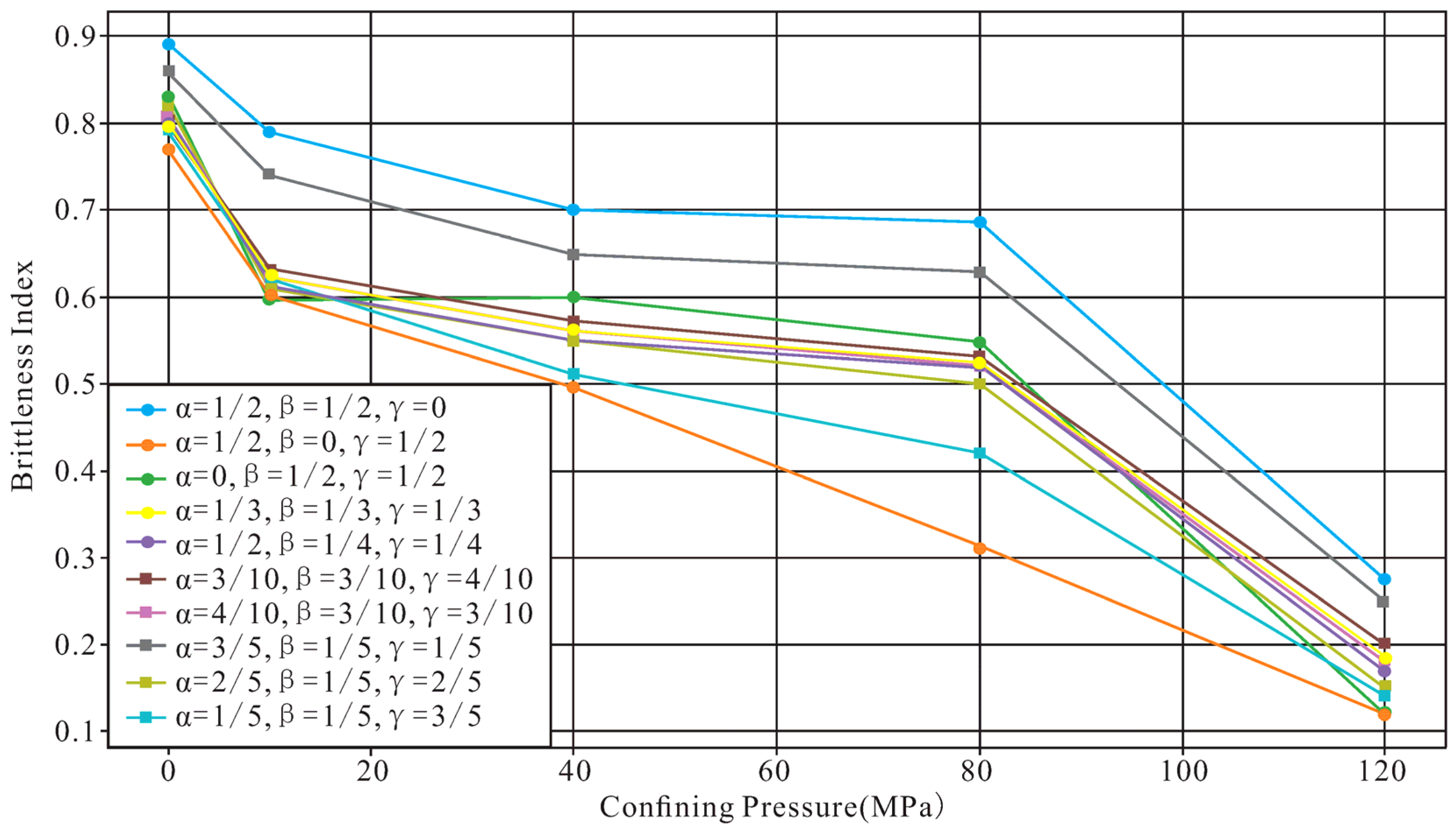
There is a clear correlation between the line graph of the comprehensive brittleness index and confining pressure constructed based on the energy evolution distribution. The brittleness index shows a significant decrease with increasing confining pressure (Figure 5), which is consistent with the results of previous experiments. The weight of the three brittleness indicators should be considered first when using the comprehensive brittleness index BI to characterize the brittleness of deep shale. Through forward modeling, inputting parameters, and assigning weights α, β, and γ, we found that the brittle index calculated under the same confining pressure varies within a narrow range (−0.2~0.2). In the case of uneven weight distribution, the calculated brittle index will deviate from the data center and be relatively scattered. Under the condition of weight averaging, the data distribution is concentrated (Figure 6).
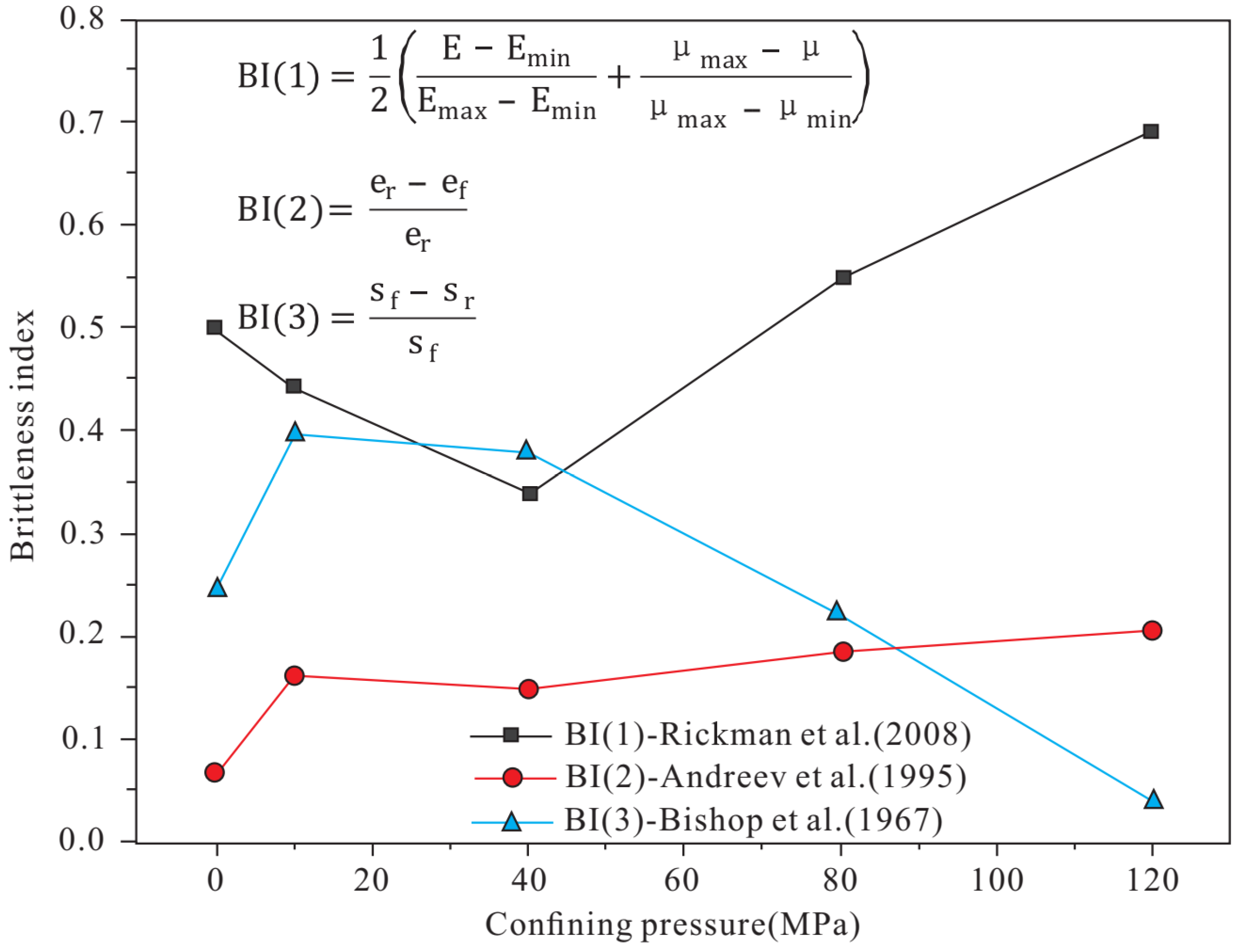
The statistical results of the brittleness index calculated under different confining pressures indicate that the data clusters around the brittleness index values obtained when the weighting coefficients α, β, and γ are all set to 1/3, with a high distribution frequency. Therefore, we conclude that when each brittleness indicator is assigned an equal weight of 1/3, the calculated comprehensive brittleness index provides a better characterization of the brittleness of deep shale. By comparing the brittleness index obtained through this method with classical brittleness indices based on parameters such as Young’s modulus and Poisson’s ratio [31], we observe that with increasing confining pressure, the shale brittleness index calculated by our method decreases, showing a clear weakening trend in brittleness, whereas the classical brittleness index exhibits a weak correlation with confining pressure (Figure 7).

3.4. Establish a Brittleness Evaluation Model for Deep Shale

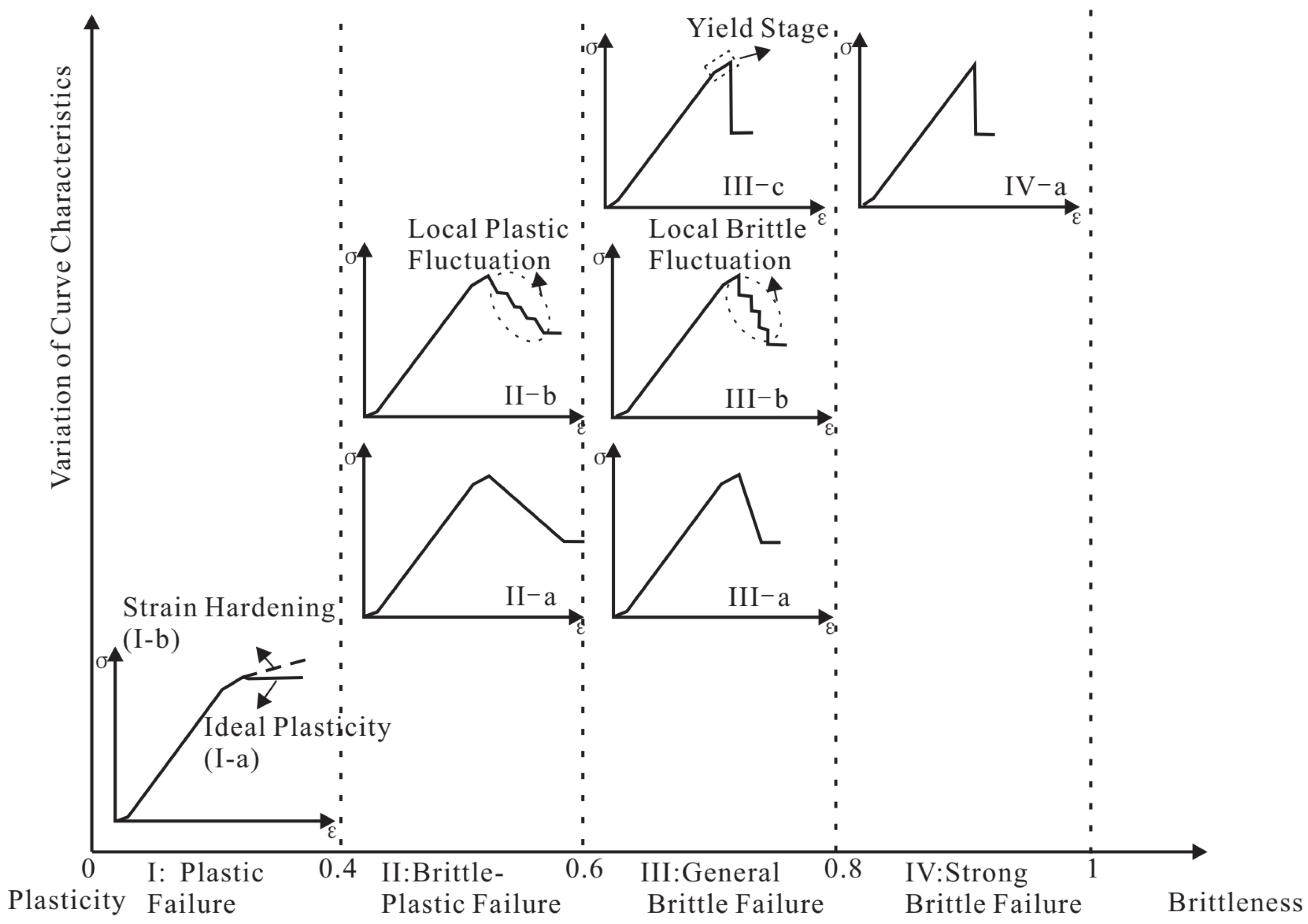
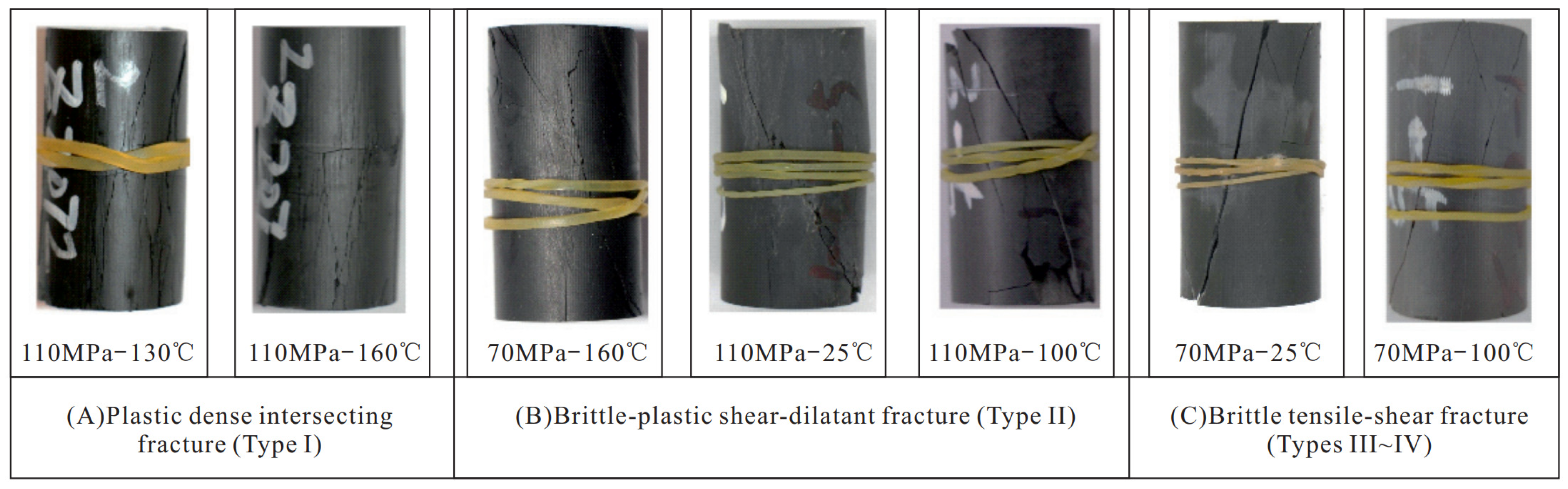
The brittleness index increases on a scale of 0 to 1, indicating a transition of shale from plasticity to brittleness. However, to specifically describe how the brittleness index values characterize its brittle properties, it is necessary to establish a quantitative evaluation model for the brittle–plastic characteristics of deep shale. For this purpose, in this study based on over 100 sets of high-temperature and high-pressure shale mechanical experiments, the stress–strain curve results are classified into four major categories and eight subcategories of curve types (Figure 8), and the corresponding brittleness indices are calculated. The four major categories correspond to the degree of brittle failure in shale. Category I represents plastic (ductile) failure characteristics, with the rock samples subjected to high temperature and high pressure conditions (110 MPa, 160 °C). The post-peak strain curve exhibits a gentle slope, and the brittleness index (BI) ranges from 0 to 0.4. Microfractures are densely developed and interlaced, and significant lateral expansion is observed (Figure 9A). Category II represents brittle–plastic transition failure characteristics. The rock samples were tested under transitional temperature and pressure conditions (70 MPa, 160 °C or 110 MPa, 25 °C). The post-peak strain curve exhibits a broad and gentle slope, with a brittleness index (BI) ranging from 0.4 to 0.6. The failure is characterized by connected intermittent shear fractures, and relatively evident lateral expansion is observed (Figure 9B). Category III represents the general brittle failure characteristics of shale. The rock samples were tested under low-temperature and low-pressure conditions (70 MPa, 25 °C). The post-peak strain curve shows a relatively steep slope, with a brittleness index (BI) ranging from 0.6 to 0.8. The failure is characterized by the development of through-going shear fractures and tensile fractures (Figure 9C); Category IV represents strong brittle failure characteristics of shale. The post-peak strain curve is nearly vertical, with a brittleness index (BI) ranging from 0.8 to 1. Through-going fractures are well-developed, while lateral expansion characteristics are weak (Figure 9C). The article establishes a quantitative evaluation model for the brittle–plastic deformation characteristics of deep shale on a 0–1 scale, based on the four curve types. The reliability of the model is validated by comparing the fracture patterns of the samples with the corresponding brittleness indices and stress–strain curves.

4. Depth Law on Brittle–Plastic Transition

4.1. Brittle–Plastic Transition Characteristics of Shale Under In Situ and Different Temperature and Pressure Conditions

Deep or ultra-deep shale exhibits distinct mechanical properties compared to shallow shale due to its greater burial depth, high in situ stress, and high temperature. Therefore, high-temperature and high-pressure triaxial compression experiments simulating the mechanical environment of deep shale reservoirs were conducted to reveal the mechanical behavior and brittleness characteristics of ultra-deep high-temperature shale, and to determine the brittle–plastic transition point of ultra-deep shale. This study utilized the MTS815.04 rock mechanics testing system to conduct complete stress–strain curve tests on downhole shale under conditions of 160 °C and 120 MPa confining pressure, based on the characteristics of deep reservoir environments and in accordance with the “International Society for Rock Mechanics and Rock Engineering (ISRM) testing standards”. This approach effectively simulates the mechanical environment of ultra-deep shale formations.

4.1.1. Effects of Confining Pressure on the Brittle–Plastic Deformation Characteristics of Shale

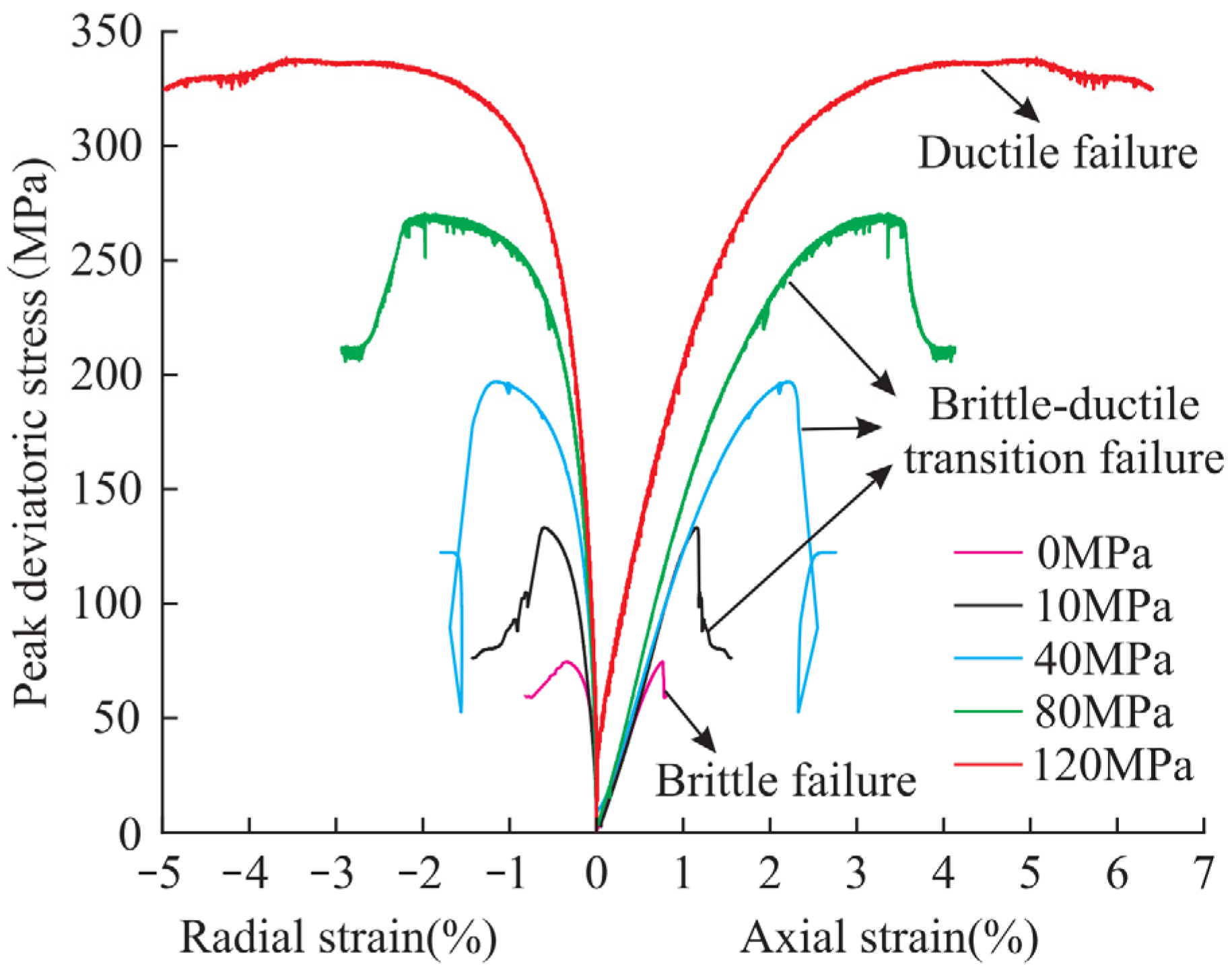
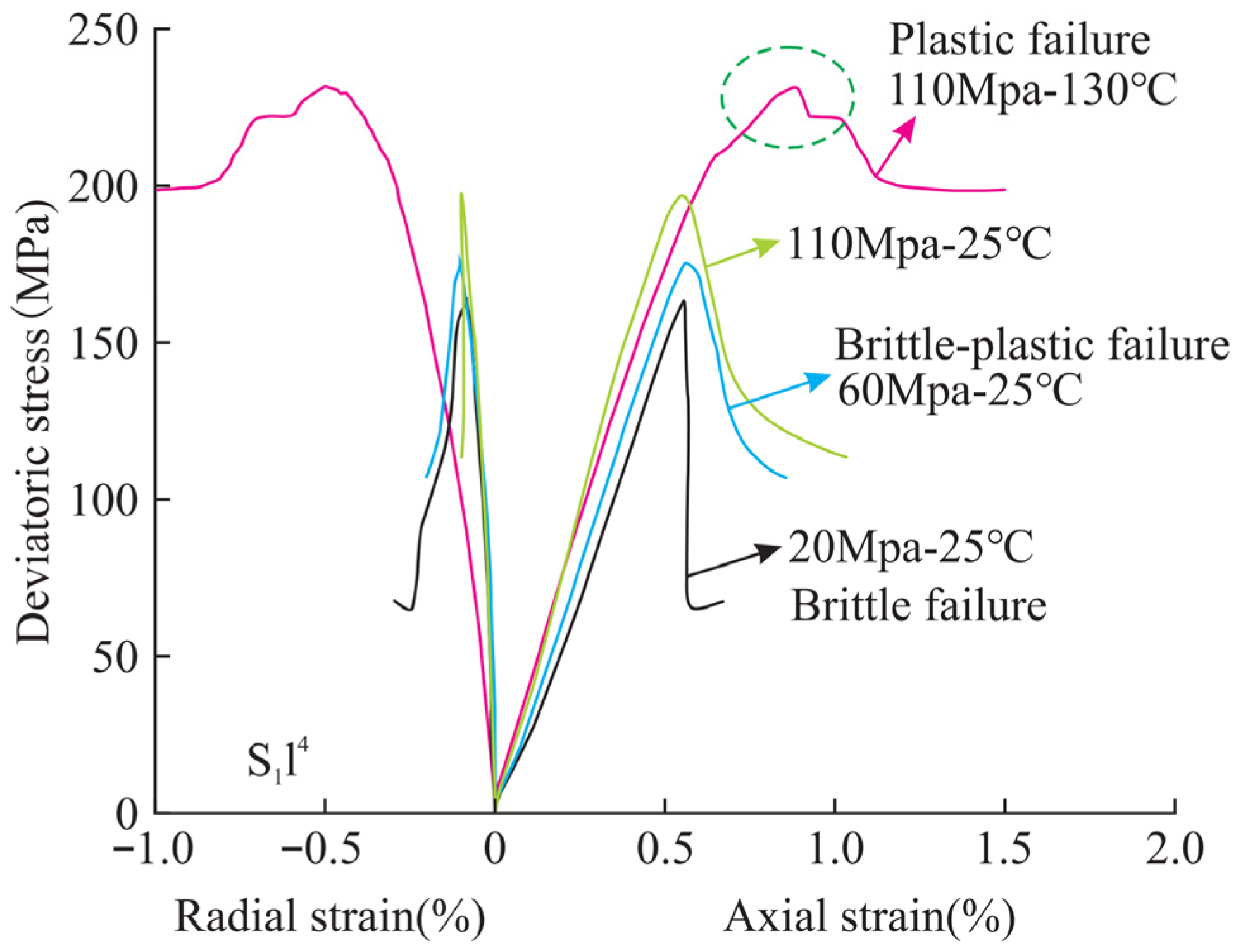
In accordance with the stress environment of rocks at different depths, this study investigates the influence of confining pressure on the mechanical properties of rocks under identical temperature and depth conditions, and reveals the effects of varying the initial stress on rock mechanical characteristics and brittle–plastic transition behavior. First, as shown by the experimental results of outcrop shale from the Wufeng–Longmaxi Formation in southern Sichuan (Figure 10): with increasing confining pressure, the peak strength and elastic modulus of shale both increase, which may seem to indicate enhanced brittleness. However, the failure patterns reveal that shale exhibits brittle failure under relatively low confining pressure (below 40 MPa), brittle–plastic transitional failure under medium confining pressure (40–50 MPa), and typical plastic failure characteristics under high confining pressure (above 100 MPa). Further simulation failure experiments were conducted on downhole samples under in situ and varying confining pressure conditions. The results show that under low-temperature conditions (room temperature), the failure mode of shale transitions from brittle to brittle–plastic as confining pressure increases from low to high, which is consistent with the simulation results from outcrop samples (Figure 11). However, plastic failure was observed under in situ high-temperature and high-pressure conditions (130 °C, 110 MPa). While the peak strength of mechanical parameters still increases with confining pressure, the elastic modulus shows a decreasing trend. This indicates that the mechanical properties of deep shale are complex, and high temperatures (above 100 °C) play a controlling role in the transition of shale from brittle to plastic failure. Therefore, further analysis of shale failure deformation will be conducted under varying temperature conditions, particularly focusing on the effects of high temperatures.

4.1.2. The Influence of Temperature on the Elastic-Plastic Deformation Characteristics of Shale

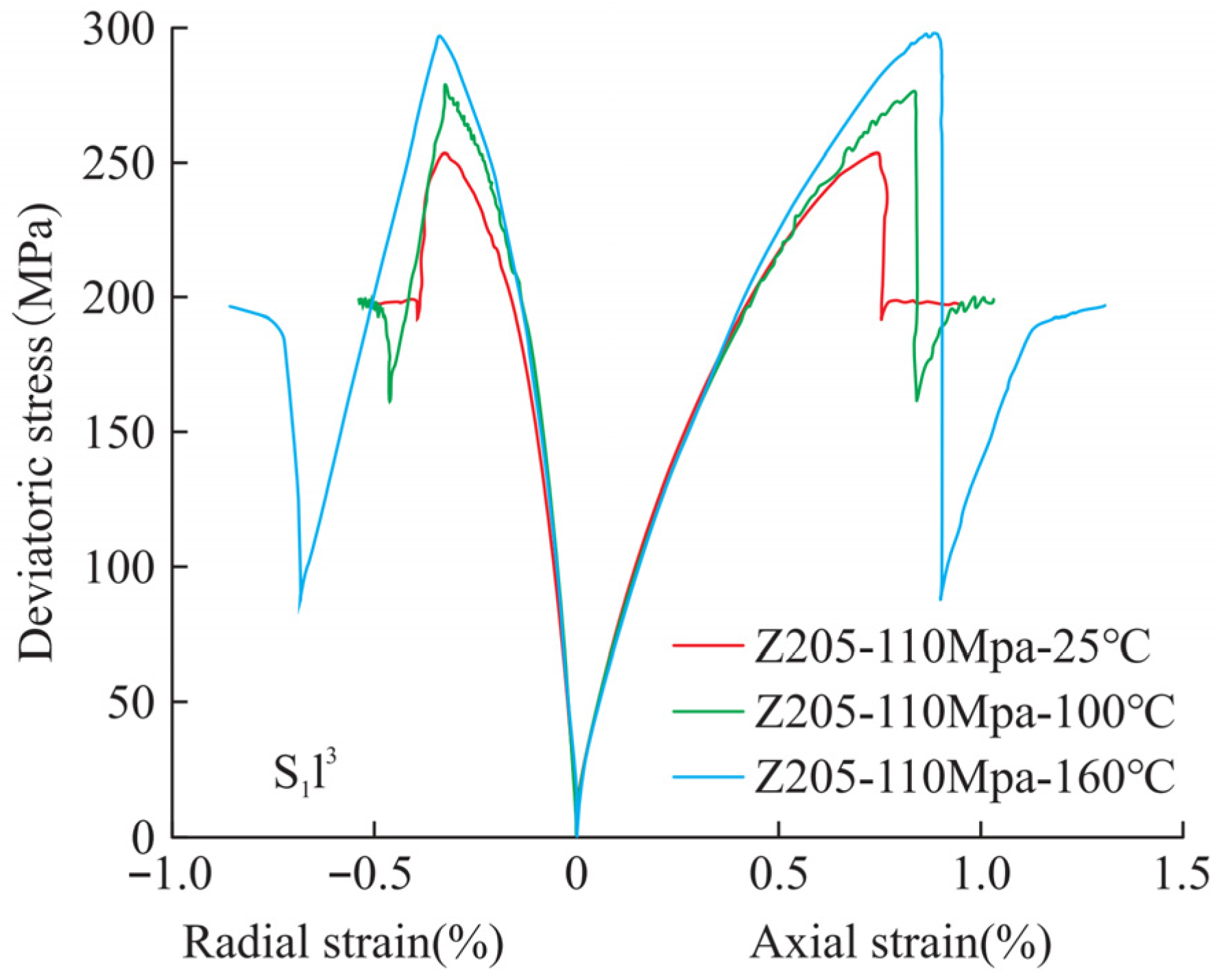
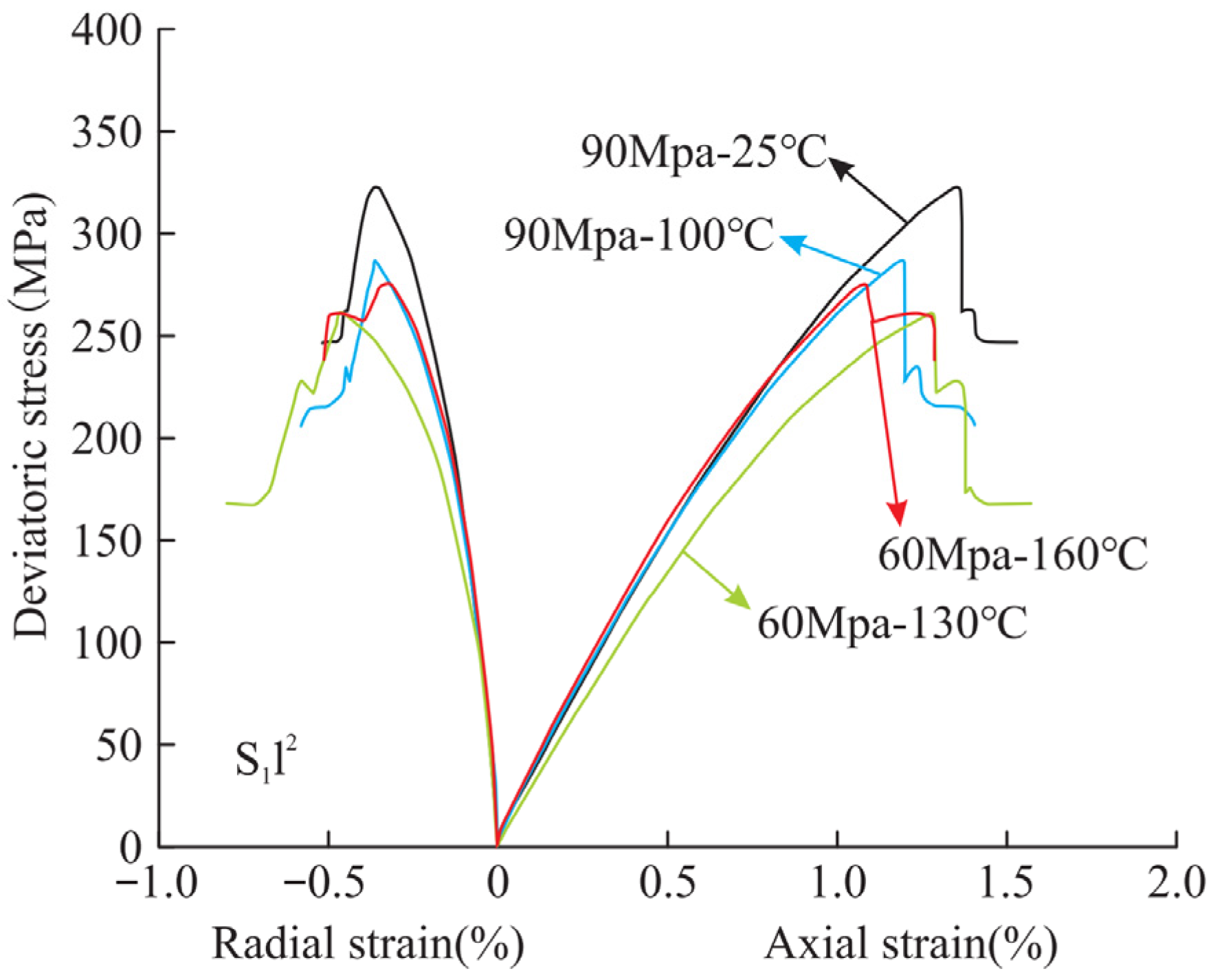
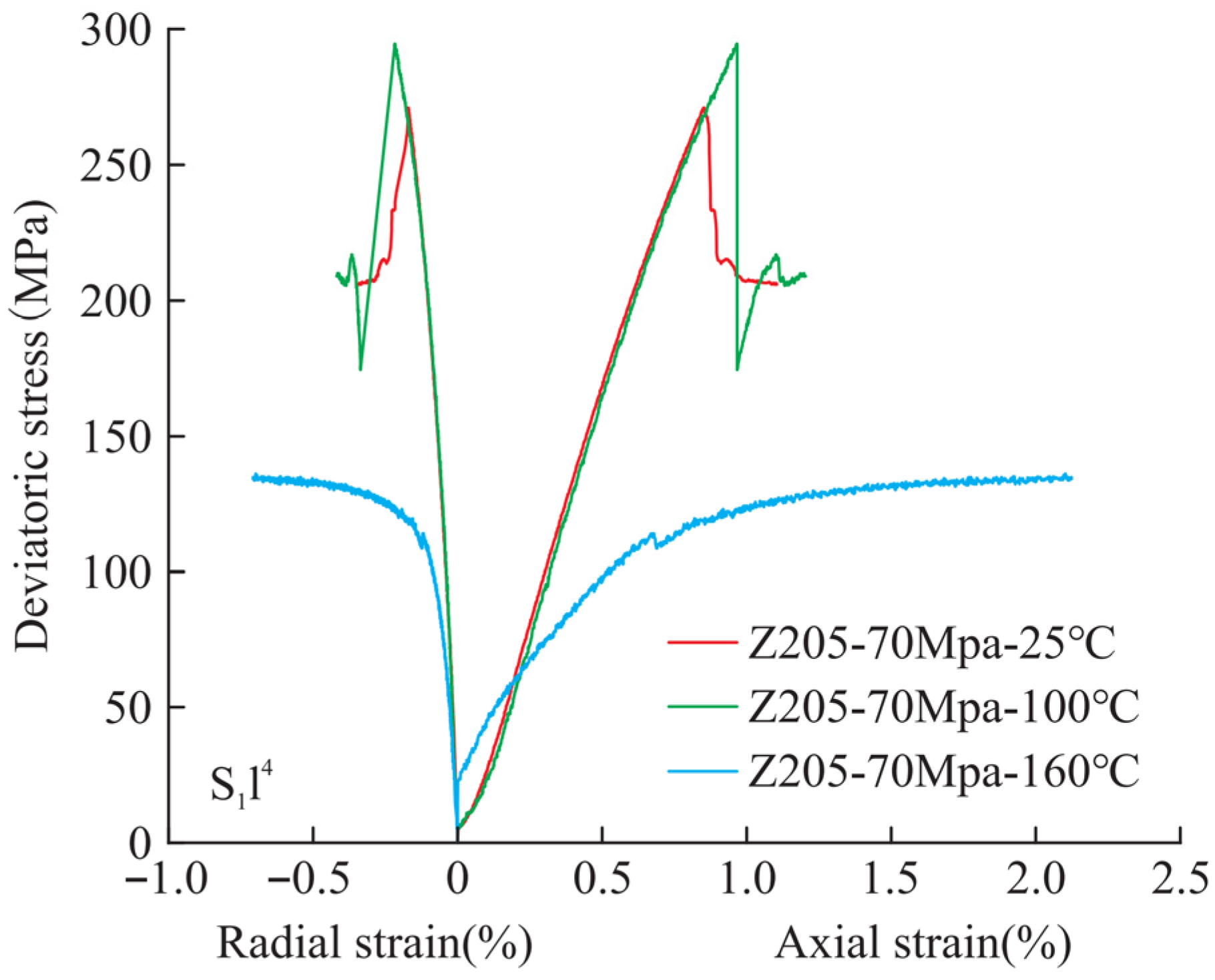
To study the effect of temperature on the stress–strain response of rocks under high confining pressure, this section analyzed the influence of different temperatures on the mechanical and brittle characteristics of shale at two different depths under three confining pressures of 110, 90, and 70 MPa (Figure 10, Figure 11 and Figure 12). At a confining pressure of 110 MPa, both the elastic modulus and peak strength of shale increase with rising temperature, showing brittle failure (Figure 12). At 90 MPa, the shale fails in a brittle manner at low temperature but transitions to ductile deformation at high temperature (Figure 13). At 70 MPa and 160 °C, it displays typical ductile failure (Figure 14). The specimen in Figure 10 is dominated by brittle feldspar-quartz and carbonate minerals, while those in Figure 13 and Figure 14 contain high contents of plastic clay minerals, indicating that deformation of clay-rich samples is more sensitive to high temperature. High confining pressure favors brittle failure of shale, whereas high temperature promotes ductile failure. Both the internal factor (mineral composition) and external factors (temperature and confining pressure) should be integrated in interpreting the brittle–ductile transition of deep shale.

4.2. Analyzing the Brittle–Plastic Transition Patterns of Various Lithofacies Based on the Shale Brittle–Plastic Evaluation Model

This section first classifies lithofacies by analyzing the mineral composition content of shale samples, and then studied the brittle–plastic transition patterns of shale facies based on the quantitative evaluation model for deep shale brittleness–plasticity deformation, aiming to define the depth boundaries for the brittle–plastic transition in deep shale.

4.2.1. Shale Facies Are Classified Based on Mineral Composition Content

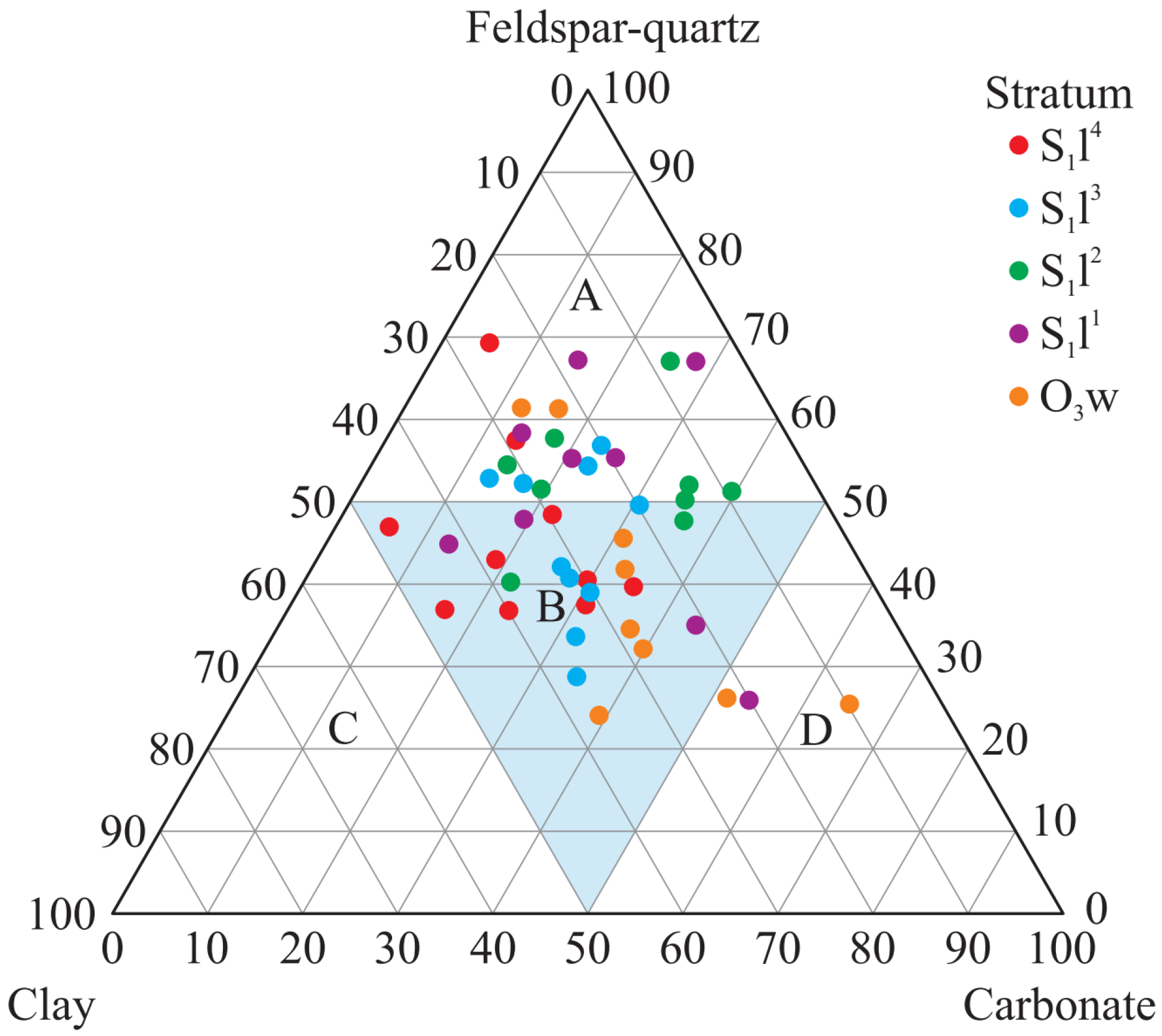
Using a shale facies ternary classification diagram [33], the shale samples collected in this study are categorized into four major types based on the content of feldspar-quartz minerals, carbonate minerals, and clay minerals: A: siliceous shale; B: mixed shale; C: argillaceous shale; D: carbonate-rich shale (Figure 15).
The mixed shale zone in area B can be further subdivided based on the relative content of minerals, such as carbonate-rich siliceous shale and clay-rich siliceous shale. According to the shale facies classification results from 59 rock mechanics samples of eight wells (Figure 15), the study subjects mainly include three types of shale facies: siliceous shale, mixed shale, and carbonate-rich shale.

4.2.2. Study on the Laws Governing Brittle–Plastic Transition in Different Shale Facies

Based on lithofacies classification, the shale facies in the study area can be categorized into two major types from the perspective of brittle mineral content: the first includes siliceous shale, carbonate-rich shale, and carbonate-rich siliceous shale, which are dominated by brittle minerals such as felsic or carbonate minerals; the second is mixed shale characterized by relatively high clay mineral content. In this study, the failure and deformation characteristics of these two major shale facies are analyzed under different temperature and pressure conditions, and the brittleness index is calculated to quantitatively assess their brittleness–plasticity.
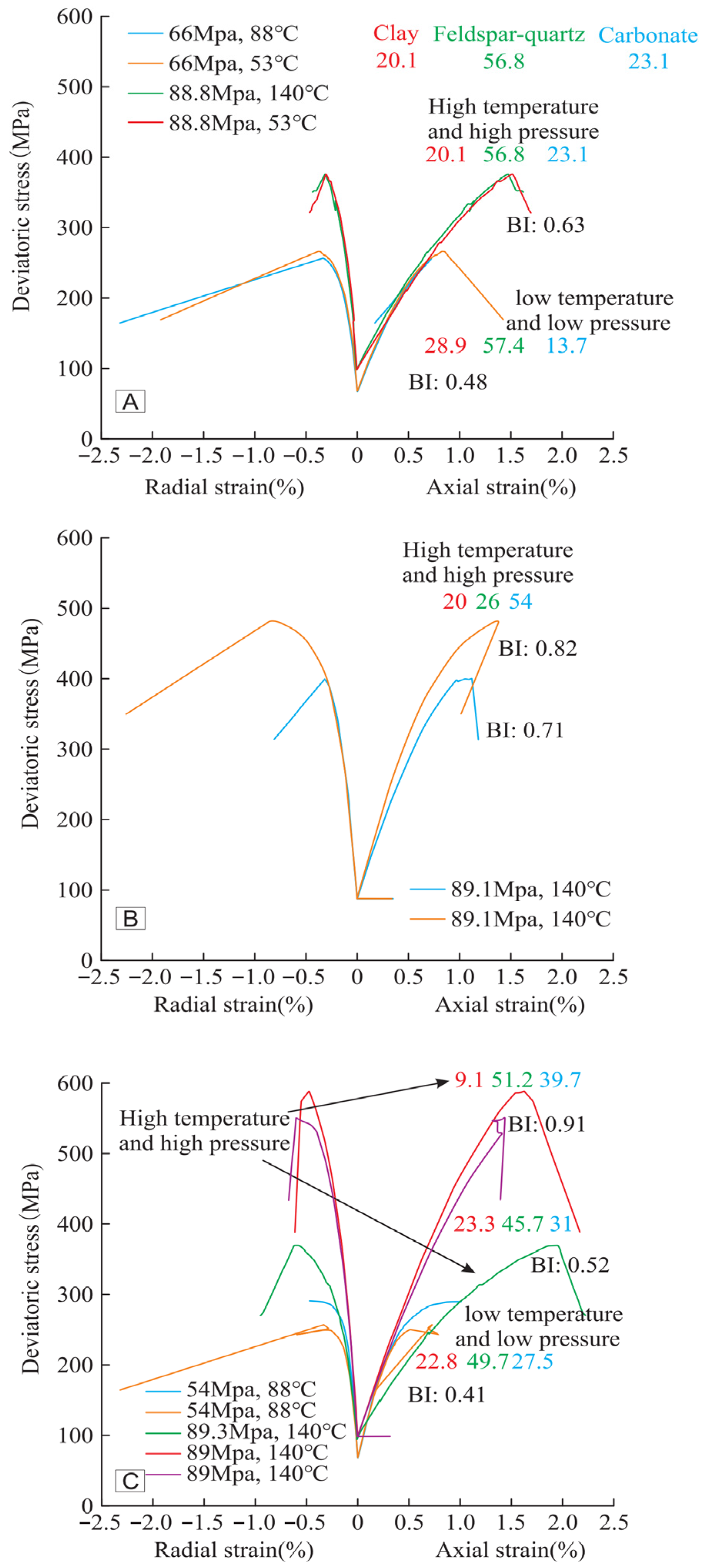
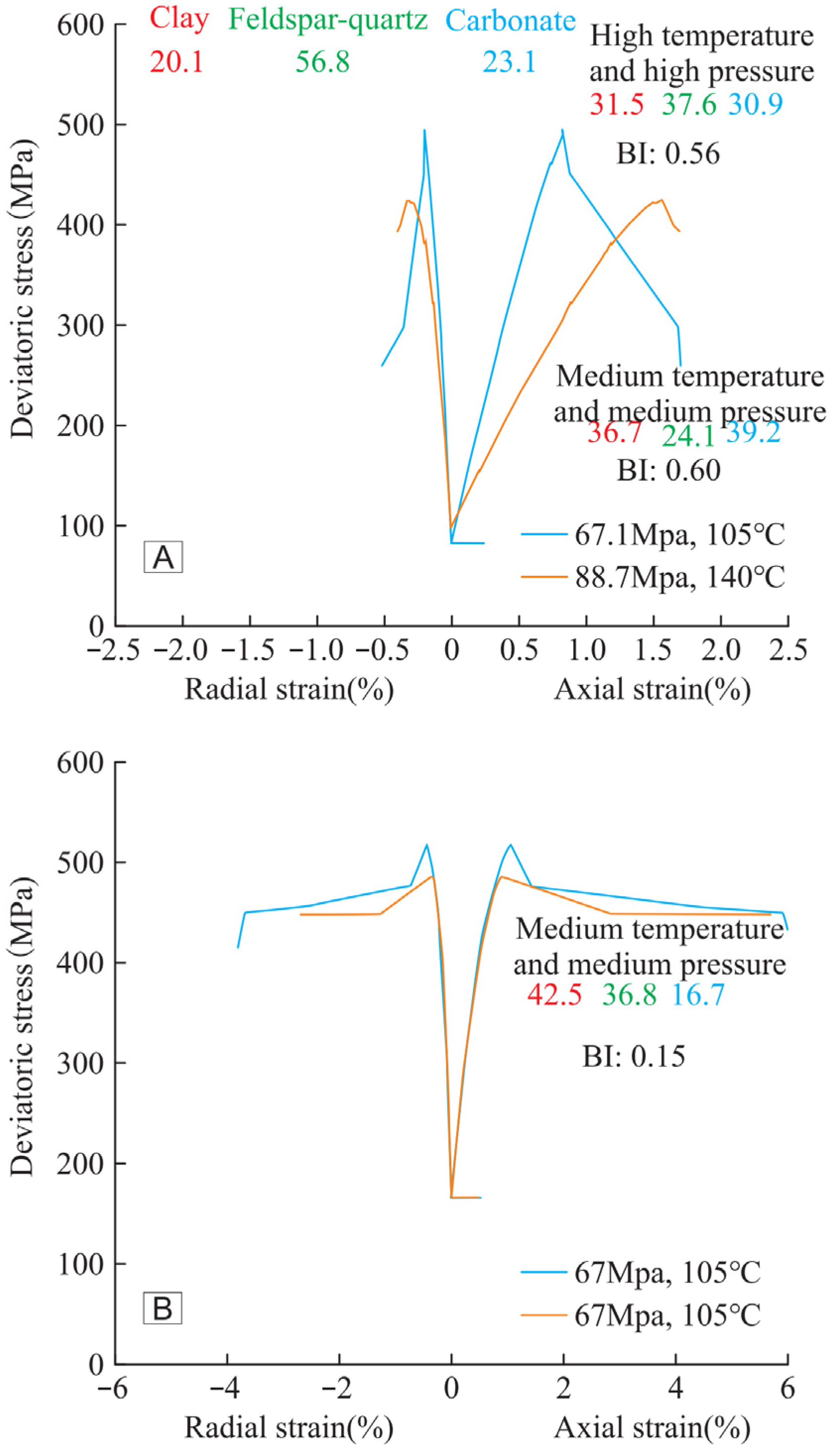
The failure and deformation characteristics of brittle shale facies under different temperature and pressure conditions indicate that the temperature and pressure conditions for the brittle–plastic transition of siliceous and carbonate-rich shales are controlled by clay content, with 20% serving as the threshold. When clay content is below 20% in low-clay shales, they exhibit brittle to highly brittle behavior. This conclusion holds even under high-temperature and -pressure conditions, as shown in Figure 16, where the brittleness index (BI) of carbonate-rich shale reaches 0.82, and that of carbonate-rich siliceous shale reaches 0.91.
This suggests that the brittle–plastic transition for such shale facies may require higher temperature and pressure conditions [35]. In contrast, high-clay shales with clay content exceeding 20% display brittle–plastic transition characteristics. For example, as shown in Figure 16, their BI values range from 0.41 to 0.52, and brittleness decreases under high temperature and pressure.
The failure and deformation characteristics of plastic shale facies under different temperature and pressure conditions (Figure 17) indicate that the clay content of mixed shale facies ranges from 30% to 40%. Under moderate-to-high-temperature and -pressure conditions, their failure and deformation exhibit a brittle–plastic transition and plastic deformation characteristics, with brittleness index (BI) values ranging from 0.15 to 0.60. Additionally, their peak strength is significantly reduced. The above results demonstrate that the relative content of brittle and ductile minerals plays a key role in the sensitivity of shale failure and deformation to temperature and pressure variations [36]. They also reflect that when temperature and confining pressure act together, the mechanical properties of rocks exhibit more complex variations.
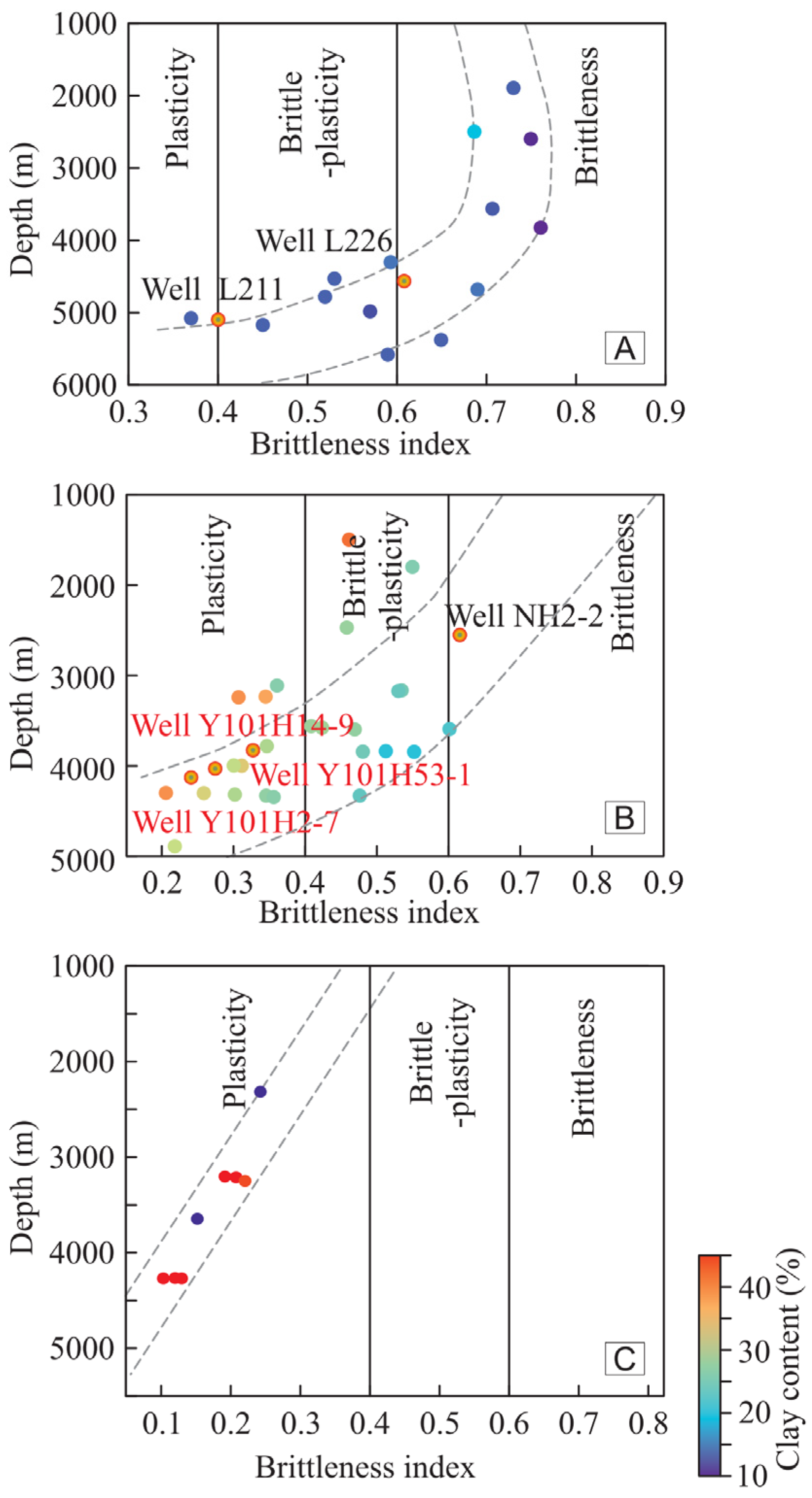
To further clarify the brittle–plastic transition patterns of each shale facies, the vertical variation in brittle–plastic properties with depth was analyzed for each shale facies. The results are shown in Figure 18.
In the study area, the clay content of siliceous and carbonate-rich shales is generally less than 20%. The content of siliceous or carbonate minerals generally exceeds 25%. At the same depth, a leftward shift in data points indicates an increase in clay content and a reduction in brittleness. Statistical results show that above 3500 m, brittleness tends to increase with depth, while below 3500 m, brittleness decreases, with a brittle–plastic transition occurring at approximately 4500–5000 m (Figure 18A); the temperature and pressure conditions of the strata are as follows: 130 °C–150 °C and 90 MPa–105 MPa. As shown in the figure, the shale reservoir in L226 is buried at a depth of 4600 m, with a clay content of 14.3%. It lies within the brittle–plastic deformation zone, with a tested daily production of 521,000 m3 and an estimated ultimate recovery (EUR) of 117 million m3, achieving commercial productivity. In contrast, that of L211 is buried deeper at 4930 m, with a higher clay content of 19.2%. It is located in the plastic deformation zone, with tested micro-gas production that does not meet current commercial development requirements. Therefore, it is reliable for the predicted results regarding the brittle–plastic deformation characteristics of silica- and carbonate-rich deep shale and can be used to guide the development evaluation of deep shale gas.
In the study area, the clay content of mixed shale generally ranges from 20% to 40%, the content of carbonate or siliceous minerals is less than 30%. As burial depth increases, brittleness decreases, and the characteristic of high clay content becomes evident (indicated by a leftward shift in data points). A brittle–plastic transition occurs around 3500 m. The temperature and pressure conditions of the strata are as follows: 110 °C–115 °C and 60 MPa–70 MPa. It is predicted that above 2000 m, mixed shale undergoes brittle failure (Figure 18B). In the figure, Well NH2-2, located in the purely brittle zone at a burial depth of 2502 m and with a clay content of 28.9%, achieves an estimated ultimate recovery (EUR) of 121 million cubic meters, meeting current commercial development requirements. In contrast, three wells in the ductile zone (burial depths of 3820–4110 m, clay content of 34.7%–37.3%) have EURs ranging from 49 to 81 million cubic meters. Even with the application of the latest generation of fracturing technology, effective stimulation and commercial development requirements were not achieved. These findings demonstrate that the above predictions regarding the brittle–plastic deformation characteristics of deep mixed shale are reliable and can be applied to guide the development evaluation of deep shale gas.
In the study area, clay-rich shale generally contains more than 40% clay content and is dominated by plastic deformation and failure. As burial depth increases, the plastic deformation intensifies (Figure 18C), which is unfavorable for the development of deep shale gas.

5. Conclusions

The brittleness evaluation index for deep shale, constructed based on the energy evolution characteristics of the complete stress–strain curve, takes into account the proportion of elastic energy before and after the peak, as well as the stress drop effect. In principle, it comprehensively reflects the brittle–plastic deformation characteristics during rock failure. Validation of the brittleness index through the confining pressure effect reveals that as the confining pressure increases, the brittleness index decreases while ductility enhances. This indicates that the variation in the brittleness index can effectively characterize the brittle–plastic deformation behavior of shale.
By correlating the brittleness index with the failure patterns of samples and their corresponding stress–strain curves, a quantitative evaluation model for the brittle–plastic deformation characteristics of deep shale on a 0–1 scale has been established: a BI value of 0~0.4 corresponds to ductile (or plastic) failure characteristics, a BI value of 0.4~0.6 represents brittle–plastic transition failure characteristics, a BI value of 0.6~0.8 indicates general brittle failure characteristics, and a BI value of 0.8~1 signifies strong brittle failure characteristics.
Triaxial compression experiments under high temperature and pressure on deep shale reveal that under low-temperature conditions, shale failure transitions from brittle to ductile as confining pressure increases from low to high. Under high-temperature conditions, the mineral composition plays a significant controlling role in the brittle–plastic failure and deformation of shale. Samples with high content of ductile clay minerals exhibit strong sensitivity to high temperatures, where increased temperature enhances ductile deformation. In contrast, samples with high content of brittle minerals show weak sensitivity to high temperatures in terms of failure and deformation, primarily displaying brittle or brittle–plastic behavior. Moreover, within the experimental temperature range, an increase in temperature tends to enhance brittle failure, which contradicts empirical observations.
Different shale facies in the study area exhibit distinct depths for the brittle–plastic transition. The established three-parameter chart (brittleness index, clay mineral content, and depth) shows that for siliceous and carbonate-rich shales, brittleness tends to increase with depth above 3500 m. Below 3500 m, brittleness decreases, and a brittle–plastic transition is prone to occur at approximately 4500~5000 m. For mixed shales, a brittle–plastic transition occurs around 3500 m, and it is predicted that brittle failure is likely to occur above 2000 m.

Author Contributions

Conceptualization, C.-L.L. and X.-L.Y.; Data curation, Y.S. and Y.-Z.H.; Writing—original draft, W.-P.L.; Writing—review & editing, B.P.; Supervision, X.-L.Y. All authors have read and agreed to the published version of the manuscript.

Funding

This research was funded by [Deep Earth Probe and Mineral Resources Exploration—National Science and Technology Major Project] grant number [No. 2024ZD1003600] And The APC was funded by [Deep Earth Probe and Mineral Resources Exploration—National Science and Technology Major Project].

Data Availability Statement

The data presented in this study are available on request from the corresponding author.

Conflicts of Interest

Author Wen-Ping Liu was employed by the company Sichuan Shale Gas Exploration and Development Co., Ltd. Authors Yi Song and Yong-Zhi Huang were employed by the company Shale Gas Research Institute, Southwest Oil & Gas Field Company, PetroChina Co., Ltd. The remaining authors declare that the research was conducted in the absence of any commercial or financial relationships that could be construed as a potential conflict of interest.

References

  1. Tan, T.K.; Kang, W.F. Locked in Stresses, Creep and Dilatancy of Rock and Constitutive Equations. Rock Mech. Rock Eng. 1980, 13, 5–22. [Google Scholar] [CrossRef]
  2. Paterson, M.S. Experimental Deformation and Faulting in Wombeyan Marble. Geol. Soc. Am. Bull. 1958, 69, 465–476. [Google Scholar] [CrossRef]
  3. Nygård, R.; Gutierrez, M.; Høeg, K. Brittle–Ductile Transition, Shear Failure and Leakage in Shales and Mudrocks. Mar. Pet. Geol. 2006, 23, 201–222. [Google Scholar] [CrossRef]
  4. Cheng, G.X.; Jiang, B.; Hou, C.L. Experimental Study on Brittle-to-Ductile Transition Mechanism of Lower Silurian Organic-Rich Shale in South China. Int. J. Rock Mech. Min. Sci. 2023, 170, 105543. [Google Scholar] [CrossRef]
  5. Petricca, P.; Carminati, E.; Riguzzi, F. Brittle-Ductile Transition Depth versus Convergence Rate in Shallow Crustal Thrust Faults: Considerations on Seismogenic Volume and Impact on Seismicity. Phys. Earth Planet. Inter. 2018, 284, 72–81. [Google Scholar] [CrossRef]
  6. Chen, J.W.; Li, L.P. Brittle-Ductile Behavior and Caprock Integrity. Energy Procedia 2017, 114, 3132–3139. [Google Scholar] [CrossRef]
  7. Ren, L.; Jiang, H.; Zhao, J.Z.; Lin, R.; Wang, Z. An Evaluation Method of Rock Brittleness for the Ultra-Deep and High-Temperature Shale Based on Energy Evolution. Chin. J. Undergr. Space Eng. 2023, 19, 148–156. [Google Scholar]
  8. Sang, F.J.; Cheng, H.L.; Zhang, X.Y.; Yang, G.; Zhao, J.; Fu, C.; Zhang, C. Study on Brittleness Index of Shale Based on Stress-Strain Curve. J. Henan Polytech. Univ. (Nat. Sci.) 2021, 40, 63–70. [Google Scholar] [CrossRef]
  9. Shu, K.T.; Jia, S.P.; Gao, Y.; Geng, Y.; Ba, J.; Lei, M.; Liu, T.; Xi, Z. An Improved Method to Evaluate Brittleness of Cap Rock Based on Complete Stress-Strain Curve. J. Guangxi Univ. (Nat. Sci. Ed.) 2018, 43, 248–260. [Google Scholar]
  10. Rickman, R.; Mullen, M.; Peter, E.; Grieser, B.; Kundert, D. A Practical Use of Shale Petrophysics for Stimulation Design Optimization: All Shale Plays Are Not Clones of the Barnett Shale. In Proceedings of the SPE Annual Technical Conference and Exhibition, Denver, CO, USA, 21–24 September 2008; pp. 21–24. [Google Scholar] [CrossRef]
  11. Bishop, A.W. Progressive Failure—With Special Reference to the Mechanism Causing It. In Proceedings of the Geotechnical Conference, Oslo, Norway, 19–22 September 1967; pp. 142–150. [Google Scholar]
  12. Hucka, V.; Das, B. Brittleness Determination of Rocks by Different Methods. Int. J. Rock Mech. Min. Sci. Geomech. Abstr. 1974, 11, 389–392. [Google Scholar] [CrossRef]
  13. Munoz, H.; Taheri, A.; Chanda, E.K. Fracture Energy-Based Brittleness Index Development and Brittleness Quantification by Pre-Peak Strength Parameters in Rock Uniaxial Compression. Rock Mech. Rock Eng. 2016, 49, 4587–4606. [Google Scholar] [CrossRef]
  14. Hou, Z.K. Research on Hydraulic Fracturing Tests and Mechanism of Crack Extension of Longmaxi Shale. Ph.D. Thesis, Chongqing University, Chongqing, China, 2018. [Google Scholar]
  15. Tarasov, B.; Potvin, Y. Universal Criteria for Rock Brittleness Estimation under Triaxial Compression. Int. J. Rock Mech. Min. Sci. 2013, 59, 57–69. [Google Scholar] [CrossRef]
  16. Chen, G.Q.; Wu, J.C.; Jiang, W.Z. An Evaluation Method of Rock Brittleness Based on the Whole Process of Elastic Energy Evolution. Chin. J. Rock Mech. Eng. 2020, 39, 901–911. [Google Scholar] [CrossRef]
  17. Wen, T. Effects of Rock Mineral Composition on Rock Mechanical Properties. Ph.D. Thesis, Northeast Petroleum University, Daqing, China, 2020. [Google Scholar]
  18. Wu, T.; Fu, X.F.; Wang, H.X. Brittle-Ductile Deformation Characteristics of Anhydrite-Salt Rock and Quantitative Evaluation of Its Sealing Ability. Geol. Rev. 2016, 62, 127–135. [Google Scholar]
  19. Goetze, C. High Temperature Rheology of Westerly Granite. J. Geophys. Res. 1971, 76, 1223–1230. [Google Scholar] [CrossRef]
  20. Yuan, Y.S.; Liu, J.X.; Zhou, Y. Brittle-Ductile Transition Zone of Shale and Its Implications in Shale Gas Exploration. Oil Gas Geol. 2018, 5, 899–906. [Google Scholar] [CrossRef]
  21. Liu, J.C.; Li, X.; Wu, B.B. True-Triaxial Strength and Failure Characteristics of Sandstone within Brittle-Ductile Domain: An Experimental and Theoretical Study. Eng. Fract. Mech. 2025, 324, 111–135. [Google Scholar] [CrossRef]
  22. Tao, W.; Tang, H.M.; Wang, Y.K. Brittleness Evaluation Based on the Energy Evolution Throughout the Failure Process of Rocks. J. Pet. Sci. Eng. 2020, 195, 107898. [Google Scholar] [CrossRef]
  23. Ai, C.; Zhang, J.; Li, Y.W.; Zeng, J.; Yang, X.; Wang, J. Estimation Criteria for Rock Brittleness Based on Energy Analysis during the Rupturing Process. Rock Mech. Rock Eng. 2016, 49, 4681–4698. [Google Scholar] [CrossRef]
  24. Li, L.C.; Zhai, M.Y.; Zhang, L.Y.; Zhang, Z.L.; Huang, B.; Li, A.S.; Zuo, J.Q.; Zhang, Q.S. Brittleness Evaluation of Glutenite Based on Energy Balance and Damage Evolution. Energies 2019, 12, 3421. [Google Scholar] [CrossRef]
  25. Mi, X.D.; Zhang, S.; Zhang, X.; Liu, J.; Jin, J.; Cheng, W.; Jiang, W.; Zhang, G.; Chen, Z.; Zoback, M.D. Lithology-Controlled Stress Variations of Longmaxi Shale—Example of an Appraisal Wellbore in the Changning Area. Rock Mech. Bull. 2022, 1, 100002. [Google Scholar] [CrossRef]
  26. Tan, J.Q.; Shen, B.J.; Wu, H.C.; Wang, Y.H.; Ma, X.Y.; Ma, X.; Liu, W.H. Characteristics of Lamination in Deep Marine Shale and Its Influence on Mechanical Properties: A Case Study on the Wufeng-Longmaxi Formation in Sichuan Basin. Minerals 2024, 14, 1249. [Google Scholar] [CrossRef]
  27. Ulusay, R. (Ed.) The ISRM Suggested Methods for Rock Characterization, Testing and Monitoring: 2007–2014; Springer: Cham, Switzerland, 2014. [Google Scholar] [CrossRef]
  28. Qiu, G.Z.; Chang, X.; Li, J.; Guo, Y.T.; Wang, L.; Ma, H.L.; Guo, W.H.; Bi, Z.H. Study on Rock Brittleness Characteristics of Deep Volcanic Reservoir under Different Confining Pressures. J. Pet. Explor. Prod. Technol. 2023, 14, 453–476. [Google Scholar] [CrossRef]
  29. Zhang, K.; Wang, W.; Cao, Y.J.; Duan, X.L.; Zheng, Z.; Zhu, Q.Z. Experimental Investigations of the Rock Brittleness Evaluation Under Different Loading Conditions. Rock Mech. Rock Eng. 2024, 58, 1473–1502. [Google Scholar] [CrossRef]
  30. Zhao, G.K.; Guo, Y.T.; Yang, C.H.; Wang, L.; Guo, W.H.; Yang, H.Z.; Wu, X.L.; Liu, H.J. Anisotropic Mechanical Behavior of Ultra-Deep Shale under High In-Situ Stress, a Case Study in the Luzhou Block of the Southern Sichuan Basin, China. Int. J. Rock Mech. Min. Sci. 2023, 170, 105536. [Google Scholar] [CrossRef]
  31. Guo, Y.; Wang, D.P.; Han, X.Y.; Zhang, K.X.; Shang, X.F.; Zhou, S. Evaluation of Fracturability of Shale Reservoirs in the Longmaxi Formation in Southern Sichuan Basin. Front. Earth Sci. 2022, 10, 993829. [Google Scholar] [CrossRef]
  32. Andreev, G.E. Brittle Failure of Rock Materials: Test Results and Constitutive Models; A.A. Balkema: Rotterdam, The Netherlands, 1995. [Google Scholar]
  33. Li, P.Y.; Yu, J.L.; Xie, M.; Lu, D.; Li, G.Q.; Chen, X.; Sun, D.Q.; Deng, Y.H. Lithofacies Identification and Gas-Bearing Potential Evaluation of Shallow Shale Gas in China: A Case Study of the Wufeng-Longmaxi Formations, Northern Guizhou. Minerals 2026, 16, 203. [Google Scholar] [CrossRef]
  34. Diaz, H.G.; Miller, C.; Lewis, R.; Fuentes, C. Evaluating the Impact of Mineralogy on Reservoir Quality and Completion Quality of Organic Shale Plays. In Proceedings of the AAPG Rocky Mountain Section Meeting, Salt Lake City, UT, USA, 22–24 September 2013. [Google Scholar]
  35. Zhang, X.; Li, Y.; Wang, H. Experimental Deformation of Shales at Elevated Temperature and Pressure: Pore-Crack System Evolution and Its Effects on Shale Gas Reservoirs. Pet. Sci. 2024, 21, 3754–3773. [Google Scholar] [CrossRef]
  36. Liu, X.; Li, Y.; Zhang, H. Mechanical Behavior and Constitutive Model of Shale under Real-Time High Temperature and High Stress Conditions. J. Pet. Sci. Eng. 2022, 215, 110689. [Google Scholar] [CrossRef]
Figure 1. Flowchart for shale brittleness index analysis.
Minerals 16 00291 g001
Figure 2. The stiff compression machine and photographs of the test specimens. (A) The stiff compression machine. (B) Triaxial cell. (C) Schematic diagram of in situ stress orientation for a shale sample in the study area.
Minerals 16 00291 g002
Figure 3. Variation law of temperature and pressure with depth in shale formations. (A) temperature–depth variation trend. (B) Pressure–depth variation trend.
Minerals 16 00291 g003
Figure 4. Rock fracturing process and energy evolution distribution under triaxial compression conditions.
Minerals 16 00291 g004
Figure 5. The variation characteristics of the brittleness index with confining pressure are calculated based on the energy evolution distribution of the complete stress–strain curve.
Minerals 16 00291 g005
Figure 6. Distribution of brittleness index under different confining pressures. (A) Brittle index distribution under confining pressure of 10 Mpa. (B) Brittle index distribution under confining pressure of 40 Mpa. (C) Brittle index distribution under confining pressure of 80 Mpa. (D) Brittle index distribution under confining pressure of 120 Mpa.
Minerals 16 00291 g006
Figure 7. The variation characteristics of brittleness index with confining pressure calculated based on Young’s modulus and Poisson’s ratio [10,11,32].
Minerals 16 00291 g007
Figure 8. A brittleness classification evaluation model for deep shale is established on a 0~1 scale based on the complete stress–strain behavior.
Minerals 16 00291 g008
Figure 9. Typical post-failure morphology of deep shale under high-temperature and high-pressure triaxial compression.
Minerals 16 00291 g009
Figure 10. Complete stress–strain curves of outcrop shale under different confining pressures at 25 °C.
Minerals 16 00291 g010
Figure 11. Complete stress–strain curves of shale under in situ temperature and pressure conditions of the downhole environment with different confining pressures.
Minerals 16 00291 g011
Figure 12. Stress–strain curves of shale under 110 MPa confining pressure and different temperature conditions.
Minerals 16 00291 g012
Figure 13. Stress–strain curves of shale under 90 MPa confining pressure and different temperature conditions.
Minerals 16 00291 g013
Figure 14. Stress–strain curves of shale under 70 MPa confining pressure and different temperature conditions.
Minerals 16 00291 g014
Figure 15. Shale lithofacies classification ternary diagram, modified after Diaz et al. [34].
Minerals 16 00291 g015
Figure 16. Failure and deformation characteristics of brittle shale under different temperature and pressure conditions. (A) Siliceous shale brittleness and brittleness–plasticity. (B) Carbonate shale strong brittleness. (C) Brittleness and brittleness–plasticity of carbonate-bearing siliceous shale.
Minerals 16 00291 g016
Figure 17. Failure and deformation characteristics of plastic shale under different temperature and pressure conditions. (A) Brittle plasticity of mixed shale (high clay content). (B) Mixed shale plasticity (high clay content).
Minerals 16 00291 g017
Figure 18. Variation in brittleness index with depth and clay content. (A) Siliceous shale and Carbonate-bearing shale. (B) Mixed shale. (C) Argillaceous shale.
Minerals 16 00291 g018
Table 1. Shale brittleness evaluation methods and formulas.
FormulaFormula Meaning or Variable DescriptionTest MethodReference
B 1 = ( W qtz + W c a r b ) / W t o t a l Ratio of brittle mineral content W qtz + W c a r b to total mineral content W total Mineral composition analysisR. Rickman et al. [10]
B 2 = ( E + υ ) / 2 The mean values of elastic modulus Ε ¯ and Poisson ratio ν ¯ after normalizationStress–strain testR. Rickman et al. [10]
B 3 = ( τ p τ r ) / τ p Functional expression regarding the peak intensity τp and the residual strength τrStress–strain testA. W. Bishop [11]
B 4 = ε r + ε t Ratio of recoverable strain εr to the total strain εtStress–strain testV. Hucka and B. Das [12]
B 5 = ε e / ε t Εe for elastic strain, εt total strainBased on strain parameters (pre-peak + post-peak)V. Hucka and B. Das [12]
B 6 = W u e / W t ;   B 7 = W u e / W p o s t ;   B 8 = W p e a k / W t Wue represents elasticity; Wt represents total energy; Wpost represents peak-to-valley energy; Wpeak represents total energy corresponding to peak stressBased on energy parameters (pre-peak + post-peak)Munoz et al. [13]
B 9 = W p e / ( W p e + W 1 ) Wpe represents the post-peak releasable elastic energy, while W1 represents the post-peak absorbed energyBased on energy parameters (post-peak)Hou Zhenkun et al. [14]
B 10 = E / M ;   B 11 = ( M E ) / M E is the elastic modulus and M is the weakening modulusBased on modulus parameters (pre-peak + post-peak)Tarasov et al. [15]
B 12 = ( B 12 p r e + B 12 p o s t ) / 2 ; B 12 p r e = W e p r e / W p r e ; B 12 p o s t = W p e / W p d Wepre is the pre-peak elastic energy, Wpre is the pre-peak mechanical energy, Wpe is the post-peak dissipated energy, and Wpd is the post-peak energy required for rock fractureBased on energy parameters (pre-peak + post-peak)Chen Guoqing et al. [16]
Disclaimer/Publisher’s Note: The statements, opinions and data contained in all publications are solely those of the individual author(s) and contributor(s) and not of MDPI and/or the editor(s). MDPI and/or the editor(s) disclaim responsibility for any injury to people or property resulting from any ideas, methods, instructions or products referred to in the content.