
Article

Provenance and Paleoclimate Characteristics of the Upper Cretaceous Yaojia Formation Clastic Rocks in the Northeastern Songliao Basin, China: Evidence from Elemental Geochemistry and Zircon U-Pb Geochronology
1
School of Earth and Planetary Sciences, East China University of Technology, Nanchang 330013, China
2
Beijing Research Institute of Uranium Geology, Beijing 100029, China
3
The Research Institute No. 240 of CNNC (China National Nuclear Corporation), Shenyang 110032, China
*
Author to whom correspondence should be addressed.
Minerals 2026, 16(3), 286; https://doi.org/10.3390/min16030286
Submission received: 13 February 2026 / Revised: 1 March 2026 / Accepted: 5 March 2026 / Published: 9 March 2026
(This article belongs to the Special Issue Natural and Induced Diagenesis in Clastic Rock)

Abstract

The Yaojia Formation in the northeastern Songliao Basin is a primary target horizon for sandstone-type uranium mineralization in the area. Understanding its provenance, composition, and depositional paleoclimate is of great significance for uranium exploration in the region. This study analyzed 58 sandstone and mudstone samples using petrographic thin-section observation, elemental geochemistry, and detrital zircon U-Pb geochronology. The results show that Yaojia Formation sandstones are feldspathic lithic quartzose sandstone (averaging 47% lithics, 32% quartz, and 21% feldspar, mainly K-feldspar), with moderate sorting and predominantly angular to subangular grains, indicating rapid denudation in the source area, medium- to short-distance transport, and rapid deposition. The chemical weathering index (CIA, 52–68) and the index of compositional variation (ICV, 0.83~1.26) are generally low, indicating moderate chemical weathering. Rb/Sr, Sr/Cu, Al2O3/MgO, CIA, MgO/CaO ratios indicate that the Yaojia Formation was deposited under predominantly arid–semiarid conditions, with later stages being wetter than earlier ones. Rare earth element (REE) characteristics indicate light REE enrichment, heavy REE depletion, and significant negative Eu anomalies. Combined with A-CN-K diagrams and discriminant plots such as La/Th-Hf and Co/Th-La/Sc, the provenance is primarily derived from felsic magmatic rocks in a post-orogenic extensional tectonic setting. Detrital zircon U-Pb ages are mainly concentrated at 119–153 Ma (64%), 160–183 Ma (14%), and 318.3–327.7 Ma (6%), showing the highest similarity to zircon age spectra from magmatic rocks in the Great Xing’an Range. The comprehensive results indicate that the clastic rocks of the Yaojia Formation in the study area were mainly sourced from Early Cretaceous felsic magmatic rocks in the Great Xing’an Range and have undergone short- to medium-distance transport and sedimentation under arid to semi-arid paleoclimatic conditions.

1. Introduction

The source material and paleoclimate during the deposition of uranium-bearing strata play important roles in controlling uranium mineralization [1]. The source material directly controls the uranium background in the sandbody, and a relatively high uranium background is a key prerequisite for large sandstone-type uranium deposits [2]. Paleoclimate conditions not only control the reduced capacity within uranium-bearing sandbodies but also influence the structure and distribution of the sandbodies [3]. The Songliao Basin, located in northeastern China, is one of China’s large Meso-Cenozoic uranium-bearing sedimentary basins [4]. Since the 1980s, large sandstone-type uranium deposits, such as Qianjiadian, Baolongshan, and Hailijin, with the Upper Cretaceous Yaojia Formation as the main ore-bearing horizon, have been discovered successively in the southern part of the basin. By comparison, exploration in the north has not yet made significant progress [5]. To date, several uranium anomalies have been discovered in the Yaojia Formation in the northeastern Songliao Basin. Previous studies, based on sedimentary characteristics, tectonic evolution, and redox conditions, suggest that the Yaojia Formation in the northeast has strong potential for uranium exploration [5,6,7]. However, the provenance characteristics and paleoclimate conditions of the clastic rocks of the Yaojia Formation, the target horizon for uranium exploration in the northern Songliao Basin, remain poorly understood. The lack of research on the provenance and paleoclimate of the Yaojia Formation severely hampers exploration work in the northern basin. It constrains further understanding of sandstone-type uranium mineralization and metallogenic models in the basin.
Therefore, this study systematically collected 58 clastic rock samples from the Yaojia Formation in the northeastern Songliao Basin. Through elemental geochemical and detrital zircon geochronological analyses, the provenance and paleoclimate characteristics of the uranium exploration target horizon, the Yaojia Formation, were investigated. The research results can provide a scientific basis for uranium exploration in the sandstones of the Yaojia Formation in the northern Songliao Basin.

2. Geological Setting

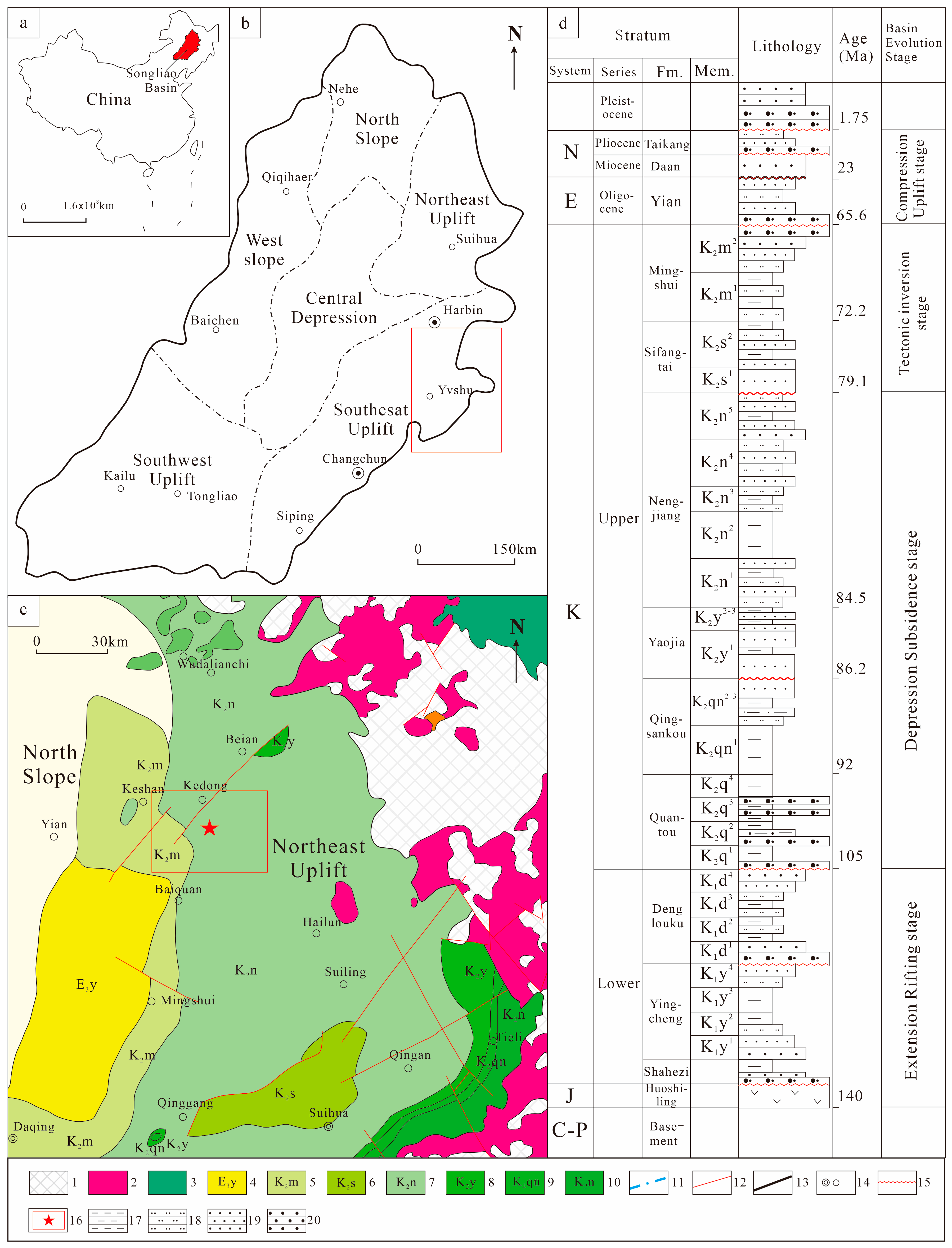
The Songliao Basin is a large Meso-Cenozoic intra-cratonic transitional basin. Tectonically, it lies at the junction of the Paleo-Asian Ocean, Mongolia–Okhotsk, and circum-Pacific tectonic domains. Its evolution was jointly controlled by these three domains, resulting in a relatively complex structure [8]. The Songliao Basin is typically divided into six tectonic units: the Northeast Uplift, Southwest Uplift, Southeast Uplift, West Slope, North Plunge, and Central Depression, covering an area of about 260,000 km2 (Figure 1b). The basin’s tectonic evolution mainly comprised four stages: Jurassic–Early Cretaceous rifting and fault depression; Jurassic–Early Cretaceous thermal subsidence and depression; Late Cretaceous–Paleocene compression and shrinkage; and Oligocene–Miocene tectonic inversion. The tectonic evolution framework of the northeastern basin is consistent with that of the entire basin. However, as a marginal uplift zone, it exhibits more pronounced and intense late-stage reversal uplift and erosion-related remodeling [9].
The basin basement consists of Precambrian granitic gneiss and schist, Early Paleozoic sericite–chlorite schist, quartz schist, and phyllite, Late Paleozoic slate, crystalline limestone, and granitic intrusive rocks from the Caledonian, Hercynian, and Yanshanian tectonic episodes [10]. The basin cover includes Jurassic, Cretaceous, Paleogene, and Neogene strata. The Cretaceous is the main sedimentary stratum of the basin, with wide distribution and great thickness, serving as the primary host for oil, gas, sandstone-type uranium deposits, and other minerals (Figure 1c,d). The study area is located in the Northeast Uplift, where the Yaojia Formation is the target horizon for uranium exploration. The lower member of the Yaojia Formation develops thick, gray–green, medium- to fine-grained sandstones that unconformably overlie the underlying Qingshankou Formation, with red mudstone interbeds within the sandbodies. The upper member of the Yaojia Formation is characterized by well-developed red mudstone, intercalated with gray–green mudstone.

3. Sample Collection and Analysis

This study collected Yaojia Formation drill core samples from the northeastern Songliao Basin at depths of 463–638 m, totaling 58 samples. Among them, 27 are medium- to fine-grained sandstone samples, and 30 are fine-grained clastic rock (mudstone and siltstone) samples. All samples were used to prepare standard petrographic thin sections for microscopic observation.
Whole-rock geochemical analysis was conducted at the Analysis and Testing Center of the Beijing Research Institute of Uranium Geology. After sampling, the core surfaces were dried, the drilling mud was scraped off, and the samples were crushed and ground to 200 mesh. Major-element analysis was performed using an Axios-MAX wavelength-dispersive X-ray fluorescence spectrometer (XRF) (manufactured by Malvern Panalytical in Almelo, the Netherlands) with the ME-XRF26d method, achieving analytical precision better than 2%. The FeO content was determined in accordance with the Chinese standard GB/T 14506.14-2010 [11]. Organic carbon (C) and sulfur (S) were determined by the infrared absorption method (YS/T 575.24-2009 [12]). Loss on ignition (LOI) was measured by heating the sample powder at 1000 °C for 1 h. Trace element analysis was performed using an ELEMENT XR inductively coupled plasma mass spectrometer (ICP-MS) in accordance with the Chinese standard GB/T 14506.30-2010 [13], with overall analytical precision better than 5%.
Representative sandstone samples from the Yaojia Formation were selected for zircon U-Pb dating. Zircon separation, mount preparation, and imaging under transmitted light, reflected light, and cathodoluminescence (CL) were completed at Hebei Langfang Keda Mineral and Rock Technology Analysis Company (Langfang, China). In situ zircon U-Pb geochronology was performed at the State Key Laboratory of Uranium Resources and Environment, East China University of Technology, using laser ablation inductively coupled plasma mass spectrometry (LA-ICP-MS). The system employed a Coherent GeoLas Pro laser ablation system (manufactured in Göttingen, Germany), equipped with a COMPex 102 ArF excimer laser operating at 193 nm. The laser spot diameter was 32 μm, and the pulse repetition rate was 5 Hz. After measuring 10 spots on each sample, two analyses of the zircon reference material 91500 and one analysis of the zircon reference material PLE (Plešovice, origin: Czech Republic) were performed for calibration of the U-Pb ratios and ages. The signal acquisition time for each sample was 90 s, including 20 s for background and 40 s for sample signal acquisition. Raw zircon data were processed using the ICP-MSDataCal 10.2 software [14,15]. Age calculation and diagram plotting were performed using Isoplot 4.15. Testing showed that samples from the upper member of the Yaojia Formation generally showed no significant Pb loss, and most ages were less than 400 Ma. Therefore, the 206Pb/238U ages were adopted, and zircons with concordance greater than 90% were selected for data analysis.

4. Results

4.1. Petrography

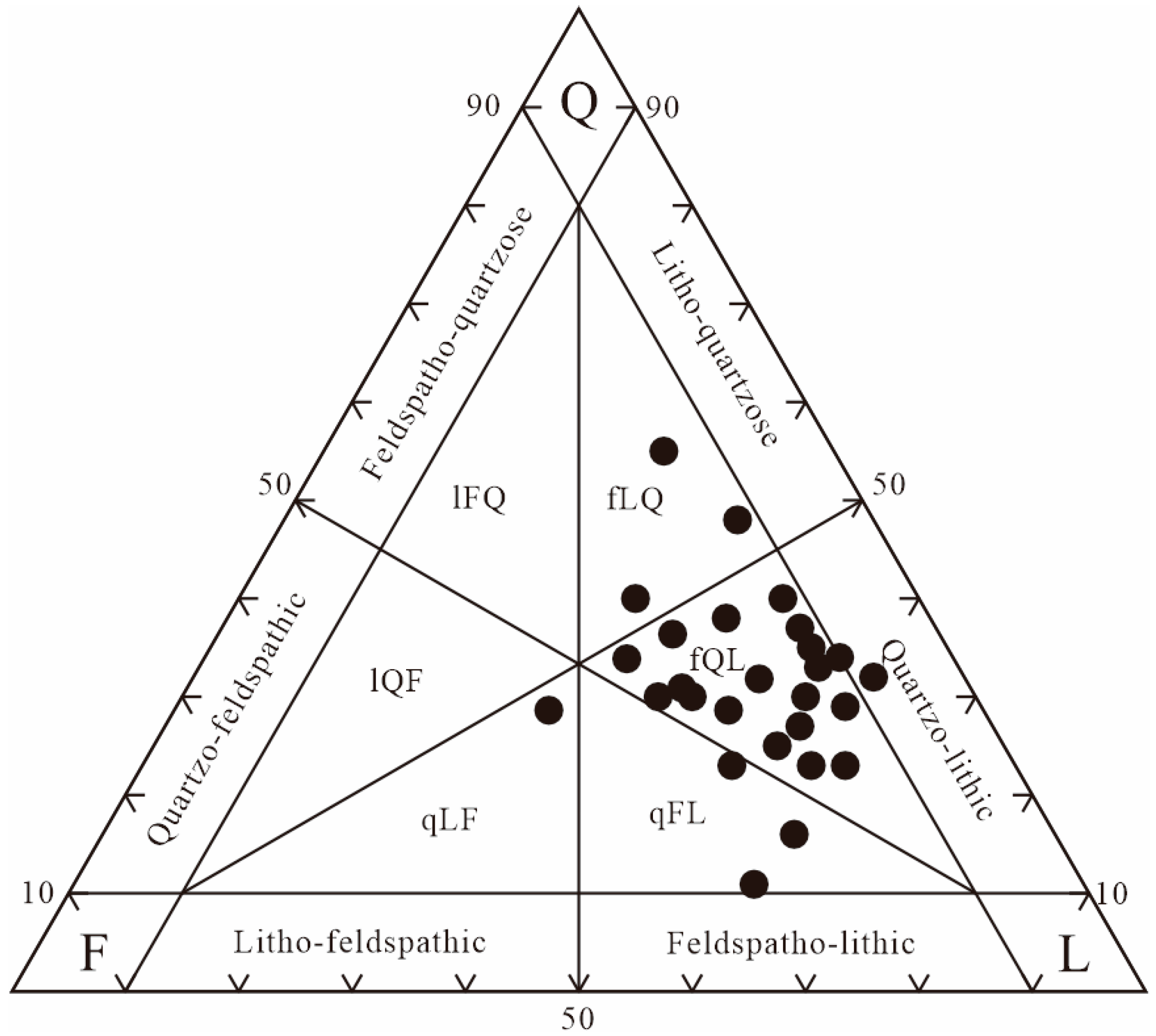
The detrital grain composition of sandstones retains characteristics of the parent rock to some extent. Through statistical analysis of detrital grain components in thin sections of medium- and fine-grained sandstones from boreholes, the Yaojia Formation sandstones contain 30%–66% lithics, 23%–60% quartz, and 10%–28% feldspar. According to the sandstone classification method and triangular diagram by Garzanti (2016) [16], the sandstones are mainly classified as Feldspathic lithic quartzose sandstone (Figure 2). Overall, the detrital composition is dominated by lithics and quartz, with average contents of 47% and 32%, respectively. The average feldspar content is 21%, predominantly potassium feldspar.
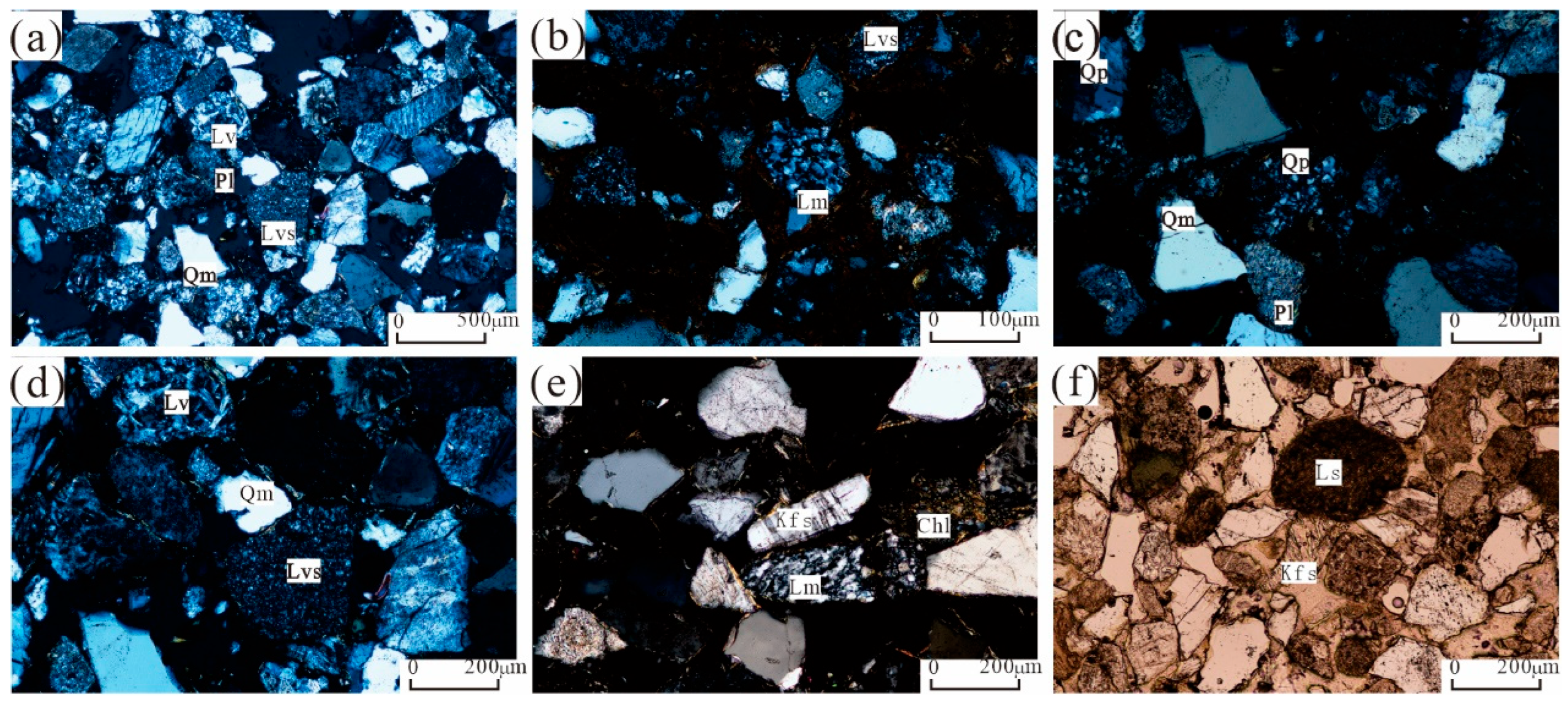
Lithic fragments in sandstones are mineral aggregates from the parent rock, retaining source-area information and reflecting the rock types in the source area [17]. Thin-section identification shows that the lithic types in the samples are complex, dominated by volcanic lithics, followed by metamorphic lithics, with sedimentary lithics the least abundant. Among volcanic lithics, intermediate- to acid volcanic lithics are predominant (Figure 3a–e), with abundant tuff and cryptocrystalline volcanic lithics (Figure 3a–d) and a small amount of rhyolite lithics (Figure 3b). Metamorphic lithics are mainly quartzite and granitic gneiss lithics. Sedimentary lithics are mostly mudstone lithics (Figure 3f). Overall, quartz content is less than lithic content. Quartz is predominantly monocrystalline, with non-undulatory extinction; undulatory extinction is occasionally observed. Polycrystalline quartz is relatively common (Figure 3c). Quartz grains in the study area are mostly angular to subangular, with poor roundness. Monocrystalline quartz grains have clean surfaces and exhibit hexagonal features (Figure 3a), indicating derivation from an intermediate- to acid volcanic source area. Polycrystalline quartz often consists of aggregates of dozens of quartz grains, with individual crystals elongated and showing interlocking contacts; these quartz grains may be derived from the metamorphic basement of the basin (Figure 3c) [18]. Feldspar content in the samples is relatively low, with microcline as the dominant phase. Plagioclase content is significantly lower than K-feldspar. Feldspars exhibit grid and Carlsbad twinning and commonly undergo chloritization and sericitization on their surfaces. The matrix content in the Yaojia Formation sandstones in the study area is mostly less than 15%. Porosity is primarily filled by the matrix, with less cement. The matrix is mainly composed of clay minerals; cement is primarily clay mineral cement (Figure 3e). The Yaojia Formation sandstones show moderate sorting, with grains predominantly angular to subangular. Grain contacts are primarily point and point–line contacts, indicating porous cementation, and the support is primarily grain-supported.

4.2. Elemental Geochemistry

4.2.1. Major Elements

The results of the whole rock major element testing are shown in Table S1. In the medium- and fine-grained sandstone samples from the Yaojia Formation in the study area, Al2O3 content ranges from 10.94% to 16.15%, averaging 12.88%. SiO2 content ranges from 68.30% to 80.40%, averaging 75.42%. TFe2O3 (total iron as Fe2O3) content ranges from 0.55% to 4.59%, averaging 1.58%. MgO content ranges from 0.23% to 0.92%, averaging 0.48%. CaO content ranges from 0.39% to 1.64%, averaging 0.63%. Na2O content ranges from 2.88% to 3.50%, averaging 3.22%. K2O content ranges from 2.96% to 3.67%, averaging 3.27%. MnO content ranges from 0.01% to 0.20%, averaging 0.03%. TiO2 content ranges from 0.15% to 0.77%, averaging 0.38%. P2O5 content ranges from 0.02% to 0.38%, averaging 0.05%. Loss on ignition (LOI) is generally low (0.03% to 5.09%, averaging 2.03%).
In mudstone and siltstone samples, Al2O3 content ranges from 13.23% to 17.24%, averaging 15.56%. SiO2 content ranges from 59.43% to 71.51%, averaging 65.18%. TFe2O3 content ranges from 1.52% to 7.80%, averaging 4.58%. MgO content ranges from 0.63% to 1.55%, averaging 1.08%. CaO content ranges from 0.47% to 2.15%, averaging 0.79%. Na2O content ranges from 1.84% to 3.24%, averaging 2.65%. K2O content ranges from 2.74% to 3.56%, averaging 3.09%. MnO content ranges from 0.02% to 0.08%, averaging 0.05%. TiO2 content ranges from 0.46% to 0.95%, averaging 0.77%. P2O5 content ranges from 0.04% to 0.36%, averaging 0.16%. LOI content ranges from 3.93% to 8.84%, averaging 6.05%. Compared with siltstones and mudstones, the medium- and fine-grained sandstones of the Yaojia Formation in the study area have higher Si, Na, and K contents and lower Fe, Mg, Ti, Mn, etc., influenced by differences in grain-size sorting and mineral composition [19].

4.2.2. Trace Elements

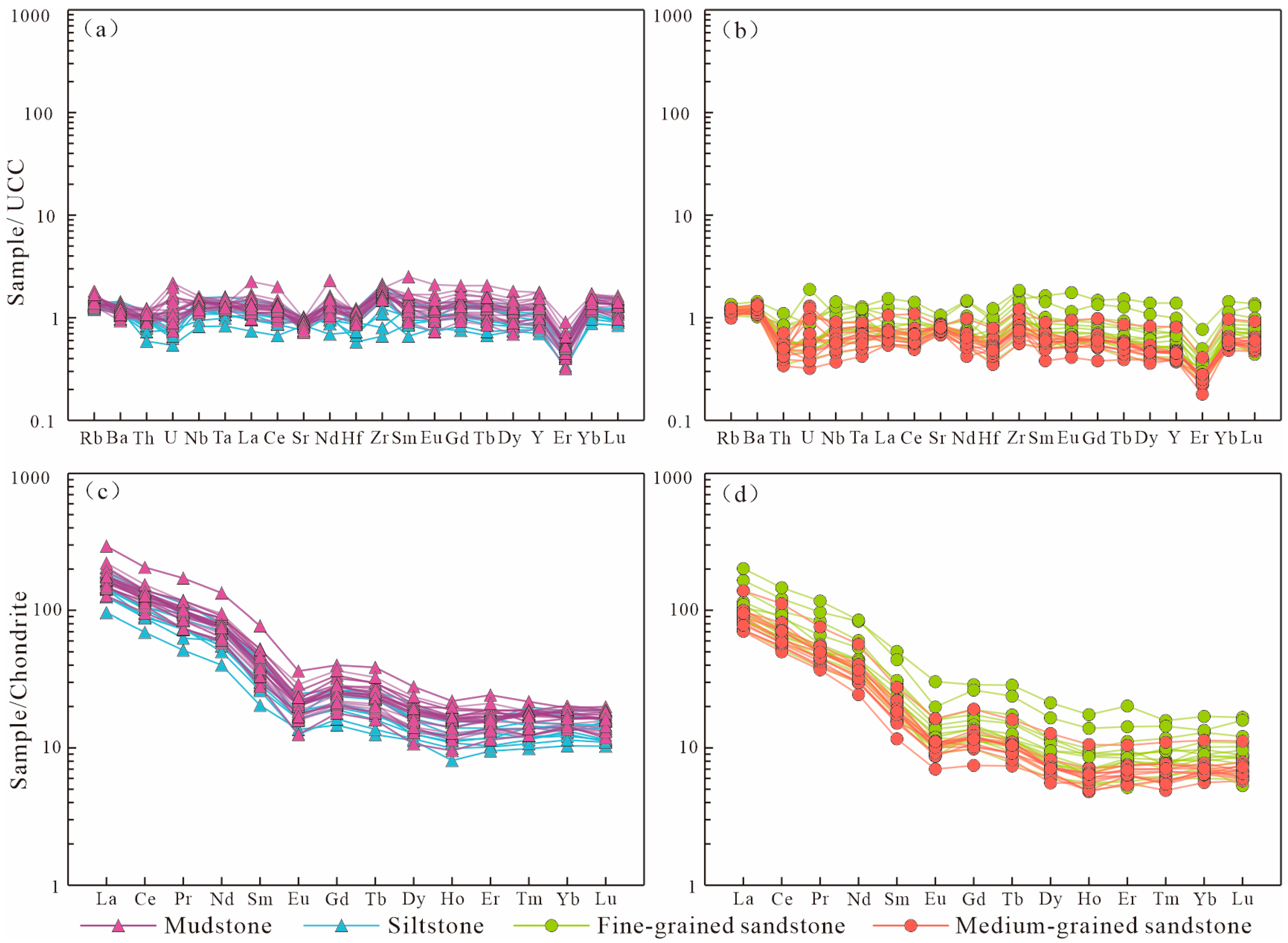
The test results of trace elements and rare earth elements (REEs) in the whole rock are shown in Table S2. Trace element contents of the clastic rocks in the study area were normalized to upper continental crust (UCC) values [20]. The standardized trace element patterns of medium- to fine-grained sandstone and fine-grained clastic rock (mudstone/siltstone) are shown in Figure 4a,b. The trace element distributions in the Yaojia Formation fine-grained clastics and medium- to fine-grained sandstones are similar, and overall they are close to the composition of the upper continental crust. In fine-grained clastics, the average contents (in 10−6 g/g or ppm) of large-ion lithophile elements (LILEs) are: Rb 117.07, Sr 283.58, Cs 8.03, Ba 735.32, Pb 26.03, Th 10.44, and U 2.96. The average contents of high-field-strength elements (HFSEs) are: Nb 15.80, Ta 1.16, Zr 322.87, Hf 5.28, and Y 23.86. The average contents of transition elements are: Sc 9.93, Cr 51.93, and Co 13.87. The contents of LILEs and HFSEs in Yaojia Formation fine-grained clastics are generally higher than those in medium- to fine-grained sandstones. Among transition elements, Cr is higher in medium- to fine-grained sandstones, whereas Sc and Co are higher in fine-grained clastics. The Th/U ratios are generally high, ranging from 1.33 to 5.91 with an average of 3.71, indicating that the fine-grained clastics underwent relatively weak weathering during deposition [21].

4.2.3. Rare Earth Elements

REE patterns of Yaojia Formation clastic rocks in the study area, normalized to chondrite values, are shown in Figure 4c,d. REE distribution patterns in clastic rocks of different grain sizes are similar. Test results show that the total REE content (ΣREE) of Yaojia Formation clastic rocks from the boreholes varies significantly, ranging from 70.31 ppm to 314.66 ppm, with an average of 146.73 ppm, which is close to the average upper continental crust REE content (148 ppm) [20]. The average ΣREE for mudstone/siltstone and for fine- to medium-grained sandstone is 181.08 ppm and 107.30 ppm, respectively, showing a considerable difference, likely related to clay mineral content. Light REE (LREE) content in the borehole samples ranges from 65.93 ppm to 296.51 ppm, and heavy REE (HREE) content ranges from 4.32 ppm to 18.15 ppm. The LREE/HREE ratio ranges from 12.19 to 19.26, indicating significant fractionation between light and heavy REEs. The REE distribution patterns of fine-grained clastics in the Yaojia Formation are similar to those of sandstones, both showing relative LREE enrichment and relatively flat HREE patterns. The chondrite-normalized La/Yb ratio ranges from 8.19 to 15.06, averaging 11.16, also indicating a high degree of LREE-HREE fractionation.

4.3. Detrital Zircon Morphology and Ages

4.3.1. Zircon Morphological Characteristics and Trace Elements

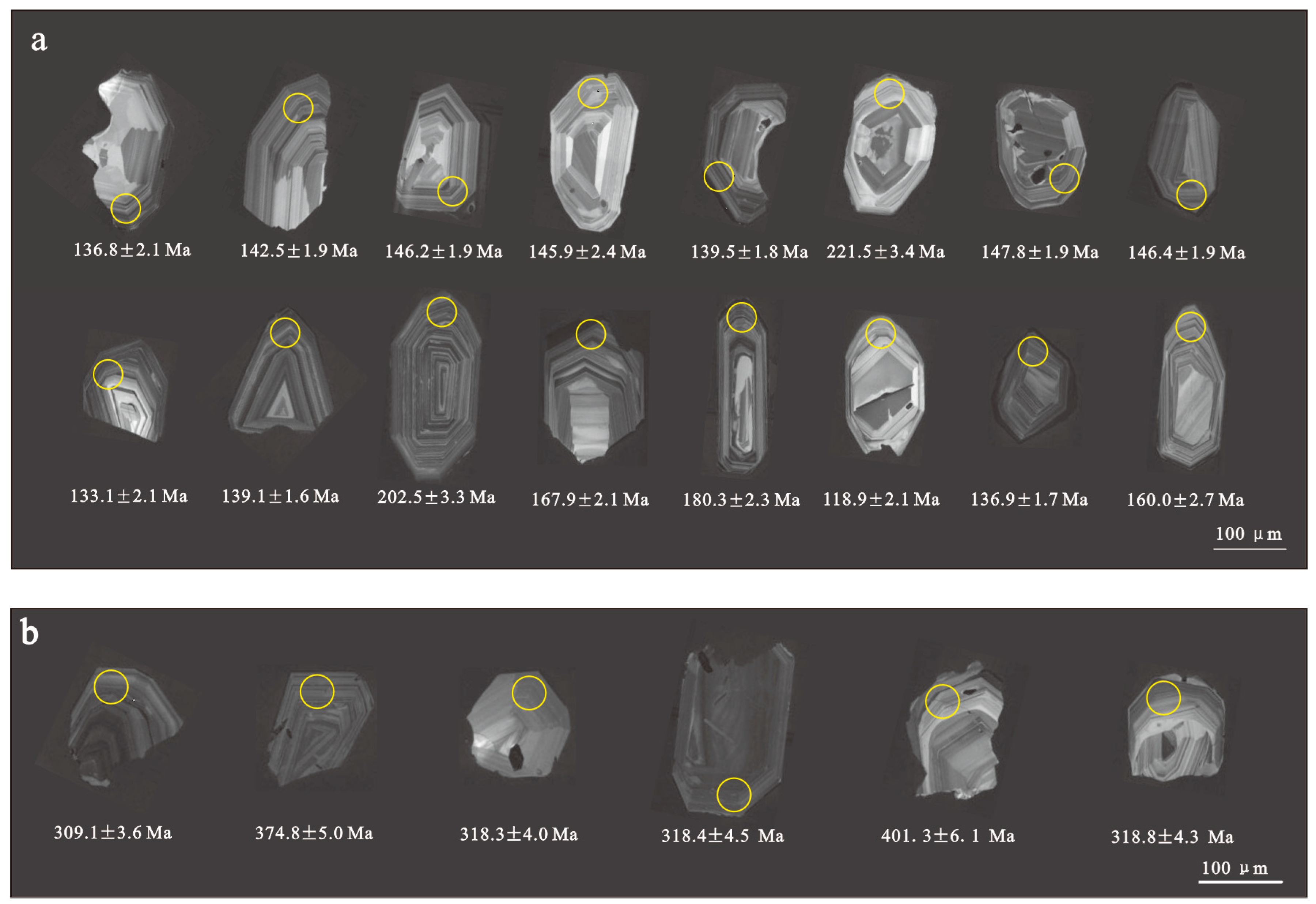
The testing results of trace elements in detrital zircons are presented in Table S3. Detrital zircons formed in different geological settings exhibit distinct morphological features. Most zircons in the samples are euhedral, appearing as short prisms or tetragonal dipyramids, and display bright, clear oscillatory zoning (Figure 5a), indicating a magmatic origin [22]. Among magmatic zircons, those from different magma types show distinct microstructural characteristics. A few zircons exhibit sector zoning, caused by varying growth rates on different crystal faces due to changes in the external environment during crystallization, and are commonly found in magmatic zircons. Among the magmatic zircons in the study area, most have well-developed prismatic and pyramidal faces, narrow oscillatory zones, and are prismatic, indicating derivation from acidic magmas. Zircons derived from intermediate- to basic-magma sources are less common; their characteristics include less-developed prism faces, well-developed pyramidal faces, and wider oscillatory zones [23,24]. Zircon grains are poorly rounded, mostly angular to subangular, with a few subangular to subrounded. Broken or damaged zircon crystals are common (approximately 60%), indicating that detrital zircons underwent intense mechanical abrasion. A few zircons contain residual nucleation centers inherited from zircon (Figure 5b). These cores have relatively smooth boundaries, blurred zoning textures, and low Th/U ratios (0.31–0.43), suggesting they may have undergone metamorphism, possibly derived from the basin’s crystalline basement. Magmatic zircons constitute 91% of the total zircon population, indicating that the Yaojia Formation in the study area is mainly derived from magmatic rocks.

4.3.2. Detrital Zircon U-Pb Ages

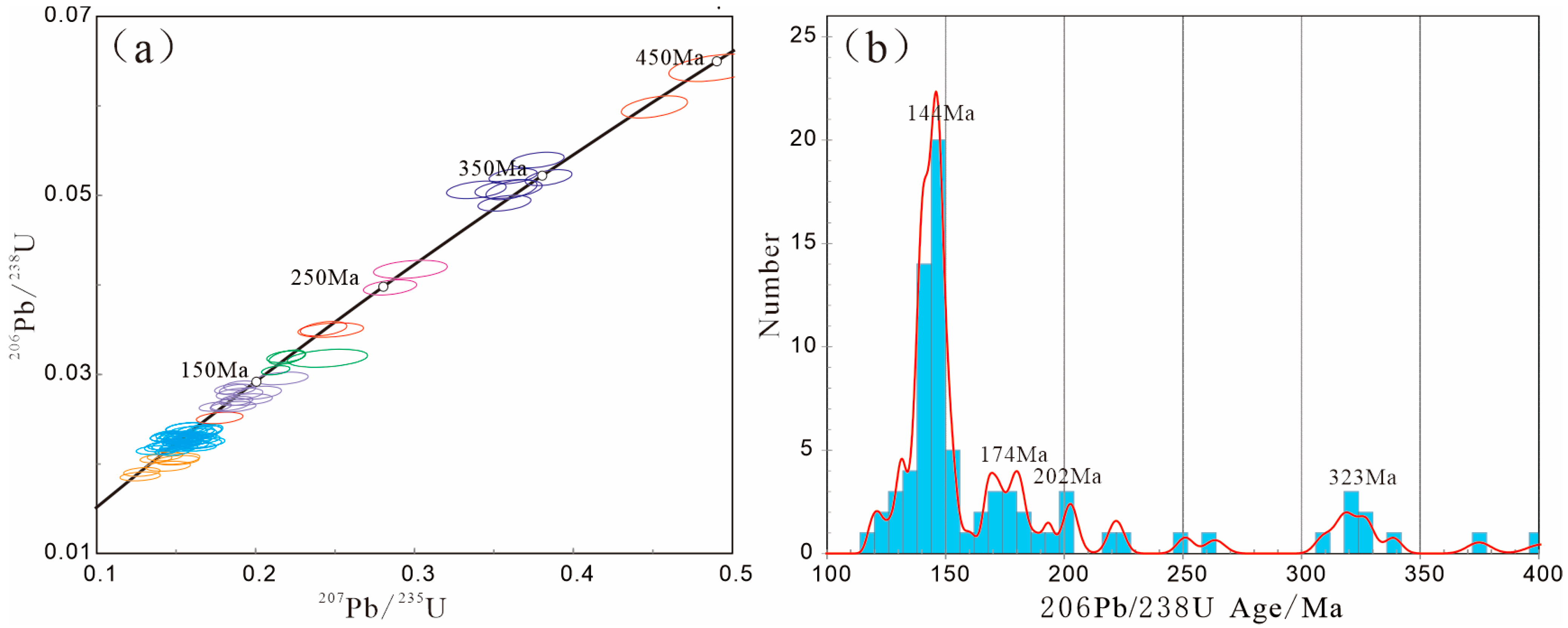
The U-Pb age test results of detrital zircons are presented in Table S4. A total of 90 analytical spots were tested on zircon samples. After removing spots with concordance less than 90%, 77 valid data points remained. Zircon ages in the samples are mainly distributed between 118.9 and 202.9 Ma, comprising 68 data points. Within this main range, there are three age clusters: 118.9–152.8 Ma (49 data points), 160.0–182.7 Ma (11 data points), and 193.4–202.9 Ma (5 data points), accounting for 64%, 14%, and 6% of the total, respectively. Their peak weighted mean ages are 144 Ma, 174 Ma, and 202 Ma (Figure 6). Additionally, some data points are distributed across the Late Paleozoic era. Among them, 5 data points are concentrated between 318.3 and 327.7 Ma, accounting for 6%, with a peak weighted mean age of 323 Ma. The two oldest zircon ages are 374.8 Ma and 401.3 Ma.

5. Discussion

5.1. Paleoclimate Characteristics

Paleoclimate conditions exert a significant influence on the weathering, erosion, and transport processes of parent rock. The high-homogeneity and low-permeability characteristics of fine-grained clastic rocks effectively preserve source area information, thereby better reflecting the paleoclimate conditions during the sedimentary period and the degree of weathering in the source area [25]. The Chemical Weathering Alteration Index (CIA) proposed by Nesbitt and Young [26] quantitatively assesses the intensity of weathering in clastic rocks. Its formula is CIA = [Al2O3/(Al2O3 + CaO* + Na2O + K2O)] × 100, where CaO* represents only the amount present in silicates. Therefore, CaO content must be corrected prior to calculation. CIA values typically classify chemical weathering intensity into three categories: weak weathering (CIA = 50–60), moderate weathering (CIA = 60–80), and strong weathering (CIA = 80–100). The component variation index (ICV) reflects clay mineral content in sedimentary rocks. Cox (1995) noted in studies of southwestern U.S. mudstones that ICV values in clastic sediments decrease significantly with advancing sedimentary re-cycling [27]. The ICV serves as a key indicator for assessing clastic rock compositional maturity and re-cycling extent. Its calculation formula is: ICV = (Fe2O3 + K2O + Na2O + CaO + MgO + MnO + TiO2)/Al2O3. When the ICV > 1, it indicates that the rock is rich in non-clay silicate minerals (such as feldspar, clasts, etc.), predominantly representing primary cyclical sedimentation products, reflecting a tectonically active background; When the ICV < 1, clay minerals dominate, indicating strong chemical weathering or sedimentary recycling with high compositional maturity. The CIA values for fine-grained clastic rocks range from 56.13 to 68.44, with an average of 63.96. ICV values range from 0.83 to 1.26, averaging 1.00. The CIA values of clastic rocks are relatively low, with ICV values close to 1. Combined with petrological evidence (predominantly clastic grains, subangular to rounded, potassium feldspar-dominated with alteration, high clastic content, and low compositional maturity), the compositional maturity is relatively low. This does not align with the characteristics of sedimentary recycling, indicating that they are products of primary deposition.
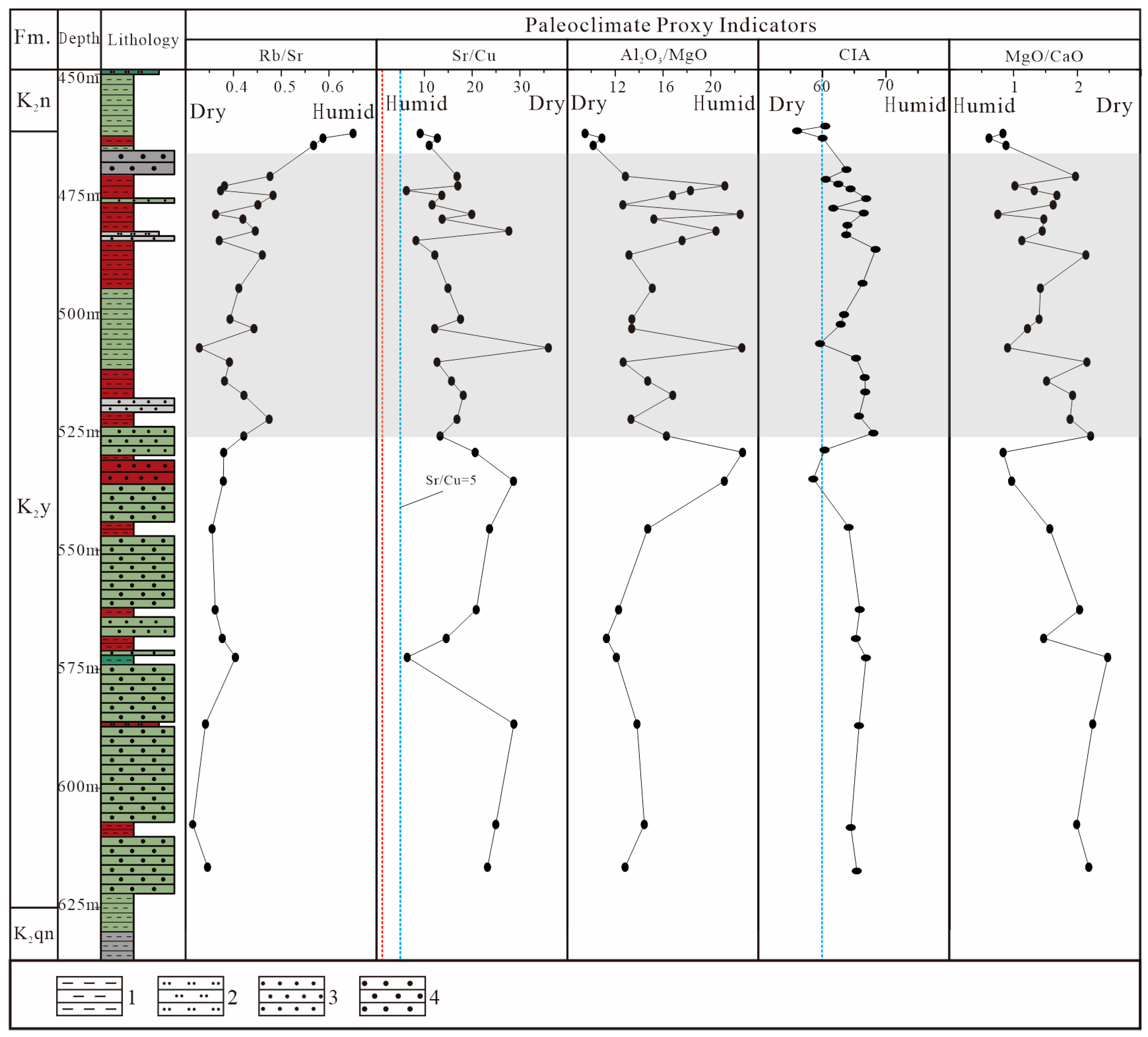
The element Rb is relatively chemically stable and readily forms solid solutions with K+, tending to remain in situ during weathering and leaching. In contrast, Sr readily migrates and is lost with solutions in humid environments. Cu is primarily bound in organic matter and can serve as an indirect indicator of organic matter abundance in sedimentary rocks [28]. Consequently, Rb/Sr and Sr/Cu ratios are frequently employed for paleoclimate reconstruction. Under arid climatic conditions, reduced Sr leaching results in lower Rb/Sr ratios and higher Sr/Cu ratios (Sr/Cu > 5 typically indicates arid conditions). Conversely, in humid climates, increased rainfall promotes Sr leaching, leading to elevated Rb/Sr ratios and reduced Sr/Cu ratios (1.3 < Sr/Cu < 5 indicates humid conditions). Additionally, Al2O3/MgO and MgO/CaO ratios are frequently employed for paleoclimate interpretation: lower Al2O3/MgO values indicate arid conditions, while higher values suggest humid conditions; MgO/CaO ratios exhibit the opposite relationship. The Sr/Cu ratios in the fine-grained clastic rocks of the Yaojia Formation in the study area ranged from 6.28 to 35.98 (mean 17.08), Rb/Sr ratios from 0.31 to 0.65 (mean 0.42), Al2O3/MgO ratios from 9.48 to 22.45 (mean 15.92), and MgO/Ca ratios from 0.61 to 2.48 (mean 1.53). Combined with CIA values, these paleoclimatic indicators show substantial variation with overall elevated values, indicating a predominantly arid–semi-arid climate with some fluctuations. The Sr/Cu, Rb/Sr, Al2O3/MgO, and MgO/Ca ratios reveal a trend of increasing moisture from the upper to lower sections (Figure 7). In summary, the paleoclimate during the Yaojia Formation deposition in the study area was predominantly arid–semi-arid, with an overall trend toward humidification.

5.2. Source Rock Types

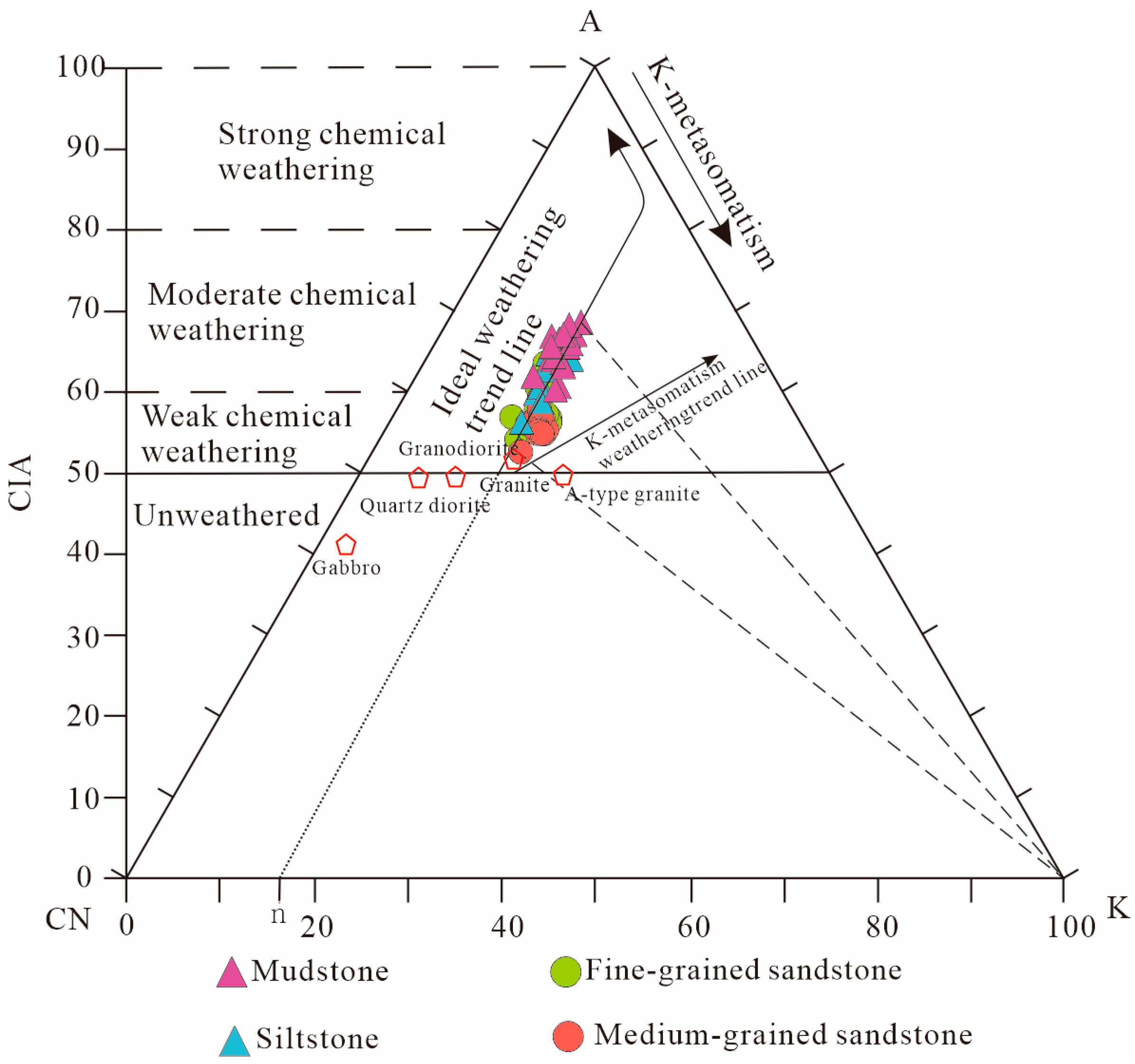
The A-CN-K discriminant diagram can effectively identify parent rock types through the weathering trend line of clastic rocks [29]. In this diagram, the weathering trend line of the samples is parallel to the A-CN line, indicating that the weathering of the clastic rocks was not affected by K-metasomatism. The backward extrapolation of the weathering trend line points toward the granitic field, suggesting that the parent rock is felsic igneous (Figure 8).
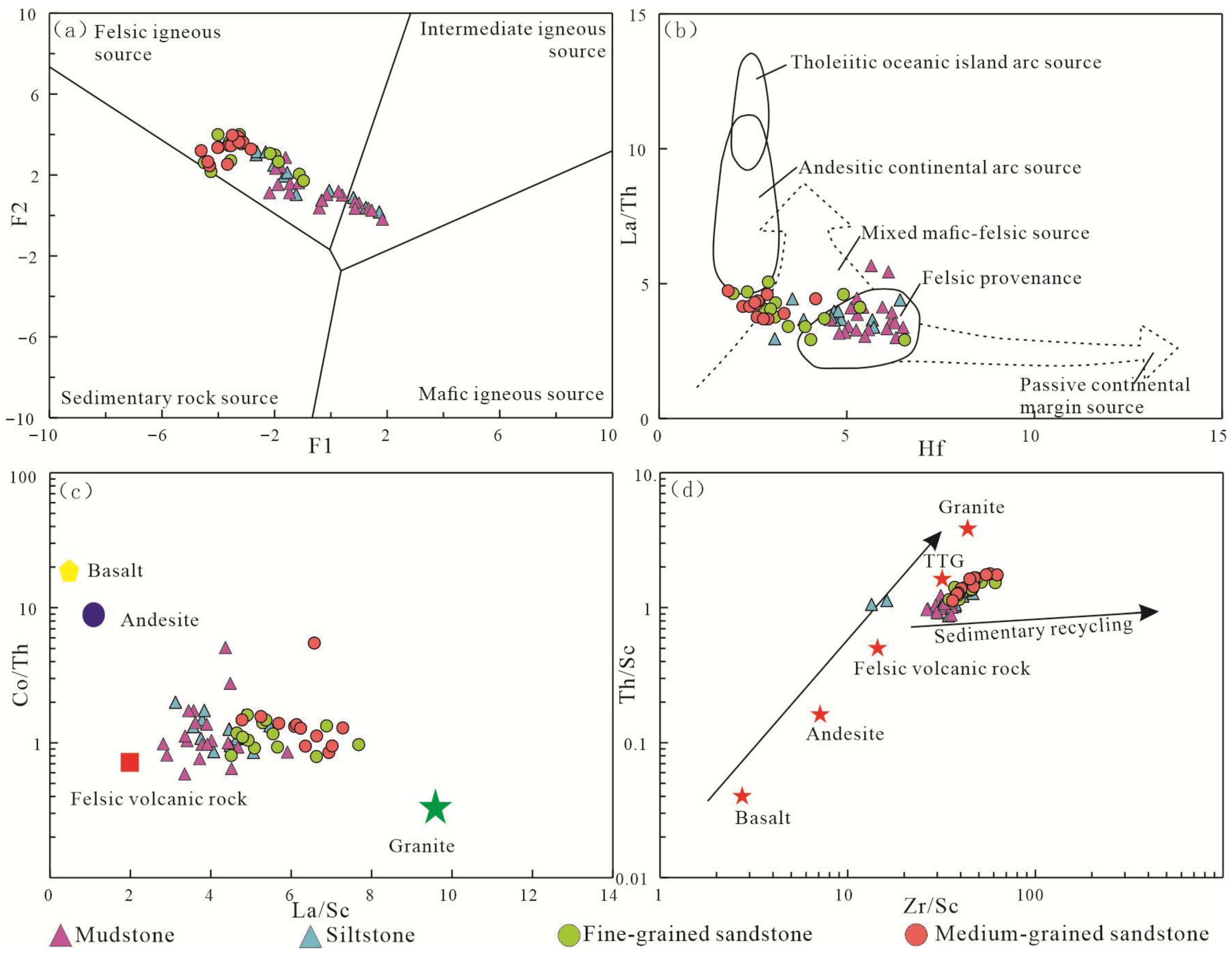
The major element discriminant function diagram (Roser & Korsch, 1988) is a plot based on F1 and F2 functions calculated from major elements such as SiO2, Al2O3, TiO2, Fe2O3T, MgO, CaO, Na2O, and K2O [30], used to distinguish four source types: acidic igneous, intermediate igneous, basic igneous, and sedimentary rocks. Data points for clastic rock samples from the Yaojia Formation are primarily concentrated in the acidic igneous source field (Figure 9a). Almost all medium/fine-grained sandstone samples fall within this field. Although a few fine-grained clastic samples extend towards the intermediate igneous field, the majority still lie within the acidic field. Notably, some samples scatter toward the sedimentary rock field, forming a linear trend parallel to the boundary between the acidic and sedimentary fields, indicating that the source area is dominated by intermediate–acidic igneous rocks, with some contribution from sedimentary rock recycling (Figure 9a).
Trace elements (e.g., Sc, Co, Th, Zr, Hf) and rare earth elements have stable geochemical properties and short residence times in water, and tend to be quickly incorporated into fine-grained clastics. They can better preserve the geochemical information of the parent rock and effectively reflect its nature [30]. In the La/Th-Hf discriminant diagram (Figure 9b), the distribution areas of sandstone and fine-grained clastic samples show some differences: fine-grained clastic samples mainly plot in the felsic source field. In contrast, medium- to fine-grained sandstone samples tend toward the mafic–felsic mixed-source field, indicating that the source area may have a small contribution from intermediate components. The Co/Th-La/Sc diagram (Figure 9c) shows that finer-grained mudstones and siltstones mostly plot in the felsic volcanic rock field. In contrast, coarser medium- to fine-grained sandstones plot closer to the granite end-member, with an overall dominance of felsic source rocks. Recycling can lead to zircon enrichment, resulting in high Zr content. In the Th/Sc-Zr/Sc discriminant plot (Figure 9d), sandstone and fine-grained rock data points show significant overlap and deviate from the primitive continental crust evolution trend line, indicating sedimentary repolishing tendencies. However, the source rocks remain predominantly granitic in nature. In the above discriminant diagrams, data points for sandstones and fine-grained rocks overlap and show consistent overall trends. Although their distribution areas differ somewhat, this difference mainly stems from transport sorting and hydrodynamic conditions rather than from systematic separation into different source rock types. The trace and rare earth element distribution diagrams (Figure 4) show consistent patterns. Both show negative Eu anomalies, no obvious Ce anomaly, and significant LREE-HREE fractionation, indicating that the parent rock type is felsic. Furthermore, sandstones and fine-grained clastics share a common provenance.

5.3. Tectonic Setting Analysis of Source Rocks

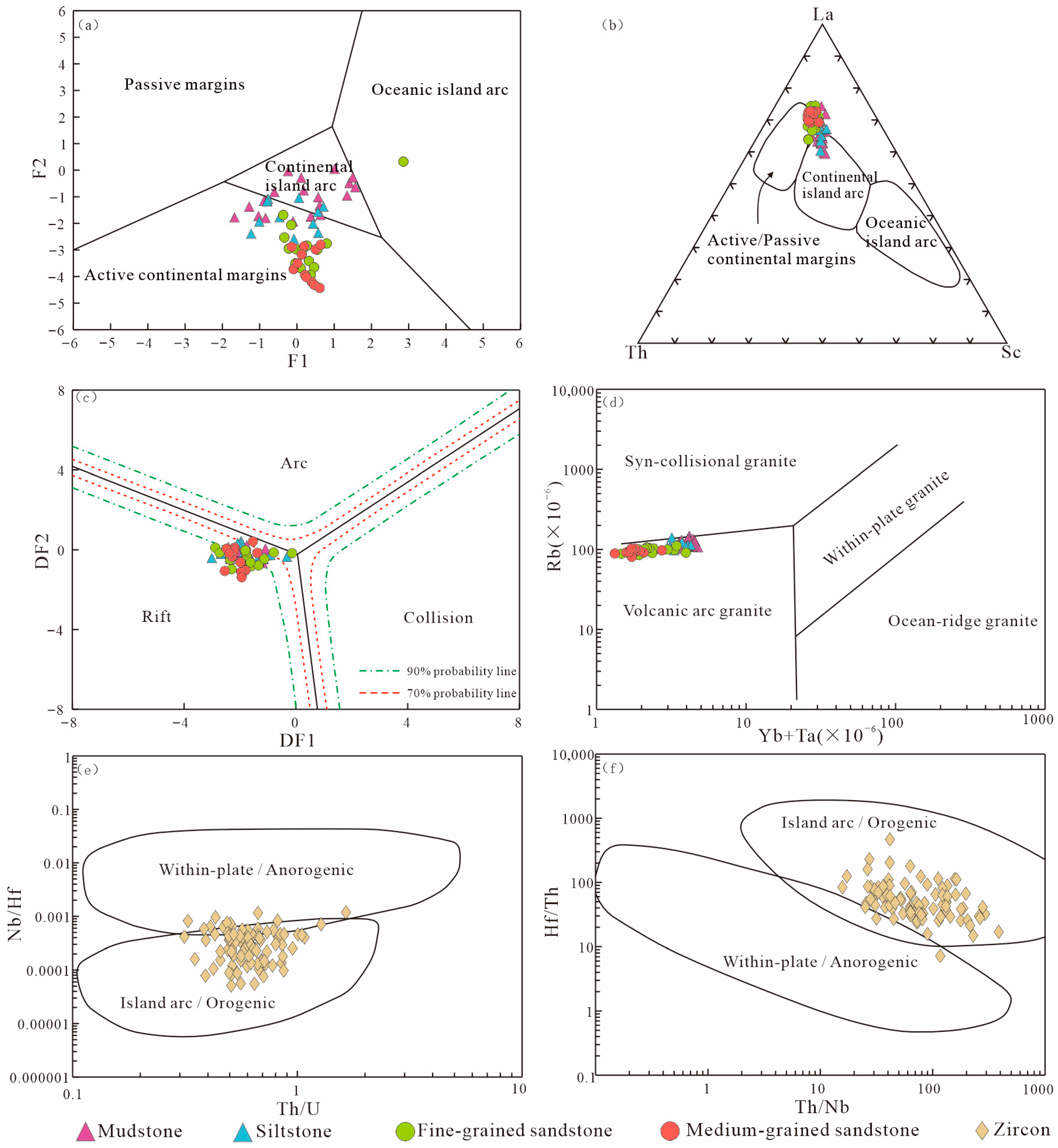
The geochemical composition of sedimentary rocks largely inherits the geochemical properties of source rocks from the source area. Source rocks formed under different tectonic settings impart distinct geochemical signatures to sediments. Based on this principle, previous researchers have developed various geochemical discrimination diagrams (e.g., Bhatia’s major and trace element tectonic background discrimination diagram, Vermer’s source area discrimination function diagram) to reconstruct the tectonic setting during the formation of sedimentary source rocks, thereby providing constraints for source-system analysis. In the function discrimination diagram constructed by Bhatia [35] (Figure 10a), medium- to fine-grained sandstone samples show relatively dense data points, while mudstone and siltstone samples exhibit scattered points, though most cluster within continental-island arc regions. In the Th-Sc-La discrimination diagram (Figure 10b), sample points aggregate at the junctions of active continental margins, passive continental margins, and continental-island arc zones. Verma and Armstrong-Altrin (2013) integrated global data on major oxide contents in Neogene–Quaternary clastic sediments and developed a new multidimensional discriminant diagram for clastic sediment tectonic settings using statistical methods [36]. This approach categorizes clastic sediments into high-silica (63 < (SiO2) adj ≤ 95) and low-silica (35 < (SiO2) adj ≤ 63) types to minimize interference from other factors (e.g., lithology, climate, re-cycling) and highlight the influence of plate tectonics on source regions. Samples from the study area exhibited (SiO2) adj values ranging from 64.59% to 80.70%, with an average of 72.21%, classifying them as high silica. Compared to traditional discriminant diagrams, Verma’s functional discriminant diagram offers higher accuracy and the ability to distinguish extension environments. In the high-silica tectonic background diagram (Figure 10c), sample points are evenly distributed, with all samples located within continental rift zones and tending toward arc tectonic regions. This indicates a distinctly extensional tectonic background in the source rock’s parent material. Zircon crystals possess stable structures that resist alteration during sedimentation, preserving trace element characteristics that record pre-magmatic differentiation information. The granite type identification diagram (Figure 10d) and the geochemical structural identification diagrams for clastic zircons from the Yaojia Formation (Figure 10e,f) more fully reflect the background of the magmatic source region of the parent rock, revealing arc characteristics.
Comprehensive analysis indicates that the geochemical characteristics of the Yaojia Formation parent rock magma in the study area exhibit arc-type properties. The magma originated from partial melting of the crust, formed under a post-orogenic extensional setting, and intruded and solidified within an extensional tectonic environment. Consequently, it displays a hybrid nature combining arc-type geochemical characteristics with extensional tectonic influences.

5.4. Detrital Zircon U-Pb Age and Provenance Analysis

The Yaojia Formation in the study area primarily consists of reddish-green muddy siltstone and gray, gray–green, and grayish-white coarse-grained clastic rocks. It exhibits significant grain size variation, poor sorting and rounding, and low structural maturity, indicating a relatively recent source area. Zircon from the Yaojia Formation exhibits poor rounding, with most crystals retaining their original internal morphology and frequently showing fractures, indicating that they are near-source deposits formed by rapid erosion and sedimentation. Based on previous U-Pb zircon dating results for Mesozoic volcanic rocks in Northeast China, Mesozoic magmatic activity in northeastern China is primarily divided into six phases: Late Triassic (200–228 Ma), Early–Middle Jurassic (173–190 Ma), Late Jurassic (158–166 Ma), early Early Cretaceous (138–145 Ma), late Early Cretaceous (106–133 Ma), and Late Cretaceous (88–97 Ma) [8]. Among the three potential source regions, the Greater Xing’an Range primarily developed Late Jurassic, early Early Cretaceous, and late Early Cretaceous igneous rocks, with ages concentrated between 112 and 155 Ma and with outcropping intrusive bodies mainly consisting of phonolite, andesite, and rhyolite; the Lesser Xing’an Range and Zhangguangcai Range primarily feature Late Triassic, Early–Middle Jurassic, and Late Cretaceous volcanic rocks, with ages concentrated between 163 and 266 Ma and with outcropping lithologies mainly including granite, diorite, andesite, and rhyolite; within the Songliao Basin, igneous rocks are predominantly concentrated in the Yingcheng and Huoshiling Formations from the rift period, with ages ranging from 100 to 175 Ma, primarily composed of diorite, granite, and gabbro.
This study conducted detrital zircon U-Pb dating on representative sandstone samples from the Yaojia Formation, yielding 77 concordant ages (concordance >90%). Despite the relatively limited dataset, the age spectrum exhibits distinct main peaks and age groups, consistent with the distribution of detrital zircon U-Pb age ranges reported by Li et al. (2024) for the northeastern Songliao Basin Yaojia Formation (130–180 Ma, 180–220 Ma, 310–380 Ma) [39], with no significant anomalies or missing age groups. This indicates that the samples effectively captured the primary source signal.
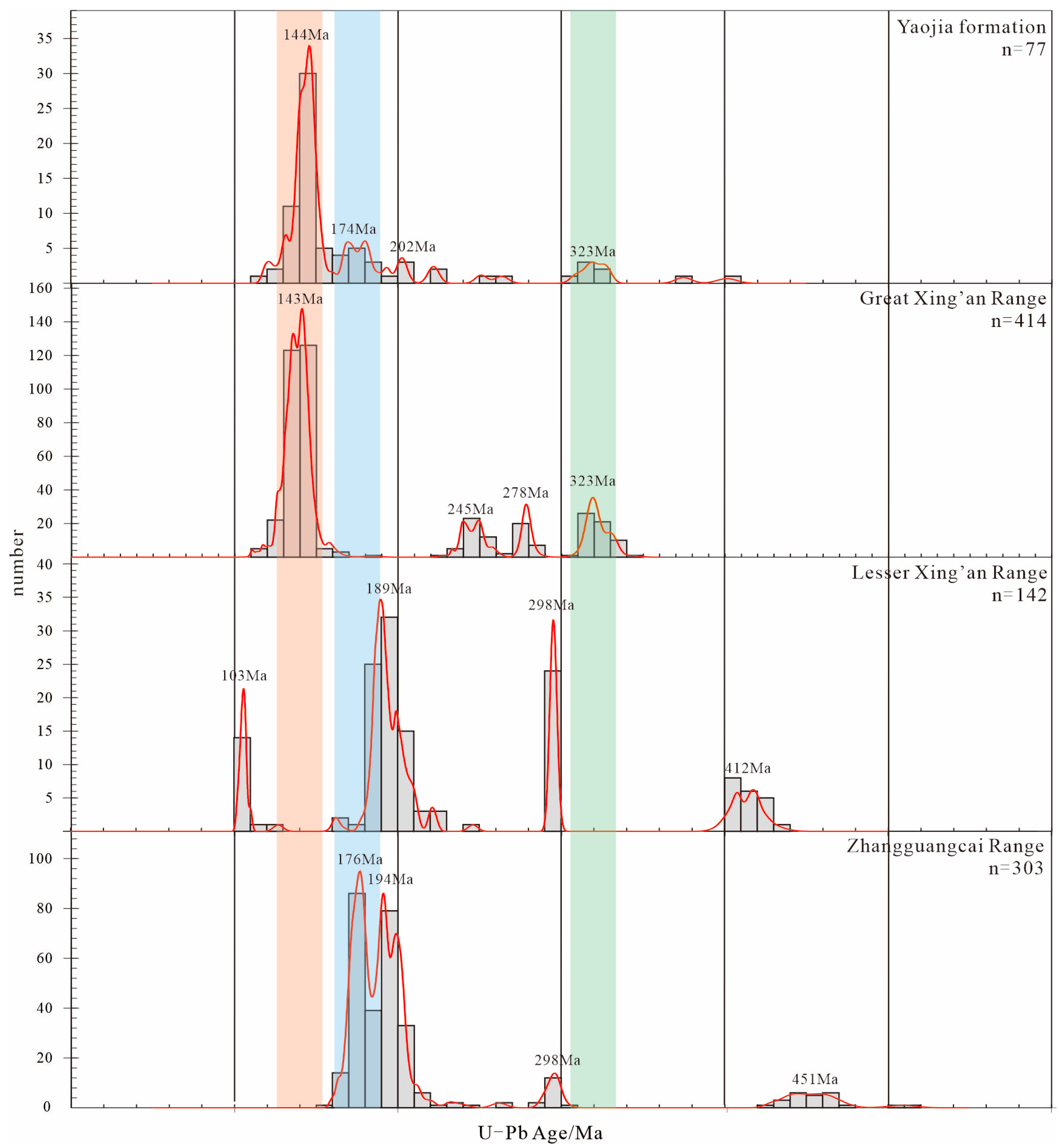
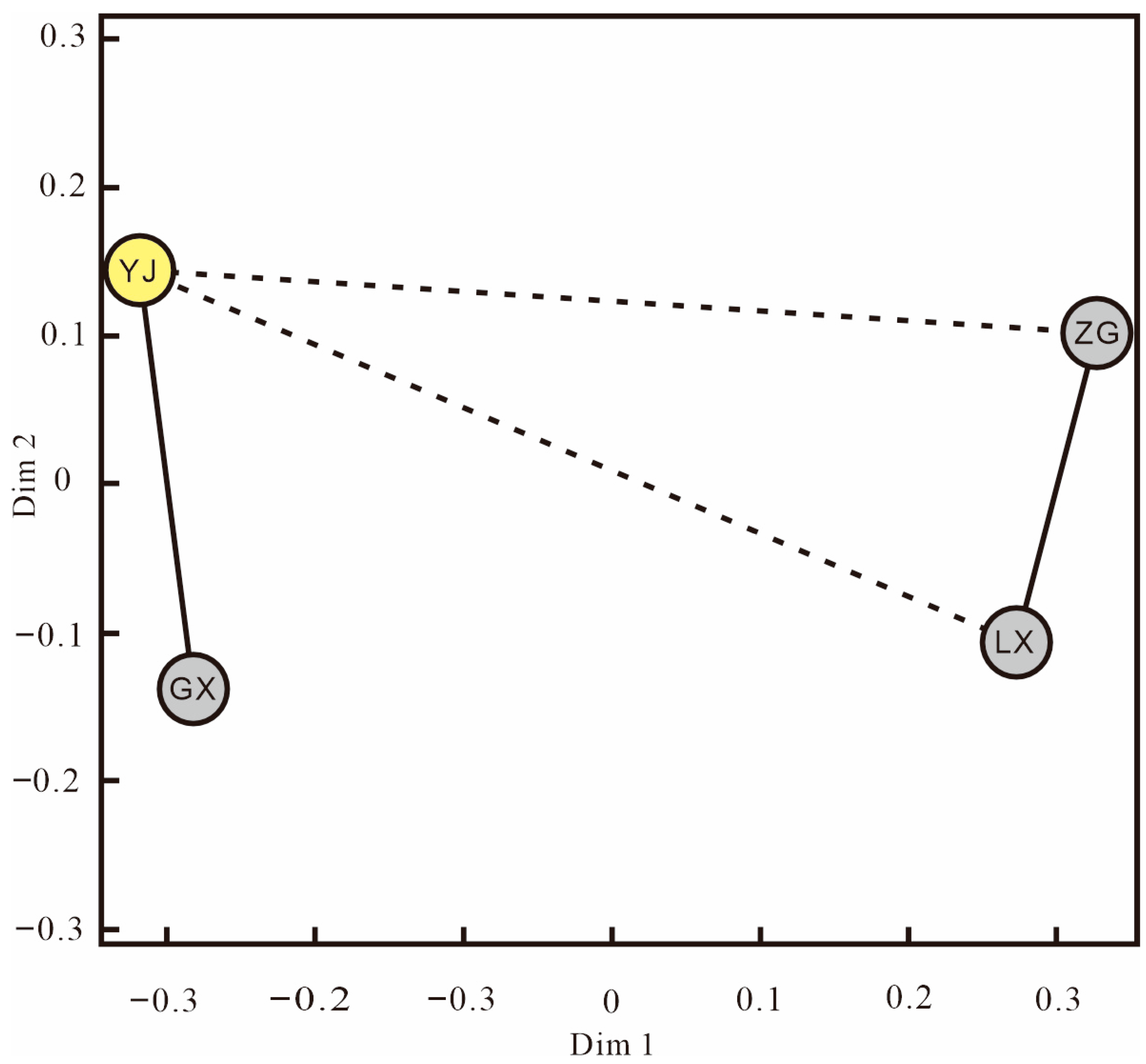
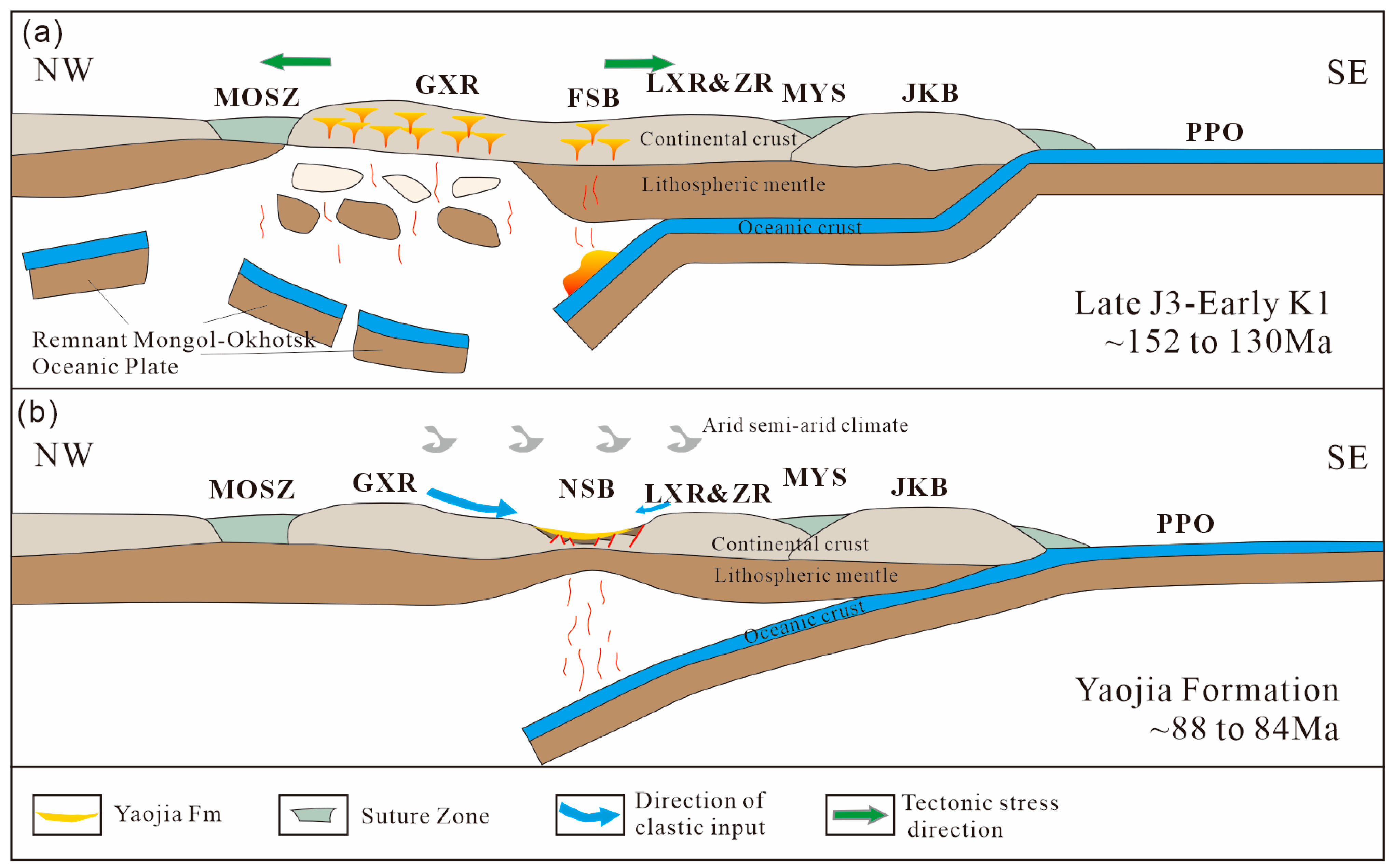
This study collected zircon U-Pb age data from the Greater Xing’an Range, Lesser Xing’an Range, and Zhangguangcai Range to compare with the Yaojia Formation clastic zircon age spectrum and determine its source regions (Figure 11). Zircon ages from the Yaojia Formation in the study area range from 118 to 401 Ma, showing three distinct age clusters of 136–153 Ma (45%), 160–183 Ma (14%), and 193–203 Ma (6%), with weighted mean ages of 144 Ma, 174 Ma, and 202 Ma, respectively. These correspond to magmatic activity during the Early Cretaceous, Early–Middle Jurassic, and Late Triassic periods in Northeast China. Additionally, a Paleozoic age range of 318–328 Ma (6%) was identified, peaking at 323 Ma. As shown in Figure 11, the U-Pb age spectrum of detrital zircons from the study area exhibits the highest similarity to the age distribution of igneous zircons from the Greater Xing’an Range. Detrital zircons from the Yaojia Formation within the 136–153 Ma and 318–328 Ma age ranges correlate with those from the Greater Xing’an Range at 130–152 Ma and 308–344 Ma. However, igneous zircon ages from these two periods are absent in the Lesser Xing’an Range and Zhangguangcai Range, indicating that the Yaojia Formation’s source material primarily originated from the Greater Xing’an Range. Detrital zircons from the Yaojia Formation aged 160–183 Ma and 193–203 Ma correlate with igneous zircon ages from the Lesser Xing’an and Zhangguangcai Range ranging from 160 to 220 Ma, while no igneous rocks of this age exist in the Greater Xing’an. To overcome the limitations of visual interpretation based solely on probability density curves, which are susceptible to subjective factors, this study employed the IsoplotR program to generate a multidimensional scaling (MDS) diagram (Figure 12) [40], quantitatively analyzing the similarity of detrital zircon age distributions across different regions. The MDS plot reveals that the age spectrum of the Greater Xing’an Range exhibits strong affinity with the clastic rocks of the Yaojia Formation in the study area, while the affinity between the Lesser Xing’an Range and Zhangguangcai Range regions and the Yaojia Formation clastics is relatively weaker. From the Late Jurassic to the Early Cretaceous (approximately 163–145 Ma), the Mongolian–Okhotsk Ocean underwent scissor-like closure from west to east, with its eastern segment (northeastern China to the Sea of Okhotsk) entering the final collision phase. The subduction mode of the Mongolia–Okhotsk Ocean plate shifted from thrusting to slab detachment. During this period, the magmatic rocks of the Greater Xing’an Range transitioned from “arc-type” geochemical characteristics to “post-collisional extensional” features, with the emergence of abundant A-type granites and highly differentiated granites [41]. The Early Cretaceous (130–145 Ma) volcanic assemblages in the Greater Xing’an Range exhibit A-type rhyolite and alkaline rhyolite characteristics, indicating a post-orogenic extensional collapse environment following the closure of the Mongolia–Okhotsk Ocean (Figure 13a). Previous studies have demonstrated that A-type granites from this period formed within a post-orogenic extensional setting [42,43]. The geochemical characteristics of granites from this period generally exhibit LILE (Rb, K, Th) enrichment and significant HFSE (Nb, Ta, Ti) depletion, displaying geochemical attributes of arc magmatic rocks. Liu suggests that their island arc nature may derive from magmatic source characteristics rather than formation environments [44]. The tectonic setting of Early Cretaceous A-type granites aligns well with the identified tectonic environment of the pre-depositional source region, reflecting a transition from compressional to extensional tectonics during the early Early Cretaceous.
Based on the findings from previous studies, petrographic characteristics indicate that the Yaojia Formation exhibits poorly sorted and rounded clastic grains, with sandstone structures and compositional maturity at low levels, suggesting that it is the product of nearby deposition. The sandstone minerals are dominated by clasts, with rhyolite and granite clasts being the most common, while sedimentary and metamorphic clasts are occasionally observed. This further indicates that the acidic igneous rocks exposed in the Greater Xing’an Mountains constitute the primary source area for the Yaojia Formation sediments, with the Lesser Xing’an Mountains and Zhangguangcai Ridge contributing secondary sources. Elemental geochemical analysis and mapping results indicate that the parent rocks of clastic rocks in the northeastern Yaojia Formation primarily originate from felsic igneous rocks of the continental crust, with a tectonic setting belonging to a post-orogenic extensional environment. This is consistent with the composition and tectonic background of early Early Cretaceous (130–152 Ma) Type A rhyolite and alkaline rhyolite in the Greater Xing’an Mountains. Therefore, through integrating petrographic characteristics, elemental geochemical features, detrital zircon U-Pb ages, and MDS quantitative analysis results, it is concluded that the detrital source material for the Yaojia Formation in the northeastern Songliao Basin primarily originates from the Greater Xing’an Range, with minor contributions from the Lesser Xing’an Range and Zhangguangcai Range (Figure 13b).

6. Conclusions

(1)
The Yaojia Formation sandstone is dominated by feldspar–quartz clastic sandstone (average clasts 47%, quartz 34%, feldspar 21% dominated by potassium feldspar), with moderate sorting and predominantly rounded to subangular–angular clasts. Combined with low to moderate CIA values (mostly 52–68) and ICV values close to 1, these indicate immature sedimentary composition, representing products of initial cyclical rapid deposition. This suggests rapid erosion in the source area, medium- to short-distance transport, and rapid deposition. Indicators such as CIA, Sr/Cu, Rb/Sr, Al2O3/MgO, and MgO/CaO in the fine-grained clastic rocks further suggest that the Yaojia Formation was deposited under an overall arid–semi-arid climate environment, with conditions becoming slightly wetter in the later stages compared to earlier ones.
(2)
The major and trace element characteristics of coarse-grained and fine-grained clastic rocks in the Yaojia Formation are highly similar, with consistent spider diagram distribution patterns, indicating that they originated from the same source area. The rare earth elements in coarse-grained and fine-grained clastic rocks of the Yaojia Formation exhibit high light–heavy rare earth fractionation and pronounced Eu negative anomalies. Discrimination diagrams of A-CN-K, La/Th-Hf, Co/Th-La/Sc, and Th/Sc-Zr/Sc for clastic rocks indicate that the parent rocks of the Yaojia Formation are felsic igneous rocks. The tectonic attributes are relatively complex. Combined with the tectonic background function discrimination diagram, Th-Sc-La diagram, Rb vs. (Yb + Ta) diagram, trace element diagram of clastic zircons, and zircon U-Pb geochronology, the source area parent rocks belong to a post-orogenic extensional environment.
(3)
The detrital zircon ages from the Yaojia Formation range from 118 to 401 Ma, with a weighted average age of 144 Ma for the main age cluster. Three secondary age clusters with weighted average ages of 174 Ma, 202 Ma, and 323 Ma are also present. Combining the ages of surrounding igneous rocks and regional tectonic evolution, it is inferred that the parent rocks of the Yaojia Formation clastic rocks in the northeastern Songliao Basin are Early Cretaceous volcanic rocks from the Greater Xing’an Range, with a small portion sourced from the Lesser Xing’an Range and Zhangguangcai Range, where the parent rocks are felsic igneous rocks from the source area.

Supplementary Materials

The following supporting information can be downloaded at: https://www.mdpi.com/article/10.3390/min16030286/s1. Table S1: Whole-rock major element compositions (wt%) of clastic rocks from the Yaojia Formation in the northeastern Songliao Basin, NE China; Table S2: Whole-rock trace element and rare earth element (REE) concentrations (ppm) of clastic rocks from the Yaojia Formation in the northeastern Songliao Basin, NE China; Table S3: Trace element content of detrital zircons in the Yaojia Formation, northeastern part of the Songliao Basin, Northeast China; Table S4: Detrital zircon U–Pb ages from the Yaojia Formation in the northeastern Songliao Basin, NE China.

Author Contributions

Conceptualization, R.Z. and W.J.; Investigation, R.Z., W.J. and M.L.; Supervision, Y.G. and S.H. writing—original draft preparation, R.Z.; writing—review and editing, W.J., Y.G. and S.H. Resources, M.L. All authors have read and agreed to the published version of the manuscript.

Funding

This work was funded by the Jiangxi Provincial Natural Science Foundation (Grant No. 20242BAB25181), the National Natural Science Foundation of China (Grant No. U2441201), and the National Key Laboratory of Uranium Resource Exploration-Mining and Nuclear Remote Sensing (Grant No. NKLUR-2024-ZD-003).

Data Availability Statement

The original contributions presented in this study are included in the article/Supplementary Materials. Further inquiries can be directed to the corresponding author.

Acknowledgments

This research was funded by the Jiangxi Provincial Natural Science Foundation, the National Natural Science Foundation of China, and the National Key Laboratory of Uranium Resource Exploration-Mining and Nuclear Remote Sensing. We gratefully acknowledge their financial support. Special thanks are also due to the Analytical Laboratory of Beijing Research Institute of Uranium Geology, the State Key Laboratory of Nuclear Resources and Environment at East China University of Technology, and The Research Institute No. 240 of CNNC (China National Nuclear Corporation), for their kind assistance with sample collection, analytical testing, and experimental facilities. All authors have read and agreed to the published version of the manuscript.

Conflicts of Interest

The authors declare no conflicts of interest. Author Min Luo was employed by The Research Institute No. 240 of CNNC (China National Nuclear Corporation). The remaining authors declare that the research was conducted in the absence of any commercial or financial relationships that could be construed as a potential conflict of interest.

References

  1. Zheng, Y.; Duan, J.; Lü, Y.; Huang, Q.; Chen, N.; Li, M.; Song, Z.; Guan, B.; Liao, Y.; Fan, P.; et al. Reconstruction of provenance and paleo-sedimentary environment of the Saihan Formation in the Manglai uranium deposit, central-eastern Erlian Basin, China. ACS Omega 2025, 10, 37201–37217. [Google Scholar] [CrossRef] [PubMed]
  2. Akhtar, S.; Yang, X.; Pirajno, F. Sandstone type uranium deposits in the Ordos Basin, Northwest China: A case study and an overview. J. Asian Earth Sci. 2017, 146, 367–382. [Google Scholar] [CrossRef]
  3. Jin, R.; Teng, X.; Li, X.; Si, Q.; Wang, W. Genesis of sandstone-type uranium deposits along the northern margin of the Ordos Basin, China. Geosci. Front. 2020, 11, 215–227. [Google Scholar] [CrossRef]
  4. Jiao, Y.Q.; Wu, L.Q.; Peng, Y.B.; Rong, H.; Ji, D.M.; Miao, A.S.; Li, H.L. Sedimentary-tectonic setting of the deposition-type uranium deposits forming in the Paleo-Asian tectonic domain, North China. Earth Sci. Front. 2015, 22, 189–205. [Google Scholar] [CrossRef]
  5. Luo, M.; Feng, Z.B.; Xing, Z.C.; Wang, D.X.; Liu, X.H.; Wu, D.K. Characteristics and ore-controlling factors of uranium mineralization in Telaaobao area, northern Ordos Basin. Uranium Geol. 2024, 40, 881–898. [Google Scholar] [CrossRef]
  6. Li, Y.; Li, M.-Y.; Liu, X.-H. Geochemistry of uranium-bearing sandstones of Yaojia Formation and Sifangtai Formation in the western slope of Songliao Basin. Geol. Resour. 2025, 34, 291–301. [Google Scholar] [CrossRef]
  7. Zhong, Y.Q.; Ma, W.J. Mesozoic, Cenozoic tectonic movements and the control on sandstone-hosted uranium deposit in north Songliao basin. Contrib. Geol. Miner. Resour. Res. 2011, 26, 411–416. [Google Scholar]
  8. Xu, W.L.; Wang, F.; Pei, F.P.; Meng, E.; Tang, J.; Xu, M.J.; Wang, W. Mesozoic tectonic regimes and regional ore-forming background in NE China: Constraints from spatial and temporal variations of Mesozoic volcanic rock associations. Acta Petrol. Sin. 2013, 29, 339–353. [Google Scholar]
  9. Li, Y.; Nie, F.J.; Yan, Z.B. Geochemical characteristics, provenance, tectonic settings and their relationships with uranium mineralization of the rocks of the Yaojia Formation in the northeastern margin of the Songliao basin. Acta Geol. Sin. 2021, 95, 3472–3491. [Google Scholar] [CrossRef]
  10. Wang, D.X. The Research on the Relation Between the Sedimentary Facies of Sifangtai Formation and Uranium Mineralization in the North of the Songliao Basin. Master’s Thesis, East China University of Technology, Fuzhou, China, 2020. [Google Scholar] [CrossRef]
  11. GB/T 14506.14-2010; Methods for Chemical Analysis of Silicate Rocks—Part 14: Determination of Ferrous Oxide Content. Standardization Administration of the People’s Republic of China (SAC): Beijing, China, 2010.
  12. YS/T 575.24-2009; Methods for Chemical Analysis of ALUMINUM ores—Part 24: Determination of Carbon Content and Sulfur Content—Infrared Absorption Method. China Nonferrous Metals Industry Association/Ministry of Industry and Information Technology (MIIT): Beijing, China, 2009.
  13. GB/T 14506.30-2010; Methods for Chemical Analysis of Silicate Rocks—Part 30: Determination of 44 Elements. Standardization Administration of the People’s Republic of China (SAC): Beijing, China, 2010.
  14. Liu, Y.; Hu, Z.; Zong, K.; Gao, C.; Gao, S.; Xu, J.; Chen, H. Reappraisement and Refinement of Zircon U-Pb Isotope and Trace Element Analyses by LA-ICP-MS. Chin. Sci. Bull. 2010, 55, 1535–1546. [Google Scholar] [CrossRef]
  15. Liu, Y.; Gao, S.; Hu, Z.; Gao, C.; Zong, K.; Wang, D. Continental and Oceanic Crust Recycling-Induced Melt-Peridotite Interactions in the Trans-North China Orogen: U-Pb Dating, Hf Isotopes and Trace Elements in Zircons from Mantle Xenoliths. J. Petrol. 2010, 51, 537–571. [Google Scholar] [CrossRef]
  16. Garzanti, E. From static to dynamic provenance analysis—Sedimentary petrology upgraded. Sediment. Geol. 2016, 336, 3–13. [Google Scholar] [CrossRef]
  17. Chen, A.Q.; Chen, H.D.; Xiang, F.; Liu, W.J.; Hou, Z.J.; Shang, Y.Z.; Ye, L.M.; Li, J. Sandstone characteristic and provenance analysis of the Permian Shanxi Formation-Shangshihezi Formation in the northeast of Ordos Basin, China. J. Chengdu Univ. Technol. Sci. Technol. Ed. 2007, 34, 305–311. [Google Scholar] [CrossRef]
  18. Asiedu, D.K.; Suzuki, S.; Shibata, T. Provenance of sandstones from the Lower Cretaceous Sasayama Group, Inner Zone of Southwest Japan. Sediment. Geol. 2000, 131, 9–24. [Google Scholar] [CrossRef]
  19. Roser, B.P.; Korsch, R.J. Determination of Tectonic Setting of Sandstone-Mudstone Suites Using SiO2 Content and K2O/Na2O Ratio. J. Geol. 1986, 94, 635–650. [Google Scholar] [CrossRef]
  20. Rudnick, R.L.; Gao, S. Composition of the continental crust. In Treatise on Geochemistry; Elsevier: Amsterdam, The Netherlands, 2003; pp. 1–64. [Google Scholar]
  21. Huang, M.; Liu, Y.; Chen, F.; Tao, Y.; Sun, Y. Correlations of chemical weathering indicators with major chemical constituents in sediments to obtain palaeoclimate information from Chaohu Lake, China. Sci. Rep. 2024, 14, 17258. [Google Scholar] [CrossRef]
  22. Li, C.M. A review on the minerageny and situ microanalytical dating techniques of zircons. Geol. Surv. Res. 2009, 32, 161–174. [Google Scholar] [CrossRef]
  23. Jiang, W.J. The Provenance Analysis of Jurassic and Its Relation to Basin and Mountain in the Southern Margin of Yili Basin, Xinjiang. Ph.D. Thesis, Chengdu University of Technology, Chengdu, China, 2017. Available online: https://kns.cnki.net/KCMS/detail/detail.aspx?dbcode=CDFD&dbname=CDFDLAST2018&filename=1017218789.nh (accessed on 9 February 2026).
  24. Li, C.M.; Deng, J.F.; Su, S.G.; Liu, C.; Liu, X.M. Zircon U-Pb chronology and Hf isotope in the western part of the Shuiquangou alkaline complex, northern Hebei Province. Acta Petrol. Sin. 2014, 30, 3301–3314. [Google Scholar]
  25. Yang, J.H.; Ma, Y. Paleoclimate perspectives of source-to-sink sedimentary processes. Earth Sci. 2017, 42, 1910–1921. [Google Scholar]
  26. Nesbitt, H.W.; Young, G.M. Early Proterozoic climates and plate motions inferred from major element chemistry of lutites. Nature 1982, 299, 715–717. [Google Scholar] [CrossRef]
  27. Cox, R.; Lowe, D.R.; Cullers, R.L. The influence of sediment recycling and basement composition on evolution of mudrock chemistry in the southwestern United States. Geochim. Cosmochim. Acta 1995, 59, 2919–2940. [Google Scholar] [CrossRef]
  28. Tribovillard, N.; Algeo, T.J.; Lyons, T.; Riboulleau, A. Trace metals as paleoredox and paleoproductivity proxies: An update. Chem. Geol. 2006, 232, 12–32. [Google Scholar] [CrossRef]
  29. Nesbitt, H.W.; Young, G.M. Prediction of some weathering trends of plutonic and volcanic rocks based on thermodynamic and kinetic considerations. Geochim. Cosmochim. Acta 1984, 48, 1523–1534. [Google Scholar] [CrossRef]
  30. Xu, Y.J.; Du, Y.S.; Yang, J.H. Prospects of sediment provenance analysis. Geol. Sci. Technol. Inf. 2007, 26, 26–32. [Google Scholar] [CrossRef]
  31. Roser, B.P.; Korsch, R.J. Provenance signatures of sandstone-mudstone suites determined using discriminant function analysis of major-element data. Chem. Geol. 1988, 67, 119–139. [Google Scholar] [CrossRef]
  32. Floyd, P.A.; Leveridge, B.E. Tectonic environment of the Devonian Gramscatho basin, south Cornwall: Framework mode and geochemical evidence from turbiditic sandstones. J. Geol. Soc. 1987, 144, 531–542. [Google Scholar] [CrossRef]
  33. Cullers, R.L. The geochemistry of shales, siltstones and sandstones of Pennsylvanian–Permian age, Colorado, USA: Implications for provenance and metamorphic studies. Lithos 2000, 51, 181–203. [Google Scholar] [CrossRef]
  34. McLennan, S.M.; Hemming, S.; McDaniel, D.K.; Hanson, G.N. Geochemical approaches to sedimentation, provenance, and tectonics. In Geological Society of America Special Papers; Geological Society of America: Boulder, CO, USA, 1993; Volume 284, pp. 21–40. [Google Scholar]
  35. Bhatia, M.R.; Crook, K.A.W. Trace element characteristics of graywackes and tectonic setting discrimination of sedimentary basins. Contrib. Mineral. Petrol. 1986, 92, 181–193. [Google Scholar] [CrossRef]
  36. Verma, S.P.; Armstrong-Altrin, J.S. New multi-dimensional diagrams for tectonic discrimination of siliciclastic sediments and their application to Precambrian basins. Chem. Geol. 2013, 355, 117–133. [Google Scholar] [CrossRef]
  37. Bhatia, M.R. Plate tectonics and geochemical composition of sandstones. J. Geol. 1983, 91, 611–627. [Google Scholar] [CrossRef]
  38. Pearce, J.A.; Harris, N.B.W.; Tindle, A.G. Trace Element Discrimination Diagrams for the Tectonic Interpretation of Granitic Rocks. J. Petrol. 1984, 25, 956–983. [Google Scholar] [CrossRef]
  39. Li, Y.; Yan, Z.-B.; Cai, J.; Nie, F.-J.; Li, W.; Wang, D.; Zhang, Y.; Liu, X. Tectonic Setting and Provenance Analysis of the Yaojia Formation in the Northeastern Songliao Basin, NE China: Constraints from Sandstone Geochemistry, Hf Isotopes, and Zircon U–Pb Chronology. Can. J. Earth Sci. 2024, 61, 312–328. [Google Scholar] [CrossRef]
  40. Vermeesch, P. IsoplotR: A Free and Open Toolbox for Geochronology. Geosci. Front. 2018, 9, 1479–1493. [Google Scholar] [CrossRef]
  41. Huang, H.; Wang, T.; Guo, L.; Tong, Y.; He, Z.-Y.; Yin, J.; Wu, H.-H. Crustal Modification Influenced by Multiple Convergent Systems: Insights from Mesozoic Magmatism in Northeastern China. Earth-Sci. Rev. 2024, 252, 104737. [Google Scholar] [CrossRef]
  42. Wang, J.Y.; Gu, M.; Zhou, C.F. U-Pb chronology, geochemistry and geological significance of Early Cretaceous volcanic rocks in Shiwuliqiao area, northern Greater Khingan Mountains. Heilongjiang Guotu Ziyuan 2025, 23, 65–78. [Google Scholar]
  43. Eby, G.N. Chemical subdivision of the A-type granitoids: Petrogenetic and tectonic implications. Geology 1992, 20, 641. [Google Scholar] [CrossRef]
  44. Liu, Y.W. Geology, Geochemistry, and Tectonic Background of the Early Creteceous Granite in Alihe Area, Great Xing’an Range. Master’s Thesis, Jilin University, Changchun, China, 2018. Available online: https://kns.cnki.net/KCMS/detail/detail.aspx?dbcode=CMFD&dbname=CMFD201901&filename=1019001344.nh (accessed on 9 February 2026).
  45. Liu, R.; Yang, Z.; Xu, Q.D.; Zhang, X.J.; Yao, C.L. Zircon U-Pb ages, elemental and Sr-Nd-Pb isotopic geochemistry of the Hercynian granitoids from the southern segment of the Da Hinggan Mts.: Petrogenesis and tectonic implications. Acta Petrol. Sin. 2016, 32, 1505–1528. [Google Scholar]
  46. Yu, Y.J.; Zhao, Z.H.; Li, X.P.; Ma, L.L. Geochronology, geochemistry and geological significance of Early Jurassic granites in nothern Zhangguangcai Mountains. J. Jilin Univ. Earth Sci. Ed. 2024, 54, 1224–1247. [Google Scholar] [CrossRef]
  47. Zhao, Y.; Liu, J.D.; Zhang, G.B.; Zhang, Y.F. Geochronology, geochemistry and tectonic significance of the monzonitic granites of Maoershan pluton from the southern Zhangguangcai Range in Heilongjiang Province, China. J. Jilin Univ. Earth Sci. Ed. 2021, 51, 1098–1118. [Google Scholar] [CrossRef]
  48. Liu, Y.W.; Du, B.Y. Age of volcanic rocks of the Waibizi Formation in the southern Zhangguangcai Range and their paleo-oceanic subduction geological records. Geol. Bull. China 2024. Advance online publication. Available online: https://link.cnki.net/urlid/11.4648.P.20240412.1713.008 (accessed on 9 February 2026).
  49. Zhang, G.B.; Chen, X.K.; Zhao, Y.; Tang, J.Y.; Li, R.R.; Feng, Y.; Kong, J.G. Geochronology, geochemistry and geological significance of the Middle Jurassic porphyritic monzogranite in the southern Zhangguangcai Range, Heilongjiang Province. J. Jilin Univ. Earth Sci. Ed. 2022, 52, 1907–1925. [Google Scholar] [CrossRef]
  50. Liu, H.; Cui, J.P.; Jin, W.; Cheng, K.Z.; Liu, J.J. Geochemical characteristics and geological significance of granites in eastern Songliao Basin. Northwest Geol. 2024, 57, 46–58. [Google Scholar] [CrossRef]
  51. Liu, F.; Wang, X.; Hai, L.F.; Zhao, D.S. Zircon U-Pb ages, Hf isotope and extensional tectonics of monzogranite in the Hansumu area of southern Great Khingan. Geol. China 2021, 48, 1609–1622. [Google Scholar] [CrossRef]
  52. Jia, L.; Wu, C.Z.; Jiao, J.G.; Qian, Z.Z.; Lei, R.X. Geochronology and geochemistry of the Beidashan pluton in the southern Great Xing’an Range, Northeast China: Implication for its petrogenesis and metallogenic potential. Acta Petrol. Sin. 2024, 40, 961–986. [Google Scholar] [CrossRef]
  53. Zhang, P.C.; Peng, B.; Zhao, J.Z.; Zhang, Z.F.; Zhao, J.; Guo, G.F.; Zuo, Y.S.; He, J.; Wang, X. Zircon U-Pb geochronology, geochemistry and mineralization significance of Hailiute highly fractionated granites in the Southern Da Hinggan Mountains. Acta Petrol. Mineral. 2022, 41, 1029–1046. [Google Scholar] [CrossRef]
  54. Ding, H.; Wu, J.H.; Zhu, H.T.; Wu, R.G.; Yu, D.G. SHRIMP zircon U-Pb dating and geochemistry characteristics of granite-porphyrys from Hongshanzi Basin and its geological significance in south Great Hingan Range. J. East China Inst. Technol. Nat. Sci. Ed. 2016, 39, 1–9. [Google Scholar] [CrossRef]
  55. Li, Y.H. Early Cretaceous granite porphyry in Yinpei rock mass of Aolunhua area, southern part of the Great Xing’an Range: Geochronology, geochemistry and Hf isotope studies. World Nucl. Geosci. 2023, 40, 236–248. [Google Scholar] [CrossRef]
  56. Zhou, J.; Hao, X.F.; Wang, C.D.; Yang, Z.L.; Dong, X.Y.; Wang, J.L.; Wu, Y.Q.; Lin, T.F.; Yu, B.; Wang, T.Q.; et al. U-Pb age and geochemical characteristics of volcanic rocks of Biyingaolao Formation in southern Great Hinggan Mountains and their geological significance. Geol. Rev. 2025, 71, 1–20. [Google Scholar] [CrossRef]
  57. Gao, X.Y.; Bian, X.F.; Li, Y.F.; Gong, F.H.; Su, F. The age of Linxi Formation in Taohaiyingzi area, Inner Mongolia: Constraint from the evidence of the LA-ICP-MS zircon U-Pb dating for the intrusive vein. Geol. Bull. China 2013, 32, 1277–1282. [Google Scholar]
  58. Xue, H.M.; Guo, L.J.; Hou, Z.Q.; Tong, Y.; Pan, X.F.; Zhou, X.W. SHRIMP zircon U-Pb ages of the middle Neopaleozoic unmetamorphosed magmatic rocks in the southwestern slope of the Da Hinggan Mountains, Inner Mongolia. Acta Petrol. Mineral. 2010, 29, 811–823. [Google Scholar]
  59. Chen, G.Z.; Wu, G.; Li, Y.L.; Li, T.G.; Liu, R.L.; Li, R.H.; Yang, F. Zircon U-Pb age and geochemistry of the Qianjinchang intrusion in the southern Great Xing’an Range and its geological implications. Geotecton. Metallog. 2022, 46, 356–379. [Google Scholar] [CrossRef]
  60. Gu, Y.C.; Chen, R.Y.; Du, J.Y.; Ju, N. Petrogenesis and tectonic implications of the Early Cretaceous syenogranite in Huanggangliang area, southern Great Hinggan Range: Evidence from zircon U-Pb ages, petrogeochemistry and Sr-Nd-Pb isotopes. Geol. Bull. China 2025, 44, 91–116. [Google Scholar] [CrossRef]
  61. Wang, Y.P.; Pei, F.P.; Zhou, H.; Jiao, J.; Wei, J.Y.; Song, K. Zircon U-Pb dating, geochemical characteristics and geological implications of Early Cretaceous high-silica rhyolites from Fuminhe Formation in Lesser Xing’an Range. Glob. Geol. 2021, 40, 229–239. [Google Scholar] [CrossRef]
  62. Ge, M.H.; Zhang, J.J.; Liu, K.; Wang, M.; Li, Z. Petrogenesis of the Late Paleozoic to Mesozoic granite from the Xiao Hinggan Mountains-Zhangguangcai Mountains and its geological implications. Acta Petrol. Mineral. 2020, 39, 385–405. [Google Scholar]
  63. Su, H.; Liu, X.G.; Zheng, T.; Liu, Y.X. Petrogenesis and geological significance of the alkali-feldspar granite in the Baliqiao area, northern Lesser Xing’an Range, Heilongjiang Province, China. Acta Mineral. Sin. 2023, 43, 665–673. [Google Scholar] [CrossRef]
  64. Yu, Y.J.; Li, X.P.; Wu, W.; Liu, J.K.; Ma, L.L.; Wen, D.; Feng, R.G. Geochemical characteristics, formation time and geological significance of Late Triassic-Early Jurassic granites in southern Xiao Hinggan Ling (Mts.). Glob. Geol. 2024, 43, 319–335. [Google Scholar] [CrossRef]
  65. Mou, F.Q.; Xu, G.Y.; Lu, H.Y.; Cui, X.W.; Chang, L.; Lou, Y.L.; Qi, Y.S.; Qiu, X.D. Geochronology and geochemistry of granites in Linhai forest farm, northern Xiaoxinganling Mountains: Tectonic implication. Geol. Resour. 2025, 34, 1–10+102. [Google Scholar] [CrossRef]
  66. Yang, Y.J.; Deng, C.Z.; Li, C.L.; Yang, W.P.; Fu, A.Z.; Zheng, B.; Yuan, M.W.; Zhang, L.D. Genesis and tectonic significance of Early Jurassic Cuiluan A-type granite in the Lesser Hinggan Mountains. Geoscience 2023, 37, 1597–1608. [Google Scholar] [CrossRef]
  67. Ma, T.Y.; Zhao, L.D.; Song, Z.T.; Dong, Y.Q.; Gao, Y.Z. Geochronology and geochemical characteristics of Early Paleozoic granites in Xunke area of northern Lesser Khingan Range. Glob. Geol. 2023, 42, 433–443. [Google Scholar] [CrossRef]
  68. Zhang, F.Q.; Cheng, X.G.; Chen, H.L.; Dong, C.W.; Yu, X.; Xiao, J.; Xu, Y.; Pang, Y.M.; Shu, P. Zircon chronological and geochemical constraints on the Late Mesozoic volcanic events in the southeastern margin of the Songliao Basin, NE China. Acta Petrol. Sin. 2009, 25, 39–54. [Google Scholar]
  69. Song, Y.; Ren, J.; Liu, K.; Shen, C.; Stepashko, A. Post-Rift Anomalous Thermal Flux in the Songliao Basin, NE China, as Revealed from Fission Track Thermochronology and Tectonic Analysis. Palaeogeogr. Palaeoclimatol. Palaeoecol. 2018, 508, 148–165. [Google Scholar] [CrossRef]
Figure 1. (a) Location map of Northeast China and Songliao Basin. (b) Structural zoning map of Songliao Basin. (c) Geological map of northeast Songliao Basin (after [5,10]). (d) Stratigraphic column (after [5]). Legend: 1—non-granitic source area; 2—Yanshanian granite; 3—Indosinian granite; 4—Yi’an Formation; 5—Mingshui Formation; 6—Sifangtai Formation; 7—Nenjiang Formation; 8—Yaojia Formation; 9—Qingshankou Formation; 10—Quantou Formation; 11—first-order tectonic unit boundary; 12—major fault; 13—basin boundary; 14—county, city; 15—non-integrated contact; 16—borehole location; 17—mudstone; 18—silestone; 19—fine-grained sandstone; 20—medium-grained sandstone.
Minerals 16 00286 g001
Figure 2. Sandstone classification diagram (after [16]). Abbreviations: Q = Quartzarenite; F = Feldspathic sandstone; L = Litharenite; Lfq = Lithic feldspathic quartzose sandstone; lQF = Lithic quartzose feldspathic sandstone; qLF = Quartzose lithic feldspathic sandstone; qFL = Quartzose feldspathic lithic sandstone; fQL = Feldspathic quartzose lithic sandstone; fLQ = Feldspathic lithic quartzose sandstone.
Minerals 16 00286 g002
Figure 3. Photomicrographs of Yaojia Formation clastic rocks from the study area. (a) Feldspathic lithic quartzose medium-grained sandstone (NY—39)—cross-polarized light; (b) Feldspathic lithic quartzose fine-grained sandstone (NY-35)—cross-polarized light; (c) Feldspathic lithic quartzose fine-grained sandstone (NY-5)—cross-polarized light; (d) Feldspathic lithic quartzose fine-grained sandstone (NY-16)—cross-polarized light; (e) Lithic feldspathic quartzose medium-grained sandstone (NY-37)—cross-polarized light; (f) Lithic feldspathic quartzose medium-grained sandstone (NY-55)—plane-polarized light. Abbreviations: Qm = monocrystalline quartz; Qp = polycrystalline quartz; Kfs = K-feldspar; Pl = plagioclase; Lv = volcanic lithic; Ls = sedimentary lithic; Lm = metamorphic lithic; Lvs = cryptocrystalline volcanic lithic; Ls = mudstone lithic; Chl = chlorite.
Minerals 16 00286 g003
Figure 4. Trace and rare earth element spider diagrams for Yaojia Formation clastic rocks. (a) Primitive mantle-normalized trace element spider diagram for fine-grained clastic rocks; (b) Primitive mantle-normalized trace element spider diagram for coarse-grained clastic rocks; (c) Chondrite-normalized REE pattern for fine-grained clastic rocks; (d) Chondrite-normalized REE pattern for coarse-grained clastic rocks.
Minerals 16 00286 g004
Figure 5. Cathodoluminescence (CL) images of selected zircons from the Yaojia Formation. (a) Typical magmatic detrital zircons exhibit well formed short columnar to tetragonal cone-shaped crystals and clear oscillatory bands (magmatic characteristics); (b) Detrital zircons containing residual nuclei from inherited zircons, with smooth boundaries and blurry textures (possibly subjected to metamorphic processes). Yellow circles represent laser ablation points.
Minerals 16 00286 g005
Figure 6. Detrital zircon U-Pb age spectrum for clastic rocks of the Yaojia Formation. (a) Concordia diagram showing U-Pb data points; (b) Probability density plot of detrital zircon 206Pb/238U ages.
Minerals 16 00286 g006
Figure 7. Vertical variation trends of paleoclimate discrimination indices for fine-grained clastic rocks of the Yaojia Formation in the northeastern Songliao Basin. Legend: 1—mudstone; 2—silestone; 3—fine-grained sandstone; 4—medium-grained sandstone.
Minerals 16 00286 g007
Figure 8. A-CN-K discriminant diagram for Yaojia Formation clastic rocks (after [29]).
Minerals 16 00286 g008
Figure 9. Identification diagram of parent rock properties of Yaojia Formation detrital rocks. (a) F1-F2 multivariate discriminant function diagram, showing predominant derivation from felsic igneous sources (after [31]); (b) La/Th vs. Hf discrimination diagram, indicating mainly felsic provenance with minor mixed mafic-felsic contributions (after [32]); (c) Co/Th vs. La/Sc diagram, plotting mostly in the felsic volcanic rock and granite fields (after [33]); (d) Th/Sc vs. Zr/Sc diagram, showing predominant derivation from felsic igneous sources (after [34]).
Minerals 16 00286 g009
Figure 10. Discriminant diagrams for the tectonic setting of Yaojia Formation clastic rocks. (a) F1 vs. F2 discriminant function diagram (after [35]); (b) La-Th-Sc ternary diagram (after [37]); (c) DF1 vs. DF2 multidimensional discrimination diagram (after [36]); (d) Rb vs. (Yb + Ta) diagram (after [38]); (e) Nb/Hf vs. Th/U diagram (after [23]); (f) Hf/Th vs. Th/Nb diagram (after [23]).
Minerals 16 00286 g010
Figure 11. Comparison diagram of U-Pb ages between detrital zircons from the Yaojia Formation and zircons from igneous rocks in potential provenance areas (after [45,46,47,48,49,50,51,52,53,54,55,56,57,58,59,60,61,62,63,64,65,66,67,68]).
Minerals 16 00286 g011
Figure 12. MDS diagram of detrital zircon ages from the Yaojia Formation in the northeastern Songliao Basin and zircon ages from potential source regions (after [40]). Abbreviations: YJ—Yaojia Formation; GX—Great Xing’an Range; LX—Lesser Xing’an Range; ZG—Zhangguangcai Range. The closer the ages are, the stronger the kinship; solid lines indicate stronger kinship, while dashed lines indicate weaker kinship.
Minerals 16 00286 g012
Figure 13. Geodynamic model of Northeast China (after [41,69]): (a) Late Jurassic to Early Cretaceous; (b) Yaoji Formation depositional period. Abbreviations: GXR—Greater Xing’an Range; FSB—future Songliao Basin; NSB—northeast Songliao Basin; LXR—Lesser Xing’an Range; ZR—Zhangguangcai Range; JKB—Jiamusi–Hangka Block; PPO—Paleo-Pacific; MYS—Mudanjiang–Yilan suture zone; MOSZ—Mongolia–Okhotsk suture zone.
Minerals 16 00286 g013
Disclaimer/Publisher’s Note: The statements, opinions and data contained in all publications are solely those of the individual author(s) and contributor(s) and not of MDPI and/or the editor(s). MDPI and/or the editor(s) disclaim responsibility for any injury to people or property resulting from any ideas, methods, instructions or products referred to in the content.