Article

Extraction of Cobalt, Nickel, Magnesium, Manganese, Zinc, and Calcium from Chloride Solutions Using Trioctyl(alkyl)phosphonium Chloride Ionic Liquids


by
Dairo E. Chaverra
1,2,
María C. Ruiz
3,*,†,
Rafael Padilla
1,
Oscar Restrepo-Baena
2,
Daniela Andrade-Acuña
4 and
Mohamed Dahrouch
5
1
Department of Metallurgical Engineering, University of Concepción, Edmundo Lapenas 285, Concepción 4070371, Chile
2
Department of Materials and Minerals, Universidad Nacional de Colombia, Calle 59A, Medellín 050034, Colombia
3
University of Concepción, García Hurtado de Mendoza 490, Concepción 4090832, Chile
4
University Austral of Chile, Los Pinos s/n, Puerto Montt 5480000, Chile
5
Department of Organic Chemistry, University of Concepción, Edmundo Larenas 129, Concepción 4030000, Chile
*
Author to whom correspondence should be addressed.
Retired.
Minerals 2026, 16(3), 282; https://doi.org/10.3390/min16030282
Submission received: 29 January 2026 / Revised: 28 February 2026 / Accepted: 6 March 2026 / Published: 8 March 2026
(This article belongs to the Section Mineral Processing and Extractive Metallurgy)

Abstract

Trioctyl(alkyl)phosphonium chloride ionic liquids ([P888n][Cl], n = 8, 14, and 16) were synthesized, characterized, and investigated for the extraction of Co, Ni, Mn, Mg, Zn, and Ca from chloride solutions. The three ionic liquids were very effective for the extraction of cobalt (over 95%) from solutions containing 1 g/L of Co(II) and 4 M HCl or NaCl. Equilibrium cobalt extraction was attained in less than 10 min at 25 °C using the most viscous ionic liquid [P88816][Cl]. Based on a speciation diagram for cobalt–chloride species and ultraviolet–visible spectrometric analysis of the phases, it was concluded that Co(II) extraction involved the extraction of the neutral species CoCl2. Only at high chloride concentration, the anionic exchange mechanism involving C o C l 4 2 was the most dominant. The stripping of the loaded ionic liquids can be carried out with water, and the stripped ionic liquids can be recycled up to five times maintaining their extraction effectiveness. In all of the conditions tested, the selectivity of [P888n][Cl] ionic liquids for the extraction of cobalt over nickel was great, with a separation factor over 25,000 for 5M HCl solutions. Furthermore, very good selectivity for Co(II) over Mg(II) and Ca(II) extraction was also obtained. Conversely, Zn(II) can be selectively extracted over Co(II) and Mn(II) using only diluted [P88814][Cl].

1. Introduction

Cobalt and nickel are usually found together in their ores and frequently in secondary sources such as electronic waste, spent catalysts, effluents from battery production, and electroplating [1,2]. Cobalt and nickel are used in a variety of industrial applications; thus, their demand has been increasing steadily, and the recovery of these two strategic metals from primary or secondary sources is of great interest [3]. However, the separation of cobalt from nickel in aqueous solutions is difficult because of their similar physicochemical properties [4]. In hydrometallurgical processing, solvent extraction is the most used method for the selective extraction of cobalt over nickel ions in acid solutions using either cationic (acid) or anionic (basic) extractants.
Cationic extractants are organic acids that can transfer metal cations from an aqueous leaching solution to the organic phase through an exchange reaction in which the metal cation replaces ionizable hydrogen atoms on the extractant. The extractants for cobalt include derivatives of phosphoric, phosphonic and phosphinic acids such as bis-(2-ethylhexyl)phosphoric acid (D2EHPA), 2-ethylhexylphosphonic acid mono-2-ethylhexyl ester (PC-88A), bis(2,4,4-trimethylpentyl)phosphinic acid (Cyanex 272) and bis(2,4,4-trimethylpentyl)dithiophosphinic acid (Cyanex 301) [3,5,6,7]. The selectivity of cobalt over nickel extraction is rather poor using D2EHPA. Therefore, the separation process requires very strict control of the pH and relatively high operational temperatures. The selectivity of cobalt over nickel improves somewhat with PC-88A, and the improvement is even greater in the case of Cyanex 272 [8]. However, the pH required for obtaining high cobalt extraction increases in the order D2EHPA, PC-88A, and Cyanex 272. Consequently, Cyanex 272 requires excessively high caustic additions in the process.
On the other hand, anionic extractants are normally used in chloride-containing leaching solutions, and they show good selectivity in cobalt–nickel separation due to the difference in the affinity of cobalt and nickel cations for chloride ions. It is well known that the cobalt cation can react with chloride ions to form various complex species with the general formula C o C l i 2 i ,   ( i = 1 ,   2 ,   3 ,   a n d   4 ) [9]. Therefore, in solutions with high concentrations of chloride ions, cobalt can be present as anionic chloride complex species. Conversely, Ni2+ has a low affinity for chloride ions and does not form anionic chloride complex ions; thus, the traditional anionic reagents used for cobalt extraction in high-chloride media are tertiary amines such as trioctyl/decyl amine (Alamine 336) and trioctyl amine (TOA) [10].
It is worth noting that, by convention, the symbol M(II) is used to represent the total amount of a divalent metal M present in any form in an aqueous solution, while M2+ represents the free cation. Thus, the extraction mechanism of Co(II) by the anionic ion exchangers from high-chloride solutions is described typically as the exchange of a negatively charged cobalt complex present in the aqueous phase for an anion in the organic extractant [11], while Ni(II) remains in the aqueous phase. The use of several mixtures of organophosphorous extractants and amine extractants has also been studied, and some mixtures of these extractants have shown a synergistic effect [12,13,14].
In recent decades, the high volatility and flammability of traditional organic solvents used industrially for the liquid–liquid extraction of metal ions have become a major concern because of the risks they pose to the environment and human health [15]. Due to these concerns, the use of ionic liquids has been proposed as an alternative to traditional organic solvents. Ionic liquids contain organic cations and, most commonly, inorganic anions. These are liquids at room temperature and have several other desirable characteristics for industrial applications—namely, hydrophobicity, high flash points, low volatility, and good thermal stability—which have led to studies of ionic liquids in many fields [16,17,18,19,20,21,22,23].
Recently, Yudaeb and Chistyakov [24] and Meshram et al. [25] reviewed the extraction of metallic ions from aqueous solutions using ionic liquids. Therefore, here, we will briefly summarize the studies concerning the use of ionic liquids with tetraalkylphosphonium cations for the extraction of cobalt and nickel from chloride media, because these ionic liquids have been shown to have important advantages compared to ammonium and imidazolium ionic liquids, such as lower cost of preparation, higher thermal stability, and low potential for interaction with various solutes [26,27].
In what follows, for simplicity, tetraalkylphosphonium ionic liquids are represented as [Pxxxn][A], where [Pxxxn]+ is the tetraalkylphosphonium cation and the anion [A] can be a halogen, nitrate, or an organic anion.
Concerning the extraction of Co and Ni, Rybka and Regel-Rosocka [28] compared the extraction of Co(II) to Ni(II) from HCl solutions using trihexyl(tetradecyl)phosphonium chloride, [P66614][Cl], known commercially as Cyphos IL 101, and tri(hexyl)tetradecylphosphonium bis(2,4,4-trimethylpentyl)phosphinate, [P66614][A], known as Cyphos IL 104 dissolved in toluene (0.2 M). They concluded that both ionic liquids were very effective extractants for Co(II), whereas Ni(II) extraction was lower than 20%. These authors also found that Co(II) extraction with Cyphos IL 104 from HCl-free aqueous solutions occurred via a cation exchange mechanism, resulting in the formation of CoA2, where A denotes the bis(2,4,4-trimethylpentyl)phosphinate anion.
Wellens et al. [29] studied the selective separation of Co(II) from Ni(II) in concentrated HCl solutions using several undiluted phosphonium ionic liquids ([P66614][Cl], [P44414][Cl], [P8888][Br], [P66614][Br]) and one ammonium ionic liquid (trioctylmethylamonium chloride (Aliquat 336)). They reported that the phosphonium ionic liquids had superior extraction characteristics compared to the extraction with the ammonium ionic liquid. The highest separation factors for Co(II) extraction over Ni(II) were 9.8 × 10⁴, 4.2 × 10², 5.8 × 10⁴ and 5.2 × 10⁴ for [P8888][Br], [P44414][Cl], [P66614][Br] and [P66614][Cl], respectively, in the extraction from 8 M HCl solution containing 5 g/L of Co(II) and 5 g/L of Ni(II). They concluded that, in industrial applications, the use of chloride would be preferable over bromide ionic liquids because the former can be easily regenerated after extraction, even though the separation factors are higher for the bromide ionic liquids. Considering commercial availability, separation characteristics, and ease of handling, they recommended [P66614][Cl] (Cyphos IL 101) as the best alternative.
Nguyen et al. [30] proposed a general mechanism for the extraction of metals from chloride solutions by [P66614][Cl] through the exchange of metal–chloride anionic complex species in the aqueous solution by the chloride ions in the ionic liquid, according to the general reaction:
C m +   m P 66614 [ Cl ] ¯     [ P 66614 ] m [ C ] ¯   +   m Cl
where Cm− refers to the anionic metal–chloride complex species extracted from the aqueous solution, and the overbars denote the species in the ionic liquid. In the case of Co(II) extraction from concentrated HCl solutions, Wellens et al. [29] proposed that the aqueous cobalt complex species extracted by [P66614][Cl] is C o C l 4 2 . Recently, Chaverra et al. [31] studied Co(II) and Ni(II) extraction from sulfate–chloride solutions using synthesized ([P888n][Cl] (with n = 5, 8, 14, and 16), commercial [P66614][Cl] (Cyphos IL 101), and trioctyl/decyl amine. Their results showed that Co(II) extraction with any of the phosphonium ionic liquids was more effective than with the amine. Among the phosphonium ionic liquids, [P8888][Cl] and [P66614][Cl] showed the highest Co(II) extraction, while [P8885][Cl] showed a significantly lower Co(II) extraction. They also reported that nickel extraction from their sulfate–chloride solutions by all the ionic liquids was negligible. These authors also proposed that Co(II) extraction by [P888n][Cl] ionic liquids occurs through an anion exchange mechanism involving the aqueous complex species C o C l 4 2 and the chloride ions in the ionic liquids, according to the following reaction:
CoC l 4 2   +   2 P 888 n Cl ¯     [ P 888 n ] 2 CoC l 4 ¯   +   2 C l  
Nevertheless, the determination of the stoichiometry of the extraction reaction using the slope analysis method carried out by the authors did not show conclusive evidence that Co(II) extraction occurred by reaction (2). Thus, the Co(II) extraction mechanism may involve other chloride complex ions. It was also proposed that, at high HCl concentrations, the following reaction occurs [31]:
H + + C l + P 88814 + C l ¯ P 88814 + H C l 2 ¯
Considering the above, in the present work, the extraction of cobalt and nickel was studied using the synthesized [P888n][Cl] (with n = 8, 14, and 16) to further characterize these ionic liquids and assess their potential use for the effective separation of Co from Ni in chloride media. In addition, the extraction of other metals, Mn, Mg, Zn, and Ca, typically present in laterite leaching solutions was also studied to verify whether the [P888n][Cl] ionic liquids can also effectively separate these metals from cobalt. Furthermore, an aqueous-phase speciation and ultraviolet–visible spectrometric analysis of the solutions were performed to determine the predominant Co(II) species for different chloride concentrations to clarify the cobalt extraction mechanism.

2. Experimental Work

2.1. Materials

The aqueous solutions used in this study were prepared with deionized water (Milli-Q ultrapure water). All of the following inorganic reagents were used: CoCl2.6H2O (98%), NiCl2.6H2O (97%), MnCl2·4H2O (98%), MgCl2·6H2O (99%), CaCl2·2H2O (99%), ZnCl2 (98%), NaCl (>99.5%), and HCl (37%), and the organic reagent n-hexane was obtained from Merck-Chile. The trioctylphosphine (97%), 1-chlorooctane (99%), 1-chlorotetradecane (98%), 1-chlorohexadecane (95%) and trihexyl(tetradecyl)phosphonium chloride were Sigma-Aldrich reagents. The diluent Escaid 110, which is a low-toxicity diluent commonly used in the solvent extraction of copper with hydroxyoximes [32], was obtained from Oxiquim S.A.
In this work, the trioctyl(alkyl)phosphonium chloride ionic liquids with n = 8, 14 and 16 were synthesized by adding trioctylphosphine to linear primary chloroalkanes according to the following reaction [33,34]:
P 888 + C n H 2 n + 1 C l P 888 n [ C l ]
The synthesis was carried out under a nitrogen atmosphere in a 250 cm3 glass flask, immersed in a thermostatic bath of pure silicone fluid with temperature control and magnetic stirring. A detailed description of the procedure and equipment for the synthesis and purification of ionic liquids can be found elsewhere [31]. The purity of the synthesized ionic liquids was verified by NMR spectroscopy using acetone-d6, and their physicochemical properties were measured. The density was measured by a DA-100M Mettler Toledo density meter, and the kinematic viscosity by a ViscoSystem® AVS 370 using Cannon-Fenske Routine viscometers of sizes 200, 350, 400, and 450. The latter equipment included WinVisco 370 software, and the viscosity measurements were conducted by the pressure method. The parameters used were a preheating time of 15 min, 5 measurements, and 1% of maximum relative deviation. Ultraviolet–visible (UV/vis) spectra were determined with an Optizen Pop UV/vis spectrometer in the range 350–750 nm at room temperature. Deltalab™ cuvettes of optical polystyrene with an optical path (metric) of 10 mm, with a capacity of 1.5 cm3, were used. Ultrapure water and pure ionic liquids were used as a reference. The concentrations of the species in the aqueous phase were determined with an Agilent 200 series AAS and, in some cases, Co and Ni were determined by a titration method using an EDTA 0.01 M solution and murexide (ammonium purpurate) indicator. The concentration of chloride in the aqueous solution was determined by using 0.1 M of AgNO3 and 2.5 M of K2CrO4 solutions, regulating the pH between 8 and 10 with NaCO3.

2.2. Procedure

The metal extraction experiments were carried out in a 50 cm3 jacketed reactor vessel, using aqueous solutions with various HCl or NaCl concentrations containing specified Co(II) and, in some cases, Ni(II), Mn(II), Mg(II), Zn(II) and Ca(II) concentrations. Synthesized trioctyl(alkyl)phosphonium ionic liquids, either pure or diluted with Escaid 110, were used as the extractants. In most tests, 2 cm3 of an aqueous phase and 1 cm3 of the ionic liquid were mixed in the reactor vessel. A PolyScience circulator thermostatic bath was used to maintain the reactor temperature constant, and a magnetic stirring plate maintained a constant stirring speed of 1200 rpm. The extraction was performed at 25 °C for 20 min. The separation of the ionic liquid and aqueous phase was carried out in a separatory funnel. The stripping process was carried out by contacting the loaded ionic liquid with a stripping solution in the same reactor used for the metal extraction. The stripping solutions were H2O, HCl (0.1 M) and HCl (0.2 M).

3. Results and Discussion

3.1. Characterization of the Ionic Liquids

The purity of the synthesized (P888n][Cl] (n = 8, 14 and 16) ionic liquids was verified using NMR spectroscopy as described in a previous publication [31] and will not be discussed further here.
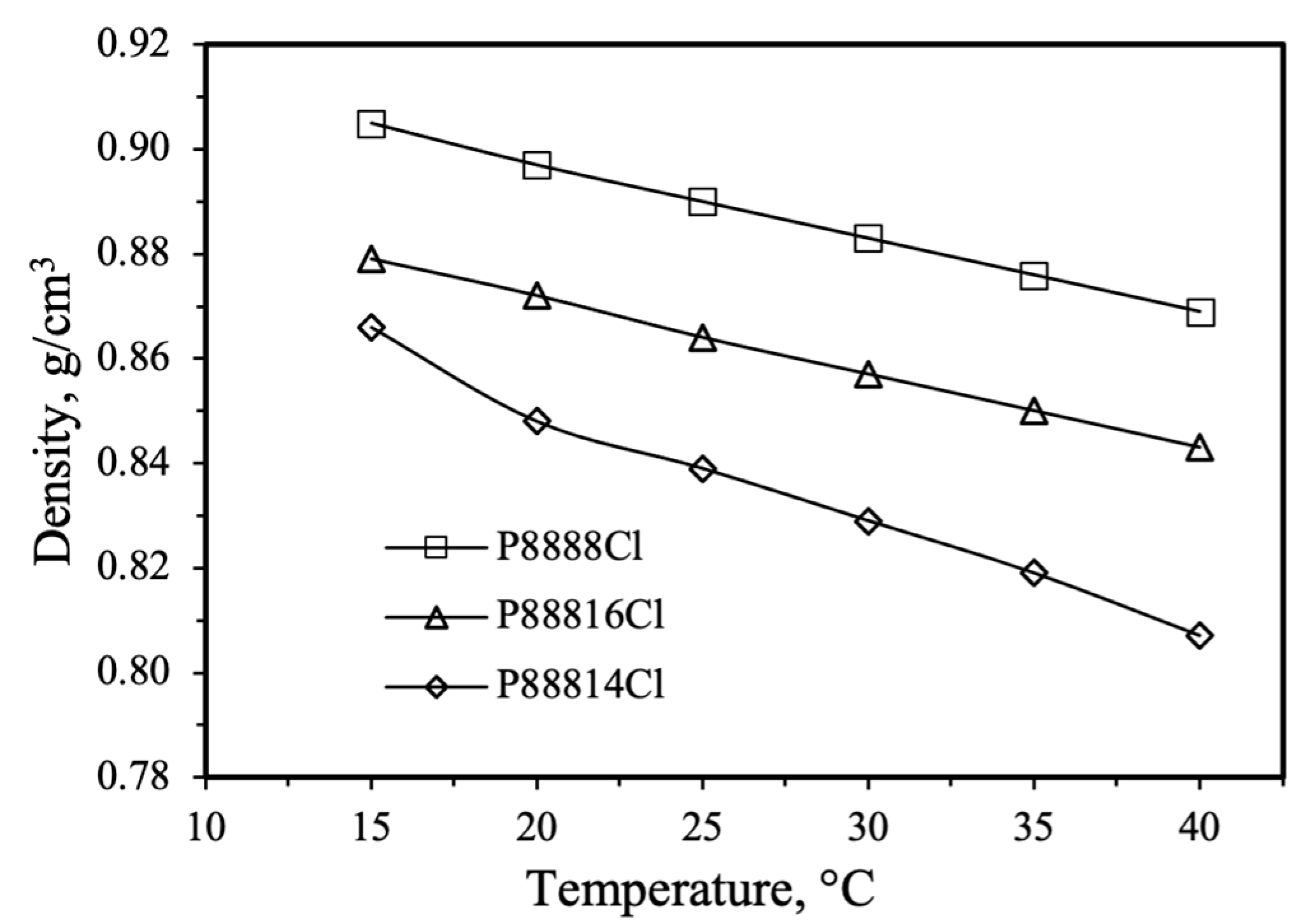
Regarding the properties of the synthesized ionic liquids, the measured density values as a function of temperature in the range 15 °C to 40 °C are shown Figure 1, where it can be observed that the density of the ionic liquids decreases linearly with increasing temperature, and the [P8888][Cl] has the higher density of the three.
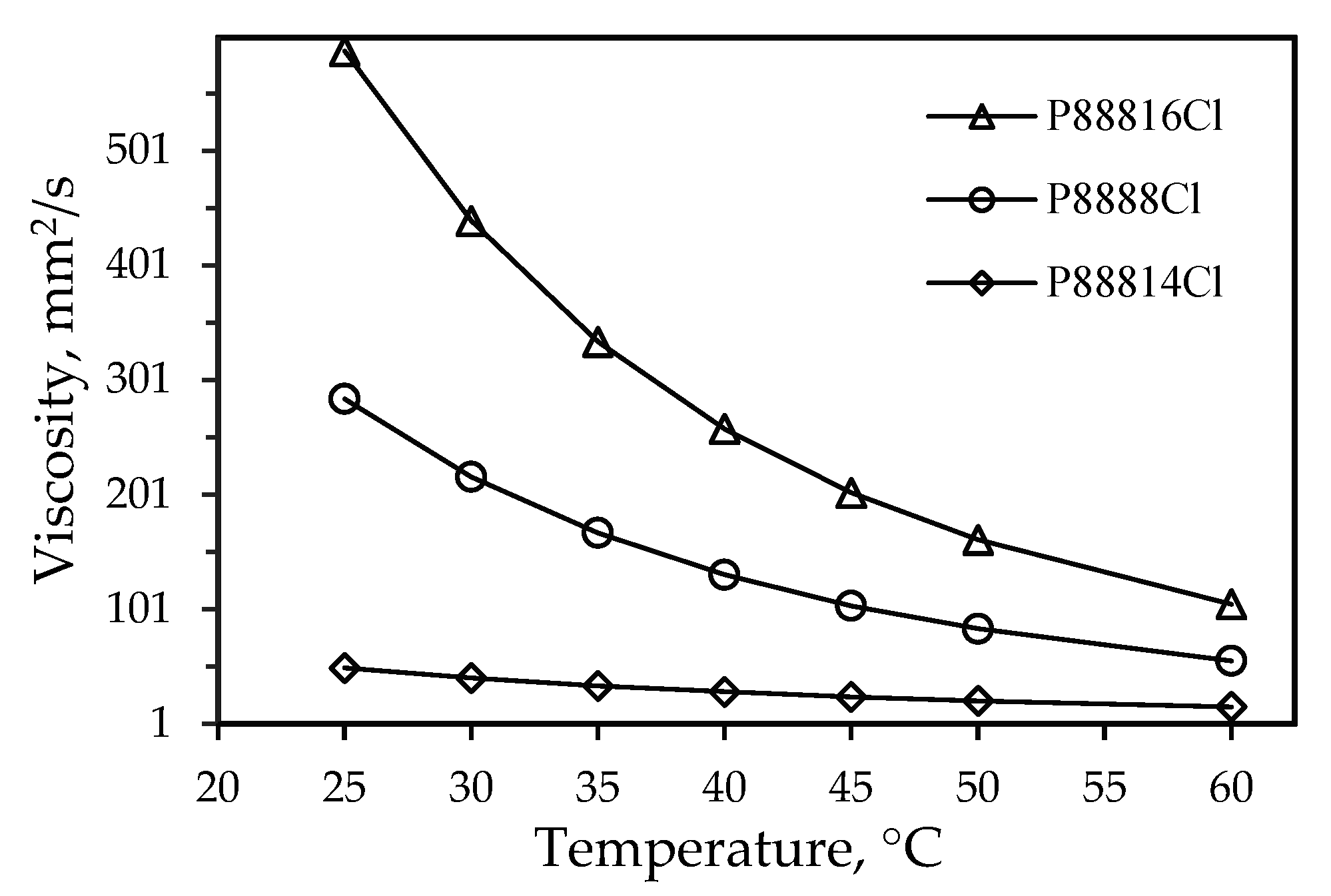
The viscosity of the ionic liquid is one of the main concerns in practical applications [24], mainly because it affects the efficiency of the separation of phases after contact. Therefore, the viscosities of the synthesized ionic liquids were measured at temperatures in the range of 25 °C to 60 °C and the results are summarized in Figure 2. As seen in the figure, the viscosity of the three ionic liquids decreases exponentially with increasing temperature, and the most viscous is [P88816][Cl]. We can observe that the viscosity values of all three ionic liquids decrease differently with increasing temperature; for example, the [P88816][Cl] ionic liquid suffers the largest diminution in viscosity. Based on these results, the ionic liquid [P88814][Cl] with the lowest viscosity values at all temperatures would be the best option for practical metal extraction applications.
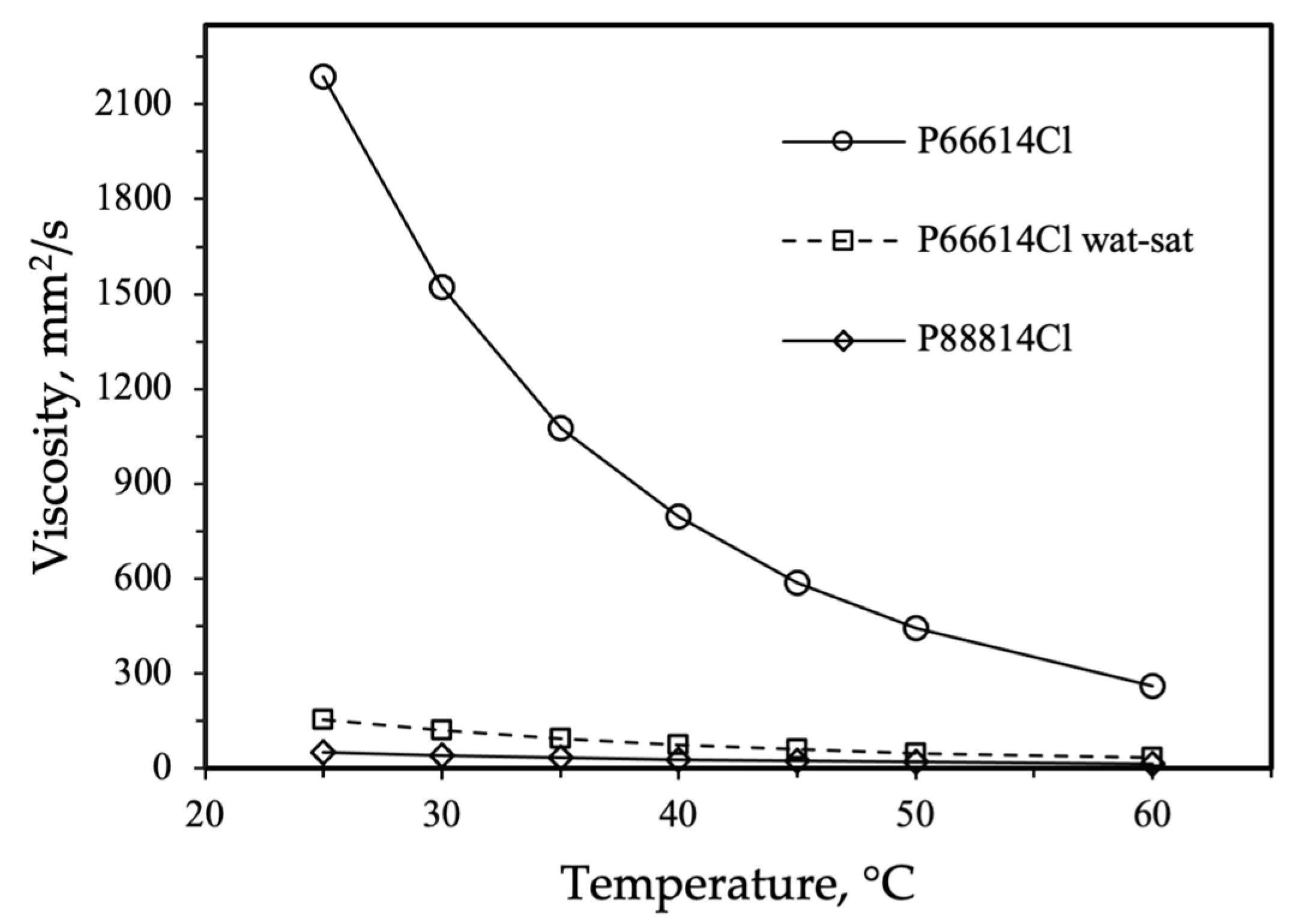
In this research, the viscosity of the as received commercial Cyphos IL 101 ([P66614][Cl]) was also measured in the same temperature range of 25 °C to 60 °C. The results are shown in Figure 3, where the viscosities of the water-saturated [P66614][Cl], and the synthesized [P88814][Cl] are also included for comparison purposes. It can be observed in the figure that the viscosity values for the as-received [P66614][Cl] are much higher than for the synthesized [P88814][Cl]. It can also be observed that the viscosities of the water-saturated [P66614][Cl] decreased considerably at all temperatures to values like those of the synthesized [P88814][Cl]. Previous researchers have also reported that the water saturation of [P66614][Cl] decreased its viscosity at a given temperature [23]. It should be noted that the synthesized trioctyl(alkyl)phosphonium chloride ionic liquids used in this research contained water because the synthesis process included three water-washing operations. Considering that, during an extraction process, the commercial [P66614][Cl] would be saturated with the aqueous solution during the contact time, the viscosity of practical interest of all of these ionic liquids are the water-saturated viscosity values.

3.2. Time for Cobalt Extraction to Reach Equilibrium

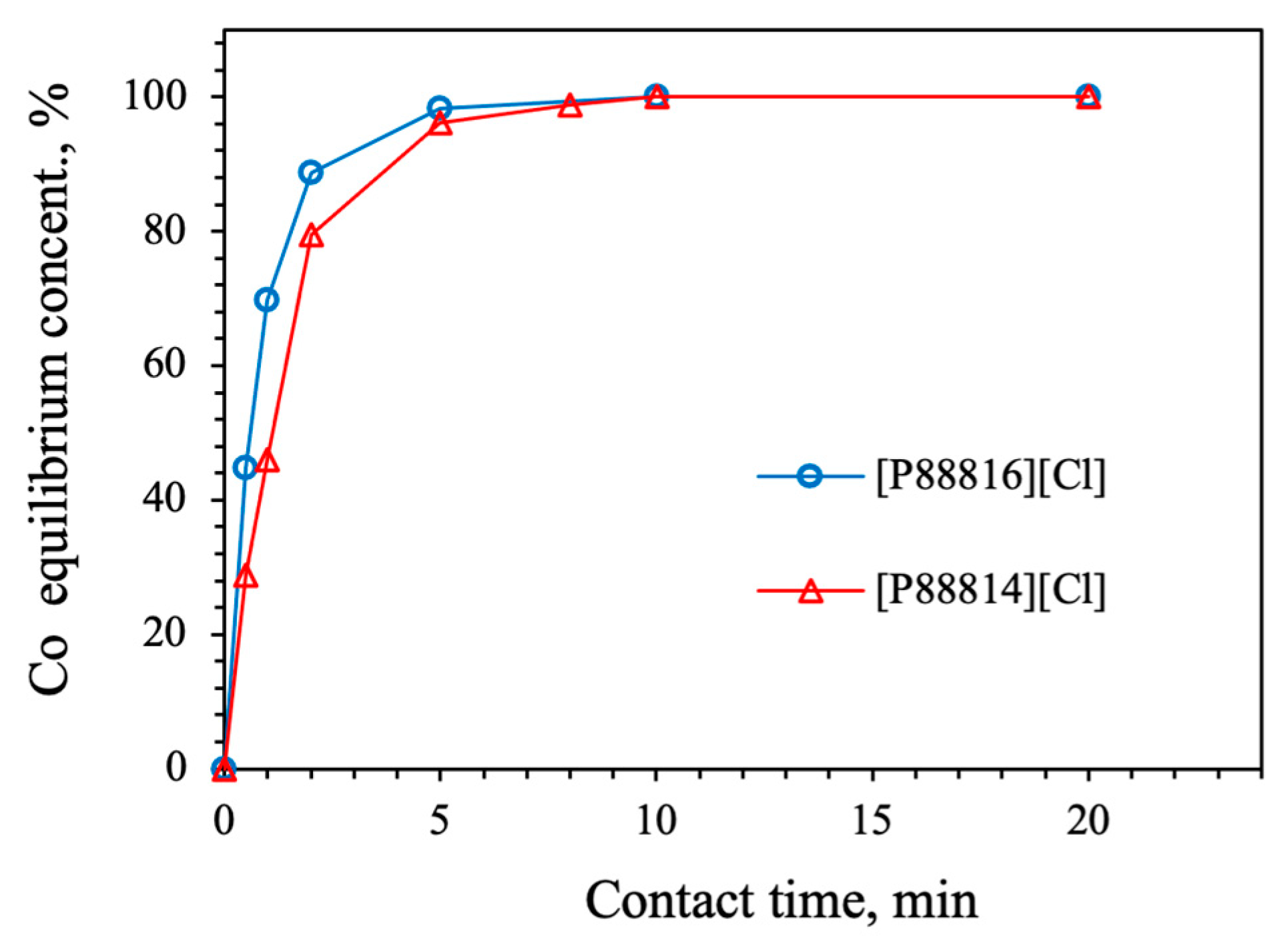
The Co(II) loaded into the ionic liquid as a function of contact time was determined to identify the time required to reach equilibrium. These extraction tests were carried out using the ionic liquid [P88816][Cl] (with the highest viscosity of the synthesized ionic liquids) from an aqueous solution of 4 M HCl containing 2 g/L of Co(II). For a given aqueous solution, this high-viscosity ionic liquid would most likely produce the coarsest dispersion; therefore, the extraction would require longer to reach equilibrium. The results of the tests are shown in Figure 4, where we can observe data published previously [31] for the extraction of Co(II) with [P88814][Cl] from an aqueous solution with 0.5 M H2SO4, 3M HCl, and 1 g/L of Co(II). Since both sets of data were obtained in the same reactor and experimental conditions but have different equilibrium compositions, the data were normalized for comparison. Thus, Figure 4 shows the percentage of the cobalt equilibrium concentration in the organic phase, where we can see that both ionic liquids reached the equilibrium concentration of Co in about 10 min. Furthermore, the extraction was slightly faster for the [P88816][Cl], since by 2 min of contact time, the Co concentration reached 88.8% of its equilibrium value compared to 79.6% for the [P88814][Cl] (with lower viscosity). This result is most likely due to the greater viscosity of the sulfate–chloride solution compared to the hydrochloric acid solution. In any case, a contact time of 20 min was used for the subsequent experiments with the phosphonium ionic liquids to ensure that the extraction reached equilibrium.

3.3. Co(II) Extraction as a Function of HCl Concentration

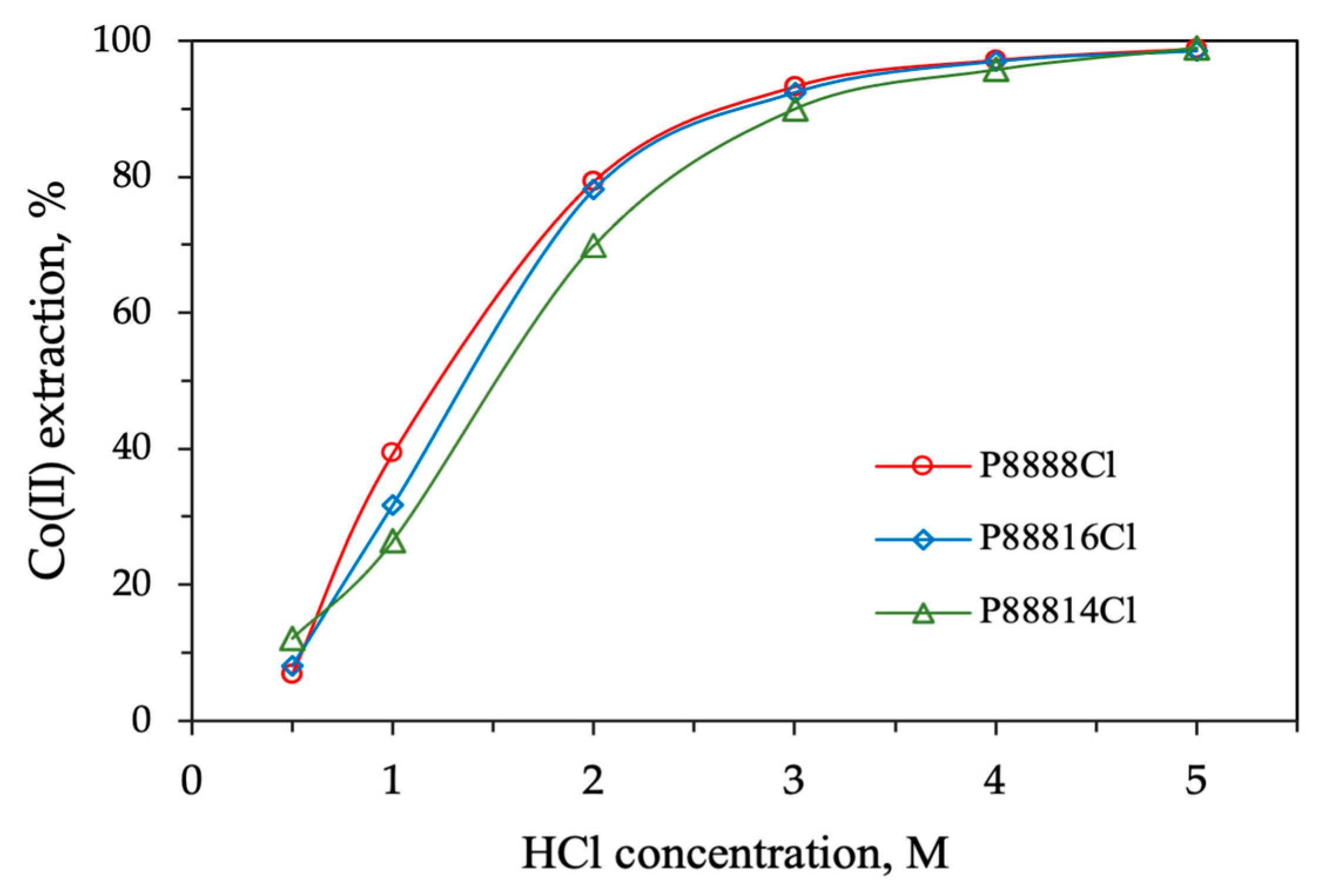
The Co(II) extraction from aqueous solutions containing 1 g/L of Co(II) as a function of the concentration of HCl with the trioctyl(alkyl)phosphonium ionic liquids is presented in Figure 5, which shows that Co(II) extraction increased with an increase in HCl concentration in the solution. It can also be seen that the Co(II) extractions with [P8888][Cl] and [P88816][Cl] are similar, and that Co(II) extraction is slightly lower for [P88814][Cl] for HCl concentrations up to 3 M. Nevertheless, extractions greater than 90% were obtained for 3 M HCl solutions and about 99% for 5 M HCl solutions with the three ionic liquids. This dependence on the concentration of HCl indicates a direct relationship between the extraction and the formation of cobalt–chloride complexes in the aqueous solution.

3.4. HCl Coextraction

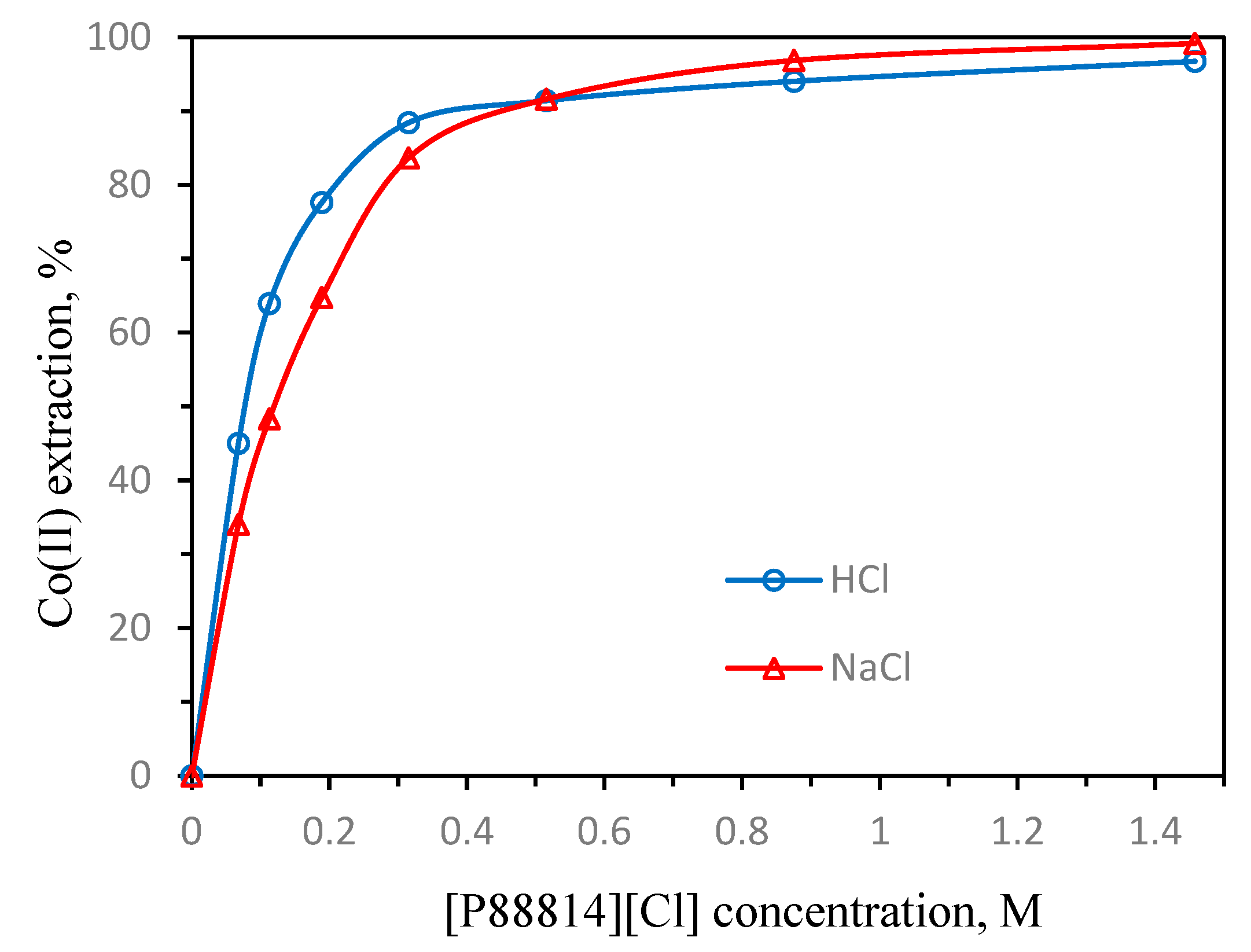
To verify whether HCl is coextracted with Co(II) or not, tests were carried out using [P88814][Cl] diluted with Escaid 110 to yield organic phases with various molar concentrations of the ionic liquid. Two aqueous solutions were used in the tests; the first contained 1 g/L of Co(II) and 4 M HCl and the second 1 g/L of Co(II) and 4 M NaCl. If the ionic liquid coextracts HCl, in the first solution, HCl would compete with Co(II) for the available ionic liquid, resulting in a decrease of the Co(II) extractions compared to solutions with 4 M NaCl for organic phases with low [P88814][Cl] concentrations. However, the results presented in Figure 6 show the opposite behavior. The organic phase 0.11 M in [P88814][Cl] extract 15% more Co(II) from HCl than from NaCl solutions and the difference for organic phase 0.19 M in [P88814][Cl] is 12.9%. This behavior is reversed at high concentrations of the ionic liquid (over 0.53 M), but the differences between the Co(II) extractions are very small, and since there should be enough ionic liquid for the extraction of both HCl and Co(II) under these conditions, these results cannot be attributed to HCl coextraction.

3.5. Co(II) Extraction Mechanism in Chloride Solutions

The Co(II) extraction mechanism can be inferred by analyzing the speciation of chloride complexes of Co2+ in the solutions. Therefore, a review of the formation constants for the cobalt–chloride complexes in concentrated HCl solutions [9,35,36,37,38,39] was carried out, which indicated that the reported values of the equilibrium constants differ widely among authors, and the use of some of these constants predicts that Co Cl 4 2 forms at HCl concentrations higher than the range considered in this research. Nevertheless, the values of the formation constants reported by Sato et al. [38] were used in this study because they successfully predicted the cobalt extraction by tri-n-octylamine from solutions with hydrochloric acid. The formation constant values were β1 = 0.392; β2 = 0.169; β3 = 0.080; β4 = 0.0091, corresponding to the following general reaction:
C o 2 + +   iC l     Co Cl i 2 i   with i = 1 4
For simplicity, the hydration of the cobalt species in the solution was ignored in Equation (5). There is evidence, however, that in aqueous solutions, Co2+ exists as the hexaaquocobalt(II) ion ( Co ( H 2 O ) 6 2 + ) , which loses hydration and progressively forms the various chloride complexes. Thus, the cobalt chloride complexes should be written rigorously as Co ( H 2 O ) 5 Cl + , Co ( H 2 O ) 2 Cl 2 , Co ( H 2 O ) Cl 3 and Co Cl 4 2 [35].
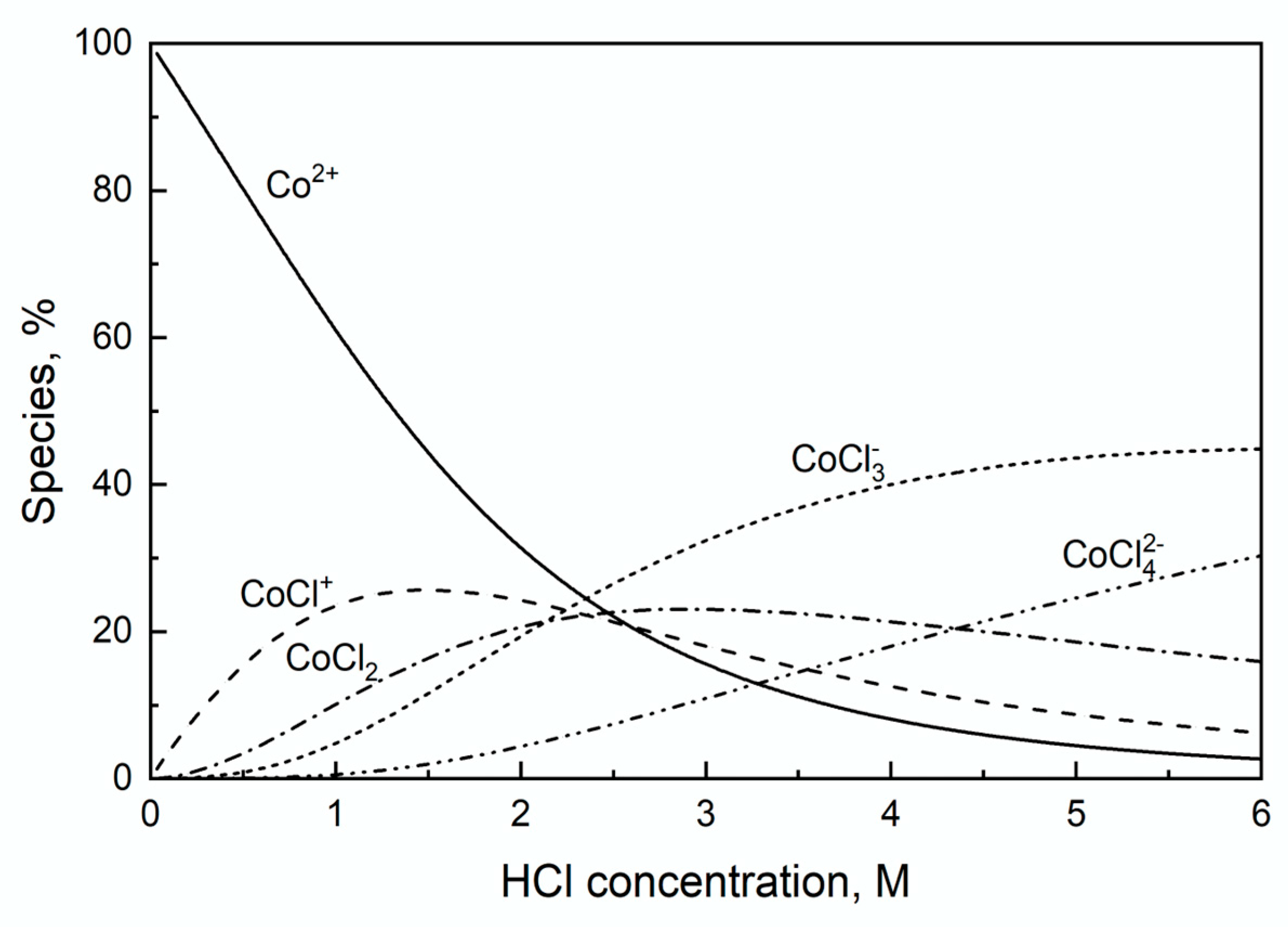
The calculated speciation values for the cobalt–chloride complexes as a function of the HCl concentration for solutions containing 1 g/L of Co(II) (1.7 × 10⁻² M) are shown in Figure 7. According to this figure, the cation Co2+ would predominate up to 2.0 M HCl, while the formation of Co Cl 4 2 should be negligible in aqueous solutions with HCl concentrations lower than 1 M; even in solutions with HCl 6 M, only 30% of the cobalt would be present as the tetrachlorocobaltate complex ion, which has been proposed as the cobalt-extracted species as given in Equation (2) [31].
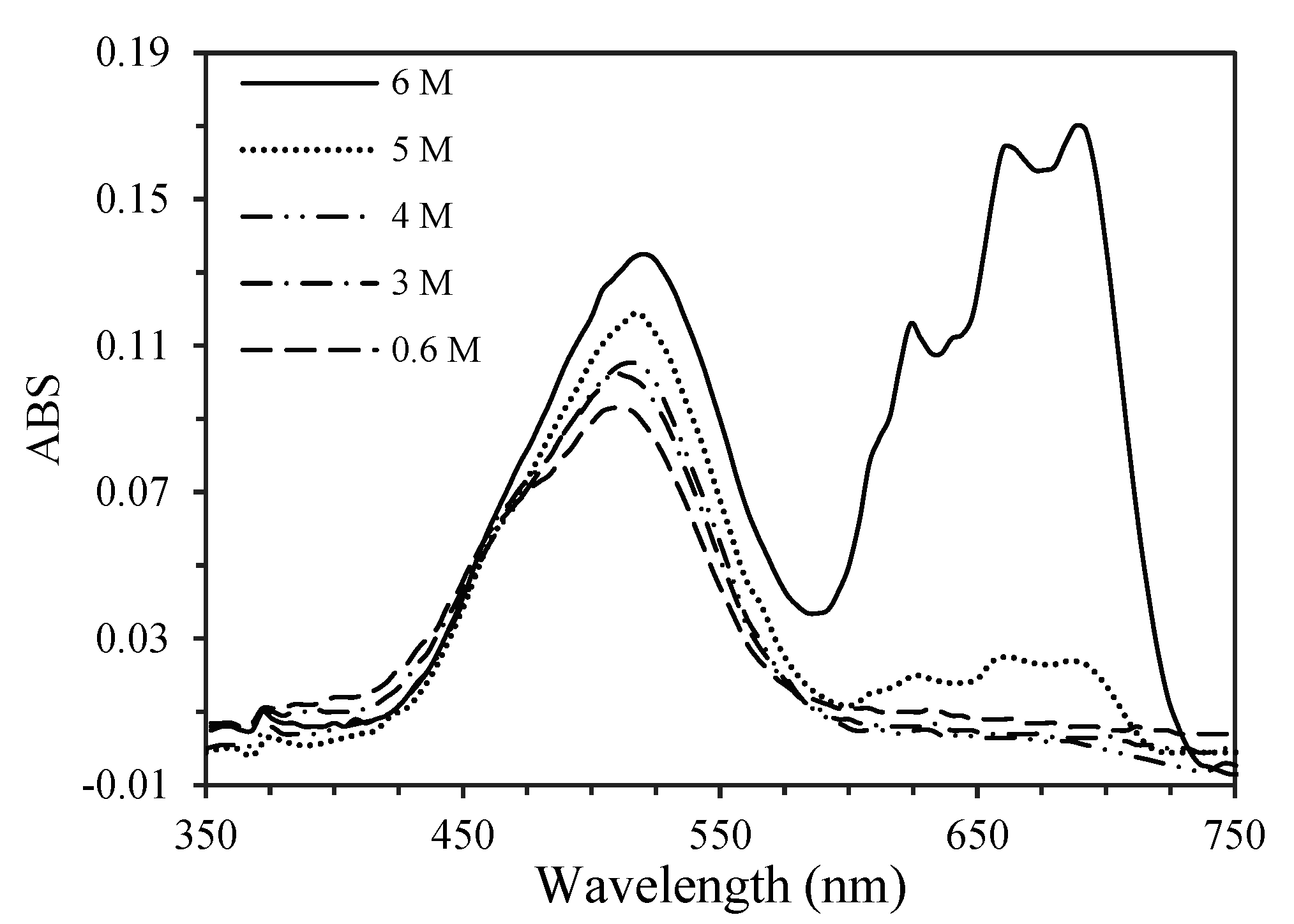
To verify the formation of Co Cl 4 2 , UV/vis analysis was carried out for aqueous solutions with different concentrations of HCl. This is presented in Figure 8, where it can be noted that all spectra show a maximum absorption at about 510 nm corresponding to the hexaaquocobalt(II) ion, which is pink in color [38]. Additionally, for solutions with high HCl concentrations (5 and 6 M), absorption bands can be observed at 630, 660, and 690 nm, which are characteristics for the tetrachlorocobaltate complex anion, C o C l 4 2 , that has a deep blue color [37,38]. It is clear from Figure 8 that the 6 M HCl solution contains a significant amount of C o C l 4 2 , which is in general agreement with the ionic speciation calculation shown in Figure 7. On the other hand, the UV/vis absorption spectra show that, for an HCl concentration of 0.6 M, the concentration of Co Cl 4 2 is negligible.
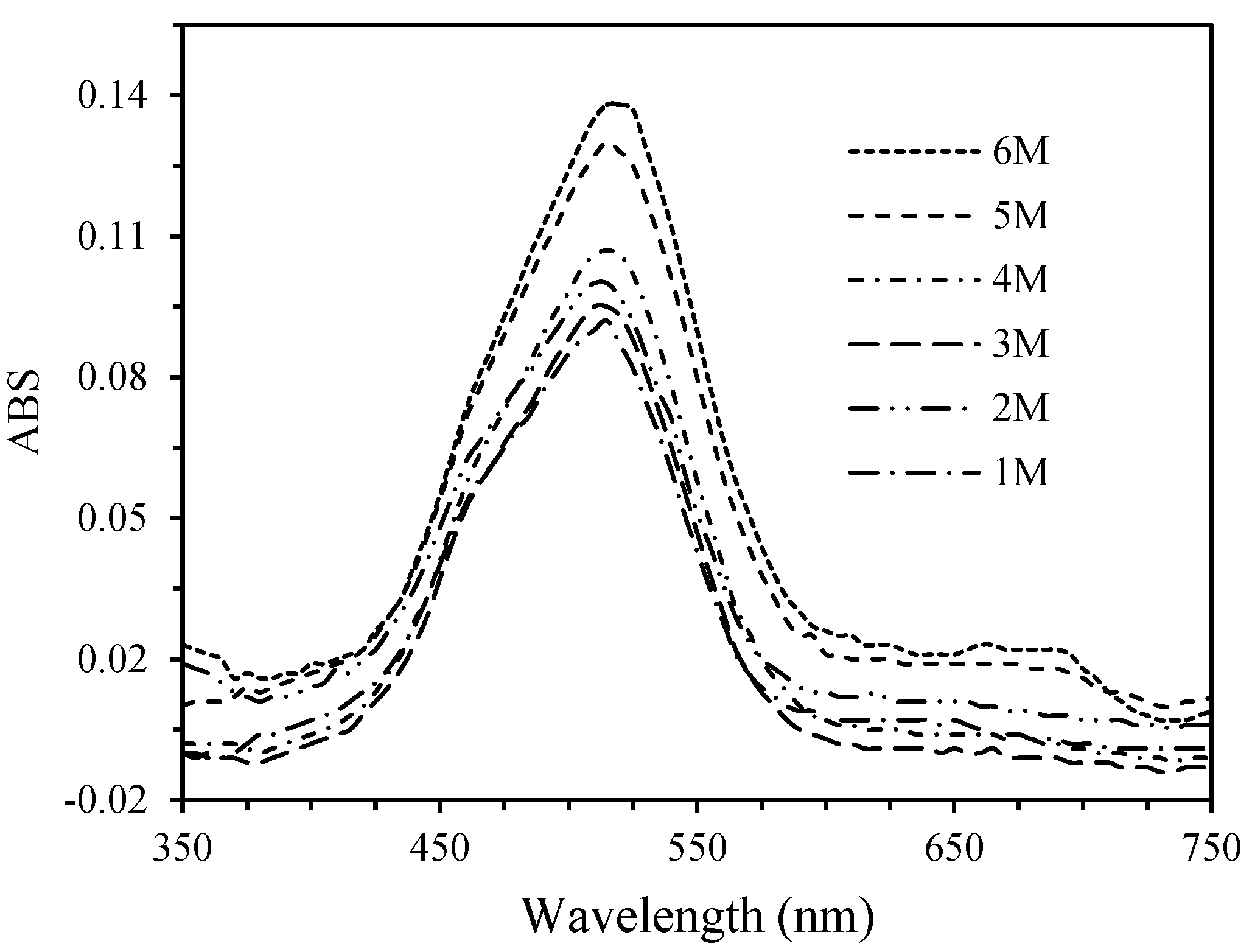
Regarding the aqueous solutions containing 1 g/L of Co(II) (1.7 × 10⁻² M) and different concentrations of NaCl, the UV/vis spectra are presented in Figure 9.
It is evident from the spectra in Figure 9 that, for NaCl solutions, the absorption bands for C o C l 4 2 are very weak compared with the spectra of HCl solutions for the same chloride concentrations. The reason for the greater formation of Co(II) chloride complexes in HCl solutions is believed to be the higher concentration of H3O+, which favors the rupture of the hydration bonds of the C o ( H 2 O ) 6 2 + , therefore facilitating the formation of Co(II) chloride complexes [37]. However, the low presence of C o C l 4 2 in NaCl solution does not have a deleterious effect on cobalt extraction, except for very low ionic liquid concentrations in the organic phase, as shown in Figure 6.
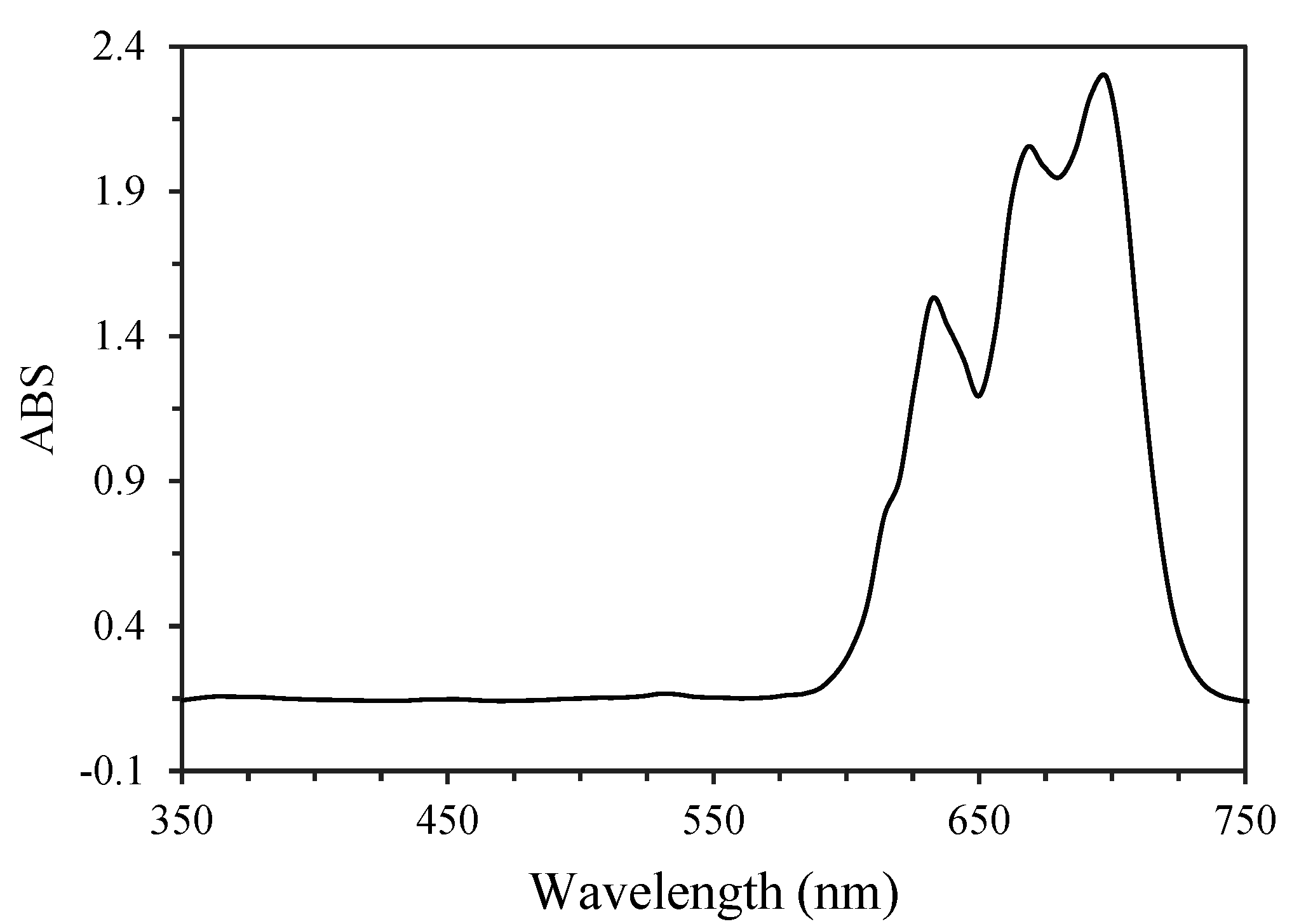
Concerning the UV analysis of the loaded ionic liquid, the obtained spectrum for the [P88814][Cl] after contacting with an aqueous solution with 1 g/L of Co(II) and 0.6 M in HCl at 25 °C is shown in Figure 10. According to Figure 5, under these conditions, [P88814][Cl] extracted about 13% of the cobalt in solution.
The spectrum in Figure 10 shows only the characteristic absorption bands for the tetrachlorocobaltate complex anion, Co Cl 4 2 . Visually, the loaded ionic liquid phase had a light blue color, confirming that the complex species of cobalt present in the organic liquid was [ P 88814 ] 2 CoC l 4 ¯ , even though, as seen in Figure 8, the 0.6 M HCl aqueous solution did not contain Co Cl 4 2 .
Therefore, we propose that the trioctyl(alkyl)phosphonium chloride ionic liquids can extract the neutral complex species CoCl2 via an addition mechanism, according to the following reaction:
CoC l 2 +   2 P 88814 Cl   ¯   [ P 88814 ] 2 CoC l 4 ¯
Only at high chloride concentrations would the dominant extraction mechanism be the ionic exchange of C o C l 4 2 by chloride ions in the organic liquid, as proposed previously [29,31].
CoC l 4 2 + 2 P 88814 Cl   ¯   [ P 88814 ] 2 CoC l 4 ¯ + 2 C l
Furthermore, the extraction of CoC l 3 is also possible by a mixed mechanism, according to the following:
CoC l 3   +   2 P 88814 Cl   ¯   [ P 88814 ] 2 CoC l 4 ¯   +   C l
The fraction of Co(II) extracted by each of the proposed mechanisms should vary depending on the Co(II) speciation in the aqueous phase.

3.6. Stripping Tests

The stripping of the loaded ionic liquid with water occurs through the following reaction:
[ P 88814 ] 2 CoC l 4 ¯ + 18 H 2 O 2 P 88814 Cl ¯ + C o ( H 2 O ) 6 2 + + 2 C l ( H 2 O ) 6
Therefore, after the stripping operation, the ionic liquid will be ready for a new metal extraction cycle, as indicated in reaction (9). Thus, stripping experiments were carried out at 25 °C for 20 min using an A/O ratio of 2/1 using [P88814][Cl] ionic liquid from three different stripping solutions—H2O, HCl (0.1 M) and HCl (0.2 M)—using an A/O ratio of 2/1. Since the results were discussed in our previous publication [31], here we only briefly highlight the stripping efficiency because the stripping operation is straightforward in the HCl and NaCl systems. The stripping of cobalt with water was close to 100%, and it decreased somewhat with an increase in chloride concentration in the stripping solution; nonetheless, the efficiency for 0.2 M HCl was about 98%.
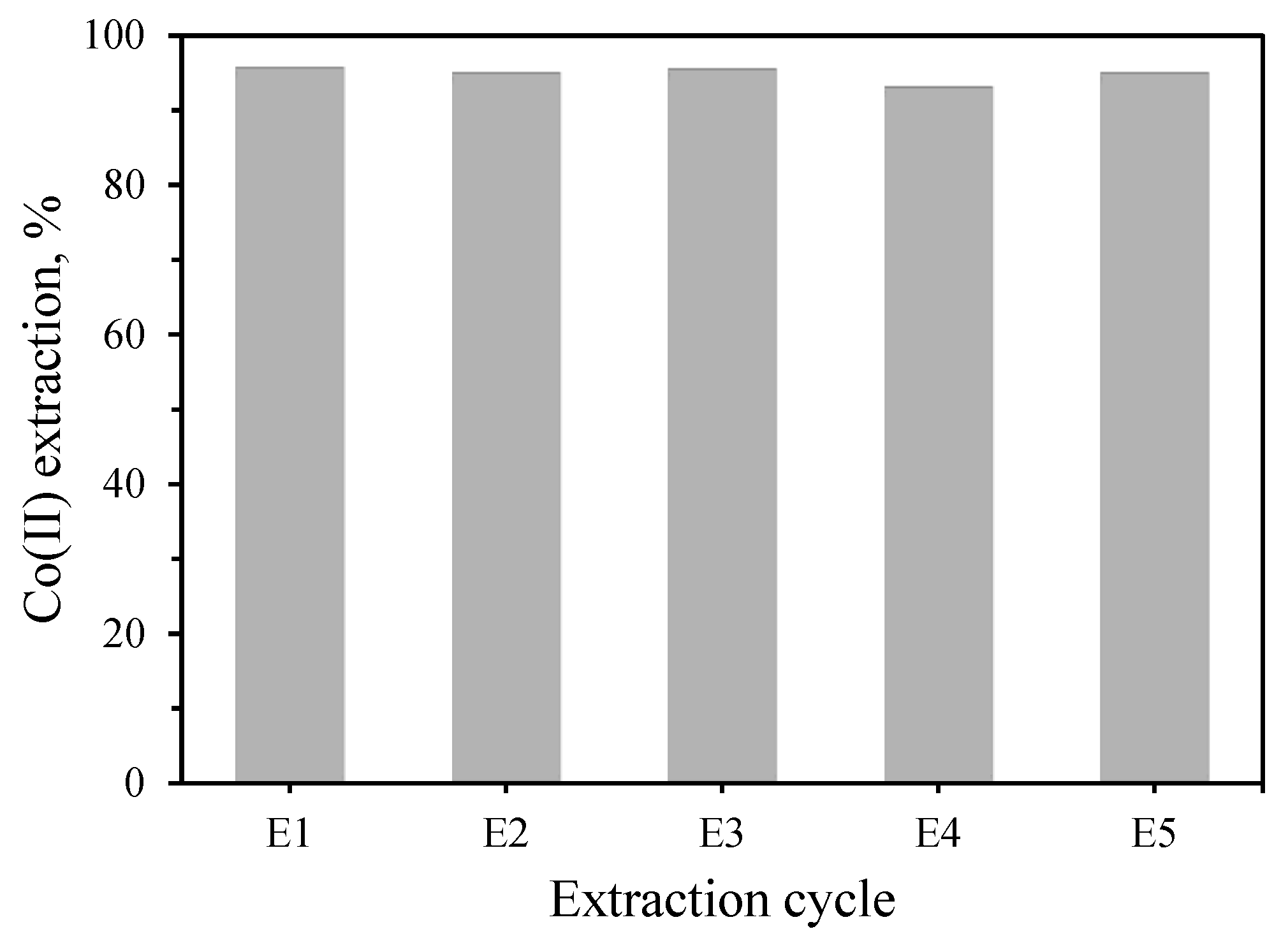
The effect of recycling the [P88814][Cl] ionic liquid was studied by successive extraction and stripping steps of 3 M NaCl aqueous solutions containing 1 g/L of Co(II) using a phase ratio A/O equal to 2/1 for 30 min at 25 °C. After phase separation, the loaded ionic liquid was stripped with distilled water using an A/O ratio of 4/1 for 40 min. The extraction-stripping cycle was repeated five times using the ionic liquid from the previous cycle and fresh aqueous solution. The Co(II) extraction values obtained in the successive extraction steps are shown in Figure 11, where the ionic liquid maintained its loading capacity in the performed extraction-stripping cycles.
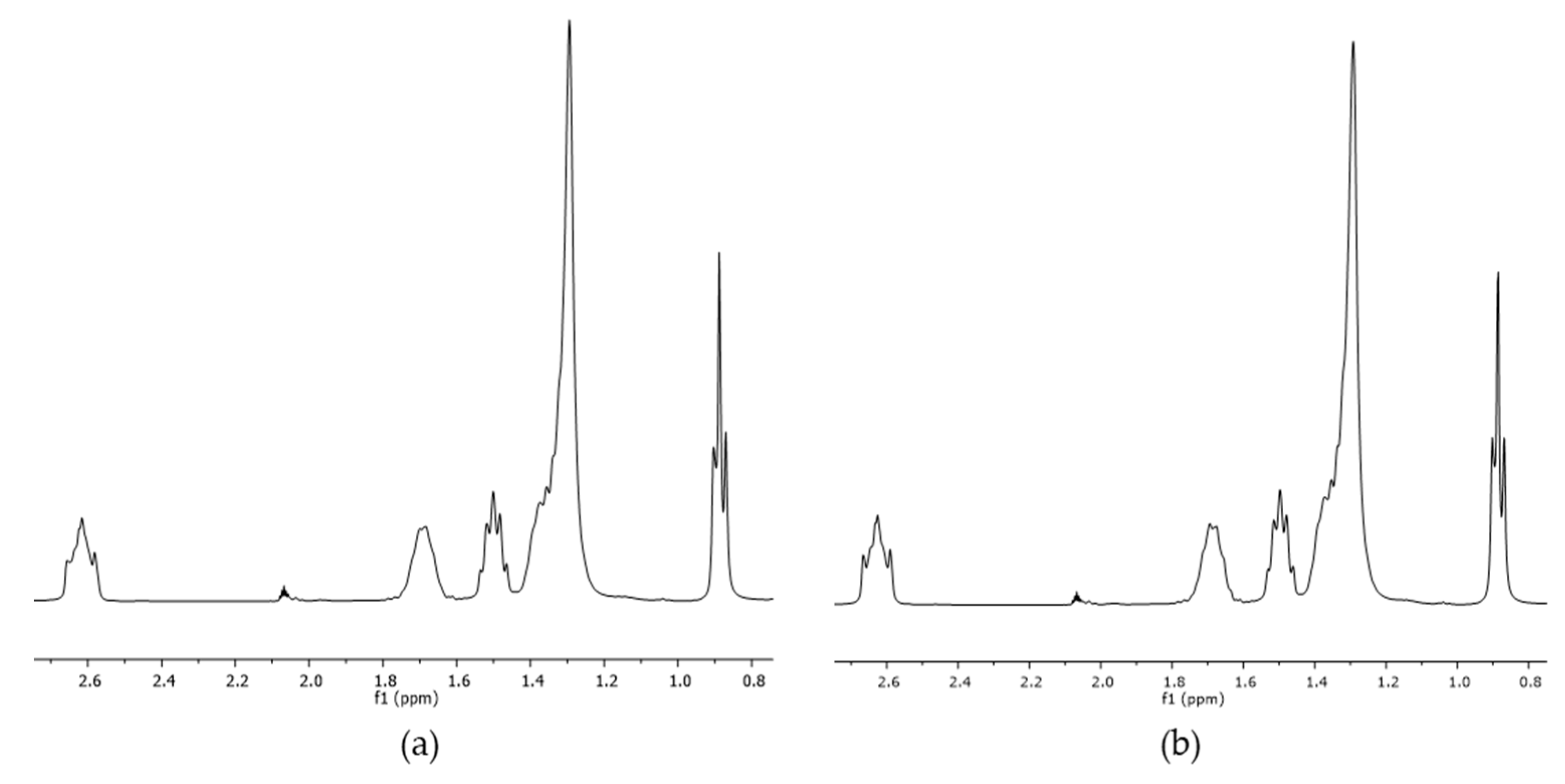
The 1H NMR spectrum of the fresh [P88814][Cl] ionic liquid and after five successive extraction-stripping cycles indicated that there were no detectable changes in the structure of the ionic liquids, as shown in Figure 12a,b. Therefore, the ionic liquid could be used at least five times without losing its structure and loading capacity.

3.7. Selectivity of Co over Ni Extraction

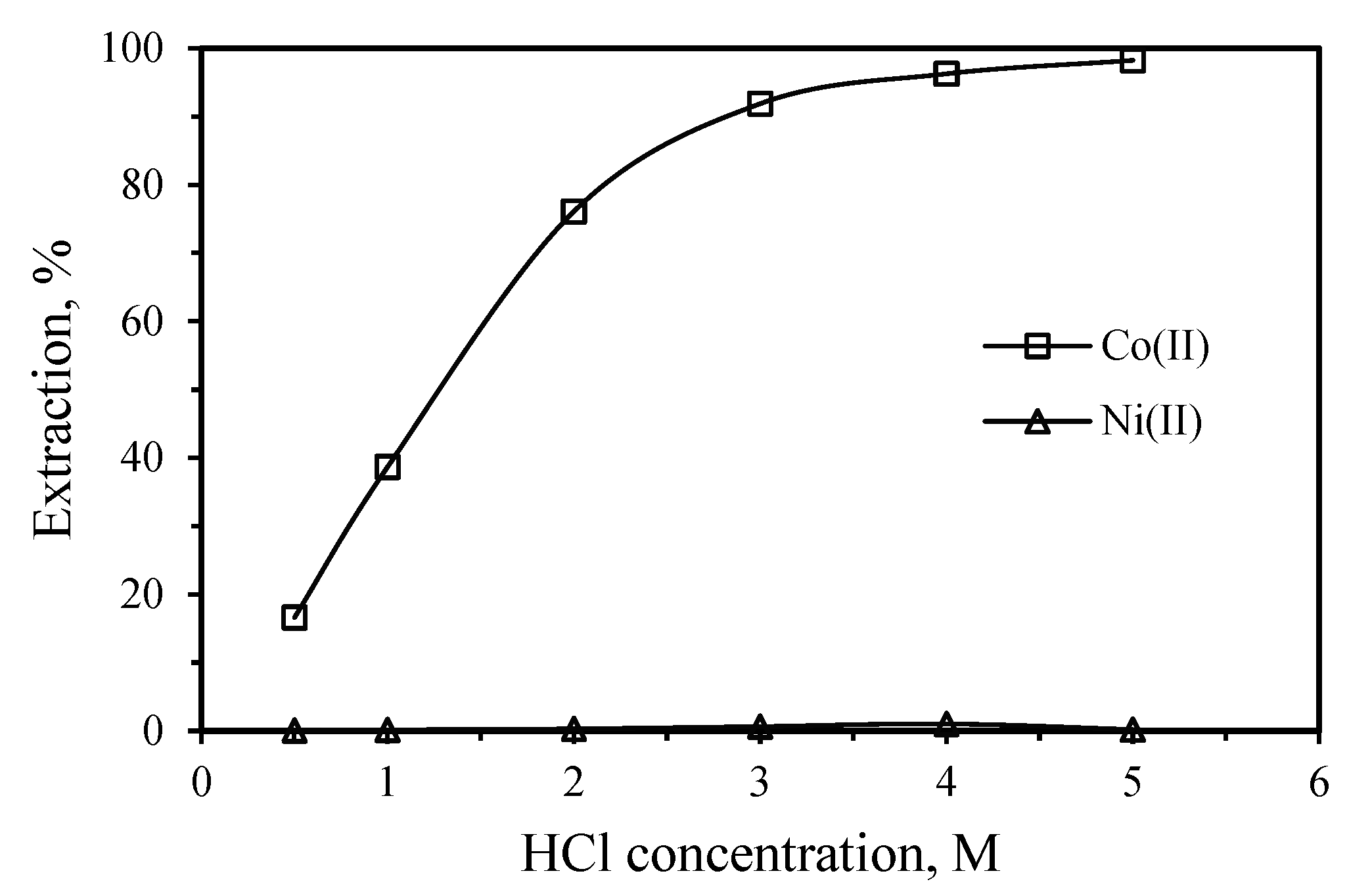
Figure 13 shows the extraction of Co(II) and Ni(II) with the [P88816][Cl] ionic liquid as a function of HCl concentration from solutions containing 1 g/L of Co(II) and 1 g/L of Ni(II). As we can see in this figure, Ni(II) extraction is almost nil, while Co(II) extraction reaches 91.9% from a 3 M HCl solution and 98.3% from a 5 M HCl solution. The low nickel extraction is a consequence of the low affinity of the nickel cation for chloride ions. Only the cationic complex species, NiCl+, has been reported to form in aqueous solutions with very high chloride concentrations [33,34]. Therefore, all of the ionic liquids studied here will extract Co(II) selectively over Ni(II) from chloride media. For example, for the conditions shown in Figure 13, the separation factor for the 5 M HCl solution with [P88816][Cl] was higher than 25,000.

3.8. Cobalt and Associated Metal Extraction from Laterite Dissolution Solution

The extraction of various metallic ions with ionic liquid [P8888][Cl] was studied from an aqueous solution 0.5 M H2SO4, 2.8 M HCl, and with the metallic ion concentrations shown in Table 1, which is similar to the composition obtained from nickel laterite leaching [40]. Extraction tests were carried out at 25 °C with an A/O phase ratio equal to 2/1, and the results summarized in Table 1 show that the extractions of Ni(II), Mg(II) and Ca(II) are negligible. This result was as expected since these species do not form stable complex ions with chloride. On the other hand, Zn(II) extraction is higher than Co(II), and Mn(II) extraction is partial. Therefore, the selective extraction of Co(II) from Ni(II), Mg(II), and Ca(II) is possible under the condition of the experiments. However, Zn(II) and Mn(II) would be coextracted with Co(II). This behavior should be similar for the other trioctyl(alkil)phosphonium chloride ionic liquids.
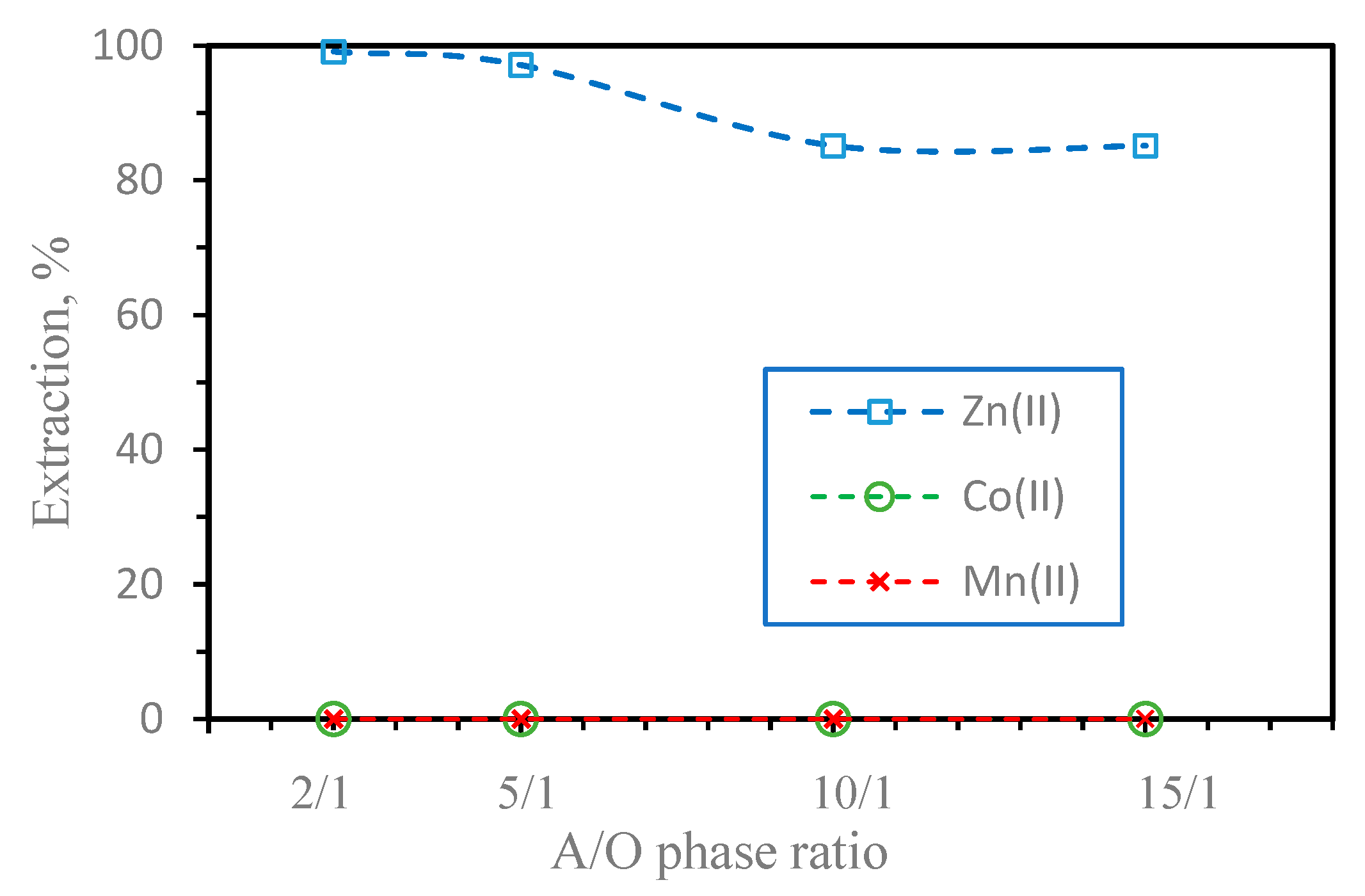
Hence, the extraction of Co(II), Mn(II) and Zn(II) from an aqueous solution 3 M HCl with the composition given in Table 2 was studied to determine the conditions for the separation of these three metals. For this purpose, extraction tests were carried out using an organic phase containing P [88814][Cl] 0.1 M in Escaid 110 and high A/O phase ratios. The results of the extraction are shown in Figure 14.
We can observe from Figure 14 that the organic-phase-extracted Zn(II) and did not extract Co(II) or Mn(II) under these conditions. Therefore, Zn(II) can be extracted selectively over Co(II) and Mn(II) using low concentrations of [P88814][Cl].
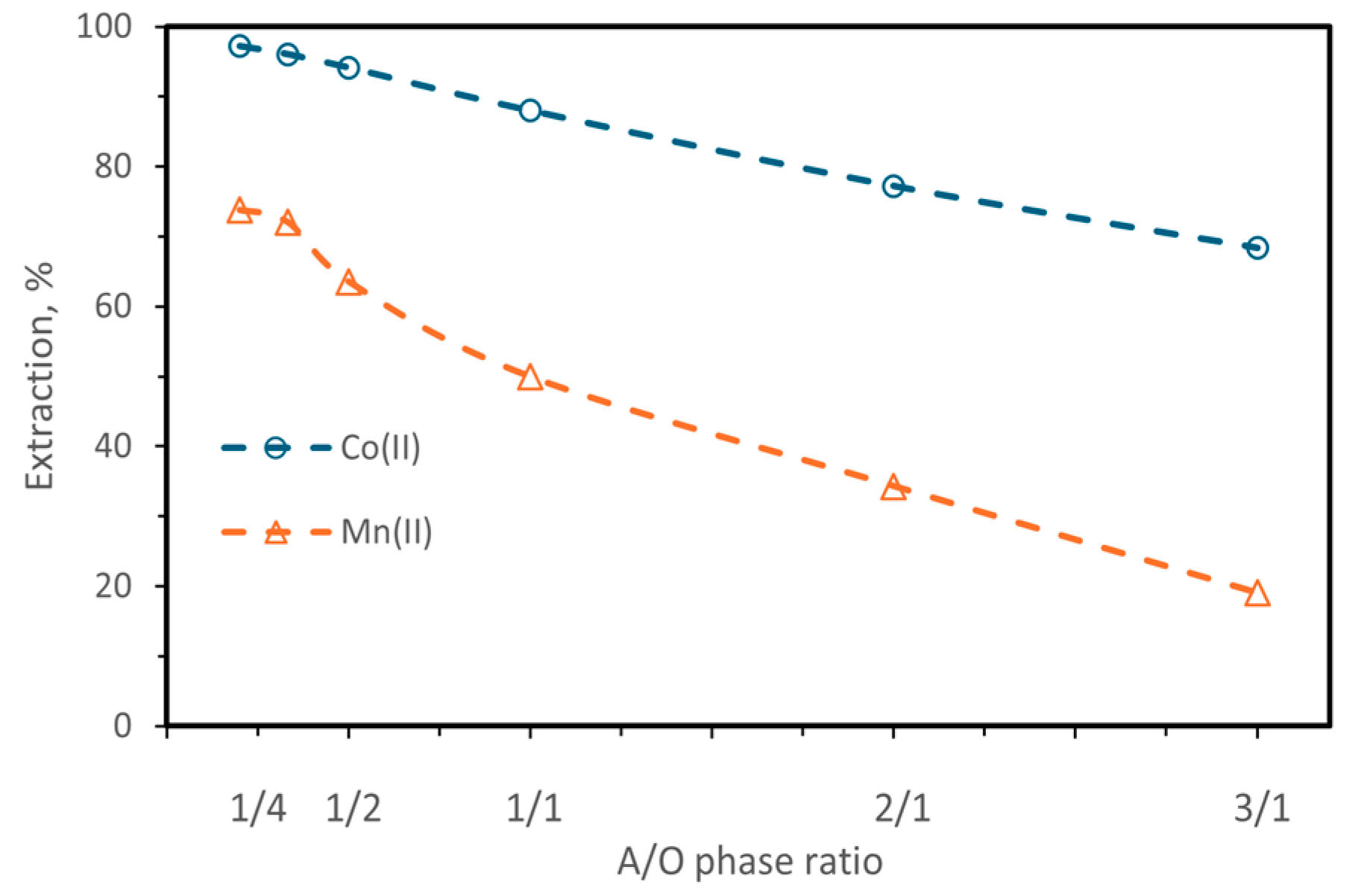
Regarding the separation of Co(II) and Mn(II), tests were carried out with an organic solution 0.8 M in [P88814][Cl] from an aqueous solution 3 M in NaCl with 292 mg/L of Co(II) and 1481 mg/L of Mn(II) at different A/O ratios, and the results are shown in Figure 15. We can see that the extraction of Co(II) and Mn(II) decreased with an increase in the A/O ratio. Nevertheless, with this ionic liquid, trioctil(tetradecyl)phosphonium chloride ([P88814][Cl]) cobalt and Mn cannot be separated effectively. From the data in Figure 15, the separation factor for Co(II) over Mn(II) in A/O phase ratios 1/4, and 3/1 were 4.4 and 9.2, respectively.
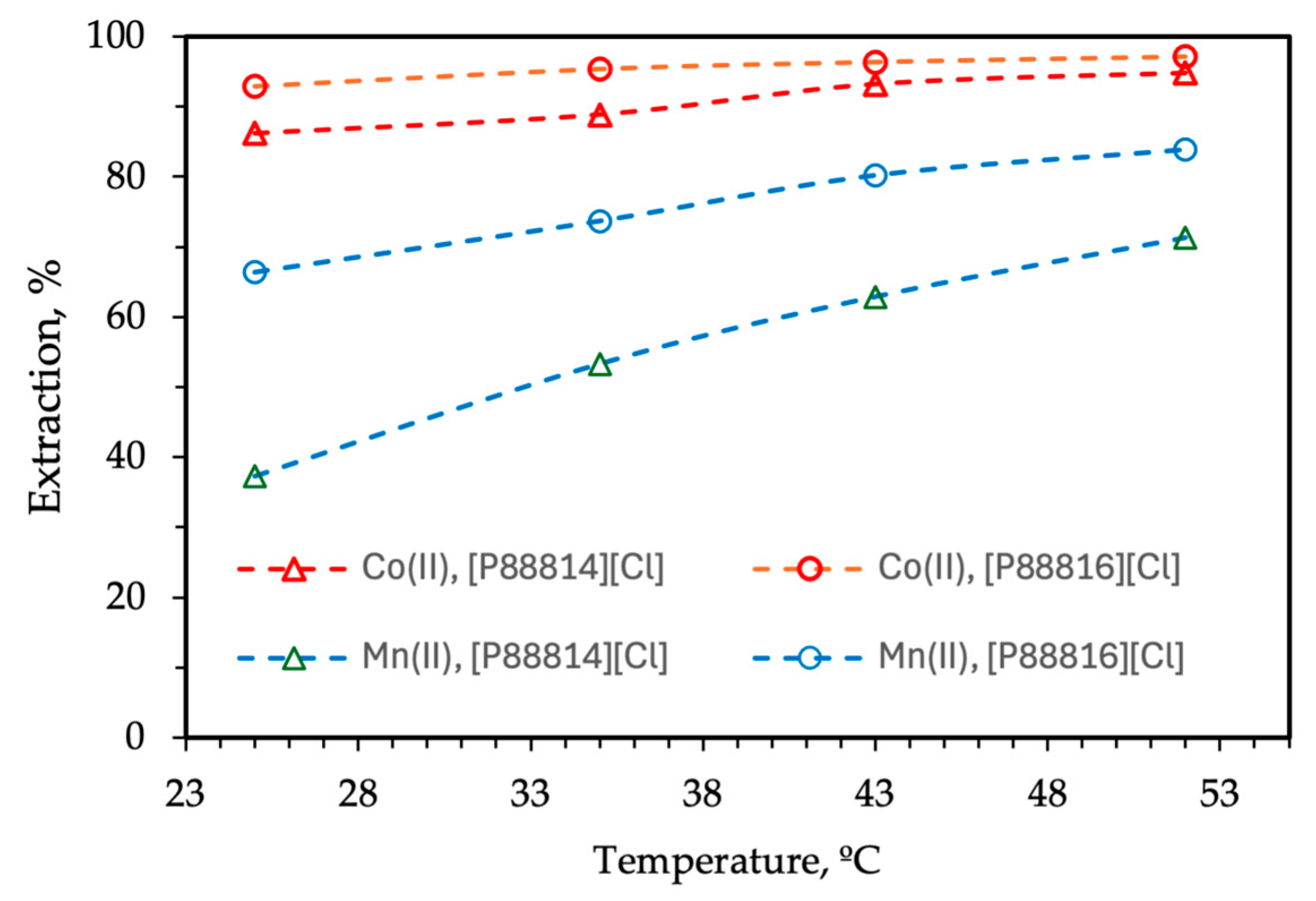
Finally, the effect of temperature was studied in the range of 25 to 52 °C using the ionic liquids [P88816][Cl] and [P88814][Cl] to determine whether cobalt can be extracted selectively over Mn from a solution 3 M in HCl containing 1 g/L of Co(II) and Mn(II). The extraction results are shown in Figure 16, where it can be observed that the extraction of Co(II) with [P88816][Cl] is slightly better than with [P88814][Cl] at all temperatures. On the other hand, the extraction of Mn(II) is much better with [P88816][Cl] than with [P88814][Cl]; therefore, the latter ionic liquid would be somewhat more selective in the extraction of Co(II) over Mn(II) (separation factor of 10.5 instead of 6.6 at 25 °C), but is still inadequate, and increasing the temperature would not improve the Co(II) over Mn(II) selectivity.

4. Conclusions

From the experimental results, the following can be concluded:
  • The three phosphonium ionic liquids ([P888n][Cl], with n = 8, 14, and 16) were very effective for the extraction of Co(II) from solutions containing high concentrations of HCl or NaCl. Equilibrium cobalt extractions over 95% were obtained from 4 M HCl or NaCl aqueous solutions containing 1 g/L of Co(II).
  • Cobalt extraction equilibrium was reached in less than 10 min at 1200 rpm stirring speed and at 25 °C using [P88816][Cl], which was the more viscous of the three ionic liquids.
  • The Co(II) extraction with [P888n][Cl] occurred through the extraction of the neutral complex species CoCl2 by an addition mechanism. Only at high chloride concentrations would the dominant extraction mechanism be the ionic exchange of C o C l 4 2 by chloride ions in the organic liquid.
  • From Co-Ni chloride solutions, nickel extraction was low for all chloride concentrations; therefore, the selectivity of [P888n][Cl] ionic liquids for Co(II) over Ni(II) is very good. In appropriate conditions, a separation factor higher than 25,000 for the extraction of Co(II) over Ni(II) was obtained using [P88816][Cl]. High selectivity for Co(II) extraction over Mg(II) and Ca(II) was also obtained.
  • The selective extraction of Zn(II) from solutions containing Co(II) and Mn(II) can be achieved using diluted [P88814][Cl] ionic liquid.
  • The stripping of the loaded ionic liquids can be effectively achieved with water, and the stripped ionic liquid can be recycled up to five times while maintaining its extraction effectiveness.

Author Contributions

Conceptualization, D.E.C. and M.C.R.; Methodology, D.E.C., M.C.R., O.R.-B., and R.P.; Investigation, D.E.C. and D.A.-A.; Resources. M.C.R. and M.D.; Writing—Original Draft, D.E.C.; Writing—Review and Editing, M.C.R. and R.P.; Supervision, R.P. and M.C.R.; Visualization, R.P. All authors have read and agreed to the published version of the manuscript.

Funding

This research received no external funding.

Data Availability Statement

The data are available on request from the authors.

Acknowledgments

The authors acknowledge the Department of Metallurgical Engineering and the Department of Organic Chemistry of the University of Concepcion, Chile, for supporting this study. D.E. Chaverra wishes to thank the National Commission for Scientific and Technological Research (CONICYT) of Chile for financial support through a graduate scholarship.

Conflicts of Interest

The authors declare no conflicts of interest.

References

  1. Wiecka, Z.; Rzelewska-Piekut, M.; Cierpiszewski, R.; Staszak, K.; Regel-Rosocka, M. Hydrometallurgical Recovery of Cobalt(II) from Spent Industrial Catalysts. Catalysts 2020, 10, 61. [Google Scholar] [CrossRef]
  2. Omelchuk, K.; Chagnes, A. New cationic exchangers for the recovery of cobalt(II), nickel(II) and manganese(II) from acidic chloride solutions: Modelling of extraction curves. Hydrometallurgy 2018, 180, 96–103. [Google Scholar] [CrossRef]
  3. Janiszewska, M.; Markiewicz, A.; Regel-Rosocka, M. Hydrometallurgical separation of Co(II) from Ni(II) from model and real waste solutions. J. Clean. Prod. 2019, 228, 746–754. [Google Scholar] [CrossRef]
  4. Eyupoglu, V.; Polat, E.; Kunduracioglu, A.; Turgut, H.I. A Novel Viewpoint of Imidazolium Salts for Selective Extraction of Cobalt in the Presence of Nickel from Acidic Thiocyanate Solutions by Ionic-Liquid-Based Solvent-Extraction Technique. J. Dispers. Sci. Technol. 2015, 36, 1704–1720. [Google Scholar] [CrossRef]
  5. Kumbasar, R.A. Selective extraction and concentration of cobalt from acidic leach solution containing cobalt and nickel through emulsion liquid membrane using PC-88A as extractant. Sep. Purif. Technol. 2009, 64, 273–279. [Google Scholar] [CrossRef]
  6. Panigrahi, S.; Parhi, P.K.; Nathsarma, K.C.; Sarangi, K. Processing of manganese nodule leach liquor for the separation of cobalt and nickel using PC 88A. Min. Metall. Explor. 2009, 26, 133–140. [Google Scholar] [CrossRef]
  7. Swain, B.; Jeong, J.; Lee, J.; Lee, G.-H. Separation of Co(II) and Li(I) by supported liquid membrane using Cyanex 272 as mobile carrier. J. Memb. Sci. 2007, 297, 253–261. [Google Scholar] [CrossRef]
  8. Carson, I.; Tasker, P.A.; Love, J.B.; Moser, M.; Fischmann, A.J.; Jakovljevic, B.; Soderstrom, M.D.; Morrison, C.A. The Supramolecular and Coordination Chemistry of Cobalt(II) Extraction by Phosphinic Acids. Eur. J. Inorg. Chem. 2018, 2018, 1511–1521. [Google Scholar] [CrossRef]
  9. Bjerrum, J.; Halonin, A.S.; Skibsted, L.H.; Andresen, A.F.; Southern, J.T.; Edlund, K.; Eliasen, M.; Herskind, C.; Laursen, T.; Pedersen, P.M. Studies on Cobalt(II) Halide Complex Formation. I. A Spectrophotometric Study of the Chloro Cobalt(II) Complexes in Strong Aqueous Chloride Solutions. Acta Chem. Scand. 1975, 29a, 326–332. [Google Scholar] [CrossRef]
  10. Torkaman, R.; Asadollahzadeh, M.; Torab-Mostaedi, M.; Ghanadi Maragheh, M. Recovery of cobalt from spent lithium-ion batteries by using acidic and basic extractants in solvent extraction process. Sep. Purif. Technol. 2017, 186, 318–325. [Google Scholar] [CrossRef]
  11. Lommelen, R.; Vander Hoogerstraete, T.; Onghena, B.; Billard, I.; Binnemans, K. Model for Metal Extraction from Chloride Media with Basic Extractants: A Coordination Chemistry Approach. Inorg. Chem. 2019, 58, 12289–12301. [Google Scholar] [CrossRef] [PubMed]
  12. Bourget, C.; Jakovljevic, B.; Nucciarone, D. CYANEX® 301 binary extractant systems in cobalt/nickel recovery from acidic sulphate solutions. Hydrometallurgy 2005, 77, 203–218. [Google Scholar] [CrossRef]
  13. Wang, L.; Lee, M.S. Solvent extraction of cobalt and nickel from chloride solution by mixtures of acidic organophosphorous extractants and amines. Geosystem Eng. 2016, 19, 261–265. [Google Scholar] [CrossRef]
  14. Nguyen, V.N.H.; Lee, M.S. Separation of Co(II), Cu(II), Ni(II) and Mn(II) from synthetic hydrochloric acid leaching solution of spent lithium batteries by solvent extraction. Physicochem. Probl. Miner. Proces. 2020, 56, 599–610. [Google Scholar] [CrossRef]
  15. Ghandi, K. A Review of Ionic Liquids, Their Limits and Applications. Green Sustain. Chem. 2014, 4, 44–53. [Google Scholar] [CrossRef]
  16. Firmansyah, M.L.; Kubota, F.; Goto, M. Solvent extraction of Pt(IV), Pd(II), and Rh(III) with the ionic liquid trioctyl(dodecyl) phosphonium chloride. J. Chem. Technol. Biotechnol. 2018, 93, 1714–1721. [Google Scholar] [CrossRef]
  17. Kumari, A.; Sinha, M.K.; Sahu, S.K.; Pandey, B.D. Investigation of a novel ionic liquid, Cyphos IL 104 for the solvent extraction of mineral acids. Hydrometallurgy 2016, 165, 159–165. [Google Scholar] [CrossRef]
  18. Li, Z.; Onghena, B.; Li, X.; Zhang, Z.; Binnemans, K. Enhancing Metal Separations Using Hydrophilic Ionic Liquids and Analogues as Complexing Agents in the More Polar Phase of Liquid–Liquid Extraction Systems. Ind. Eng. Chem. Res. 2019, 58, 15628–15636. [Google Scholar] [CrossRef] [PubMed]
  19. Onghena, B.; Valgaeren, S.; Vander Hoogerstraete, T.; Binnemans, K. Cobalt(ii)/nickel(ii) separation from sulfate media by solvent extraction with an undiluted quaternary phosphonium ionic liquid. RSC Adv. 2017, 7, 35992–35999. [Google Scholar] [CrossRef]
  20. Quinn, J.E.; Ogden, M.D.; Soldenhoff, K. Solvent Extraction of Uranium (VI) from Chloride Solutions using Cyphos IL-101. Solvent Extr. Ion Exch. 2013, 31, 538–549. [Google Scholar] [CrossRef]
  21. Singh, R.; Mahandra, H.; Gupta, B. Optimization of a solvent extraction route for the recovery of Mo from petroleum refinery spent catalyst using Cyphos IL 102. Solvent Extr. Ion Exch. 2018, 36, 401–419. [Google Scholar] [CrossRef]
  22. Wang, L.Y.; Guo, Q.J.; Lee, M.S. Recent advances in metal extraction improvement: Mixture systems consisting of ionic liquid and molecular extractant. Sep. Purif. Technol. 2019, 210, 292–303. [Google Scholar] [CrossRef]
  23. Xu, L.; Chen, C.; Fu, M.L. Separation of cobalt and lithium from spent lithium battery leach liquors by ionic liquid extraction using Cyphos IL-101. Hydrometallurgy 2020, 197, 105439. [Google Scholar] [CrossRef]
  24. Yudaeb, P.A.; Chistyakov, E.M. Ionic liquids as components of systems for metal extraction. ChemEngineering 2022, 6, 6. [Google Scholar] [CrossRef]
  25. Meshram, P.; Agarwala, N.; Abhilash. A review on assessment of ionic liquids in extraction of lithium, nickel, and cobalt vis-à-vis conventional methods. RSC Adv. 2025, 15, 8321–8334. [Google Scholar] [CrossRef]
  26. Fraser, K.J.; MacFarlane, D.R. Phosphonium-Based Ionic Liquids: An Overview. Aust. J. Chem. 2009, 62, 309–321. [Google Scholar] [CrossRef]
  27. Peñalber-Johnstone, C.; Adamová, G.; Plechkova, N.V.; Bahrami, M.; Ghaed-Sharaf, T.; Ghatee, M.H.; Seddon, K.R.; Baldelli, S. Sum frequency generation spectroscopy of tetraalkylphosphonium ionic liquids at the air–liquid interface. J. Chem. Phys. 2018, 148, 193841. [Google Scholar] [CrossRef]
  28. Rybka, P.; Regel-Rosocka, M. Nickel(II) and Cobalt(II) Extraction from Chloride Solutions with Quaternary Phosphonium Salts. Sep. Sci. Technol. 2012, 47, 1296–1302. [Google Scholar] [CrossRef]
  29. Wellens, S.; Thijs, B.; Binnemans, K. An environmentally friendlier approach to hydrometallurgy: Highly selective separation of cobalt from nickel by solvent extraction with undiluted phosphonium ionic liquids. Green Chem. 2012, 14, 1657. [Google Scholar] [CrossRef]
  30. Nguyen, V.T.; Lee, J.C.; Chagnes, A.; Kim, M.S.; Jeongab, J.; Cotec, G. Highly selective separation of individual platinum group metals (Pd, Pt, Rh) from acidic chloride media using phosphonium-based ionic liquid in aromatic diluent. RSC Adv. 2016, 6, 62717–62728. [Google Scholar] [CrossRef]
  31. Chaverra, D.E.; Restrepo-Baena, O.J.; Ruiz, M.C. Cobalt Extraction from Sulfate/Chloride Media with Trioctyl(alkyl)phosphonium Chloride Ionic Liquids. ACS Omega 2020, 5, 5643–5650. [Google Scholar] [CrossRef] [PubMed]
  32. Ruiz, M.C.; Risso, J.; Seguel, J.; Padilla, R. Solvent extraction of copper from sulfate-chloride solutions using mixed and modified hydroxyoxime extractants. Miner. Eng. 2020, 146, 106109. [Google Scholar] [CrossRef]
  33. Adamová, G.; Gardas, R.L.; Rebelo, L.P.N.; Robertson, A.J.; Seddon, K.R. Alkyltrioctylphosphonium chloride ionic liquids: Synthesis and physicochemical properties. Dalt. Trans. 2011, 40, 12750. [Google Scholar] [CrossRef]
  34. Bradaric, C.J.; Downard, A.; Kennedy, C.; Robertson, A.J.; Zhou, Y. Industrialpreparation of phosphonium ionic liquids. Green Chem. 2003, 5, 143–152. [Google Scholar] [CrossRef]
  35. Winand, R. Chloride Hydrometallurgy. Hydrometallurgy 1991, 27, 285–316. [Google Scholar] [CrossRef]
  36. Lee, M.-S.; Oh, Y.-J. Chemical Equilibria in a Mixed Solution of Nickel and Cobalt Chloride. Mater. Trans. 2005, 46, 59–63. [Google Scholar] [CrossRef][Green Version]
  37. Swaddle, T.W.; Fabes, L. Octahedral–tetrahedral equilibria in aqueous cobalt(II) solutions at high temperatures. Can. J. Chem. 1980, 58, 1418–1426. [Google Scholar] [CrossRef]
  38. Sato, T.; Adachi, K.; Kato, T.; Nakamura, T. The Extraction of Divalent Manganese, Cobalt, Copper, Zinc, and Cadmium from Hydrochloric Acid Solutions by Tri- n -octylamine. Sep. Sci. Technol. 1982, 17, 1565–1576. [Google Scholar] [CrossRef]
  39. Uchikoshi, M. Determination of the Distribution of Cobalt-Chloro Complexes in Hydrochloric Acid Solutions at 298 K. J. Solut. Chem. 2018, 47, 2021–2038. [Google Scholar] [CrossRef]
  40. Cheng, C.V.; Boody, G.; Zhang, W.; Godfrey, M.; Robinson, D.J.; Prarolo, Y.; Zhu, Z.; Wang, W. Recovery of nickel and cobalt from laterite leach solution using direct solvent extraction: Part 1-Selection of a synergistic SX system. Hydrometallurgy 2010, 104, 45–52. [Google Scholar] [CrossRef]
Figure 1. Density of the synthesized [P888n][Cl] ionic liquids as a function of temperature.
Minerals 16 00282 g001
Figure 2. Kinematic viscosity of the synthesized [P888n][Cl] ionic liquids as a function of temperature.
Minerals 16 00282 g002
Figure 3. Kinematic viscosity of as-received and water-saturated [P66614][Cl] ionic liquid compared to synthesized [P88814][Cl].
Minerals 16 00282 g003
Figure 4. Percentage of Co equilibrium concentration in the organic phase for different contact times. Ionic liquid [P88816][Cl], aqueous phase 4 M HCl and 2 g/L of Co(II). Ionic liquid [P88814][Cl], aqueous phase 0.5 M H2SO4, 3 M HCl, 1 g/L of Co(II). Temperature 25 °C, O/A ratio 2/1.
Minerals 16 00282 g004
Figure 5. Co(II) extraction as a function of HCl in the aqueous phase for [P8888][Cl], [P88814][Cl] and [P88816][Cl]. Conditions: 1 g/L of Co(II) in the aqueous phase, A/O phase ratio 2/1, temperature 25 °C.
Minerals 16 00282 g005
Figure 6. Co(II) extraction as a function of the [P88814][Cl] molar concentration in the organic phase. Aqueous solution: 1 g/L Co(II), 4 M NaCl or 4 M HCl, A/O phase ratio 2/1, temperature 25 °C.
Minerals 16 00282 g006
Figure 7. Speciation of Co(II) species in HCl solutions containing 1 g/L of Co(II) (1.7 × 10⁻² M) calculated using Sato et al.’s [38] formation constants.
Minerals 16 00282 g007
Figure 8. UV/vis absorption spectra for aqueous solutions containing 1 g/L of Co(II) (1.7 × 10⁻² M) and HCl concentrations in the range of 0.6 to 6 M.
Minerals 16 00282 g008
Figure 9. UV/vis absorption spectra for aqueous solutions containing 1 g/L of Co(II) (1.7 × 10⁻² M) and NaCl concentrations in the range of 1 to 6 M.
Minerals 16 00282 g009
Figure 10. UV/vis absorption spectra for the ionic liquid [P88814][Cl] loaded from a solution 0.6 M in HCl and 1 g/L de Co(II).
Minerals 16 00282 g010
Figure 11. Successive extraction-stripping of Co(II), starting with fresh [P88814][Cl] ionic liquid (E1), compared to extraction with reused [P88814][Cl] (E2, E3, E4, E5). Aqueous solution 3 M NaCl and 1 g/L of Co(II). T = 25 °C, extraction time = 30 min, stripping time = 40 min.
Minerals 16 00282 g011
Figure 12. (a) 1H NMR spectrum for fresh [P88814][Cl] ionic liquid. (b) 1H NMR spectrum for [P88814][Cl] ionic liquid after 5 extraction-stripping cycles.
Minerals 16 00282 g012
Figure 13. Co(II) and Ni(II) extraction with [P88816][Cl] ionic liquid at different HCl concentrations. Aqueous phase: 1 g/L of Co(II) and 1 g/L of Ni(II). A/O phase ratio 2/1, Temperature 25 °C.
Minerals 16 00282 g013
Figure 14. Extraction of Co(II), Mn(II) and Zn(II) with diluted 0.1 M [P88814][Cl] at different A/O phase ratios. Aqueous phase contained 3 M NaCl and metal concentrations given in Table 2 at 25 °C.
Minerals 16 00282 g014
Figure 15. Extraction of Co(II) and Mn(II) with an organic solution 0.8 M in [P88814][Cl] at different A/O ratios. Aqueous phase: 3 M in NaCl, 292 mg/L of Co(II), 1481 mg/L of Mn(II), temperature 25 °C.
Minerals 16 00282 g015
Figure 16. Co(II) and Mn(II) extraction with [P88814][Cl] and [P88816][Cl] as a function of temperature. Aqueous phase: 1 g/L Co(II), 1 g/L Mn(II) and 3 M HCl. Contact time 20 min and A/O ratio 2/1.
Minerals 16 00282 g016
Table 1. Extraction of various metals from 0.5 M H2SO4, 2.8 HCl solution with [P8888][Cl] at 25 °C and A/O = 2/1.
SpeciesCo(II)Ni(II)Mn(II)Mg(II)Zn(II)Ca(II)
Initial concentration, mg/L2194440134118,870165413
Extraction with [P8888][Cl]96.4≈075.0≈099.9≈0
Table 2. Composition of the solution for Co(II), Mn(II), and Zn(II) extraction with [P88814][Cl] 0.1 M.
SpeciesCo(II)Mn(II)Zn(II)
Concentration, mg/L2921481109
Disclaimer/Publisher’s Note: The statements, opinions and data contained in all publications are solely those of the individual author(s) and contributor(s) and not of MDPI and/or the editor(s). MDPI and/or the editor(s) disclaim responsibility for any injury to people or property resulting from any ideas, methods, instructions or products referred to in the content.