Review

High-Salinity Sedimentary Environments and Source–Reservoir System Development: Insights from Chinese Basins


1
State Key Laboratory of Shale Oil and Gas Enrichment Mechanisms and Effective Development, Beijing 100083, China
2
SINOPEC Key Laboratory of Petroleum Accumulation Mechanisms, Wuxi 214126, China
3
School of Geoscience and Technology, Southwest Petroleum University, Chengdu 610500, China
4
Institute of Sedimentary Geology, Chengdu University of Technology, Chengdu 610059, China
5
Research Institute of Exploration and Development, PetroChina Southwest Oil and Gas Field Company, Chengdu 610041, China
*
Author to whom correspondence should be addressed.
Minerals 2026, 16(3), 268; https://doi.org/10.3390/min16030268
Submission received: 28 October 2025 / Revised: 15 January 2026 / Accepted: 2 February 2026 / Published: 28 February 2026

Abstract

High-salinity water environments, e.g., saline lacustrine basins and lagoons, represent significant sedimentary settings on Earth. They serve not only as crucial archives of paleoclimate and paleoenvironmental evolution but also as favorable realms for the development of high-quality hydrocarbon source rocks. Although traditional views suggested that high salinity inhibits biological activity and is thus detrimental to source rock formation; recent hydrocarbon discoveries in formations such as the Leikoupo Formation (Sichuan Basin) and Majiagou Formation (Ordos Basin) in China have confirmed the exceptional hydrocarbon generation potential of source rocks in such settings. Focusing on major sedimentary basins in China, this review synthesizes how high-salinity settings critically control the integrated “generation-storage” sequence of hydrocarbon source rocks. Research indicates that moderate salinity can promote blooms of halophilic microorganisms, e.g., algae, cyanobacteria, resulting in high primary productivity. Concurrently, salinity-driven stable water stratification creates a strongly reducing bottom water environment, which greatly facilitates the preservation of organic matter, establishing a synergistic enrichment model of “high productivity—excellent preservation.” Products of high-salinity environments, such as evaporites, e.g., gypsum, halite, can act as catalysts, lowering the activation energy for hydrocarbon generation and enhancing hydrocarbon yield. Additionally, associated organic salts provide supplementary material for hydrocarbon generation. Regarding reservoir quality, the laminated structures formed in high-salinity settings, combined with organic–inorganic synergistic diagenesis, e.g., dolomitization, organic acid dissolution, and hydrocarbon-generation overpressure, collectively shape high-quality reservoirs with significant heterogeneity. Despite important progress, challenges remain, including the quantitative analysis of primary factors controlling organic matter enrichment, the threshold of salinity inhibiting biological communities, and the prediction of strongly heterogeneous reservoirs. Saline settings serve as critical carbon sinks in the geological carbon cycle through high primary productivity, enhanced preservation conditions, and distinctive mineral assemblages, playing a particularly important role in the formation of hydrocarbon source rocks and long-term carbon sequestration. Future research should integrate modern saline lake observations with high-resolution characterization techniques to deepen the understanding of the formation mechanisms of high-salinity source rocks, aiming to provide theoretical guidance and exploration targets for petroleum systems in similar geological settings worldwide.

1. Introduction of High-Salinity Source Rocks

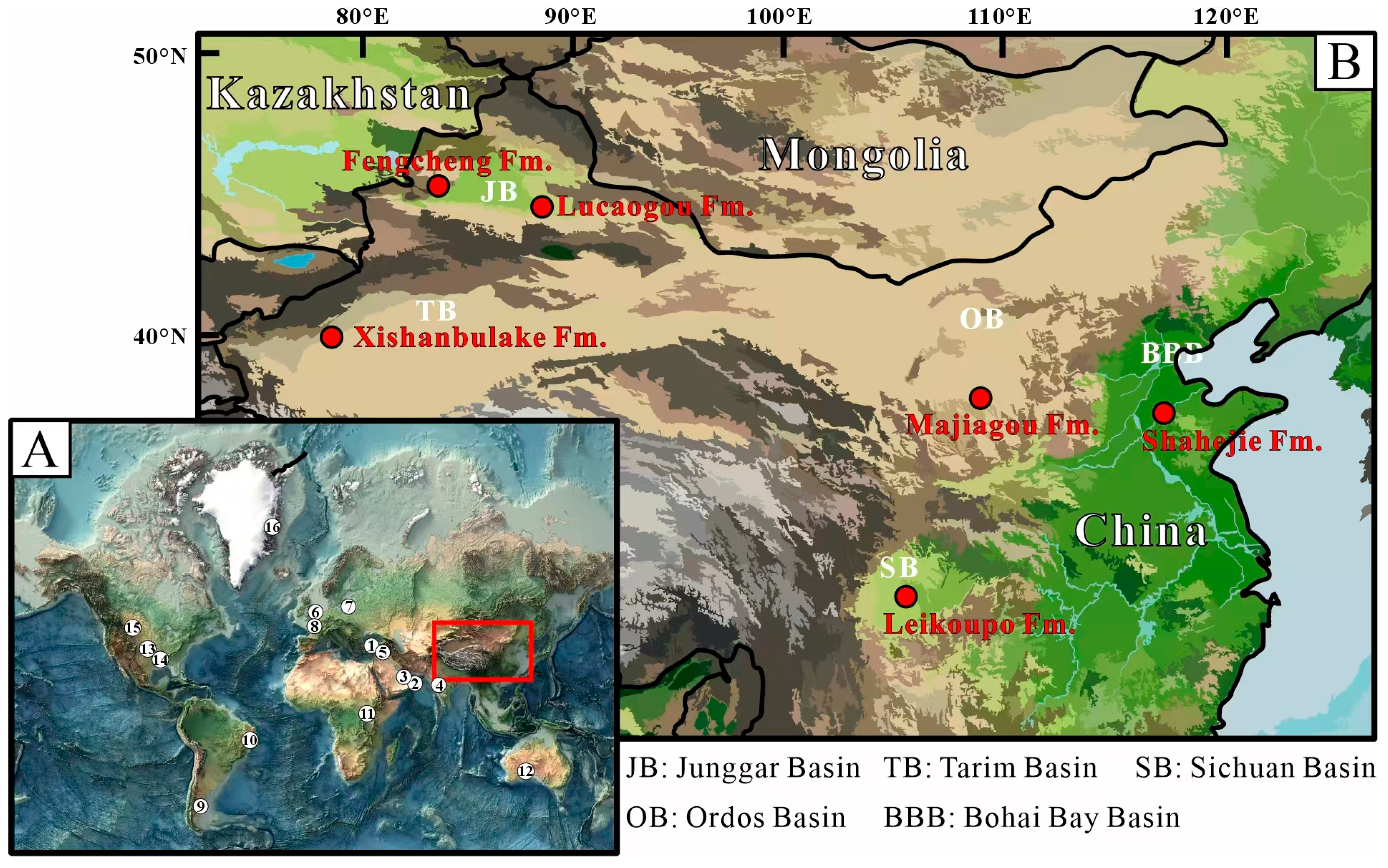
High-salinity water environments are unique sedimentary settings on Earth, widely distributed in continental saline lacustrine basins and lagoons. These environments not only record vital information on paleoclimate and paleoenvironmental evolution but also serve as significant sites for the development of high-quality hydrocarbon source rocks [1,2,3]. In recent years, breakthrough discoveries in high-salinity source rocks, such as those in the Leikoupo Formation of the Sichuan Basin [4,5] and the Majiagou Formation of the Ordos Basin [6,7], have made these settings hotspots in petroleum geology research. Conventional wisdom held that high-salinity environments, due to their low biodiversity, were unlikely to form high-quality source rocks [8]. However, increasing exploration results demonstrate that source rocks developed in many high-salinity environments possess excellent hydrocarbon generation potential, with unique mechanisms for organic matter enrichment and reservoir characteristics [9,10]. High-salinity source rocks are present in several major sedimentary basins in China and have yielded significant exploration successes, including the Leikoupo Formation (Sichuan Basin), the Shahejie Formation (Bohai Bay Basin), the Fengcheng Formation (Junggar Basin), the Lucaogou Formation (Junggar Basin), the Xishanbulake Formation (Tarim Basin), and the Majiagou Formation (Ordos Basin) [10,11,12,13,14,15,16] (Figure 1). These cases also exist in other countries, including the Santos and Campos Basins in Brazil, the Fossil Basin in USA, and so on.
Currently, saline environments can primarily be categorized into three systems. Continental saline lakes are hydrologically closed basins where salinity arises from the evaporation of continental inflow, leading to highly variable and often alkaline (Na2CO3/NaHCO3) or sulfate-rich (Na2SO4) brines. Their biota is dominated by extremely halotolerant algae, cyanobacteria, and archaea. Marine lagoons are semi-restricted coastal water bodies with limited exchange with the open ocean [32,33,34]. Their salinity is elevated due to evaporation but retains a marine-like ionic composition (Na+-Cl dominated). Productivity is often a mix of marine plankton and restricted-adapted communities. Evaporitic platforms are extensive, shallow subtidal to supratidal marine settings where large-scale evaporation leads to the precipitation of gypsum, anhydrite, or halite. Microbial mats are the primary organic producers. Conflating these systems can lead to misleading generalizations, as the mechanisms controlling organic matter enrichment and diagenesis may vary significantly.
Globally, studies on source–reservoir systems in saline lagoons are relatively scarce, with more research focused on continental lake basins. Typical examples of continental saline lake source rocks include the Permian Fengcheng Formation in China’s Junggar Basin [35] and the Eocene Green River Formation in the United States [36]. Lagoonal source rocks are controlled by factors such as paleoclimate, paleosalinity, and provenance. They exhibit characteristics of both high marine productivity and terrigenous input, resulting in unique depositional mechanisms, organic matter enrichment patterns, and reservoir properties [5,37]. Representative examples include the Triassic Leikoupo Formation in the Sichuan Basin [4,5] and the Ordovician Majiagou Formation in the Ordos Basin [38].
The patterns of organic matter enrichment in these high-salinity environments challenge traditional source rock formation models, providing new perspectives for understanding organic–inorganic interactions in specific geological settings. Theoretically, during the deposition and diagenetic evolution of source rocks, the processes of organic matter enrichment and evolution not only determine the volume and timing of hydrocarbon generation [39,40,41,42] but also significantly influence diagenesis and reservoir properties [43,44,45,46]. Sediments in saline lagoons are predominantly chemical and fine-grained clastic deposits, often exhibiting laminated structures, including stromatolites with fenestral porosity, which provide a favorable foundation for reservoir development [47]. Practically, high-salinity source rocks are widely distributed globally, including the Paleogene saline lacustrine source rocks in the western Qaidam Basin [48,49], the saline water environment source rocks of the Shahejie Formation in the Jiyang Depression [50,51], and the evaporative lagoonal source rocks of the Leikoupo Formation in the Sichuan Basin [16,52]. Exploration successes in these areas confirm the substantial resource potential of high-salinity source rocks. Research on these rocks is therefore crucial for refining petroleum accumulation theories and guiding hydrocarbon exploration. Based on previous studies, current research on source–reservoir systems in saline environments can be categorized into three main directions: (1) The control of saline water environments on organic matter enrichment in fine-grained sediments (including indirect and direct products of salinity [9,53,54]; (2) The impact of high-salinity environment products on hydrocarbon generation capacity [5,55,56]; and (3) The influence of high-salinity environment products on the reservoir properties of source–reservoir systems [16,52,57,58]. Focusing on major basins in China, this review synthesizes the controls exerted by high-salinity aqueous environments over organic matter enrichment, hydrocarbon-generating biota, and reservoir characteristics through key case studies. It thereby clarifies research advances in the formation mechanisms of high-salinity source rocks and provides theoretical insights for exploration in similar settings.

2. Controls on Organic Matter Enrichment

2.1. Regulation of Nutrient

Although high salinity restricts the survival of most plankton, a moderate increase in salinity (typically below 40‰) can often promote the prosperity of halophilic communities [59,60,61]. For example, a small increase in inorganic salts can provide some nutritional sources for plankton. When the salinity further increases, it may selectively stimulate the development of both euryhaline and halophilic organisms by killing non-halophilic microorganisms. These halophiles include halophilic algae, cyanobacteria, and archaea, which can adapt to high-salinity conditions and maintain high primary productivity [9]. Evidence for such productivity bursts is preserved in the sedimentary record. For instance, alternating laminae of carbonate and organic matter in the Jiyang Depression reflect periodic biological blooms in a saline lacustrine setting [62]. Meanwhile, the discovery of typical siliceous source rocks at the margins of the Fengcheng Formation salt lake (Junggar Basin) highlights the significant contribution of silica-secreting organisms under specific saline conditions [63]. In addition, research on source rocks in marine lagoons has gradually advanced this year. In their study of the Leikoupo Formation, Huang et al. (2025), integrating elemental geochemistry and biomarker characteristics, suggested a coupling between marine productivity and salinity [16].
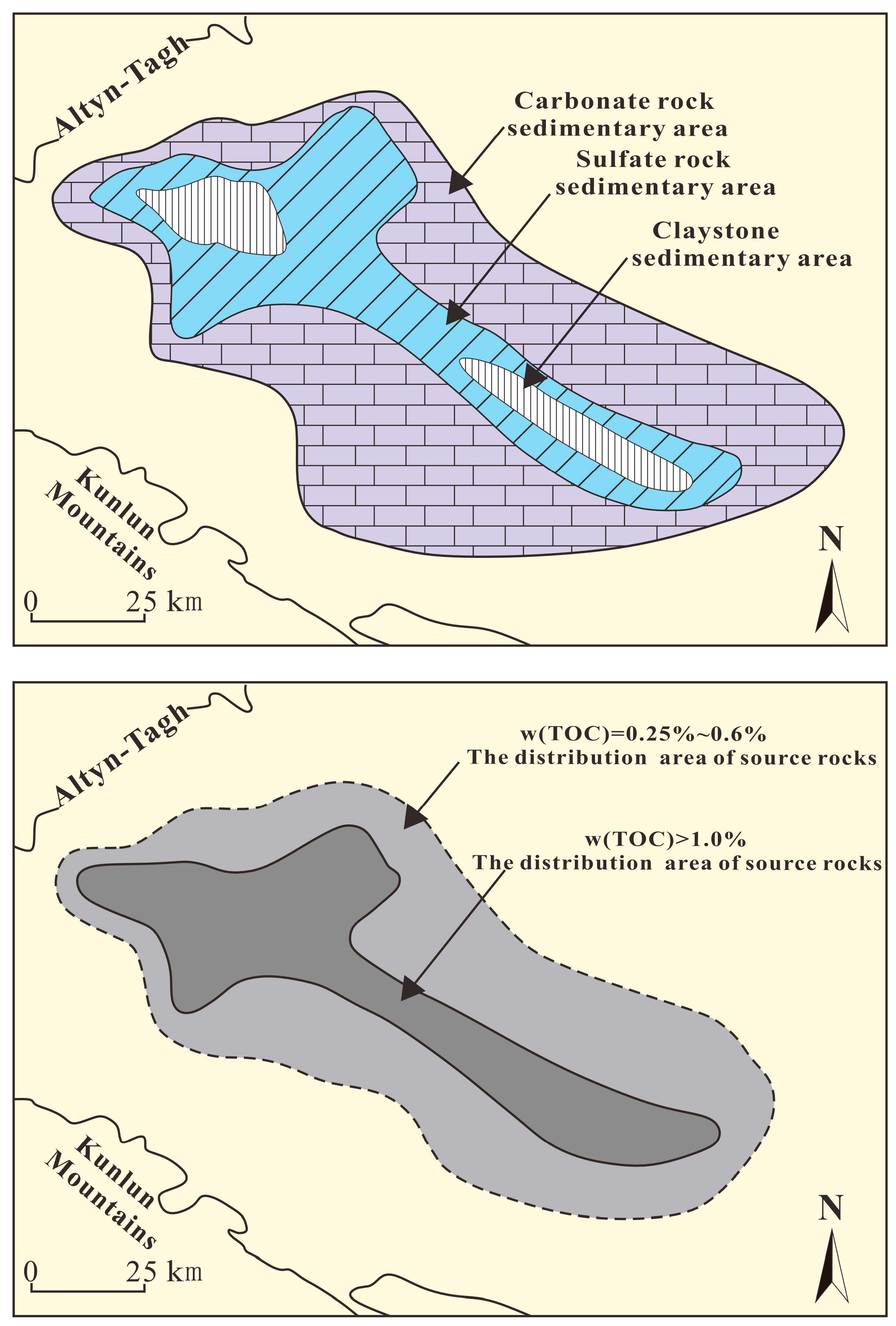
However, actual research findings indicate that there appear to be differences in organic matter enrichment patterns across various high-salinity environments. For example, the traditional view holds that the deep-water area in the center of a lake basin is more conducive to the enrichment of organic matter and the formation of source rocks [2] (Figure 2). However, in recent years, many studies have suggested that semi deep water areas may be better locations for the formation of hydrocarbon source rocks. Wan et al. (2024) pointed out through research that the hydrocarbon source rocks of the Majiagou Formation in the Ordos Basin are closely related to microorganisms, and the hydrocarbon generating organisms are divided into four categories: planktonic algae, benthic red algae, benthic brown algae, and benthic blue-green algae [38]. They also pointed out that high-quality hydrocarbon source rocks are developed at the edge of the gypsum cloud lagoon. Research in the western Qaidam Basin saline lake also indicates that the semi-deep lake area, with relatively lower salinity and richer nutrients, is a favorable zone for high-quality source rock formation [64]. The above cases indicate that this difference does not come from the differences between marine and terrestrial environments but may come from the differential effects of tectonic activity, fluid activity, and volcanic activity.
Another typical case is the evaluation of the source rocks of the Fengcheng Formation in Mahu Sag, Junggar Basin by different scholars. Cao et al. (2025) used biomarker compounds and simulated hydrocarbon evolution and believed that the Dunaliella type source rocks developed in the center of the Fengcheng Formation salt lake were of higher quality [65]. However, Guo et al. (2021) tend to favor siliceous source rocks formed at the edge of salt lakes [63].
Salinity can be accompanied by nutrients carried by deep fluids, such as NO3, PO43−, NH4+, and trace metal elements like Fe, Mn, Zn, Co, and Cu [66]. The influx of these substances significantly enhances water nutrient levels, promotes the growth and reproduction of halophilic organisms and creates conditions for organic matter formation and enrichment [64]. Such influx of macronutrients (N, P) alleviates limitations on primary production, directly stimulating the growth of halotolerant phytoplankton and microbial communities. Concurrently, trace metals such as Fe and Mn act as cofactors for key enzymes involved in photosynthesis (e.g., catalase, cytochrome) and nitrogen assimilation (e.g., nitrate reductase), thereby enhancing metabolic efficiency even under saline stress.
The “moderate salinity enhances productivity” model, while widely cited, is not universal. Its applicability appears strongest in sulfate-dominated saline lakes but may break down in highly alkaline (soda) lakes where specific ion toxicity differs. Furthermore, the ongoing debate on whether the highest-quality source rocks form in deep lake centers (favored by strong stratification) or in semi-deep settings (with optimal salinity-nutrient balance) underscores that tectonic subsidence rates and associated nutrient flux (e.g., from hydrothermal fluids) can override simple bathymetric models. A critical, yet unresolved, question is the quantitative partitioning of organic carbon between in situ halophilic production and allochthonous input in marginal marine lagoons.

2.2. Differentiation of Microbial Types

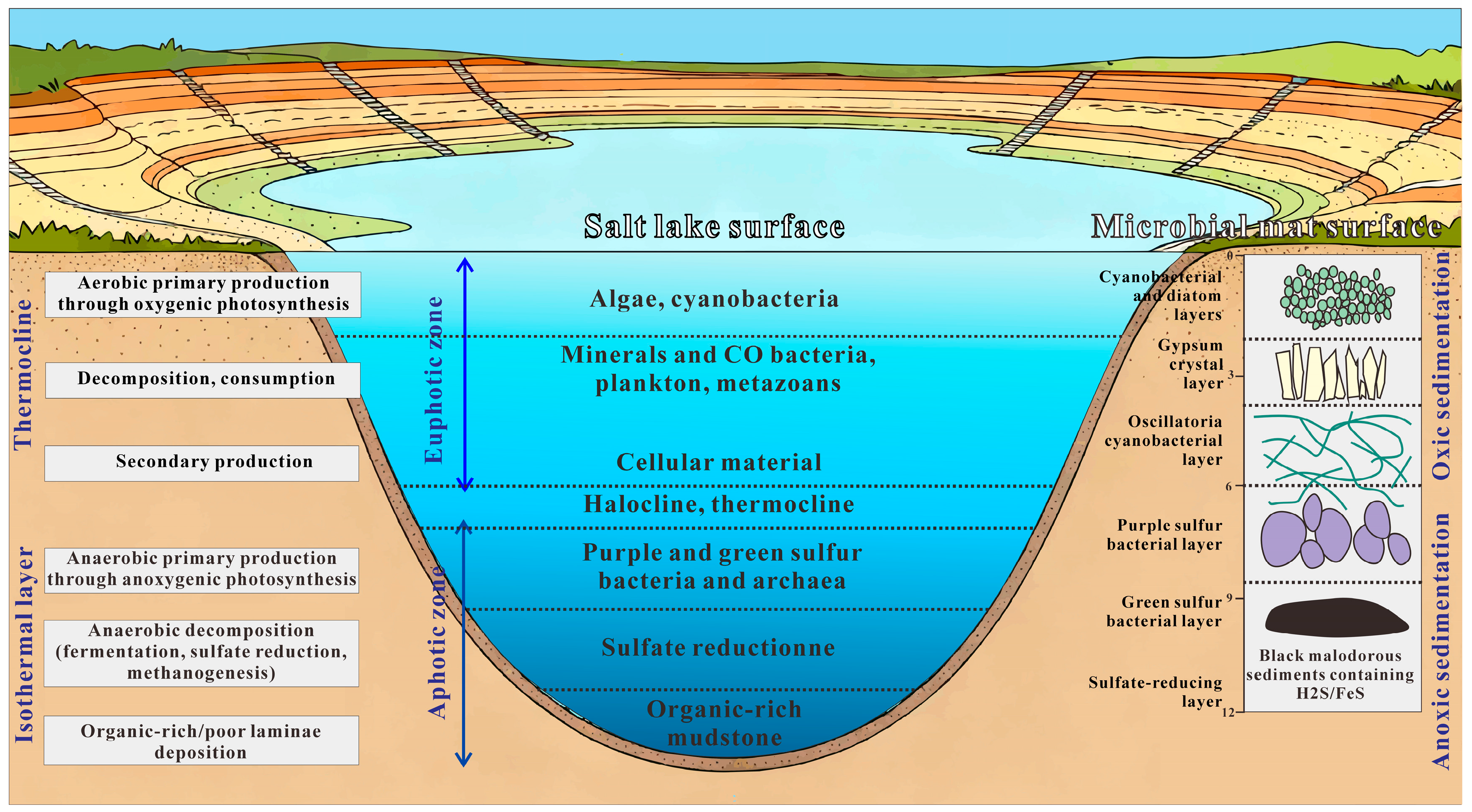
High-salinity environments host halophilic biological communities that constitute the source material for hydrocarbons. Community composition shows distinct zonation with varying salinity. For example, lake salinity can promote gravitational differentiation and water column stratification, which becomes a dominant factor influencing biological distribution and community structure [61] (Figure 3). In this model, the effect of salinity on biological aggregation is achieved through oxygen differentiation. Studies of modern salt lakes, typical depositional environments for evaporites, indicate that green algae and cyanobacteria are the primary biota in low-salinity water, while halophilic bacteria dominate in high-salinity conditions [67,68]. For instance, cyanobacteria can develop at salinities of 150–200‰, and halophilic bacteria and archaea can survive at salinities of 24–320‰. Different organisms have varying salinity tolerance ranges, leading to changes in the dominant populations from the upper, lower-salinity water layers to the deeper, higher-salinity layers in a salt lake [61,69].
Bao et al. (2006) and Warren (2016) are good starting points, but microorganisms thriving in saline to hypersaline settings have received much attention in recent years, with specific conditions [61,69]. Benison et al. (2021) proposed the water activity of acidic salt lakes and explored their significance for life limits by studying modern and ancient acidic salt lake systems [54]. Sanz-Montero et al. (2014) proposed that salinity not only guides microbial activity by altering oxygen and nutrient conditions but also promotes microbial development by inducing the formation of extracellular polymers, a necessary life activity [53].
Jin et al. (2008) [2], Hu et al. (2016) [56], and Liu et al. (2016) [9] proposed that under hot, arid climates, restricted seawater undergoes salinization. Salinization begins at the surface; although it reduces species diversity, halophilic microorganisms proliferate extensively in the surface brackish water, resulting in high biological productivity [2,9,56]. The increasing water density during salinization induces water stratification. As bottom water salinity increases, a reducing environment forms, allowing for effective preservation of large quantities of organic matter. Gocke et al. (2004) and Liu et al. (2016) argued that while the number of species capable of surviving in high-salinity environments is reduced compared to normal environments, these communities can still exhibit substantial productivity, providing ample high-quality source material for source rock development [9,68].
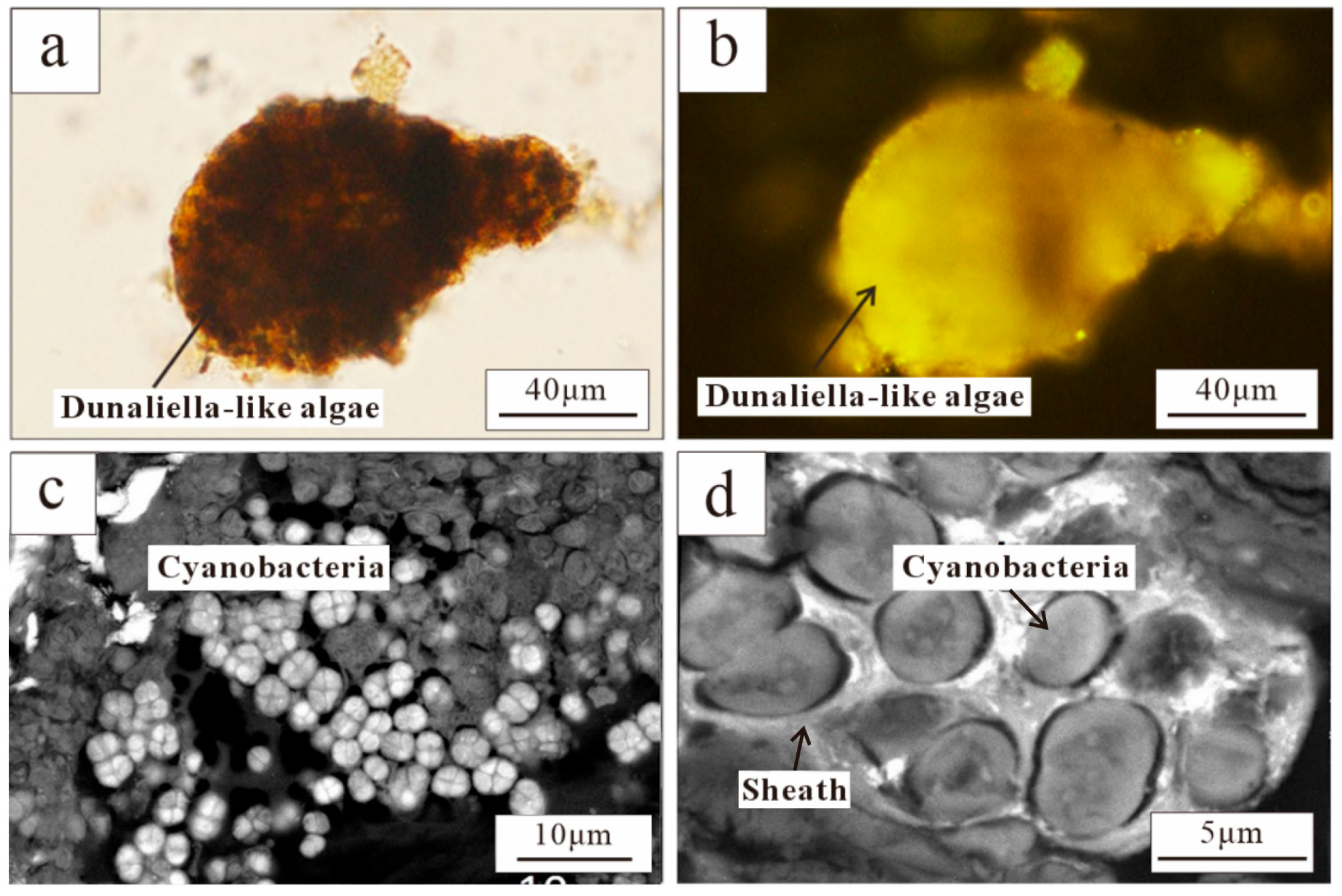
Microscopy remains a primary technique for studying these halophilic microorganisms, allowing direct observation of structural features and associated minerals, thereby inferring their living modes. For example, Dunaliella-like algae are typical halophilic-alkaliphilic green algae; other authors have identified their prolific growth in extreme alkaline lake environments due to morphological characteristics and yellow-green fluorescence [65,71] (Figure 4a,b). Cyanobacteria of the order Chroococcales possess well-developed sheaths and EPS (extracellular polymeric substances) structures that reflect their environmental adaptability [72] (Figure 4c). Furthermore, Jehlička et al. (2024) discovered abundant cyanobacterial aggregates between gypsum crystals, which also reflect the life habits of halophiles [72] (Figure 4d). In summary, microscopic observation is not only a fundamental means of identifying and describing the morphology and distribution of salt-tolerant microorganisms in extreme environments, but also a key approach to analyzing their environmental adaptation strategies. By directly observing the cell structure, mineral binding status, and population characteristics of microorganisms, researchers can intuitively infer their physiological and ecological behaviors. The development level of extracellular polymeric substances (EPS) is closely related to the salinity environment—under high salt stress, microorganisms often construct a protective microenvironment by synthesizing more abundant EPS to maintain cell moisture, resist ion toxicity, and promote mineral aggregation and biofilm formation. Therefore, the spatial distribution and morphological characteristics of EPS revealed by microscopic techniques provide direct morphological evidence for understanding how microorganisms survive and reproduce in salinity changes, deepening our understanding of the extreme adaptation mechanisms of life.

2.3. Environmental Regulation of Organic Matter Preservation

High-salinity environments are frequently associated with strongly reducing conditions, which significantly enhance the preservation of organic matter by deceleration of biodegradation and remineralization of the organic matter [64]. A hallmark of these settings is water column stratification driven by salinity gradients. In this structure, denser, high-salinity bottom water forms a stable chemical stratification, which limits vertical oxygen exchange [73]. This process leads to an oxygen-depleted, even euxinic (sulfidic), strongly reducing environment [42]. On the other hand, the activity of sulfate reducing bacteria can also lead to a decrease in the oxygen content. However, this also indicates that water column stratification has selectivity towards sulfate reducing bacteria. Such conditions effectively suppress the decomposition of organic matter by aerobic microorganisms.
Supporting this, biomarker studies of the Lower Paleozoic shales in the Xixiang–Zhenba area of southern Shaanxi reveal low Pr/Ph ratios and high gammacerane/C30 hopane ratios. These geochemical indicators reflect a depositional environment characterized by elevated salinity, oxygen deficiency, and strong reducing conditions, which were crucial for organic matter preservation [74]. Another example is the evaporitic lagoonal source rocks of the Leikoupo Formation in the Sichuan Basin. Research on the saline lacustrine basin in the western Qaidam Basin further demonstrates that the depositional sag area, characterized by high water salinity, significant distance from sediment sources, and pronounced water stratification (the high gamma wax and high C35 hopane exhibited by terpenoid compounds (m/z = 191) reflect the high-salinity sedimentary environment), possessed fair to good TOC values (always >4%). The superior preservation conditions in this area facilitated the rapid sequestration of oil-prone macerals, such as aquatic organisms (mainly composed of I-II type cheese roots) [64].
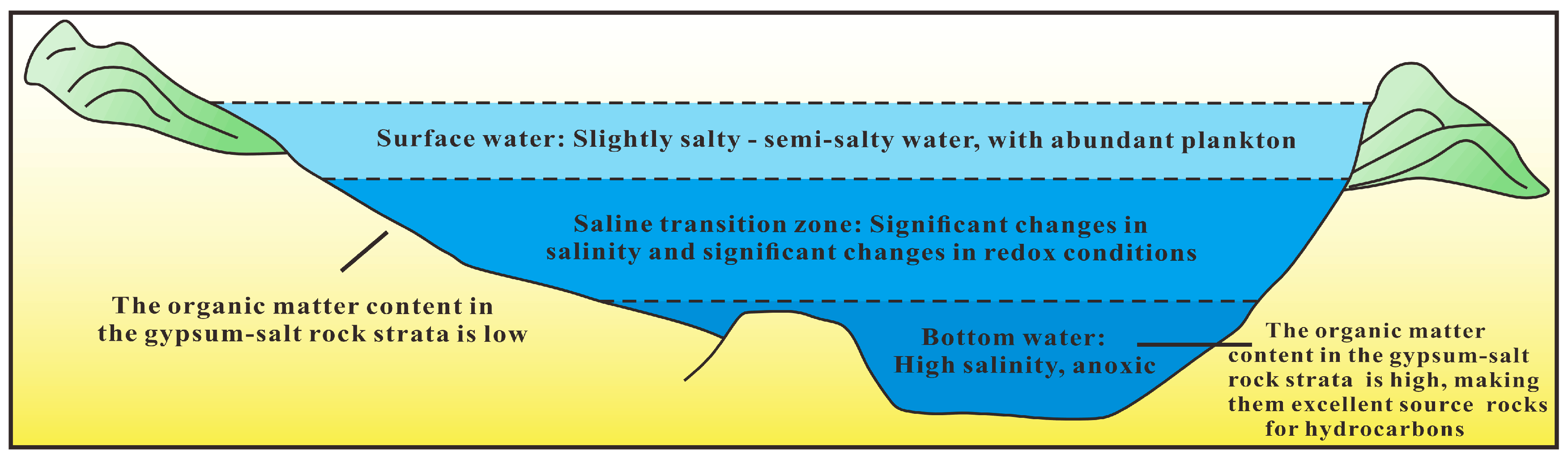
Salinity regulates the overall physical and chemical shape of water bodies, selectively stimulating productivity and reducing bottom oxygen content. A widely accepted model postulates that the upper oxygenated layer promotes microbial organic matter synthesis, while the bottom anoxic layer provides excellent conditions for organic matter preservation. This establishes a typical synergistic organic matter enrichment model of “high productivity—excellent preservation” [2,9,75,76] (Figure 5).
While salinity-driven stratification is a key preservation mechanism, its efficiency and dominance are debated. In marine lagoons, the role of bacterial sulfate reduction (BSR) in creating euxinia may be as important as physical stratification. However, high sulfate concentrations can also lead to organic matter degradation via BSR, creating a preservation “window” that depends on the balance between sulfate availability and reactive iron. Geochemical proxies like Pr/Ph ratios and gammacerane indices, commonly used to infer salinity and stratification, can be ambiguous in extreme settings and require multi-proxy validation.

2.4. Comparative Analysis of Key Controlling Factors Across Different Saline Environments

The preceding sections synthesize general mechanisms of organic matter enrichment in high-salinity settings. However, a critical synthesis requires recognizing that the operational importance and manifestation of these controls differ substantially among the major types of saline depositional systems. Applying a uniform model without distinction can lead to inaccurate predictions. The following analysis compares continental saline lakes, marine lagoons, and evaporitic platforms across several key dimensions (Table 1).

3. Salinity Impact on Hydrocarbon Generation Efficiency

High-salinity environments influence hydrocarbon generation through both indirect and direct pathways. Indirectly, they control the enrichment of organic matter in sedimentary basins. More directly, their associated products, such as evaporites and other high-salinity minerals can actively participate in the processes of hydrocarbon generation. This direct involvement significantly affects the hydrocarbon-generating capacity of source rocks, primarily through two mechanisms: firstly, by modifying the hydrocarbon generation potential of different types of organic matter, and secondly, through the catalytic and preservative effects exerted by evaporite minerals.

3.1. Hydrocarbon Generation Potential of Halophilic-Derived Source Materials

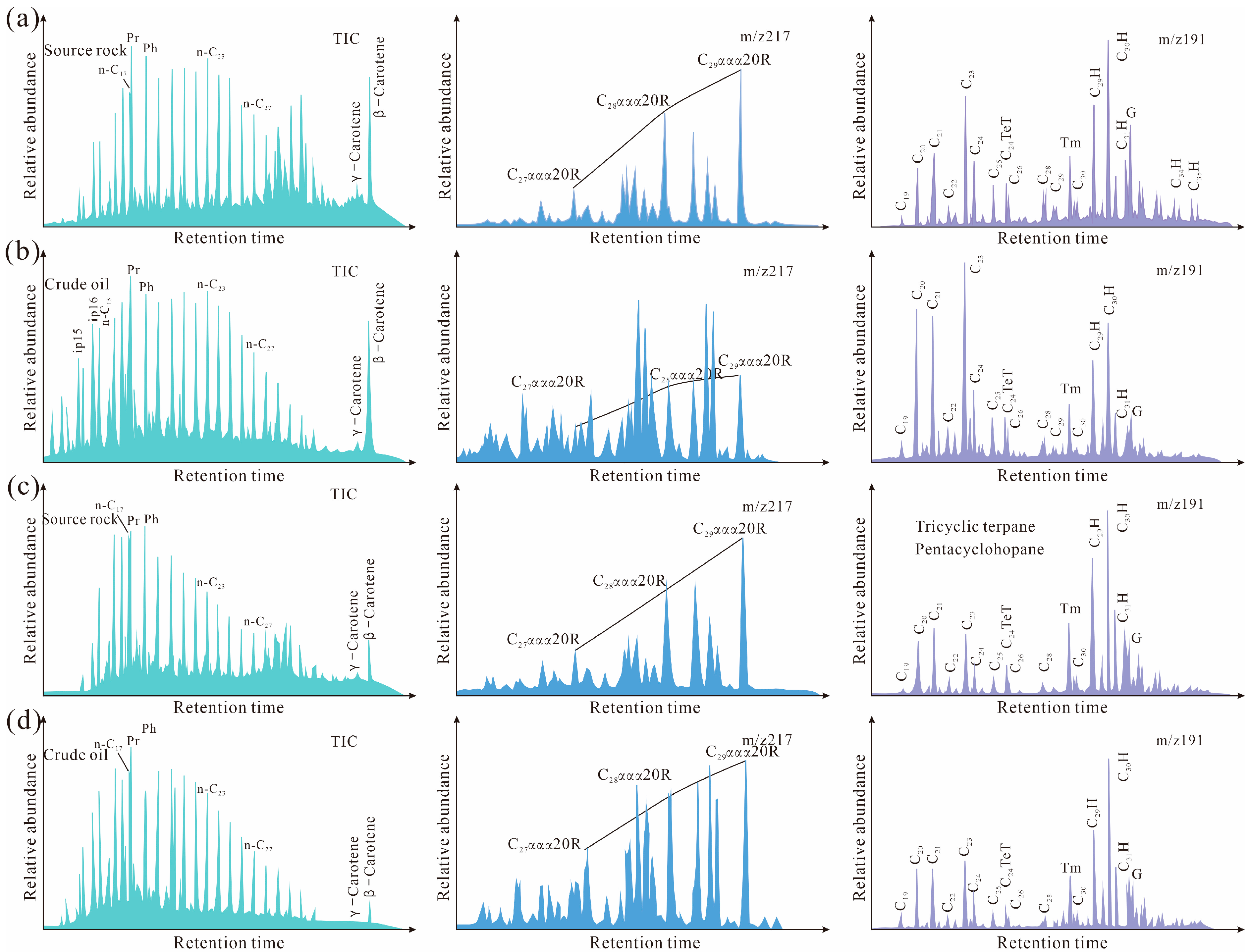
During sedimentary evolution, the biomarkers can be used not only to identify source organic matter [77], assess organic matter maturity [78], and trace oil-source correlation [14] but also, to some extent, reflect the depositional water environment and organic matter source [5,79,80]. For example, compared to cyanobacteria, Dunaliella-like species are more halophilic, and Dunaliella-like source rocks possess unique “three-high” biomarker characteristics [65] (high C28/C29 sterane ratio, high sterane/hopane ratio, high β-carotane abundance; Figure 6). Their hydrocarbon generation threshold and peak occur later than those of cyanobacterial-type source rocks, but the total hydrocarbon yield is greater.
The hydrocarbon-generating organisms in high-salinity source rocks are predominantly halophilic microorganisms, resulting in kerogen types typically dominated by Type I (δ13Corg: −35‰ to −30‰) and Type II (δ13Corg: −30‰ to −25‰; [81]), which differs significantly from freshwater or normal marine environments [82]. For instance, Type I kerogen, primarily derived from halophilic algae (e.g., Dunaliella-like) and cyanobacteria, has the highest hydrocarbon generation potential. This organic matter is characterized by high Hydrogen Index (HI) and low Oxygen Index (OI), primarily generating liquid hydrocarbons during pyrolysis with high efficiency and a wide hydrocarbon generation window [65].
Type II kerogen is of mixed origin, including planktonic algae, benthic algae, and some halophilic bacteria, with moderate hydrocarbon generation capacity, producing both liquid and gaseous hydrocarbons [83]. This kerogen type often dominates specific layers within high-salinity stratified water columns. In contrast, Type III kerogen (primarily from terrestrial higher plants) usually constitutes a lower proportion in high-salinity environments and has significantly lower hydrocarbon generation potential, mainly yielding natural gas and minor condensate [84]. Studies of Lower Paleozoic shales in the Xixiang–Zhenba area of southern Shaanxi show that the source materials were mainly bacteria and algae, generating light oil and gas [85]. Thus, the biological types controlled by saltwater can affect the quality of source rocks. However, the mechanism of oil and gas enrichment remains controversial and requires further in-depth analysis in the future.

3.2. Catalytic Effects of Evaporites on Hydrocarbon Generation

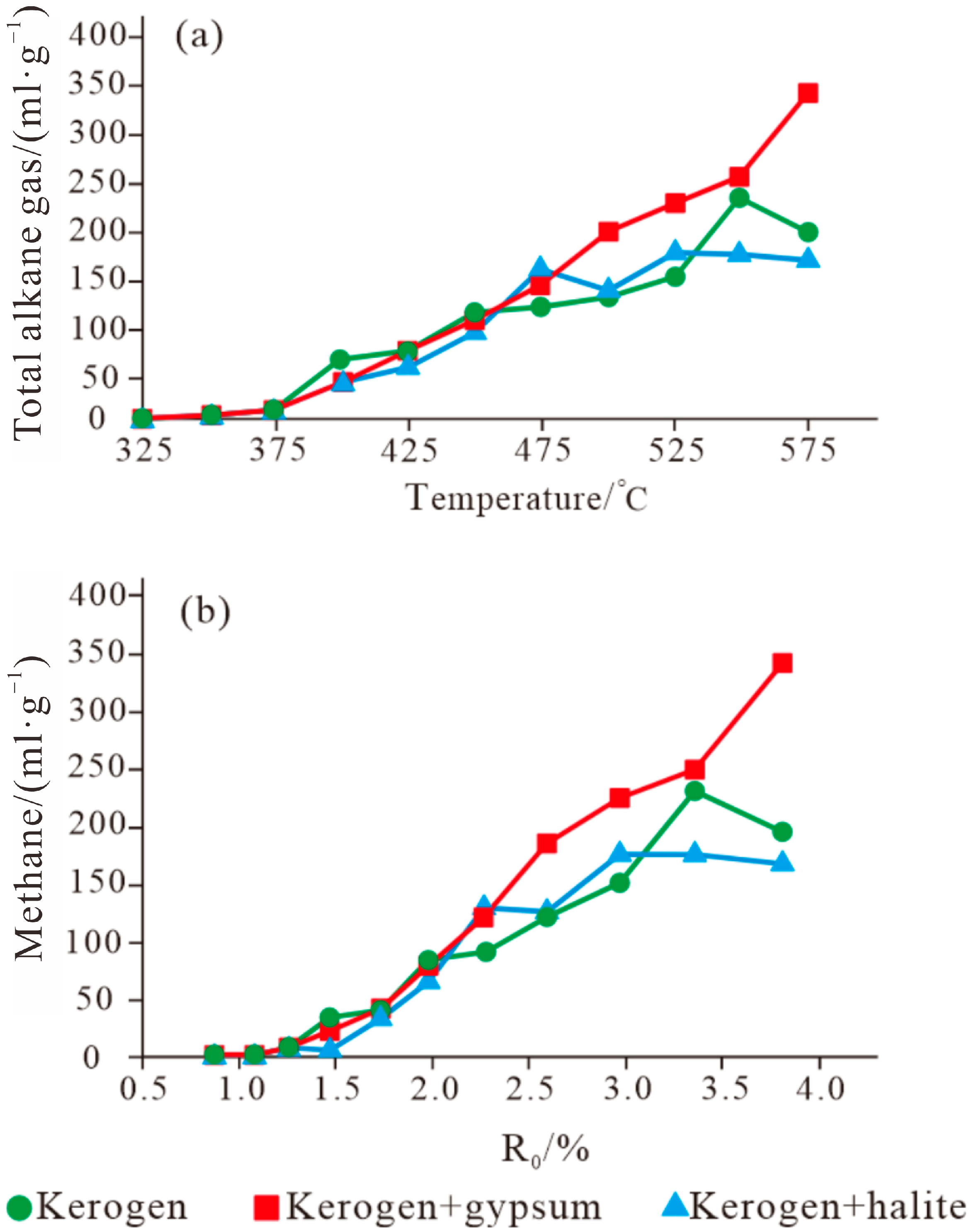
Evaporites (including gypsum, anhydrite, and halite), as direct products of high-salinity environments, significantly catalyze and promote the hydrocarbon generation process in source rocks. On one hand, sulfate minerals can participate in redox reactions with organic matter during thermal evolution, effectively reducing the activation energy for organic matter degradation, thus acting as catalysts [86]. Hu et al. (2016) confirmed through simulation experiments that the combination of evaporites with kerogen significantly enhances the hydrocarbon yield of source rocks [56] (Figure 7). The mechanism involves sulfate-reducing bacteria utilizing sulfate as an electron acceptor to oxidize organic matter under anaerobic conditions. This process not only promotes early organic matter degradation but also alters the hydrocarbon generation kinetic pathway during thermal maturation [87]. Additionally, transition metal elements (e.g., V, Ni) enriched in evaporites also have catalytic effects, promoting the cleavage of C-C bonds in organic matter, advancing the hydrocarbon generation peak, and increasing the yield of light components [88].
On the other hand, traditional TOC measurement methods cannot fully characterize the true organic matter abundance in evaporite sequences, because these methods often overlook the important role of organic acid salts. Liu et al. (2016) pointed out that organic matter (especially organic acids) can react with evaporite minerals to form organic salts [9]. These organic salts can subsequently undergo decarboxylation during thermal evolution to generate hydrocarbons, effectively expanding the scope of effective source rocks and enhancing the overall hydrocarbon generation potential [89].
Some authors also argue that evaporites often form high-quality seals; their dense structure effectively caps oil and gas generated by underlying source rocks [4,90]. More importantly, the high thermal conductivity of evaporite layers facilitates heat transfer, potentially promoting the cracking of deep oil to gas under specific conditions [91]. The successful exploration of gas reservoirs in the Sichuan Basin’s Leikoupo Formation is partly attributed to the synergistic effect of effective sealing by the evaporite roof and catalytic transformation of hydrocarbons generated from the underlying source rocks [14,16].
The catalytic role of evaporites, well-documented in laboratory experiments, requires careful extrapolation to geological timeframes. The long-term effectiveness of these minerals may be limited by their own diagenetic transformation (e.g., anhydritization of gypsum) or by pore-fluid chemistry. Furthermore, the dual role of evaporites as both catalysts and superior seals (due to their plasticity and low permeability) creates a complex feedback. The critical thickness and purity of an evaporite layer needed to effectively seal versus actively catalyze underlying source rocks remain poorly constrained.

4. Modification of Reservoir Properties in High-Salinity Fine-Grained Sedimentary Rocks

Source–reservoir systems in saline water environments are prominent examples of significant inorganic–organic interactions during deposition. The inorganic environment directly impacts reservoir space through mineral formation altering brittleness and structural transformation [92]. It also plays a key controlling role in the formation and evolution of organic matter [93], thereby modifying the reservoir. Factors such as nutrient concentration, salinity, and pH in the water control the biomass size, organic matter type, and early preservation processes. Organic matter, through organic diagenesis, exerts influence in three ways: microbial metabolic activities create favorable conditions for mineral formation or replacement; organic matter degradation generates organic acids and CO2 that dissolve minerals; hydrocarbon expulsion and gas generation alter shale porosity and connectivity [43,94,95,96]. Therefore, the inorganic–organic synergistic effects involving products of saline water environments become a key link in the formation of source–reservoir systems in these settings.
The reservoir space of high-salinity source rocks exhibits significant heterogeneity, strongly controlled by mineral composition and laminated structure [97]. One organic matter preservation mechanism involves mineral adsorption, where organic matter adsorbs onto clay mineral surfaces or interlayers, protecting it from oxidation or degradation. In brackish to saline water environments, increasing salinity promotes clay mineral flocculation, increasing clay particle surface area and settling rates, favoring the formation of organic-rich laminae [98,99,100]. In studies of Jiyang Depression shales, Wang et al. (2025) innovatively proposed four lamination combination types (LC1-LC4), finding porosity differences of over three times between them [101]. This strong heterogeneity leads to highly uneven distribution of shale oil within the reservoir, with “sweet spots” often concentrated in specific lamination combinations. Reservoir spaces vary significantly among different lamination types: the sparry calcite-clay laminae combination (LC1) is dominated by “sugar-cube” shaped calcite intercrystalline pores, accounting for up to 50%; the micritic calcite-clay laminae combination (LC2) is dominated by clay mineral pores; while the clay-organic matter laminae combination (LC3) develops abundant organic matter pores. Different layer combinations have significant differences in physical properties due to differences in mineral composition and thickness. These differences directly affect shale oil enrichment and mobility. Therefore, for this case, understanding the influence of salinity on the sedimentary process of shale layers can help to understand the mechanism of shale oil and gas enrichment.
Diagenesis in high-salinity environments is distinctive and significantly influences the porosity evolution of source rocks. On one hand, high-salinity fluids promote mineral dissolution–precipitation, such as the repeated dissolution and reprecipitation of highly soluble minerals like gypsum, modifying the original pore structure [102,103,104]. Xin et al. (2024), studying the argillaceous limestone reservoirs of the evaporative lagoonal Leikoupo Formation in the Sichuan Basin, proposed that the sensibility of salt minerals might enhance porosity generation [52]. Concurrently, limestone that underwent appropriate dolomitization always promotes the development of intercrystalline pores. On the other hand, organic–inorganic interactions are more pronounced in high-salinity environments. Organic acids generated during the thermal evolution of organic matter react with evaporite minerals, forming organic salts and creating secondary porosity [105]. Furthermore, hydrocarbon generation and retention can generate abnormal pressure, promoting micro-fracture formation and further improving reservoir properties [104,105,106,107]. Studies have found that hydrocarbon-generation overpressure is an effective driving force for hydrocarbon accumulation in lacustrine shale of the gentle slope in the Ordos Basin and in the argillaceous limestone of the Leikoupo Formation in the Sichuan Basin [16].
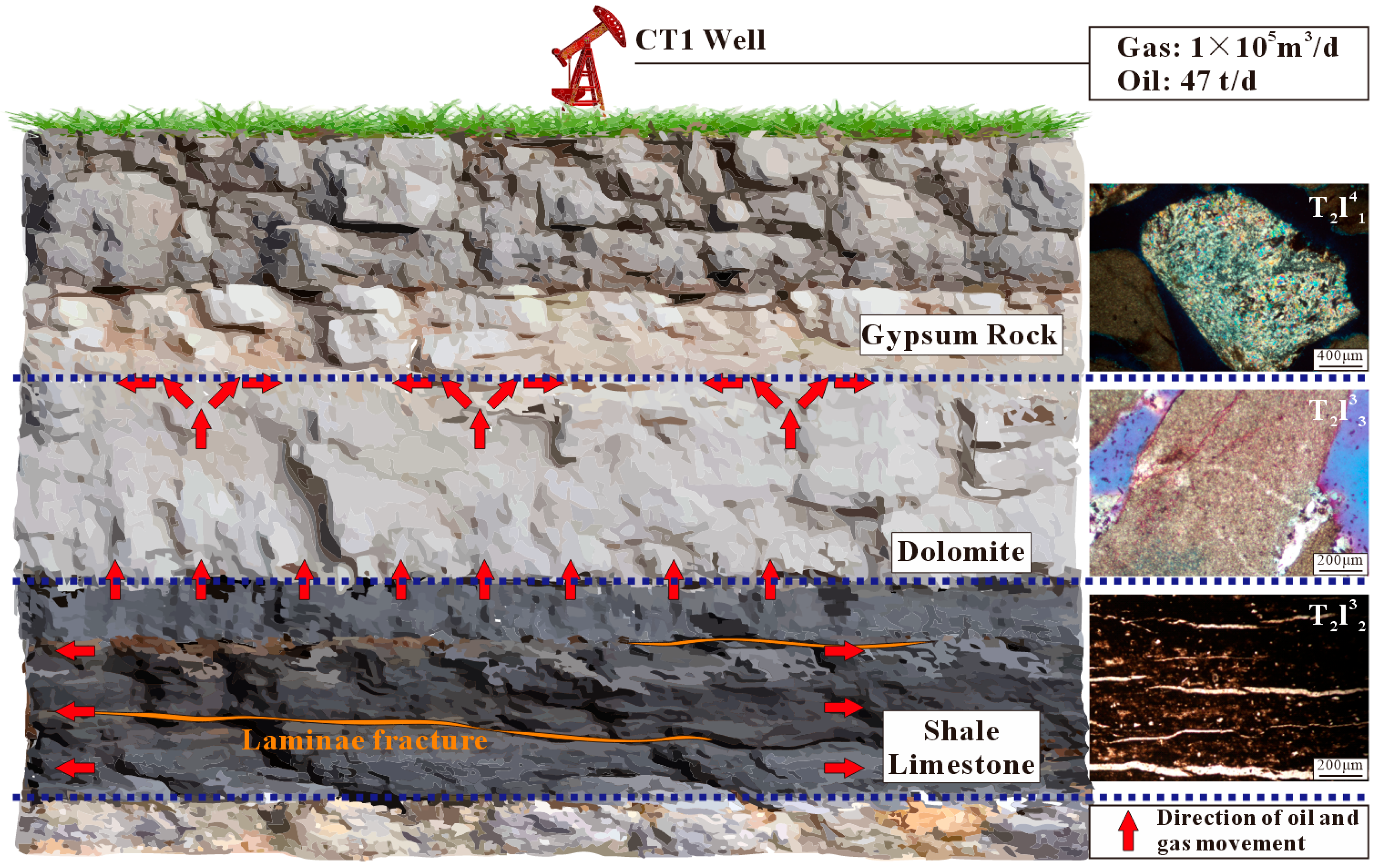
Research on source rocks in multiple petroliferous basins indicates that under increasingly saline water conditions, sedimentary minerals and organic matter are systematically controlled, often transitioning from fine-grained sedimentary rocks to evaporites. During diagenesis, the original sediments undergo reservoir space modification through organic–inorganic synergistic effects, often forming high-quality source–reservoir systems. The final product of the salinization process, the overlying evaporites, due to their plasticity and thermal conductivity differences, can provide a seal for in situ hydrocarbon retention. Considering the third member of the Sichuan Basin’s Leikoupo Formation as an example, the lithological sequence of shale and argillaceous limestone, dolomite, evaporite forms an excellent source–reservoir–seal combination, where developed lamina-bound fractures play important roles as hydrocarbon migration pathways and reservoir space (Figure 8). Well CT1, targeting this source–reservoir–seal assemblage, achieved a significant breakthrough during testing (1 × 10⁵ m3 gas and 47 t oil per day).
The development of high-quality reservoirs in high-salinity systems is highly heterogeneous. While lamination is a common precursor, its transformation into an effective pore-fracture network depends on a specific sequence of diagenetic events (e.g., early dolomitization followed by organic acid dissolution). The “sweet spots” are often localized where these processes overlap. A key uncertainty is the predictability of such zones. The celebrated integrated “source–reservoir–seal” model of the Leikoupo Formation (Figure 8) may represent an optimal endmember that requires a precise combination of stable platform setting, cyclic salinity variations, and timely hydrocarbon generation. Its replicability in other tectonic contexts (e.g., rift basins) needs further assessment.

5. Future Research Priorities

5.1. Existing Challenges

Although practice has proven the substantial resource potential of source–reservoir systems developed in high-salinity environments, several unresolved issues hinder their deeper understanding and the transition from qualitative description to quantitative analysis. The main challenges include:
(1)
The primary controlling factors for organic matter enrichment in high-salinity environments remain debated. It is difficult to determine whether high productivity, strong preservation conditions, or their synergy plays the dominant role, requiring further case validation.
(2)
The inhibition mechanisms and threshold ranges of excessively high salinity on biological communities are unclear, and these thresholds vary with water chemistry. Currently, reliable microbial indicators and techniques for quantitatively tracking community changes are lacking.
(3)
High-salinity source rocks exhibit extreme heterogeneity, yet the controlling factors are poorly understood. The diagenesis–hydrocarbon generation coupling process is complex, and the mechanisms of organic–inorganic interactions are not fully elucidated.

5.2. Future Perspectives

Through integration of theoretical research and practical exploration needs, future studies on high-salinity source rocks should focus on the following directions:
(1)
Quantifying Thresholds and Controls: Combine laboratory culturing of halophiles under controlled ionic compositions with high-resolution biomarker studies of ancient rocks to establish robust salinity–community–productivity relationships. Advanced elemental imaging (e.g., NanoSIMS, LA-ICP-MS) can map the micron-scale association between organic matter and minerals, directly testing preservation mechanisms.
(2)
Disentangling Environment-Specific Mechanisms: Develop distinct diagnostic toolkits for saline lakes versus lagoons. For example, B and Li isotopes are promising for tracing continental versus marine salinity sources, while S and Ca isotopes can elucidate sulfate evolution and carbonate diagenesis pathways specific to each setting.
(3)
Modeling Organic–Inorganic Coupling: Move beyond qualitative descriptions by employing reactive transport models that integrate water chemistry, microbial metabolism, and diagenetic reactions. This is essential for simulating the dynamic competition between organic matter preservation (via stratification) and degradation (via sulfate reduction) and for predicting the spatial distribution of diagenetic products like dolomite and secondary porosity.
(4)
Predicting Reservoir Heterogeneity: Utilize digital rock physics applied to high-resolution 3D imaging (FIB-SEM, micro-CT) of laminated facies to quantitatively link specific lamina combinations (e.g., LC1-LC4) to pore networks, flow properties, and hydrocarbon retention potential.
As global petroleum exploration shifts towards unconventional resources, high-salinity source rocks, as a field with immense potential, will undoubtedly deepen our understanding of hydrocarbon formation laws in special geological settings and provide crucial theoretical support for future energy exploration.

6. Conclusions

This review synthesizes and critically re-evaluates the role of high-salinity sedimentary environments in forming integrated source–reservoir systems, drawing primarily on Chinese basin case studies. The key advance lies in moving beyond the outdated view of salinity as merely an inhibitor, to recognizing it as a system architect that shapes hydrocarbon potential through unique, and often synergistic, pathways.
Firstly, organic matter enrichment is governed by a productivity–preservation coupling facilitated by salinity. Moderate salinity promotes halophilic/adapted biomass, while the density-driven stratification it induces creates anoxic bottom waters crucial for preservation. However, the primacy of productivity versus preservation varies between continental lakes (where nutrient-rich hydrothermal inputs can be key) and marine lagoons.
Secondly, hydrocarbon generation is directly enhanced by the diagnostic products of these environments. Evaporite minerals (gypsum, anhydrite, halite) act as catalysts, lowering reaction kinetics and increasing yields. Moreover, the formation of organic salts expands the effective source rock volume. The kerogen generated is predominantly oil-prone Type I-II, derived from salt-tolerant algae and bacteria.
Thirdly, reservoir quality is the result of intense organic–inorganic diagenetic synergy. The characteristic laminated fabric provides the initial heterogeneity. Subsequent processes—including evaporite dissolution–reprecipitation, dolomitization, organic acid dissolution, and hydrocarbon-generation overpressure, sculpt a complex pore-fracture network, creating reservoir “sweet spots.”
Crucially, this review highlights that these mechanisms are not uniform across all “high-salinity” settings. Continental saline lakes, marine lagoons, and evaporitic platforms differ fundamentally in their water chemistry, biotic communities, and sedimentological evolution. Future research must adopt this discriminatory framework. The transition from qualitative models to quantitative, predictive tools are the paramount challenge among others. This will require integrating modern analog studies, high-resolution geochemical imaging, and process-based numerical modeling to fully unlock the potential of these complex systems in the global hydrocarbon portfolio.

Funding

This study was supported by the Open Fund of Key Laboratory of Oil & Gas Reservoirs Production, Sinopec entitled “Genetic Mechanism of Organic-Rich Shale in the Middle Triassic Leikoupo Formation Platform Lagoonal Facies, Sichuan Basin”(No. 33550007-22-ZC0613-0039).

Data Availability Statement

No new data were created or analyzed in this study.

Conflicts of Interest

Authors Fei Huo and Chuan He were employed by the SINOPEC. Author Huiwen Huang was employed by the PetroChina Southwest Oil and Gas Field Company. The remaining authors declare that the research was conducted in the absence of any commercial or financial relationships that could be construed as a potential conflict of interest.

References

  1. Jin, Q.; Zhu, G.Y. Progress in Research of Deposition of Oil Source Rocks in Saline Lakes and Their Hydrocarbon Generation. Geol. J. China Univ. 2006, 12, 483–492. [Google Scholar] [CrossRef]
  2. Jin, Q.; Zhu, G.Y.; Wang, J. Deposition and distribution of high-potential source rocks in saline lacustrine environments. J. China Univ. Pet. Ed. Nat. Sci. 2008, 32, 19–23. [Google Scholar] [CrossRef]
  3. Li, C.J.; Hu, T.; Pang, X.Q.; Xiao, H.Y.; Hu, Y.; Chen, Y.X.; Zheng, D.Y.; Xu, T.W.; Jiang, F.J. Crude oil and source rock characteristics and hydrocarbon accumulation model of third member of Shahejie Formation in saline lacustrine basin in Wenliu area, Dongpu Sag. China Offshore Oil Gas 2025, 37, 79–91. [Google Scholar] [CrossRef]
  4. Sun, H.F.; Luo, B.; Wen, L.; Wang, J.X.; Zhou, G.; Wen, H.H.; Huo, F.; Dai, X.; He, C.L. The first discovery of organic-rich shale in Leikoupo Formation and new areas of sub-salt exploration, Sichuan Basin. Nat. Gas Geosci. 2021, 32, 233–247. [Google Scholar] [CrossRef]
  5. Huo, F.; Wen, H.G.; Li, L.; Luo, B.; Zhou, G.; Xu, W.L.; Sun, H.F.; Wang, X.Z.; Jiang, H.C.; Chen, S.Z.; et al. Influence of the depositional environment on the formation of organic-rich marine shale: A case study of the first discovery of Anisian shale in the Sichuan Basin. J. Pet. Sci. Eng. 2022, 214, 110577. [Google Scholar] [CrossRef]
  6. Fu, J.H.; Liu, X.S.; Wei, L.B.; Ren, J.F.; Gu, J.H.; Wang, Q.P.; Shi, P.P. Breakthrough and significance of natural gas exploration in the fourth member of Majiagou Formation of subsalt Ordovician in Ordos Basin. China Pet. Explor. 2022, 27, 47–58. [Google Scholar] [CrossRef]
  7. He, H.Q.; Guo, X.J.; Zhao, Z.Y.; Xi, S.L.; Wang, J.F.; Song, W.; Ren, J.F.; Wu, X.N.; Bi, H. New understandings on gas accumulation and major exploration breakthroughs in subsalt Ma 4 Member of Ordovician Majiagou Formation, Ordos Basin, NW China. Pet. Explor. Dev. 2022, 49, 429–439. [Google Scholar] [CrossRef]
  8. Xia, L.W.; Cao, J.; Xu, T.W.; Wang, T.T.; Zhang, Y.X.; Bian, L.Z.; Yao, S.P. Development Characteristics of Biologies in Saline Lake Environments and Their Implications for Hydrocarbon Source. Geol. Rev. 2017, 63, 1549–1562. [Google Scholar] [CrossRef]
  9. Liu, W.H.; Zhao, H.; Liu, Q.Y.; Zhou, B.; Zhang, D.W.; Wang, J.; Lu, L.F.; Luo, H.Y.; Meng, Q.Q.; Wu, X.Q. Potential role of gypsum strata series in marine hydrocarbon accumulation. Acta Pet. Sin. 2016, 37, 1451–1462. [Google Scholar] [CrossRef]
  10. Huang, D.; Qi, M.; Deng, X.; Huang, Y.; Wang, H.B.; Li, X.W. Organic Matter Accumulation Model of Jurassic Lianggaoshan Shale Under Lake-Level Variations in Sichuan Basin: Insights from Environmental Conditions. Minerals 2025, 15, 159. [Google Scholar] [CrossRef]
  11. Tu, J.Q.; Dong, Y.G.; Zhang, B.; Nan, H.L.; Li, C.J.; Wang, X.M.; Fei, X.D.; Zhou, W.B. Discovery of effective scale source rocks of the Ordovician Majiagou Fm in the Ordos Basin and its geological significance. Nat. Gas Ind. 2016, 36, 15–24. [Google Scholar] [CrossRef]
  12. Duan, W.; Zeng, X.; Cai, J.G.; Li, Z.; Wang, C.X.; Lin, R. Control of sedimentary environment and paleoproductivity on the formation of high-quality hydrocarbon source rocks in Dongying Sag, Bohai Bay Basin: Case study of the Shahejie Formation in Niuzhuang sag. Nat. Gas Geosci. 2022, 33, 1754–1767. [Google Scholar] [CrossRef]
  13. Guo, T.T.; Zhu, B.; Yang, T.; Chen, Y.Q. Evolution of sedimentary environment of the Lower Cambrian Xishanbulake-Xidashan formations in the Tarim Basin. Pet. Geol. Exp. 2023, 45, 252–265. [Google Scholar] [CrossRef]
  14. Zhang, B.J.; Sun, H.F.; Luo, Q.; Zeng, H.C.; Xu, L.; Li, L.; Huo, F.; Wen, H.G. Geochemical characteristics and hydrocarbon origin of Leikoupo Formation platform lagoon facies shale in central Sichuan Basin. Nat. Gas Ind. 2023, 43, 15–29. [Google Scholar] [CrossRef]
  15. Bai, Y.B.; Li, M.Y.; Zhu, T.; Zhao, J.Z.; Ren, H.J.; Wu, W.T.; Wu, H.Y. Geochemical characteristics of source rocks and evaluation of shale oil “sweet spot” of Permian Fengcheng Formation in Mahu Sag. Lithol. Reserv. 2024, 36, 110–121. [Google Scholar] [CrossRef]
  16. Huang, Y.H.; Wei, Y.; Wen, H.G.; Huo, F.; Wu, X.Y.; Guo, R.Y.; Liao, Y.T.; Ruan, Y.B.; Jiang, H.C. Study on organic matter depletion in argillaceous limestone of Leikoupo Formation of the Middle Triassic in the central Sichuan Basin: Decoupling of organic matter development and preservation conditions under the background of saltwater algae control. Front. Earth Sci. 2025, 13, 1549411. [Google Scholar]
  17. Acar, A.; Sari, A.; Sonel, N.; Aliyyev, S. Source rock characterization and depositional environment of the Late Cretaceous Haymana Formation in the Salt Lake Basin of Turkey. Energy Sources Part A Recovery Util. Environ. Eff. 2007, 29, 277–291. [Google Scholar] [CrossRef]
  18. Mattes, B.W.; Morris, S.C. Carbonate/evaporite deposition in the late Precambrian–early Cambrian Ara Formation of southern Oman. Geol. Soc. Spec. Publ. 1990, 49, 617–636. [Google Scholar] [CrossRef]
  19. Taher, A.; Celentano, M.; Franco, B.; Al-Shehhi, M.; Al Marzooqi, H. Shuaiba lagoon and basinal facies exploration potential in Abu Dhabi. In Proceedings of the Abu Dhabi International Petroleum Exhibition & Conference, Abu Dhabi, United Arab Emirates, 12–15 November 2018. [Google Scholar] [CrossRef]
  20. Basu, D.N.; Banerjee, A.; Tamhane, D.M. Facies distribution and petroleum geology of the Bombay offshore basin, India. J. Pet. Geol. 1982, 5, 51–75. [Google Scholar] [CrossRef]
  21. Sadooni, F.N. Stratigraphy, depositional setting and reservoir characteristics of Turonian-Campanian carbonates in Central Iraq. J. Pet. Geol. 2004, 27, 357–371. [Google Scholar] [CrossRef]
  22. Sfowakiewicz, M.; Tucker, M.E.; Pancost, R.D.; Perri, E.; Mawson, M. Upper Permian (Zechstein) microbialites: Supratidal through deep subtidal deposition, source rock, and reservoir potential. AAPG Bull. 2013, 97, 1921–1936. [Google Scholar] [CrossRef]
  23. Slowakiewicz, M.; Mikolajewski, Z. Upper Permian Main Dolomite microbial carbonates as potential source rocks for hydrocarbons (W Poland). Mar. Pet. Geol. 2011, 28, 1572–1591. [Google Scholar] [CrossRef]
  24. Tribovilard, N.-P.; Gorin, G.E.; Belin, S.; Hopfgartner, G.; Pichon, R. Organic-rich biolaminated facies from a Kimmeridgian lagoonal environment in the French Southern Jura mountains: A way of estimating accumulation rate variations. Palaeogeogr. Palaeoclimatol. Palaeoecol. 1992, 99, 163–177. [Google Scholar] [CrossRef]
  25. Carroll, A.R.; Bohacs, K.M. Lake-type controls on petroleum source rock potential in nonmarine basins. AAPG Bull. 2001, 85, 1033–1053. [Google Scholar] [CrossRef]
  26. Mello, M.R.; Maxwell, J.R. Organic geochemical and biological marker characterization of source rocks and oils derived from lacustrine environments in the Brazilian continental margin. In Lacustrine Basin Exploration: Case Studies and Modern Analogs; American Association of Petroleum Geologists: Tulsa, OK, USA, 1990; pp. 287–303. [Google Scholar] [CrossRef]
  27. Talbot, M.R. The origins of lacustrine oil source rocks: Evidence from the lakes of tropical Africa. Geol. Soc. Spec. Publ. 1988, 40, 29–43. [Google Scholar] [CrossRef]
  28. Carlsen, G.M.; Apak, S.N.; Ghori, K.A.R.; Grey, K.; Stevens, M.K. Petroleum potential of the Neoproterozoic Western Officer Basin, Western Australia, based on a source rock model from Empress-1A. APPEA J. 1999, 39, 322–338. [Google Scholar] [CrossRef]
  29. Hite, R.J.; Anders, D.E.; Ging, T.G. Organic-rich source rocks of Pennsylvanian age in the Paradox basin of Utah and Colorado. In Hydrocarbon Source Rocks of the Greater Rocky Mountain Region; Rocky Mountain Association of Geologists: Denver, CO, USA, 1984; pp. 255–274. [Google Scholar]
  30. Fowler, M.G.; Stasiuk, L.D.; Hearn, M.; Obermajer, M. Evidence for Gloeocapsomorpha prisca in Late Devonian source rocks from southern Alberta, Canada. Org. Geochem. 2004, 35, 425–441. [Google Scholar] [CrossRef]
  31. Surlyk, F.; Piasecki, S.; Rolle, F.; Stemmerik, L. The Permian base of east Greenland. In Petroleum Geology of the North European Margin; Springer: Dordrecht, The Netherlands, 1984; pp. 105–120. [Google Scholar]
  32. Chen, P.; Tan, X.; Yang, H.; Tang, M.; Jiang, Y.; Jin, X.; Yu, Y. Characteristics and genesis of the Feixianguan Formation oolitic shoal reservoir, Puguang gas field, Sichuan Basin, China. Front. Earth Sci. 2015, 9, 26–39. [Google Scholar] [CrossRef]
  33. Manzoni, S.; Maneas, G.; Scaini, A.; Psiloglou, B.E.; Destouni, G.; Lyon, S.W. Understanding coastal wetland conditions and futures by closing their hydrologic balance: The case of the Gialova lagoon, Greece. Hydrol. Earth Syst. Sci. 2020, 24, 3557–3571. [Google Scholar] [CrossRef]
  34. Fan, Q.; Fan, T.L.; Li, Q.P.; Du, Y.; Zhang, Y.; Yuan, Y.X. Sedimentary characteristics and development model of Cambrian gypsum–salt rocks, Tarim Basin. Pet. Geol. Exp. 2021, 43, 217–226. [Google Scholar] [CrossRef]
  35. Liu, H.M.; Wen, H.G.; Zhang, K.H.; Guo, P.; Zhang, G.L.; Yu, H.Z.; Xiong, W.; Zhou, J.; Xu, W.L.; Song, M.Y.; et al. Geological characteristics and exploration prospects of alkaline lacustrine shale oil of the Fengcheng Formation, Hashan area, NW Junggar Basin. J. Palaeogeogr. 2024, 26, 1017–1036. [Google Scholar] [CrossRef]
  36. Tosca, N.J.; Wright, V.P. Diagenetic pathways linked to labile Mg-clays in lacustrine carbonate reservoirs: A model for the origin of secondary porosity in the Cretaceous pre-salt Barra Velha Formation, offshore Brazil (Book Chapter). Geol. Soc. Spec. Publ. 2018, 435, 33–46. [Google Scholar] [CrossRef]
  37. Guo, T.L. Key geological issues and main controls on accumulation and enrichment of Chinese shale gas. Pet. Explor. Dev. 2016, 43, 349–359. [Google Scholar] [CrossRef]
  38. Wan, J.Y.; Zhu, J.H.; Yao, S.P.; Zhang, Y.; Li, C.T.; Zhang, W.; Jiang, H.J.; Wang, J. Geobiological evaluation of hydrocarbon-generating organisms and source rocks in the Ordovician Majiagou Formation, east-central Ordos Basin. Oil Gas Geol. 2024, 45, 393–405. [Google Scholar] [CrossRef]
  39. Wang, W.Y.; Pang, X.Q.; Wang, Y.P.; Chen, Z.X.; Li, C.R.; Ma, X.H. Hydrocarbon expulsion model and resource potential evaluation of high-maturity marine source rocks in deep basins: Example from the Ediacaran microbial dolomite in the Sichuan Basin, China. Pet. Sci. 2022, 19, 2618–2630. [Google Scholar] [CrossRef]
  40. Zhang, S.C.; Wang, H.J.; Wang, X.M.; Ye, Y.T. Mesoproterozoic marine biological carbon pump: Source, degradation, and enrichment of organic matter. Chin. Sci. Bull. 2022, 67, 1624–1643. [Google Scholar] [CrossRef]
  41. Liang, X.P.; Jin, Z.J.; Liu, Q.Y.; Zhu, R.K.; Zhang, W.; Gao, J.H.; Wang, B.; Zhang, J.X.; Wang, Z.G. Differential enrichment mechanism of organic matter in freshwater and salty alkaline lake basins. Chin. Sci. Bull. 2025, 70, 262–274. [Google Scholar] [CrossRef]
  42. Yin, J.; Zou, C.N.; Wu, S.T.; Wu, K.Y.; Xing, H.T.; Wei, L.; Zhao, Z.F.; Lu, G.W.; Yuan, M.; Fu, F.L.; et al. Development Mechanism of High-Quality Source Rock and Enrichment Processes of Shale Oil in Saline Lacustrine Basin: A Case Study of Upper Member of Lower Ganchaigou Formation, Qaidam Basin. Earth Sci. 2025, 50, 2875–2898. [Google Scholar] [CrossRef]
  43. Mastalerz, M.; Schimmelmann, A.; Drobniak, A.; Chen, Y.Y. Porosity of Devonian and Mississippian New Albany Shale across a maturation gradient: Insights from organic petrology, gas adsorption, and mercury intrusion. AAPG Bull. 2013, 97, 1621–1643. [Google Scholar] [CrossRef]
  44. Gao, Y.Q.; Cai, X.; Zhang, P.X.; He, G.S.; Gao, Q.F.; Wan, J.Y. Pore characteristics and evolution of Wufeng–Longmaxi Fms shale gas reservoirs in the basin-margin transition zone of SE Chongqing. Nat. Gas Ind. 2018, 38, 15–25. [Google Scholar] [CrossRef]
  45. Wang, T.L. Characteristics of Pore Structure and Its Evolution in Organic-Rich Shale Reservoir. Ph.D. Thesis, Guangzhou Institute of Geochemistry, Chinese Academy of Sciences, Guangzhou, China, 2021. [Google Scholar] [CrossRef]
  46. Fang, X.L. Hydrocarbon Generation-Expulsion-Retention Process and Microstructure Response of Organic-Rich Marine Shale. Ph.D. Thesis, China University of Geosciences (Beijing), Beijing, China, 2023. [Google Scholar] [CrossRef]
  47. Wang, J.G.; Li, J.T.; Li, X.; Gao, Y.F.; Zhang, P.; Sun, X.J.; Bai, Y.D.; Zuo, M.T. Differences and controlling factors of lithofacies assemblages of Cenozoic lacustrine microbial carbonate rocks in western Qaidam Basin. Lithol. Reserv. 2023, 35, 1–17. [Google Scholar] [CrossRef]
  48. Wang, L.; Jin, Q.; Lin, L.M.; Liu, Y.C.; Zhang, B.M. Characteristics of high-quality source rocks of the Paleogene-Neogene in the western Qaidam Basin. Nat. Gas Ind. 2009, 29, 23–26+131. [Google Scholar] [CrossRef]
  49. Long, G.H.; Wang, Y.Q.; Zhu, C.; Xia, Z.Y.; Zhao, J.; Tang, P.C.; Fang, Y.S.; Li, H.P.; Zhang, N.; Liu, J. Hydrocarbon accumulation conditions and favorable exploration plays in Yingxiongling structural belt, Qaidam Basin. Lithol. Reserv. 2021, 33, 145–160. [Google Scholar] [CrossRef]
  50. Wang, Y.S.; Jin, Q.; Zhu, G.Y.; Guo, C.C. Characterization of the effective source rocks in the Shahejie Formation of the Jiyang Depression. Pet. Explor. Dev. 2003, 30, 53–55. [Google Scholar] [CrossRef]
  51. Pan, R.F.; Chen, M.L.; Zhang, C.M.; Pan, J. Seismic prediction of Paleogene shale oil “sweet spots” and its influencing factor analysis in the Bonan sub-sag, Jiyang depression. Earth Sci. Front. 2018, 25, 142–154. [Google Scholar] [CrossRef]
  52. Xin, Y.G.; Li, W.Z.; Zhang, H.; Tian, H.; Fu, X.D.; Xie, Z.Y. Mechanisms by Which an Evaporated Lagoon Sedimentation System Controls Source–Reservoir Preservation in Lei32 Sub-Member Unconventional Oil and Gas. Energies 2024, 17, 964. [Google Scholar] [CrossRef]
  53. Sanz-Montero, M.E.; García del Cura, A.; Cabestrero, Ó. Microbe-Gypsum Interactions in Microbial Mats: Implications for the Carbonatation of Sulfates. In Proceedings of the Twenty-Fourth Annual Goldschmidt Conference, Sacramento, CA, USA, 8–13 June 2014. [Google Scholar]
  54. Benison, K.C.; O’Neill, W.; Blain, D.; Hallsworth, J.E. Water activities of acid brine lakes approach the limit for life. Astrobiology 2021, 21, 729–740. [Google Scholar] [CrossRef]
  55. Hu, M.; Cheng, Z.; Zhang, M.; Liu, M.; Song, L.; Zhang, Y.; Li, J. Effect of Calcite, Kaolinite, Gypsum, and Montmorillonite on Huadian Oil Shale Kerogen Pyrolysis. Energy Fuels 2014, 28, 1860–1867. [Google Scholar] [CrossRef]
  56. Hu, S.Y.; Shi, S.Y.; Wang, T.S.; Liu, W.; Bai, B.; Xu, A.N.; Tu, J.Q.; Huang, S.P.; Jiang, H. Effect of gypsum-salt environment on hydrocarbon generation, reservoir-forming and hydrocarbon accumulation in carbonate strata. China Pet. Explor. 2016, 21, 20–27. [Google Scholar] [CrossRef]
  57. Ma, B.B.; Cao, Y.C.; Eriksson, K.A.; Jia, Y.C.; Wang, Y.Z. Burial evolution of evaporites with implications for sublacustrine fan reservoir quality: A case study from the Eocene Es4x interval, Dongying depression, Bohai Bay Basin, China. Mar. Pet. Geol. 2016, 76, 98–114. [Google Scholar] [CrossRef]
  58. Wen, H.G.; Huo, F.; Guo, P.; Ning, M.; Liang, J.T.; Zhong, Y.J.; Su, Z.T.; Xu, W.L.; Liu, S.B.; Wen, L.B.; et al. Advances and Prospects of Dolostone-evaporite Paragenesis System. Acta Sedimentol. Sin. 2021, 39, 1319–1343. [Google Scholar] [CrossRef]
  59. Li, B.B.; Jin, X.; Dal Corso, J.; Ogg, J.G.; Lang, X.G.; Baranyi, V.; Preto, N.; Franceschi, N.; Qiao, P.J.; Shi, Z.Q. Complex pattern of environmental changes and organic matter preservation in the NE Ordos lacustrine depositional system (China) during the T-OAE (Early Jurassic). Glob. Planet. Change 2023, 221, 104045. [Google Scholar] [CrossRef]
  60. Warren, J.K. Evaporitic source rocks: Mesohaline responses to cycles of “famine or feast” in layered brines. Int. Assoc. Sedimentol. Spec. Publ. 2011, 43, 315–392. [Google Scholar]
  61. Orr, C.A. Warren JK: Evaporites: A geological compendium, 2nd edn. Environ. Earth Sci. 2017, 76, 687. [Google Scholar] [CrossRef]
  62. Zhu, D.Y.; Wang, Y.; Yin, Y.; Yang, W.Q.; Zhu, D.S.; Ning, F.X. Study on the relationship between saline environmental deposition and shale oil-gas in faulted basin: A case study of areas of Dongying sag and Bonan subsag. Pet. Geol. Recovery Effic. 2015, 22, 7–13. [Google Scholar] [CrossRef]
  63. Guo, P.; Wen, H.G.; Gibert, L.; Jin, J.; Jiang, Y.; Wang, G.Z. Controlling factors of high-quality hydrocarbon source rocks developed in lacustrine shallow-water zone of the Junggar Basin, northwestern China. AAPG Bull. 2021, 105, 2063–2092. [Google Scholar] [CrossRef]
  64. Zhang, B.; He, Y.Y.; Chen, Y.; Meng, Q.Y.; Huang, J.X.; Yuan, L. Formation mechanism of excellent saline lacustrine source rocks in western Qaidam Basin. Acta Pet. Sin. 2018, 39, 674–685. [Google Scholar] [CrossRef]
  65. Cao, J.; Zhang, R.; Zhi, D.; Tang, Y.; Xia, L.; He, W. Unique bimodal oil generation of alkaline-saline lacustrine source rock: Evidences, model and mechanism of organic-inorganic interactions. Sci. China Earth Sci. 2025, 68, 1559–1582. [Google Scholar] [CrossRef]
  66. Liu, J.Y.; Liu, Q.Y.; Zhu, D.Y.; Meng, Q.Q.; Liu, W.H.; Qiu, D.F.; Huang, Z.K. The role of deep fluids in the formation of organic-rich hydrocarbon source rocks. Nat. Gas Geosci. 2018, 29, 168–177. [Google Scholar] [CrossRef]
  67. Sammy, N. Biological systems in north-western Australian solar salt fields. In Sixth Symposium on Salt; Schreiber, B.C., Harner, H.L., Eds.; The Salt Institute: Toronto, ON, Canada, 1983; Volume 1, pp. 207–215. [Google Scholar]
  68. Gocke, K.; Hernandez, C.; Giesenhagen, H.; Hoppe, H.-G. Seasonal Variations of Bacterial Abundance and Biomass and Their Relation to Phytoplankton in the Hypertrophic Tropical Lagoon Ciénaga Grande de Santa Marta, Colombia. J. Plankton Res. 2004, 26, 1429–1439. [Google Scholar] [CrossRef]
  69. Bao, J.P.; Ma, A.L.; Li, X.Q. Geochemical Research on Immature-Low Mature Oil in Salt Lake Basins; Geological Publishing House: Beijing, China, 2006. [Google Scholar]
  70. Xia, Y.; Qu, J.X.; Ding, X.J.; Yiming, A.; Jiang, X.F. Influence of salinity on organic matter and characteristics of source rocks development in saltlake. World Pet. Ind. 2025, 32, 76–86. [Google Scholar] [CrossRef]
  71. Xia, L.; Cao, J.; Lee, C.; Stueken, E.E.; Zhi, D.M.; Love Gordon, D. A new constraint on the antiquity of ancient haloalkaliphilic green algae that flourished in a ca. 300 Ma Paleozoic lake. Geobiology 2021, 19, 147–161. [Google Scholar] [CrossRef]
  72. Jehlička, J.; Oren, A.; Vitek, P.; Wierzchos, J. Microbial colonization of gypsum: From the fossil record to the present day. Front. Microbiol. 2024, 15, 1397437. [Google Scholar] [CrossRef]
  73. Yu, H.; Tsuno, H.; Hidaka, T.; Jiao, C.M. Chemical and thermal stratification in lakes. Limnology 2010, 11, 251–257. [Google Scholar] [CrossRef]
  74. Xu, T.; Xu, F.; Guo, Y.H.; Wang, N.; Xie, Q.; Huang, W. Organic geochemical characteristics of the Lower Paleozoic shales in Xixiang-Zhenba Area, Southern Shaanxi. J. Northeast Pet. Univ. 2019, 43, 59–68+87. [Google Scholar] [CrossRef]
  75. Sun, Z.L.; Wang, F.R.; Hou, Y.G.; Luo, J.; Zheng, Y.H.; Wu, S.Q.; Zhu, G.T. Main Controlling Factors and Modes of Organic Matter Enrichment in Salt Lake Shale. Earth Sci. 2020, 45, 1375–1387. [Google Scholar] [CrossRef]
  76. Ma, X.T.; Ding, X.J.; Abilimit, Y.; Liu, H.L.; Zhao, L.M. Influence mechanism of transgressive events on source rock development in continental lacustrine basin. Mar. Geol. Front. 2023, 39, 28–37. [Google Scholar] [CrossRef]
  77. Ruan, Y.B.; Zhou, G.; Huo, F.; Sun, H.F.; Guo, P.; Luo, T.; Jiang, H.C.; Wen, H.G. Source-reservoir characteristics and configuration of the third member of Middle Triassic Leikoupo Formation in central Sichuan Basin. Lithol. Reserv. 2002, 34, 139–151. [Google Scholar] [CrossRef]
  78. Hunt, J.M. Petroleum Geochemistry and Geology; W. H. Freeman and Company: New York, NY, USA, 1996. [Google Scholar]
  79. Huang, W.; Meinschein, W.G. Sterols as Ecological Indicators. Geochim. Cosmochim. Acta 1979, 43, 739–745. [Google Scholar] [CrossRef]
  80. Zhang, L.P.; Huang, D.F.; Liao, Z.Q. Gammacerane-Geochemical Indicator of Water Column Stratification. Acta Sedimentol. Sin. 1999, 1, 136–141. [Google Scholar] [CrossRef]
  81. Huang, J.Z. Classification criteria for stable carbon isotopes of kerogen. Geol. Geochem. 1988, 16, 66–68. [Google Scholar]
  82. Ni, M.J.; Zhang, Y.Y.; Tang, Y.; He, W. Distribution characteristics of organic matter in the Fengcheng Formation in Mahu Sag, Junggar Basin: Implications for hydrocarbon generation model in alkaline lacustrine deposition. Front. Earth Sci. 2023, 11, 1218788. [Google Scholar] [CrossRef]
  83. Wu, P.; Hou, D.J.; Cao, L.Z.; Zheng, R.C.; Wei, X.Y.; Ma, X.; Zhao, Z.; Chen, J. Paleoenvironment and Organic Characterization of the Lower Cretaceous Lacustrine Source Rocks in the Erlian Basin: The Influence of Hydrothermal and Volcanic Activity on the Source Rock Quality. ACS Omega 2023, 8, 1885–1911. [Google Scholar] [CrossRef]
  84. Hu, T.; Pang, X.Q.; Jiang, F.J.; Zhang, C.X.; Wu, G.Y.; Hu, M.L.; Jiang, L.; Wang, Q.F.; Xu, T.W.; Hu, Y.; et al. Key factors controlling shale oil enrichment in saline lacustrine rift basin: Implications from two shale oil wells in Dongpu Depression, Bohai Bay Basin. Pet. Sci. 2021, 18, 687–711. [Google Scholar] [CrossRef]
  85. Xu, C.; Yao, S.; Song, D.; Li, Y.; Liu, J.; Zhang, L. Types, chemical and porosity characteristics of hydrocarbon-generating organisms of the lower Paleozoic, south China—Taking Longmaxi Formation and Qiongzhusi Formation in Sichuan Basin as examples. Mar. Pet. Geol. 2020, 119, 104508. [Google Scholar] [CrossRef]
  86. Chen, X.Z.; Liu, Q.Y.; Meng, Q.T.; Zhu, D.Y.; Fu, Q. Assessing effects of sulfate minerals on petroleum generation in sedimentary basins using hydrous pyrolysis: I. Light alkanes. Mar. Pet. Geol. 2019, 110, 737–746. [Google Scholar] [CrossRef]
  87. Heider, J.; Spormann, A.M.; Beller, H.R.; Widdel, F. Anaerobic bacterial metabolism of hydrocarbons. FEMS Microbiol. Rev. 1998, 22, 459–473. [Google Scholar] [CrossRef]
  88. Huang, X.W.; Jin, Z.J.; Liu, Q.Y.; Meng, Q.T.; Zhu, D.Y.; Wang, L.; Liu, J.Y.; Zhang, P.; Wang, J. Geochemical Characteristics of Catalytic Hydrogenation of Low-Mature Kerogen Under Deep Fluids. Front. Earth Sci. 2022, 10, 885860. [Google Scholar] [CrossRef]
  89. Feng, D.T.; Wang, X.; Liu, W.; Zhang, D.; Wang, J.; Luo, H.; Liu, P. Characteristics and Significance of Acid-Soluble Organic Matter in Marine Carbonate Source Rocks. Energies 2023, 16, 2017. [Google Scholar] [CrossRef]
  90. Chen, Y.; Han, Y.; Zhang, P.F.; Wang, M.; Qiu, Y.; Zhu, X.; Zhang, X. Comparison of Evaporite-Related Source Rocks and Implications for Petroleum Exploration: A Case Study of the Dongying Depression, Bohai Bay Basin, Eastern China. Energies 2023, 16, 5000. [Google Scholar] [CrossRef]
  91. Popov, Y.; Spasennykh, M.; Shakirov, A.; Chekhonin, E.; Romushkevich, R.; Savelev, E.; Sal’manova, R. Advanced determination of heat flow density on an example of a West Russian Oil Field. Geosciences 2021, 11, 346. [Google Scholar] [CrossRef]
  92. Xiao, D.S.; Zheng, L.H.; Xing, J.L.; Li, Y.; Zhang, C.; Wang, Y. Coupling control of organic and inorganic rock components on porosity and pore structure of lacustrine shale with medium maturity: A case study of the Qingshankou Formation in the southern Songliao Basin. Mar. Pet. Geol. 2024, 164, 106844. [Google Scholar] [CrossRef]
  93. Yuan, G.H.; Cao, Y.C.; Jin, Z.J.; Schulz, H.-M.; Jin, Z.K.; Fang, R.H.; Zhao, X.; Liu, K.; Wang, J. Thermally driven organic-inorganic interactions in sedimentary basins: A review from source rocks to reservoirs. Earth Sci. Rev. 2025, 262, 105043. [Google Scholar] [CrossRef]
  94. Beig, M.S.; Lüttge, A. Albite dissolution kinetics as a function of distance from equilibrium: Implications for natural feldspar weathering. Geochim. Cosmochim. Acta 2006, 70, 1402–1420. [Google Scholar] [CrossRef]
  95. Yan, Y.; Wang, M.; Misch, D.; Sachsenhofer, R.; Wu, Y.; Li, J.B. Mineral diagenesis in lacustrine organic-rich shales: Evolution pathways and implications for reservoir characteristics. J. Asian Earth Sci. 2024, 263, 106026. [Google Scholar] [CrossRef]
  96. Hu, W.X.; Yao, S.P.; Lu, X.C.; Wu, H.G.; Sun, F.N.; Jin, J. Effects of organic matter evolution on oil reservoir property during diagenesis of typical continental shale sequences. Oil Gas Geol. 2019, 40, 947–956+1047. [Google Scholar] [CrossRef]
  97. Cai, J.G.; Du, J.Z.; Lu, L.F.; Jiang, Q.G.; He, J.Y. Heterogeneity of Organoclay Complexes in Shale Regulates the Generation of Shale Oil. ACS Omega 2024, 9, 30508–30517. [Google Scholar] [CrossRef] [PubMed]
  98. Zhang, H.F.; Wu, X.S.; Wang, B.; Duan, Y.J.; Qu, Y.; Chen, D.F. Research Progress of the Enrichment Mechanism of Sedimentary Organics in Lacustrine Basin. Acta Sedimentol. Sin. 2016, 34, 463–477. [Google Scholar] [CrossRef]
  99. Han, W.X. Study on Physical and Mechanical Properties of Soft Clay Considering the Influence of Salinity. Master’s Thesis, Jiangsu University, Zhenjiang, China, 2020. [Google Scholar] [CrossRef]
  100. Li, S.L.; Li, S.L.; Fu, C. Implication of the large-tube settling experiment results on genesis of fine-grained deposition lamination of lacustrine basin. J. Palaeogeogr. Chin. Ed. 2022, 24, 405–414. [Google Scholar] [CrossRef]
  101. Wang, Y.G.; Liang, C.; Cao, Y.C.; Xiong, Z.H.; Han, W.L.; Liu, H.M.; Wang, J.R. Distribution patterns of storage space and diagenesis in lacustrine shale controlled by laminae combinations—A case study from Jiyang depression. Mar. Pet. Geol. 2025, 180, 107488. [Google Scholar] [CrossRef]
  102. Yuan, X.Q.; Hu, Q.H.; Wang, F.R.; Guo, X.W.; Huang, H. Regional variation of evaporite diagenesis in Xingouzui sandstones in Jianghan Basin, China: Implications for the evolution and prediction of saline reservoirs’ quality. Mar. Pet. Geol. 2023, 155, 106360. [Google Scholar] [CrossRef]
  103. Hong, D.D.; Fan, M.; Yu, L.J.; Cao, J. An experimental study simulating the dissolution of gypsum rock. Energy Explor. Exploit. 2018, 36, 942–954. [Google Scholar] [CrossRef]
  104. Liu, J.D.; Liu, T.; Liu, H.; He, L.L.; Zheng, L.J. Overpressure caused by hydrocarbon generation in the organic-rich shales of the Ordos Basin. Mar. Pet. Geol. 2021, 134, 105349. [Google Scholar] [CrossRef]
  105. Yang, H.; Zhang, S.; Su, A.; Guan, D.; Wang, Y.; Su, W. Alternating acid and alkaline diagenesis in the Shahejie Formation of E12 structure in the Laizhou Bay Sag, Bohai Bay Basin. Front. Earth Sci. 2023, 10, 1016973. [Google Scholar] [CrossRef]
  106. Ougier-Simonin, A.; Renard, F.; Boehm, C.; Vidal-Gilbert, S. Microfracturing and microporosity in shales. Earth Sci. Rev. 2016, 162, 198–226. [Google Scholar] [CrossRef]
  107. Li, Z.; Xi, K.; Cao, Y.; Lin, M.; Niu, X.; Zhu, R.; Wei, X.; You, Y.; Liang, X.; Feng, S. Origin and controls on shale oil enrichment of bedding-parallel fractures in the Chang 73 lacustrine shales, Yanchang Formation, Ordos Basin. Mar. Pet. Geol. 2025, 182, 107590. [Google Scholar] [CrossRef]
Figure 1. (A)The red dot indicates the stratigraphic level of the hydrocarbon source rock. 1. Salt Lake, Haymana Formation, Cretaceous, Salt Lake Basin, Turkey [17]; 2. Lagoon, Ara Formation, Cambrian, South Oman Salt Basin, Oman [18]; 3. Lagoon, Shuaiba Formation, Cretaceous, Upper Thamama Basin, Abu Dhabi [19]; 4. Lagoon, Paleozoic, Bombay Offshore Basin, India [20]; 5. Lagoon, Khasib Formation, Cretaceous, Mesopotamian Basin, Iraq [21]; 6. Lagoon, Roker Formation, Permian, Southern North Sea Basin, US [22]; 7. Lagoon, Zechstein 2 Formation, Permian, Mid-Polish Basin, Poland [23]; 8. Lagoon, Jurassic, French Southern Jura platform, France [24]; 9. Salt Lake, Blanca Lila Formation, Cretaceous, Austral or San Jorge Basin, Argentina [25]; 10. Salt Lake, Lagoa Feia Formation, Cretaceous, Campos Basin, Brazil [26]; 11. Lagoon, Quaternary, Albert Basin [27]; 12. Lagoon, Kanpa Formation, Precambrian, Western Officer Basin, Australia [28]; 13. Salt Lake, Green River Formation, Paleozoic, Green River Basin, USA [25]; 14. Lagoon, Paradox Formation, Carboniferous, Paradox Basin, USA [29]; 15. Lagoon, Camrose Formation, Devonian, Western Canada Sedimentary Basin, Canada [30]; 16. Lagoon, Permian, East Greenland Basin, Greenland [31]. (B) Distribution map of high-salinity source rocks in China (after [16]).
Minerals 16 00268 g001
Figure 2. Developmental model for source rocks in the western Qaidam Basin continental lake basin (Modified from [2]). The figure indicates that the deep-water area of the lake basin is mainly composed of gypsum salt mineral deposits, and higher quality source rocks are developed relative to the periphery of the lake basin.
Minerals 16 00268 g002
Figure 3. Model of water stratification in a salt lake (after [61]; adapted by [70]). In this model, the physical and chemical properties of modern salt lakes are stratified by water salinity. Mainly manifested as differences in salinity and oxygen content and inducing the distribution of different types of microorganisms.
Minerals 16 00268 g003
Figure 4. Photomicrographs of halophilic microorganisms ((a,b) from [71]; (c,d) adapted from [72]). (a) Dunaliella-like algae; (b) scanning 190 electron micrograph of Dunaliella-like algae; (c) scanning electron Photomicrograph of cyanobacteria; (d) scanning 190 electron micrograph of cryptoendolithic cyanobacteria aggregates.
Minerals 16 00268 g004
Figure 5. Organic matter enrichment model in high-salinity water environments (modified from [2,9]). The lowest increase in surface water salinity promotes productivity enhancement. As the water depth increases, the salinity increases and the oxygen content decreases, forming favorable areas for the preservation of organic matter.
Minerals 16 00268 g005
Figure 6. Comparison of saturated hydrocarbon gas chromatograms and mass spectra between Dunaliella-like source rocks and cyanobacterial-type source rocks (images from [65]). (a) Dunaliella-type source rock; F20 well; 3205.0 m depth. (b) Dunaliella-type crude oil; MX1 well; 3582–3588 m depth. (c) Cyanobacteria-type source rock; FC3 well; 2589.5 m depth. (d) Cyanobacteria-type crude oil; MH4 well; 3297–3335 m.
Minerals 16 00268 g006
Figure 7. Comparison of hydrocarbon yields from kerogen mixed with different mineral components (after [56]): (a)The graph showing the relationship between Temperature and Total alkane gas. (b)The graph showing the relationship between Ro and Methane.
Minerals 16 00268 g007
Figure 8. Conceptual model of the continuous development of source–reservoir–seal assemblages in the high-salinity environment of the Leikoupo Formation, Sichuan Basin (The codes in the figure represent specific stratigraphic units: T2l31, T2l32, and T2l33 correspond to the 1st, 2nd, and 3rd submembers of the 3rd member of the Triassic Leikoupo Formation, respectively).
Minerals 16 00268 g008
Table 1. Characteristics of Three Types of Salinized Water Environments and Sediments.
AspectSaline LakeMarine LagoonEvaporitic Platform
Defining ContextHydrologically closed intracontinental basinSemi-restricted coastal water bodyShallow, extensive marine platform/ramp
Salinity Source & ChemistryInflow evaporation; highly variable (Cl, SO42−, CO32−/HCO3)Seawater evaporation; Na+-Cl dominated, marine-likeSeawater evaporation; chemistry evolves with mineral precipitation (Ca2+-SO42− → Na+-Cl)
Primary Productivity DriversTerrestrial/hydrothermal nutrients; halophilic/alkaliphilic specialistsMarine nutrient base + concentration; mixed marine & restricted speciesHigh light availability; microbial mats (cyanobacteria, anoxygenic phototrophs)
Preservation MechanismStrong, stable salinity stratification in deep lake centerStratification prone to episodic mixing; bacterial sulfate reduction importantEarly encapsulation in microbial mats and by evaporite precipitation
Typical Source Rock LithologyLaminated organic-rich mudstone, often siliceous or dolomiticLaminated calcareous marl or argillaceous limestoneMicrobial laminites (stromatolites, thrombolites), organic-rich carbonate mud
Characteristic Diagenetic & Reservoir PathwayAuthigenic quartz dissolution, organic acid dissolution in mixed layersDolomitization, sulfate dissolution creating vugs, burial compaction fracturesEarly dolomitization of microbial carbonates, evaporite dissolution breccias, intercrystalline pores
Representative Examples (China)Fengcheng Fm. (Junggar), Shahejie Fm. (Bohai Bay)Leikoupo Fm. (Sichuan), Majiagou Fm. (Ordos)Xiaoerblak Fm. (Tarim), Dengying Fm. (Sichuan)
Disclaimer/Publisher’s Note: The statements, opinions and data contained in all publications are solely those of the individual author(s) and contributor(s) and not of MDPI and/or the editor(s). MDPI and/or the editor(s) disclaim responsibility for any injury to people or property resulting from any ideas, methods, instructions or products referred to in the content.