Article

Detrital Zircon U-Pb Geochronology and Hf Isotopic of the Taiyuan Formation, Qinshui Basin: Implications for Maximum Sedimentary Age and Provenance Shift

1
Key Laboratory of Transparent Mine Geology and Digital Twin Technology, National Mine Safety Administration, Beijing 100039, China
2
General Prospecting Institute of China National Administration of Coal Geology, Beijing 100039, China
3
College of Geoscience and Survey Engineering, China University of Mining and Technology (Beijing), Beijing 100083, China
4
College of Mining Engineering, Taiyuan University of Technology, Taiyuan 030024, China
5
Yanzhou Coal Mining Company Ltd., Zoucheng 273500, China
6
Shanxi Province Key Laboratory of Metallogeny and Assessment of Strategic Mineral Resources, Shanxi Institute of Geological Survey Co., Ltd., Taiyuan 030024, China
7
School of Earth Resources, China University of Geosciences (Wuhan), Wuhan 430074, China
*
Author to whom correspondence should be addressed.
Minerals 2026, 16(3), 261; https://doi.org/10.3390/min16030261
Submission received: 20 January 2026 / Revised: 10 February 2026 / Accepted: 13 February 2026 / Published: 28 February 2026
(This article belongs to the Section Mineral Deposits)

Abstract

To constrain the Late Paleozoic tectonic evolution of Taiyuan Formation, we conducted detrital zircon U-Pb dating and Hf isotopes analysis. The U-Pb age spectra from ten sandstone samples (taken from both the top and bottom of the formation) display four major age groups of 2.6–2.4 Ga, 2.2–1.8 Ga, 496–421 Ma and 350–270 Ma with highest peaks at ca. 323 Ma and 443 Ma. Moreover, on the basis of the weighted mean age of the five youngest detrital zircons (293.0 ± 4.1 Ma), combined with published results, we propose that the Taiyuan Formation formed during the Early Permian. Comparison of detrital zircon U-Pb age spectra and Hf isotopic compositions with potential source regions indicates that the early Paleozoic zircons were largely derived from the North Qinling orogenic belt, whereas the late Paleozoic zircons originated from the Inner Mongolia uplift. This shift reveals a significant provenance change recorded in the Taiyuan Formation. The uplift of the northern North China Craton (Inner Mongolia uplift) is interpreted as a response to the resubduction of the Paleo-Asian Ocean during the Late Paleozoic. The resulting paleogeographic pattern—higher in the north and lower in the south—redirected sediment supply for the uppermost sandstone and overlying strata of the Taiyuan Formation in the Qinshui Basin from the earlier North Qinling orogenic belt to the Inner Mongolia uplift.

1. Introduction

Detrital zircon U-Pb geochronology has proven to be a fundamental tool in sedimentary geology, enabling the determination of maximum depositional ages, the inference of sediment provenance, and the reconstruction of tectonic evolution [1,2,3,4,5,6,7,8,9]. Meanwhile, combining the Hf isotopic composition of zircon can help determine its provenance and understanding of the relationship between basin evolution and orogenic belts [10,11,12,13,14]. This study applies detrital zircon U-Pb dating and Hf isotope analysis, in conjunction with existing biostratigraphic constraints, to refine the maximum depositional age and trace the provenance of the Taiyuan Formation in the Qinshui Basin. Furthermore, zircon trace-element signatures are utilized to enhance provenance interpretations.
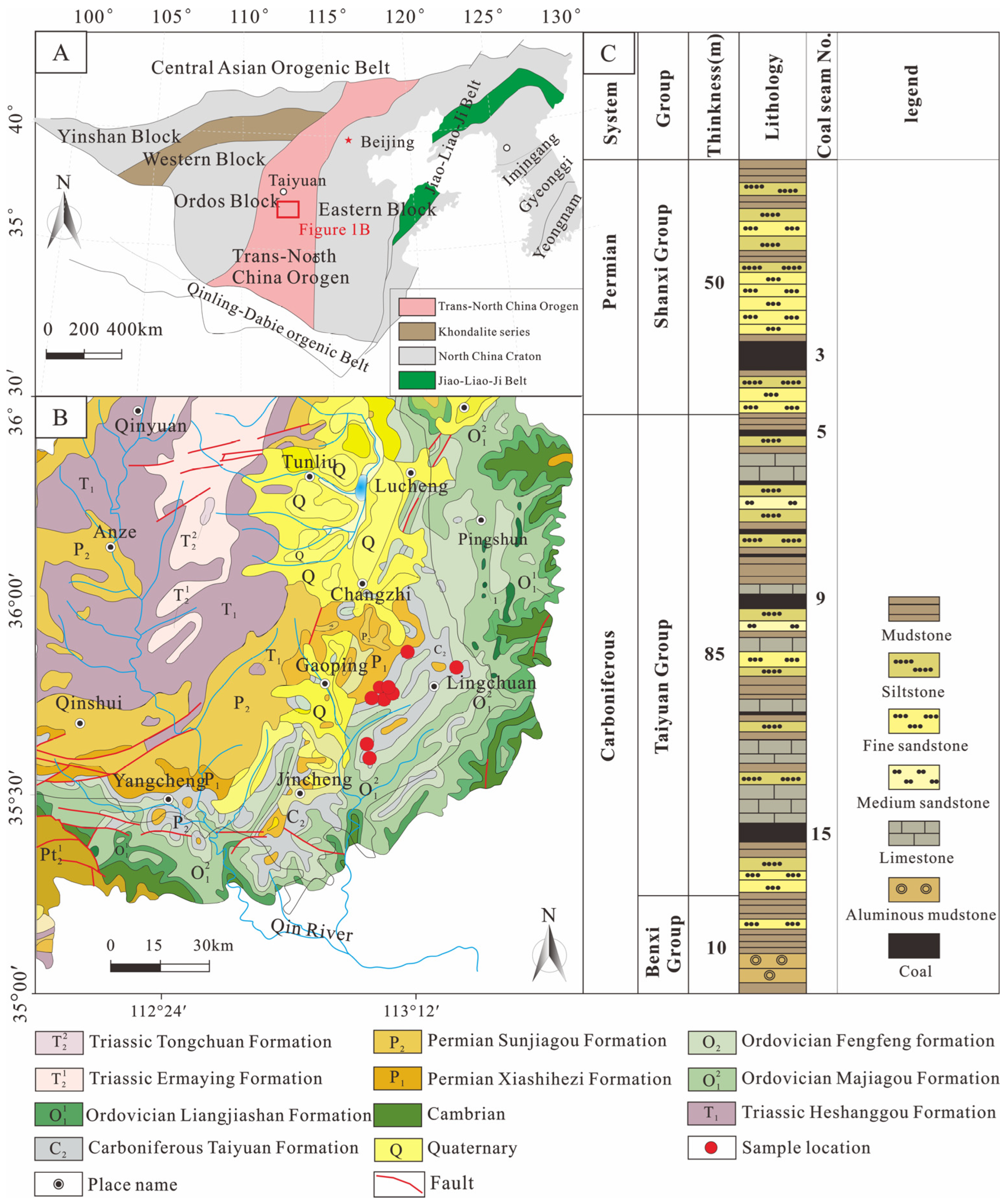
Previous studies on the sedimentary evolution of the Taiyuan Formation mainly focused on the northern part of the Qinshui basin which is located in the central part of the North China Craton (NCC) (Figure 1), while the provenance and tectonic evolution of Taiyuan Formation in the southern part of Qinshui basin during the Late Paleozoic is still poorly understood. Some results on the depositional ages of Taiyuan Formation are controversial. Li et al. (2009) [2] reported that the Taiyuan Formation in the Ningwu-Jingle Basin contains detrital zircon grains as young as 303 ± 4 Ma which is Late Carboniferous. The youngest reported zircon ages from the Taiyuan Formation in Xishan area are of 271 ± 7 Ma which implies that the early provenance came from the Inner Mongolia uplift (IMPU) and the later one from the northern margin or interior of NCC [15]. The Taiyuan Formation of Qinshui basin yielded youngest U–Pb zircon ages of 406 Ma, suggesting that there was a provenance shift with the early provenance mainly from North Qinling orogenic belt (NQOB) then switching to the northern part of NCC (IMPU) [13].
In this study, we systematically collected sandstone samples from the overlying and underlying strata of the Taiyuan Formation, Lingshuan area, southern Qinshui basin (Figure 1). The samples were analyzed for detrital zircon U-Pb dating and Hf isotopes. The results are combined with existing research findings to determine the maximum sedimentary age and provenance, so as to constrain the sedimentary and tectonic evolution of the Taiyuan Formation in the Qinshui basin.

2. Geological Setting

The Qinshui Basin is situated in the central part of the North China Craton (NCC) (Figure 1). It is bounded by the Taihang Mountains to the east, the Huo Mountains to the west, the Wutai Mountains to the north, and the Zhongtiao Mountains to the south. The basin structure is defined by a complex, NNE–SSW-trending syncline [16]. The basin is filled with late Paleozoic and Mesozoic strata, however, Precambrian and Early Paleozoic strata are exposed at the periphery of the basin. Late Ordovician to Early Carboniferous strata are missing. Late Paleozoic strata consist of the Benxi formation, Taiyuan formation, Shanxi formation, Shihezi formation and Shiqianfeng formation from bottom to top [13,14,17]. The Taiyuan Formation, deposited conformably on the Benxi Formation, consists of interbedded limestone, mudstone, sandstone, and coal seams, constituting one of the primary coal-bearing units in the basin [13]. The tectonic evolution of the Qinshui basin was closely associated with the NCC, the Qinling orogenic belt, and the Central Asian Orogenic Belt (CAOB), particularly the development of the North Qinling tectonic belt (NQOB) and northern margin of the North China Craton (N-NCC), also referred to as the Inner Mongolia Paleo-uplift (IMPU) [17,18].
The NCC is bordered by the CAOB to the north and the NQOB to the south (Figure 1). During the Late Paleozoic, continuous subduction of the Paleo-Asian Ocean beneath the northern NCC led to the formation of the IMPU. This event was accompanied by widespread emplacement of Late Paleozoic intrusive rocks (primarily exhibiting negative εHf(t) values), with magmatic pulses recorded at 400–360 Ma and 330–265 Ma. Subsequent erosion of the IMPU provided a major sediment source for adjacent intracontinental basins [10,13,14,18,19,20]. In contrast, the CAOB, situated between the NCC and the Siberian Craton, is characterized by extensive Late Paleozoic intrusive rocks that predominantly yield positive εHf(t) values [21,22]. The NQOB to the south witnessed extensive Paleozoic magmatism, peaking around 450 Ma [23,24,25,26]. Early Paleozoic intrusive rocks in this belt display a range of εHf(t) values from slightly negative to positive (−10 to +10), interpreted to reflect a tectonic setting associated with northward subduction and eventual closure of the Shangdan Ocean during the Early Paleozoic [26,27,28].
Figure 1. Geological sketch map of NCC ((A), after [29]) and the study area (B) with vertical sequence of Taiyuan Formation in southern Qinshui Basin (C).
Minerals 16 00261 g001
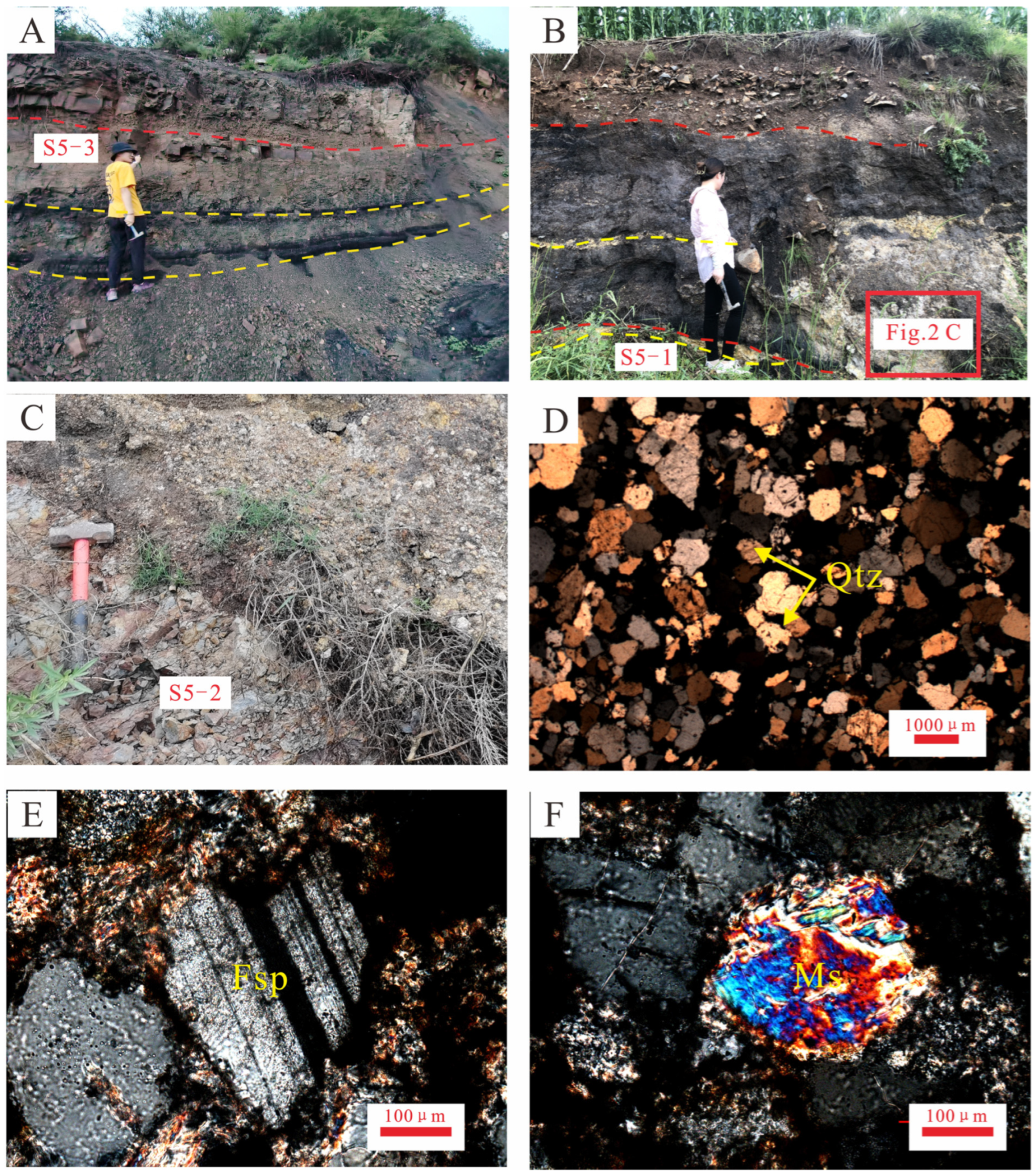
We collected ten samples from the Taiyuan Formations in the Qinshui basin, including Xiabi quarry (35°39′28.80″ N, 113°07′19.56″ E), Houshan Village (35°40′52.32″ N, 113°08′41.28″ E), Yongwan Village (35°45′13.68″ N, 113°05′16.44″ E), Simingshan Coal Mine (35°48′46.08″ N, 113°21′11.16″ E) and Qinjiazhuang (35°45′45.72″ N, 113°01′52.68″ E) area (Figure 1). The approximate sampling locations and depositional time range are summarized in Figure 1. Two samples (S3-1 and S5-3) were collected from the top of the Taiyuan Formation, and eight samples (S1-1, S2-1, S2-2, S4-1, S5-1, S5-2, S6-1, S6-2) were collected from the bottom. The samples are mainly quartz sandstone and are mainly composed of detrital particles and fillers. The detrital particles consist of feldspar, quartz and mica, etc. The quartz particles with a particle size of 0.5 mm are angular or subcircular. The wave-like extinction of the quartz particles is obvious and the content is about 50%. Mica crystal is small, with size from 0.1 mm to 2 mm; Feldspars are partially weathered to opaque ferrous minerals with a content of 10%. The filling material is clay and cement with a content of about 40% (Figure 2).

3. Analytical Methods and Sample Locations

Zircons were separated using conventional heavy liquid and magnetic techniques before these separates were purified by hand-picking under a binocular microscope at the Langfang Regional Geological Survey, Hebei Province, China. Hand-picked zircons were mounted in epoxy resin and polished until the centers of zircon grains were exposed. All the zircons were photographed in transmitted and reflected light to identify their external structures. Cathodoluminescence (CL) images were used to reveal their internal structures and accomplished in Institute of Geology, Chinese Academy of Geological Sciences. Based on the CL images, the potential target sites for U—Pb analyzes were determined.
Zircon U-Pb dating was performed using an Agilent 7900 (Agilent Technologies, Santa Clara, CA, USA) inductively coupled plasma mass spectrometer (ICP-MS) coupled to a 193 nm ArF-excimer laser ablation system, housed at the Key Laboratory of Paleomagnetism and Tectonic Reconstruction, Ministry of Land and Resources, Beijing, China. The system is equipped with a homogenizing, imaging optical system. Analytical conditions employed a laser spot size of 32 μm and a repetition rate of 5 Hz. The ablation strategy involved single spots on individual zircon grains accurate correction for instrumental mass bias and, critically, for the time-dependent elemental fractionation (specifically for Pb/U) that occurs during laser ablation is essential for LA-ICP-MS U-Pb geochronology. This correction was achieved using a matrix-matched primary zircon standard. The widely used Harvard zircon 91500, with a recommended 206Pb/238U age of 1065.4 ± 0. Ma [30], was employed as the primary external standard. Plešovice zircon, 337.13 ± 0.37 Ma (2σ), was also used as reference standards. Zircon 91500 (for U-Pb dating) and NIST610 glass (for trace elements) were used as external standards for fractionation correction. The international standard zircon samples 91500 (2 points) and Plesovice (1 point) are inserted during the analysis of every 10 unknown sample points. Zircon trace element concentrations were calibrated by using 29Si as an internal standard. Data were processed using the ICPMSDataCal V12.2 program [31,32]. Due to the small abundance of 235U in zircon, when the sample is young, the accumulated radiogenic 207Pb is very small, and the age calculated by 206Pb/207Pb or 207Pb/235Pb is not as accurate as that obtained by 206Pb/238U. On the contrary, when the sample age is old, if there is Pb loss in the zircon itself, the calculated age of 206Pb/238U will be smaller than the real age, while the calculated age of 206Pb/207Pb will be closer to the real crystallization age of zircon. Interpreted ages are based on 206Pb/238U for <1000 Ma grains and on 206Pb/207Pb for >1000 Ma grains. Only ≤10% discordant analyses are considered in pooled calculations. The results are plotted using Isoplot3.0 [33].
Zircon Hf isotope analysis was carried out in situ using a Newwave UP213 LAM-ICP-MS (Newwave Research, Cambridge, UK), attached to a Neptune MC ICP-MS at the Institute of Mineral Resources, CAGS, Beijing. Instrumental conditions and data acquisition are comprehensively described by [34]. A stationary spot was used for the present analyses, with a beam diameter of 40 μm. Helium was used as a carrier gas to transport the ablated sample from the laser-ablation cell to the ICP-MS torch via a mixing chamber mixed with argon. Zircon GJ1 and Plesovice were used as the reference standards during our routine analyzes, with a weighted mean 176Hf/177Hf ratio of 0.282007 + 0.000007 (2σ, n = 36) and 0.282476 + 0.000004 (2σ, n = 27), respectively.

4. Analytical Results

4.1. Zircon Characteristics and Trace Element Compositions

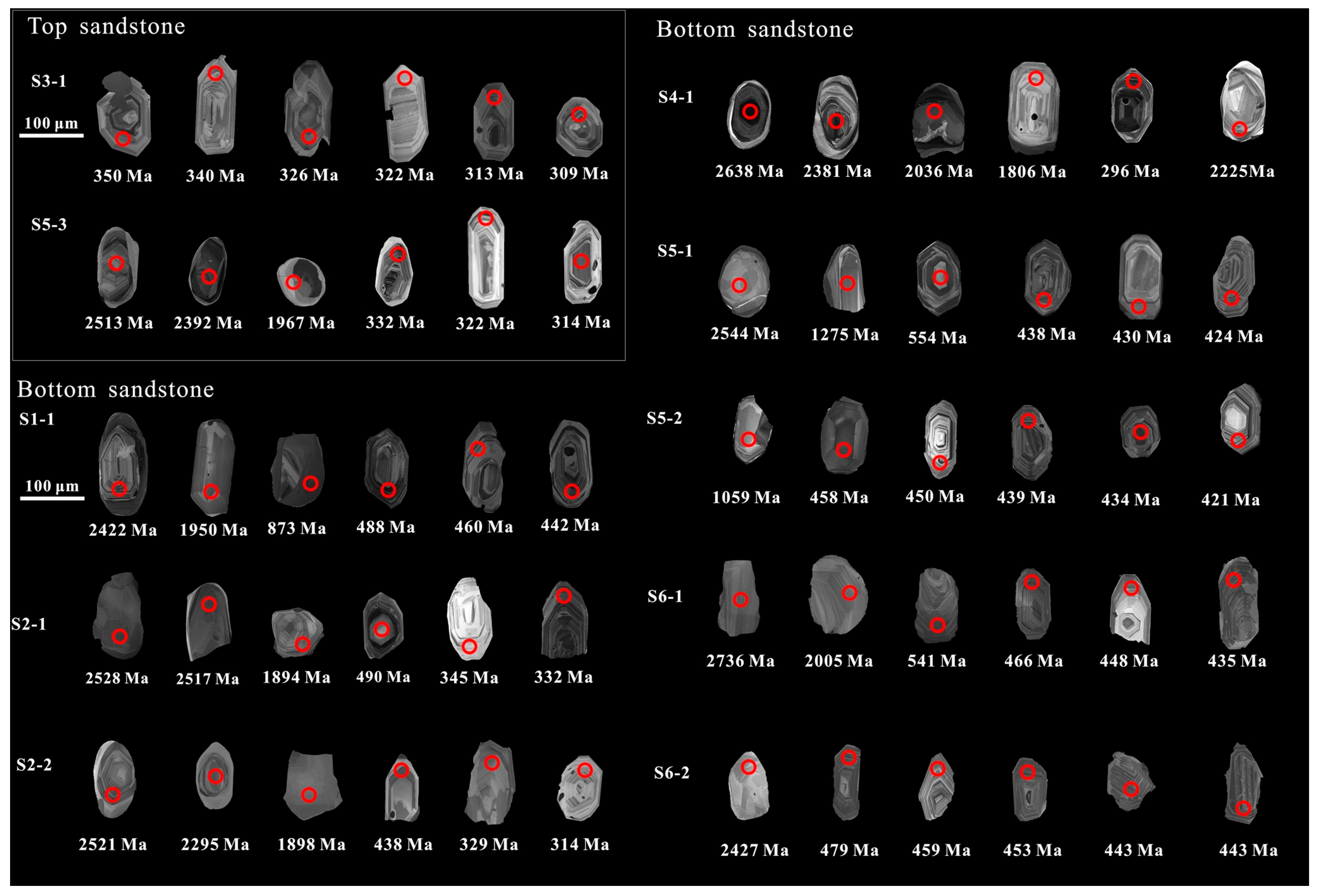
The size of all detrital zircons in the Taiyuan Formation sandstone ranges from 80 to 150 μm (97%), with a few zircons up to 200 μm (3%). The Early Paleozoic and late Paleozoic zircons are euhedral or semi-euhedral, long columnar, with an aspect ratio of 2:1. The CL images show clear oscillatory bands (Figure 3). The Precambrian zircons are semi-euhedral and euhedral, oval or round, with high degree of roundness. CL images show no rhythmic zonation or fan-shaped zonation structure, and a few have obvious core-mantle-edge structure. The CL images of detrital zircons from the top and bottom sandstones are shown in Figure 3.
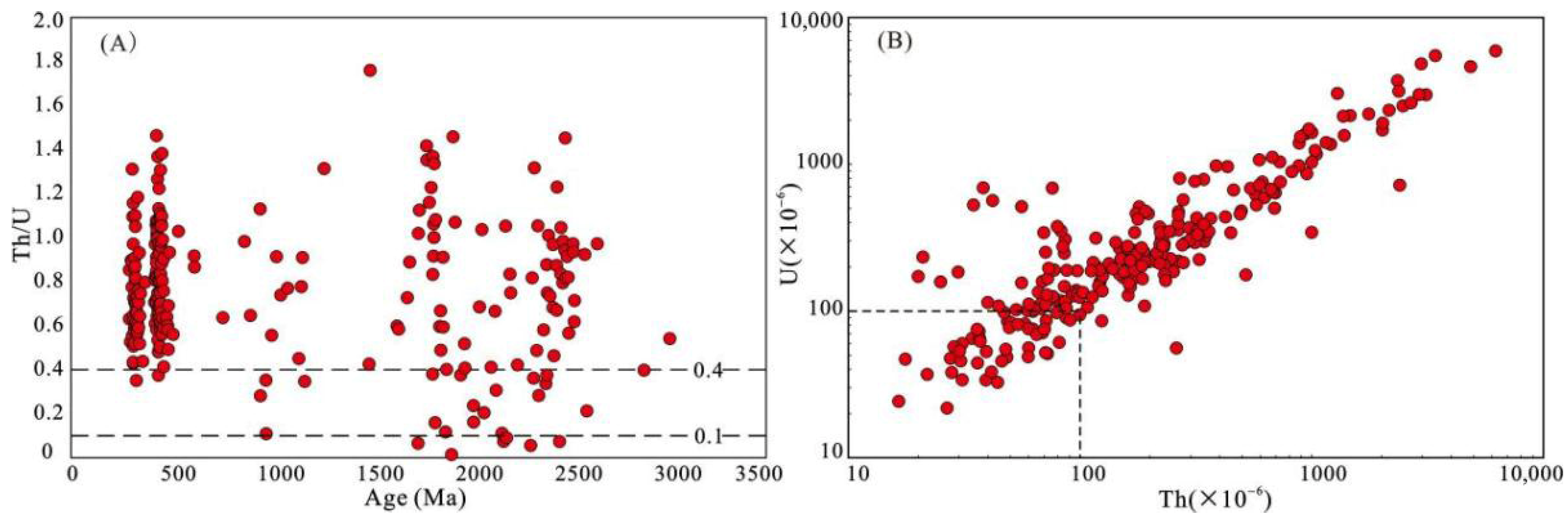
It is generally considered that magmatic zircons have higher Th and U contents (no less than 100 × 10−6 and Th/U > 0.4), while metamorphic zircons have smaller Th and U contents and wider rhyolite ring bands with Th/U < 0.1 [35,36] (Figure 4A). Th and U of zircon in this paper have a good correlation and higher Th and U contents (Figure 4B; Supplementary Table S1), showing obvious magmatic zircon characteristics [37]. Therefore, the sandstone detrital zircons of Taiyuan Formation in the study area are mainly magmatic zircons, and a few of them are metamorphic-genetic zircons.
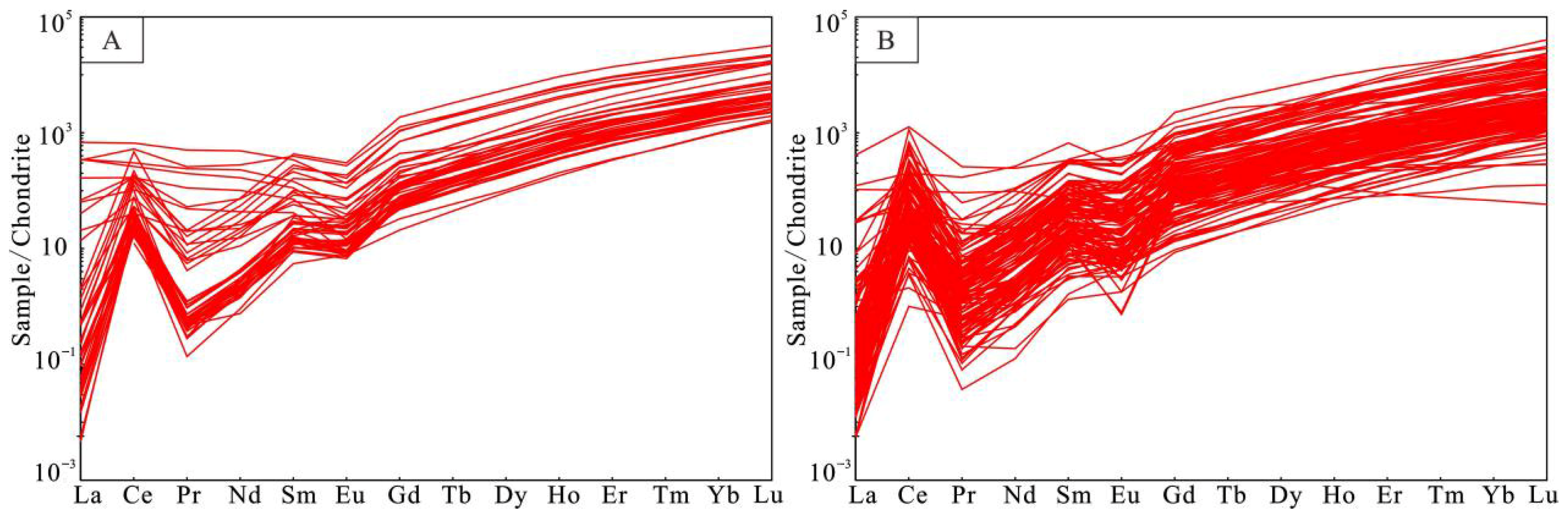
As shown in Figure 5, the detrital zircons of the top (Figure 5A) and bottom (Figure 5B) sandstones from the Taiyuan Formation exhibit consistent chondrite-normalized REE patterns characterized by enriched heavy rare earth elements, depleted light rare earth elements, and pronounced positive Ce anomalies (1.0~1.2) along with negative Eu anomalies (0.03~0.96). These features clearly indicate that the zircons were primarily derived from intermediate-acid magmatic rocks within the continental crust that underwent strong fractional crystallization.
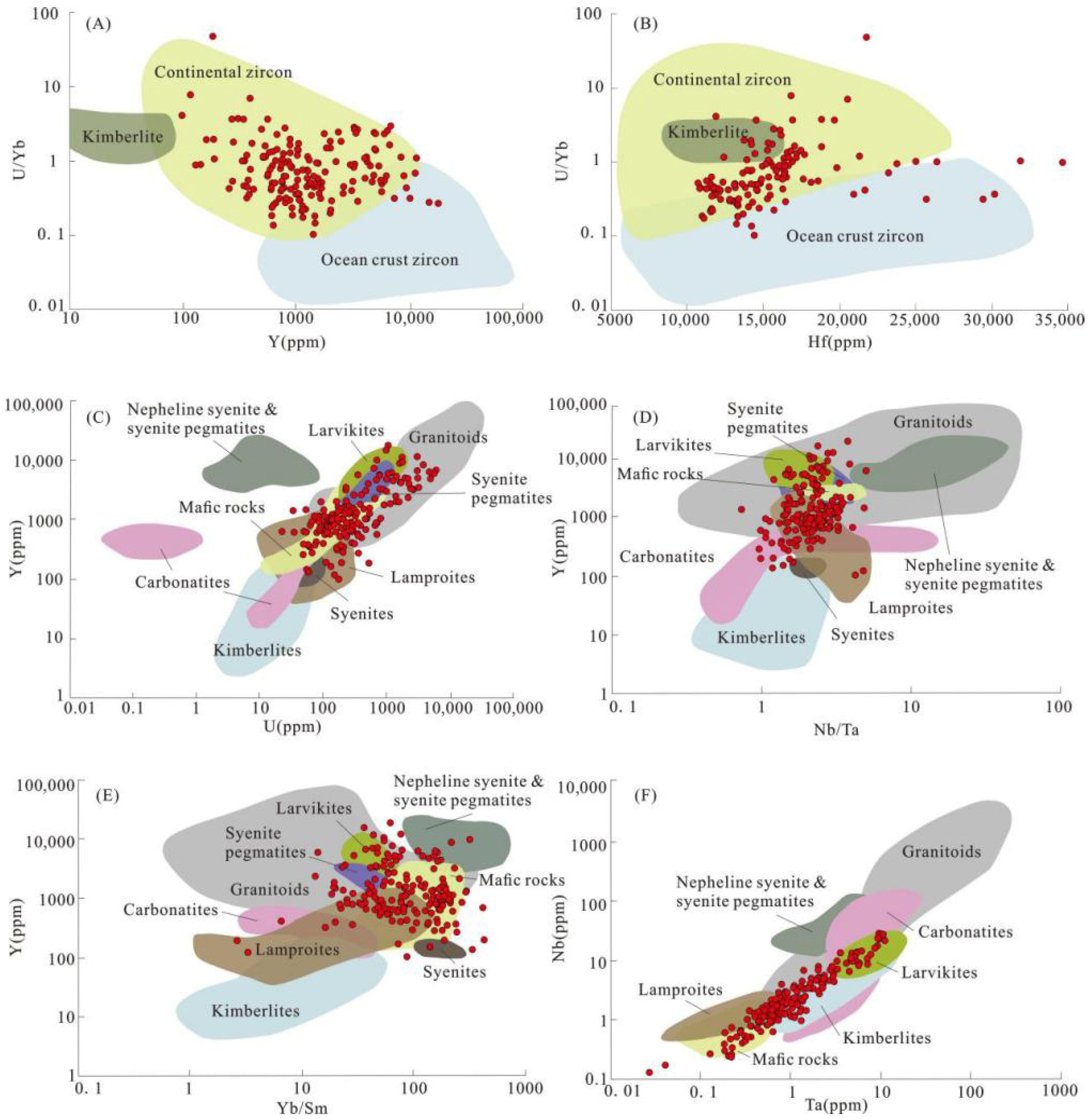
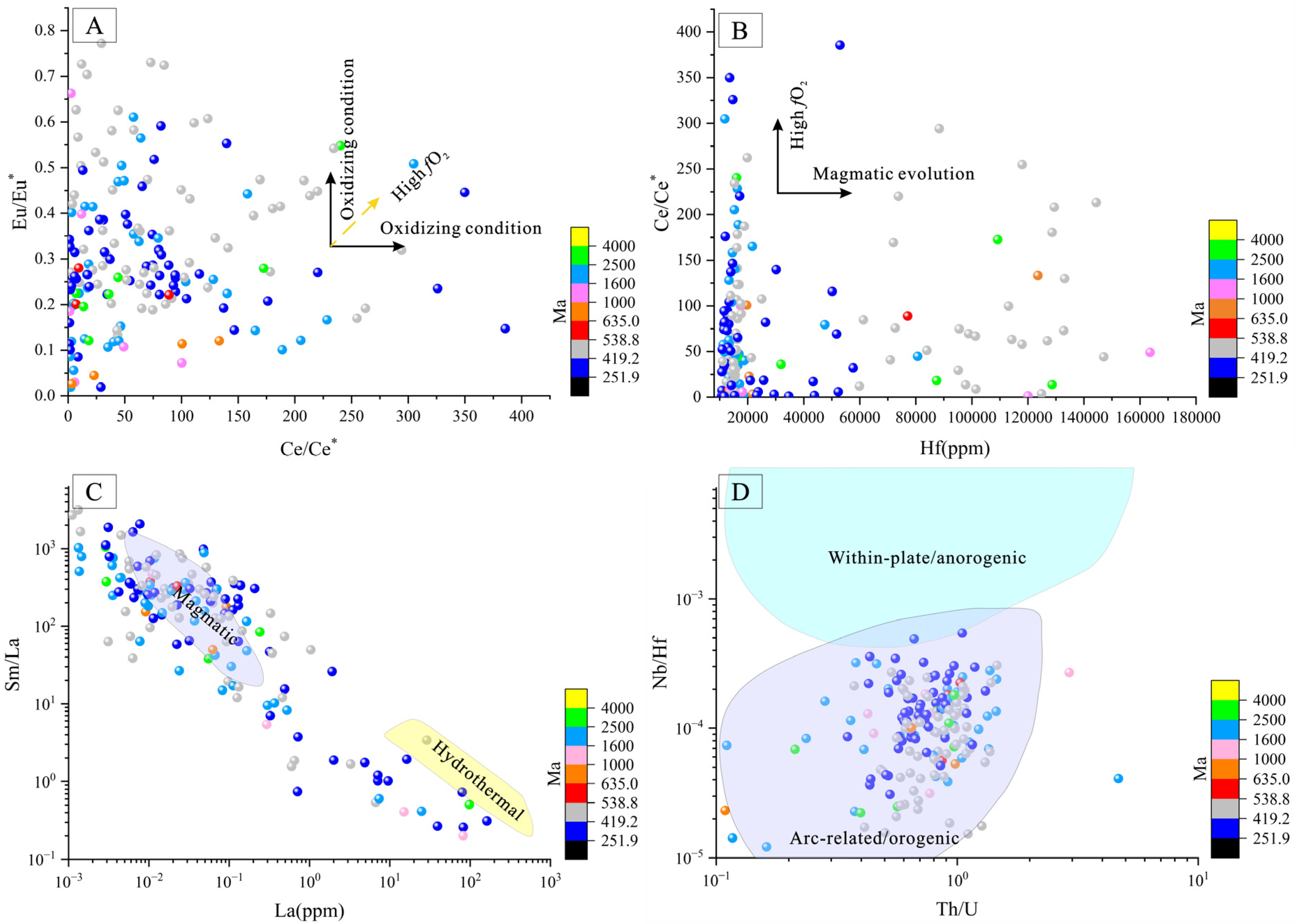
On the U/Yb versus Y and U/Yb versus Hf diagrams, almost all of the zircons fall in the field of continental zircon origin (Figure 6A,B). On the Y versus U, Nb/Ta versus Yb/Sm, and Nb versus Ta diagrams, the majority of zircons were derived from intermediate-acid igneous rocks, including granites, larvikites, syenite pegmatites, with a few zircons derived from mafic rocks [39,40] (Figure 6C–F). As illustrated in Figure 7, zircon grains from different age groups (represented by distinct colors) exhibit relatively consistent characteristics. Figure 7A,B demonstrate that the zircons in the study area crystallized under notably oxidizing conditions, which are typically associated with continental arc or active continental margin magmatic systems. Figure 7C shows that all zircon samples plot within the magmatic field, confirming their magmatic origin. Furthermore, Figure 7D indicates that the majority of zircon data points are concentrated in the arc-related/orogenic domain, clearly distinct from the within-plate/anorogenic field, suggesting that the source magmas formed in a subduction-related tectonic setting.
In summary, the detrital zircons in the sandstone of the study area are predominantly of magmatic origin and derived from continental crustal sources. This conclusion is consistently supported by their geochemical signatures, which reflect formation within oxidizing, arc-related magmatic systems.
Figure 6. Binary diagrams (after [39,40]) of trace element concentrations and ratios for the detrital zircon crystals from Taiyuan Formation in Qinshui Basin. (A) U/Yb vs. Y diagrams; (B) U/Yb vs. Hf diagrams; (C) Y vs. U diagrams; (D) Y vs. Nb/Ta diagrams; (E) Y vs. Yb/Sm diagrams; (F) Nb vs. Ta diagrams.
Minerals 16 00261 g006

4.2. Zircon U–Pb Ages

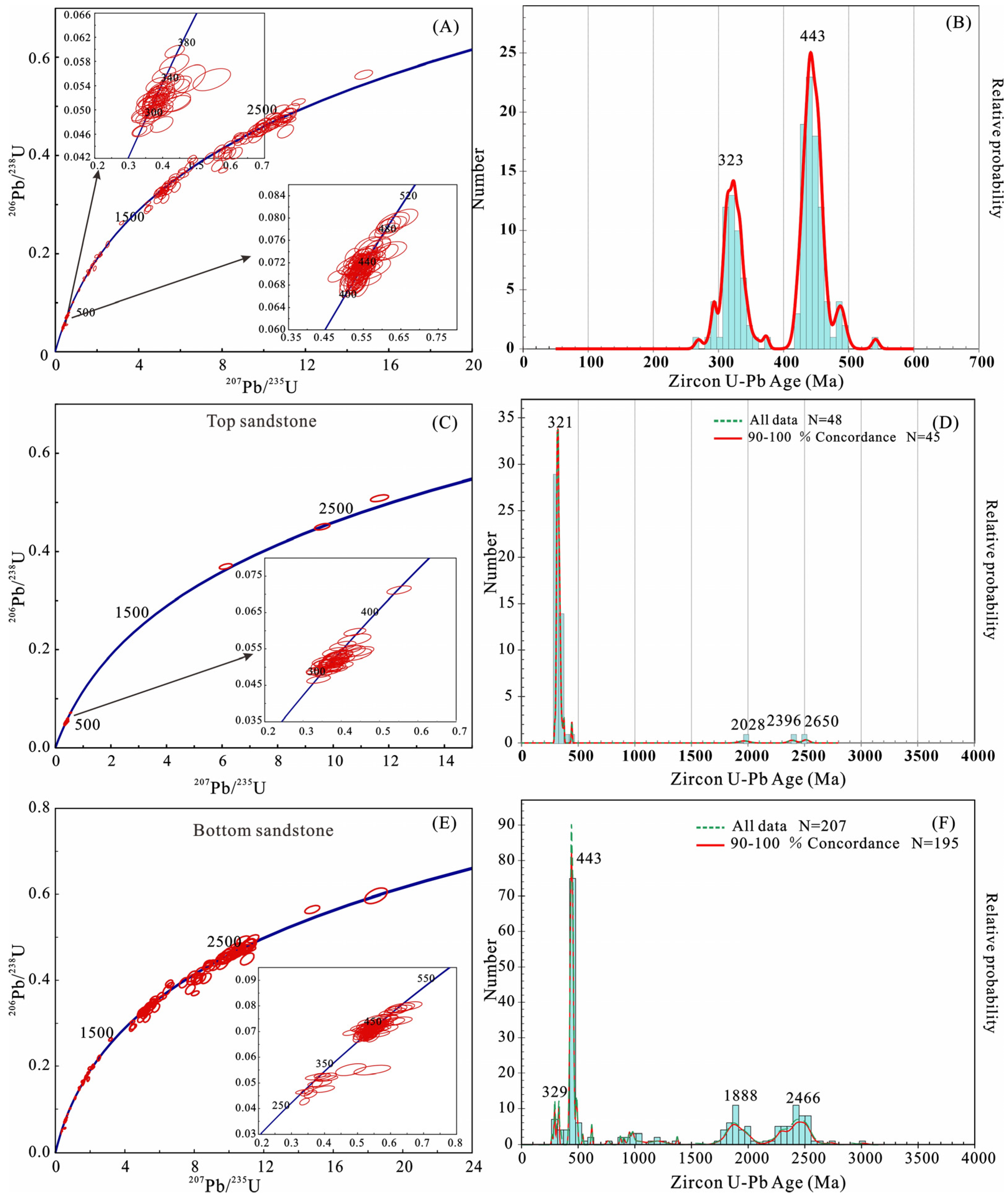
U-Pb concordia plots and relative U-Pb age probability plots of the ten samples from the Taiyuan Formation of Qinshui basin are shown in Figure 8. The U-Pb ages of all detrital zircons in the Taiyuan Formation strata of the study area range from 270 to 3013 Ma with two significant age peaks ~323 Ma (52 zircons, 22%) and ~443 Ma (85 zircons, 35%). Two weak age peaks (Figure 8A,B) are 1541–2180 Ma (35 zircons, 15%) and 2225–3013 Ma (49 zircons, 20%). The age of 19 detrital zircons scatters over the range 541–1376 Ma (8%) (Supplementary Table S2).
A total of 48 ages were obtained from the top sandstone samples, 207 ages from the bottom sandstone samples. Among them, 3 zircons in the top sandstone and 12 zircons in the bottom sandstone are less than 90% concordant and were omitted.
However, the top and bottom sandstones from the Taiyuan Formation show different age patterns. The zircon U-Pb ages of 40 zircons measured in two sandstone samples from the top sandstone are concentrated in the Late Paleozoic (Figure 8C) with ages ranging from 294 to 373 Ma and a peak of ~321 Ma, accounting for 91% of all zircon grains. In addition, there are three Archean grains older than 1.9 Ga and one Early Paleozoic (443 Ma) grain (Figure 8C,D). Detrital zircon U-Pb ages obtained from the bottom sandstones are similar, with a distinct age peak at ~443 Ma, indicating that they were mainly derived from the Early Paleozoic (Figure 8E,F).
Figure 7. Zircon trace element discrimination diagrams for different age groups: (A) Eu/Eu* vs. Ce/Ce* and (B) Ce/Ce* vs. Hf diagrams (after [41]) display that zircon crystallized during oxidizing conditions. (C) Sm/La vs. La diagrams [42]), the zircons fall in magmatic fields, which suggests magmatic zircons. (D) Nb/Hf vs. Th/U diagram [43], zircon data points are concentrated in the arc-related/orogenic region and clearly distinguished from with-plate/anorogenic. Colors represent distinct zircon age populations.
Minerals 16 00261 g007

4.3. Zircon Hf Isotopes

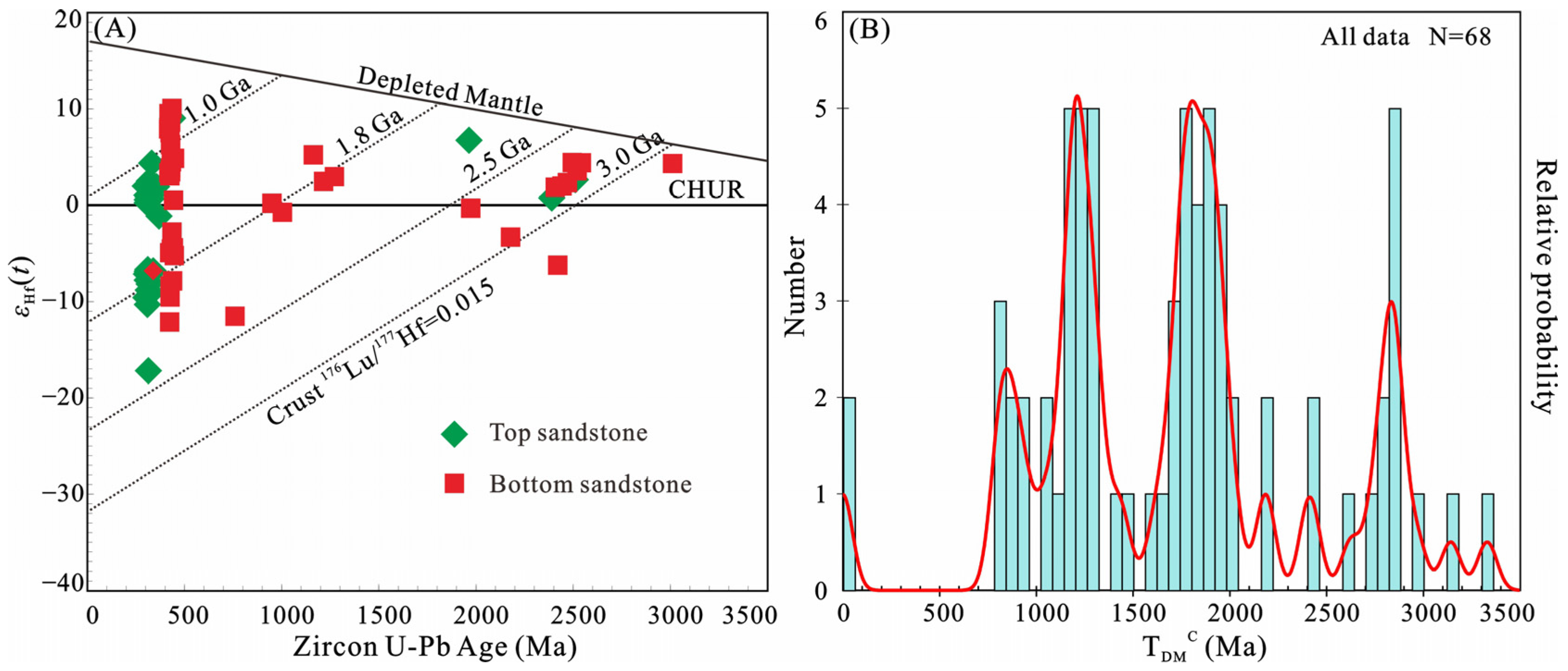
Sixty-six zircons (with concordances of >90%) were analyzed for Hf isotope compositions, 27 of which are from top sandstones and 39 are from bottom sandstones (Figure 9). The εHf(t) value ranges −17.3 to +9.9 (Supplementary Table S3). The maximum values are comparable to the εHf(t) values of the depleted mantle (Figure 9A,B), suggesting the presence of juvenile crust in the source area. Some values are quite negative (εHf(t) = −17.3), suggesting that the source area included ancient crustal materials. The Late Paleozoic detrital zircons with peaks at ~321 Ma have εHf(t) values of −17.3–+2.0 and two-stage mode ages (TDM2) ranging from 1075 to 2425 Ma in the top sandstone of the Taiyuan Formation (Figure 9A,B), indicating a large contribution of ancient crustal material in the source area. The Early Paleozoic detrital zircon from the bottom sandstone with age peak at ~443 Ma shows εHf(t) values ranging from −12.3–+9.9, and the two-stage ages (TDM2) ranging from 793 to 2188 Ma (Figure 9A,B), implying that the source area material was modified by both ancient and juvenile crustal material.
Figure 8. Concordia curve and age spectrum of detrital zircons from Taiyuan Formation in study area. (A) Concordia curve of all detrital zircons; (B) Younger age spectrum of detrital zircons; (C) Concordia curve of detrital zircons in top sandstone; (D) Age spectrum of detrital zircons in top sandstone; (E) Concordia curve of detrital zircons in bottom sandstone; (F) Age spectrum of detrital zircons in bottom sandstone.
Minerals 16 00261 g008
Figure 9. εHf(t) vs. U-Pb age diagrams and model age histogram for detrital zircons in the Taiyuan Formation. (A) εHf(t) vs. U-Pb age diagrams for detrital zircons, (B) Model age histogram for detrital zircons.
Minerals 16 00261 g009

5. Discussion

5.1. Depositional Age

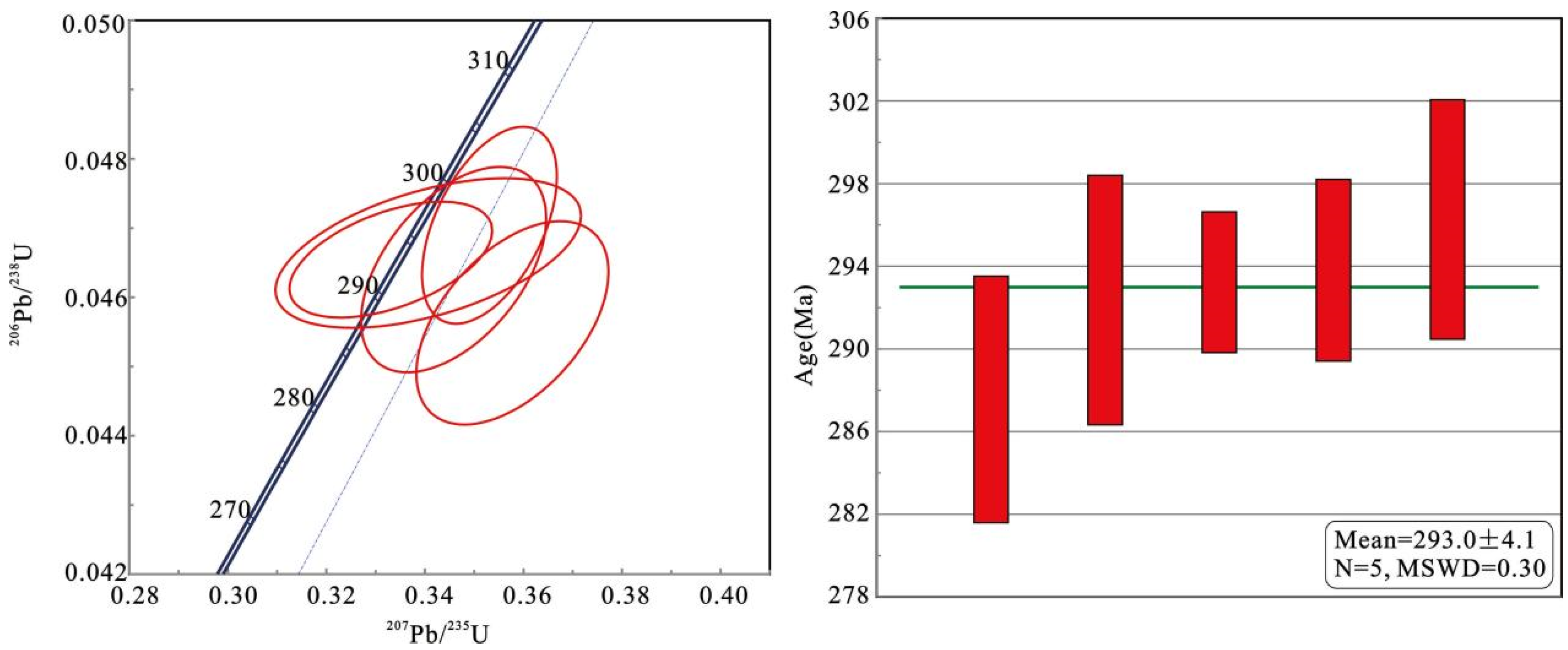
Detrital zircon geochronology places important constraints on depositional ages, which must be younger than the youngest dated grains. Generally, the measurement of the youngest age based on multiple grains is more consistent with the depositional age, with three or more youngest overlapping ages having been demonstrated to be statistically robust as a maximum depositional age [3]. The youngest age obtained for one of the samples is 269.6 ± 5.4 Ma, but the concordance is 90%. However, five grains with a magmatic origin (oscillatory growth zones, and relatively high Th/U ratios) from Taiyuan formation samples yield a mean U–Pb age of 293.0 ± 4.1 Ma (Figure 10).
Previous studies have reported a wide range of youngest detrital zircon ages (270–406 Ma) for the Taiyuan Formation within the Qinshui Basin and its surrounding regions (Table 1). Stratigraphic paleontology and sedimentological studies, however, provide complementary age constraints. The first appearance of the fossil Pseudoschwagerina is interpreted to indicate a Late Carboniferous to Early Permian age for the formation [44]. The morphological features of conodonts in the Taiyuan Formation indicate a Permian age, and the Taiyuan Formation should be assigned to the Lower Permian Asselian Stage [45]. High-resolution stratigraphic analysis of the Carboniferous–Permian succession in North China suggests deposition occurred during the Late Carboniferous (302–280 Ma [46]). A detailed revision of Carboniferous–Permian conodont biostratigraphy in north China also supports a Permian depositional age [45].
Based on the above information and the U-Pb age data of detrital zircon in the sandstone of the Taiyuan Formation, the youngest age of zircon obtained in different regions is slightly different, which may be due to the different regional depositional environment or sampling layer. Despite this variability, the consistent biostratigraphic signal and the presence of Early Permian detrital zircon ages collectively indicate that the maximum depositional age of the Taiyuan Formation is Early Permian.

5.2. Provenance Discussion

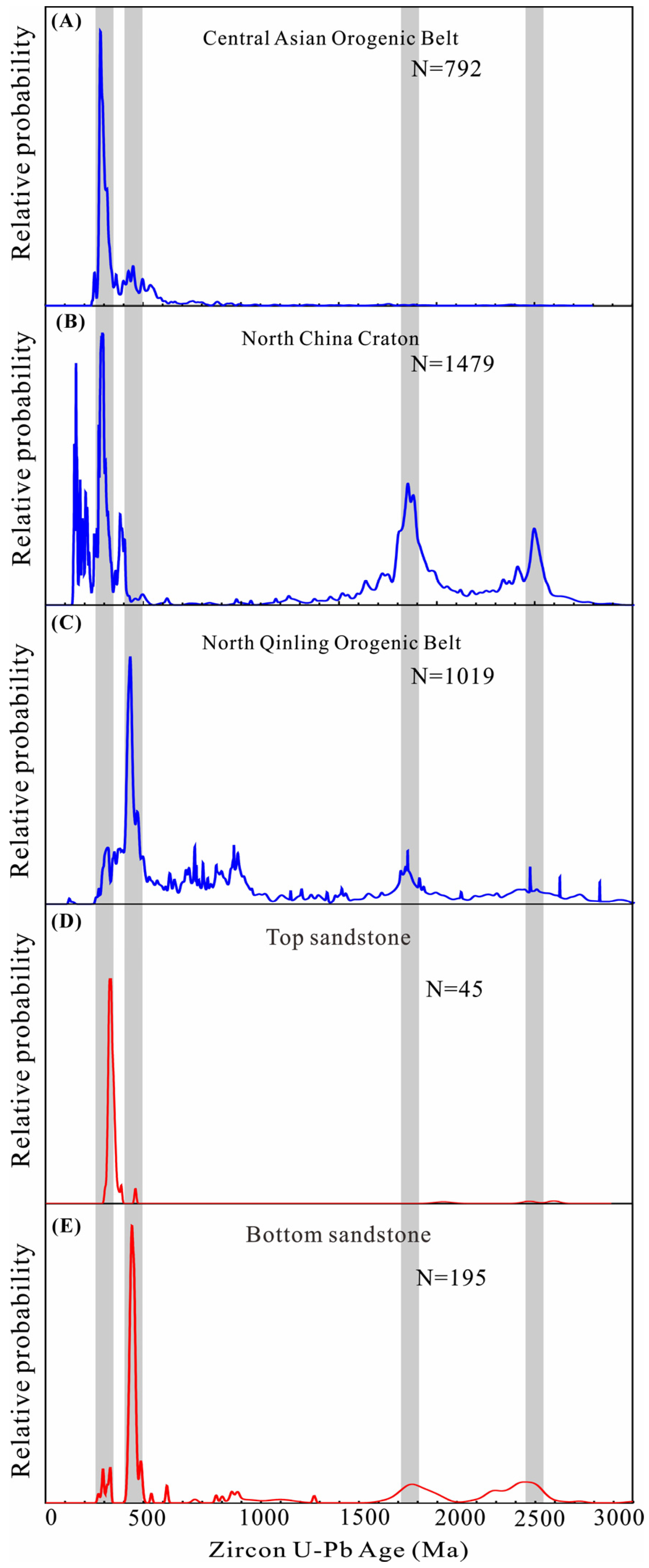
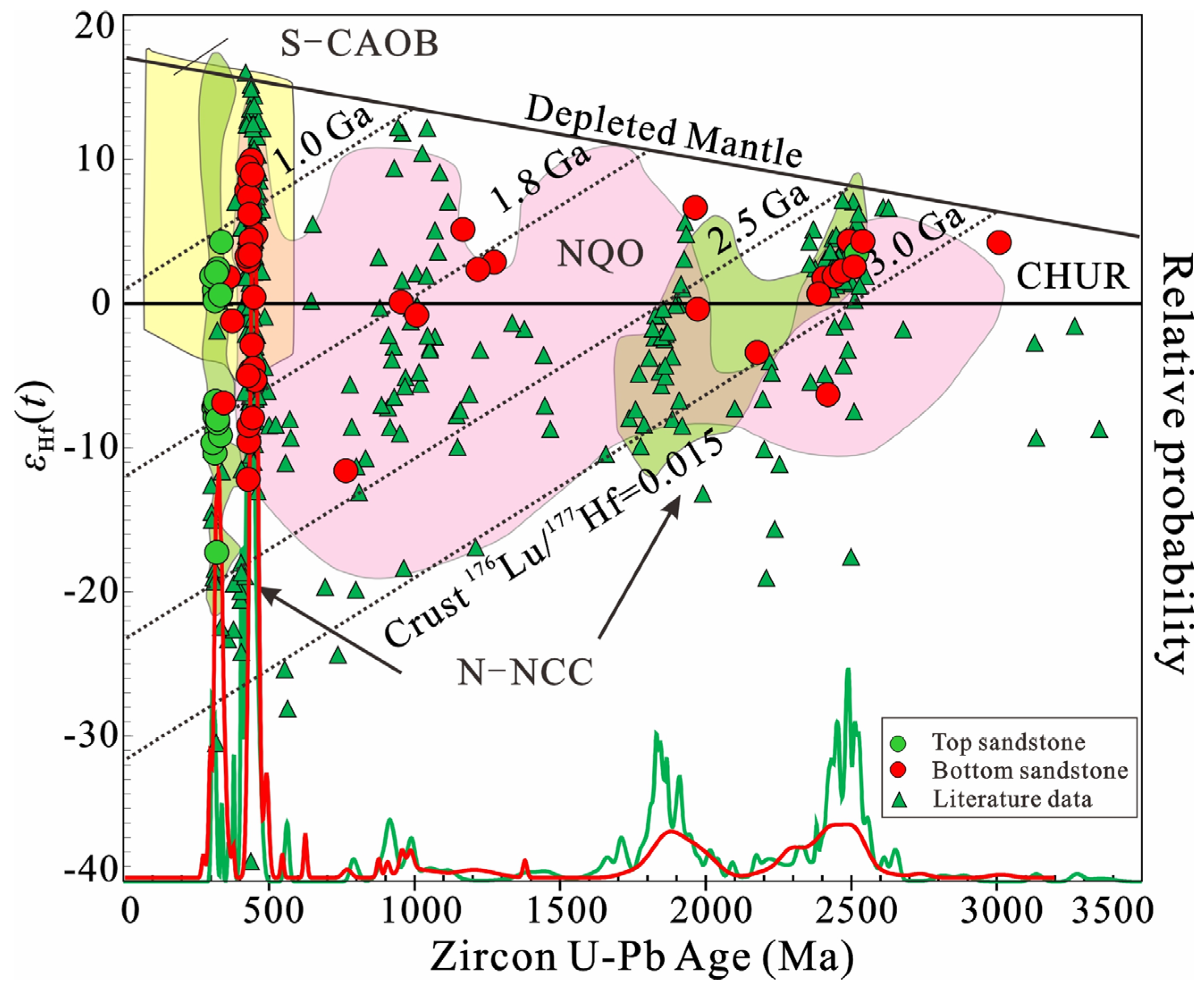
Previous studies have shown that the potential source areas of the Late Paleozoic Qinshui Basin are the NCC, the CAOB (IMPU) and the NQOB [2,13,15,21] (Figure 11). The U-Pb ages and Hf isotopic compositions of detrital zircons from the three source areas are summarized (Figure 11 and Figure 12) and compared with the samples analyzed in this paper. The results show that the detrital zircons of the Taiyuan Formation and its surrounding areas are mainly from the Early Paleozoic and Late Paleozoic, followed by the Precambrian.
Precambrian detrital zircons are predominantly concentrated at the base of the formation. The crystalline basement of the NCC exhibits pronounced age peaks at ~1.8 Ga and ~2.5 Ga [29,66,67] (Figure 11B), but detrital zircons ages of 2.6–2.4 Ga and 1.9–1.7 Ga are also recorded in the NQOB [68,69] (Figure 11C). The Hf isotopic compositions of these ancient detrital zircons have similar characteristics (Figure 12, εHf(t) values are not significantly different). Given that most of these ancient grains display rounded or elliptical morphologies, probably as a result of undergoing long-distance transport, suggesting that these zircons may be mainly from the NQOB [18]. Consequently, while the Paleoproterozoic detrital material in the Taiyuan Formation may have been derived from the NCC, the NQOB, or a mixture of both, its precise provenance remains ambiguous. In addition, detrital zircon age spectra indicate a small amount of Neoproterozoic material which is distributed at the base. Magmatic activity is only recorded in the southern part of the NCC and the NQOB during this period, while magmatism is very limited in the NCC and the CAOB (IMPU). What is more, the εHf(t) of these zircons is very similar to that of the NQOB (Figure 12). The detrital zircons with age range from 1.0 to 0.7 Ga are also missing in the Taiyuan Formation and Xishan area of the Ningwu-Jingle Basin in the northern part of the Qinshui basin [2,21], indicating that the northern part is an unlikely source area, further confirming that the NQOB is the source area of the Neoproterozoic material in the Taiyuan Formation of the Qinshui basin.
Figure 12. Correlogram of zircon εHf(t) values vs. U-Pb ages of Taiyuan formation in Qinshui basin. Data sources are from [2,13,21].
Minerals 16 00261 g012
Early Paleozoic detrital zircons (peak age at ~443 Ma) are mainly distributed in the bottom sandstones of the Taiyuan Formation. Contemporaneous magmatism occurred in both the NQOB and the CAOB [26,28,70,71] (Figure 11A,C), but their Hf isotopic signatures differ. The NQOB is characterized by intermediate to felsic granitic intrusions (480–400 Ma) with zircon εHf(t) values ranging from negative to positive (whole-rock εNd(t) = −10 to +10), reflecting crustal reworking and juvenile addition during subduction [23]. It is similar to the Hf isotopic composition of detrital zircons in the sandstones at the bottom of the section of this paper (εHf(t) = −12.3–+9.9). In contrast, the southernmost part of the CAOB has a record of Early Paleozoic intrusive and sedimentary rocks (450 Ma), but their εHf(t) values are mainly positive (Figure 12), which is different from the Hf isotopic signature of the detrital zircons in this paper. In addition, the distribution characteristics of Early Paleozoic detrital zircon εHf(t) reported in the Ningwu-Jingle Basin, Jingxi Basin and Taiyuan Xishan area around the Qinshui Basin are also similar to those of the NQOB [2,13,21] (Figure 12). The presence of abundant Early Paleozoic detrital zircons (~450 Ma peak) in nearby bauxite layers, also sourced from the NQOB [18], further supports this interpretation. In this paper, we suggest that the Early Paleozoic detrital zircons of the Taiyuan Formation in the Qinshui Basin originated from the NQOB.
Late Paleozoic detrital zircons (peak at ~323 Ma), displaying magmatic characteristics, are primarily concentrated on the top of the formation. Contemporary magmatism is extensively recorded in the IMPU within the southern CAOB, comprising lithologies such as quartz diorite, monzogranite, and granodiorite, with predominantly negative zircon εHf(t) values [19,20,72]. The Late Paleozoic detrital zircon age distribution and zircon Hf isotopic composition (εHf(t) = −17.3 to +2.0) at the top of the Taiyuan Formation strata in this paper (Figure 11C,D) are very similar to the IMPU area. In addition, the Late Paleozoic detrital zircons reported from the Ningwu-Jingle Basin, Jingxi Basin and Taiyuan Xishan area around the Qinshui Basin have the same characteristics [2,13,21] (Figure 12). In contrast, there is little Late Paleozoic magmatism in the North Qinling orogenic belt [23] (Figure 11C). The upper part of the Taiyuan Formation, Shanxi Formation, Lower Shihezi Formation, Upper Shihezi Formation, and Shiqianfeng Formation are mainly sourced from the IMPU [13]. Consequently, we interpret the Late Paleozoic detrital zircons to be predominantly derived from the IMPU.
Based on the above information, we suggest that the Precambrian zircons in the Taiyuan Formation of the Qinshui Basin come from the NCC itself or the NQOB or a mixture of both, but the exact source is difficult to distinguish. The source area of the Neoproterozoic and Early Paleozoic zircons is the NQOB, and this zircon is mainly found at the base of the Taiyuan Formation. In contrast, the Late Paleozoic zircons, concentrated at the top, were derived from the CAOB, specifically the IMPU, marking a significant provenance shift during the deposition of the Taiyuan Formation.
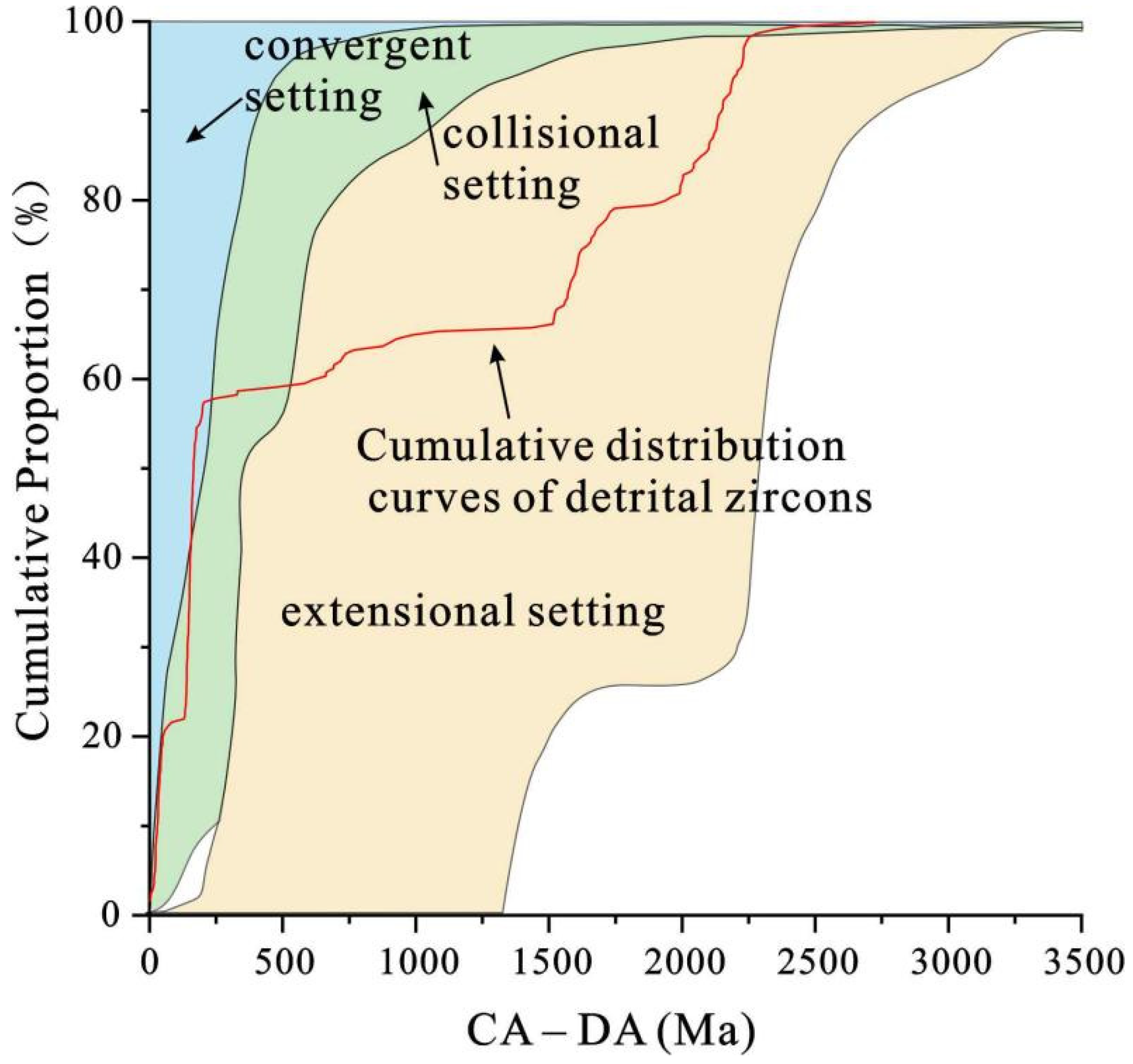
To discriminate the tectonic setting of the study area, this paper adopts the detrital zircon crystallization age-deposition age (CA-DA) difference cumulative proportion plot established by Cawood et al. (2012) [73], which classifies tectonic environments into the following three types: convergent, collisional, and extensional. As shown in Figure 13, within the CA-DA < 250 Ma interval, the curve exhibits the steepest slope, with the cumulative proportion rapidly reaching approximately 59%, indicating the absolute dominance of young zircon populations from the Late Paleozoic to the syn-depositional period (Taiyuan Formation sedimentation). In the CA-DA interval between 250 and 1500 Ma, the cumulative proportion curve rises slowly, suggesting a low yet persistent content of ancient age components within the detrital zircons. For CA-DA > 1500 Ma, the cumulative proportion shows a two-stage, step-like increase. Consequently, the cumulative curve for the study area lacks the diagnostic “ancient age peak” characteristic of collisional settings but is instead dominated by the supply of near-synchronous magmatic materials. This indicates that the tectonic background does not correspond strictly to any one of the typical convergent, collisional, or extensional environments. Integrating the detrital sandstone U-Pb age distributions and εHf(t) values discussed previously, this study proposes that the Taiyuan Formation was deposited in a post-collisional extensional environment during its early stages. At this time, the main collisional phase had concluded. The sediment provenance was dominated by widely developed post-collisional magmatic rocks, while the ancient crystalline basement had not yet undergone large-scale exhumation and supply into the basin.

5.3. Provenance Shift and Tectonic Implications

From the Middle Ordovician to the Late Carboniferous, the NCC experienced a sedimentary discontinuity of about 150 Ma, the Silurian, with Silurian, Devonian, and Lower Carboniferous strata being absent [13,18]. The Qinshui Basin began to receive deposition in the Late Carboniferous, and the Taiyuan Formation strata in the Qinshui Basin had an obvious source shift during the Paleozoic. The primary source area transitioned from the North Qinling Orogenic Belt (NQOB) in the Early Paleozoic to the Inner Mongolia Paleo-Uplift (IMPU) within the southern Central Asian Orogenic Belt (CAOB) in the Late Paleozoic [2,13,15,18,21]. Combined with the available results, the Taiyuan Formation in the Qinshui Basin appears to have undergone two major events during the Paleozoic.
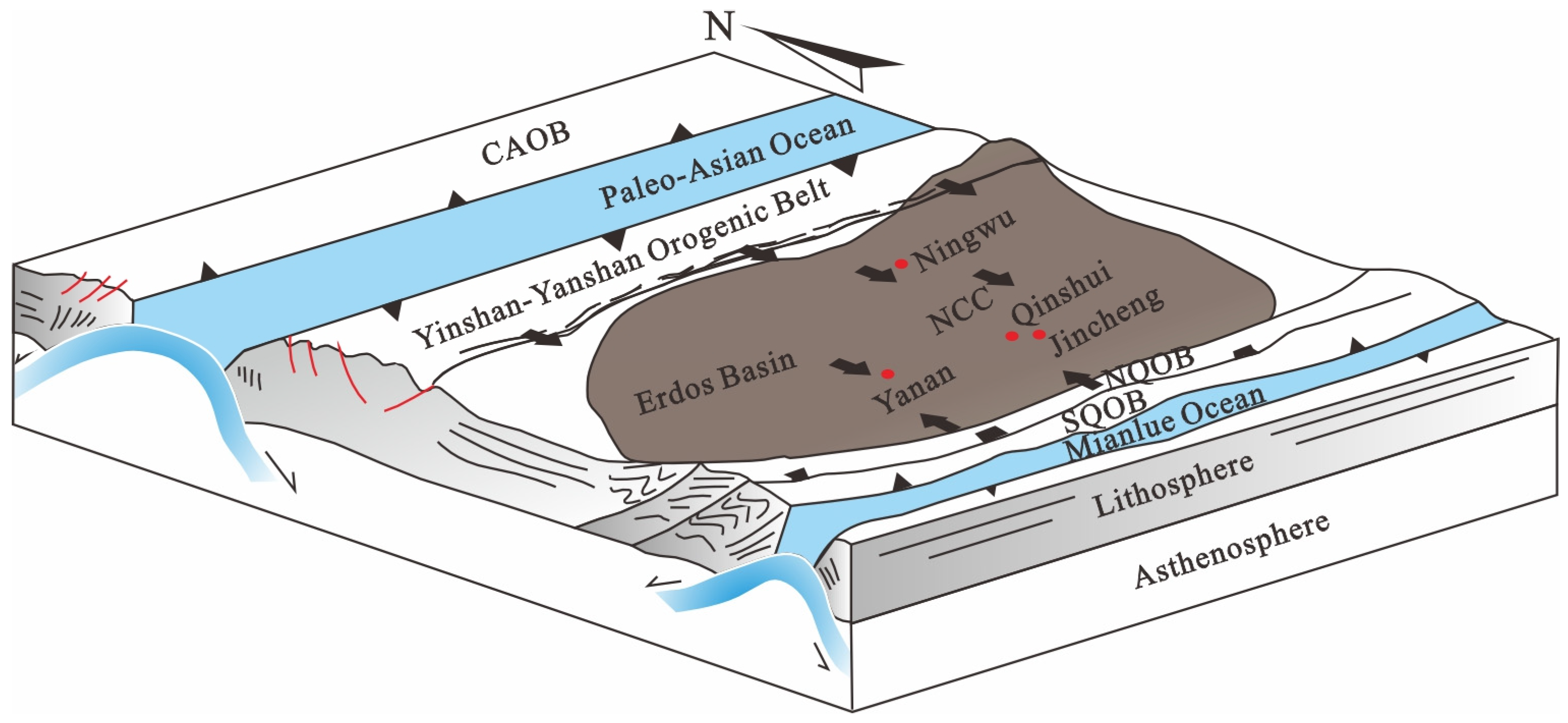
During the Early Paleozoic, the NCC was surrounded by passive continental margins and the Shangdan Ocean (part of the Paleo-Tethys Ocean) subducted beneath the North Qinling microcontinent (NQT) which resulted in the formation of a large number of Early Paleozoic igneous rocks. At this time, the NQT had intruded into the southern margin of the NCC. The collision between the NQT and SQT during the Late Paleozoic led to extensive multi-phase metamorphism and contemporaneous magmatism in the NQOB [24,74,75,76,77]. The accretionary collapse of these blocks led to a strong uplift in the southern part of the NCC [24,77,78] and the formation of a higher overall northward-tilted topography, and a large amount of material began to be transported to the interior of the NCC for deposition. The source of material was mainly from the NQOB and was deposited at the bottom of the Taiyuan Formation (Figure 12). During the Late Paleozoic, the Paleo-Tethys Ocean subduction zone along the southern NCC began to retreat. Meanwhile, continued subduction of the Paleo-Asian Ocean beneath the northern margin of the NCC led to the emplacement of extensive Late Paleozoic intrusive rocks and the formation of the IMPU. This uplift established a southward-tilting topography in the northern NCC, enabling the southward transport of weathered material. Consequently, the IMPU became the dominant source for the upper sandstones of the Taiyuan Formation [13,18] (Figure 14).

6. Conclusions

(1) Detrital zircon U-Pb ages from the Taiyuan Formation in the Qinshui basin can be divided into four groups of Late Paleozoic (370–270 Ma), Early Paleozoic (496–421 Ma), Paleoproterozoic (2.2–1.8 Ga), and Neo-Archean (2.6–2.4 Ga) zircon with significant peak ages at ~323 Ma and ~443 Ma. The weighted mean age of five youngest detrital zircons is 293 ± 4 Ma, which constrains the maximum depositional age of the formation to the Early Permian.
(2) Detrital zircon Hf isotopes and U-Pb age spectra demonstrate that the Taiyuan Formation in Qinshui basin was sourced predominantly from Early Late Paleozoic terrains, with subsidiary contributions from Precambrian sources. Stratigraphically, Early Paleozoic zircons (probably derived from NQOB) dominate the base, transitioning to Late Paleozoic zircons (probably derived from IMPU) at the top. This provenance shift records the Late Paleozoic tectonic transition from NQOB collision to IMPU uplift.

Supplementary Materials

The following supporting information can be downloaded at: https://www.mdpi.com/article/10.3390/min16030261/s1, Table S1: Trace elements of the detrital zircons from Taiyuan Formation sandstone in Qinshui Basin; Table S2: LA–ICP–MS U–Pb data of detrital zircons from Taiyuan Formation sandstone in Qinshui Basin; Table S3: Lu-Hf isotopic data of detrital zircons from Taiyuan Formation sandstone in Qinshui Basin.

Author Contributions

Conceptualization, Y.H., F.Z. and D.L.; Methodology, S.Z.; Formal analysis, L.Z., S.Z. and Q.Z.; Investigation, Y.H., L.Z., S.Z. and Q.Z.; Data curation, Y.H.; Writing—original draft, Y.H.; Writing—review & editing, F.Z. and D.L.; Project administration, F.Z. and D.L.; Funding acquisition, F.Z. All authors have read and agreed to the published version of the manuscript.

Funding

This research was supported by the National Natural Science Foundation of China (No. ZMKJ-2025-ZX04-01, 2021YFC2902005, DD202501013, and 2023YFC2906405).

Data Availability Statement

The data presented in this study are available on request from the corresponding author.

Acknowledgments

We are very grateful to Hanwen Dong, Qiqi Zhang and Guangxu Li for their kind supports during the paper revision and experimental analysis. We are grateful to the anonymous reviewer for valuable comments and suggestions.

Conflicts of Interest

Linhua Zhong is an employee of Yanzhou Coal Mining Co., Ltd. Shangqing Zhang is an employee of Shanxi Institute of Geological Survey Co., Ltd. The remaining authors declare that the research was conducted in the absence of any commercial or financial relationships that could be construed as a potential conflict of interest.

References

  1. Li, H.K.; Lu, S.N.; Xiang, Z.Q.; Zhou, H.Y.; Li, H.M.; Liu, D.Y.; Song, B.; Zheng, J.K.; Gu, Y. SHRIMP U–Pb geochronological research on detrital zircons from the Beidahe complex–group in the western segment of the north Qilian mountains northwest China. Geol. Rev. 2007, 53, 133–140, (In Chinese with English abstract). [Google Scholar]
  2. Li, H.Y.; Xu, Y.G.; Huang, X.; He, B.; Luo, Z.Y.; Yan, B. Activation of northern margin of the north China craton in late Paleozoic, Evidence from U–Pb dating and Hf isotopes of detrital zircons from the upper carboniferous Taiyuan formation in the Ningwu–Jingle Basin. Chin. Sci. Bull. 2009, 54, 632–640, (In Chinese with English abstract). [Google Scholar] [CrossRef]
  3. Dickinson, W.R.; Gehrels, G.E. Use of U–Pb ages of detrital zircons to infer maximum depositional ages of strata, a test against a Colorado plateau Mesozoic database. Earth Planet. Sci. Lett. 2009, 288, 115–125. [Google Scholar] [CrossRef]
  4. Abati, J.; Aghzer, A.M.; Gerdes, A.; Ennih, N. Detrital zircon ages of Neoproterozoic sequences of the Moroccan anti–atlas belt. Precambr. Res. 2010, 181, 115–128. [Google Scholar] [CrossRef]
  5. Xie, H.Q.; Liu, D.Y.; Yin, X.Y.; Zhou, H.Y.; Yang, C.H.; Du, L.L.; Wan, Y.S. Formation age and tectonic environment of the Gantaohe Group, North China Craton, Geology, geochemistry, SHRIMP zircon geochronology and Hf–Nd isotopic systematics. Chin. Sci. Bull. 2012, 57, 4735–4745. [Google Scholar] [CrossRef]
  6. Tucker, R.T.; Roberts, E.M.; Hu, Y.; Kemp, A.; Salisbury, S.W. Detrital zircon age constraints for the Winton formation, Queensland, contextualizing Australia’s late cretaceous dinosaur faunas. Gondwana Res. 2013, 24, 767–779. [Google Scholar] [CrossRef]
  7. Cao, G.S.; Fang, B.B.; Sun, F.Y.; Yu, S.J.; Xu, H.T. Maximum sedimentary age and provenance of Pingdingshan sandstone in the southern part of North China Block, Evidence from detrital zircon La–ICP–MS U–Pb age. Acta Petrol. Sin. 2019, 35, 2518–2544, (In Chinese with English abstract). [Google Scholar]
  8. Sanità, E.; Di Rosa, M.; Della Porta, G.; Catanzariti, R.; Pandolfi, R.; Marroni, M. Trench sediment heterogeneity controls accretion mechanisms in subduction zone. Sci. Rep. 2025, 15, 34793. [Google Scholar] [CrossRef]
  9. Malusà, M.G.; Anfinson, O.A.; Dafov, L.N.; Stockli, D.F. Tracking Adria indentation beneath the Alps by detrital zircon U-Pb geochronology: Implications for the Oligocene–Miocene dynamics of the Adriatic microplate. Geology 2016, 44, 155–158. [Google Scholar] [CrossRef]
  10. Zhang, S.H.; Zhao, Y.; Song, B.; Yang, Z.Y.; Hu, J.M.; Wu, H. Carboniferous granitic plutons from the northern margin of the North China block, implications for a late Palaeozoic active continental margin. J. Geol. Soc. 2007, 164, 451–463. [Google Scholar] [CrossRef]
  11. Richards, A.; Argles, T.; Harris, N.; Parrish, R.; Ahmad, T.; Darbyshire, F.; Draganits, E. Himalayan architecture constrained by isotopic tracers from clastic sediments. Earth Planet. Sci. Lett. 2005, 236, 773–796. [Google Scholar] [CrossRef]
  12. Bruguier, O.; Lancelot, J.R.; Malavieille, J. U–Pb dating on single detrital zircon grains from the Triassic Songpan–Ganze flysch (Central China), Provenance and tectonic correlations. Earth Planet. Sci. Lett. 1997, 152, 217–231. [Google Scholar] [CrossRef]
  13. Zhu, X.Q.; Zhu, W.B.; Ge, R.F.; Wang, X. Late Paleozoic provenance shift in the south–central North China Craton, implications for tectonic evolution and crustal growth. Gondwana Res. 2014, 25, 383–400. [Google Scholar] [CrossRef]
  14. Zhou, R.; Liu, D.; Zhou, A.; Zou, Y. A synthesis of late Paleozoic and early Mesozoic sedimentary provenances and constraints on the tectonic evolution of the northern North China Craton. J. Asian Earth Sci. 2019, 185, 104029. [Google Scholar] [CrossRef]
  15. Sun, B.L.; Zeng, F.G.; Liu, C.; Cui, X.Q.; Wang, W. Constraints on U–Pb dating of detrital zircon of the maximum depositional age for upper Paleozoic coal bearing strata in Xishan, Taiyuan and its stratigraphic significance. Acta Geol. Sin. 2014, 88, 185–197, (In Chinese with English abstract). [Google Scholar]
  16. Su, X.B.; Lin, X.Y.; Liu, S.B.; Zhao, M.J.; Song, Y. Geology of coalbed methane reservoirs in the Southeast Qinshui Basin of China. Int. J. Coal Geol. 2005, 62, 197–210. [Google Scholar] [CrossRef]
  17. Zhou, R.; Liu, D.; Zhou, A.; Zou, Y. Provenance analyses of early Mesozoic sediments in the Ningwu basin, Implications for the tectonic–palaeogeographic evolution of the northcentral North China Craton. Int. Geol. Rev. 2017, 61, 86–108. [Google Scholar] [CrossRef]
  18. Wang, Q.F.; Deng, J.; Liu, X.F.; Zhao, R.; Cai, S.H. Provenance of late carboniferous bauxite deposits in the north China craton, new constraints on marginal arc construction and accretion processes. Gondwana Res. 2016, 38, 86–98. [Google Scholar] [CrossRef]
  19. Shao, J.A.; Mu, B.L.; He, G.Q.; Zhang, L.Q. Geological effects in tectonic superposition of Paleo–Pacific domain and Paleo–Asian domain in northern part of North China. Sci. China Ser. D 1997, 40, 634–640, (In Chinese with English abstract). [Google Scholar]
  20. Shao, J.A.; He, G.Q.; Tang, K.D. The evolution of Permian continental crust in northern part of North China. Acta Petrol. Sin. 2015, 31, 47–55, (In Chinese with English abstract). [Google Scholar]
  21. Yang, J.H.; Wu, F.Y.; Shao, J.A.; Wilde, S.A.; Xie, L.W.; Liu, X.M. Geochronology and geochemistry of late Mesozoic volcanic rocks in the Yanshan Fold and Thrust Belt, North China, constraints on the timing of uplift. Earth Planet. Sci. Lett. 2006, 246, 336–352. [Google Scholar] [CrossRef]
  22. Meng, F.X.; Gao, S.; Yuan, H.L.; Gong, H.J. Permian–Triassic (260–220 Ma) crustal growth of Eastern Central Asian Orogenic Belt as revealed by detrital zircon studies. Am. J. Sci. 2010, 310, 364–404. [Google Scholar] [CrossRef]
  23. Dong, Y.P.; Zhang, G.W.; Hauzenberger, C.; Neubauer, F.; Yang, Z.; Liu, X.M. Palaeozoic tectonics and evolutionary history of the Qinling orogen, evidence from geochemistry and geochronology of ophiolite and related volcanic rocks. Lithos 2011, 122, 39–56. [Google Scholar] [CrossRef]
  24. Dong, Y.P.; Zhang, X.N.; Liu, X.M.; Li, W.; Chen, Q.; Zhang, G.W.; Zhang, H.F.; Yang, Z.; Sun, S.S.; Zhang, F.F. Propagation tectonics and multiple accretionary processes of the Qinling Orogen. J. Asian Earth Sci. 2015, 104, 84–98. [Google Scholar] [CrossRef]
  25. Dong, Y.P.; Neubauer, F.; Genser, J.; Sun, S.S.; Yang, Z.; Zhang, F.F.; Cheng, B.; Liu, X.M.; Zhang, G.W. Timing of orogenic exhumation processes of the Qinling Orogen, evidence from 40Ar/39Ar dating. Tectonics 2018, 37, 4037–4067. [Google Scholar] [CrossRef]
  26. Dong, Y.P.; Santosh, M. Tectonic architecture and multiple orogeny of the Qinling orogenic belt, central China. Gondwana Res. 2016, 29, 1–40. [Google Scholar] [CrossRef]
  27. Lei, M. Petrogenesis of Granites and Their Relation to Tectonic Evolution of Orogeny in the East Part of Qinling Orogenic Belt. Ph.D. Dissertation, Chinese Academy of Geological Sciences, Beijing, China, 2010. (In Chinese with English abstract). [Google Scholar]
  28. Liu, B.X. Magmatism and Crustal Evolution in the Eastern North Qinling Terrain. Ph.D. Dissertation, University of Science and Technology of China, Hefei, China, 2014. (In Chinese with English abstract). [Google Scholar]
  29. Zhao, G.C.; Sun, M.; Wilde, S.A.; Li, S.Z. Late Archean to Paleoproterozoic evolution of the North China Craton, Key issues revisited. Precambr. Res. 2005, 136, 177–202. [Google Scholar] [CrossRef]
  30. Wiedenbeck, M.; Allé, P.; Corfu, F.; Griffin, W.L.; Meier, M.; Oberli, F.; Quadt, A.V.; Roddick, J.C.; Spiegel, W. Three natural zircon standards for U–Th–Pb, Lu–Hf, trace element, and REE analyses. Geostand. Newsl. 1995, 19, 1–23. [Google Scholar] [CrossRef]
  31. Liu, Y.S.; Hu, Z.C.; Zong, K.Q.; Gao, C.G.; Chen, H.H. Reappraisement and refinement of zircon u–pb isotope and trace element analyses by LA–ICP–MS. Chin. Sci. Bull. 2010, 55, 1535–1546. [Google Scholar] [CrossRef]
  32. Liu, Y.S.; Hu, Z.C.; Li, M.; Gao, S. Applications of LA–ICP–MS in the elemental analyses of geological samples. Chin. Sci. Bull. 2013, 58, 3863–3878, (In Chinese with English abstract). [Google Scholar]
  33. Ludwig, K.R. ISOPLOT 3.0, A Geochronological Toolkit for Microsoft Excel; Special Publication No. 40; Berkeley Geochronology Center: Berkeley, CA, USA, 2003. [Google Scholar]
  34. Hou, K.J.; Li, Y.H.; Zou, T.R.; Qu, X.M.; Shi, Y.R.; Xie, G.Q. Laser ablation–MC–ICP–MS technique for Hf isotope microanalysis of zircon and its geological applications. Acta Petrol. Sin. 2007, 23, 2595–2604, (In Chinese with English abstract). [Google Scholar]
  35. Hoskin, P.W.O.; Schaltegger, U. The composition of zircon and igneous and metamorphic petrogenesis. Rev. Mineral. Geochem. 2003, 53, 27–62. [Google Scholar] [CrossRef]
  36. Hermann, J.; Rubatto, D.; Korsakov, A.; Shatsky, V.S. Multiple zircon growth during fast exhumation of diamondiferous, deeply subducted continental crust (Kokchetav Massif, Kazakstan). Contrib. Mineral. Petrol. 2001, 14, 66–82. [Google Scholar] [CrossRef]
  37. Wu, Y.B.; Zheng, Y.F. Zircon genetic mineralogy and its constraints on U–Pb age Interpretation. Chin. Sci. Bull. 2004, 49, 1589–1604, (In Chinese with English abstract). [Google Scholar] [CrossRef]
  38. Sun, S.S.; McDonough, W.F. Chemical and isotopic systematics of oceanic basalts, Implications for mantle composition and processes. Geol. Soc. Lond. Spec. Publ. 1989, 42, 313–345. [Google Scholar] [CrossRef]
  39. Belousova, E.A.; Griffin, W.L.; O’Reilly, S.; Fisher, N.I. Igneous zircon, trace element composition as an indicator of source rock type. Contrib. Mineral. Petrol. 2002, 143, 602–622. [Google Scholar] [CrossRef]
  40. Grimes, C.B.; John, B.E.; Kelemen, P.B.; Mazdab, F.K.; Wooden, J.L.; Cheadle, M.J.; Hanghøj, K.; Schwartz, J.J. Trace element chemistry of zircons from oceanic crust, a method for distinguishing detrital zircon provenance. Geology 2007, 35, 643–646. [Google Scholar] [CrossRef]
  41. El–Bialy, M.Z.; Ali, K.A. Zircon trace element geochemical constraints on the evolution of the Ediacaran (600–614 Ma) post–collisional Dokhan Volcanics and Younger Granites of SE Sinai, NE Arabian–Nubian Shield. Chem. Geol. 2013, 360, 54–73. [Google Scholar] [CrossRef]
  42. Hoskin, P.W. Trace–element composition of hydrothermal zircon and the alteration of Hadean zircon from the Jack Hills, Australia. Geochim. Cosmochim. Acta 2005, 69, 637–648. [Google Scholar] [CrossRef]
  43. Yang, J.; Cawood, P.A.; Du, Y.; Huang, H.; Huang, H.W.; Tao, P. Large igneous Province and magmatic Arc sourced Permian–Triassic volcanogenic sediments in China. Sediment. Geol. 2012, 261–262, 120–131. [Google Scholar] [CrossRef]
  44. Wang, Z.H. Conodonts from carboniferous–Permian boundary strata in China with comments on the boundary. Acta Palaeontol. Sin. 1991, 30, 7–41. [Google Scholar]
  45. Wang, C.Y.; Kang, P.Q. The base of the Permian system in China. Acta Micropalaeontol. Sin. 2000, 17, 378–387. [Google Scholar]
  46. Li, B.F.; Wen, X.D.; Li, G.D. High resolution sequence stratigraphy analysis on the Permo–Carboniferous in north China platform. Earth Sci. Front. 1999, 6, 81–94, (In Chinese with English abstract). [Google Scholar]
  47. Li, D.P.; Chen, Y.L.; Wang, Z.; Hou, K.J.; Liu, C.Z. Detrital zircon U–Pb ages, Hf isotopes and tectonic implications for Palaeozoic sedimentary rocks from the Xing–Meng Orogenic Belt, Middle–East Part of Inner Mongolia, China. Geol. J. 2011, 46, 63–81. [Google Scholar] [CrossRef]
  48. Meng, E.; Xu, W.L.; Pei, F.P.; Yang, D.B.; Wang, F.; Zhang, X.Z. Permian bimodal volcanism in the Zhangguangcai Range of eastern Heilongjiang Province, NE China, Zircon U–Pb–Hf isotopes and geochemical evidence. J. Asian Earth Sci. 2011, 41, 119–132. [Google Scholar] [CrossRef]
  49. Su, B.X.; Qin, K.Z.; Sakyi, P.A.; Li, X.H.; Yang, Y.H.; Sun, H.; Tang, D.M.; Liu, P.P.; Xiao, Q.H.; Malaviarachchi, S.P.K. U–Pb ages and Hf–O isotopes of zircons from Late Paleozoic mafic–ultramafic units in the southern Central Asian Orogenic Belt, tectonic implications and evidence for an Early–Permian mantle plume. Gondwana Res. 2011, 20, 516–531. [Google Scholar] [CrossRef]
  50. Zhang, X.H.; Mao, Q.; Zhang, H.F.; Zhai, M.G.; Yang, Y.H.; Hu, Z.C. Mafic and felsic magma interaction during the construction of high–K calc–alkaline plutons within a metacratonic passive margin, the Early Permian Guyang batholith from the northern North China Craton. Lithos 2011, 125, 569–591. [Google Scholar] [CrossRef]
  51. Tian, W.; Chen, B.; Liu, C.Q.; Zhang, H.F. Zircon U–Pb age and Hf isotopic composition of the Xiaozhangjiakou ultramafic pluton in northern Hebei. Acta Petrol. Sin. 2007, 23, 583–590, (In Chinese with English abstract). [Google Scholar]
  52. Wang, T.; Wang, X.; Tian, W.; Zhang, C.; Li, W.; Li, S. North Qinling Paleozoic granite associations and their variation in space and time, implications for orogenic processes in the orogens of central China. Sci. China Ser. D Earth Sci. 2009, 52, 1359–1384. [Google Scholar] [CrossRef]
  53. Feng, Y.G.; Liu, S.W.; Lv, Y.J.; Tian, W.; Liu, X.M. Petrogenesis of the late Paleozoic diorites–granitoids in Fengshan area, northern Hebei province, constraints from petrochemistry, zircon u–pb chronology and hf isotope. Acta Sci. Nat. Univ. Pekin. 2009, 45, 59–70, (In Chinese with English abstract). [Google Scholar]
  54. Zhang, S.H.; Zhao, Y.; Kröner, A.; Liu, X.M.; Xie, L.W.; Chen, F.K. Early Permian plutons from the northern North China Block, constraints on continental arc evolution and convergent margin magmatism related to the Central Asian Orogenic Belt. Int. J. Earth Sci. 2009, 98, 1441–1467. [Google Scholar] [CrossRef]
  55. Zhang, S.H.; Zhao, Y.; Liu, X.C.; Liu, D.Y.; Chen, F.; Xie, L.W.; Chen, H.H. Late Paleozoic to Early Mesozoic mafic–ultramafic complexes from the northern North China Block, constraints on the composition and evolution of the lithospheric mantle. Lithos 2009, 110, 229–246. [Google Scholar] [CrossRef]
  56. Zhang, S.H.; Zhao, Y.; Song, B.; Hu, J.M.; Liu, S.W.; Yang, Y.H.; Chen, F.K.; Liu, X.M.; Liu, J. Contrasting late carboniferous and late Permian–middle Triassic intrusive suites from the northern margin of the North China craton, geochronology, petrogenesis, and tectonic implications. Geol. Soc. Am. Bull. 2009, 121, 181–200. [Google Scholar] [CrossRef]
  57. Shi, Y.R.; Liu, D.Y.; Miao, L.C.; Zhang, F.Q.; Jian, P.; Zhang, W.; Hou, K.J.; Xu, J.Y. Devonian A–type granitic magmatism on the northern margin of the North China Craton, SHRIMP U–Pb zircon dating and Hf–isotopes of the Hongshan granite at Chifeng, Inner Mongolia, China. Gondwana Res. 2010, 17, 632–641. [Google Scholar] [CrossRef]
  58. Chen, F.K.; Guo, J.H.; Jiang, L.L.; Siebel, W.; Cong, B.L.; Satir, M. Provenance of the Beihuaiyang lower–grade metamorphic zone of the Dabie ultrahigh–pressure collisional orogen, China, evidence from zircon ages. J. Asian Earth Sci. 2003, 22, 343–352. [Google Scholar] [CrossRef]
  59. Li, R.W.; Wan, Y.S.; Cheng, Z.Y.; Zhou, J.X.; Li, S.G.; Jin, F.Q.; Meng, Q.R.; Li, Z.; Jiang, M.S. Provenance of Jurassic sediments in the Hefei Basin, east–central China and the contribution of high–pressure and ultrahigh–pressure metamorphic rocks from the Dabie Shan. Earth Planet. Sci. Lett. 2004, 231, 279–294. [Google Scholar] [CrossRef]
  60. Wu, Y.B.; Zheng, Y.F.; Gao, S.; Jiao, W.F.; Liu, Y.S. Zircon U–Pb age and trace element evidence for paleoproterozoic granulite–facies metamorphism and Archean crustal rocks in the Dabie orogen. Lithos 2008, 101, 308–322. [Google Scholar] [CrossRef]
  61. Cheng, H.; King, R.L.; Nakamura, E.; Vervoort, J.D.; Zheng, Y.F.; Ota, T.; Wu, Y.B.; Kobayashi, K.; Zhou, Z.Y. Transitional time of oceanic to continental subduction in the Dabie orogen, constraints from U–Pb, Lu–Hf, Sm–Nd and Ar–Ar multichronometric dating. Lithos 2009, 110, 327–342. [Google Scholar] [CrossRef]
  62. Wang, F.; Chen, F.K.; Hou, Z.H.; Peng, P.; Zhai, M.G. Zircon ages and Sr–Nd–Hf isotopic composition of late Paleozoic granitoids in the Chongli–Chicheng area, northern margin of the North China block. Acta Petrol. Sin. 2009, 25, 3057–3074, (In Chinese with English abstract). [Google Scholar]
  63. Wu, Y.B.; Hanchar, J.M.; Gao, S.; Sylvester, P.J.; Tubrett, M.; Qiu, H.N.; Wijbrans, J.R.; Brouwer, F.M.; Yang, S.H.; Yang, Q.J.; et al. Age and nature of eclogites in the Huwan shear zone, and the multi–stage evolution of the Qinling–Dabie–Sulu orogen, central China. Earth Planet. Sci. Lett. 2009, 277, 345–354. [Google Scholar] [CrossRef]
  64. Wang, H.; Wu, Y.B.; Gao, S.; Zhang, H.F.; Liu, X.C.; Gong, H.J.; Peng, M.; Wang, J.; Yuan, H.L. Silurian granulite–facies metamorphism, and coeval magmatism and crustal growth in the Tongbai orogen, central China. Lithos 2011, 125, 249–271. [Google Scholar] [CrossRef]
  65. Zhu, X.Y.; Chen, F.K.; Li, S.Q.; Yang, Y.Z.; Nie, H.; Siebel, W.; Zhai, M.G. Crustal evolution of the North Qinling terrain of the Qinling Orogen, China, evidence from detrital zircon U–Pb ages and Hf isotopic composition. Gondwana Res. 2011, 20, 194–204. [Google Scholar] [CrossRef]
  66. Zhai, M.; Guo, J.; Liu, W. Neoarchean to Paleoproterozoic continental evolution and tectonic history of the north China craton, a review. J. Asian Earth Sci. 2005, 24, 547–561. [Google Scholar] [CrossRef]
  67. Peng, P.; Guo, J.; Zhai, M.; Bleeker, W. Paleoproterozoic gabbronoritic and granitic magmatism in the northern margin of the north China craton, evidence of crust–mantle interaction. Precambr. Res. 2010, 183, 635–659. [Google Scholar] [CrossRef]
  68. Wan, Y.S.; Wilde, S.A.; Liu, D.Y.; Yang, C.; Song, B.; Yin, X. Further evidence for 1.85 Ga metamorphism in the Central Zone of the North China Craton, SHRIMP U–Pb dating of zircon from metamorphic rocks in the Lushan area, Henan Province. Gondwana Res. 2006, 9, 189–197. [Google Scholar] [CrossRef]
  69. Shi, Y.; Yu, J.H.; Santosh, M. Tectonic evolution of the Qinling orogenic belt, Central China, new evidence from geochemical, zircon U–Pb geochronology and Hf isotopes. Precambr. Res. 2013, 231, 19–60. [Google Scholar] [CrossRef]
  70. Lu, X.X. Description of Granite Tectonic Map of Qinling Mountains; Xi’an Map Publishing House: Xi’an, China, 2000; (In Chinese with English abstract). [Google Scholar]
  71. Wang, H.L.; He, S.P.; Chen, J.L.; Xu, X.X.; Sun, Y.; Diwu, C.R. LA–ICPMS dating of zircon U–Pb and tectonic significance of Honghuapu subduction–related intrusions in the west segment of northern Qinling Mountain. Geoscience 2006, 20, 536–544, (In Chinese with English abstract). [Google Scholar]
  72. Zhang, S.H.; Zhao, Y.; Liu, J.M.; Hu, J.M.; Song, B.; Liu, J.; Wu, H. Geochronology, geochemistry and tectonic setting of the Late Paleozoic–Early Mesozoic magmatism in the northern margin of the North China Block. Acta Petrol. Mineral 2010, 29, 824–842. [Google Scholar]
  73. Cawood, P.A.; Hawkesworth, C.J.; Dhuime, B. Detrital zircon record and tectonic setting. Geology 2012, 40, 875–878. [Google Scholar] [CrossRef]
  74. Ratschbacher, L.; Hacker, B.R.; Calvert, A.; Webb, L.E.; Grimmer, J.C.; McWilliams, M.O.; Ireland, T.; Dong, S.W.; Hu, J.M. Tectonics of the Qinling (Central China), tectonostratigraphy geochronology, and deformation history. Tectonophysics 2003, 366, 1–53. [Google Scholar] [CrossRef]
  75. Ma, C.Q.; Ming, H.L.; Yang, K.G. An Ordovician magmatic arc at the northern foot of Dabie Mountains, evidence from geochronology and geochemistry of intrusive rocks. Acta Petrol. Sin. 2004, 20, 393–402, (In Chinese with English abstract). [Google Scholar]
  76. Ratschbacher, L.; Franz, L.; Enkelmann, E.; Jonckheere, R.; Pörschke, A.; Hacker, B.R.; Dong, S.W.; Zhang, Y.Q. The Sino–Korean–Yangtze suture, the Huwan detachment, and the Paleozoic–Tertiary exhumation of (ultra)high–pressure rocks along the Tongbai–Xinxian–Dabie Mountains. Geol. Soc. Am. Spec. Pap. 2006, 403, 45–75. [Google Scholar]
  77. Dong, Y.P.; Zhang, G.W.; Neubauer, F.; Liu, X.M.; Genser, J.; Hauzenberger, C. Tectonic evolution of the Qinling orogen, China, review and synthesis. J. Asian Earth Sci. 2011, 41, 213–237. [Google Scholar] [CrossRef]
  78. Xiao, W.; Windley, B.F.; Hao, J.; Zhai, M.G. Accretion leading to collision and the Permian Solonker suture, Inner Mongolia, China, Termination of the central Asian orogenic belt. Tectonics 2003, 22, 1–19. [Google Scholar] [CrossRef]
Figure 2. Representative field outcrops and microphotos (cross-polarized light) of the sandstones from Taiyuan Formation in the Qinshui basin. (A) Field outcrops of top sandstones (Sample S5-3); (B) Field outcrops of bottom sandstones (Sample S5-1); (C) Field outcrops of bottom sandstones (Sample S5-2); (D) Quartz in sandstones; (E) Feldspar in sandstones; (F) Muscovite in sandstones; Qtz—quartz; Fsp—feldspar; Ms—muscovite.
Minerals 16 00261 g002
Figure 3. Cathodoluminescence (CL) images of representative zircons from the sandstone of the Taiyuan Formation in the Qinshui basin. Red circles represent U-Pb dating analysis points. The number below the zircon refers to the U–Pb ages. The scale length is 100 μm.
Minerals 16 00261 g003
Figure 4. Th/U versus U-Pb age and Th versus U diagram for detrital zircons. (A) Th/U of zircons, (B) Th and U content of zircons.
Minerals 16 00261 g004
Figure 5. Chondrite-normalized REE patterns for the analyzed detrital zircons from Taiyuan Formation in Qinshui basin (normalization values after [38] (A) the top sandstones, (B) the bottom sandstones.
Minerals 16 00261 g005
Figure 10. U-Pb Concordia diagrams of the youngest detrital zircons from Taiyuan Formation in study area.
Minerals 16 00261 g010
Figure 11. Comparison of the source area of Taiyuan Formation in the study area. (A) The data CAOB was sourced from [47,48,49,50]. (B) The NCC was sourced from [21,51,52,53,54,55,56,57]. (C) The NQOB was sourced from [58,59,60,61,62,63,64,65]. (D) data of top sandstone in this study. (E) The data of bottom sandstone in this study.
Minerals 16 00261 g011
Figure 13. Cumulative distribution curves of detrital zircons from the Taiyuan Formation in Qinshui Basin (after [73]).
Minerals 16 00261 g013
Figure 14. Tectonic processes potentially responsible for the provenance shift in Qinshui basin during the Late Paleozoic. Early Paleozoic: Collision between the North and South Qinling terranes coupled with termination of Paleo-Asian Ocean’s southward subduction generated a southern topographic high along the NCC margin. Late Paleozoic: Subduction zone retreat in the Paleo-Tethys Ocean combined with ongoing Pale-Asian Ocean subduction triggered significant IMPU uplift, establishing it as a sediment source for NCC interior regions. The uplift tilted the northern part of the NCC southward and allowed weathering and denudation materials to be transported southward. Therefore, IMPU became the main source of the top sandstones of Taiyuan Formation.
Minerals 16 00261 g014
Table 1. Comparison of the youngest detrital zircon in Taiyuan Formation from Qinshui basin and the surrounding areas.
LocationSectionMarker Beds and LithologyYSG (Ma)Reference
Ningwu-Jingle basinTaiyuan FormationQuartz sandstone (top)303 ± 4[2]
Jingxi basinTaiyuan FormationXishan sandstone304 ± 4[21]
Xishan coalTaiyuan FormationQiligou sandstone (top)271 ± 7[15]
Ximing sandstone (central)270 ± 5
Jinci sandstone (bottom)273 ± 3
Qinshui basinTaiyuan FormationQuartz sandstone (bottom)406 ± 7[13]
Qinshui basinTaiyuan FormationQuartz sandstone293 ± 4This study
Disclaimer/Publisher’s Note: The statements, opinions and data contained in all publications are solely those of the individual author(s) and contributor(s) and not of MDPI and/or the editor(s). MDPI and/or the editor(s) disclaim responsibility for any injury to people or property resulting from any ideas, methods, instructions or products referred to in the content.