
Article

Petrology and Geochemistry of Scandium in Wailukum Ni Laterites, East Halmahera, Indonesia
by
Abdul Bari
1,2,*,
Mega Fatimah Rosana
1,
Euis Tintin Yuningsih
1,
Ade Kadarusman
3,
Rubima Aisha Yulman
2,
Muhammad Chandra R. M.
2 and
Thaha Rizal Ulhaque
2
1
Faculty of Geological Engineering, Padjadjaran University, Bandung 40132, Indonesia
2
PT. Antam Tbk., Jakarta 12530, Indonesia
3
AKA Geosains Consulting, Tangerang 15311, Indonesia
*
Author to whom correspondence should be addressed.
Minerals 2026, 16(2), 222; https://doi.org/10.3390/min16020222
Submission received: 4 December 2025 / Revised: 18 February 2026 / Accepted: 20 February 2026 / Published: 22 February 2026

Abstract

The Wailukum area in North Maluku Province, Indonesia, is an ultramafic rock complex with a high degree of serpentinization. The mineral composition of ultramafic and mafic rocks strongly influences the distribution and enrichment of scandium (Sc) during lateritization. In this study, we aim to analyze three types of geological materials in a lateritic profile that contains Sc, specifically bedrock, saprolite, and limonite, in terms of element distribution, mineral composition, and rock identification. We used the analytical methods of petrography, X-ray diffraction (XRD), X-Ray Fluorescence (XRF), and Inductively Coupled Plasma–Optical Emission Spectroscopy (ICP-OES). The results show that Sc in bedrock is mainly associated with clinopyroxene minerals such as augite and diopside. In saprolite, Sc content decreases due to higher mobility but remains partly associated with clinopyroxene, and in limonite zone, Sc reaches maximum enrichment. Among rock types, gabbro contains the highest absolute Sc concentration (23.25 ppm in bedrock and up to 58.5 ppm in limonite), while wehrlite records the greatest enrichment ratio, with a 9.18-fold increase from bedrock to limonite. By contrast, gabbro shows the lowest enrichment ratio (2.52-fold) despite its high initial Sc content. These patterns indicate that Sc enrichment is controlled by clinopyroxene as the primary host in bedrock, affecting its relative stability during weathering.

1. Introduction

Scandium (Sc) is a transition metal with atomic number 21 and usually occurs as Sc3+ in nature; it was found by Lars Fredrik Nilson in 1879 [1]. The International Union of Pure and Applied Chemistry classified Sc as a rare earth element (REE), although it has different compatibilities with other REEs due to its ionic radius [2]. Unlike other REEs, it is a compatible element because of its common size with Mg2+ and Fe 2+, which allows it to substitute easily into major rock-forming minerals such as pyroxene and amphibole [2]. As a result, Sc concentrations are generally higher in mafic and ultramafic rocks. Pyroxenites contain the highest Sc concentration (up to 75 ppm), whereas mafic rocks contain around 30–40 ppm [3]. Several studies [3,4,5,6,7,8] have confirmed the close association between scandium and ultramafic rocks, particularly pyroxene and amphibole minerals, through isomorphic substitution of Al or Mg in the crystal lattice.
Ref. [4] emphasized that during weathering, scandium is mobilized and concentrated in lateritic limonite horizons through residual enrichment and an affinity for iron oxides, particularly goethite. Its concentration can increase significantly from approximately 15 ppm in basement rocks to approximately 81 ppm in limonite. The primary controlling factors for scandium accumulation are the type of basement rock and its host minerals. Pyroxene in fresh peridotite rocks is the dominant host, while hornblende in mafic–ultrabasic intrusions plays the primary role. Goethite in laterite profiles plays a crucial role in forming scandium-rich zones.
Refs. [3,7] also showed that the distribution of scandium in pyroxene is influenced by temperature, magma composition, and crystallization sequence. These studies further sought to identify which specific types of pyroxene host higher concentrations of scandium, with the results indicating that clinopyroxene is the primary host.
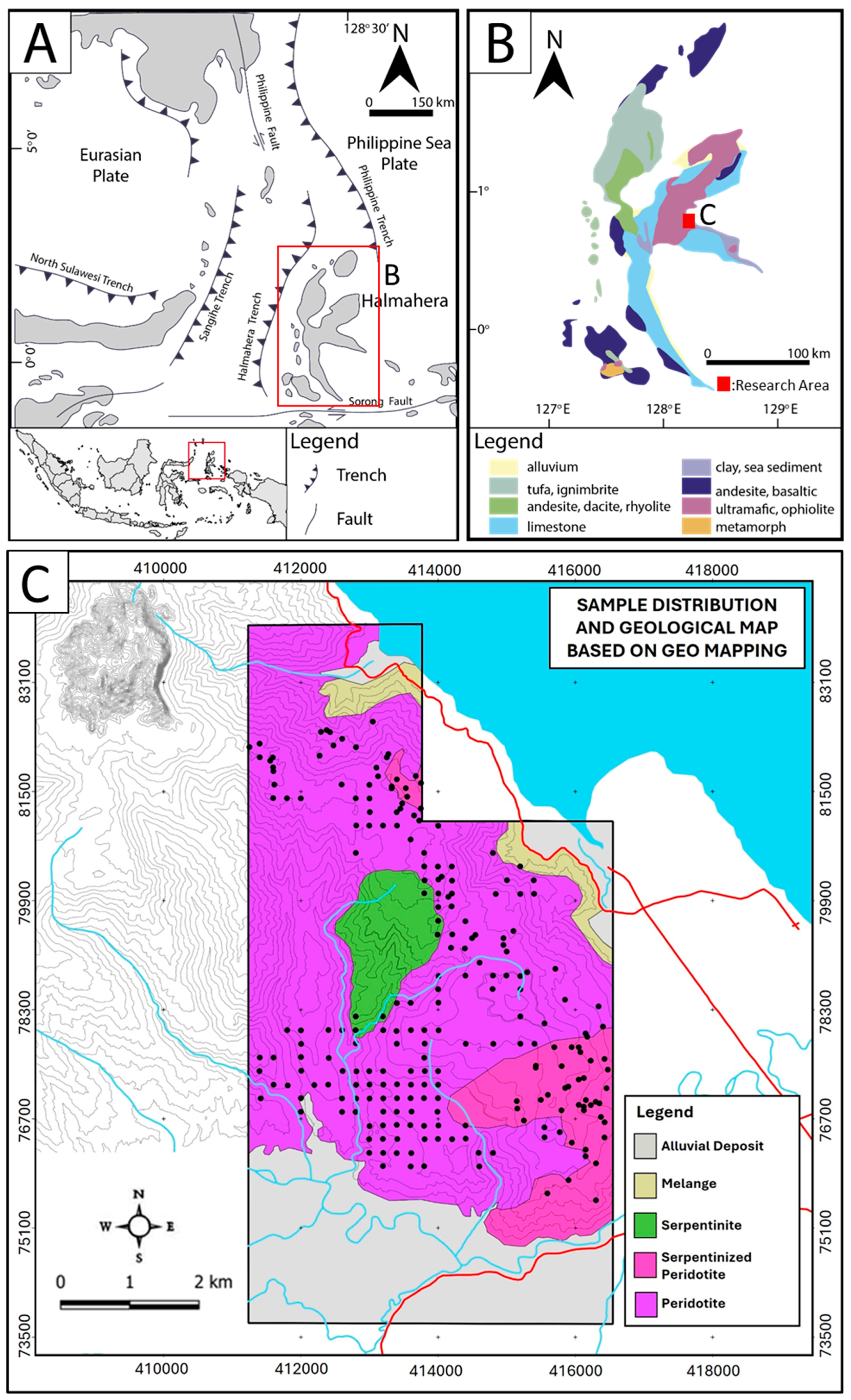
Present-day Halmahera is interpreted as the result of the double subduction system between the Maluku Sea with Sangihe Arc in the west and the Halmahera Arc in the east; this phenomenon subducted almost the entirety of the Maluku Sea and resulted in the obducted ophiolite complex emerging in the east of Halmahera Island [9] (Figure 1A). The Wailukum area is located in the East Halmahera geological province, which is characterized by an ophiolite complex and Mesozoic deep-sea sediments, imbricated with Paleogene sediments, and overlain by marine clastic sediments and Neogene carbonates (Figure 1B). The northeast arm of Halmahera Island where Wailukum area belongs consists of dismembered ultramafic–mafic rocks in complex with variable low-grade metamorphic overprints and intercalated with Mesozoic and Eocene sediments [10].
Based on local geological mapping by [11], the lithology types in the Wailukum area consist of mixed (melange) rocks, peridotite, partially serpentinized peridotite, and serpentinite lithological units (Figure 1C). The peridotite unit occupies >60% of the study area, stretching from the north to the south. Some of the peridotite has undergone quite strong serpentinization, and serpentinized peridotite extends to the southeastern part of the study area. In the northeastern part, a melange lithology extends northwest–southeast, directly adjacent to the peridotite, and this unit is mixed within the shear zone and is exposed on the Wailukum ridge. Serpentinite is found in the central part (~10%) of the study area and is equivalent to the Cretaceous ultramafic rock unit [12]. From results by [11], the ultramafic complex in Wailukum, North Maluku, is estimated to contain significant amounts of scandium. In this study, we aim to analyze the relationship between ultramafic rock type and scandium content through mineralogical studies of three geological horizons: bedrock, saprolite, and limonite.

2. Materials and Methods

This research was conducted through direct field data collection involving geological mapping and core drilling across the Wailukum area, North Maluku, Indonesia (Figure 1C). A total of 712 samples were collected from 270 drill holes, encompassing bedrock, saprolite, and limonite horizons. Among these, 231 bedrock samples from 270 drill points were selected for detailed petrographic and geochemical analyses to serve as the basis for lithological classification and rock distribution mapping within the study area.
Bedrock samples are characterized by fresh, hard, and unweathered lithologies that retain their primary mineral textures and structures. Saprolite samples represent the transitional weathering zone, where the original rock texture is partially preserved but the material is friable, with a light brown to yellowish coloration and reduced hardness (can be scratched by a knife; Mohs < 3). Limonite samples correspond to the highly weathered upper zone, consisting of earthy to massive Fe-rich material with reddish-brown color, lacking a recognizable primary texture, and containing abundant Fe-oxyhydroxides such as goethite and hematite. These field-based criteria ensure consistent identification and sampling of the three weathering zones across all drill samples.
Core sampling was conducted using the single-tube drilling method, with whole-core sampling taken at 1 m intervals, and core samples were NQ in size (~75.7 mm). Each drill data set was sampled at intervals representing each zone, and these zones are distinguished by the degree of rock weathering, namely limonite, saprolite, and bedrock zones.
A total of 712 samples from 270 drill holes were prepared using a jaw crusher and pulverizer to obtain a representative #200-mesh pulp sample. Laboratory analysis was conducted at PT Aneka Tambang Tbk’s internal laboratory (Jakarta, Indonesia) and the Intertek Laboratory (Jakarta, Indonesia) using X-Ray Fluorescence (XRF), Inductively Coupled Plasma–Optical Emission Spectroscopy (ICP-OES), and X-ray diffraction (XRD) methods, as well as at the Geoservices Laboratory using Scanning Electron Microscopy–Energy-Dispersive Spectroscopy (SEM-EDS).
Petrographic analysis was conducted by preparing a thin section by cutting a rock slab (3 × 3 cm), grinding it to about 30 µm in thickness so silicate minerals show their optical properties, and mounting it on a glass slide with adhesive and a coverslip. The thin section was then examined under a polarized light microscope Olympus BX51 (Olympus, Ishikawa, Japan) at PT Aneka Tambang Tbk’s internal laboratory (Jakarta, Indonesia) and Nikon Eclipse LV100 Pol (Nikon, Konan, Japan) at PT Aneka Tambang Tbk’s internal laboratory (Jakarta, Indonesia). This method allows mineral types to be identified, their relative abundances to be estimated, and textural relationships such as grain size, shape, and arrangement to be observed.
Mineral composition was identified through XRD analysis using a Bruker D8 Advance instrument (Bruker, Billerica, MA, USA) at PT Aneka Tambang Tbk’s internal laboratory (Jakarta, Indonesia). The diffraction data were analyzed against the International Centre for Diffraction Data (ICDD) 2022 database using diffract.EVA v6.1 and Topaz v6.1 software. The results were calculated using the Rietveld refinement approach to quantify mineral phases, particularly in laterite samples that had undergone advanced weathering.
XRF analysis was carried out using the Panalytical Axios Fast Wavelength-Dispersive X-Ray Fluorescence (WDXRF, Malvern Panalytical, Malvern, UK) instrument at PT Aneka Tambang Tbk’s internal laboratory (Jakarta, Indonesia) and produced quantitative data on major elements in oxide form, such as Fe2O3, SiO2, MgO, CaO, MnO, Cr2O3, Al2O3, P2O5, and SO3, as well as in base metal form, such as Ni and Co. The detection limit of each element is 0.15 wt%, 0.01wt%, 0.10 wt%, 0.007 wt%, 0.009 wt%, 0.04 wt%, 0.07 wt%, 0.01 wt%, and 0.02 wt%, respectively. The ICP-OES method, a plasma-based analytical technique for detecting metallic elements in ppm units, was used to analyze minor elements, including the presence of scandium.
We also conducted quality assurance and quality control (QAQC) using standard OREAS 193, OREAS 194, and blank samples using silica sand to ensure accuracy and precision.

3. Results

3.1. Mineralogy Observations

3.1.1. Petrographic Analysis

Petrographic analysis on several samples shows that at least three lithologies were identified in the research area, namely dunite, serpentinite, and harzburgite.
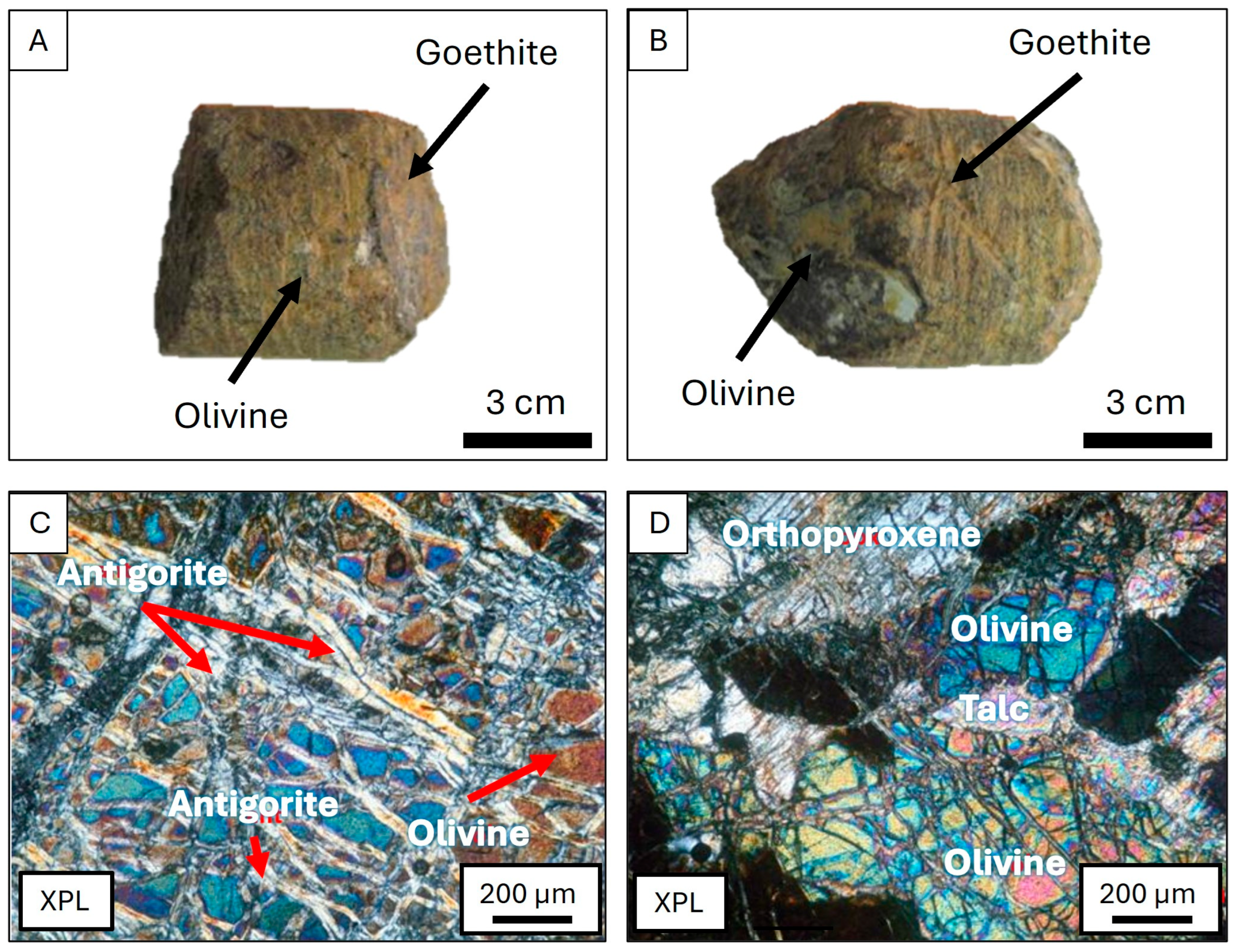
Dunite is a type of ultramafic igneous rock consisting of olivine as the main mineral in rock formation; the presence of this mineral can reach 90% of the total minerals present in the rock. In the research area, the condition of this rock is generally dark gray-brownish (Figure 2A,B); there are many fractures or cracks; the dominant composition is olivine with medium to coarse mineral size; it is granular and has low magnetic response; and some of these fractures are filled by serpentine and form a mesh texture. The results of microscopic observation on this dunite rock show the presence of serpentinization from moderate to high; it is phaneric with medium to coarse mineral sizes (0.2–2 mm), holocrystalline, and subhedral to euhedral; its main mineral composition is olivine; it has orthopyroxene mineral accessories; and it has a high degree of fracture, with a mesh texture together with serpentine (Figure 2C,D).
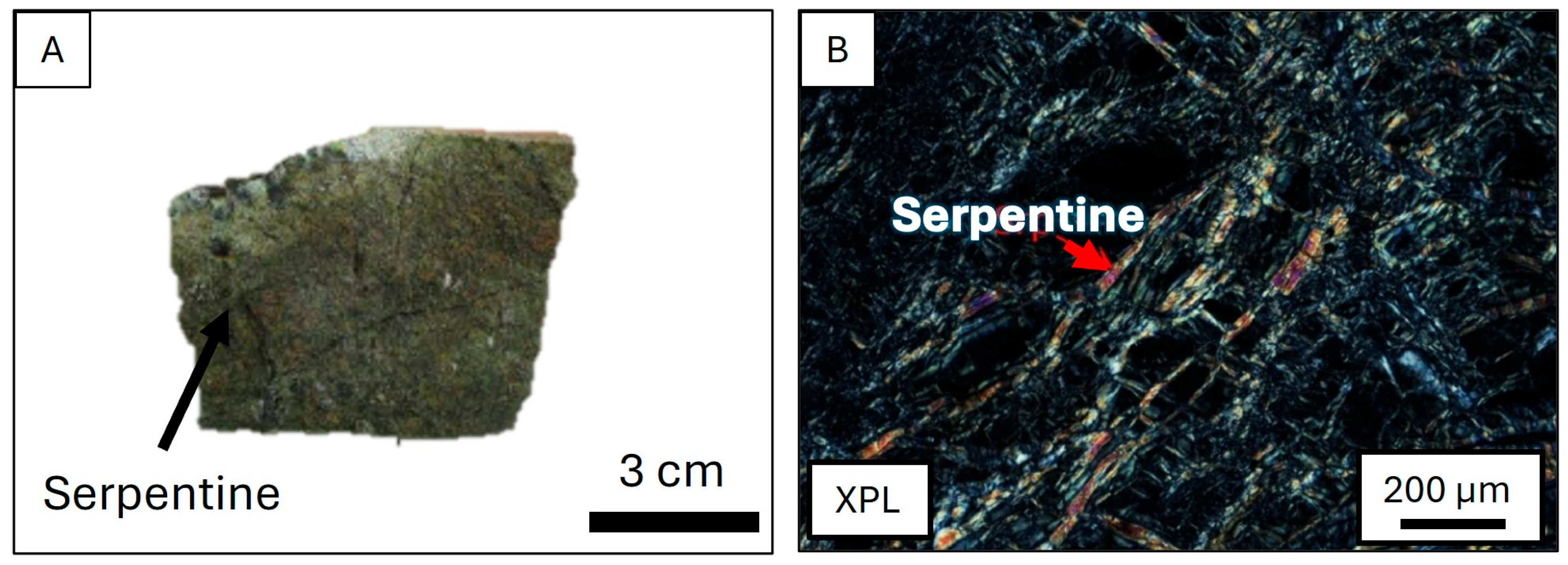
A group of serpentinite rocks was observed in the southeastern part of the observation area. This rock is light green to dark green and characterized by whitish fracture fillings (Figure 3A). Serpentine is a fine-grained, holocrystalline mineral that extensively replaces the primary minerals, resulting in pervasive alteration of the sample. It also occurs as fibrous aggregates filling fractures that cross-cut the rock. Chlorite locally occurs as a selvage mineral along the serpentine veinlets (Figure 3B). The presence of serpentine minerals in each rock group is quite high, but in serpentinite-type rocks, they are grouped based on the presence of altered minerals constituting more than 90% of the total mineral content.
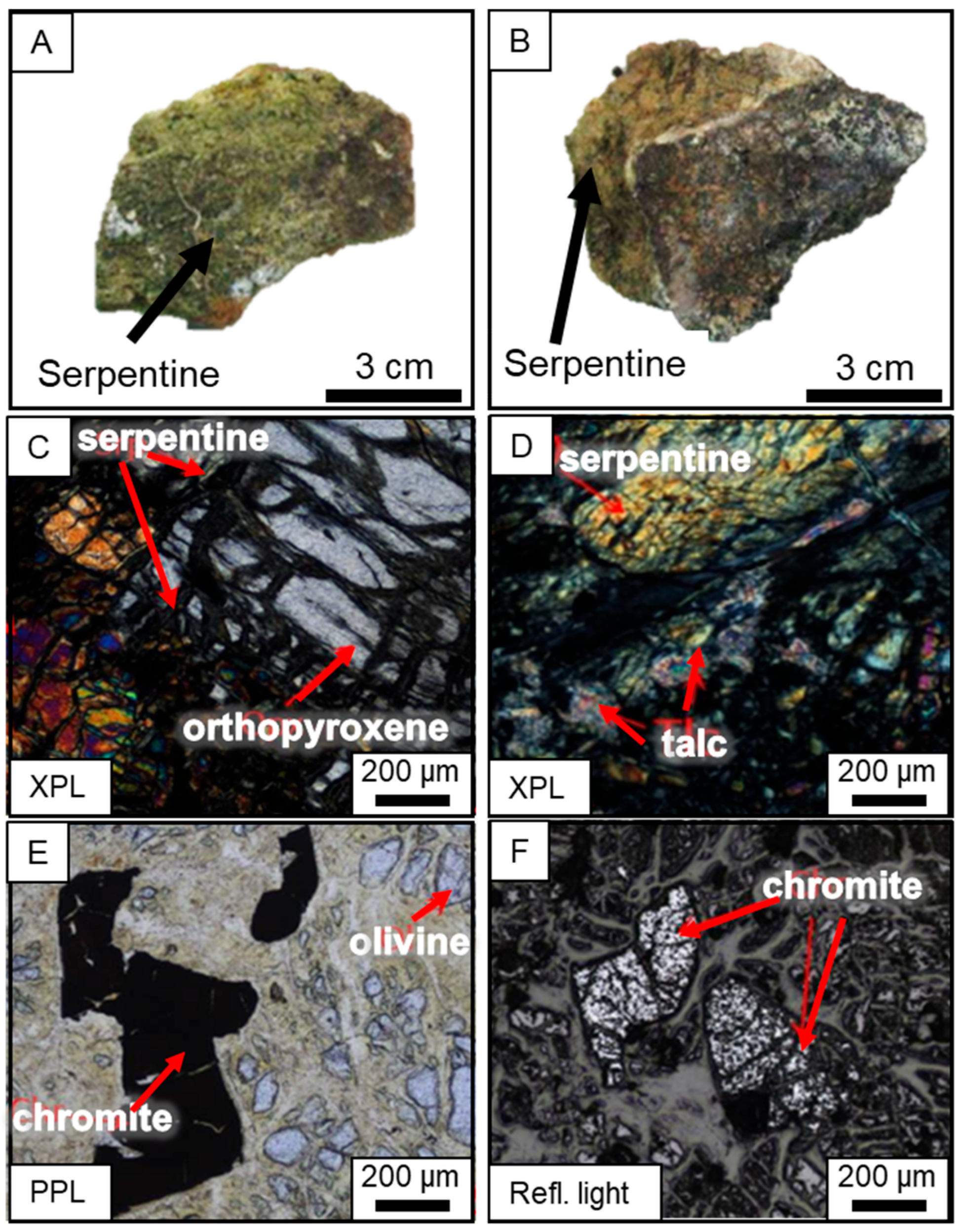
Harzburgite found in the research area is dark green to brownish gray, composed predominantly of olivine and pyroxene, and, in many cases, is partially altered to serpentine. It has a medium-to-coarse granular texture with abundant fractures, phaneritic texture, and relatively low magnetic response. The serpentine mineral filled the fractures, producing a mesh texture typical of altered peridotites (Figure 4A,B).
Under the microscope, the primary minerals observed in the serpentinite rock are olivine and orthopyroxene, which are highly fractured and are partially filled by serpentine, which were formed as an alteration product of both olivine and orthopyroxene. Serpentine is abundant in this rock, constituting more than 70% of the total mineral content. Microscopic observations (Figure 4C–F) reveal intensely fractured olivine and orthopyroxene with serpentine developed along fractures and weak planes within these primary minerals. Iddingsite is present locally under reflected light, indicating partial alteration of olivine, and chromite minerals are observed with low abundance.
Olivine is characterized by its colorless appearance, high relief, 2nd to 3rd order of birefringence, and a high density of fracture and is slightly replaced by serpentine. Orthopyroxene appears colorless to greenish with weak reddish pleochroism, high relief, a 2nd to 3rd order of birefringence, and single-direction cleavage. Fibrous serpentine occurs as a secondary mineral and filling fractures. Relict textures of the primary minerals are locally preserved, while serpentinization commonly occurs with a mesh texture. Another alteration mineral observed is talc, which is colorless, has high-order birefringence and low-relief, and occurs in minor amounts, replacing primary minerals. Iddingsite is also present in minor quantities as iron oxide alteration products, appearing as reddish-brown patches replacing olivine. Chromite occurs in minor amounts as small, disseminated grains between olivine and orthopyroxene; in reflected light, it displays a skeletal crystal habit with a brownish reflectance (Figure 4C–F).

3.1.2. XRD Analysis

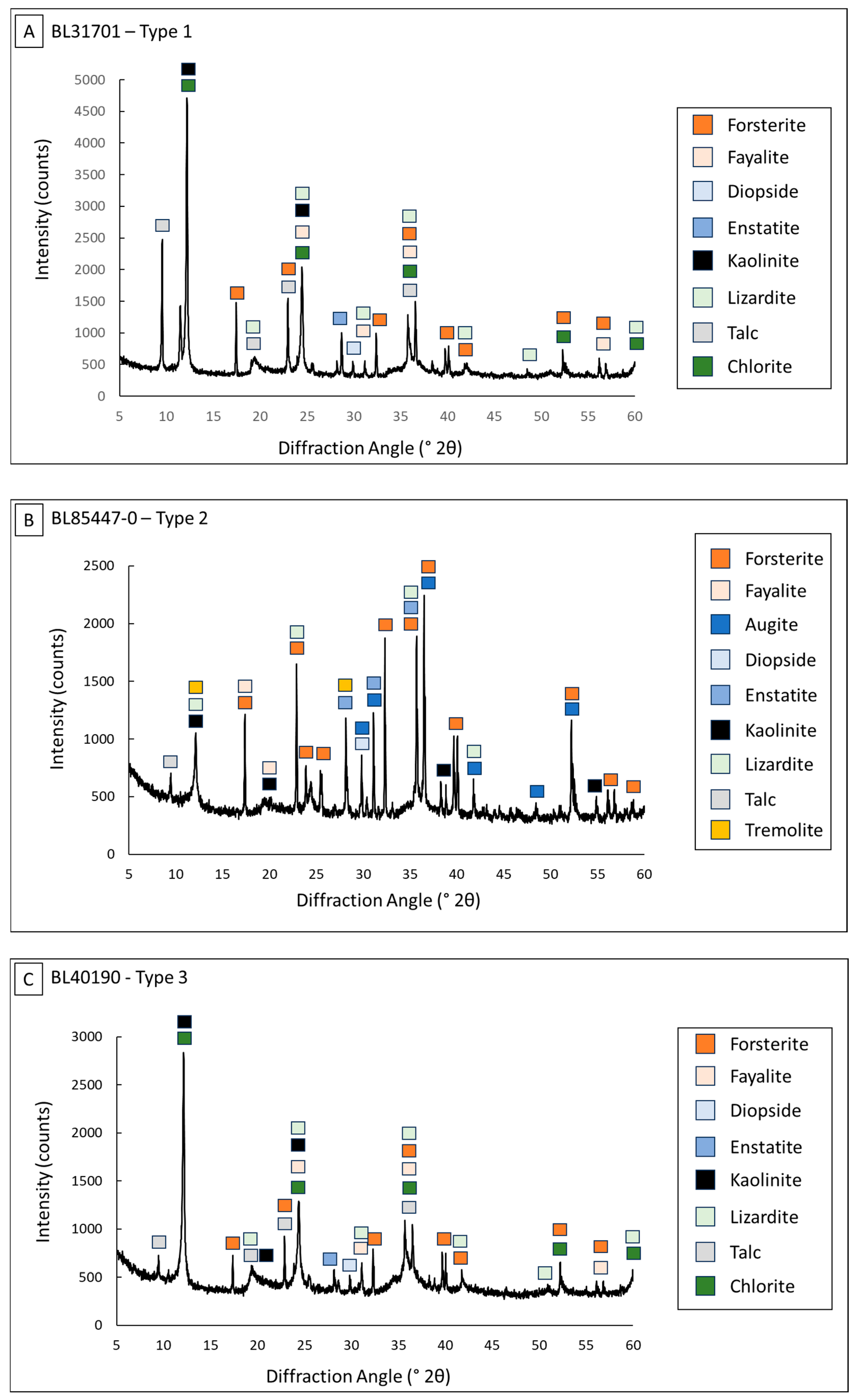
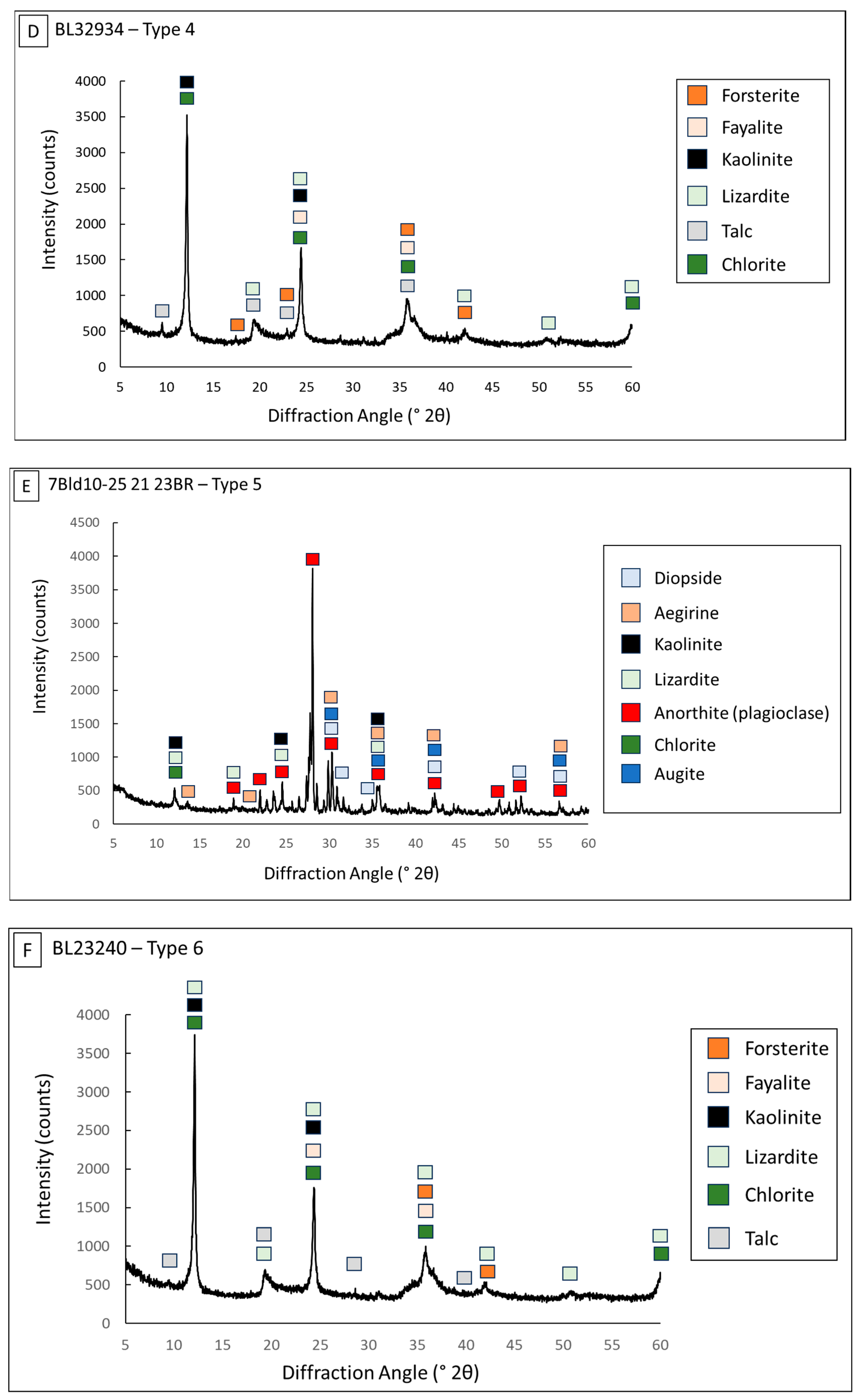
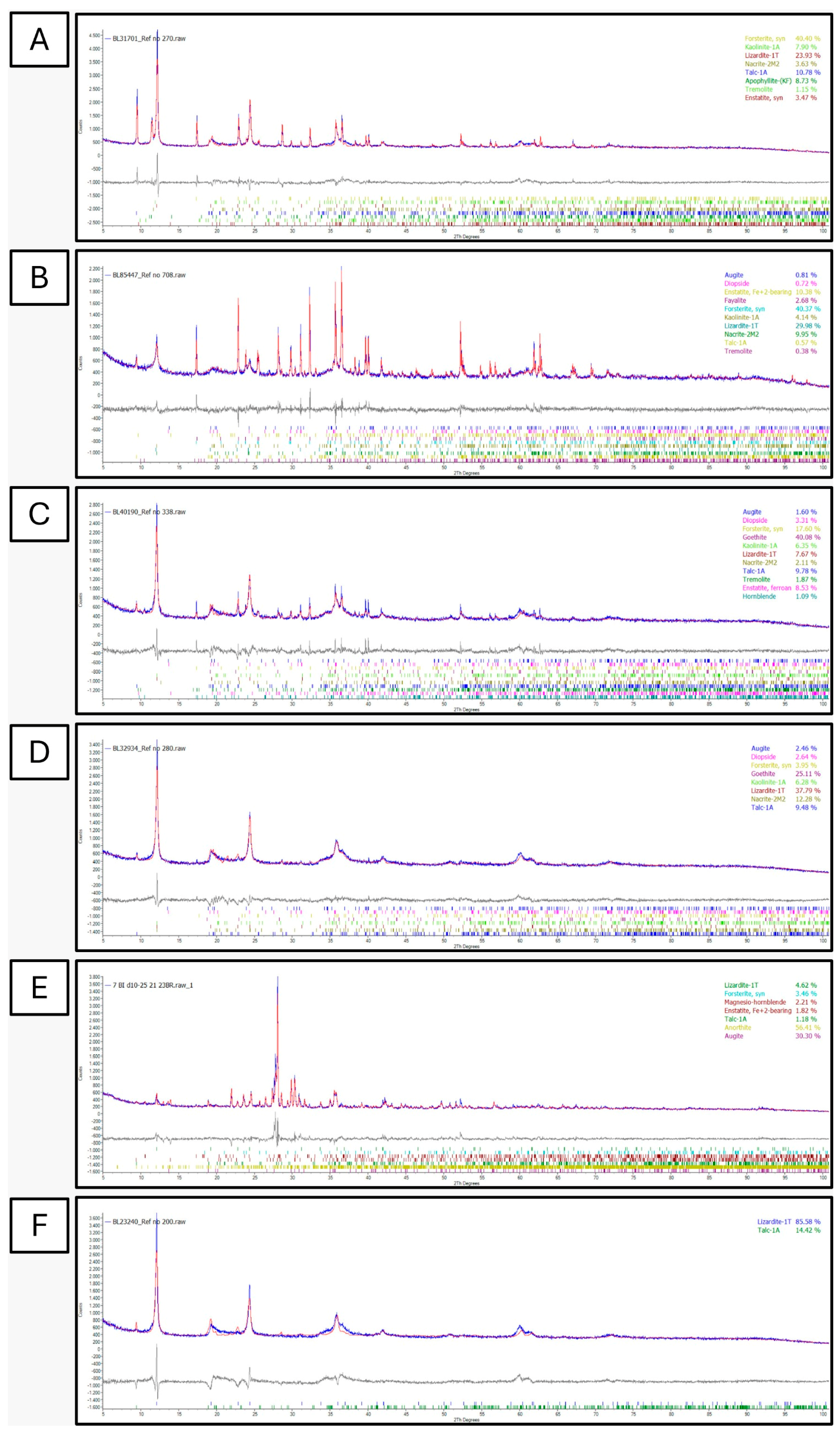
Based on XRD analysis, there are at least six identified patterns based on the consistent variations in mineral spectrum (Figure 5). A type 1 spectrum is characterized by the occurrence of talc, forsterite, fayalite, diopside, enstatite, kaolinite, lizardite, and chlorite (Figure 5A). The X-ray diffraction pattern for sample BL31701 (Type 1) displays a complex assemblage of crystalline phases, as indicated by a series of well-defined peaks distributed between 5° and 60° 2θ. The diffraction profile is characterized by several high-intensity reflections, most notably the dominant peak near 11–12° 2θ and an additional strong spectrum at approximately 25°, 36°, and 38° 2θ. These primary peaks suggest the presence of a mixed silicate mineralogy typical of serpentinized ultramafic lithologies. Overlaying the measured pattern are reference peak positions for eight candidate minerals: forsterite, fayalite, diopside, enstatite, kaolinite, lizardite, talc, and chlorite. Peak correspondence indicates that multiple phases contribute to the overall diffraction signal. The forsterite–fayalite series is represented by peaks in the 10–12° and 35–37° regions, consistent with Mg-Fe olivine components. Pyroxenes (diopside and enstatite) exhibit diagnostic reflections clustered between 28 and 32° and 36 and 40° 2θ, respectively, aligning closely with several medium-intensity peaks in the measured spectrum. Low-temperature alteration minerals—including lizardite, talc, and chlorite—are identified by characteristic peaks between ~7 and 10°, 18 and 20°, and 24 and 26° 2θ, corresponding with observed broad and moderate-intensity features. The presence of kaolinite is suggested by minor reflections near 12° and 24°. The combined pattern reflects partial serpentinization and hydrothermal alteration of a primary ultramafic protolith, producing an assemblage of olivine-pyroxene relicts overprinted by sheet silicates and hydrous Mg phases.
A type 2 spectrum is characterized by the occurrence of talc, forsterite, fayalite, augite, diopside, enstatite, kaolinite, lizardite, talc, and tremolite (Figure 5B). The X-ray diffraction (XRD) pattern of sample BL85447-O (Type 2) illustrates that the strongest reflections occur between ~28° and 38° 2θ, where overlapping peaks from orthopyroxene- and clinopyroxene-group minerals (augite, diopside, enstatite) coincide with olivine-group phases (forsterite, fayalite). Additional peaks at lower angles (~8–15° 2θ) correspond to phyllosilicate minerals (kaolinite, lizardite, talc), indicating the presence of alteration products.
A type 3 spectrum is characterized by the occurrence of forsterite, fayalite, diopside, enstatite, kaolinite, lizardite, talc, and chlorite (Figure 5C). The X-ray diffraction (XRD) pattern of sample BL86369-Q (Type 3) shows the distribution of diffraction peaks associated with major silicate and phyllosilicate mineral phases. Prominent peaks occur at approximately 10–12° 2θ and 25–35° 2θ, where phyllosilicate minerals such as chlorite and serpentine-group phases produce their characteristic and high-angle reflections. Additional sharp peaks between ~30° and 40° 2θ are consistent with pyroxene minerals (augite, diopside, enstatite), suggesting the presence of relatively unaltered mafic silicate components.
A type 4 spectrum is characterized by the occurrence of forsterite, fayalite, kaolinite, lizardite, talc, and chlorite (Figure 5D). The X-ray diffraction (XRD) pattern of sample BL86466-O (Type 4) reveals that strong reflections occur in the 28–36° 2θ range, where the overlap of pyroxene-group minerals (augite, diopside, enstatite) contributes to multiple coincident peaks. Additional peaks at ~10–12° 2θ correspond to basal spacings of chlorite and serpentine minerals, indicating the presence of alteration phases. Higher-angle reflections extending beyond 40° 2θ further support a heterogeneous composition containing both Mg-Fe silicates and phyllosilicates.
A type 5 spectrum is represented for samples that exhibit a high abundance of plagioclase. XRD analysis indicates the presence of feldspar (anorthite), pyroxenes (diopside and augite), serpentine (lizardite), and clay minerals, including kaolinite and chlorite (Figure 5E). Based on this mineral assemblage, these samples are classified as gabbro.
The final XRD pattern shows dominant lizardite with minor talc and chlorite (Figure 5F). This mineral assemblage indicates serpentinite, reflecting the high abundance of serpentine and associated alteration minerals commonly found in serpentinite rocks.
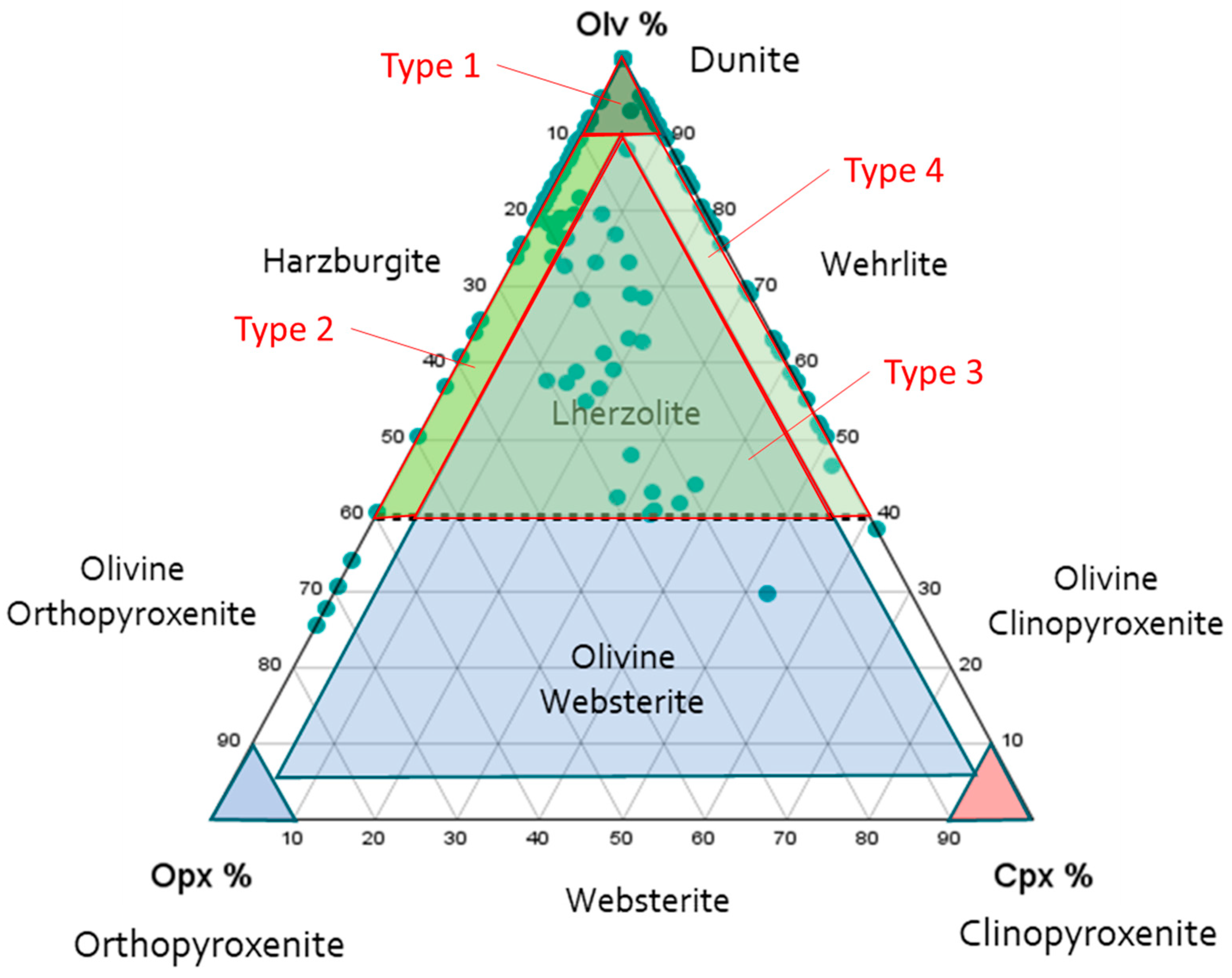
For these patterns, we also used the Rietveld refinement (Figure A1) approach to quantify mineral phases, the data of which we plot in a Streickesen diagram (1976) (Figure 6) [13]. Based on this analysis, Type 1 samples are classified as dunite, Type 2 as harzburgite, Type 3 as lherzolite, and Type 4 as wehrlite.

3.1.3. XRD Data Application in Mapping the Ultramafic Complex

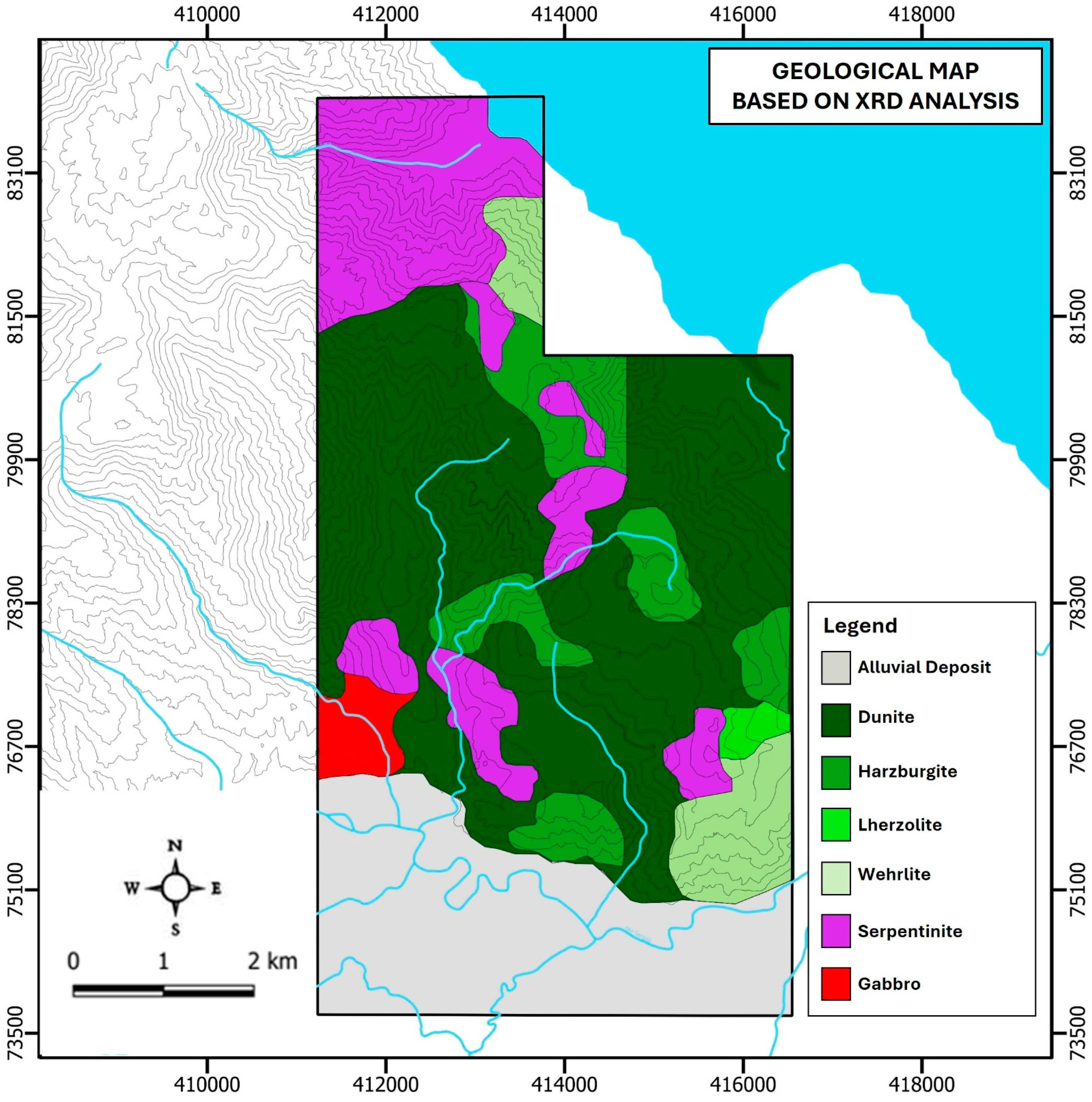
The initial geological maps, which were constructed through macroscopic observations and field surveys (Figure 1C), were substantially refined by integrating data from XRD and petrography analyses. As illustrated in Figure 7, the updated maps delineate lithological units in greater detail compared to previous interpretations by [11]. The combined XRD and petrographic results reveal the presence of specific mineral subgroups, such as clinopyroxene and orthopyroxene minerals within the pyroxene group, that are not easily identified during the field or macroscopic observations [14,15].
It should be noted that most of the analyzed samples have undergone serpentinization and weathering, which may lead to uncertainty in mineralogical identification and quantitative phase estimation. Nevertheless, the XRD results obtained in this study remain valuable, as they preserve diagnostic mineralogical signatures that allow the protolith to be reasonably reconstructed and the original bedrock type to be identified, particularly when interpreted in conjunction with petrographic observations.

3.2. Bulk Geochemistry

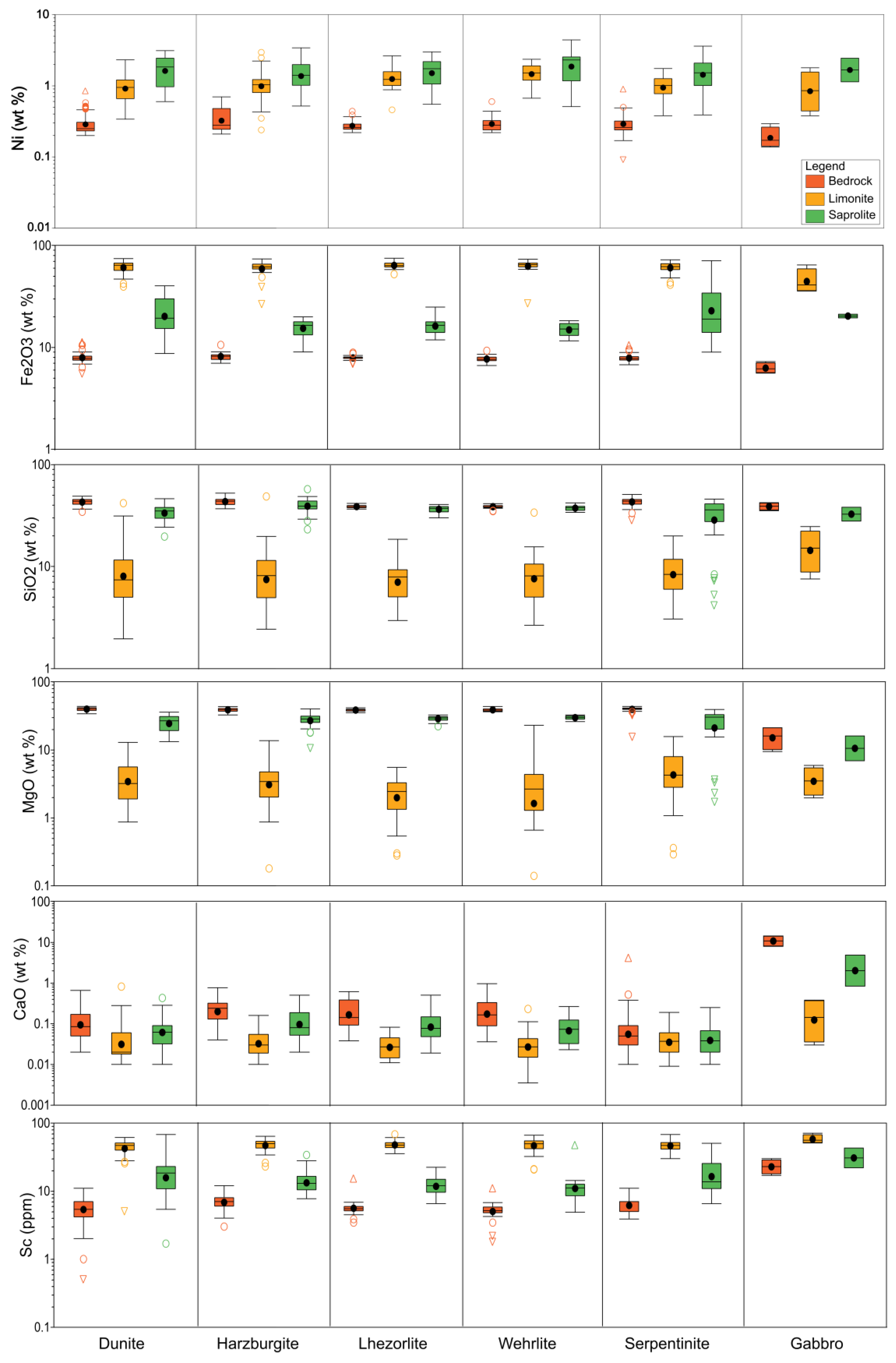
Figure 8 and Table 1 summarize the results for bulk geochemical analysis using X-Ray Fluorescence (XRF) and ICP-OES, which measures the overall concentration of major and trace elements in the rock. The results indicate that scandium occurs with the highest intensity in gabbro, whereas the lowest degree of enrichment is observed in wehrlite, with an enrichment factor of 9.18 times in the limonite zone compared to the bedrock. Similarly, lherzolite shows an enrichment factor of 8.07 times in the limonite zone relative to the bedrock.
The geochemical composition of the ultramafic rock groups (dunite, harzburgite, lherzolite, serpentinite, and wehrlite) shows consistently low scandium concentrations (5.26–7.03 ppm) with broadly similar levels of Fe2O3 (7.70–8.42 wt%), SiO2 (38.66–43.50 wt%), and MgO (38.69–40.03 wt%). Among them, harzburgite contains the highest scandium content (7.03 ppm), whereas wehrlite has the lowest (5.26 ppm). Dunite is distinguished by its high MgO (40.03 wt%), consistent with its olivine-rich mineralogy, while lherzolite and wehrlite record slightly higher CaO values (0.22–0.24 wt%), reflecting greater pyroxene proportions.
By contrast, the gabbroic bedrock exhibits a markedly higher geochemical signature for scandium, with an average concentration of 23.25 ppm, which is substantially elevated compared to the ultramafic groups. This abundance correlates with a significant increase in CaO (11.16%) and a corresponding decrease in MgO (16.01%), reflecting a primary mineralogy dominated by clinopyroxene.

4. Discussion

4.1. The Importance of Protolith for Scandium Concentration

In the study area, an ultramafic igneous complex, scandium, occurs in association with Fe-bearing minerals such as magnetite and clinopyroxene through the ionic substitution of Fe3+ by Sc3+, facilitated by their comparable ionic radius (Sc3+ = 0.745 Å; Fe3+ = 0.645 Å) [16].
Mineralogical analyses indicate the presence of anorthite and magnetite within ultramafic and gabbroic lithologies, where scandium incorporation is primarily controlled by magmatic crystallization processes, hydrothermal alteration, and the physicochemical conditions of the formation environment [17].
In primary ultramafic basement rocks such as dunite, harzburgite, wehrlite, and lherzolite, which are characterized by low clinopyroxene abundance, the scandium content is typically 5–8 ppm, increasing to as much as 23 ppm in gabbroic rocks. This enrichment reflects the critical role of clinopyroxene in hosting scandium during magmatic solidification [17]. In the Wailukum area, the order of Sc concentration in bedrock from lowest to highest is lherzolite < wehrlite < dunite < serpentinite < harzburgite < gabbro, which differs from that of the ultramafic complex in eastern Australia: dunite < peridotite < gabbro/basalt < amphibolite/pyroxenite [18].
In the Wailukum area, ultramafic lithologies such as lherzolite and wehrlite are characterized by relatively low proportions of clinopyroxene, largely because most samples have undergone extensive serpentinization and subsequent intense chemical weathering. The pronounced weathering of the bedrock is likely caused by the high abundance of serpentine minerals, which are prone to weathering. As a result, scandium originally hosted in primary clinopyroxene, one of the more weathering-resistant primary minerals, is only weakly retained in the bedrock. This process leads to comparatively low scandium concentrations in serpentinized lherzolite and wehrlite relative to dunite (Figure 8).
By contrast, ultramafic complexes in eastern Australia display a different Sc trend due to variations in parent magma chemistry and metamorphic overprinting [18]. There, scandium enrichment is commonly associated with Fe–Ti oxide minerals in more evolved basaltic and amphibolitic lithologies rather than in peridotitic units. The divergence in the Wailukum sequence therefore underscores the importance of local magmatic evolution and the intensity of lateritic weathering in governing Sc distribution.
The higher Sc concentration in serpentinite bedrocks compared to dunite and lherzolite in the Wailukum area suggests that these serpentinite rocks are most likely derived from scandium-rich protolith, such as harzburgite, which leads to no influence of serpentinization degree on Sc enrichment in the rocks, as Sc is considered inert during the serpentinization process [5]. However, further analysis is necessary to confirm whether the serpentinization process in the Wailukum area affects Sc enrichment or not.
Overall, the observed pattern indicates that scandium distribution in the Wailukum complex is not solely controlled by primary mineralogy but also by the alteration activities and secondary mineral formation during tropical laterization. This multi-stage control contrasts with the Australian systems, where igneous fractionation and metamorphic re-equilibration dominate scandium partitioning in the bedrock sequence.

4.2. Scandium Enrichment in Laterization Process

In the study area, scandium enrichment is strongly influenced by mineral stability during tropical weathering. Clinopyroxene and chromite within ultramafic bedrock exhibit greater resistance to lateritization compared to olivine, allowing scandium to remain bound to these more stable minerals within the saprolite zone. In lithologies such as dunite, harzburgite, and serpentinite, where olivine is abundant but highly unstable under tropical conditions, intense alteration releases Fe, Mg, and other mobile elements, while scandium remains structurally incorporated within residual clinopyroxene and chromite phases [18,19,20,21].
As weathering advances upward, Sc3+ is released from silicate lattices and remobilized through meteoric fluids percolating along fractures and pore spaces. The saprolite zone thus represents a transitional geochemical environment, where both residual and secondary processes govern scandium distribution. Sc in this zone persists in association with clinopyroxene, chromite–spinel, magnetite, and asbolane [19]. By contrast, the limonite zone marks the dominance of secondary Fe–oxyhydroxide formation, where scandium is immobilized through adsorption or structural incorporation into goethite and hematite.
Quantitative assessment of scandium enrichment across the weathering profile reveals significant vertical and lithological variability (Figure 8). As summarized in Table 2, the average scandium concentration in the saprolite zone is 2.36 times higher than in bedrock, while the limonite zone shows an enrichment of 2.97 times relative to the saprolite. The cumulative enrichment from bedrock to limonite averages approximately 6.97 times.
Across lithologies, the enrichment factors are relatively consistent among ultramafic rocks but notably lower in gabbro. Although gabbro contains the highest primary scandium concentrations due to its clinopyroxene-rich composition, it displays limited secondary enrichment, suggesting that the resistance of gabbroic textures to intense weathering inhibits scandium remobilization and adsorption onto secondary phases. Conversely, ultramafic rocks such as serpentinite and harzburgite, which undergo extensive alteration and Fe-oxide formation, exhibit more pronounced scandium enrichment.
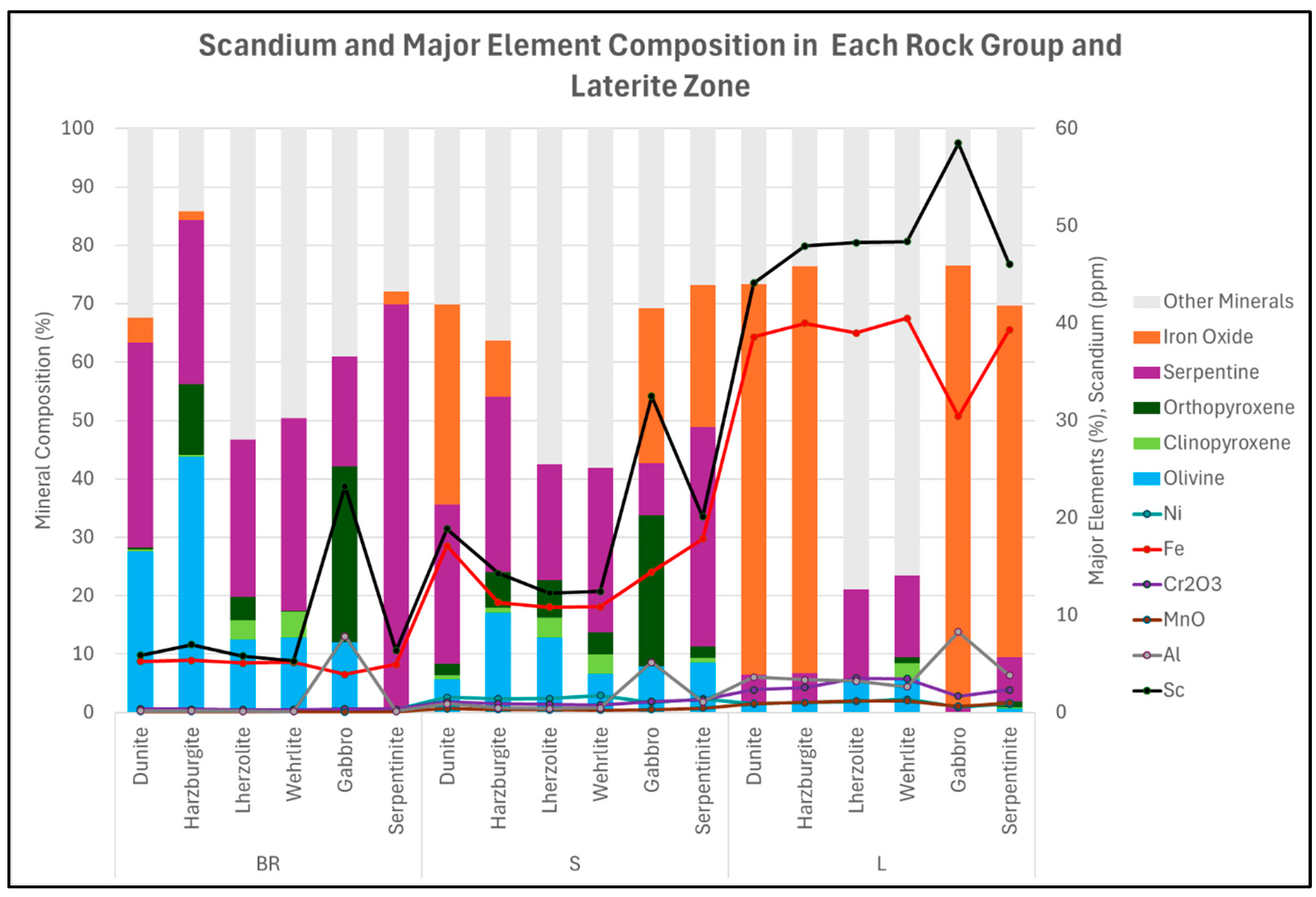
Elemental correlation analysis (Figure 9) shows that scandium enrichment in the lateritic profile closely parallels the distribution of Fe and Ni, confirming that Fe-oxide formation is the primary control on scandium mobility and fixation. Additionally, chromium (Cr) and manganese (Mn) display anomalous patterns that vary across lithologies.
In the saprolite zone, Cr and Mn contents are relatively low in gabbro, wehrlite, and lherzolite, but markedly higher in dunite and serpentinite, suggesting that Cr- and Mn-bearing secondary oxides may contribute locally to scandium retention. In the limonite zone, enrichment anomalies in Cr and Mn become more pronounced within gabbro, wehrlite, and lherzolite-derived profiles, indicating differential elemental migration and redox-controlled precipitation.
Overall, these elemental correlations confirm that scandium enrichment during lateritization is driven primarily by Fe-oxide accumulation, but modulated by rock composition, mineral stability, and redox dynamics during tropical weathering.

4.3. Implication for the Exploration in Wailukum Area

Ref. [17] reported that clinopyroxene-rich lithologies exhibit a high potential for scandium (Sc) mineralization, as intense chemical weathering can effectively liberate Sc from the protolith and promote its accumulation in the regolith. In the Wailukum area, such clinopyroxene-rich lithologies are primarily represented by lherzolite, wehrlite, and gabbro units (Figure 7). Considering that scandium grades in known laterite deposits range from approximately 33 ppm in the Shazi deposit, China, to nearly 300 ppm in the Lucknow deposit, Australia [17] and [22,23], the scandium concentrations identified in Wailukum range from 44.55 to 58.50 ppm, suggesting that this area may hold significant potential for scandium deposits.
However, further detailed geochemical characterization and systematic exploration are required to delineate the most prospective zones and assess the resource potential accurately. In addition, bulk geochemical data (Figure 8) show a positive correlation between Sc, Ni, and Fe2O3, indicating that bulk Ni and Fe2O3 contents may serve as useful geochemical proxies for Sc enrichment. Nevertheless, additional investigations are needed to validate these relationships and establish a more robust geochemical indicator framework for scandium mineralization in the region.

5. Conclusions

Scandium distribution and enrichment within the Wailukum ultramafic complex are governed by a two-stage control system involving both primary magmatic processes and secondary supergene alteration. The protolith composition exerts a first-order influence on initial scandium abundance, with Sc hosted primarily in Fe-bearing minerals such as magnetite and clinopyroxene through Fe3+–Sc3+ ionic substitution during late-stage magmatic differentiation. Among the ultramafic lithologies, Sc concentrations range from 5 to 8 ppm in dunite and lherzolite to up to 23 ppm in gabbro, reflecting the critical role of clinopyroxene in controlling primary Sc partitioning. However, the observed lithological sequence of Sc content in Wailukum (lherzolite < wehrlite < dunite < serpentinite < harzburgite < gabbro) diverges from that in eastern Australia, emphasizing the influence of local magmatic evolution and weathering intensity on Sc distribution.
Overall, Sc enrichment in the Wailukum complex reflects an integrated magmatic–supergene system, where both primary mineralogical characteristics and secondary weathering processes govern scandium behavior. These findings not only elucidate the mechanisms of Sc mobility and fixation but also provide a predictive framework for exploration, emphasizing the importance of identifying serpentinite-rich and highly lateritized zones as the most prospective targets for Sc resource development in tropical ultramafic terrains.

Author Contributions

Conceptualization, A.B., M.F.R., E.T.Y. and A.K.; methodology, A.B.; software, M.C.R.M.; validation, A.B., M.F.R., E.T.Y. and A.K.; formal analysis, A.B. and R.A.Y.; investigation, A.B. and T.R.U.; writing—original draft preparation, A.B.; writing—review and editing, A.B., M.F.R., E.T.Y. and A.K.; visualization, A.B., R.A.Y., M.C.R.M. and T.R.U.; supervision, M.F.R., E.T.Y. and A.K.; project administration, A.B.; funding acquisition, A.B. All authors have read and agreed to the published version of the manuscript.

Funding

This research was funded by PT Antam Tbk (No. 0000).

Data Availability Statement

All relevant data are in this paper.

Acknowledgments

We sincerely acknowledge PT. Antam Tbk. for granting permission and providing support for this research in the Wailukum area. We are grateful to the editor, Astrid Yang, for her constructive comments and guidance, and to the four anonymous reviewers for their insightful suggestions, which significantly improved the quality of the manuscript. Special thanks are extended to Andi Kurniawan, Syaiful Hilal, Duduk Sumargono, Reza Rizqie Ramadhan, and Naafiakra Nouval for their invaluable assistance during fieldwork and data analysis. This study was also generously supported by funding from PT. Antam Tbk., which is gratefully acknowledged.

Conflicts of Interest

The research was conducted in the Wailukum area, owned by PT. Aneka Tambang Tbk., with which Abdul Bari, Rubima Aisha Yulman, Muhammad Chandra RM, and Thaha Riza Ulhaq are affiliated. Although this affiliation may present a potential conflict of interest, the authors affirm that the research was conducted transparently, with adherence to ethical guidelines, and that every effort was made to maintain objectivity and minimize bias in the study design, data collection, analysis, and interpretation. The remaining authors declare no conflicts of interest.

Appendix A

Figure A1. (AF) Rietveld refinement for all types (types 1–6) of XRD spectra in Wailukum. The blue line indicates the raw sample line, the red line indicates the interpretation line, and the black line indicates the deviation line between the raw sample and interpretation line.
Minerals 16 00222 g0a1

References

  1. Iain, S.M.; Chassé, M. Scandium. In Encyclopedia of Geochemistry. Encyclopedia of Earth Sciences Series; White, W., Ed.; Springer International Publishing: Cham, Switzerland, 2016; pp. 1–4. [Google Scholar]
  2. Williams-Jones, A.E.; Vasyukova, O.V. The economic geology of scandium, the runt of the rare earth element litter. Econ. Geol. 2018, 113, 973–988. [Google Scholar] [CrossRef]
  3. Kempe, U.; Wolf, D. Anomalously high Sc contents in ore minerals from Sn–W deposits: Possible economic significance and genetic implications. Ore Geol. Rev. 2006, 28, 103–122. [Google Scholar] [CrossRef]
  4. Onggang, S.; Maulana, A.; Irfan, U.R. Preliminary Study of Scandium Enrichment in Lateritic Profile from Weathered Ultramafic Rock in Lapaopao Area Kolaka Regency of Southeast Sulawesi. IOP Conf. Ser. Earth Environ. Sci. 2021, 921, 012040. [Google Scholar] [CrossRef]
  5. Teitler, Y.; Cathelineau, M.; Ulrich, M.; Ambrosi, J.P.; Munoz, M.; Sevin, B. Petrology and geochemistry of scandium in New Caledonian Ni-Co laterites. J. Geochem. Explor. 2019, 196, 131–155. [Google Scholar] [CrossRef]
  6. Chassé, M.; Griffin, W.L.; O’Reilly, S.Y.; Calas, G. Scandium speciation in a world-class lateritic deposit. Geochem. Perspect. Lett. 2016, 3, 105–114. [Google Scholar] [CrossRef]
  7. Maulana, A.; Sanematsu, K.; Sakakibara, M. An overview on the possibility of scandium and REE occurrence in Sulawesi, Indonesia. Indones. J. Geosci. 2016, 3, 139–147. [Google Scholar] [CrossRef]
  8. Stueber, A.M.; Goles, G.G. Abundances of Na, Mn, Cr, Sc and Co in ultramafic rocks. Geochim. Cosmochim. Acta 1967, 31, 75–93. [Google Scholar] [CrossRef]
  9. Hall, R. Neogene History of Collision in The Halmahera Region, Indonesia. In Proceedings of the Indonesian Petroleum Association 27th Annual Convention; Indonesian Petroleum Association: Jakarta, Indonesia, 2000; pp. 487–493. [Google Scholar]
  10. Darman, H. An Outline of the Geology of Indonesia. Lereng Nusantara. 2000. Available online: https://books.google.com/books?hl=en&lr=&id=NyqDDwAAQBAJ&oi=fnd&pg=PP2&dq=Sukamto+et+al.,+1981+dalam+Darman+%26+Sidi,+2000&ots=UgvtDwCwqG&sig=M7u40Y5bu4x-wBCDlYz8jeBygww (accessed on 23 November 2025).
  11. Antam. Annual report—Nickel Laterite Exploration in East Halmahera, North Maluku, Indonesia. Internal report. 2023; (Unpublished manuscript). [Google Scholar]
  12. Apandi TSudana, D. Geologic Map of the Ternate Quadrangle, North Maluku; Geological Research and Development Centre: Bandung, Indonesia, 1980. [Google Scholar]
  13. Streckeisen, A. To each plutonic rock its proper name. Earth-Sci. Rev. 1976, 12, 1–33. [Google Scholar] [CrossRef]
  14. Sufriadin; Widodo, S.; Jaya, A.; Azman. The effect of heating on mineral and chemical composition of saprolite ore from Latowu area, North Kolaka regency of Southeast Sulawesi, Indonesia. In AIP Conference Proceedings; AIP Publishing LLC: Melville, NY, USA, 2022; Volume 2543, p. 050006. [Google Scholar]
  15. El Mendili, Y.; Chateigner, D.; Orberger, B.; Gascoin, S.; Bardeau, J.F.; Petit, S.; Duee, C.; Le Guen, M.; Pilliere, H. Combined XRF, XRD, SEM-EDS, and Raman analyses on serpentinized harzburgite (nickel laterite mine, New Caledonia): Implications for exploration and geometallurgy. ACS Earth Space Chem. 2019, 3, 2237–2249. [Google Scholar] [CrossRef]
  16. Marsh, E.E.; Anderson, E.D.; Gray, F. Ni-Co Laterites: A Deposit Model; US Department of the Interior: Denver, CO, USA; US Geological Survey: Reston, VA, USA, 2011.
  17. Wang, Z.; Li, M.Y.H.; Liu, Z.R.R.; Zhou, M.F. Scandium: Ore deposits, the pivotal role of magmatic enrichment and future exploration. Ore Geol. Rev. 2021, 128, 103906. [Google Scholar] [CrossRef]
  18. Chassé, M.; Griffin, W.L.; O’Reilly, S.Y.; Calas, G. Australian laterites reveal mechanisms governing scandium dynamics in the critical zone. Geochim. Cosmochim. Acta 2019, 260, 292–310. [Google Scholar] [CrossRef]
  19. Qin, H.B.; Yang, S.; Tanaka, M.; Sanematsu, K.; Arcilla, C.; Takahashi, Y. Scandium immobilization by goethite: Surface adsorption versus structural incorporation. Geochim. Cosmochim. Acta 2021, 294, 255–272. [Google Scholar] [CrossRef]
  20. Goldich, S.S. A study in rock-weathering. J. Geol. 1938, 46, 17–58. [Google Scholar] [CrossRef]
  21. Shepherd, K.; Namur, O.; Toplis, M.J.; Devidal, J.L.; Charlier, B. Trace element partitioning between clinopyroxene, magnetite, ilmenite and ferrobasaltic to dacitic magmas: An experimental study on the role of oxygen fugacity and melt composition. Contrib. Mineral. Petrol. 2022, 177, 90. [Google Scholar] [CrossRef]
  22. Hoatson, D.M.; Jaireth, S.; Miezitis, Y. The Major Rare-Earth-Element Deposits of Australia: Geological Setting, Exploration, and Resources; Geoscience Australia: Canberra, Australia, 2011.
  23. Nie, A.G.; Sun, J.; Zhang, M. Analysis of forming conditions and genesis of Sazi independent scandium deposit in Qinglong, Guizhou Province. J. Guizhou Univ. 2018, 35, 31–36. [Google Scholar]
Figure 1. (A). Regional tectonic setting of Halmahera and surrounding region [9]. (B). Regional geology of Halmahera Island [10]. (C). Local geological map of the Wailukum research area and location of sampling points from drill data; black circle represents sample locations, red line represent road, and blue line represents river. [11].
Minerals 16 00222 g001
Figure 2. (A,B) Hand specimen photo of dunite. (C,D) Photomicrograph of coarse-grained olivine and accessory orthopyroxene. Olivine exhibits numerous fractures that have been transformed into antigorite (serpentine).
Minerals 16 00222 g002
Figure 3. (A) Hand specimen photo of serpentinite. (B) Photomicrograph of fibrous serpentine.
Minerals 16 00222 g003
Figure 4. (A,B) Hand specimen photo of harzburgite. (CF) Photomicrograph of harzburgite rocks in the basement zone.
Minerals 16 00222 g004
Figure 5. Representation of different types of XRD patterns in Wailukum research area: (A) dunite; (B) harzburgite; (C) lherzolite; (D) wehrlite; (E) gabbro; (F) serpentinite; (DF) representation of different types of XRD patterns in Wailukum research area.
Minerals 16 00222 g005aMinerals 16 00222 g005b
Figure 6. Distribution of bedrock types in the Wailukum area based on XRD analysis of bedrock, using Rietveld refinement method. Modified from [13].
Minerals 16 00222 g006
Figure 7. Geological map of the research area based on the results of XRD analysis.
Minerals 16 00222 g007
Figure 8. Representative XRF data of each horizon in Wailukum area; the circle represents near outliers and the triangle represents far outliers.
Minerals 16 00222 g008
Figure 9. Scandium and major element composition in each rock group and laterite zone.
Minerals 16 00222 g009
Table 1. The composition of major elements in the rock groups in the Wailukum area and their comparison with the scandium and nickel levels in the bedrock zone.
Rock GroupsLaterite ZoneSample QuantityAverage Composition
Scandium (ppm)Ni
(wt%)
Fe2O3 (wt%)SiO2 (wt%)MgO (wt%)CaO (wt%)
DuniteLimonite4244.550.9849.149.604.660.06
Saprolite3418.951.7718.1333.1324.860.08
Bedrock685.830.306.5543.2540.080.12
HarzburgiteLimonite3847.861.1136.759.254.000.04
Saprolite2814.291.559.5139.6726.970.14
Bedrock457.030.344.9643.4539.180.24
LherzoliteLimonite2548.281.3163.987.752.530.03
Saprolite2512.091.6916.4836.5128.920.11
Bedrock255.260.287.8938.7238.690.23
WehrliteLimonite2946.891.5163.488.973.210.04
Saprolite2612.272.0815.2037.3529.820.08
Bedrock265.810.307.7438.6438.970.25
SerpentiniteLimonite4048.050.9941.419.335.760.06
Saprolite3319.281.5522.6231.2724.920.05
Bedrock616.330.325.5642.1238.960.17
GabbroLimonite258.500.5745.6715.653.760.20
Saprolite432.501.0420.3233.0211.532.86
Bedrock423.250.116.3038.9316.0111.16
Table 2. The level of scandium enrichment in each laterite zone and rock group.
DuniteHarzburgite
BedrockSaproliteLimoniteBedrockSaproliteLimonite
5.83 ppm18.95 ppm44.55 ppm7.03 ppm14.29 ppm47.86 ppm
S/BL/SL/BS/BL/SL/B
3.252.357.642.033.356.81
WehrliteLherzolite
BedrockSaproliteLimoniteBedrockSaproliteLimonite
5.26 ppm12.09 ppm48.28 ppm5.81ppm12.27 ppm46.89 ppm
S/BL/SL/BS/BL/SL/B
2.303.999.182.113.828.07
SerpentiniteGabbro
BedrockSaproliteLimoniteBedrockSaproliteLimonite
6.33 ppm19.28 ppm48.05 ppm23.25 ppm32.5 ppm58.5 ppm
S/BL/SL/BS/BL/SL/B
3.052.497.591.401.802.52
Note: S/B is the ratio of saprolite to bedrock; L/S is the ratio of limonite to saprolite; L/B is the ratio of limonite to bedrock.
Disclaimer/Publisher’s Note: The statements, opinions and data contained in all publications are solely those of the individual author(s) and contributor(s) and not of MDPI and/or the editor(s). MDPI and/or the editor(s) disclaim responsibility for any injury to people or property resulting from any ideas, methods, instructions or products referred to in the content.