1. Introduction
The Iberian Pyrite Belt (IPB) is one of the most essential volcanogenic massive sulphide (VMS) provinces in the world. It runs through southern Portugal and southwestern Spain. It has many large deposits of pyrite that are rich in polymetallic sulphides, such as copper, zinc, lead, and other essential metals like cobalt and manganese. For hundreds of years, mining has produced vast amounts of waste that is rich in sulphides [
1,
2,
3,
4,
5,
6]. These waste materials continue to be a problem for the environment because they cause acid mine drainage and metal leaching. At the same time, these wastes are becoming an increasingly crucial secondary resource because ore grades are going down, demand for critical raw materials is going up, and we are moving towards a circular economy.
Pyrite is the main mineral phase in IPB ores and wastes. Essential interactions between metals and the environment abound. Pyrite is a major iron and sulphur-bearing mineral and frequently hosts trace elements either through lattice substitution or as microscopic inclusions of associated mineral phases. Many studies have shown that metals like Co, Cu, Zn, and Mn may be closely linked to pyrite through complex intergrowth connections [
2,
3,
4,
5,
6,
7]. Consequently, pyrite-rich waste materials may constitute an important secondary metal resource, although their processing is hindered by fine grain size, complex mineral intergrowths, and heterogeneous liberation characteristics [
3,
8].
Flotation and traditional gravity separation are two common ways to process minerals, but they do not work well for tiny particles (50–100 µm) [
4,
5,
6,
7,
8,
9]. Specifically, gravity separation does not work as well for smaller particles because they settle more slowly, and surface forces have a bigger effect. This is why tailings often cause the loss of valuable sulphide minerals, which is bad for both the economy and the environment [
5,
6,
7,
8,
9,
10]. These limitations have driven increasing interest in advanced gravity separation technologies capable of efficiently processing fine-grained materials [
6,
7,
8,
9,
10,
11,
12].
The Multi-Gravity Separator (MGS) is one of these technologies. The combination of traditional gravity separation with centrifugal acceleration and controlled vibration has been shown to be effective at separating fine and ultrafine high-density minerals. MGS has demonstrated strong performance in the beneficiation of fine sulphide ores, tailings, and industrial residues, particularly in cases where traditional gravity separation techniques show limited efficiency. Despite the abundance of pyrite-rich waste in the Iberian Pyrite Belt, systematic investigations into the applicability of MGS for the recovery of pyrite and associated polymetallic minerals from IPB residues remain limited.
The efficiency of enhanced gravity separation is governed by particle size and morphology, mineral liberation, and process configuration. Nevertheless, much of the existing MGS literature is based on inadequately characterised feed materials, despite the fact that mine wastes commonly exhibit broad size distributions and heterogeneous liberation behaviour. Consequently, evaluating the suitability of MGS as a pre-concentration or scavenging technology for sulphide-rich wastes requires an integrated understanding of these interacting factors under realistic operating conditions.
In this context, the current study examines the feasibility of Multi-Gravity Separation for the extraction of pyrite and related polymetallic minerals from sulphide waste derived from the Iberian Pyrite Belt. Bench-scale MGS tests were done on two particle size fractions (−500 µm and −50 µm) to see how particle size, liberation degree, and operating parameters affected separation performance. Detailed mineralogical characterisation was carried out using Mineral Liberation Analysis (MLA), complemented by metallurgical evaluation to identify optimal recovery and operating conditions. The novelty of this work resides in the integrated assessment of particle size effects, mineral liberation behaviour, and MGS parameter interactions in pyrite-rich IPB waste, providing new insight into the applicability of enhanced gravity separation for sustainable mine waste revalorisation.
3. Experiments
Table 1 presents a complete factorial experimental design for the MGS tests, with 27 tests planned that combine the main operating variables. Each parameter was identified with the symbol x
n, corresponding to the lower, medium, and higher values. The parameters x
1 to x
3 were optimized, while the other values, from x
4 to x
8, were kept constant due to equipment limitations.
Wet sieving and hydraulic classification were used to sort the material by particle size. Wet sieving down to 50 µm was used to separate the coarse fractions first. Then, hydraulic methods were used to sort particles that were smaller than 50 µm. These methods separate particles by their settling velocity in controlled flow conditions. The reported particle size range of 500–1 µm represents the practical limitations of the employed classification methods. The lower limit of about 1 µm is not a specific sieve aperture but rather the adequate cut size achievable through hydraulic classification. This method cuts down on particle agglomeration and makes it possible to reliably make fine-grained feed material for later tests of enhanced gravity separation.
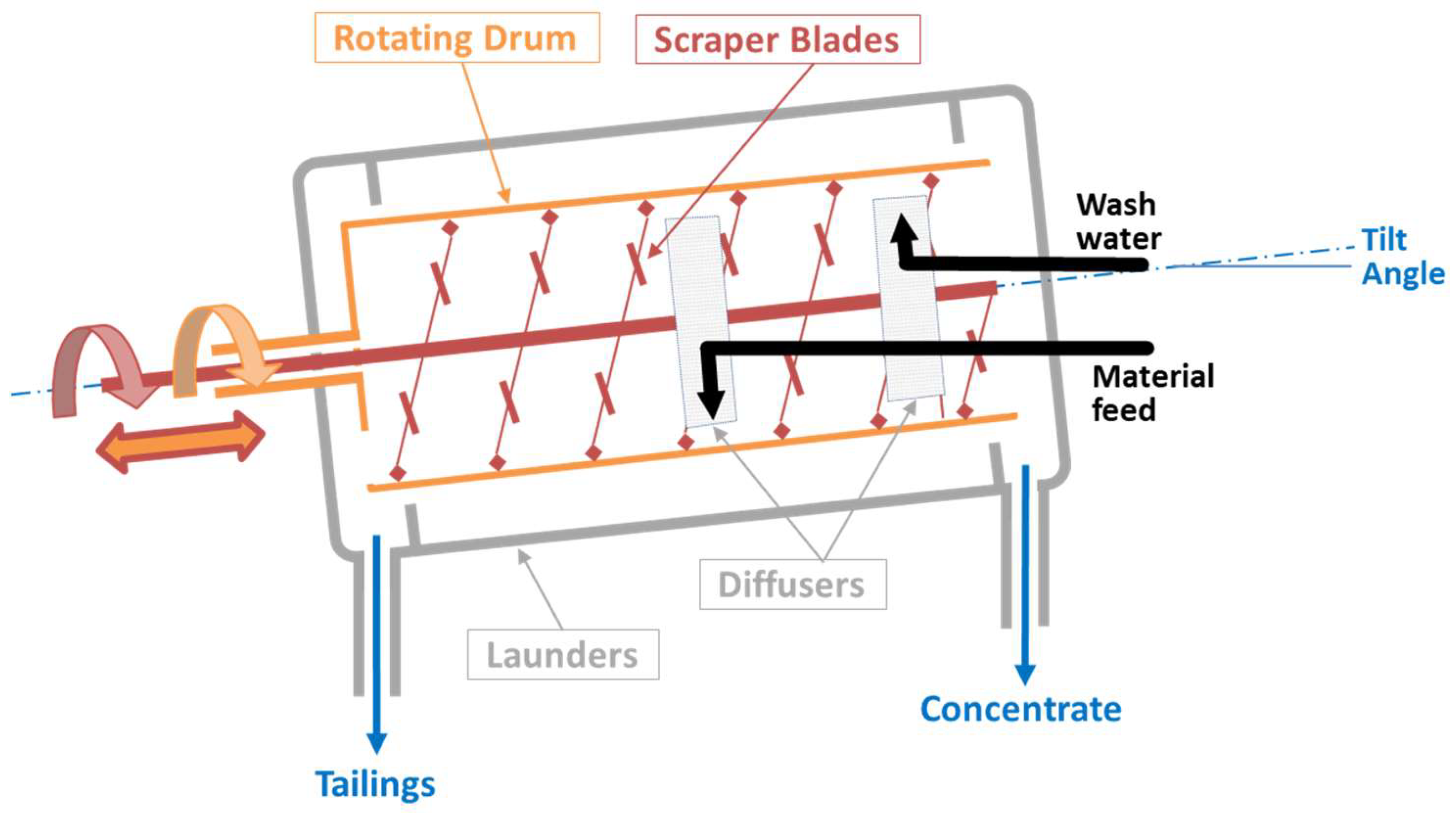
Table 1 presents the operational boundaries for the MGS during bench-scale experimentation. The system accommodates feed particles in the 500–1 μm range and supports a pulp solids concentration of 10%–50%. Its throughput capacity varies from 10 to 25 kg/h. The drum operates at rotational speeds of 100 to 300 rpm, which are critical for enhancing the separation process. A constant shaking amplitude of 10 mm is applied to facilitate particle stratification. The tilt angle (Ɵ) can be adjusted from 0° to 9°, thereby affecting the trajectory of the material on the drum surface. Additionally, the wash water flow is regulated between 0 and 10 L/min to assist in separating finer particles and improve product quality.
For all of the Multi-Gravity Separator (MGS) tests for both particle size fractions (−500 µm and −50 µm), the same experimental setup and the same present ranges of operating parameters were used. Systematically, the speed, tilt angle, and flow rate of the wash water were changed using a full factorial design. The feed rate, pulp density, shaking amplitude, and stroke speed were all the same for each test. This method made sure that the differences in separation performance between tests and size fractions were caused by controlled changes in the operating parameters and particle size characteristics, not by changes in the conditions of the experiment. The ranges for the parameters were selected based on what the equipment could do, what was learnt from early tests, and what was found in the literature on how to better separate fine sulphide minerals by gravity.
4. Method
4.1. Sample Collection and Preparation
The sulphide pyritic ore used in this study was obtained from waste-deposit stockpiles in the municipality of Alonso, Province of Huelva, Andalusia (approximate coordinates: 37°35′31″ N, 7°05′55″ W). Representative bulk samples were collected to ensure the material tested was characteristic of the entire deposit. The collected samples were then subjected to wet sieving to separate particles into different size fractions. Two size classes were targeted: particles smaller than 500 µm (−500 µm) and those smaller than 50 µm (−50 µm). Following sieving, the samples were oven-dried at 80 °C to remove moisture and stabilize the sample weights. To ensure representativeness and reduce the effects of local heterogeneity, the dried material was thoroughly mixed and quartered to prepare representative aliquots for subsequent characterization and beneficiation experiments.
4.2. As-Received Sample Characterization
Prior to beneficiation testing, the waste material was characterized to establish its mineralogical composition, particle size distribution, and liberation characteristics. Quantitative mineralogical analysis was performed using Mineral Liberation Analysis (MLA), which provided modal mineralogy, mineral associations, and liberation data for the main sulphide and gangue phases.
The MLA results indicate that pyrite is the dominant mineral phase, accounting for approximately 66 wt% of the bulk sample in both investigated size fractions (−500 µm and −50 µm). The remaining mineral assemblage consists primarily of silicate gangue minerals, including quartz and aluminosilicates, with minor amounts of polymetallic sulphides such as sphalerite, chalcopyrite, and accessory oxides.
Particle size distribution parameters (d50, d80, and d95) were determined for the bulk sample and for each size fraction to ensure reproducibility and to assess the influence of particle size on gravity separation performance. The −50 µm fraction has around 64%–68% totally freed pyrite grains, while the −500 µm fraction contains merely 38%–42% fully liberated pyrite. In the coarser fraction, the remaining pyrite occurs predominantly within composite particles characterized by silicate intergrowths. These quantitative results are now clearly presented in the Results and Discussion section and are directly supported by the MLA data.
The application of gravity-based separation techniques relies primarily on density contrasts between valuable minerals and gangue phases. Pyrite exhibits a relatively high density of approximately 5.0 g·cm−3, whereas the dominant gangue minerals present in the waste material, mainly quartz and silicates, have significantly lower densities in the range of 2.6–2.8 g·cm−3. This marked density contrast provides a strong physical basis for the application of enhanced gravity separation using the Multi-Gravity Separator (MGS).
4.3. Experimental Design and Aliquot Preparation
A total of 54 aliquots were prepared for testing, divided evenly between the two size fractions (27 aliquots of −500 µm and 27 aliquots of −50 µm). The experimental design incorporated a complete factorial variation in three key operational parameters of the Multi-Gravity Separator (MGS) to assess their impact on separation performance.
4.4. Multi-Gravity Separator Bench Testing
Bench tests were performed on the MGS under controlled conditions, systematically varying three operational parameters:
Drum Speed: 170, 235, and 299 revolutions per minute (rpm);
Tilt Angle: 3°, 6°, and 9°;
Wash Water Flow Rate: 0.5, 1.0, and 1.4 litres per minute (rpm).
Each parameter combination was tested using prepared aliquots, and separation was performed accordingly.
4.5. Fraction Collection and Analysis
The heavy and light fractions were collected for each test. These fractions were subjected to analytical tests to determine their composition, including mineralogical and chemical assays. This allowed evaluation of separation efficiency and the influence of operational parameters.
4.6. Data Processing
The procedure began with sampling bulk material to ensure a representative collection for subsequent laboratory-scale evaluation. Following this, an experimental design was formulated to guide the test work and optimize process parameters.
The sampled material underwent wet sieving to classify it into two particle-size fractions. Specifically, the values of interest are −500 µm and −50 µm. This classification step was crucial for evaluating the effect of particle size on gravity separation performance.
Subsequently, each size fraction was oven-dried to remove moisture. After drying, the samples were homogenized and quartered to produce representative aliquots for subsequent testing.
The aliquots were processed using a bench-scale Multi-Gravity Separator (MGS) test, a gravity concentration technique demonstrated to be particularly suited for fine particles. The MGS test yielded two distinct outputs: a heavy (concentrate) fraction and a light (tailings) fraction.
Both the heavy and light fractions were subjected to analytical testing, including elemental and mineralogical analyses, to determine the concentrations of valuable minerals. These analytical results were then used to construct a metallurgical balance, which quantified the recovery, grade, and distribution of the target minerals across different size and density classes.
This method facilitated a comprehensive understanding of the influence of particle size and specific gravity on separation efficiency and mineral recovery in the MGS process.
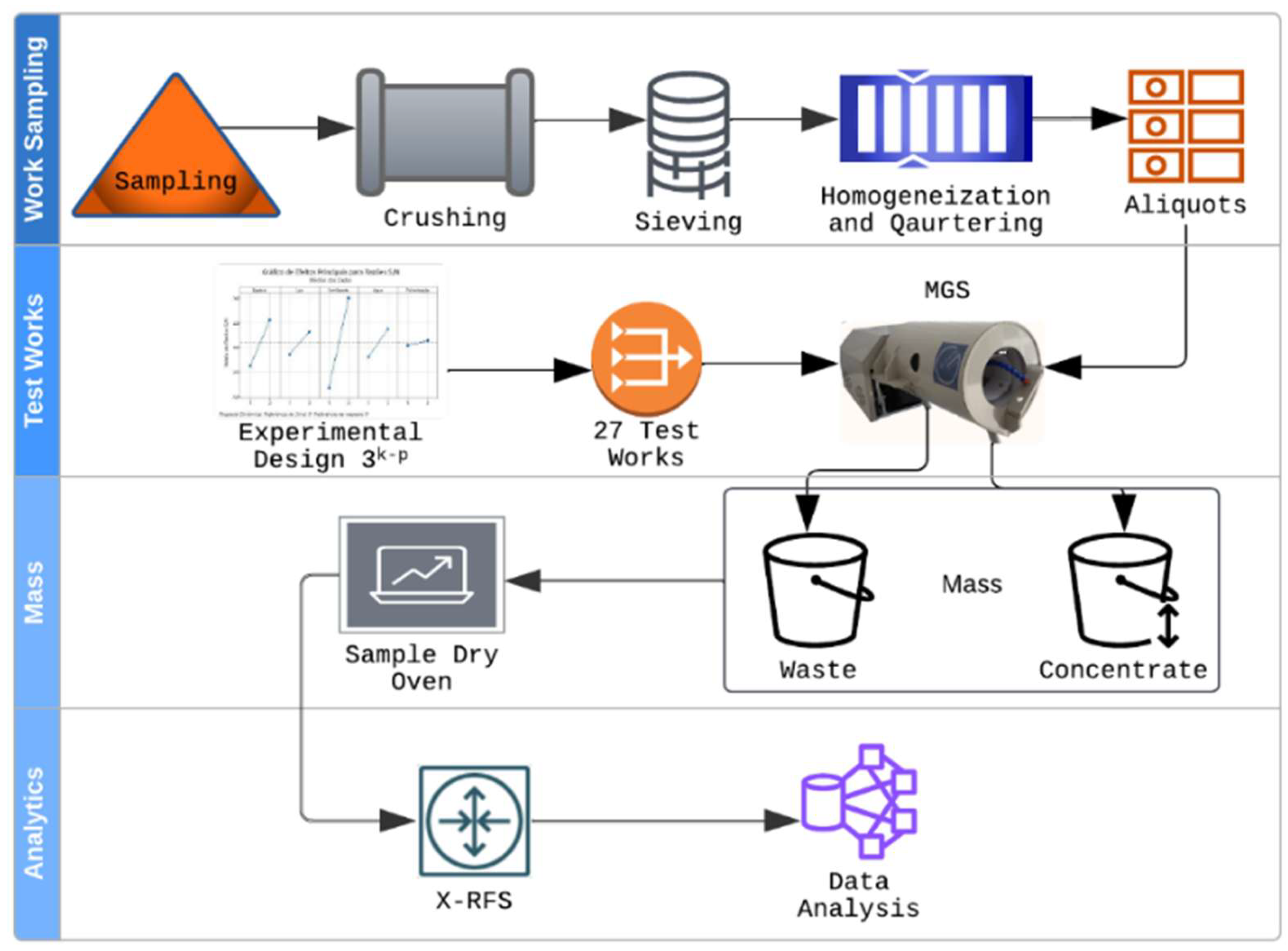
Figure 2 presents the methodology, which comprises four stages. The covered topics are: work sampling, test works, mass, and analytics.
Initially, a sample of the bulk material was obtained, subsequently crushed, and then sieved to achieve the desired particle size.
The sieved material was then homogenized and quartered to obtain representative aliquots for testing. A fractional factorial design (3ᵏ−ᵖ) was employed to define 27 test conditions, which were conducted using a Multi-Gravity Separator (MGS). The resulting products, concentrates, and waste were then dried in an oven to determine their dry mass. The elemental compositions of the samples were analysed using X-ray fluorescence spectroscopy (XRF), and the results were subsequently analysed to evaluate separation performance.
The data obtained from the bench tests were analysed to assess the impact of operational parameters on the separation performance of the Multi-Gravity Separator (MGS). Key performance metrics, including recovery and grade, were calculated using standard equations that relate the mass and composition of the feed and separated fractions.
Statistical analyses were conducted using Python (version 3.13) with libraries such as Pandas for data handling, NumPy for numerical calculations, SciPy stats for statistical tests, and Stats Models for advanced modelling. A rigorous statistical analysis was conducted to assess the significance of the individual operational parameters (drum speed, tilt angle, and wash water flow rate) and their interactions on recovery and grade. This data analysis, known as Analysis of Variance (ANOVA), allows for the testing of complex hypotheses and the estimation of the effects of multiple variables on the response variable. ANOVA was conducted, where applicable, to determine specific differences among parameter levels. The data visualization implementation used the matplotlib and seaborn libraries to generate plots, including response surfaces, interaction plots, and boxplots. These plots facilitated the interpretation of the parameters’ influence and the optimization of operating conditions. Statistical significance was assessed at a 95% confidence level (p < 0.05).
The experimental procedure evaluates the separation performance of the waste deposit, a bulk mass. The process flow included sample preparation, comminution, particle size classification, and analytical testing, followed by subsequent homogenization and quartering to produce 27 aliquots.
5. Results and Discussion
The −500 µm and −50 µm size fractions were chosen on purpose to see how well the Multi-Gravity Separator (MGS) works in different but still practical situations. The −500 µm size fraction constitutes a poorly studied sulphide mine waste feed, exhibiting complex mineral assemblages, broad particle size distributions, and incomplete liberation characteristics. This fraction was chosen to test how well enhanced gravity separation works on materials that are not uniform and are only partially liberated. On the other hand, the −50 µm fraction is a finer and more narrowly classified feed that frees up minerals much better, making it easier to separate by density. By comparing these two size fractions, we can systematically look at how the distribution of particle sizes and the degree of liberation affect MGS performance. This provides clearer insight into both the potential and the limitations of enhanced gravity separation for the processing of pyrite-rich waste materials.
5.1. Mineralogical Characterization and Liberation Analysis
Pyrite content (Py MLA%) in −50 µm and −500 µm size fractions was obtained from mineral liberation analysis (MLA). Both fractions exhibit consistent pyrite content (65.8 wt%), indicating that the mineral composition remains unchanged between size classes prior to flotation testing.
The mineralogical characterisation of the feed samples was performed using mineral liberation analysis (MLA) to determine the modal composition and liberation degree of pyrite in two particle size fractions: −50 µm and −500 µm. These results provide a basis for understanding subsequent mineral processing behaviour.
The MLA results indicate that pyrite is the dominant sulphide mineral, exhibiting a consistent modal abundance of 66 wt% in both the –50 µm and –500 µm fractions. The prevalence of pyrite indicates its critical involvement in the beneficiation response of the examined samples. The comparable pyrite contents across the two size classes further confirm that comminution does not significantly modify the overall mineralogical composition. Despite comparable pyrite proportions in both fractions, a detailed analysis of MLA textural data reveals significant differences in liberation. The finer –50 µm fraction contains a higher proportion of liberated pyrite grains, whereas the coarser –500 µm fraction shows a greater occurrence of composite particles, implying incomplete liberation at coarser sizes. these characteristics influence the efficiency of subsequent gravity separation processes. In view of the consistent bulk pyrite content as determined by MLA, a series of multi-gravity separation (MGS) tests was designed to specifically evaluate the effects of particle size and liberation degree, while excluding compositional variation as a significant factor. Fandrich et al. [
43] established the capability of SEM-based MLA for modelling mineral liberation and predicting beneficiation behaviour. In addition, Wikedzi et al. [
44] highlighted the critical role of liberation in enhancing the efficiency of both gravitational and flotation separation processes in sulphide-bearing ores.
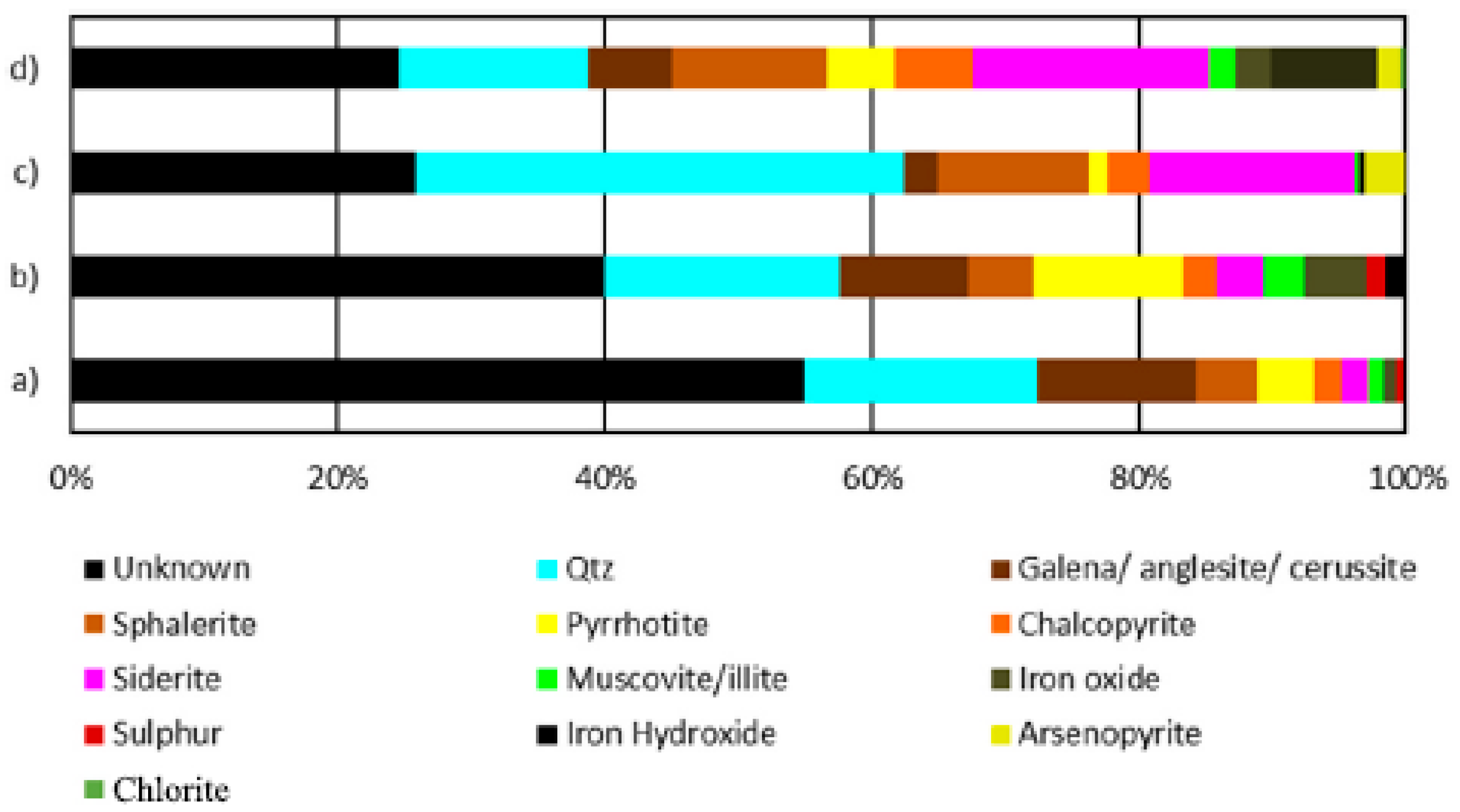
Figure 3 shows the mineralogical associations and locking characteristics of pyrite determined by Mineral Liberation Analysis (MLA) for different particle size classes and degrees of comminution. The stacked bar charts present the relative proportions of minerals associated with pyrite in binary and complex (ternary or higher-order) composite particles.
In the non-milled <100 µm fraction (
Figure 3a,b), pyrite is mainly associated with quartz, iron oxides/hydroxides, and sulphide minerals such as sphalerite, galena, and chalcopyrite. Quartz-pyrite associations are the most common in binary particles (
Figure 3a). In ternary and more complex particles (
Figure 3b), there are also other phases like siderite, chlorite, and minor arsenopyrite.
After milling to less than 100 µm (
Figure 3c,d), the number of complex composite particles goes down, and the number of binary associations goes up. This indicates an increase in particle liberation. It remains common for quartz and iron oxides to be linked together, and some ternary locking is still present, which shows that complete liberation is not possible at this size.
The MLA results show that the size of the particles and the mineralogical texture affect how well pyrite is released. Milling reduces, but does not eliminate, composite particles, providing a mineralogical context for the observed separation behaviour of different size fractions.
5.2. Sample −500 µm
The −500 µm fraction shows that minerals are not fully liberated and that the particle size distribution is wide. However, the Multi-Gravity Separator (MGS) was used on purpose at this size range. The objective was not to maximise theoretical recovery, but rather to assess the effectiveness and robustness of enhanced gravity separation when applied to a minimally processed, industrially representative mine-waste feed. The selected size fraction is characteristic of legacy tailings and waste stockpiles, where further grinding is often constrained by economic or operational limitations. Evaluating MGS performance under these conditions provides insight into its suitability as a pre-concentration or scavenging step prior to regrinding or flotation, while also highlighting the limitations associated with insufficient mineral liberation and broad particle size distributions.
5.3. Metal Content
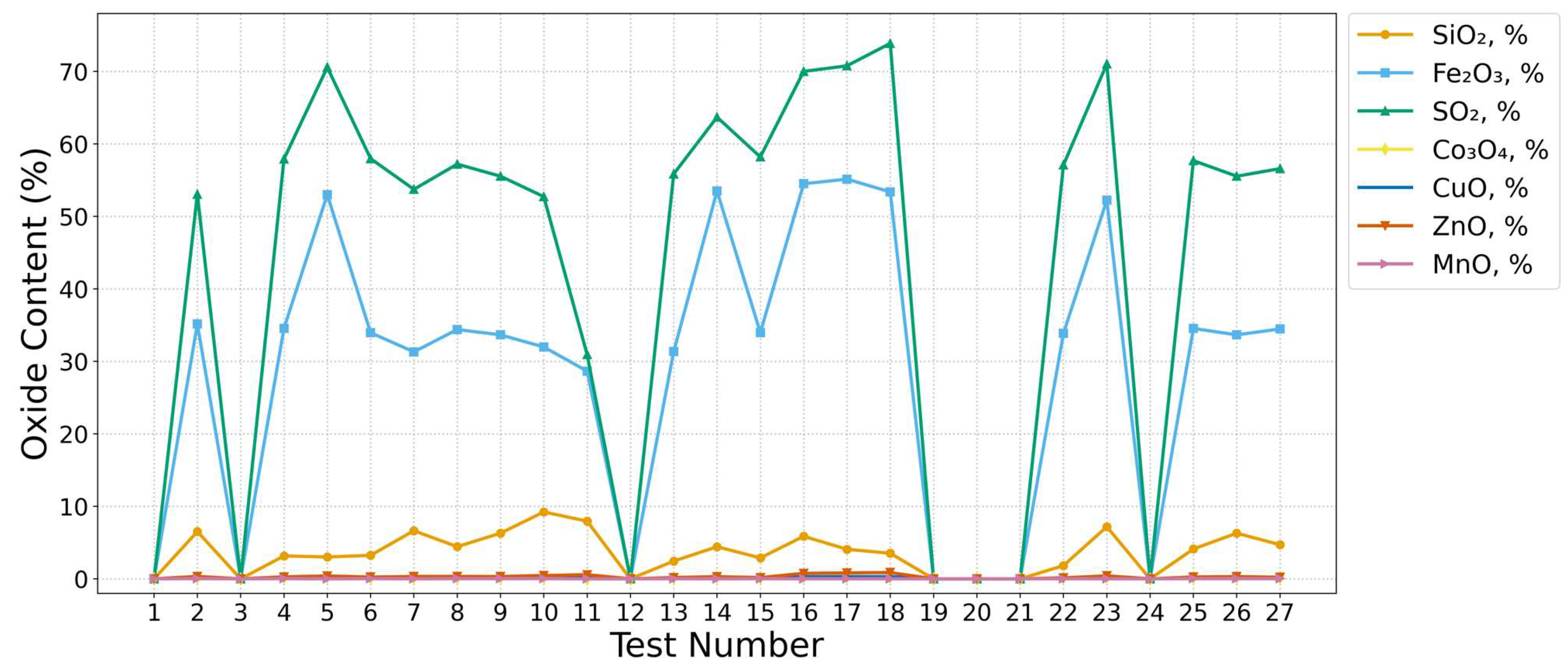
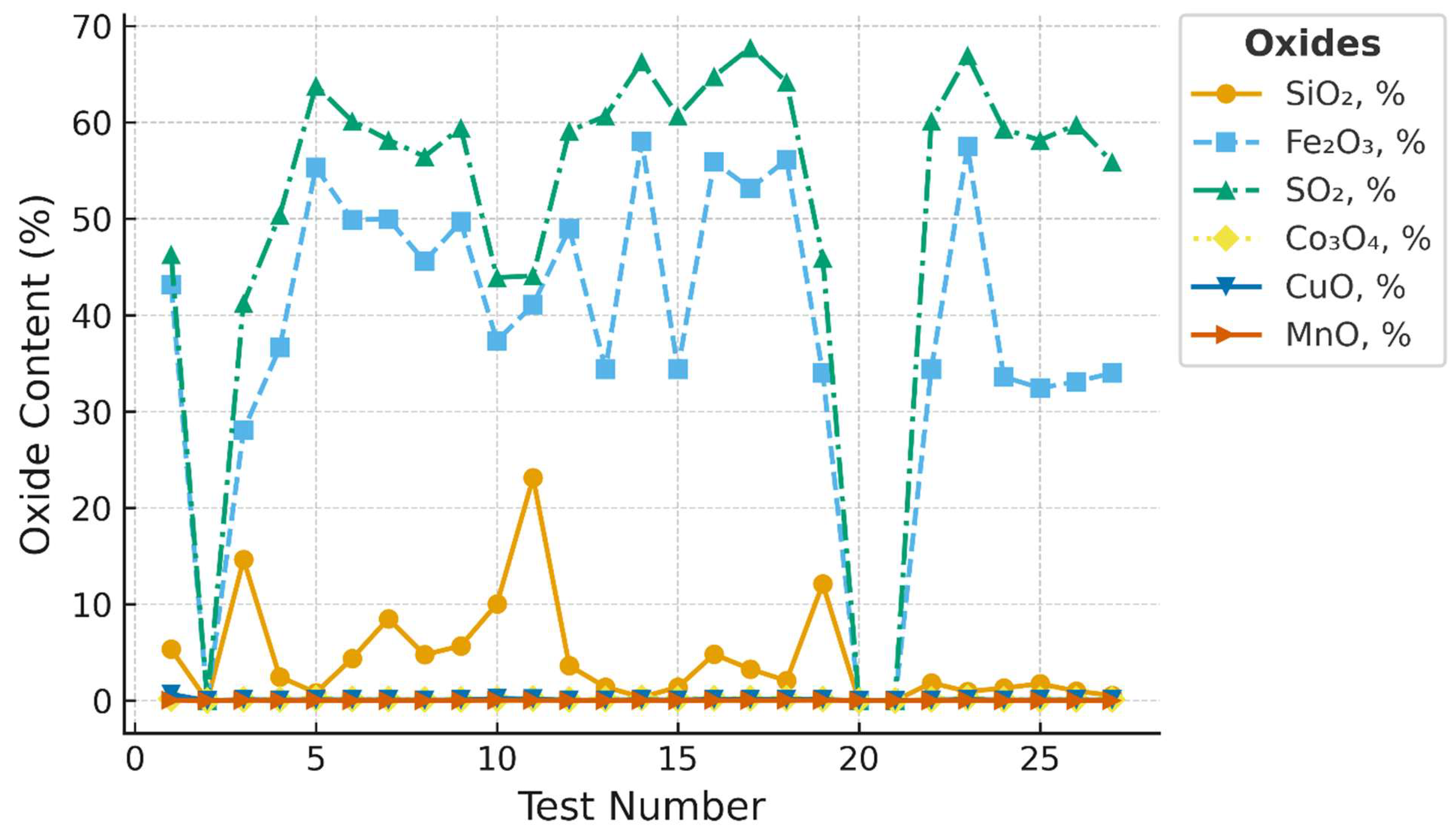
Figure 4 presents the metal content for different tests. The operational variables x
1, x
2, and x
3 represent the drum tilt angle, drum rotation speed, and wash water flow rate, respectively. The variables are interpreted as having values between their minimum and maximum values, represented by −1 and 1, respectively. Refer to
Table 1 for a comparison of the values.
Figure 4 summarizes the evolution of the principal oxides in the −500 µm MGS concentrates. Only about 20 out of the 27 experimental runs produced concentrates (Tests 2, 4–11, 13–18, 22–23, and 25–27).
Figure 4 shows that the MGS is able to generate concentrates strongly enriched in sulphur- and iron-bearing phases, while significantly depressing the gangue oxides.
Silica (SiO2) in the concentrate is generally low, typically in the range of about 2–7 wt% for most successful tests, with slightly higher values in a few tests (Tests 10, 11, and 23). These values are substantially lower than the feeds, indicating an efficient separation of silicate gangue under most operating conditions. MnO remains at trace levels throughout the test campaign, confirming that manganese-bearing phases are minor in the ore and play no significant role in the separation process.
In contrast, SO2 and Fe2O3 show a consistent and strong upgrading trend, with SO2 commonly exceeding 50 wt% and reaching more than 70 wt% in the best-performing tests (Tests 5, 16–18). Fe2O3 exhibits a similar pattern, with maxima above 50 wt%. This parallel behaviour reflects the dominance of iron sulphides (pyrite) in the dense fraction targeted by the MGS, and confirms that the unit is operating as an effective sulphide pre-concentrator under the appropriate settings.
The minor oxides Co3O4, CuO and ZnO also tend to peak in the same tests where SO2 and Fe2O3 are maximised. Although their absolute grades remain low (sub-1 wt% range), the co-enrichment of these oxides with sulphur and iron suggests that Co–Cu–Zn-bearing minerals are at least partly associated with the iron sulphides and/or with other dense sulphide phases. This association is particularly evident in Tests 16–18 and 25–27, which combine high SO2–Fe2O3 grades with the highest ZnO contents and slightly elevated Co3O4 and CuO levels.
Taken together, the oxide trends indicate that the most favourable operating conditions (corresponding to the central and high-performing region of the design space) are those that simultaneously:
These results confirm that, when properly adjusted, the MGS can produce a high-grade sulphide concentrate with limited entrainment of silicate gangue, making it a suitable preconcentration step prior to conventional flotation.
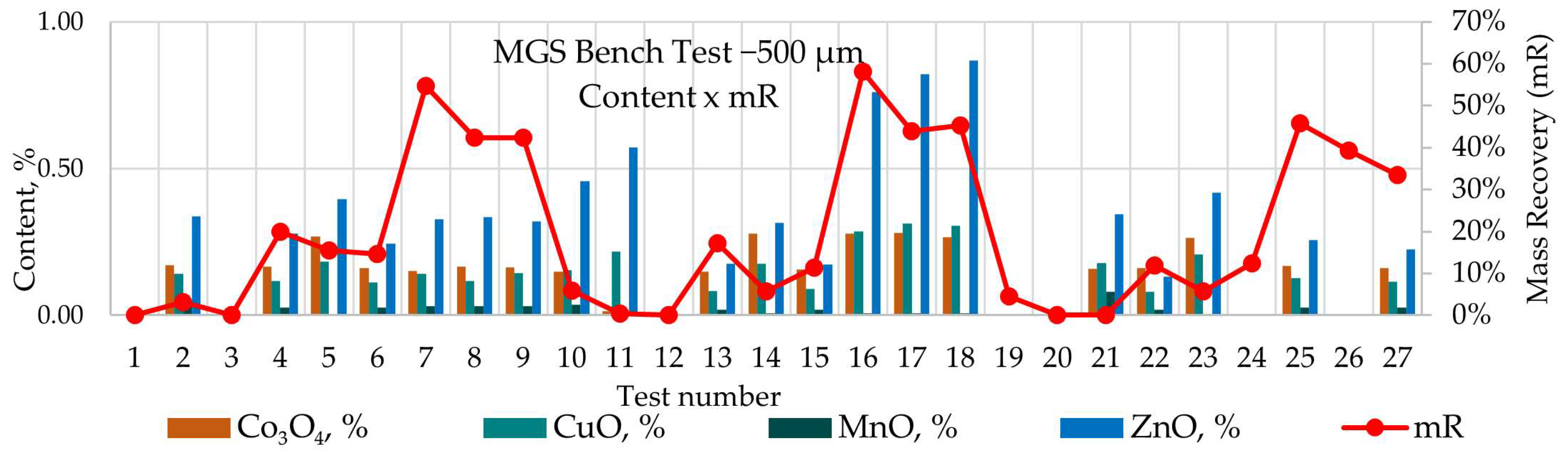
Figure 5 presents the findings of the MGS bench-scale test conducted on the <500 µm size fraction. The bar chart illustrates the percentage composition of Co
3O
4, CuO, MnO, and ZnO in 27 test samples. The secondary
y-axis shows mass recovery (mR, %) for each sample, as indicated by the red line with data points. Notable fluctuations in both oxide concentrations and mass recovery are observed across the samples, with ZnO and CuO showing particularly high variability. The presence of multiple peaks in the mass recovery curve indicates elevated ZnO content. This finding suggests a possible correlation between zinc concentration and recovery efficiency within specific fractions.
The MGS bench-scale test on the <500 µm size fraction revealed apparent variations in both oxide content and mass recovery across 27 individual tests (
Figure 3). Of the oxides analysed, ZnO exhibited the highest and most variable concentrations, with peaks in samples 7, 17, and 18. The contents of CuO and MnO were moderate and less variable, whereas Co
3O
4 remained at low concentrations throughout the test series.
The mass recovery (mR) values ranged from approximately 0% to 65%, with the highest values observed in samples 7, 17, and 25. Furthermore, the samples exhibited elevated concentrations of ZnO and CuO, suggesting a plausible correlation between metal concentration and process efficiency.
To quantify the relationships between oxide content and mass recovery, Pearson correlation coefficients were calculated. The ZnO content showed a robust positive correlation with mR (r = 0.78, p < 0.01), indicating that higher ZnO concentrations are associated with greater recovery. Furthermore, the CuO content exhibited a moderate positive correlation with mR (r = 0.55, p < 0.05). In contrast, MnO and Co3O4 exhibited weak or negligible correlations (r = 0.22 and r = 0.11, respectively), suggesting minimal influence on the overall recovery trend.
These findings confirm that the MGS process selectively enhances the concentration of Zn- and Cu-bearing minerals in specific fine particle fractions. At the same time, Mn and Co components appear less responsive under the tested conditions.
5.4. Metallurgical Recovery −500 µm
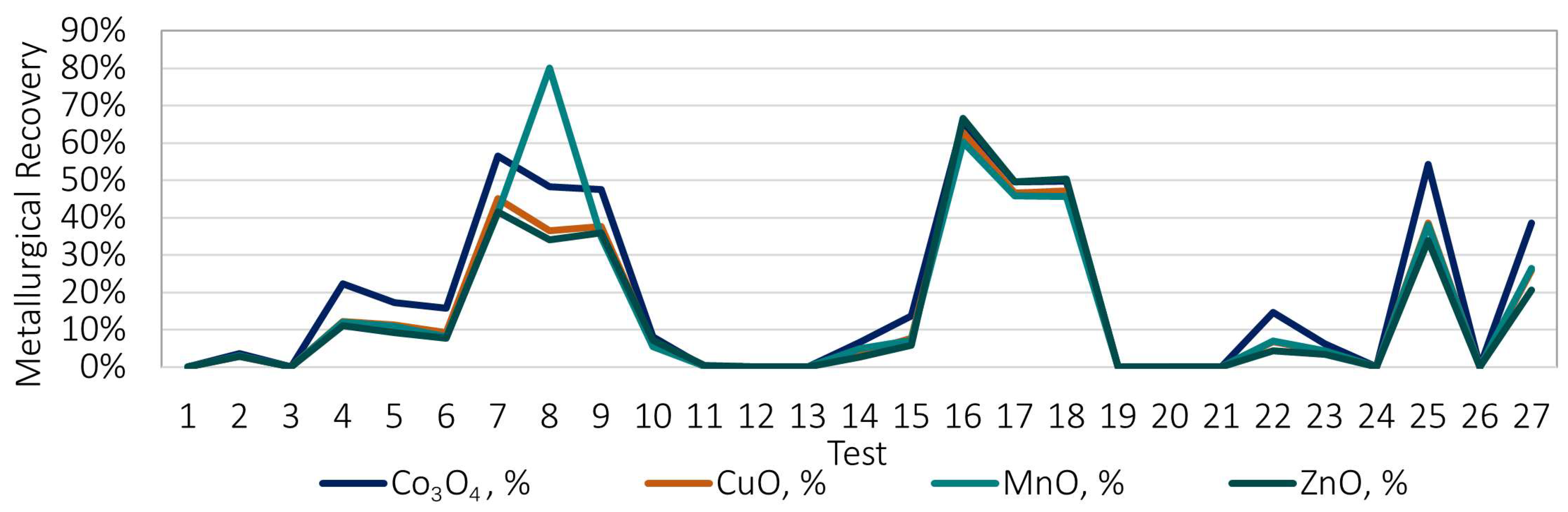
As illustrated in
Figure 6, the metallurgical recovery −500 µm (
y-axis) of Co
3O
4, CuO, MnO, and ZnO across 27 MGS bench tests (
x-axis) is demonstrated. The series demonstrates predominantly low recoveries, punctuated by distinct high-performance runs, most notably MnO peaking at Test 8 (~80%) and Tests 16–18 (~65%–70%), with Co
3O
4 and CuO co-varying at moderate levels (~35%–55%). Extended intervals of near-zero recovery (Tests 10–13, 19–20, and 24) underscore strong sensitivity to operating conditions.
Across the 27 metallurgical tests, the distribution of manganese (MnO) shows a clear trend in recovery efficiency under varying operational conditions. Tests such as Test 8 and Test 16 demonstrate remarkably elevated MnO concentrations in the concentrate stream (80% and 60%, respectively), indicative of optimal recovery, while showing minimal MnO in the tailing (20% and 40%, respectively). In contrast, preliminary tests, including Test 1, Test 3, and Tests 19–24, showed a complete or near-complete loss of MnO to the tailings, suggesting no recovery. Moderate performance is observed in Tests 7, 17, and 25–27, where manganese (Mn) recovery in the concentrate ranges from 26% to 45%. This suggests that the process is only partially effective. These variations strongly suggest that MnO recovery is highly sensitive to process parameters, and certain factor combinations (notably in Tests 8 and 16) substantially enhance the separation and concentration of MnO into the valuable stream, making them promising configurations for process optimization.
5.5. Metallurgical Mass Balance −500 µm
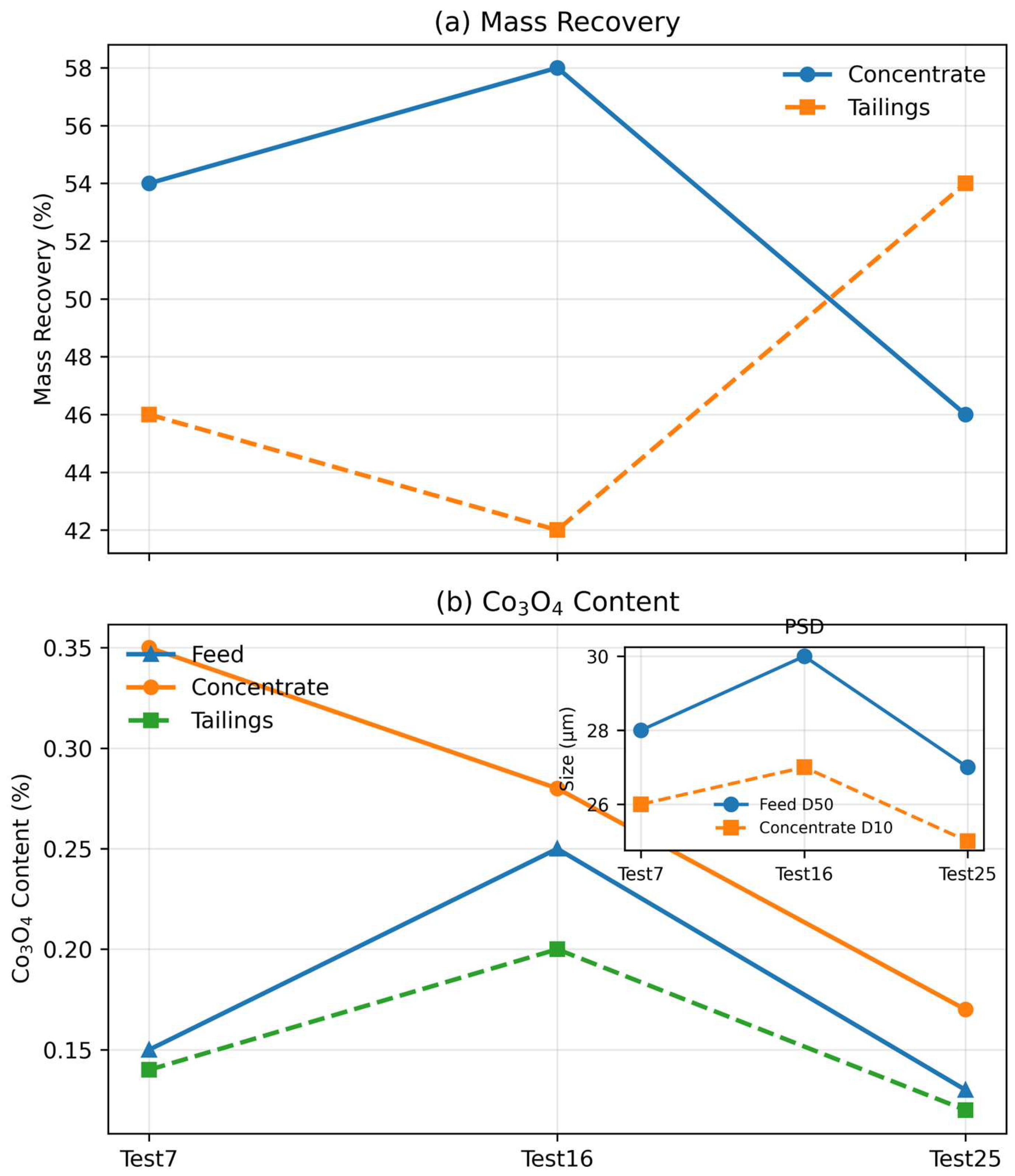
Figure 7 summarizes the metallurgical behaviour of the Multi-Gravity Separator (MGS) under operational Tests 7, 16, and 25 for the −500 µm feed fraction.
Figure 7 shows variations in (a) mass recovery, (b) the Co
3O
4 content of the feed and concentrate, and (c) the particle size distribution of the feed (D95) and concentrate (D10). Also included is a summary of the MLA, Co
3O
4, and D-values for the feed and concentrate products.
The figure summarizes the metallurgical response of the Multi-Gravity Separator (MGS) under different test conditions (Tests 7, 16, and 25) for the −500 µm feed fraction.
As shown in
Figure 7a, the mass recovery of the concentrate varied from 46% to 58%, with the highest value being achieved in Test 16. This improvement suggests that the MGS was operating within its optimal hydrodynamic range, enabling the efficient separation of dense cobalt-bearing minerals from the lighter gangue fraction.
The subsequent reduction in recovery during Test 25 was due to less effective particle stratification or increased fluidisation, which can transport fine, valuable particles to the tailings. The observed pattern suggests that the conditions in Test 16 represent an optimal balance between yield and selectivity, producing a cleaner concentrate while minimising losses.
The Co
3O
4 content in the feed exhibited slight variation, ranging from 0.14% to 0.25%, while the concentrate demonstrated consistent enrichment within the range of 0.17% to 0.35% (see
Figure 7b). The highest concentrate grade obtained in Test 7 corresponds to a more selective recovery of fine liberated Co
3O
4 particles.
However, a moderate decline in grade for Tests 16 and 25, despite higher mass recovery, indicates the expected trade-off in grade recovery inherent to gravity separation systems. The findings of this study suggest that an increase in mass pull tends to reduce concentrate purity by entraining gangue minerals. The composition of the feed and operational adjustments both have a significant impact on the metallurgical outcome of the MGS process.
As demonstrated in
Figure 7a, the feed D95 remained constant at 500 µm, thereby confirming the uniformity of particle preparation across all tests. The concentrate D10 had a mean diameter of approximately 20 µm, demonstrating the MGS’s capacity to effectively recover ultrafine Co-bearing particles, which are typically misplaced in conventional gravity circuits.
The consistent size range exhibited by the concentrate product indicates the efficacy of the MGS in segregating fine liberated mineral species from coarse or composite particles, thereby validating its suitability for fine-grained cobalt recovery.
The MLA data (Py(F + S2)%) in the summary table indicate a consistent feed association of 66%, which decreased significantly to 38%–44% in the concentrate. This reduction indicates the MGS’s effective rejection of pyrite-associated phases while selectively enriching cobalt oxide minerals.
When considered in conjunction with the D-value observations, these results demonstrate that the MGS promotes the concentration of fine liberated Co3O4 phases, thereby achieving selective rejection of sulphide gangue under controlled operational conditions.
The study’s findings demonstrate that optimal metallurgical performance was achieved during Test 16, where both grade and recovery were maximised under stable hydrodynamic conditions. The MGS has been shown to function effectively as a fine-particle gravity concentrator for cobalt oxide minerals, thereby achieving enhanced recovery of fine, valuable particles less than 20 µm, without compromising the selectivity of the process.
The findings support the hypothesis that the MGS has potential as a secondary cleaning or scavenging stage in fine cobalt recovery circuits, particularly when integrated with flotation or magnetic separation processes.
5.6. Pyrite Recovery −500 µm
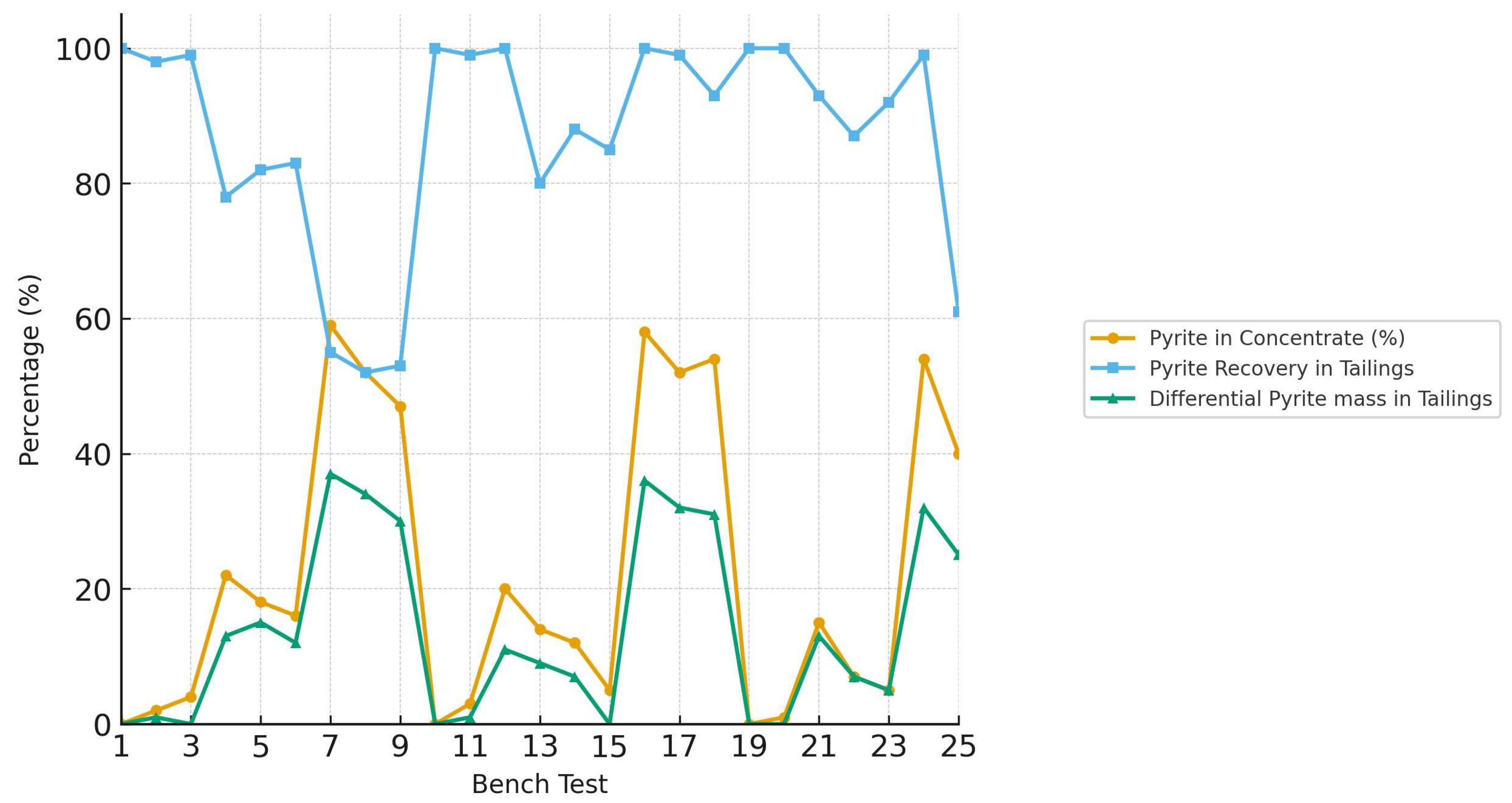
Figure 8 presents pyrite mineral recovery obtained from MGS synergism tests for particles below −500 μm. The plot shows the percentage of pyrite recovered in the concentrate (orange line), the recovery in the tailings (green line), and the differential pyrite mass (blue line) as a function of bench test number.
MLA tests showed that the material from the waste deposit has approximately 65% of its mineral composition as pyrite. Based on stoichiometric calculations from the masses and grades obtained in the tests, it was possible to estimate the mass percentages of pyrite recovered and the recovery and loss in the reject, as shown in
Figure 8.
The data in
Figure 8 indicate that the synergistic combination of MGS operation variables for Test 16 can recover approximately 58% of the free pyrite in the waste deposit sample. These data reflect a mass recovery of 38.4% corresponding to 66% of free pyrite in the feed mass. These values maximize pyrite recovery for particles in the +20 µm size range.
Figure 8 shows data on the recovery of pyrite material from the waste deposit mine, which contains approximately 66% pyrite, as determined by Mineral Liberation Analysis (MLA). The Multi-Gravity Separator (MGS) was used at a particle size of −500 μm to conduct tests evaluating the differential distribution of pyrite between the concentrate and tailings, as well as the overall recovery performance. Initial tests demonstrated low recovery rates (0%–6.2%), indicating inadequate separation at these settings. However, recovery improved progressively in subsequent tests, reaching 90.5% in Bench Test 10, where pyrite losses in the tailings were minimized to 5.3%. This result demonstrates the potential of MGS to achieve high recovery efficiency under optimal conditions. Beyond this point, recovery values fluctuated or declined, suggesting sensitivity to operating parameters. The data demonstrate a clear trade-off between pyrite recovery in the concentrate and losses in the tailings. The attainment of recoveries exceeding 80% in several tests has underscored the potential for the practical industrial application of the process, provided that MGS parameters are meticulously optimized.
Figure 8 illustrates a clear positive correlation between the differential pyrite mass in concentrate (%) and pyrite recovery (%) under various Multi-Gravity Separator (MGS) test conditions, indicating that higher pyrite mass in concentrate is associated with improved recovery. Tests with over 50% recovery, such as Tests 7, 16, 24, and 18, required at least 33% differential pyrite mass, while those with less than 10% mass consistently had poor recovery below 20%, indicating weak separation efficiency. Some tests, including 1, 3, 10, 20, and 21, showed zero recovery despite identical feed composition, which was due to suboptimal settings. This highlights that efficient MGS operation depends on achieving a sufficient mass pull into the concentrate, as recovery improves significantly once a threshold of approximately 30% mass in the concentrate is surpassed. Overall, balancing mass yield and mineral grade is crucial to optimizing recovery in gravity concentration circuits.
5.7. Sample −50 µm
Figure 9 presents tests confirming synergy in the operational variables of the MGS for the −500 µm aliquots; similar results were obtained with the −50 µm aliquots. These data reinforce the technology’s ability to deliver consistent results for samples with the exact lithology/origin.
The findings of this study demonstrate that varying operational parameters significantly affect the oxide content and mass recovery of particles with a diameter of 50 µm. The analysis of feed samples consistently revealed high mass with balanced oxide distributions, thus providing a reliable baseline. Tailing fractions exhibited lower oxide contents than the feed, indicating effective removal of certain oxides. Conversely, the concentrate fractions were enriched in key oxides, such as SiO2 and Fe2O3, reflecting a successful selective separation. The mass recovery rate remained consistently high, often exceeding 90%, underscoring the efficiency of the process. It is noteworthy that increases in mass index and adjustments in feed concentration enhanced the enrichment of oxides in the concentrate. This highlights the critical role of parameter optimization in improving separation selectivity and recovery. The findings of this study demonstrate that optimizing parameter combinations can yield substantial mass recovery and significant oxide enrichment in concentrates at a 50 µm particle size.
It was demonstrated that at a finer particle size of −50 µm, the operational conditions were optimized to yield notably high mass recovery rates often exceeding 90%, and significant enrichment of target oxides, such as Fe
2O
3 and SiO
2, in the concentrate stream. These findings are consistent with the literature, which emphasizes enhanced surface area and particle liberation at finer sizes, thereby improving selective separation when appropriate feed concentrations and flow conditions are maintained [
8]. The reduction of oxide content in tailings further indicates effective gangue rejection, which is crucial for producing high-purity concentrate.
Conversely, the study conducted at the −500 µm size range yielded a more comprehensive perspective on process behaviour under various operational modes. This test-campaign-based approach enabled evaluation of different process parameters, including flow rate, pulp density, reagent dosage, and equipment settings. The incorporation of both mass recovery and grade recovery metrics, particularly for Fe
2O
3, is consistent with standard metallurgical reporting protocols [
9]. Elevated Fe
2O
3 grades in concentrate streams across specific modes indicate strong beneficiation performance. At the same time, higher concentrations of SiO
2 and Al
2O
3 in tailings confirm effective gangue removal—both of which are central to successful mineral processing.
The discrepancy in oxide profiles between the two distinct particle size categories exemplifies the dynamic interplay between mineral liberation and particle behaviour. As asserted by Van Hinsberg et al. [
10], “fine particles may require careful reagent control to avoid slime coating or entrainment”; it is imperative to consider the implications of coarsening when handling such particles.
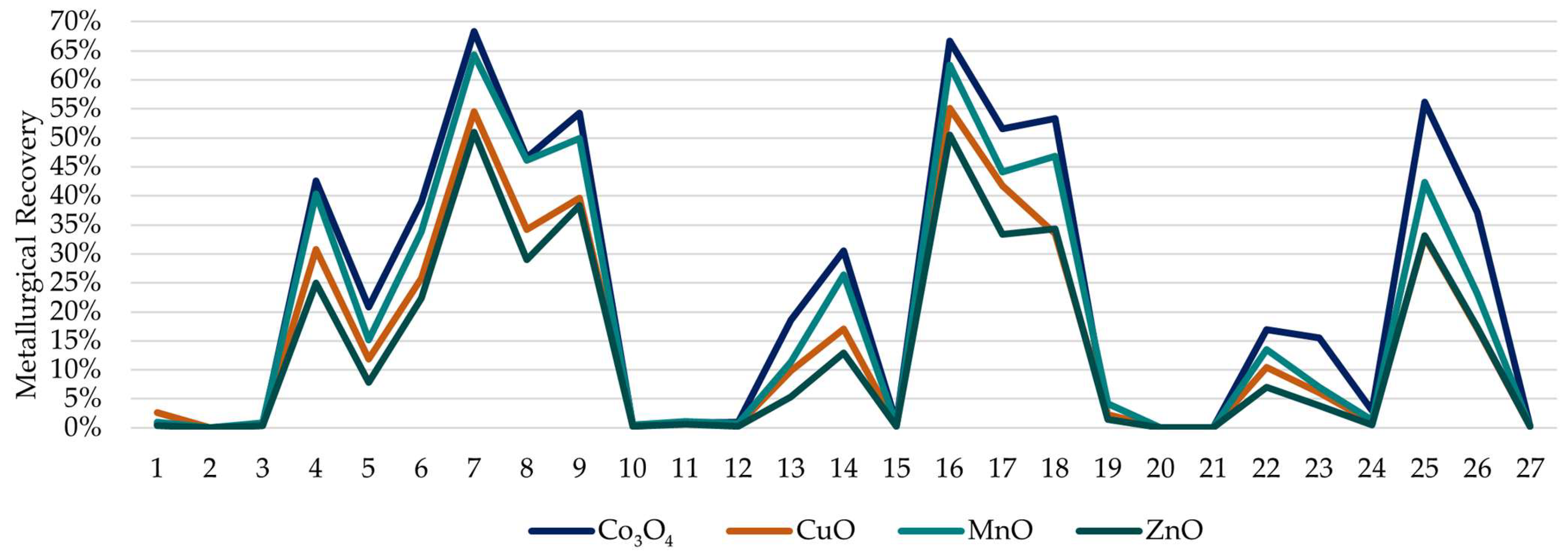
Figure 10 shows the metallurgical recovery of Co
3O
4, CuO, MnO, and ZnO for the MGS Bench Test −50 µm.
Figure 10 provides details on “Oxide recovery Co
3O
4, CuO, MnO, ZnO” from an “MGS Bench Test −50 µm,” which reveals significant fluctuations in the metallurgical recovery rates across all four oxides over 27 data points. Co
3O
4 consistently exhibits the highest recovery, peaking above 65% at points 7 and 16, although it also experiences periods of near-zero recovery. The recoveries of CuO and ZnO generally follow the trend of Co
3O
4 at lower percentages, with CuO reaching approximately 50% and ZnO around 55% at their respective peaks. Conversely, MnO has been observed to exhibit consistently low recovery rates, with its highest recorded recovery rate of approximately 35%.
Figure 10 shows that the metallurgical recovery efficiency varies significantly, influenced by specific test conditions and the inherent properties of each oxide. The results indicate that Co
3O
4 generally exhibits optimal performance, while MnO demonstrates the poorest efficiency.
The current study employs a comparative analysis of pyrite (Py) and MnO recovery across 27 Multi-Gravity Separation (MGS) tests. The findings of this analysis highlight the substantial impact of operational parameters on the separation efficiency of both minerals. It is noteworthy that Tests 8 and 16 exhibited superior performance for both minerals, indicating a shared operational “sweet spot” that optimizes the MGS process.
These findings are consistent with previous studies that emphasized the critical roles of centrifugal force, vibration amplitude, wash water flow rate, and table inclination in enhancing the separation of fine and high-density particles [
11]. For instance, ref. [
12] observed that optimizing rotation speed and wash water rate significantly improves the recovery of iron and heavy minerals from tailings, a finding consistent with the trends observed here for pyrite.
In addition, the precipitous decline in recovery evident in Tests 1, 2, and 20–24 corroborates the findings of Almodóvar et al. [
14], who have observed that minor deviations from optimal parameters can lead to substantial reductions in separation efficiency. In particular, the substandard performance in MnO recovery in preliminary trials is consistent with previous observations regarding the difficulties of recovering fine-grained manganese from lean ores using gravity-based methods without precise calibration [
14,
15,
16,
17,
18].
The moderate performance levels observed in Tests 7, 10, 17, and 25–27 suggest that, while partial recovery is possible under sub-optimal conditions, full exploitation of the gravity potential requires a synergistic calibration of all key parameters. This underscores the necessity for response surface modelling or statistical design of experiments (DOE), such as Box–Behnken or Taguchi methods, for future optimization.
The metallurgical recovery of Co
3O
4, CuO, MnO, and ZnO at two distinct particle size fractions (−500 µm and −50 µm) demonstrates the significant effect of particle size on MGS performance. At a depth of −500 µm (see
Figure 4), recovery rates were generally lower and more variable, with distinct peaks at Tests 8, 16, and 24. Among the oxides, MnO achieved the highest recovery (approximately 80%), while Co
3O
4, CuO, and ZnO exhibited similar but slightly lower patterns. This finding indicates that coarse particle sizes reduce separation efficiency due to incomplete mineral liberation.
As illustrated in
Figure 10, the recovery rate increased markedly across all oxide samples, demonstrating greater consistency at a measurement depth of −50 µm. The finer particle size enhanced MnO and CuO recovery, particularly in Tests 8 and 16, reaching peak values of 60%–70%. The mean recoveries summarised in
Table 1 demonstrate a 14%–20% enhancement across oxides when the particle size was reduced from −500 µm to −50 µm. This enhancement indicates improved mineral liberation and greater separation efficiency within the MGS system.
A substantial enhancement in metallurgical recovery is achieved by reducing particle size. This finding substantiates the assertion that fine grinding is a pivotal parameter in the optimisation of gravity-based separation processes for oxide minerals.
5.8. Metallurgical Mass Balance −50 µm
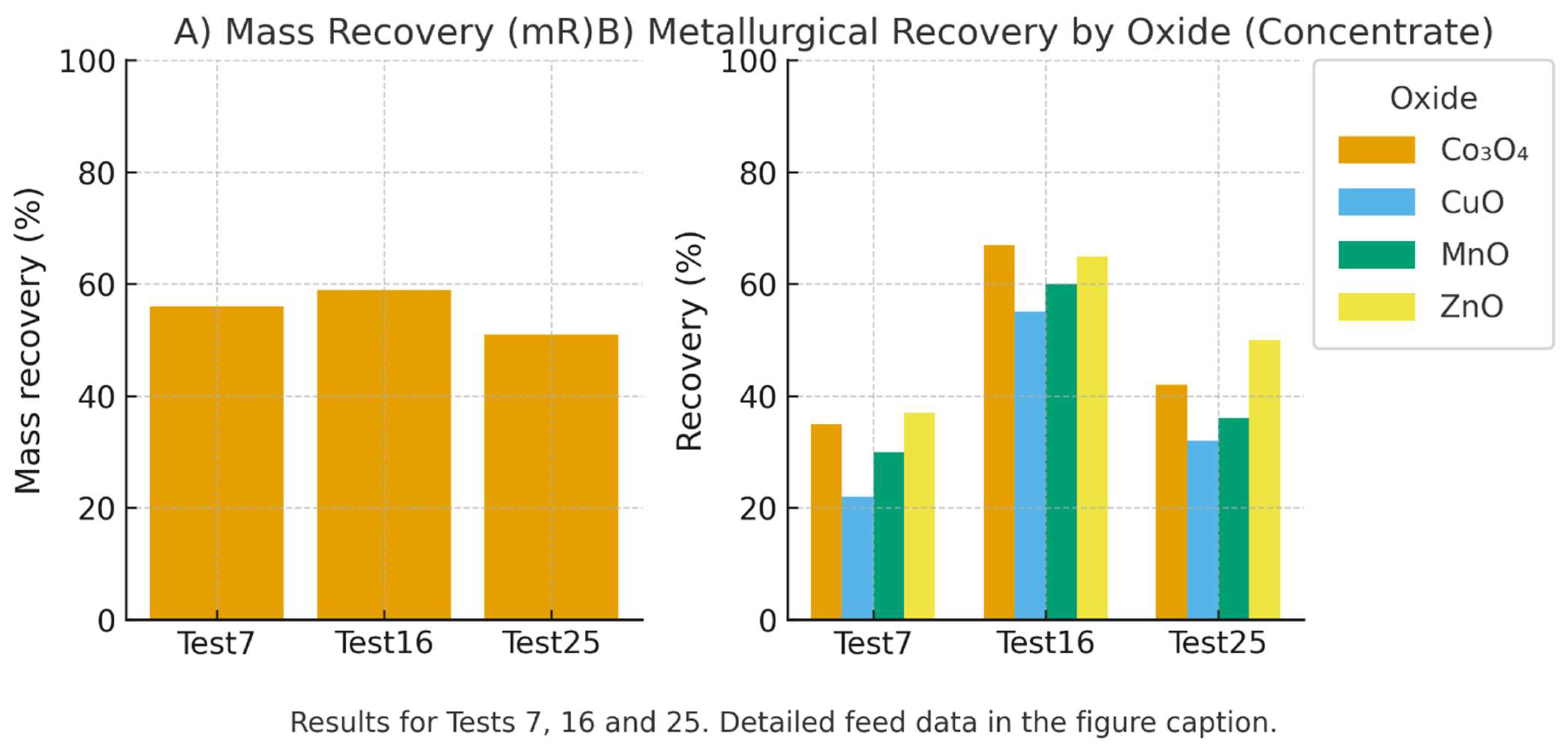
The mass and metallurgical balance results obtained from the MGS tests conducted on the MLA Py(F2 + S2) feed at D95 = −50 µm are presented in
Figure 11. The figure compares the mass recovery (mR) and the concentrate recoveries of Co
3O
4, CuO, MnO, and ZnO for Tests 7, 16, and 25. A marked enhancement in both mass and metallurgical recoveries is evident at the intermediate operating condition (Test 16), indicating greater stratification efficiency and selective separation of fine liberated particles. The overall recovery trends demonstrate the significant impact of shaking intensity and wash water rate on the efficiency of oxide mineral upgrading.
The metallurgical and mass balance results for Tests 7, 16, and 25 at a feed size of D95 = –50 µm (MLA Py(F2 + S2)) are presented in
Figure 11. The feed contained 66 wt% solids, with a composition of Co
3O
4 (0.14%), CuO (0.09%), MnO (0.024%), and ZnO (0.22%). The particle size distribution of the products indicates that the concentrate corresponds to D10 and the tailings to D90.
The mass recovery range was 50%–60%, with Test 16 achieving the highest value, indicating more favourable operating conditions for selective separation. Metallurgical recoveries of the concentrate exhibited a consistent trend across all oxides, with an increase from Test 7 to Test 16, followed by a slight decrease in Test 25. The maximum recoveries were obtained in Test 16, reaching 66.7% Co3O4, 55% CuO, 63% MnO, and 51% ZnO, demonstrating improved metallurgical performance under intermediate operating conditions.
The enhanced recoveries observed in Test 16 are attributed to particle stratification and the selective concentration of fine liberated minerals (D10). Conversely, the excessive shaking observed in Test 25 and the reduced energy input in Test 7 are likely to have led to particle misplacement, thereby decreasing overall efficiency. These findings indicate that optimising MGS parameters significantly improves oxide mineral recovery from fine-grained materials, consistent with previous studies on enhanced gravity separation behaviour [
39,
44].
When comparing both particle sizes −50 µm, and −500 µm,
Figure 11 and
Figure 7 present complementary metallurgical balance results for the MGS tests conducted on the MLA Px(F2 + S2) feed at D95 = −50 µm.
Figure 11 provides a synopsis of the aggregate mass and metallurgical recoveries by oxide in the concentrate. In contrast,
Figure 7 offers a visual representation of the corresponding trends in mass recovery, Co
3O
4 content, and particle size distribution for Tests 7, 16, and 25. The results from both figures demonstrate consistent behaviour, clearly highlighting the superior performance of Test 16 compared to Tests 7 and 25. Test 16 indicated the highest mass recovery (~60%) and the and the highest metallurgical recoveries of Co
3O
4, CuO, MnO, and ZnO, as well as an enhanced Co-bearing mineral upgrade in the concentrate. Conversely, Test 25 exhibited the lowest mass recovery and the weakest Co
3O
4 enrichment response, indicating reduced separation efficiency, while Test 7 demonstrated intermediate behaviour. The particle size distributions remained similar across all tests, confirming that the differences in metallurgical response were primarily governed by process conditions rather than feed size variability. Overall, Test 16 achieved the most favourable balance between mass recovery and grade upgrade, demonstrating that optimised MGS operating parameters can substantially enhance oxide concentration performance for the Px(F2 + S2) feed at fine particle sizes (D95 = −50 µm).
5.9. Pyrite Recovery −50 µm
The data in the table indicate that the synergistic combination of MGS operation variables for Test 16 can recover approximately 64% of the free pyrite in the waste deposit sample. These data reflect a mass recovery of ~42% corresponding to 66% of free pyrite in the feed mass. These values maximize pyrite recovery for particles in the +10 µm size range.
As illustrated by
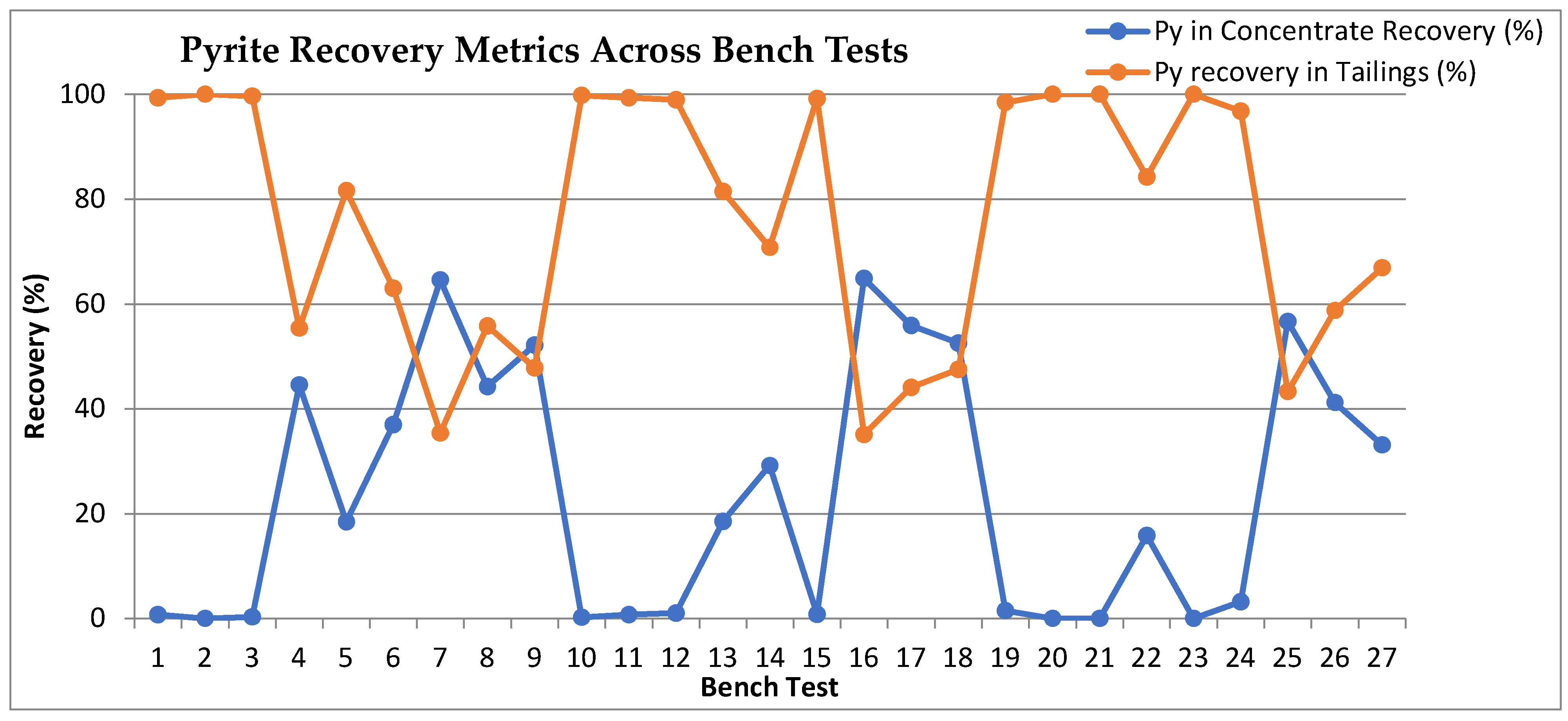
Figure 12, a significant variation in pyrite (Py) recovery was observed across 27 bench tests. These tests evaluated both recovery in the concentrate and retention in the tailings under −50 µm particle size conditions, using MGS synergism.
The recovery of pyrite in the concentrate shows significant variability, ranging from near zero to approximately 57%. This indicates that MGS’s effectiveness depends heavily on the operational parameters used in each test. Higher concentrate recoveries are observed in specific tests (Tests 7, 25), suggesting optimal synergistic conditions in those cases.
Conversely, pyrite recovery in the tailings is highly consistent, with values greater than 80% recorded in most tests. However, a few exceptions have been observed, with reduced values recorded in Tests 25 and 26. This suggests that a significant proportion of pyrite is persistently lost to tailings across a range of parameter settings, emphasizing the need for further process optimization.
The opposing recovery behaviours of concentrate and tailings reflect an inherent trade-off in separation efficiency, underscoring the critical role of process parameter optimisation in maximising pyrite recovery while limiting losses.
The comparative evaluation of pyrite and manganese oxide (MnO) recovery across 27 bench-scale Multi-Gravity Separation (MGS) tests reveals a clear dependence of separation efficiency on operational parameters. It is noteworthy that Tests 8 and 16 consistently yielded high recovery for both minerals, with elevated concentrate grades and reduced tailing losses. This suggests the presence of an optimal configuration within the MGS system. These outcomes are in strong agreement with recent studies, which confirm that rotational speed, wash water rate, and deck inclination significantly influence the gravity separation of fine and dense particles [
21,
22,
23]. In contrast, tests 1, 2, and 20–24 exhibited near-complete losses of both pyrite and MnO to tailings, thereby underscoring the sensitivity of the process to non-ideal conditions. This observation is similarly reported in the context of fine iron ore beneficiation [
1,
25,
26,
27,
28,
30,
31,
32]. The moderate recoveries observed in Tests 7, 10, 17, and 25–27 further emphasize the importance of fine-tuning multiple interacting parameters, rather than relying on single-factor optimization. Of particular significance is the successful overlap between pyrite and MnO recovery in Tests 8 and 16, suggesting a shared optimal operating window. This offers potential for integrated processing of polymetallic ores. The findings, when considered collectively, demonstrate the potential efficacy of MGS when operated under carefully optimized conditions. This supports the recommendation for future work involving multivariate modelling techniques, such as response surface methodology (RSM) or machine learning-based prediction frameworks, as previously proposed [
20,
38]. The consistent feed composition and controlled particle size in this study further enhance the validity of these insights, offering a robust platform for future scale-up and industrial application of gravity-based separation systems in complex ore environments [
39,
40,
41,
42,
43,
44,
45,
46].
6. Conclusions
This study investigated the efficacy of Multi-Gravity Separation (MGS) for the recovery of pyrite and related polymetallic minerals from sulphide-rich waste originating from the Iberian Pyrite Belt. The primary factors affecting separation performance were distinctly delineated through the integration of comprehensive mineralogical characterisation, particle size classification, and methodical bench-scale testing.
Mineral Liberation Analysis indicated that pyrite constitutes approximately 66 wt% of the material across both examined size fractions. Nevertheless, liberation characteristics are strongly size-dependent, with the −50 µm fraction displaying markedly higher liberation than the broader −500 µm class, thereby exerting a significant control on gravity separation efficiency.
The results demonstrate that pyrite recovery by MGS is highly sensitive to particle size and process parameters. Maximum recoveries were obtained at intermediate drum speeds, moderate inclination angles, and balanced wash water flow conditions, yielding pyrite recoveries of approximately 58% for the −500 µm fraction and 64% for the −50 µm fraction. The finer fraction consistently produced higher and more stable mass recoveries, indicative of enhanced separation efficiency and reduced particle misplacement.
The recoveries of related metals like Co, Cu, Zn, and Mn also improved, especially in the −50 µm fraction. Under the best operating conditions, metallurgical recoveries of Co-bearing phases in this size range were more than 60%. These results show how important mineral liberation and controlled particle size distribution are for using enhanced gravity separation on polymetallic sulphide waste effectively.
In general, the comparative analysis indicates that MGS performs optimally when treating finely classified feeds. Nevertheless, it can still deliver effective pre-concentration for broader particle size distributions, provided that it is operated within an appropriate parameter window. Consequently, MGS represents a suitable option for pre-concentration or scavenging stages prior to flotation or other downstream separation processes. Its application is particularly relevant for the long-term reprocessing and valorization of pyrite-rich mine wastes.
Future research should concentrate on refining feed size distributions, enhancing operating parameters through response surface or data-driven methodologies, and evaluating the incorporation of MGS into comprehensive processing flowsheets to augment metal recovery and overall resource efficiency.



 ,
,