


Abstract
Semi-dry desulfurization ash (SDA) is generated in rapidly increasing quantities and remains underutilised, despite its high CaO content, which makes it a promising candidate for CO2 storage via carbonation curing. However, the carbonation behaviour and consolidation mechanism of standalone SDA compacts are not yet well understood. In this study, SDA compacts were prepared at water-to-solid (w/s) ratios of 1.5:10 and 1.83:10 and subjected to carbonation curing for 0–24 h under controlled CO2 conditions. Compressive strength, CO2 uptake, and microstructural evolution were assessed using XRD, TG–DTG, FTIR, and SEM. CO2 uptake increased with curing time and reached approximately 20% after 24 h, whereas compressive strength exhibited a non-linear response, peaking at 8.67 MPa after 6 h at w/s = 1.5:10 and declining thereafter. Phase and microstructural analyses indicate that strength development is governed by the transformation of Ca(OH)2 to CaCO3 polymorphs, with early densification followed by increased porosity as calcite coarsens. Sulphur-bearing phases (e.g., CaSO3·0.5H2O) remain largely inert under the tested conditions. These findings demonstrate that carbonation curing can significantly enhance CO2 fixation in SDA and generate low-strength construction materials while also highlighting the need to optimise mix design and curing parameters to mitigate strength loss at extended curing times.
1. Introduction
A key scientific challenge in carbonation curing is clarifying how CO2 uptake, phase evolution, and pore structure development jointly control the strength formation of Ca-rich industrial residues such as semi-dry flue gas desulfurization ash (SDA). Over the past few years, sustainable development has become a global priority, and many industries have begun to integrate sustainability considerations into their policies and operations [1,2]. Emissions of flue gases from the combustion of fossil fuels have emerged as a major environmental issue [3,4]. Coal-fired power plants, industrial boilers, and sintering facilities consume substantial amounts of fossil fuels each year and are among the primary sources of CO2 emissions [5,6]. Reducing CO2-related environmental pollution is therefore a global imperative.
Flue gas desulfurization (FGD) technologies are commonly categorised into wet, dry, and semi-dry processes. Among these, wet desulfurization offers a 50%–70% reduction in equipment corrosion, an 80% decrease in water consumption, and about a 30% reduction in investment costs [7]. It also produces less dry waste, simplifies downstream processing, and reduces capital requirements, making it the predominant method for mitigating the environmental impacts of flue gas emissions [8,9]. However, semi-dry FGD processes, similar to other conventional techniques, generate desulfurization ash (SDA) as a by-product.
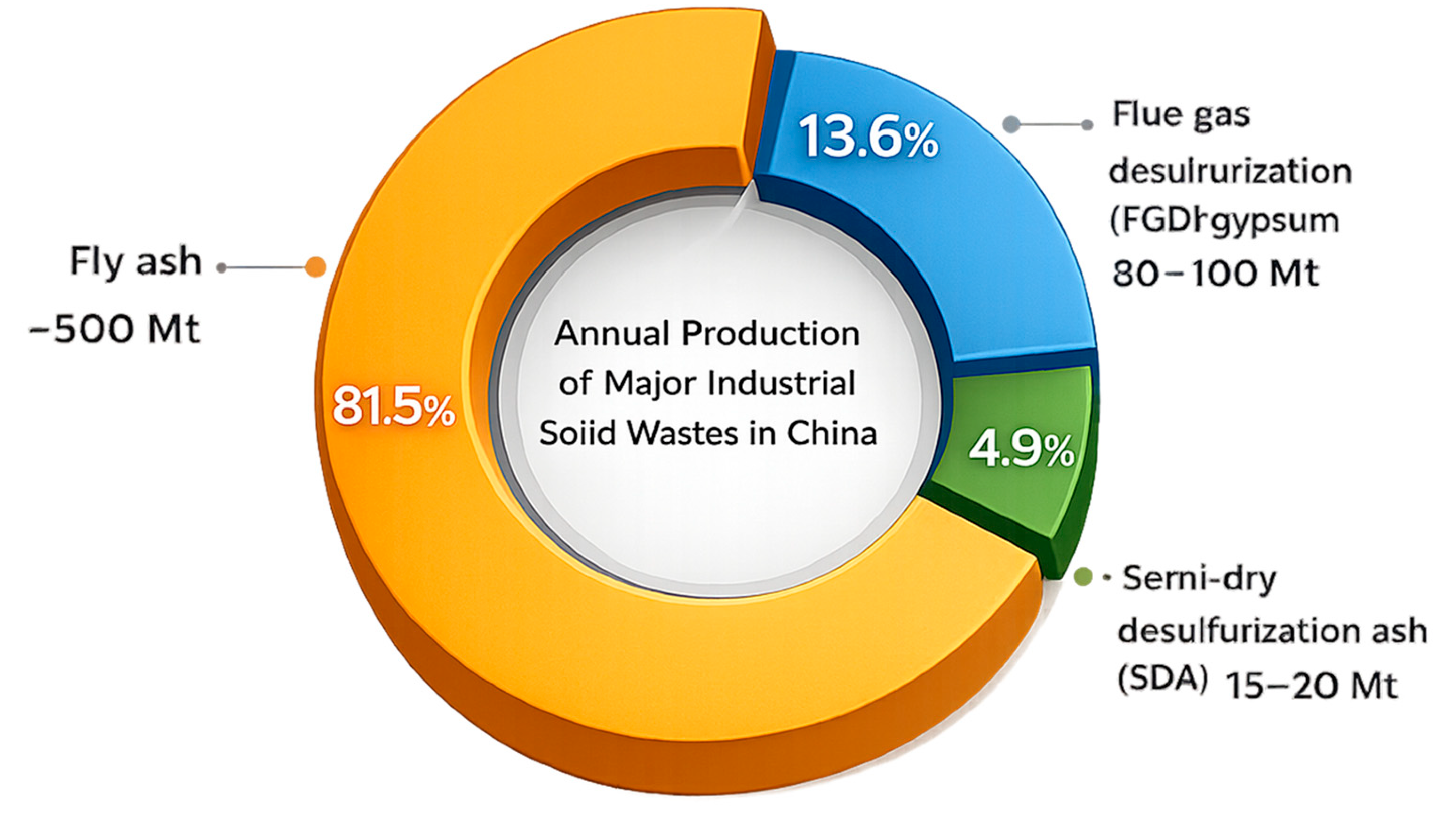
The annual production of SDA in China is estimated to be approximately 20 million tonnes, with the cumulative quantity projected to reach billions of tonnes [10]. SDA ranks third among solid waste streams in China, after fly ash and FGD gypsum (Figure 1). The composition of dust and ash from steel mills is complex and variable, typically including CaSO3, CaSO4, CaCO3, f-CaO, CaCl2, and oxides of Si, Mg, Fe, and Al [11]. Poor management of SDA can lead to the release of SO2 into the atmosphere and soil, resulting in significant secondary contamination of terrestrial and groundwater resources. The complex composition of SDA reduces its effectiveness as a building material, while constituents such as CaSO3, f-CaO, and CaCl2 can adversely affect the performance of construction materials. Current research has primarily focused on the fundamental characteristics of dry desulfurization ash, particularly its physicochemical properties [12]. Previous work has shown that SDA can be combined with steel slag and ordinary Portland cement (OPC) to form cementitious binders, although admixtures are generally required to enhance early hydration [10]. In such systems, SDA contents are typically below 60% [13]. Identifying a utilisation pathway that enables high-quality, high-volume use of SDA is therefore critical for sustainable development.
Carbonation curing of solid waste materials with high CaO content is a promising technology for CO2 sequestration in industrial plants that generate both flue gas and solid residues [14,15]. The rapid carbonation rate of these materials allows monolithic compacts to gain strength quickly during curing, enabling the production of high-performance carbonated construction materials [16,17] such as bricks, boards, artificial reefs [18], and backfill materials [19]. Various solid wastes, including steel slag [20] and fly ash [21,22], have been studied for carbonation curing. For example, the compressive strength of carbonated steel slag compacts can reach 30–100 MPa after curing under 20% CO2, 20 °C, and 1 bar for 24 h [23,24]. In these systems, both carbonation and hydration products fill the pores of the compact, thereby increasing strength [25]. The crystal structure of CaCO3 has been shown to control the strength of carbonated steel slag compacts [18]. The CaO content of SDA (CaO > 70 wt.%) is much higher than that of steel slag (CaO > 40 wt.%) [10]. Nevertheless, the influence of carbonation curing on standalone SDA compacts has not yet been systematically investigated. It has been reported that rapid carbonation reactions can produce a dense CaCO3 reaction layer that encapsulates unreacted particles and restricts inward diffusion of CO2, resulting in incomplete reaction and limited performance development; to mitigate such limitations, carbonation–hydration coupled curing strategies have recently been proposed, where early carbonation provides rapid densification, while subsequent hydration promotes further microstructural refinement and mechanical improvement [26,27].
To date, most studies have considered SDA as a partial component in blended systems with steel slag, cement, or other industrial by-products, typically limiting SDA contents to below 60% and focusing on early hydration activation rather than the standalone carbonation performance of SDA compacts [10,13,20,21,22]. As a result, there is limited understanding of how pure SDA compacts respond to carbonation curing, particularly in terms of the coupled evolution of CO2 uptake, mechanical strength, and phase assemblage under controlled curing conditions. To address this gap, the present work systematically investigates the carbonation behaviour of high-SDA compacts at two water-to-solid ratios and multiple curing durations. The specific objectives are to (i) quantify CO2 uptake and compressive strength as functions of curing time and w/s ratio, (ii) elucidate the associated phase and microstructural evolution using XRD, TG–DTG, FTIR, and SEM, and (iii) propose a consolidation mechanism that links carbonation reactions to the observed mechanical response and identifies key constraints on SDA utilisation as a construction material.
In this study, SDA compacts were carbonated under controlled CO2 conditions to assess their potential as sustainable construction materials. The effects of carbonation duration and the water-to-solid (w/s) ratio on performance were examined. Compressive strength was measured using a computerised constant-stress compression testing machine, and CO2 uptake was determined by total carbon content analysis. Multiple analytical techniques were employed to characterise the carbonation process and microstructural changes, providing insights into the chemical and physical transformations occurring during curing. The results offer practical performance indicators to support the use of SDA in low-carbon construction applications.
Figure 1.
Annual production of major industrial solid wastes in China [28].
2. Materials and Methods
2.1. Material
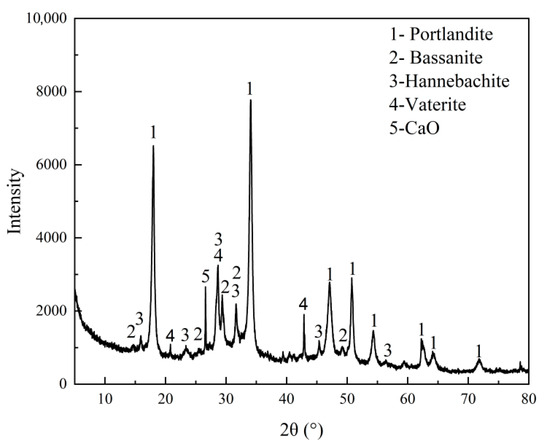
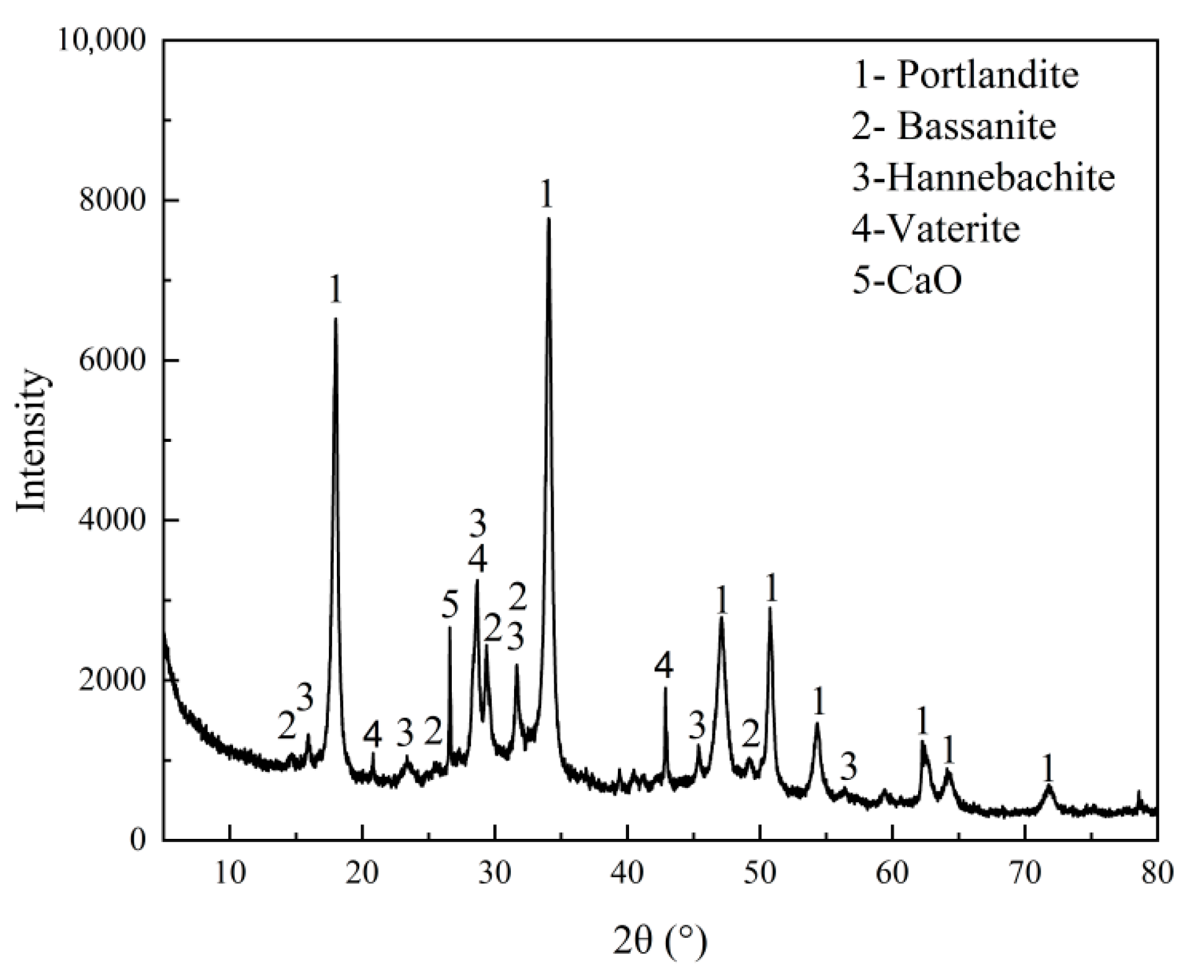
SDA used in this study was supplied by Qian’an GTC Shougang Environmental Protection Technology Co. (Tangshan, China). The specific surface area of SDA is 328 m2/kg. The chemical composition of SDA was analysed using X-ray fluorescence spectroscopy (XRF), with the results shown in Table 1. The main chemical components are CaO, SO3, Cl, MgO, and SiO2. Mineral composition was analysed by X-ray diffraction (XRD); the diffraction pattern is presented in Figure 2, and the quantified mineral phases are listed in Table 1. The primary crystalline phases in the semi-dry desulfurization ash are Ca(OH)2, CaSO3·0.5H2O, CaSO4·0.5H2O, CaO, and CaCO3.
Table 1.
Main oxide composition (XRF) and mineral composition (XRD) of SDA.
Figure 2.
X-ray diffraction pattern of SDA.
2.2. Experiments
2.2.1. Sample Preparation
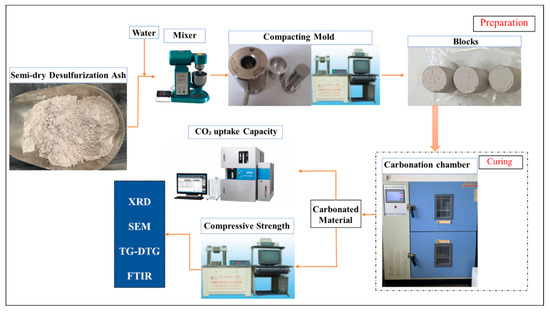
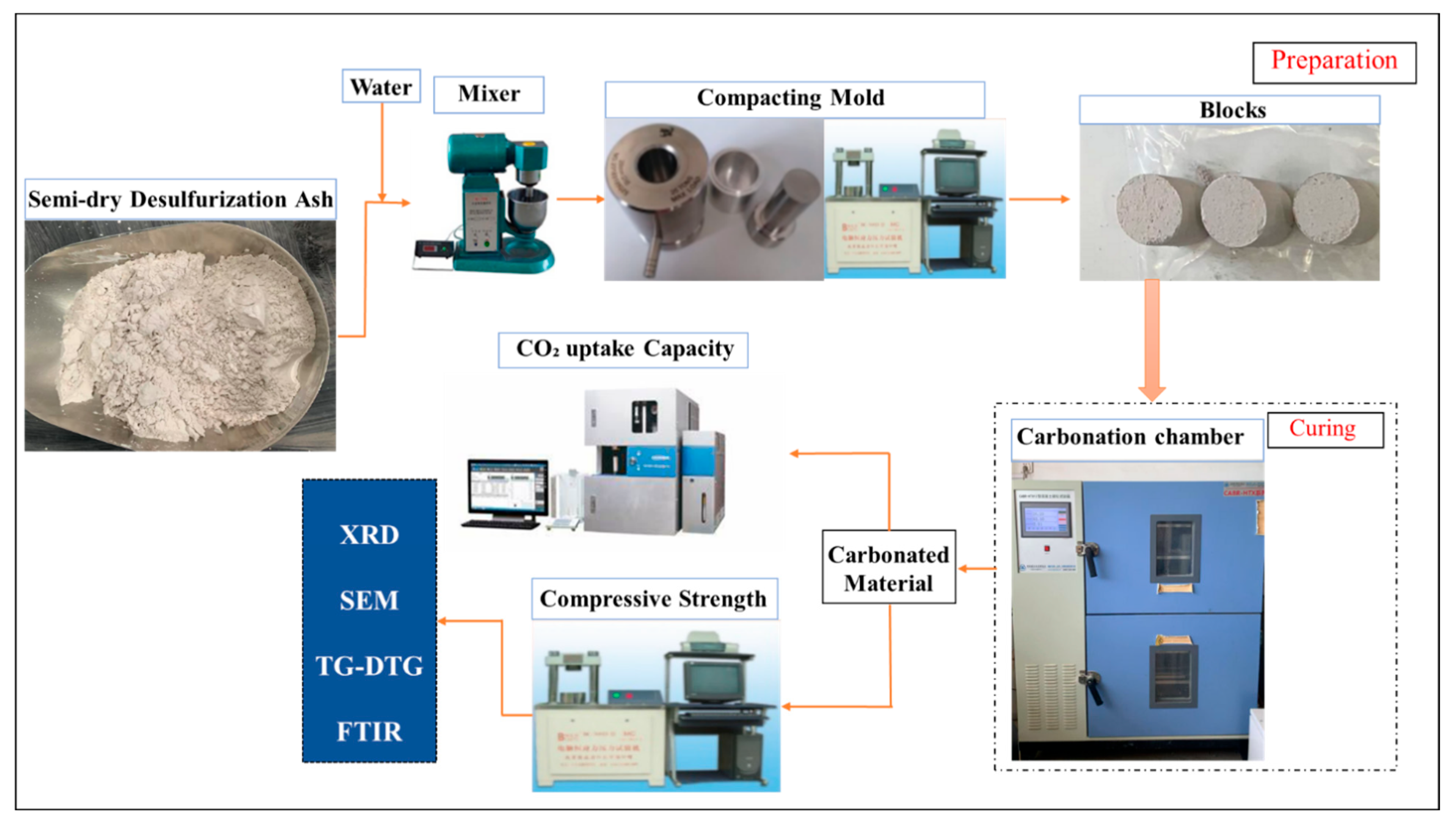
The experimental workflow is illustrated in Figure 3. Semi-dry desulfurization ash was first ground and then mixed thoroughly with water. The slurry was poured into moulds, and after 1 min, the samples were demoulded and transferred to a carbonation chamber for curing. Finally, the carbon content and compressive strength of each carbonated compact were measured and evaluated after 1 day. Microstructural analysis of the carbonated material under the selected conditions was performed using thermogravimetric analysis (TGA), scanning electron microscopy (SEM), Fourier-transform infrared spectroscopy (FTIR), and X-ray diffraction (XRD).
Figure 3.
The experiment flowchart.
SDA and tap water were introduced into a cement net-slurry mixer at liquid-to-solid ratios of 1.5:10 and 1.83:10, respectively, and mixed for 2 min at variable speeds. These ratios were selected based on preliminary tests, which showed that they provided adequate workability for mixing and moulding while ensuring sufficient density and stability of the specimens for subsequent carbonation curing. Ratios lower than 1.5:10 led to poor dispersion and difficulties in moulding, whereas higher ratios produced highly porous and fragile compacts.
A mass of 8 g of the mixed material was weighed into a cylindrical die-casting mould with a diameter of 20 mm. The mould was then subjected to pressing using a BC-100D computerised constant-stress pressure tester (Beijing Constant Stress Science & Technology CO. Ltd., Beijing, China). The loading rate during pressing was set to 0.1 kN/s until a pressure of 9 MPa was reached, which was then maintained for 1 min. The mould was subsequently removed, and the sample was demoulded to produce the pressed specimens [23].
The two selected w/s ratios (1.5:10 and 1.83:10) span a practical range of workability and capture the trade-off between pore connectivity for CO2 transport and matrix densification during carbonation. Lower w/s ratios in preliminary trials produced poorly dispersed pastes that were difficult to compact, whereas higher ratios generated fragile specimens with excessive initial porosity. For each curing condition, three replicate specimens were prepared and tested in compression to reduce experimental uncertainty, and average values are reported. The scatter in strength measurements was within ±5%–10% of the mean, indicating acceptable repeatability for the laboratory-scale tests.
2.2.2. Carbonation Curing
Demoulded test blocks were placed in a CABR-HTX12 concrete carbon-dioxide carbonation curing chamber (China Academy of Building Research, Beijing, China). The ambient temperature was maintained at 20 ± 3 °C, and the relative humidity was controlled at 70 ± 3%. These curing conditions were selected based on the reported optimal range for carbonation curing [29]. A liquefied CO2 cylinder with a purity of 99.8% or higher supplied the CO2 atmosphere. The carbonation chamber was regulated to maintain a CO2 concentration of 20 ± 3 vol.%. SDA compact samples cured for 0, 1, 3, 6, 12, and 24 h were collected for further testing.
2.2.3. Compressive Strength
Uniaxial compressive strength was determined using a BC-100D computerised constant-stress compression testing machine (Beijing Constant Stress Science & Technology CO., Ltd., Beijing, China). Each cured test block was carefully positioned at the centre of the loading plate to ensure proper contact and alignment. The loading rate was maintained at 0.01 kN/s, and failure loads were recorded. Three tests were performed for each condition, and the average values are reported.
After testing, the blocks were dried in a vacuum oven at 50 °C for 24 h and then micronized for subsequent microstructural analyses.
2.2.4. CO2 Uptake
To determine CO2 uptake, the carbon contents of the samples were measured before and after carbonation curing. Carbon content was measured using an EMIA-820V carbon/sulphur combustion analyser (Horiba, Kyoto, Japan). For each test, a 0.25 ± 0.05 g sample was placed in a combustion crucible and covered with 1 g of flux (C < 0.0008%, consisting of 90% tungsten and 10% tin). The carbon concentration of the sample was determined after combustion at 1050 °C.
The carbon uptake during carbonation (mC) was calculated using Equation (1) [30]:
where mC1 and mC0 are the carbon contents in the carbonated product and raw material, respectively. The carbon uptake mC was then converted to CO2 uptake (mCO2).
where MWC is the molar mass of carbon (12 g/mol) and MWCO2 is the molar mass of CO2 (44 g/mol).
2.2.5. Microstructural Characterisation
Quantitative X-ray diffraction (QXRD) was used to analyse the mineral composition of the carbonated compacts. XRD measurements were carried out on a D/Max-RB diffractometer (Rigaku, Tokyo, Japan) with a Cu-Kα radiation source (20 kV, 10 mA). Patterns were collected in 2θ geometry from 3 to 80° with a step size of 0.02° in step-scanning mode (FT 0.7 s). As recommended by the US National Institute of Standards and Technology (NIST), instrument broadening was determined by measuring a standard Si sample (SRM 640c) using the same procedure. The International Centre for Diffraction Data (ICDD) PDF-4 database and X’Pert HighScore Plus v 3.0e (PANalytical B.V., Almelo, The Netherlands) were used for phase identification. The Rietveld method was employed for quantitative analysis, and results were accepted when the weighted-profile R value was less than 10%.
Quantitative assessment of carbonation and hydration products was carried out using a TG-DTA (thermogravimetry and differential thermal analysis) instrument (STA 449F3, Netsch, Selb, Germany). Experiments were performed in an argon atmosphere with a flow rate of 20 mL/min. The heating rate was 10 °C/min over a temperature range of 50–1000 °C.
FTIR analysis was conducted to identify functional groups and chemical bonds in the solid phases, providing insights into molecular interactions, carbonation products (e.g., carbonates), and changes in hydration phases. Prior to FTIR testing, the carbonated specimens were dried (50 °C, 24 h), ground to fine powder, and mixed with spectroscopic-grade KBr. The mixture was pressed into pellets and analysed in transmission mode using a NEXUS670 FTIR spectrometer (Thermo Nicolet, Madison, WI, USA) in the range of 400–4000 cm−1 with a resolution of 3 cm−1.
The surface morphology of selected carbonated specimens was examined using a Zeiss Supra-55 field-emission scanning electron microscope (SEM) (Zeiss, Oberkochen, Germany) equipped with a secondary electron detector and operated at 15 kV. Semi-quantitative chemical analysis was conducted using energy-dispersive spectroscopy (EDS) on the same instrument. A thin Au–Pd coating was applied to the specimen surfaces to improve conductivity prior to SEM observation.
3. Results and Discussion
3.1. Compressive Strength and CO2 Uptake
3.1.1. CO2 Uptake
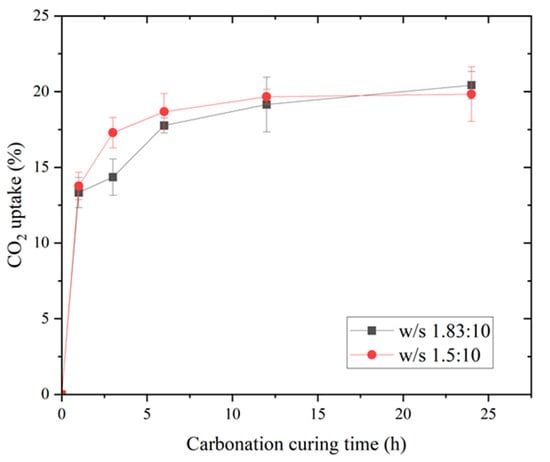
Figure 4 shows the CO2 uptake of SDA compacts. As curing time increases, CO2 uptake steadily rises to 24 h. Uptake increases rapidly during the first hour of curing: after 1 h, CO2 uptake reaches 13% and 14% for w/s ratios of 1.83:10 and 1.5:10, respectively, corresponding to nearly 65% of the 24 h uptake. CO2 uptake approaches equilibrium after approximately 12 h of curing. These results are consistent with those reported by Wei et al. [24], who investigated the carbonation curing of steel slag–desulfurization gypsum compacts. The CO2 uptake of SDA compacts after 24 h of curing reaches around 20%, which is comparable that of carbonated steel slag compacts.
Figure 4.
CO2 uptake of the SDA block with different carbonation times.
For a w/s ratio of 1.5:10, the CO2 uptake of SDA compacts is slightly higher (19.2%) than that of the 1.83:10 mixture (17.8%) after 12 h of curing. However, after 24 h, the CO2 uptake for w/s = 1.5:10 becomes slightly lower than that for w/s = 1.83:10. These trends are in line with observations by Li et al. [31] for carbonation-cured steel slag, where water was found to be essential for facilitating carbonation. Excessively high water content, however, hinders CO2 transport into the compact. With prolonged curing, water is progressively lost, and a higher initial water content helps maintain sufficient moisture to support continued carbonation.
3.1.2. Compressive Strength
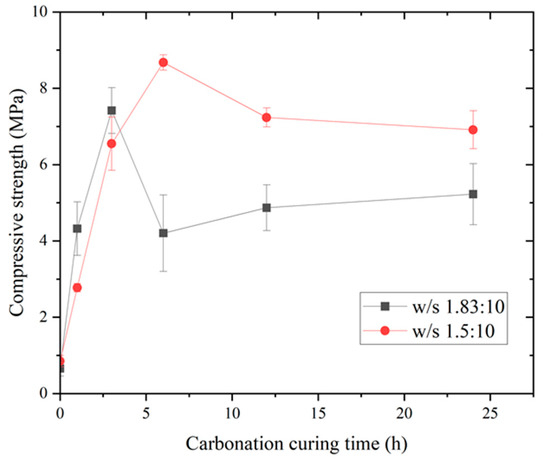
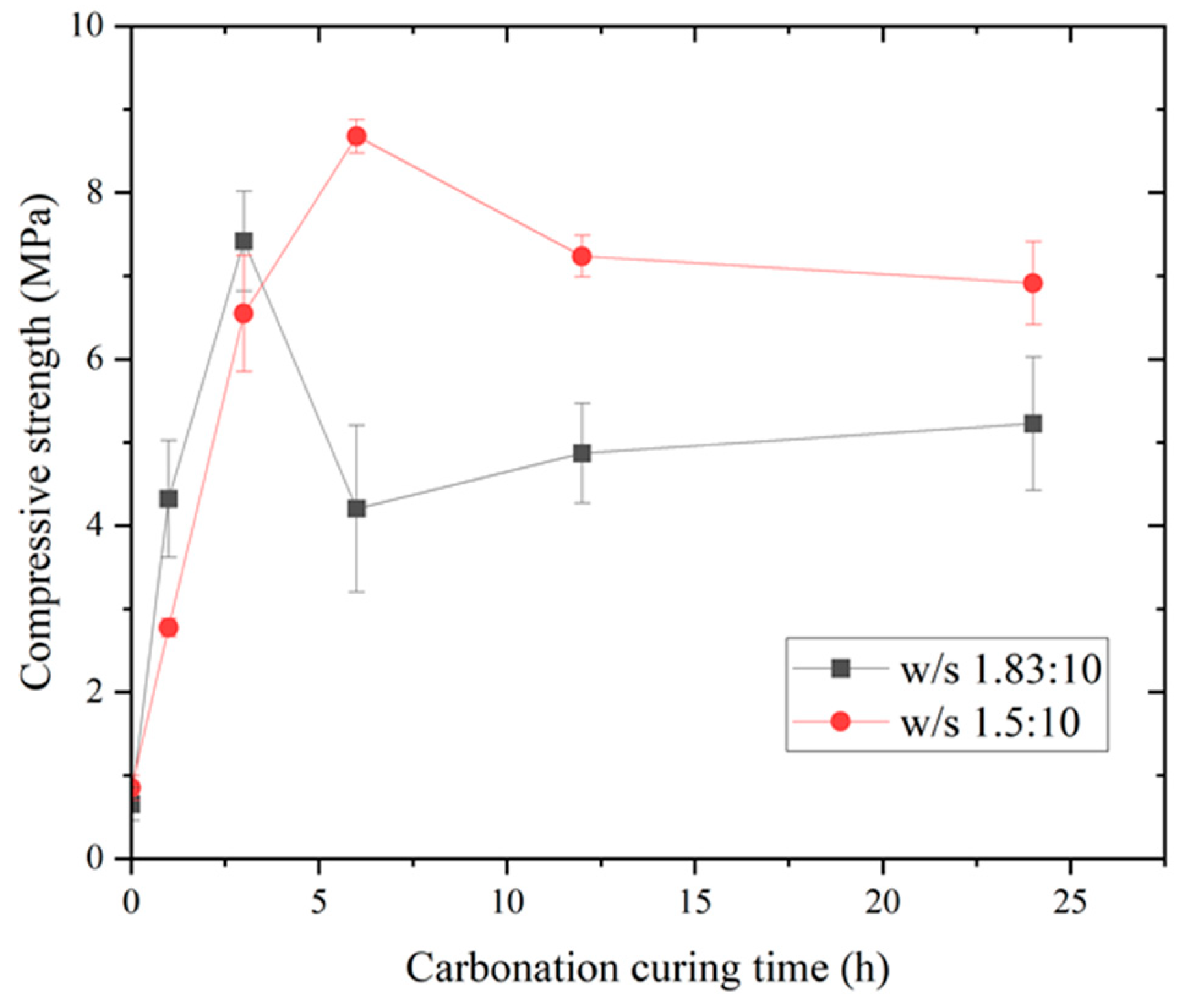
Figure 5 presents the compressive strength of SDA compacts as a function of carbonation curing time. The strength increases rapidly during the first 3–6 h and then decreases slightly, followed by a stable trend up to 24 h. This behaviour indicates an optimal carbonation curing duration, which reflects a balance between strength-enhancing and strength-limiting mechanisms. During the early curing stage, the rapid carbonation of reactive Ca-bearing phases promotes the precipitation of CaCO3 within interparticle voids, which improves particle bonding and densifies the compact, resulting in a sharp strength increase. At prolonged curing times, continued carbonate precipitation may form a dense product layer and restrict CO2 diffusion into the compact (encapsulation effect), leading to non-uniform carbonation and microstructural heterogeneity. In addition, moisture consumption during carbonation and drying shrinkage may introduce micro-defects, which can slightly reduce the compressive strength despite ongoing CO2 uptake. Similar strength reductions at extended curing durations have been reported for carbonation-cured steel slag and gypsum systems [1]; however, unlike those materials, the present SDA system is not expected to form C–S–H gels, suggesting that the observed strength evolution is primarily governed by carbonate precipitation, pore structure evolution, and diffusion limitation.
Figure 5.
The compressive strength of the SDA compacts at different carbonation curing times.
The compressive strength of SDA compacts with a w/s ratio of 1.83:10 is initially higher than that of the 1.5:10 mixture during the first 3 h of curing, whereas the 1.5:10 mixture exhibits higher strength thereafter. This indicates that SDA carbonation consolidation favours a relatively lower w/s ratio at extended curing durations, likely because excessive initial water content increases pore volume and reduces densification efficiency after the early-stage reaction. After 24 h of curing, the compressive strengths of the w/s ratios of 1.83:10 and 1.5:10 are 5.22 MPa and 6.91 MPa, respectively. Under similar curing conditions, carbonation-cured steel slag compacts can reach compressive strength values exceeding 20 MPa [18], demonstrating that the carbonation-induced consolidation efficiency of SDA is significantly lower than that of steel slag, which is attributable to differences in mineralogy, binder-forming phases, and the resulting microstructural development during curing.
3.1.3. Relationship Between CO2 Uptake and Strength
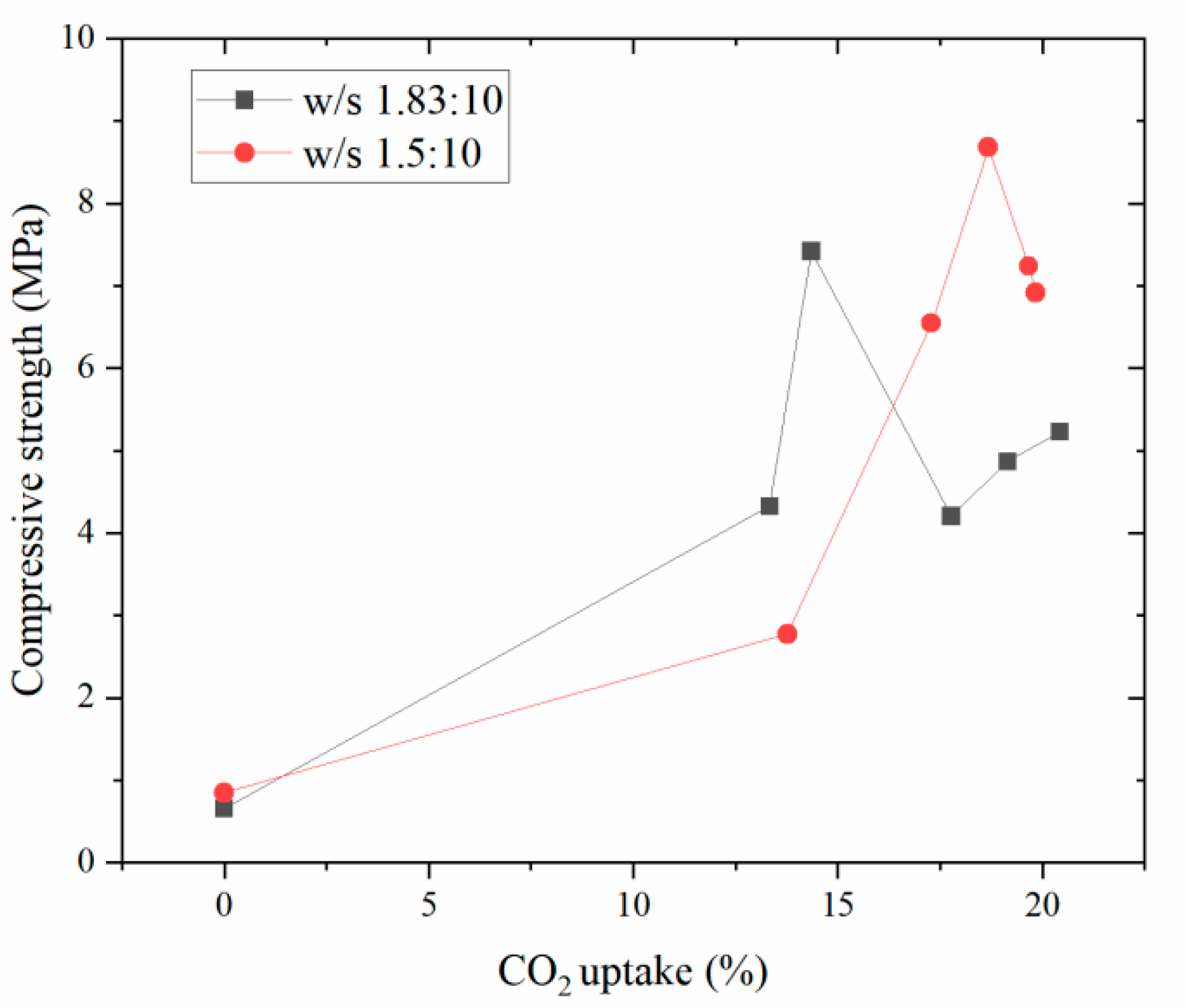
Figure 6 illustrates the relationship between compressive strength and CO2 uptake in carbonated SDA compacts. As CO2 uptake increases, the compressive strength initially rises. This early strength gain is attributed to carbonation-induced densification, whereby fine CaCO3 precipitates (vaterite and aragonite, which subsequently transform into calcite) fill pores and microcracks and refine the microstructure. When CO2 uptake reaches approximately 15%–22%, further carbonation leads to a gradual decline in strength. This behaviour indicates that over-carbonation may cause coarsening of the pore structure or unfavourable rearrangement of carbonate phases, offsetting the initial densification benefit.
Figure 6.
The relationship between compressive strength and CO2 uptake of carbonated SDA compacts.
This trend differs from previous findings for carbonated steel slag compacts, where compressive strength typically increases exponentially or linearly with CO2 uptake [18,23]. The divergence likely reflects differences in SDA mineralogy, including the persistence of relatively inert sulphur-bearing phases and the absence of C–S–H formation, which limit the ability of the matrix to maintain a dense, load-bearing skeleton at high degrees of carbonation. These observations emphasise the need to optimise curing duration and the w/s ratio to avoid over-carbonation and associated strength loss.
Variation in the w/s ratio also leads to notable differences in the CO2 uptake associated with peak strength. For w/s = 1.83:10, SDA compacts reach a peak strength of 7.41 MPa at a CO2 uptake of 14.35%. For w/s = 1.5:10, peak strength increases to 8.67 MPa at a CO2 uptake of 18.67%. These results suggest that a relatively low w/s ratio is preferable for SDA compacts to achieve higher compressive strength and CO2 uptake.
3.2. Microstructure of Carbonated SDA Compact
To clarify the mechanisms underlying the carbonation curing of SDA compacts, a comprehensive microstructural analysis was conducted. The carbonated SDA compacts with a w/s ratio of 1.83:10 were selected for detailed characterisation.
3.2.1. XRD Analysis
Figure 2 shows the XRD pattern of raw SDA, which reveals a multi-phase mixture typical of this material. Portlandite is identified by characteristic reflections at approximately 18.0° and 34.1°, with weaker peaks near 47° and 51°, confirming the presence of free Ca(OH)2 as the primary active phase for hydration and CO2 capture. Reflections of bassanite (CaSO4·0.5H2O), often present due to the partial dehydration of gypsum during flue-gas treatment, appear with strong peaks in the mid-20° range and around 29–31° 2θ. Hannebachite (CaSO3·0.5H2O), the calcium sulphite hemihydrate formed during SO2 capture, contributes peaks in the low- to mid-20° range. Vaterite (CaCO3) is indicated by reflections around 24–27° and 32–33° 2θ, suggesting that some carbonation has already occurred, likely during storage or handling. Peaks associated with free lime (CaO), such as those near 37.3°, 53.8°, and 64.1° 2θ, confirm the presence of incompletely hydrated and carbonated quicklime residues. Overall, the relative intensities of Ca(OH)2 and CaO indicate abundant alkaline phases capable of driving further carbonation.
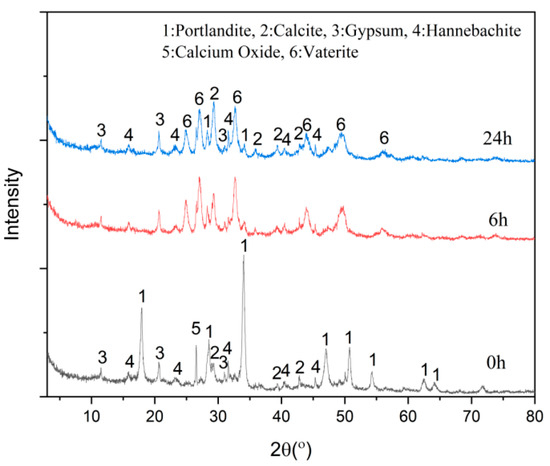
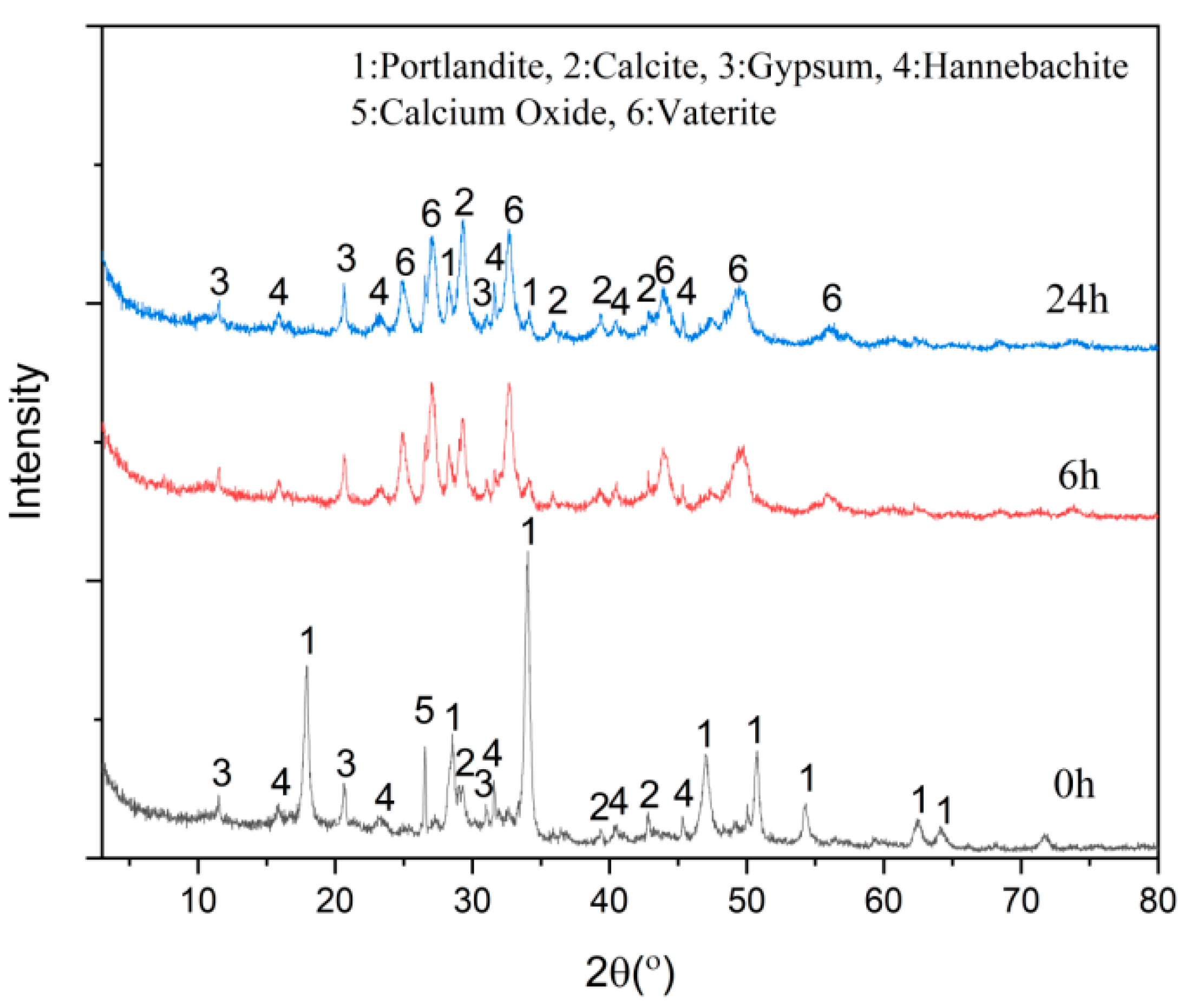
The XRD patterns in Figure 7 show the phase evolution in SDA compacts at carbonation times of 0, 6, and 24 h. At 0 h, the pattern is dominated by peaks of portlandite (Ca(OH)2) and CaO, indicating high contents of calcium-based compounds after compaction. Smaller peaks of gypsum (CaSO4·2H2O) and hannebachite (CaSO3·0.5H2O) are also present, likely formed via the hydration of bassanite and calcium sulphite hemihydrate. The absence of pronounced calcite and vaterite peaks suggests that carbonation is minimal at this stage.
Figure 7.
X-ray diffraction patterns for SDA compacts at different carbonation times.
After 6 h of carbonation curing, new peaks corresponding to calcite and vaterite appear, while the peaks for portlandite and CaO almost disappear. This indicates that Ca(OH)2 and CaO are being transformed into CaCO3 polymorphs through reactions with CO2.
After 24 h of carbonation, the process has advanced further. Calcite becomes the dominant phase, as evidenced by the increased intensity of its diffraction peaks. Although vaterite remains detectable after 24 h, its peak intensity decreases, suggesting progressive transformation into the more stable calcite phase. Peaks for gypsum and hannebachite remain present but with reduced intensity, indicating that these sulphur-bearing phases are relatively inert or react only slowly under the tested conditions.
These results highlight the effectiveness of carbonation in transforming calcium-rich phases into stable calcite while also underscoring the persistence of sulphur-bearing phases, which may remain largely unchanged. The observed evolution provides insight into the carbonation kinetics of SDA and its suitability for CO2 sequestration and material enhancement.
3.2.2. TGA
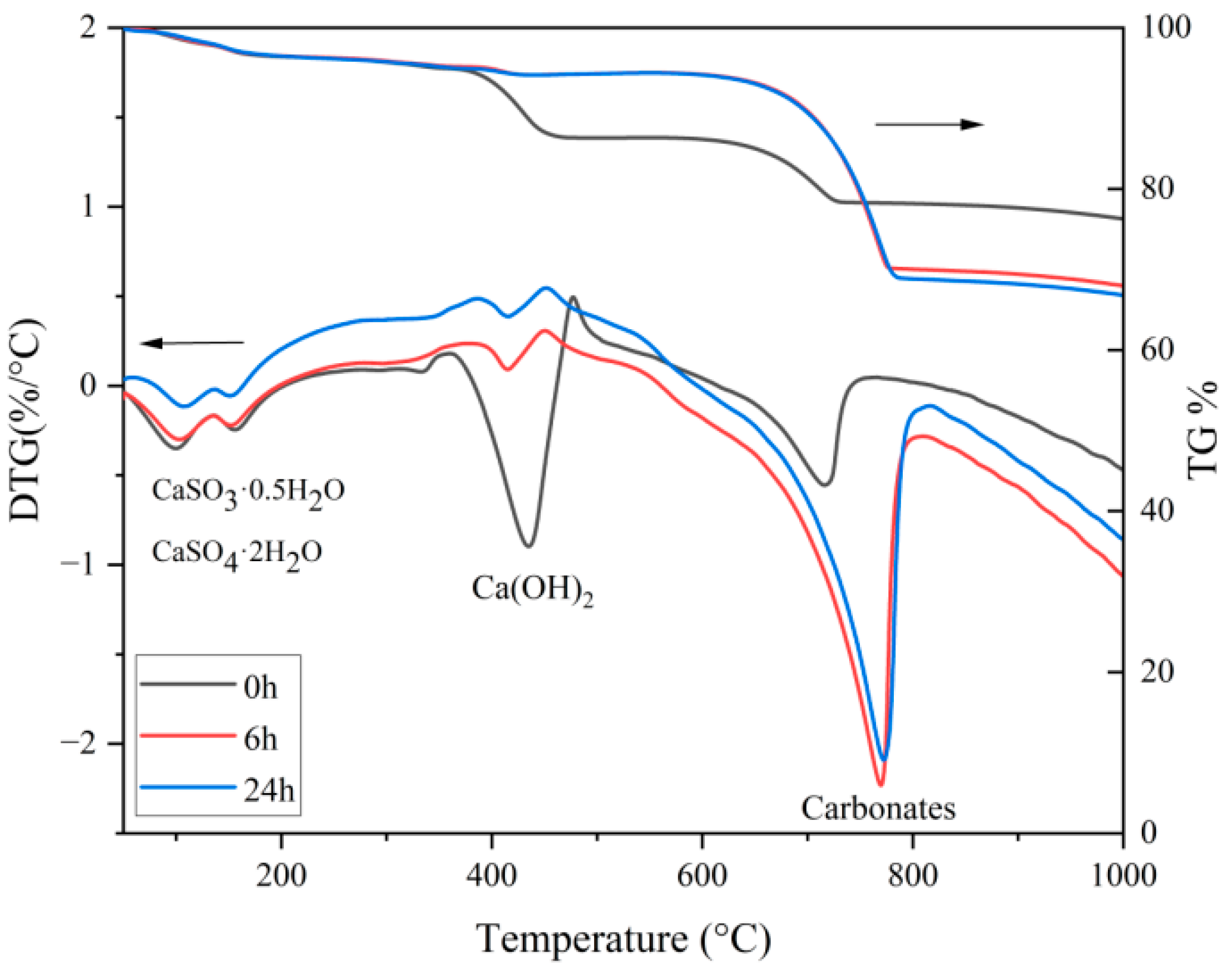
Figure 8 presents the thermogravimetric (TG) and derivative thermogravimetric (DTG) curves of SDA compacts subjected to carbonation curing for 0, 6, and 24 h. The initial mass loss below 200 °C is attributed to the release of physically bound water and hydroxyl groups. Two distinct DTG peaks in this range indicate the presence of calcium sulphite hemihydrate (CaSO3·0.5H2O), decomposing around 100–150 °C, and a coexisting hydrated sulphate phase, such as gypsum (CaSO4·2H2O), decomposing between 150 and 200 °C, consistent with the raw material composition. A further mass loss between 400 and 500 °C corresponds to the dehydroxylation of calcium hydroxide (Ca(OH)2), aligning with the dominant portlandite peaks in the uncarbonated compact. The mass loss associated with CaCO3 decomposition occurs between 600 and 800 °C and becomes more pronounced with increasing carbonation time, reflecting the formation of calcite and vaterite.
Figure 8.
TG-DTG result of SDA compacts at different carbonation times.
To better interpret these results, the characteristic decomposition steps were quantified. The dehydration of CaSO3·0.5H2O below 150 °C accounts for approximately 4–6 wt.% of the total mass, with slight variation across carbonation times, indicating its relative stability. The dehydroxylation of Ca(OH)2 between 400 and 500 °C contributes around 8 wt.% at 0 h, decreases sharply after 6 h, and is nearly absent after 24 h, confirming its progressive consumption. In contrast, CO2 release from CaCO3 decomposition (600–800 °C) increases from roughly 10 wt.% in the uncarbonated compact to nearly 18–20 wt.% after 24 h of carbonation, reflecting substantial carbonate formation.
These quantified values support the XRD results: CaSO3·0.5H2O shows minimal change, Ca(OH)2 diminishes rapidly, and CaCO3 becomes the dominant phase as curing progresses. Total mass loss at 1000 °C increases with carbonation time, indicating enhanced carbonate formation and higher fixed CO2 content in the SDA matrix. The DTG curves show a marked reduction in the Ca(OH)2 decomposition peak over time, accompanied by a rise in the CaCO3 decomposition peak, confirming effective carbonation. Between 6 and 24 h, the increase in carbonate content becomes less pronounced. However, the shift in the carbonate decomposition peak towards higher temperatures (700–800 °C) suggests the formation of more thermally stable calcite relative to vaterite. The thermal behaviour of CaSO3·0.5H2O remains largely unchanged, supporting XRD observations that gypsum and hannebachite persist with limited transformation.
Overall, the combined TG–DTG and XRD analysis confirms the progressive carbonation of Ca(OH)2 into CaCO3 and stabilisation of calcite over time, in agreement with the observed mineralogical evolution.
3.2.3. FTIR Analysis
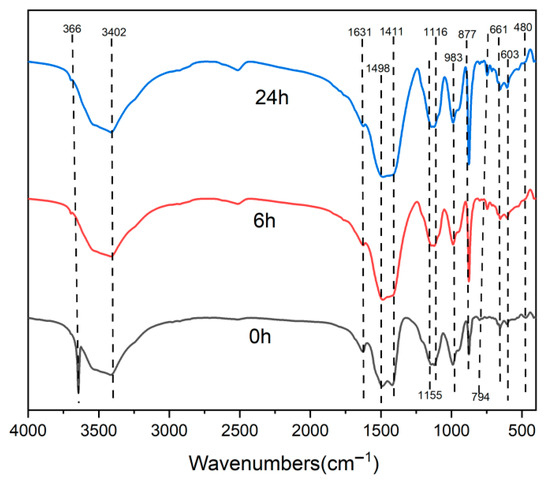
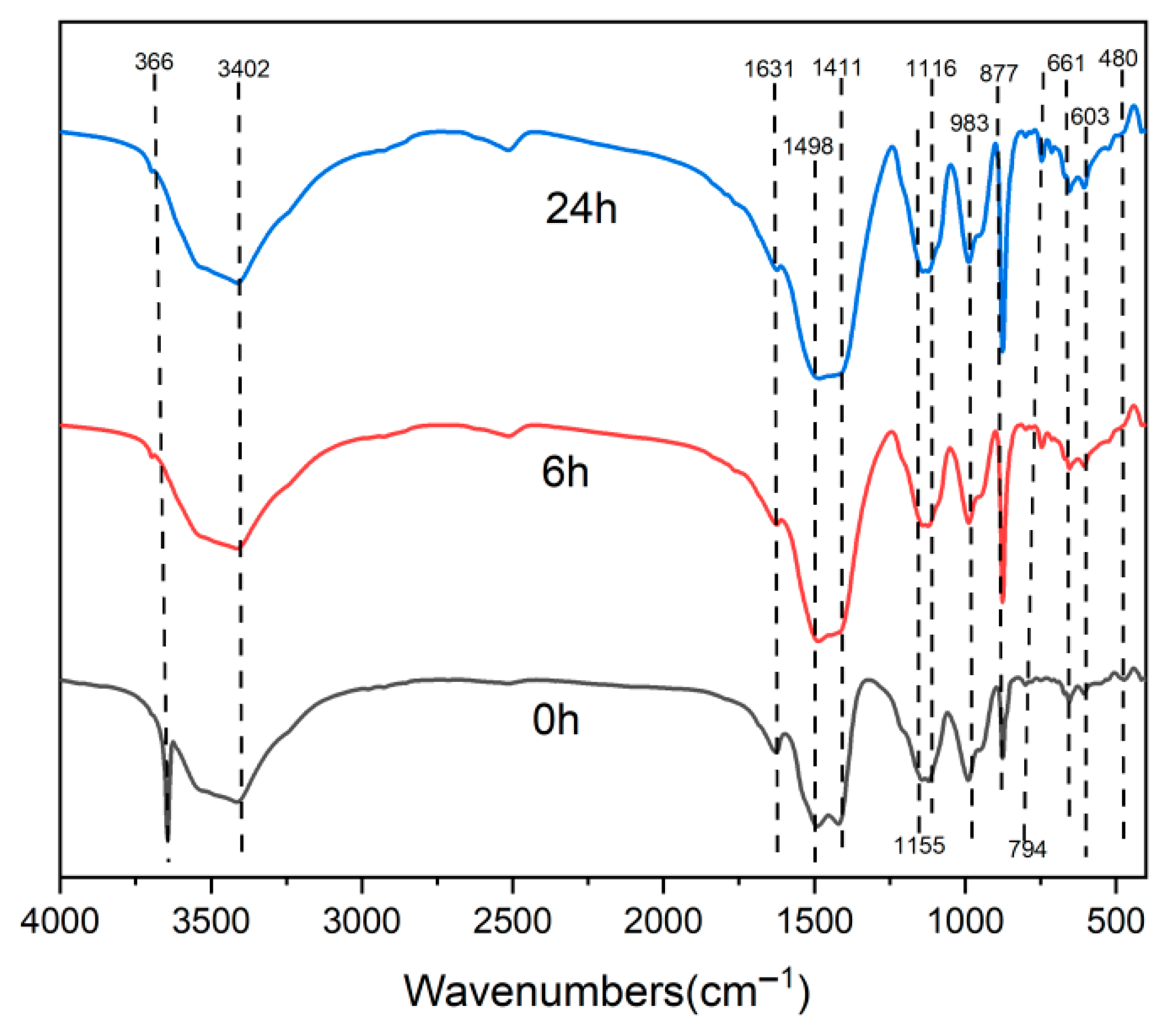
Figure 9 shows FTIR spectra of SDA compacts carbonated for 0, 6, and 24 h. At 0 h, a prominent absorption band at 3681 cm−1 corresponds to O–H stretching vibrations in Ca(OH)2, indicating unreacted calcium hydroxide in the raw material. The intensity of this band decreases markedly after 6 h of curing, reflecting the consumption of Ca(OH)2 as it reacts with CO2 to form carbonates. This observation is consistent with the XRD and TGA results, which show a reduction in portlandite and CaO peaks and an increase in CaCO3 content over time.
Figure 9.
Results of FTIR analysis of SDA compacts at different carbonation times.
Bands at 1481 cm−1, 1411 cm−1, and 875 cm−1 correspond to C–O stretching and bending vibrations in carbonate species and become more intense at 6 and 24 h, confirming the formation of calcite and vaterite.
Bands near 983 cm−1 are characteristic of sulphite ions [8], reflecting the presence of CaSO3·0.5H2O. A strong band at approximately 1140 cm−1, which splits into components near 1155 and 1116 cm−1, together with minor peaks at 661 and 603 cm−1, is attributed to sulphate stretching and bending modes, consistent with pure gypsum spectra [32]. The stretching vibrations of H2O in gypsum and calcium sulphite hemihydrate are observed at 3580 and 3430 cm−1 for gypsum and at 3400 cm−1 for calcium sulphite hemihydrate [32]. These bands remain relatively stable throughout curing, suggesting that gypsum and hannebachite phases persist with limited transformation, in agreement with the XRD and TGA results.
3.2.4. Morphology Analysis SEM
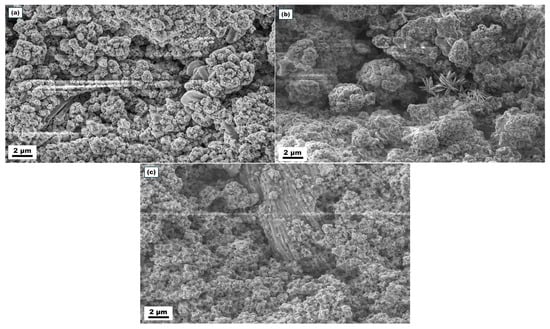
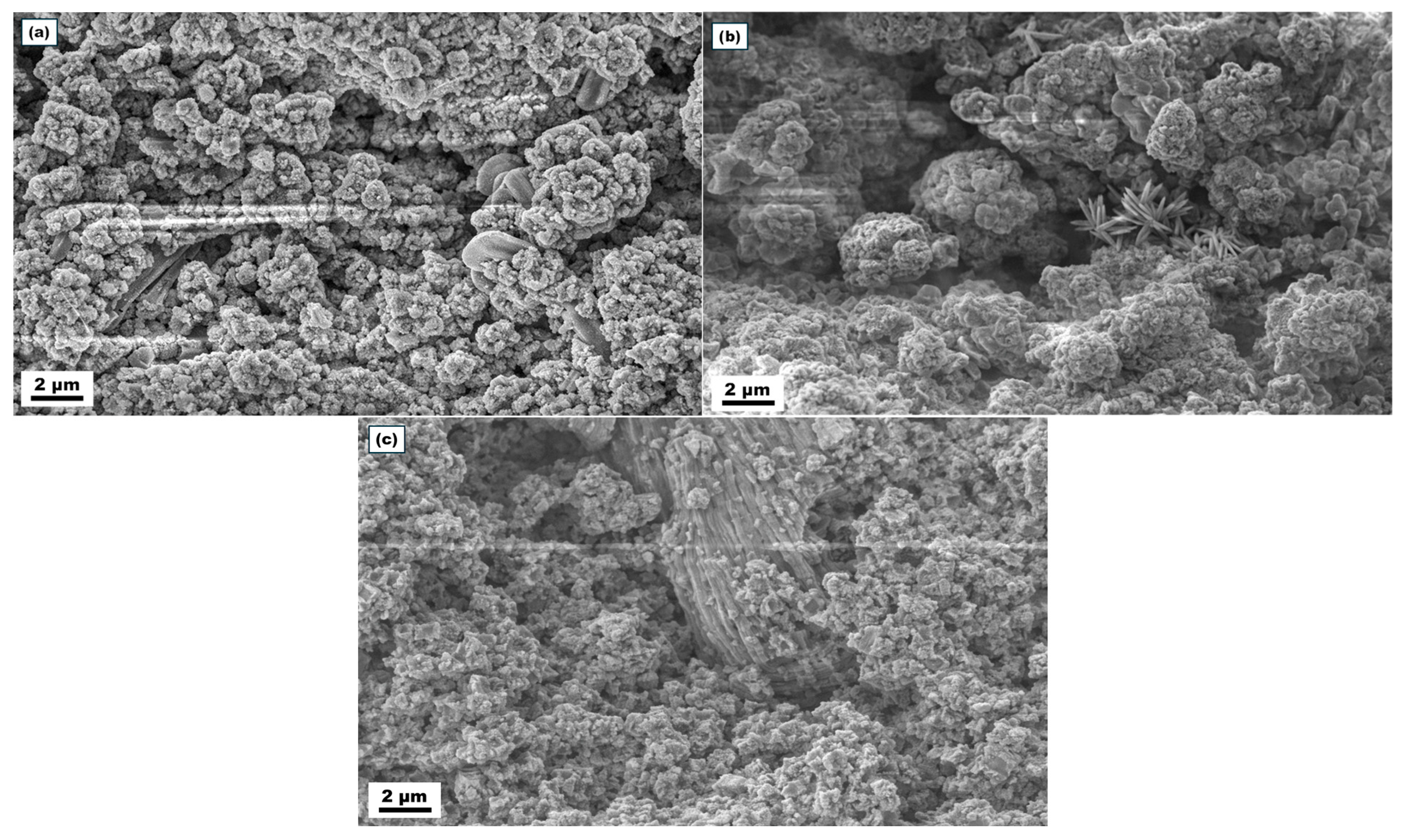
Figure 10 presents SEM images of SDA compacts with a w/s ratio of 1.5:10 after carbonation curing for 0, 6, and 24 h. Before carbonation (0 h), the surface exhibits a lamellar, sheet-like morphology typical of Ca(OH)2, indicating that portlandite is abundant in the raw SDA material. After 6 h of carbonation, SEM images reveal the formation of needle-like carbonate crystals, which begin to fill the pore spaces within the SDA matrix, leading to microstructural densification and increased strength.
Figure 10.
SEM images of SDA compacts after carbonation curing for (a) 0 h; (b) 6 h; (c) 24 h.
After 24 h of carbonation, SEM images show the development of approximately 1 μm cubic particles. EDS analysis confirms that these regions are enriched in Ca, C, and O, consistent with CaCO3. Combined with the XRD results, these observations suggest that the cubic particles correspond to calcite, the most stable polymorph of calcium carbonate formed during extended carbonation.
Despite the formation of calcite, the porosity of SDA compacts after 24 h is higher than that observed at 6 h. This increased porosity is likely associated with structural rearrangement accompanying the transformation from needle-like to coarser, blocky calcite morphologies, which can modify the pore structure unfavourably. Consequently, the compressive strength at 24 h is lower than at 6 h, highlighting the negative impact of increased porosity on mechanical integrity.
Taken together, the XRD, TG–DTG, FTIR, and SEM results provide a coherent picture of SDA carbonation. Early in curing, the rapid consumption of Ca(OH)2 and formation of finely distributed carbonate phases generate a relatively compact microstructure, consistent with strength gains up to 6 h. With prolonged curing, continued growth, and coarsening of calcite crystals, combined with the limited reactivity of sulphur-bearing phases such as CaSO3·0.5H2O and CaSO4·2H2O, lead to a less homogeneous skeleton and increased residual porosity. This microstructural rearrangement explains the reduction in compressive strength at later ages, despite continued increases in total CO2 uptake, and underscores the importance of balancing carbonation extent with microstructural stability when designing SDA-based materials.
3.3. Reaction Mechanism
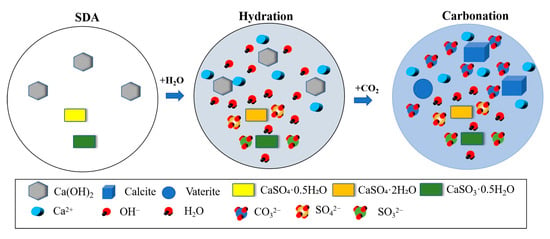
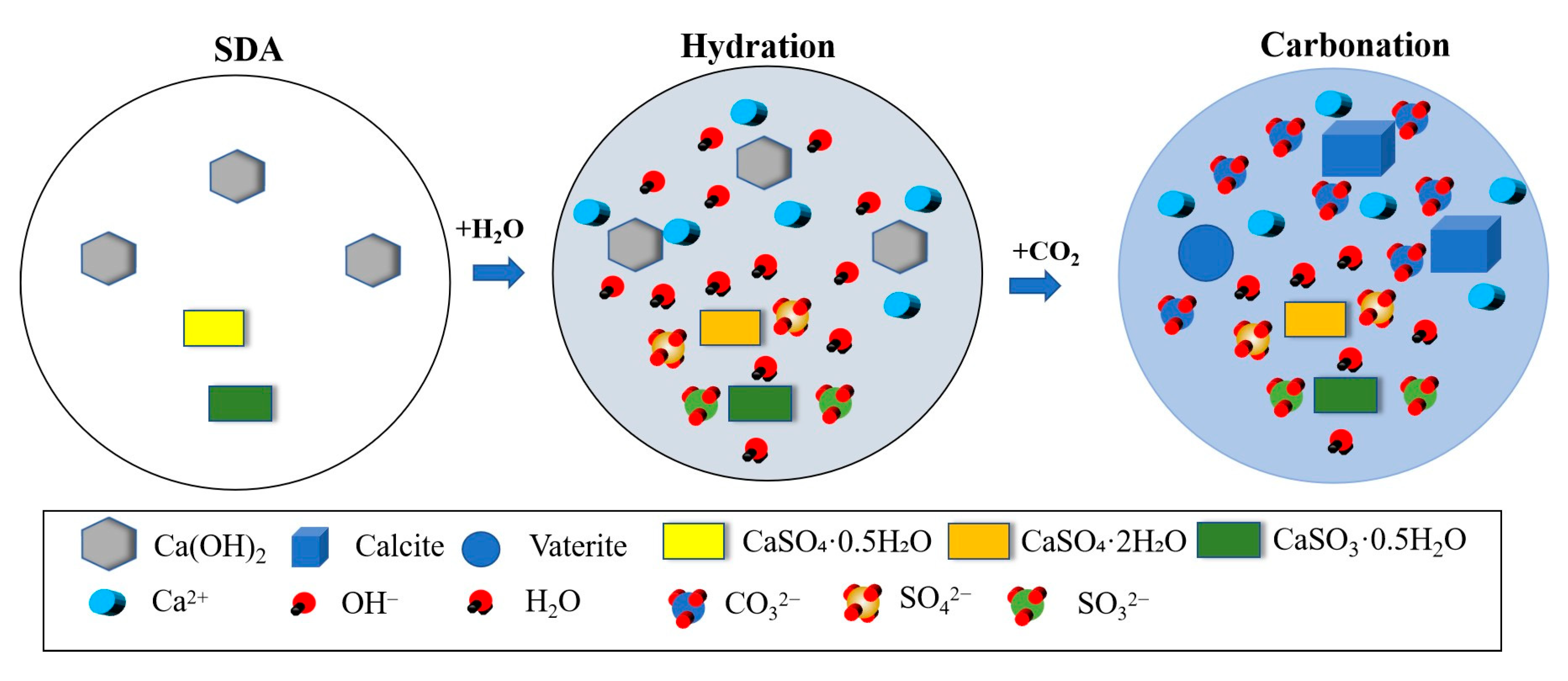
The carbonation mechanism of semi-dry desulfurization ash (SDA), schematically illustrated in Figure 11, is strongly supported by the XRD results, which show a progressive transition in mineral phases during curing. The SDA matrix initially consists mainly of portlandite (Ca(OH)2), bassanite (CaSO4·0.5H2O), and hannebachite (CaSO3·0.5H2O), formed by the partial sulphurisation of Ca(OH)2. After compaction and water addition, bassanite (CaSO4·0.5H2O) is converted to gypsum (CaSO4·2H2O).
Figure 11.
The consolidation mechanism of SDA during carbonation curing.
During carbonation curing, CO2 dissolves in pore water and reacts with alkaline phases, leading to the precipitation of calcium carbonate polymorphs. XRD patterns after 6 h show clear peaks for calcite and vaterite, while peaks for portlandite and CaO largely disappear, indicating the conversion of reactive calcium phases into carbonates. As curing proceeds to 24 h, calcite becomes the dominant phase, and vaterite intensity decreases, reflecting its transformation into the more stable calcite. Sulphur-bearing phases such as gypsum and hannebachite remain detectable but with reduced intensities, indicating reduced reactivity and their role as relatively stable intermediates.
These phase transitions are consistent with the measured increases in CO2 uptake and compressive strength up to around 6–12 h, after which further gains diminish as reactive Ca species are largely exhausted. Carbonation thus facilitates the transformation of reactive calcium phases into stable carbonates, densifying the matrix and enhancing mechanical integrity, while secondary sulphite and sulphate phases remain partially unmodified and may influence long-term durability.
4. Limitations and Future Research Directions
Although this study demonstrates that carbonation curing can significantly enhance CO2 uptake and produce low-strength SDA compacts, several limitations constrain the generalisation of the results and their direct application in practice. First, the investigation focuses on short-term curing (up to 24 h) and does not address long-term performance under realistic service environments, such as cyclic wetting–drying, freeze–thaw exposure, or contact with aggressive ions. Second, only two w/s ratios and a single compaction pressure were examined; alternative mix designs (e.g., partial incorporation of supplementary binders, different aggregate fractions, or varied compaction regimes) may yield different relationships between strength and carbonation. Third, the persistence of sulphur-bearing phases and the relatively modest compressive strengths raise questions regarding durability and leaching behaviour that were not evaluated in this work.
Future research should therefore prioritise (i) systematic durability testing of SDA-based products under various environmental exposures, (ii) coupled mechanical and environmental assessments, including leaching of sulphur and trace elements under carbonation conditions, and (iii) optimisation of mix designs through the incorporation of complementary industrial by-products or activators to enhance consolidation without compromising CO2 storage capacity. Techno-economic and life-cycle analyses will also be essential to benchmark SDA carbonation curing against conventional materials and other carbon utilisation pathways. Addressing these aspects will help to define appropriate application niches for SDA, improve confidence in its long-term performance, and support broader deployment in low-carbon construction.
5. Conclusions and Recommendations
This study investigated the carbonation curing behaviours of semi-dry desulfurization ash (SDA) compacts under controlled CO2 curing conditions using two water-to-solid ratios (1.5:10 and 1.83:10) and curing durations up to 24 h. CO2 uptake, compressive strength, and phase/microstructural evolution were evaluated. The main conclusions are as follows:
- (1)
- CO2 uptake increased continuously with curing time, reaching a maximum of 20.42% after 24 h, confirming SDA as a reactive CO2-sequestering material.
- (2)
- Compressive strength showed an optimum curing duration, with the highest strength of 8.67 MPa at 6 h (w/s = 1.5:10), followed by a reduction at longer curing times.
- (3)
- Carbonation transformed Ca(OH)2 into CaCO3, and the formation of calcite/vaterite contributed to matrix densification and strength development at early curing stages.
- (4)
- At prolonged curing times (24 h), microstructural coarsening and increased porosity were observed, which explains the decrease in compressive strength despite higher CO2 uptake.
Overall, carbonation curing enables SDA to act as an effective CO2 sink while producing compacts suitable for low-strength building applications. Further improvements in strength and durability may require mix optimisation and long-term performance evaluation.
Author Contributions
Conceptualization, A.B. and J.L.; methodology, J.L. and X.M.; software, A.B. and X.M.; validation, J.L., X.M. and A.M.O.; formal analysis, A.B.; investigation, Y.C. and H.H.; resources, K.L.; data curation, A.E. and H.D.; writing—original draft preparation, A.B.; writing—review and editing, J.L., H.H. and A.M.O.; visualisation, J.L. and H.D.; supervision, K.L. and W.N.; project administration, W.N. and M.H.; funding acquisition, J.L. and Y.C. All authors have read and agreed to the published version of the manuscript.
Funding
This work was supported by the Jing-Jin-Ji Regional Integrated Environmental Improvement National Science and Technology Major Project (2024ZD12004), Key Laboratory of Ministry of Education of China for Efficient Mining and Safety of Metal Mines (ustbmslab202402), the Fundamental Research Funds for the Central Universities (FRF-KP-25-009), and the 111 Project (B20041).
Data Availability Statement
Data are not available in a publicly accessible repository, and they cannot be shared upon request.
Conflicts of Interest
Huihui Du was employed by Shougang Group Research Institute of Technology. The remaining authors declare that the research was conducted in the absence of any commercial or financial relationships that could be construed as a potential conflict of interest.
References
- Tan, H.; Zhang, X.; He, X.; Guo, Y.; Deng, X.; Su, Y.; Yang, J.; Wang, Y. Utilization of lithium slag by wet-grinding process to improve the early strength of sulphoaluminate cement paste. J. Clean. Prod. 2018, 205, 536–551. [Google Scholar] [CrossRef] [Scilit]
- Qin, L.; Gao, X.; Chen, T. Recycling of raw rice husk to manufacture magnesium oxysulfate cement based lightweight building materials. J. Clean. Prod. 2018, 191, 220–232. [Google Scholar] [CrossRef] [Scilit]
- Liu, L.; Fan, X.; Zhou, Z.; Gan, M.; Gao, Z.; Sun, Z.; Ji, Z.; Wang, X.; Li, J.; Wu, Y. Resource utilization of semi-dry flue gas desulfurization ash by thermal treatment on sintering machine. J. Environ. Chem. Eng. 2024, 12, 112356. [Google Scholar] [CrossRef] [Scilit]
- Nedunuri, A.S.S.S.; Muhammad, S. Improving the workability and workable time of sodium hydroxide-activated ground granulated blast furnace slag binder-based concrete. Cement 2024, 16, 100106. [Google Scholar] [CrossRef] [Scilit]
- Zhou, J.; Ding, B.; Tang, C.; Xie, J.-B.; Wang, B.; Zhang, H.; Ni, H. Utilization of semi-dry sintering flue gas desulfurized ash for SO2 generation during sulfuric acid production using boiling furnace. Chem. Eng. J. 2017, 327, 914–923. [Google Scholar] [CrossRef] [Scilit]
- Li, X.; Chen, Q.; Ma, B.; Huang, J.; Jian, S.; Wu, B. Utilization of modified CFBC desulfurization ash as an admixture in blended cements: Physico-mechanical and hydration characteristics. Fuel 2012, 102, 674–680. [Google Scholar] [CrossRef] [Scilit]
- Wei, Z.; Liu, Q.; Sun, Z.; Huang, X.; Gan, M.; Ji, Z.; Chen, X.; Fan, X. Co-disposal of semi-dry desulfurization residue and red mud into high performance alkali activated material. Constr. Build. Mater. 2022, 350, 128776. [Google Scholar] [CrossRef] [Scilit]
- Park, J.H.; Ahn, J.W.; Kim, K.H.; Son, Y.S. Historic and futuristic review of electron beam technology for the treatment of SO2 and NOx in flue gas. Chem. Eng. J. 2019, 355, 351–366. [Google Scholar] [CrossRef] [Scilit]
- Li, X.; Han, J.; Liu, Y.; Dou, Z.; Zhang, T. Summary of research progress on industrial flue gas desulfurization technology. Sep. Purif. Technol. 2022, 281, 119849. [Google Scholar] [CrossRef] [Scilit]
- Li, Y.; Zhang, S.; Huang, M.; Yang, G.; Li, J.; Ma, M.; Hu, W.; Ni, W. Hydration Mechanism of Solid Waste Gelling Materials. Gels 2025, 11, 193. [Google Scholar] [CrossRef] [Scilit]
- Fang, D.; Liao, X.; Zhang, X.; Teng, A.; Xue, X. A novel resource utilization of the calcium-based semi-dry flue gas desulfurization ash: As a reductant to remove chromium and vanadium from vanadium industrial wastewater. J. Hazard. Mater. 2018, 342, 436–445. [Google Scholar] [CrossRef] [Scilit]
- Li, H.; Zhang, H.; Li, L.; Ren, Q.; Yang, X.; Jiang, Z.; Zhang, Z. Utilization of low-quality desulfurized ash from semi-dry flue gas desulfurization by mixing with hemihydrate gypsum. Fuel 2019, 255, 115783. [Google Scholar] [CrossRef] [Scilit]
- Sun, R.; Wang, D.; Wang, Y.; Fang, Z.; Zhang, S. The effects of four typical activators on the early hydration of sintering flue gas desulphurisation ash-steel slag-cement composite cementitious material. Cem. Concr. Compos. 2022, 131, 104588. [Google Scholar] [CrossRef] [Scilit]
- Li, J.; Wang, C.; Song, X.; Jin, X.; Zhao, S.; Qi, Z.; Zeng, H.; Zhu, S.; Jiang, F.; Ni, W.; et al. Market Stakeholder Analysis of the Practical Implementation of Carbonation Curing on Steel Slag for Urban Sustainable Governance. Energies 2022, 15, 2399. [Google Scholar] [CrossRef] [Scilit]
- Li, J.; Jiao, Y.; Deng, X.; Hu, Y.; Su, W.; Xu, X.; Zhu, S.; Zhang, S.; Ni, W.; Hitch, M. The influence of CO2 concentration on steel slag building materials cured under a flue gas environment. Constr. Build. Mater. 2025, 492, 142860. [Google Scholar] [CrossRef] [Scilit]
- Li, J.; Wang, C.; Ni, W.; Zhu, S.; Mao, S.; Jiang, F.; Zeng, H.; Sun, X.; Huang, B.; Hitch, M. Orthogonal Test Design for the Optimization of Preparation of Steel Slag-Based Carbonated Building Materials with Ultramafic Tailings as Fine Aggregates. Minerals 2022, 12, 246. [Google Scholar] [CrossRef] [Scilit]
- Baras, A.; Li, J.; Ni, W.; Hussain, Z.; Hitch, M. Evaluation of Potential Factors Affecting Steel Slag Carbonation. Processes 2023, 11, 2590. [Google Scholar] [CrossRef] [Scilit]
- Li, J.; Zhao, S.; Song, X.; Ni, W.; Mao, S.; Du, H.; Zhu, S.; Jiang, F.; Zeng, H.; Deng, X.; et al. Carbonation Curing on Magnetically Separated Steel Slag for the Preparation of Artificial Reefs. Materials 2022, 15, 2055. [Google Scholar] [CrossRef] [Scilit]
- Hussain, Z.; Fu, J.; Li, J.; Li, Y. CO2 injection stirring through slurry to enhance performance of gold tailings based sustainable cement paste backfill. J. Clean. Prod. 2025, 518, 145950. [Google Scholar] [CrossRef] [Scilit]
- Pan, Z.; Li, J.; Yue, X.; Zhang, B.; Jiao, Y.; Wu, Z.; Zhang, S.; Zhu, S.; Ni, W.; Hitch, M. Supercharging carbon capture: Intensive grinding boosts steel slag carbonation consolidation in an ammonium carbonate ((NH4)2CO3) solution. Constr. Build. Mater. 2025, 502, 144354. [Google Scholar] [CrossRef] [Scilit]
- Li, J.; Fu, P.; Zhang, S.; Li, J.; Liu, Y.; Wu, C.; Ni, W. Enhanced leaching control of chromium, antimony, and chlorine utilizing CO2-curing slag-fly ash-based agent. J. Environ. Chem. Eng. 2024, 12, 114606. [Google Scholar] [CrossRef] [Scilit]
- Li, J.; Teng, G.; Zhang, S.; Fu, P.; Li, J.; Wu, C.; Ni, W. The leaching behavior of hazardous element under different leaching procedure utilizing slag-fly ash-based agent: Chromium, antimony, and lead. Sci. Total Environ. 2024, 919, 170782. [Google Scholar] [CrossRef] [Scilit]
- Wang, X.; Ni, W.; Li, J.; Zhang, S.; Hitch, M.; Pascual, R. Carbonation of steel slag and gypsum for building materials and associated reaction mechanisms. Cem. Concr. Res. 2019, 125, 105893. [Google Scholar] [CrossRef] [Scilit]
- Wei, X.; Ni, W.; Zhang, S.; Wang, X.; Li, J.; Du, H. Influence of the key factors on the performance of steel slag-desulphurisation gypsum-based hydration-carbonation materials. J. Build Eng. 2022, 45, 103591. [Google Scholar] [CrossRef] [Scilit]
- Wang, X.; Ni, W.; Li, J.; Zhang, S.; Liu, B. Effects of crystal formation and growth on pore structure of accelerated carbonated ladle furnace slag from the view of packing modelling. Mater. Today Commun. 2025, 47, 113181. [Google Scholar] [CrossRef] [Scilit]
- Zheng, Y.; Qian, X.; Cui, K.; Zhao, Y.; Xuan, D.; Shen, P.; Xiong, G.; Poon, C.S. Carbonation-Primed Hydration Strategy (CPHS) for stabilizing high-phosphogypsum OPC cement. Cem. Concr. Res. 2025, 197, 107978. [Google Scholar] [CrossRef] [Scilit]
- Qian, X.; Zhou, X.; Hu, C.; Wang, F.; Hu, S. Role of partial limestone calcination in carbonated lime-based binders. Cem. Concr. Res. 2024, 183, 107572. [Google Scholar] [CrossRef] [Scilit]
- National Bureau of Statistics of China (NBSC). China Statistical Yearbook 2023; China Statistics Press: Beijing, China, 2023. [Google Scholar]
- Qiu, Q. A state-of-the-art review on the carbonation process in cementitious materials: Fundamentals and characterization techniques. Constr. Build. Mater. 2020, 247, 118503. [Google Scholar] [CrossRef] [Scilit]
- Li, J.; Hitch, M. Structural and chemical changes in mine waste mechanically-activated in various milling environments. Powder Technol. 2017, 308, 13–19. [Google Scholar] [CrossRef] [Scilit]
- Li, J.; Ni, W.; Wang, X.; Zhu, S.; Wei, X.; Jiang, F.; Zeng, H.; Hitch, M. Mechanical activation of medium basicity steel slag under dry condition for carbonation curing. J. Build. Eng. 2022, 50, 104123. [Google Scholar] [CrossRef] [Scilit]
- Go, E.H.; Bo, H. Quantification of CaCO3–CaSO3·0.5H2O–CaSO4·2H2O mixtures by FTIR analysis and its ANN model. Mater. Lett. 2004, 58, 723–726. [Google Scholar] [CrossRef] [Scilit]

Disclaimer/Publisher’s Note: The statements, opinions and data contained in all publications are solely those of the individual author(s) and contributor(s) and not of MDPI and/or the editor(s). MDPI and/or the editor(s) disclaim responsibility for any injury to people or property resulting from any ideas, methods, instructions or products referred to in the content. |
© 2026 by the authors. Licensee MDPI, Basel, Switzerland. This article is an open access article distributed under the terms and conditions of the Creative Commons Attribution (CC BY) license.