Article

Study of Stibnite Dissolution in Nitric Acid in the Presence of Organic Acids

Laboratory of Advanced Technologies in Non-Ferrous and Ferrous Metals Raw Materials Processing, Department of Non-Ferrous Metals Metallurgy, Ural Federal University, 620002 Yekaterinburg, Russia
*
Author to whom correspondence should be addressed.
Minerals 2026, 16(2), 125; https://doi.org/10.3390/min16020125 (registering DOI)
Submission received: 9 November 2025 / Revised: 21 January 2026 / Accepted: 22 January 2026 / Published: 24 January 2026
(This article belongs to the Section Mineral Processing and Extractive Metallurgy)

Abstract

The nitric acid leaching of antimony from stibnite using organic (tartaric and citric) acids as complexing agents was investigated. Tartaric acid has been found to be a more effective complexing agent, providing up to 90% antimony recovery, while citric acid achieves 54% only. SEM and X-ray diffraction analysis showed tartaric acid to prevent antimony hydrolysis, preserving unreacted stibnite in the residue, while Sb4O4(OH)2(NO3)2 particles were formed in the system with citric acid. Kinetic calculations have revealed that the nitric acid leaching of antimony with the addition of tartaric acid is limited by internal diffusion (R2 > 0.94), the activation energy is 62.5 kJ/mol, and the empirical reaction orders for tartaric and nitric acids are 2.3 and 2.7, respectively. These data are confirmed by morphological and phase analyses, the mechanisms of action of organic acids have been substantiated, and a generalized kinetic equation describing the nitric acid leaching of antimony with the addition of tartaric acid is proposed.

1. Introduction

Antimony, a strategically important metal, is widely used in various industries, including the production of refractories, semiconductor materials, batteries, bearing alloys, and medical products [1,2]. The primary industrial raw material for antimony production is ore containing stibnite (Sb2S3), which accounts for the vast majority of global production [3].
Traditional pyrometallurgical methods for processing antimony concentrates, such as smelting in reverberatory or rotary furnaces, have a number of significant drawbacks [4,5,6,7]. These include high energy consumption, the formation of toxic gaseous emissions (SO2, antimony oxide and arsenic vapors), and significant metal losses in slag and sublimates. These factors make pyrometallurgical processing environmentally problematic and economically less viable in today’s increasingly stringent environmental regulations. In this context, hydrometallurgical methods represent a promising and more sustainable alternative, enabling selective metal extraction, reducing environmental impact, and processing raw materials with more complex compositions.
Among the hydrometallurgical approaches, the most studied are leaching processes using various reagents, namely, hydrochloric acid [8,9], alkalis (NaOH and Na2S) [4,5,10,11,12], bacteria [13,14], and iron salts [15]. However, each of these methods has its own limitations. Alkaline leaching, for example, effectively dissolves antimony sulfide to form thiosalts, but is characterized by the high cost of reagents and the need to dispose of spent solutions. Bacterial and hydrochloric acid leaching without oxidizing agents is slow and incomplete.
Nitric acid occupies a special place among the reagents for acidic leaching. As a strong oxidizing agent, it is capable of not only dissolving sulfide minerals but also oxidizing sulfur to sulfate ions [16,17]. The process of stibnite dissolution in nitric acid involves a complex set of redox reactions, which may lead to the formation of various compounds—the intermediate oxide (Sb2O3) and the final product, the sparingly soluble antimony (V) oxide (Sb2O5). The formation of these sparingly soluble compounds is a serious technological obstacle, since it leads to losses of the target metal in the precipitate and complicates its subsequent extraction.
To overcome this problem, the introduction of complexing agents, capable of stabilizing antimony ions in solution, into the leaching medium appears promising [18,19,20]. In this context, organic acids such as tartaric (C4H6O6) and citric (C6H8O7) ones demonstrate significant potential, as they are capable of forming strong, water-soluble complexes with the cations of many metals, including antimony (III and V), in acidic media. Studies have indeed confirmed the successful use of organic acids in hydrometallurgical processes, e.g., to improve the leaching of oxide and sulfide ores of nickel, copper, and zinc [21,22,23,24]. However, in the case of antimony, especially when combined with nitric acid, similar studies remain very limited. A critical point is that stibnite cannot be dissolved in organic acids alone, without the additional introduction of an oxidizing agent [20,25,26]. This is due to the fact that the stable sulfide matrix of the mineral must be destroyed. An oxidizing agent is necessary to oxidize sulfide ions, which would lead to the destruction of the stibnite crystal lattice and the release of antimony ions. Only then can the released antimony cations be effectively stabilized by organic acids through complexation, preventing their hydrolysis and precipitation.
Thus, the combined use of nitric acid as a solvent and organic acids as complexing additives represents a scientifically and practically significant task. Given the successful application of similar synergistic systems for other non-ferrous metals, a significant positive effect can be expected in stibnite processing as well. Exploring the synergistic effect of their combined action will not only deepen our understanding of the chemistry of sulfide mineral dissolution processes in complex redox systems but also develop the foundations of a new, more efficient, and environmentally friendly hydrometallurgical technology for processing antimony raw materials.
Therefore, the objective of this work was to study stibnite dissolution in nitric acid with the addition of tartaric and citric acids. The focus was on the process kinetics, the influence of organic acid and HNO3 concentrations, and the role of the resulting complexes in increasing Sb recovery.

2. Materials and Methods

2.1. Analysis

Chemical analysis of stibnite, undissolved leaching residue, and leaching solutions was performed using inductively coupled plasma optical emission spectrometry (ICP-OES) on an EXPEC 6500 spectrometer (Focused Photonics Inc., Hangzhou, China), employing the 217.581 nm spectral line for antimony. Solid samples (0.15–0.2 g) were first completely dissolved using a PreeKem M3 microwave (PreeKem Scientific Instruments Co., Beijing, China) sample preparation system prior to analysis.
XRD analysis of the starting material was carried out on an XRD 7000 Maxima diffractometer (Shimadzu Corp., Tokyo, Japan), in the range of angles 5–80° 2θ with a step of 0.02° and an exposure time of 2 s/step. The obtained diffraction patterns were interpreted using Match! 3.0 software and the ICDD PDF-2 database.
Scanning electron microscopy (SEM) of undissolved stibnite leaching residue was performed using a JSM-6390LV microscope (JEOL Ltd., Tokyo, Japan) equipped with an energy-dispersive X-ray spectroscopy (EDX) module. The analysis was performed at an accelerating voltage of 20 kV, a probe current of 1 nA and a working distance of 15 mm.

2.2. Materials and Reagents

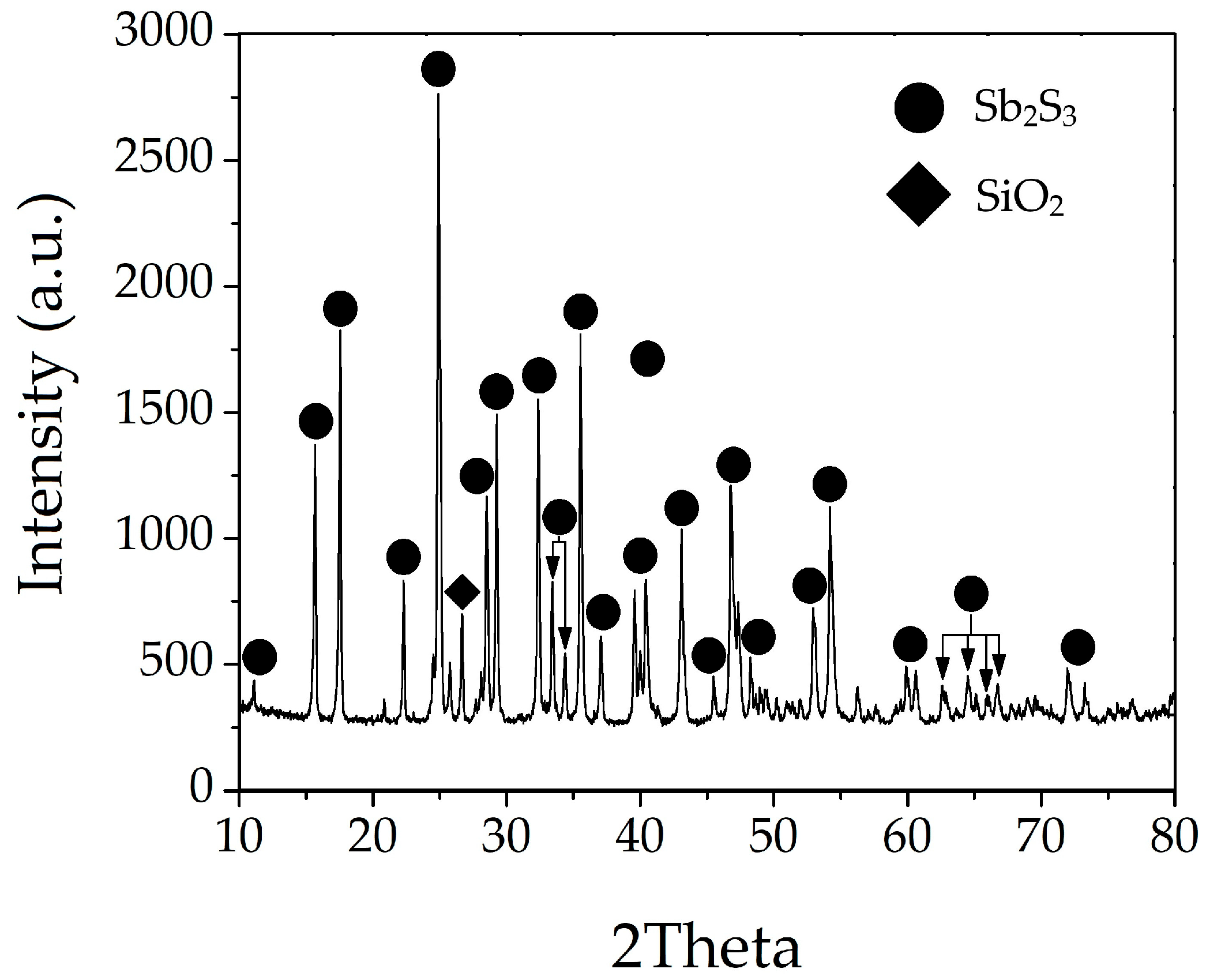
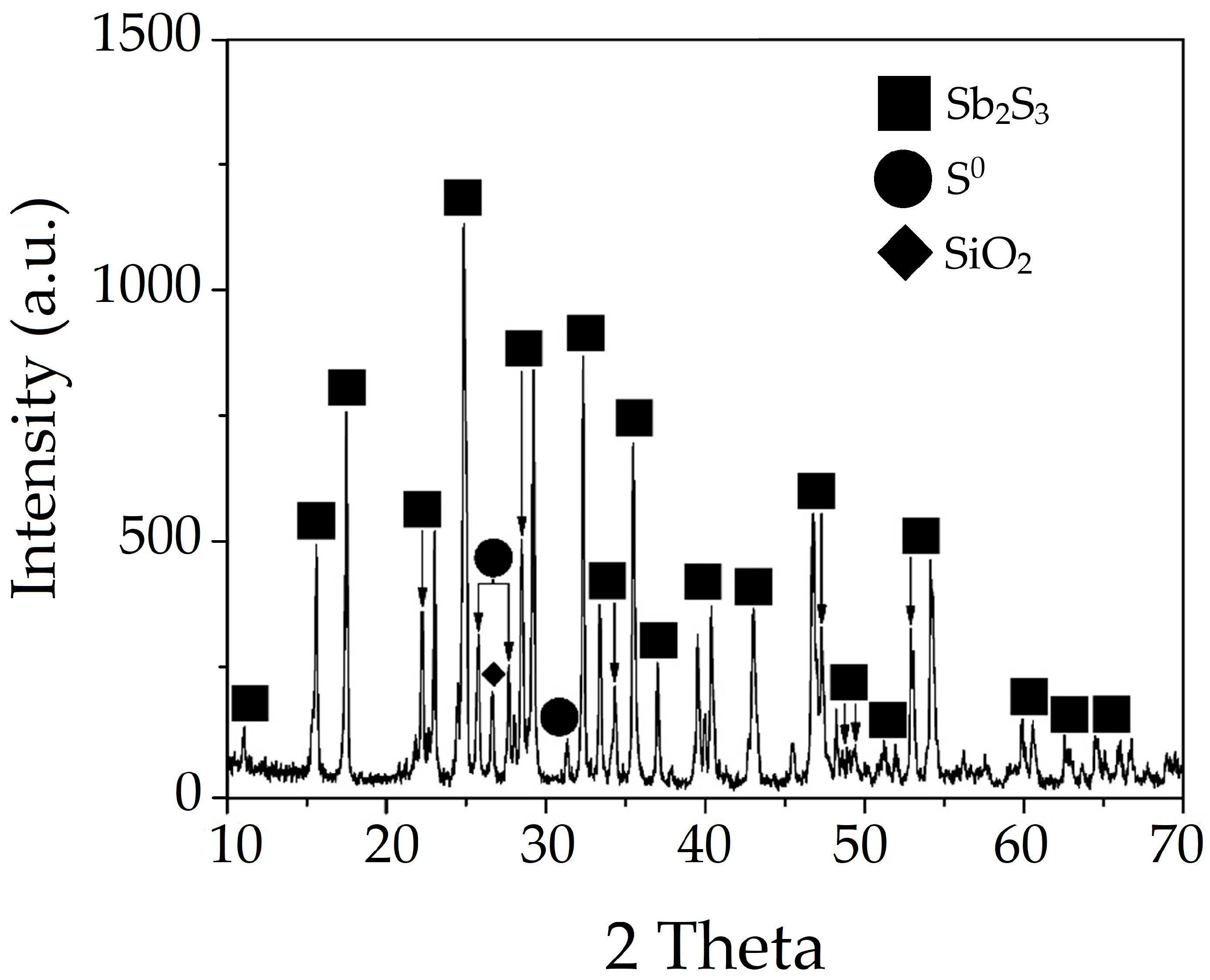
A natural stibnite sample from the Olimpiada deposit (Eastern Siberia, Russia) was used as the main material for the work. The chemical composition of the mineral, determined by ICP-OES, was 69.85% Sb and 28.88% S, corresponding to the stoichiometry of stibnite. The main impurity was quartz SiO2 (1.5%), as confirmed by XRD (Figure 1). The mineral was ground in a PULVERISETTE 6 planetary mill (Fritsch GmbH & Co. KG, Welden Germany) under the following conditions: grinding time of 5 min, rotation speed of 250 rpm, and a grinding ball-to-material ratio of 10:1. After grinding, the sample was wet-screened on laboratory sieves to obtain a working fraction of −74 µm.
Nitric acid (HNO3, 65%), tartaric acid (C4H6O6, ≥99.5%), and citric acid (C6H8O7, ≥99.5%) had analytical purity and were used without prior purification. Solutions for analysis were prepared using deionized water.

2.3. Experimental Procedure

Experiments on nitric acid leaching of antimony from stibnite were conducted in a Lenz Minni-60 laboratory reactor with a volume of 500 mL (Lenz Laborglas GmbH & Co. KG, Wertheim, Germany). They were started at a temperature 15–20 °C lower than required, as exothermic reactions ensured the pulp self-heated to the required values. Temperature accuracy was ensured by a high-precision Huber Kiss K6 thermostat (Huber Kältemaschinenbau AG, Offenburg, Germany), capable of maintaining set parameters with an error of no more than ±0.05 °C. Throughout the experiment, the actual temperature of the reaction pulp was continuously measured using a calibrated temperature probe immersed directly in the slurry. After reaching the required temperature, a stibnite sample was added to the reactor. To ensure pulp homogeneity, an IKA Eurostar 20 digital overhead stirrer (IKA®-Werke GmbH & Co. KG, Staufen, Germany) was used, providing intense and uniform stirring. The leaching experiments were designed to investigate the effects of temperature (range 60–80 °C), nitric acid concentration (range 4–7 M), and the type and concentration of organic acids (citric, tartaric; range 20–80 g/L). All leaching experiments were performed in triplicate. To study the leaching kinetics, 1 mL samples were taken using a Sartorius Proline automatic sample dispenser (Mine-beaIntecAachen GmbH & Co. KG, Aachen, Germany) at strictly defined time intervals (1, 2, 5, 10, 15, 30, 45, 60, 80, and 100 min) and diluted in 25 mL flasks. The dilution was made with 3% nitric acid + 20 g/dm3 tartaric acid. Each diluted sample was analyzed for antimony using inductively coupled plasma optical emission spectrometry. Sb recovery was calculated using Equation (1). Upon completion of the experiment, the pulp was filtered through a Buchner funnel. The cake, containing unreacted stibnite particles, was thoroughly washed with distilled water to remove residual solution. It was then dried in an oven at 80 °C to constant weight and subjected to X-ray diffraction and microscopic analysis. The obtained data were processed statistically to assess the accuracy and reproducibility of the results, as well as to plot kinetic curves for the process.
X = (m1 × X1m2 × X2)/(m1 × X1);
where m1 is the initial sample weight (g), X1 is the antimony content in the initial sample (%), m2 is the weight of the undissolved residue after leaching (g), and X2 is the antimony content in the undissolved residue (%).
Thermodynamic calculations were performed using HSC Chemistry Software v. 9.5 (Metso Outotec Finland Oy, Tampere, Finland).

3. Results

3.1. Thermodynamics of Nitric Acid Leaching of Stibnite

Thermodynamic calculations were performed using HSC Chemistry software v. 9.5 prior to the experimental work to theoretically justify the feasibility of the leaching process and to guide the selection of key experimental parameters.
The Gibbs free energy changes for reactions (2)–(6) were calculated to determine the feasibility of interactions between stibnite and nitric acid solution. The calculations were performed over a temperature range of 25 to 85 °C (Table 1).
Sb2S3 + 6HNO3 = Sb2O3 + 6NO2 + 3S + 3H2O;
Sb2S3 + 28HNO3 = Sb2O5 + 3H2SO4 + 28NO2 + 11H2O
Sb2S3 + 24HNO3 = 2HSbO2 + 3H2SO4 + 24NO2 + 8H2O;
2HSbO2 + 4HNO3 = Sb2O5 + 3H2O + 4NO2
Sb2O3 + 4HNO3 = Sb2O5 + 4NO2 + 2H2O
Based on our calculations of the Gibbs free energy changes for reactions (2)–(6), it was established that stibnite dissolution in nitric acid could occur in various ways, namely, the formation of both poorly soluble antimony oxides (Sb2O3 and Sb2O5) and antimony acid (HSbO2) is possible via reactions (2)–(4). Subsequently, upon the interaction of antimony acid and antimony (III) oxide with nitric acid, both compounds may transform into Sb2O5.
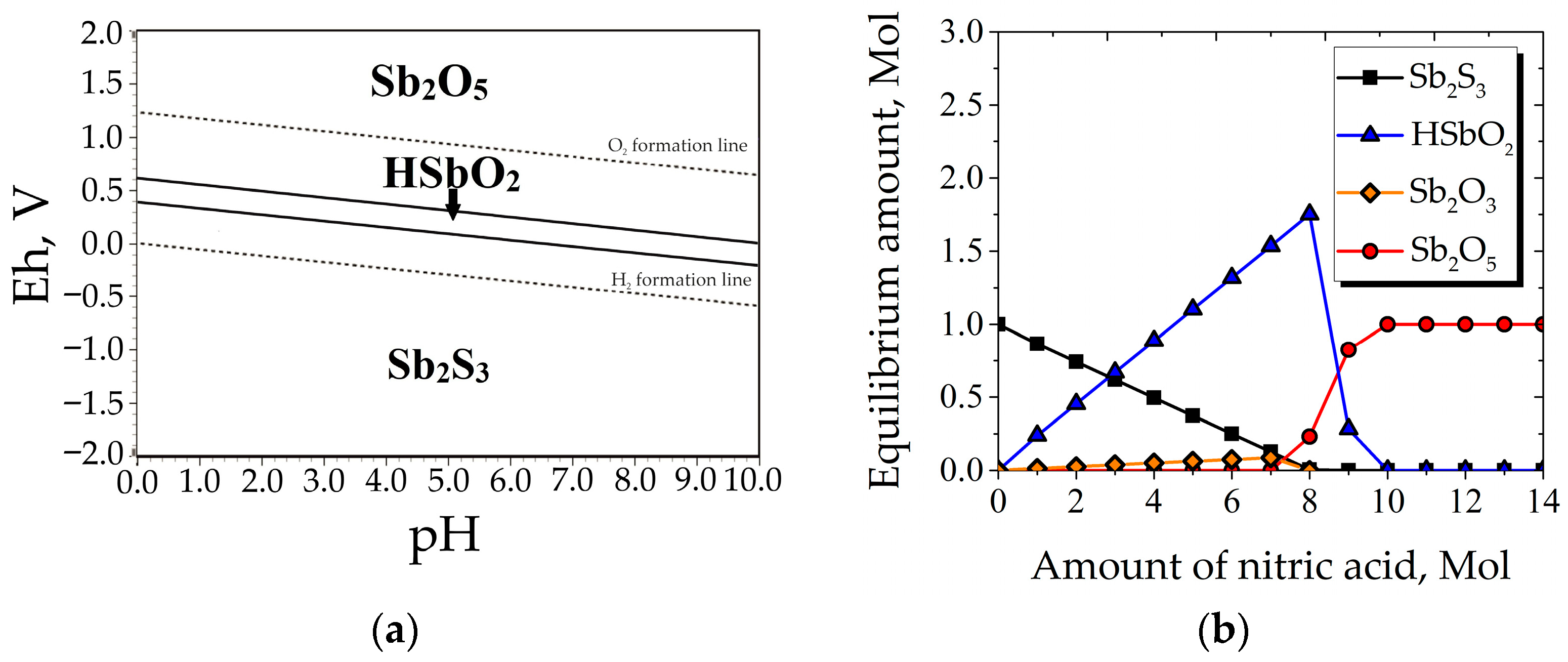
Pourbaix (Eh–pH) diagrams are an important tool for predicting the thermodynamic stability of various chemical compounds in aqueous solutions. To analyze the behavior of antimony compounds at several pH and Eh values, a Pourbaix diagram was plotted for the S–Sb–H2O system (Figure 2a). The concentrations of antimony and sulfur were set according to the stoichiometry of stibnite (Sb2S3), i.e., the molar ratio of Sb:S was 2:3. The temperature was set to 80 °C. To more accurately predict the formation of products from nitric acid leaching of stibnite, an equilibrium distribution diagram (Figure 2b) was plotted, showing the equilibrium amounts of various antimony forms in the studied systems as a function of nitric acid consumption. The equilibrium distribution diagram (Figure 2b) was plotted using the ‘Equilibrium Compositions’ module, considering the stepwise addition of HNO3 to a fixed amount of Sb2S3–1 Mol.
The Pourbaix diagram (Figure 2a) shows that in an acidic medium, at a potential of approx. −0.4 V, stibnite begins to dissolve to form antimony acid (HSbO2). A further increase in the oxidation potential to −0.61 V leads to HSbO2 conversion to antimony (V) oxide, indicating more complete oxidation of antimony. These calculated transitions are consistent with the thermodynamic driving forces suggested by reactions (4) and (5).
The equilibrium distribution diagram (Figure 2b), unlike the Pourbaix one, demonstrates the effect of nitric acid (HNO3) consumption on the composition of the stibnite dissolution products. It is noted that antimony trioxide is also formed in addition to HSbO2 during the initial dissolution. Increasing the nitric acid consumption up to >7 M leads to the predominant presence of antimony as Sb2O5. This is due to the fact that the oxidation potential of the medium increases significantly at high HNO3 concentrations, ensuring further oxidation of Sb (III) to Sb (V). At nitric acid concentrations >8 M, almost complete oxidation of Sb2O3 and HSbO2 to Sb2O5 occurs.

3.2. Nitric Acid Leaching of Stibnite with the Addition of Tartaric and Citric Acids

3.2.1. Effect of Temperature

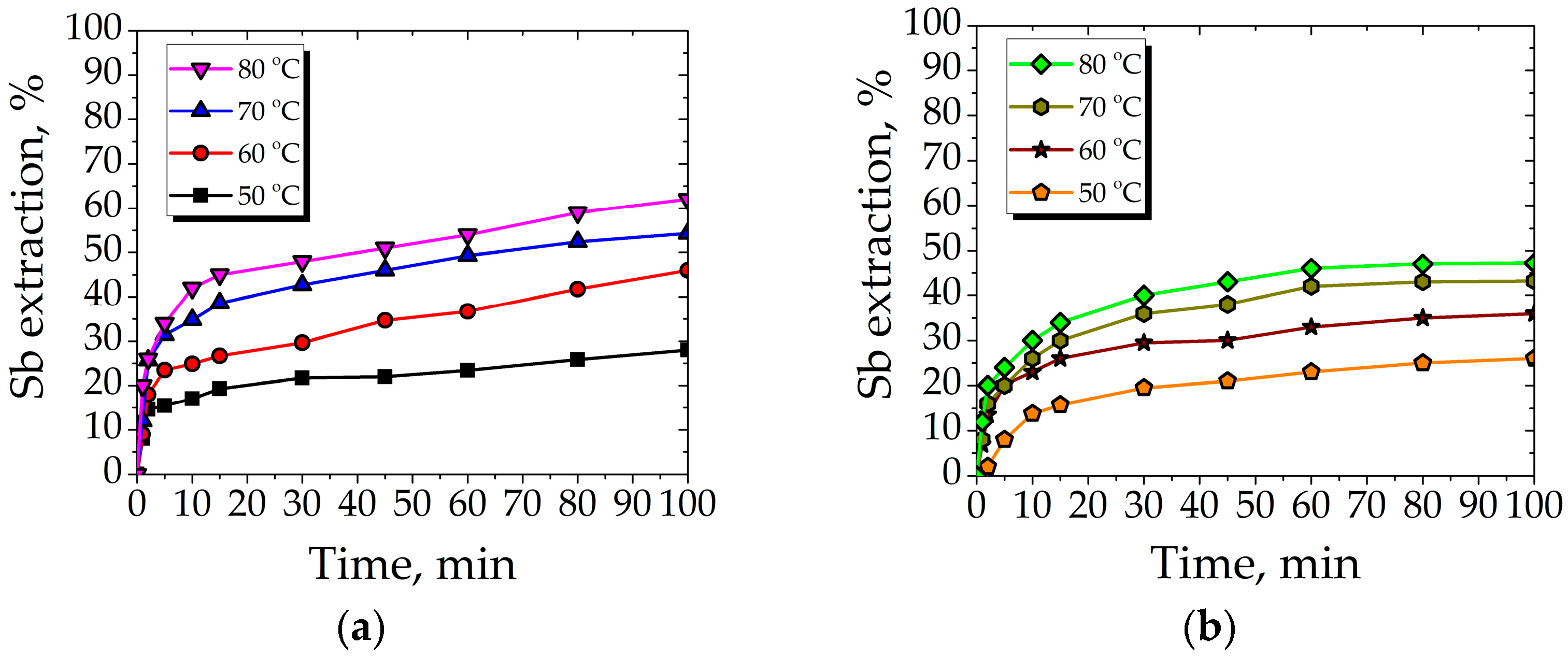
The effect of temperature on the antimony extraction degree was studied at a nitric acid concentration of 5 mol/dm3, duration of 100 min, and tartaric and citric acid concentrations of 40 g/dm3, with a liquid-to-solid ratio of 20:1. The results are presented in Figure 3.
According to the graphs presented, nitric acid leaching in the presence of tartaric acid (Figure 3a) is characterized by a high rate at the initial stage (the first 1–15 min), after which the extraction rate decreases significantly. The maximum extraction rate at a temperature of 80 °C reaches 60% in 100 min. The curve shape indicates that the process rate becomes limited over time, either by diffusion processes through the resulting layer of reaction products or by a decrease in the reagent concentration. In the presence of citric acid, the general patterns are preserved in Figure 3b; however, the antimony extraction efficiency is significantly lower overall. Even at the maximum temperature of 80 °C, the dissolution degree does not exceed 47%. Moreover, the curves are flatter throughout the experiment, indicating an initially lower process rate compared to the system containing tartaric acid. This allows us to conclude that citric acid is a less effective complexing agent for antimony ions under these conditions or has an inhibitory effect on the oxidation kinetics of the sulfide matrix.

3.2.2. Effect of Organic Acid Concentration

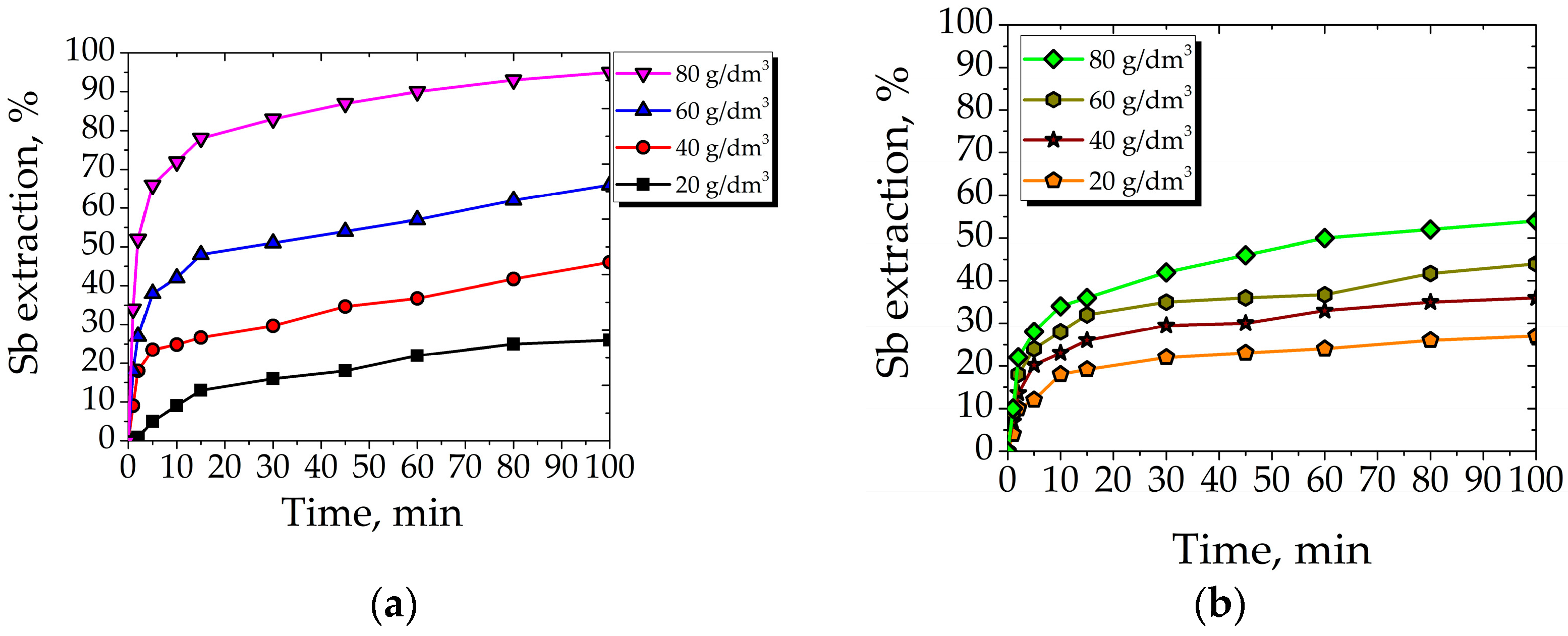
The effect of organic acid concentrations on the antimony extraction degree was studied using a nitric acid concentration of 5 mol/dm3, duration of 100 min, and a temperature of 60 °C, with a liquid-to-solid ratio of 20:1. The results are presented in Figure 4.
Figure 4a shows a pronounced dependence of the extraction degree on the reagent concentration. Increasing the tartaric acid concentration from 40 to 80 g/dm3 significantly increases both the initial dissolution rate and the final degree of antimony extraction in 100 min. The curve for the concentration of 80 g/dm3 demonstrates rapid achievement of high extraction rates (78% in 15 min). In contrast, at the lowest concentration (20 g/dm3), the curve is flat, and the final extraction rate does not exceed 26%. This indicates that it is the lack of the complexing agent that may be the limiting factor preventing the complete transfer of antimony ions into solution.
Based on the results presented in Figure 4b, we conclude that citric acid has a less significant effect on antimony dissolution. Although a slight increase in the rate and degree of extraction is observed with an increase in the citric acid concentration from 20 to 80 g/dm3, the overall process efficiency remains rather low. Even at the highest studied concentration of 80 g/dm3, the extraction degree does not exceed 54%. All curves for citric acid exhibit a smooth rise with no sharp initial section, which may indicate a slower complexation mechanism or a different interaction mechanism with the mineral surface compared to tartaric acid.

3.2.3. Effect of Nitric Acid Concentration

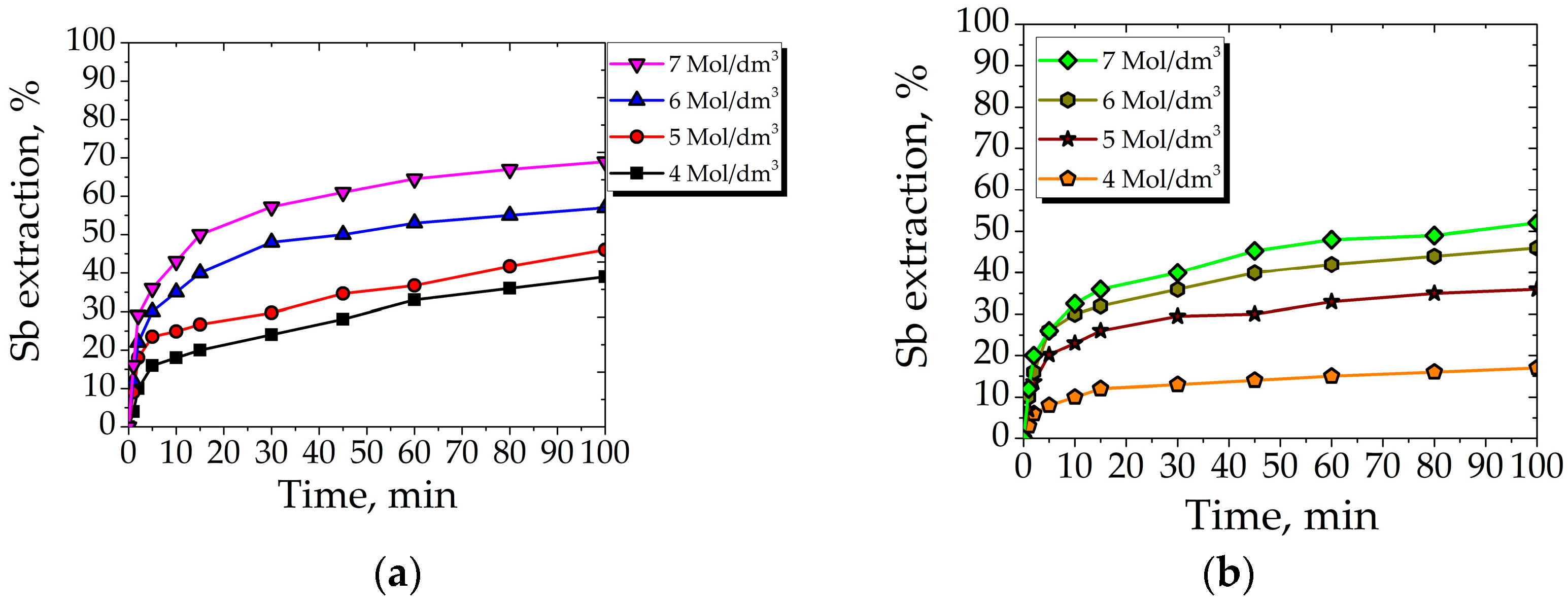
The effect of nitric acid concentration on the antimony extraction degree was studied at an organic acid concentration of 40 g/dm3, duration of 100 min, and a temperature of 60 °C, with a liquid-to-solid ratio of 20:1. The results are presented in Figure 5.
Figure 5a, which depicts the process in the system with tartaric acid, shows a pronounced dependence of the degree and rate of antimony extraction on the HNO3 concentration. The antimony extraction curves for concentrations of 6 and 7 mol/dm3 are characterized by a steep initial section, indicating a high rate of oxidation of the sulfide matrix. After 15 min, the rate slows down, reaching extraction values of approx. 57–70% in 100 min. Conversely, at low HNO3 concentrations (4 and 5 mol/dm3), the process proceeds more slowly, and the final extraction does not exceed 40–46%.
Figure 5b also shows the effect of nitric acid concentration, but it is less significant, and the overall process efficiency remains rather low. However, increasing the HNO3 concentration from 4 to 7 mol/dm3 leads to a noticeable increase in antimony extraction, from 17% to 52%.

3.3. Characteristics of the Resulting Undissolved Residues

3.3.1. Solid Residue from Nitric Acid Leaching of Stibnite with No Addition of Organic Acids

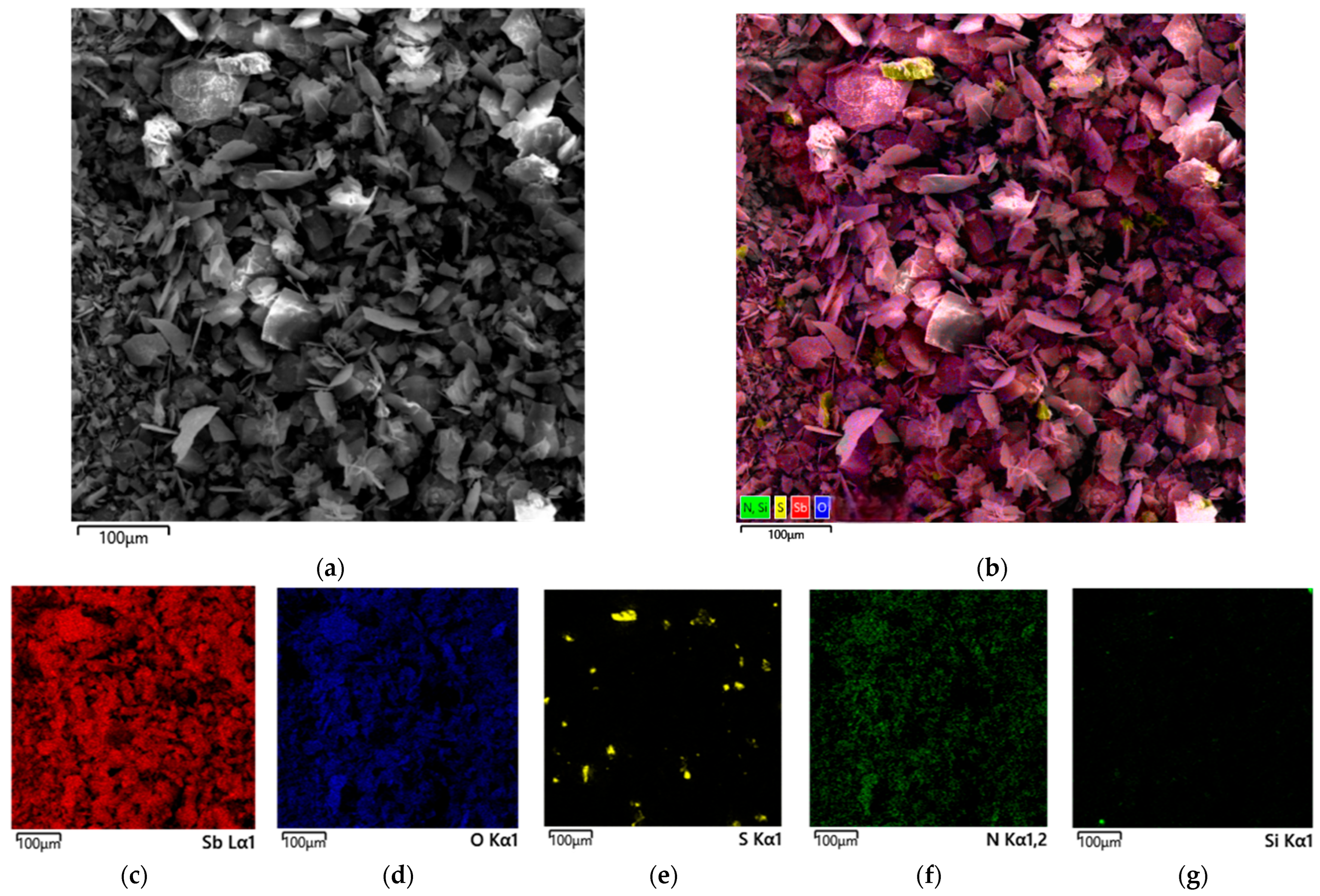
A micrograph and EDX mapping of the undissolved residue obtained at a nitric acid concentration of 5 mol/dm3, a 10-min run time, and a temperature of 60 °C are shown in Figure 6. Antimony recovery under these conditions was 6%.
The SEM results show particles with a plate-like shape. The EDX mapping results demonstrate the co-localization of antimony, oxygen, and nitrogen in plate-like formations, which provides direct evidence of the formation of antimony nitrate. Sulfur is distributed locally, indicating a residual Sb2S3 content.
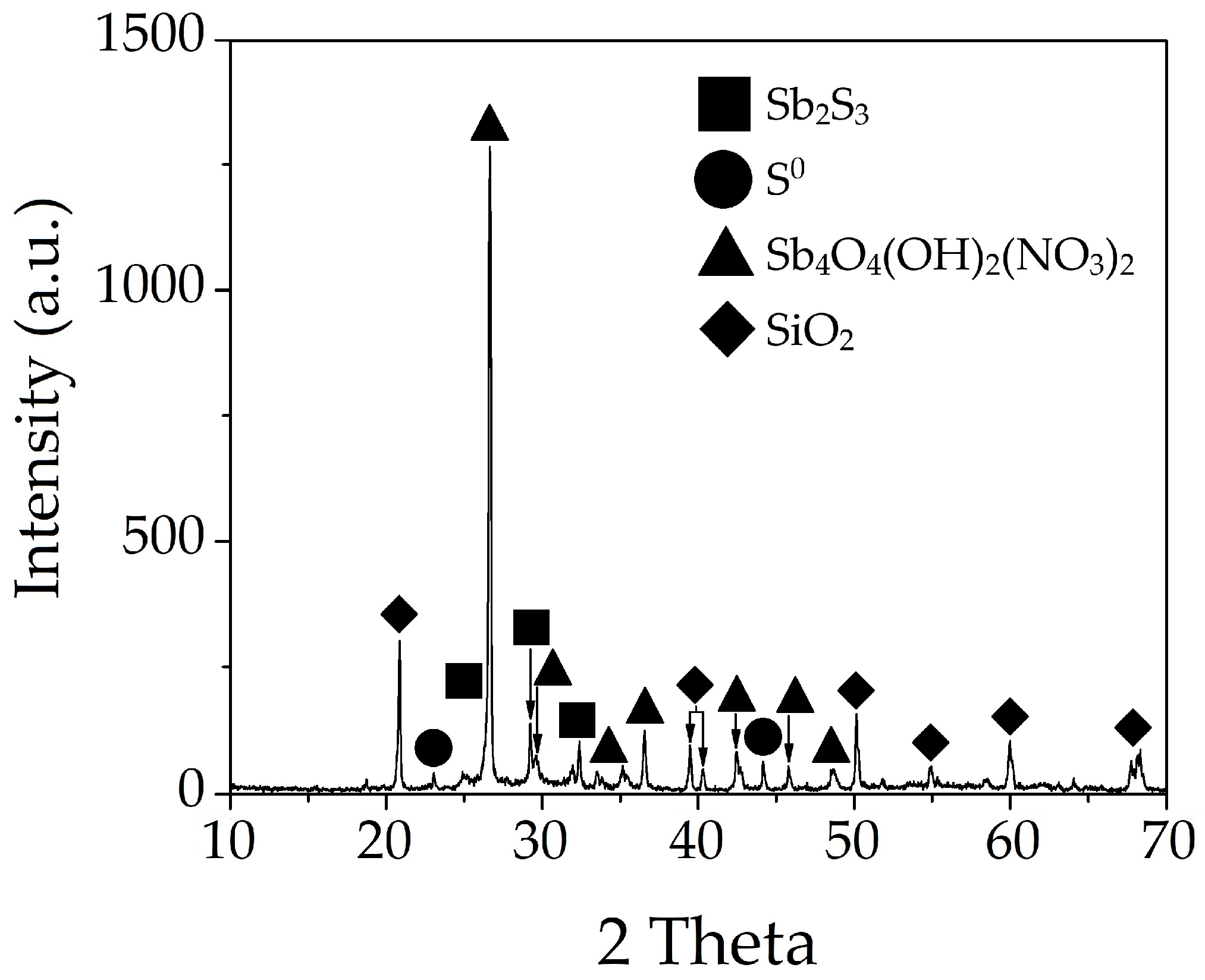
The X-ray diffraction pattern shown in Figure 7 confirms the presence of antimony (III) oxide hydroxide nitrate (Sb4O4(OH)2(NO3)2) in the residue, as well as residual stibnite, elemental sulfur, and quartz.
The chemical reaction between stibnite and nitric acid to form Sb4O4(OH)2(NO3)2 is presumably multistage, first forming Sb2O3 (reaction (2)), then Sb4O4(OH)2(NO3)2 (reaction (7)):
2Sb2O3 + 2HNO3 = Sb4O4(OH)2(NO3)2

3.3.2. Undissolved Residue from Nitric Acid Leaching of Stibnite with Tartaric Acid Added

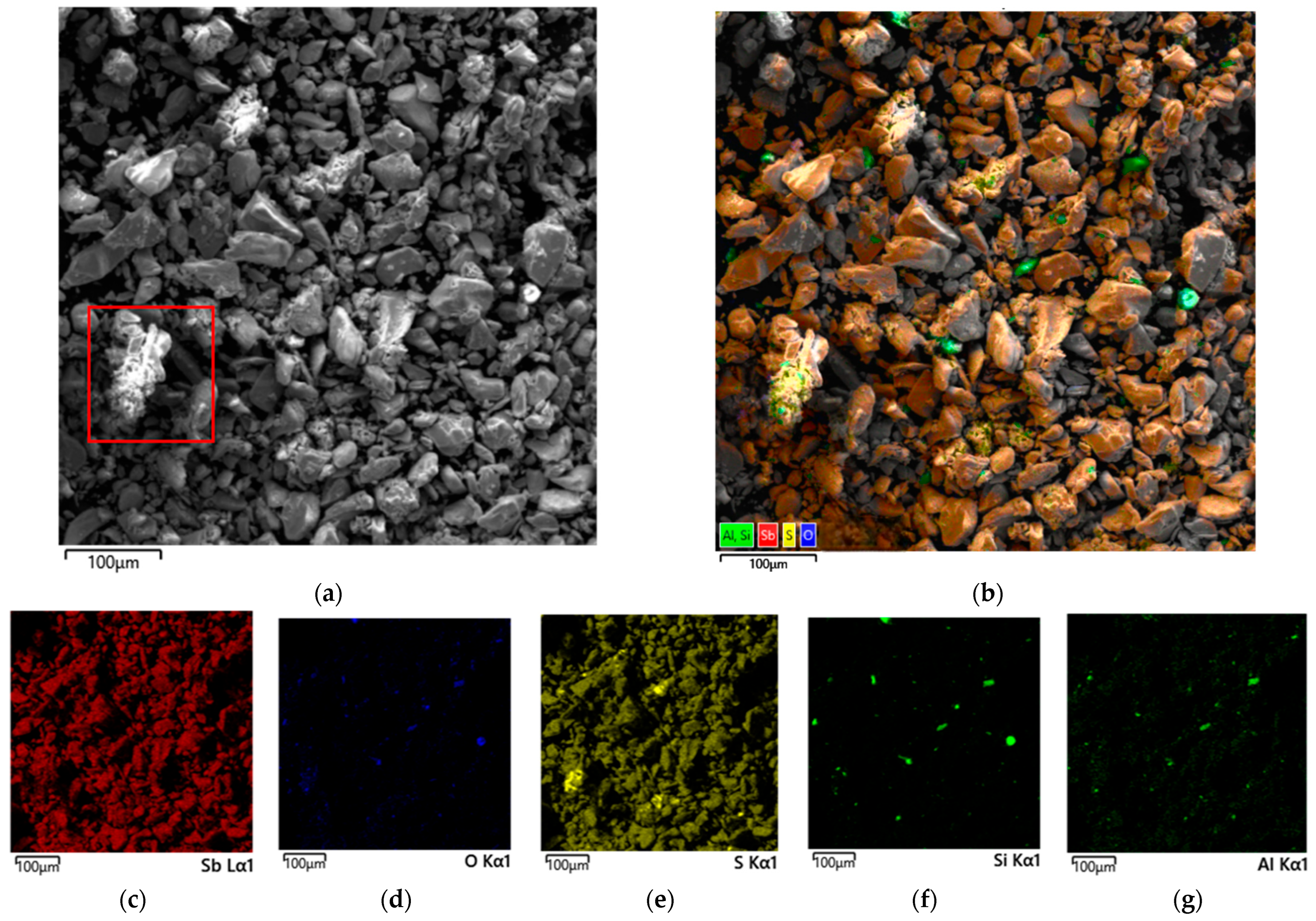
A micrograph and EDX mapping of the undissolved residue obtained at a nitric acid concentration of 5 mol/dm3, a 10-min run time, a temperature of 60 °C, and a tartaric acid concentration of 40 g/dm3 are shown in Figure 8. Antimony recovery under these conditions was 24%.
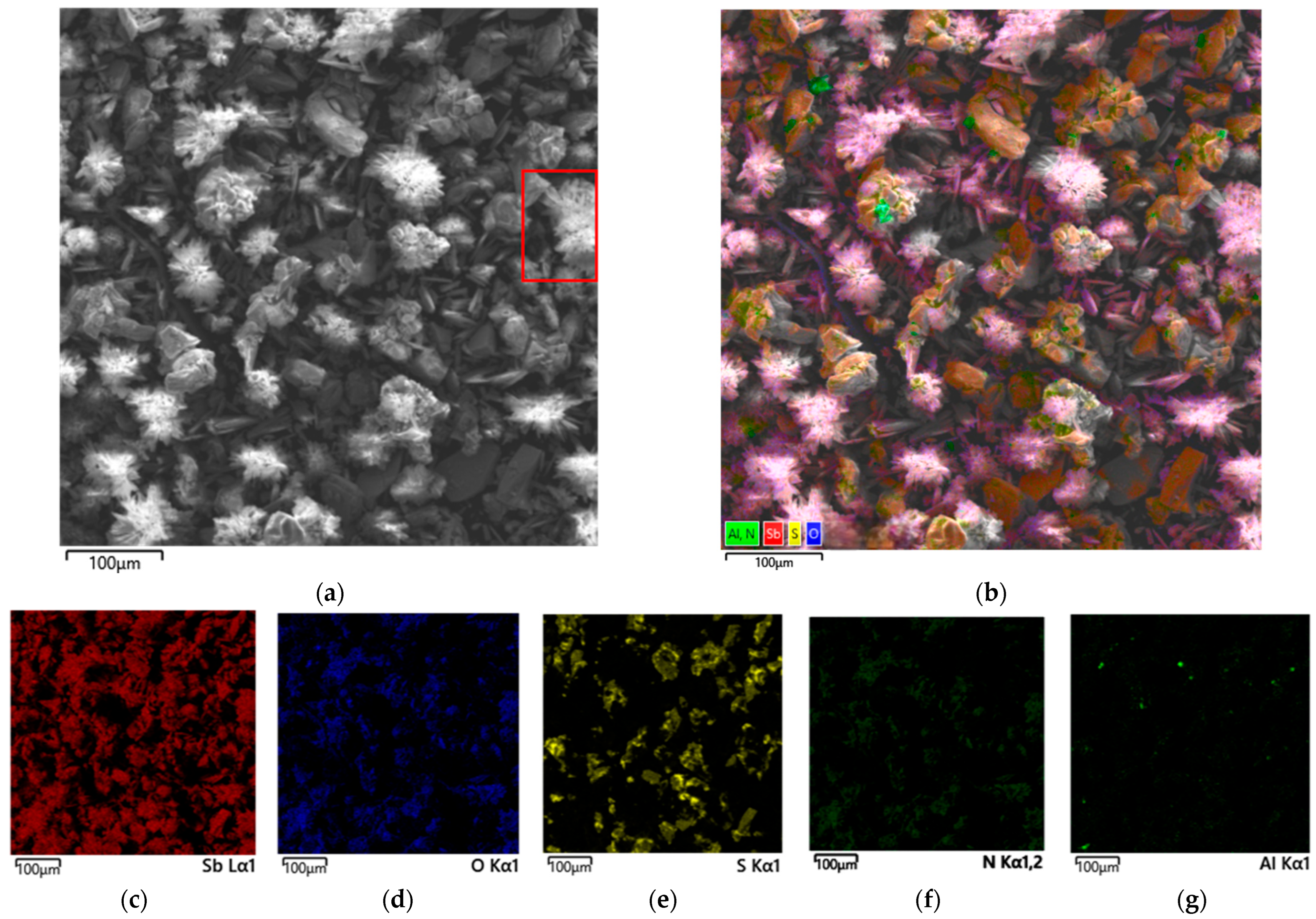
The EDX mapping data indicate unreacted stibnite (Sb2S3) to be the main phase in the undissolved residue. This is significantly different from the system without organic acids, where Sb4O4(OH)2(NO3)2 particles predominated. The EDX maps (Figure 8c,e) show a clear correlation in the distribution of antimony and sulfur, consistent with stibnite. The oxygen distribution map (Figure 8d) shows its weak and uneven localization, which correlates with the distribution of silicon (Figure 8f) and aluminum (Figure 8g), indicating its association with the silicate matrix of the gangue.
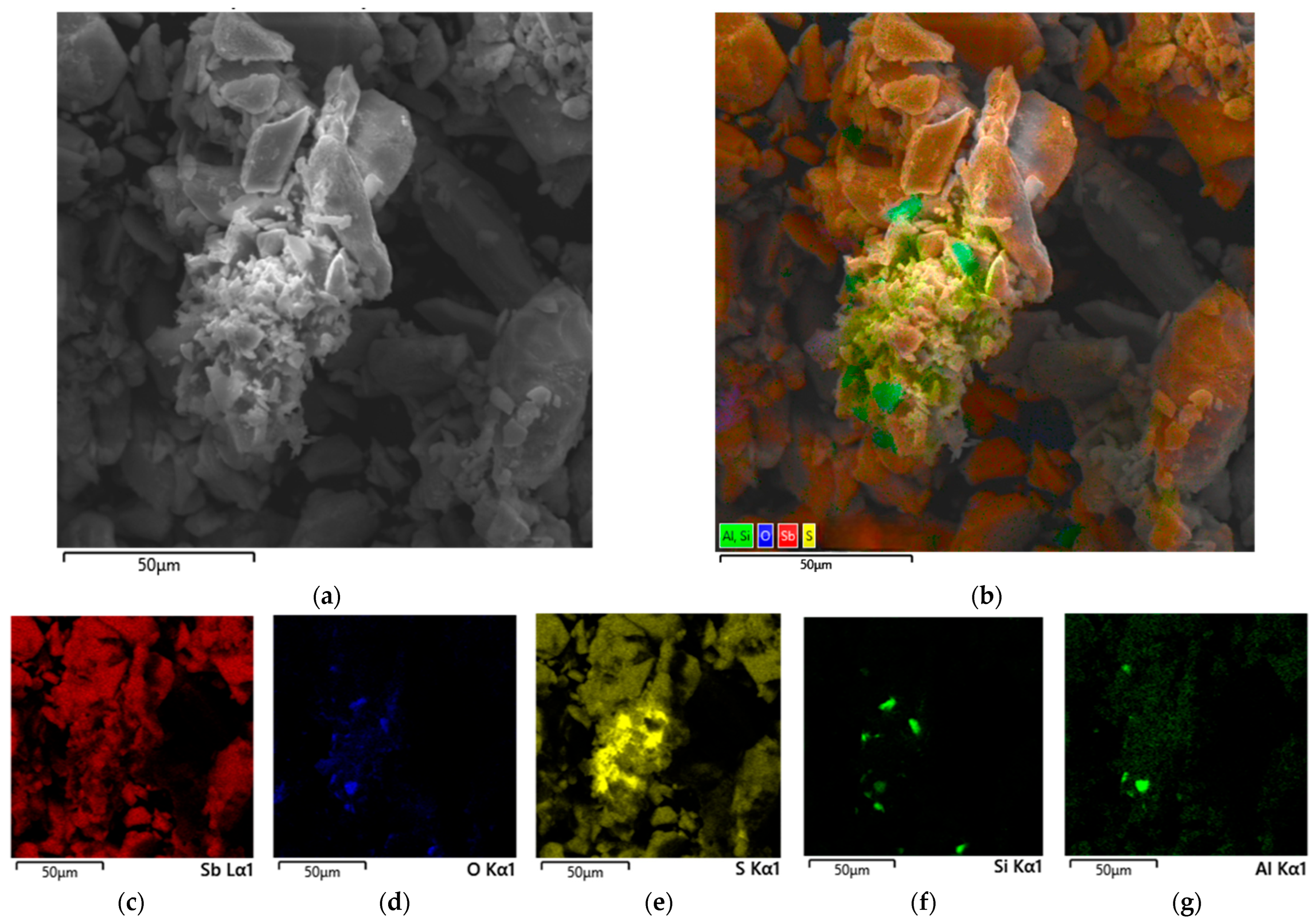
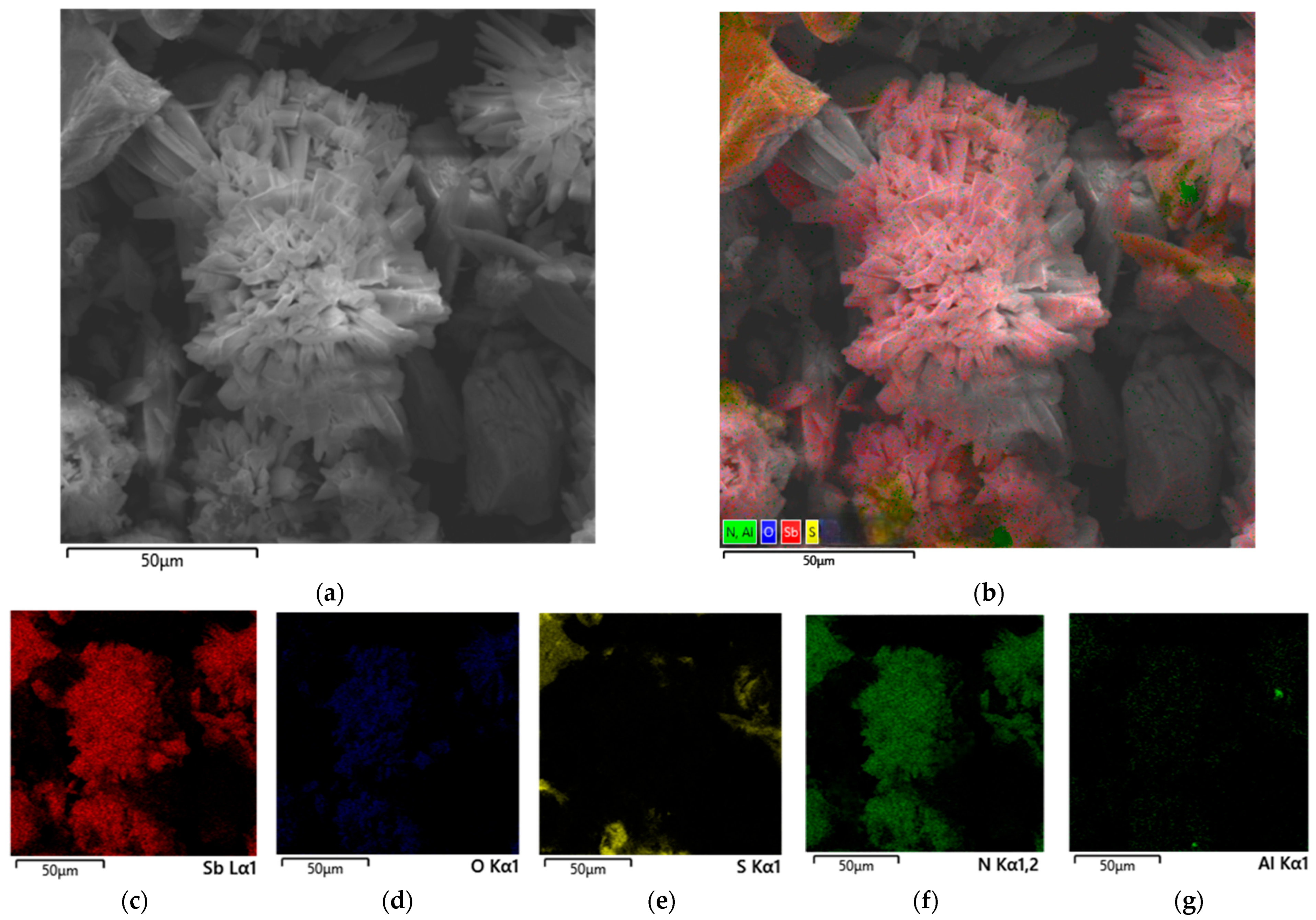
Also, the micrograph (Figure 8a) shows agglomerated particles with signs of the surface passivation onset. The area highlighted in red contains one agglomerated particle of interest. The EDX mapping for this particle at an enlarged scale (50 μm) is shown in Figure 9.
The EDX mapping data of agglomerated particles indicate the onset of particle agglomeration and stibnite passivation due to the formation of an elemental sulfur layer to block the access of reagents to the mineral surface.
The X-ray diffraction pattern of the undissolved residue from nitric acid leaching of stibnite in the presence of tartaric acid, shown in Figure 10, confirms the presence of elemental sulfur and quartz in the stibnite residue.
Thus, tartaric acid has been established to effectively bind antimony ions into soluble complexes, preventing their hydrolysis and precipitation. This allows the oxidation reaction to proceed more completely. The main factor limiting the process in the presence of tartaric acid is agglomeration of stibnite particles and blocking of their surface by the oxidation product (elemental sulfur). This result explains the high rate of antimony extraction initially, followed by a slowdown, as observed in Figure 3a, Figure 4a and Figure 5a.
The proposed chemical reaction of stibnite interaction with nitric and tartaric acids and the formation of the soluble complex Sb2(C4H4O6)3 is multistage, first forming Sb2O3 (reaction (2)) and then Sb2(C4H4O6)3 (reaction (8)):
Sb2O3 + 3C4H6O6 = Sb2(C4H4O6)3 + 3H2O

3.3.3. Undissolved Residue from Nitric Acid Leaching of Stibnite with Citric Acid Added

A micrograph and EDX mapping of the undissolved residue obtained at a nitric acid concentration of 5 mol/dm3, a 10-min run time, a temperature of 60 °C, and a citric acid concentration of 40 g/dm3 are shown in Figure 11. Antimony recovery under these conditions was 21%.
The EDX mapping data (Figure 11c,e) demonstrate a correlation of antimony and sulfur, consistent with unreacted stibnite. The formation of needle-shaped particles is noted. Our EDX analysis of these particles reveals the co-localization of antimony, oxygen, and nitrogen, identified as Sb4O4(OH)2(NO3)2. A closer look at one of these particles (Figure 12) reveals a morphology significantly different from the plate-shaped particles formed without organic acids (Figure 6), indicating a different crystallization mechanism for the reaction product in the presence of citric acid.
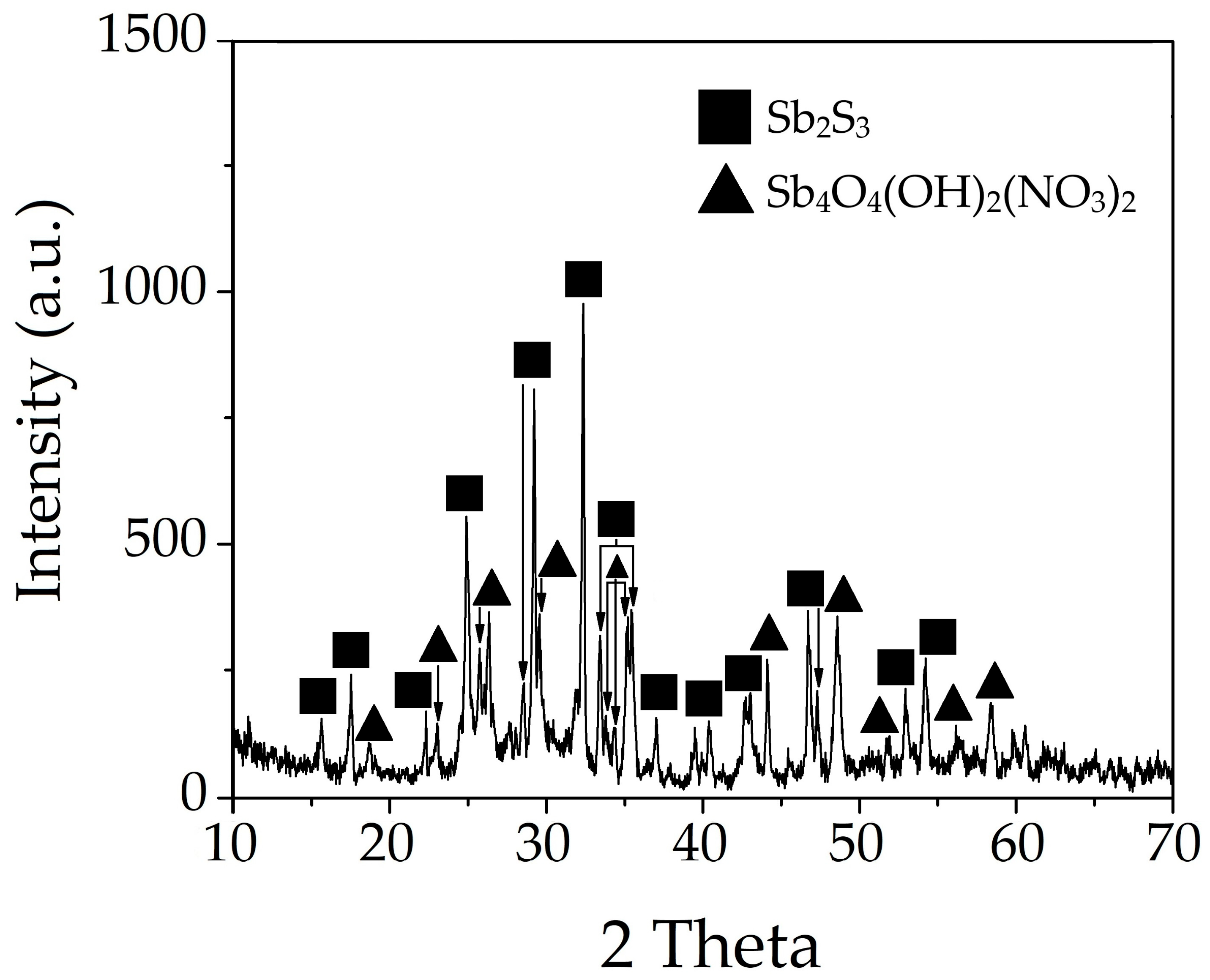
The X-ray diffraction pattern of the undissolved residue from nitric acid leaching of stibnite in the presence of citric acid, shown in Figure 13, confirms the presence of Sb4O4(OH)2(NO3)2 therein.
These results explain the lower rate of nitric acid leaching of antimony with citric acid compared to tartaric acid, namely, citric acid forms less stable complexes with antimony ions (reaction (9)), which allows partial hydrolysis and precipitation of antimony (III) oxide nitrate hydroxide (Sb4O4(OH)2(NO3)2) (reaction (7)).
3Sb2O3 + 2C6H8O7 ↔ 2Sb(C6H5O7)2 + H2O

3.4. Calculation of Kinetic Characteristics

Our analysis of the undissolved stibnite leaching residues has revealed fundamental differences in the mechanisms when using different organic acids. It has been found that with the addition of citric acid, antimony partially hydrolyzes to form Sb4O4(OH)2(NO3)2. Therefore, calculating the kinetic characteristics and establishing the reaction regime using the shrinking core method (SCM) for nitric acid leaching of antimony is only valid for the system with tartaric acid added [27].
Table 2 presents the main equations describing the SCM stages [27] and R2 values for the temperature range of 50–80 °C.
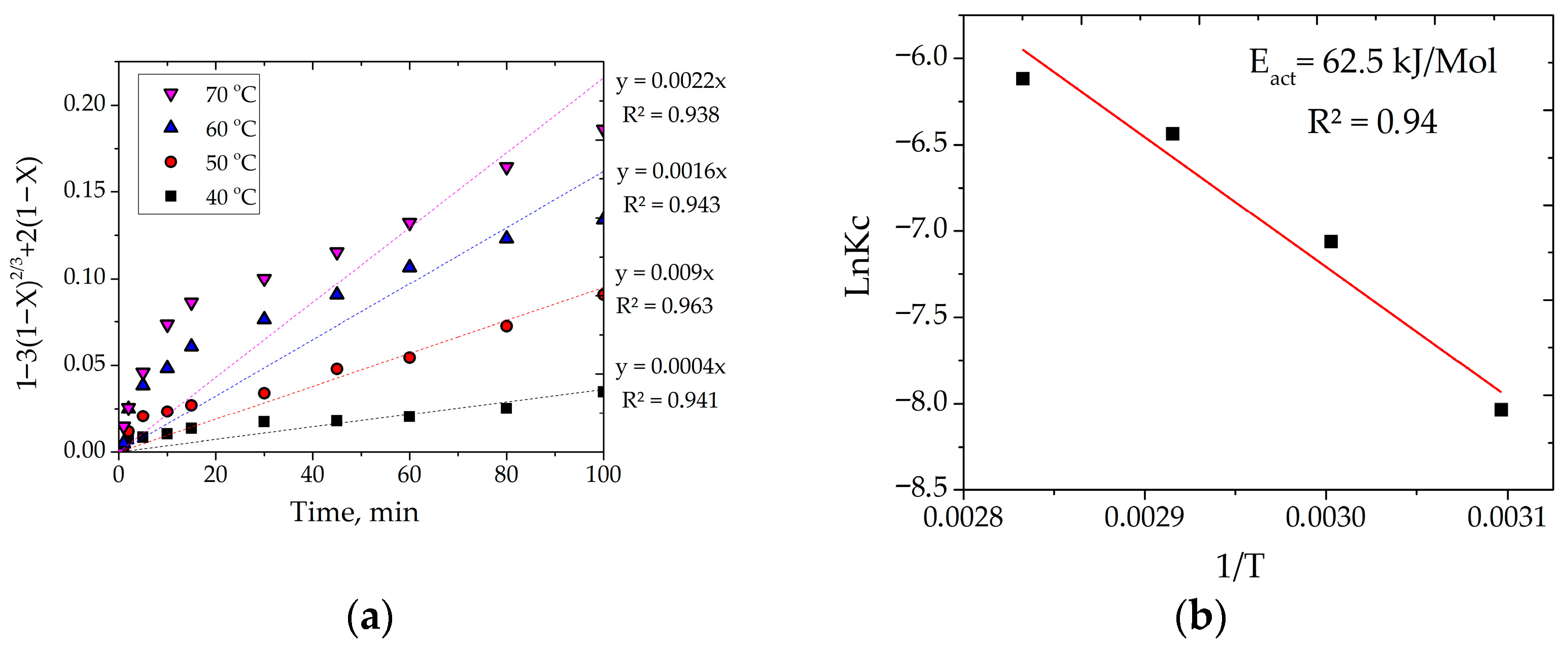
The obtained correlation coefficients for the equations in Table 2 show that Equation (7) has the highest value over the entire temperature range under consideration, exceeding 0.94.
The apparent activation energy for antimony extraction was calculated using a plot of ln kc vs. 1/T (Figure 14b), where kc is the slope calculated in Figure 14a. The coefficient a found by plotting a straight line y = ax + b in these coordinates determines the slope of the line. According to Equation (13), derived from the Arrhenius law, the apparent activation energy for antimony extraction was evaluated to be 62.5 kJ/mol based on the straight line slope.
ln k c = l n A E a R T
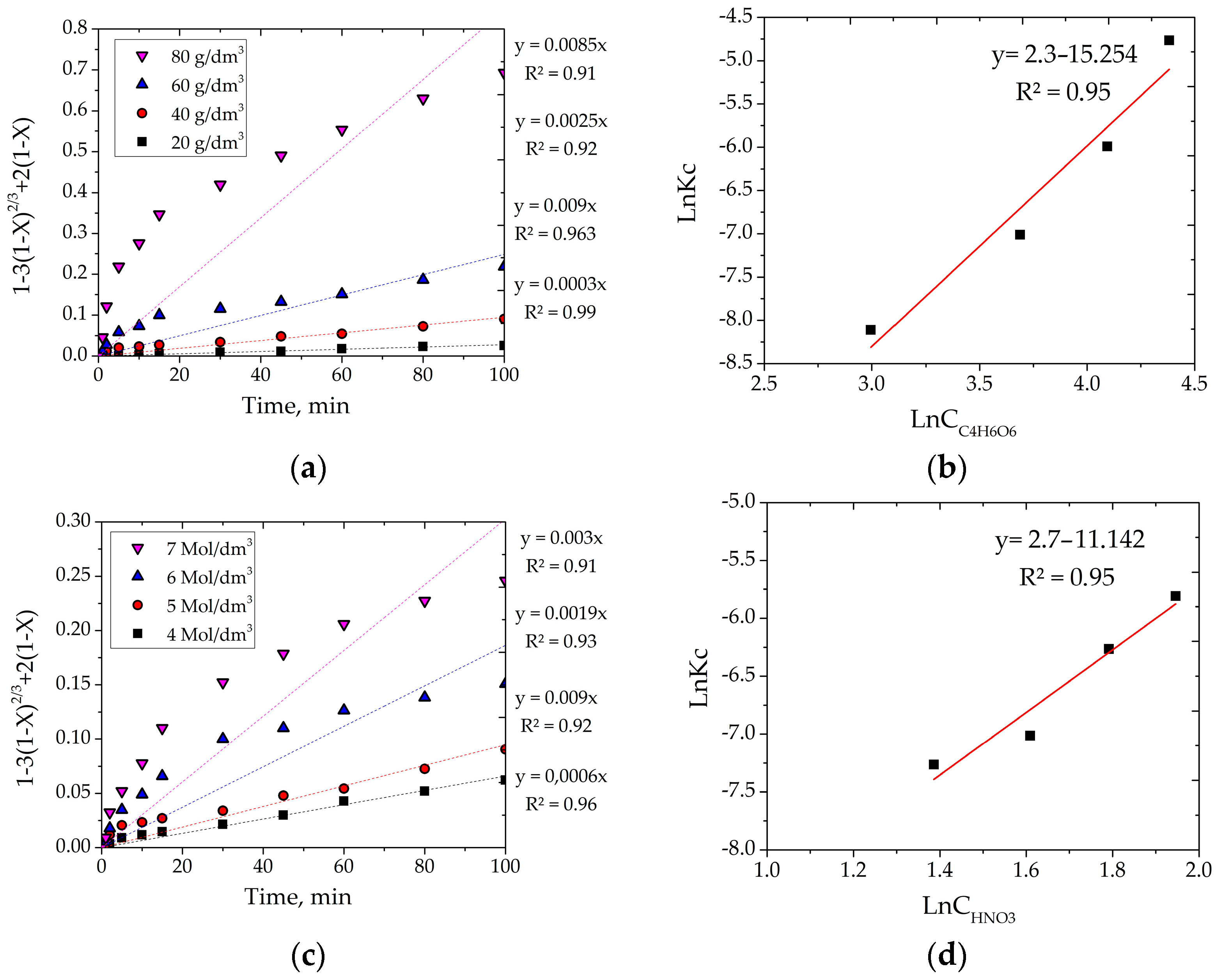
Using the ln kc vs. ln(C4H6O6)/ln(HNO3) plots (Figure 15b,d), we also calculated the empirical concentration orders for tartaric (2.3) and nitric acid (2.7), where kc is the slope found in a similar way as calculating the activation energy (Figure 15a,c) [27].
Such high reaction orders confirm the complex multistage mechanism of the process. The high order for nitric acid (2.7) emphasizes its key role as the oxidizing agent, while the significant order for tartaric acid (2.3) indicates its active role not only as a complexing agent but also as a reactant, influencing the process kinetics.
Thus, the main rate-limiting step of the process is internal diffusion, as confirmed by the highest R2 value for the corresponding kinetic model. This is consistent with X-ray diffraction and EDX data, which showed the formation of passivating layers on the particle surface.
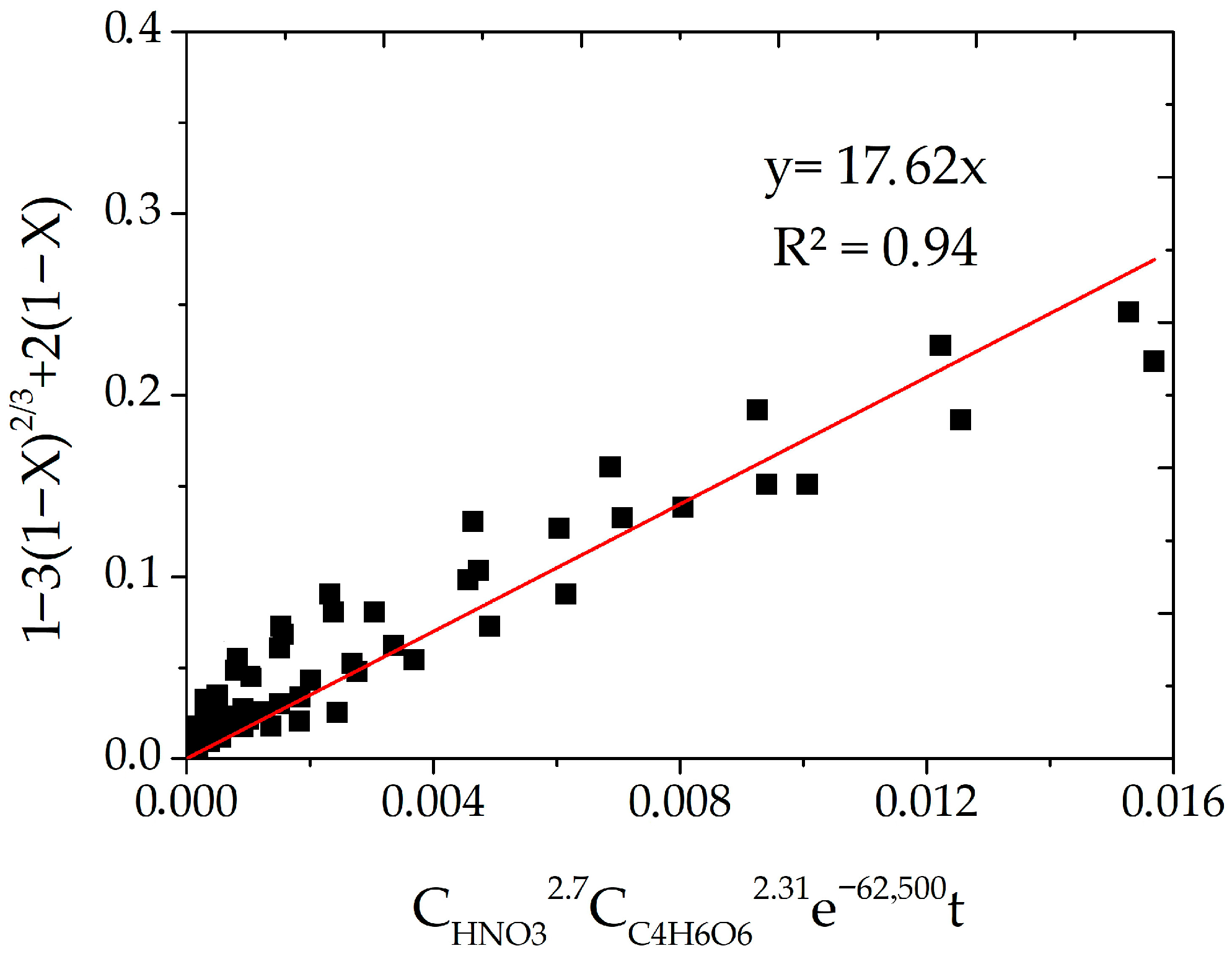
Based on the results obtained, graphs were plotted for all temperatures and nitric and tartaric acid concentrations to derive general kinetic equations for antimony leaching (Figure 16). The graph has allowed us to determine the slope a, which corresponds to ko.
Based on the obtained results, a generalized kinetic equation was derived for the nitric acid extraction of antimony from stibnite with tartaric acid added:
1 − 3(1 − X) 2/3 + 2(1 − X) = 17.62CHNO32.7CC4H6O62.31e−62500/RTt

4. Discussion

The results of this study highlight the critical role of complexing agents in the nitric acid leaching of stibnite. The formation of an insoluble antimony (III) oxide nitrate hydroxide phase, Sb4O4(OH)2(NO3)2, observed in our experiments without organic acids and with citric acid (Figure 6 and Figure 11) is consistent with the results of Ling et al. [28], who reported Sb2O3 conversion into insoluble Sb-OH-NO3 compounds during nitric acid leaching for arsenic removal. This confirms that nitric acid itself acts primarily as an oxidizing agent, leading to the formation of insoluble antimony salts. The high efficiency of tartaric acid (over 90% recovery) compared to citric acid (54%) may be due to the higher stability of antimony complexes with tartaric acid in acidic media. As noted by Hu and He [20], tartaric acid forms strong complexes with Sb (III) that effectively prevent hydrolysis even at low pH. In contrast, citric acid, despite being a strong ligand for many metals, exhibits less efficiency in stabilizing antimony under nitric acid conditions, resulting in the partial precipitation of basic salts observed in our SEM analysis (Figure 12). From a kinetic viewpoint, the calculated activation energy of 62.5 kJ/mol is higher than typical ones for diffusion-controlled leaching (often cited at around 10–30 kJ/mol [27]), but is consistent with oxidative leaching mechanisms, where surface passivation by elemental sulfur plays a dominant role [29].
The next step is antimony extraction from the productive leach solution. Given the nitrate medium nature and the complexing properties of antimony, electrowinning appears to be a very promising method. Similar approaches were successfully applied to antimony electrowinning in another system [15]. Further research will focus on optimizing the electrowinning stage to produce metallic antimony or commercial antimony oxide, which will close the technological cycle of processing antimonite concentrates.

5. Conclusions

Based on our comprehensive study of nitric acid leaching of stibnite with organic acids added, we can conclude as follows:
  • Tartaric acid proved to be a significantly more effective complexing agent than citric acid. Under optimal conditions, the maximum antimony recovery reached 78%–90% with tartaric acid, compared to only 45%–54% with citric acid. The concentration of organic acids was a critical parameter: increasing the tartaric acid concentration from 20 to 80 g/dm3 boosted antimony recovery from 26% to 76%, whereas the same increase for citric acid only improved recovery from 27% to 56%.
  • Phase and morphological analyses (XRD, SEM-EDX) revealed fundamentally different mechanisms. In the absence of organic acids, passivating plate-like Sb4O4(OH)2(NO3)2 particles formed. Tartaric acid effectively prevented the hydrolysis and precipitation of antimony, with the residue containing primarily unreacted stibnite and elemental sulfur, the latter causing passivation at later stages. In contrast, citric acid led to the formation of needle-like Sb4O4(OH)2(NO3)2 particles, indicating insufficient complexation and partial hydrolysis.
  • Kinetic studies for the system with tartaric acid established that the process is limited by internal diffusion through a product layer, with an activation energy of 62.5 kJ/mol. The empirical reaction orders were found to be 2.7 for HNO3 and 2.3 for tartaric acid, confirming the complex multi-stage nature of the process where both oxidation and complexation play crucial kinetic roles. A generalized kinetic equation was derived to describe the process adequately.
In summary, the synergistic use of nitric acid and tartaric acid presents a highly effective hydrometallurgical method for processing stibnite, overcoming the key limitation of antimony hydrolysis and ensuring high metal extraction.

Author Contributions

Conceptualization, O.D. and D.R.; methodology, Y.S.; software, D.G.; validation, K.K.; formal analysis, O.D.; investigation, Y.S.; resources, O.D.; data curation, K.K. and D.G.; writing—original draft preparation, O.D.; writing—review and editing, D.R. and K.K.; visualization, O.D.; supervision, O.D.; project administration, D.R.; funding acquisition, O.D. All authors have read and agreed to the published version of the manuscript.

Funding

This research was supported by the Russian Science Foundation and the Government of Sverdlovsk region, Joint Grant No. 24-29-20158.

Data Availability Statement

The original contributions presented in this study are included in the article. Further inquiries can be directed to the corresponding author.

Conflicts of Interest

The authors declare no conflicts of interest.

References

  1. Henckens, M.L.C.M.; Driessen, P.P.J.; Worrell, E. How Can We Adapt to Geological Scarcity of Antimony? Investigation of Antimony’s Substitutability and of Other Measures to Achieve a Sustainable Use. Resour. Conserv. Recycl. 2016, 108, 54–62. [Google Scholar] [CrossRef]
  2. Herath, I.; Vithanage, M.; Bundschuh, J. Antimony as a Global Dilemma: Geochemistry, Mobility, Fate and Transport. Environ. Pollut. 2017, 223, 545–559. [Google Scholar] [CrossRef]
  3. He, M.; Wang, X.; Wu, F.; Fu, Z. Antimony Pollution in China. Sci. Total Environ. 2012, 421–422, 41–50. [Google Scholar] [CrossRef]
  4. Anderson, C.G. Hydrometallurgically Treating Antimony-Bearing Industrial Wastes. JOM 2001, 53, 18–20. [Google Scholar] [CrossRef]
  5. Dembele, S.; Akcil, A.; Panda, S. Technological Trends, Emerging Applications and Metallurgical Strategies in Antimony Recovery from Stibnite. Miner. Eng. 2022, 175, 107304. [Google Scholar] [CrossRef]
  6. Multani, R.S.; Feldmann, T.; Demopoulos, G.P. Antimony in the Metallurgical Industry: A Review of Its Chemistry and Environmental Stabilization Options. Hydrometallurgy 2016, 164, 141–153. [Google Scholar] [CrossRef]
  7. Moosavi-Khoonsari, E.; Mostaghel, S.; Siegmund, A.; Cloutier, J.-P. A Review on Pyrometallurgical Extraction of Antimony from Primary Resources: Current Practices and Evolving Processes. Processes 2022, 10, 1590. [Google Scholar] [CrossRef]
  8. Singh, L.N. Synthesis of Potassium Antimony Tartrate from the Antimony Dross of Lead Smelters. Hydrometallurgy 1990, 25, 19–25. [Google Scholar] [CrossRef]
  9. Ibrahim Idrees Ibrahim, A.; Aboelgamel, M.; Kaan Soylu, K.; Top, S.; Kursunoglu, S.; Altiner, M. Production of High-Grade Antimony Oxide from Smelter Slag via Leaching and Hydrolysis Process. Sep. Purif. Technol. 2025, 354, 129355. [Google Scholar] [CrossRef]
  10. Wikedzi, A.; Sandström, Å.; Awe, S.A. Recovery of Antimony Compounds from Alkaline Sulphide Leachates. Int. J. Miner. Process. 2016, 152, 26–35. [Google Scholar] [CrossRef]
  11. Baláž, P.; Achimovičová, M. Selective Leaching of Antimony and Arsenic from Mechanically Activated Tetrahedrite, Jamesonite and Enargite. Int. J. Miner. Process. 2006, 81, 44–50. [Google Scholar] [CrossRef]
  12. Rusalev, R.E.; Rogozhnikov, D.A.; Koblik, A.A. Optimization of Alkaline Sulfide Leaching of Gold-Antimony Concentrates. Mater. Sci. Forum 2020, 989, 525–531. [Google Scholar] [CrossRef]
  13. Muravyov, M. Two-Step Processing of Refractory Gold-Containing Sulfidic Concentrate via Biooxidation at Two Temperatures. Chem. Pap. 2019, 73, 173–183. [Google Scholar] [CrossRef]
  14. Loni, P.C.; Wu, M.; Wang, W.; Wang, H.; Ma, L.; Liu, C.; Song, Y.; H Tuovinen, O. Mechanism of Microbial Dissolution and Oxidation of Antimony in Stibnite under Ambient Conditions. J. Hazard. Mater. 2020, 385, 121561. [Google Scholar] [CrossRef]
  15. Ye, L.; Ouyang, Z.; Chen, Y.; Chen, Y. Ferric Chloride Leaching of Antimony from Stibnite. Hydrometallurgy 2019, 186, 210–217. [Google Scholar] [CrossRef]
  16. Rusalev, R.; Rogozhnikov, D.; Dizer, O.; Golovkin, D.; Karimov, K. Development of a Two-Stage Hydrometallurgical Process for Gold–Antimony Concentrate Treatment from the Olimpiadinskoe Deposit. Materials 2023, 16, 4767. [Google Scholar] [CrossRef] [PubMed]
  17. Rogozhnikov, D.; Dizer, O.; Karimov, K.; Zakhar’yan, S. Nitric Acid Leaching of the Copper-Bearing Arsenic Sulphide Concentrate of Akzhal. Tsvetnye Met. 2020, 8, 11–17. [Google Scholar] [CrossRef]
  18. Tella, M.; Pokrovski, G.S. Stability and Structure of Pentavalent Antimony Complexes with Aqueous Organic Ligands. Chem. Geol. 2012, 292–293, 57–68. [Google Scholar] [CrossRef]
  19. Li, S.; Pan, W.; Tong, L.; Hu, Y.; Zou, Y.; Huang, X. Remediation of Sb-Contaminated Soil by Low Molecular Weight Organic Acids Washing: Efficiencies and Mechanisms. Sustainability 2023, 15, 4147. [Google Scholar] [CrossRef]
  20. Hu, X.; He, M. Organic Ligand-Induced Dissolution Kinetics of Antimony Trioxide. J. Environ. Sci. 2017, 56, 87–94. [Google Scholar] [CrossRef]
  21. Geng, H.; Wang, F.; Yan, C.; Tian, Z.; Chen, H.; Zhou, B.; Yuan, R.; Yao, J. Leaching Behavior of Metals from Iron Tailings under Varying pH and Low-Molecular-Weight Organic Acids. J. Hazard. Mater. 2020, 383, 121136. [Google Scholar] [CrossRef]
  22. Kołodyńska, D.; Burdzy, K.; Hunger, S.; Aurich, A.; Ju, Y. Green Extractants in Assisting Recovery of REEs: A Case Study. Molecules 2023, 28, 965. [Google Scholar] [CrossRef]
  23. Liu, Q.; Tu, T.; Guo, H.; Cheng, H.; Wang, X. High-Efficiency Simultaneous Extraction of Rare Earth Elements and Iron from NdFeB Waste by Oxalic Acid Leaching. J. Rare Earths 2021, 39, 323–330. [Google Scholar] [CrossRef]
  24. Xiao, L.; Cheng, X.; Zhang, T.; Guo, M.; Zhang, M. Efficient Inorganic/Organic Acid Leaching for the Remediation of Protogenetic Lead-Contaminated Soil. Appl. Sci. 2022, 12, 3995. [Google Scholar] [CrossRef]
  25. Kaufmann, A.B.; Lazarov, M.; Horn, I.; Števko, M.; Ðorđević, T.; Kiefer, S.; Weyer, S.; Majzlan, J. Weathering-Induced Sb Isotope Fractionation during Leaching of Stibnite and Formation of Secondary Sb Minerals. Chem. Geol. 2024, 662, 122253. [Google Scholar] [CrossRef]
  26. Panayotova, M.; Pysmennyi, S.; Panayotov, V. Antimony Recovery from Industrial Residues—Emphasis on Leaching: A Review. Separations 2025, 12, 156. [Google Scholar] [CrossRef]
  27. Octave, L. Chemical Reaction Engineering; Wiley: New York, NY, USA, 1999; 688p. [Google Scholar]
  28. Ling, H.; Malfliet, A.; Blanpain, B.; Guo, M. Selective Removal of Arsenic from Crude Antimony Trioxide by Leaching with Nitric Acid. Sep. Purif. Technol. 2022, 281, 119976. [Google Scholar] [CrossRef]
  29. Padilla, R.; Caro, O.; Vega-Garcia, D.; Ruiz, M.C. Mechanism and Kinetics of Stibnite Dissolution in H2SO4-NaCl-Fe(SO4)1.5-O2. Minerals 2022, 12, 718. [Google Scholar] [CrossRef]
Figure 1. X-ray diffraction pattern of stibnite. Identified phases: stibnite (Sb2S3, PDF #01-078-1347) and quartz (SiO2, PDF #00-086-1629).
Minerals 16 00125 g001
Figure 2. Eh–pH diagram for the S–Sb–H2O system (a), the equilibrium distribution diagram of antimony compounds during nitric acid leaching of stibnite (b).
Minerals 16 00125 g002
Figure 3. Effect of temperature on the antimony extraction degree in the presence of tartaric acid (a) and citric acid (b).
Minerals 16 00125 g003
Figure 4. Effect of organic acid concentrations on the antimony extraction degree in the presence of tartaric acid (a) and citric acid (b).
Minerals 16 00125 g004
Figure 5. Effect of nitric acid concentration on the antimony extraction degree in the presence of tartaric acid (a) and citric acid (b).
Minerals 16 00125 g005
Figure 6. SEM images of the nitric acid leaching cake without the addition of organic acids at a scale of 100 μm (a) and EDX mapping: total content (b), for antimony (c), oxygen (d), sulfur (e), nitrogen (f), and silicon (g).
Minerals 16 00125 g006
Figure 7. X-ray diffraction pattern of the solid residue from nitric acid leaching of stibnite with no addition of organic acids. Identified phases: stibnite (Sb2S3, PDF #01-078-1347), sulfur (S0, PDF #01-078-1888, antimony (III) oxide nitrate hydroxide (Sb4O4(OH)2(NO3)2, PDF #01-070-2058) and quartz (SiO2, PDF #00-086-1629).
Minerals 16 00125 g007
Figure 8. SEM images of the cake from nitric acid leaching of stibnite with tartaric acid added at a scale of 100 μm (a) and EDX mapping: total (b), for antimony (c), oxygen (d), sulfur (e), silicon (f), and aluminum (g).
Minerals 16 00125 g008
Figure 9. SEM image of a cake particle from nitric acid leaching with tartaric acid added at a scale of 50 μm (a) and EDX mapping: total (b), for antimony (c), oxygen (d), sulfur (e), silicon (f), and aluminum (g).
Minerals 16 00125 g009
Figure 10. X-ray diffraction pattern of the undissolved residue from nitric acid leaching of stibnite with tartaric acid added. Identified phases: stibnite (Sb2S3, PDF #01-078-1347), sulfur (S0, PDF #01-078-1888 and quartz (SiO2, PDF #00-086-1629).
Minerals 16 00125 g010
Figure 11. SEM images of the nitric acid leaching cake with citric acid added at a scale of 100 μm (a) and EDX mapping: total (b), for antimony (c), oxygen (d), sulfur (e), nitrogen (f), and aluminum (g).
Minerals 16 00125 g011
Figure 12. SEM image of a nitric acid leaching cake particle with citric acid added at a scale of 50 μm (a) and EDX mapping: total (b), for antimony (c), oxygen (d), sulfur (e), nitrogen (f), and aluminum (g).
Minerals 16 00125 g012
Figure 13. X-ray diffraction pattern of the undissolved residue from nitric acid leaching of stibnite with citric acid added. Identified phases: stibnite (Sb2S3, PDF #01-078-1347) and antimony (III) oxide nitrate hydroxide (Sb4O4(OH)2(NO3)2, PDF #01-070-2058).
Minerals 16 00125 g013
Figure 14. Determination of the slope kc (a) and the activation energy (b).
Minerals 16 00125 g014
Figure 15. Determination of the slope kc for CC4H6O6 (a), CHNO3 (c) and empirical concentration orders for C4H6O6 (b), HNO3 (d).
Minerals 16 00125 g015
Figure 16. Graphical evaluation of the coefficient ko.
Minerals 16 00125 g016
Table 1. Calculated Gibbs free energy changes for reactions (2)–(6).
Reaction No.ΔG, kJ/mol
25 °C40 °C55 °C70 °C85 °C
2−344−355−367−378−389
3−1630−1683−1735−1787−1839
4−1411−1455−1498−1541−1583
5−219−228−237−246−255
6−168−175−182−189−196
Table 2. Kinetic equations describing the rate-limiting SCM stages and R2 values.
No.Limiting PhaseFormulaR2
50 °C60 °C70 °C80 °C
7Diffusion through the product layer (sp)1 − 3(1 − X) 2/3 + 2(1 − X)0.9410.9630.9430.938
8Diffusion through the product layer (pp)X20.9090.890.9010.911
9Diffusion through the product layer (cp)X + (1 − X) ln(1 − X)0.9190.9010.9020.896
10Diffusion through the liquid film (sp)X0.7910.7680.7810.763
11Surface chemical reaction (cp)1 − (1 − X)1/20.7970.7820.8040.78
12Surface chemical reaction (sp)1 − (1 − X)1/30.7990.7870.8130.792
sp—spherical particles, pp—plate-like particles, cp—cylinder particles.
Disclaimer/Publisher’s Note: The statements, opinions and data contained in all publications are solely those of the individual author(s) and contributor(s) and not of MDPI and/or the editor(s). MDPI and/or the editor(s) disclaim responsibility for any injury to people or property resulting from any ideas, methods, instructions or products referred to in the content.