Data-Driven Decoupling of Metallogenic Patterns: A Case Study of Skarn-Type vs. Hydrothermal Vein-Type Pb-Zn Deposits in the Shanghulin Area, Inner Mongolia, China

 and
and
Abstract
1. Introduction
2. Geological Setting and Data
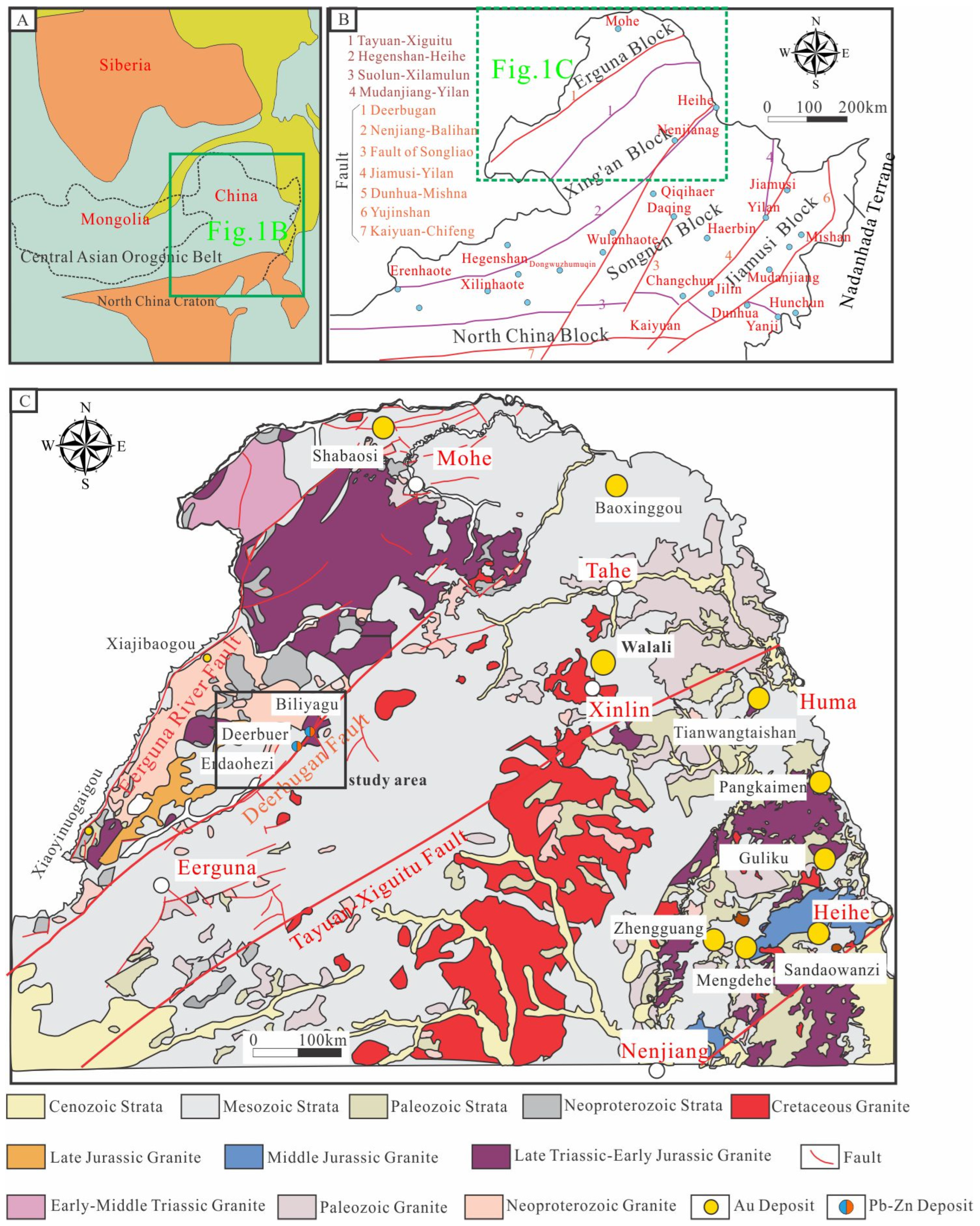
2.1. Tectonic Background
2.2. Regional Geological Setting
2.3. Characteristics of Pb-Zn Deposits
2.3.1. Skarn-Type Pb-Zn Deposits
2.3.2. Hydrothermal Vein-Type Pb-Zn Deposits
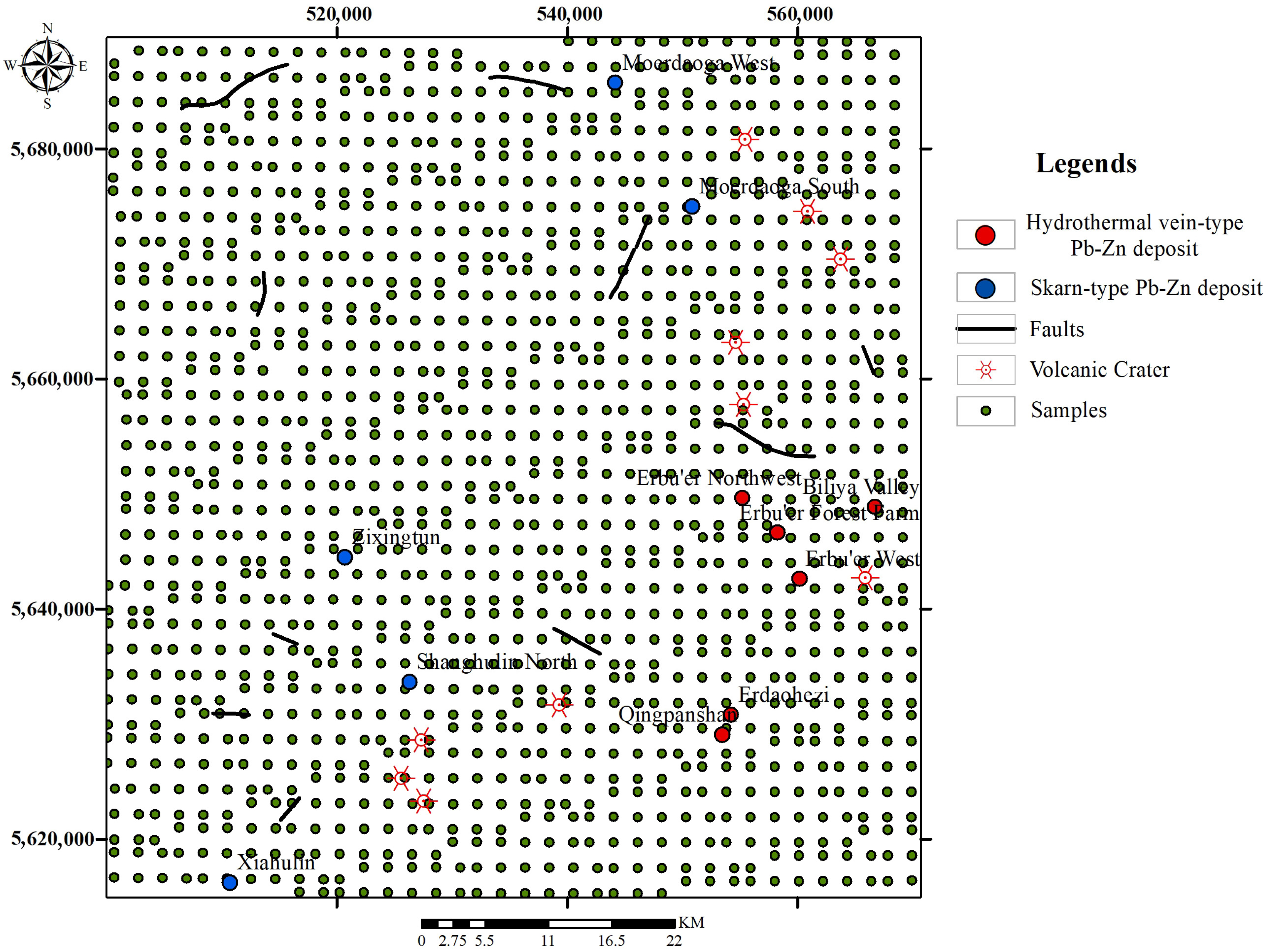
2.4. Data Introduction
3. Methods
3.1. RFECV (Recursive Feature Elimination with Cross-Validation)
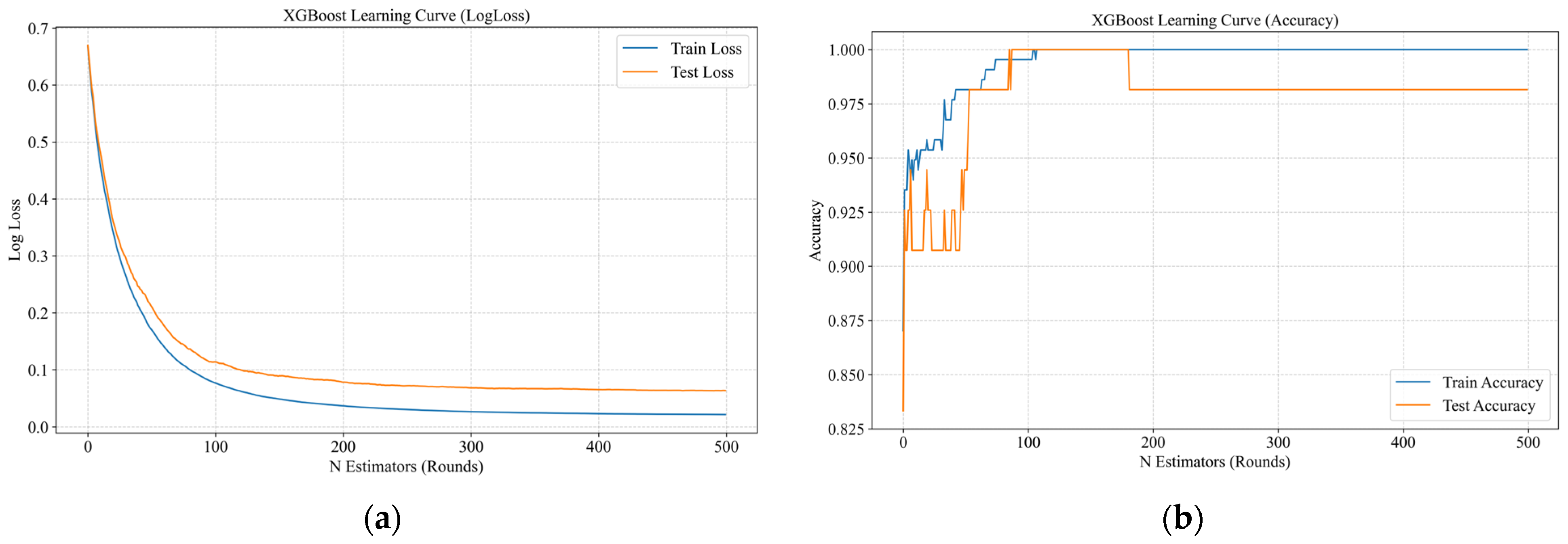
3.2. XGBoost Model
3.3. SHAP (SHapley Additive exPlanations)
4. Results
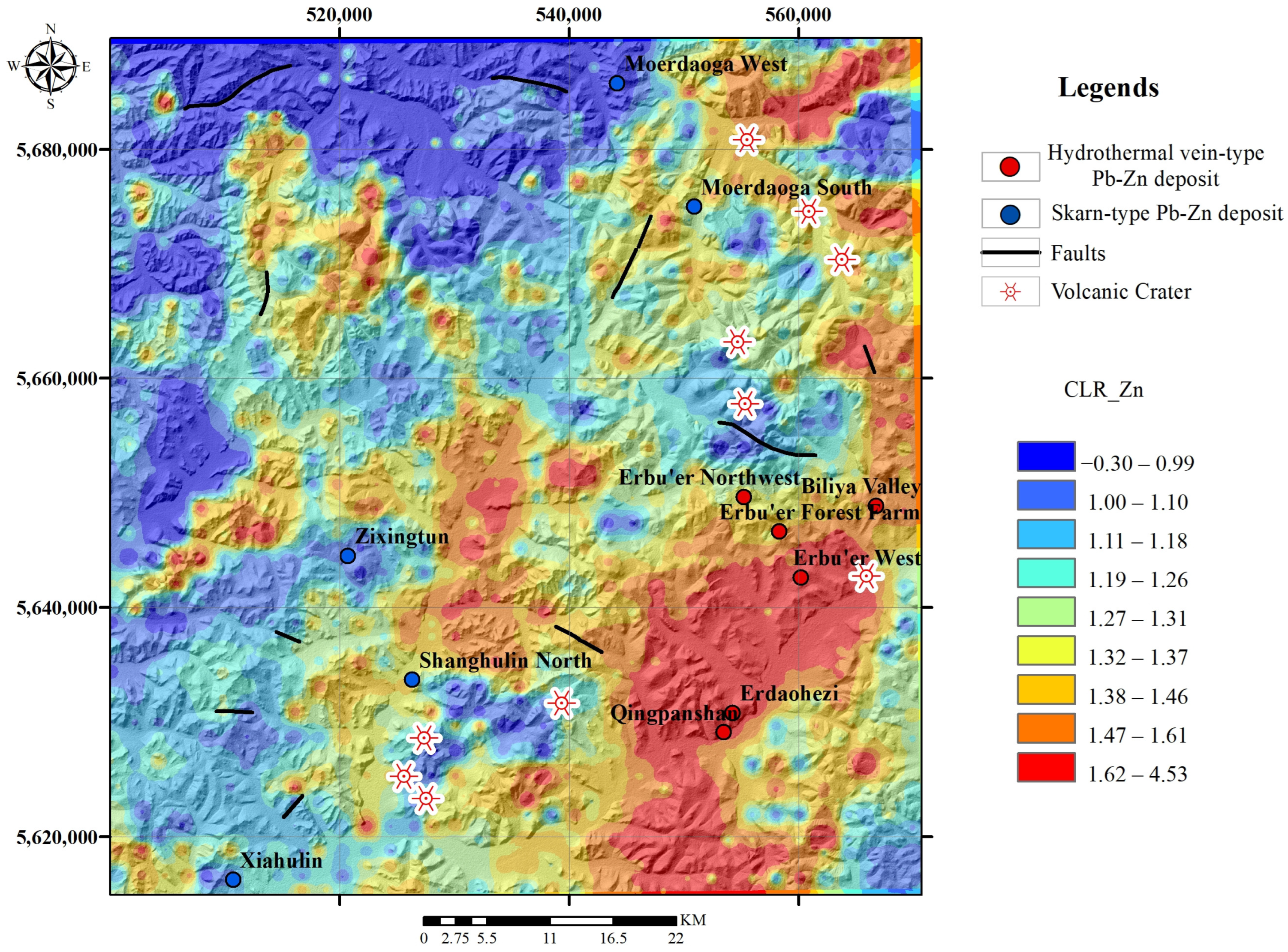
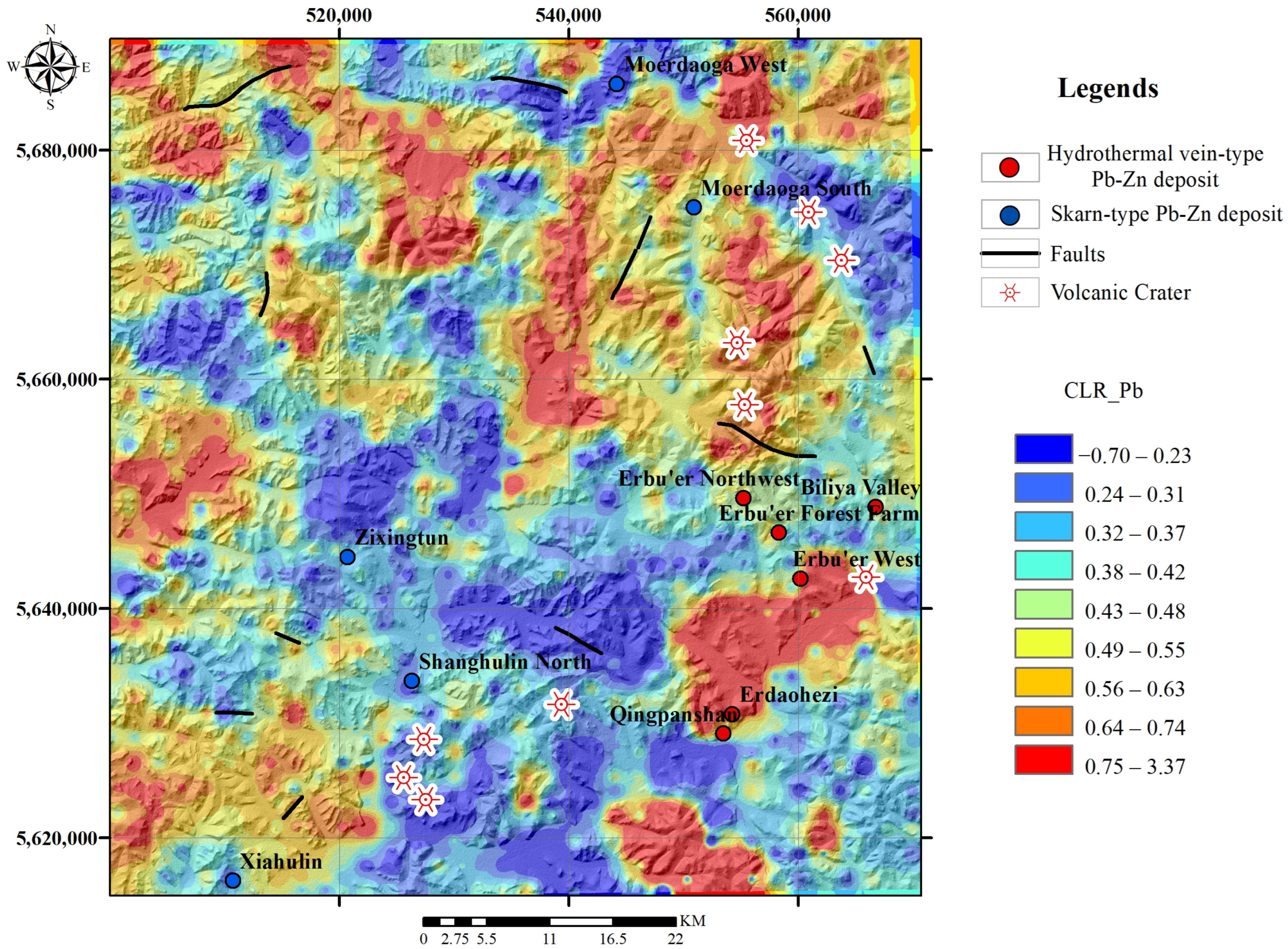
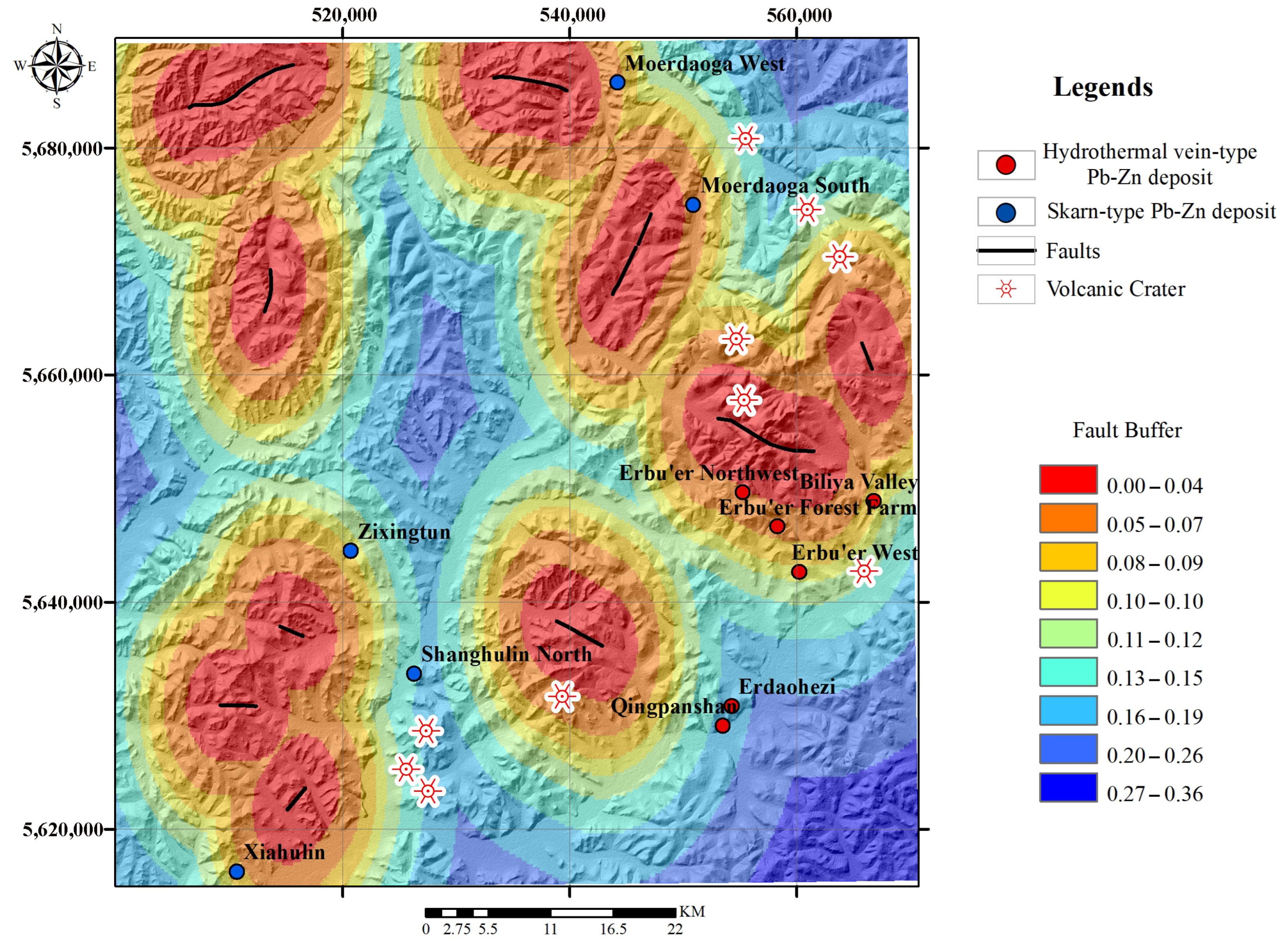
4.1. Construction of Evidence Layers
4.2. Results of RFECV
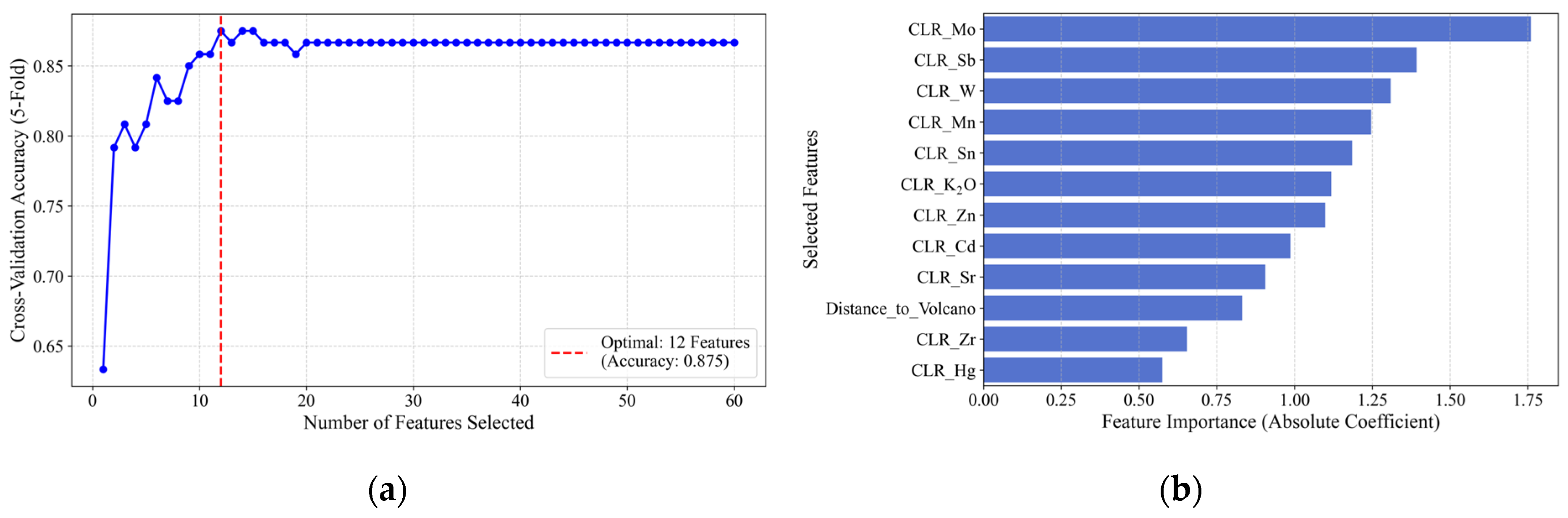
4.2.1. Skarn-Type Features
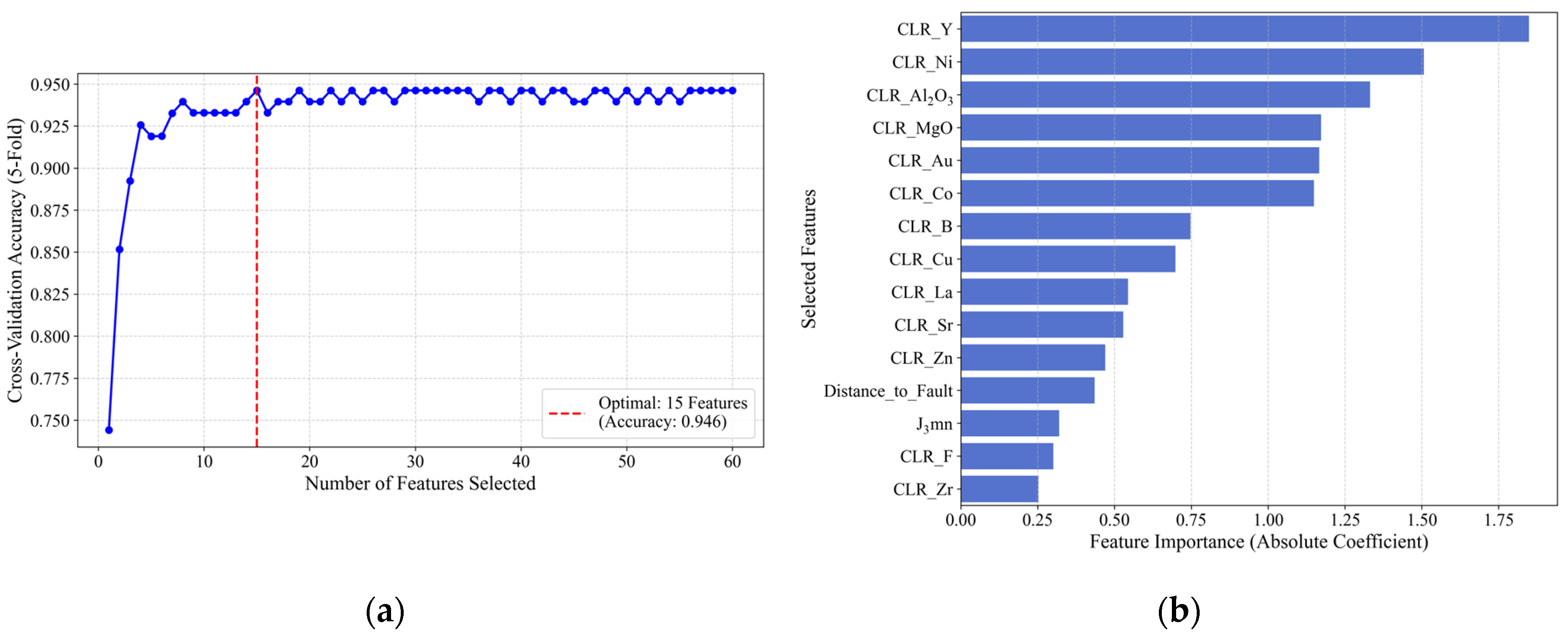
4.2.2. Hydrothermal Vein-Type Features
4.3. Mineral Prospectivity Mapping (MPM) Results
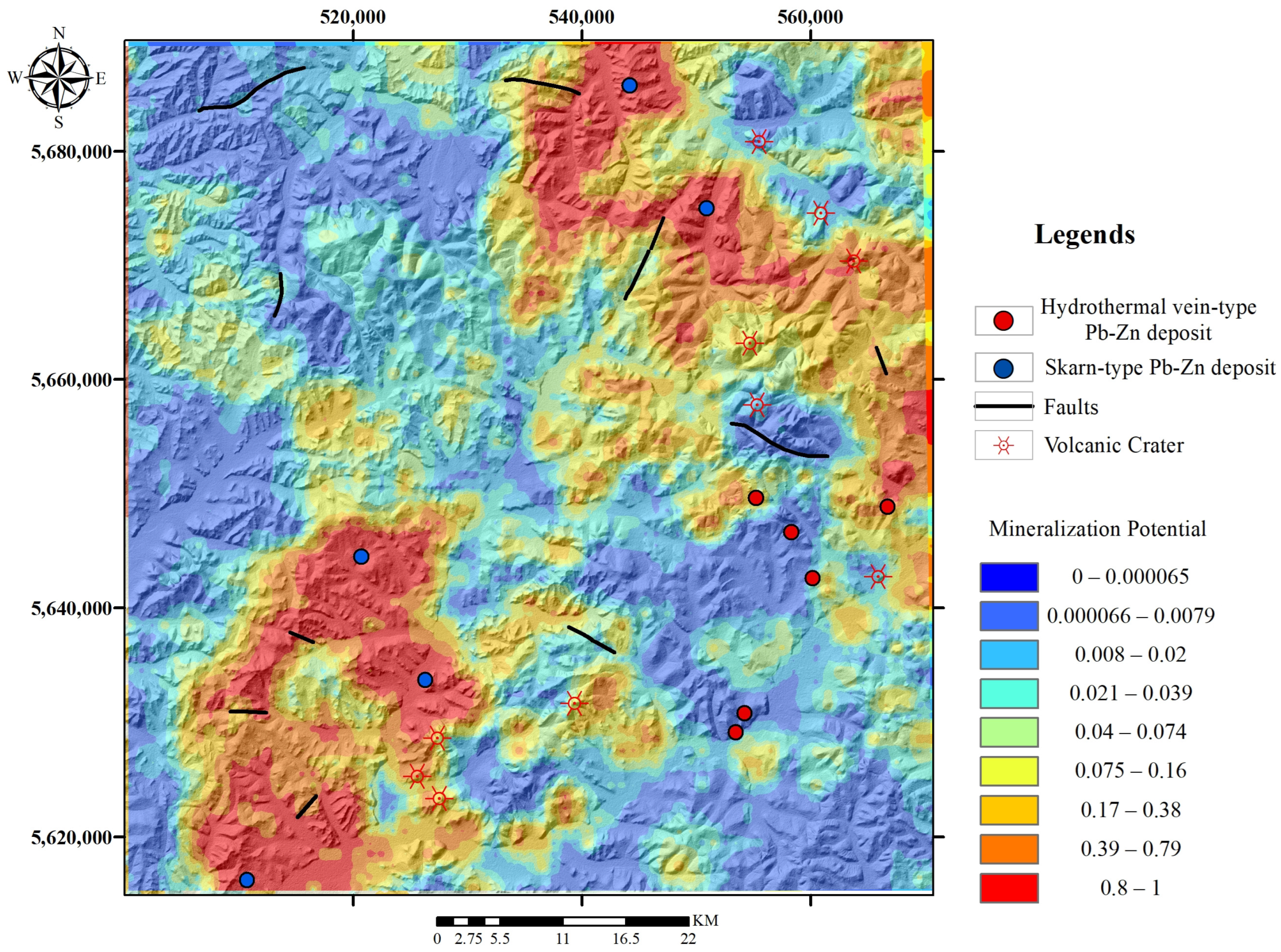
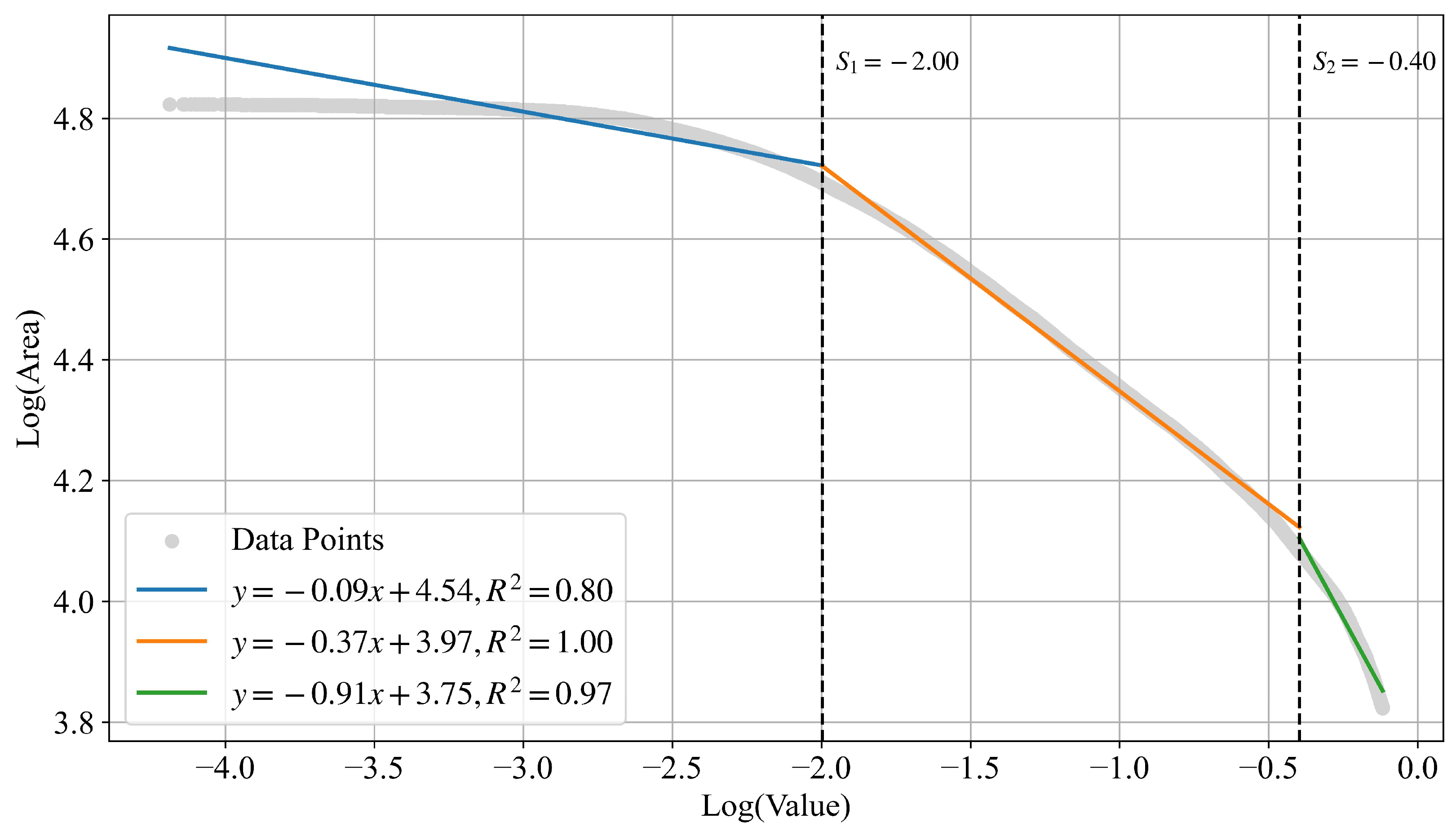
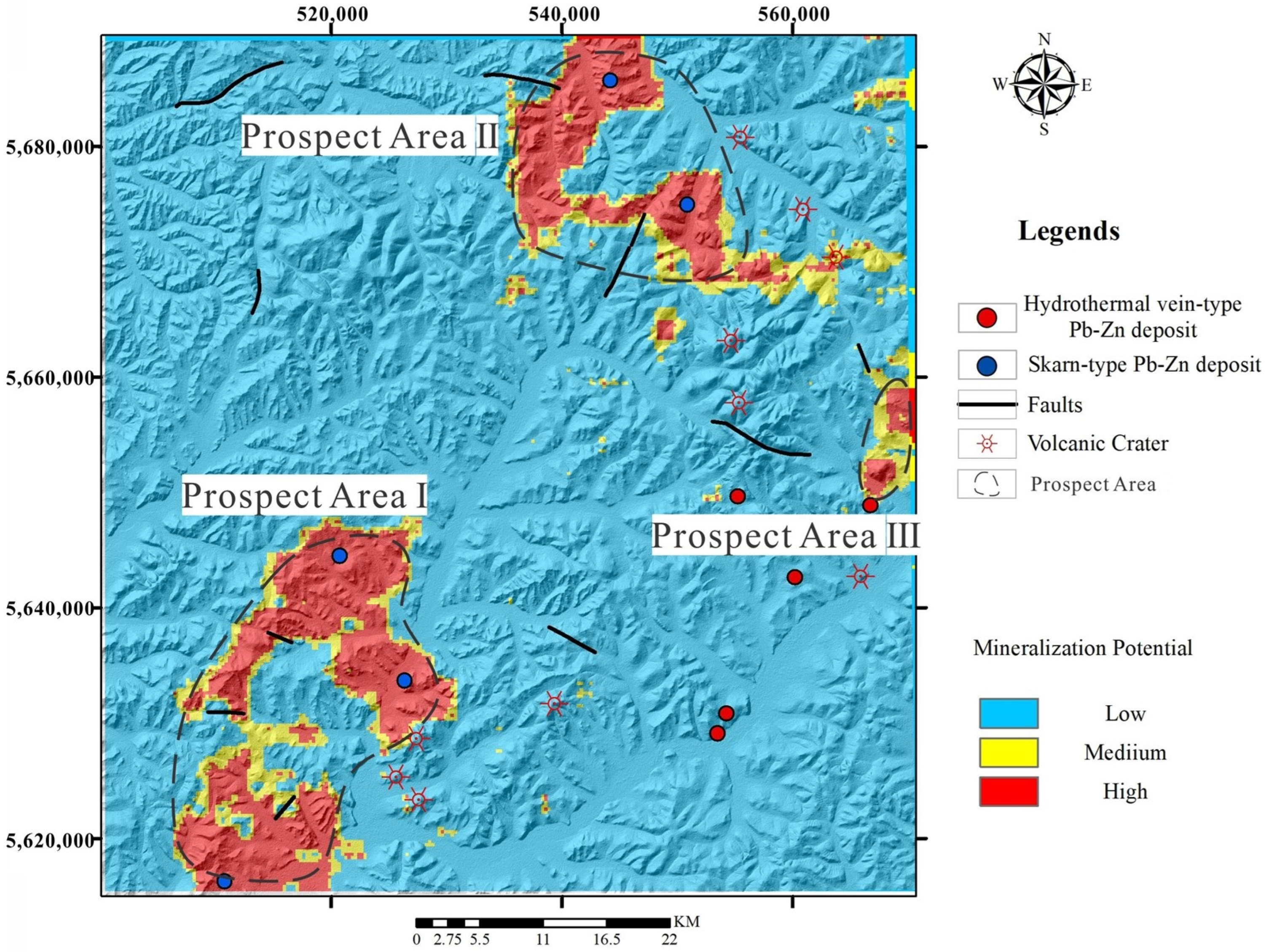
4.3.1. Skarn-Type Pb-Zn Prospectivity Mapping
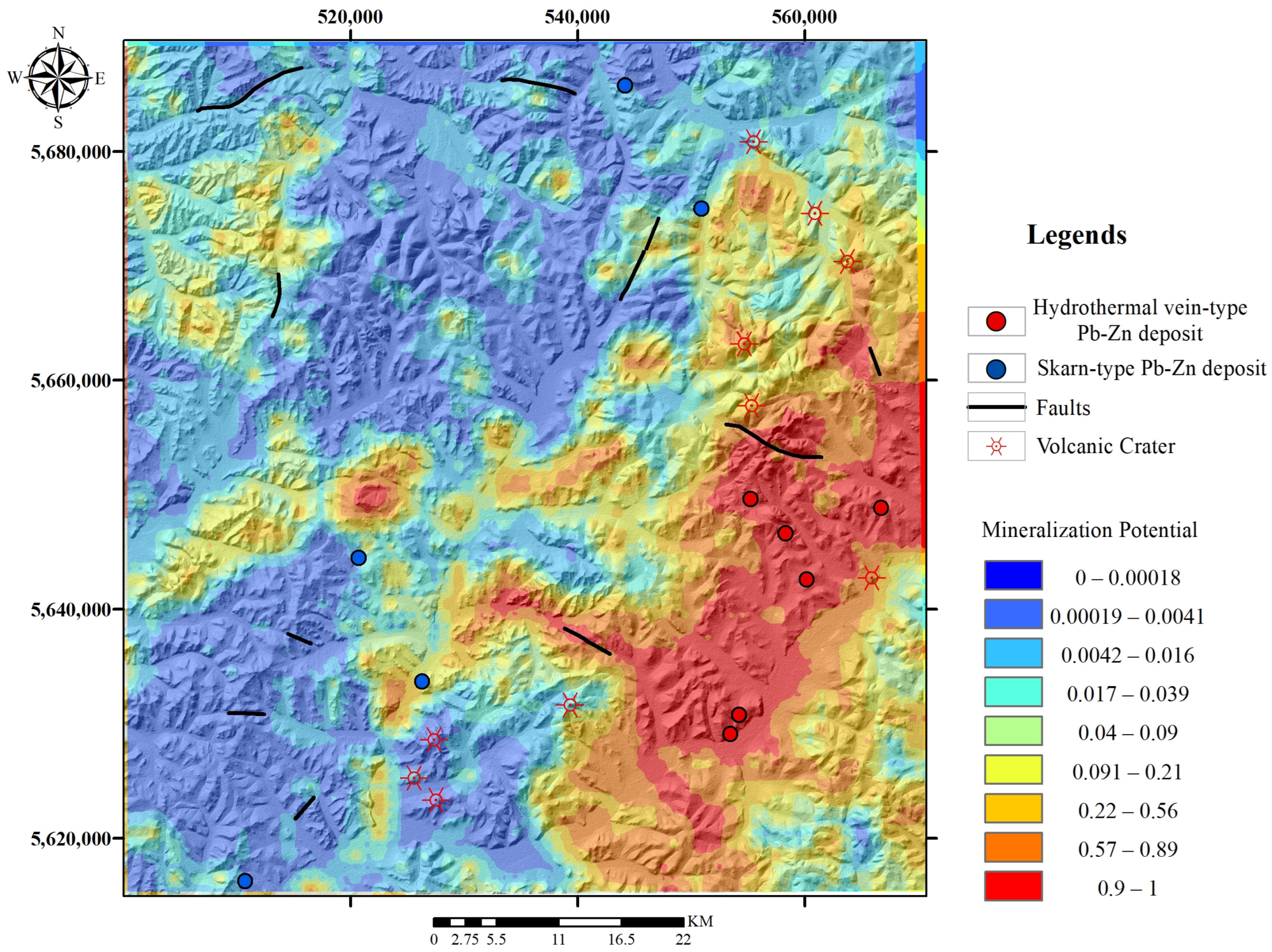
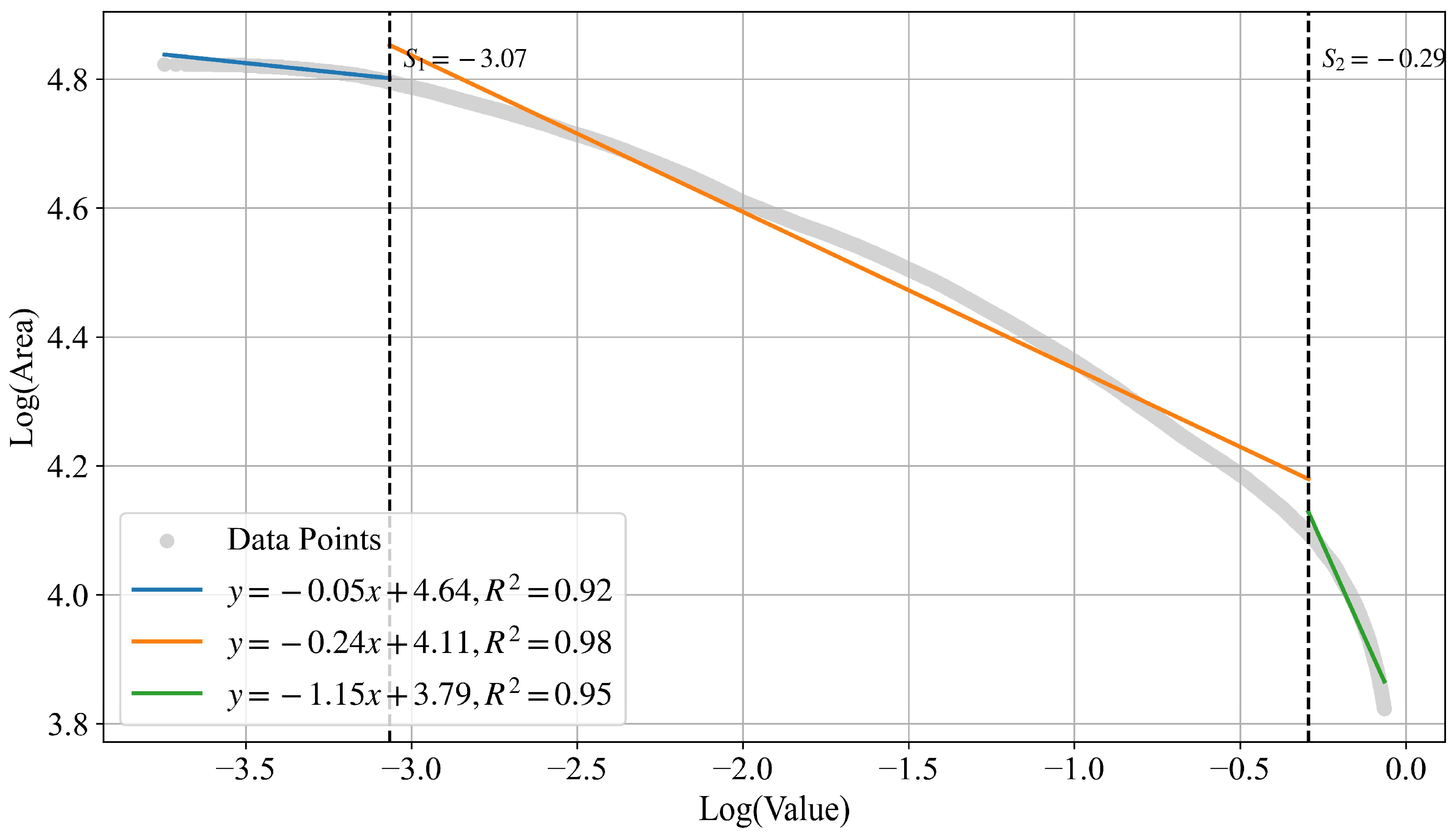
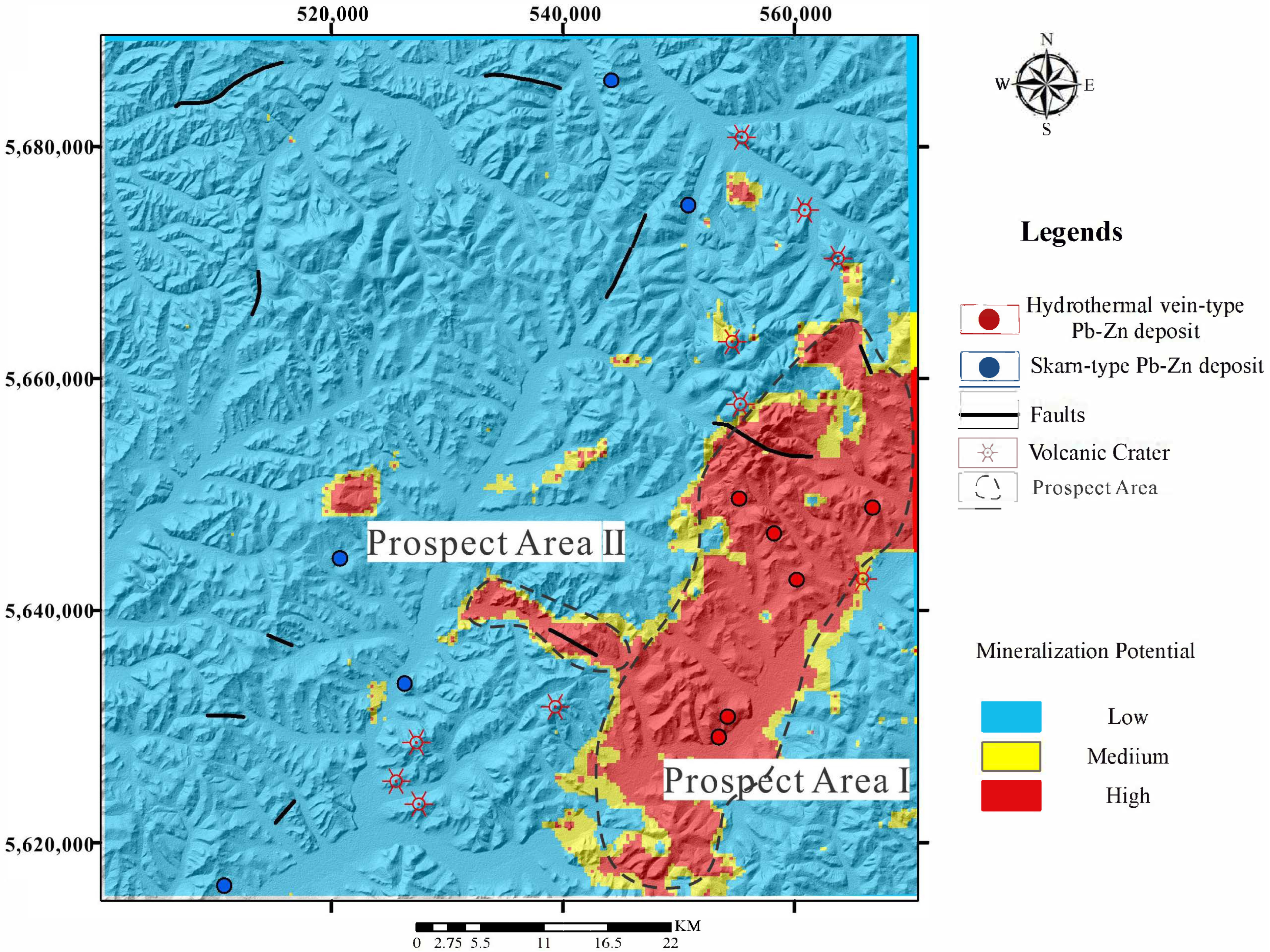
4.3.2. Hydrothermal Vein-Type Pb-Zn Prospectivity Mapping
4.4. SHAP-Based Feature Importance Analysis
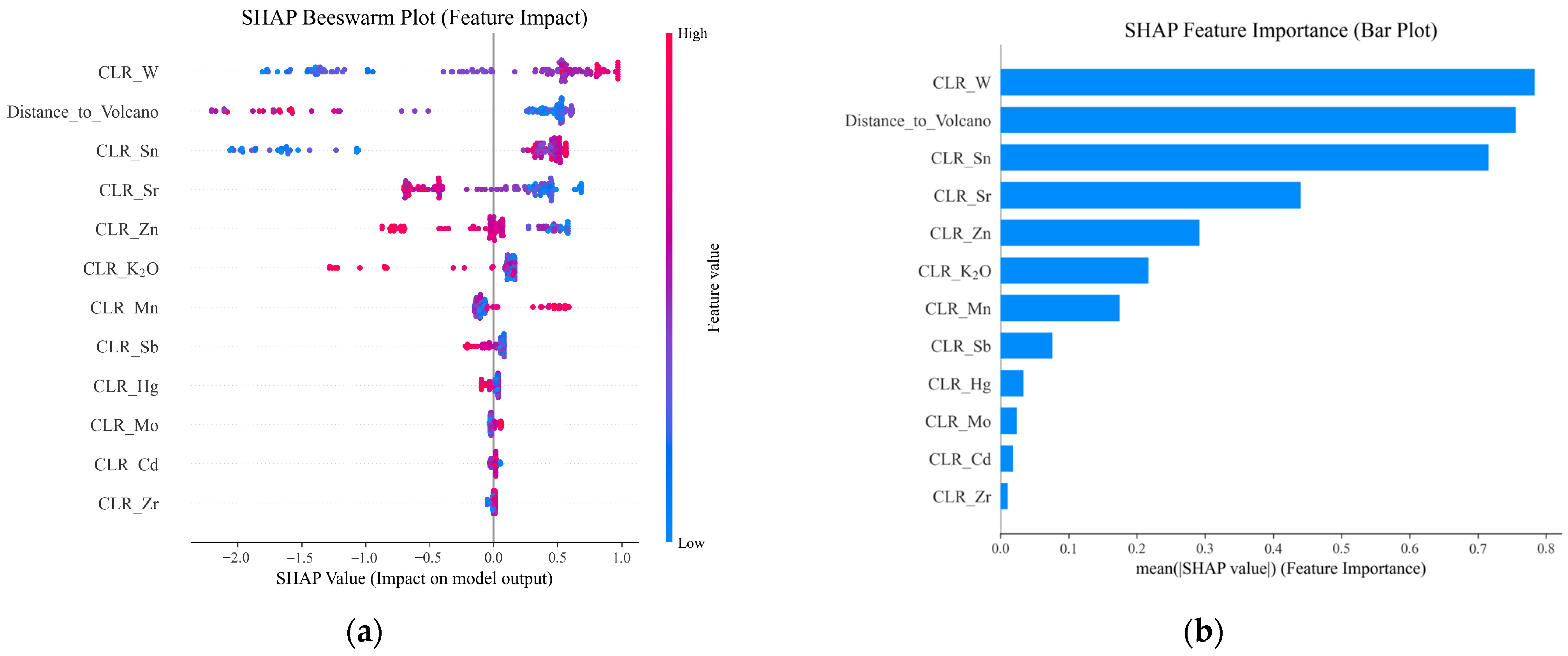
4.4.1. Skarn-Type
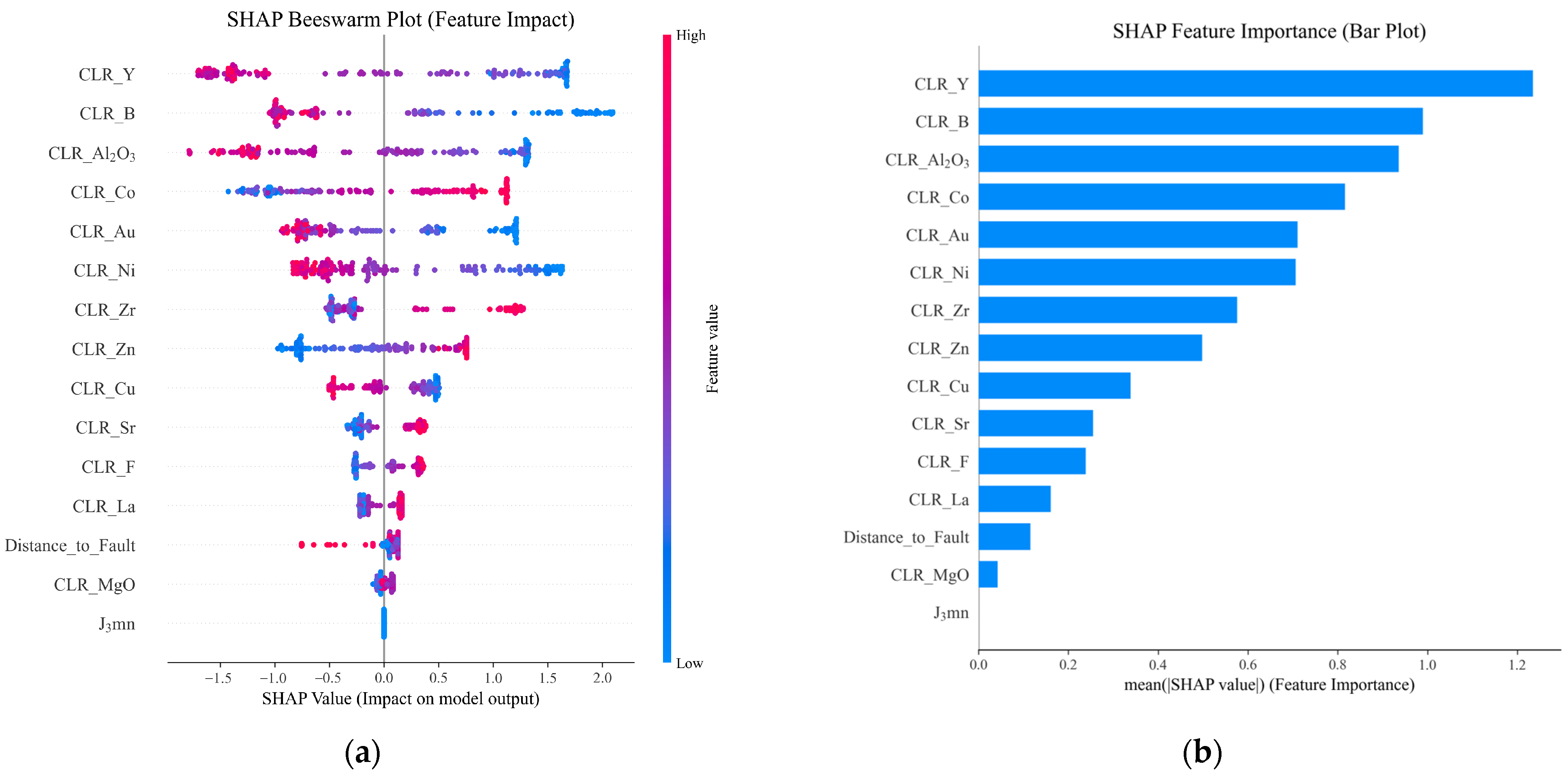
4.4.2. Hydrothermal Vein-Type
4.5. Delineation of Prospectivity Target Areas
4.5.1. Delineation of Skarn-Type Pb-Zn Prospectivity Areas
4.5.2. Delineation of Hydrothermal Vein-Type Pb-Zn Prospectivity Areas
5. Discussion
5.1. Interpretation of the Skarn-Type Model
5.2. Interpretation of the Hydrothermal Vein-Type Model
5.3. Data-Driven Validation of Classical Metallogenic Models
5.4. Limitations and Future Work
6. Conclusions
Author Contributions
Funding
Data Availability Statement
Acknowledgments
Conflicts of Interest
References
- Han, R.; Qin, K.; Xu, F.; Lyu, J.; Yang, X.; Zhang, J.; Wang, Y.; Hui, K. The Evolution of Ore-Forming Fluids of the Halasheng Ag-Pb-Zn Deposit, Inner Mongolia: Evidence from Fluid Inclusions and Mineral Constitute. Minerals 2024, 14, 1278. [Google Scholar] [CrossRef] [Scilit]
- Huang, T.; Chen, C.; Lv, X.; Wang, S.; Liu, H. Evolution and Origin of the Bairendaba Ag-Pb-Zn Deposit in Inner Mongolia, China: Constraints from Infrared Micro-Thermometry, Mineral Composition, Thermodynamic Calculations, and in Situ Pb Isotope. Ore Geol. Rev. 2023, 154, 105316. [Google Scholar] [CrossRef] [Scilit]
- Zhou, Z.; Yang, Z.; Li, X.; Xu, Q. Pre-Metallogenic Wall-Rock Alterations and Element Migration Features of Bairendaba Ag-Pb-Zn Deposit, Inner Mongolia. Miner. Depos. 2024, 43, 548–564. [Google Scholar]
- Song, T.; Wang, C.; Liang, X.; Liang, X. Metallogenic Age and Geological Setting of the Dongjun Ag-Pb-Zn Deposit, Inner Mongolia: Constraints from Geochemistry, Zircon U-Pb and Sphalerite Rb-Sr Chronology of the Alkali-Rich Granite Porphyry. Geotecton. Metallog. 2024, 48, 1040–1059. [Google Scholar]
- Cao, Y.; Liu, Y. Zircon U-Pb Age, Geochemical Characteristics and Metallogenic Significance of Ore-Bearing Porphyry of the Jiawula Ag-Pb-Zn Deposit in Inner Mongolia. Geol. Bull. China 2020, 39, 353–364. [Google Scholar]
- Cheng, L.; Li, H.; Yin, L.; Qin, W.; Tian, H. Research on Geological Characteristics and Prospecting Direction of Erdaohezi Ag-Pb-Zn Deposit in Inner Mongolia. Gold Sci. Technol. 2016, 24, 58–63. [Google Scholar]
- Nie, F.; Sun, Z.; Liu, Y.; Lv, K.; Zhao, Y.; Cao, Y. Mesozoic Multiple Magmatic Activities and Molybdenum Mineralization in the Chalukou Ore District, Da Hinggan Mountains. Geol. China 2013, 40, 273–286. [Google Scholar]
- Pei, S.; Yuan, J.; Huang, M. Soil Geochemical Anomly Characteristics of Xinbaerhuzuoqi, Inner Mongolia and the Ore Prospecting Direction. Contrib. Geol. Minerel Resour. Res. 2018, 33, 449–457. [Google Scholar]
- Yang, Y. Rb-Sr Dating of Sphalerites from Dongjun Pb-Zn-Ag Deposit, Inner Mongolia and Its Geological Significance. Earth Sci. Front. 2015, 22, 348–356. [Google Scholar]
- Carranza, E.J.M.; Laborte, A.G. Data-Driven Predictive Mapping of Gold Prospectivity, Baguio District, Philippines: Application of Random Forests Algorithm. Ore Geol. Rev. 2015, 71, 777–787. [Google Scholar] [CrossRef] [Scilit]
- Carranza, E.J.M.; Laborte, A.G. Random Forest Predictive Modeling of Mineral Prospectivity with Small Number of Prospects and Data with Missing Values in Abra (Philippines). Comput. Geosci. 2015, 74, 60–70. [Google Scholar] [CrossRef] [Scilit]
- Rodriguez-Galiano, V.; Sanchez-Castillo, M.; Chica-Olmo, M.; Chica-Rivas, M. Machine Learning Predictive Models for Mineral Prospectivity: An Evaluation of Neural Networks, Random Forest, Regression Trees and Support Vector Machines. Ore Geol. Rev. 2015, 71, 804–818. [Google Scholar] [CrossRef] [Scilit]
- Zheng, C.; Yuan, F.; Luo, X.; Li, X.; Liu, P.; Wen, M.; Chen, Z.; Albanese, S. Mineral Prospectivity Mapping Based on Support Vector Machine and Random Forest Algorithm—A Case Study from Ashele Copper-Zinc Deposit, Xinjiang, NW China. Ore Geol. Rev. 2023, 159, 105567. [Google Scholar] [CrossRef] [Scilit]
- Bigdeli, A.; Maghsoudi, A.; Ghezelbash, R. A Comparative Study of the XGBoost Ensemble Learning and Multilayer Perceptron in Mineral Prospectivity Modeling: A Case Study of the Torud-Chahshirin Belt, NE Iran. Earth Sci. Inform. 2024, 17, 483–499. [Google Scholar] [CrossRef] [Scilit]
- Zhang, Q.; Chen, J.; Xu, H.; Jia, Y.; Chen, X.; Jia, Z.; Liu, H. Three-Dimensional Mineral Prospectivity Mapping by XGBoost Modeling: A Case Study of the Lannigou Gold Deposit, China. Nat. Resour. Res. 2022, 31, 1135–1156. [Google Scholar] [CrossRef] [Scilit]
- Parsa, M. A Data Augmentation Approach to XGboost-Based Mineral Potential Mapping: An Example of Carbonate-Hosted Zn Pb Mineral Systems of Western Iran. J. Geochem. Explor. 2021, 228, 106811. [Google Scholar] [CrossRef] [Scilit]
- Xu, Y.; Zuo, R. Geochemical Survey Data Cube: A Useful Tool for Lithological Classification and Geochemical Anomaly Identification. Geochemistry 2024, 84, 125959. [Google Scholar] [CrossRef] [Scilit]
- Liu, Y.; Jiang, S.-H.; Bagas, L.; Han, N.; Chen, C.-L.; Kang, H. Isotopic (C-O-S) Geochemistry and Re-Os Geochronology of the Haobugao Zn-Fe Deposit in Inner Mongolia, NE China. Ore Geol. Rev. 2017, 82, 130–147. [Google Scholar] [CrossRef] [Scilit]
- Wu, C.; Wang, B.; Zhou, Z.; Wang, G.; Zuza, A.V.; Liu, C.; Jiang, T.; Liu, W.; Ma, S. The Relationship between Magma and Mineralization in Chaobuleng Iron Polymetallic Deposit, Inner Mongolia. Gondwana Res. 2017, 45, 228–253. [Google Scholar] [CrossRef] [Scilit]
- Chen, Y.-J.; Zhang, C.; Wang, P.; Pirajno, F.; Li, N. The Mo Deposits of Northeast China: A Powerful Indicator of Tectonic Settings and Associated Evolutionary Trends. Ore Geol. Rev. 2017, 81, 602–640. [Google Scholar] [CrossRef] [Scilit]
- Lu, S.; Deng, C.; Wang, K.; Feng, Y.; Li, C.; Chen, J.; Liu, Y. Crustal Contribution for the Formation of the Walali Au Deposit and Implications on the Early Cretaceous Au Mineralization in the Northern Great Xing’an Range. Ore Geol. Rev. 2022, 147, 105000. [Google Scholar] [CrossRef] [Scilit]
- Jiao, T.; Li, J.; Guo, X.; She, H.; Ren, C.; Li, C. Discussion on the Ore-Forming Fluids, Materials Sources and Genesis of Erdaohe Pb-Zn-Ag Deposit, Inner Mongolia. Geol. China 2024, 51, 426–442. [Google Scholar]
- Cai, W.; Wang, K.; Li, J.; Fu, L.; Li, S.; Yang, H.; Konare, Y. Genesis of the Bagenheigeqier Pb-Zn Skarn Deposit in Inner Mongolia, NE China: Constraints from Fluid Inclusions, Isotope Systematics and Geochronology. Geol. Mag. 2021, 158, 271–294. [Google Scholar] [CrossRef] [Scilit]
- Liu, Y. Element Geochemistry; Science Press: Beijing, China, 1984. [Google Scholar]
- Zhai, D.; Liu, J.; Zhang, H.; Tombros, S.; Zhang, A. A Magmatic-Hydrothermal Origin for Ag-Pb-Zn Vein Formation at the Bianjiadayuan Deposit, Inner Mongolia, NE China: Evidences from Fluid Inclusion, Stable (C-H-O) and Noble Gas Isotope Studies. Ore Geol. Rev. 2018, 101, 1–16. [Google Scholar] [CrossRef] [Scilit]
- Li, S.; Wang, Y.; Gao, L.; Xia, F.; Chen, C.; Ruan, D. Magma-Related Origin for Pb-Zn-Ag Vein Formation at the Aerhada Deposit, Inner Mongolia, NE China: Constraints from Fluid Inclusion, C-H-O-S-Pb Isotopic Compositions, and Geochronological Studies. Ore Geol. Rev. 2023, 163, 105793. [Google Scholar] [CrossRef] [Scilit]
- Xuejing, X.; Xuzhan, M.; Tianxiang, R. Geochemical Mapping in China. J. Geochem. Explor. 1997, 60, 99–113. [Google Scholar] [CrossRef] [Scilit]
- Wang, X.; Zhang, Q.; Zhou, G. National-Scale Geochemical Mapping Projects in China. Geostand. Geoanal. Res. 2007, 31, 311–320. [Google Scholar] [CrossRef] [Scilit]
- Xie, X.; Wang, X.; Zhang, Q.; Zhou, G.; Cheng, H.; Liu, D.; Cheng, Z.; Xu, S. Multi-Scale Geochemical Mapping in China. Geochem.-Explor. Environ. Anal. 2008, 8, 333–341. [Google Scholar] [CrossRef] [Scilit]
- Aitchison, J. The Statistical Analysis of Compositional Data; Springer: Dordrecht, The Netherlands, 1986. [Google Scholar]
- Kim, C. Discrete Space Deep Reinforcement Learning Algorithm Based on Support Vector Machine Recursive Feature Elimination. Symmetry 2024, 16, 940. [Google Scholar] [CrossRef] [Scilit]
- Barzani, A.R.; Pahlavani, P.; Ghorbanzadeh, O.; Gholamnia, K.; Ghamisi, P. Evaluating the Impact of Recursive Feature Elimination on Machine Learning Models for Predicting Forest Fire-Prone Zones. Fire 2024, 7, 440. [Google Scholar] [CrossRef] [Scilit]
- Anozie, L.; Fink, B.; Friedrich, C.M.; Engels, C. Monitoring Flow-Forming Processes Using Design of Experiments and a Machine Learning Approach Based on Randomized-Supervised Time Series Forest and Recursive Feature Elimination. Sensors 2024, 24, 1527. [Google Scholar] [CrossRef] [Scilit]
- Yu, Z.; Li, B.; Wang, X. Mineral Prospectivity Mapping Susceptibility Evaluation Based on Interpretable Ensemble Learning. Ore Geol. Rev. 2024, 173, 106248. [Google Scholar] [CrossRef] [Scilit]
- Yan, W.; Shen, Y.; Chen, S.; Wang, Y. Viscosity and Melting Temperature Prediction of Mold Fluxes Based on Explainable Machine Learning and SHapley Additive exPlanations. J. Non-Cryst. Solids 2024, 636, 123037. [Google Scholar] [CrossRef] [Scilit]
- Wang, Z.; Liu, H.; Amin, M.N.; Khan, K.; Qadir, M.T.; Khan, S.A. Optimizing Machine Learning Techniques and SHapley Additive exPlanations (SHAP) Analysis for the Compressive Property of Self-Compacting Concrete. Mater. Today Commun. 2024, 39, 108804. [Google Scholar] [CrossRef] [Scilit]
- Song, Z.; Cao, S.; Yang, H. An Interpretable Framework for Modeling Global Solar Radiation Using Tree-Based Ensemble Machine Learning and Shapley Additive Explanations Methods. Appl. Energy 2024, 364, 123238. [Google Scholar] [CrossRef] [Scilit]
- Feretzakis, G.; Sakagianni, A.; Anastasiou, A.; Kapogianni, I.; Bazakidou, E.; Koufopoulos, P.; Koumpouros, Y.; Koufopoulou, C.; Kaldis, V.; Verykios, V.S. Integrating Shapley Values into Machine Learning Techniques for Enhanced Predictions of Hospital Admissions. Appl. Sci. 2024, 14, 5925. [Google Scholar] [CrossRef] [Scilit]
- Ben Seghier, M.E.A.; Mohamed, O.A.; Ouaer, H. Machine Learning-Based Shapley Additive Explanations Approach for Corroded Pipeline Failure Mode Identification. Structures 2024, 65, 106653. [Google Scholar] [CrossRef] [Scilit]
- Zuo, R.; Xiong, Y. Big Data Analytics of Identifying Geochemical Anomalies Supported by Machine Learning Methods. Nat. Resour. Res. 2018, 27, 5–13. [Google Scholar] [CrossRef] [Scilit]
- Dill, H.G. The “Chessboard” Classification Scheme of Mineral Deposits: Mineralogy and Geology from Aluminum to Zirconium. Earth-Sci. Rev. 2010, 100, 1–420. [Google Scholar] [CrossRef] [Scilit]







Disclaimer/Publisher’s Note: The statements, opinions and data contained in all publications are solely those of the individual author(s) and contributor(s) and not of MDPI and/or the editor(s). MDPI and/or the editor(s) disclaim responsibility for any injury to people or property resulting from any ideas, methods, instructions or products referred to in the content. |
© 2025 by the authors. Licensee MDPI, Basel, Switzerland. This article is an open access article distributed under the terms and conditions of the Creative Commons Attribution (CC BY) license.
Share and Cite
Fu, L.; Chen, G.; Song, Q.; Xie, T.; Yuan, H.; Li, X.; Su, Y.; Xiao, K.; Tang, R. Data-Driven Decoupling of Metallogenic Patterns: A Case Study of Skarn-Type vs. Hydrothermal Vein-Type Pb-Zn Deposits in the Shanghulin Area, Inner Mongolia, China. Minerals 2026, 16, 6. https://doi.org/10.3390/min16010006
Fu L, Chen G, Song Q, Xie T, Yuan H, Li X, Su Y, Xiao K, Tang R. Data-Driven Decoupling of Metallogenic Patterns: A Case Study of Skarn-Type vs. Hydrothermal Vein-Type Pb-Zn Deposits in the Shanghulin Area, Inner Mongolia, China. Minerals. 2026; 16(1):6. https://doi.org/10.3390/min16010006
Chicago/Turabian StyleFu, Lichun, Guihu Chen, Qingyuan Song, Tiankun Xie, He Yuan, Xuefeng Li, Yu Su, Keyan Xiao, and Rui Tang. 2026. "Data-Driven Decoupling of Metallogenic Patterns: A Case Study of Skarn-Type vs. Hydrothermal Vein-Type Pb-Zn Deposits in the Shanghulin Area, Inner Mongolia, China" Minerals 16, no. 1: 6. https://doi.org/10.3390/min16010006
APA StyleFu, L., Chen, G., Song, Q., Xie, T., Yuan, H., Li, X., Su, Y., Xiao, K., & Tang, R. (2026). Data-Driven Decoupling of Metallogenic Patterns: A Case Study of Skarn-Type vs. Hydrothermal Vein-Type Pb-Zn Deposits in the Shanghulin Area, Inner Mongolia, China. Minerals, 16(1), 6. https://doi.org/10.3390/min16010006