1. Introduction
Gravity exploration, as a non-invasive geophysical method, effectively detects spatial variations in crustal rock density [
1,
2,
3]. High-precision, large-scale dense gravity surveys can identify subtle density anomalies at depths of several hundred meters, providing critical constraints for identifying concealed intrusive bodies [
4,
5], fault structures, and mineralized zones [
6,
7]. Following appropriate data processing and petrophysical inversion, gravity anomalies derived from density contrasts can aid in interpreting regional tectonic frameworks [
8] and delineating prospective mineralization targets [
9,
10], particularly in Quaternary cover areas [
11,
12].
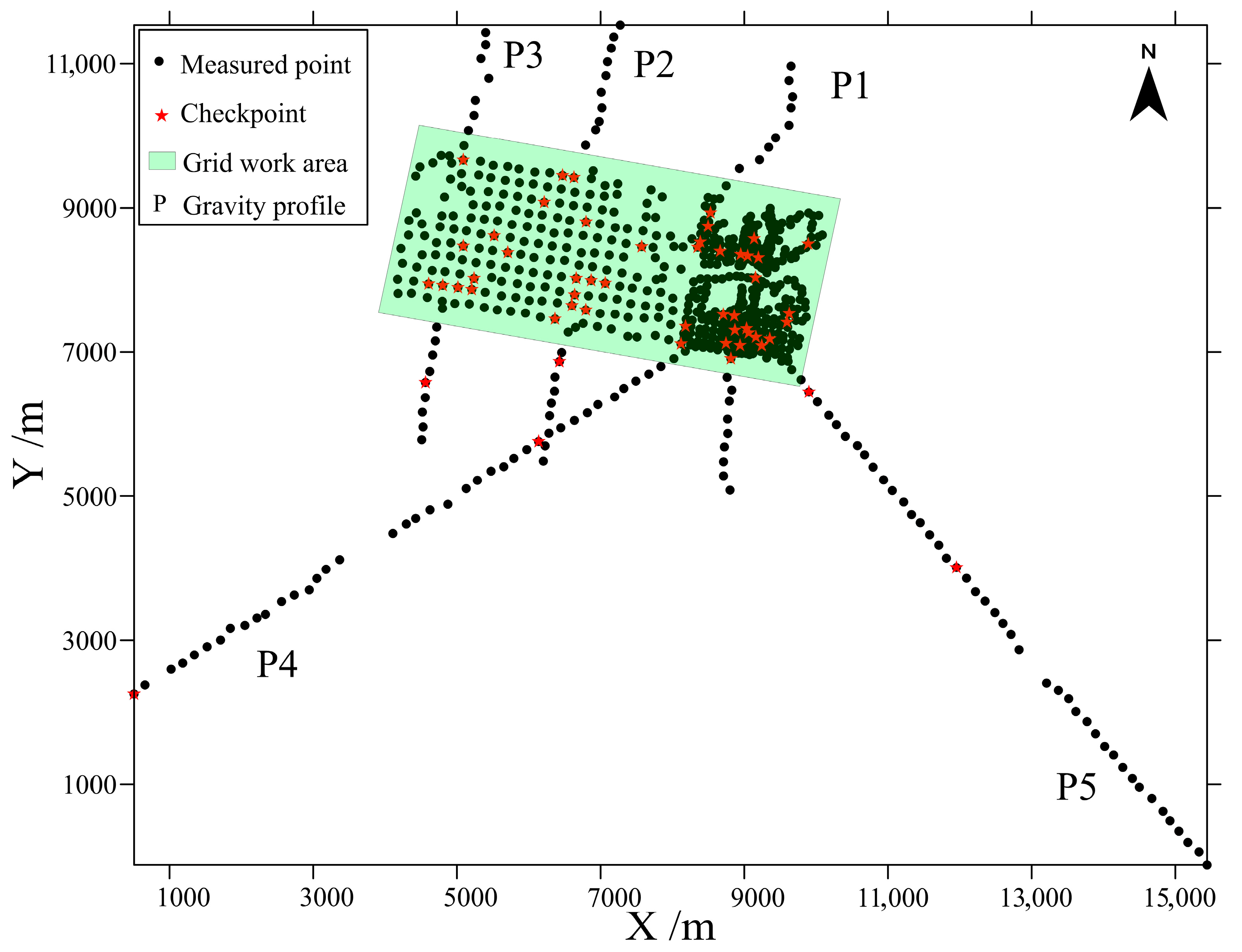
In recent years, significant progress has been made in copper–gold ore exploration in northeastern Zhejiang, with the discovery of a large-scale copper–gold symbiotic ore body near Qi’ao Village in Dingzhai Township, Shangyu District, Shaoxing City. There is considerable potential for concealed ore bodies at depth. However, extensive Quaternary cover and limited bedrock exposure severely restrict access to deep geological information. Owing to the scarcity of large-scale geophysical surveys in northeastern Zhejiang, current interpretations of how regional fault structures control mineralization rely primarily on geological mapping and inference, and lack robust geophysical validation.
The study area is located in Dingzhai Township, Shangyu District, Shaoxing City, Zhejiang Province, situated on the northeastern segment of the Qinling–Hangzhou (Qin-Hang) Convergence Zone, specifically on the northeast edge of the Jiangshan-Shaoxing ductile shear zone (locally referred to as the Fangjun-Lianghui ductile shear zone). This shear zone not only represents a key macrostructural marker of the Jiangshan–Shaoxing Fault Zone but also coincides with a prominent gravity gradient belt [
13]. Its tectonically strategic position, coupled with intense magmatism, volcanism, and metamorphism, has created favorable conditions for multi-metallic mineralization, particularly Cu and Au, making it one of Zhejiang’s most prospective metallogenic regions [
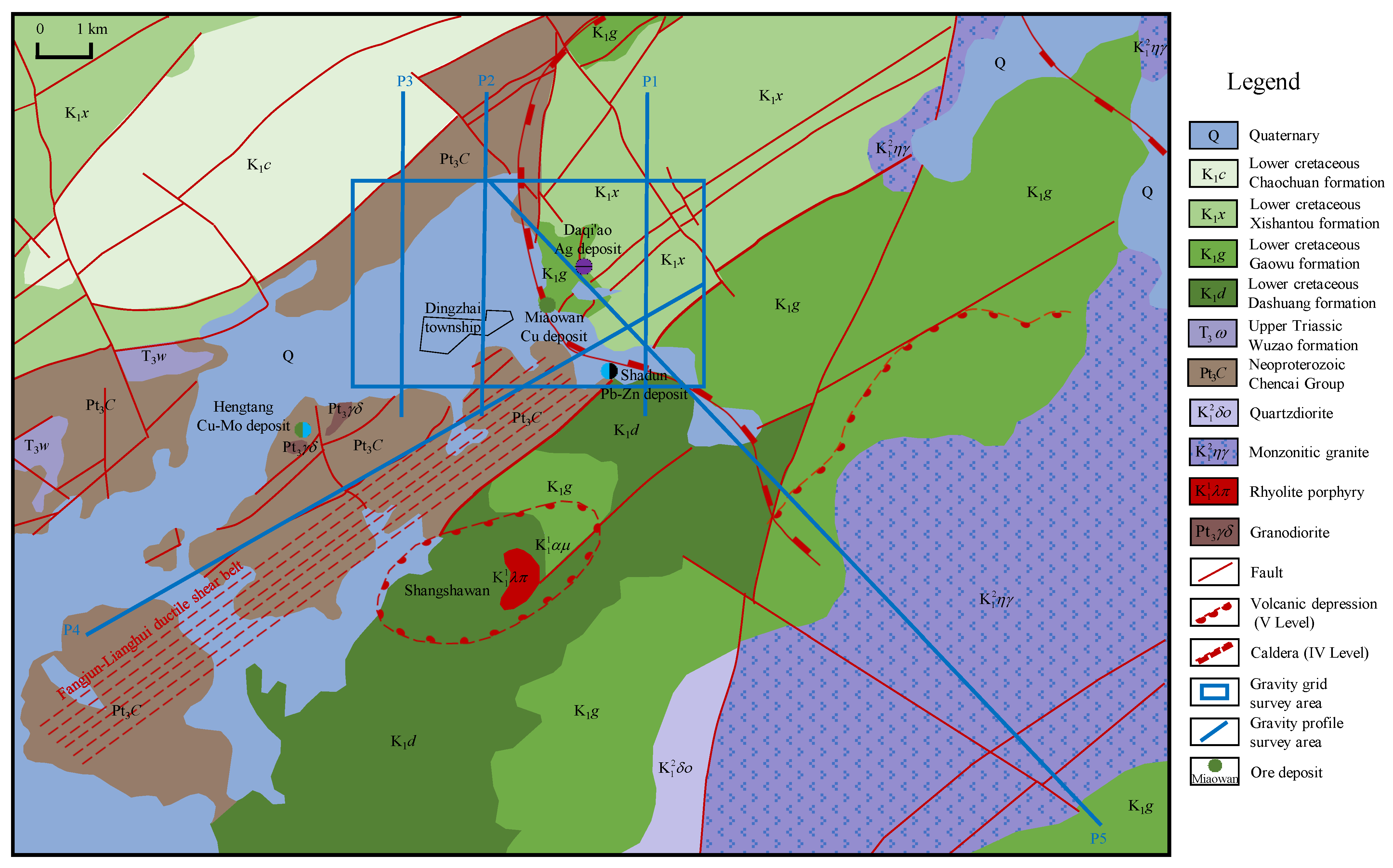
14]. The regional geological setting and location of the gravity survey are shown in
Figure 1.
Since the 1970s, numerous medium- to small-sized polymetallic deposits—including the Hengtang Cu–Mo, Miaowan Cu, Daqi’ao Ag and Shadun Pb–Zn deposits—have been discovered in the region, primarily characterized by porphyry and epithermal types. In the study area, new and old strata are relatively well developed, mainly exposed as Mesozoic Cretaceous volcanic rock series of the Moshishan Group, including the Dashuang Formation (K
1d), Gaowu Formation (K
1g), and Xishantou Formation (K
1x), partially covered by Quaternary layers (Q). In the northwestern part of the study area, Neoproterozoic Chencai Group (Pt
3c) metamorphic rocks are exposed. These consist of intermediate- to high-grade metamorphosed basic volcanic–sedimentary associations, with dominant lithologies including biotite plagioclase gneiss, amphibolite, siliceous rocks, felsic granulite, and interlayered marble, locally exhibiting migmatization [
15]. Previous studies indicate that the Chencai Group not only preserves critical records of early tectonic evolution within the Jiangnan Orogenic Belt but also exhibits a close genetic link to regional Pb–Zn, Cu–Au, and other polymetallic mineral systems [
15].
From the perspective of regional metallogenic setting, both the Neoproterozoic Chencai Group metamorphic rocks and the Cretaceous volcanic sequences in northeastern Zhejiang constitute important Au–Ag–bearing strata, with mineralization strongly controlled by fault systems [
14]. Ni and Wang [
16] pointed out that the northeastern segment of the Qin-Hang metallogenic belt experienced multiple Cu–Au mineralization events during the late Mesoproterozoic-Neoproterozoic, early Paleozoic, and late Mesozoic periods. Among these, the Neoproterozoic Jiangnan orogeny and contemporaneous intraplate magmatic activities enriched the newly accreted crust with copper and gold elements, establishing a substantial geochemical reservoir that facilitated large-scale metal enrichment during the Yanshan orogeny—a critical geological prerequisite for the development of this metallogenic belt. Mineralization-related magmatic rocks are predominantly calc-alkaline intermediate-acid porphyries (such as granodiorite porphyry, granite porphyry, and monzogranite porphyry) [
17,
18], whose genesis is closely linked to the reactivation of ancient subduction-zone materials during the Mesozoic [
19]. These porphyritic intrusions are interpreted to have originated from partial melting of Proterozoic island-arc basalts, thereby inheriting distinctive geochemical signatures characteristic of an island-arc subduction tectonic environment, which imparts a specific affinity for Cu-polymetallic mineralization [
20,
21]. Such ore-controlling intrusions typically emplaced at shallow crustal levels (2–6 km depth or less) [
22], with their ascent and emplacement structurally guided by regional deep-seated fault systems that served as conduits for magma transport. In terms of physical properties, Mesozoic volcanic rocks in northeastern Zhejiang exhibit relatively uniform densities, ranging from 2.60 to 2.65 g/cm
3, whereas the Chencai Group metamorphic rocks display higher average densities (~2.70 g/cm
3). This property difference provides a favorable geophysical premise for identifying concealed high-density geological features (e.g., metamorphic basement blocks or structural interfaces) using gravity survey methods.
Existing study has demonstrated that gold occurrences in Zhejiang Province are commonly concentrated in regions characterized by high Bouguer gravity anomaly values [
23]. Known metallic ore districts in the province frequently exhibit distinctive “tongue-shaped” anomalies or distortions in Bouguer anomaly contours, indicating the presence of intrusive bodies, volcanic structures, or remnants of older stratigraphic units [
24]. Based on the original 1:200,000-scale surface Bouguer gravity anomaly data compiled by the former Ministry of Geology and Mineral Resources, Yang et al. [
25] conducted a comprehensive analysis of Zhejiang’s crustal architecture and concluded that the Jiangshan–Shaoxing Fault Zone represents an upper-crustal structure, while the eastern Zhejiang volcanic belt generally displays high-density characteristics. Low-gravity anomalies in mineralized regions are primarily attributed to several interrelated mechanisms: (1) the intrinsically low density of ore-related intrusions; (2) density reduction in host rocks due to magmatic thermal effects and associated alteration; (3) development of fractures and their infill by low-density materials during tectonic deformation; and (4) extensive hydrothermal alteration and mineralization processes. Collectively, magmatic activity and tectonic evolution jointly govern the spatial patterns of regional gravity anomalies [
26]. These observations underscore the utility of gravity surveys in both regional mineral exploration and the reconstruction of structural evolution.
Given the absence of prior high-precision, large-scale gravity surveys in the study area, this research implemented dense gravity measurements across key sectors of Dingzhai Township in northeastern Zhejiang, integrating the latest high-resolution geological mapping results to acquire high-quality gravity data. Through a comprehensive processing workflow—including Bouguer anomaly computation, source-field separation, density inversion, and identification of fault structures—the study systematically delineates subsurface density architecture and maps concealed fault systems. The primary objectives are to (1) clarify deep-seated ore-controlling structural frameworks; (2) identify potential concealed mineralized zones or intrusive targets; (3) evaluate regional mineral exploration potential; and (4) provide geophysical evidence for subsequent drilling verification and exploration deployment. This study not only fills a critical gap in high-precision gravity coverage for the region but also offers new geophysical insights into the architecture and evolution of deep-seated ore-forming systems within the northeastern segment of the Qin-Hang metallogenic belt.
3. Results and Discussion
3.1. Characteristics and Interpretation of Bouguer Gravity Anomaly in Gravimetric Grid Area
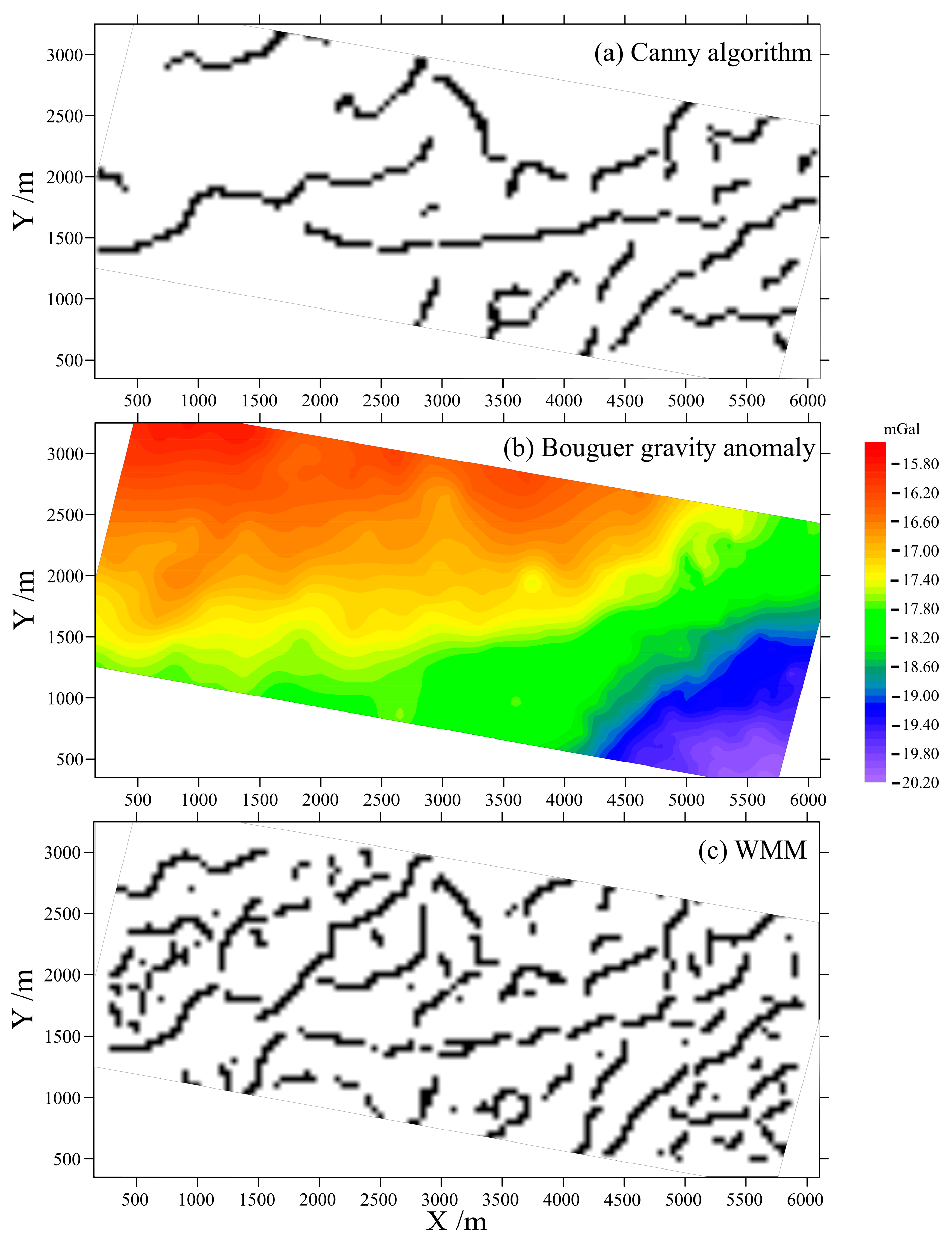
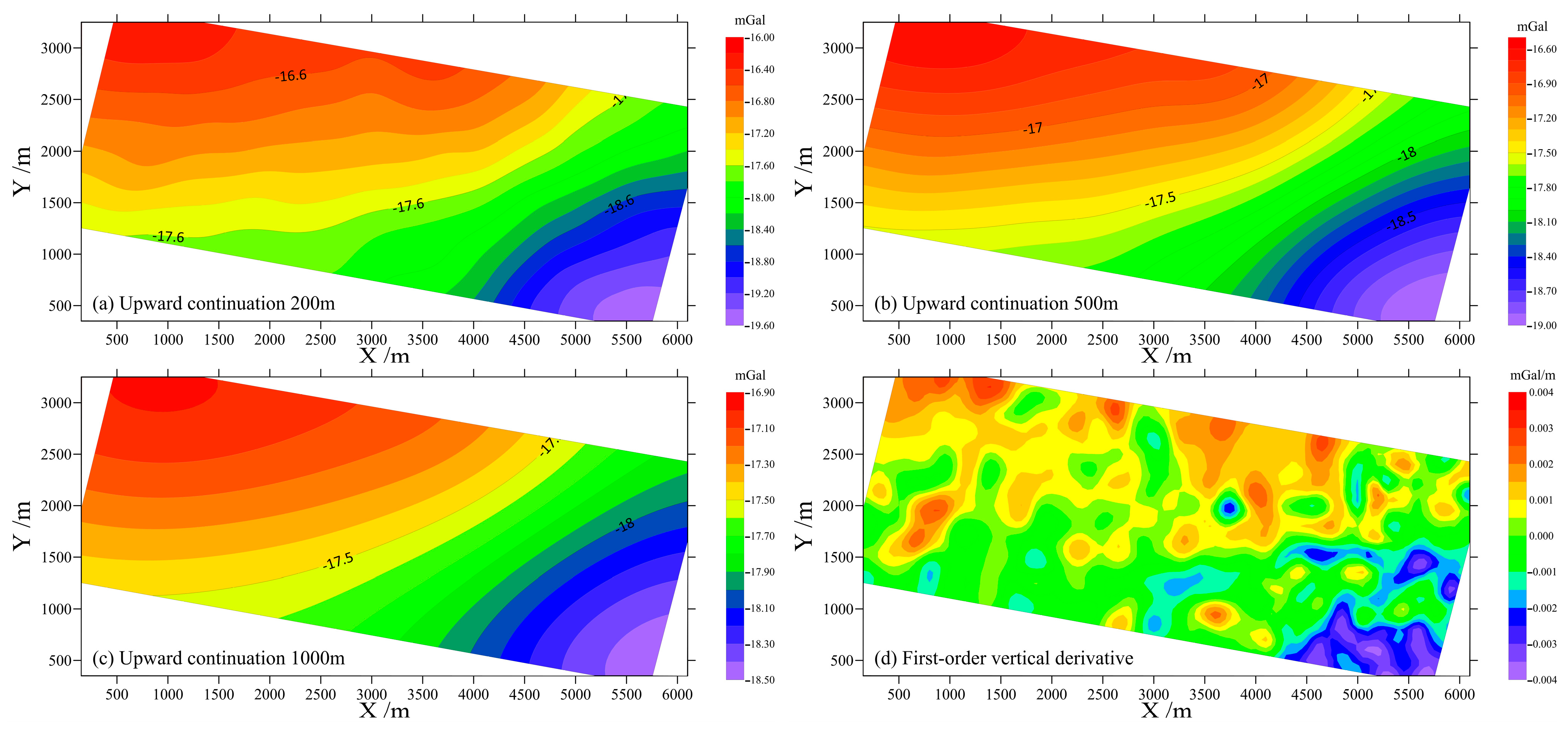
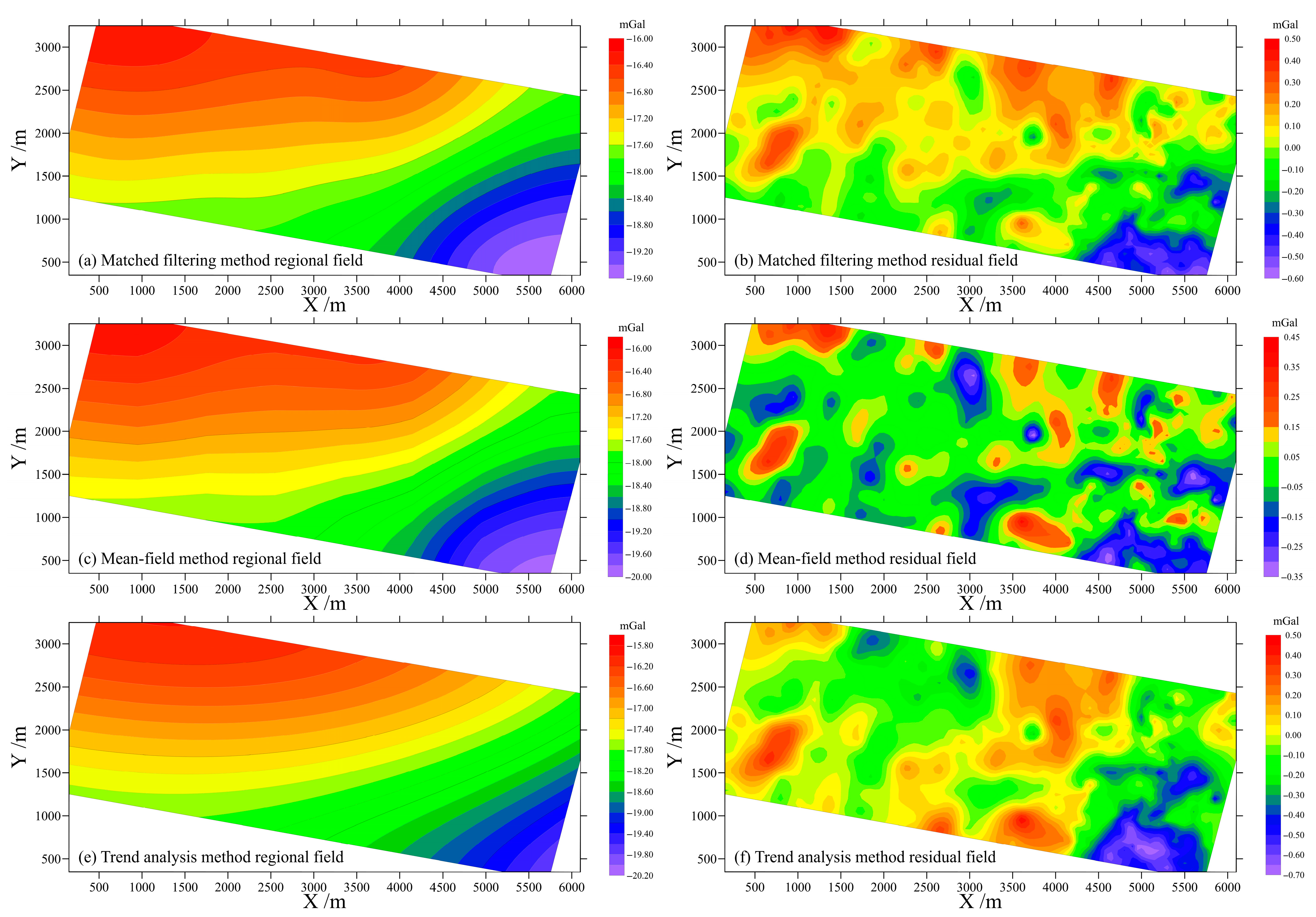
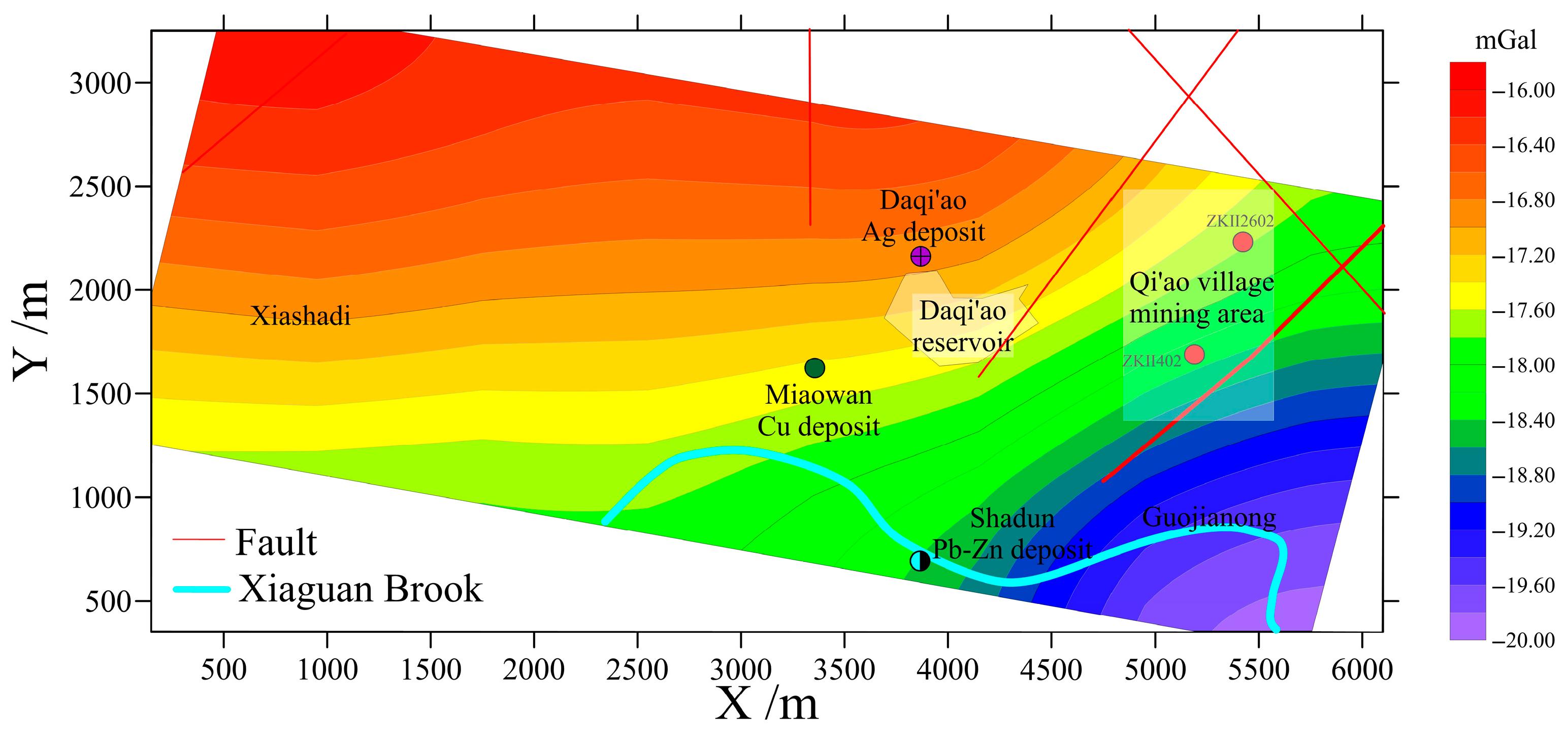
The regional Bouguer gravity anomaly across the gridded survey area ranges from −19.881 × 10
−5 m/s
2 to −16.043 × 10
−5 m/s
2 (
Figure 6), which is broadly consistent with the crustal structure model for Zhejiang Province proposed by Yang et al. [
25]. The anomaly field exhibits an overall smooth spatial variation, characterized by a stepwise decrease in amplitude from the northwest to the southeast. A pronounced gravity gradient zone occurs near Qi’ao Village, trending parallel to the Fangjun–Lianghui ductile shear zone. This feature is interpreted to be controlled by major deep-seated regional faults, notably the Jiangshan–Shaoxing suture zone, underscoring the dominant influence of deep basement architecture on the observed gravity field. The sharp gravity gradients along these structures reflect their role as density boundaries, where lithological contrasts—such as those between high-density Neoproterozoic metamorphic basement rocks and overlying lower-density sedimentary cover—generate significant anomalies. Integration with regional geological mapping further suggests that the relatively higher gravity values in the northwestern part of the survey area may result from shallow uplift or diapiric intrusion of the high-density Chencai Group (Pt
3c). Conversely, the lower gravity anomalies in the southeastern sector are likely attributable to either density heterogeneity within the Lower Cretaceous Dashuang Formation or thickening of low-density Quaternary unconsolidated sediments in the Xiaguan Brook basin.
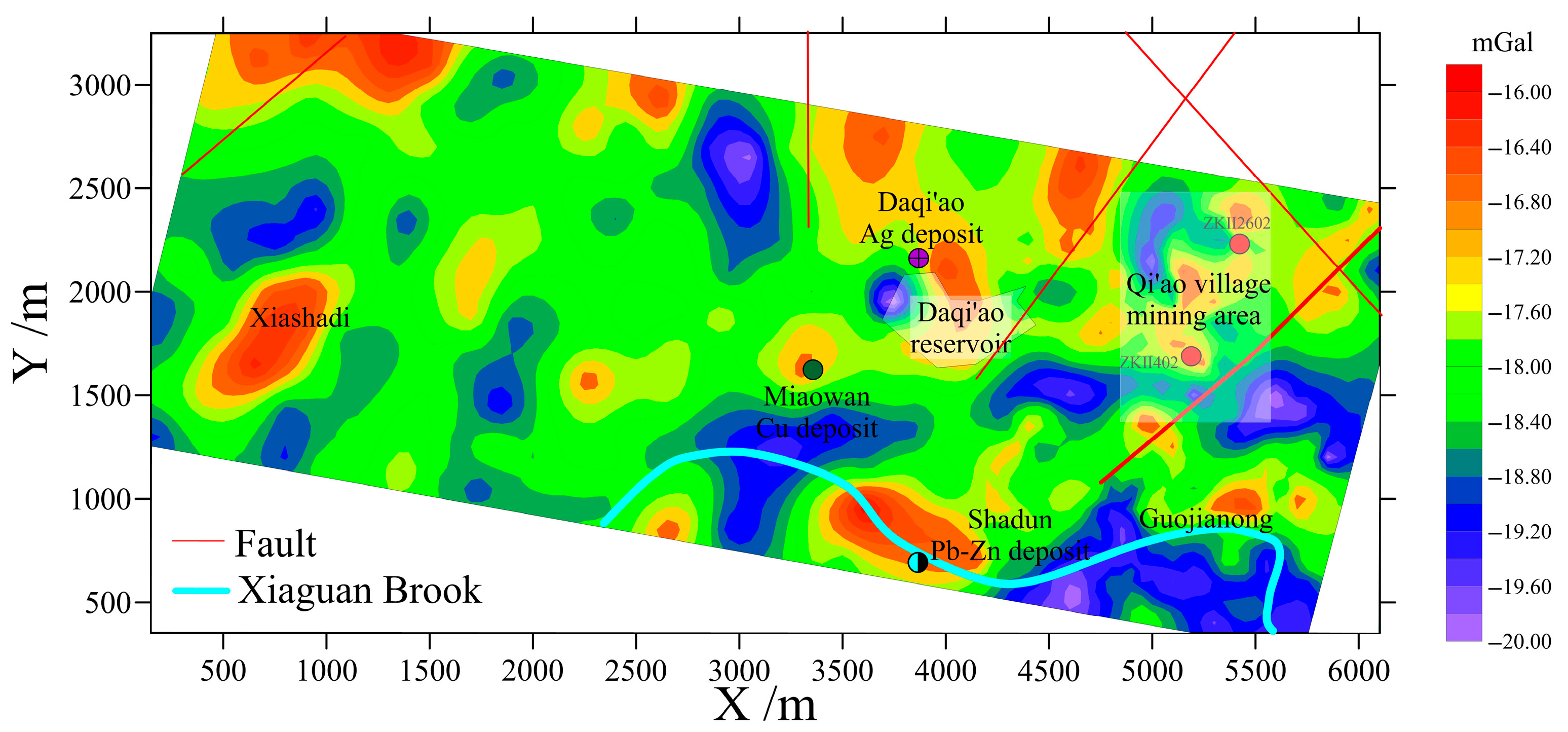
The residual Bouguer gravity anomaly (representing shallow-source signals) across the gridded survey area ranges from −0.339 × 10
−5 m/s
2 to +0.3745 × 10
−5 m/s
2 (
Figure 7). This field effectively resolves near-surface density heterogeneities and exhibits strong spatial correspondence with known geological features and mineralization occurrences. For example, a localized positive anomaly in the northwestern corner aligns closely with surface outcrops of the Neoproterozoic Chencai Group. More significantly, a newly identified, prominent positive anomaly has been detected at Xiashadi in the southwestern part of the survey area. This feature displays a distinct “tongue-shaped” morphology and closely resembles the gravity signature of the known Shadun Pb–Zn deposit. It is tentatively interpreted as reflecting localized upwelling of high-density Neoproterozoic basement material—potentially intermediate-acid porphyritic intrusions generated during Mesozoic partial melting—indicating considerable mineral exploration potential. Notably, the Miaowan Cu, Daqi’ao Ag, and Shadun Pb–Cu deposits all coincide with centers of local gravity highs, confirming a robust spatial correlation between residual anomalies and known mineralization. In particular, the central position of the Shadun anomaly appears to extend northwestward beyond the current mining area, suggesting that existing mining operations may not fully encompass the core of the anomaly. Low-amplitude anomalies in the region are generally associated with fault zones or sedimentary cover. For instance, the Xiaguan Brook area consistently exhibits reduced gravity values, attributable to variable thicknesses of low-density Quaternary sediments. An isolated gravity low observed west of the Daqi’ao Reservoir coincides precisely with the central crest of the reservoir dam. Upon thorough re-examination of the processing workflow, this feature is attributed to an overcorrection in terrain reduction: the elevated topography of the dam resulted in excessive compensation during the terrain correction, artificially generating a spurious local low. Overall, analysis of the residual Bouguer gravity anomaly demonstrates that the high-precision survey successfully delineated prospective mineralized zones. Critically, all currently exploited deposits fall within these interpreted target areas, providing strong validation for the gravity anomaly–based exploration strategy.
Moreover, several key locations exhibit characteristics of structural–lithological coupling. As shown in
Figure 7, the area northeast of Daqi’ao Reservoir shows well-developed faulting, which accounts for the pronounced positive-to-negative gradient transitions in the Bouguer gravity anomaly. Drill holes ZKII2602 and ZKII402 are situated within zones of relatively high gravity values; however, the local anomaly maxima are more tightly clustered in the mountainous terrain north of Qi’ao Village, suggesting the possible presence of undiscovered high-density bodies at depth. The localized gravity high in the northeastern corner of the survey area may correspond to surface exposures of fine-grained (porphyritic) intrusive rocks within the northeastern sector of the mining area. Conversely, the pronounced low Bouguer anomaly south of Guojianong Village is likely attributable to lateral variations in the thickness of Quaternary sediments along and adjacent to Xiaguan Brook. Two distinct gravity highs occur north of Guojianong Village, potentially reflecting stratigraphic unconformities or lithological contacts between the Lower Cretaceous Dashuang Formation and Gaowu Formation. Overall, the residual Bouguer gravity anomaly effectively delineates shallow density heterogeneities across the gridded survey area and demonstrates strong consistency with existing geological mapping and field observations.
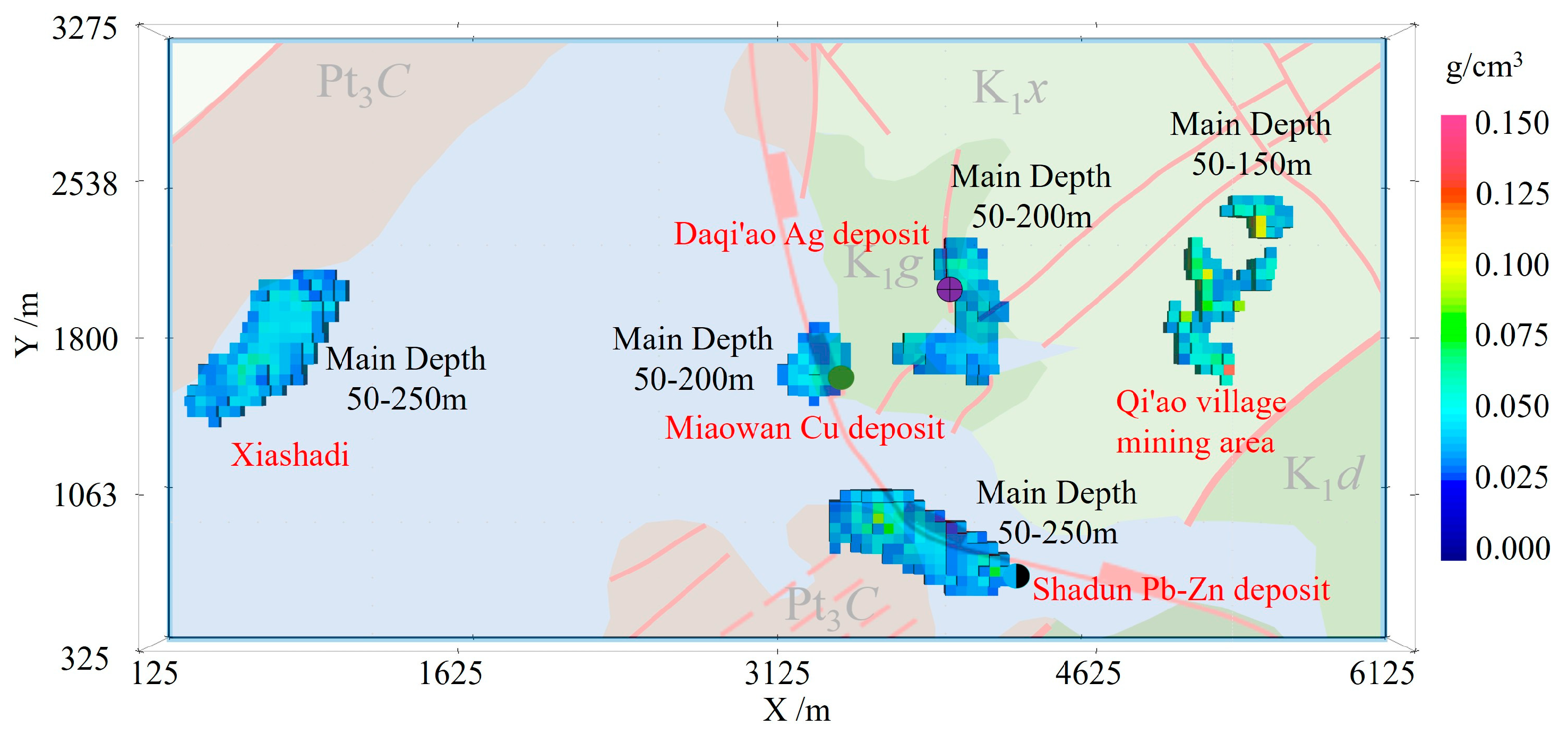
Applying the aforementioned three-dimensional (3D) density inversion method, the shallow-source density structure of the survey area was reconstructed, revealing that major anomalous bodies are concentrated at depths of 50–250 m. The 3D gravity inversion model is discretized over a domain of 50 m × 50 m × 50 m cell size, resulting in a grid of 120 × 59 × 10 cells. By integrating existing geological and geophysical data (as discussed above), we interpret the subsurface density anomaly patterns associated with five mineral targets—three known deposits and two prospective zones—within the gridded survey area (
Figure 8). Negative gravity anomalies in the study area are primarily attributed to fault-controlled variations in sediment thickness and the presence of low-density geological units. Given the limited spatial extent of the study area and the complexity of its geological setting, our interpretation focuses on a subset of major, high-density gravity anomaly that are most confidently resolved by the available gravity data. This targeted approach enhances the reliability of our structural inferences and avoids overinterpretation of features with ambiguous geophysical signatures. Specifically, the Qi’ao Village mining area exhibits a relatively dispersed high-density anomaly pattern, primarily confined to depths of 50–150 m. This distribution closely aligns with local gravity anomalies, suggesting multiple phases or centers of shallow mineralization and/or intrusive activity. The Daqi’ao Ag deposit appears to be structurally controlled by regional faults, resulting in irregularly shaped subsurface density anomalies. The Miaowan Cu deposit is characterized by a comparatively small-scale inverted density anomaly. Notably, the density structure and anomaly extent in the Xiashadi area closely resemble those of the Shadun Pb–Zn deposit, highlighting Xiashadi as a high-priority target for focused exploration and indicating significant potential for the discovery of new mineral resources.
3.2. Characteristics and Interpretation of Bouguer Gravity Anomaly in Gravimetric Lines
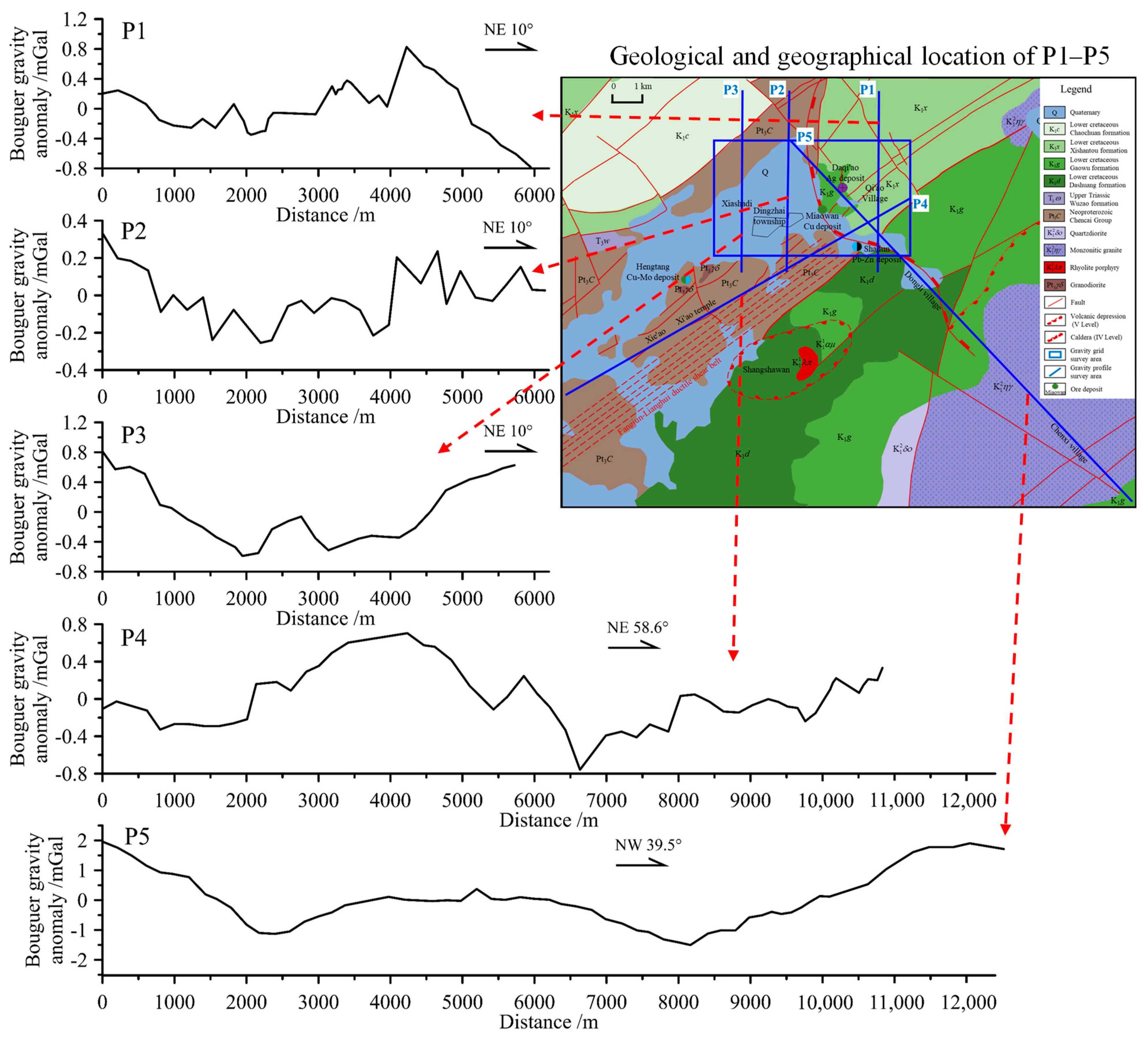
By requiring data acquisition only along individual profiles, 2D inversion entails substantially lower fieldwork and processing demands compared to 3D surveys, making it well suited for rapid regional screening and preliminary structural assessment. To characterize deeper density structures beneath the study area, gravity observations along profiles were employed to conduct two-dimensional (2D) inversion of density anomalies. The processing workflow for the Bouguer gravity anomaly data from these profiles closely follows that applied to the gridded survey area. After deriving precise Bouguer gravity anomalies, the regional background field was removed using linear regression to isolate the local Bouguer anomalies (
Figure 9). The amplitude variations along profiles P1 and P2 are relatively subdued. The localized high in the northern segment of P1 may be associated with a major regional fault, whereas the reduced gravity values in the central portion of P2 are likely attributable to the influence of low-density Quaternary cover sediments. Profile P3 exhibits higher gravity anomalies on both flanks, interpreted as reflecting shallow exposures of high-density Neoproterozoic Chencai Group rocks. Profile P4 traverses the northern margin of the Fangjun–Lianghui ductile shear zone and displays pronounced local gravity variations, consistent with complex deformation along this tectonic boundary. Profile P5 crosses multiple Cretaceous formations, as confirmed by regional geological mapping. It shows large overall amplitude changes but relatively smooth short-wavelength variations, suggesting the presence of two distinct deep-seated density contrasts or multiple density interfaces at depth.
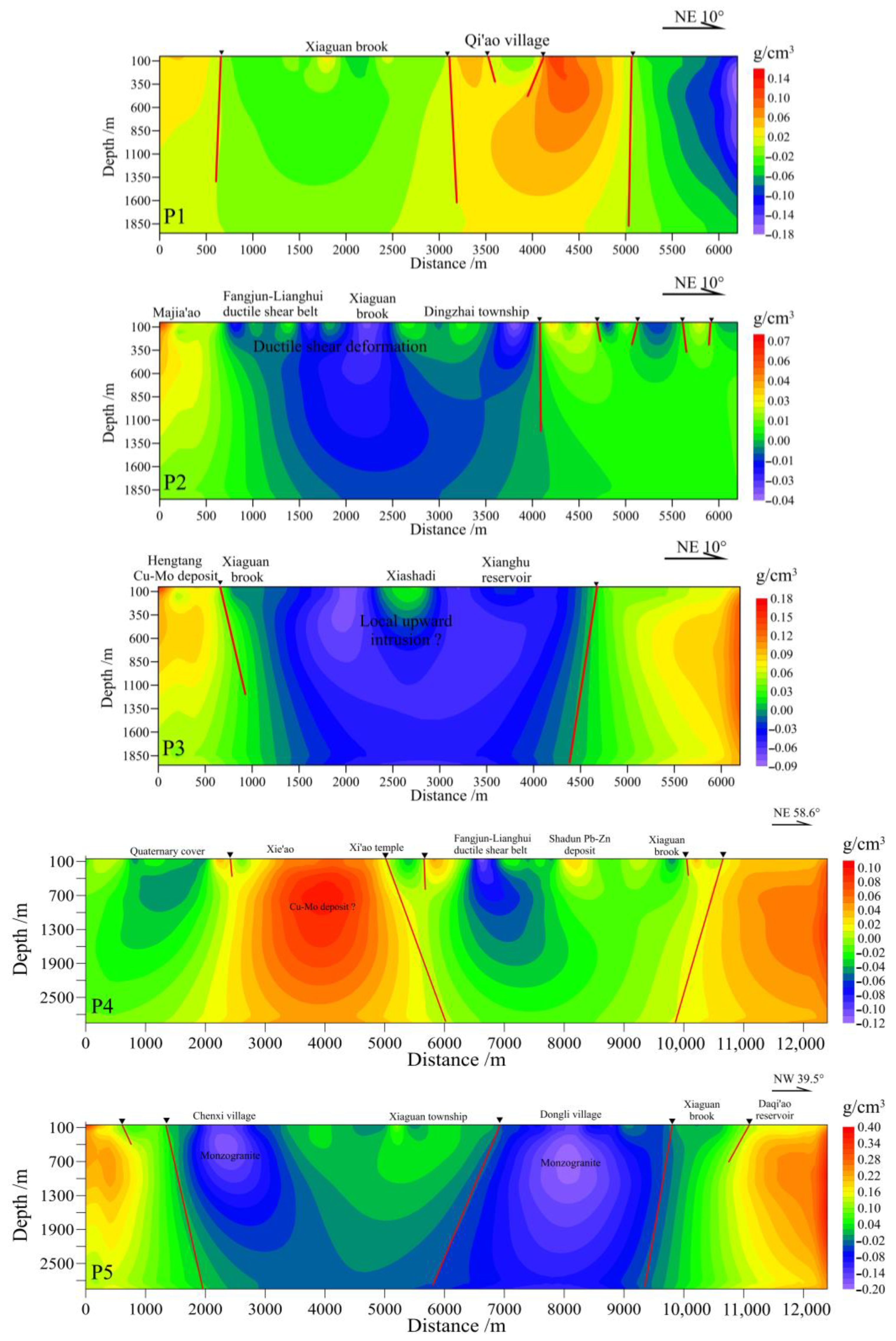
To facilitate a more intuitive understanding of subsurface density architecture, shallow density structures along five gravity profiles were inverted using the aforementioned 2D density inversion methodology (
Figure 10), based on local Bouguer gravity anomalies derived from the gravity profiles data (
Figure 9). For the 2D gravity inversion, the model depth was set to 2000 m for profiles P1–P3 and 3000 m for profiles P4 and P5, consistent with their respective profile lengths. All profiles were discretized using a uniform cell size of 200 m (horizontal) × 100 m (vertical), yielding model grids of 32 × 20 cells for P1–P3 and 64 × 30 cells for P4 and P5.
The inversion results reveal relatively subdued amplitude variations in the gravity anomalies of P1 and P2. Profile P1 exhibits distinct density gradient zones coincident with four mapped fault locations. A localized high-density anomaly in its northern segment is likely influenced by regional-scale faults, whereas the remainder of the profile displays comparatively stable density variations. In Profile P2, the central section shows reduced Bouguer anomalies attributable to thick Quaternary sediments, with additional modulation by shallow ductile shear zones and minor and shallow faults.
Profile P3 displays higher gravity anomalies on both flanks, interpreted as resulting from shallow exposures of high-density Neoproterozoic Chencai Group metamorphic rocks. Despite the influence of variable sediment thickness in the Dingzhai Township area, a pronounced positive density anomaly persists near Xiashadi—supporting the hypothesis of localized upwelling of intermediate-acid porphyritic intrusions or ancient basement materials. North of Xianghu Reservoir, major reverse faults separate the Chencai Group from the Chaochuan Group, reflecting compressional tectonism in the region.
Profile P4 traverses the northern margin of the Fangjun–Lianghui ductile shear zone and exhibits significant short-wavelength gravity variability. The southern segment contains low-density anomalies associated with sedimentary cover but features a prominent high-density body in the Xie’ao–Xi’ao’an segment, potentially representing the deep extension of the Hengtang Cu–Mo deposit. Although the northern end also shows elevated gravity values—possibly linked to dense Cretaceous Gaowu Formation strata—the interpretation is less robust due to sparse data coverage near the profile terminus.
Profile P5 is dominated by two major low-density anomalies. The anomaly near Chenxi village is tentatively attributed to late Early Cretaceous intrusion of low-density monzonitic granite, possibly accompanied by deeper concealed magmatic bodies and tectonic overprinting. In the Dongli village area, an extensive and deeper low-density feature likely reflects the combined effects of Quaternary sedimentation and stratigraphic unconformities between the Lower Cretaceous Dashuang and Gaowu Formations—structures that may be genetically linked to multiphase volcanism within the Shangshawan caldera during the Cretaceous. The major deep-seated fault near Xiaguan Brook, as revealed by gravity inversion, is interpreted as a reverse fault, consistent with regional compressional tectonics and associated crustal uplift.
Collectively, the profile density inversion results highlight a significant deep-seated high-density anomaly beneath the Xie’ao–Xi’ao’an segment, consistent with a downward continuation of the Hengtang Cu–Mo deposit. Conversely, the deep low-density anomalies beneath Chenxi and Dongli village appear to be associated with magmatic and volcanic processes related to the Shangshawan caldera, underscoring the role of Cretaceous magmatism in shaping the region’s crustal density structure.
4. Conclusions
High-precision Bouguer gravity anomalies were derived from large-scale, densely spaced gravity measurements and high-resolution topographic data. These anomalies were inverted to characterize the subsurface distribution of density heterogeneities, providing a robust geophysical foundation for subsequent drilling campaigns—particularly in high-priority targets such as Xiashadi and Xie’ao–Xi’ao’an.
The mean-field method was applied to effectively isolate local Bouguer anomalies that reflect shallow crustal density variations within the gridded survey area. A 3D density inversion of these anomalies yielded a detailed subsurface density model for the mining district, enabling quantitative assessment of the ore-forming potential and spatial extent of known mineralized zones. The Daqi’ao Ag deposit is structurally constrained by regional faults, producing irregular subsurface density patterns; the Miaowan Cu deposit exhibits a localized, small-scale anomaly; and the Qi’ao Village area shows a dispersed shallow anomaly (50–150 m), suggestive of multi-phase mineralization or intrusive activity. Notably, a newly identified “tongue-shaped” high-density anomaly near Xiashadi in Dingzhai Township closely resembles the gravity signature of the Shadun Pb–Zn deposit. This feature is interpreted as either an exposure of high-density Neoproterozoic Chencai Group basement or the product of localized upwelling of intermediate-acid porphyry, highlighting its potential as a new mineral prospect. Gravity-based structural interpretation across the gridded area successfully delineated stratigraphic boundaries and revealed a previously unrecognized, nearly east–west-trending concealed fault beneath Quaternary cover in Dingzhai Township. This structure may have acted as a conduit for ore-forming fluid migration and is likely associated with mineralization at both the Daqi’ao Ag and Miaowan Cu deposits.
Inversion of profile gravity data further identified a deep-seated high-density anomaly beneath Xie’ao–Xi’ao’an, potentially representing the downward continuation of the Hengtang Cu–Mo deposit. In contrast, pronounced low-density anomalies in the Chenxi and Dongli village areas are attributed to Early Cretaceous low-density intrusions (e.g., monzogranite) and multiphase volcanism linked to the Shangshawan caldera. The anomaly near Dongli village is notably more extensive in areal extent. Collectively, integrated analysis of Bouguer gravity anomalies from five profiles, constrained by regional geology, not only supports earlier hypotheses of porphyry-related upwelling near Xiashadi but also reveals new mineralized bodies and key structural controls on mineralization.




 ,
,