Article

Enrichment Mechanism and Development Technology of Deep Marine Shale Gas near Denudation Area, SW CHINA: Insights from Petrology, Mineralogy and Seismic Interpretation

1
Chongqing Shale Gas Exploration and Development Co., Ltd., Chongqing 408400, China
2
Gabelli School of Business, Fordham University, Bronx, NY 10458, USA
3
Dongfang Geophysical Exploration Co., Ltd., China National Petroleum Corporation, Zhuozhou 072751, China
4
Geology Exploration and Development Research Institute, Chuanqing Drilling Engineering Co., Ltd., China National Petroleum Corporation, Chengdu 610051, China
*
Author to whom correspondence should be addressed.
Minerals 2025, 15(6), 619; https://doi.org/10.3390/min15060619
Submission received: 10 February 2025 / Revised: 31 March 2025 / Accepted: 8 May 2025 / Published: 9 June 2025
(This article belongs to the Special Issue Element Enrichment and Gas Accumulation in Black Rock Series)

Abstract

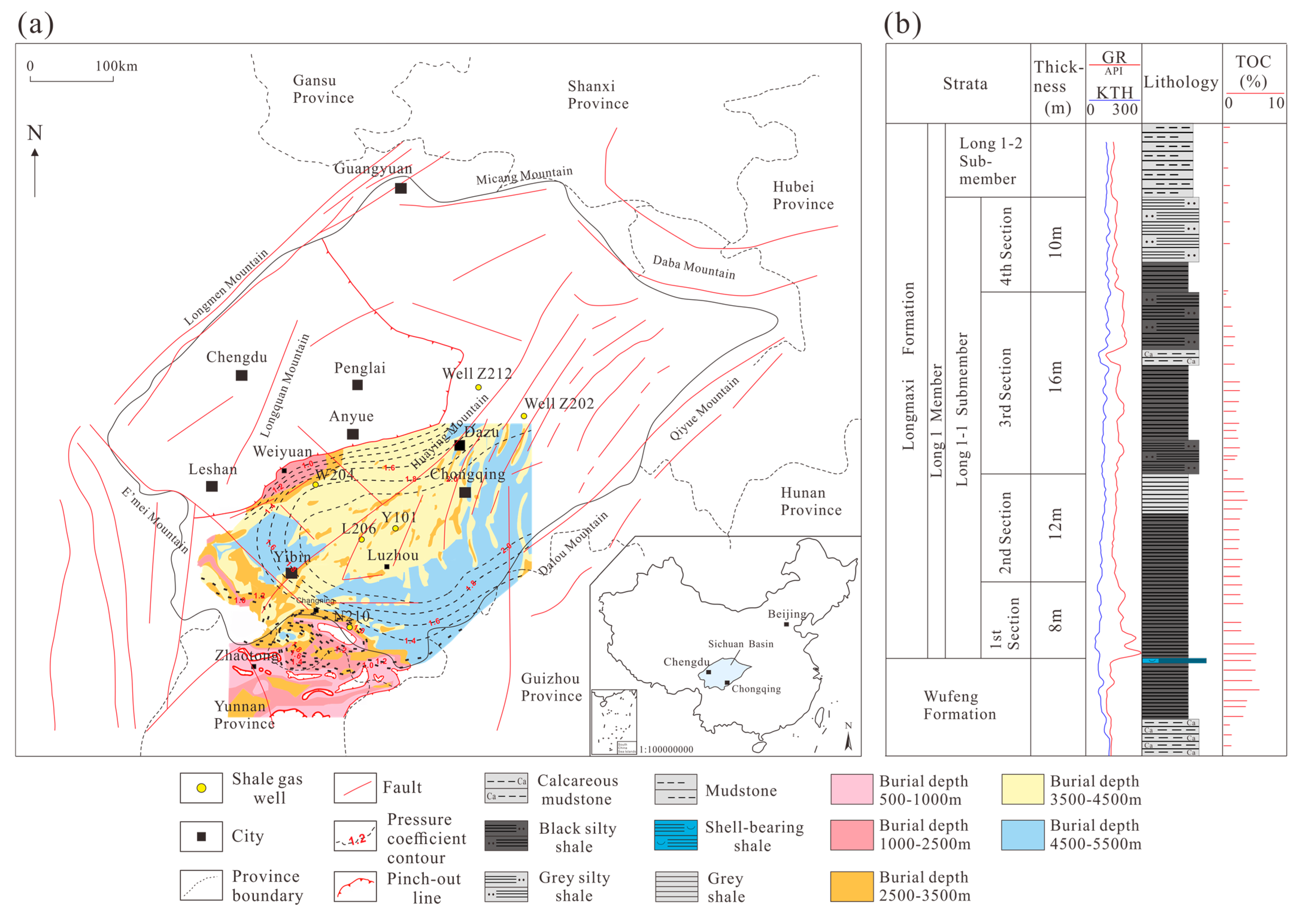
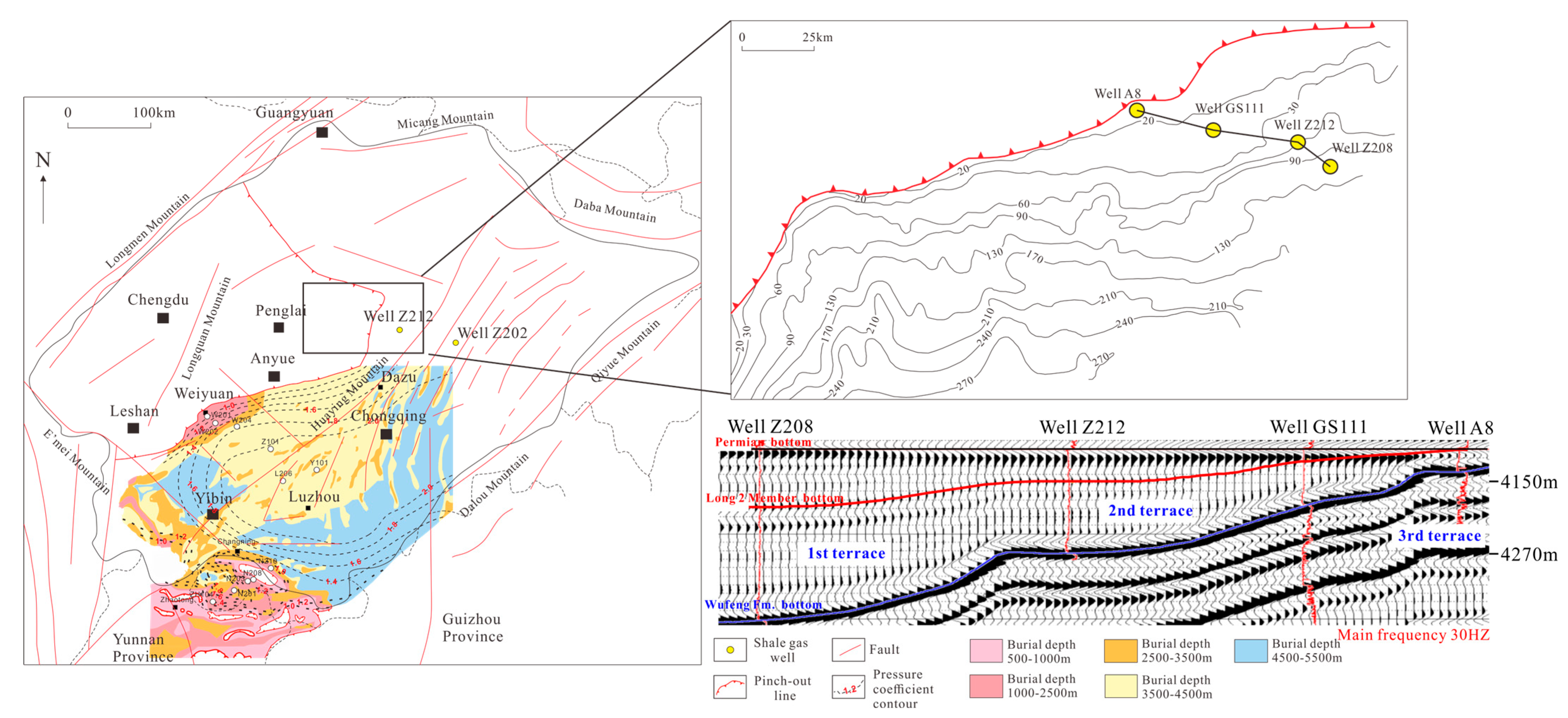
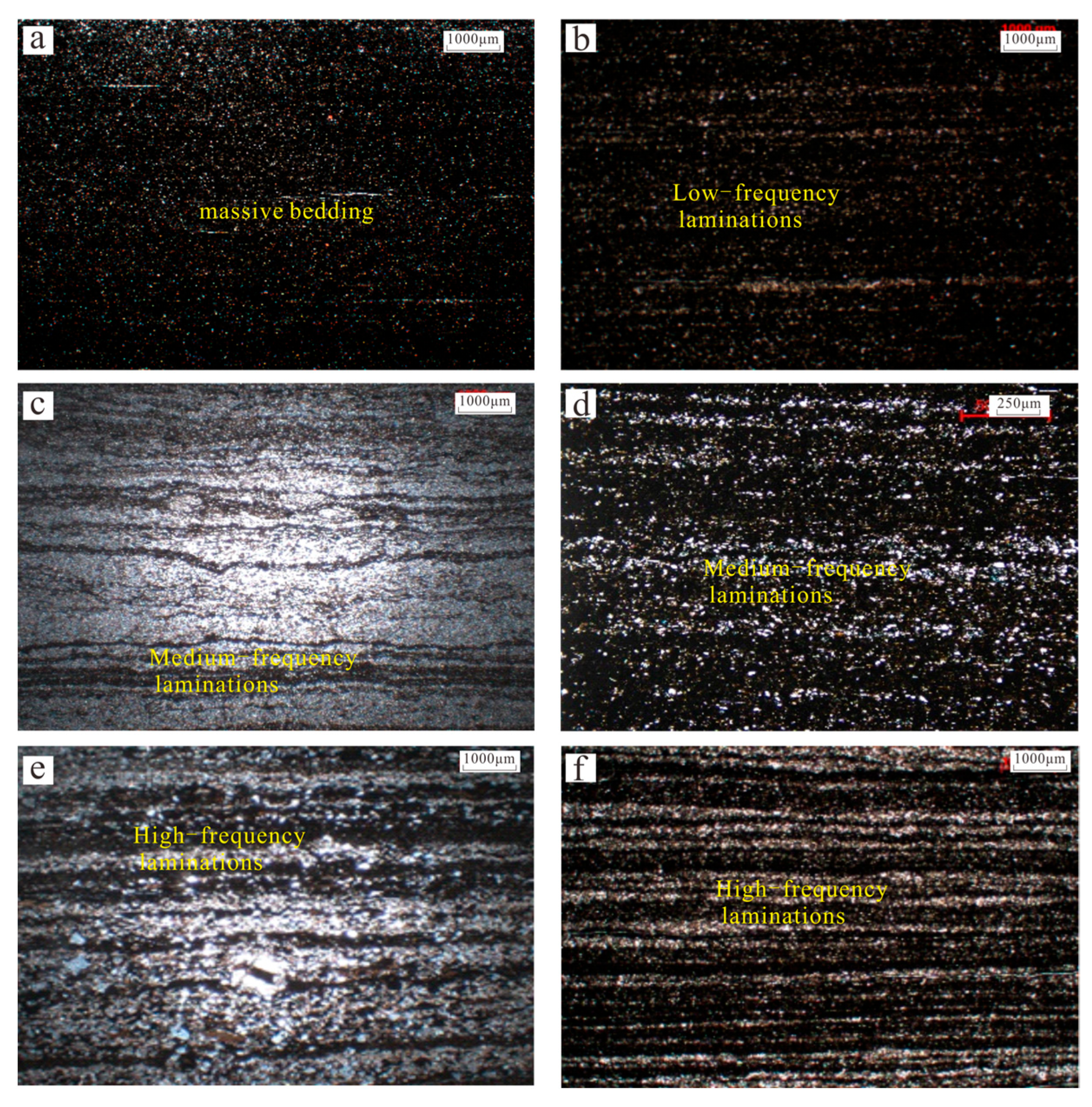
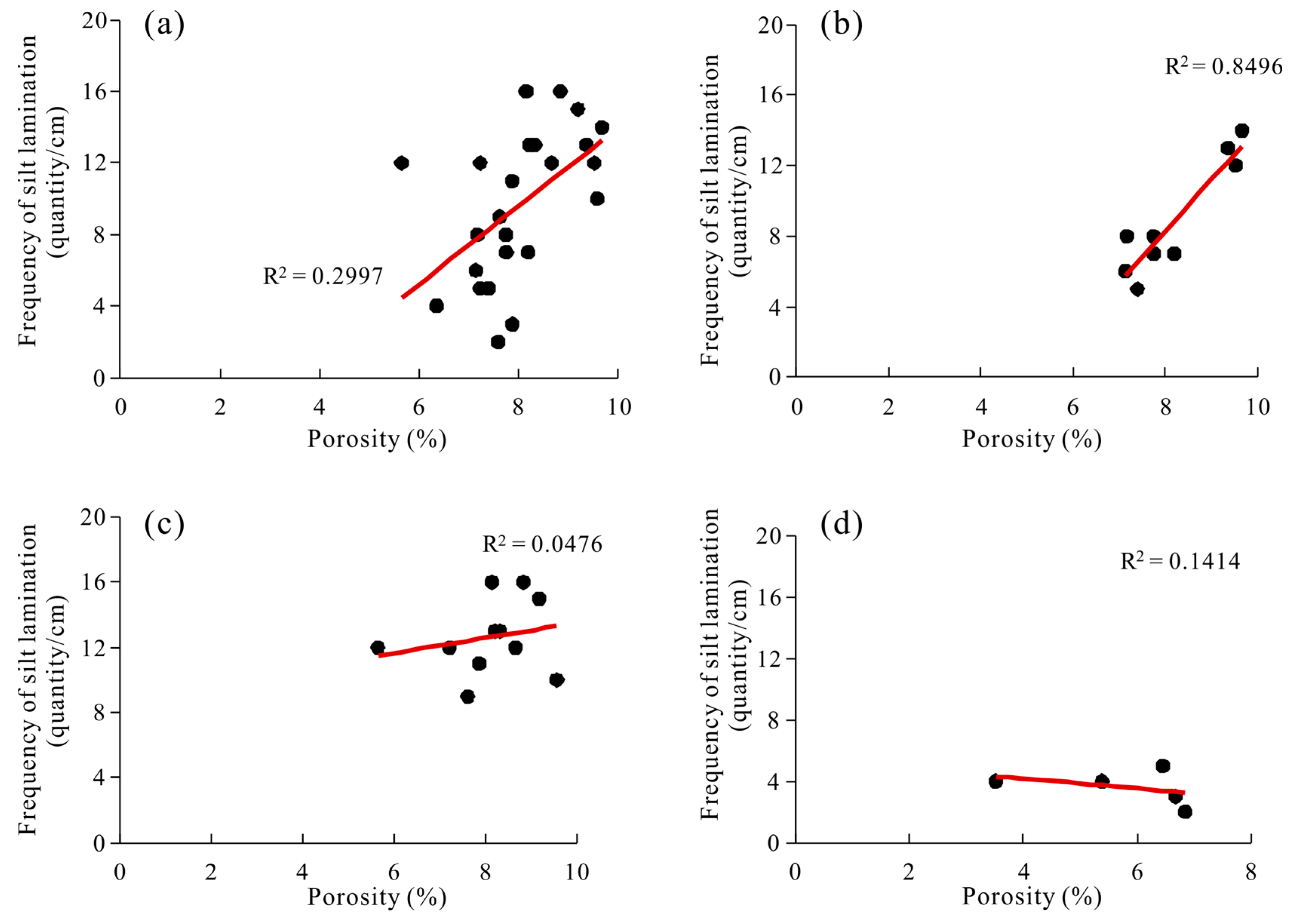
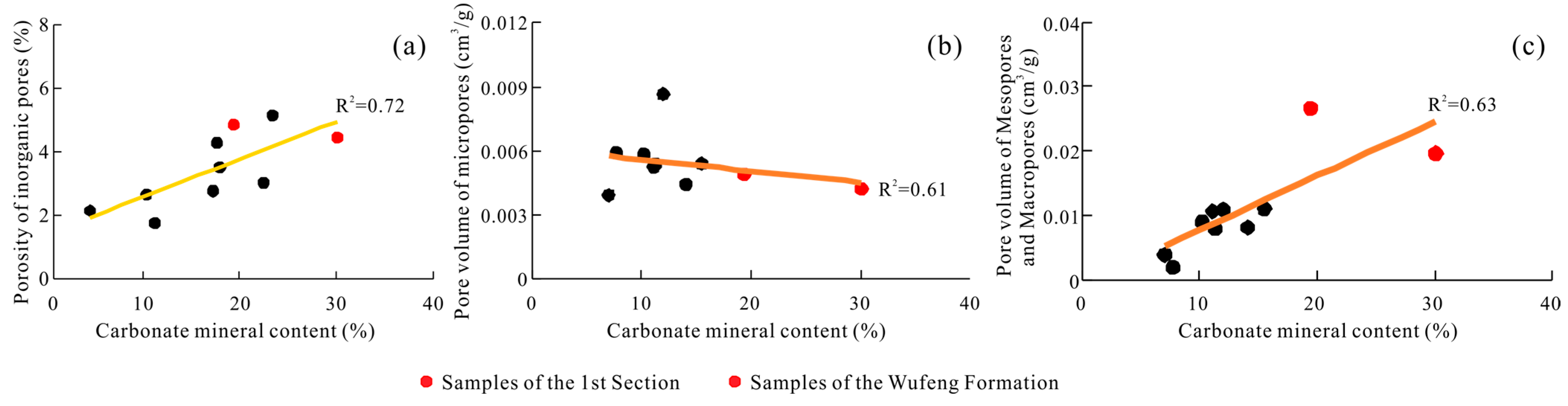
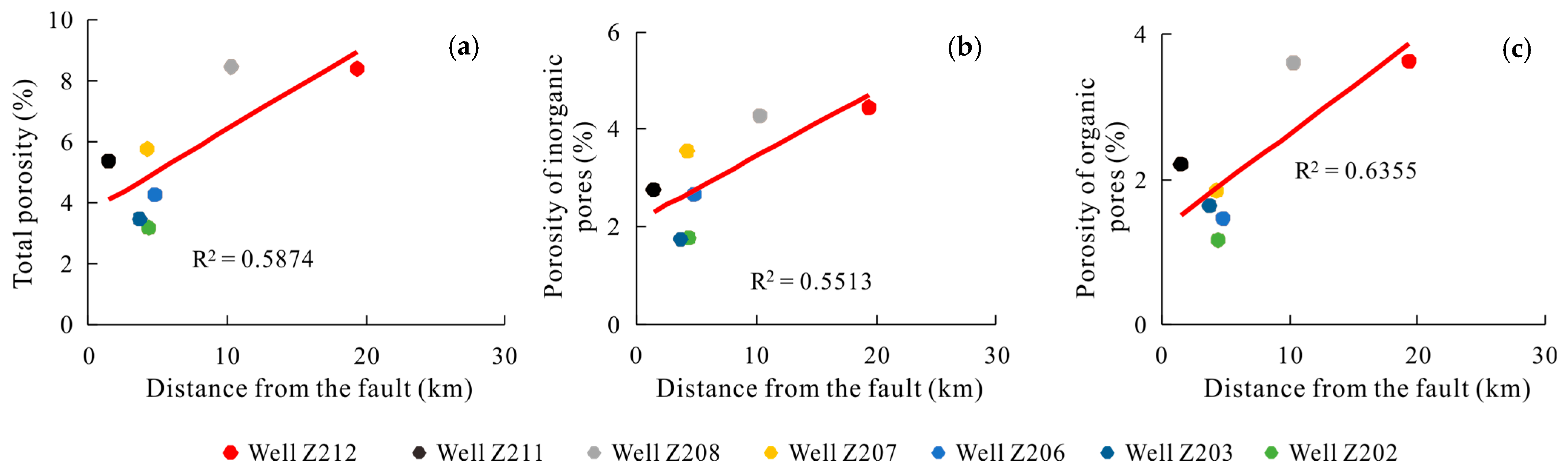
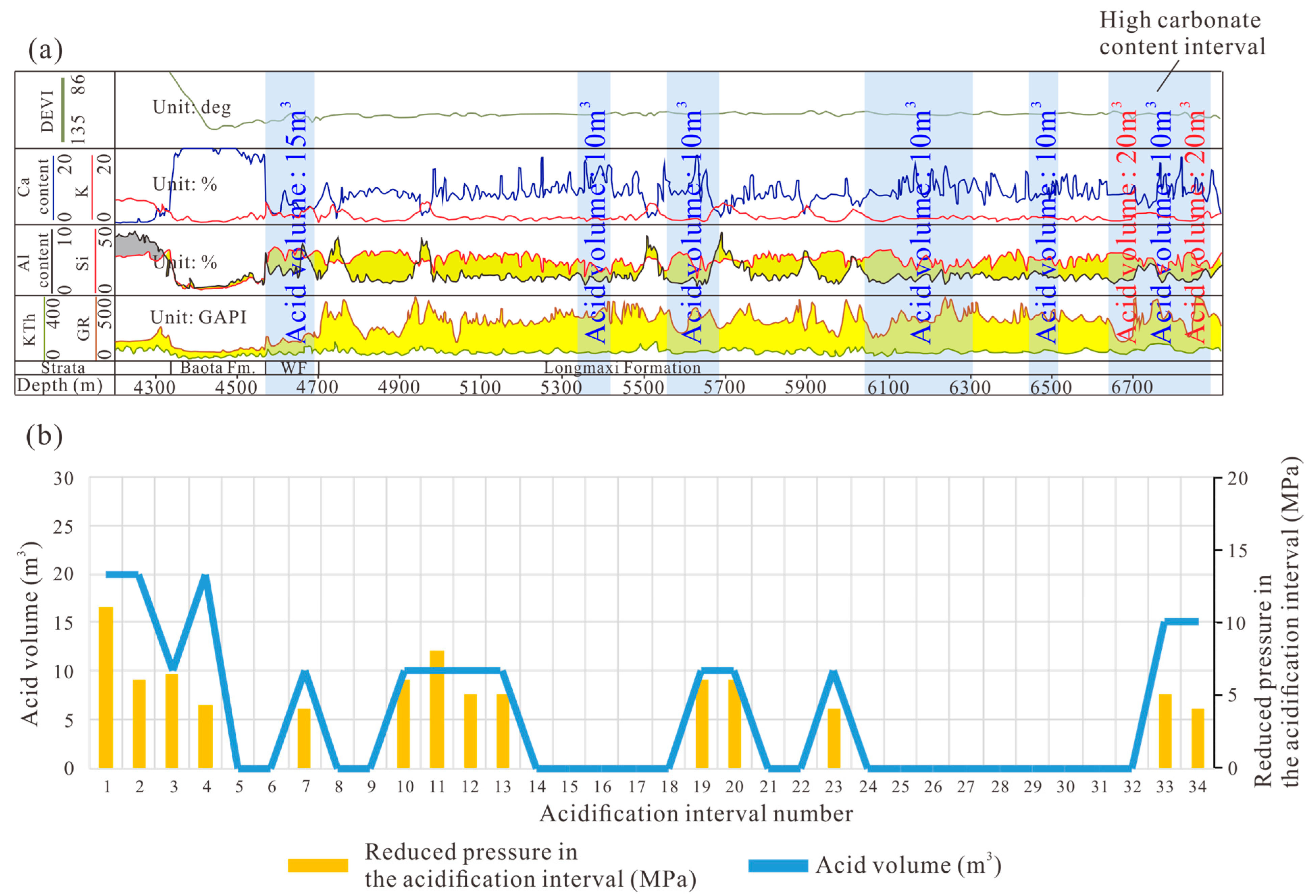
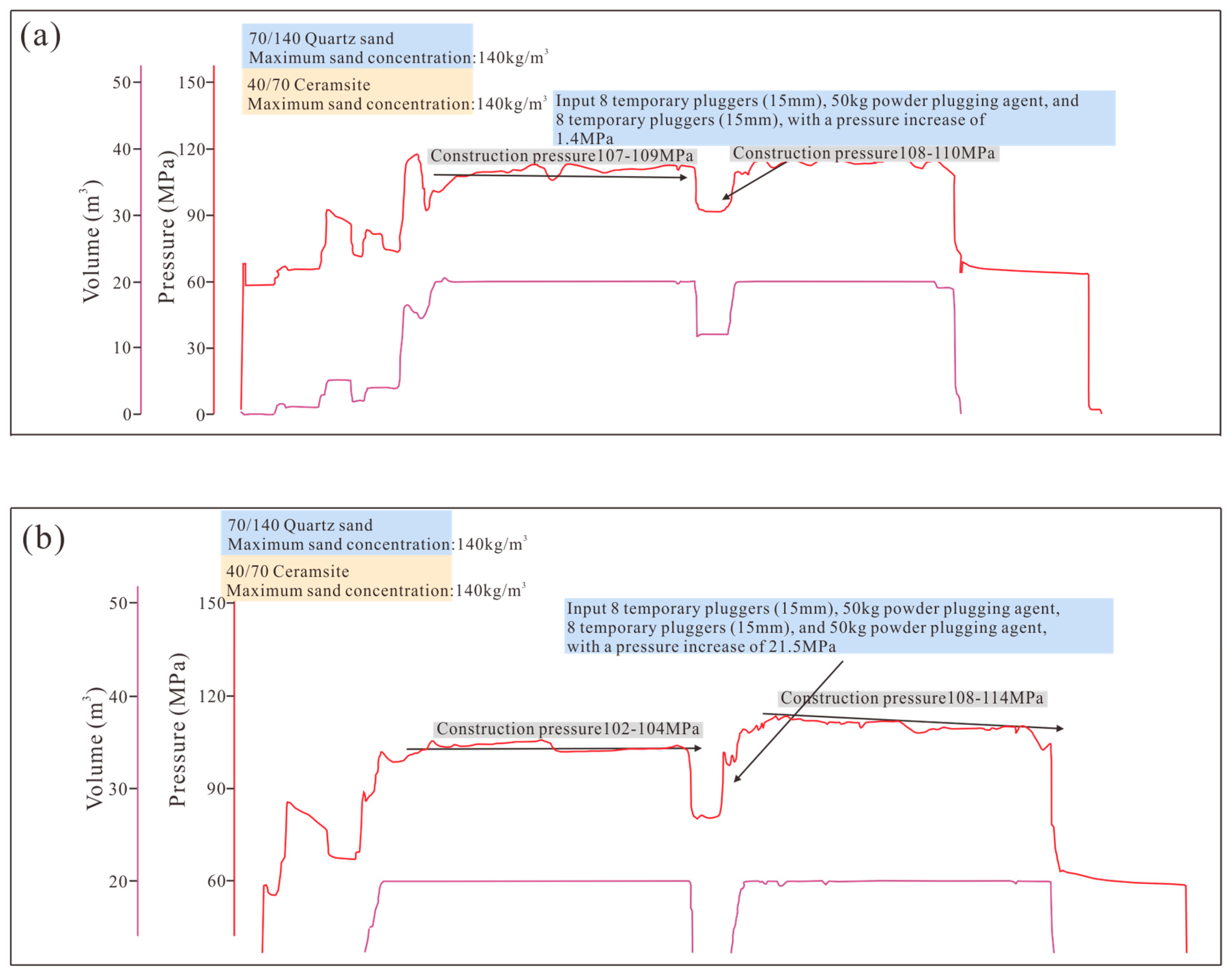
As an important target for deep marine shale gas exploration, shale reservoirs near denudation areas have enormous resource potential. Based on the impression method, the sedimentary paleogeomorphology near the denudation area is identified as three units: the first terrace, the second terrace, and the third terrace. At the second terrace where Well Z212 is located, the thickness of the Longmaxi Formation first section is only 0.8 m, and the continuous thickness of the target interval is only 4.3 m, making it a typical thin shale reservoir. By integrating petrology, mineralogy and the seismic method, the thin shale reservoir is characterized. Compared to shale reservoirs far away from the denudation area, the Well Z212 (near denudation area) production interval (Wufeng Formation first section) has high porosity (6%–10%), moderate TOC (3%–4%), a high carbonate mineral content (10%–35%), and a high gas content (>7 m3/t). The correlation between the total porosity of shale and the density of high-frequency laminations is the strongest, indicating that the silt laminations have a positive effect on pore preservation. There is a significant positive correlation between carbonate content and the volume of mesopores and macropores, as well as the porosity of inorganic pores. It is suggested that carbonate minerals are the main carrier of inorganic pores in Well Z212, and the pores are mainly composed of mesopores and macropores. Under the condition of being far away from the fault zone, even near the denudation area, it has good shale gas preservation characteristics. The key development technologies consist of integrated geo-steering technology, acidification, and volume fracking technology. Based on geological characteristics, the fracturing process optimization of Well Z212 has achieved shale reservoir stimulation.
Keywords: silurian longmaxi formation; enrichment mechanism; denudation area; development technology; marine shale silurian longmaxi formation; enrichment mechanism; denudation area; development technology; marine shale