Article

Genetic Model of the Luhai Sandstone-Type Uranium Deposit in the Erlian Basin, Inner Mongolia

1
School of Earth Science and Resources, China University of Geosciences, Beijing 100083, China
2
Tianjin Centre, China Geological Survey, Tianjin 300170, China
3
Laboratory of Non-Fossil Energy Minerals, Tianjin Center of China Geological Survey, Tianjin 300170, China
*
Author to whom correspondence should be addressed.
Minerals 2025, 15(3), 294; https://doi.org/10.3390/min15030294
Submission received: 22 January 2025 / Revised: 9 March 2025 / Accepted: 10 March 2025 / Published: 13 March 2025

Abstract

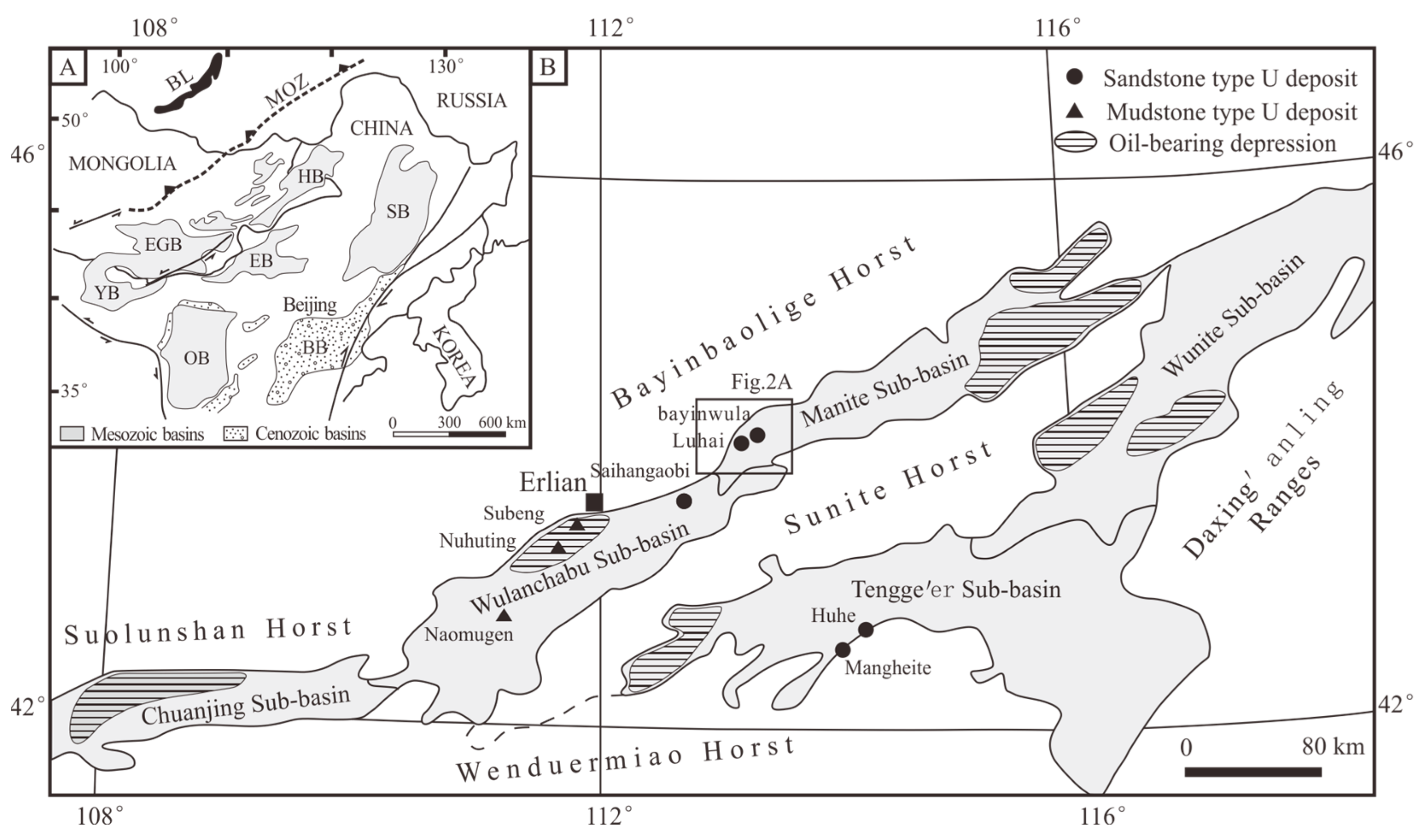
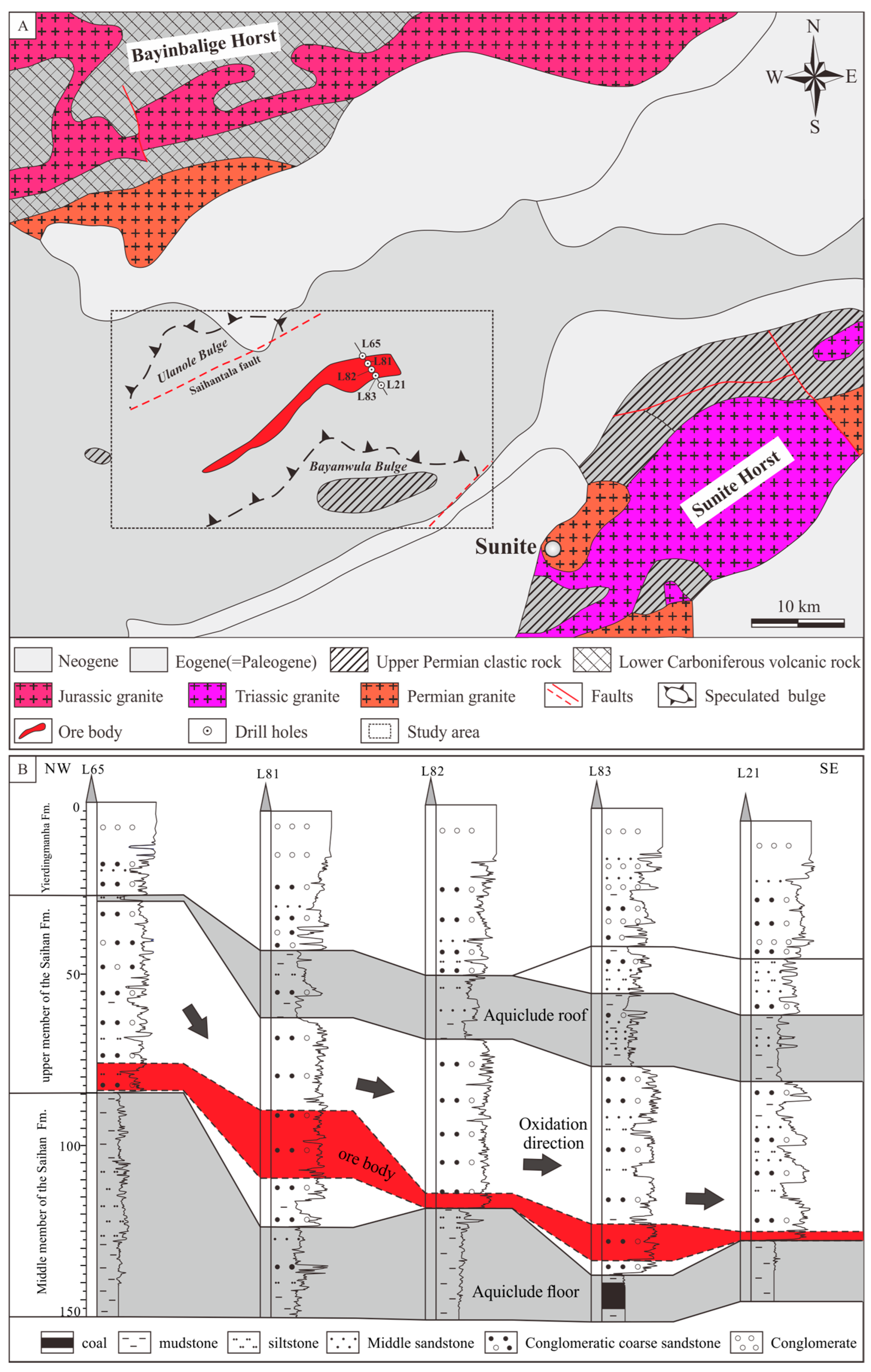
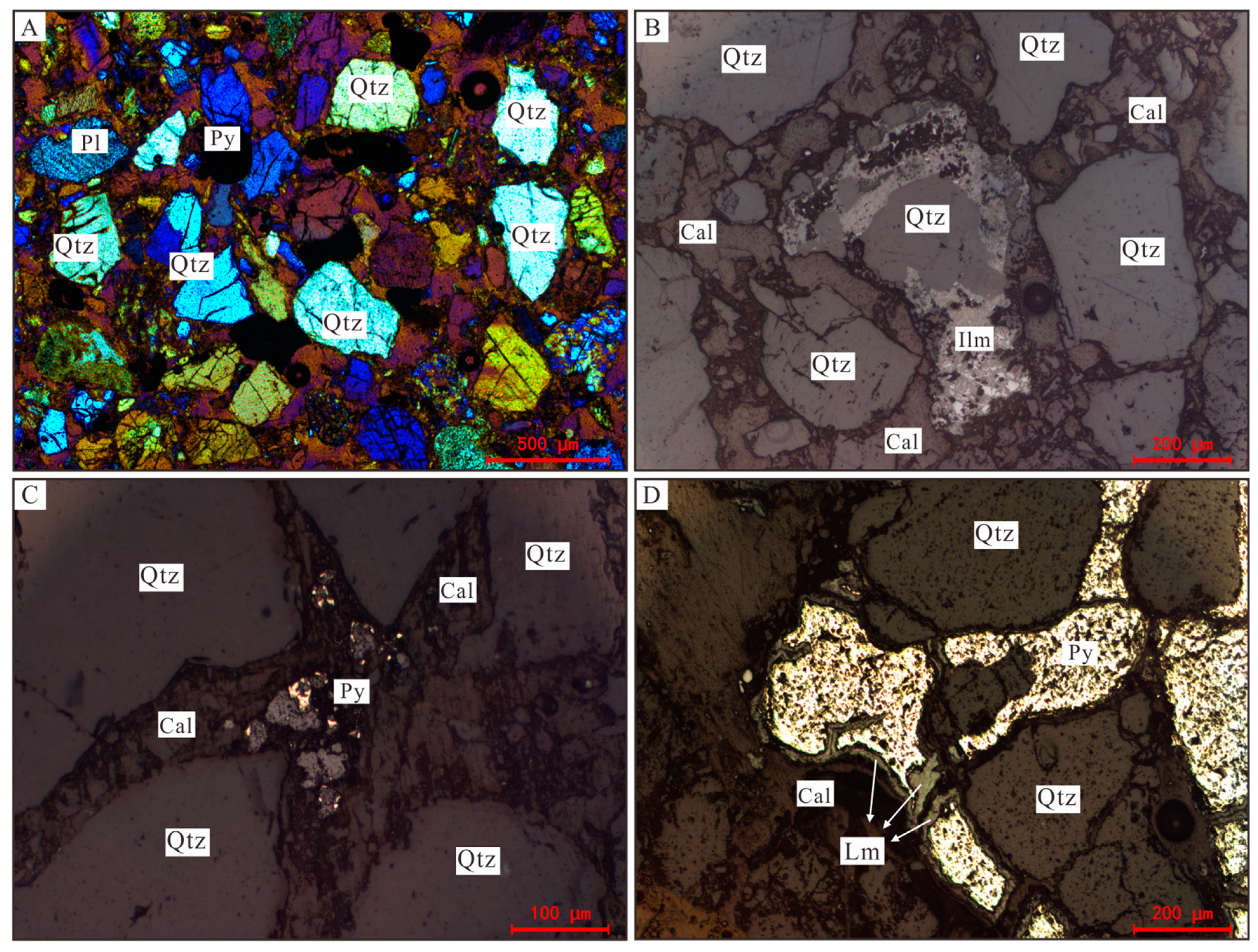
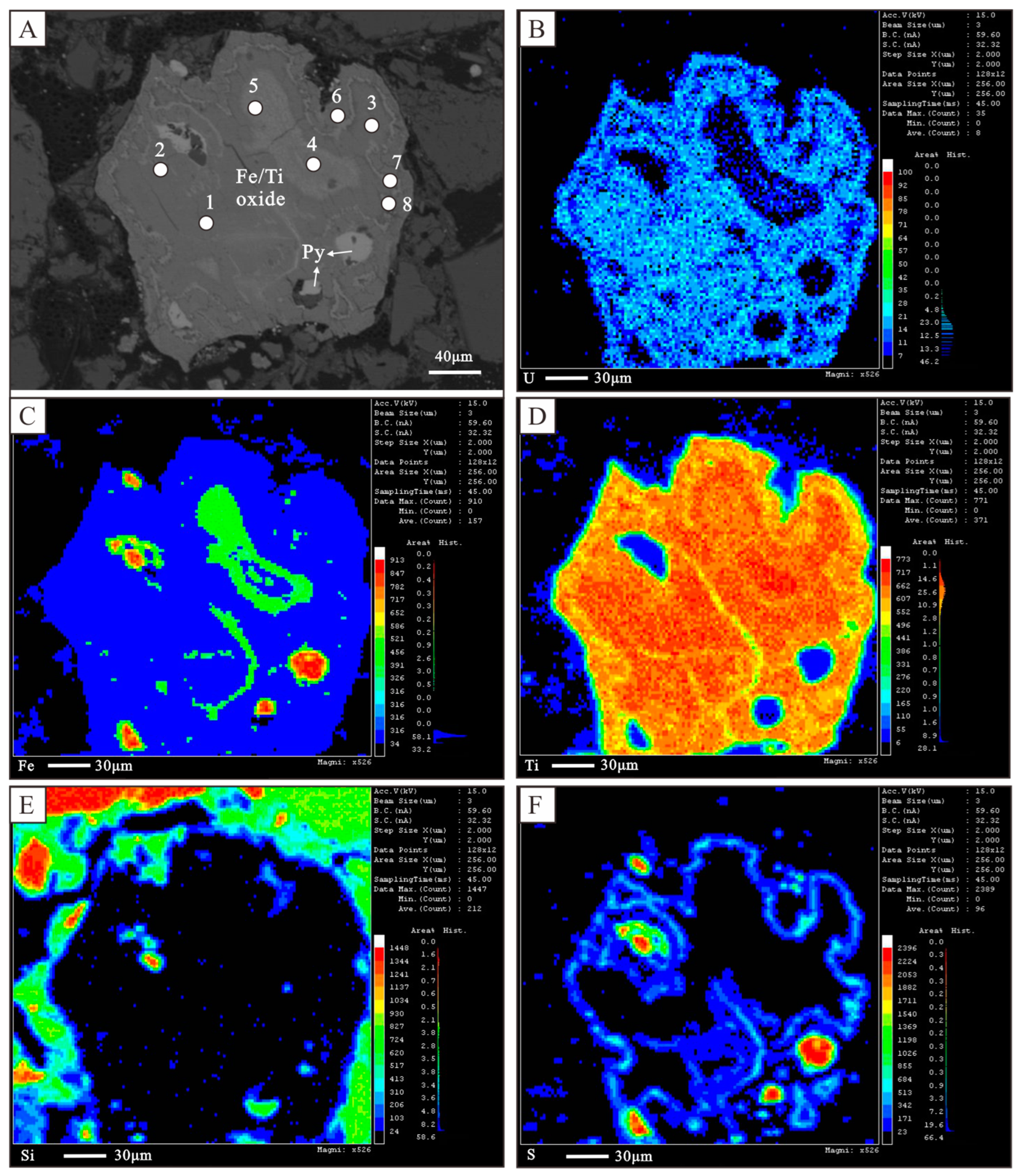
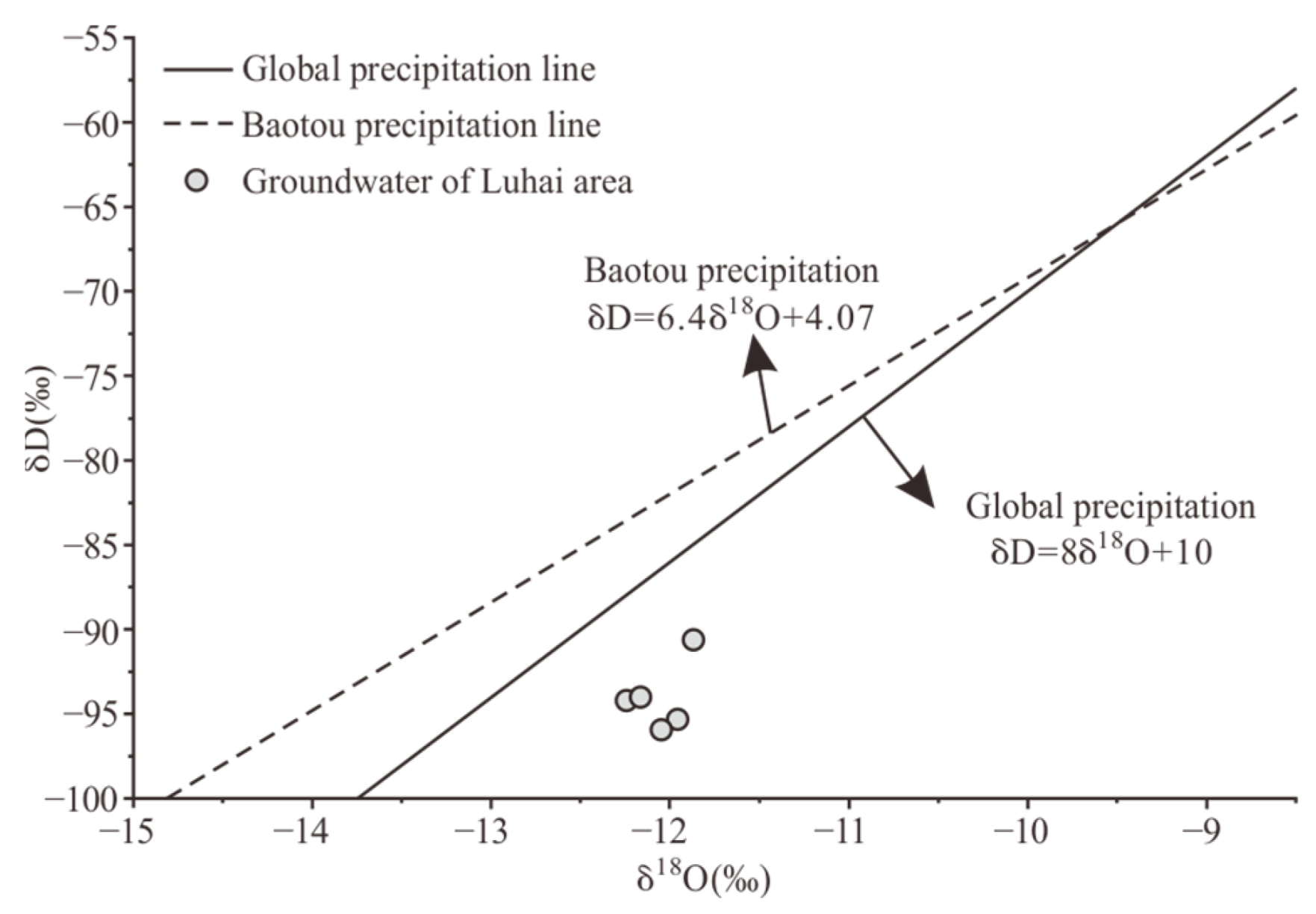
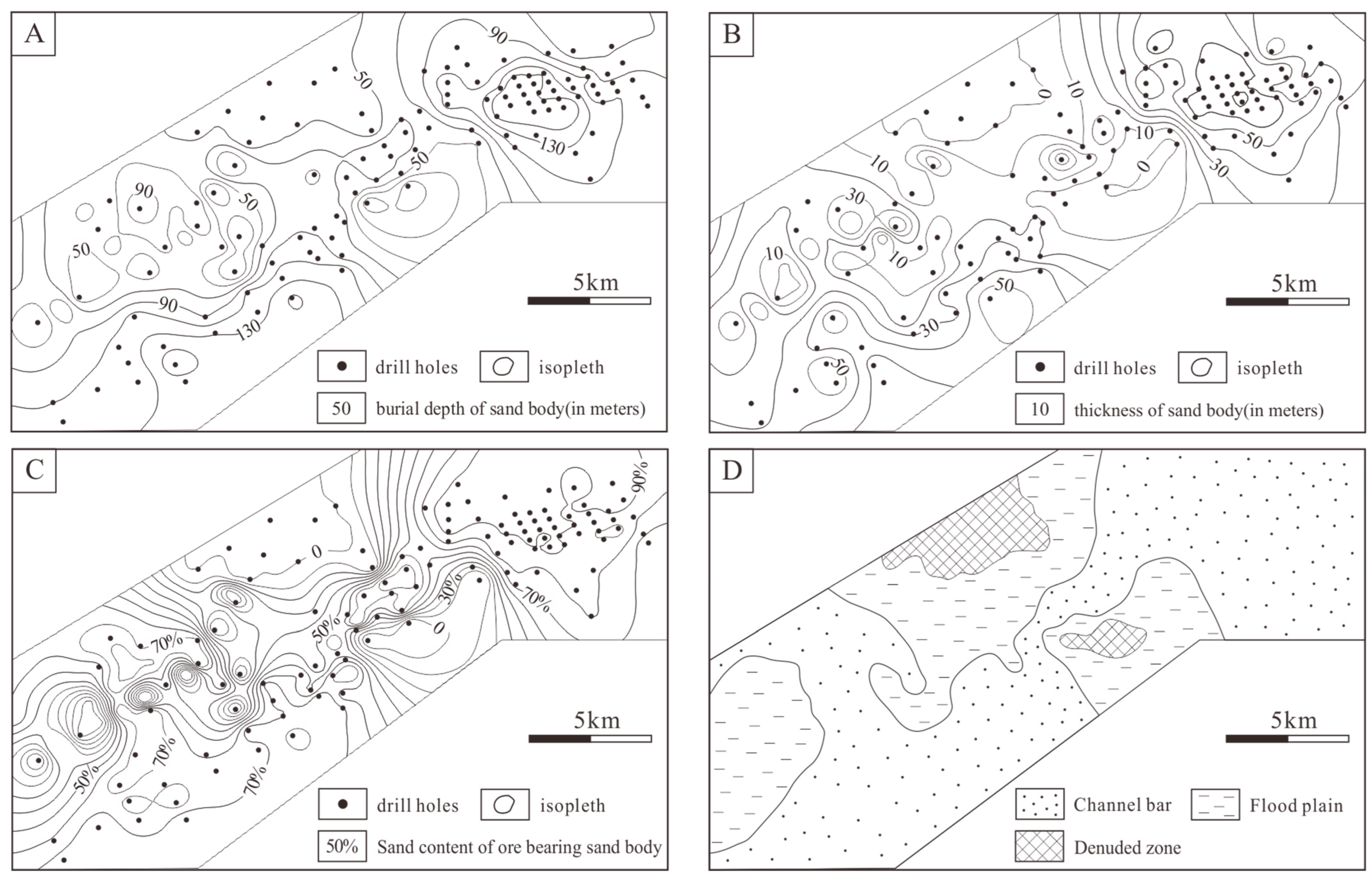
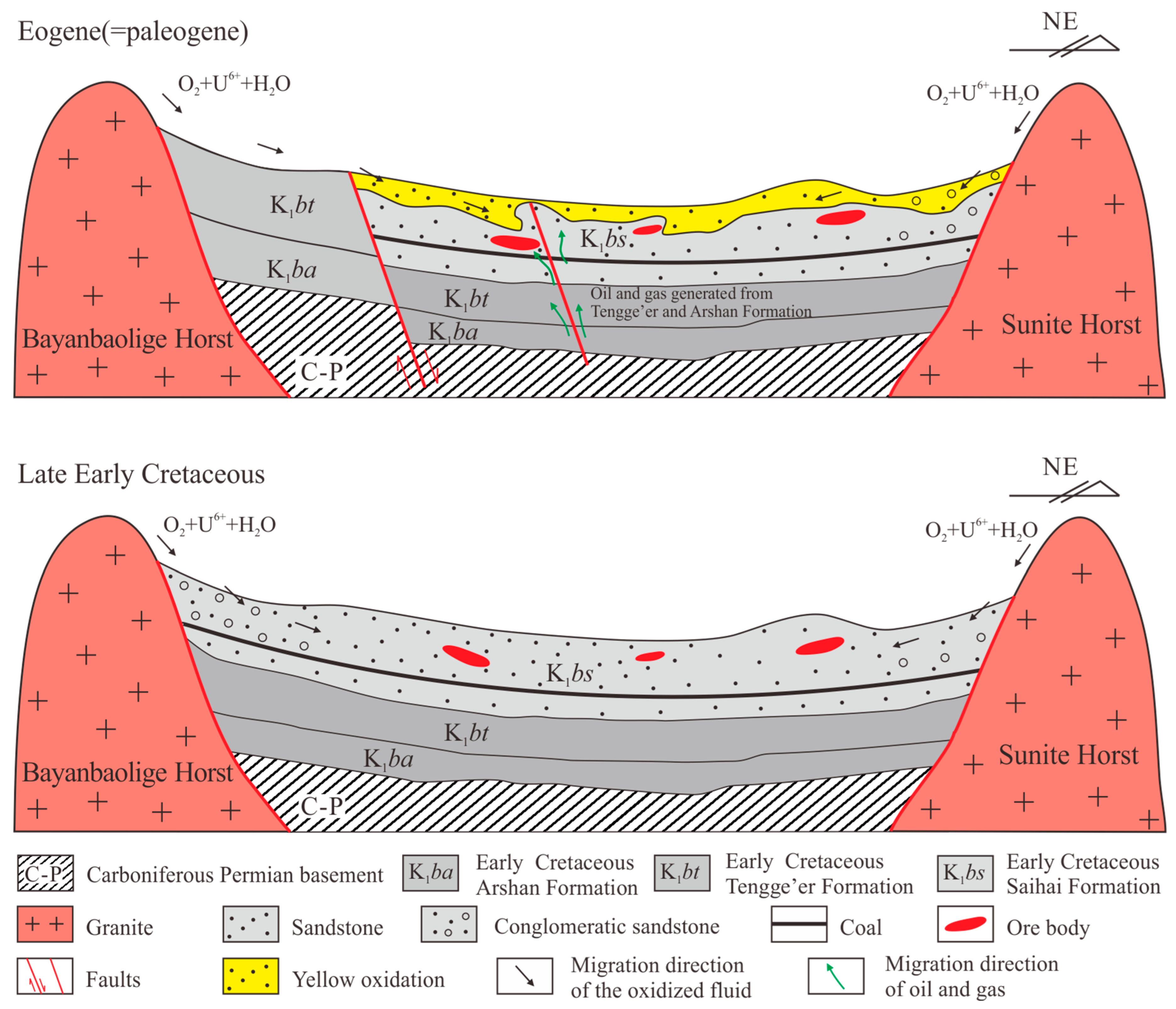
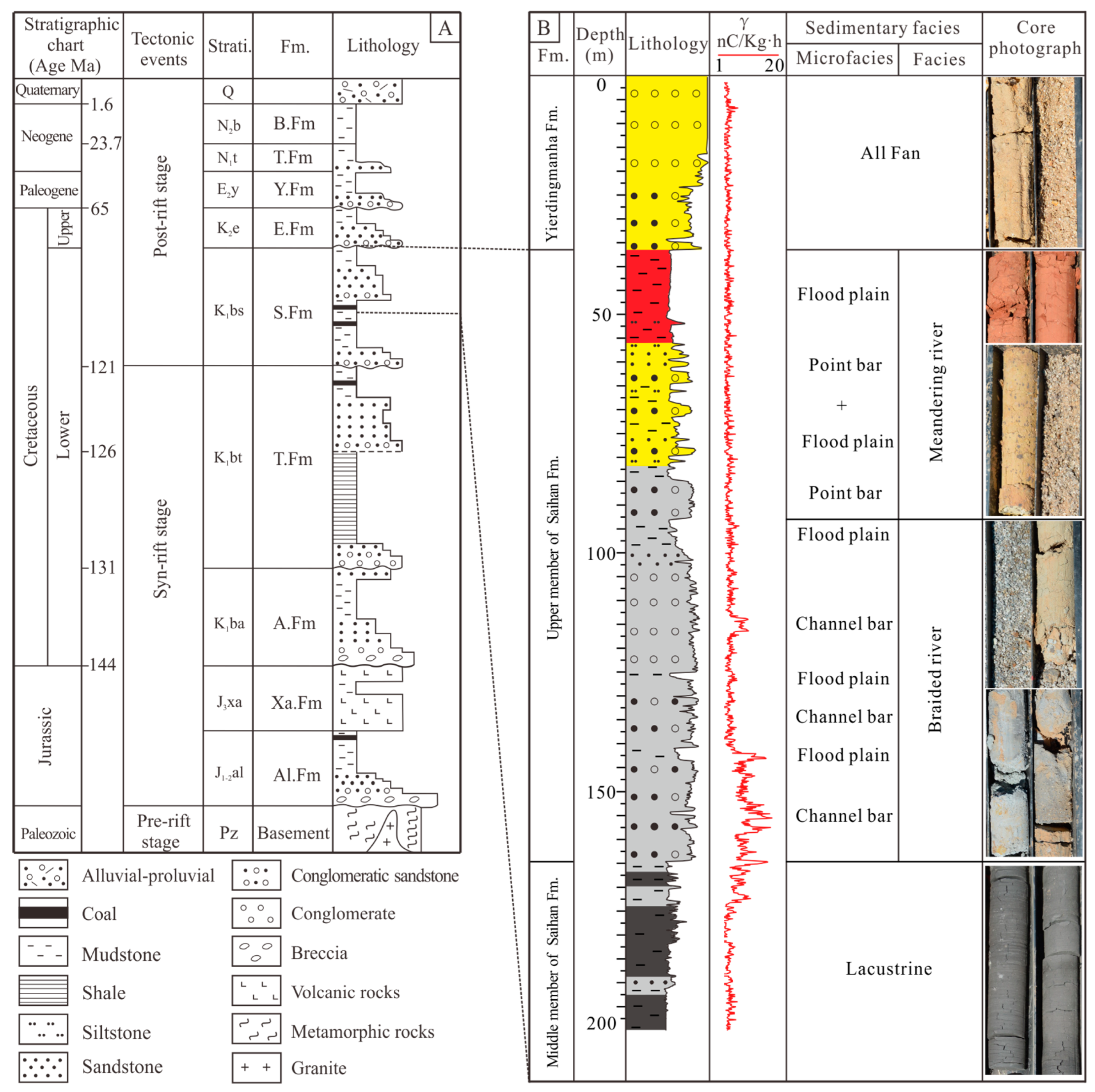
The Luhai uranium deposit is a large-scale uranium deposit newly discovered in recent years through comprehensive prospecting methods. It is located in the Basaiqi Paleochannel Uranium metallogenic belt of the Erlian Basin and is characterized by its shallow burial and large scale. This paper provides new data on the genetic processes of sandstone-type uranium mineralization through sedimentological and geochemical environmental indicators (such as Fe3⁺/Fe2⁺, organic carbon, total sulfur, etc.), analysis of C-O isotopes of carbonate cements and H-O isotopes of groundwater, and geochemical and mineralogical studies of uranium minerals, iron–titanium oxides (involving backscatter analysis, micro-area chemical composition determination, and elemental surface scanning), and organic matter. Sedimentological analysis shows that the ore- bearing layer in the upper member of the Saihan Formation developed a braided channel within floodplain subfacies, which control the distribution of uranium ore bodies. Uranium mineralogical observations, geochemical environmental indicators, and organic geochemical data indicate that the main reducing agents related to mineralization are pyrite, terrestrial plants, and deep-sourced oil and gas. The δD values of groundwater in the ore-bearing layer range from −95.34‰ to −90.68‰, and the δ18O values range from −12.24‰ to −11.87‰. For calcite cements, the δ18OV-PDB values range from −24‰ to −11.5‰, and the δ18OV-SMOW values range from 6.2‰ to 19‰. It was determined that the ore-forming fluid is mainly surface fresh water that entered the strata during the tectonic uplift stage, with local mixing of deep-sourced brine. Based on these data, the main modes of uranium mineralization in the paleochannel were obtained as follows: (1) Redox mineralization occurs due to the reducing medium within the sand body itself and the reduction caused by deep- sourced oil and gas generated from the Tengge’er and Arshan Formations. (2) Mineralization is achieved through the mixing of fluids from different sources. Furthermore, a genetic model related to uranium mineralization in the paleochannels of the Luhai area has been established: favorable uranium reservoirs were formed during the sedimentary period, and during the post-sedimentary stage, reverse structures promoted redox reactions and fluid-mixing-induced mineralization. The research findings can provide guidance for the exploration of paleochannel sandstone-type uranium deposits in other areas of the Erlian Basin.
Keywords: Erlian Basin; Luhai; paleochannel sandstone-type uranium deposit; geochemical characteristics; genetic model Erlian Basin; Luhai; paleochannel sandstone-type uranium deposit; geochemical characteristics; genetic model