Research on Deep Learning-Based Identification Methods for Geological Interface Types and Their Application in Mineral Exploration Prediction—A Case Study of the Gouli Region in Qinghai, China


Abstract
1. Introduction
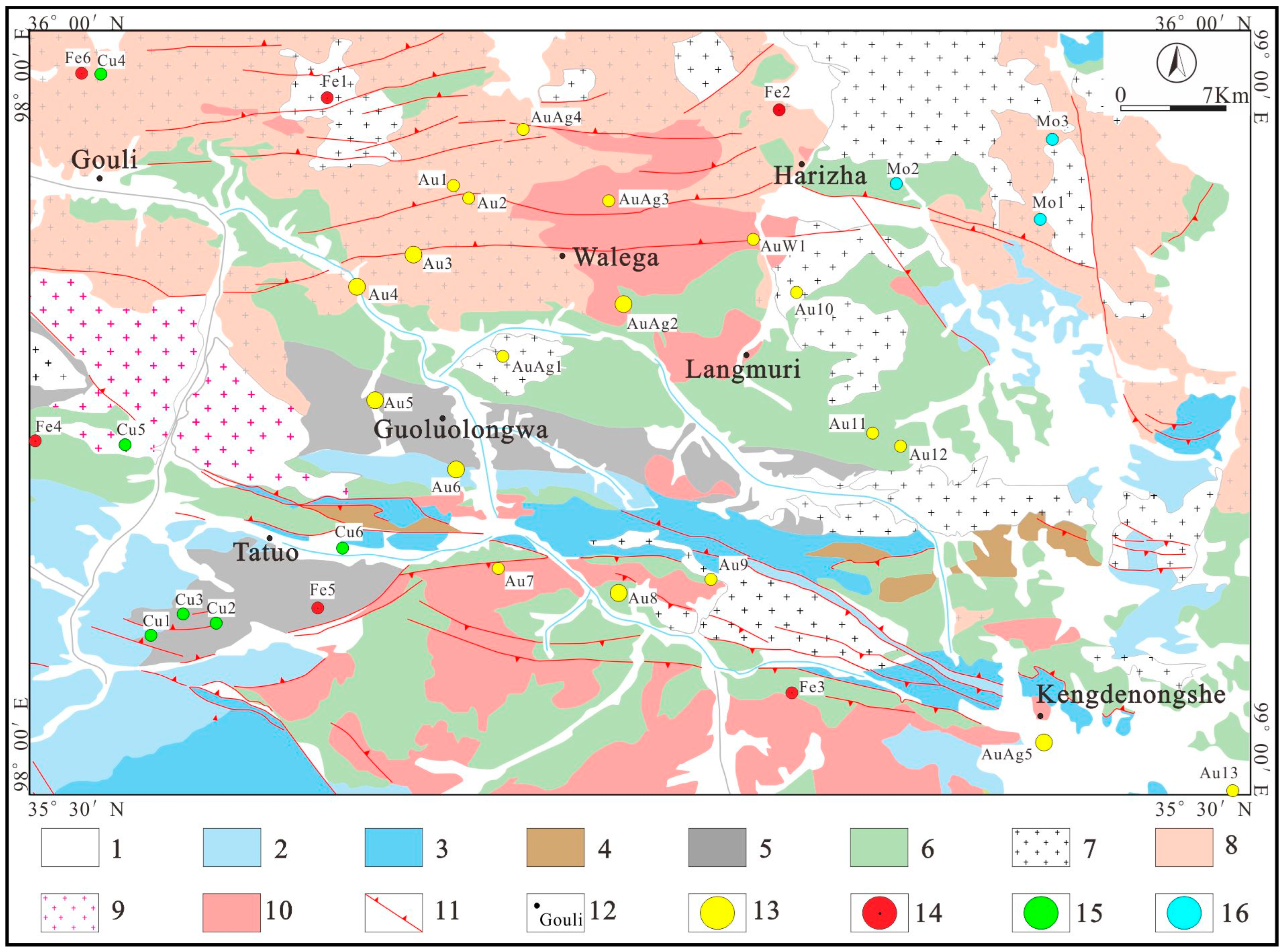
2. Geological Background of the Study Area
3. Intelligent Identification Methods and Results for Geological Interface Types
3.1. Classification of Geological Interface Types
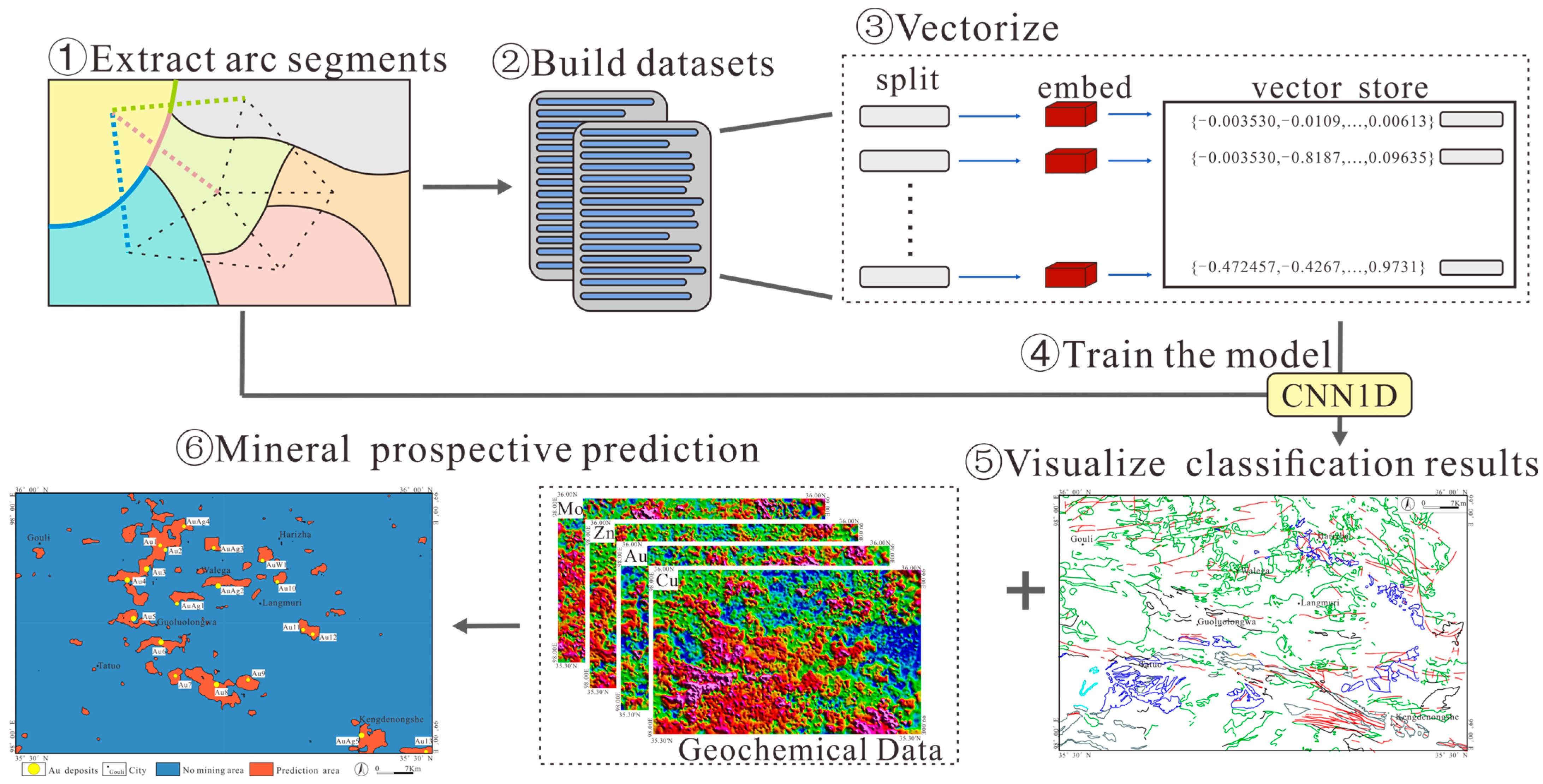
3.2. Intelligent Identification Method for Geological Interface Types
- Data Preparation and Processing
- 2.
- Extraction of Geological Interface Data
- 3.
- Construction of Training and Validation Datasets
- 4.
- Semantic Vectorization of Datasets
- 5.
- Construction of the CNN1D Network Model
- 6.
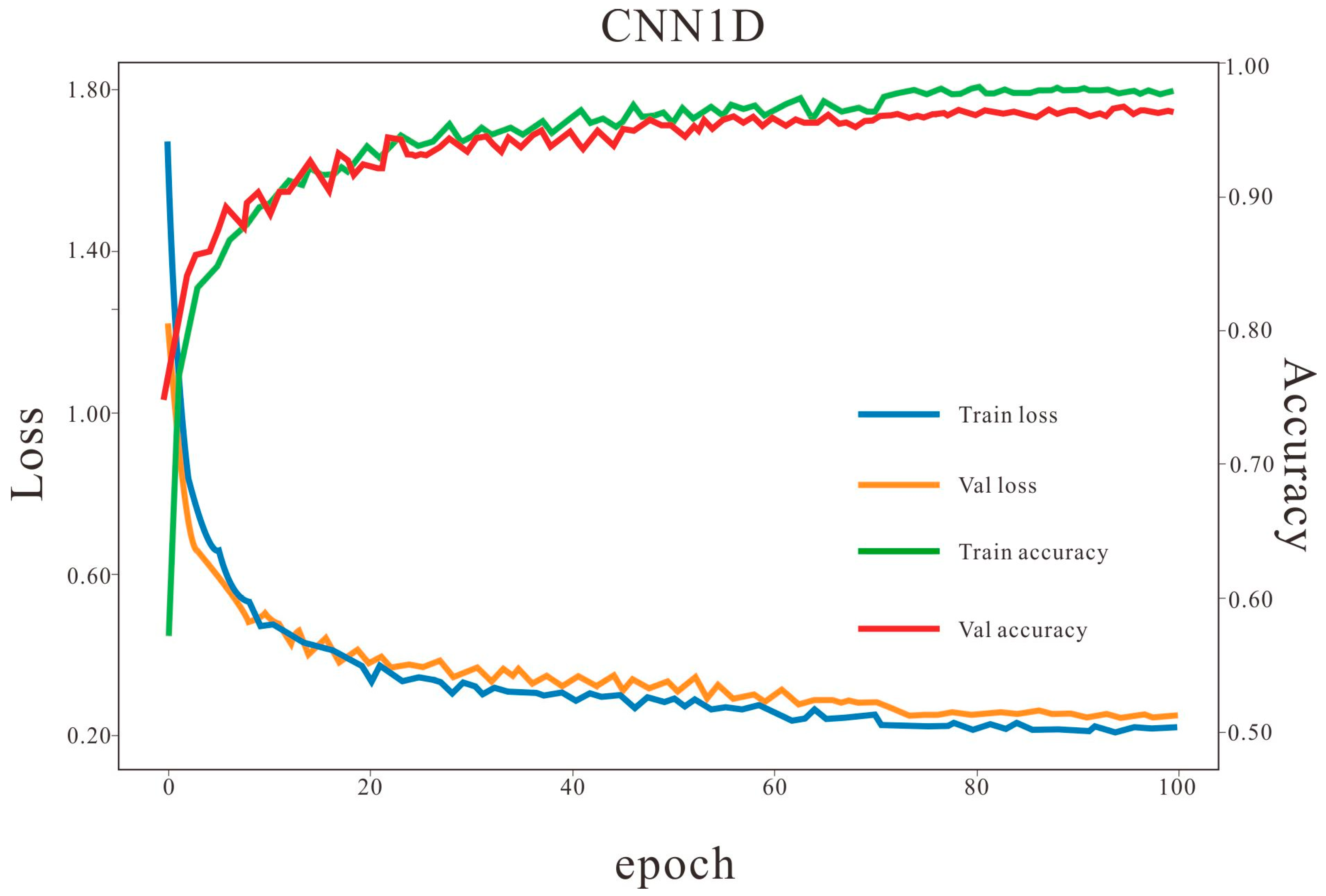
- Model Training and Parameter Optimization:
3.3. Test Results
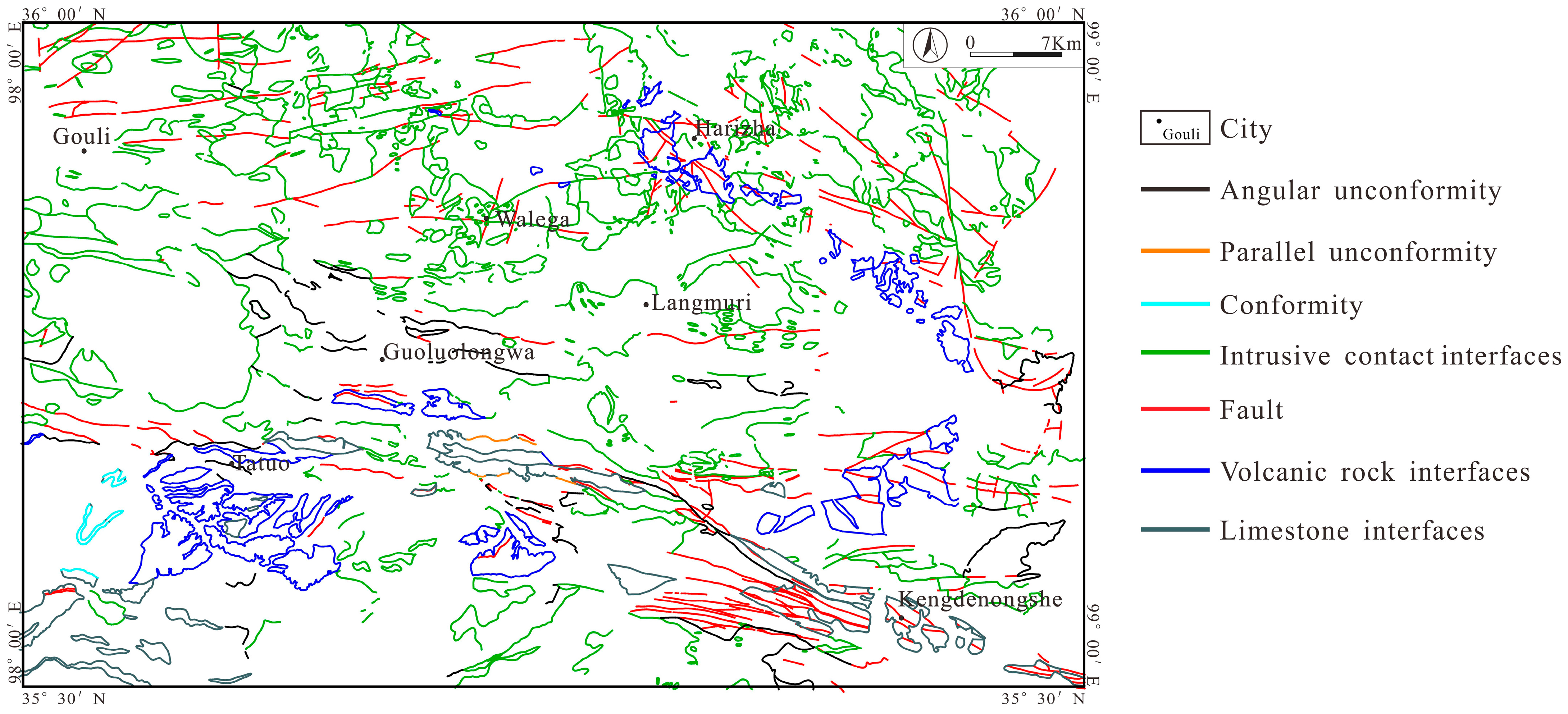
3.4. Distribution Characteristics of Various Geological Interfaces and Their Influence on Mineralization
4. Intelligent Prediction Methods Based on Geological Interface Type Information
4.1. Principles of Intelligent Mineral Exploration Prediction
4.2. Mineral Exploration Prediction Results
5. Discussion
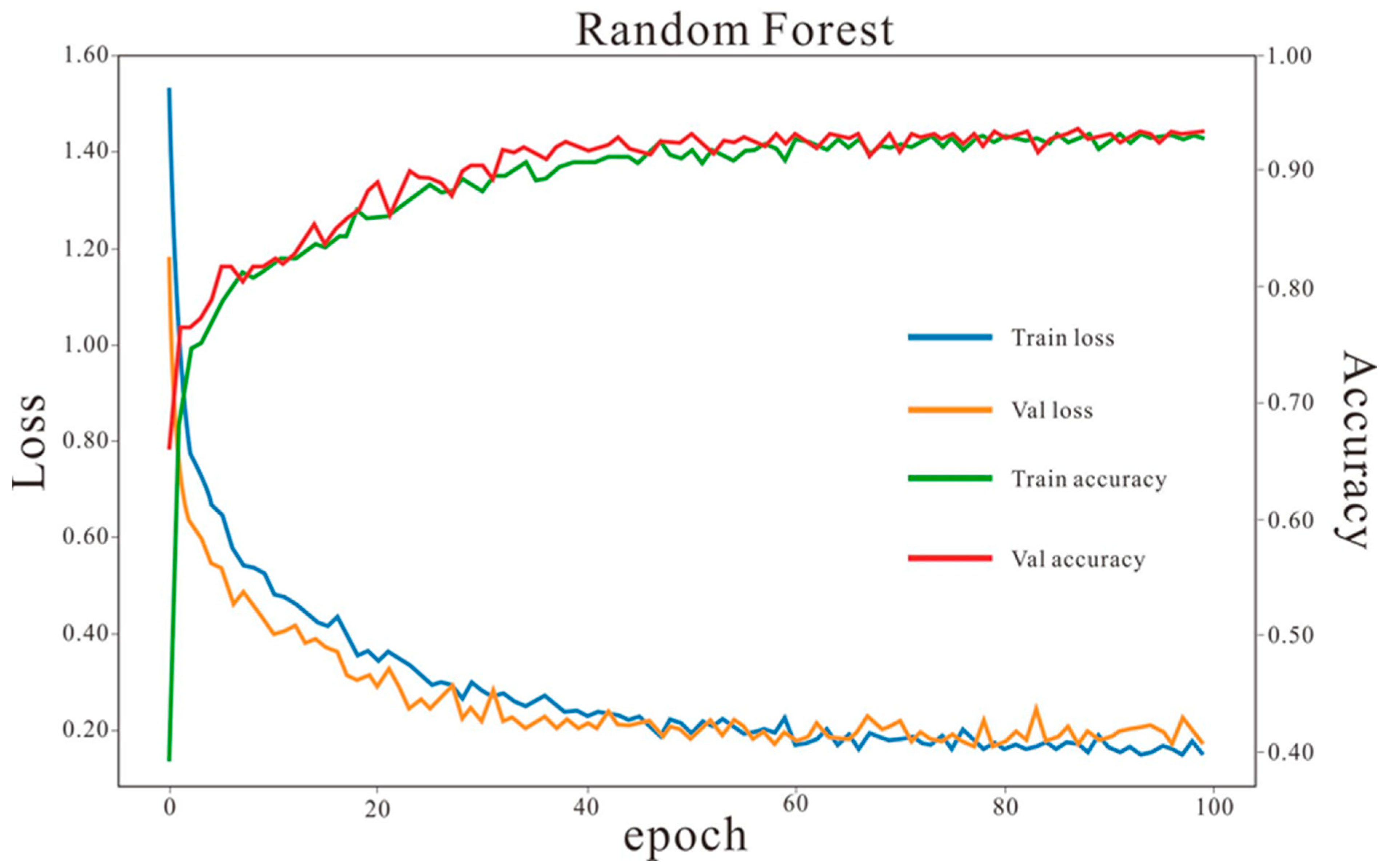
5.1. Model Evaluation
5.2. Improvement of Prediction Results After Incorporating Geological Interface Information
6. Conclusions
- This study classifies nine types of geological interfaces, and more than 5900 datasets of geological interfaces are constructed. Natural language processing techniques are applied to perform word embedding on the dataset. A geological interface type recognition model is developed using CNN1D, which identifies geological interfaces within the study area with an accuracy rate of 96.52%.
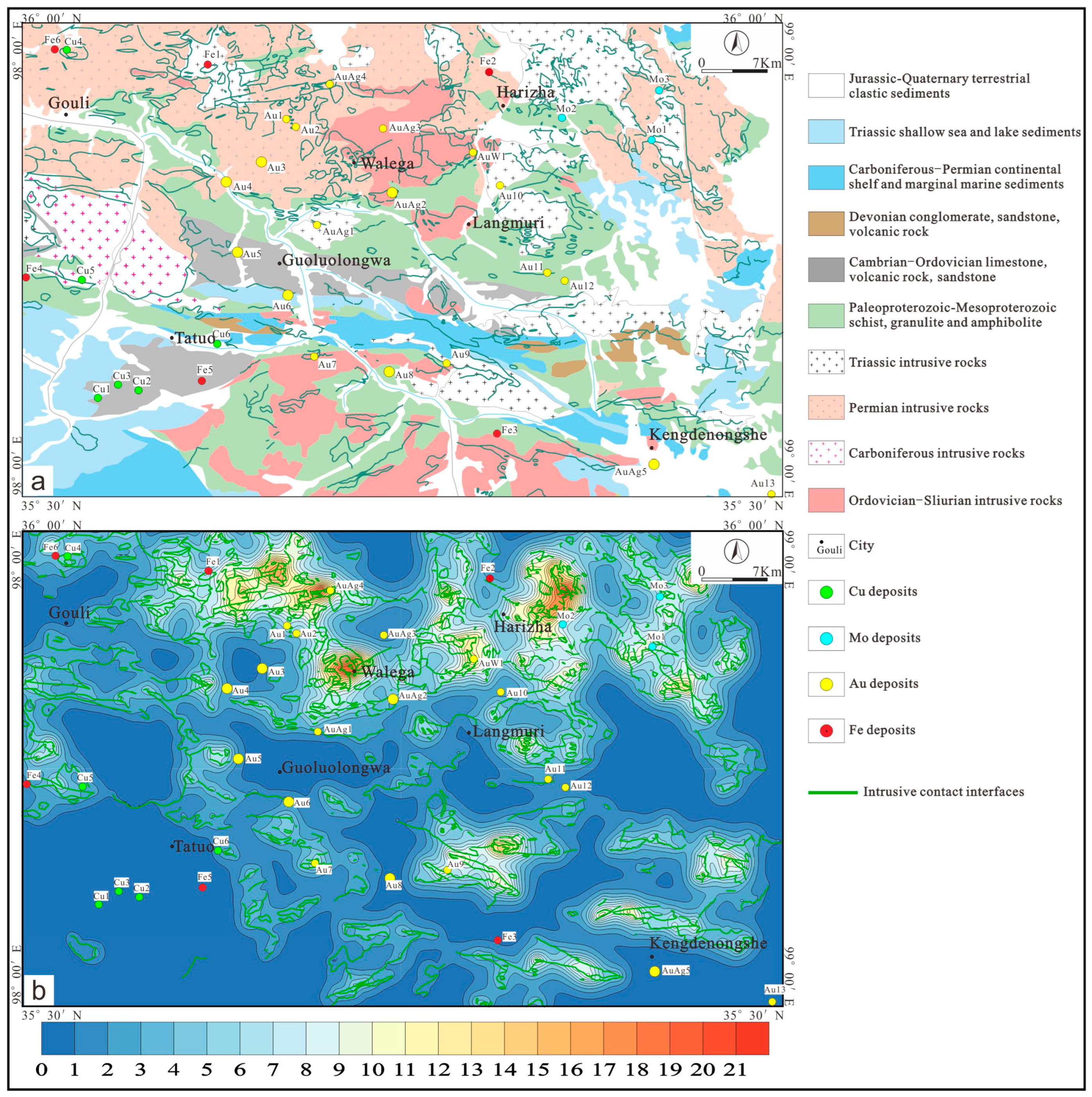
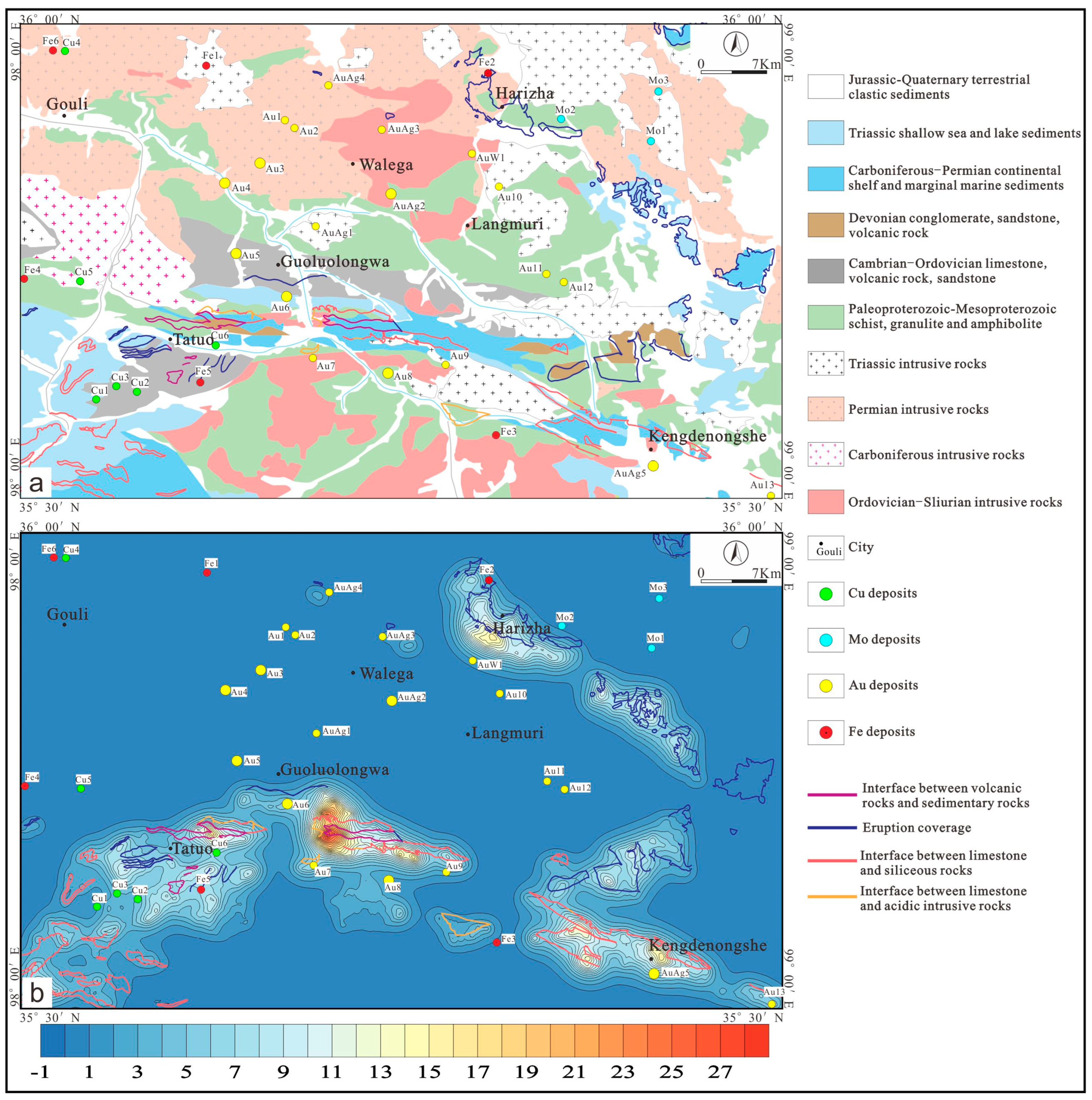
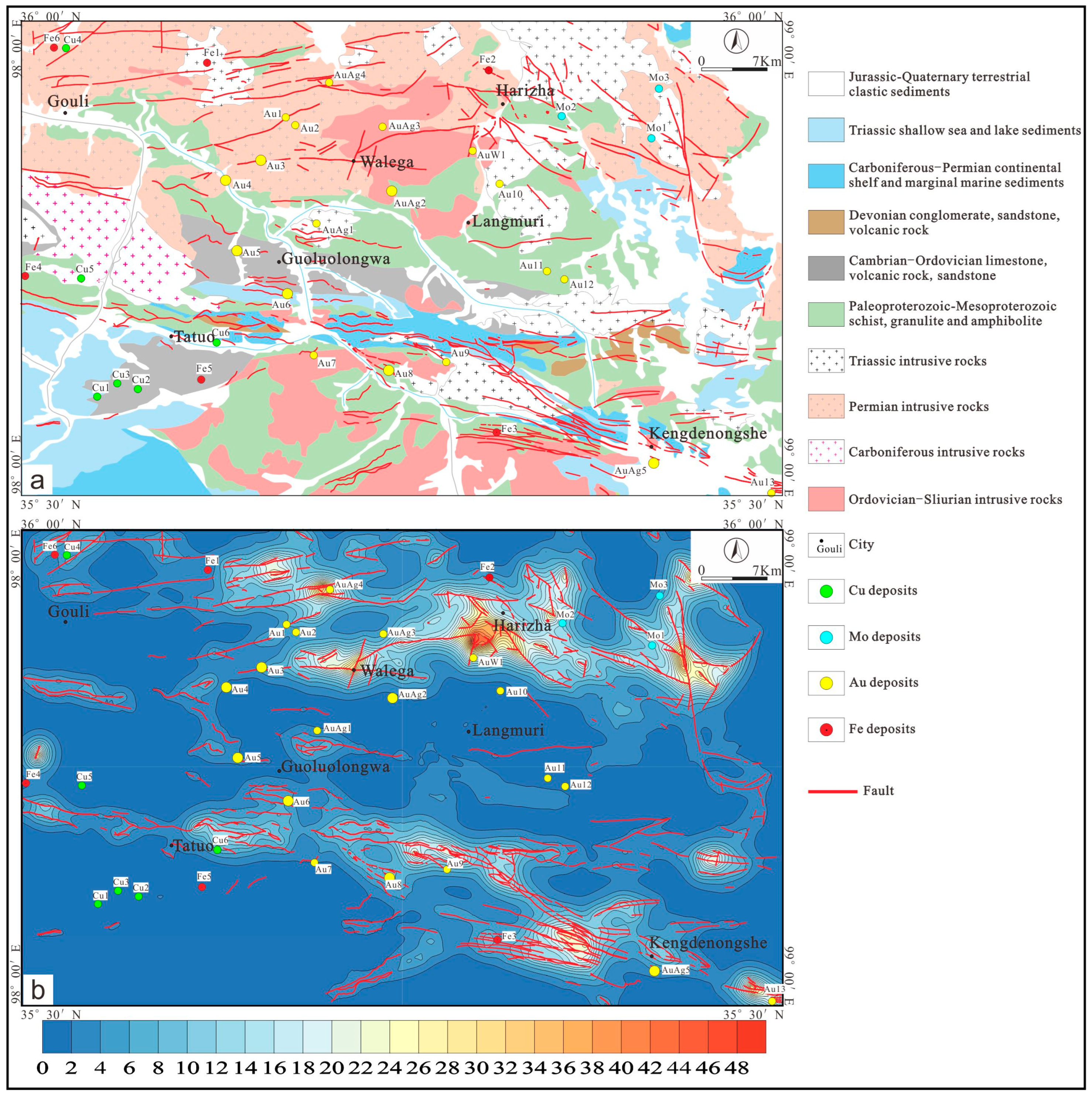
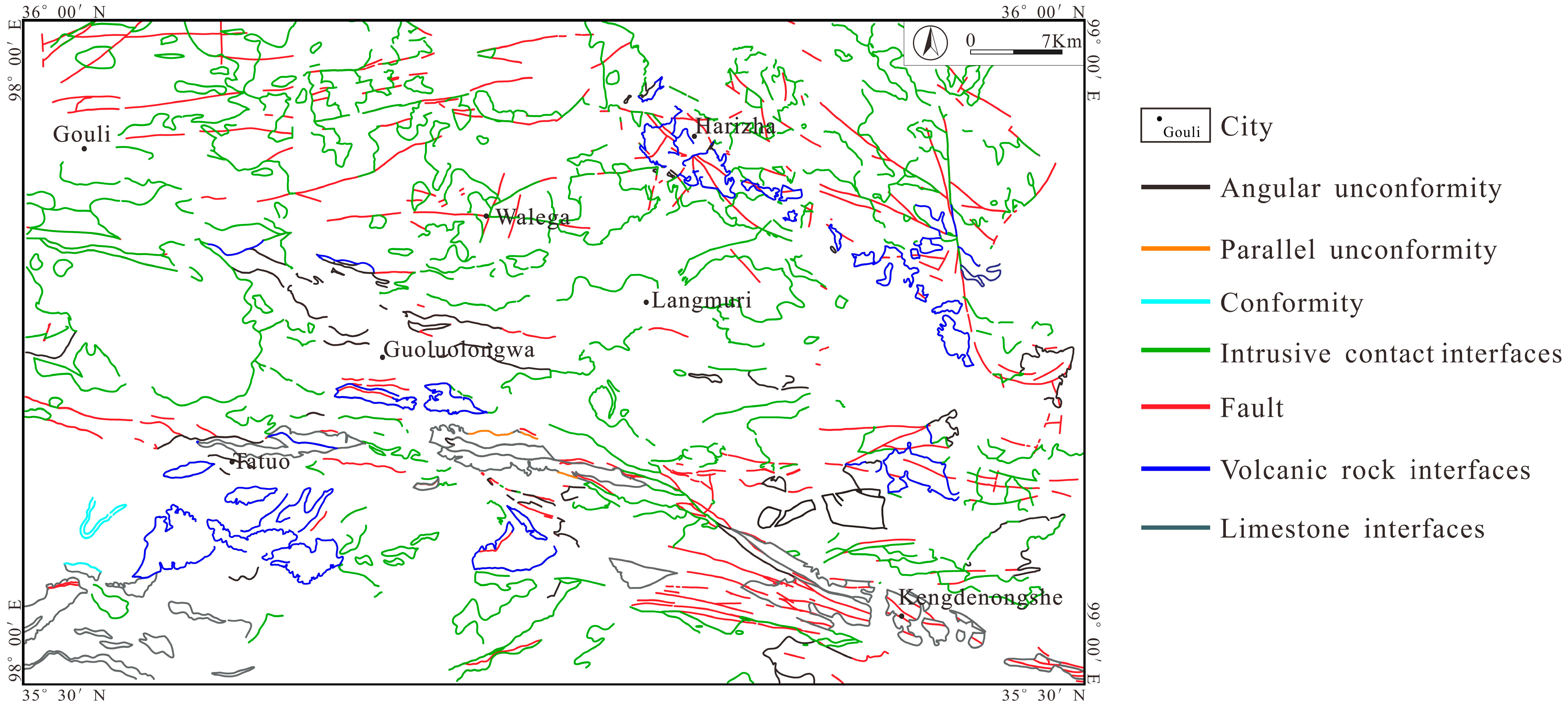
- In mapping the geological interfaces of the study area to the geological map according to classification, Gouli exhibits frequent tectonic movements and magmatic activity, with well-developed faults and widespread intrusive rocks. Volcanic rocks are poorly developed and rarely exposed. Carbonate rock formations are primarily distributed in the southern part of the study area. Combined with geological data from the mining area and conducting quantitative analysis of the distances between geological interfaces and mineral deposits, a strong spatial correlation between geological interfaces and mineral deposits has been identified.
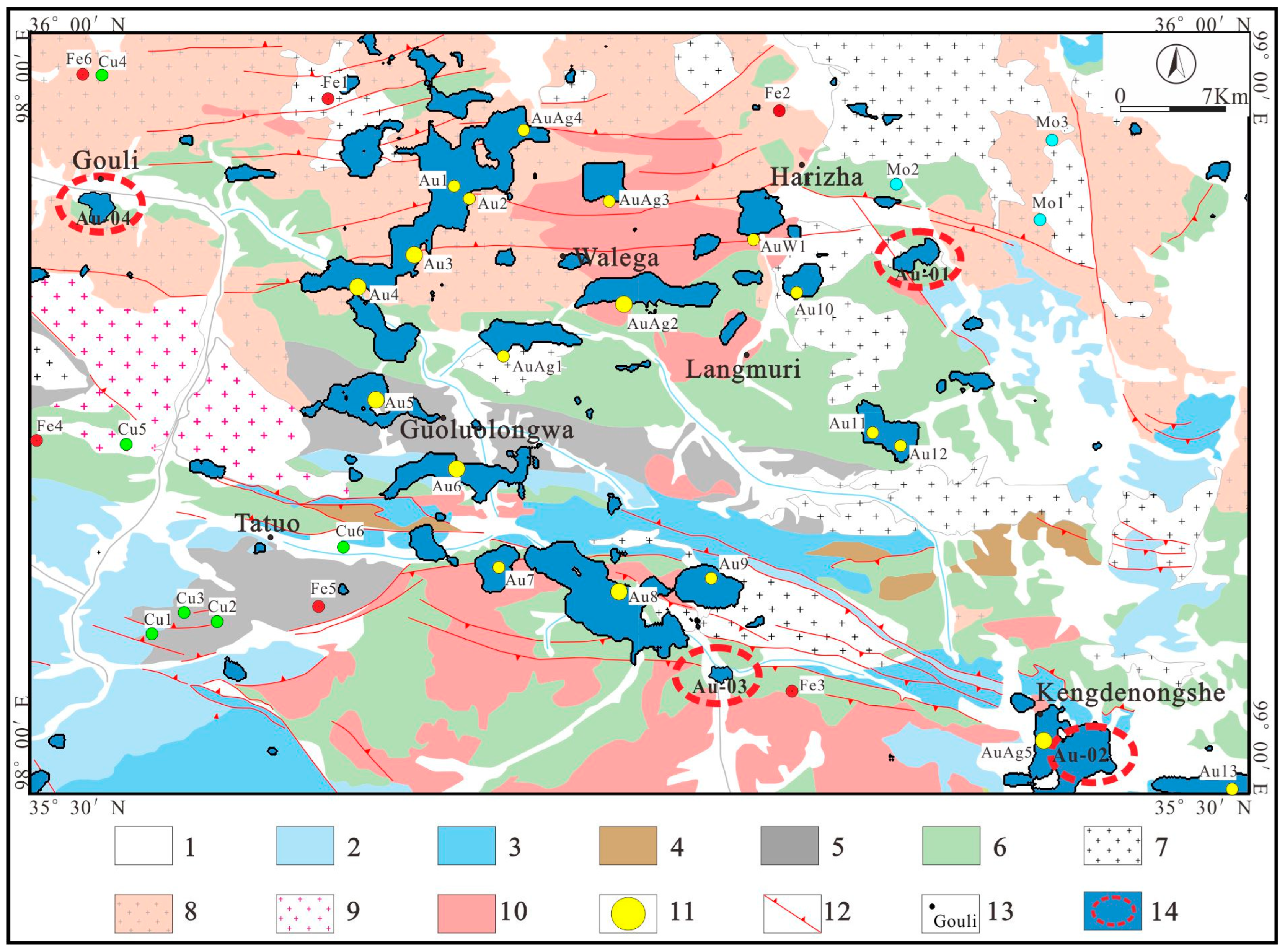
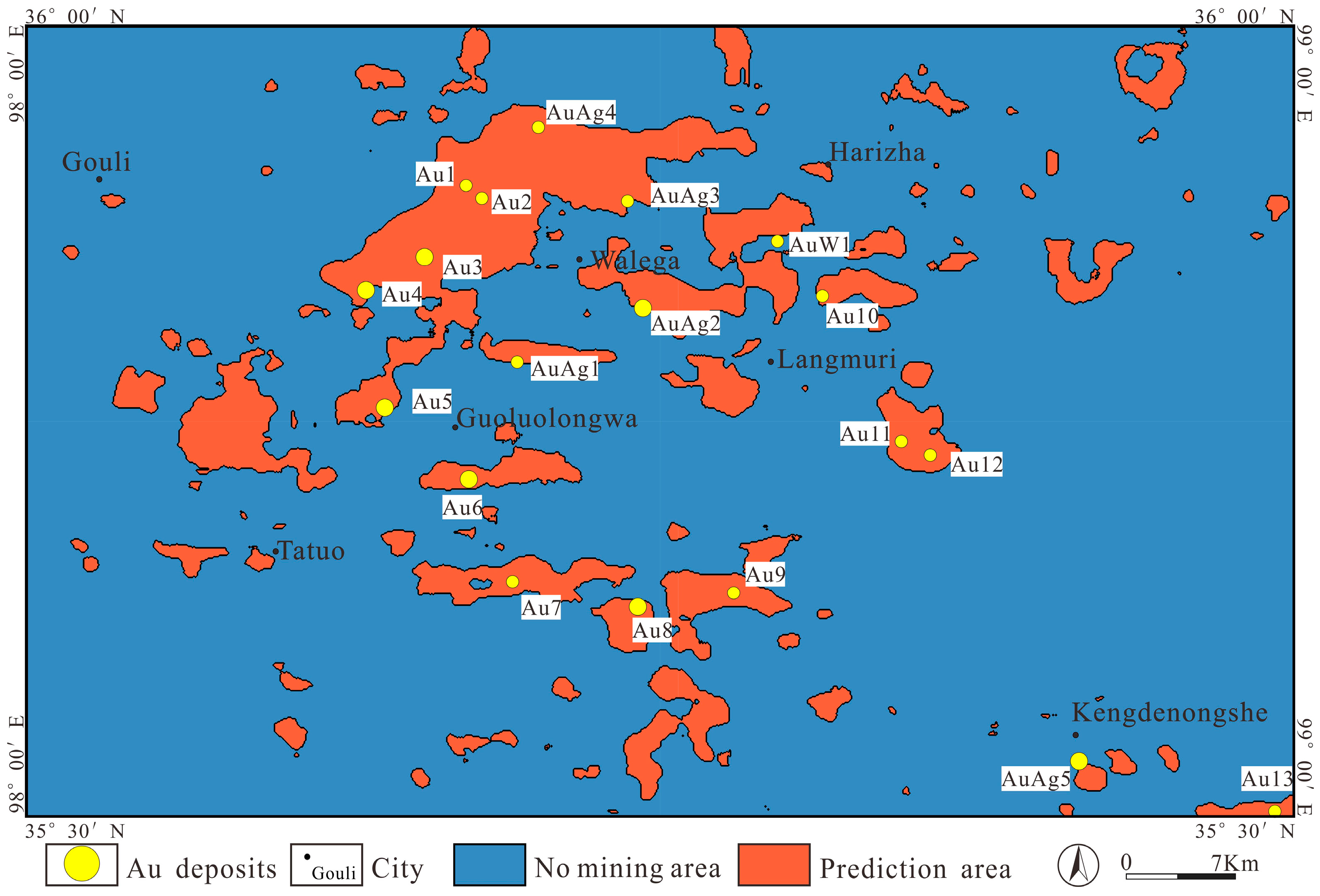
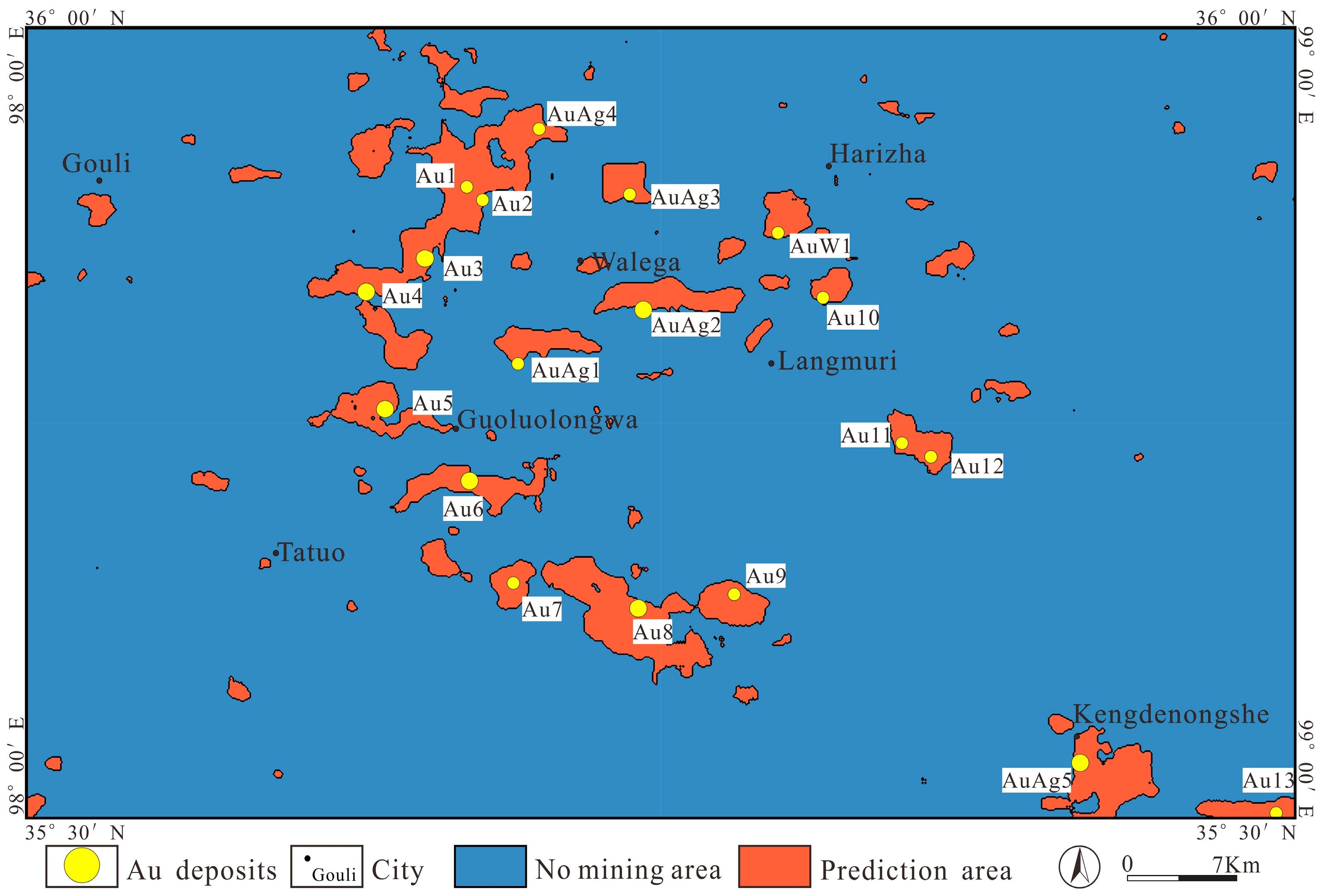
- Comparing mineral exploration prediction maps reveals that incorporating identified geological interface data into the universal mineral exploration model achieves a prediction accuracy of 98.21%. The predicted area covers 6.9% of the region, exhibiting finer and more concentrated distribution. This provides scientifically grounded guidance with greater practical value for mineral resource exploration and development.
Author Contributions
Funding
Data Availability Statement
Acknowledgments
Conflicts of Interest
References
- Pan, Y.S. Discussion on Composite Contact Relationships Between Geological Bodies. Chin. J. Geol. Bull. China 1996, 3, 82–83, (In Chinese with English abstract). [Google Scholar]
- Wang, J.W.; Zhu, Y.S. A discussion on marginal metallogenesis. Geol. China 2019, 46, 77–86, (In Chinese with English abstract). [Google Scholar] [CrossRef]
- Zhang, W.D.; Li, B.; Lu, A.H.; Zhao, K.-D.; Elatikpo, S.M.; Chen, X.-D.; Zhu, L.; Yu, M. In-Situ Pyrite Trace Element and Sulfur Isotope Characteristics and Metallogenic Implications of the Qixiashan Pb-Zn-Ag Polymetallic Deposit, Eastern China. Ore Geol. Rev. 2022, 144, 104849. [Google Scholar] [CrossRef]
- Bao, Z.; Zhao, Z.; Guha, J.; Williams, A.E. HFSE, REE, and PGE Geochemistry of Three Sedimentary Rock-Hosted Disseminated Gold Deposits in Southwestern Guizhou Province, China. Geochem. J. 2004, 38, 363–381. [Google Scholar] [CrossRef][Green Version]
- Deng, J.; Yu, H.; Chen, H.; Du, Z.; Yang, H.; Li, H.; Xie, S.; Chen, X.; Guo, F. Ore-Controlling Structures of the Xiangshan Volcanic Basin, SE China: Revealed from Three-Dimensional Inversion of Magnetotelluric Data. Ore Geol. Rev. 2020, 127, 103807. [Google Scholar] [CrossRef]
- Du, Y.; Deng, J.; Cao, Y.; Li, D. Petrology and Geochemistry of Silurian–Triassic Sedimentary Rocks in the Tongling Region of Eastern China: Their Roles in the Genesis of Large Stratabound Skarn Ore Deposits. Ore Geol. Rev. 2015, 67, 255–263. [Google Scholar] [CrossRef]
- Pek, A.A.; Malkovsky, V.I. The Role of the Thermal Convection of Fluids in the Formation of Unconformity-Type Uranium Deposits: The Athabasca Basin, Canada. Geol. Ore Depos. 2017, 59, 209–226. [Google Scholar] [CrossRef]
- Dong, A.G.; Zhang, X.Q.; Hu, P.C.; Guo, F. The Design and Implementation of the Stratigraphic Contact Automatic Identification System. Mod. Surv. Mapp. 2013, 36, 44–46, (In Chinese with English abstract). [Google Scholar]
- Guo, D.; Yang, X.; Peng, P.; Zhu, L.; He, H. The Intelligent Fault Identification Method Based on Multi-Source Information Fusion and Deep Learning. Sci. Rep. 2025, 15, 6643. [Google Scholar]
- Mukherjee, B.; Srivardhan, V.; Roy, P.N.S. Identification of Formation Interfaces by Using Wavelet and Fourier Transforms. J. Appl. Geophys. 2016, 128, 140–149. [Google Scholar] [CrossRef]
- Tian, Y.; Wu, J.; Chen, G.; Liu, G.; Zhang, X. Big Data-Driven 3D Visualization Analysis System for Promoting Regional-Scale Digital Geological Exploration. Appl. Sci. 2025, 15, 4003. [Google Scholar] [CrossRef]
- Andersen, P.J.; Degn, L.; Fishberg, R.; Graversen, E.K.; Horbach, S.P.J.M.; Schmidt, E.K.; Schneider, J.W.; Sørensen, M.P. Generative artificial intelligence (GenAI) in the research process—A survey of researchers’ practices and perceptions. Technol. Soc. 2025, 81, 102813. [Google Scholar] [CrossRef]
- Xu, S.T.; Zhou, Y.Z. Artificial intelligence identification of ore minerals under microscope based on deep learning algorithm. Acta Petrol. Sin. 2018, 34, 3244–3252, (In Chinese with English abstract). [Google Scholar]
- Pang, Y.-E.; Li, X.; Yan, J.-Y.; Du, S.-Z. Exploration of Image-Based Unsupervised Learning Algorithms for Intelligent Rock Classification. Geoenergy Sci. Eng. 2025, 247, 213707. [Google Scholar] [CrossRef]
- Sang, X.; Xue, L.; Ran, X.; Li, X.; Liu, J.; Liu, Z. Intelligent High-Resolution Geological Mapping Based on SLIC-CNN. ISPRS Int. J. Geo-Inf. 2020, 9, 99. [Google Scholar] [CrossRef]
- Liu, L.; Li, T.; Ma, C. Research on 3D Geological Modeling Method Based on Deep Neural Networks for Drilling Data. Appl. Sci. 2024, 14, 423. [Google Scholar] [CrossRef]
- Li, S.; Chen, J.; Xiang, J. Applications of deep convolutional neural networks in prospecting prediction based on two-dimensional geological big data. Neural Comput. Appl. 2020, 32, 2037–2053. [Google Scholar] [CrossRef]
- He, H.; Zhu, H.; Yang, X.; Zhang, W.; Wang, J. Mineral prospectivity prediction based on convolutional neural network and ensemble learning. Sci. Rep. 2024, 14, 22654. [Google Scholar] [CrossRef]
- Li, Y.; Peng, C.; Ran, X.; Xue, L.; Chai, S. Soil geochemical prospecting prediction method based on deep convolutional neural networks—Taking Daqiao Gold Deposit in Gansu Province, China as an example. China Geol. 2022, 5, 71–83. [Google Scholar]
- Ma, W.M.; Wang, Z.D.; Zhang, X.D.; Ma, Y.; Luo, Y.T. Analysis on prospecting potential and bottlenecks of Gouli exploration area in Dulan County, Qinghai Province. West-China Explor. Eng. 2016, 28, 134–137+140. [Google Scholar]
- Chen, J.J. Paleozoic-Mesozoic Tectono-Magmatic Evolution and Gold Mineralization in Gouli Area, East End of East Kunlun Orogen. Ph.D. Thesis, China University of Geosciences, Wuhan, China, 2018. [Google Scholar]
- Wang, F.L.; Xiao, X.Q.; Chen, S.S. Geological characteristics and prospecting potential of gold deposits in Gouli area, Qinghai. Gold Sci. Technol. 2011, 19, 45–48, (In Chinese with English abstract). [Google Scholar]
- Yang, B.R.; Zhang, L.B.; Ma, Z.X.; Wang, X.Y. Study on Metallogenic Geological Background of Gold Deposits in Gouli Area, Qinghai. Min. Explor. 2018, 9, 1920–1925, (In Chinese with English abstract). [Google Scholar]
- Fulb, B.; Bagasl, B.; Wei, J.H.; Chen, Y.; Chen, J.; Zhao, X.; Zhao, Z.; Li, A.; Zhang, W. Growth of early Paleozoic continental crust linked to the Proto-Tethys subduction and continental collision in the East Kunlun Orogen, northern Tibetan Plateau. Geol. Soc. Am. Bull. 2022, 135, 1709–1733. [Google Scholar]
- Ma, D.; Sun, G.S.; Li, X.; Han, L.; Zhang, J.T.; Liu, G.Y. Geological characteristics and genesis of gold deposits in the Gouli area, Dulan County, Qinghai Province. Gold 2022, 43, 13–18, (In Chinese with English abstract). [Google Scholar]
- Ding, K. Research on General Mineral Resource Prediction Methods Based on Deep Learning: A Case Study of the Eastern Kunlun-Western Qinling Metallogenic Belt. Ph.D. Thesis, Jilin University, Changchun, China, 2024. (In Chinese with English abstract). [Google Scholar]
- Huang, X.K. Gold Mineralization and Comprehensive Information Prospecting Prediction in Balong-Gouli Area, East Kunlun Orogen. Ph.D. Thesis, China University of Geosciences, Wuhan, China, 2021. (In Chinese with English abstract). [Google Scholar]
- Wang, K.M.; Li, W.J.; Duan, H.C.; Ma, N.; Ma, S.G. Geological Characteristics and Prospecting Indicators of the Walega Gold Deposit in Dulan County, Qinghai Province. Chin. Manganese Ind. 2019, 37, 75–78, (In Chinese with English abstract). [Google Scholar]
- Ye, M.L. Geological characteristics and genesis analysis of the Reshui molybdenum deposit in Dulan County, Qinghai Province. Resour. Inf. Eng. 2018, 33, 37–38, (In Chinese with English abstract). [Google Scholar]
- Wang, Y. Aracteristics and prospecting potentiality of Yerigeng Au-Cu-Ni polymetallic ore field in Qinghai Province. Miner. Explor. 2019, 10, 845–853, (In Chinese with English abstract). [Google Scholar]
- Wang, W.; Jiang, Y.S.; Chen, P.Z.; Su, H.-M.; Li, H.; He, S. The origin and mineralization processes of the Dulenggou copper-cobalt deposit in the East Kunlun orogenic belt, western China. Ore Geol. Rev. 2024, 171, 106186. [Google Scholar] [CrossRef]
- Yu, X.L.; Ma, C.; Li, J.; Wang, C.Y.; Tong, H.K.; Wang, T. Characteristics of Primary Halos and Deep Prospecting Prediction of the Dareer Gold Deposit in Dulan County, Qinghai Province. Gold Sci. Technol. 2025, 33, 264–275, (In Chinese with English abstract). [Google Scholar]
- Li, W.J.; Wang, K.M.; Zhang, L.B.; Zhang, X.Y.; He, J.J. Geological Characteristics and Prospecting Indicators of Gold Deposits in Delong Area Dulan County, Qinghai Province. Chin. Manganese Ind. 2019, 37, 84–86+90, (In Chinese with English abstract). [Google Scholar]
- Fleiss, J.L. Measuring nominal scale agreement among many raters. Psychol. Bull. 1971, 76, 378–382. [Google Scholar] [CrossRef]
- Landis, J.R.; Koch, G.G. The Measurement of Observer Agreement for Categorical Data. Biometrics 1977, 33, 159–174. [Google Scholar] [CrossRef]
- Reimers, N.; Gurevych, I. Sentence-BERT: Sentence embeddings using siamese BERT-networks. arXiv 2019, arXiv:1908.10084. [Google Scholar] [CrossRef]
- Li, J.; Si, Y.; Xu, T.; Jiang, S. Deep convolutional neural network based ECG classification system using information fusion and one-hot encoding techniques. Math. Probl. Eng. 2018, 2018, 7354081. [Google Scholar] [CrossRef]
- Zhang, Y.; Ye, X.; Xie, S.; Dong, J.; Yaisamut, O.; Zhou, X.; Zhou, X. Prediction of Au-polymetallic deposits based on spatial multi-layer information fusion by random forest model in the Central Kunlun Area of Xinjiang, China. Minerals 2023, 13, 1302. [Google Scholar] [CrossRef]
- Chen, L.; Wang, H.; Sun, C.; Chang, X.; Ding, W. The application of integrated geochemical and geophysical exploration for prospecting potential prediction of copper and gold polymetallic deposits in the Fudiyingzi–Bacheli Area, Heilongjiang Province. Minerals 2025, 15, 597. [Google Scholar] [CrossRef]
- Carranza, E.J.M. Controls on mineral deposit occurrence inferred from analysis of their spatial pattern and spatial association with geological features. Ore Geol. Rev. 2009, 35, 383–400. [Google Scholar] [CrossRef]
- Agterberg, F.P. Use of spatial analysis in mineral resource evaluation. J. Int. Assoc. Math. Geosci. 1984, 16, 565–589. [Google Scholar] [CrossRef]
- Lisitsin, V. Spatial data analysis of mineral deposit point patterns: Applications to exploration targeting. Ore Geol. Rev. 2015, 71, 861–881. [Google Scholar] [CrossRef]



| Major Categories | Subcategories | Labels |
|---|---|---|
| Structural interfaces | Fault | 0 |
| Stratigraphic interfaces | Conformable | 1 |
| Parallel unconformable | 2 | |
| Angular unconformable | 3 | |
| Intrusive contact interfaces | / | 4 |
| Special lithological interfaces | Limestone and siliceous rocks | 5 |
| Limestone and moderately acidic intrusive rocks | 6 | |
| Volcanic–sedimentary interface | 7 | |
| Eruption coverage | 8 |
| Major Categories | Subcategories | Quantity | Deposit | ||
|---|---|---|---|---|---|
| 500 m | 1 km | 2 km | |||
| Structural interfaces | fault | 2259 | 15 | 8 | 8 |
| Stratigraphic interfaces | conformable | 7 | 0 | 0 | 0 |
| parallel unconformable | 8 | 0 | 0 | 0 | |
| angular unconformable | 1253 | 0 | 0 | 0 | |
| Intrusive contact interfaces | / | 1756 | 18 | 6 | 5 |
| Special lithological interfaces | limestone and siliceous rocks | 329 | 0 | 2 | 4 |
| limestone and moderately acidic intrusive rocks | 24 | 1 | 0 | 2 | |
| volcanic–sedimentary interface | 46 | 0 | 1 | 2 | |
| eruption coverage | 252 | 1 | 6 | 2 | |
| Datasets | Accuracy | Predicted Area | Predicted Deposits |
|---|---|---|---|
| Geochemical data | 93.49% | 12.7% | 89.5% (17/19) |
| Geochemical data + geological interface data | 98.21% | 6.9% | 100% (19/19) |
Disclaimer/Publisher’s Note: The statements, opinions and data contained in all publications are solely those of the individual author(s) and contributor(s) and not of MDPI and/or the editor(s). MDPI and/or the editor(s) disclaim responsibility for any injury to people or property resulting from any ideas, methods, instructions or products referred to in the content. |
© 2025 by the authors. Licensee MDPI, Basel, Switzerland. This article is an open access article distributed under the terms and conditions of the Creative Commons Attribution (CC BY) license (https://creativecommons.org/licenses/by/4.0/).
Share and Cite
Zong, Y.; Xue, L.; Wang, J.; Wang, P.; Ran, X. Research on Deep Learning-Based Identification Methods for Geological Interface Types and Their Application in Mineral Exploration Prediction—A Case Study of the Gouli Region in Qinghai, China. Minerals 2025, 15, 1281. https://doi.org/10.3390/min15121281
Zong Y, Xue L, Wang J, Wang P, Ran X. Research on Deep Learning-Based Identification Methods for Geological Interface Types and Their Application in Mineral Exploration Prediction—A Case Study of the Gouli Region in Qinghai, China. Minerals. 2025; 15(12):1281. https://doi.org/10.3390/min15121281
Chicago/Turabian StyleZong, Yawen, Linfu Xue, Jianbang Wang, Peng Wang, and Xiangjin Ran. 2025. "Research on Deep Learning-Based Identification Methods for Geological Interface Types and Their Application in Mineral Exploration Prediction—A Case Study of the Gouli Region in Qinghai, China" Minerals 15, no. 12: 1281. https://doi.org/10.3390/min15121281
APA StyleZong, Y., Xue, L., Wang, J., Wang, P., & Ran, X. (2025). Research on Deep Learning-Based Identification Methods for Geological Interface Types and Their Application in Mineral Exploration Prediction—A Case Study of the Gouli Region in Qinghai, China. Minerals, 15(12), 1281. https://doi.org/10.3390/min15121281