Article

Characterization of Brazilian Tin Slag and Evaluation of Its Potential as a Secondary Source of Nb and Ta


by
Franco Garjulli
*,
Gabriel Alves de Souza Gonçalves
,
Jorge Alberto Soares Tenório
and
Denise Crocce Romano Espinosa
*
Department of Chemical Engineering, Polytechnical School, University of São Paulo, São Paulo 05424-970, Brazil
*
Authors to whom correspondence should be addressed.
Minerals 2025, 15(11), 1126; https://doi.org/10.3390/min15111126
Submission received: 23 September 2025 / Revised: 24 October 2025 / Accepted: 25 October 2025 / Published: 28 October 2025
(This article belongs to the Special Issue Characterization and Reuse of Slag)

Abstract

Tin slags generated during cassiterite smelting in Brazil contain significant amounts of technologically important metals such as niobium, tantalum, and zirconium. Improper disposal of these materials represents both an environmental concern and the loss of a valuable secondary source of critical elements. This study aimed to characterize a Brazilian tin slag sample to evaluate its composition, morphology, and potential for metal recovery. The material was homogenized and analyzed by laser diffraction (particle size), ICP-OES (chemical composition), X-ray diffraction (mineral phases), differential scanning calorimetry (metallic tin), and scanning electron microscopy with energy-dispersive spectroscopy (morphology). The slag exhibited a heterogeneous particle size distribution (D90 = 0.75 mm, D50 = 0.30 mm, D10 = 0.09 mm) and a complex multiphase structure composed mainly of silica, calcium silicate, and zirconia. The chemical analysis revealed 4.8 wt% Nb and 0.8 wt% Ta, along with high concentrations of Zr (11.1 wt%), confirming the material’s potential as a secondary resource. Thorium (2.7 wt%) and uranium (0.3 wt%) were also detected, indicating the presence of radioactive constituents. The detailed characterization of the slag provides essential insights into its chemical and mineralogical complexity, which directly influence the selection of suitable recovery routes. Understanding the distribution of Nb- and Ta-bearing phases within the refractory silicate–zirconia matrix is fundamental for defining pretreatment and leaching strategies. Therefore, this study establishes a necessary foundation for the design of efficient hydrometallurgical processes aimed at recovering critical metals from Brazilian tin slags.

1. Introduction

1.1. Production Process

Different types of slag are obtained in various metallurgical processes and can be classified as ferrous slags, non-ferrous slags, and incineration slags. Their classification depends on the origin of the material and its characteristics. Despite being part of the waste class, slags are a secondary source of metal recovery, as they contain metals of technological interest [1,2].
Ferrous slags are characterized by their iron-rich composition and are obtained from the recovery of iron in natural ores or in the recycling of materials for steel production. The main ferrous slags include iron slag (produced in blast furnaces), steel slag, alloy steel slag, and ferroalloy slag, with the first two representing most ferrous slags [3]. And non-ferrous slags are obtained through the process of recovering non-ferrous metals present as oxides in ores. This classification includes zinc, copper, vanadium, nickel, and tin slags. Their production is like that of ferrous slag and consists of three main stages: concentration, roasting, and smelting [1,4,5].

1.2. Waste Disposal

Among waste management options, waste reuse stands out as a sustainable alternative from economic, environmental, and social perspectives. However, in Brazil, waste is still largely sent to landfills, which, for the most part, do not meet the required environmental quality standards. Recycling waste requires special attention, as it helps minimize negative environmental impacts compared to improper disposal. Improper disposal, for instance, can lead to soil contamination due to the presence of metals in high concentrations [6].
As established in NBR 10004 (2004) [7], slag can be classified as hazardous or non-hazardous solid waste, depending on the composition limits of the elements that affect the quality of the soil and water resources when disposed of improperly. For the verification of solid waste, the concentrations of the elements must be higher than the concentration limits presented by the elements present in the extract leached from the waste, according to Table 1.
In the European Union, slags are treated within the regulatory framework established by Directive 2008/98/EC on waste, which provides criteria for classification, assessment, and management of hazardous properties. Those materials may be classified as hazardous wastes when they contain heavy metals (antimony, arsenic, cadmium, chromium (VI), copper, lead, mercury, nickel, selenium, tellurium, thallium, and tin) or transition metals (scandium, vanadium, manganese, cobalt, copper, yttrium, niobium, hafnium, tungsten, titanium, chromium, iron, nickel, zinc, zirconium, molybdenum, and tantalum) that display hazardous properties. To ensure proper disposal of slags, the EU indicates stabilization or solidification processes to reduce the mobility and hazardousness of constituents, which increase operational costs and may hinder the feasibility of certain processes [8].
On the same note, in the United States, slags from primary and secondary mineral processing are regulated under the Resource Conservation and Recovery Act (RCRA) and the Land Disposal Restrictions (LDRs) program. By these directives, the land disposal of untreated hazardous wastes is forbidden and it requires that mineral processing residues exhibiting hazardous characteristics undergo treatment to reduce their toxicity or mobility [9].

1.3. Reuse of Slags

To reduce the negative environmental impacts caused by the improper disposal of slag, such as soil and water contamination, which is harmful to the environment and to society, reuse processes are being implemented [1]. In addition, the reuse of slag generally has an economic appeal, since failure to treat slag leads to the damming up of capital, as valuable metals are discarded [10].
In the case of Brazilian tin slag, for example, the presence of Th and U, radioactive materials, requires special storage controls, and the subsequent use of this slag requires prior decontamination of these elements, thus reaffirming the need for secondary alternatives for the disposal of this slag [11].
Various processes can be used to reuse slag; however, its composition will define whether it can be returned to the production process, or whether it should be disposed of in landfills, sold as a raw material to another industry, or destined for another reuse alternative [6]. Among the possible applications of slag for reuse, the following are presented in Table 2.
As an example, the utilization of slags from the iron and steel production process for cement clinker manufacturing is an alternative adopted by several industries. This process is possible because slag contains a high amount of calcium in the form of CaO, which can replace the limestone normally used in cement production. The use of waste as a raw material makes the processes cheaper and since calcium is present as an oxide, rather than in its traditional carbonate form, the cement production process emits less carbon and consumes less energy. However, the use of slags in cement production can alter its final properties, and in some cases, metals such as Fe, Mn, Mg, and Cr may occur at high concentrations, which makes slag utilization unfeasible due to its toxicity [12].
Pasetto, Baliello, Giacomello, and Pasquini (2023) [13] highlight that the reuse of steel slags in asphalt pavements represents an alternative for both waste management and road construction. Due to their mechanical properties, steel slags can partially or fully replace natural aggregates in bituminous mixtures. The authors indicate that steel slag-based mixtures may also enhance fatigue resistance and moisture susceptibility when compared with conventional aggregates. As a counterpoint, the authors also highlight some difficulties regarding volumetric stability and leaching behavior.
Regarding non-ferrous slags, their utilization is more limited due to the higher concentration of transition metals and, consequently, their greater toxicity and leaching instability. Each case must be individually assessed. Nevertheless, the typical silicon and calcium contents of these slags make them suitable for replacing limestone or aggregates in civil construction or in the cement industry, provided that hazardous elements are not present at significant concentrations. For these slags, the recovery of secondary metals may also represent a viable alternative [14].

1.4. Recovery of Elements of Economic Interest

Slags from metallurgical reduction processes accumulate metals that have not been reduced, thus, representing secondary sources for metal recovery. However, due to their matrix, which is rich in silicon oxides, calcium oxides, and other refractory materials, this recovery is complex and generally requires chemical leaching processes [14].
According to Wang (2016), ref. [14] the leaching process can be defined as the dissolution of one or more minerals by an aqueous solution of the leaching agent. Its aim is to separate the metals of interest from a large mass, in this case, other metals (impurities).
The extraction process can be carried out through acid or alkaline leaching, or even by methods that combine both acids and bases, depending on the composition and structure of the slag to be treated, with the aim of recovering the metals it contains [15].

1.5. Brazilian Tin Slag

The slag generated in the production of metallic tin from cassiterite occurs through the pyrometallurgical process. This process initially consists of comminuting the mineral in crushing and grinding operations. This material is then concentrated using physical–chemical techniques such as flotation. The concentrated material is sent for sintering, with the aim of increasing the size of the particles and adding the components necessary for its reduction. During this operation, reducing agents (coke) and slagging agents (limestone and quartz) are added to the system. Finally, the material is sent to the furnace (1100–1200 °C), where the carbothermal reduction in cassiterite occurs, generating raw tin and tin-rich slag [16]. The slag formation process is shown in Figure 1.
In the process described by Zulhan and Ryanta (2018) [16], only a single reduction step is carried out. This approach aims to prevent the reduction of iron, which would otherwise contaminate the tin produced and generate an Fe–Sn alloy that is difficult to separate. Other processes involve multiple reduction steps, such as the one reported by Clemente et al. (2024) [17], where reductions are performed at progressively higher temperatures, leading to products increasingly contaminated with iron but with the tin almost completely removed. The Fe–Sn alloy formed in this case can then be treated for iron removal. The route to be applied ultimately depends on the technology and infrastructure available.
Cassiterite concentrate is predominantly composed of tin oxide. It also contains niobium, tantalum, silicon, and calcium. The high zirconium content in the slags originates from the natural enrichment of zirconium-bearing minerals, mainly zircon (ZrSiO4) and baddeleyite (ZrO2), in cassiterite deposits formed on zircon-rich granitic soils [17]. During the carbothermal reduction stage, these elements also concentrate in the formation of slag as oxides. The presence of these oxides in the slag makes it economically attractive, so this material can become a strategic secondary source for the recovery of these elements, such as niobium and tantalum [18].
To evaluate if tin slag derived from cassiterite is a potential secondary source for Nb and Ta recovery, this study aims to perform a detailed characterization of the material and compare it with the minerals found in Brazil that are currently used for the extraction of these metals.

2. Materials and Methods

The methodology of this study consists of the homogenization and characterization of tin slag obtained from a stockpile. The ore is extracted in northern Brazil, and after the physical and metallurgical processes, the slag is generated and deposited in piles. Chemical, physical, and morphological characterizations were performed, which will be detailed in this section.

2.1. Homogenization and Quartering

The slag sampling was carried out from different points of the slag pile. Upon receiving approximately 80 kg of material, homogenization was performed in a rotary concrete mixer for 15 min. Next, the material was quartered, first using the conical pile technique, and then with a Jones-type riffle splitter, to ensure the representativeness of the study.

2.2. Particle Size Distribution

The material was characterized using laser diffraction (LD) particle size analysis with low-angle laser light scattering, employing a Mastersizer 2000 (Malvern Panalytical). The sample was analyzed using the wet method, which consists of dispersing the raw slag in water as the dispersing medium. Ultrasound was periodically applied to prevent particle agglomeration. Material was added until an appropriate obscuration level was reached, and measurements were then carried out in triplicate.

2.3. Elemental Composition

For the chemical characterization of the slag, complete solubilization of the material was required. Lithium metaborate fusion method was applied to be able to achieve that. The procedure consisted of fusing the sample in a muffle furnace at a ratio of 1:6 (slag:LiBO2) using a graphite crucible. The material was heated in an argon atmosphere (1.5 L min−1) at 1000 °C for 30 min. The molten sample was poured into a 10% HCl solution under constant stirring until complete solubilization was achieved. The solution was then filtered to remove any fragments from the crucible and subsequently analyzed by inductively coupled plasma optical emission spectroscopy (ICP-OES, Agilent Technologies 700, Agilent). The analyses were made in triplicate.

2.4. Mineralogical Analysis

To identify the constituent phases of the tin slag matrix X-ray diffraction (XRD) analysis (Miniflex 300, Rigaku) was performed. The sample was first dried in an oven at 60 °C for 24 h and subsequently ground in an agate mortar. Scanning was conducted over a 2θ range of 20–80°, with a step size of 0.02° and a scanning speed of 1.5° min−1, under operating conditions of 30 kV and 10 mA.
Fragments of metallic tin were identified in the sample, and their quantification was performed by differential scanning calorimetry (DSC, Maia F300, Netzsch). For these analyses, approximately 40 mg of sample were weighed into a crucible and heated from 30 to 300 °C at a heating rate of 15 °C min−1, under an argon purge flow of 100 mL min−1. The energy required for melting, as recorded by the DSC, was then compared with metallic tin standards of known quantities, analyzed using the same equipment and under identical conditions, to estimate the tin content in the sample.

2.5. Morphological Characterization

The morphology of the slag was analyzed by scanning electron microscopy with an energy-dispersive spectrometer (SEM-EDS, Pro X, Phenom). The sample was mounted in bakelite resin to allow surface polishing and observation of the internal grain structure. The analyses were performed using backscattered electrons at an accelerating voltage of 15 kV. The bakelite was kept in a vacuum chamber for 30 min to ensure that no volatile compounds or residual moisture remained.

3. Results and Discussion

3.1. Particle Size Distribution

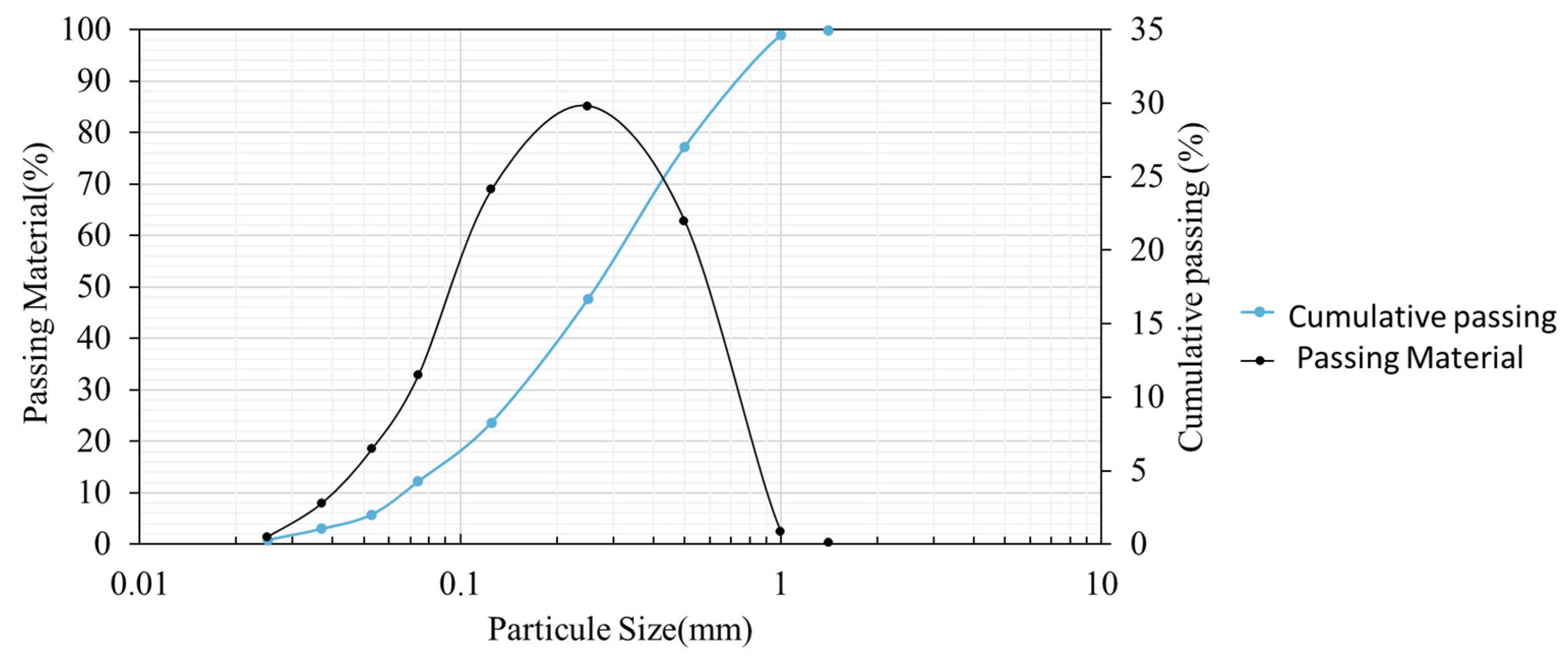
The particle size distribution analysis, shown in Figure 2, presents two curves. The blue curve represents the accumulated material smaller than each particle size, also called cumulative passing; with this analysis, it is possible to determine the granulometric profile. In this case, D90 = 0.75 mm, D50 = 0.30 mm, and D10 = 0.09 mm. The black curve represents the passing material at each size; with this curve, it is possible to graphically observe how heterogeneous the particle sizes of the material are. Broad-based curves without a well-defined peak indicate a material with a greater variation in particle size, while curves with narrower bases indicate more homogeneous materials in terms of particle size.
The studied slag presents a broad base, covering two orders of magnitude, which may indicate different types of particles or agglomeration. If this slag is to be used in metal recovery processes, it may be necessary to grind the material or perform granulometric separations to obtain standardized results.
According to Anes et al. (2024) [19], a similar slag from the same region was studied, and comparable particle sizes were obtained by sieving rather than by laser diffraction, with a granulometric profile of D90 = 0.806 mm, D50 = 0.304 mm, and D10 = 0.092 mm.
On the other hand, Permana et al. (2016) [20], who studied tin slag from Bangka Island in Indonesia, had a different particle size distribution profile of D10 ≈ 0.74 mm, D50 ≈ 0.98 mm, and D90 > 1.00 mm. The larger particle sizes can be justified by the way the slags are processed after leaving the reduction furnaces. Brazilian slag is more viscous due to its higher zirconium content, which is characteristic of the local ore. As a result, the separation of the metallic and vitreous phases in the furnace is hindered, producing a slag rich in metallic tin fragments. To overcome this, the slag is finely ground, and physical separation processes are applied to recover metallic tin. This treatment results in a finer slag compared with traditional processes in which such an additional step is not carried out.

3.2. Mineralogical Analysis

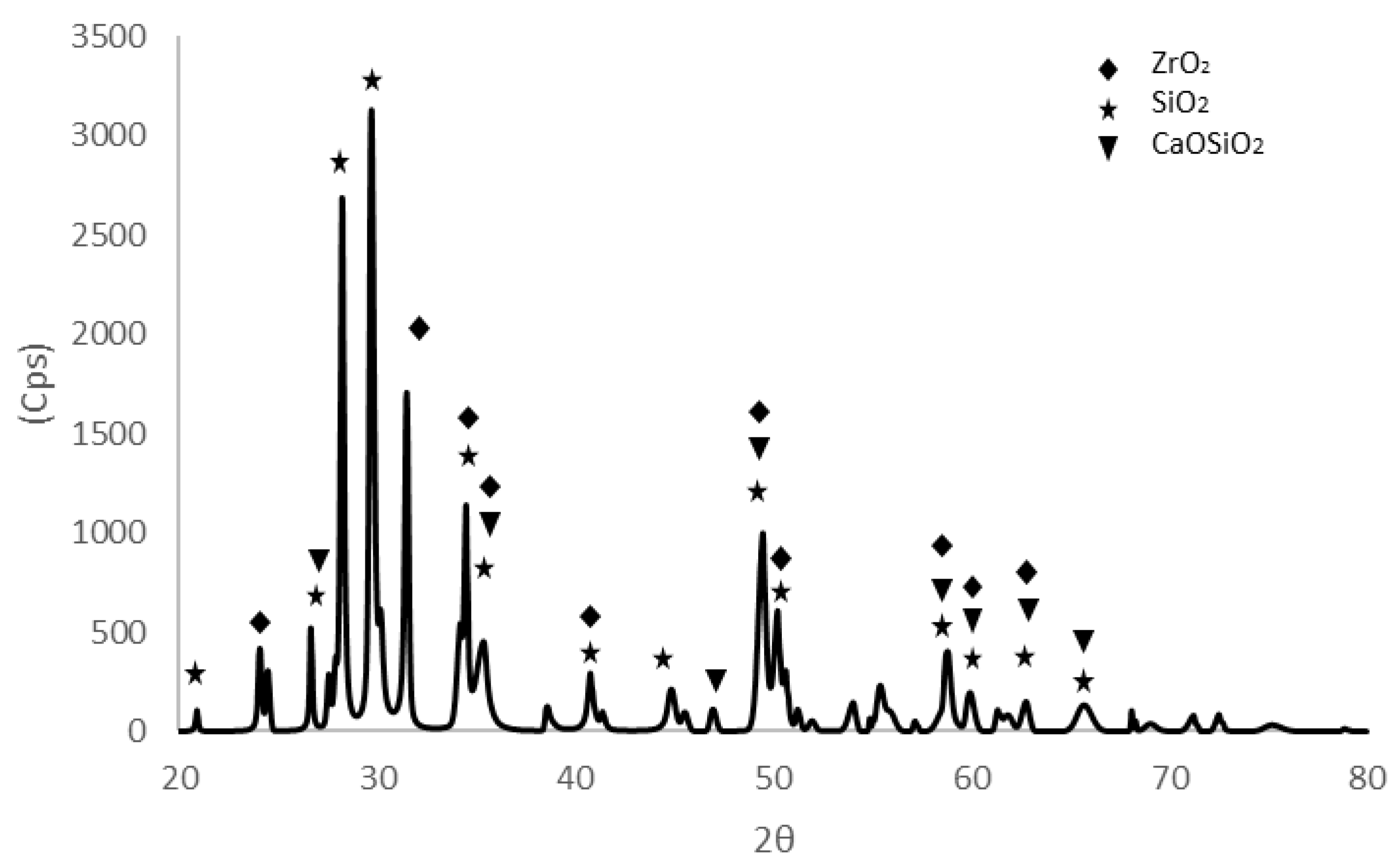
In the mineralogical analysis performed at XRD, it was possible to identify three crystalline phases in the tin slag: ZrO2 (00-086-1451), SiO2 (00-082-1563), and CaOSiO2 (00-076-0186). The corresponding diffractogram is shown in Figure 3.
The majority presence of silicon is due to the characteristic silicate soil in which cassiterite is obtained, and consequently, it remains in the tin slag [21]. Calcium is introduced during the slagging process, as it is associated with the smelting process. In contrast, zirconium is naturally present in the material, being a geological characteristic of the region of origin.
Both Anes et al. (2024) [19] and Machaca et al. (2025) [22] studied tin slags from the same region; however, their works focused on the development of leaching routes rather than on material characterization. Both authors presented X-ray diffraction patterns of their samples and, as in the present study, identified calcium silicate, zirconia, and silica phases. In neither their studies nor the present one was it possible to detect niobium- or iron-bearing phases, the main transition metals present in the material. This absence is attributed either to the low crystallinity of these compounds or to the limited resolution of the benchtop X-ray equipment.
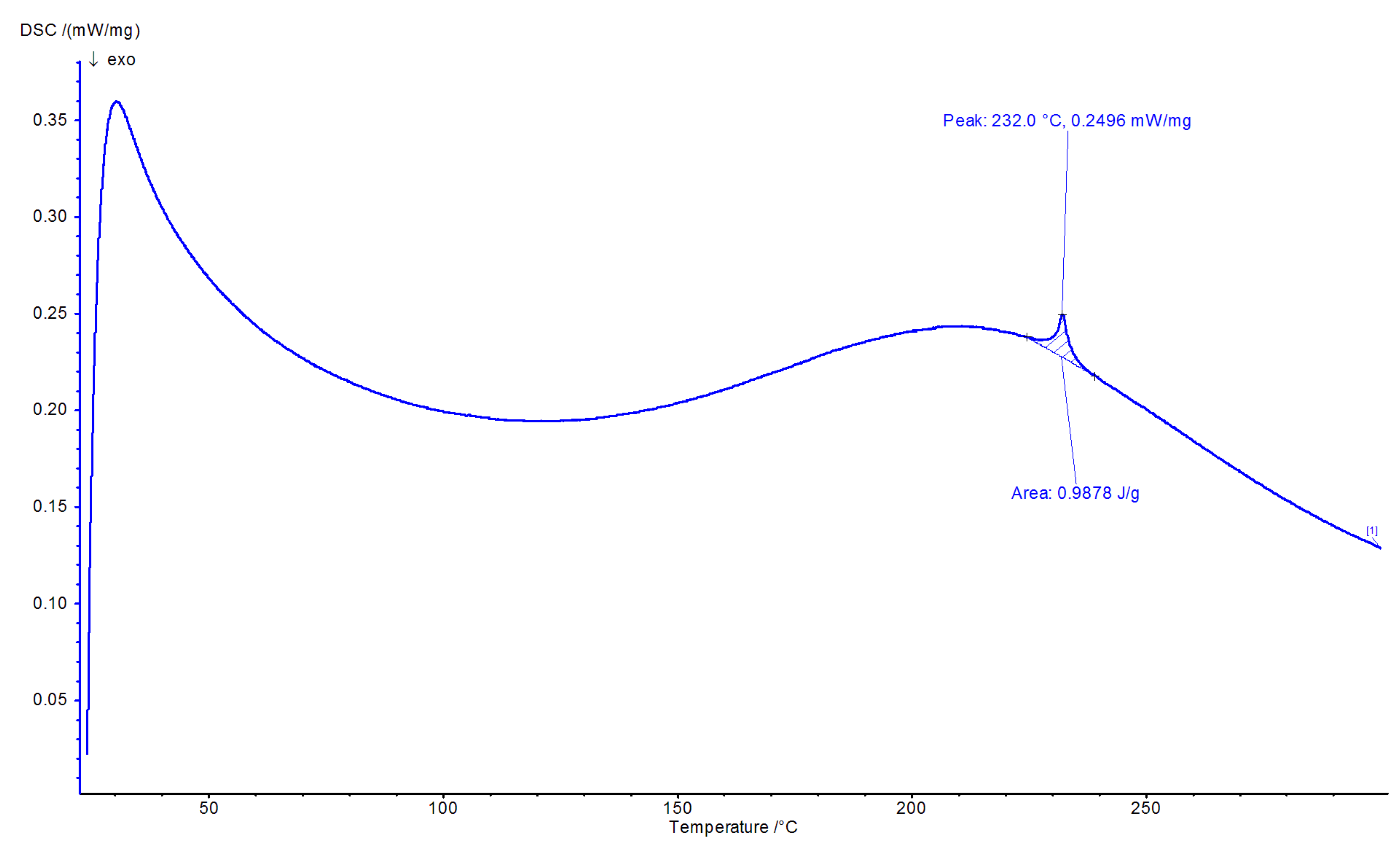
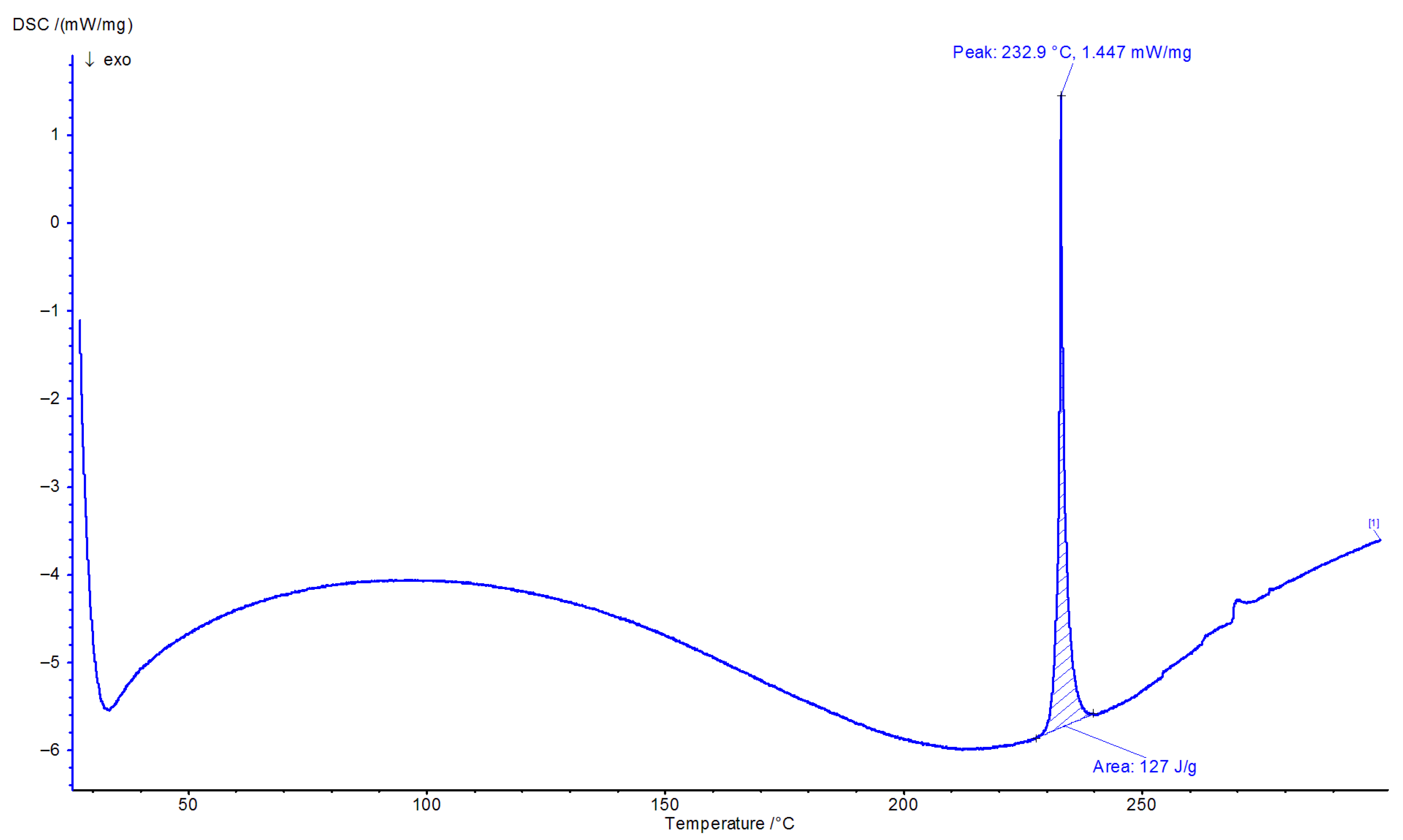
To determine the metallic tin fraction in the sample, a DSC test was carried out by comparing the metallic tin standard with slag samples. It was assumed that all the energy near 232 °C (the melting temperature of metallic tin) was consumed in this process. The curve of the standard is shown in Figure 4, and the curve of the sample is presented in Figure 5.
The analysis of the area under the DSC curve of the standard, at the melting temperature of tin, indicated that for each gram of metallic tin, 127 J of energy was consumed. For the slag sample, only 0.9878 J of energy were consumed per gram. The total sample mass was 0.0366 g, corresponding to a total energy of 0.036 J and, therefore, 0.000284 g of metallic Sn, which represents 0.78% of the sample. This analysis is an approximation, since the tin present in the slag is not pure and, therefore, the energy required for its melting is different. Nevertheless, this method provides a way to verify and estimate the number of metallic phases in slags.

3.3. Morphological Characterization

Examining the morphology of slags and how the elements of interest are distributed within the slag grains are as important as understanding their chemical and mineralogical composition to evaluate the feasibility of slags as secondary sources of residues. Due to its vitreous structure and the way it solidifies, it is common for particles of unreduced and unmelted material to become trapped in the slag matrix, and these are often the metallic oxides of interest for recovery. Therefore, processes are required to release this material, such as slag grinding or chemical treatments to decompose the matrix [19,22].
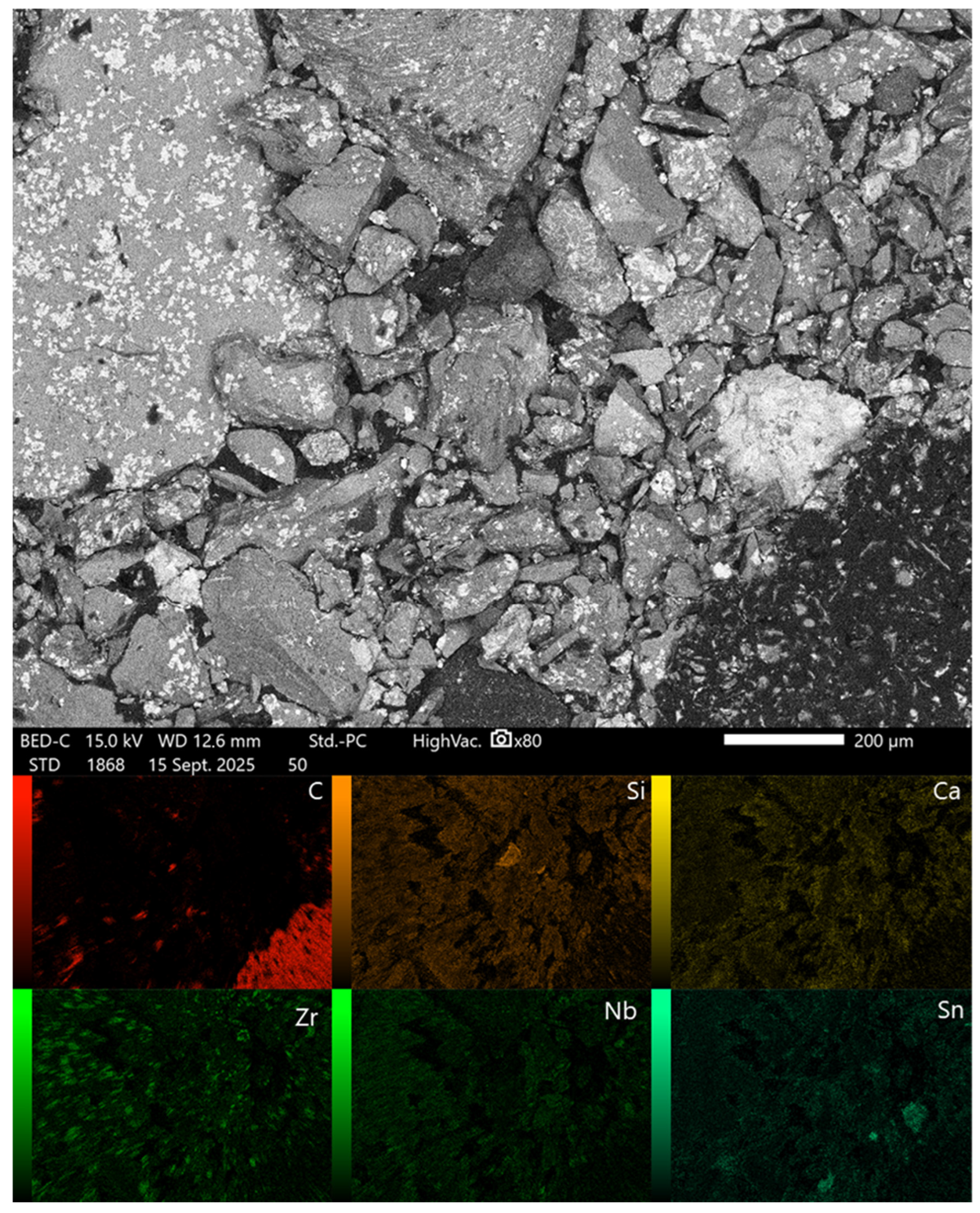
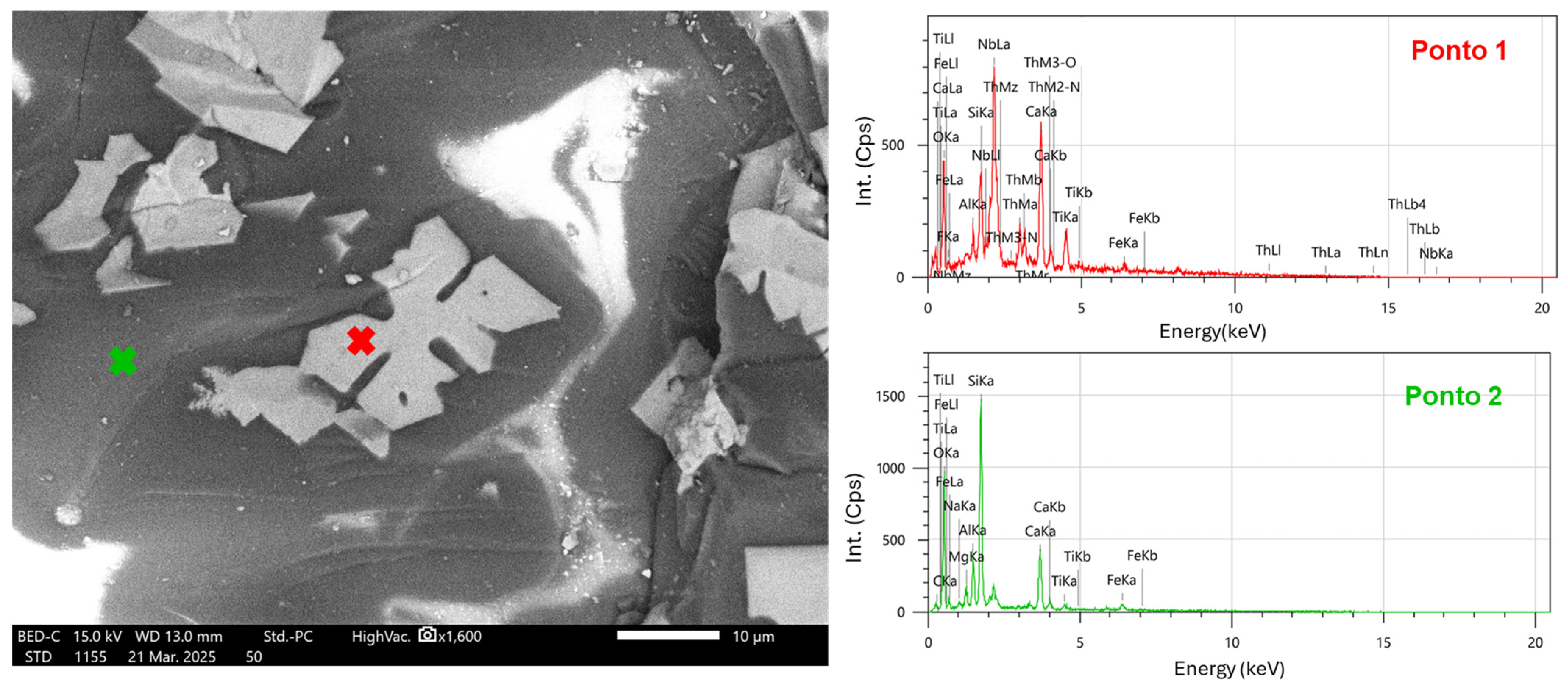
Backscattered electron images of the tin slag were obtained. Figure 6 shows an overview of the slag and elemental mapping obtained by EDS. The highlighted elements were carbon, silicon, calcium, zirconium, niobium, and tin. Carbon is related to the support used to fix the slag during the microscopy analysis and is not part of the sample itself. Silicon and calcium are the main components of the slag matrix, being present in almost all particles. A particle located near the center of the image, with a darker gray tone, is especially evident in the silicon mapping. This particle is composed only of silicon without calcium and corresponds to unreacted silica, as indicated by XRD analysis. Its presence can be explained either by incomplete fusion of silicon or by contamination of the slag during operations after the fusion step. Tin is found either dispersed throughout the material or concentrated in brighter particles in the image. The dispersed tin, which was not reduced, is present as oxide mixed with the slag matrix. The reduced tin, which was not separated, appears as bright particles without the presence of the other mapped elements. Finally, zirconium and niobium occur as small bright particles distributed on the surface of the slag matrix.
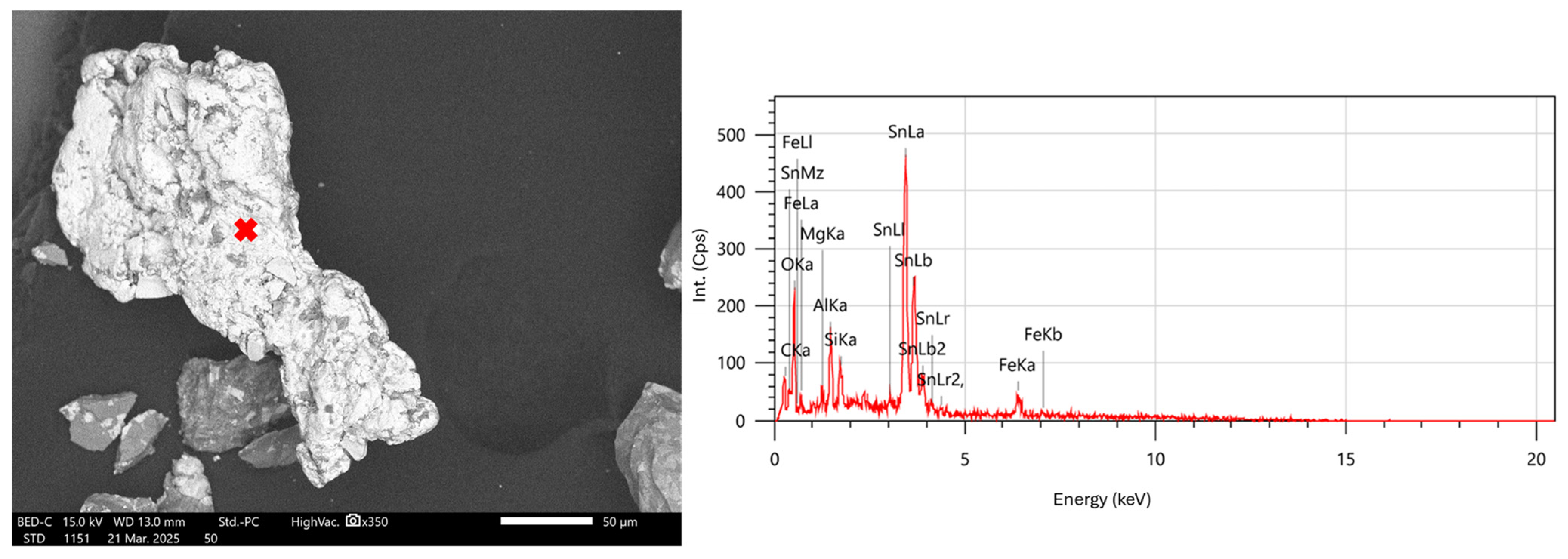
A second image was taken focusing on a metallic tin particle (Figure 7). Fragments of metallic tin were not separated from the slag, either in the furnace or during the subsequent milling and physical concentration processes. It is important to note that the tin present is not pure but most likely an alloy with iron, as indicated by the EDS spectrum.
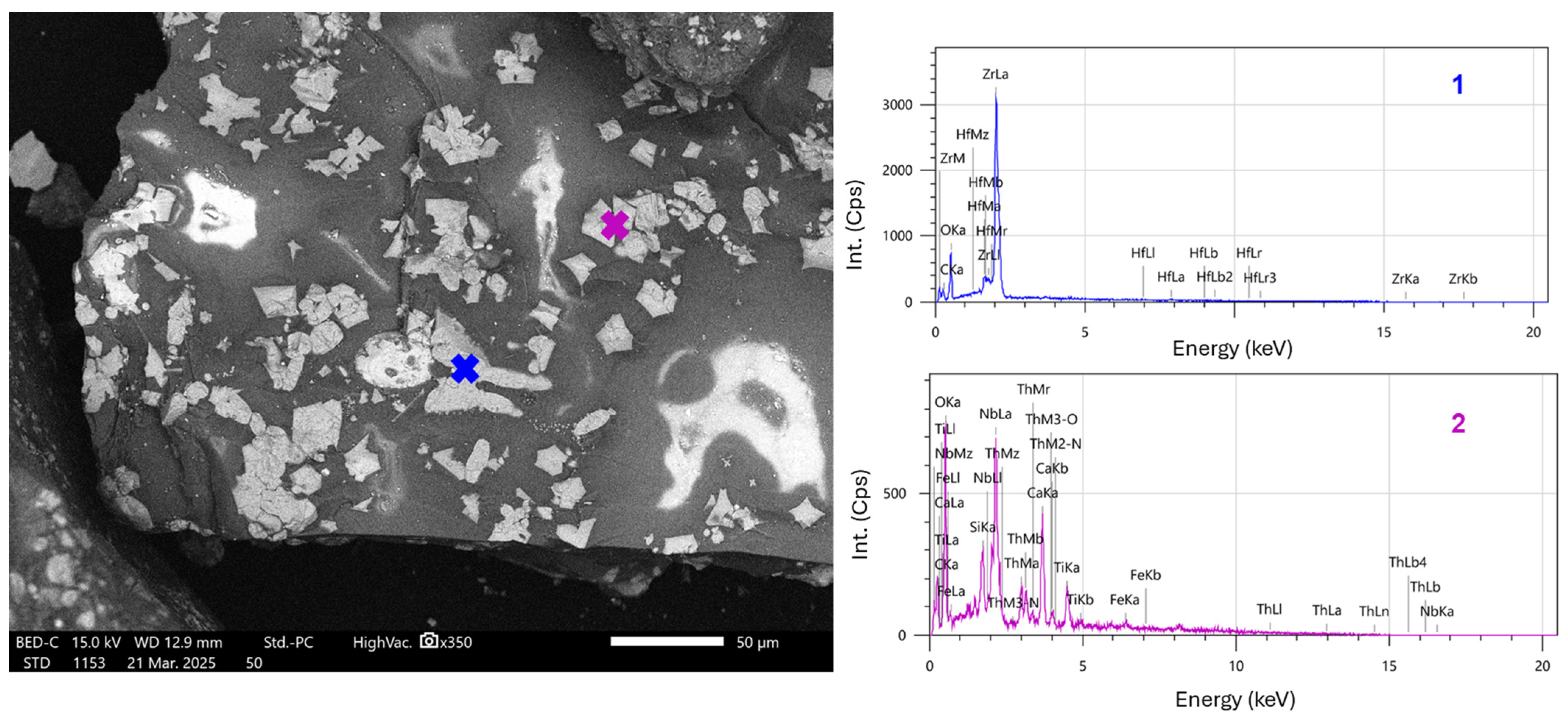
Analyses of the slag particles were carried out at two different magnifications, 350x magnification (Figure 8) and 1600× (Figure 9). The slag particles are mainly based on calcium silicate (Figure 9, Point 2), within which other particles are embedded. According to SEM-EDS analyses, two main types of associations were observed. The first are zirconium oxide particles (Figure 8, Point 1), one of the major constituents of the slag, which apparently did not fuse homogeneously with the calcium silicate matrix. The second are particles containing niobium and other refractory metals such as thorium and titanium (Figure 8, Point 2 and Figure 9, Point 1).

3.4. Elemental Composition

The chemical characterization, carried out by ICP-OES, has its results presented in Table 3. As expected, the material is a slag with a matrix composed of silicon (18.2%), calcium (9.0%), and zirconium (11.1%). The other elements are due to those present in the ore. The presence of columbite ((Fe,Mn)(Nb,Ta)2O6) justifies Nb (4.8%), Ta (0.8%), Fe (3.3%), and Mn (0.4%), while the presence of uraninite (UO2 or U3O8) and possibly monazite ((Ce,La,Nd,Th)PO4) explains the radioactive elements U (0.3%) and Th (2.7%). The possible presence of monazite also opens up the possibility for rare earth elements such as lanthanum, cerium, europium, etc.; but for their determination, due to their low content, other characterization techniques such as ICP-MS are recommended.
In order to compare different tin slags, both by their compositions and their potentials, the work of Clemente et al. (2024) [17] was used as a reference. The authors surveyed the main tin slags found worldwide, including the Indonesian slag studied by Zulhan and Ryanta (2018) [16], the Congolese slag studied by Allain et al. (2019) [23], and the Brazilian slag from another refining route—a two-step reduction process—studied by Clemente et al. (2024) [17]. In addition to these selected slags, the slag investigated in this study was included, as well as those studied by Anes et al. (2024) [19] and Machaca et al. (2025) [22], and similar one-step process Brazilian slags and the Bangka tin slag studied by Permana et al. (2016) [20]. The synthesis of the characterizations of the principal elements is presented in Table 4.
When analyzing the Fe and Sn contents in slags, it is possible to observe that multi-step processes generate slags with lower Fe and Sn contents, since these metals are removed in the metallic phase. These differences are discussed by Clemente et al. (2024) [17], who compared Brazilian slags obtained from multi-step reduction processes with Congolese slags produced in only two reduction steps. The authors also highlight that Brazilian tin slags are originate mainly from three regions—Rondônia, Amazonas, and Pará—and in all cases, the ores are rich in Zr, which increases slag viscosity but simultaneously reduces its melting point. This reduction in melting temperature may allow the use of lower reduction temperatures.
The characterizations summarized in the table indicate that Brazilian slags contain significant amounts of Nb and Ta, reflecting the association of cassiterite with columbite. Clemente et al. (2024) [17] reached similar conclusions when comparing different Brazilian slags, reporting an average content of 6.8 wt% in the studies analyzed. In contrast, the material from Indonesia studied by Permana et al. (2016) [20] contained only about 1 wt% of the combined oxides, a much lower value than that found in Brazilian resources. On the other hand, the Congolese material showed values of 12.7 wt%, consisting mainly of tantalum, which may suggest an association with tantalite, a mineral commonly found in the region.
When compared with Nb and Ta ores, tin slags exhibit relatively high concentrations. The world’s largest niobium mine, located in Minas Gerais, Brazil, reports an average ore grade of 2.5% Nb2O5 [24]. In countries with limited reserves, even materials with concentrations in the ppm range are considered ores; for instance, in Jiangxi Province, China, the deposit studied by Lv et al. (2022) [25] contained Nb and Ta concentrations of 228 and 130 ppm, respectively.
Regarding the radioactive materials and rare earth elements, no studies that extensively discuss the presence of these constituents specifically in tin slags were found in the literature. Nevertheless, the occurrence of radioactive materials represents an operational challenge, while the presence of rare earth elements offers an additional opportunity for the utilization of slags as secondary resources.

3.5. What Does the Characterization of the Slag Indicate for a Future Recycling Process of Nb and Ta?

The characterization of the slag indicates that it is a refractory material, with a matrix composed of sodium silicate and zirconium oxide, and that within this material are the phases containing Nb and Ta, the metals of interest.
To recover Nb and Ta through hydrometallurgical routes, it is necessary to ensure the release of these elements from the slag matrix. This can be achieved either by grinding the material or by reacting to the sodium silicate to decompose it. Microscopy analysis indicates that the particles containing Nb and Ta are in the order of tens of micrometers, which is the recommended grain size range for complete liberation through comminution processes. For the de-composition of the matrix, the strategy most used in the literature, exemplified by the work of Matinfar and Nychka (2023) [26], is the reaction with molten sodium hydroxide, which converts calcium silicate into calcium hydroxide and sodium silicate, a soluble species that can be totally or partially removed through a water-washing step prior to leaching. It is worth noting that both processes entail costs for the overall operation, and their use is subject to detailed economic analyses, with a combination of the two perhaps being the best alternative.
Regarding the metal leaching process, it will depend on whether pretreatment with sodium hydroxide is carried out. Such treatment would convert the niobium and tantalum oxides into niobates and tantalates, species that are more reactive and easier to leach. The traditional leaching routes, reviewed by Shikika et al. (2020) [2], are hydro-fluoric or alkaline leaching using potassium hydroxide. These processes can be followed by solvent extraction steps for the separation and eventual recovery of the metals.
As examples of leaching routes applied to slags derived from ores of the same region, the studies by Anes (2024) [19] and Machaca (2025) [22] can be cited. In the work of Anes et al. (2014) [19], the authors investigated the use of fluoride salts to leach niobium and tantalum from the slag without any thermal pretreatment. In contrast, Machaca et al. (2025) [22] reacted the slag with sulfuric compounds, such as concentrated sulfuric acid, at temperatures above 200 °C to promote the formation of soluble species. Both authors reported niobium leaching efficiencies higher than 95%.

4. Conclusions

The results obtained from the characterization of the Brazilian tin slag demonstrate that the material is heterogeneous in composition and morphology, consisting mainly of a silicate and zirconia matrix in which metallic and refractory phases are embedded. The particle size distribution analysis revealed a wide granulometric range (D90 = 0.75 mm, D50 = 0.30 mm, D10 = 0.09 mm). The ICP-OES results showed silicon (18.2 wt%), calcium (9.0 wt%), and zirconium (11.1 wt%) as the main matrix elements, while the presence of niobium (4.8 wt%) and tantalum (0.8 wt%) confirmed the potential of this slag as a secondary source of critical metals. The detection of thorium (2.7 wt%) and uranium (0.3 wt%) further indicates the need for controlled handling and evaluation of radiological safety during future processing steps.
The mineralogical and morphological analyses corroborated these findings. XRD identified zirconia (ZrO2), silica (SiO2), and calcium silicate (CaSiO3) as the predominant crystalline phases. DSC measurements detected a metallic tin content of approximately 0.78%, consistent with the bright metallic particles observed by SEM-EDS. The microstructural evaluation revealed a calcium silicate matrix with dispersed zirconia- and Nb-rich inclusions, suggesting partial segregation of these refractory phases during cooling.
Altogether, these results indicate that the studied tin slag should not be treated merely as industrial waste but as a complex multiphase material with significant concentrations of technologically valuable elements. Its detailed characterization provides a necessary foundation for future investigations on liberation behavior and selective leaching strategies aimed at recovering niobium and tantalum from this secondary resource.

Author Contributions

Conceptualization, F.G. and G.A.d.S.G.; Methodology, F.G. and G.A.d.S.G.; Formal analysis, F.G.; Investigation, F.G.; Resources, J.A.S.T. and D.C.R.E.; Writing—original draft, F.G.; Writing—review & editing, F.G. and G.A.d.S.G.; Visualization, F.G.; Funding acquisition, J.A.S.T. and D.C.R.E. All authors have read and agreed to the published version of the manuscript.

Funding

This research was funded by the grant 408422/2022-0, Brazilian National Council for Scientific and Technological Development (CNPq), and grant 2019/11866-5, Sao Paulo Research Foundation (FAPESP).

Data Availability Statement

The original contributions presented in this study are included in the article. Further inquiries can be directed to the corresponding author.

Acknowledgments

The authors acknowledge the LAREX and LTM laboratories of the University of São Paulo for providing the facilities and infrastructure necessary for the characterization work.

Conflicts of Interest

The authors declare no conflicts of interest.

References

  1. Shen, H.; Forssberg, E. An overview of recovery of metals from slags. Waste Manag. 2003, 23, 933–949. [Google Scholar] [CrossRef] [PubMed]
  2. Shikika, A.; Sethurajan, M.; Muvundja, F.; Mugumaoderha, M.C.; Gaydardzhiev, S. A review on extractive metallurgy of tantalum and niobium. Hydrometallurgy 2020, 198, 105496. [Google Scholar] [CrossRef]
  3. Muñoz, N.F.S. Evaluación Comparativa del Crecimiento de una Planta de Rábano (Raphanus Sativus), Cultivada en Maceta Aplicando Compost Aditivado com Metales de Escoria Ferrosa. Master’s Thesis, FACULTAD DE INGENIERÍA Y CIENCIAS APLICADAS, Quito, Ecuador, 2021. Available online: https://repositorio.uisek.edu.ec/bitstream/123456789/4477/1/Sánchez%20Muñoz%20Nelson%20Francisco.pdf (accessed on 1 August 2025).
  4. Piatak, N.M.; Parsons, M.B.; Seal, R.R. Characteristics and environmental aspects of slag: A review. Appl. Geochem. 2015, 57, 236–266. [Google Scholar] [CrossRef]
  5. Habib, A.; Bhatti, H.N.; Iqbal, M. Metallurgical Processing Strategies for Metals Recovery from Industrial Slags. Z. Für Phys. Chem. 2020, 234, 201–231. [Google Scholar] [CrossRef]
  6. Sobral, M.F.; Nascimento, C.W.; Cunha, K.P.; Ferreira, H.A.; Silva, A.J.; Silva, F.B. Escória de siderurgia e seus efeitos nos teores de nutrientes e metais pesados em cana-de-açúcar. Rev. Bras. Eng. Agrícola Ambient. 2011, 15, 867–872. [Google Scholar] [CrossRef]
  7. NBR 10004:2004; Resíduos sólidos—Classificação. ABNT—Associação Brasileira de Normas Técnicas: Rio de Janeiro, Brazil, 2004.
  8. European Parliament and Council. Directive 2008/98/EC of 19 November 2008 on Waste and Repealing Certain Directives. Official Journal of the European Union. 2008. Available online: https://eur-lex.europa.eu/legal-content/EN/TXT/?uri=CELEX:32008L0098 (accessed on 1 August 2025).
  9. U.S. Environmental Protection Agency. Special Wastes; EPA: Washington, DC, USA, 2025. Available online: https://www.epa.gov/hw/special-wastes (accessed on 1 August 2025).
  10. Garcia, M.A.A. Caracterização Radioquímica e Impacto Radiológico Ambiental no Processo de Cassiterita para Produção de Estanho e Chumbo Metálico. Master’s Thesis, Universidade de São Paulo, São Paulo, Brazil, 2009. [Google Scholar]
  11. Prasetyo, E.; Supriyatna, Y.I.; Bahfie, F.; Trinopiawan, K. Extraction of thorium from tin slag using acidic roasting and leaching method. AIP Conf. Proc. 2020, 2232, 040008. [Google Scholar] [CrossRef]
  12. Ryu, G.U.; Kim, H.J.; Yu, H.J.; Pyo, S. Utilization of steelmaking slag in cement clinker production: A review. J. CO2 Util 2024, 84, 102842. [Google Scholar] [CrossRef]
  13. Pasetto, M.; Baliello, A.; Giacomello, G.; Pasquini, E. The Use of Steel Slags in Asphalt Pavements: A State-of-the-Art Review. Sustainability 2023, 15, 8817. [Google Scholar] [CrossRef]
  14. Wang, G.C. Nonferrous metal extraction and nonferrous slags. In The Utilization of Slag in Civil Infrastructure Construction; Elsevier: Amsterdam, The Netherlands, 2016; pp. 35–61. [Google Scholar] [CrossRef]
  15. Fagundes, F.G.; Rocha, G.O.C.; Paulino, G.M. Tratamento de escória proveniente da redução da cassiterita visando à remoção de enxofre e o aproveitamento do tântalo. Revista Engenharia de Interesse Social. Rev. Eng. Interesse Soc. 2016, 1, 1–9. [Google Scholar] [CrossRef]
  16. Zulhan, Z.; Ryanta, I.G.P.A. Utilization of Gypsum Byproduct as Fuming Agent for Tin Smelting Slag. J. Sustain. Metall. 2018, 4, 388–394. [Google Scholar] [CrossRef]
  17. Clemente, D.M.; Menezes, R.d.O.T.; Damaso, H.V.; Peixoto, J.J.M.; Silva, C.A.d. Study of the compositional and melting characteristics of some Brazilian and Congolese tin slags. Tecnol. Metal. Mater. Mineração 2024, 21, e3061. [Google Scholar] [CrossRef]
  18. Akli, H.F.; Permana, S.; Maksum, A.; Soedarsono, J.W.; Widana, K.S.; Anggraini, M.; Munir, B. Enrichment of Tantalum and Niobium Contents in Bangka Tin Slag by NaOH and H3PO4 Leaching. IOP Conf. Ser. Mater. Sci. Eng. 2019, 547, 012050. [Google Scholar] [CrossRef]
  19. Anes, I.A.; Garjulli, F.; Siqueira de Carvalho, M.; Tenório, J.A.S.; Espinosa, D.C.R.; Coleti, J.L. Extraction of niobium in one step from tin slag by NH4F-HCl leaching process. Can. J. Chem. Eng. 2024, 102, 168–176. [Google Scholar] [CrossRef]
  20. Permana, S.; Soedarsono, J.W.; Rustandi, A.; Maksum, A. Other Oxides Pre-removed from Bangka Tin Slag to Produce a High Grade Tantalum and Niobium Oxides Concentrate. IOP Conf. Ser. Mater. Sci. Eng. 2016, 131, 012006. [Google Scholar] [CrossRef]
  21. de Souza, J.J.L.L.; Fontes, M.P.F.; Gilkes, R.; da Costa, L.M.; de Oliveira, T.S. Geochemical Signature of Amazon Tropical Rainforest Soils. Rev. Bras. Ciência Solo 2018, 42. [Google Scholar] [CrossRef]
  22. Cheje Machaca, D.M.; Juyo Salazar, R.B.; de Carvalho, T.C.; Romano Espinosa, D.C.; Soares Tenório, J.A. Recovery of niobium and tantalum from tin slags: An alternative approach using acid roasting and oxalic leaching. Miner. Eng. 2025, 232, 109564. [Google Scholar] [CrossRef]
  23. Allain, E.; Kanari, N.; Diot, F.; Yvon, J. Development of a process for the concentration of the strategic tantalum and niobium oxides from tin slags. Miner. Eng. 2019, 134, 97–103. [Google Scholar] [CrossRef]
  24. Ministério de Minas e Energia BN de M. Balanço Mineral Brasileiro 2001: Nióbio. Ministério de Minas e Energia 2001. Available online: https://www.gov.br/anm/pt-br/centrais-de-conteudo/anm/paginas/balanco-mineral/arquivos/balanco-mineral-brasileiro-2001-niobio (accessed on 1 August 2025).
  25. Lv, Z.; Cheng, H.; Wei, M.; Zhao, D.; Wu, D.; Liu, C. Mineralogical Characteristic and Beneficiation Evaluation of a Ta-Nb-Li-Rb Deposit. Minerals 2022, 12, 457. [Google Scholar] [CrossRef]
  26. Matinfar, M.; Nychka, J.A. A review of sodium silicate solutions: Structure, gelation, and syneresis. Adv. Colloid Interface Sci. 2023, 322, 103036. [Google Scholar] [CrossRef] [PubMed]
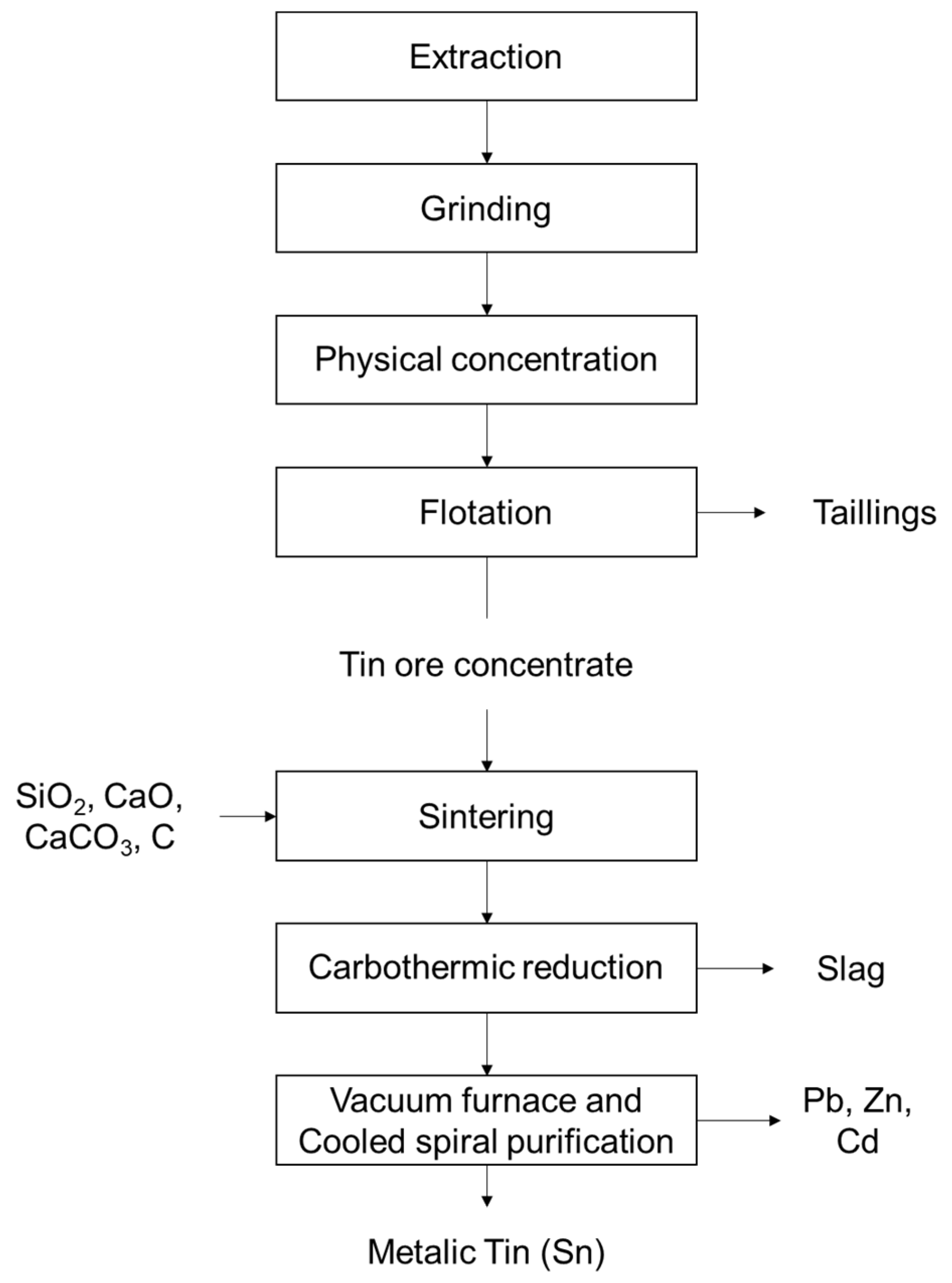
Figure 1. Schematic representation of slag formation during the tin production process.
Minerals 15 01126 g001
Figure 2. Particle size distribution of raw tin slag.
Minerals 15 01126 g002
Figure 3. X-ray diffractogram of the tin slag.
Minerals 15 01126 g003
Figure 4. DSC analysis of a metallic tin standard sample.
Minerals 15 01126 g004
Figure 5. DSC analysis of a raw slag sample.
Minerals 15 01126 g005
Figure 6. Backscattered electron image of raw slag with elemental mapping of carbon, silicon, calcium, zirconium, niobium, and tin.
Minerals 15 01126 g006
Figure 7. Scattered electron image of a metallic tin fragment present in the raw slag.
Minerals 15 01126 g007
Figure 8. Backscattered electron image of a slag particle showing embedded materials: zirconium oxide (Point 1, blue) and fragments containing niobium (Point 2, purple).
Minerals 15 01126 g008
Figure 9. Backscattered electron image of a particle containing niobium (Point 1, red) in contrast with the calcium silicate slag matrix (Point 2, green).
Minerals 15 01126 g009
Table 1. Concentration limit for non-hazardous elements present in leached extract of solid waste. Adapted from ABNT NBR 10004 [7].
ElementNBR 10004 Limit (µg/L)
Barium70,000.00
Zinc-
Selenium1000.00
Manganese-
Chromium5000.00
Chromium1000.00
Copper-
Cadmium500.00
Arsenic1000.00
Table 2. Overview of the possible applications of slag as a reuse alternative. Adapted from Shen (2003) [1].
Industrial SegmentApplication
Heavy constructionAsphalt
Heavy constructionRoad bases
Heavy constructionRoad drains
Civil constructionPortland cement
Civil constructionEmbankments
Civil engineeringMineral wool
Civil engineeringRailway ballast
Civil engineeringYard covering
Steel industryFurnace recycling
SteelIron ore
AgricultureAgricultural corrective
AgricultureLimestone substitute
SanitationRiver banks
SanitationWater and sewage treatment
Table 3. Chemical characterization of the slag.
ElementComposition (%)
Si18.2 ± 0.6
Zr11 ± 2
Ca9 ± 1
Nb4.8 ± 0.8
Fe3.3 ± 0.3
Th2.7 ± 0.6
Al2.6 ± 0.2
Mg2.0 ± 0.2
Sn1.5 ± 0.5
Hf1.3 ± 0.6
K1.2 ± 0.1
Ta0.8 + 0.1
Ti0.8 ± 0.2
Na0.8 ± 0.2
Zn0.4 ± 0.5
Mn0.4 ± 0.2
U0.3 ± 0
Y0.10 ± 0.04
Ba0.080 ± 0.004
O (Balance)38.62
Table 4. Synthesis of the characterizations of the principal elements in tin slags.
RefrenceZulhan and Ryanta, (2018) [16]Permana et al. (2016) [20]Clemente et al., (2024) [17]Allain et al. (2019) [23]Anes et al. (2024) [19]Machaca et al. (2025) [22]Present Work
Steps11Multiple2111
OriginIndonesiaIndonesiaBrazilCongoBrazilBrazilBrazil
SnO2 (wt%)13.3NA0.50.72.52.61.9
FeO (wt%)26.88.823.35.14.34.2
SiO2 (wt%)15.734.34641.942.835.538.9
CaO (wt%)4.915.415.811.615.418.012.6
ZrO2 (wt%)4.94.811.30.918.915.514.9
Nb2O5 +
Ta2O5 (wt%)
NA16.912.76.36.27.8
Al2O3 (wt%)7.111.76.511.23.84.54.9
TiO2 (wt%)7.311.91.41.31.71.51.3
MgO (wt%)0.4NA1.4NA6.63.23.3
MnO (wt%)0.4NANA3.70.80.60.5
ThO2 (wt%)0.3NANANANA2.13.1
NA: No available data.
Disclaimer/Publisher’s Note: The statements, opinions and data contained in all publications are solely those of the individual author(s) and contributor(s) and not of MDPI and/or the editor(s). MDPI and/or the editor(s) disclaim responsibility for any injury to people or property resulting from any ideas, methods, instructions or products referred to in the content.