Article

Analysis of the Effect of Surfactants on the Performance of Apatite Column Flotation

by
Thessa F. Mendes
1,
Angelica S. Reis
1,
André C. Silva
2 and
Marcos A. S. Barrozo
1,*
1
School of Chemical Engineering, Federal University of Uberlândia, Uberlândia 38400-902, Brazil
2
Department of Mining Engineering, Federal University of Catalão, Catalão 75704-020, Brazil
*
Author to whom correspondence should be addressed.
Minerals 2024, 14(8), 840; https://doi.org/10.3390/min14080840
Submission received: 25 July 2024 / Revised: 12 August 2024 / Accepted: 13 August 2024 / Published: 20 August 2024
(This article belongs to the Special Issue Surface Chemistry and Reagents in Flotation)

Abstract

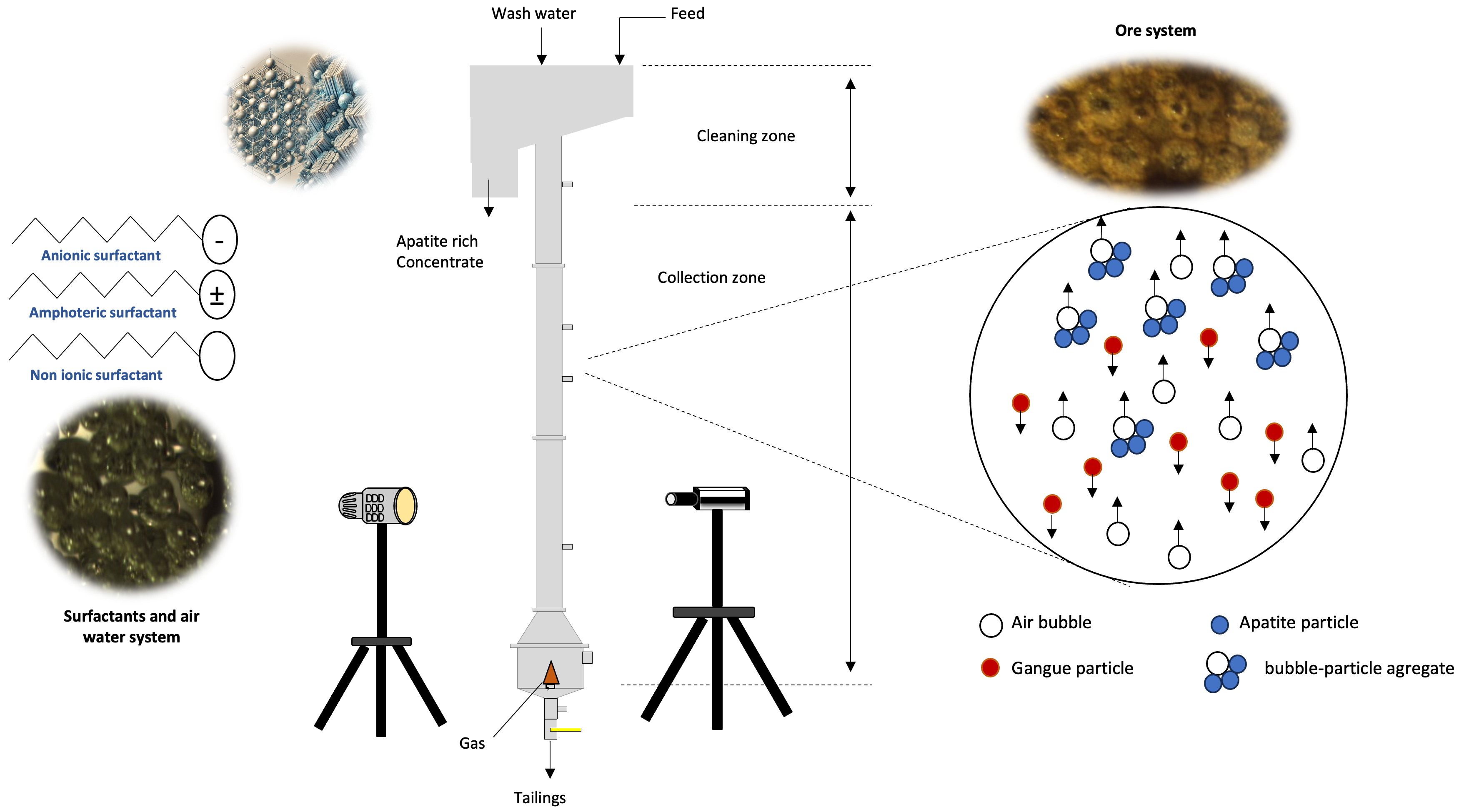
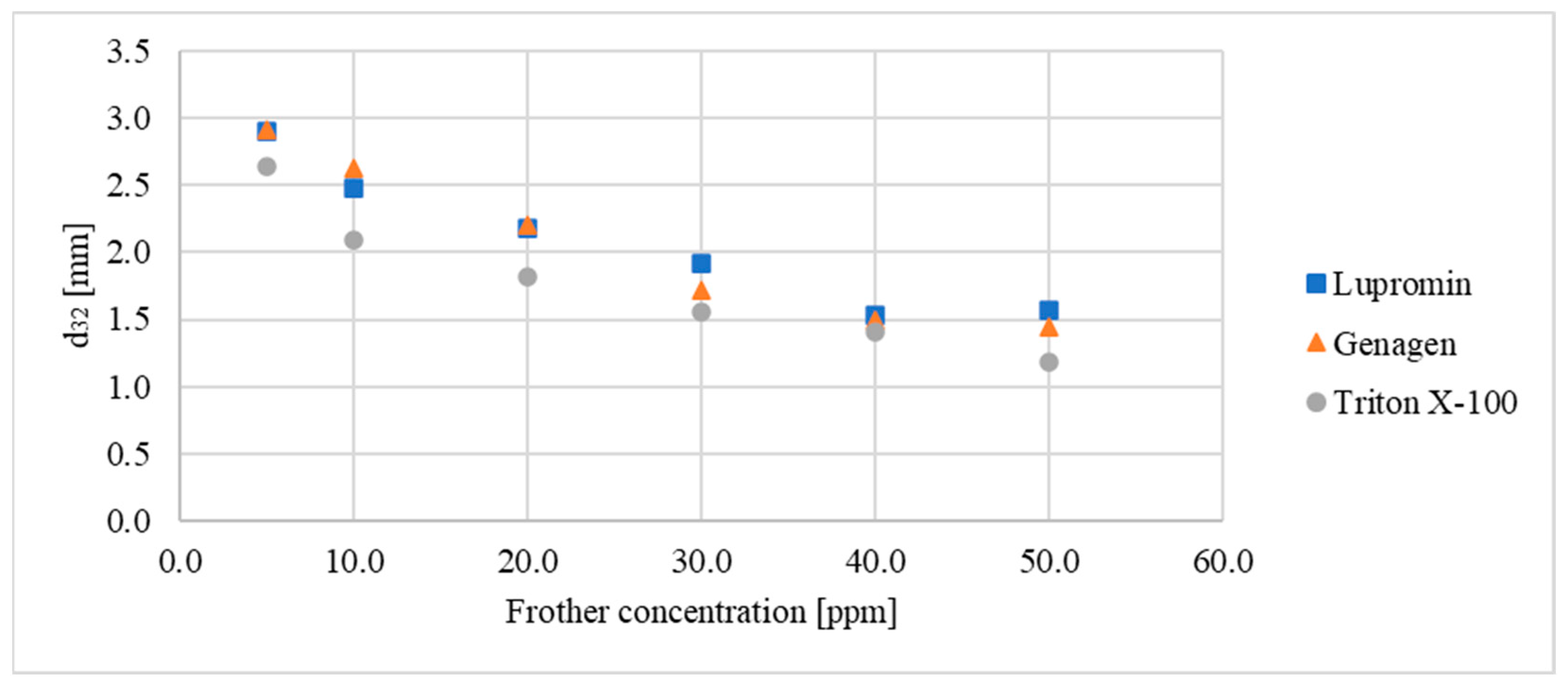
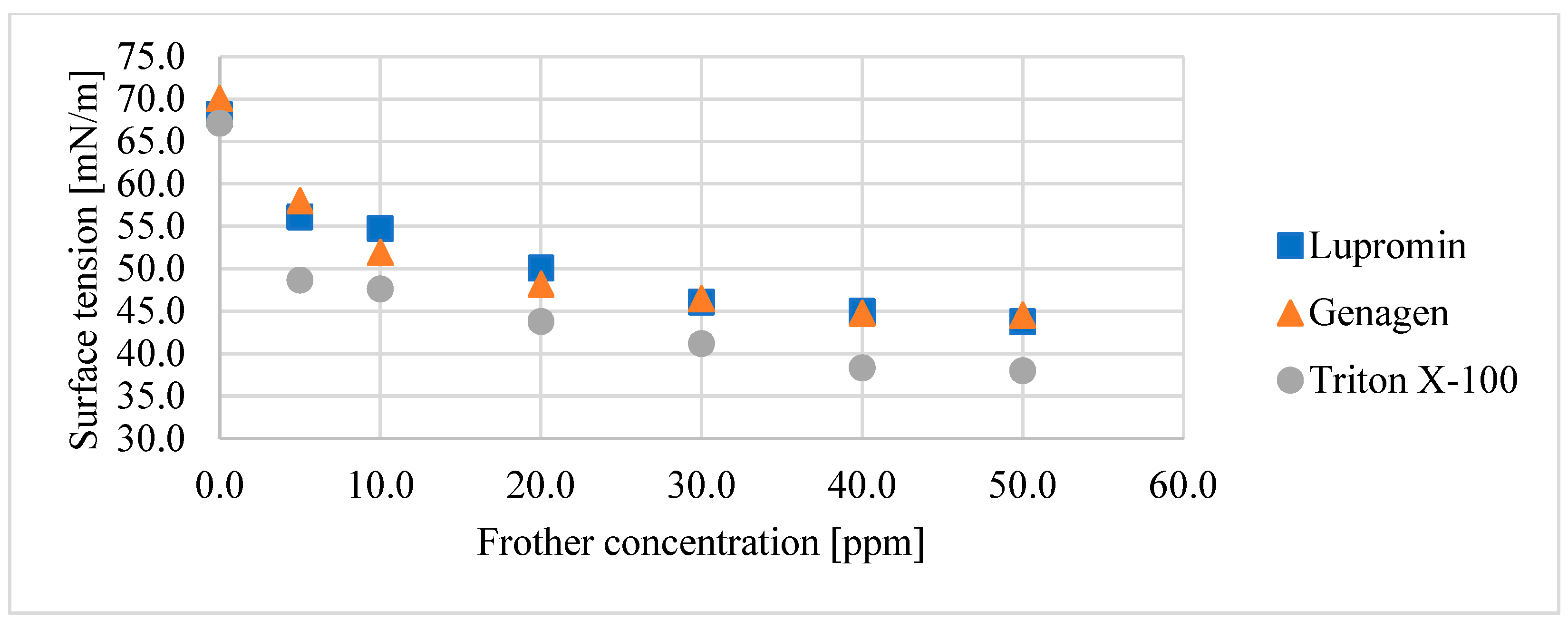
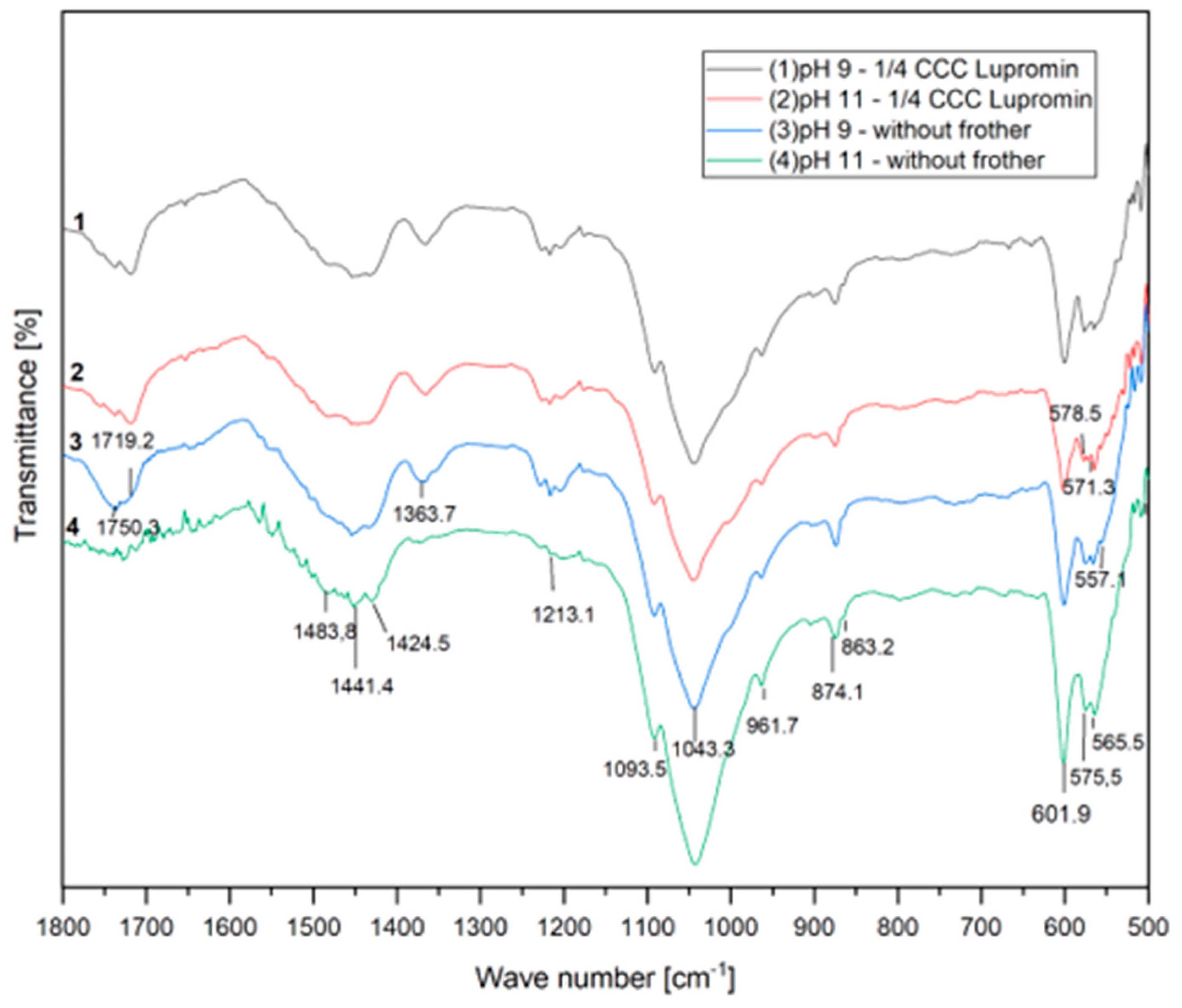
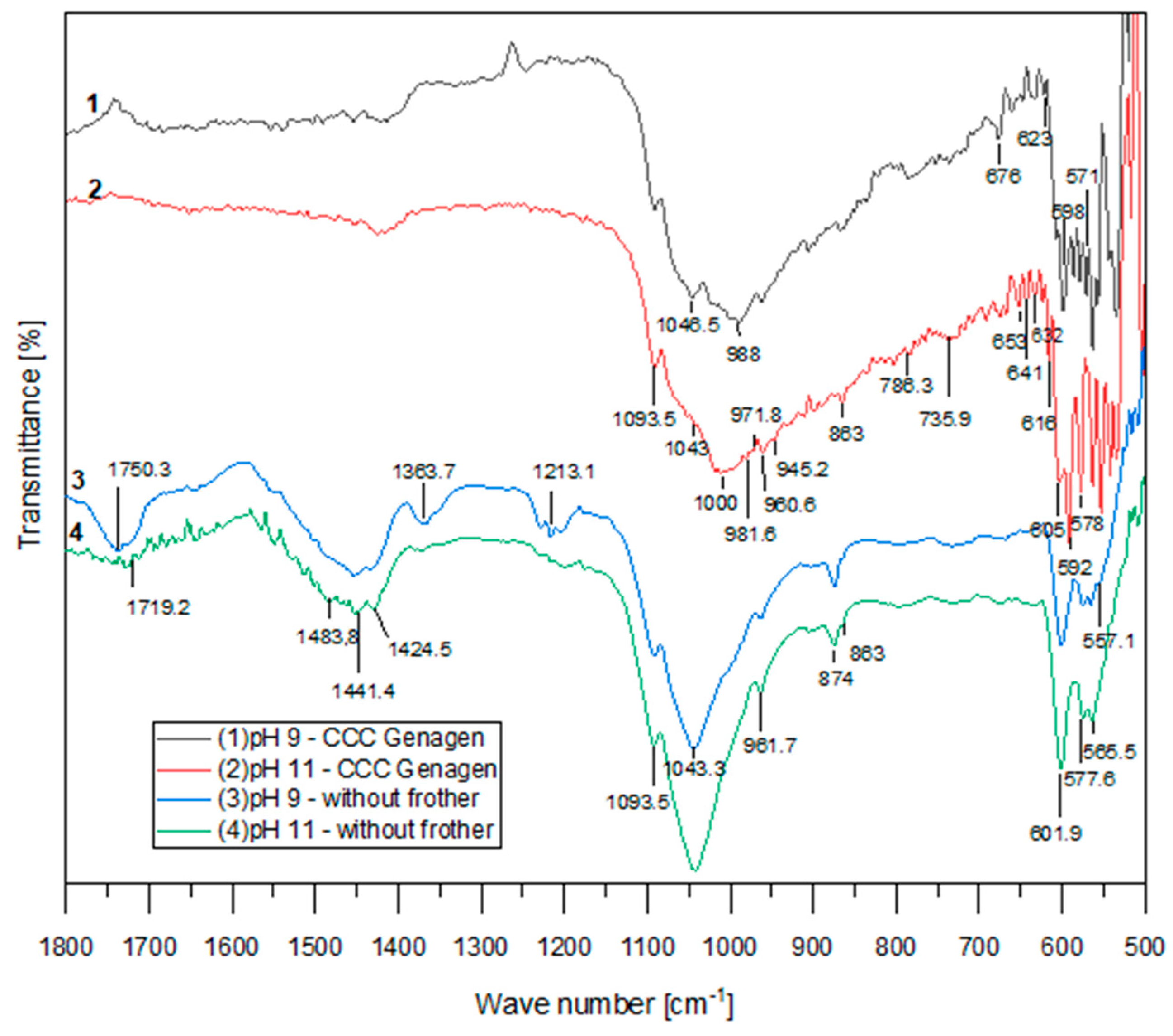
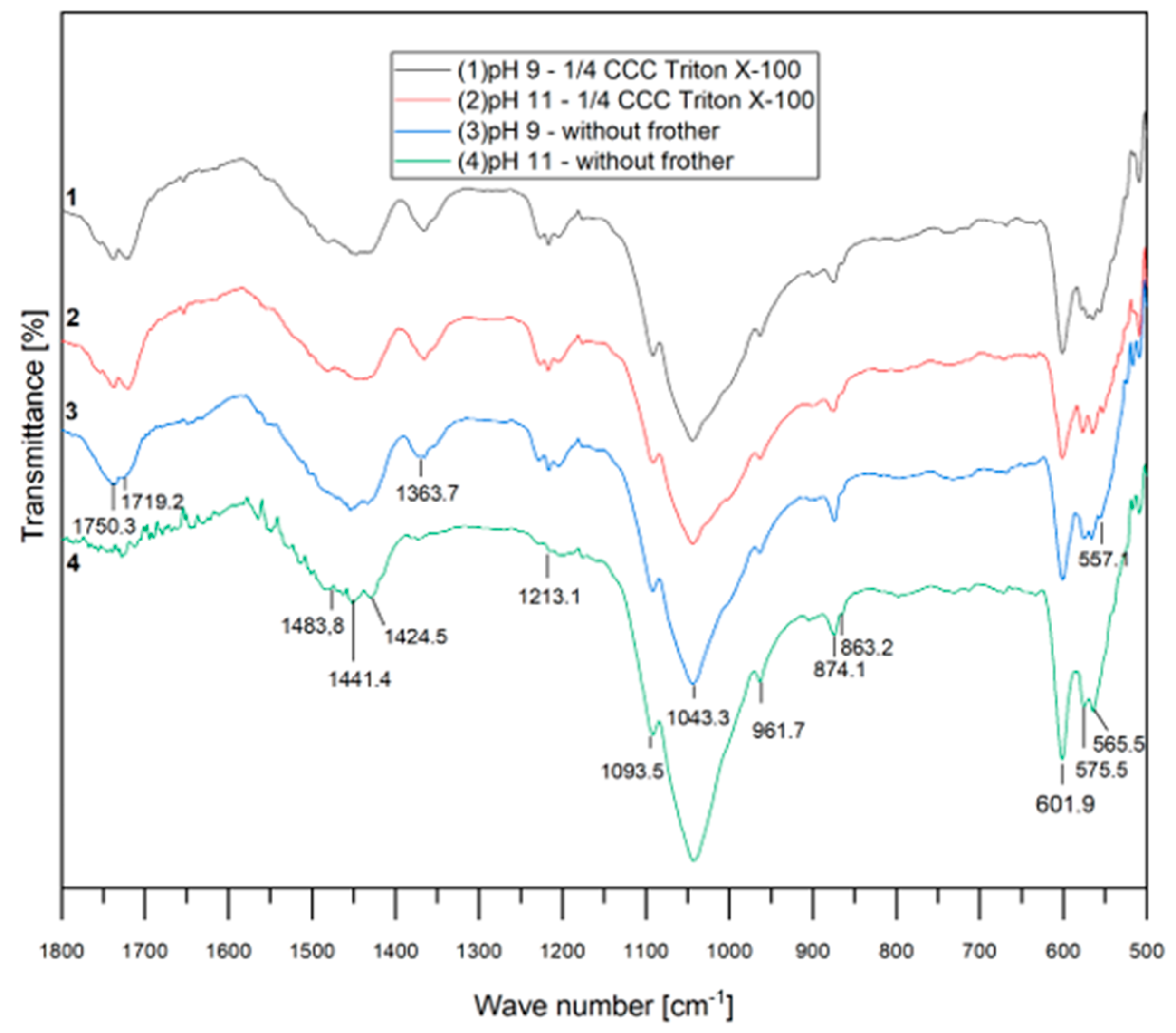
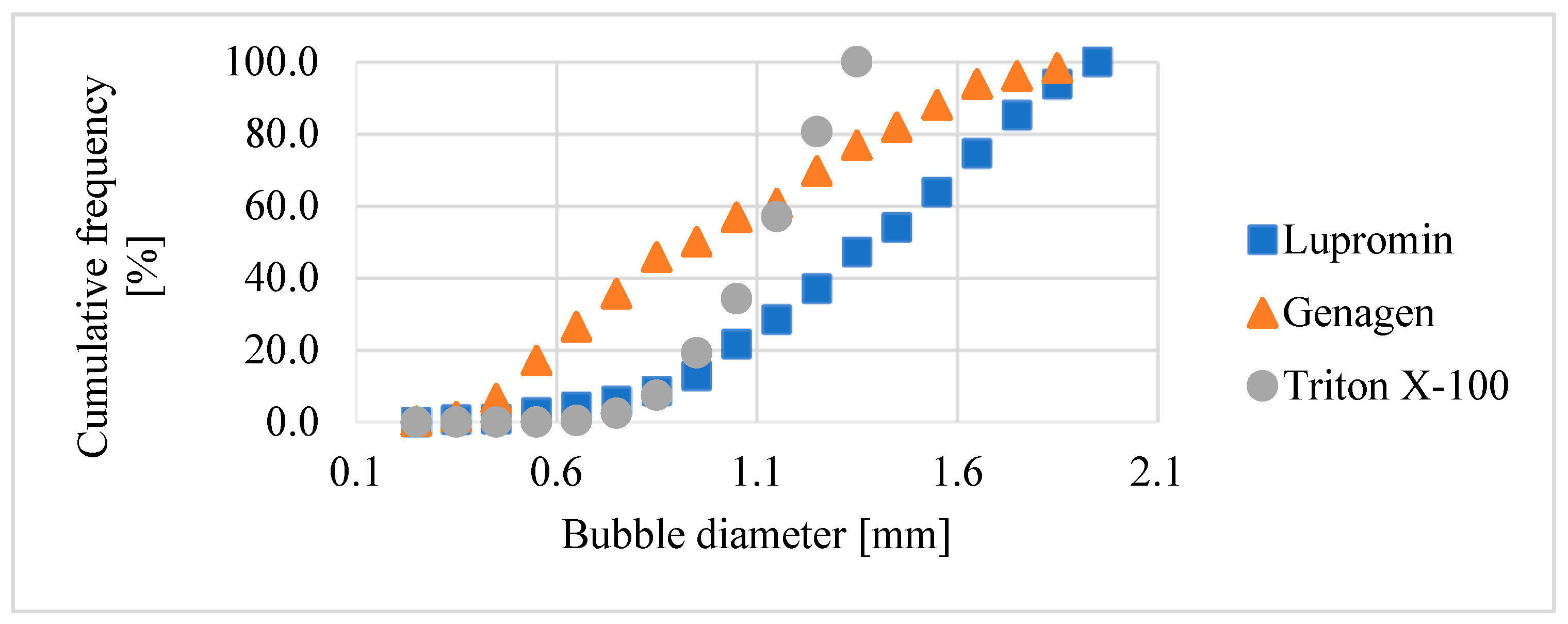
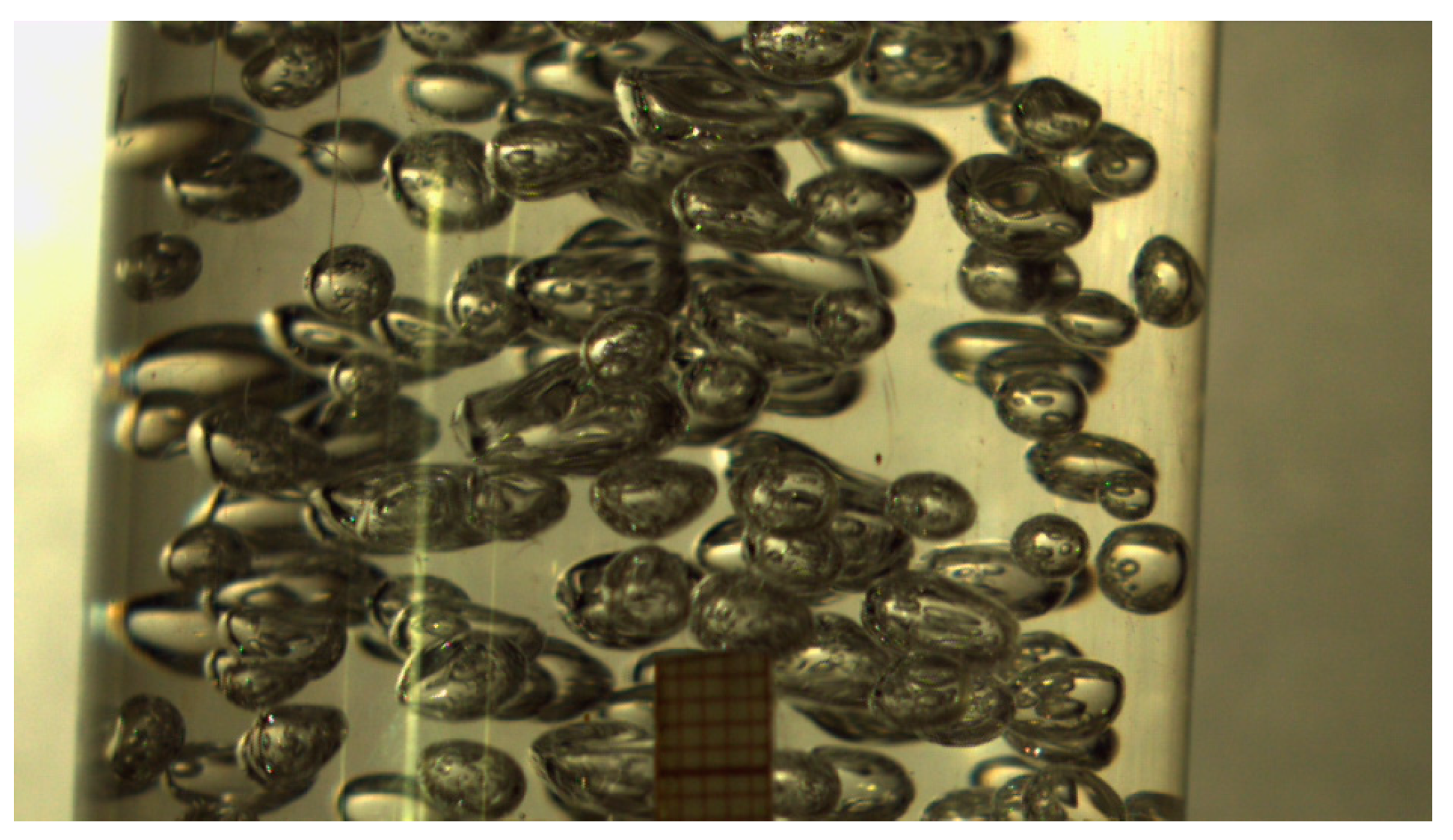
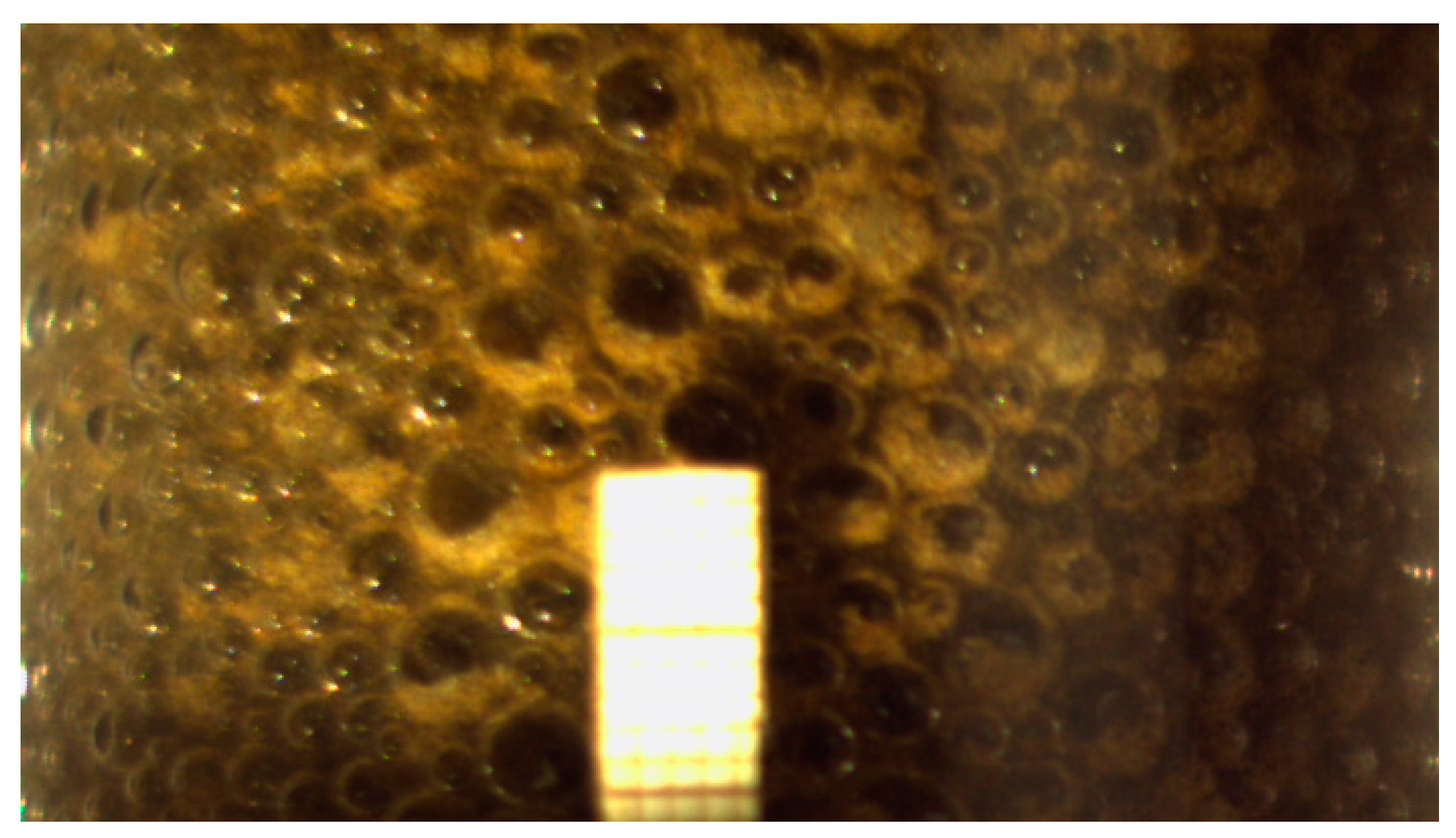
Given that particle and bubble size, as well as their surface properties, are pivotal in froth flotation, surfactants have been extensively employed due to their impact on bubble size and froth stabilization. This study aimed to investigate the influence of surfactants on the performance of apatite flotation in column. Three different categories of surfactants were examined: anionic, amphoteric, and nonionic, specifically Lupromin, Genagen, and Triton X-100, respectively. The critical coalescence concentration (CCC) and surface tension of each surfactant were determined. The impact of these surfactants on reducing bubble size was quantified, and their subsequent effects on apatite flotation in a column were assessed. The most favorable flotation response for Genagen was achieved at CCC and pH 11, resulting in the highest apatite recovery and the smallest bubble size. For Triton X-100, the best condition was attained at ¼ CCC and pH 11. However, overall, Lupromin was the surfactant that yielded the best flotation results (at ¼ CCC and pH 11). The superior performance of this anionic surfactant was corroborated by chemical adsorption results, as demonstrated by FTIR analyses.
Keywords: bubble size; surfactant; apatite; flotation bubble size; surfactant; apatite; flotation
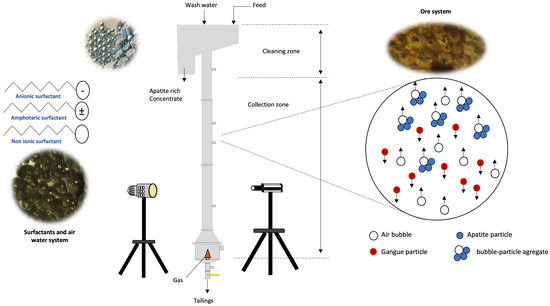
Graphical Abstract