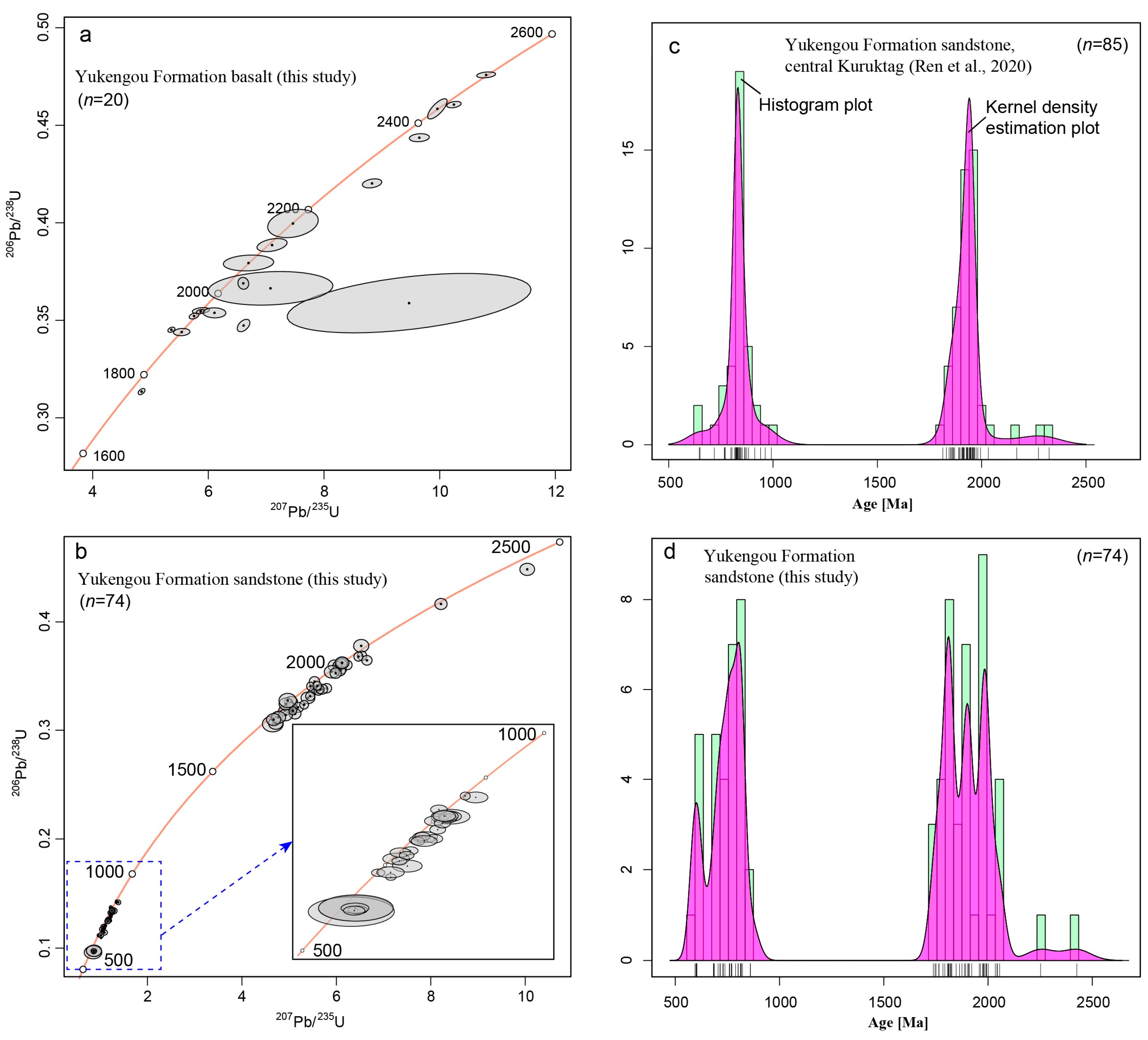
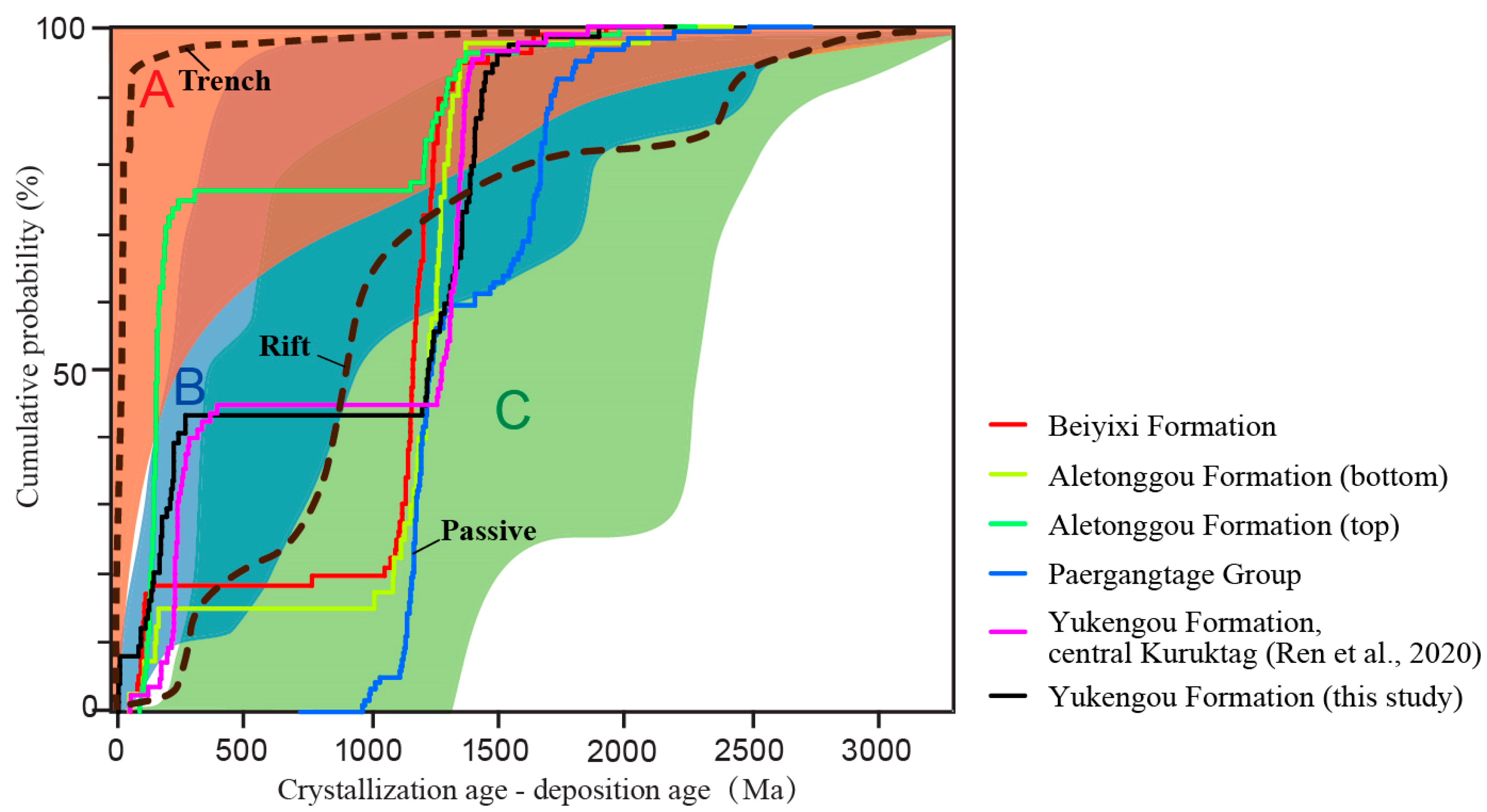
First Identification of the Ediacaran Yukengou Formation in the Western Kuruktag Block, Northeastern Tarim, and Its Implications for Neoproterozoic Rift Basin Evolution

Abstract
Share and Cite
Sun, M.; Wei, Z.; Guo, R.; Liu, G.; Shi, M.; Cheng, Y. First Identification of the Ediacaran Yukengou Formation in the Western Kuruktag Block, Northeastern Tarim, and Its Implications for Neoproterozoic Rift Basin Evolution. Minerals 2023, 13, 914. https://doi.org/10.3390/min13070914
Sun M, Wei Z, Guo R, Liu G, Shi M, Cheng Y. First Identification of the Ediacaran Yukengou Formation in the Western Kuruktag Block, Northeastern Tarim, and Its Implications for Neoproterozoic Rift Basin Evolution. Minerals. 2023; 13(7):914. https://doi.org/10.3390/min13070914
Chicago/Turabian StyleSun, Minjia, Zhen Wei, Ruiqing Guo, Guiping Liu, Mingming Shi, and Yuanfeng Cheng. 2023. "First Identification of the Ediacaran Yukengou Formation in the Western Kuruktag Block, Northeastern Tarim, and Its Implications for Neoproterozoic Rift Basin Evolution" Minerals 13, no. 7: 914. https://doi.org/10.3390/min13070914
APA StyleSun, M., Wei, Z., Guo, R., Liu, G., Shi, M., & Cheng, Y. (2023). First Identification of the Ediacaran Yukengou Formation in the Western Kuruktag Block, Northeastern Tarim, and Its Implications for Neoproterozoic Rift Basin Evolution. Minerals, 13(7), 914. https://doi.org/10.3390/min13070914