Article

Controlling Factors of Meteoric Diagenesis in Karst Reservoirs: An Example from the Majiagou Formation, Ordos Basin, China


1
School of Energy Resources, China University of Geosciences, Beijing 100083, China
2
Key Laboratory of Deep Geology and Resources, SINOPEC, Beijing 100083, China
3
Dipartimento di Scienze della Terra, Sapienza Università di Roma, P.le Aldo Moro 5, 00185 Roma, Italy
4
China Petrochemical Corporation Ltd., Beijing 100728, China
*
Authors to whom correspondence should be addressed.
Minerals 2023, 13(6), 812; https://doi.org/10.3390/min13060812
Submission received: 16 May 2023 / Revised: 8 June 2023 / Accepted: 12 June 2023 / Published: 14 June 2023
(This article belongs to the Section Mineral Geochemistry and Geochronology)

Abstract

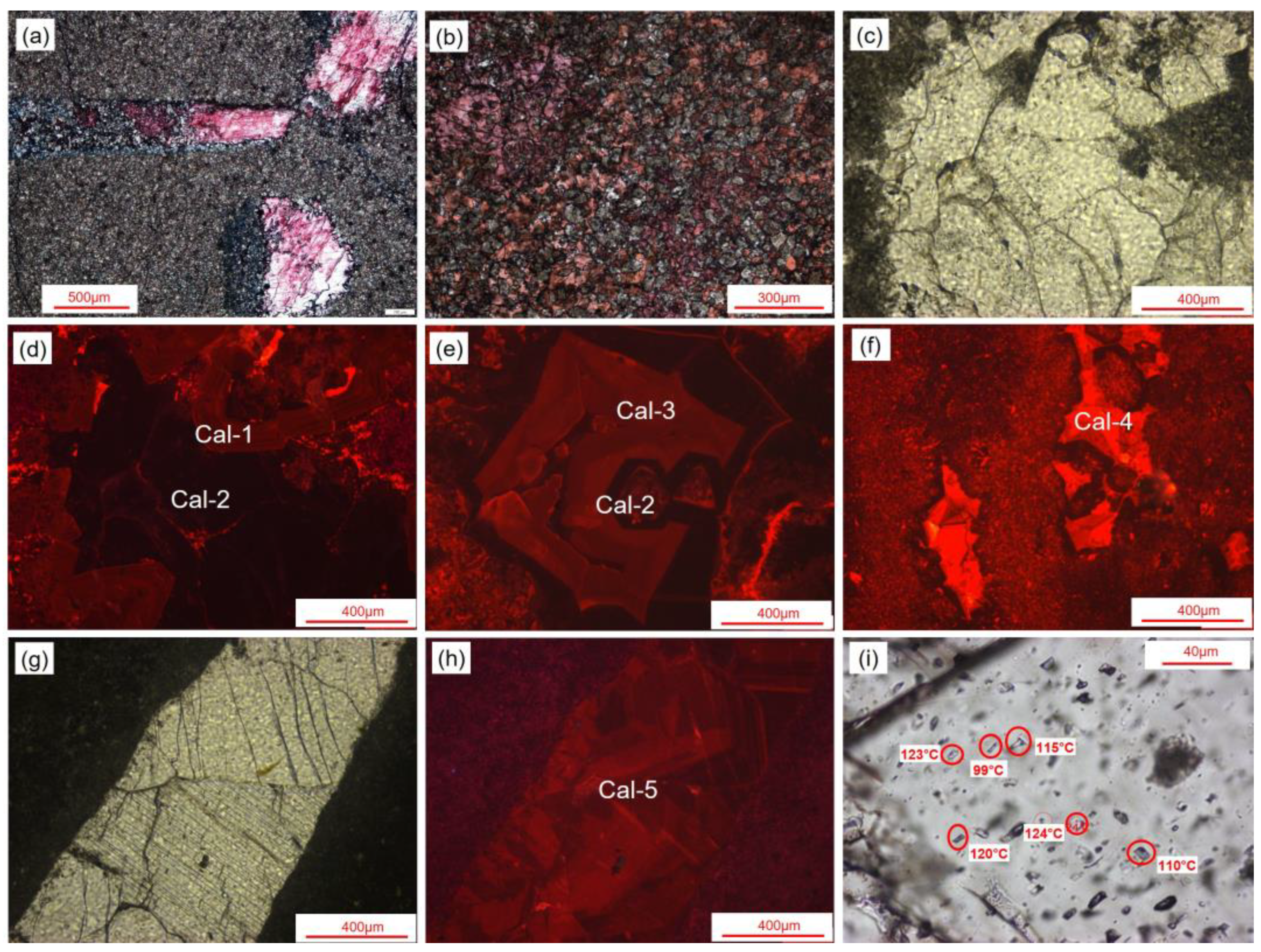
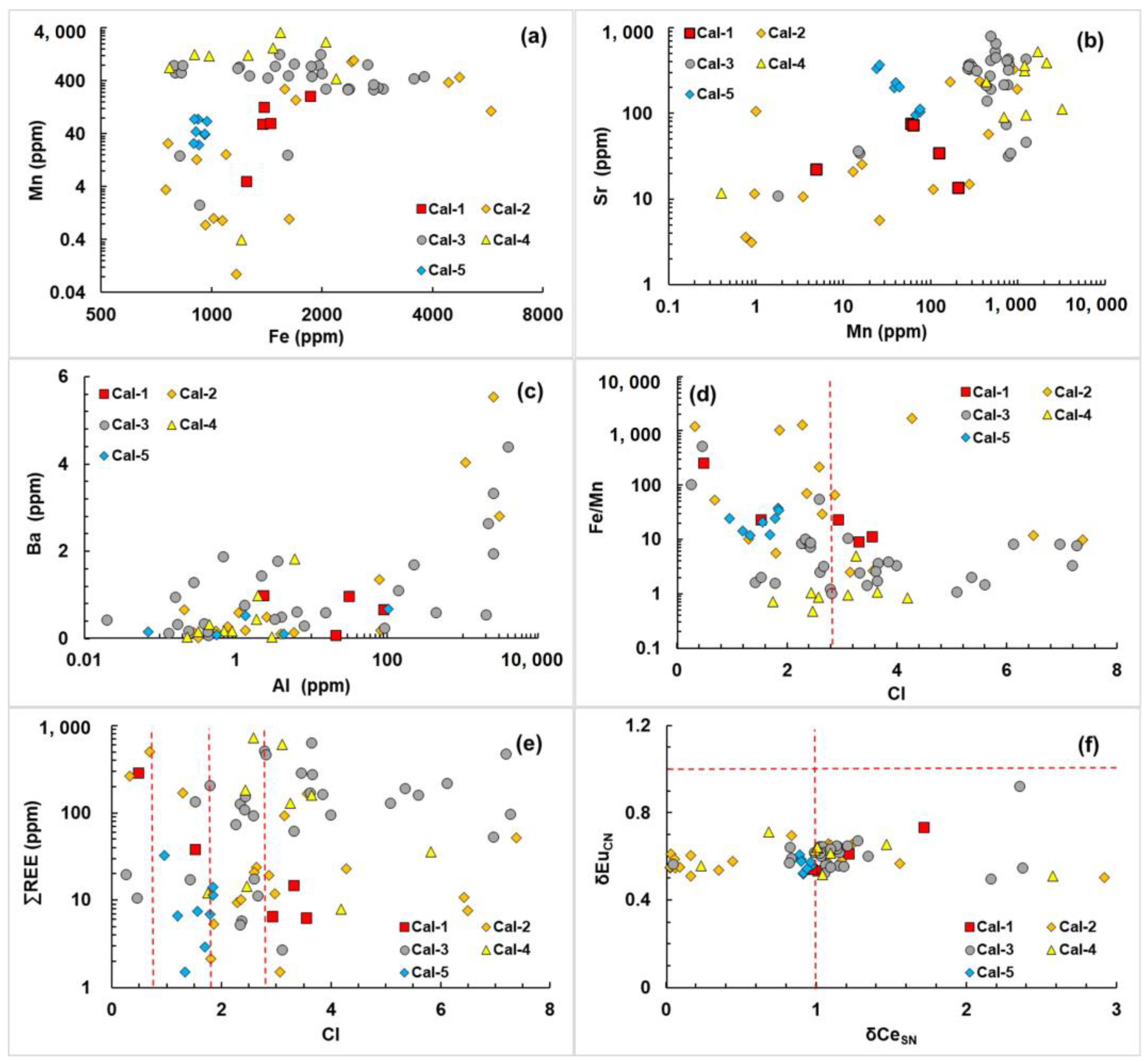
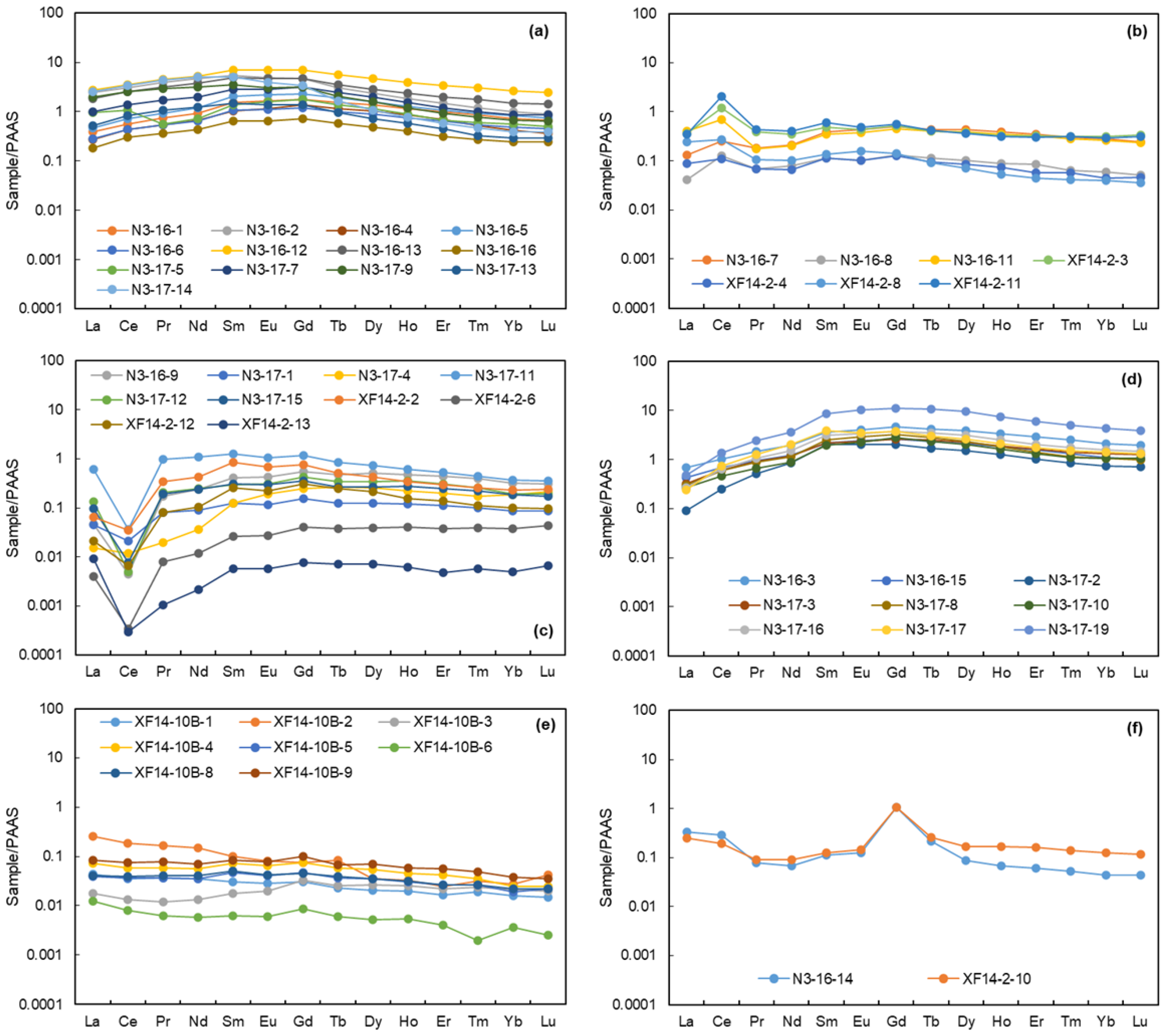
Karst reservoirs have always been a key field of oil and gas exploration. However, quantifying the process of meteoric transformation remains a persistent challenge that limits the accuracy of reservoir quality prediction. To explore the controlling factors of meteoric cementation on karst reservoirs, the Majiagou Formation of the Ordos Basin in China was selected as an example. The petrology; carbon, oxygen, and strontium isotopes; and in situ major, trace, and rare earth elements were used, types and origins of calcite cements were analyzed in detail. The results revealed five types of calcite cements (Cal-1~Cal-5), four types of cathodoluminescence (CL) intensities (dull, dull red, deep red, and bright red luminescence), and six types of rare earth element patterns (Pattern-1~Pattern-6). These five types of calcite cements developed in three periods. Cal-1 (transition CL) and Cal-2 (dull CL) were precipitated during the Early Pennsylvanian period, the meteoric freshwater was clean; Cal-3 (transition CL) and Cal-4 (bright red CL) were precipitated at the end of the Late Carboniferous period, the fluids had strong dissolution ability and were polluted by terrigenous debris; Cal-5 (transition CL) was deposited during the burial period, the fluid was pure pore water or groundwater. The control of the cement on the reservoir during the burial period was much weaker than that of meteoric cements. Therefore, explorations of karst reservoirs should be focused on weak cementation during the epigenetic period.
Keywords: meteoric cementation; in situ elements; cathodoluminescence; rare earth elements; Majiagou Formation; Ordos Basin meteoric cementation; in situ elements; cathodoluminescence; rare earth elements; Majiagou Formation; Ordos Basin