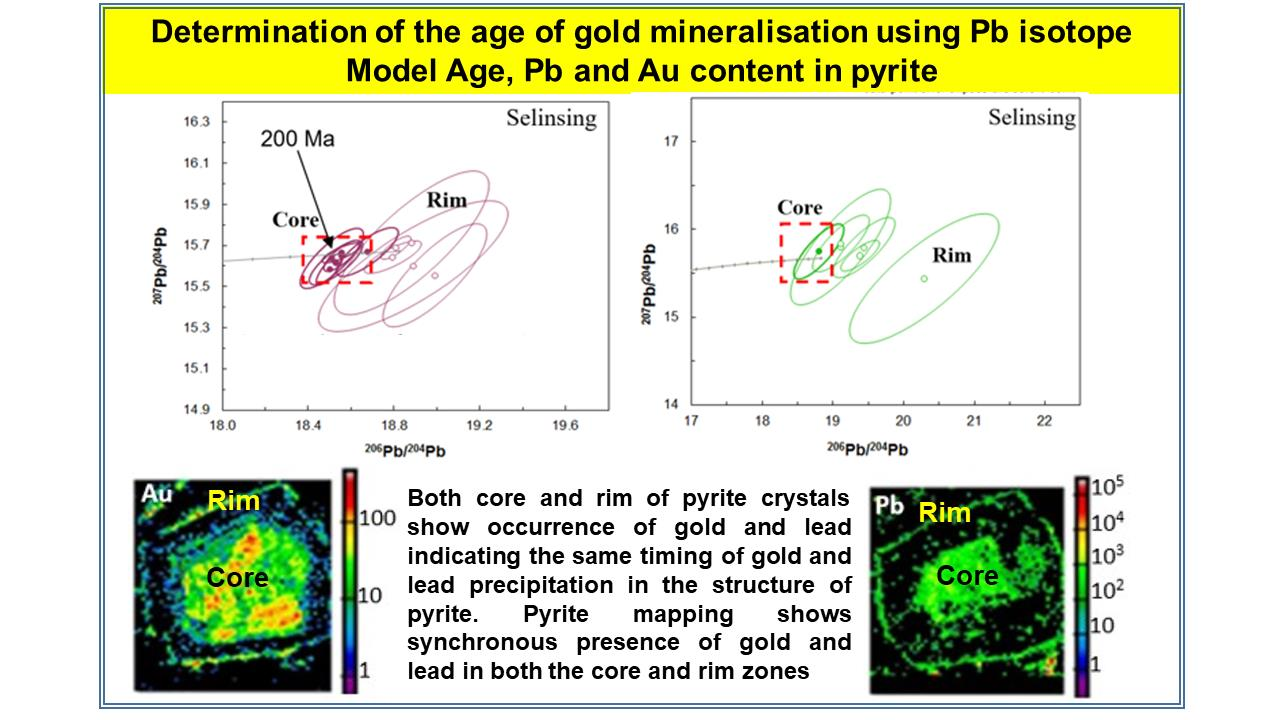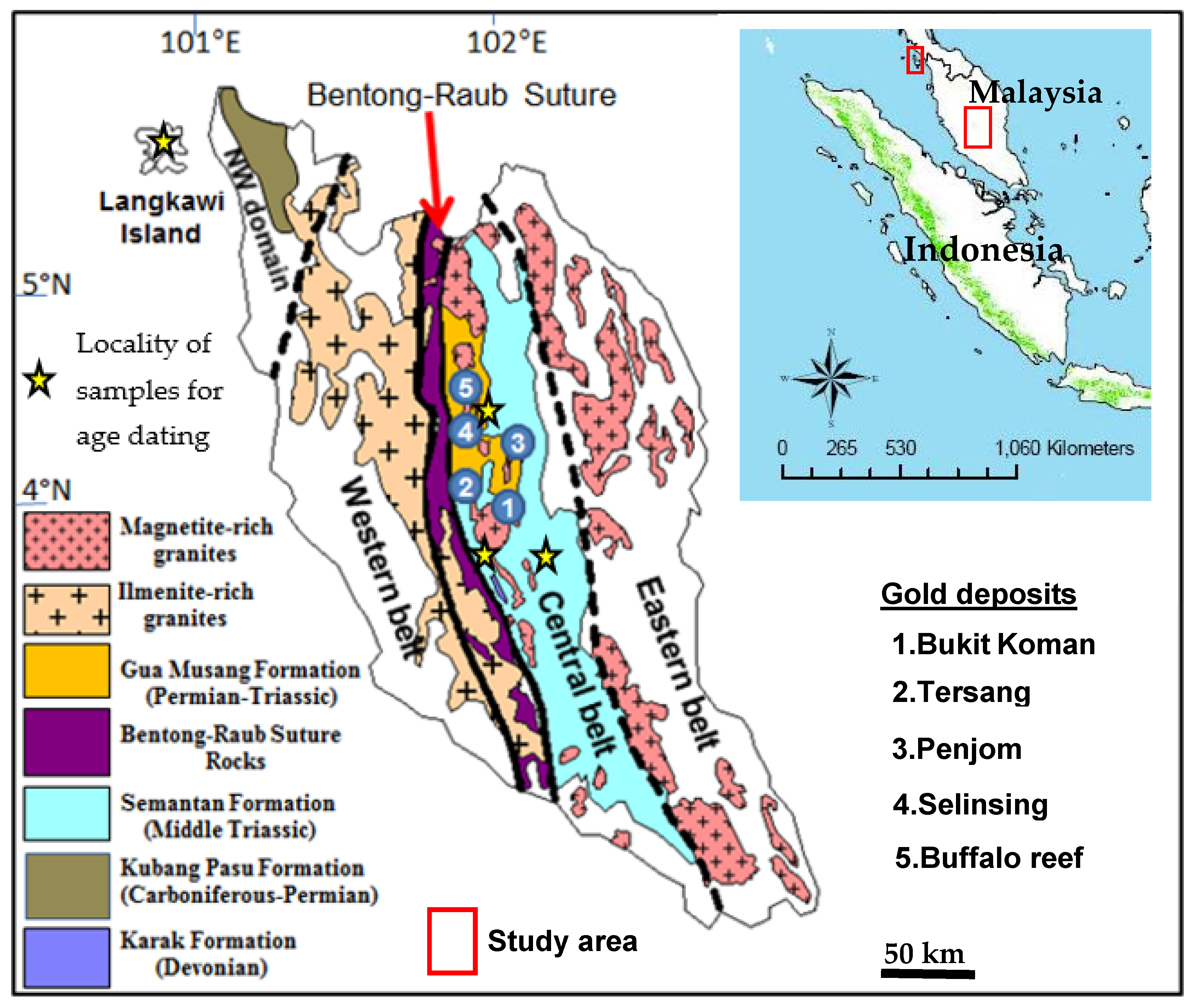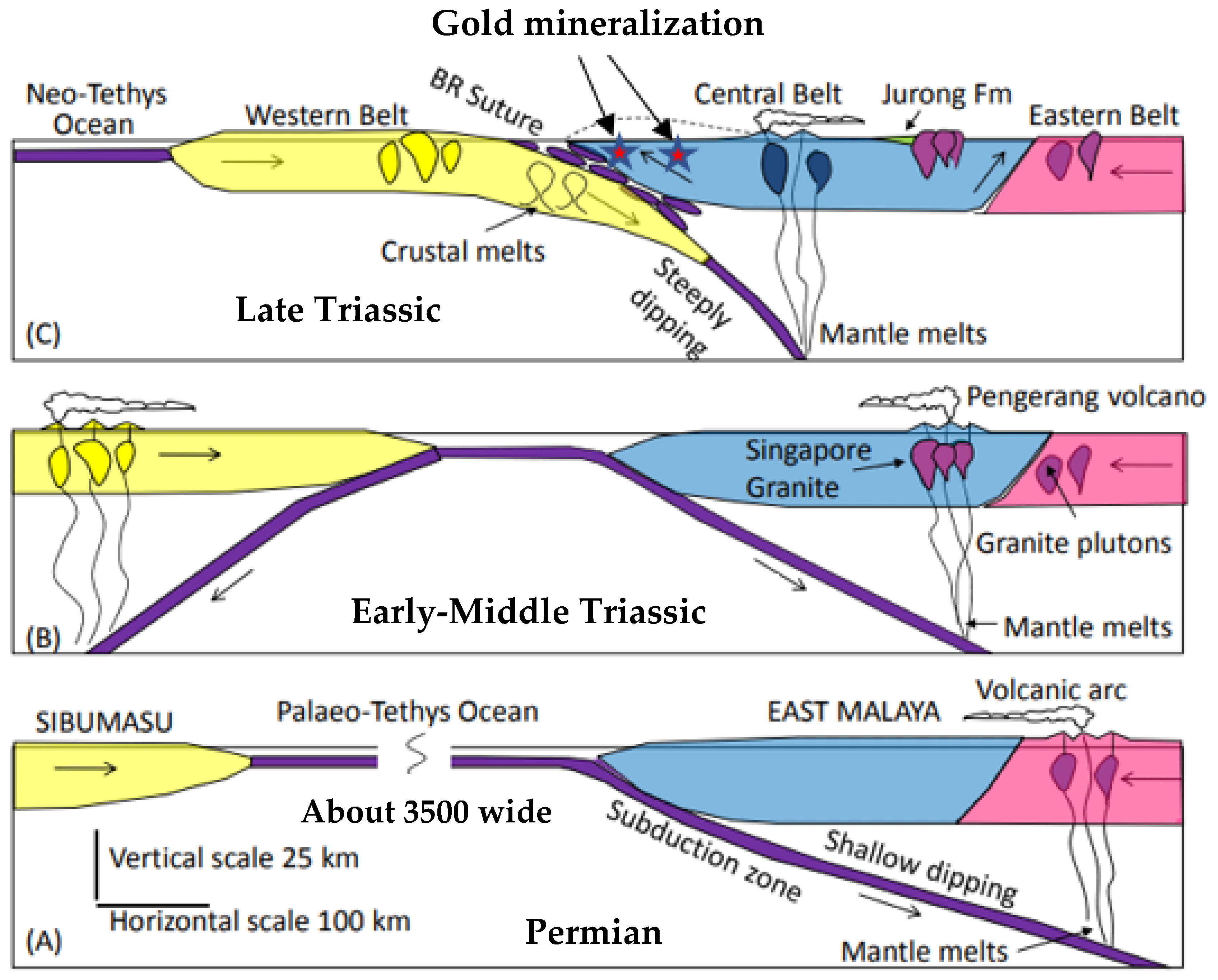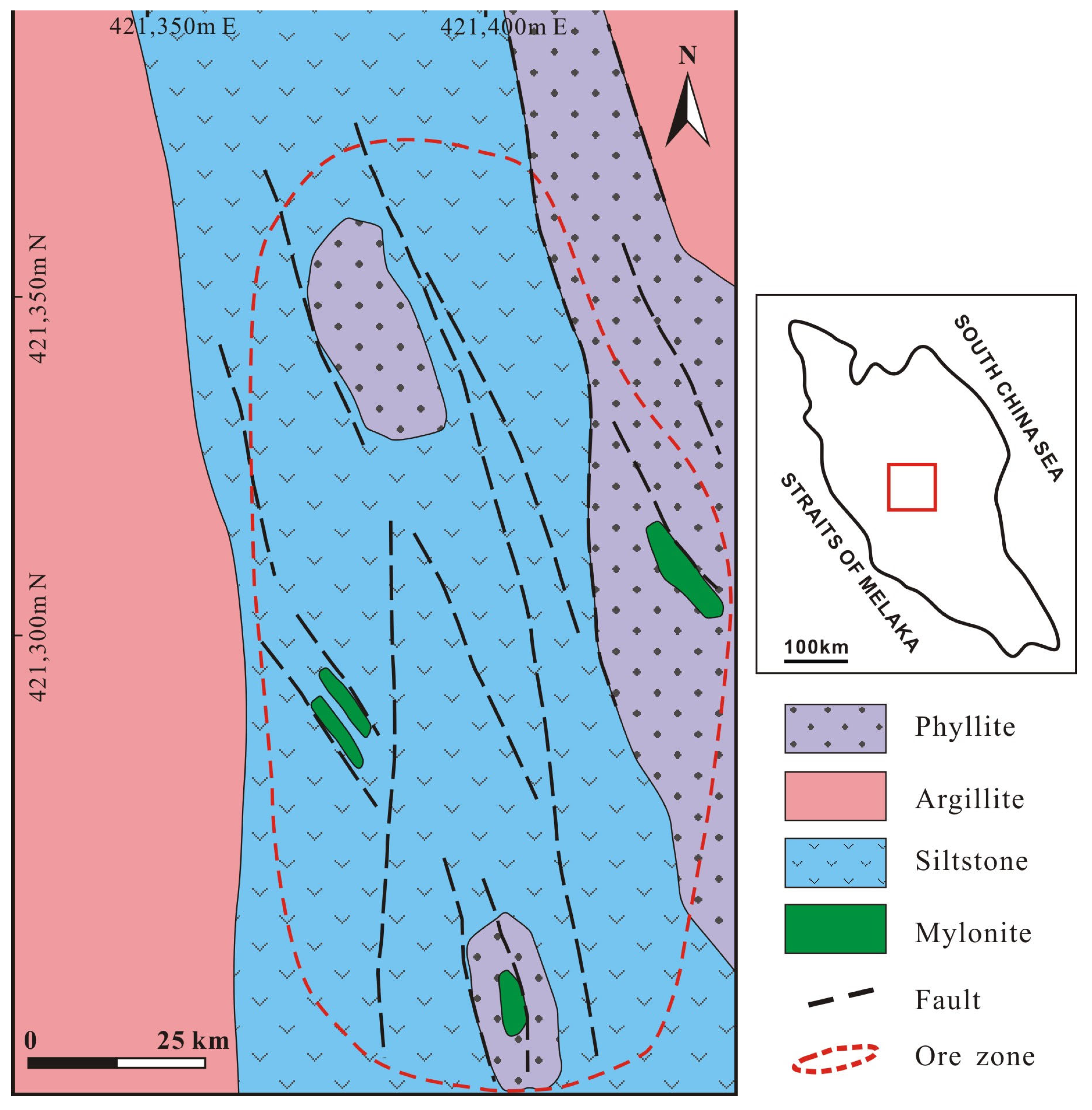

U-Pb Dating, Lead Isotopes, and Trace Element Composition of Pyrite Hosted in Black Shale and Magmatic Rocks, Malaysia: Implications for Orogenic Gold Mineralization and Exploration




Abstract
Share and Cite
Makoundi, C.; Zaw, K.; Endut, Z. U-Pb Dating, Lead Isotopes, and Trace Element Composition of Pyrite Hosted in Black Shale and Magmatic Rocks, Malaysia: Implications for Orogenic Gold Mineralization and Exploration. Minerals 2023, 13, 221. https://doi.org/10.3390/min13020221
Makoundi C, Zaw K, Endut Z. U-Pb Dating, Lead Isotopes, and Trace Element Composition of Pyrite Hosted in Black Shale and Magmatic Rocks, Malaysia: Implications for Orogenic Gold Mineralization and Exploration. Minerals. 2023; 13(2):221. https://doi.org/10.3390/min13020221
Chicago/Turabian StyleMakoundi, Charles, Khin Zaw, and Zakaria Endut. 2023. "U-Pb Dating, Lead Isotopes, and Trace Element Composition of Pyrite Hosted in Black Shale and Magmatic Rocks, Malaysia: Implications for Orogenic Gold Mineralization and Exploration" Minerals 13, no. 2: 221. https://doi.org/10.3390/min13020221
APA StyleMakoundi, C., Zaw, K., & Endut, Z. (2023). U-Pb Dating, Lead Isotopes, and Trace Element Composition of Pyrite Hosted in Black Shale and Magmatic Rocks, Malaysia: Implications for Orogenic Gold Mineralization and Exploration. Minerals, 13(2), 221. https://doi.org/10.3390/min13020221