
Article

Mechanism of the Enrichment and Loss Progress of Deep Shale Gas: Evidence from Fracture Veins of the Wufeng–Longmaxi Formations in the Southern Sichuan Basin
1
Key Laboratory of Exploration Technologies for Oil and Gas Resources (Yangtze University), Ministry of Education, Wuhan 430100, China
2
State Key Laboratory of Oil and Gas Reservoir Geology and Exploitation, Chengdu University of Technology, Chengdu 610059, China
3
SINOPEC Petroleum Exploration and Production Research Institute, Beijing 102206, China
4
Key Laboratory of Tectonics and Petroleum Resources of Ministry of Education, China University of Geoscience (Wuhan), Wuhan 430074, China
*
Authors to whom correspondence should be addressed.
Minerals 2022, 12(7), 897; https://doi.org/10.3390/min12070897
Submission received: 14 June 2022 / Revised: 5 July 2022 / Accepted: 13 July 2022 / Published: 17 July 2022

Abstract

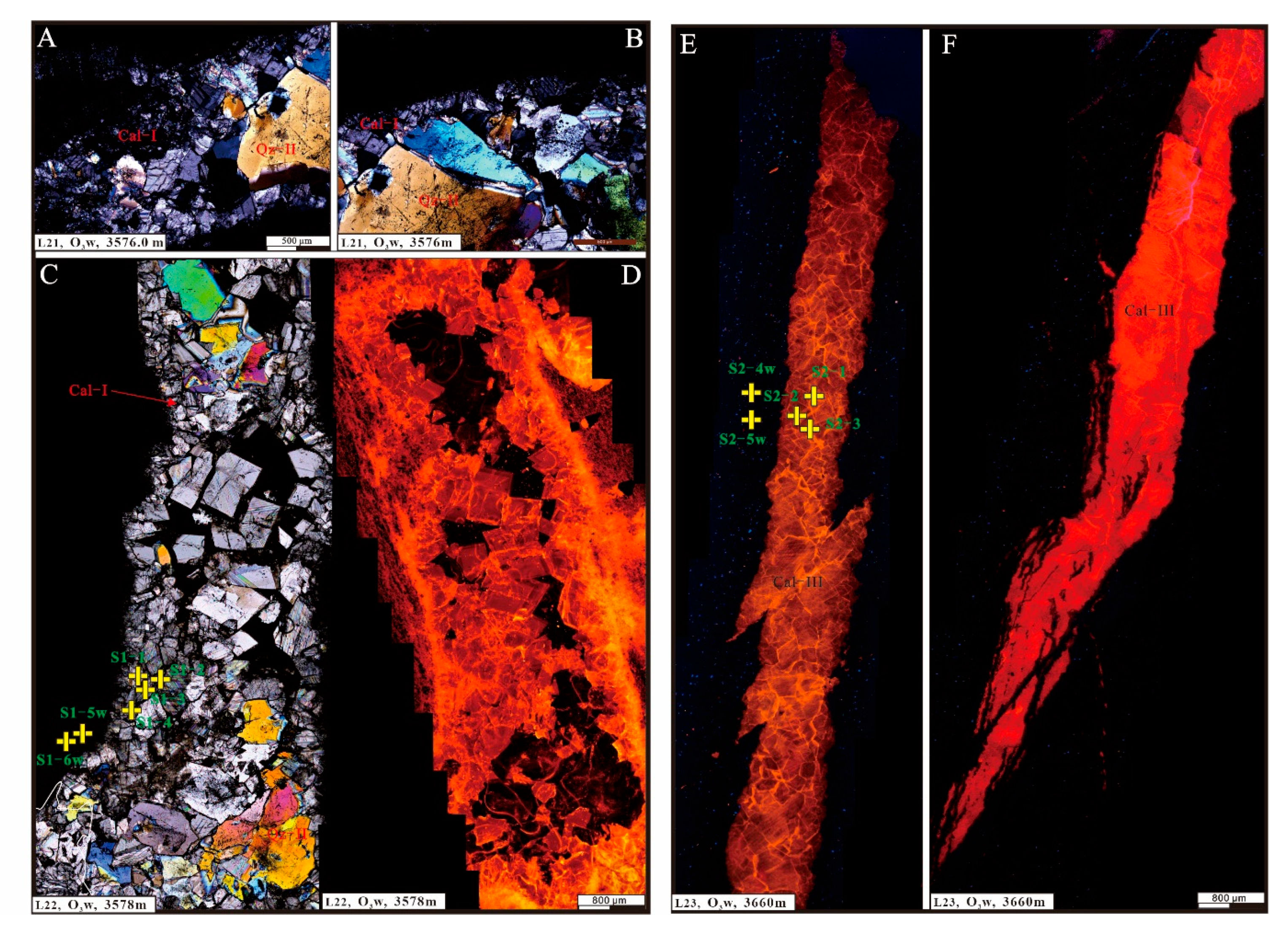
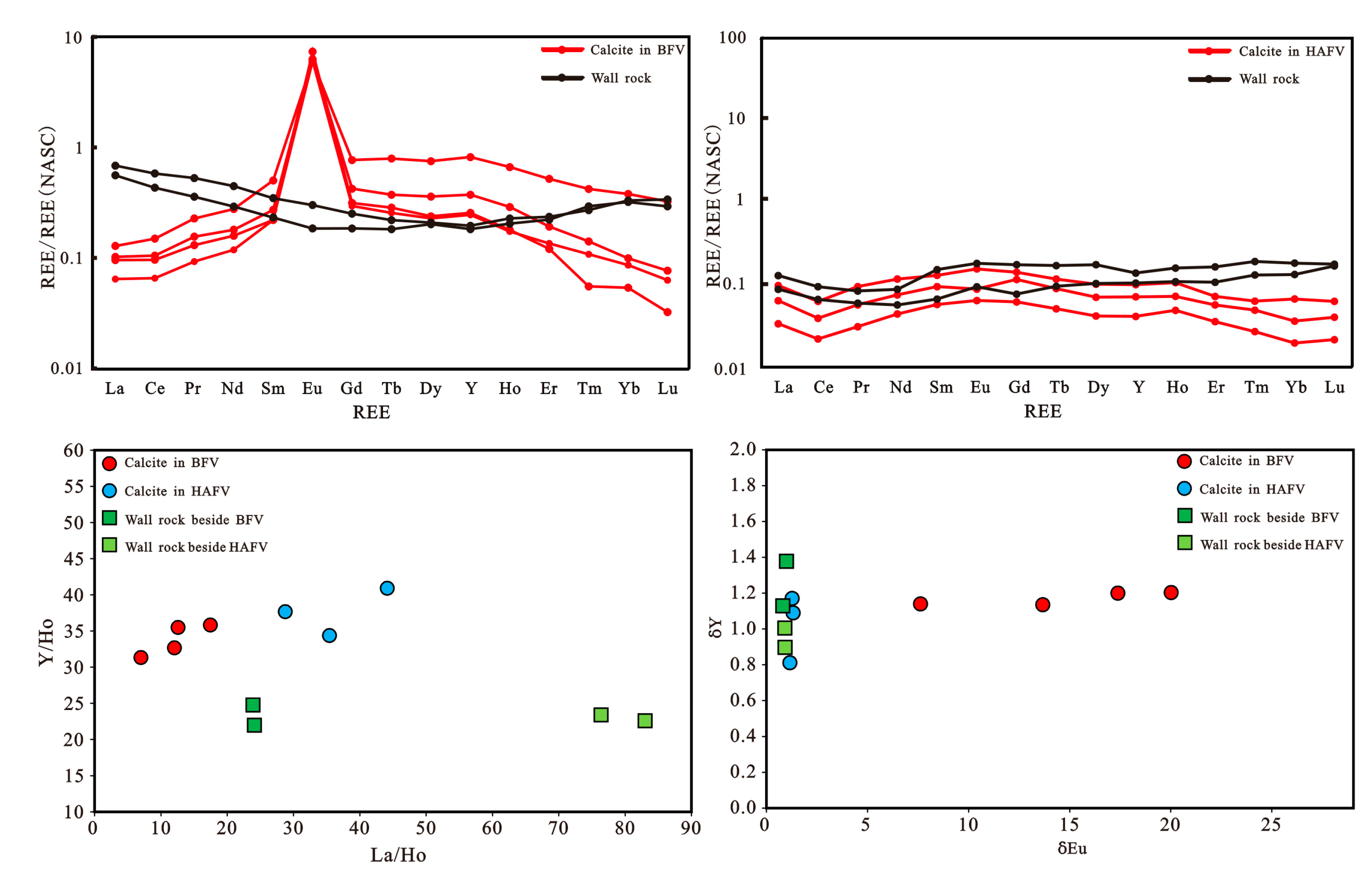
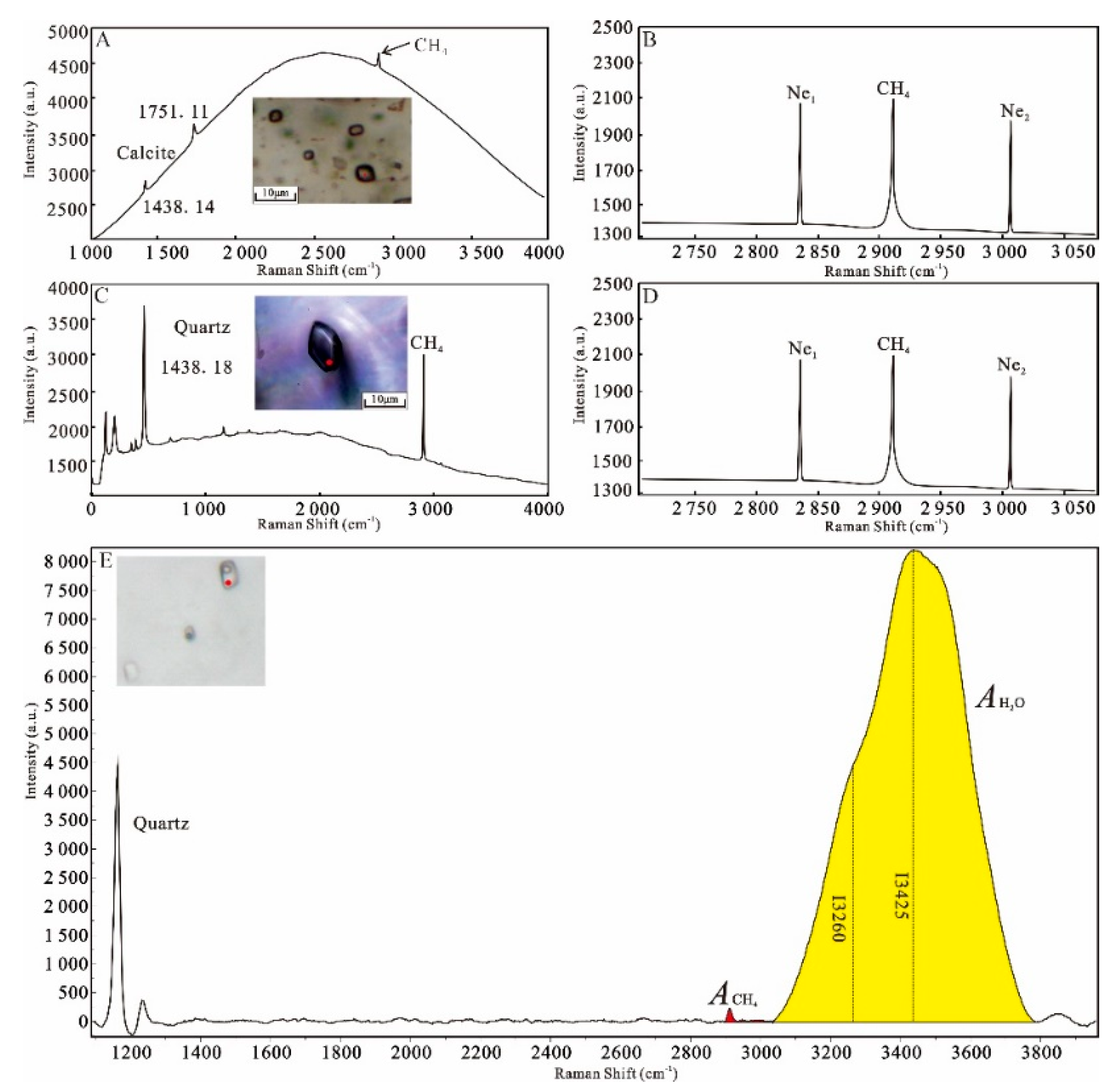
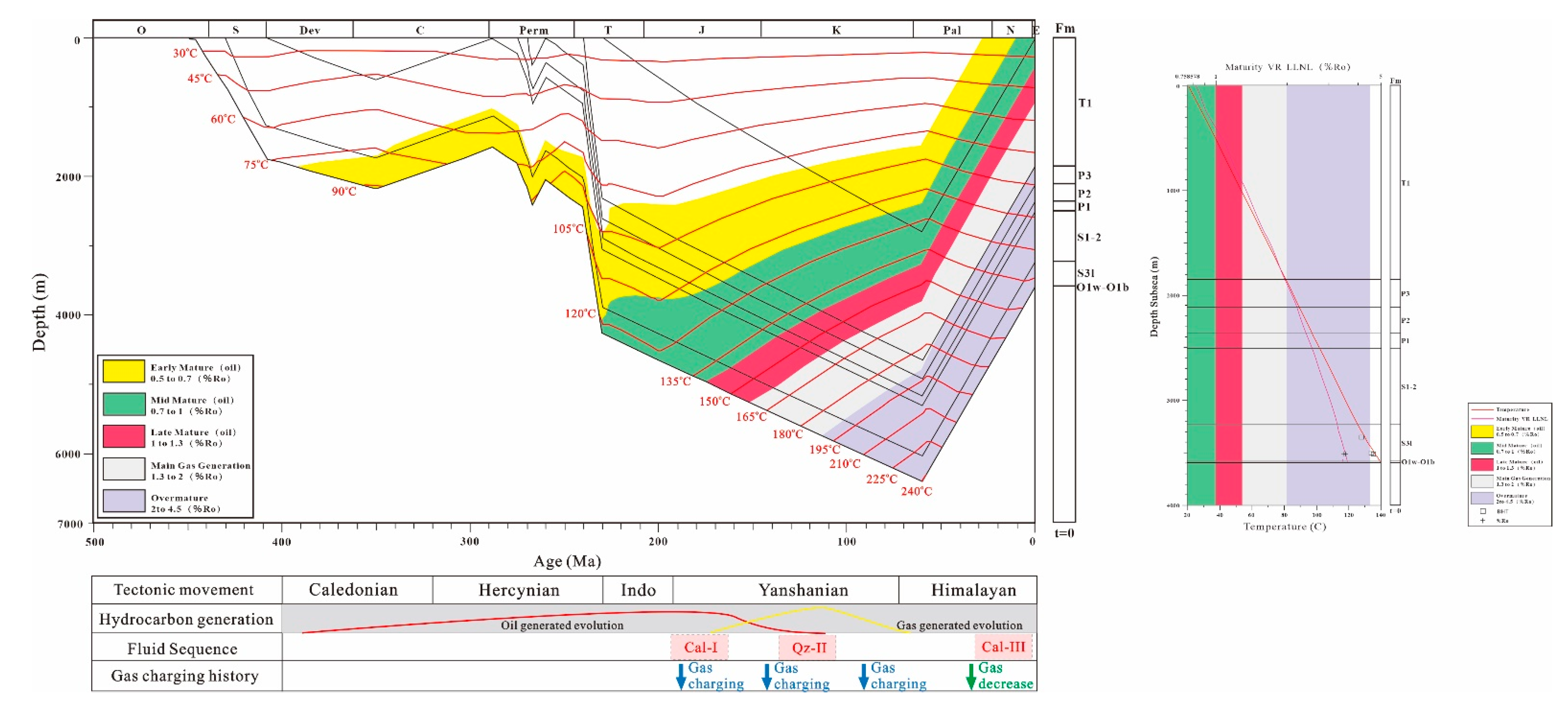
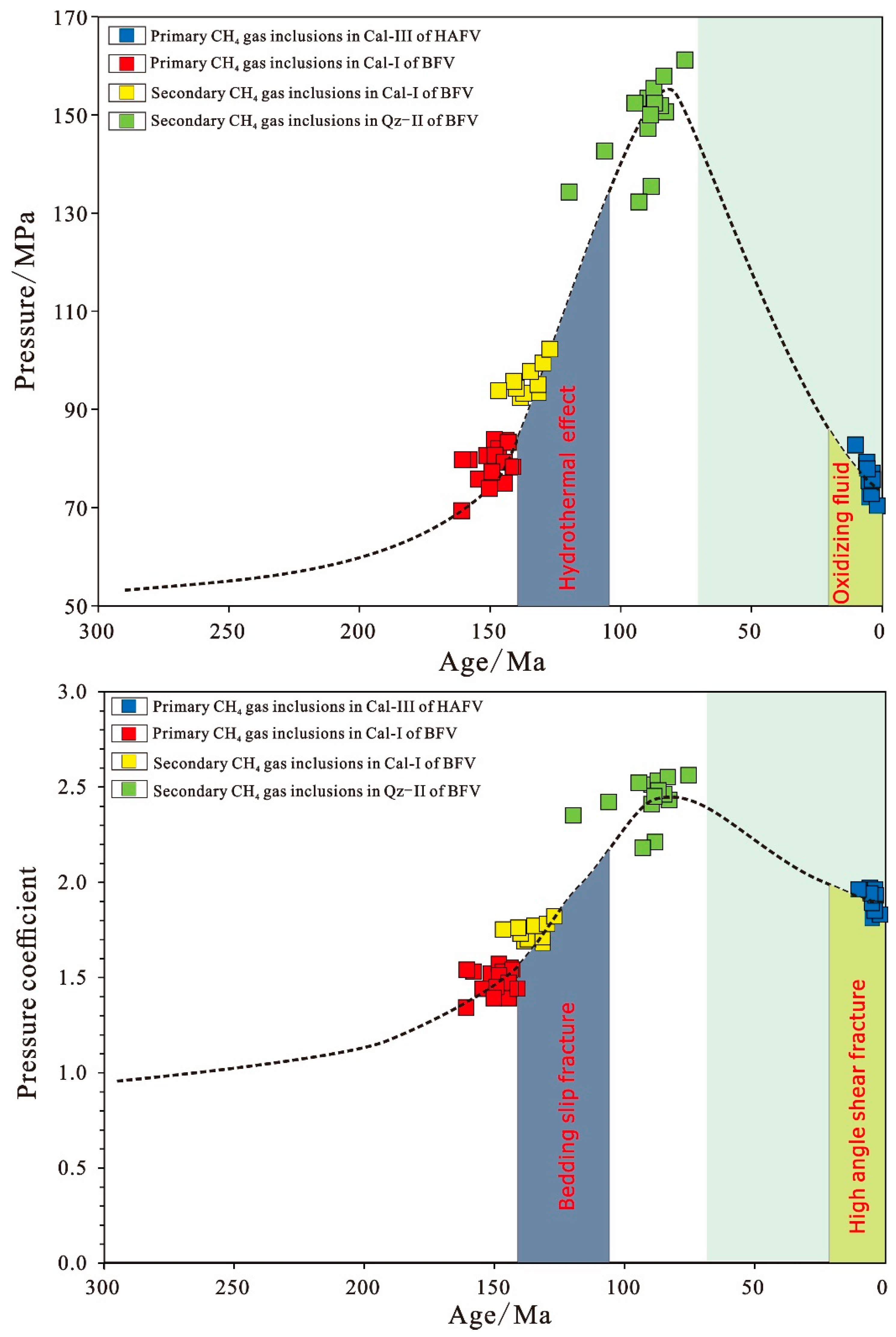
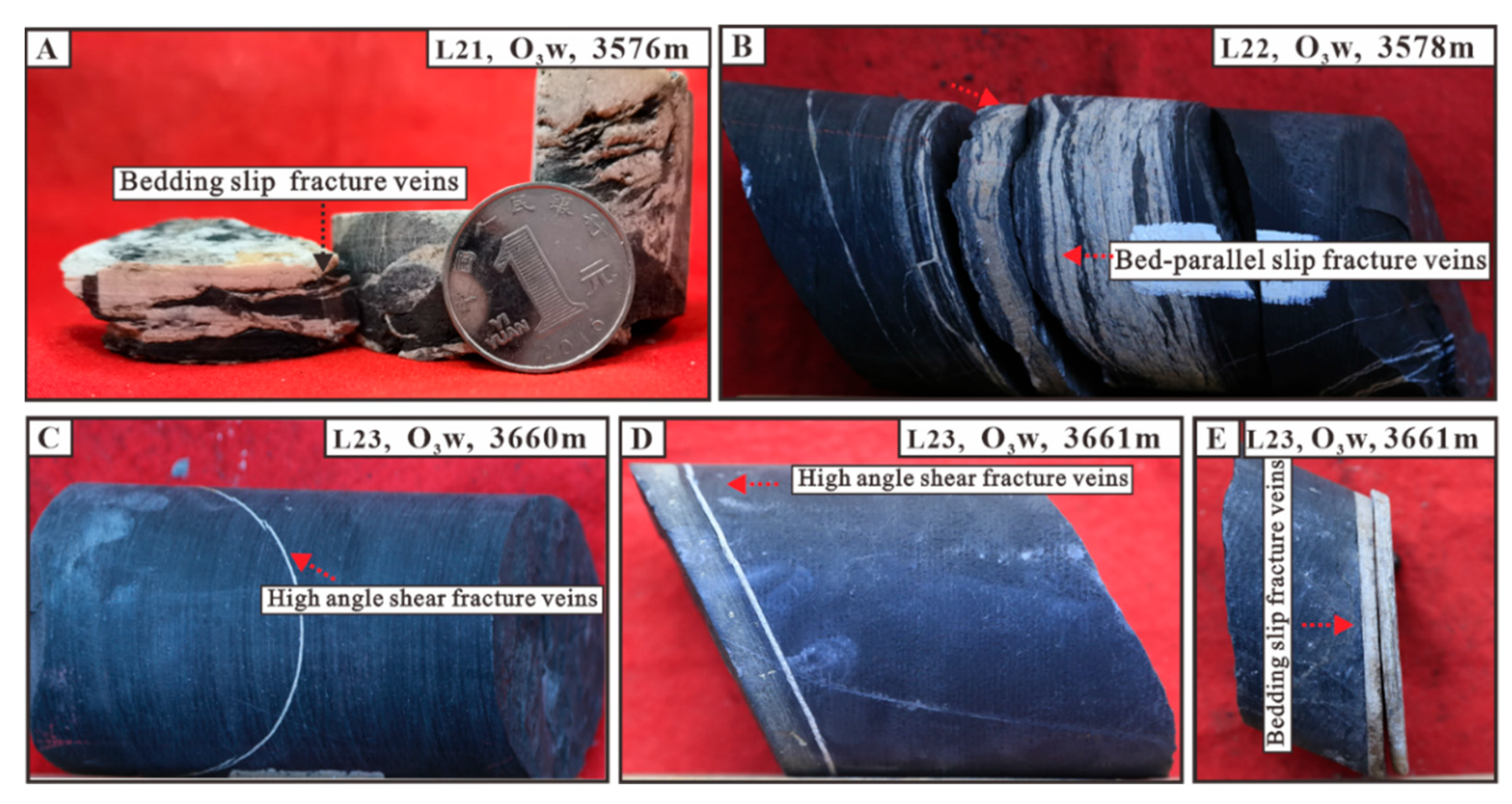
Natural fractures caused by tectonic stress in shale can not only improve the seepage capacity of shale, but also become the migration and loss channel of free gas. Calcite, quartz and other minerals in shale fracture veins record the fluid evolution information of the shale. Through the analysis of different types of fracture cements in the shale of the Silurian–Ordovician Wufeng–Longmaxi Formations in the southern Sichuan Basin, the effect of different fractures on shale gas construction or destruction was clarified. Geochemical investigations included the diagenetic mineral sequences in the hole–cavity veins, paleo-pressure recovery by Raman quantitative analysis, and the environments of diagenetic fluids traced by rare earth elements (REE) signatures. The density, composition, pressure, and temperature properties of CH4-bearing fluid inclusions were determined by Raman quantitative measurement and thermodynamic simulations to establish the trapping condition of the geo-fluids, and so constrain the periods of gas accumulation. The diagenetic sequences in the fracture veins can be summarized as follows: Cal-I→Qz-II→Cal-III. The Cal-I in the bedding fracture veins crystallized in the late Jurassic (~180 Ma), and originated from hydrothermal origin and diagenetic fluid; the Qz-II veins crystallized in the middle Jurassic (~190 Ma); the Cal-III veins in the high-angle fractures precipitated during the early Eocene (~12 Ma), and derived from atmospheric freshwater leaching. Pore fluid pressure gradually increased. The pressure coefficient of the shale gas reservoir gradually increased to strong overpressure from 160 Ma to 86 Ma. Between 75 Ma and the present day, the pore fluid pressure and the pressure coefficient in the shale reservoirs, having been affected by tectonic activities and strata uplift-erosion, have significantly reduced. Bedding slippage fractures play a constructive role in the enrichment of shale gas, and fracture slip can significantly improve fracture permeability. High-angle shear fractures usually cut through different strata in areas with strong tectonic activity, and destroy the sealing of the shale. The entrapment of primary methane gas inclusions recorded the process of excess reservoir pressure reduction, and indicated the partial loss of shale free gas.
Keywords: Raman quantitative spectroscopy; fluid evolution; paleo-fluid origins; fracture vein; deep shale gas; Wufeng–Longmaxi Formations; Sichuan Basin Raman quantitative spectroscopy; fluid evolution; paleo-fluid origins; fracture vein; deep shale gas; Wufeng–Longmaxi Formations; Sichuan Basin