
Article

Geochemical and Geochronological Constraints on a Granitoid Containing the Largest Indosinian Tungsten (W) Deposit in South China (SC): Petrogenesis and Implications
MLR Key Laboratory of Metallogeny and Mineral Assessment, Institute of Mineral Resources, Chinese Academy of Geological Sciences, Beijing 100037, China
*
Author to whom correspondence should be addressed.
Minerals 2022, 12(1), 80; https://doi.org/10.3390/min12010080
Submission received: 28 November 2021 / Revised: 24 December 2021 / Accepted: 28 December 2021 / Published: 10 January 2022
(This article belongs to the Special Issue Rare Metal Ore Formations and Rare Metal Metallogeny)

Abstract

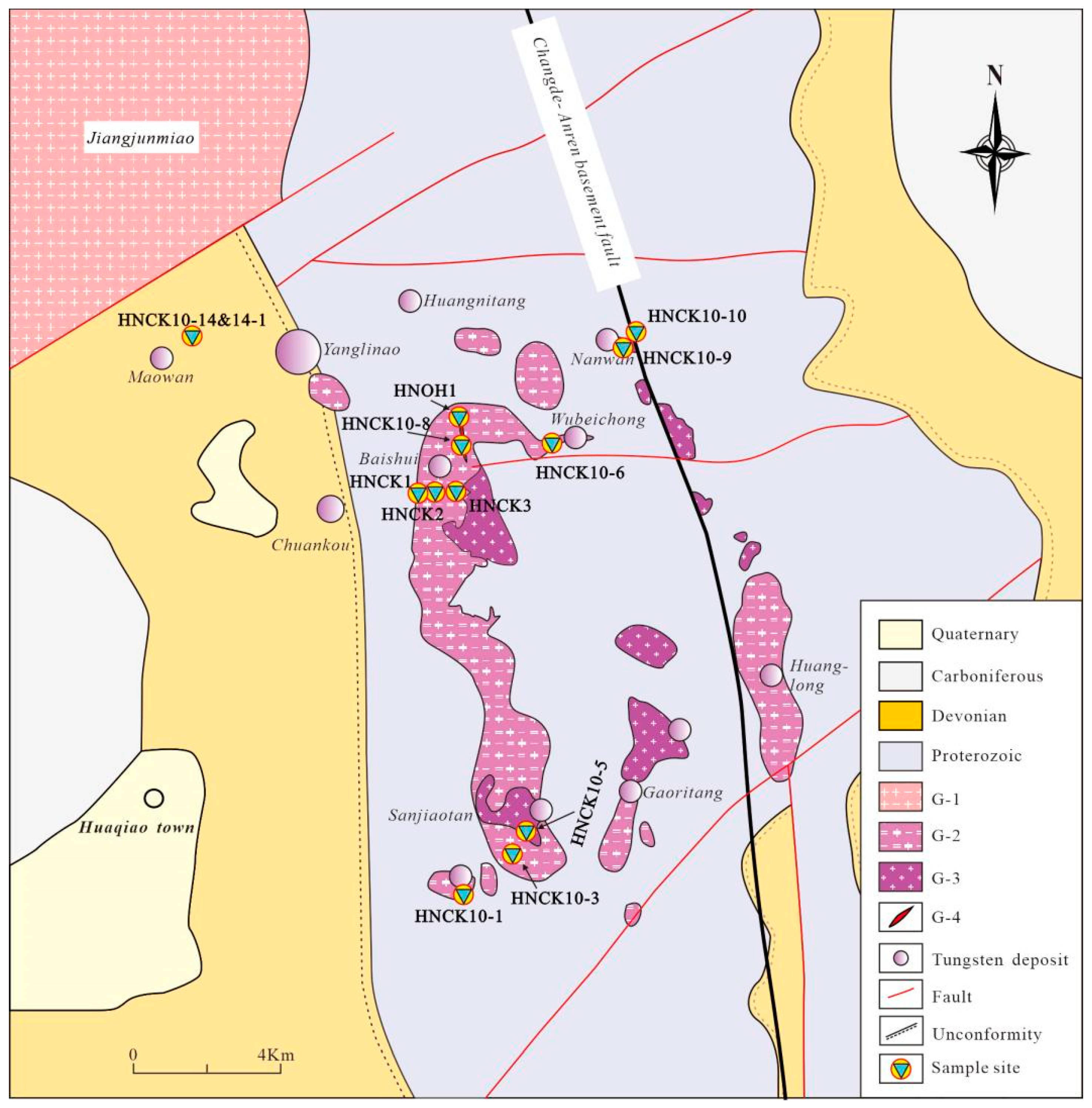
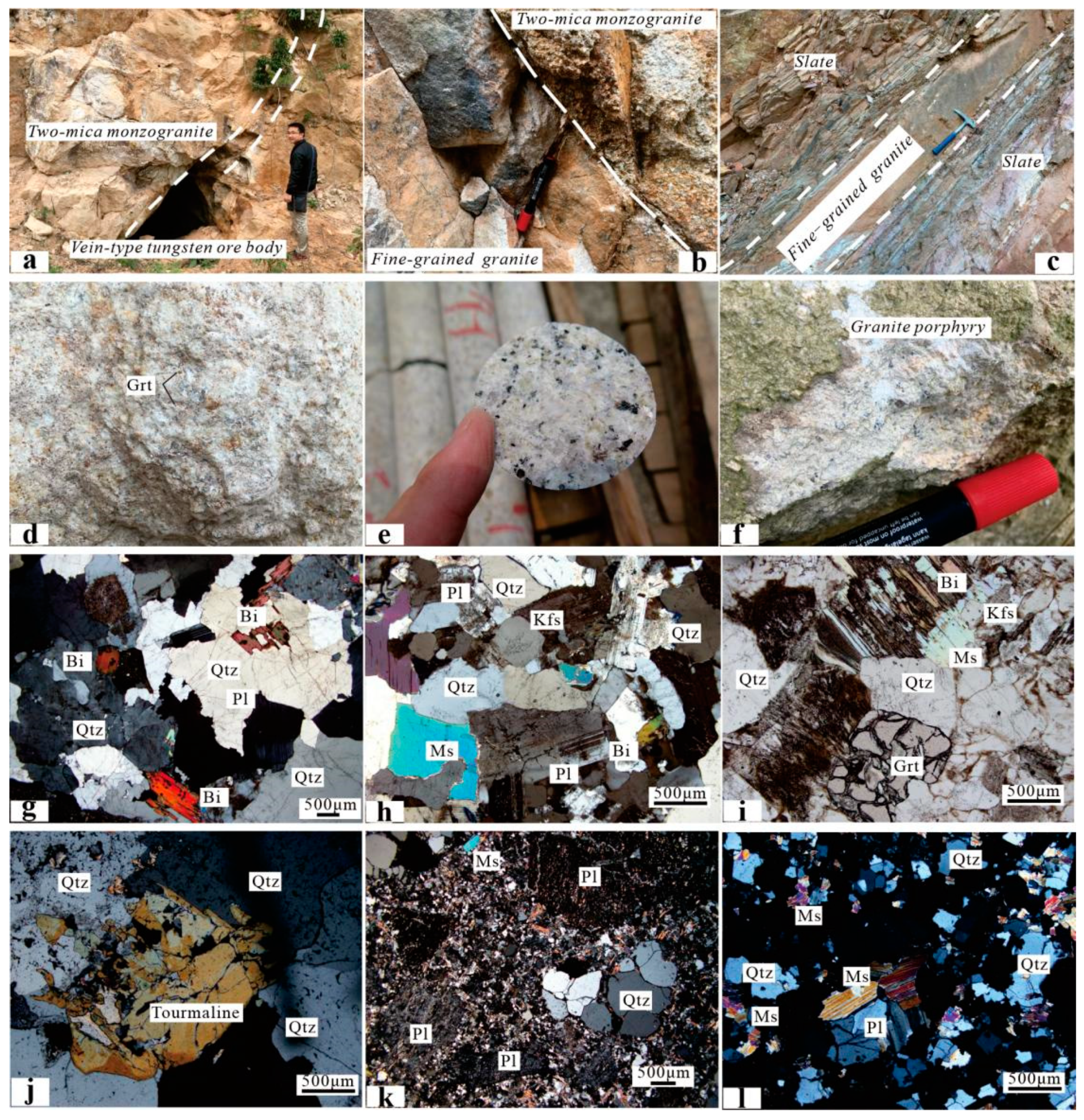
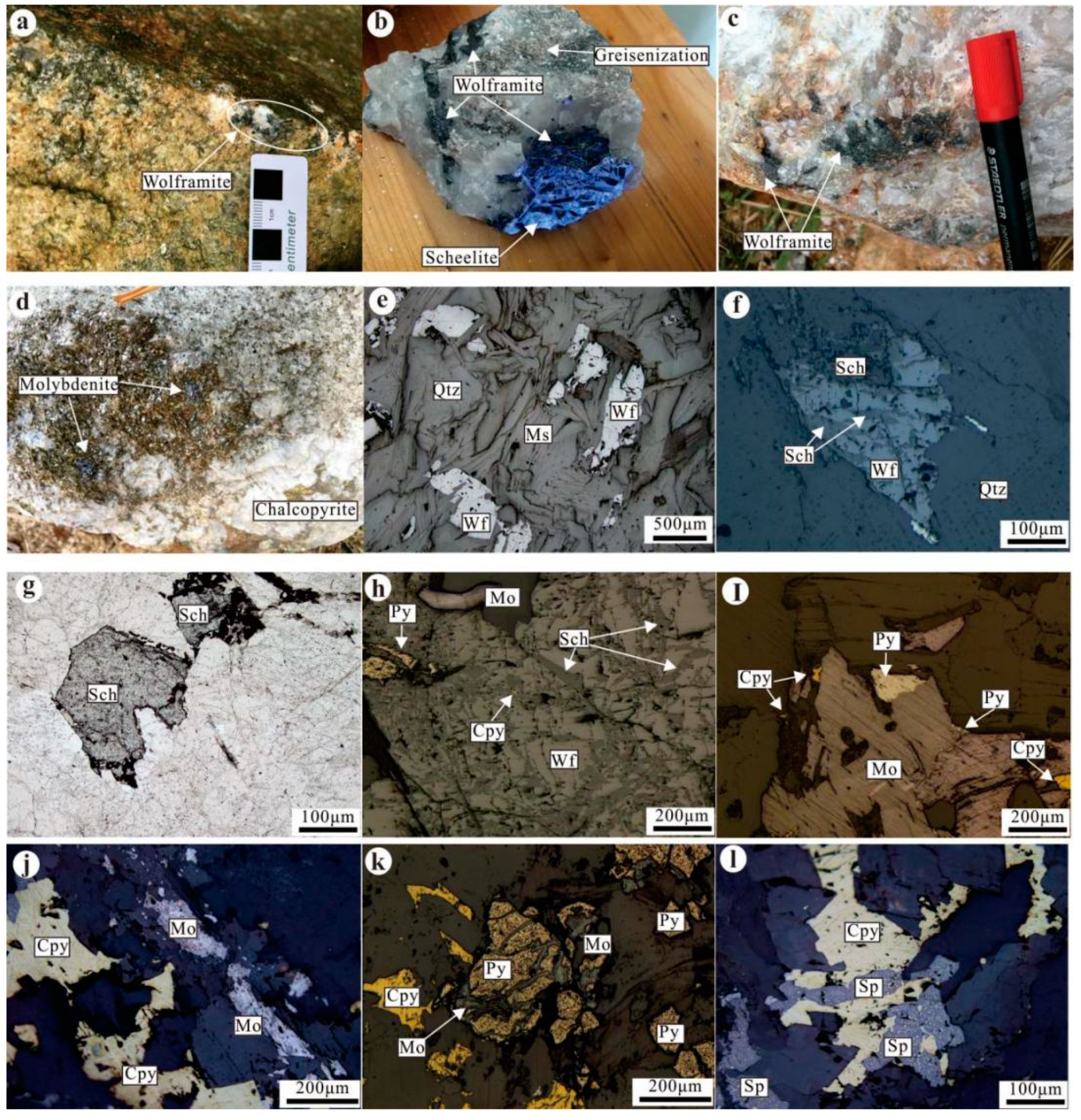
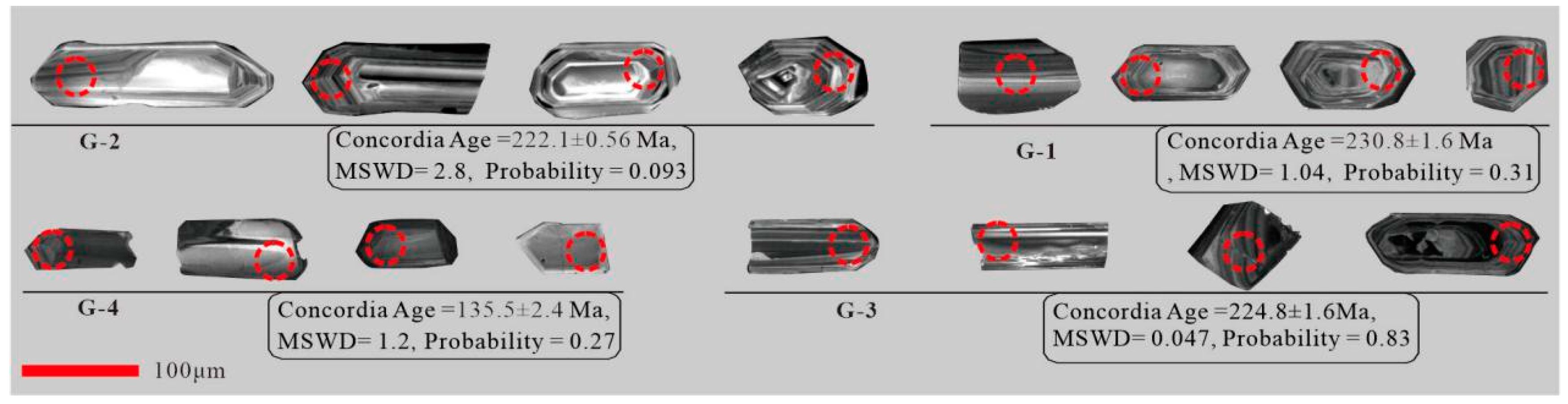
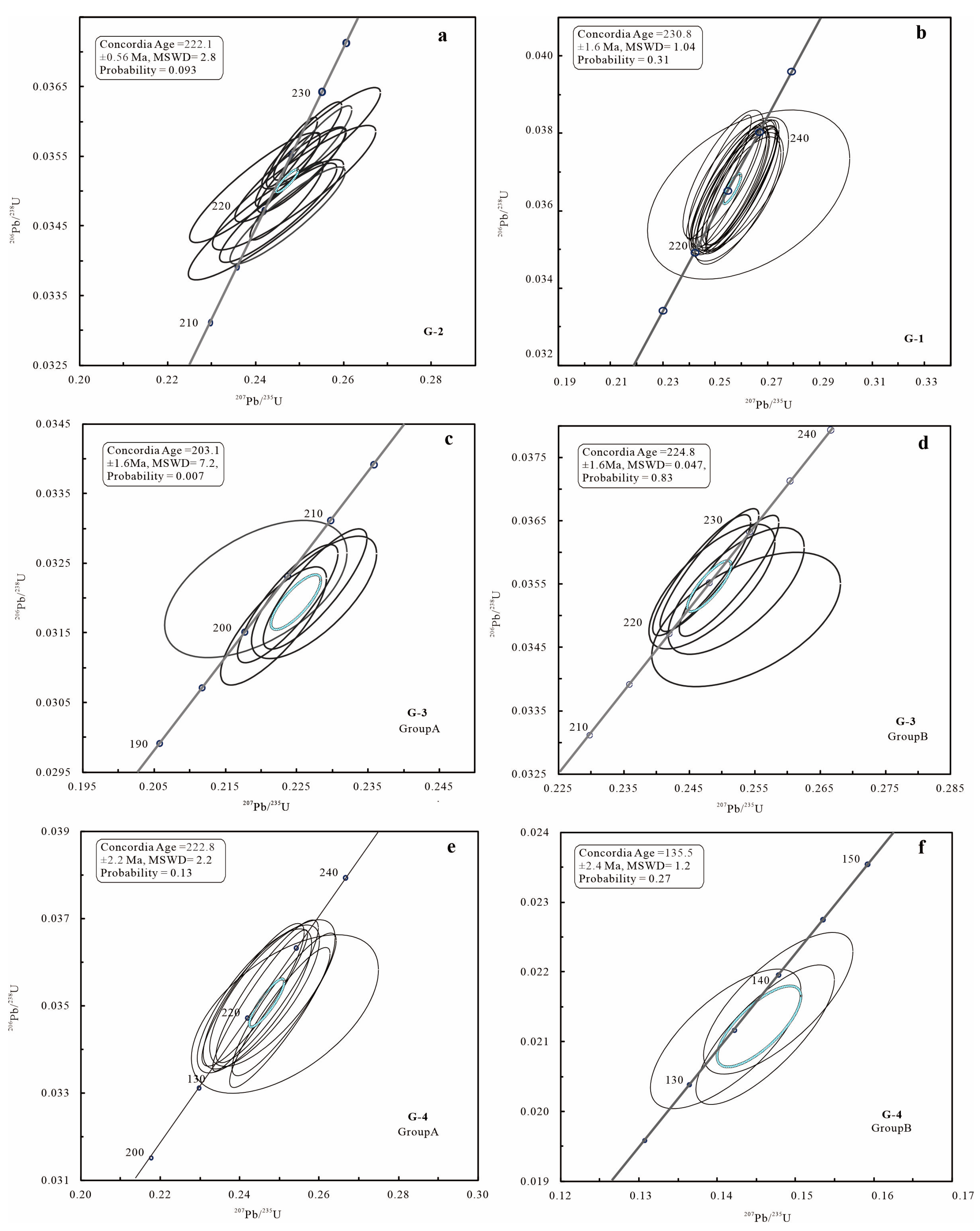
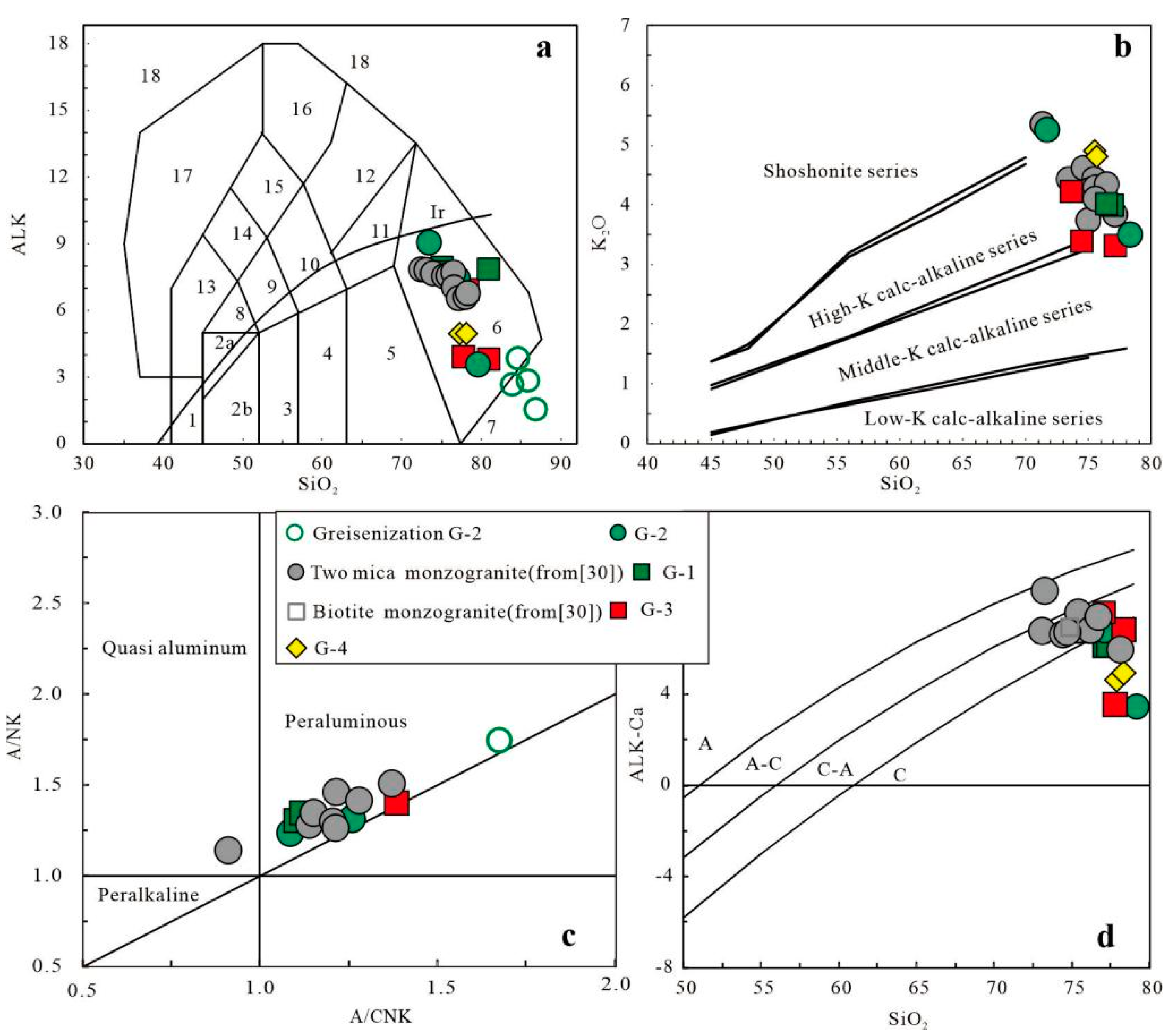
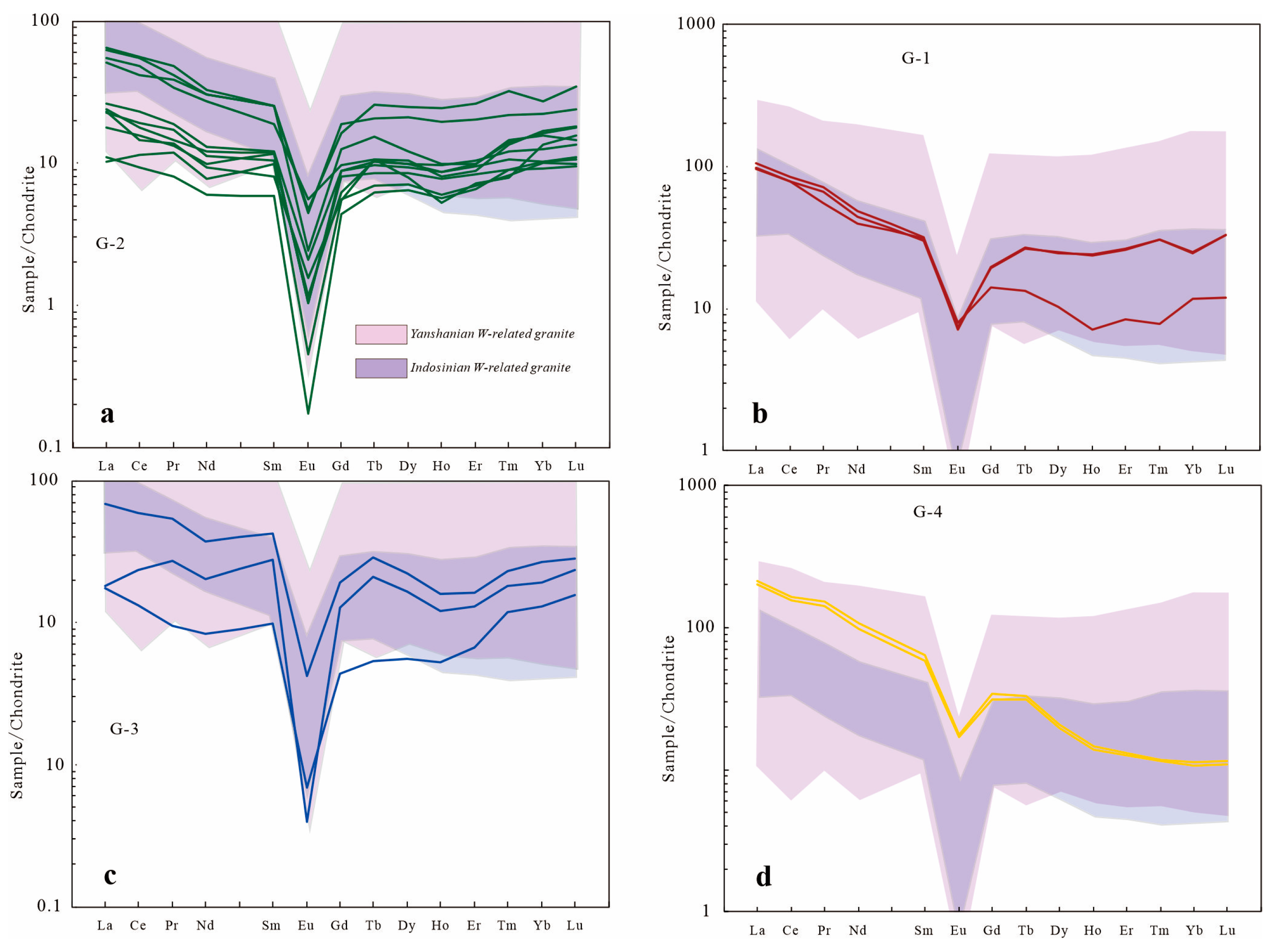
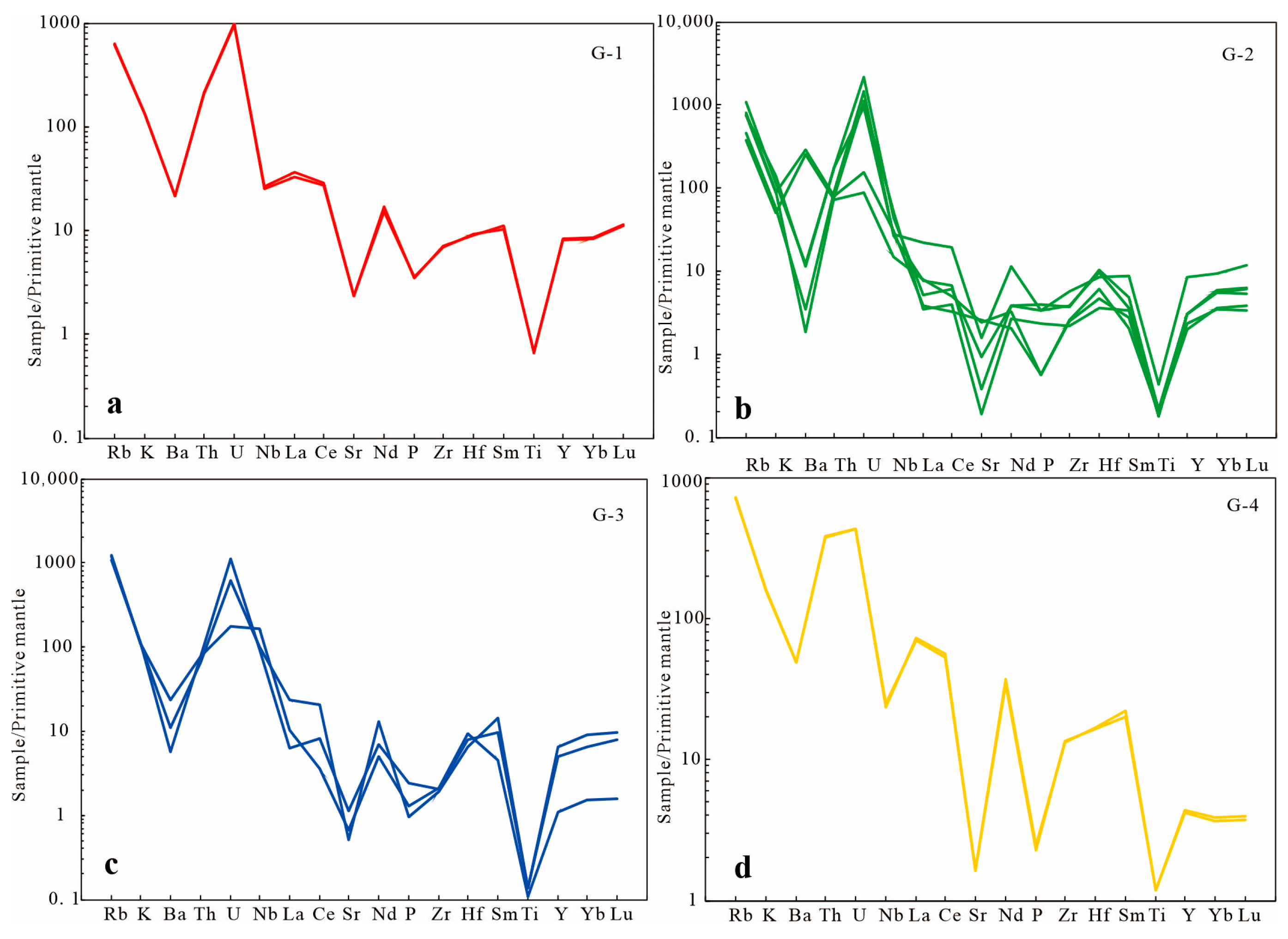
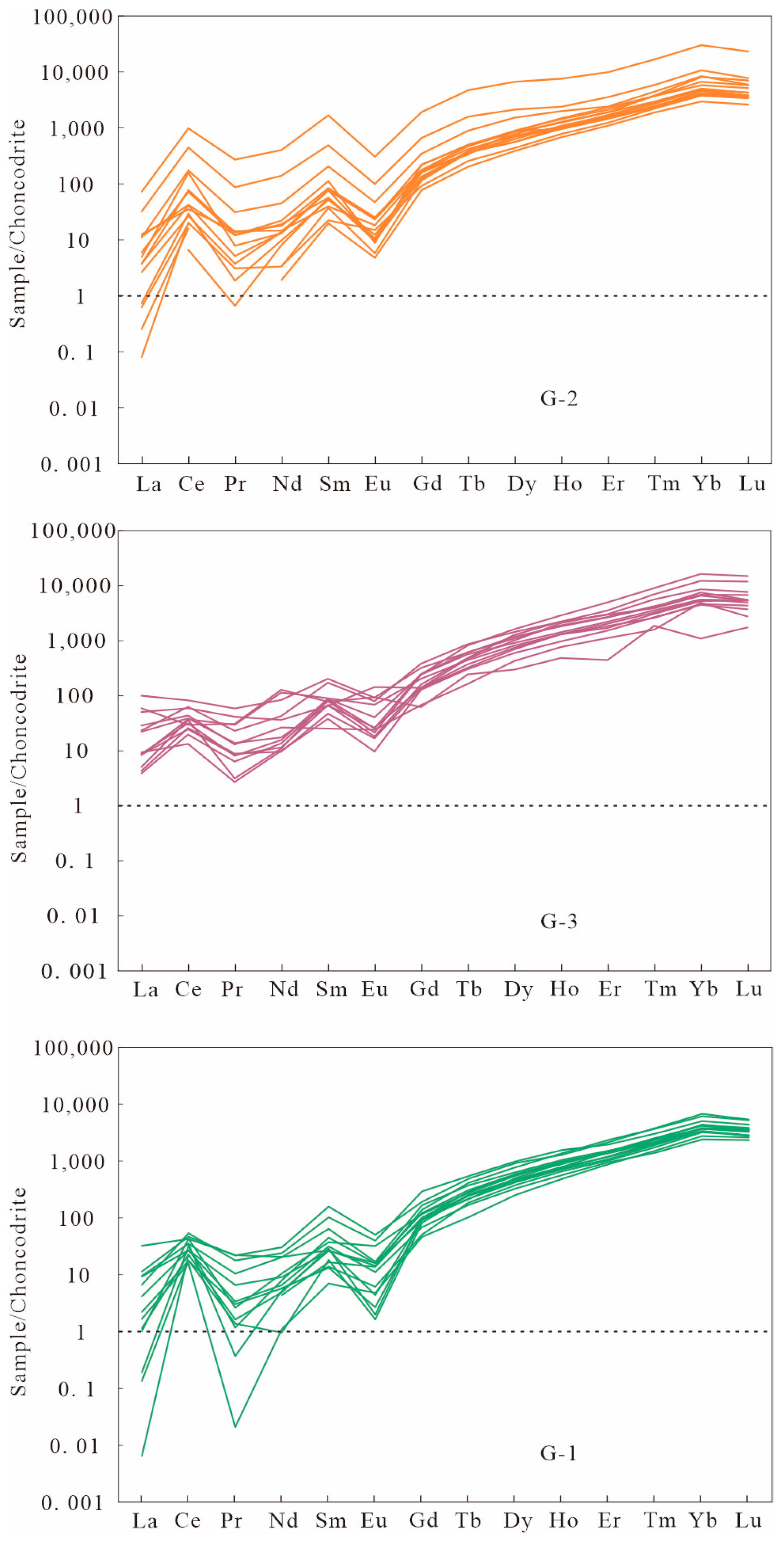
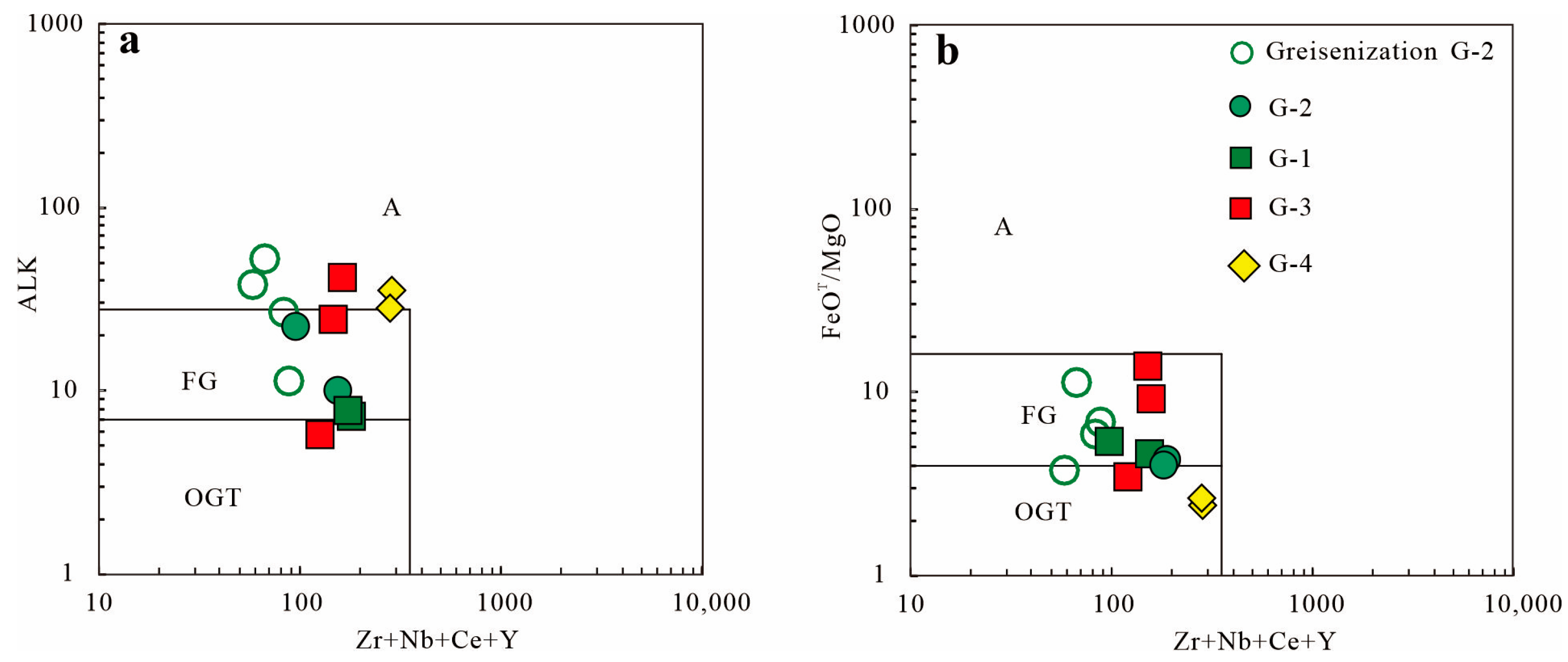
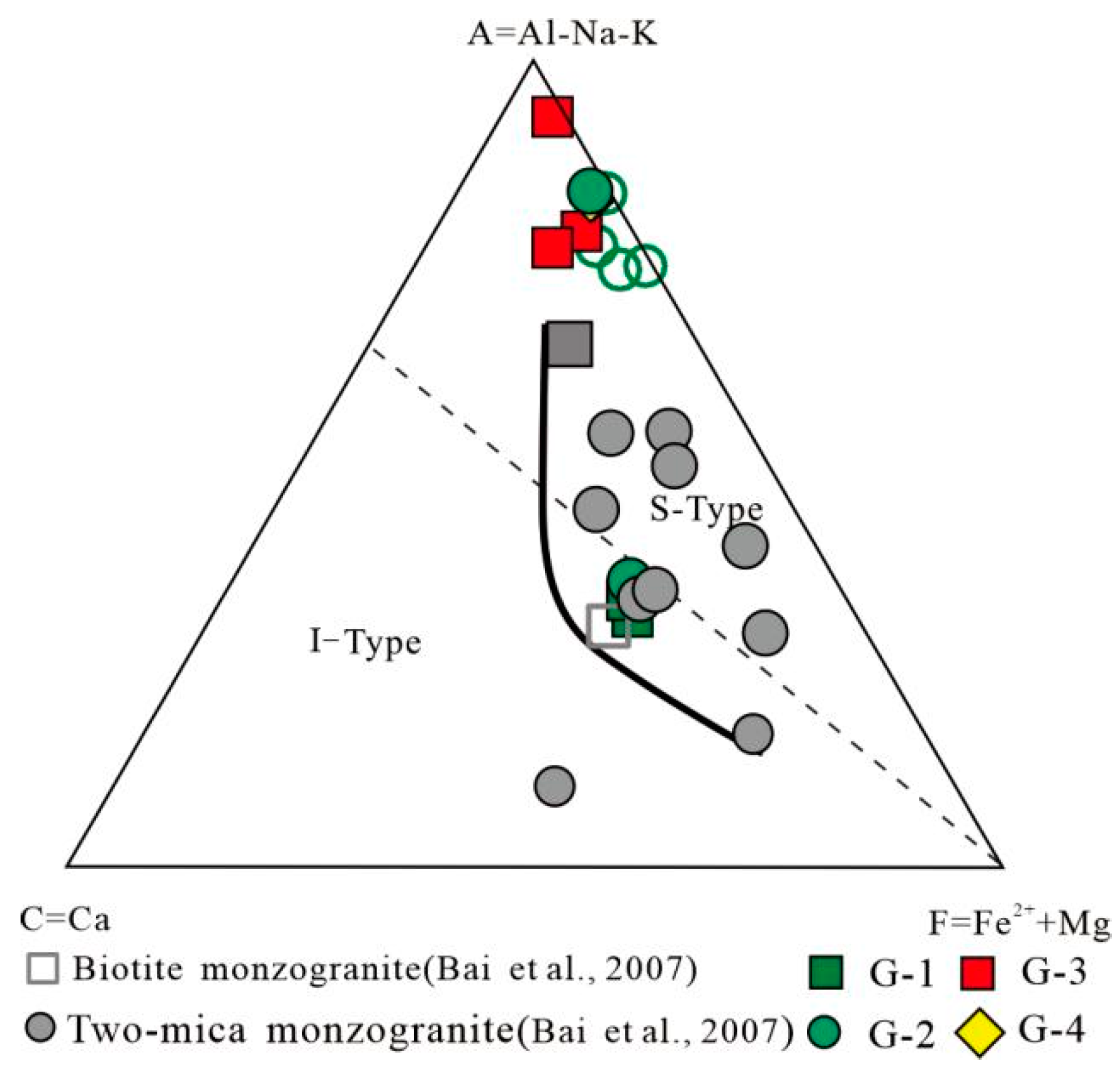
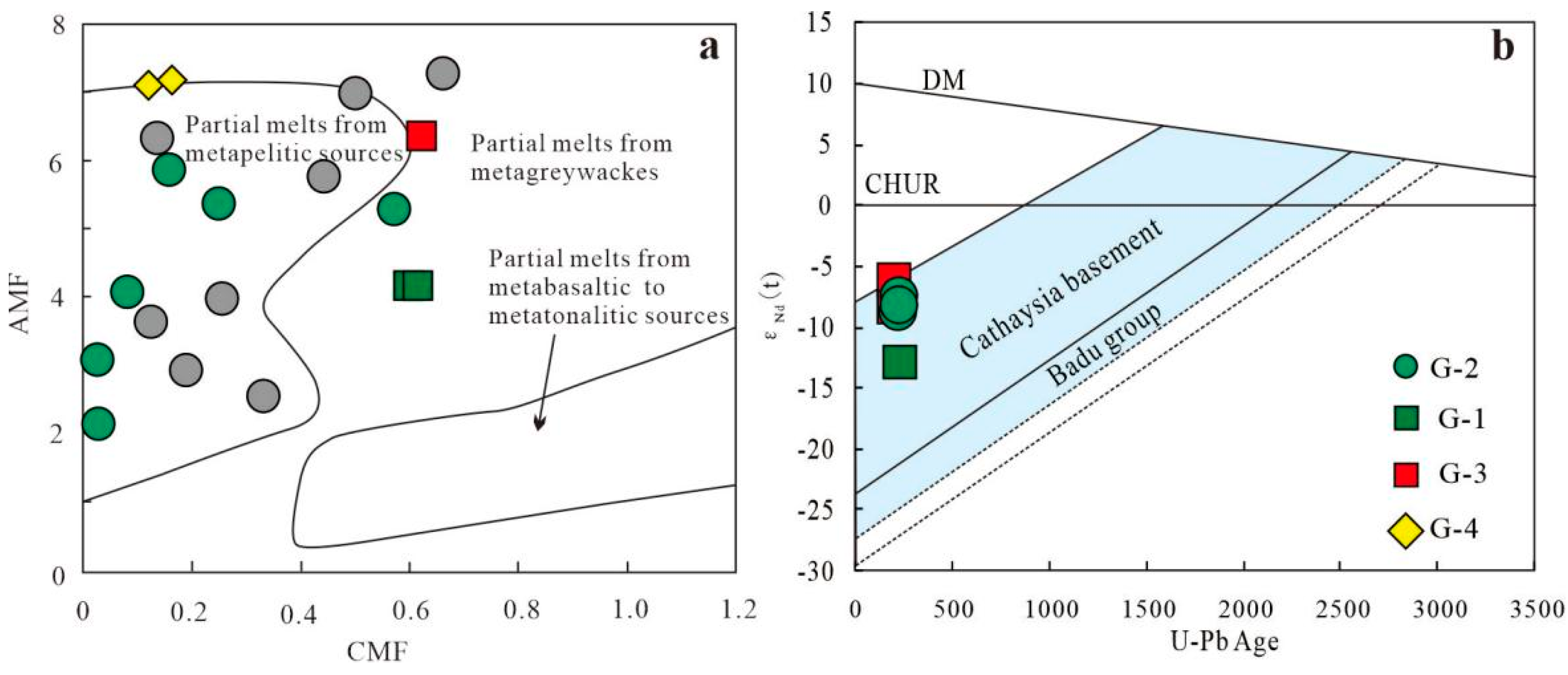
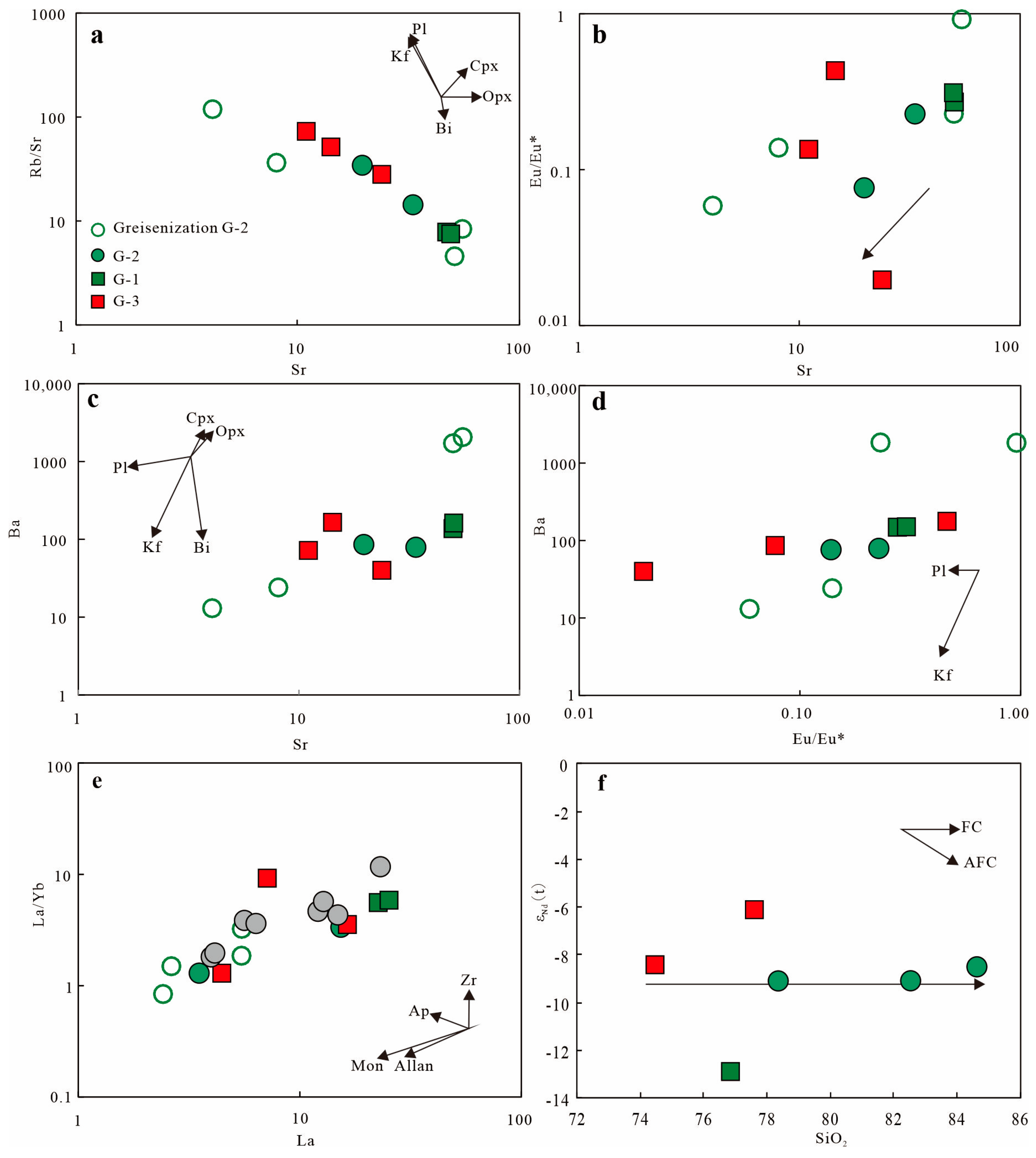
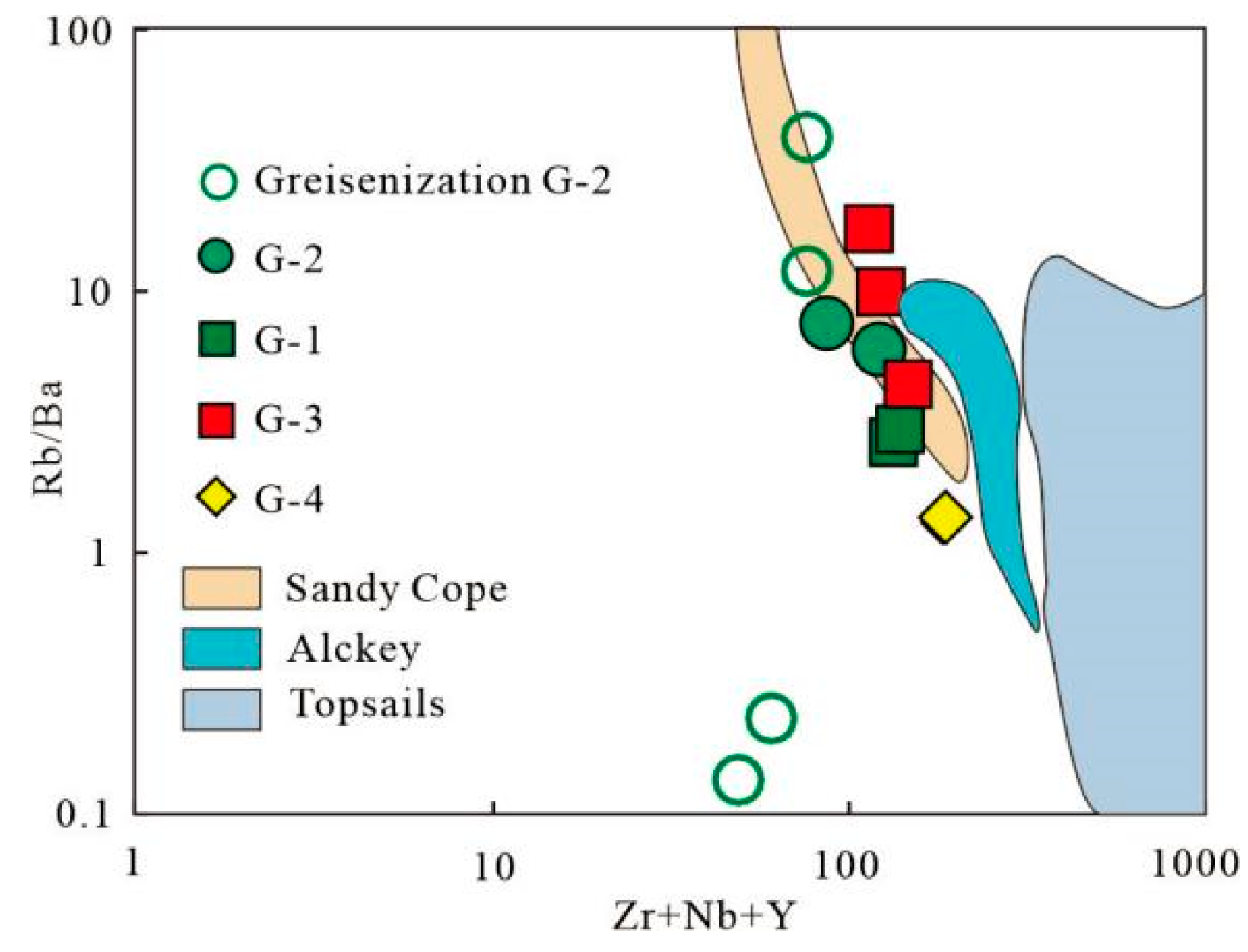
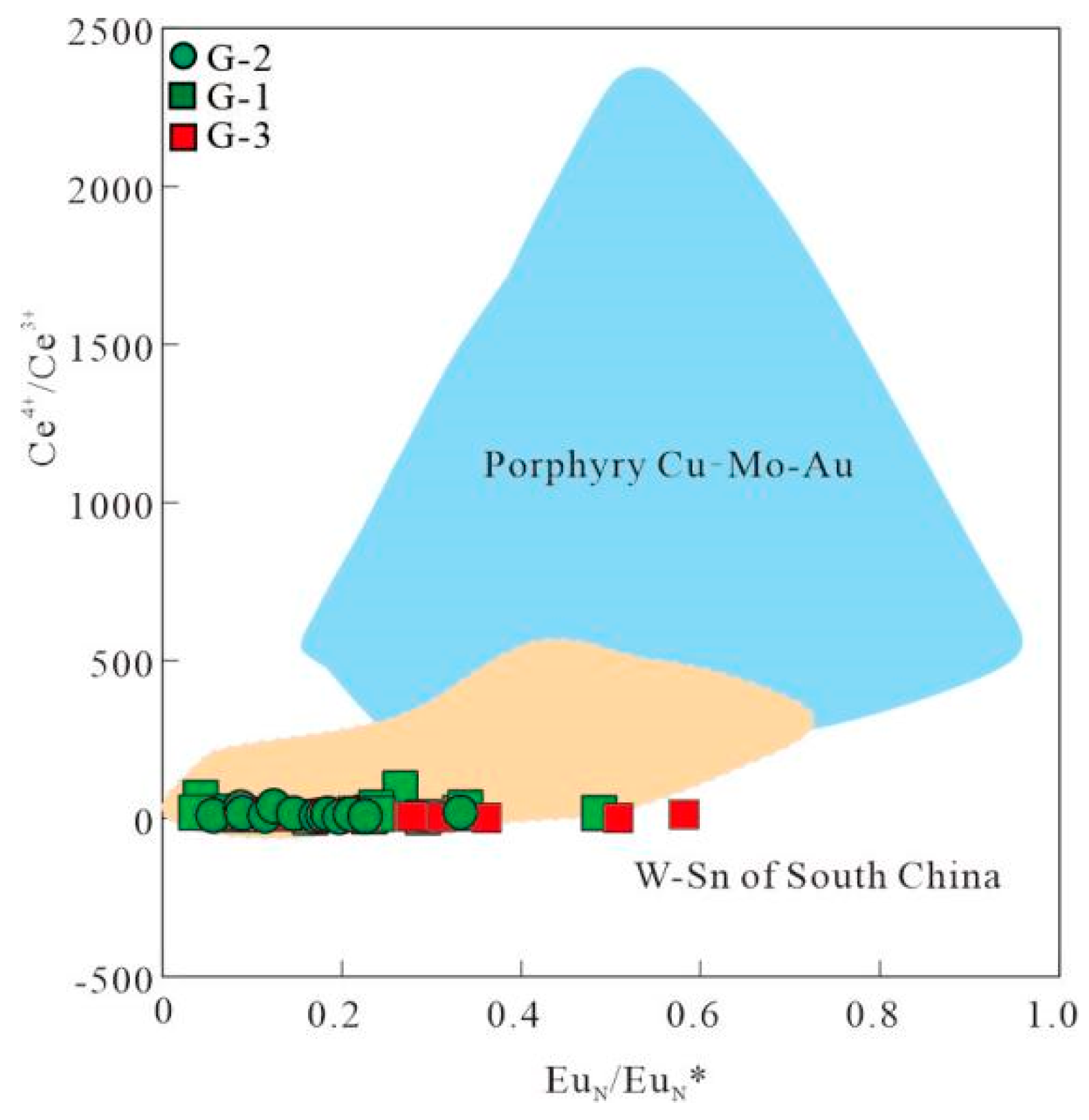
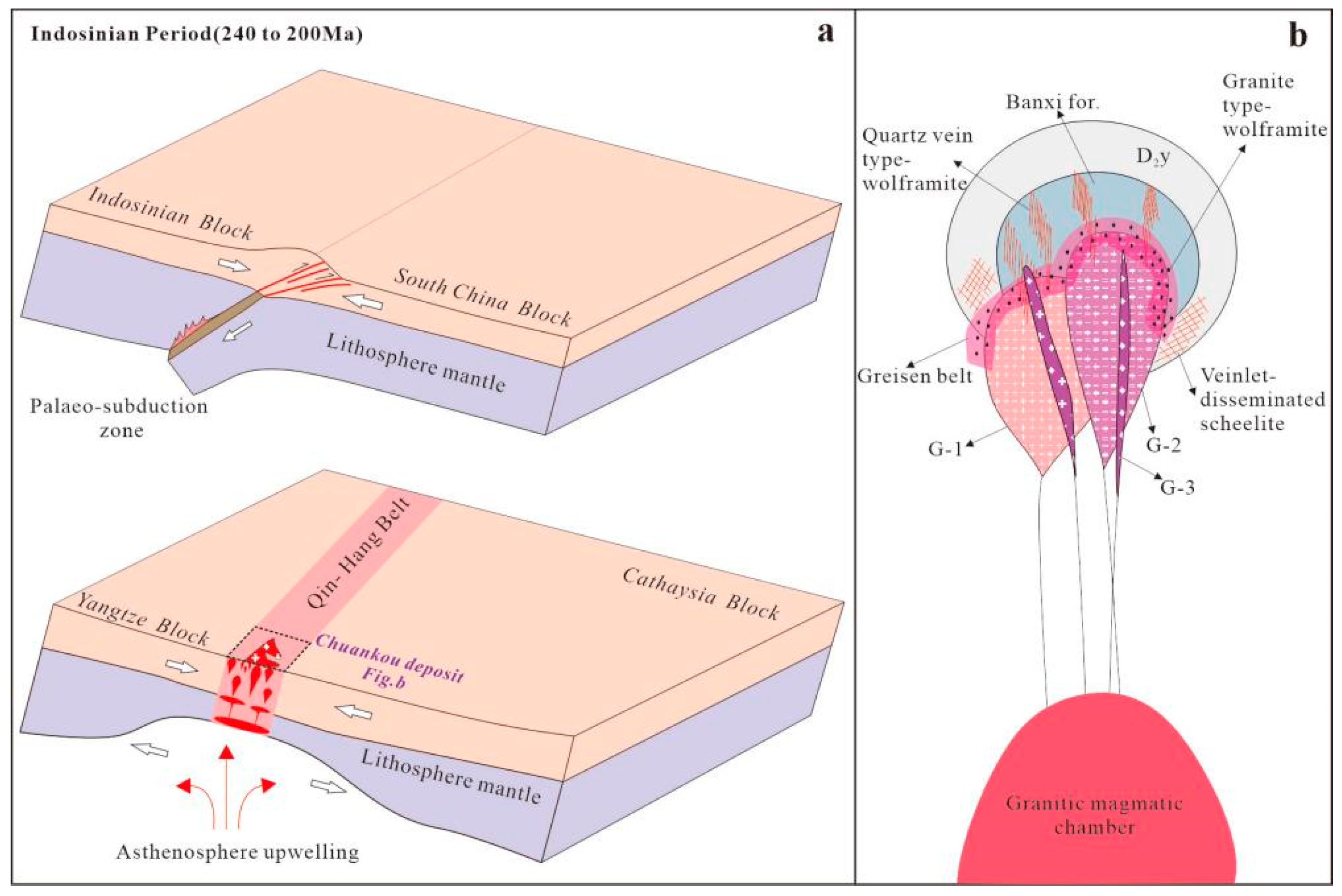
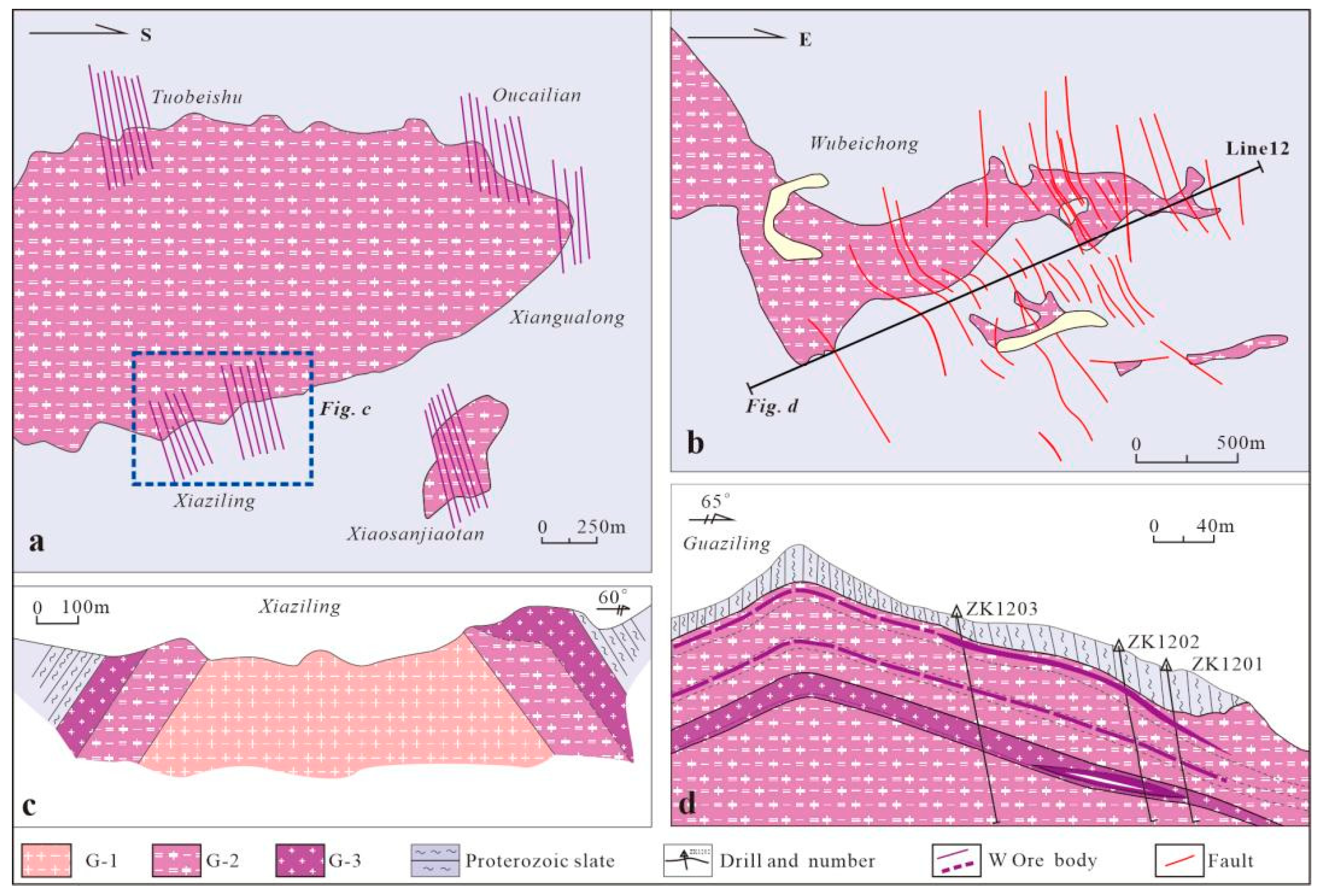
Chuankou tungsten (W) ore field, with an estimated WO3 reserve exceeding 300,000 tonnes, is so far the largest Indosinian (Triassic) granite-related W ore field in South China. However, the precise emplacement ages, sources of granitoids, and their relationship with W mineralization are still not well understood. In this research, four main magmatic stages (G-1 to G-4) have been identified in the Chuankou ore field, including G-1 (phase I, biotite monzogranite), G-2 (phase II, two-mica monzogranite), G-3 (phase III, fine-grained granite), and G-4 (phase IV, granite porphyry). LA-ICP-MS U-Pb dating of zircon grains from granitoids of the Chuankou W ore field yields emplacement ages of 230.8 ± 1.6 Ma, 222.1 ± 0.56 Ma, 203.1 ± 1.6 Ma, and 135.5 ± 2.4 Ma, respectively. Granitoids from the Chuankou ore field contain a large amount of peraluminous minerals such as biotite, musvite, garnet and tourmaline. Geochemically, the granitoids have high Si and Al (A/CNK > 1.1) content but low alkali, Fe, Mg, Mn, and Ca content. Moreover, there is enrichment of Rb, Zr, Hf, Th, and U, but depletions of Ba, Sr, P, and Ti. The granitoids have especially low Zr + Nb + Ce + Y and high Rb/Ba ratios, further indicating a highly fractionated S-type granite affinity with a significant crystal fractionation process in regard to K-feldspar, plagioclase, biotite, Ti-bearing minerals (except rutile), zircon, apatite, allanite, and monazite. Whole-rock εNd(t) and TDM2 values are −10.77 and 2090 Ma for G-1, −9.09 to −7.47 and 1764–1684 Ma for G-2, −10.07 to −6.53 and 1669–1471 Ma for G-3, respectively, indicating that the Chuankou granitoids were derived from two episodes of partial melting of the Paleoproterozoic to Mesoproterozoic metamorphic basement. Trace elements within the zircons and whole-rock geochemistry yielded evidence of the close relationship between W mineralization and G-1 and G-2 granitoids of the Chuankou ore field. The batholith of the Chuankou ore field was formed 20–10 Ma later than the peak age of the collisions orogeny and formed in a post-collisional setting.
Keywords: Indosinian; Chuankou W ore field; Zircon U-Pb dating; highly fractionated S-type granite; post-collisional Indosinian; Chuankou W ore field; Zircon U-Pb dating; highly fractionated S-type granite; post-collisional