Article

High Sulfur in Primitive Arc Magmas, Its Origin and Implications
by
Michael Zelenski
1,*,
Vadim S. Kamenetsky
1,2,
Nikolai Nekrylov
1 and
Alkiviadis Kontonikas-Charos
3
1
Institute of Experimental Mineralogy RAS, 142432 Chernogolovka, Russia
2
Institute of Volcanology and Seismology, FEB RAS, 683006 Petropavlovsk-Kamchatsky, Russia
3
Helmholtz-Zentrum Dresden-Rossendorf, Helmholtz Institute Freiberg for Resource Technology, 09599 Freiberg, Germany
*
Author to whom correspondence should be addressed.
Minerals 2022, 12(1), 37; https://doi.org/10.3390/min12010037
Submission received: 16 November 2021 / Revised: 16 December 2021 / Accepted: 21 December 2021 / Published: 26 December 2021
(This article belongs to the Special Issue Fluid, Melt and Solid Inclusions as a Petrogenetic Indicators)

Abstract

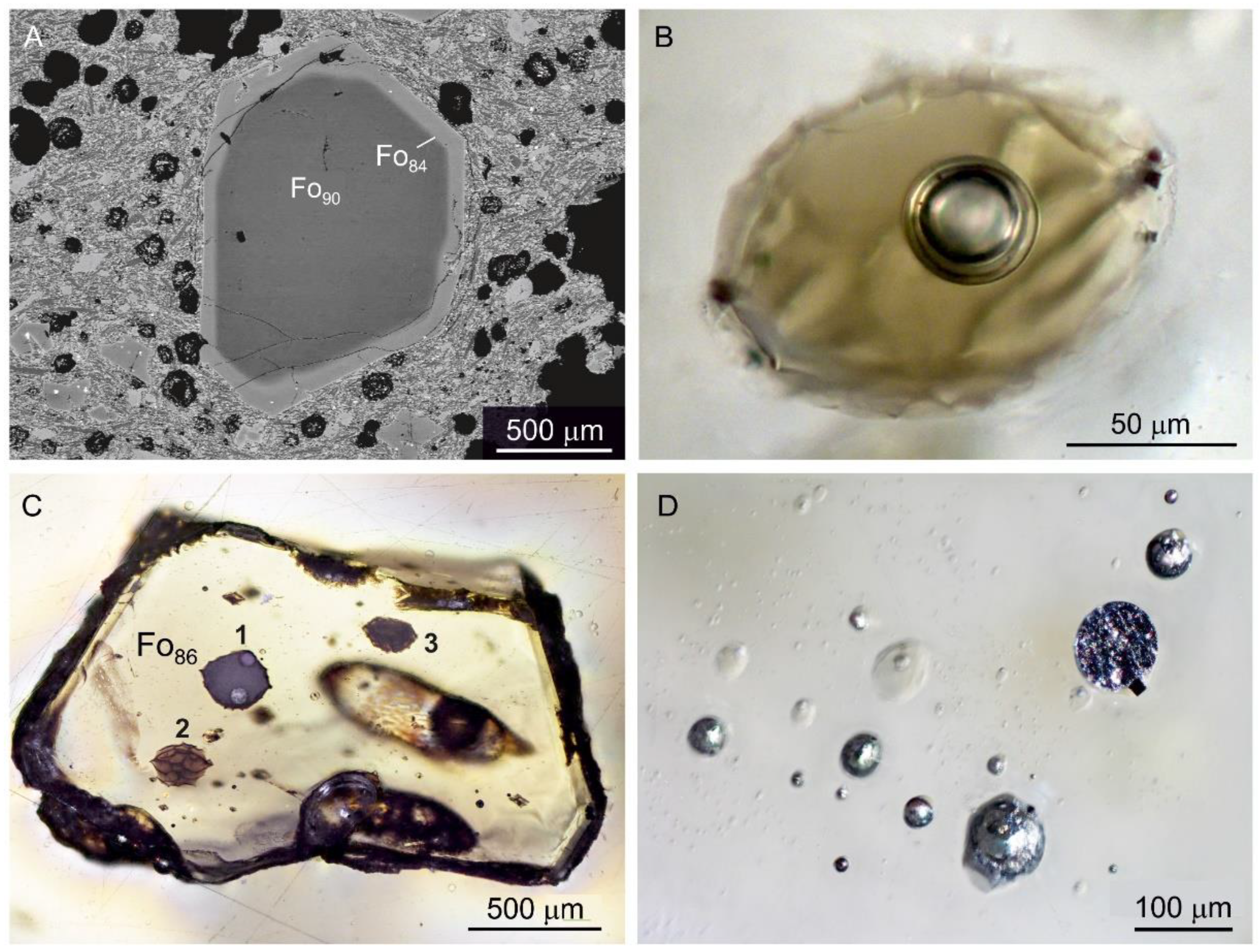
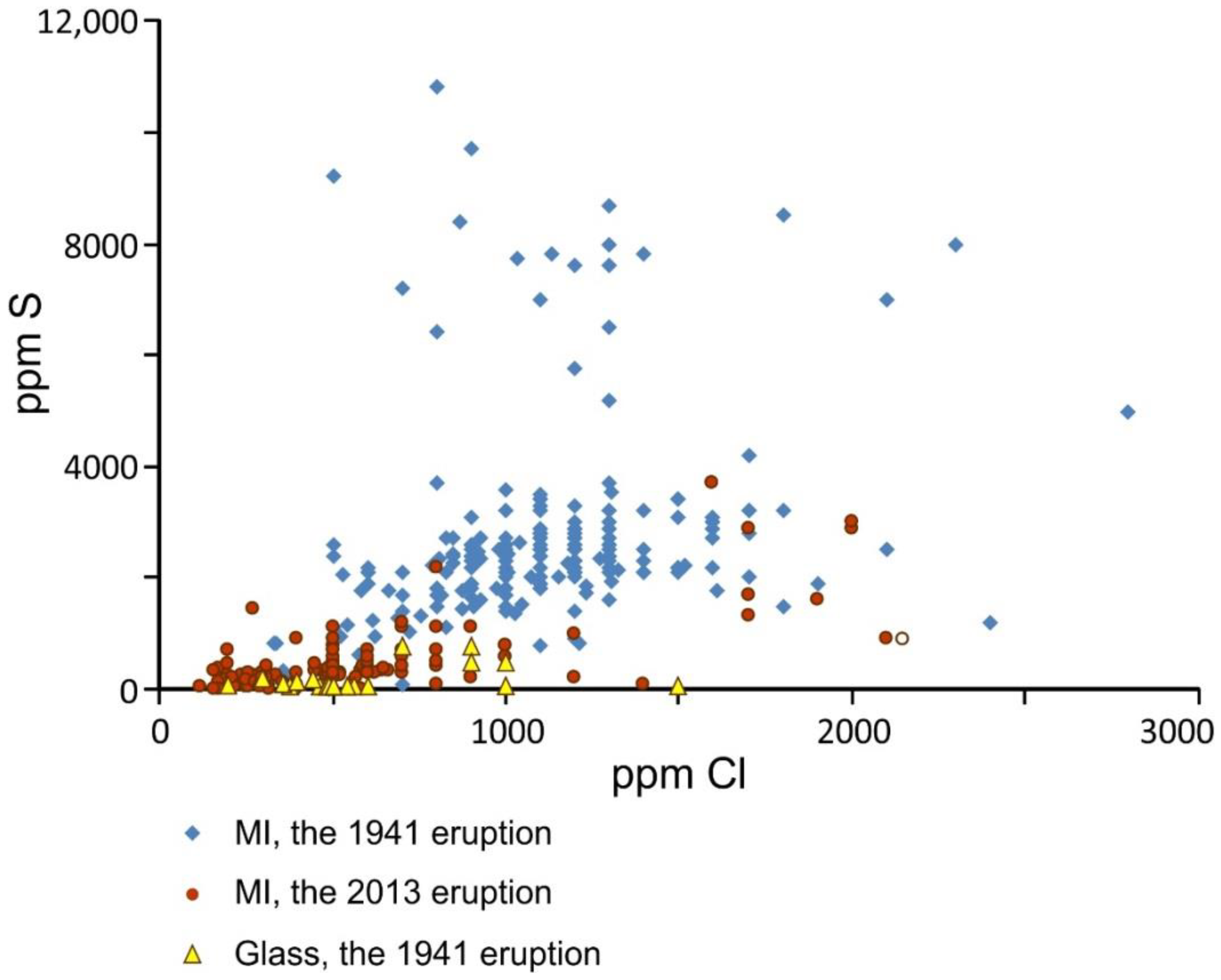
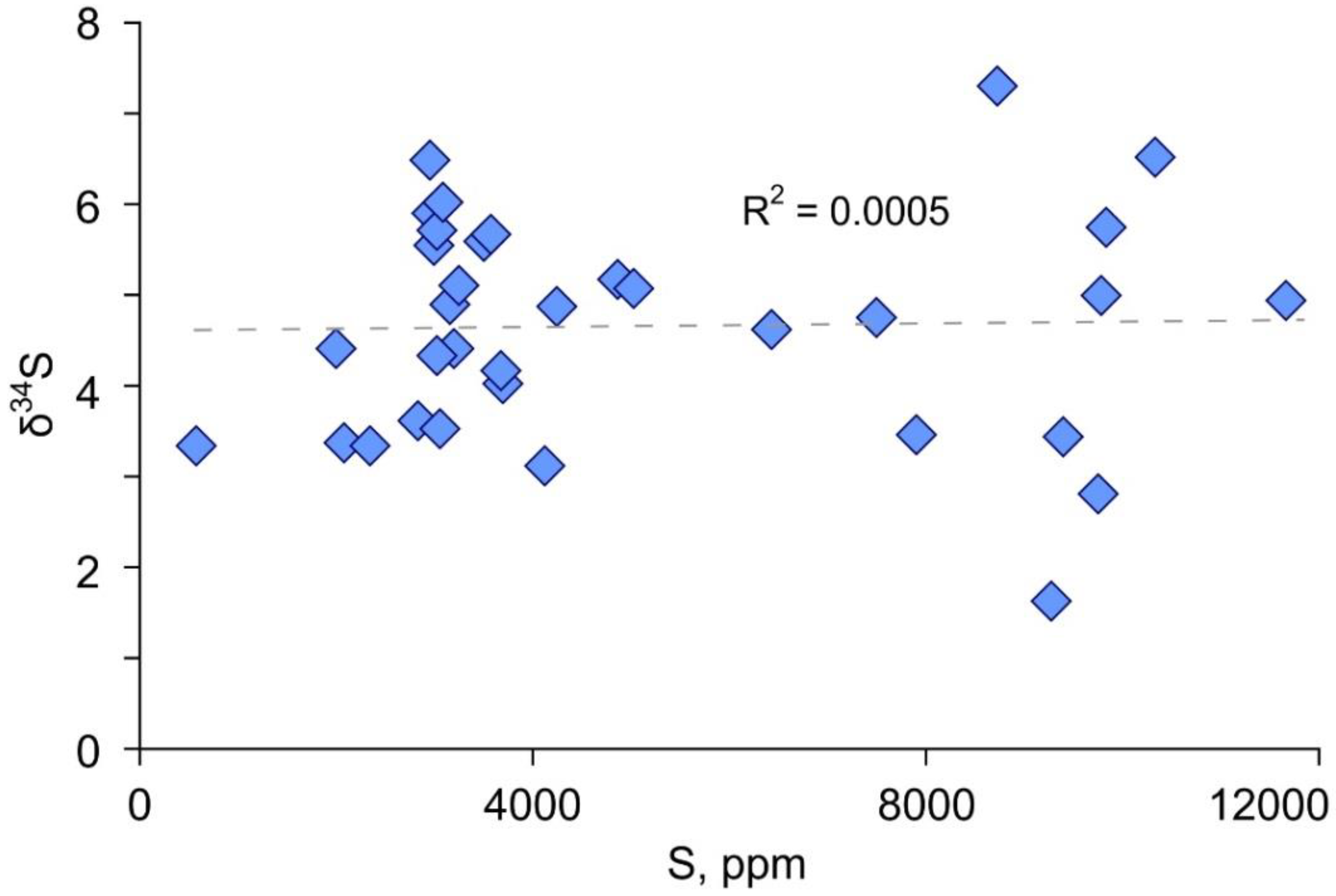
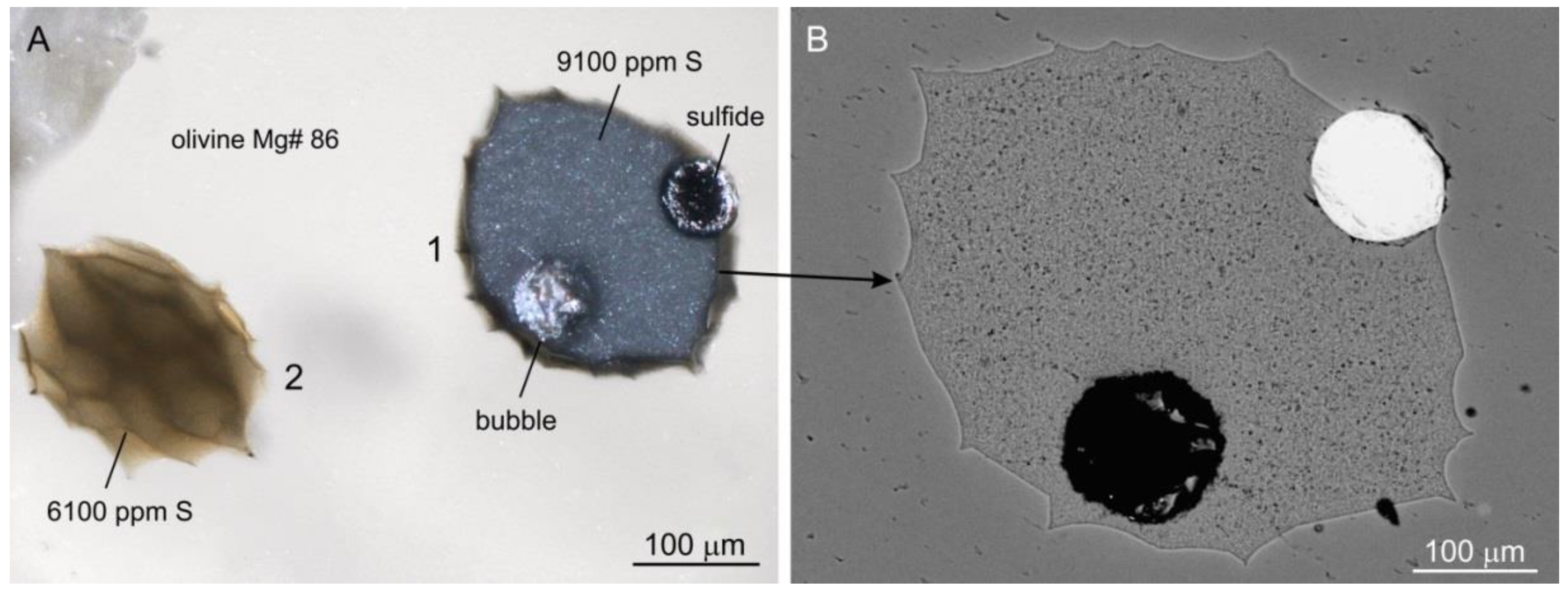
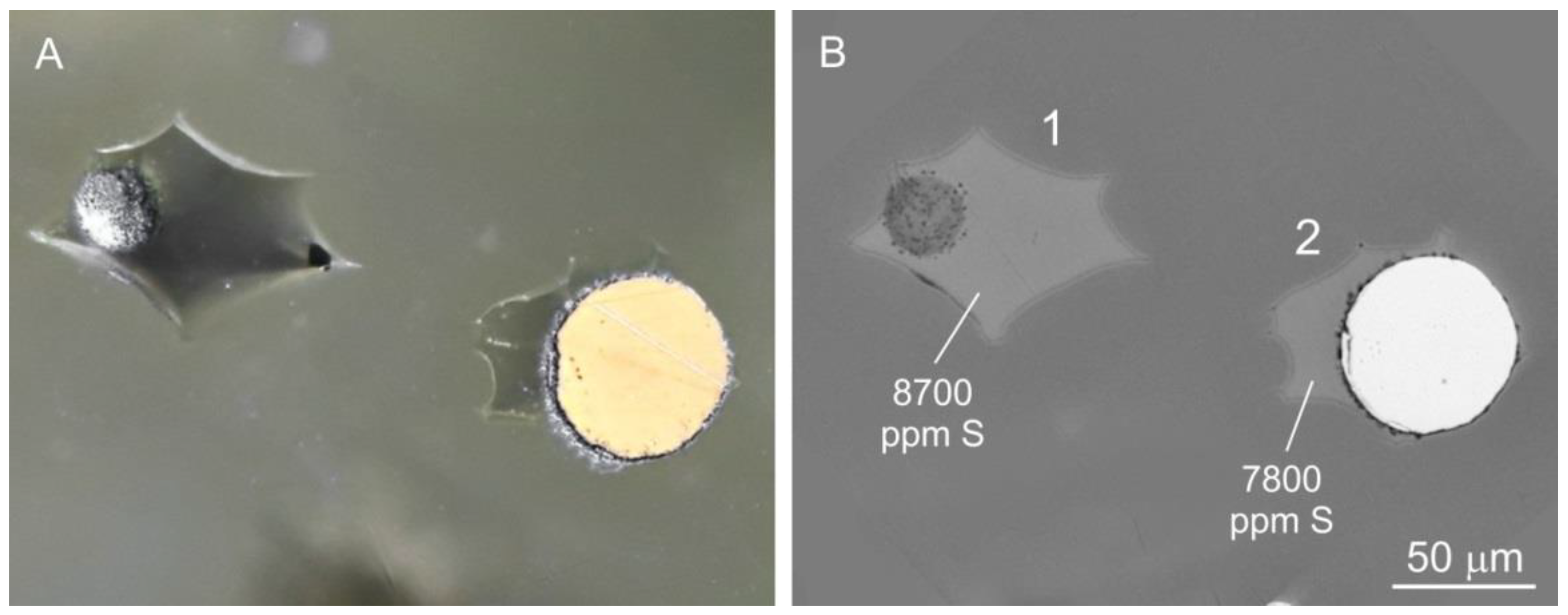
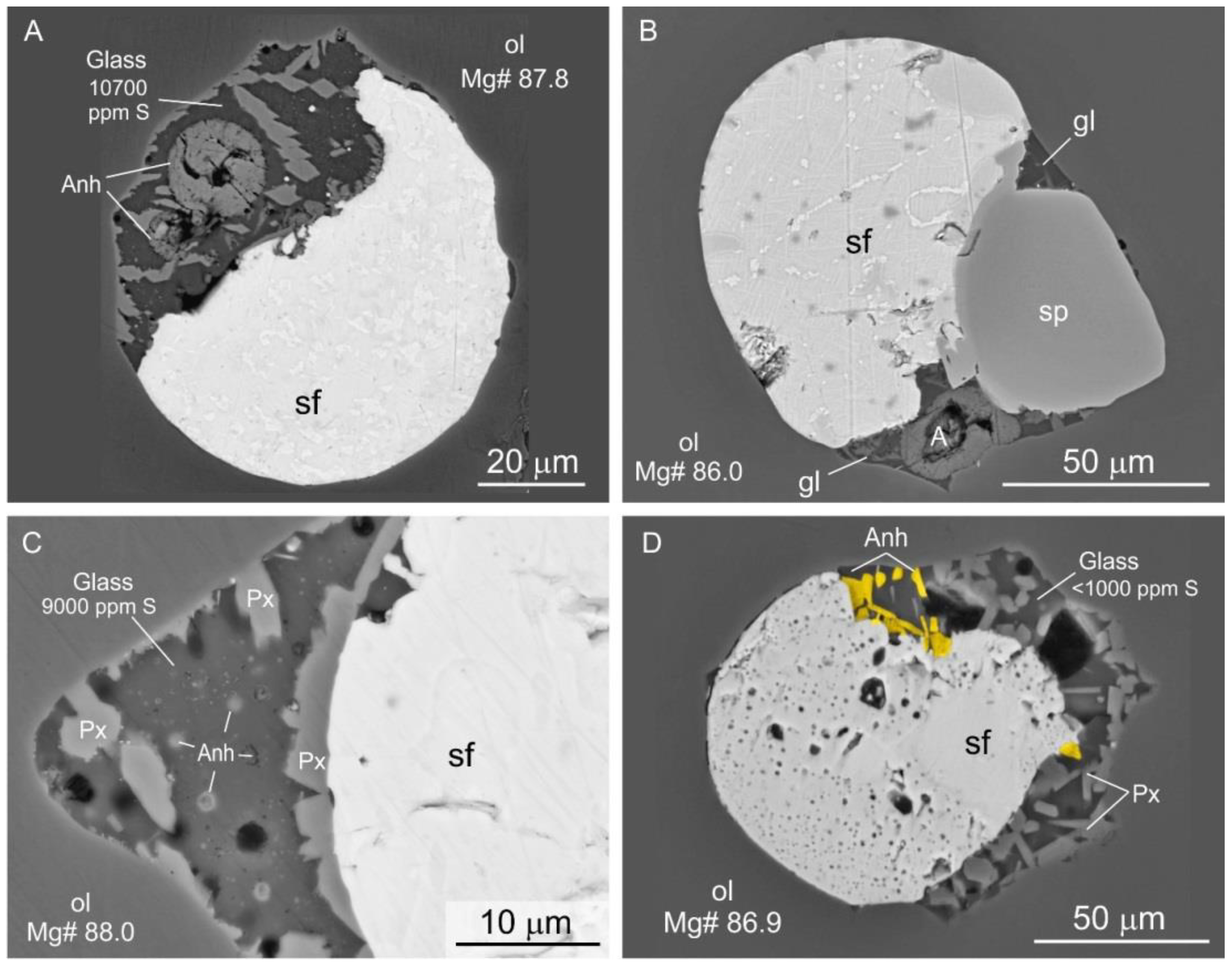
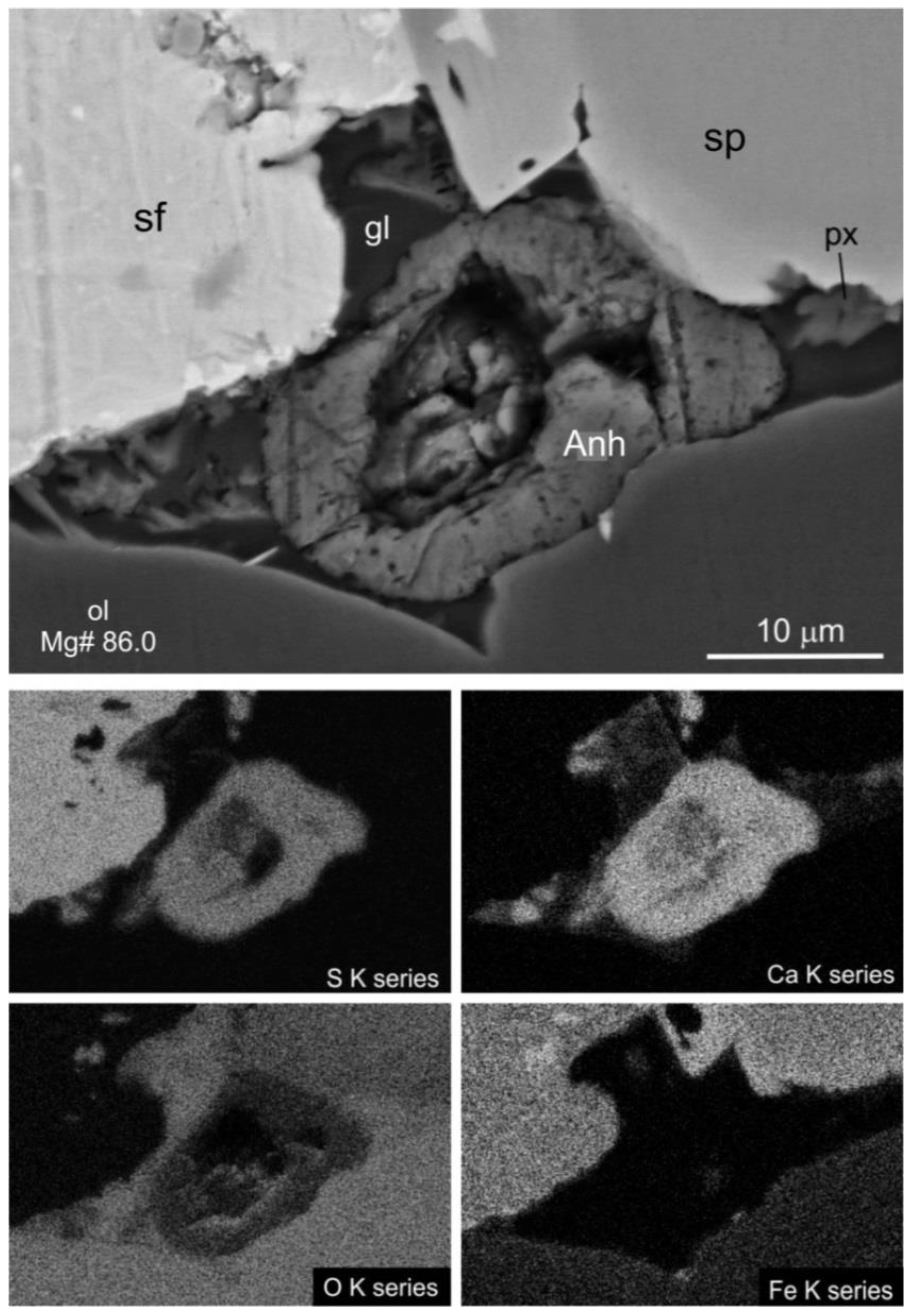
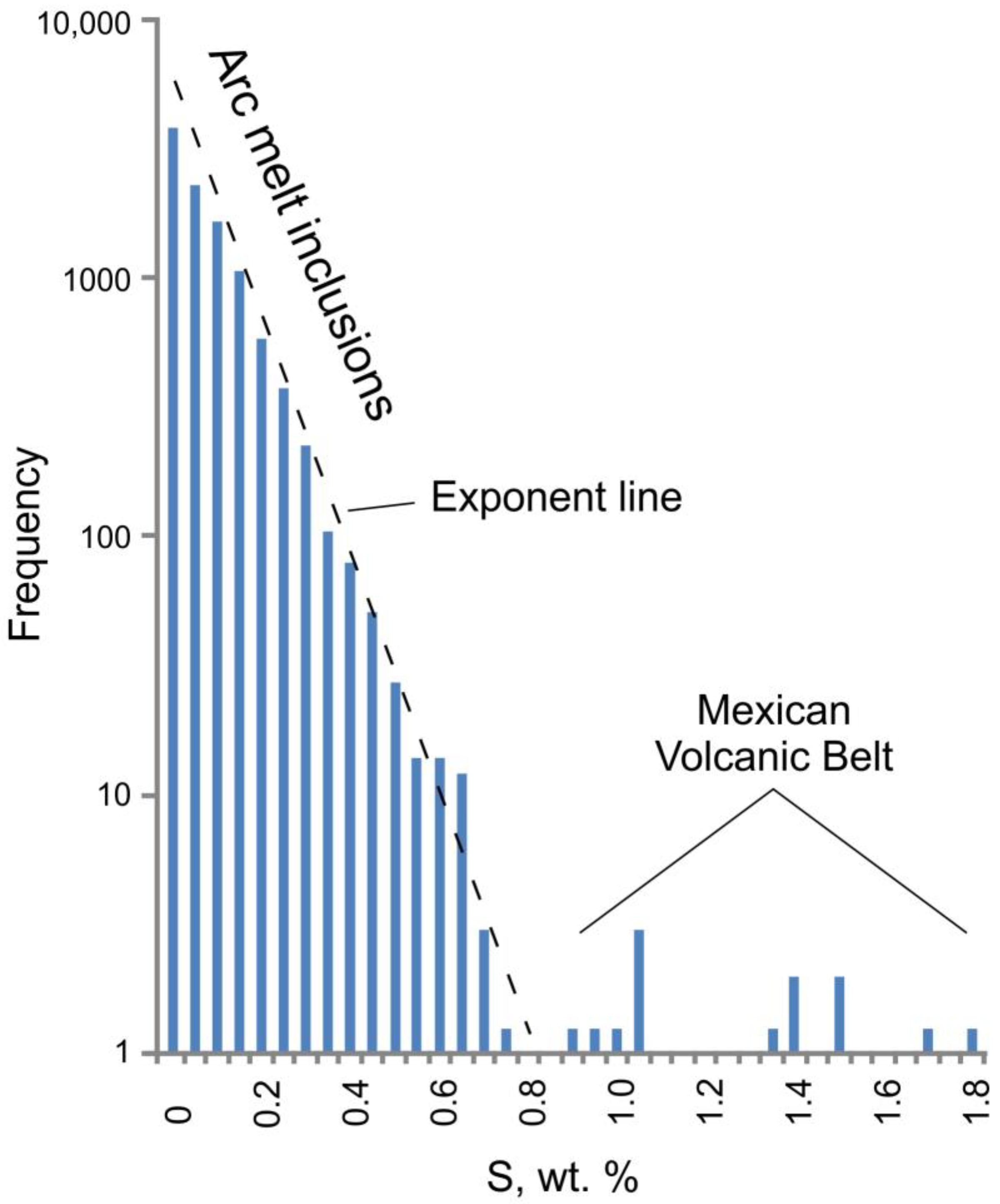
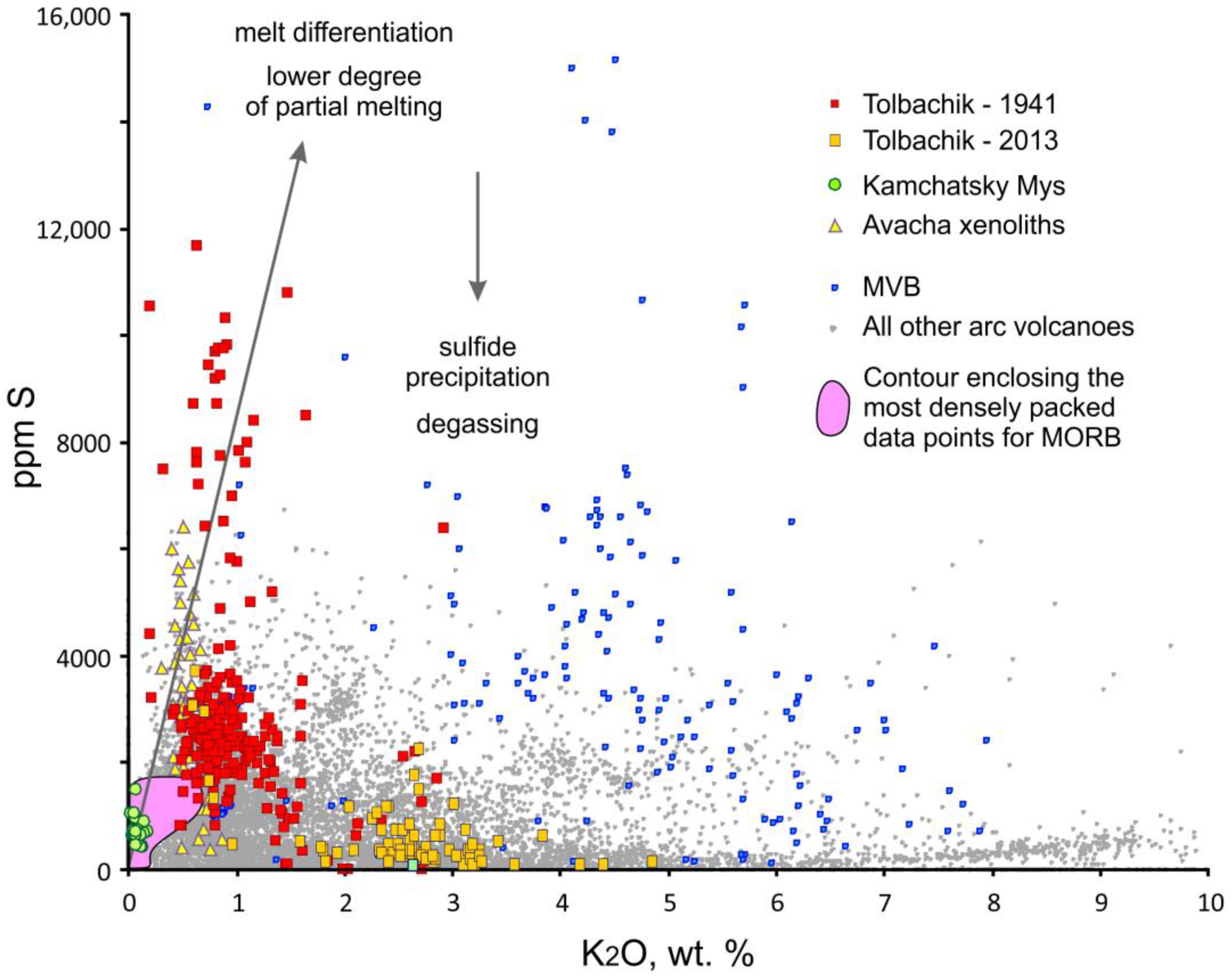
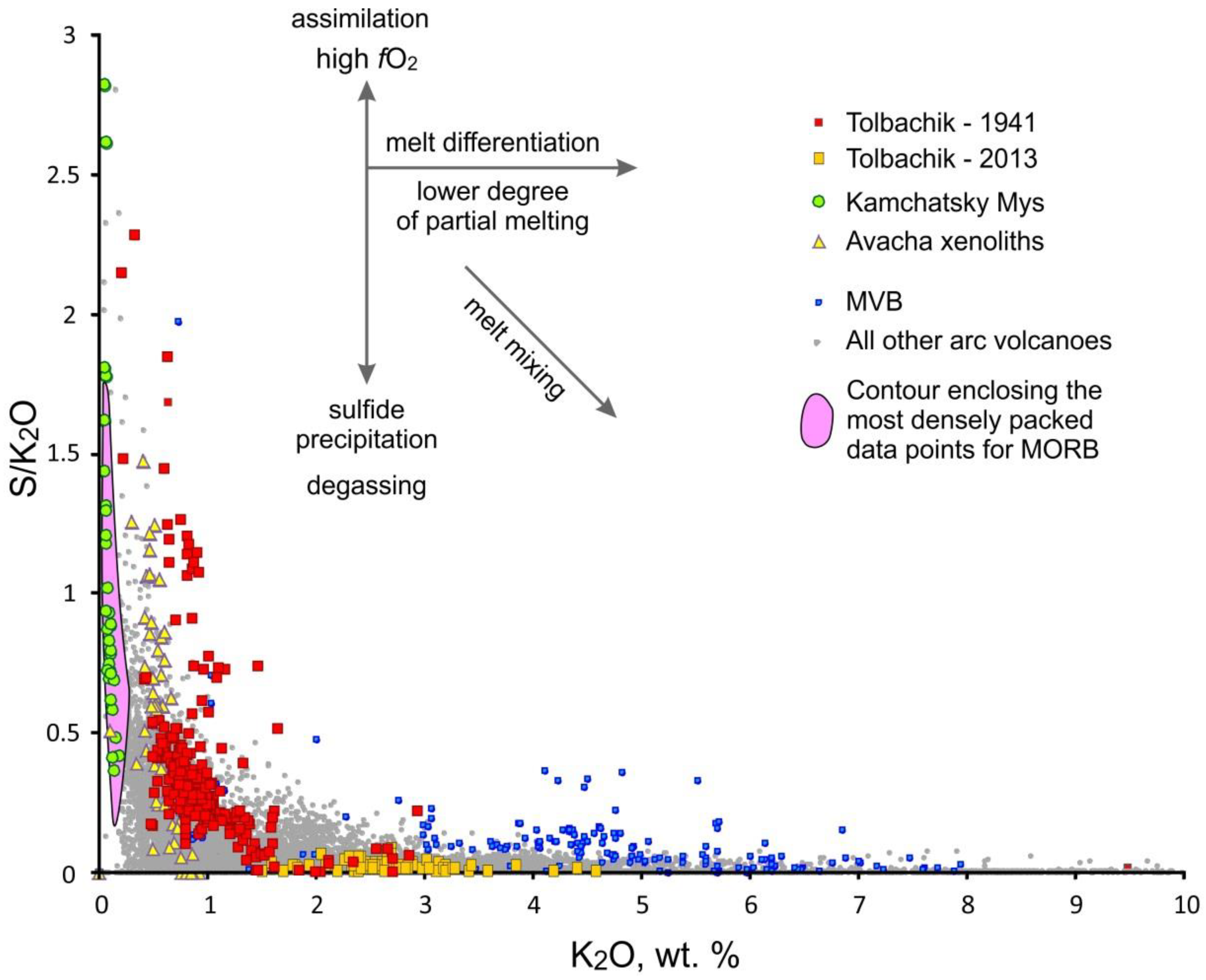
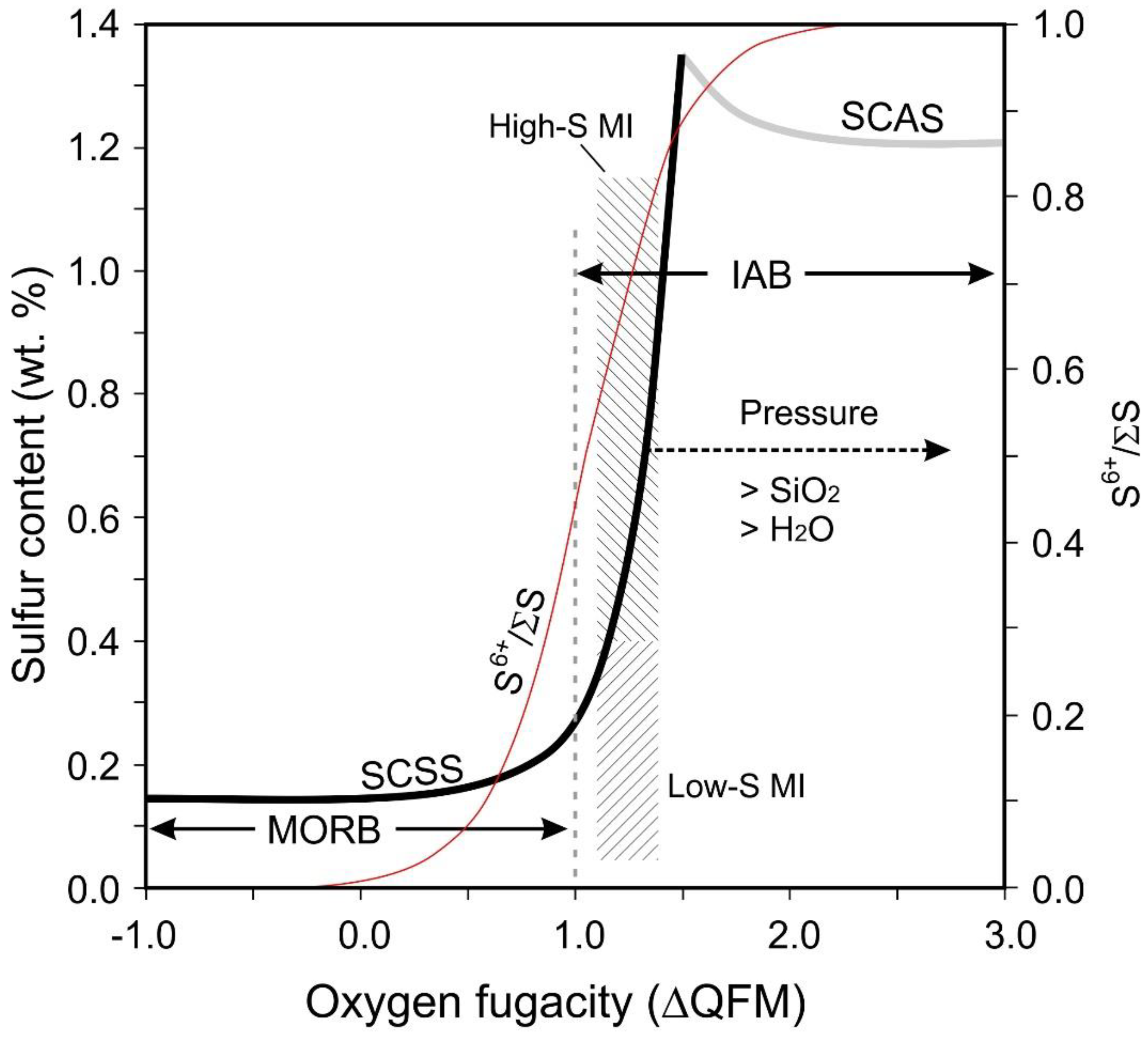
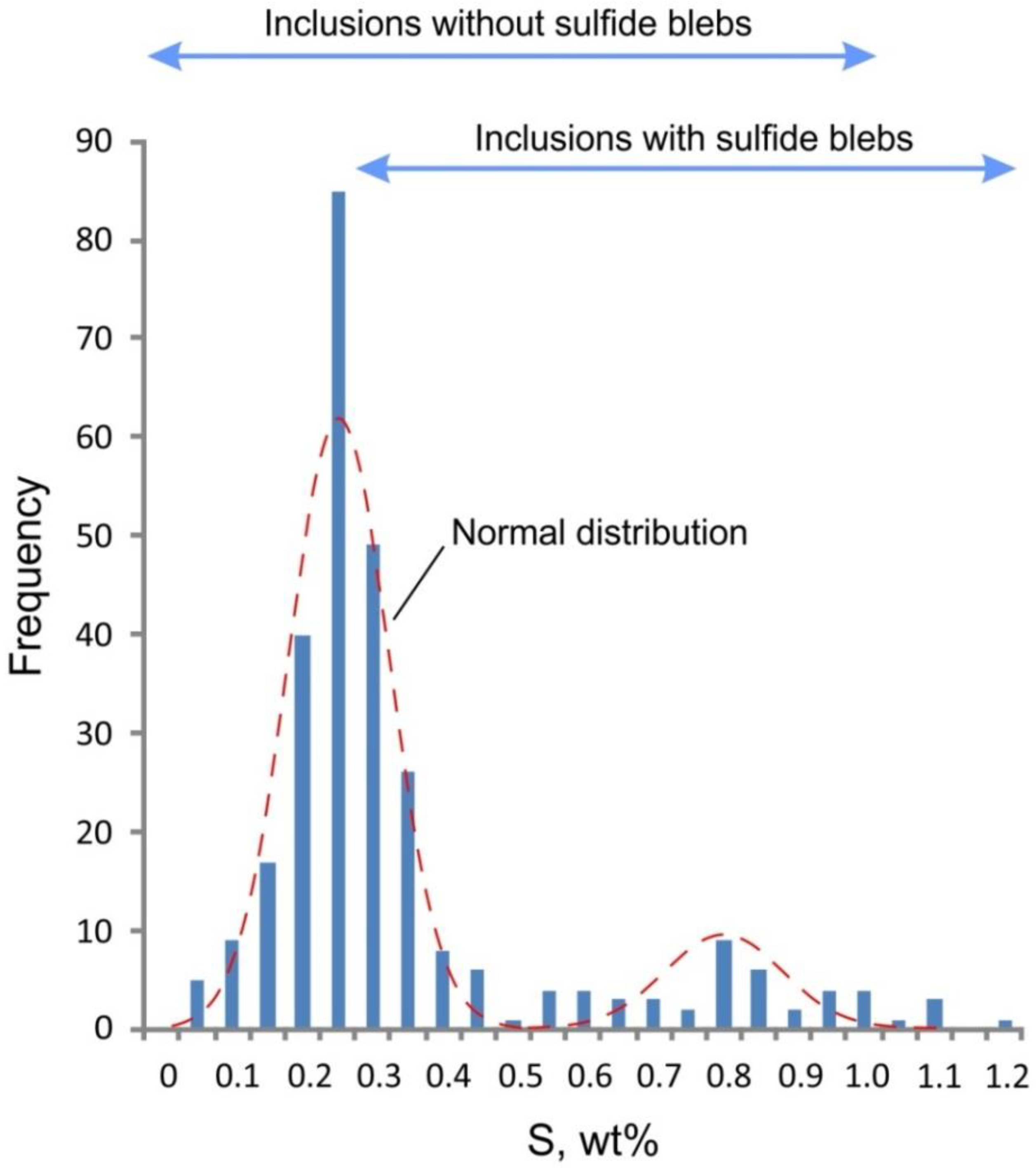
Sulfur contents in 98.5% of melt inclusions (MI) from calc-alkaline subduction basalts do not exceed 4000 ppm, whereas experimentally established limits of sulfur solubility in basaltic melts with high fO2 (characteristic of subduction zones, e.g., QFM + 2) surpass 14,000 ppm. Here we show that primitive (Mg# 62-64) subduction melts may contain high sulfur, approaching the experimental limit of sulfur solubility. Up to 11,700 ppm S was measured in olivine-hosted MI from primitive arc basalt from the 1941 eruption of the Tolbachik volcano, Kamchatka. These MI often contain magmatic sulfide globules (occasionally enriched in Cu, Ni, and platinum-group elements) and anhydrite enclosed within a brown, oxidized glass. We conclude that the ubiquitous low sulfur contents in MI may originate either from insufficient availability of sulfur in the magma generation zone or early magma degassing prior to inclusion entrapment. Our findings extend the measured range of sulfur concentrations in primitive calc-alkaline basaltic melts and demonstrate that no fundamental limit of 4000 ppm S exists for relatively oxidized subduction basalts, where the maximum sulfur content may approach the solubility limit determined by crystallization of magmatic anhydrite.
Keywords: melt inclusion; primitive arc basalt; high sulfur; magmatic anhydrite melt inclusion; primitive arc basalt; high sulfur; magmatic anhydrite