
Article

Impact of Diagenesis on the Low Permeability Sandstone Reservoir: Case Study of the Lower Jurassic Reservoir in the Niudong Area, Northern Margin of Qaidam Basin
1
School of Energy Resources, China University of Geosciences, Beijing 100083, China
2
Key Laboratory of Marine Reservoir Evolution and Hydrocarbon Enrichment Mechanism, Ministry of Education, China University of Geosciences, Beijing 100083, China
3
Research Institute of Exploration and Development of Qinghai Oilfield Company, PetroChina, Dunhuang 736202, China
*
Author to whom correspondence should be addressed.
Minerals 2021, 11(5), 453; https://doi.org/10.3390/min11050453
Submission received: 15 March 2021 / Revised: 18 April 2021 / Accepted: 22 April 2021 / Published: 25 April 2021

Abstract

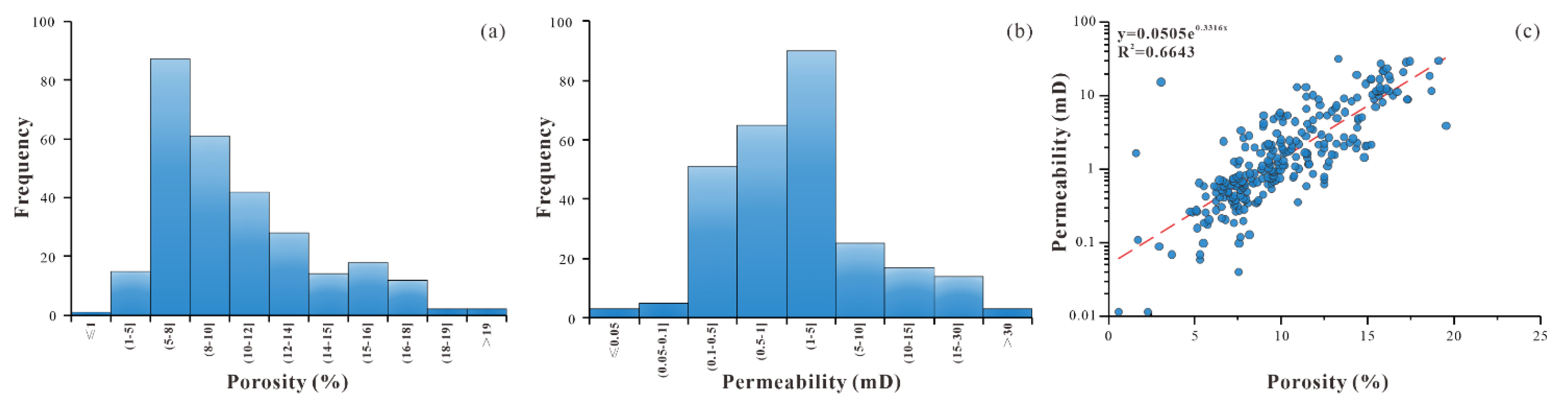
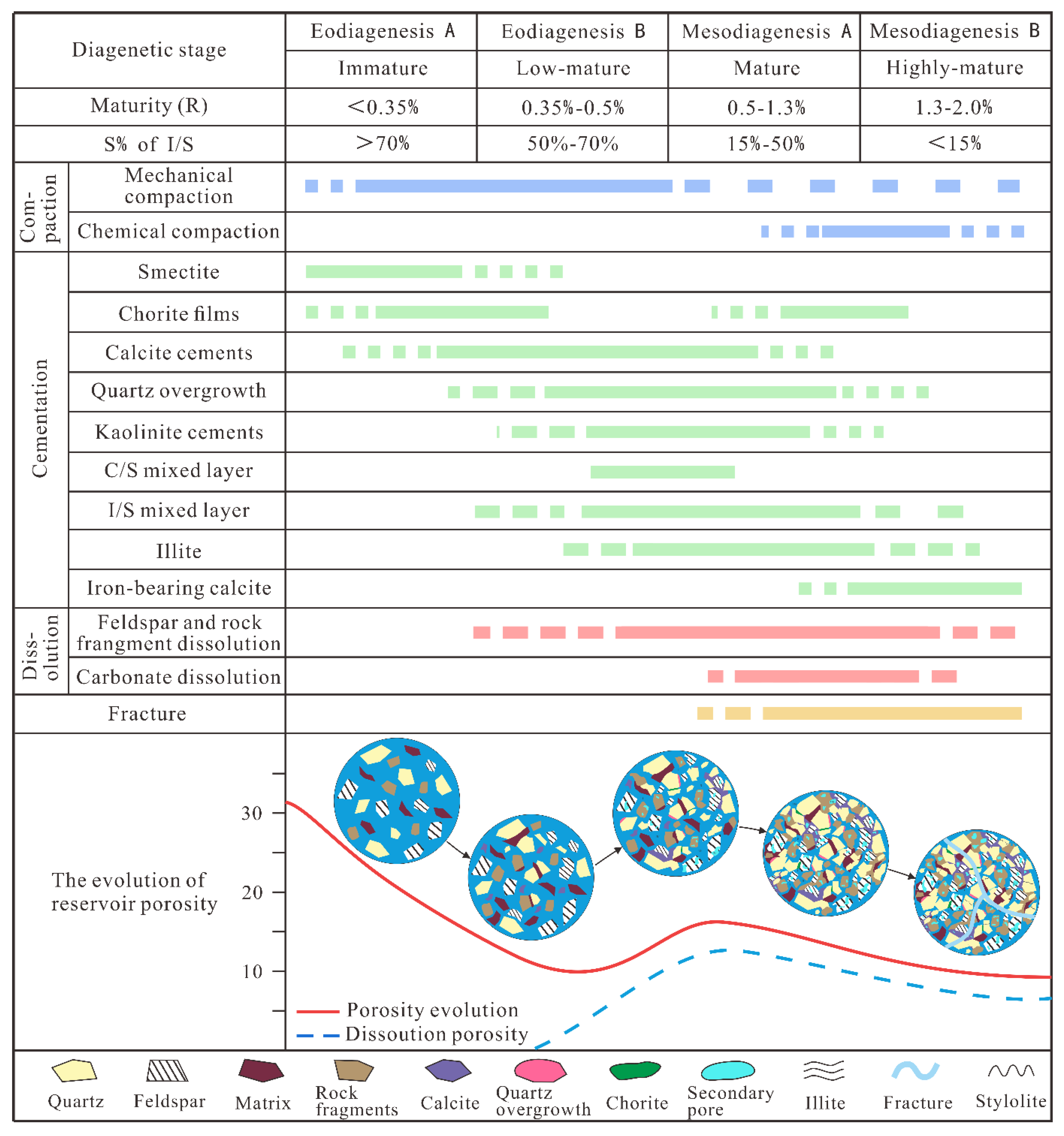
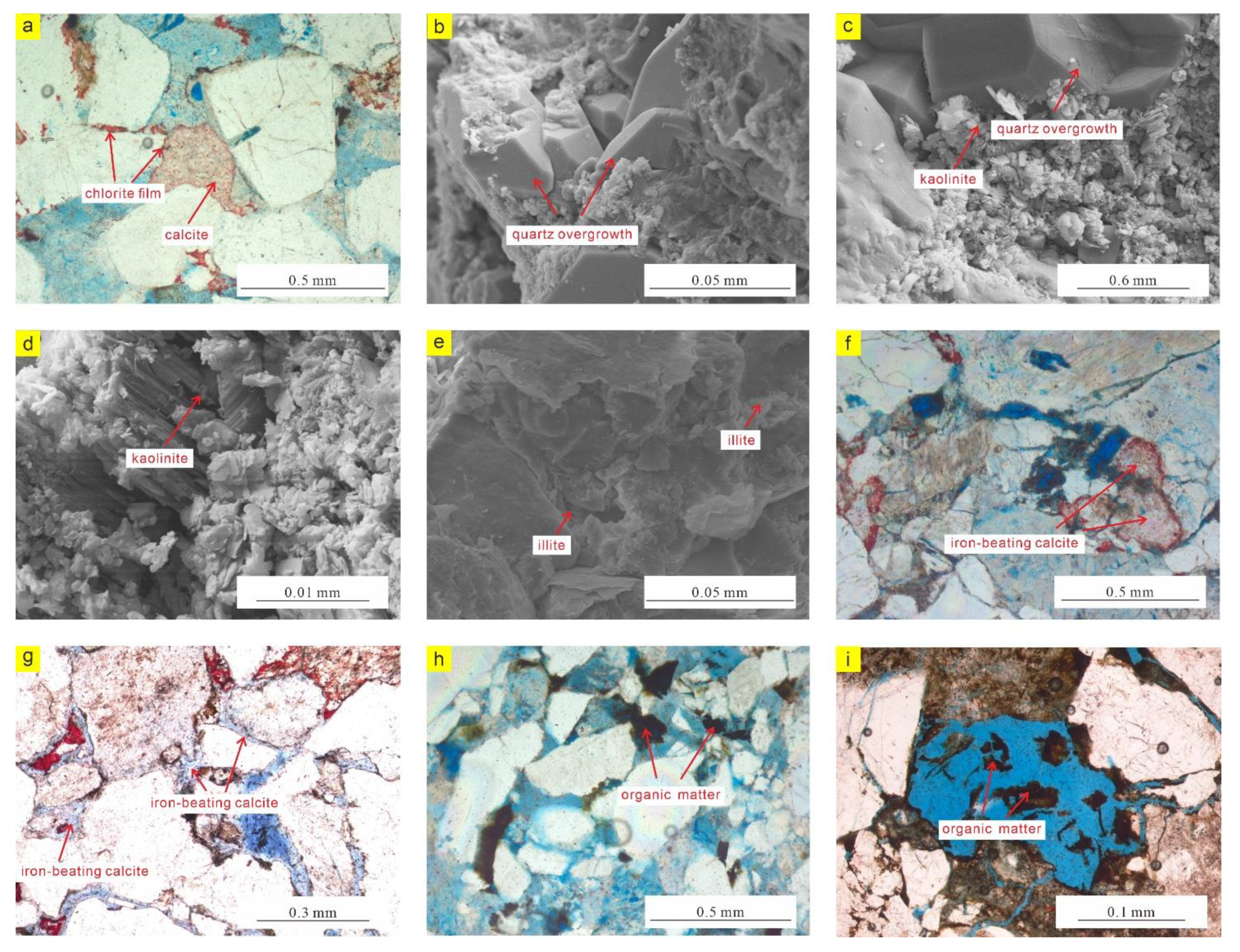
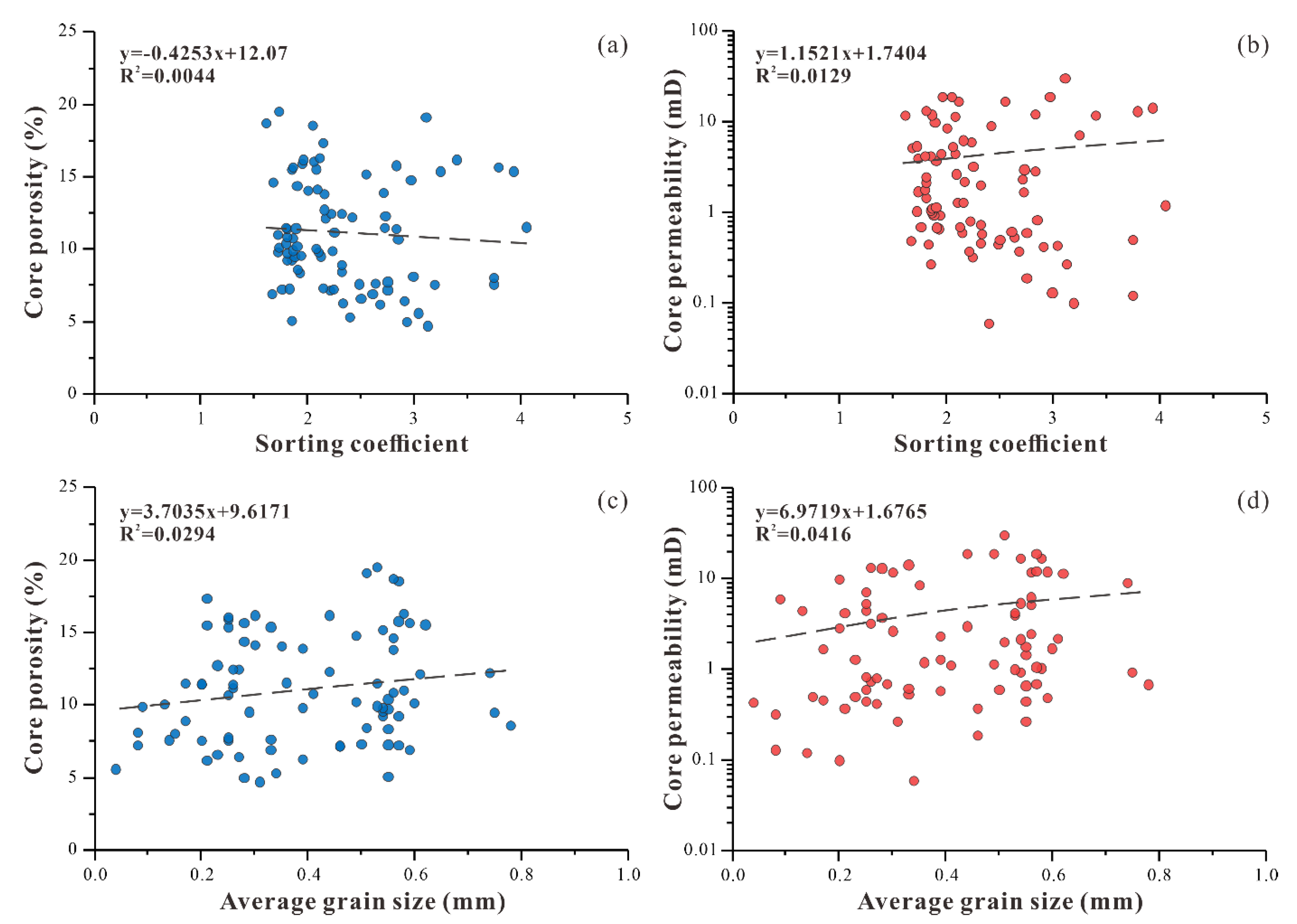
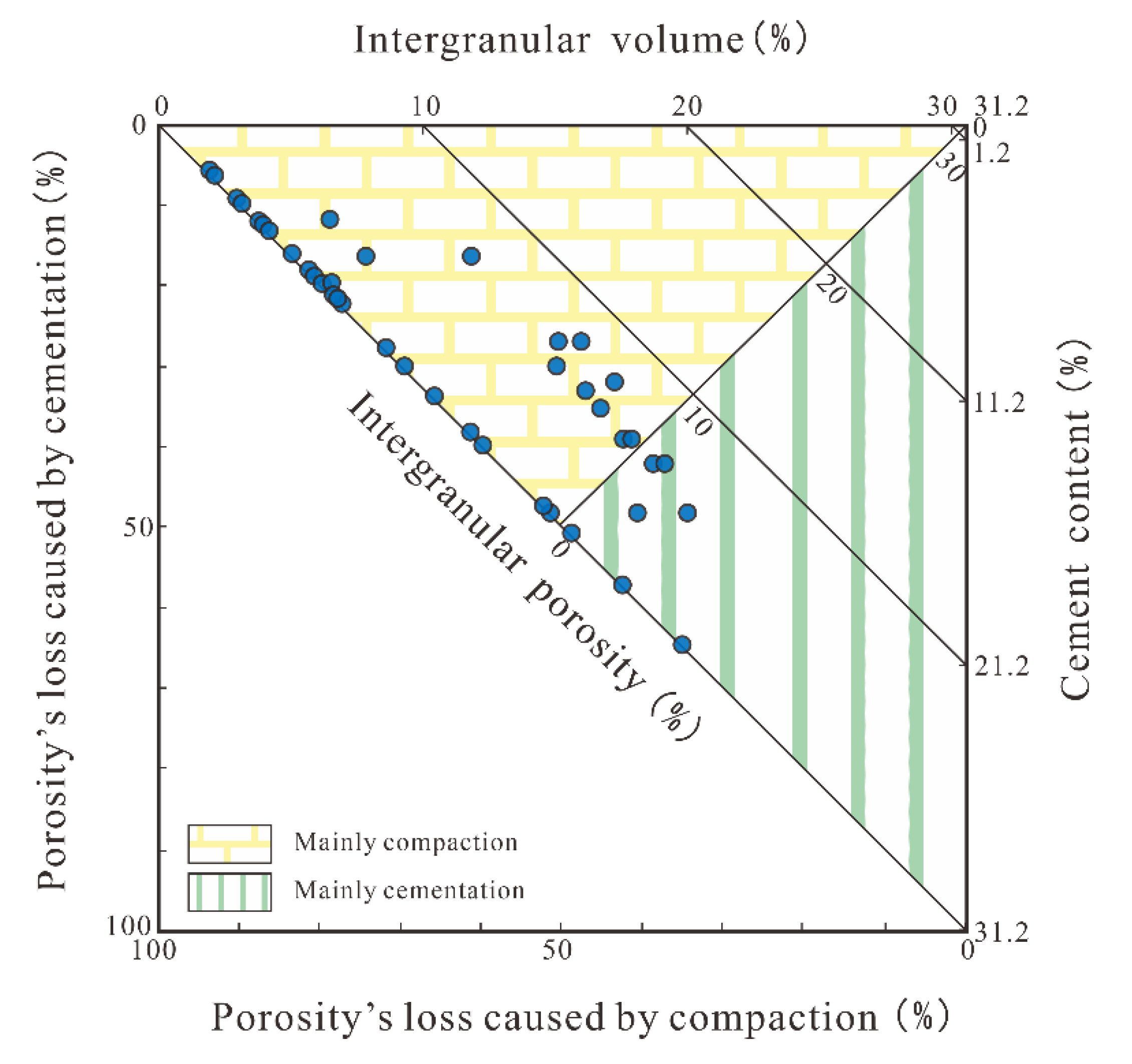
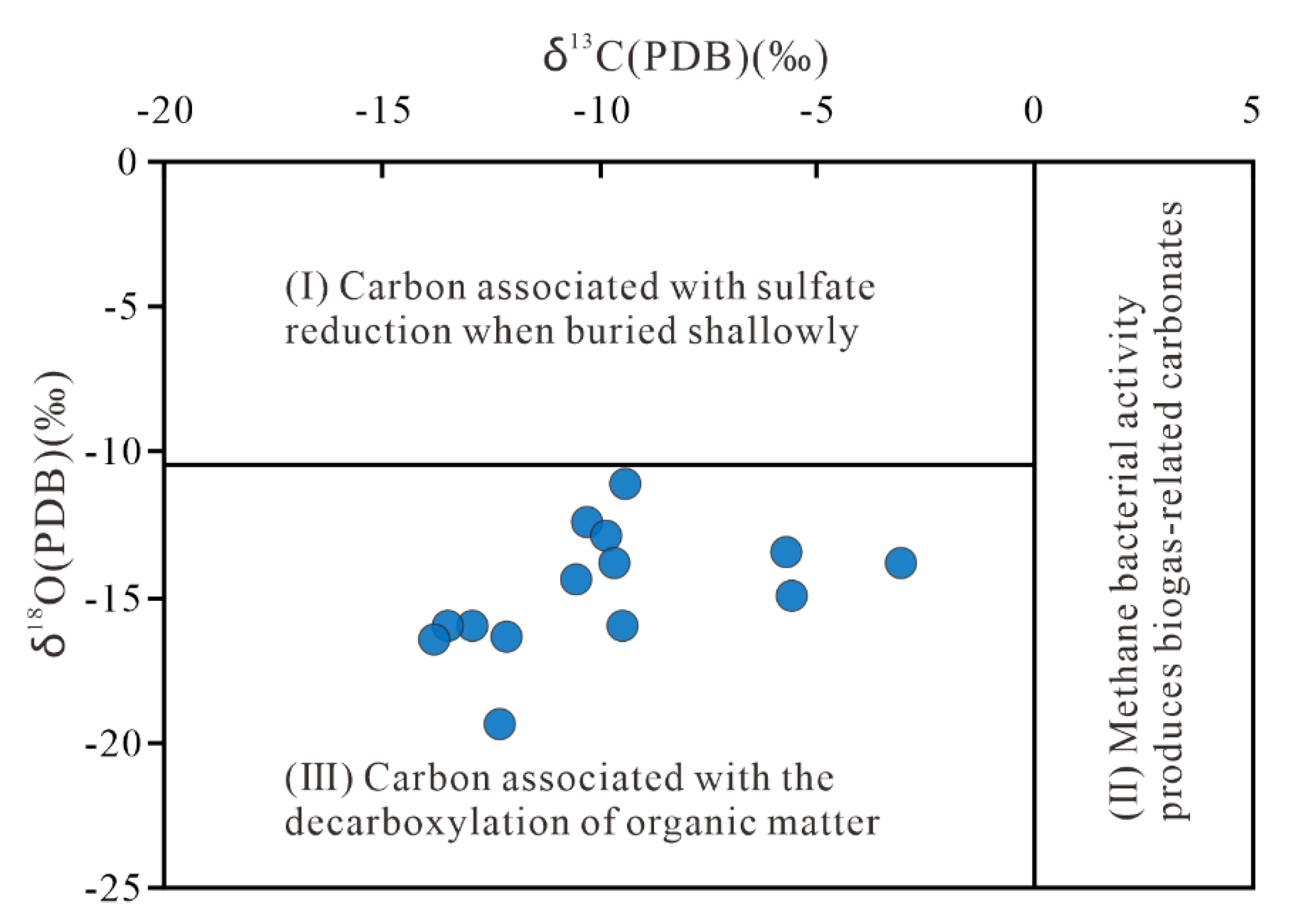
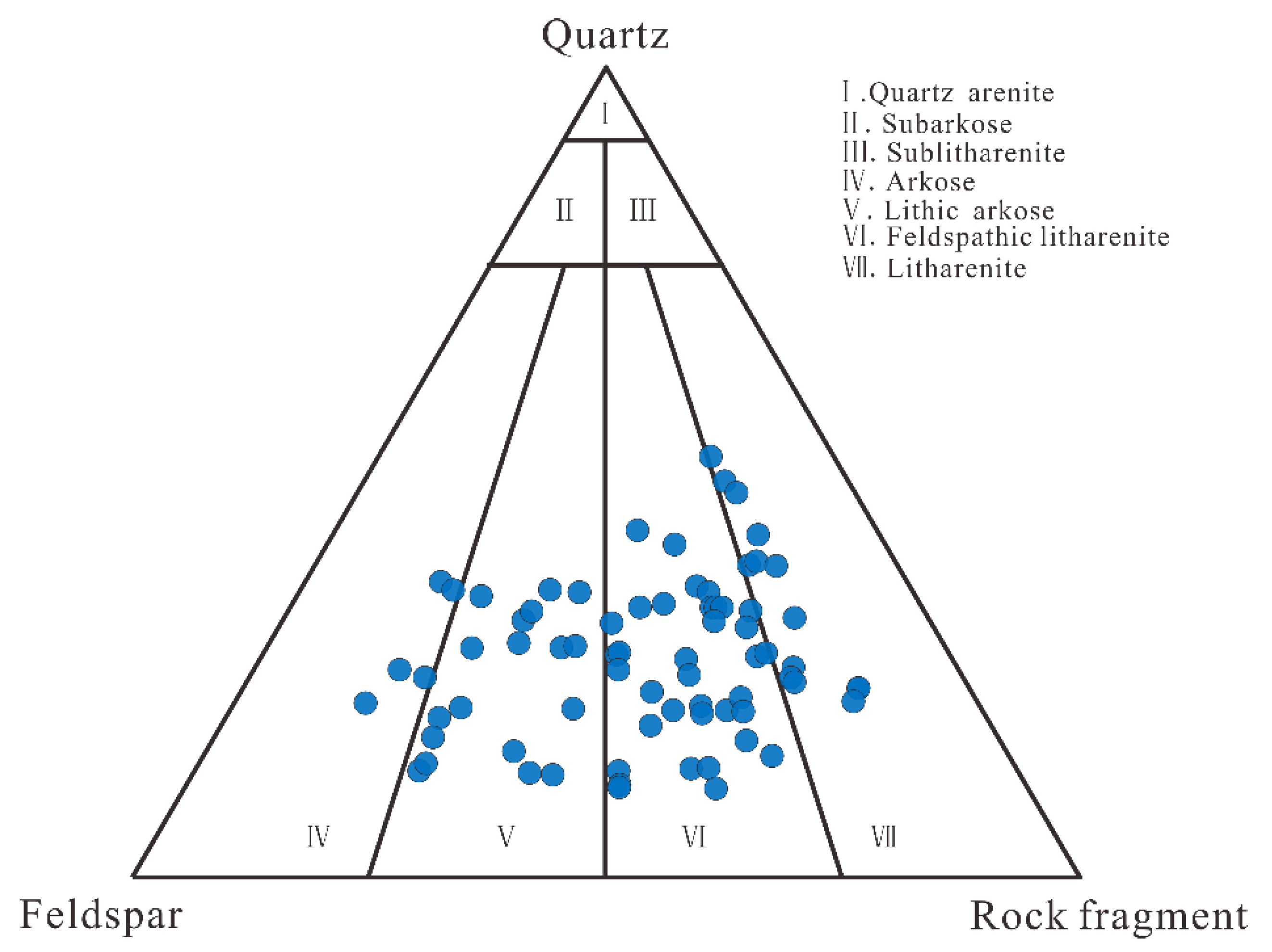
The Lower Jurassic reservoir in the Niudong area of the northern margin of Qaidam Basin is a typical low permeability sandstone reservoir and an important target for oil and gas exploration in the northern margin of the Qaidam Basin. In this paper, casting thin section analysis, scanning electron microscopy, X-ray diffraction, and stable isotope analysis among other methods were used to identify the diagenetic characteristics and evolution as well as the main factors influencing reservoir quality in the study area. The predominant types of sandstone in the study area are mainly feldspathic lithic sandstone and lithic arkose, followed by feldspathic sandstone and lithic sandstone. Reservoir porosity ranges from 0.01% to 19.5% (average of 9.9%), and permeability ranges from 0.01 to 32.4 mD (average of 3.8 mD). The reservoir exhibits robust heterogeneity and its quality is mainly influenced by diagenesis. The Lower Jurassic reservoir in the study area has undergone complex diagenesis and reached the middle diagenesis stage (A–B). The quantitative analysis of pore evolution showed that the porosity loss rate caused by compaction and cementation was 69.0% and 25.7% on average, and the porosity increase via dissolution was 4.8% on average. Compaction was the main cause of the reduction in the physical property of the reservoir in the study area, while cementation and dissolution were the main causes of reservoir heterogeneity. Cementation can reduce reservoir space by filling primary intergranular pores and secondary dissolved pores via cementation such as a calcite and illite/smectite mixed layer, whereas high cement content increased the compaction resistance of particles to preserve certain primary pores. δ13C and δ18O isotopes showed that the carbonate cement in the study area was the product of hydrocarbon generation by organic matter. The study area has conditions that are conductive to strong dissolution and mainly occur in feldspar dissolution, which produces a large number of secondary pores. It is important to improve the physical properties of the reservoir. Structurally, the Niudong area is a large nose uplift structure with developed fractures, which can be used as an effective oil and gas reservoir space and migration channel. In addition, the existence of fractures provides favorable conditions for the uninterrupted entry of acid fluid into the reservoir, promoting the occurrence of dissolution, and ultimately improves the physical properties of reservoirs, which is mainly manifested in improving the reservoir permeability.
Keywords: porosity evolution; diagenesis; the low permeability sandstone reservoir; Niudong area; Qaidam Basin porosity evolution; diagenesis; the low permeability sandstone reservoir; Niudong area; Qaidam Basin