Article

The Origin of Hydrocarbon Gases in the Lovozero Nepheline-Syenite Massif (Kola Peninsula, NW Russia), as Revealed from He and Ar Isotope Evidence


Geological Institute, Kola Science Centre, Russian Academy of Sciences, 14 Fersman St., 184209 Apatity, Russia
Minerals 2020, 10(9), 830; https://doi.org/10.3390/min10090830
Submission received: 15 August 2020 / Revised: 16 September 2020 / Accepted: 16 September 2020 / Published: 21 September 2020
(This article belongs to the Section Mineral Deposits)

Abstract

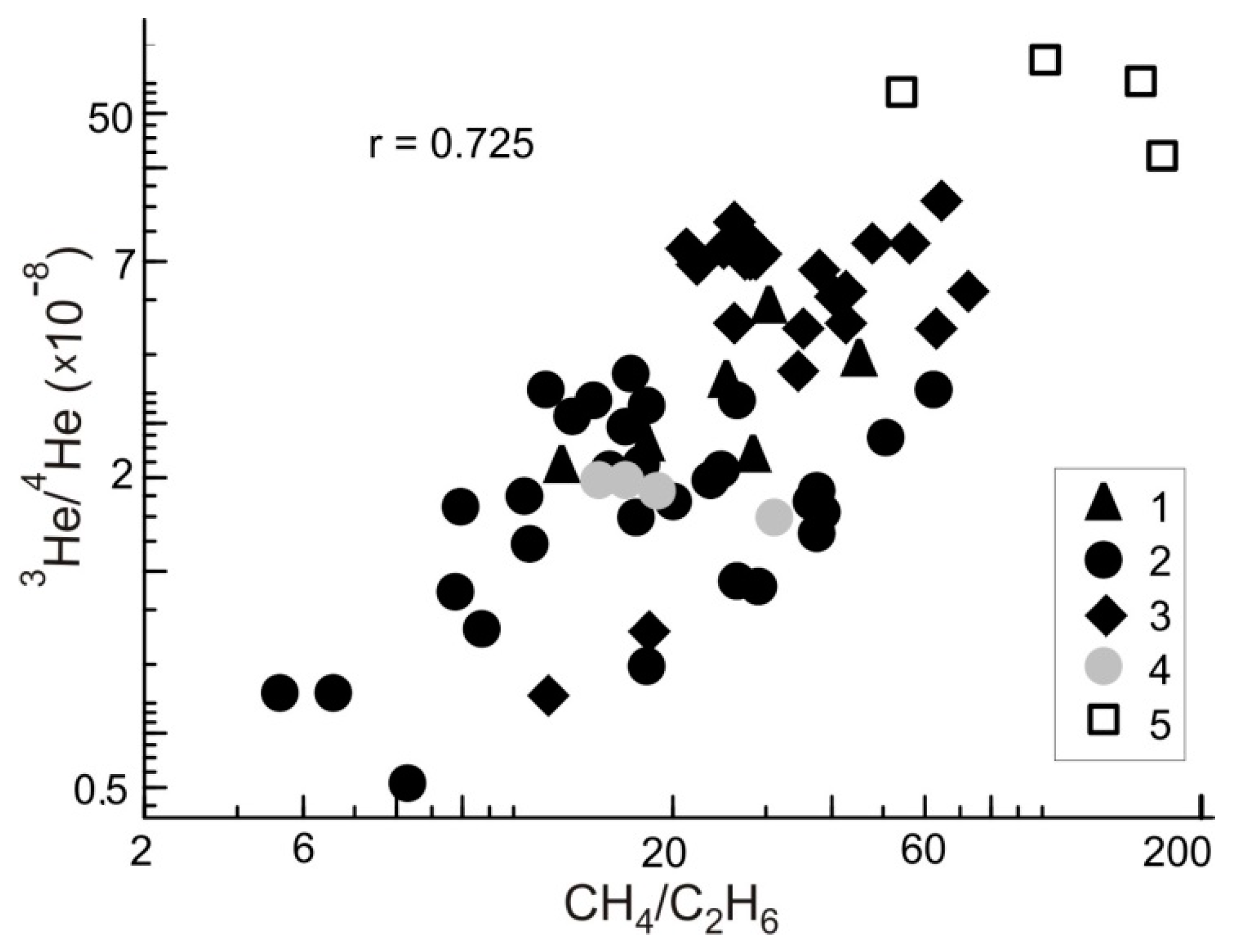
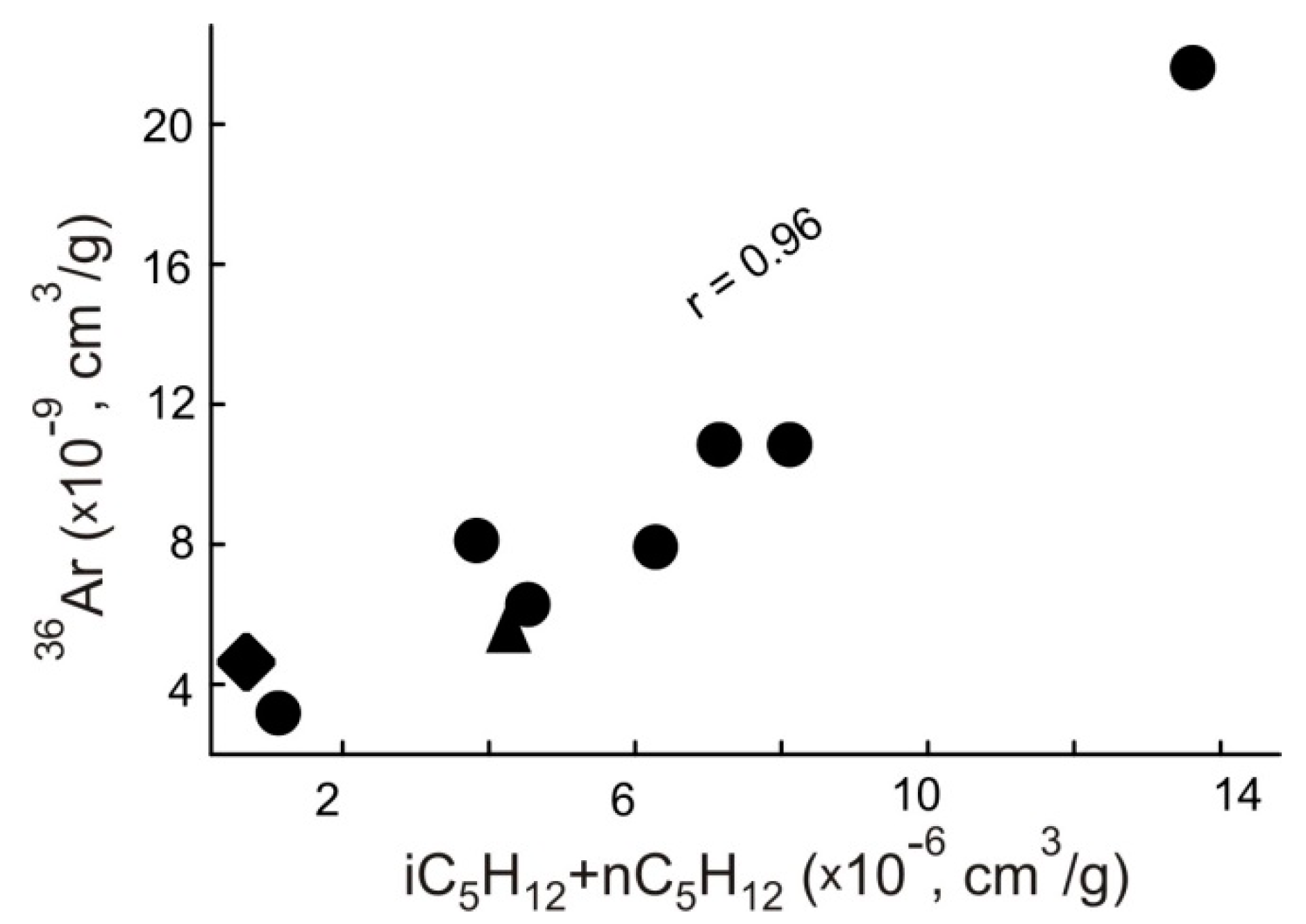
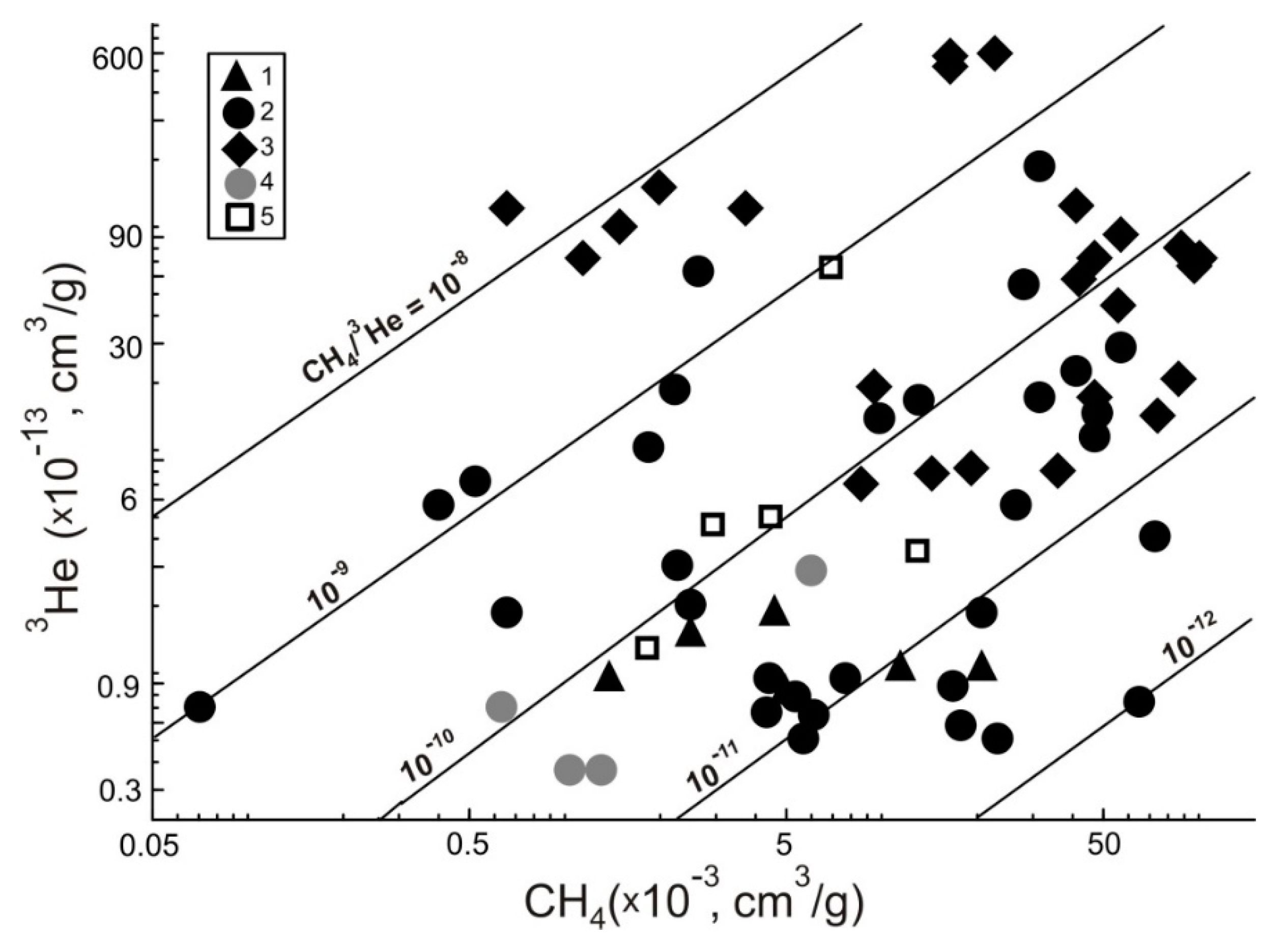
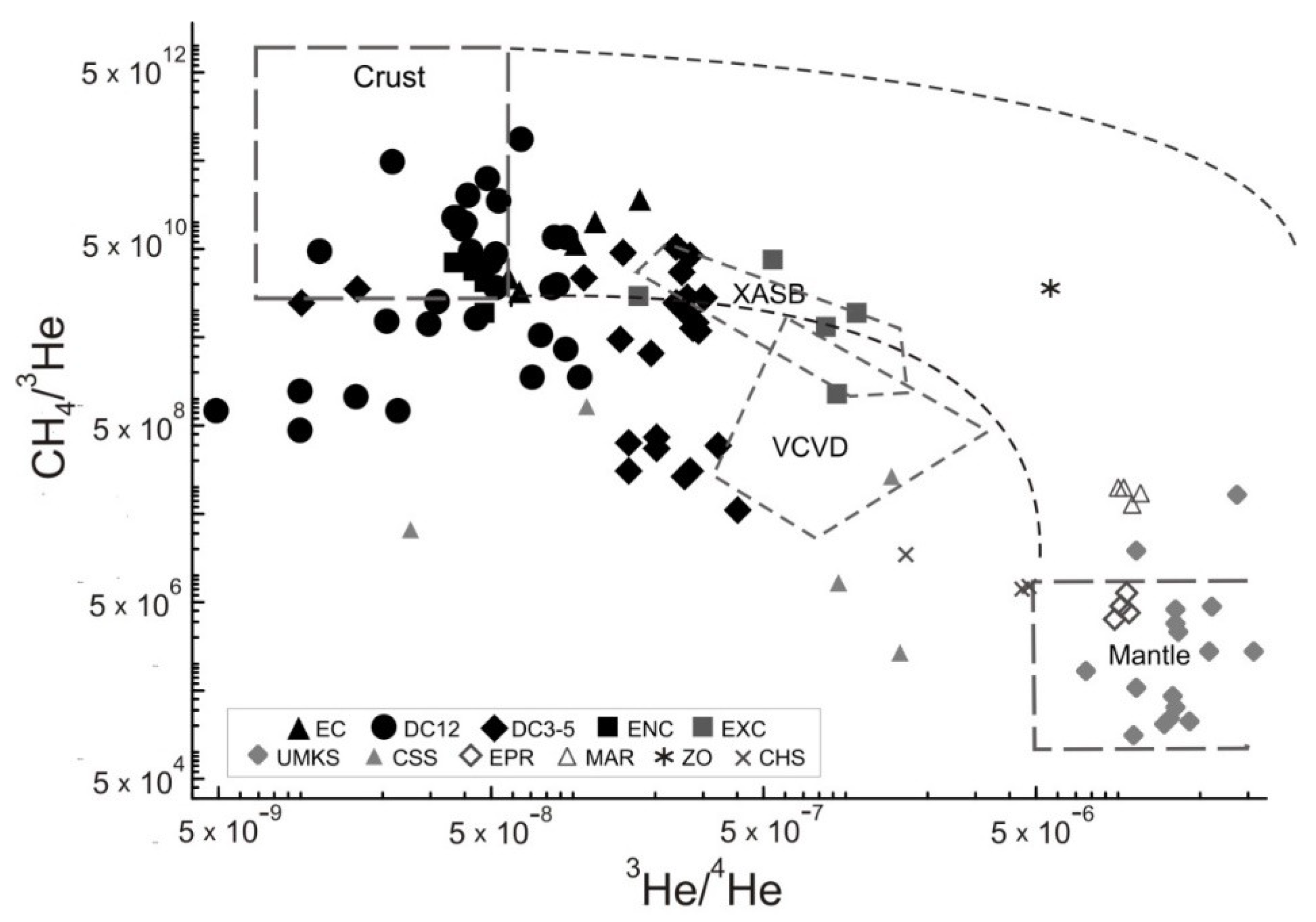
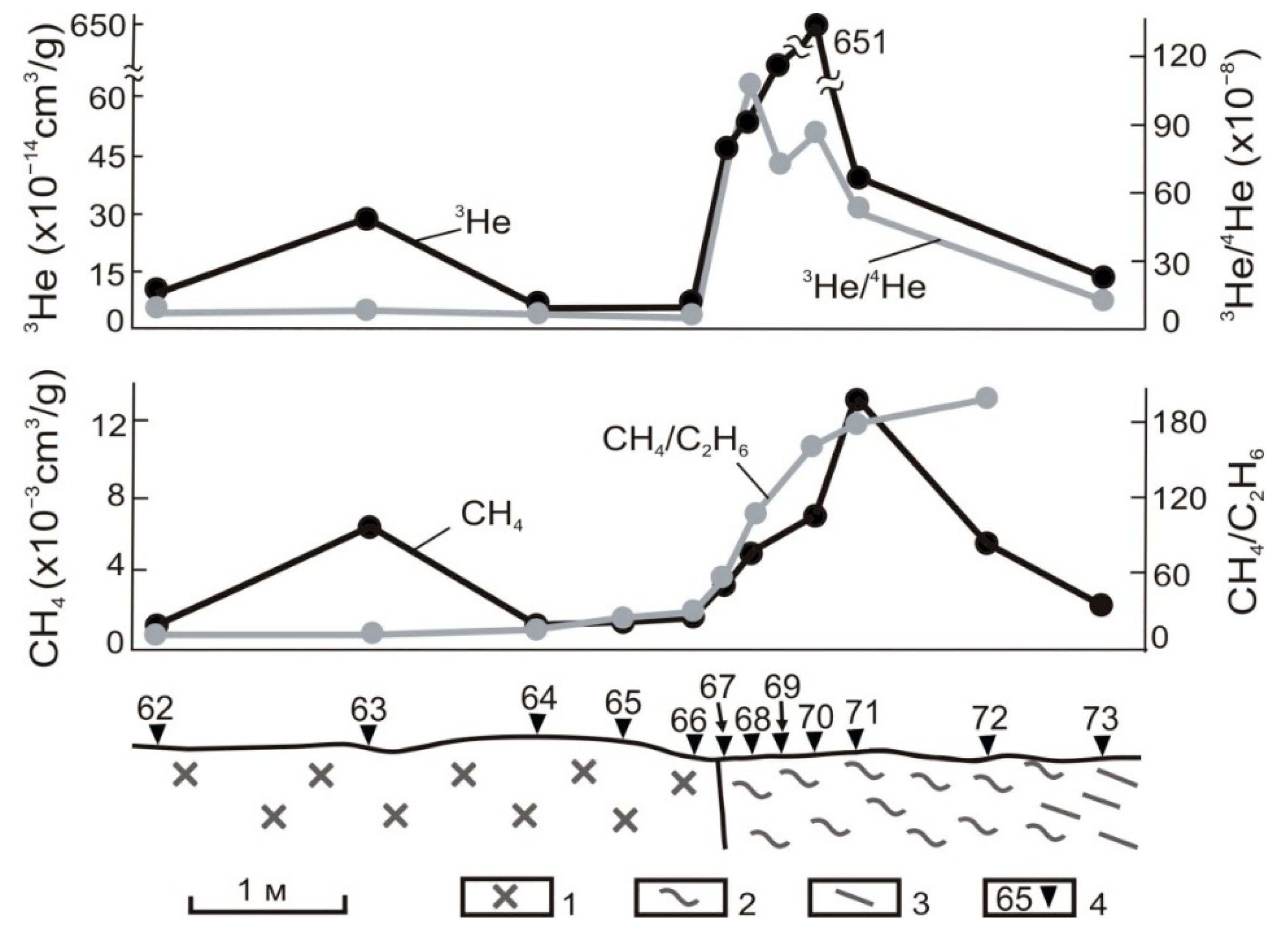
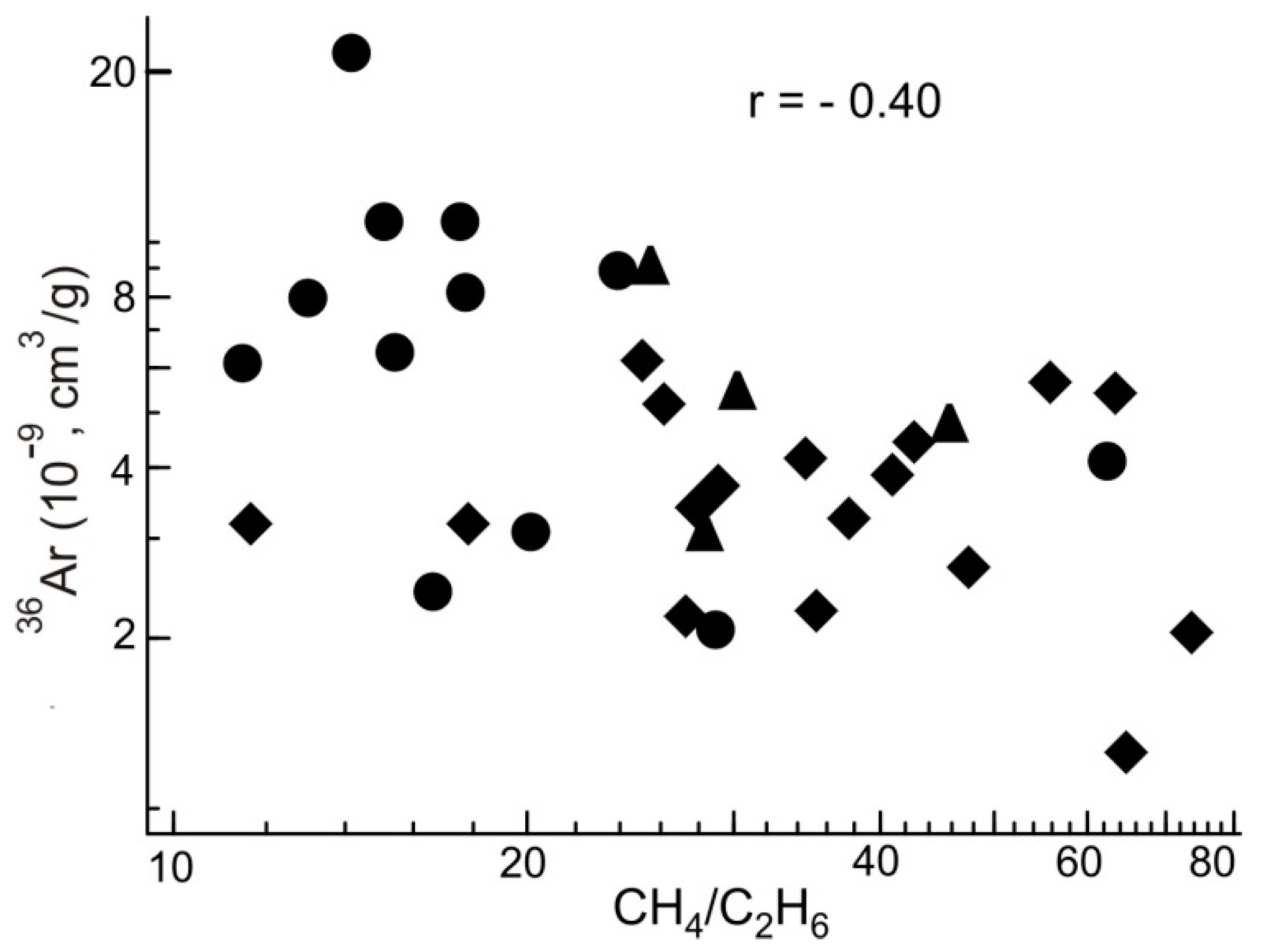
The occurrence of hydrocarbon gases (HCG) in unusually high concentrations for magmatic complexes, in the Lovozero and some other alkaline massifs, is of both geochemical and practical interest. The nature of these gases, despite the long history of research, remains the subject of debate. As an approach to solving this problem, we studied the coupled distribution of occluded HCG and the recognized tracers of various geological processes, such as helium and argon isotopes. The extraction of the gas components trapped in fluid micro-inclusions was carried out by the mechanical crushing of rock and mineral samples. A positive correlation was found between the 3He/4He and CH4/C2H6 ratios, whereas a negative correlation of the latter was found with the 36Ar concentration, which in turn was directly related, in varying degrees, to the content of HCG and most strongly with pentanes. Conjugacy of the processes of the heavier gaseous hydrocarbons, a loss of the deep component of the fluid phase and dilution of it with the atmogenic component was established. In the absence of a correlation between CH4 and 3He, the value of the CH4/3He ratio in the Lovozero gas substantially exceeded the estimates of it in gases of a mantle origin, and mainly corresponded to the crustal values. However, in some samples, a small fraction of mantle methane was allowed. The peculiarities of the relationships between hydrocarbon gases and the isotopes of noble gases indicate a sequential process of abiogenic generation and transformation of HCG at the magmatic and post-magmatic stages during the formation of the Lovozero massif. The obtained results confirm the usefulness of this approach in solving the origin of reduced gases in alkaline igneous systems.
Keywords: abiogenic hydrocarbon gases; methane; He and Ar isotopes; nepheline syenite; fluid inclusions; magmatic complexes abiogenic hydrocarbon gases; methane; He and Ar isotopes; nepheline syenite; fluid inclusions; magmatic complexes