Symmetry-Aware Physics-Guided Graph Network for Slope Displacement Prediction from GNSS Data

Featured Application
Abstract
1. Introduction
2. Engineering-Geological Basis for Slope Displacement Prediction
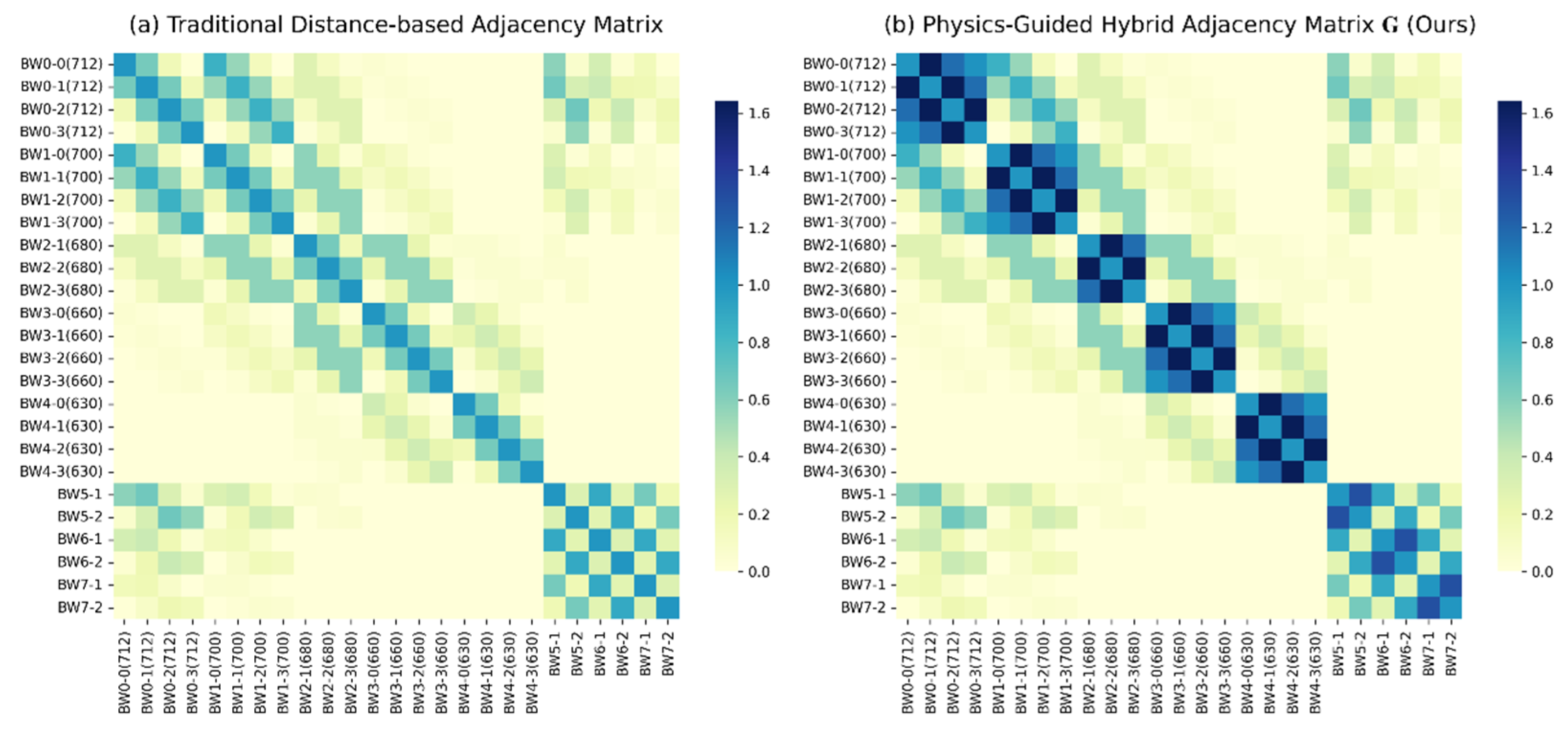
- Layered coordination. Monitoring points installed at the same elevation platform share a common potential slip surface or bearing stratum. Because effective stress transfer within a quasi-homogeneous layer is approximately isotropic, the deformation increments of such points tend to be coherent and mutually influential. In graph-theoretic terms, this motivates a symmetric adjacency matrix with reinforced intra-level weights and a hierarchical masking mechanism that restricts information exchange to nodes on the same geological level.
- Dual timescale dynamics. Slope deformation exhibits two characteristic timescales: a slow, secular creep driven by material aging and consolidation, and abrupt, step-like accelerations triggered by rainfall events, blasting, or excavation. These two regimes correspond to low-frequency and high-frequency components in a displacement time series. Separating them is essential because the early warning value of abrupt events should not be diluted by smoothing, while the background creep trend must be tracked stably without noise amplification.
- Kinematic and spatial continuity. As a deformable solid continuum, the slope must satisfy physical consistency: displacement increments should not oscillate arbitrarily from step to step (temporal smoothness), and the velocity field across the slope should be sufficiently smooth with adjacent points on the same slip surface showing coordinated movement (spatial smoothness). These constraints can be encoded in a loss function using first-order temporal differencing and graph Laplacian regularization.
3. Our Method
3.1. Problem Definition and Spatio-Temporal Graph Construction
3.1.1. GNSS Displacement Prediction Problem
3.1.2. Geological Hierarchy Graph Construction
- The Euclidean distance is symmetric.
- The geological indicator is symmetric because it depends only on the equality of and .
- The Gaussian kernel .
3.2. Improved Dual-Path Temporal Convolution Network (iTCN)
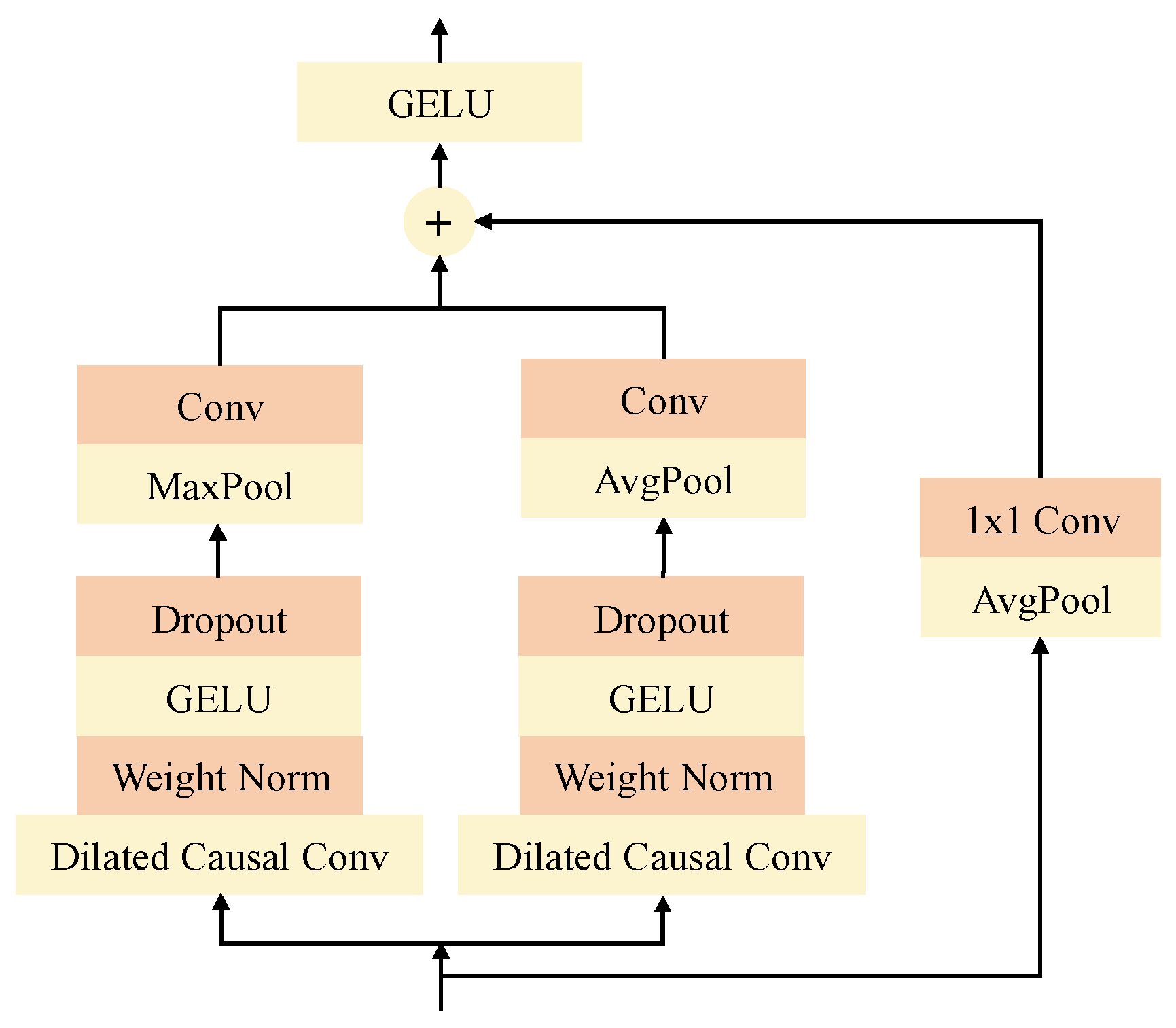
3.2.1. Dilated Causal Convolution
3.2.2. Dual-Path Feature Extraction
3.2.3. Feature Coupling and Residual Learning
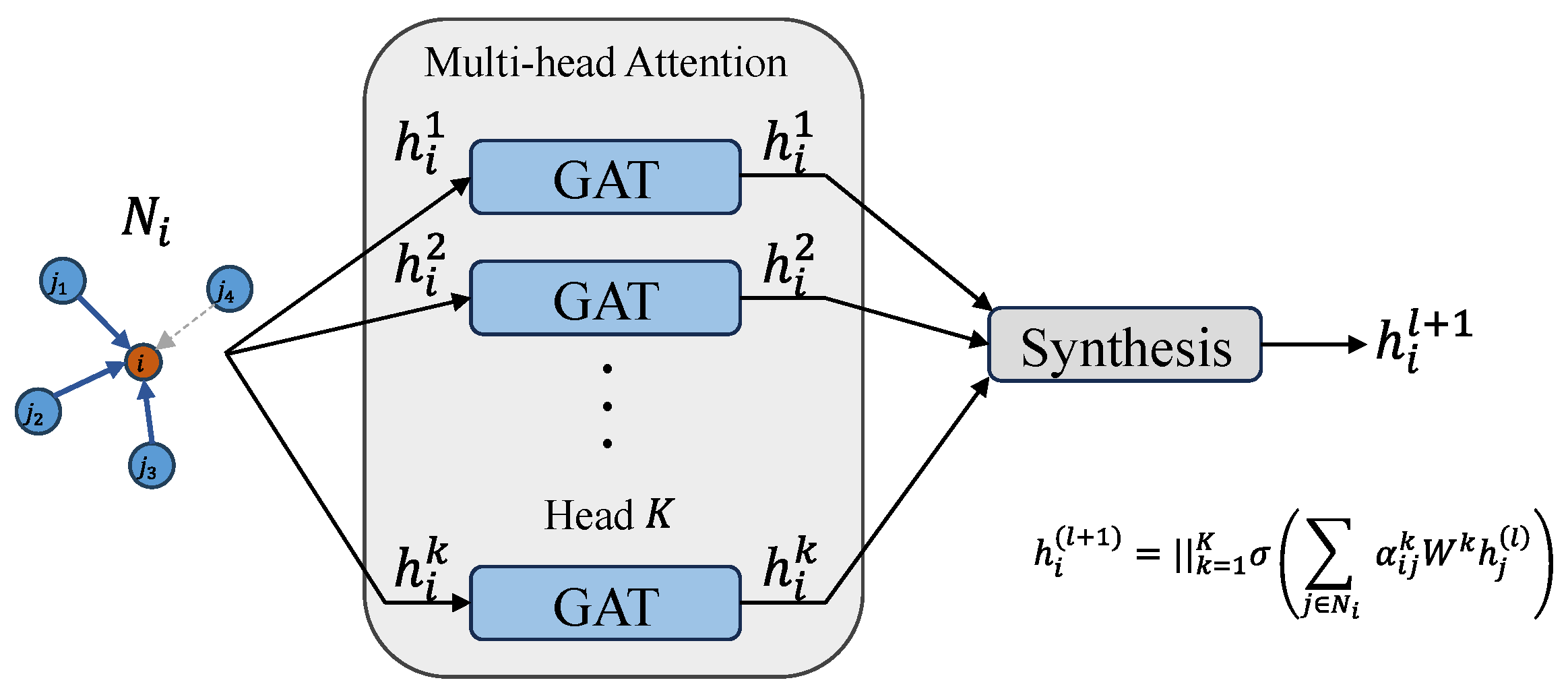
3.3. Multi-Head Physics-Guided Graph Attention (PG-GAT)
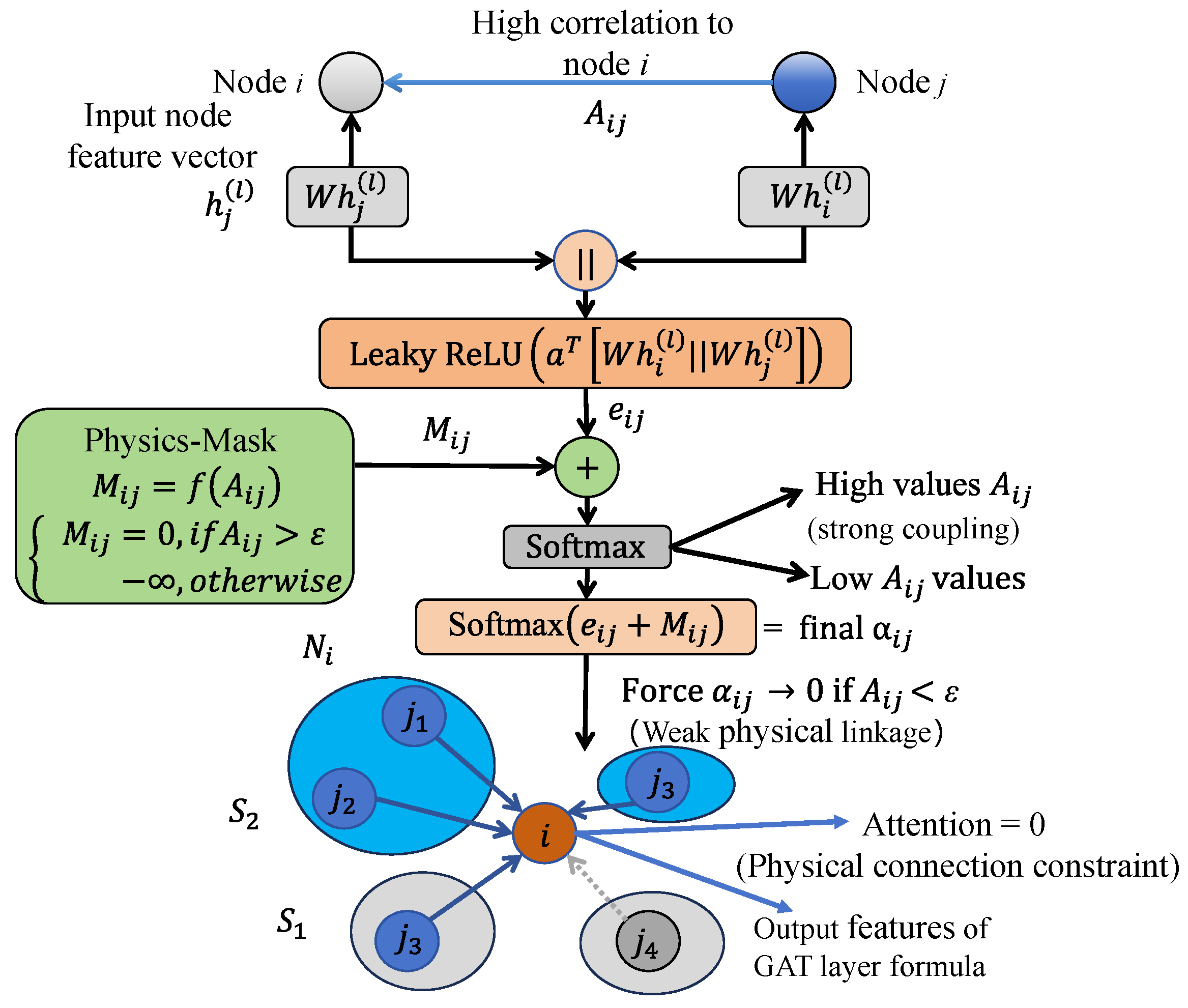
3.3.1. Spatial Coordination via Dynamic Attention
3.3.2. Physics-Masked Attention
3.4. Gated Fusion and Multi-Task Output
3.4.1. Adaptive Gated Fusion
3.4.2. Physics-Consistent Loss
3.5. Evaluation Metrics
3.5.1. Local Accuracy Metrics
3.5.2. Global Trend Metrics
4. Experiments
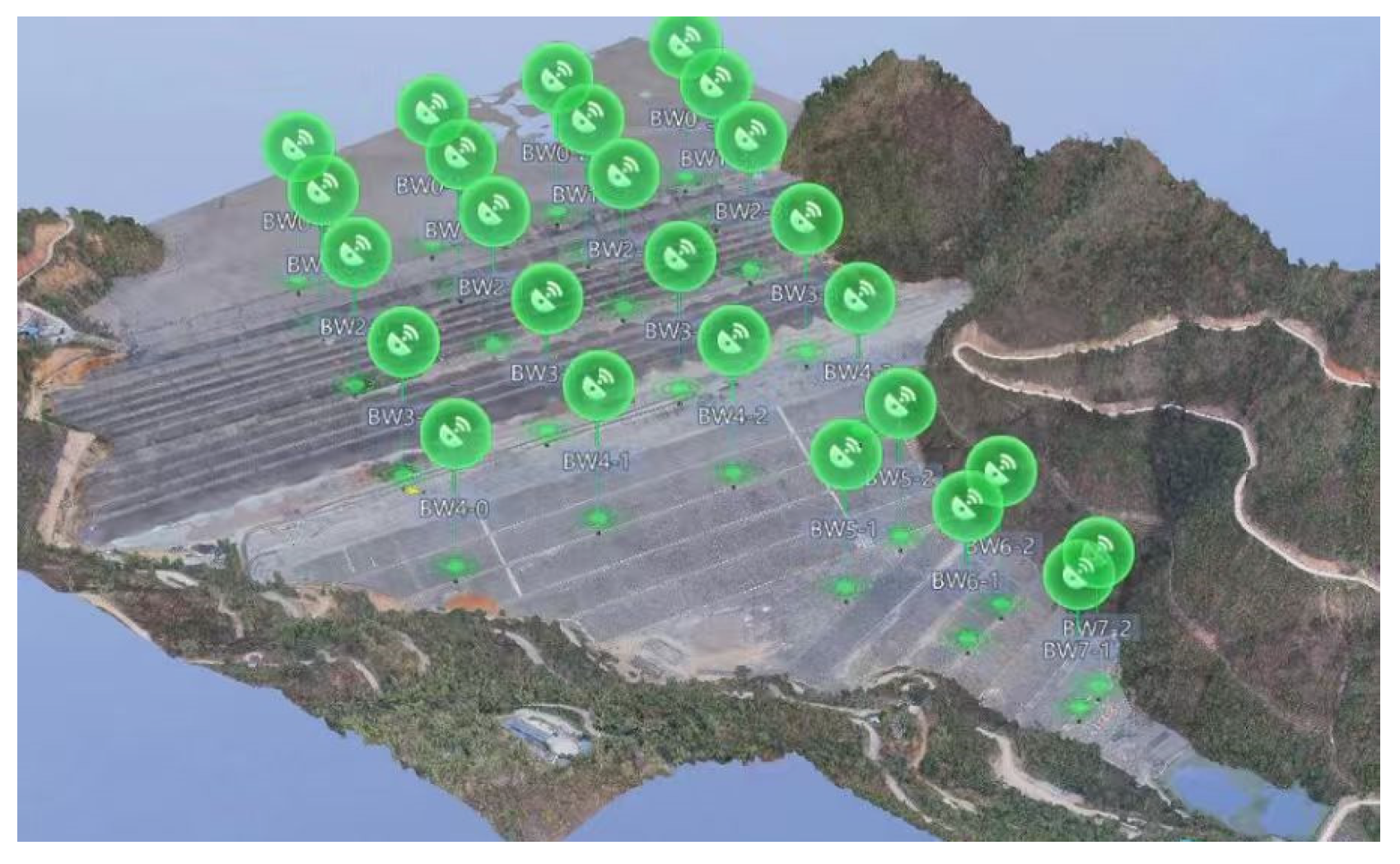
4.1. Dataset Description and Preprocessing
4.1.1. Dataset and Features
4.1.2. Data Preprocessing
4.2. Experimental Settings
4.2.1. Dataset Source and Features
- Temporal-Only Models: These models predict using historical data from a single sensor, ignoring spatial dependencies. GRU (Gated Recurrent Unit) [35]: Handles long-sequence dependencies via gated recurrent units. LSTM (Long Short-Term Memory) [36]: Standard baseline widely used for time series prediction. TCN (Temporal Convolutional Network) [37]: Single-stream temporal convolution network, used to verify improvements from the dual-stream feature extraction module.
- Spatio-Temporal Models: Explicitly model spatial dependencies via graph convolution or attention mechanisms. GAT-LSTM [38]: Combines graph attention networks with LSTM, aggregating neighborhood features via attention. STGCN (Spatio-Temporal Graph Convolutional Network) [39]: Classic spatio-temporal model combining Chebyshev graph convolutions and gated temporal convolutions. Graph WaveNet [40]: Advanced model integrating diffusion convolution and dilated convolution, with an adaptive adjacency matrix.
4.2.2. Implementation Details and Parameter Settings
4.2.3. Hierarchical Validation Strategy
4.3. Main Performance Comparison
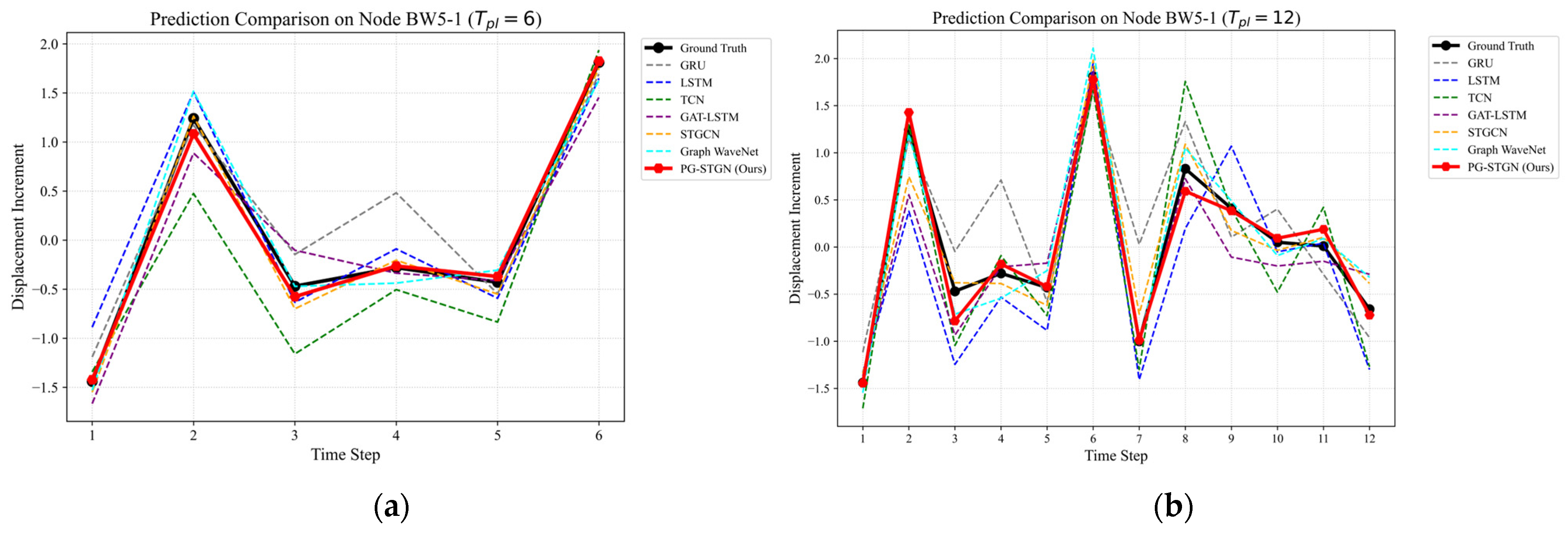
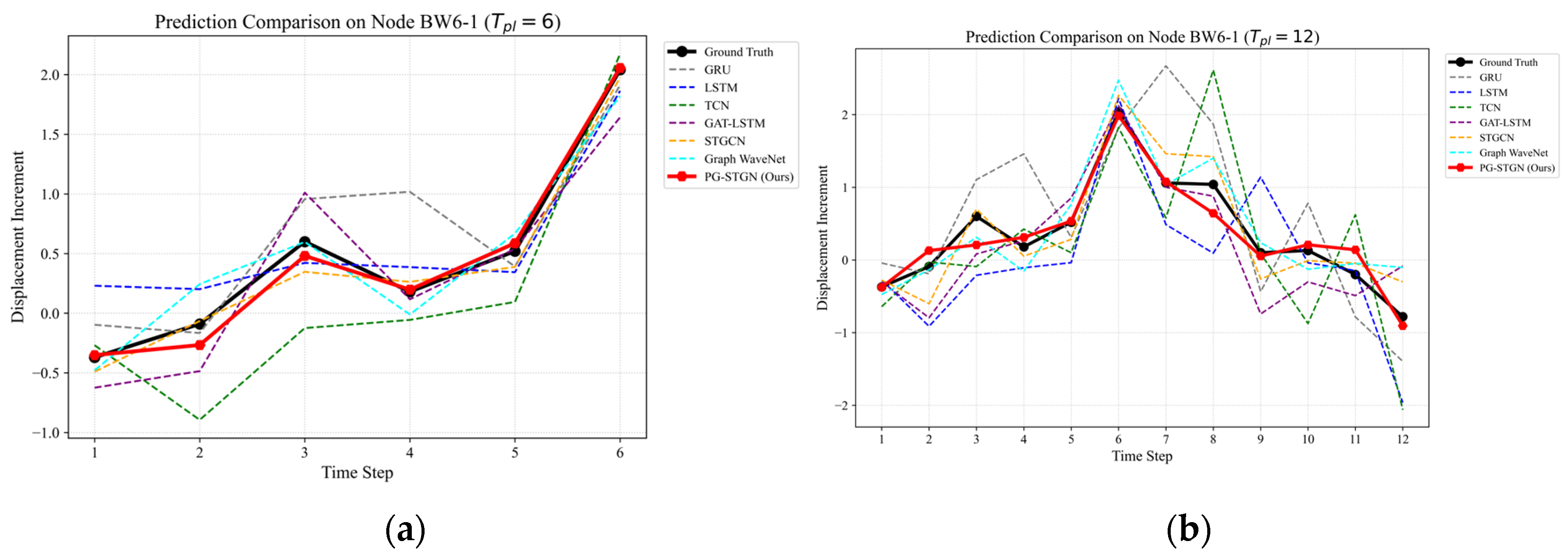
4.3.1. Single-Node Accuracy Evaluation
4.3.2. Global Slope Movement Trend Evaluation
4.4. Ablation Study
4.4.1. Definition of Variant Models
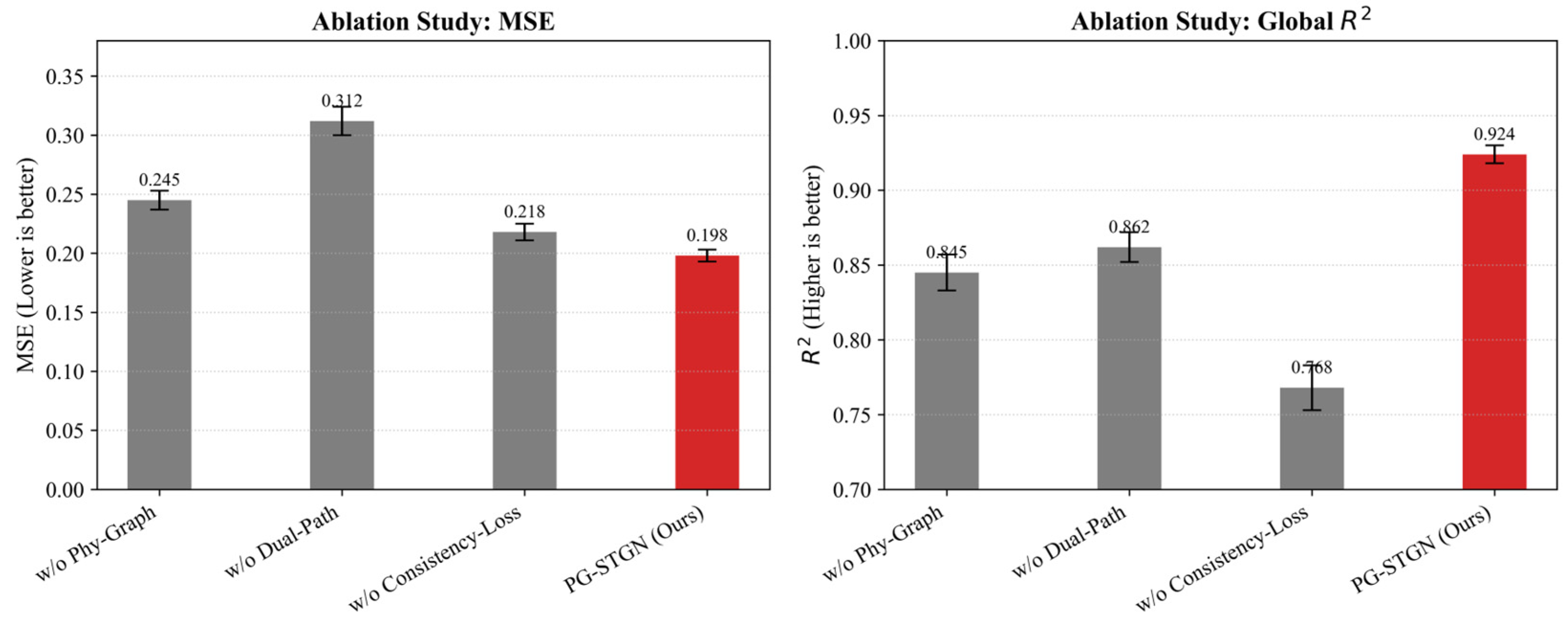
- Variant A: Without Geological Physics Graph (w/o Phy-Graph). Removes the geological hierarchical constraint from Section 3.1.2 (i.e., the term) and the corresponding physics mask. A standard K-NN adjacency matrix is built solely based on Euclidean distances between sensors. This variant tests the necessity of incorporating geological priors (e.g., the 700-level) for spatial coordination.
- Variant B: Without Dual-Stream Feature Extraction (w/o Dual-Path). Removes the dual-stream structure from Section 3.2 (high-frequency path and low-frequency trend path). A standard single-stream dilated TCN is used with identical kernel configurations. This variant evaluates the advantage of dual-stream design in separating noise from abrupt signals.
- Variant C: Without Spatio-Temporal Consistency Loss (w/o Consistency Loss). Removes the temporal smoothing loss and spatial coordination loss from Section 3.4, leaving only the MSE loss as the optimization target. This variant assesses the role of physics-constrained losses in suppressing non-physical oscillations and maintaining overall trend consistency.
4.4.2. Experimental Results and Analysis
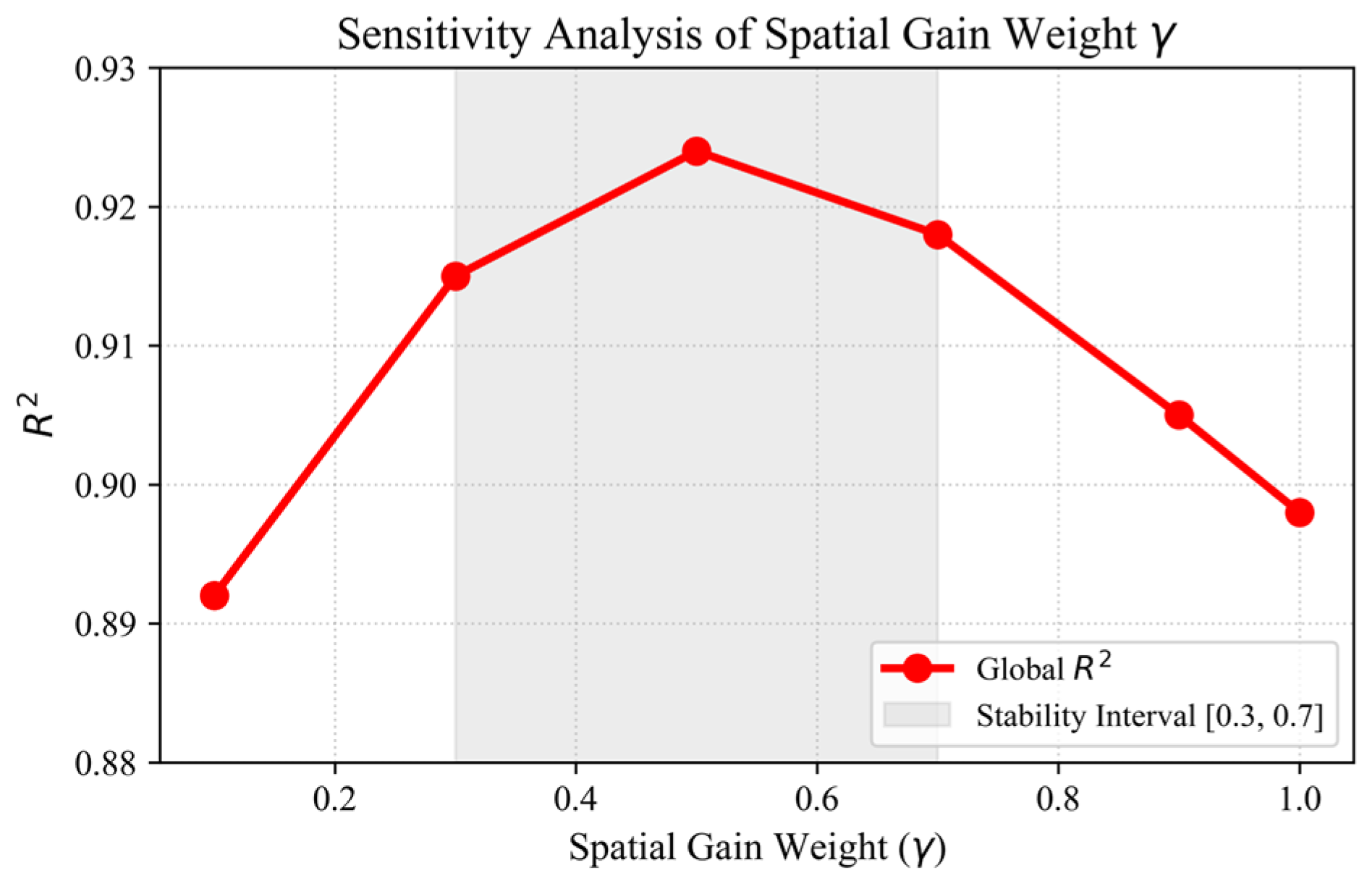
4.4.3. Sensitivity to Spatial Gain Weight
4.4.4. Case Studies of Triggered Deformation Events
4.5. Discussion
- Attention pattern analysis: High-attention nodes are mainly within the same geological level (e.g., BW5-1 and BW5-2 at 700-level, BW6-1 and BW6-2 at 712-level), while inter-level pairs (e.g., 680-level vs. 700-level) are suppressed by the physics mask. This aligns with slope mechanics: nodes on the same sliding surface share stress paths and correlate strongly, whereas nodes on different elevation platforms deform independently. In the baseline GAT-LSTM and Graph WaveNet models, which lack hierarchical priors, attention weights often scatter across both same-level and cross-level pairs, leading to physically implausible spatial mixing. PG-STGN, with its hierarchical mask, restores intra-level coordination and inter-level decoupling, avoiding spurious cross-level correlations. This not only improves prediction accuracy but also makes the attention maps interpretable to geotechnical engineers, who can verify that the model focuses on expected sensor clusters.
- Temporal evolution of slope deformation: Early in the monitoring period (first 30 time steps), displacement increments are low (mostly below 2 mm), and all models produce predictions that match observations reasonably well. Between the 50th and 70th steps, however, a clear acceleration occurs across multiple levels (680, 700, and 712). PG-STGN accurately captures the onset of this acceleration (around step 52) and, via the spatial coordination loss , ensures that the predicted accelerations proportionally reflect the physical process: central nodes (BW5 series) accelerate most (up to ~8 mm/step), lateral nodes (BW1, BW2) lag slightly with smaller increments (~3–4 mm/step), and nodes on the uppermost level (712) show intermediate behavior. This spatial pattern matches the typical progressive failure mechanism of a translational slide, where the central portion moves first and the flanks are partially constrained. In contrast, models without (w/o Consistency-Loss) often predict either uniform acceleration across all nodes or inconsistent patterns (e.g., a lateral node accelerating faster than the central node), which would mislead early warning decisions.
- Geological interpretation of abrupt events: Geologically, node BW5-1 is located near a high-rainfall infiltration zone and has historically exhibited step-like deformation patterns. The abrupt displacement at time step 2 (an increase of ~6 mm in within one sampling interval) corresponds to a rapid pore-pressure rise following an intense rainfall event, which reduces effective stress and shear strength along the potential slip surface. In single-stream models (e.g., TCN or w/o Dual-Path), this abrupt jump is either smoothed into a gradual ramp (due to the averaging effect of causal convolutions) or misinterpreted as noise and filtered out. By contrast, the dual-stream paths of PG-STGN capture the sudden response through the max-pooling branch (preserving the sharp peak) while simultaneously maintaining the background creep trend via the average-pooling branch. This design ensures that early warning signals (abrupt deformation) are not lost, while also avoiding overreaction to random high-frequency noise. As a result, the model correctly flags step 2 as a potential precursor without triggering false alarms during other noisy but stable periods.
- Translation of Predictions into Safety Measures: Beyond numerical accuracy, the practical value of a slope displacement prediction model lies in its ability to support reliable safety decisions. In PG-STGN, predicted displacement increments are converted into cumulative displacements and deformation rates, which are then mapped into a three-tier alert protocol: Attention (isolated exceedance of 2 mm/day), Warning (coordinated exceedance of 5 mm/day across at least three nodes on the same geological level), and Alarm (global violation of spatial coordination or exceedance of a geotechnically defined critical rate). To prevent overreliance on a single predictive model, all automated alerts remain advisory and require verification by a qualified geotechnical engineer, who cross-references predictions with independent data sources such as InSAR deformation maps, rainfall records, and in situ inclinometer readings. Furthermore, Monte Carlo dropout is employed to attach confidence intervals to each prediction, and alerts are suppressed when the epistemic uncertainty exceeds a predefined threshold, reducing the risk of false alarms during periods of degraded data quality. This human-in-the-loop design ensures that PG-STGN serves as a decision-support tool rather than a standalone safety oracle, aligning with established dam safety regulations and operational best practices.
- Model Degradation under Input Failures: Although PG-STGN achieves high accuracy under normal sensing conditions, its performance predictably degrades when sensors drop out, report missing values, or produce anomalous spikes. The current framework relies on a fixed graph topology and external linear interpolation, which are insufficient to handle prolonged sensor failures or large gaps. As shown in our robustness analysis (Section 4.6), the model’s spatial coordination loss can propagate errors from faulty nodes to their neighbors, and the dual-path decoupling may oversmooth genuine abrupt signals if preceded by interpolation. Future work should incorporate dynamic graph adaptation, learned temporal imputation, and Monte Carlo dropout-based uncertainty estimation to alert operators when input quality is compromised.
4.6. Dependence on Geological Priors and Symmetry Considerations
4.6.1. Limitations of the Symmetry Assumption
4.6.2. Mitigation Strategies in Deployment
- Periodic prior recalibration: Geological-level assignments should be cross-validated with new borehole data, inclinometer readings, and InSAR deformation zones, particularly after heavy rainfall seasons or excavation activities that may alter the slip surface.
- Hybrid semi-adaptive graph: A practical compromise is to retain the symmetric hierarchical graph as the backbone but allow a small, learned perturbation that captures residual asymmetric interactions. This can be trained jointly with the rest of the network, providing a smooth trade-off between physical rigidity and data-driven flexibility.
- Uncertainty-aware monitoring: When the confidence in level assignments is low (e.g., for newly installed sensors), the model can output an uncertainty estimate alongside predictions (via Monte Carlo dropout). Operators can then assign lower decision weight to predictions from nodes with uncertain level membership, reducing the risk of false alarms or missed events.
5. Conclusions
Author Contributions
Funding
Data Availability Statement
Conflicts of Interest
References
- Du, Z.Y.; Ge, L.L.; Ng, A.H.M.; Zhu, Q.G.Z.; Horgan, F.G.; Zhang, Q. Risk assessment for tailings dams in Brumadinho of Brazil using InSAR time series approach. Sci. Total Environ. 2020, 717, 137000. [Google Scholar] [CrossRef]
- Duan, H.Z.; Li, Y.S.; Jiang, H.B.; Li, Q.; Jiang, W.L.; Tian, Y.F.; Zhang, J.F. Retrospective monitoring of slope failure event of tailings dam using InSAR time-series observations. Nat. Hazards 2023, 117, 2375–2391. [Google Scholar]
- Hu, X.; Lu, Z.; Oommen, T.; Wang, T.; Kim, J. Monitoring and modeling tailings impoundment settlement near Great Salt Lake (Utah) using multi-platform time-series InSAR observations. In Proceedings of the IEEE International Geoscience and Remote Sensing Symposium (IGARSS), Fort Worth, TX, USA, 23–28 July 2017; pp. 5590–5593. [Google Scholar]
- Mura, J.C.; Gama, F.F.; Paradella, W.R.; Negrão, P.; Carneiro, S.; De Oliveira, C.G.; Brandão, W.S. Monitoring the vulnerability of the dam and dikes in Germano iron mining area after the collapse of the Fundão dam using DInSAR techniques with TerraSAR-X data. Remote Sens. 2018, 10, 1507. [Google Scholar] [CrossRef]
- Lu, L.W.; Li, M.H.; Chao, L. Integration of InSAR and numerical modelling to assess tailings pond slope deformation affected by reservoir water. Sci. Rep. 2025, 15, 43304. [Google Scholar] [CrossRef]
- Perry, J.; Rabinovitch, Y. Safeguarding tailings dams from space using L-band SAR soil moisture analysis. In Proceedings of the Geoenvironmental Engineering Conference (GeoenvironMeet 2025), Louisville, KY, USA, 2–5 March 2025; pp. 1–8. [Google Scholar]
- Rauhala, A.; Tuomela, A.; Davids, C.; Rossi, P.M. UAV remote sensing surveillance of a mine tailings impoundment in sub-arctic conditions. Remote Sens. 2017, 9, 1318. [Google Scholar]
- Zhang, X.; Gao, Z.; Li, Z.; Su, H.; Li, Z.; Ding, L.; Jiang, X. Deep learning-based identification of typical hazards in tailings ponds under unmanned aerial vehicle photography. Min. Metall. Explor. 2025, 42, 1625–1638. [Google Scholar] [CrossRef]
- Zhang, H.; Li, Q.; Wang, J.; Fu, B.; Duan, Z.; Zhao, Z. Application of space–sky–earth integration technology with UAVs in risk identification of tailings ponds. Drones 2023, 7, 222. [Google Scholar] [CrossRef]
- Wang, K.; Zhang, Z.; Yang, X.; Wang, D.; Zhu, L.; Yuan, S. Enhanced tailings dam beach line indicator observation and stability numerical analysis: An approach integrating UAV photogrammetry and CNNs. Remote Sens. 2024, 16, 3264. [Google Scholar]
- Lu, W.; Shirani Faradonbeh, R.; Xie, H.; Stothard, P. Deep learning for predicting surface elevation change in tailings storage facilities from UAV-derived DEMs. Appl. Sci. 2025, 15, 10982. [Google Scholar] [CrossRef]
- Gomez, J.A.; Kamran-Pishhessari, A.; Sattarvand, J. Automated rill erosion detection in tailing dams using UAV imagery and machine learning. Arab. J. Sci. Eng. 2025, 50, 6711–6726. [Google Scholar] [CrossRef]
- Atif, I.; Ashraf, H.; Cawood, F.T.; Mahboob, M.A. A conceptual digital framework for near real-time monitoring and management of mine tailing storage facilities. In Proceedings of the International Conference on Innovations for Sustainable and Responsible Mining (ISRM 2020); Springer: Cham, Switzerland, 2020; pp. 3–12. [Google Scholar]
- Dai, Q.; Xiao, G.; Wan, R.; Li, S. An improved Gaussian sum extended Kalman filter with colored noise for GNSS/SINS tightly coupled positioning and attitude determination systems. IEEE Access 2024, 12, 73279–73291. [Google Scholar] [CrossRef]
- Lumbroso, D.; Collell, M.R.; Petkovšek, G.; Davison, M.; Liu, Y.; Goff, C.; Wetton, M. DAMSAT: An eye in the sky for monitoring tailings dams. Mine Water Environ. 2021, 40, 113–127. [Google Scholar] [CrossRef]
- Jing, Z.; Gao, X. Monitoring and early warning of a metal mine tailings pond based on a deep learning bidirectional recurrent long short-term memory network. PLoS ONE 2022, 17, e0273073. [Google Scholar] [CrossRef]
- Guireli Netto, L.; Singha, K.; Moreira, C.A.; Gandolfo, O.C.B.; Albarelli, D.S.N.A. Investigation of fractured rock beneath a uranium-tailing storage dam through UAV digital photogrammetry and seismic refraction tomography. Front. Earth Sci. 2023, 11, 1281076. [Google Scholar] [CrossRef]
- Dos Santos, E.E.; Francelino, M.R.; Siqueira, R.G.; Schaefer, C.E.G.R.; Santana, F.C.; Filho, E.I.F. Laser scanner technology in the assessment of mining tailings surface changes and rehabilitation interventions after the Fundão dam rupture, Brazil. Environ. Earth Sci. 2024, 83, 308. [Google Scholar] [CrossRef]
- Kim, H.; Hyun, C.-U.; Park, H.-D.; Cha, J. Image mapping accuracy evaluation using UAV with standalone, differential (RTK), and PPP GNSS positioning techniques in an abandoned mine site. Sensors 2023, 23, 5858. [Google Scholar] [CrossRef] [PubMed]
- Allil, R.C.S.B.; Lima, L.A.C.; Allil, A.S.; Werneck, M.M. FBG-based inclinometer for landslide monitoring in tailings dams. IEEE Sens. J. 2021, 21, 16670–16680. [Google Scholar]
- Zhou, J.G.; Shi, B.; Liu, G.L.; Ju, S. Accuracy analysis of dam deformation monitoring and correction of refraction with robotic total station. PLoS ONE 2021, 16, e0251281. [Google Scholar] [CrossRef] [PubMed]
- Zhou, J.G.; Gao, H.; Xiao, W.; Peng, D. Water level measurement for reservoir dams with robotic total station during displacements monitoring. Eng. Res. Express 2024, 6, 025118. [Google Scholar] [CrossRef]
- Le Roux, G.J.R. The effectiveness of single and multiple open standpipe piezometers in monitoring of the pore pressure regime in tailings dams. In Tailings and Mine Waste 2002; CRC Press: Boca Raton, FL, USA, 2002; pp. 35–38. [Google Scholar]
- Morton, K.L. The use of accurate pore pressure monitoring for risk reduction in tailings dams. Mine Water Environ. 2021, 40, 42–49. [Google Scholar] [CrossRef]
- Shirzoi, A.G.; Shnizai, Z.; Naeemi, N.A.; Han, B. Ground condition evaluation and risk analysis of liquefaction potential based on remote sensing and SPT: A case study of Sultan Dam, Wardak, Afghanistan. J. Perform. Constr. Facil. 2026, 40, 04026006. [Google Scholar] [CrossRef]
- Sousa, G.M.; Gomes, R.C. Obtaining geotechnical parameters from correlations between geophysics and CPT tests in tailings dams. REM-Int. Eng. J. 2020, 73, 453–462. [Google Scholar] [CrossRef]
- Costa, G.; Villar, L.F. Obtaining resistance parameters in iron ore tailing from field (SPT and CPTu) and laboratory tests. MATEC Web Conf. 2021, 337, 04011. [Google Scholar] [CrossRef]
- Khalil, B.; Broda, S.; Adamowski, J.; Ozga-Zielinski, B.; Donohoe, A. Short-term forecasting of groundwater levels under conditions of mine-tailings recharge using wavelet ensemble neural network models. Hydrogeol. J. 2015, 23, 121–141. [Google Scholar] [CrossRef]
- Yang, J.; Qu, J.; Mi, Q.; Li, Q. A CNN-LSTM model for tailings dam risk prediction. IEEE Access 2020, 8, 206491–206502. [Google Scholar] [CrossRef]
- Zhu, Y.; Gao, Y.; Wang, Z.; Cao, G.; Wang, R.; Lu, S.; Li, W.; Nie, W.; Zhang, Z. A tailings dam long-term deformation prediction method based on empirical mode decomposition and LSTM model combined with attention mechanism. Water 2022, 14, 1229. [Google Scholar] [CrossRef]
- Hao, T.; Xu, K.; Zheng, X.; Liu, B.; Li, J. Forecasting and uncertainty analysis of tailings dam system safety based on data mining techniques. Appl. Math. Model. 2024, 133, 474–490. [Google Scholar] [CrossRef]
- Zhang, H.; Tang, Z.; Xie, Y.; Zhang, G.; Gui, W. Grouped time series networks for grade monitoring of zinc tailings with multisource features. IEEE Trans. Instrum. Meas. 2021, 70, 1–11. [Google Scholar] [CrossRef]
- Mwanza, J.; Mashumba, P.; Telukdarie, A. A framework for monitoring stability of tailings dams in real time using digital twin simulation and machine learning. Procedia Comput. Sci. 2024, 232, 2279–2288. [Google Scholar] [CrossRef]
- Hao, T.; Xu, K.; Zheng, X.; Li, J.; Wang, H. A tailings dam displacement interval prediction model based on time series decomposition and an improved Elman neural network model. Stoch. Environ. Res. Risk Assess. 2025, 39, 5959–5976. [Google Scholar] [CrossRef]
- Dey, R.; Salem, F.M. Gate-variants of gated recurrent unit (GRU) neural networks. In Proceedings of the IEEE 60th Midwest Symposium on Circuits and Systems (MWSCAS), Boston, MA, USA, 6–9 August 2017; pp. 1597–1600. [Google Scholar]
- Greff, K.; Srivastava, R.K.; Koutník, J.; Steunebrink, B.R.; Schmidhuber, J. LSTM: A search space odyssey. IEEE Trans. Neural Netw. Learn. Syst. 2016, 28, 2222–2232. [Google Scholar] [PubMed]
- Hewage, P.; Behera, A.; Trovati, M.; Pereira, E.; Ghahremani, M.; Palmieri, F.; Liu, Y. Temporal convolutional neural network for effective weather forecasting using time-series data from a local weather station. Soft Comput. 2020, 24, 16453–16482. [Google Scholar] [CrossRef]
- Zhao, J.; Yan, Z.; Zhou, Z.; Chen, X.; Wu, B.; Wang, S. A ship trajectory prediction method based on GAT and LSTM. Ocean Eng. 2023, 289, 116159. [Google Scholar] [CrossRef]
- Han, H.; Zhang, M.; Hou, M.; Zhang, F.; Wang, Z.; Chen, E.; Wang, H.; Ma, J.; Liu, Q. STGCN: A spatial-temporal aware graph learning method for POI recommendation. In Proceedings of the IEEE International Conference on Data Mining (ICDM), Sorrento, Italy, 17–20 November 2020; pp. 105–114. [Google Scholar]
- Wu, Z.; Pan, S.; Long, G.; Jiang, J.; Zhang, C. Graph WaveNet for deep spatial-temporal graph modeling. arXiv 2019, arXiv:1906.00121. [Google Scholar]



| Hyperparameter | Value/Setting |
|---|---|
| Learning rate | |
| Optimizer | Adam |
| Batch size | 32 |
| Max epochs | 200 |
| Early stopping | Patience = 20 epochs |
| Dilation factors () | [1, 2, 4, 8] |
| Kernel size () | 3 |
| Residual channels | 64 |
| Loss weights () | 0.1, 0.5 |
| Datasets | Metric | GRU | LSTM | TCN | GAT-LSTM | STGCN | Graph WaveNet | PG-STGN | |
|---|---|---|---|---|---|---|---|---|---|
| BW5-1 | 6 | MSE | 0.541 | 0.189 | 0.341 | 0.152 | 0.115 | 0.089 | 0.057 |
| MAE | 0.529 | 0.295 | 0.249 | 0.210 | 0.185 | 0.165 | 0.144 | ||
| 12 | MSE | 0.733 | 0.341 | 0.483 | 0.285 | 0.224 | 0.195 | 0.184 | |
| MAE | 0.649 | 0.391 | 0.549 | 0.355 | 0.310 | 0.260 | 0.234 | ||
| BW5-2 | 6 | MSE | 0.558 | 0.215 | 0.362 | 0.168 | 0.128 | 0.098 | 0.065 |
| MAE | 0.540 | 0.312 | 0.265 | 0.225 | 0.198 | 0.178 | 0.158 | ||
| 12 | MSE | 0.785 | 0.388 | 0.510 | 0.315 | 0.256 | 0.210 | 0.195 | |
| MAE | 0.682 | 0.420 | 0.582 | 0.388 | 0.335 | 0.275 | 0.256 | ||
| BW6-1 | 6 | MSE | 0.510 | 0.176 | 0.325 | 0.145 | 0.108 | 0.082 | 0.052 |
| MAE | 0.515 | 0.284 | 0.238 | 0.205 | 0.175 | 0.158 | 0.135 | ||
| 12 | MSE | 0.705 | 0.320 | 0.455 | 0.268 | 0.215 | 0.185 | 0.176 | |
| MAE | 0.628 | 0.375 | 0.525 | 0.340 | 0.295 | 0.252 | 0.221 |
| Model Type | Model Name | |
|---|---|---|
| Traditional time-series models | GRU | 0.685 |
| LSTM | 0.712 | |
| TCN | 0.745 | |
| Spatio-temporal graph network models | GAT-LSTM | 0.815 |
| STGCN | 0.832 | |
| Graph WaveNet | 0.858 | |
| Proposed model | PG-STGN | 0.924 |
| Model Variants | MSE | |
|---|---|---|
| w/o Phy-Graph | 0.245 | 0.845 |
| w/o Dual-Path | 0.312 | 0.862 |
| w/o Consistency Loss | 0.218 | 0.768 |
| PG-STGN | 0.198 | 0.924 |
| Model | MSE | Peak Absolute Error (mm) |
|---|---|---|
| GRU | 0.812 | 1.45 |
| LSTM | 0.534 | 0.98 |
| TCN | 0.615 | 1.12 |
| GAT-LSTM | 0.320 | 0.75 |
| Graph WaveNet | 0.285 | 0.58 |
| PG-STGN (Ours) | 0.152 | 0.14 |
Disclaimer/Publisher’s Note: The statements, opinions and data contained in all publications are solely those of the individual author(s) and contributor(s) and not of MDPI and/or the editor(s). MDPI and/or the editor(s) disclaim responsibility for any injury to people or property resulting from any ideas, methods, instructions or products referred to in the content. |
© 2026 by the authors. Licensee MDPI, Basel, Switzerland. This article is an open access article distributed under the terms and conditions of the Creative Commons Attribution (CC BY) license.
Share and Cite
Yu, Y.; Zhang, L.; Lu, J.; He, R.; Liao, H.; Zhang, Y. Symmetry-Aware Physics-Guided Graph Network for Slope Displacement Prediction from GNSS Data. Symmetry 2026, 18, 986. https://doi.org/10.3390/sym18060986
Yu Y, Zhang L, Lu J, He R, Liao H, Zhang Y. Symmetry-Aware Physics-Guided Graph Network for Slope Displacement Prediction from GNSS Data. Symmetry. 2026; 18(6):986. https://doi.org/10.3390/sym18060986
Chicago/Turabian StyleYu, Yanbo, Long Zhang, Jinhong Lu, Rong He, Han Liao, and Yongkang Zhang. 2026. "Symmetry-Aware Physics-Guided Graph Network for Slope Displacement Prediction from GNSS Data" Symmetry 18, no. 6: 986. https://doi.org/10.3390/sym18060986
APA StyleYu, Y., Zhang, L., Lu, J., He, R., Liao, H., & Zhang, Y. (2026). Symmetry-Aware Physics-Guided Graph Network for Slope Displacement Prediction from GNSS Data. Symmetry, 18(6), 986. https://doi.org/10.3390/sym18060986