Article

Study on Rock Bolt Deterioration and Roadway Deformation in Alkaline Water-Flooded Roadways

1
School of Geology and Mining Engineering, Xinjiang University, Urumqi 830047, China
2
Key Laboratory of Green and Efficient Mining and Ecological Restoration in High-Altitude Arid Regions of Xinjiang, Urumqi 830047, China
3
Xinjiang Green Blasting Engineering Technology Research Center, Changji 831100, China
4
Emergency Management Bureau of Xinjiang Production and Construction Corps, Urumqi 830047, China
5
Xinjiang Sanxin Coal Industry Co., Ltd., Yili 835000, China
*
Authors to whom correspondence should be addressed.
Symmetry 2026, 18(6), 976; https://doi.org/10.3390/sym18060976
Submission received: 6 May 2026 / Revised: 31 May 2026 / Accepted: 2 June 2026 / Published: 4 June 2026
(This article belongs to the Section Engineering and Materials)

Abstract

Rock bolt corrosion can weaken support systems and affect the long-term stability of water-flooded roadways. This study investigates the symmetry evolution of roadway deformation induced by bolt deterioration in alkaline water-flooded roadways, using Sanxin Coal Mine, Xinjiang, as a case. Electrochemical accelerated corrosion tests were conducted in 10% Na2SO4 solutions at pH = 9, 11, and 13 for 3, 6, and 9 d, followed by uniaxial tensile tests and FLAC3D numerical simulations. Under the controlled accelerated electrochemical conditions, the mass loss rate and corrosion rate generally increased with corrosion duration, with the greatest deterioration observed in the pH = 13 group after 9 d. The tensile curves of corroded bolts still exhibited elastic deformation, yielding, strain hardening, and post-peak softening stages. However, the yield load decreased with increasing mass loss rate, with fitted slopes of −0.1842, −0.07531, and −0.04998 kN/% for pH = 9, 11, and 13, respectively. Numerical results showed that bolt deterioration intensified roadway deformation and stress redistribution. Under severe corrosion, the horizontal displacement of the two sidewalls reached approximately −153.7 mm and 155.4 mm, while the maximum roof subsidence and floor heave reached about −188.7 mm and 191.3 mm, respectively. The shallow stress release zone expanded, and the deep stress concentration became more pronounced. Moreover, bolt deterioration intensified the roadway response while largely preserving its left–right symmetry. The numerical results incorporating the experimentally derived bolt deterioration showed increased roadway deformation and stress redistribution, indicating that bolt-capacity degradation can adversely affect roadway stability. These findings provide a reference for evaluating residual support performance and designing reinforcement measures for water-flooded roadways.

1. Introduction

Underground mining is one of the main methods of global coal production, and its technological development has a significant impact on mining safety and efficiency [1,2,3]. With the continuous advancement of fully mechanized coal mining, mining depth and intensity have increased, which places higher requirements on the safety and reliability of anchorage systems for maintaining surrounding rock stability [4,5,6]. Rock bolts have high strength, good flexibility, and reliable anchorage performance, and have become essential support materials in underground mining. However, with increasing mining depth and service time, rock bolts may suffer corrosion, leading to degradation of their mechanical properties and a reduction in support capacity [7,8,9,10]. This can easily induce surrounding rock instability and cause roof falls, rib spalling, and floor heave [11,12], resulting in casualties, equipment damage, and serious threats to mine safety.
Extensive studies have been conducted on rock bolt corrosion, mechanical degradation, and roadway surrounding rock deformation. Rock bolt corrosion is an important cause of support deterioration. Wang Bo et al. [13] studied the effects of corrosive environment and corrosion duration on bolt damage and found that corrosion duration significantly affects bolt deterioration. The corrosion mechanism of prestressed rock bolts and the relationship between anchorage force loss and corrosion rate have also been analyzed [14]. Stress corrosion cracking of threaded steel bolts in corrosive coal mine environments has been investigated, and the effects of strain rate and applied potential have been reported [15]. The influence of different corrosion environments has also been widely explored. The corrosion characteristics of different tunnel support bolts have been evaluated through electrochemical tests [16]. Wang CT et al. and Lu Qiusheng et al. studied stray-current corrosion and showed that different bolt types have different corrosion resistance [17,18]. Wang Qiong et al. found that corrosion severity varies along different parts of underground coal mine bolts [19]. Hadjigeorgiou J et al. evaluated coated expandable bolts and found clear differences in their service performance [20]. Peng Ya et al. emphasized the important effect of hydrochemical conditions on bolt corrosion in mine water [21]. Wu S et al. pointed out that stress corrosion cracking may occur on both original and newly processed bolt surfaces [22]. Wang W et al. analyzed the axial stress distribution of bolts under dynamic loading, providing a reference for evaluating bolt service states. Corrosion also causes mechanical degradation of bolts [23]. Yang Z et al. found that chemical corrosion can significantly reduce the long-term anchorage performance of self-expanding bolts [24]. He Zhe et al. revealed the fracture failure mechanism of galvanized bolts in complex coal mine environments and suggested that ordinary galvanized protection may be unsuitable for high-stress and high-salinity conditions [25]. Ding Wantao et al. showed that corrosion damage weakens the anchorage performance of jointed rock masses, with pitting corrosion being a major corrosion form [26]. Wang L et al. reported that chloride/sulfate-induced pitting and stress corrosion cracking reduce bolt plasticity and strength in roof-dripping coal mine roadways [27]. Zhang DM et al. found that bolt corrosion in shield tunnel segmental joints reduces waterproofing capacity, bending stiffness, and ultimate bearing capacity [28]. Ma RJ et al. showed that stress accelerates corrosion-induced diameter reduction and pit deepening, while corrosion duration mainly reduces ultimate strain and ultimate load. Roadway deformation is further affected by support degradation [29]. For damaged fractured rock masses, the diffusion behavior and interface characteristics of cement-based slurry have been shown to influence reinforcement effectiveness. Wang et al. investigated grout diffusion in freeze–thaw fractured rock masses and found that slurry–rock interface modes, including contact, embedding, and covering, affected the filling and strengthening of fractured rock [30]. Zhu Qingwen et al. divided deep roadway deformation into early influence, rapid change, and stabilization stages [31]. Shen YP et al. showed that nonuniform stress induced by residual coal pillars and goafs can cause butterfly-shaped plastic failure and asymmetric roadway deformation [32]. Mao Jianxin et al. revealed that weak cementation, water-rich conditions, and stress redistribution jointly drive roadway instability [33]. Hao YX et al. found that lateral abutment pressure, weak surrounding rock, and support mode control retained roadway failure [34]. Jia et al. revealed the double-arch cooperative control mechanism of high-prestress bolt–cable–mesh support in water-drenched roadways [35]. Wu Jianxin et al. argued that low coal-rock strength and weathering corrosion of bolts are important causes of large roadway deformation [36].
Overall, previous studies have clarified the corrosion behavior, mechanical degradation, and deformation control of rock bolts in underground engineering. However, most existing research has focused on acidic, chloride-rich, highly mineralized, or general mine-water environments. The deterioration behavior of rock bolts in alkaline water-flooded roadways and its influence on the symmetry evolution of roadway deformation remain insufficiently understood. In particular, the relationship between corrosion-induced bolt weakening and the evolution of displacement, stress redistribution, and plastic zones still requires further investigation.
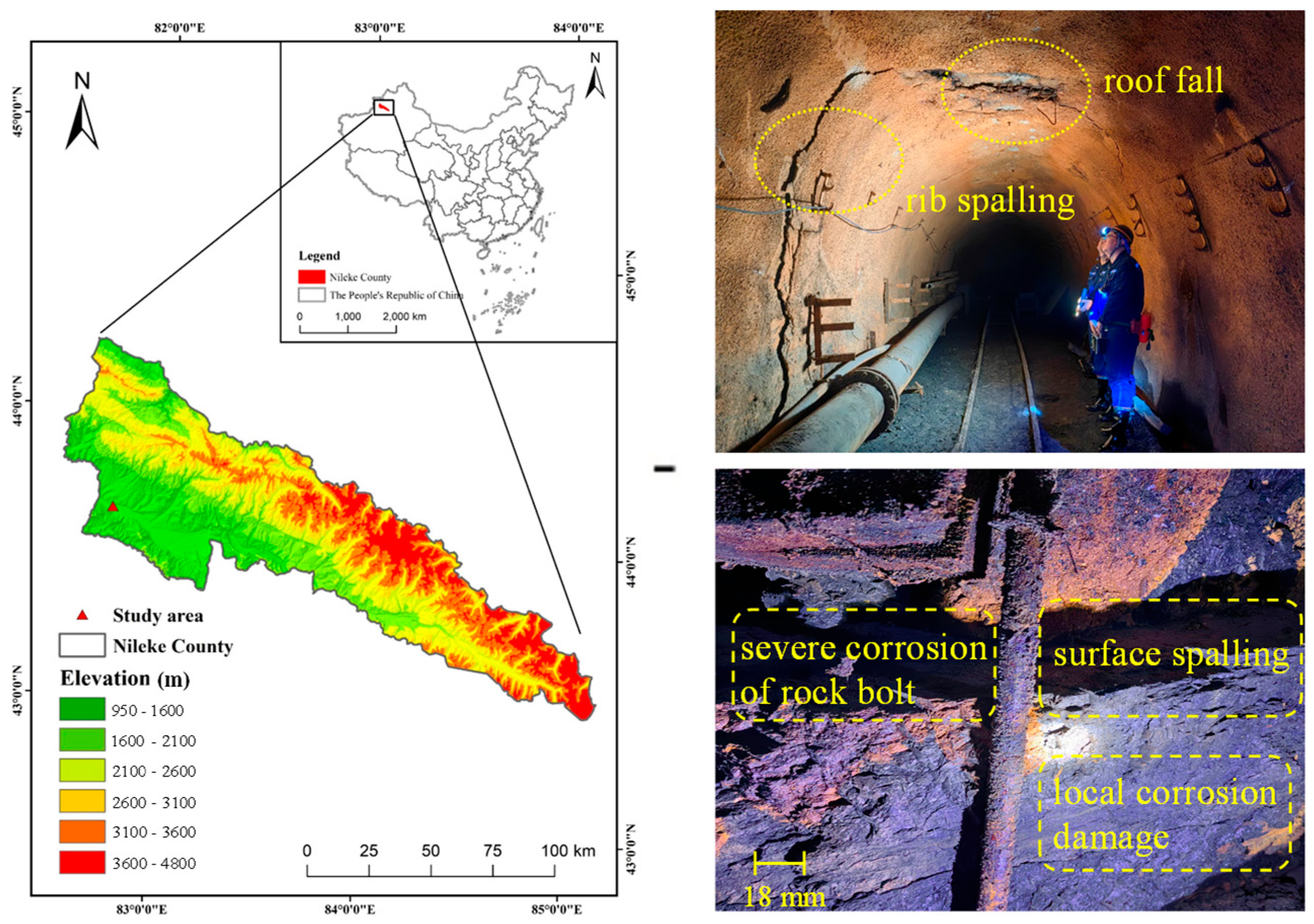
In underground roadways, the service environment of support structures is complex and harsh. Moisture and chemical corrosion can increase the risk of anchorage system instability [37,38]. Sanxin Coal Mine, located in Nileke County, Xinjiang Uygur Autonomous Region, China, was selected as the engineering background of this study, The study area location and field images are provided in Figure 1. The mine had been shut down for three years due to policy-related reasons, during which normal drainage was not maintained. As a result, water gradually accumulated in the goaf and eventually flooded the mine. During the drainage and production resumption process, severe deformation occurred in the main roadway. Field investigation showed that the support system had suffered serious water-induced corrosion, which threatened roadway stability and affected mine recovery and future safe production [39,40]. Therefore, this study combines electrochemical accelerated corrosion tests, uniaxial tensile tests, and FLAC3D numerical simulation to investigate rock bolt deterioration and roadway deformation relevant to alkaline water-flooded roadways. The objectives are to evaluate the comparative effects of pH level and corrosion duration on bolt deterioration within a controlled alkaline-sulfate accelerated electrochemical system, and to clarify the symmetry evolution of roadway displacement, stress redistribution, and plastic-zone development after bolt deterioration. The main innovations of this study are twofold. First, electrochemical accelerated corrosion tests conducted in alkaline sulfate solution under an externally imposed current were combined with tensile tests and FLAC3D numerical simulation to establish a link between experimentally obtained bolt-capacity degradation and roadway deformation evolution. Second, the symmetry evolution of roadway displacement, stress redistribution, and plastic-zone development under different experimentally derived bolt deterioration levels was quantitatively evaluated, providing a basis for understanding roadway stability degradation associated with support deterioration in water-flooded conditions.

2. Materials and Methods

2.1. Specimen Preparation

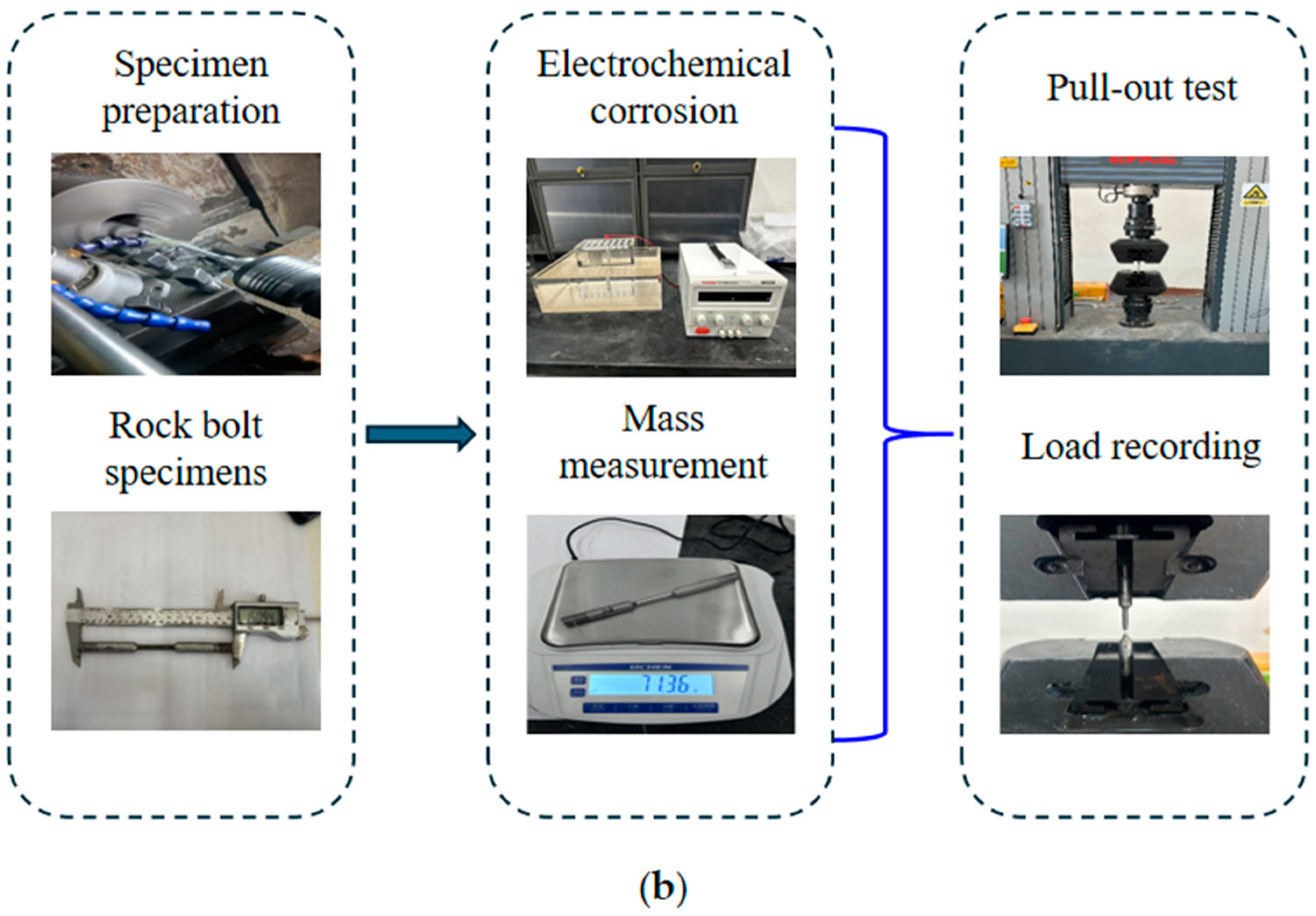
Original rock bolts employed in roadway support at Sanxin Coal Mine, Xinjiang were adopted as test specimens. According to GB/T 228.1-2021 [41], the original rock bolts were machined into standard reduced-section tensile specimens. The processed specimen had a total length of 150 mm, and the gripping sections at both ends with a diameter of 10 mm were used for clamping during the tensile test. The middle reduced section served as the main test segment, with a minimum diameter of 5 mm. The geometry of the machined tensile specimen is shown in Figure 2.
The specimens were then subjected to controlled electrochemical accelerated corrosion in alkaline sulfate solutions under an externally imposed current to obtain comparative material-level deterioration parameters relevant to water-flooded roadway conditions, rather than to reproduce natural field corrosion. To ensure that corrosion occurred only in the parallel section and that the gripping sections did not affect the subsequent mechanical test, both gripping ends were sealed with wax. After corrosion, the specimens were tested using a microcomputer-controlled electronic universal testing machine. Uniaxial tensile loading was applied under displacement control at a loading rate of 2 mm/min until failure. During the test, the load–displacement curve and key mechanical parameters were recorded in real time by the data acquisition system, and the basic mechanical properties of the specimens were obtained. The machined cylindrical specimens were used to obtain reproducible and comparable material-level degradation parameters under controlled alkaline corrosion conditions. This preparation method allowed the tensile responses of specimens subjected to different pH values and corrosion durations to be evaluated on a consistent geometric basis. Therefore, the obtained results mainly characterize the corrosion-induced degradation of the bolt steel matrix and effective load-bearing section, providing a basis for the subsequent equivalent reduction in bolt mechanical parameters in the numerical model. The influence of full-size rib geometry and anchorage-interface behavior will be further considered in future studies.

2.2. Test Equipment

2.2.1. Electrochemical Corrosion Equipment

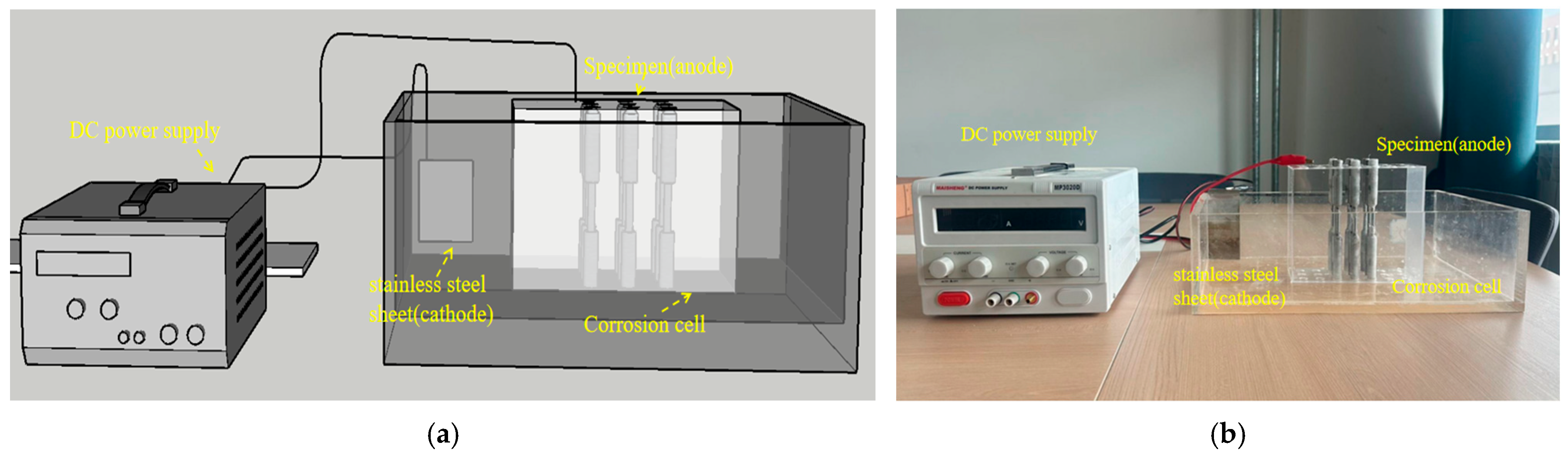
In this study, a self-developed electrochemical accelerated corrosion device was used to conduct rock bolt corrosion tests, aiming to provide a controlled accelerated representation of bolt deterioration in an alkaline sulfate environment relevant to water-flooded roadways. The schematic diagram of the device is shown in Figure 3. The device was designed based on the principle of electrochemical corrosion and mainly consisted of an adjustable DC regulated power supply, a customized acrylic corrosion tank, high-precision circuit-board wires, and stainless-steel components. During the test, the rock bolt specimen was connected to the positive terminal of the adjustable DC power supply and served as the anode, while the stainless-steel plate was connected to the negative terminal and served as the cathode. This electrode configuration promoted anodic dissolution on the exposed parallel section of the bolt specimen and formed a stable electrochemical corrosion circuit. To prevent premature failure caused by corrosion damage in the gripping sections during the subsequent tensile test, and to ensure that fracture occurred within the designed corrosion zone, the bolt specimens were pretreated before corrosion. The gripping sections at both ends were sealed with wax at a thickness of 2–3 mm to form a dense protective layer. As a result, only the effective parallel section in the middle of the specimen was exposed, ensuring that corrosion occurred only in the test section.

2.2.2. Mechanical Property Testing Equipment

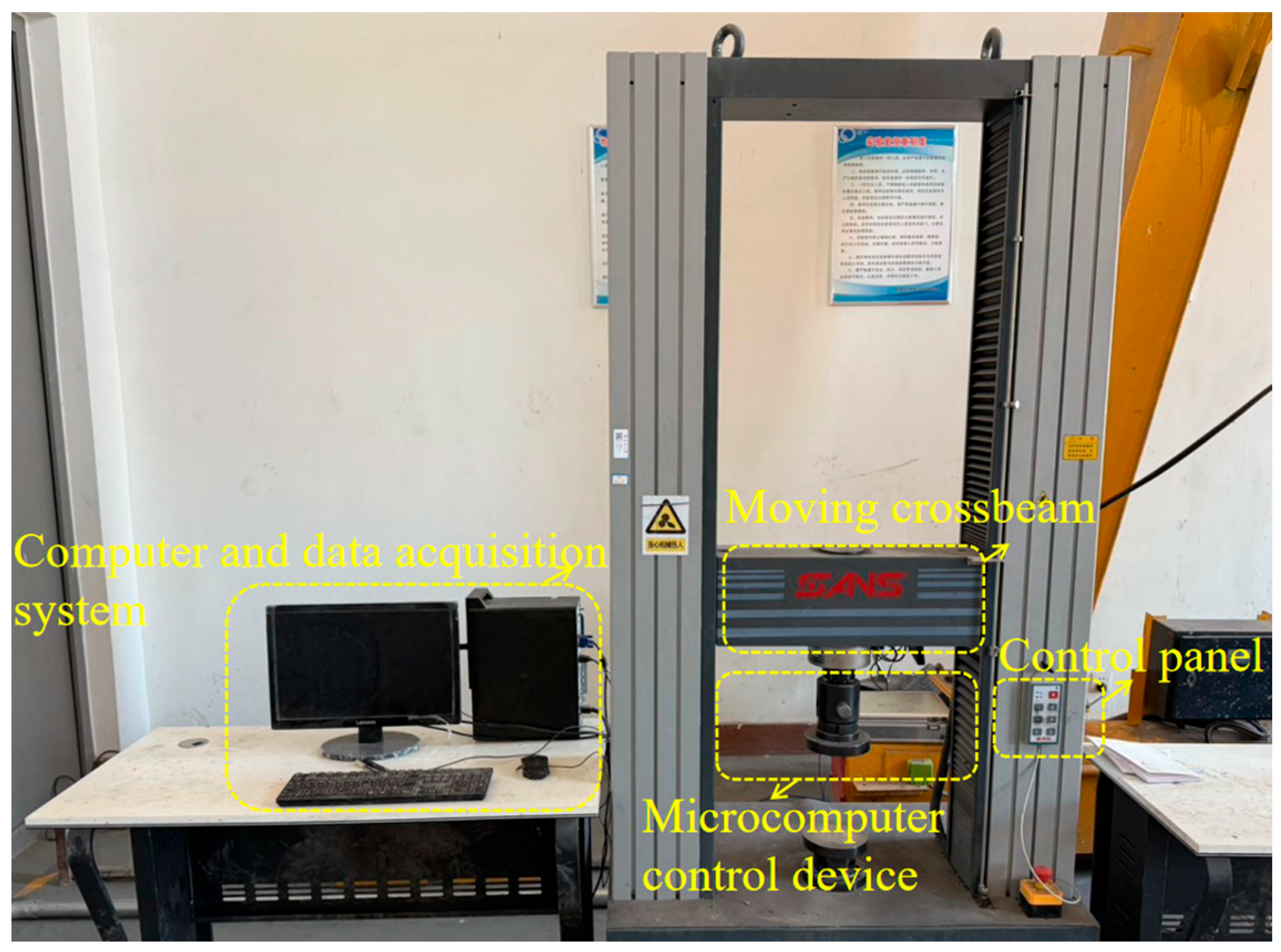
All uniaxial tensile tests in this study were performed using a CMT5305 microcomputer-controlled electronic universal testing machine manufactured by MTS Systems (China) Co., Ltd. (Shanghai, China), as shown in Figure 4. The testing machine is equipped with a high-precision monitoring system, and accurate data can be obtained through its supporting software. The machine provides a maximum test force of 300 kN and an axial displacement range of 0–800 mm. The whole testing process is controlled by a microcomputer to ensure the accuracy and reliability of the test results.

2.3. Experimental Procedure and Scheme

2.3.1. Electrochemical Corrosion Scheme

The corrosion process of rock bolts in the corrosive environment mainly includes anodic dissolution and cathodic reduction. In an alkaline environment, Fe is oxidized to Fe2+ at the anode, and Fe2+ reacts with OH to form Fe(OH)2. In the presence of dissolved oxygen, Fe(OH)2 is further oxidized to Fe(OH)3. The main electrochemical and subsequent oxidation reactions involved in the corrosion process are shown in Equations (1)–(3).
Fe   F e 2 + + 2 e
F e 2 + + 2 O H F e ( O H ) 2
4 F e ( O H ) 2 + 2 H 2 O + O 2 4 F e ( O H ) 3
The experimental scheme is listed in Table 1. The pretreated bolt specimens were placed in the self-developed electrochemical accelerated corrosion device in the designed position. Based on the actual underground water environment, sodium sulfate solution was selected as the corrosive medium. The 10% sodium sulfate solution adjusted to the target pH value was slowly poured into the acrylic corrosion tank until the effective parallel section of the specimen was completely immersed. The liquid level was slightly higher than the upper edge of the parallel section to ensure full contact between the corrosion area and the corrosive medium. The pH value of the solution was adjusted by adding sodium hydroxide, and three alkaline environments with pH values of 9, 11, and 13 were established to represent different alkaline conditions. The experiment was carried out with a constant current of 20 mA.
A full-factorial experimental design was adopted in this study. Three corrosion durations, namely 3 d, 6 d, and 9 d, were set for each alkaline environment, and three parallel specimens were prepared for each group to ensure the reliability of the experimental results. In this study, only the parallel section of the specimen was exposed to the corrosive solution, while the gripping sections were sealed with wax. The exposed diameter and gauge length of the parallel section were 5 mm and 50 mm, respectively. Therefore, the exposed lateral surface area was 7.85 cm2. The corrosion current was set to 20 mA, corresponding to a current density of 2.55 mA/cm2, which was suitable for obtaining different relative corrosion deterioration levels within a limited experimental period. According to Faraday’s law, and assuming that the main anodic dissolution process involved the oxidation of metallic iron to ferrous ions with the release of two electrons, the theoretical mass losses under a current of 20 mA after 3 d, 6 d, and 9 d were approximately 1.50 g, 3.00 g, and 4.50 g, respectively. These values were used as theoretical references for evaluating the intensity of accelerated corrosion. It should be noted that the theoretical mass loss was not used as an exact prediction of the measured mass loss, because the actual corrosion process may be affected by several coupled factors, including passive-film formation and local breakdown, sulfate-ion participation, dissolved oxygen, localized corrosion, and the removal of loose corrosion products during post-test cleaning. Because continuous field corrosion-rate data during the three-year flooding period were unavailable, the acceleration factor and equivalent field exposure duration were not directly calculated in this study. Therefore, the corrosion durations of 3 d, 6 d, and 9 d were mainly used to represent different relative deterioration levels under controlled accelerated corrosion conditions, rather than exact equivalent field exposure times.
At each corrosion interval, three corresponding specimens were removed from the corrosion tank and immediately cleaned. The corrosion product removal procedure was conducted with reference to the general principles of GB/T 16545-2025 [42] for cleaning corroded metal specimens. The residual corrosive solution and loose corrosion products on the specimen surface were first rinsed with deionized water. Then, the attached corrosion products were gently removed using a soft brush to minimize additional removal of the base metal. After cleaning, the specimen surface was wiped with absolute ethanol to accelerate drying. Finally, the specimens were placed in a dry and ventilated oven for 24 h to obtain a stable surface condition before weighing and subsequent mechanical testing.

2.3.2. Mechanical Property Testing Scheme

The mechanical properties of the corroded rock bolts were tested using a microcomputer-controlled electronic universal testing machine, following GB/T 228.1-2021. Before testing, the wax sealing layers on the threaded sections at both ends of the specimens were removed. Special wedge grips matching the specimen threads were used to clamp both ends accurately, ensuring firm and uniform loading and avoiding slipping or eccentric loading during the test.
The tensile test was conducted under displacement control at a loading rate of 2 mm/min and the corresponding nominal strain rate was approximately 6.67 × 10⁻⁴ s−1. This allowed the effect of corrosion degree on mechanical properties to be compared. Loading continued until the tensile load reached the peak value and the specimen fractured, after which the test stopped automatically. During the test, the full load–displacement curve, peak load, fracture displacement, and other key parameters were recorded in real time by the data acquisition system, providing complete data for analyzing the corrosion mechanism and mechanical property degradation.

3. Results and Discussion

3.1. Mass Loss Rate and Corrosion Rate of Rock Bolts

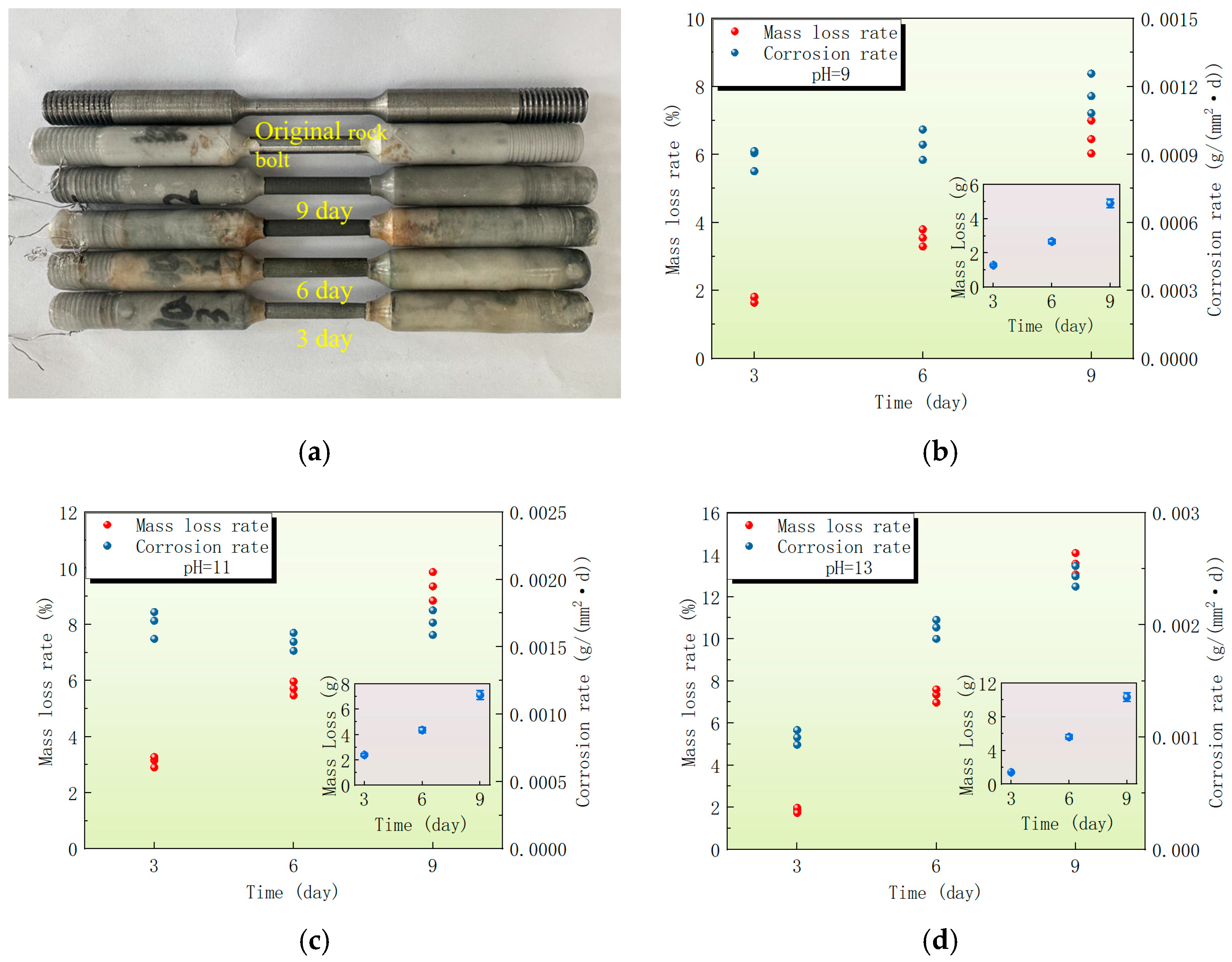
Figure 5 shows the variations in mass loss rate, corrosion rate, and mass loss of threaded steel specimens under the controlled accelerated electrochemical conditions. In all three pH test groups, the mass loss rate generally increased as the corrosion duration extended from 3 d to 9 d. At the same corrosion duration, the specimens tested in the pH = 11 and pH = 13 solutions generally exhibited greater mass loss than those tested in the pH = 9 solution, with the greatest measured deterioration observed in the pH = 13 group after 9 d. These observations represent comparative results obtained within the present accelerated electrochemical test system.
Under the pH = 9 condition, the relatively slow increase in corrosion damage indicates that the passive film may still provide a certain protective effect. Under the pH = 11 condition, the mass loss and corrosion rate increased more obviously, suggesting that the stability of the passive film was reduced under the combined effects of alkalinity, sulfate ions, dissolved oxygen, and external current. Under the pH = 13 condition, the highest mass loss was observed, especially after longer corrosion duration. This phenomenon should be attributed to the combined influence of strong alkalinity, sulfate-ion participation, oxygen availability, electrochemical overpotential, and forced anodic dissolution, rather than alkalinity alone.
Overall, the corrosion damage observed in this study was controlled by both corrosion duration and the coupled electrochemical environment. A longer corrosion duration provided more time for cumulative anodic dissolution and corrosion-product evolution, while the alkaline sulfate solution and externally applied current jointly affected passive-film stability and local corrosion development. Therefore, the increase in mass loss under higher pH conditions should be interpreted as the result of accelerated corrosion under controlled electrochemical conditions, rather than as a direct representation of natural alkaline corrosion behavior.

3.2. Variation in Mechanical Properties of Corroded Rock Bolts

3.2.1. Tensile Test

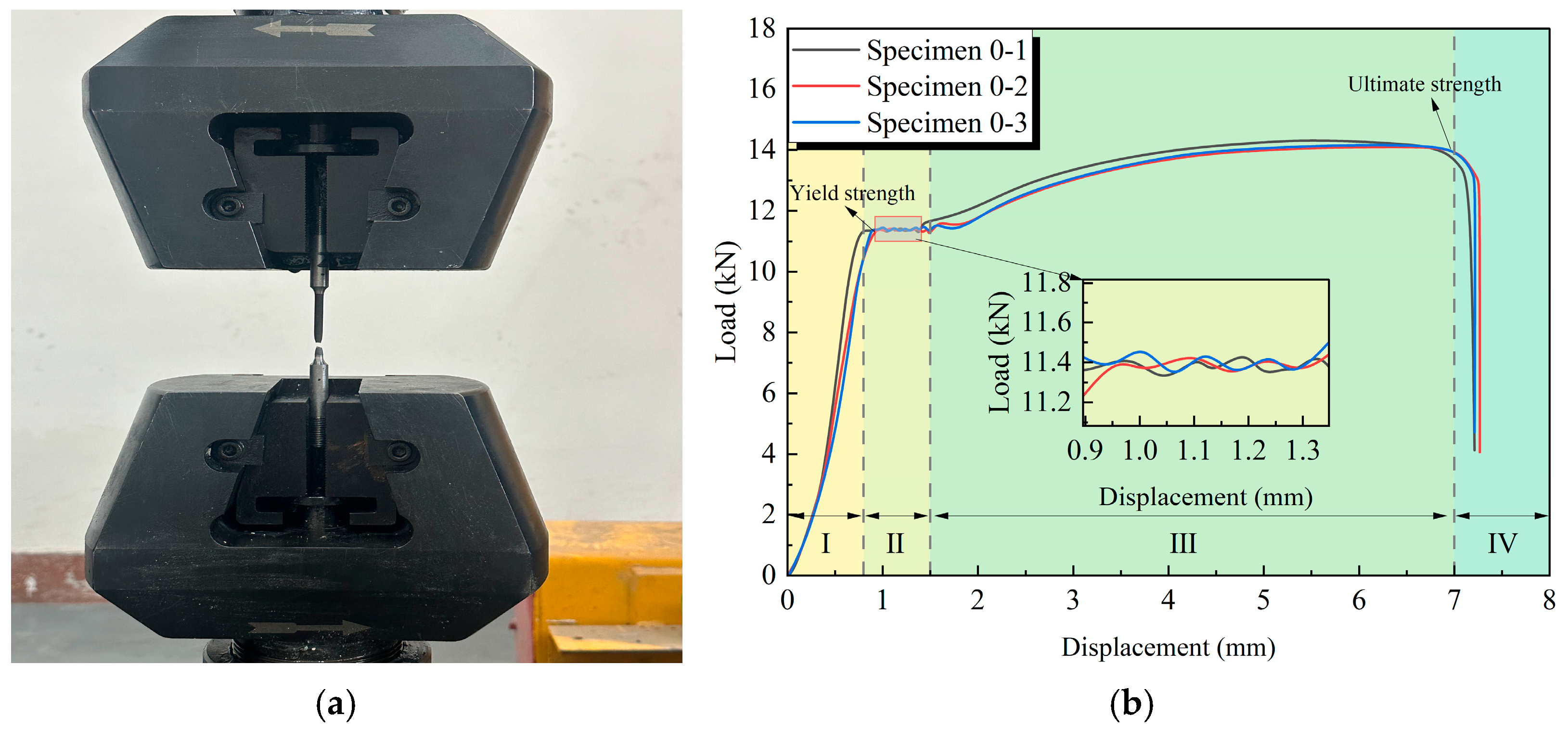
The rock bolt specimens subjected to controlled electrochemical accelerated corrosion were tested using a universal testing machine. In the corrosion tests, the specimens were exposed to alkaline sulfate solutions with different pH levels under an externally imposed current to obtain comparative deterioration levels within a limited laboratory period. Corrosion-induced loss of the effective load-bearing section may reduce the residual axial bearing capacity of the bolt steel. Therefore, tensile tests were conducted to evaluate the changes in mechanical response under different accelerated electrochemical test conditions and corrosion durations. These test conditions were used for comparative analysis rather than to directly reproduce natural field corrosion. The tensile test setup and the mechanical response of the uncorroded specimens are shown in Figure 6.
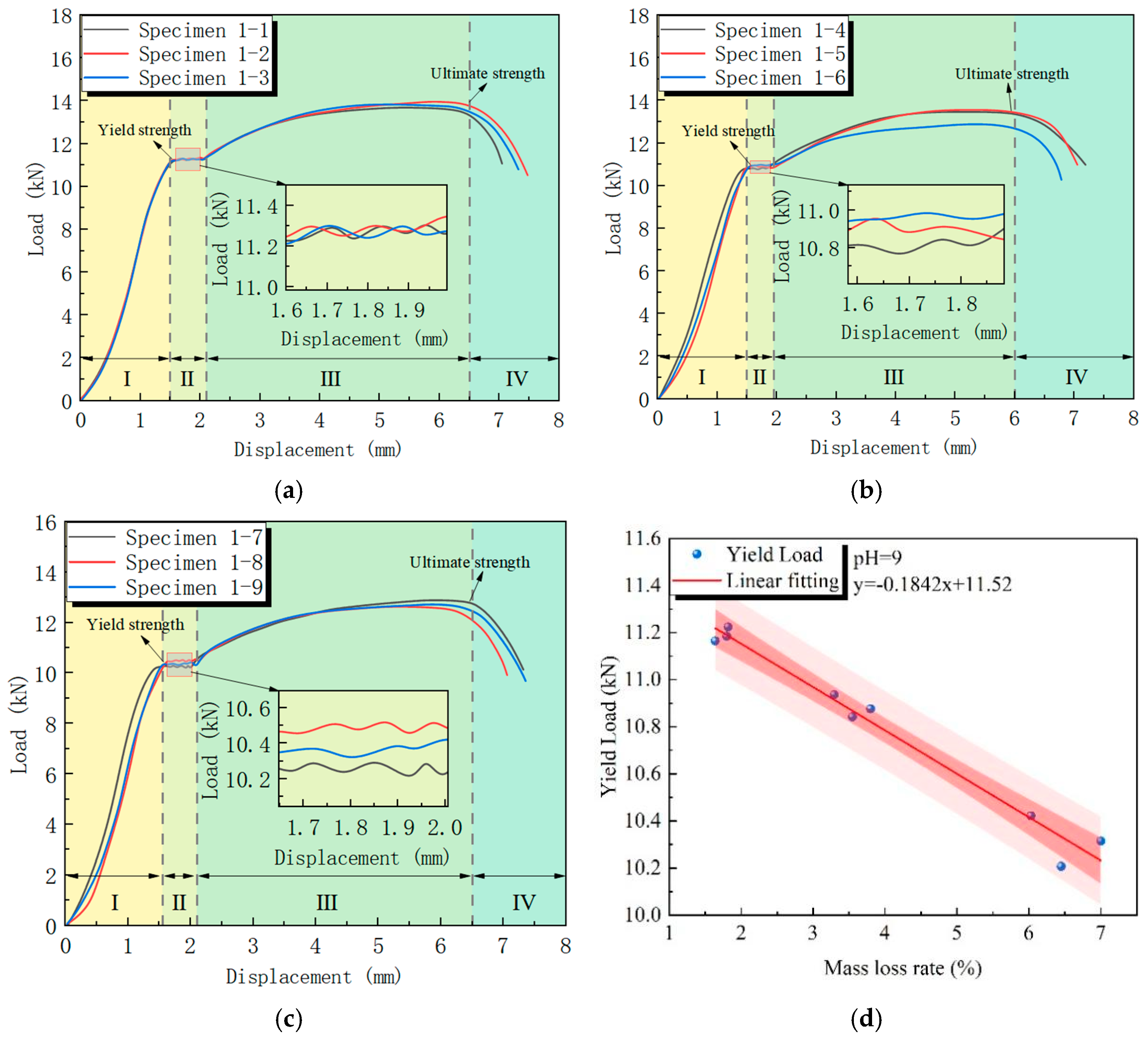
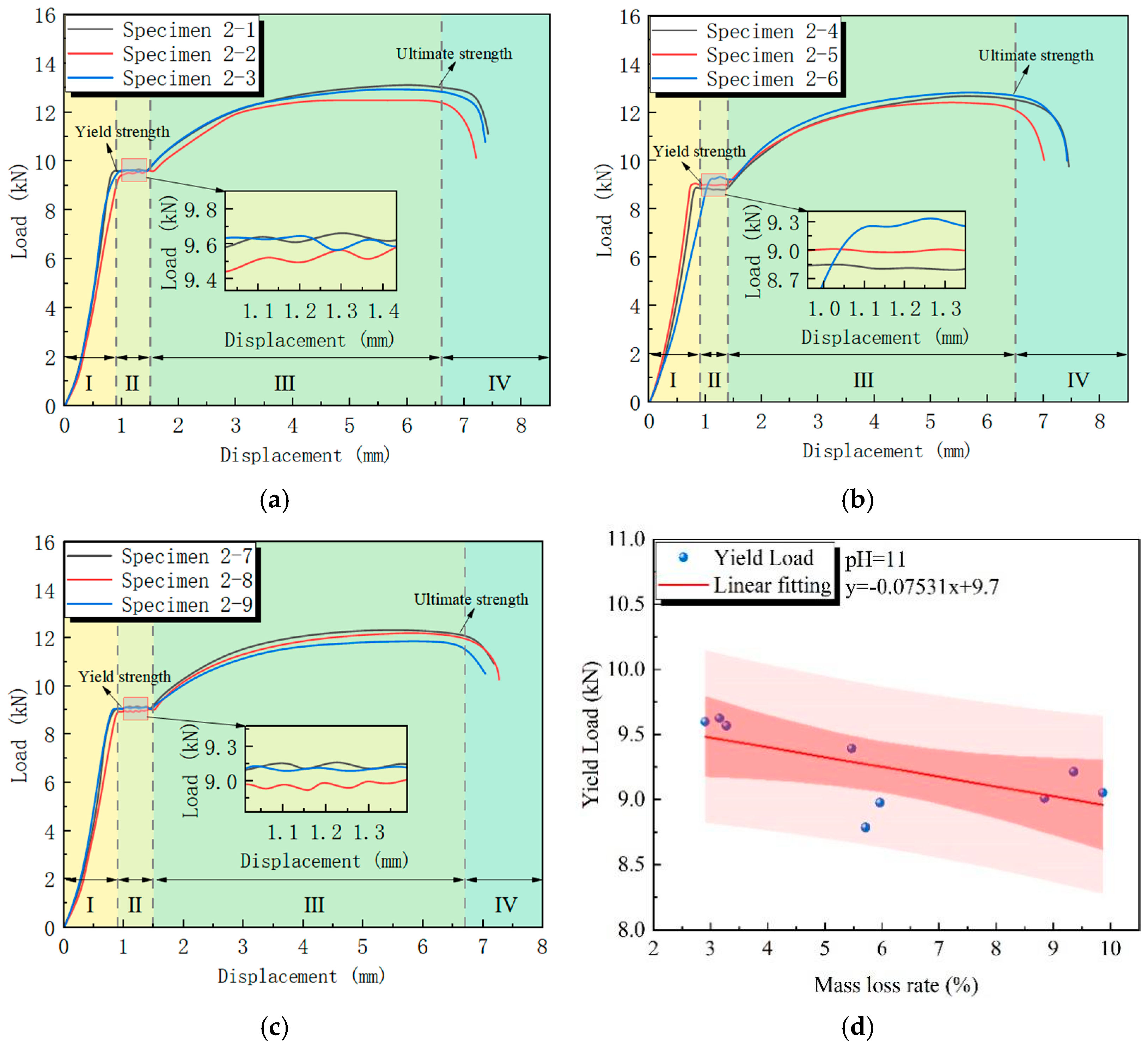
Figure 7 shows that, under the pH = 9 accelerated electrochemical test condition, the load–displacement curves of the threaded steel specimens still exhibit four stages: elastic deformation, yielding, strain hardening, and post-peak softening. This suggests that the tested corrosion conditions did not fundamentally change the overall tensile response pattern of the specimens. As the corrosion duration increases from 3 d to 9 d, both the yield load and ultimate load decrease. The yield plateau also changes from relatively stable to slightly fluctuating, suggesting that corrosion reduces the effective load-bearing section and increases local stress concentration and nonuniform yielding. The fitted equation was y = −0.1842x + 11.52, with R2 = 0.76 and p = 0.002. The relatively high R2 value indicates that the linear model provides a good description of the variation in yield load with mass loss rate, while the p-value demonstrates whether this decreasing relationship is statistically supported within the present dataset. These results indicate that, within the pH = 9 accelerated electrochemical test group, corrosion-induced loss of the effective load-bearing section was associated with reductions in yield capacity and stable deformation capacity.
Figure 8 shows that, under the pH = 11 alkaline corrosion environment, the tensile process of the threaded steel specimens still includes four stages: elastic deformation, yielding, strain hardening, and post-peak softening. However, their bearing capacity decreases as the corrosion degree increases. With the increase in mass loss rate, the yield load and ultimate load generally decrease, and the fluctuation during the yielding stage becomes more pronounced. This indicates that corrosion weakens the effective load-bearing section and increases local stress concentration. The yield load is negatively correlated with the mass loss rate, with a fitting equation of y = −0.07531x + 9.70. The regression analysis yielded R2 = 0.63 and p = 0.011, indicating that the decreasing relationship between mass loss rate and yield load was statistically supported within the pH = 11 test group. Compared with a perfect linear fit, the moderate R2 value also suggests a certain degree of dispersion in the mechanical response of the specimens. With increasing corrosion degree, the bearing capacity of the specimens tended to decrease.
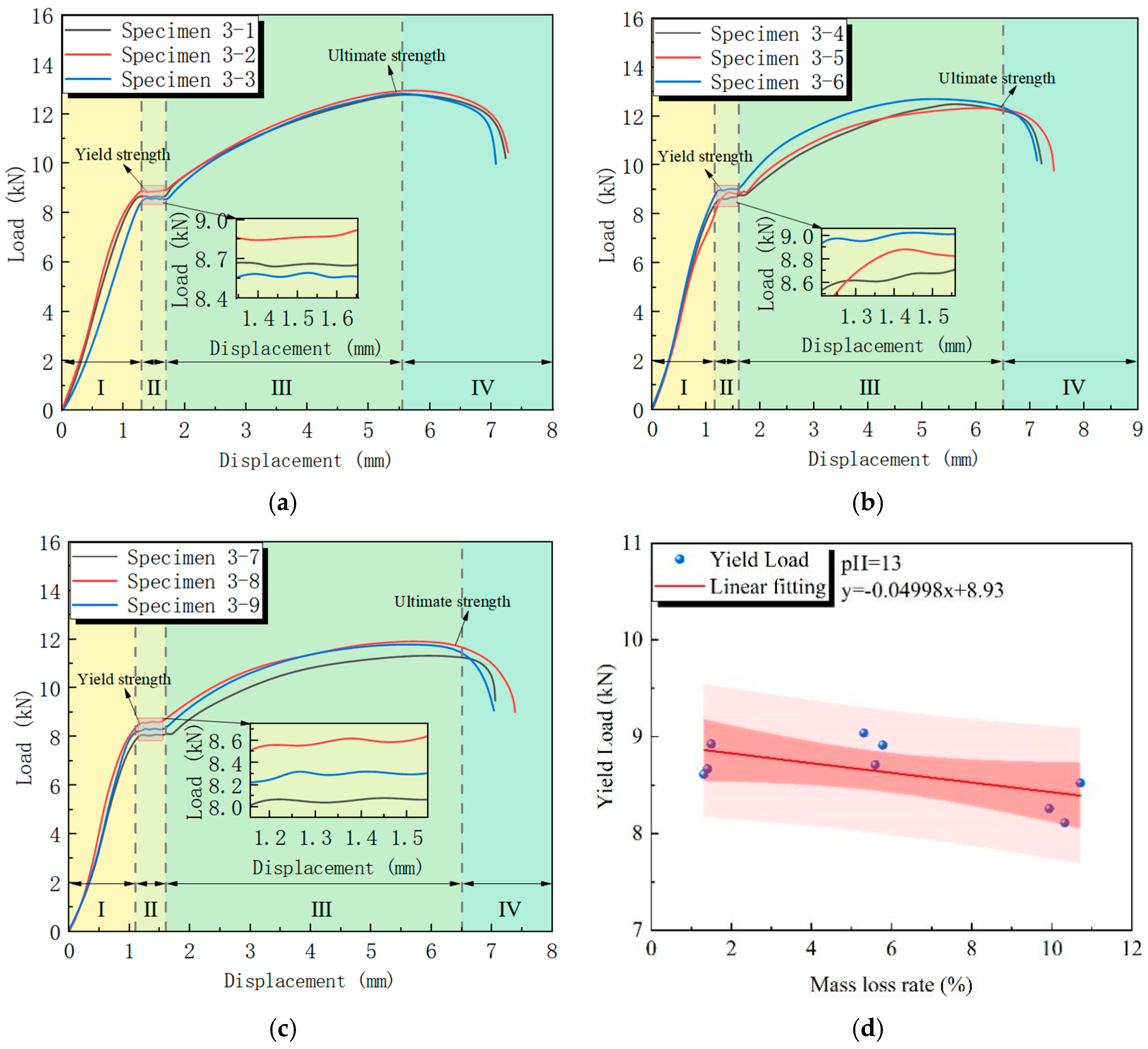
Figure 9 shows the tensile response of the specimens tested in the pH = 13 alkaline sulfate solution under an externally imposed current. Within this accelerated electrochemical test group, the yield load and ultimate load generally tended to decrease with increasing corrosion duration, while fluctuations during the yielding stage became more evident. These observations suggest that corrosion-induced nonuniform section loss may have affected the tensile response of the specimens. The relationship between mass loss rate and yield load was fitted as y = −0.04998x + 8.93, indicating a negative tendency within the tested data range. The regression analysis yielded R2 = 0.84 and p < 0.001, indicating that the decreasing relationship between mass loss rate and yield load was statistically supported within the pH = 13 accelerated electrochemical test group. The relatively high R2 value indicates that the linear regression model provided a good description of the variation in yield load within the present dataset. Although the fitted slope was relatively small, the variation in yield load may not be explained solely by the average mass loss rate, but may also be associated with nonuniform cross-sectional weakening under the coupled effects of the alkaline sulfate solution and the externally imposed current. The measured reduction in bearing capacity provides the mechanical parameter basis for evaluating the roadway response under different experimentally derived bolt deterioration levels in the subsequent numerical simulation.
The tensile test results show that the specimens subjected to the controlled accelerated electrochemical conditions retained four basic response stages: elastic deformation, yielding, strain hardening, and post-peak softening. With increasing corrosion duration and mass loss rate, the yield load and ultimate load generally decreased, while fluctuations during the yielding stage became more evident. These results indicate that the experimentally induced deterioration was associated with reductions in the effective load-bearing capacity and stable deformation capacity of the specimens, providing the mechanical parameter basis for the subsequent numerical analysis. Under different pH conditions, the yield load showed a negative tendency with increasing mass loss rate, suggesting that alkaline corrosion continuously weakens the axial bearing capacity and stable deformation capacity of rock bolts. These results provide an important mechanical basis for explaining the subsequent increase in roadway deformation, enhanced stress redistribution, and expansion of the plastic zone caused by the degradation of corroded bolt support.
The regression results in Figure 7, Figure 8 and Figure 9 show that the yield load generally decreased with increasing mass loss rate. The fitted slopes were −0.1842, −0.07531, and −0.04998 kN/% for pH = 9, pH = 11, and pH = 13, respectively. This indicates that the degradation of yield load under stronger alkaline accelerated corrosion conditions may be affected not only by the average mass loss rate but also by localized corrosion and nonuniform cross-sectional weakening. The shaded bands in Figure 7, Figure 8 and Figure 9 represent the 95% confidence intervals of the fitted regression lines, reflecting the uncertainty of the linear relationships between mass loss rate and yield load. Considering that each pH–duration condition contained only three parallel specimens, these statistics are used to describe comparative trends within the present dataset rather than to establish a general predictive relationship.

3.2.2. Analysis of Corrosion Factors

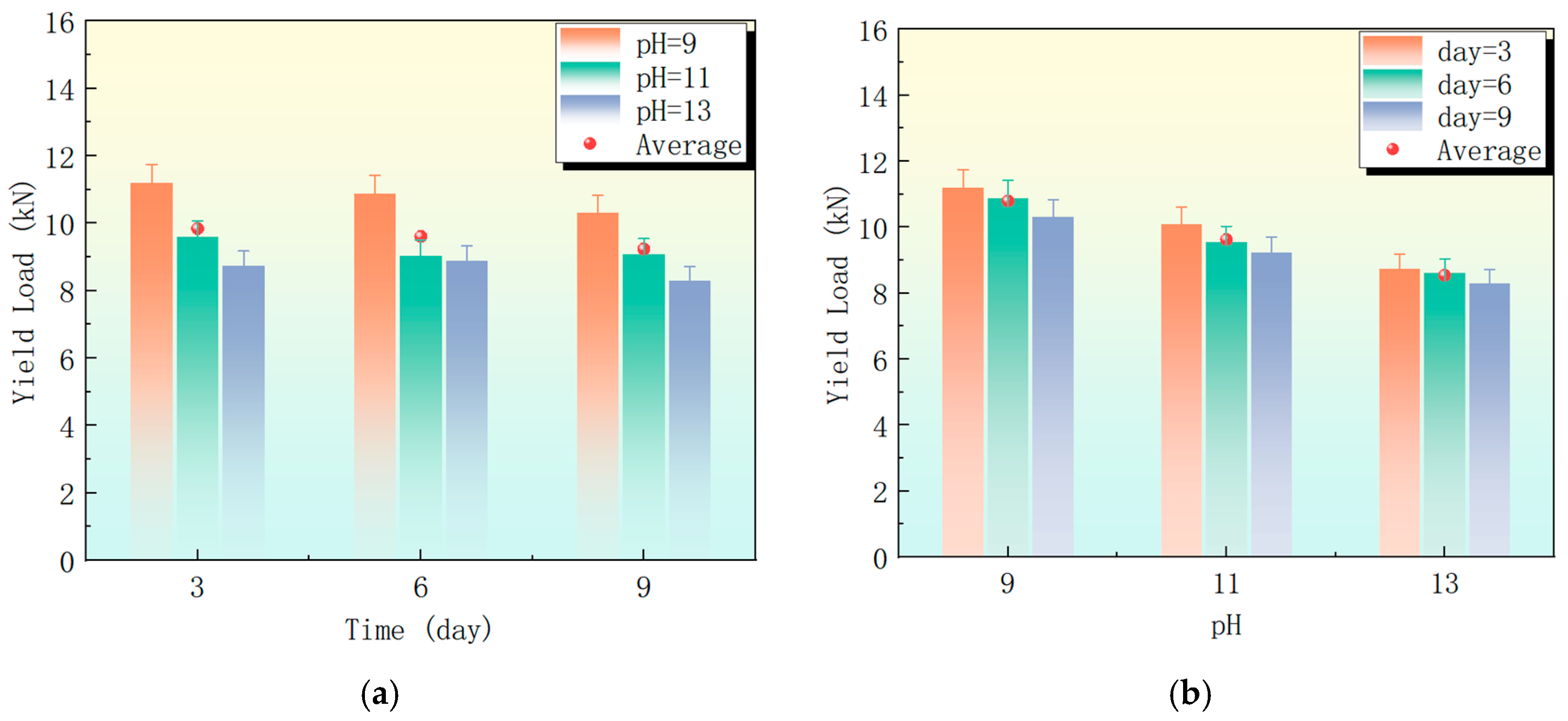
Figure 10 shows the effects of pH value and corrosion duration on the yield capacity of the rock bolt specimens. Overall, under the same corrosion duration, the mean yield load tended to decrease with increasing pH value, generally following the order of pH = 9 > pH = 11 > pH = 13. This indicates that, under the present accelerated corrosion conditions, a higher alkaline level was associated with a greater reduction in the load-bearing capacity of the rock bolts. Under the same pH condition, the mean yield load also showed a decreasing tendency as the corrosion duration increased from 3 d to 9 d, suggesting a time-dependent accumulation of corrosion-induced deterioration. In particular, the specimens exposed to the pH = 13 environment generally exhibited relatively low yield loads, indicating that strong alkaline sulfate conditions combined with external current may promote greater weakening of the effective load-bearing section and yielding performance of the rock bolts. The increase in pH value and the extension of corrosion duration jointly contributed to the reduction in yield load under the tested accelerated corrosion conditions. This reduction may weaken the axial load-bearing capacity and stable deformation capacity of rock bolts, thereby reducing their supporting and restraining effect on the roadway surrounding rock.
The experimental results in this section suggest that alkaline sulfate corrosion under an externally applied current can lead to progressive degradation of the yield capacity of threaded steel. The deterioration became more evident under higher pH values and longer corrosion durations within the tested range. The reduction in the load-bearing capacity of rock bolts provides a mechanical basis for explaining the subsequent increase in roadway deformation, enhanced stress redistribution, and expansion of the plastic zone observed in the numerical simulation.

4. Numerical Simulation Study on Roadway Surrounding Rock Deformation Under Rock Bolt Deterioration

4.1. Establishment of the Numerical Model

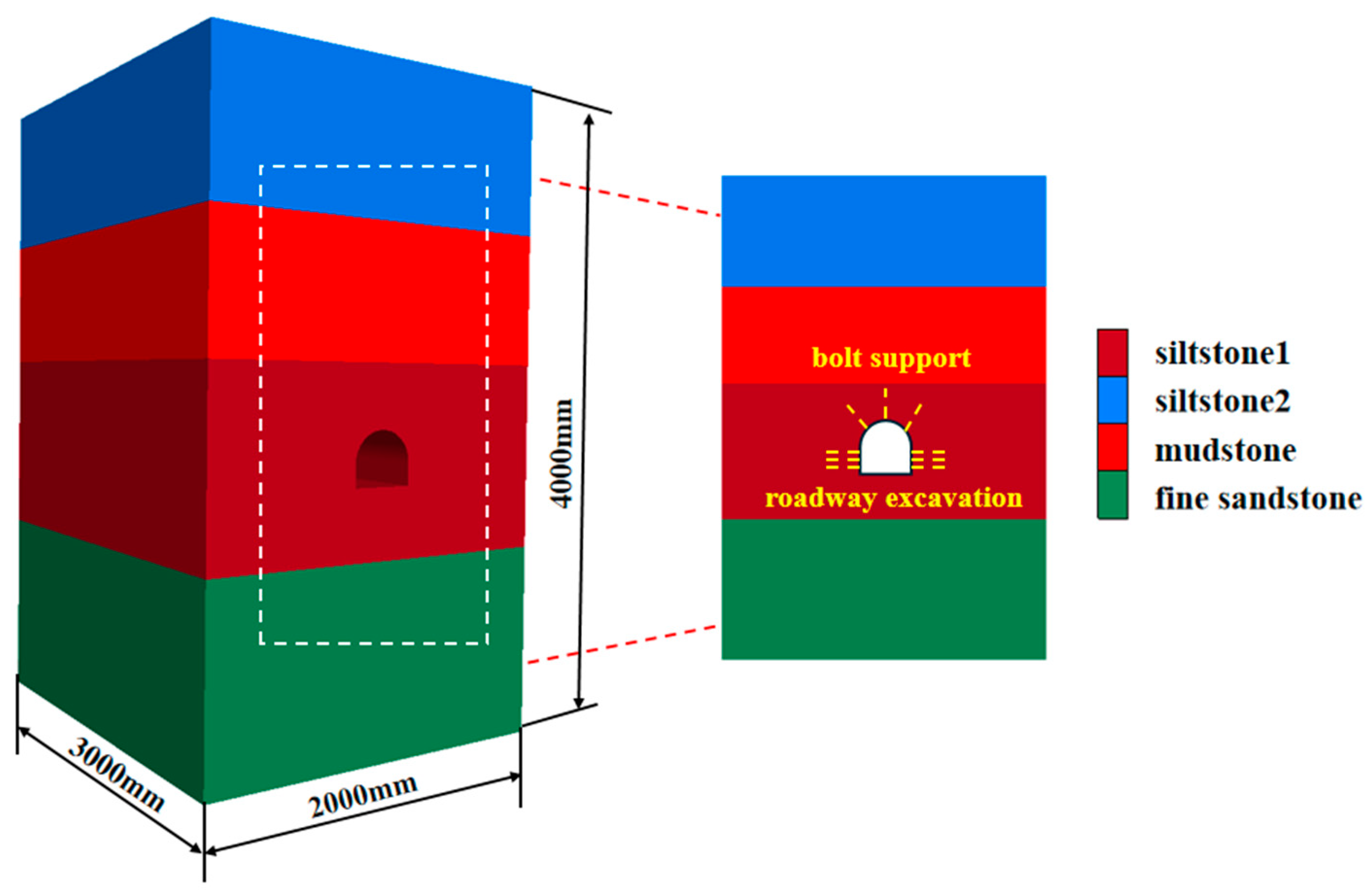
Based on the geological conditions of a roadway in Sanxin Coal Mine, a numerical model was established using FLAC3D 7.0, as shown in Figure 11. The model dimensions were 30 m × 20 m × 40 m. In the vertical direction, the model was divided into four rock layers: fine sandstone, siltstone, mudstone, and siltstone. The Mohr–Coulomb constitutive model with a non-associated flow rule was adopted, and the corresponding physical and mechanical parameters were assigned to each rock layer. In the numerical model, the dilation angle was set to 0° for all rock layers to avoid overestimating volumetric dilation of the surrounding rock. Shear yielding was controlled by the cohesion and internal friction angle of each lithology, while tensile failure was governed by the tensile strength parameter listed in Table 2. When the tensile stress exceeded the assigned tensile strength of the corresponding rock layer, the tensile cutoff criterion was activated. Displacement constraints and the initial in-situ stress field were applied to the model boundaries. A roadway excavation zone was preset in the middle of the model, and the initial stress equilibrium was completed before excavation. The model was then used to compare the stability characteristics of the roadway surrounding rock under different corrosion conditions. The boundary conditions were assigned as follows. The normal displacement of the two boundaries in the x-direction was constrained by fixing the x-direction velocity, and the normal displacement of the two boundaries in the y-direction was constrained by fixing the y-direction velocity. The bottom boundary was fixed in all displacement directions. A vertical normal stress of 26.5 MPa was applied to the top boundary to represent the equivalent overburden load. The initial in-situ stress field was generated using a lateral pressure coefficient of 0.91. Therefore, the initial vertical stress was approximately 26.5 MPa, and the corresponding horizontal stress was approximately 24.1 MPa. Initial stress equilibrium was achieved before roadway excavation. Therefore, the initial vertical stress was approximately 26.5 MPa, and the corresponding horizontal stress was approximately 24.1 MPa. Initial stress equilibrium was first achieved before roadway excavation.
To accurately simulate the mechanical response of the rock mass and the performance of the anchorage system under bolt deterioration, appropriate constitutive parameters were selected for both the rock mass and the rock bolts. The mechanical parameters of the rock mass were initially determined based on geological data from Sanxin Coal Mine and parameter ranges reported in relevant studies for similar lithologies. After the initial stress equilibrium was achieved, trial calculations were conducted for roadway excavation and support conditions. The simulated deformation pattern was then compared with the main field-observed deformation characteristics, including roof subsidence, floor heave, sidewall convergence, and the location of the damaged zone. When necessary, the parameters were adjusted within reasonable geological ranges so that the simulated deformation and failure pattern was consistent with the observed roadway response. It should be noted that continuous field monitoring data were unavailable during the previous shutdown and water-flooding period; therefore, the parameter checking in this study was mainly qualitative and based on deformation patterns rather than strict quantitative calibration using measured displacement values.
The parameters used in the numerical simulation are listed in Table 2 and Table 3. To establish a connection between the corrosion tests and the numerical simulation, the deterioration of rock bolts was introduced by reducing the equivalent yield strength of the cable elements. The average yield load of the uncorroded specimens was taken as the reference value, and the ratios between the average yield loads of the corroded specimens and that of the uncorroded specimens were used to determine the reduction coefficients. It should be noted that this treatment is an equivalent simplification of corrosion-induced bolt deterioration. In the present model, the reduction in equivalent yield strength was used to represent the decrease in the axial load-bearing capacity of corroded bolts obtained from the tensile tests. This approach enabled a direct connection between the laboratory mechanical degradation results and the numerical simulation. However, actual corrosion may also induce nonuniform cross-sectional loss, local stress concentration, stiffness degradation, bolt–grout interface weakening, bond-strength reduction, and anchorage slip. These factors were not explicitly simulated in the present model. Therefore, the numerical results should be interpreted as the relative influence of bolt bearing-capacity degradation on roadway deformation and stress redistribution, rather than as a complete representation of all deterioration mechanisms of the anchorage system. Considering the field flooding condition, observed corrosion degree of the bolts, and engineering simplification, the reduction coefficients for pH = 9, pH = 11, and pH = 13 were determined as 0.955, 0.890, and 0.825, respectively. Therefore, the equivalent yield strengths of the bolts were reduced from 2.00 × 10 8 Pa to 1.91 × 10 8 Pa, 1.78 × 10 8 Pa, and 1.65 × 10 8 Pa under pH = 9, pH = 11, and pH = 13 conditions, respectively.
Field investigation at Sanxin Coal Mine confirmed severe roadway deformation after long-term flooding and drainage recovery, including roof subsidence, floor heave, sidewall convergence, and visible corrosion of the support system. However, due to mine shutdown and water-flooding conditions, systematic convergence and roof-settlement monitoring had not been conducted before drainage recovery. Therefore, quantitative field monitoring data were unavailable for direct validation of the simulated displacement magnitudes. The reported displacement values should therefore be regarded as numerical indicators for comparison rather than exact predictions of field displacement. Future field monitoring at Sanxin Coal Mine will be used to further calibrate and validate the numerical model.

4.2. Analysis of Numerical Simulation Results

4.2.1. Evolution of Roadway Displacement After Rock Bolt Deterioration

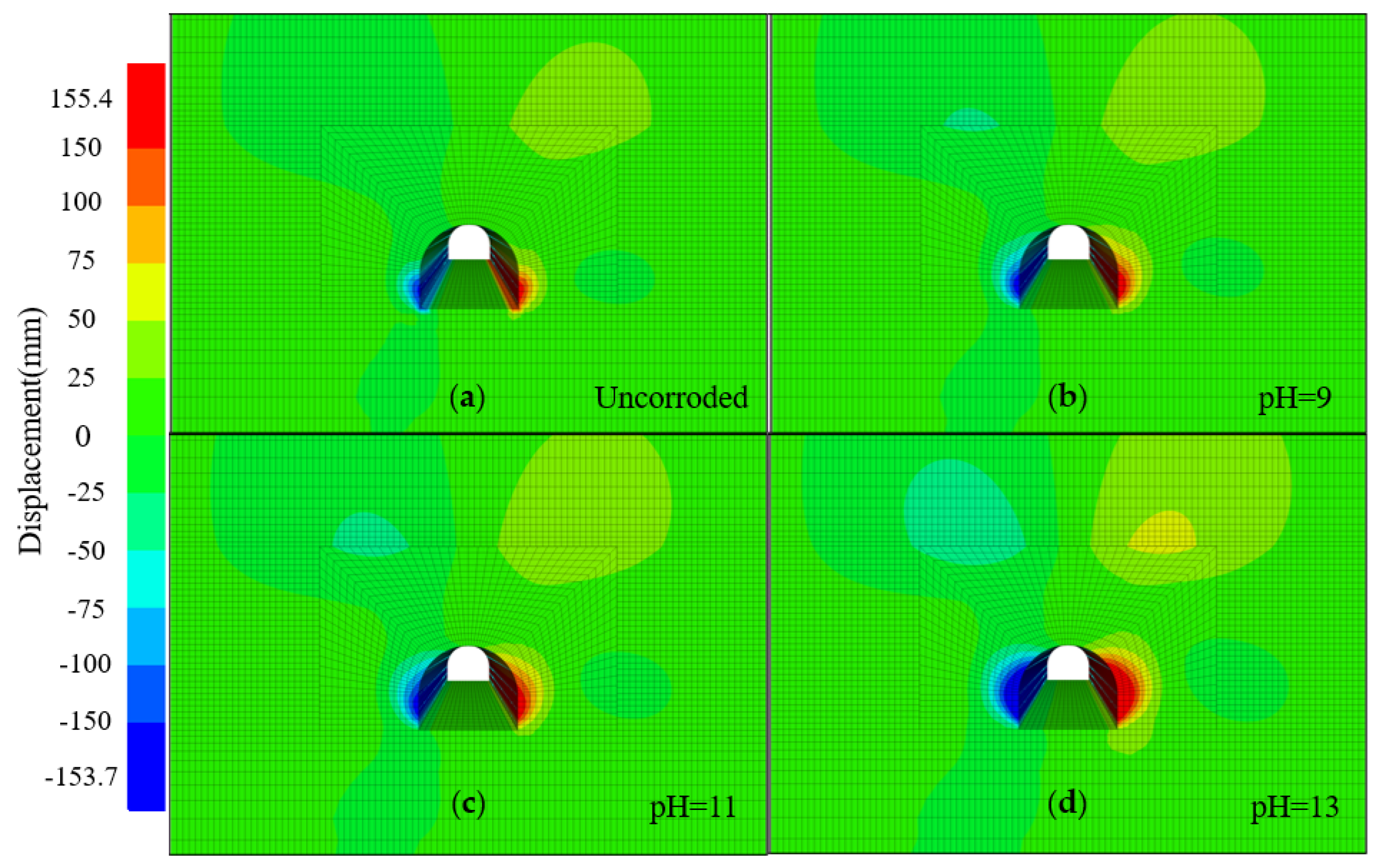
Figure 12 shows the horizontal displacement distribution of the roadway surrounding rock under different alkaline corrosion conditions. In the uncorroded case, local horizontal displacement concentration occurs near the two sidewalls and is mainly limited to the roadway boundary. The affected range of horizontal displacement is small, indicating that sidewall deformation is restricted to the shallow surrounding rock and the overall horizontal deformation of the roadway remains controllable. When the environment is pH = 9, the horizontal displacement zones on both sidewalls expand compared with the uncorroded case and extend outward into the surrounding rock. This indicates that horizontal deformation begins to develop into the deeper rock mass. Under the pH = 11 condition, the large-displacement zones further expand, and the displacement approaches 150 mm. At this stage, sidewall deformation is no longer limited to local displacement concentration but tends to extend toward the deeper sidewall rock. Under the pH = 13 condition, horizontal displacement becomes more severe, with local peak values reaching −153.7 mm and 155.4 mm. This suggests that the greater bolt deterioration represented in this numerical case may lead to more pronounced horizontal deformation of the two sidewalls and may increase the potential for local instability. To quantitatively analyze the evolution of roadway symmetry, a symmetry index was calculated as follows:
S = 1 X L X R X L + X R
where X L and X R represent the corresponding response values on the left and right sides of the roadway, respectively. For the plastic zone, X L and X R represent the plastic-zone areas on the left and right sides of the roadway, respectively. A value of this index closer to 1 indicates a higher degree of left–right symmetry of the roadway response. The horizontal displacement symmetry index, S h , was relatively low, ranging from approximately 0.868 to 0.898. This indicates that although the horizontal displacements of the two sidewalls generally exhibited a corresponding left–right distribution, local differences in displacement magnitude still existed. As the degree of bolt deterioration increased, S h slightly decreased, suggesting that bolt deterioration mainly amplified the deformation intensity and local differences of the two sidewalls, rather than completely changing the overall symmetry pattern of the roadway response. The displacements shown in Figure 12 and Figure 13 are comparative numerical indicators under the adopted model assumptions rather than field-validated predictions, because quantitative monitoring data were unavailable. Therefore, the analysis focuses on the relative differences among bolt deterioration levels.
Overall, under the four conditions, horizontal displacement is mainly concentrated near the two sidewalls and floor corners, while the roof and far-field surrounding rock show relatively small horizontal displacement. High negative and positive displacement zones form on the left and right sidewalls, respectively, indicating obvious relative horizontal movement after roadway excavation. As the experimentally derived bolt deterioration level increases, the high-displacement zones gradually expand and the absolute displacement increases. This suggests that bolt corrosion weakens the restraint on the sidewall rock and makes sidewall deformation more significant.
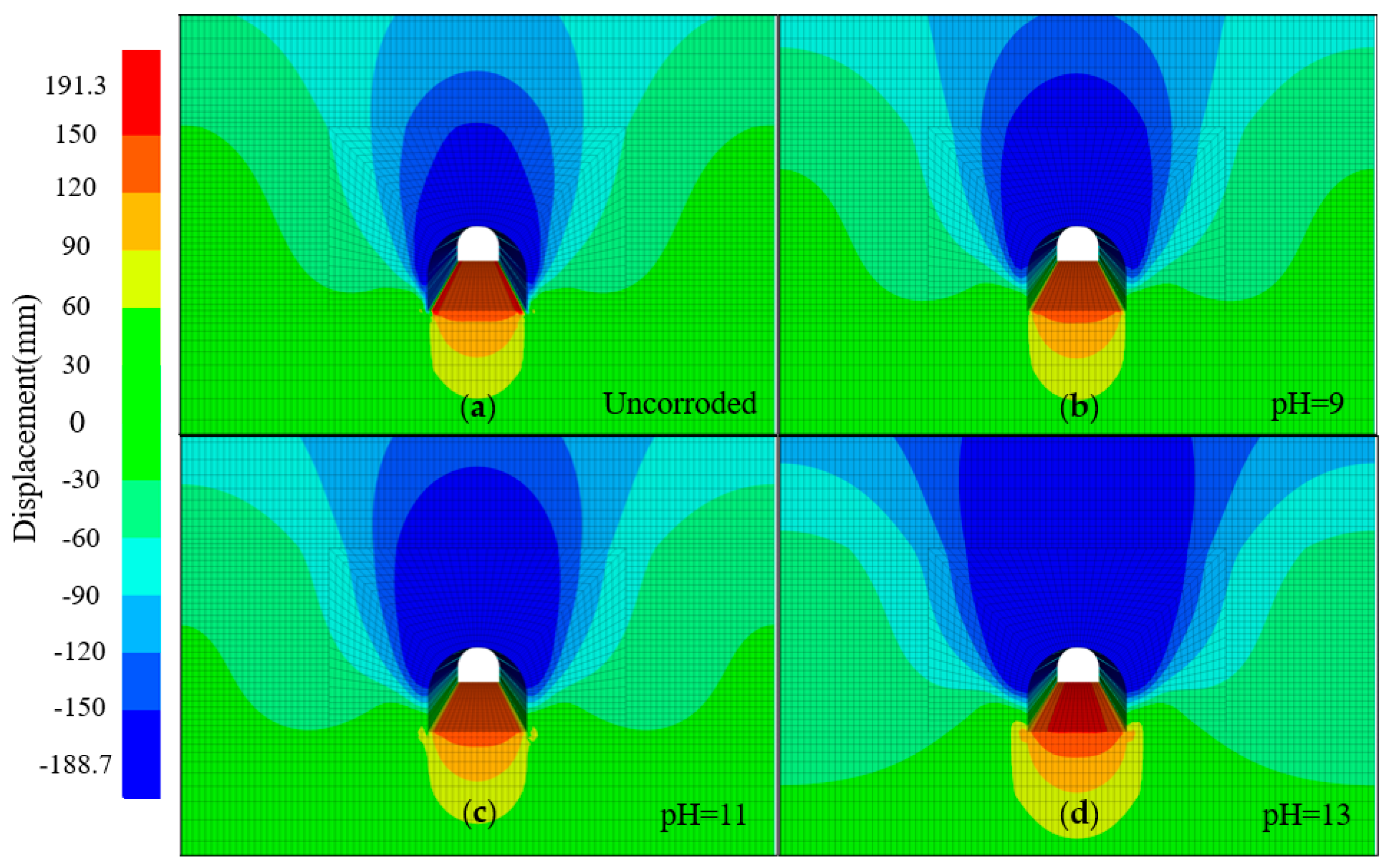
Figure 13 shows the vertical displacement distribution of the roadway surrounding rock under different alkaline corrosion conditions. In the uncorroded case, a relatively concentrated vertical displacement zone formed above the roadway roof, and a local roof-subsidence value approaching −188.7 mm appeared in the numerical result. This relatively large displacement was mainly related to the weak surrounding-rock parameters, high in-situ stress level, and excavation-induced stress release adopted in the model. It should be emphasized that this value represents a local peak displacement under the numerical model assumptions rather than a field-measured roof displacement. Compared with the corroded cases, the displacement-affected zone in the uncorroded case was still relatively concentrated around the roadway roof and floor, indicating that the intact support system provided a certain restraining effect on the expansion of surrounding-rock deformation. When the environment is pH = 9, the displacement zone further develops above and on both sides of the roof, indicating that the restraining effect of the support system on the roof rock begins to weaken after bolt corrosion. The core roof subsidence zone remains below −150 mm, but its influence range increases and starts to extend into deeper surrounding rock. The local displacement in the floor reaches 120–150 mm, showing an increase in floor heave. Under the pH = 11 condition, a wider subsidence zone forms above the roadway, and the displacement range increases significantly. Floor heave is no longer limited to the local floor area but extends to a wider surrounding rock region. With the degradation of bolt mechanical properties, roadway deformation gradually changes from local deformation to overall coordinated deformation, and the coupling between roof subsidence and floor heave becomes more obvious. Under the pH = 13 condition, the vertical displacement field changes most significantly. Roof displacement expands over a large area, with some zones reaching −188.7 mm, while the local floor displacement reaches 191.3 mm, indicating a marked increase in floor heave. The vertical displacement symmetry index, S v   , ranged from approximately 0.951 to 0.987, indicating that the roof subsidence and floor heave maintained a relatively high degree of symmetry under different bolt deterioration conditions. Although the magnitude of vertical deformation increased with bolt deterioration, the overall vertical deformation pattern remained approximately symmetric. This suggests that bolt corrosion mainly enhanced the intensity of roof–floor deformation, rather than significantly changing the vertical symmetry of the roadway response.
Overall, as alkaline corrosion of rock bolts intensifies, the vertical displacement of the roadway gradually increases. This is reflected by the expansion of the roof subsidence zone, the enhancement of floor heave, and the development of surrounding rock deformation from shallow to deep zones. This occurs because corrosion weakens the bolt cross-sectional strength and axial bearing capacity, reducing the cooperative restraint between the bolts and surrounding rock. As a result, the ability of the support system to limit crack propagation and deformation accumulation is reduced. With reduced bolt bearing capacity in the numerical model, the surrounding-rock stress was redistributed, while roof subsidence and floor heave tended to increase simultaneously. This response suggests that bolt deterioration may adversely affect the long-term stability of the roadway.

4.2.2. Evolution of Roadway Stress After Rock Bolt Deterioration

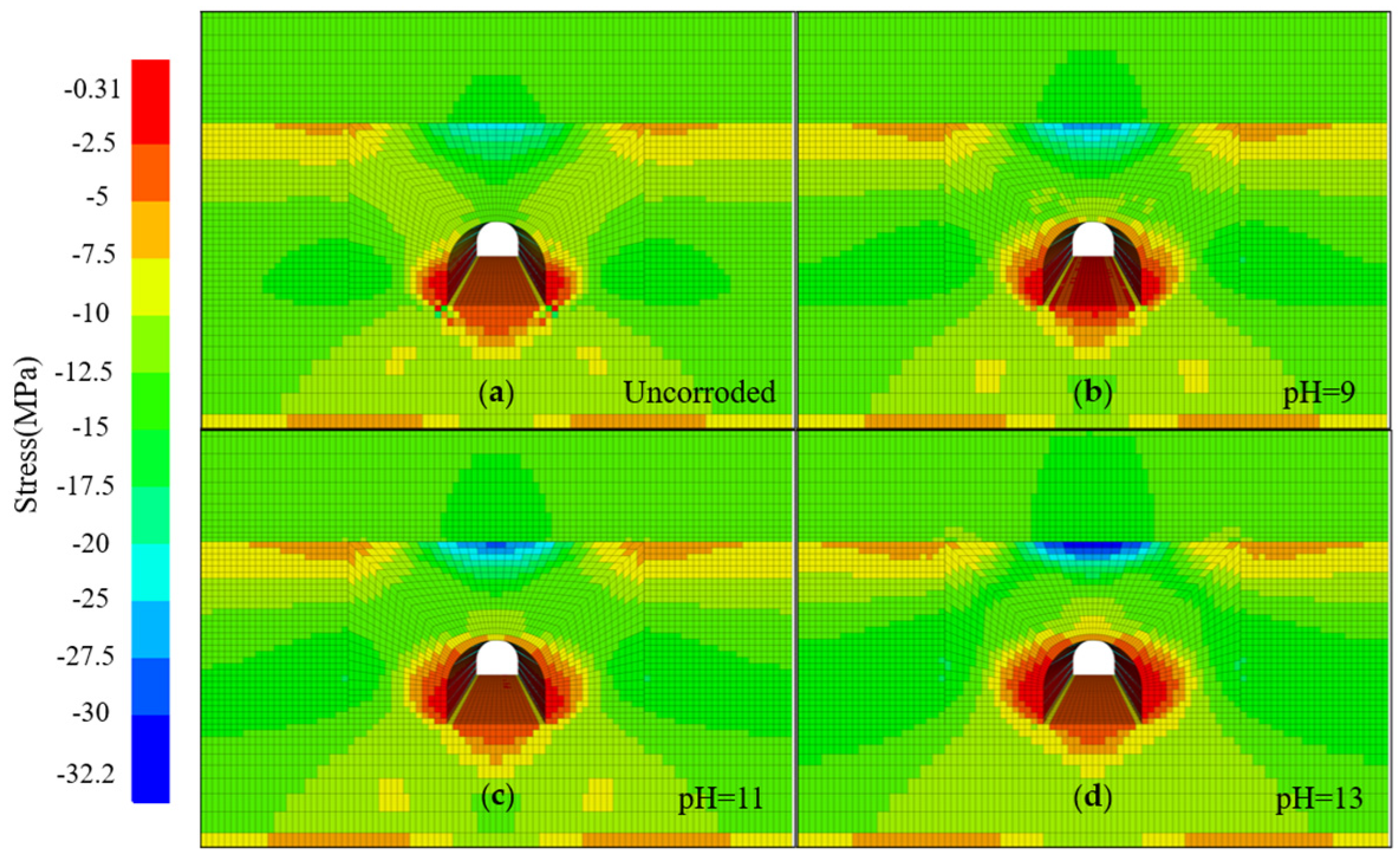
To further clarify the mechanical meaning of the stress contours, the stress evolution was interpreted from the perspective of stress transfer and load-bearing structure adjustment. In the present numerical model, the stress response around the roadway was mainly evaluated using the horizontal and vertical stress fields. The stress-transfer process was identified by the expansion of stress-release zones near the roadway boundary and the development of compressive stress-concentration zones in the deeper surrounding rock. Because strain-energy density and plastic dissipation were not directly recorded in the current simulations, the following analysis focuses on the stress redistribution path and its relationship with the plastic-zone evolution, rather than on quantitative energy dissipation. Figure 14 shows the horizontal stress distribution of the roadway surrounding rock under different alkaline corrosion conditions. From the perspective of stress transfer, the horizontal stress evolution reflects the gradual weakening of the shallow bolt–rock cooperative bearing zone. In the uncorroded case, the horizontal stress field was generally balanced. The low-compressive-stress zones were mainly concentrated near the two sidewalls and the floor, with stress values of approximately −0.31 to −5.00 MPa, while the stress above the roof was mainly in the range of −1.5 to −22.5 MPa. The high-stress zone above the roof did not expand obviously, indicating that the intact support system still helped limit excessive stress release in the shallow surrounding rock and maintain a relatively stable stress state in the deeper rock mass. When the bolts were exposed to the pH = 9 alkaline environment, stress release around the roadway began to increase, and the compressive stress zone expanded slightly. This suggests that bolt corrosion reduced the restraint on the sidewall rock, making horizontal stress release near the free surface more evident and causing part of the horizontal compressive stress to transfer toward the deeper roof rock. Under the pH = 11 condition, stress redistribution became more pronounced. The low-stress zones near the two sidewalls became more continuous, and the stress-release range further expanded. Meanwhile, the local compressive stress above the roof approached −27.5 to −30 MPa, indicating the gradual formation of a stronger compressive stress-concentration zone in the deep roof. Under the pH = 13 condition, the stress-release zones near the sidewalls and floor further expanded, and a wider high-stress zone formed above the roof, with the peak compressive stress approaching −32.224 MPa. This indicates that the reduction in bolt bearing capacity weakened the restraint on the shallow surrounding rock, causing the load originally shared by the shallow reinforced zone to be transferred to the deeper roof and sidewall rock. Therefore, the horizontal stress evolution can be interpreted as a stress-transfer process from shallow support-controlled bearing to deeper surrounding-rock passive bearing. The horizontal stress symmetry index, S σ h , remained higher than 0.96 under all conditions, indicating that the horizontal stress redistribution around the roadway retained a high degree of left–right symmetry. With increasing bolt deterioration, the stress release near the roadway boundary and the stress concentration in the deeper surrounding rock became more pronounced. However, the overall horizontal stress field still maintained a nearly symmetric distribution due to the symmetric roadway geometry and boundary conditions.
Overall, the horizontal stress fields around the roadway show clear symmetrical distribution under the four conditions, indicating that the symmetric roadway geometry and boundary settings contributed to an approximately symmetric stress response. However, as bolt corrosion intensifies, stress redistribution around the roadway becomes stronger. This is mainly reflected by the expansion of low-compressive-stress zones near the sidewalls and floor and the enhancement of compressive stress concentration above the roof. These results indicate that bolt corrosion weakens the restraint of the support system on the surrounding rock, making stress release and local stress concentration more pronounced.
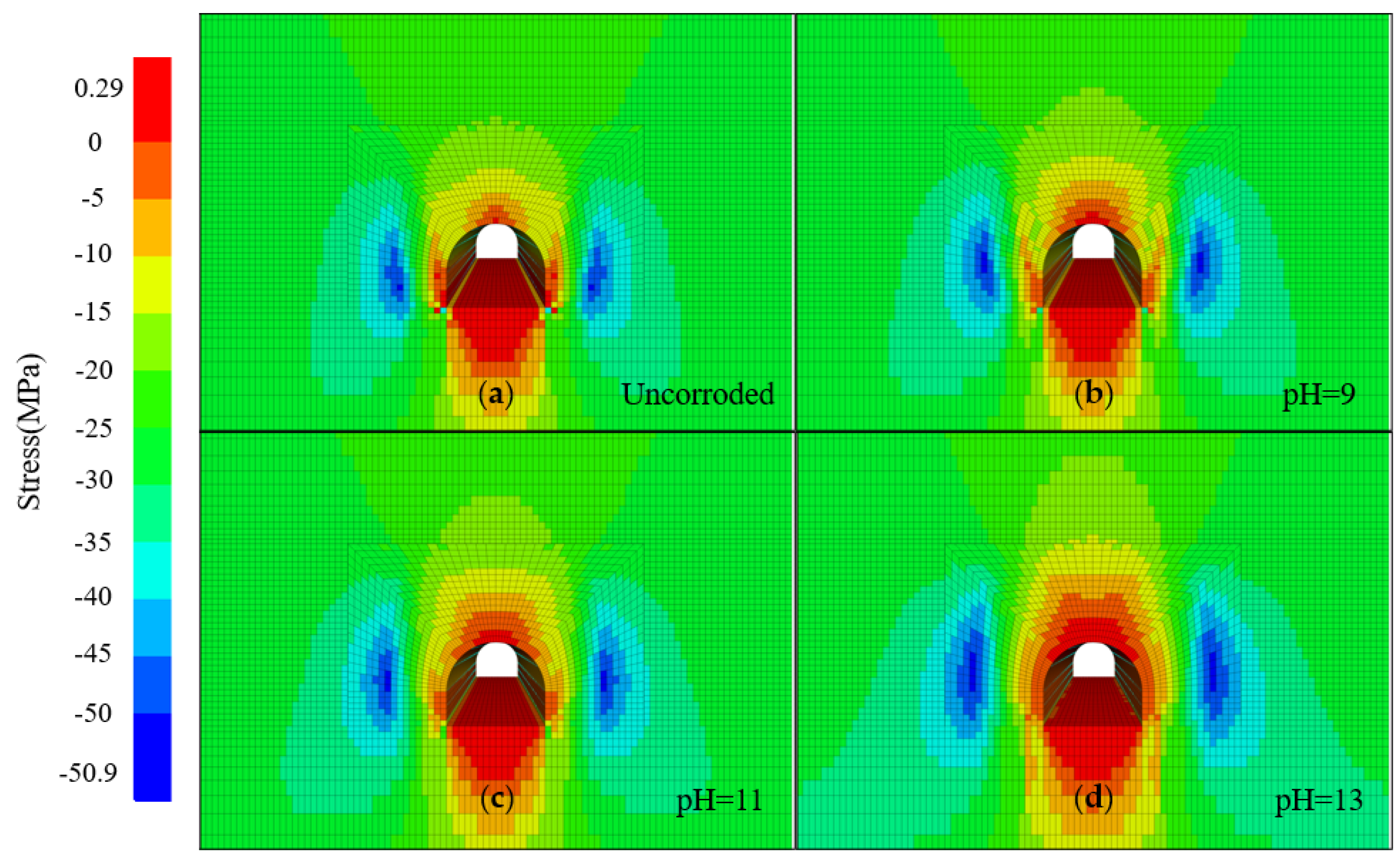
Figure 15 shows the vertical stress distribution of the roadway surrounding rock under different alkaline corrosion conditions. From the perspective of stress transfer, the vertical stress evolution further supports the mechanism of load transfer from the shallow reinforced zone to the deeper surrounding rock. After roadway excavation, stress release occurred near the roof, floor, and free surfaces, while compressive stress concentration developed outside the two sidewalls. In the uncorroded case, the vertical stress field remained relatively stable, and only small high-stress zones appeared near the roof, floor, and outer sides of the two sidewalls. The stress-release range was relatively limited, indicating that the intact support system still contributed to restraining shallow deformation and maintaining the integrity of the reinforced zone. Under the pH = 9 condition, the low-compressive-stress zones around the roadway expanded compared with the uncorroded case, especially near the roof shoulders and floor, while the high-stress zones on both sidewalls remained approximately symmetric and increased slightly in range. Under the pH = 11 condition, vertical stress redistribution became more pronounced. The low-stress zone around the roof extended upward and laterally, the stress-affected zone below the floor also increased, and the local stress near the two sidewalls approached −50.84 MPa. Under the pH = 13 condition, the low-stress zones near the roof, floor, and roadway sidewalls further expanded, suggesting more sufficient stress release in the shallow surrounding rock. Meanwhile, the high-stress concentration zones outside the two sidewalls expanded toward the deeper rock mass, forming a more continuous and approximately symmetric compressive stress concentration belt. This indicates that bolt deterioration reduced the confinement and load-sharing capacity of the shallow reinforced rock mass, causing the vertical load to be progressively redistributed from the deteriorated shallow bearing zone to the deeper surrounding rock. Therefore, the vertical stress response reflects a transition from local stress adjustment to a wider stress redistribution process induced by support deterioration.
The vertical stress symmetry index, S σ v   , ranged from approximately 0.979 to 0.986, showing that the vertical stress field also maintained a relatively high degree of symmetry. As bolt deterioration intensified, the vertical stress redistribution became stronger, especially near the sidewalls and the deeper surrounding rock. Nevertheless, the variation in Sσv was small, suggesting that bolt deterioration mainly increased the stress redistribution intensity rather than changing the overall symmetric pattern of the vertical stress field.
Overall, obvious stress redistribution occurs around the roadway after excavation under all four conditions. The roof, floor, and free surface mainly show low-compressive-stress zones, while high compressive stress concentration appears outside the two sidewalls. As bolt corrosion intensifies, the vertical stress field changes from local adjustment to overall redistribution. This is reflected by the expansion of stress release zones around the roadway, stronger compressive stress concentration in the deep sidewalls, and reduced restraint of the support system on the shallow surrounding rock.
It should be noted that strain energy density, plastic work, and plastic dissipation were not directly monitored in the present simulations. Therefore, a quantitative energy-based failure analysis was not performed in this study. Nevertheless, the combined evolution of the stress field and plastic zone indicates that bolt deterioration promoted stress release in the shallow surrounding rock, load transfer to deeper rock, and progressive plastic yielding around the roadway. Future numerical work will further introduce energy-density and plastic-work monitoring to quantify the energy accumulation and dissipation processes during bolt-deterioration-related roadway deformation in the numerical model.

4.2.3. Evolution of the Roadway Plastic Zone After Rock Bolt Deterioration

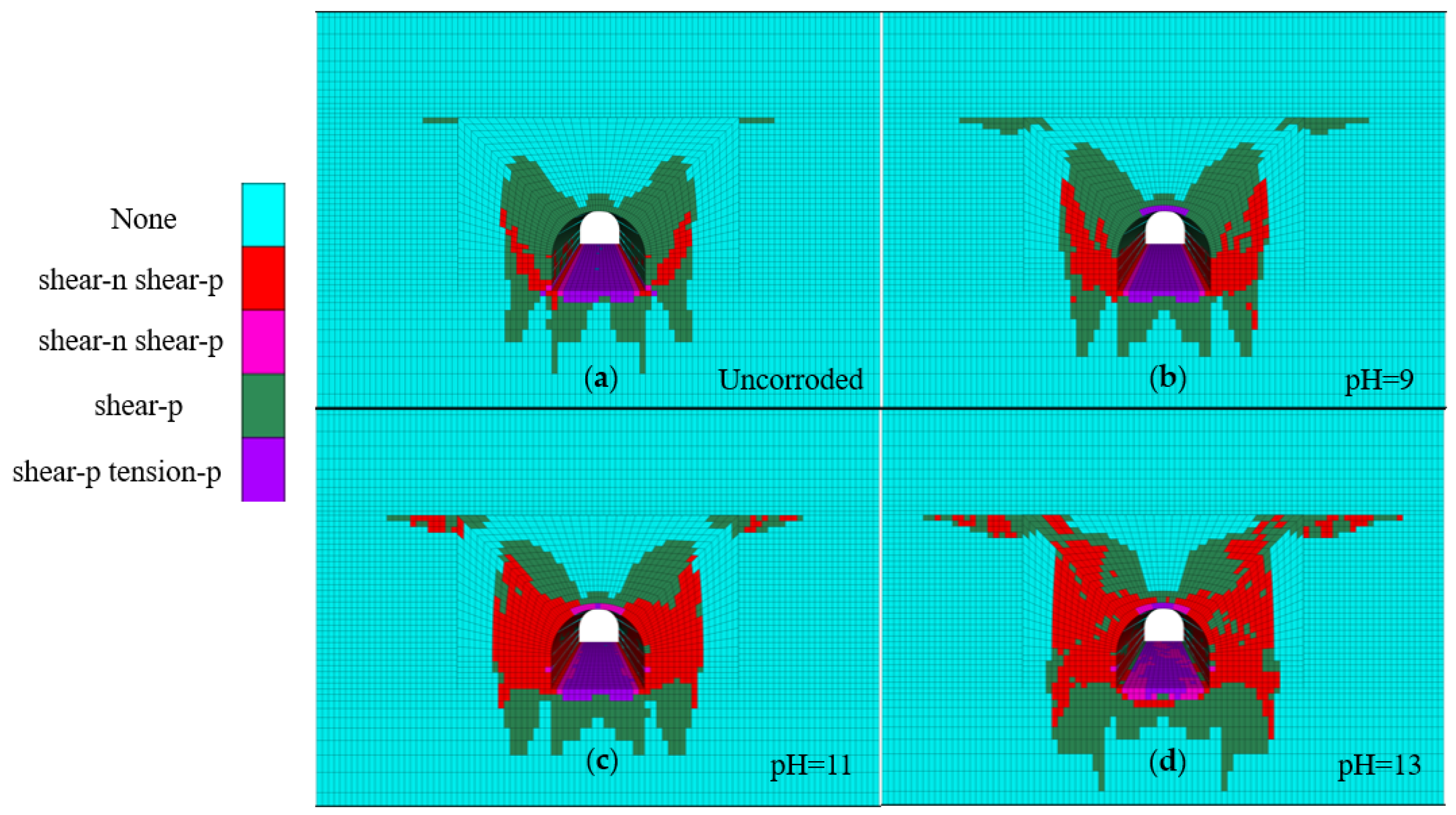
Figure 16 shows the plastic zone distribution of the roadway surrounding rock under different alkaline corrosion conditions. In the uncorroded case, the plastic zone is mainly distributed in the two sidewalls, the sidewall–floor intersections, and the shallow floor, while most of the area above the roof remains elastic. This indicates that intact rock bolts can effectively limit the expansion of the plastic zone after roadway excavation. At this stage, green and local red plastic zones mainly appear near the two sidewalls, indicating that shear yielding is the dominant failure mode. A distinct purple zone appears in the middle of the floor. When the pH value increases to 9, the plastic zone of the surrounding rock begins to expand significantly. Compared with the uncorroded condition, the shear plastic zones on both sidewalls extend upward and outward, and the plastic zone in the sidewalls becomes larger. At the same time, shear–tension composite plastic zones begin to appear near the shoulders and the roof close to the roadway boundary, indicating that the local stress condition of the roof rock starts to deteriorate after slight bolt corrosion. The purple composite failure zone in the center of the floor remains obvious, and the plastic zone at the sidewall–floor intersections also expands. Although the plastic zones are not yet fully connected at this stage, they already show a trend of evolving from local damage to continuous expansion. Under the pH = 11 condition, the plastic zone around the roadway expands further. The shear plastic zones on the two sidewalls extend clearly from the floor corners toward the shoulders. The shear–tension composite plastic zone near the roof boundary becomes wider. Under the pH = 13 condition, the plastic zone expansion is the most significant. The shear plastic zones on both sidewalls develop outward and upward over a large range and become more connected with the plastic zones near the shoulders and roof. The plastic zone above the roof further widens, and local yielding also appears in some shallow areas. In addition, the purple and pink composite failure zones in the center of the floor and at the sidewall–floor intersections become more prominent. At this stage, a large continuous plastic failure zone has formed around the roadway, and the plastic zone extends from the local floor corners and floor area to several key parts, including the sidewalls, shoulders, roof, and floor. The preferential propagation of the plastic zone at the sidewall–floor junction is mainly related to geometric discontinuity, stress concentration, and support deterioration. This region is where sidewall convergence interacts with floor heave, making tensile–shear damage more likely after excavation. As bolt deterioration reduces the restraining effect of the support system, lateral confinement of the sidewall decreases and floor heave becomes more pronounced. Consequently, plastic yielding tends to initiate and expand at the sidewall–floor junction.
The plastic-zone symmetry index, S p   , was higher than 0.98 for all cases, indicating that the plastic-zone distribution remained highly symmetric on the left and right sides of the roadway. With increasing bolt deterioration, the plastic zone expanded and became more continuous around the roadway. However, the high S p values suggest that bolt deterioration mainly promoted the expansion and connection of the plastic zone, rather than causing a pronounced asymmetric failure pattern.
Overall, as the experimentally derived bolt deterioration level increases, the plastic zone around the roadway tends to expand. The plastic failure pattern develops from a local and discontinuous distribution in the uncorroded case to a more continuous distribution connecting the sidewalls, shoulders, and roof. This suggests that reduced bolt bearing capacity may weaken the integrity of the reinforced surrounding-rock zone and promote the development of roadway surrounding-rock response from local yielding toward a wider instability state.

5. Conclusions and Outlook

5.1. Conclusions

This study investigated the deterioration of rock bolts and the induced roadway deformation under alkaline water-flooded conditions through electrochemical accelerated corrosion tests, tensile tests, and FLAC3D numerical simulation. The main conclusions are as follows:
(1) Under the controlled alkaline-sulfate accelerated electrochemical conditions adopted in this study, the mass loss rate and corrosion rate generally increased as the corrosion duration extended from 3 d to 9 d. At the same corrosion duration, the higher-pH test groups generally exhibited greater measured deterioration, with the largest mass loss rate, approximately 14%, observed in the pH = 13 group after 9 d.
(2) Corrosion reduced the tensile bearing capacity of rock bolts. Although the corroded bolts still exhibited elastic deformation, yielding, strain hardening, and post-peak softening stages, the yield load and ultimate load decreased with increasing mass loss rate. This reduction was mainly caused by the weakening of the effective load-bearing section and the enhancement of local stress concentration.
(3) Bolt deterioration intensified roadway deformation and stress redistribution in the numerical model. Among the simulated cases, the bolt-parameter reduction derived from the pH = 13 accelerated-test group produced the largest deformation response, with local sidewall displacements of approximately −153.7 mm and 155.4 mm and local roof subsidence and floor heave of about −188.7 mm and 191.3 mm, respectively. The expanded shallow stress release zone and increased deep stress concentration indicate a shift from bolt–rock cooperative support to passive bearing by deeper surrounding rock.
(4) Plastic-zone evolution indicates that increasing bolt deterioration promoted the expansion and connection of plastic zones around the roadway, while the overall left–right symmetry pattern remained approximately unchanged. In water-flooded roadways with corrosion-prone chemical environments, bolt deterioration should be monitored, and corrosion-resistant bolts, supplementary support, and grouting reinforcement may be adopted to improve long-term stability.

5.2. Limitations and Outlook

(1) The machined reduced-section specimens were used to obtain comparable material-level degradation parameters, but they cannot fully represent the rib geometry, surface defects, rib-root corrosion, and bolt–grout interface behavior of full-size in-situ rock bolts.
(2) The electrochemical corrosion tests were conducted under accelerated laboratory conditions, and the selected alkaline sulfate solution and external current were used for comparative deterioration analysis rather than direct reproduction of the natural field corrosion rate.
(3) Bolt deterioration in the FLAC3D model was simplified by reducing the equivalent yield strength, while bond degradation, anchorage slip, stiffness degradation, and nonuniform cross-sectional loss were not explicitly considered.
(4) Quantitative field monitoring data were unavailable for direct validation of the simulated displacement values. Future work should combine full-size anchorage tests, long-term field monitoring, and refined bolt–grout interface models to further improve the reliability of the results.

Author Contributions

Conceptualization, H.F. and W.G.; methodology, H.F., X.W. and H.W.; software, H.F.; validation, H.F., H.W. and C.Q.; formal analysis, H.F. and X.H.; investigation, H.F. and F.J.; resources, W.G., J.F. and C.Q.; data curation, H.F.; writing—original draft preparation, H.F.; writing—review and editing, W.G., H.W., X.W., J.F., X.H. and J.F.; visualization, X.H.; supervision, W.G., X.H., C.Q. and F.J.; project administration, W.G., J.F. and C.Q.; funding acquisition, W.G., H.W., J.F. and X.W. All authors have read and agreed to the published version of the manuscript.

Funding

This research was funded by the Xinjiang Uygur Autonomous Region Science and Technology Program, grant number 2024A01002-1, Principal Investigator: Huang Junpeng; Xinjiang Production and Construction Corps Key Areas Science and Technology Research Program, grant number 2025AB026; Natural Science Foundation of Xinjiang Uygur Autonomous Region, grant number 2025D01C259; Science and Technology Plan Project of Kekedala City, the Fourth Division of the Xinjiang Production and Construction Corps, grant number 2025ZR005; Xinjiang Uygur Autonomous Region “Tianshan Talents” Scientific Research Project—Young Top Talents, grant number 2023TSYCCX0081; Xinjiang Uygur Autonomous Region Science and Technology Plan Project—Major Science and Technology Special Project, grant number 2024A03001-2; Xinjiang Talent Development Fund Project, grant number XJRC-2025-KJ-YJ-CXPT-159; Hami City Scientific Research and Technology Development Project of Xinjiang Uygur Autonomous Region, grant number hmkj2025004; and Xinjiang University Outstanding Postgraduate Innovation Project, grant number XJDX2025YJS109.

Data Availability Statement

The original contributions presented in this study are included in the article. Further inquiries can be directed to the corresponding authors.

Acknowledgments

The authors thank all contributors who supported and assisted in the completion of this work.

Conflicts of Interest

The authors whose names are listed below certify that they have no conflicts of interest to declare: Weiming Guan, Xin Wang, Xiaole Han, Fangcan Ji, Haosen Wang. Author Cheng Qian was employed by Xinjiang Sanxin Coal Industry Co., Ltd. Author Junwen Feng was employed by Emergency Management Bureau of Xinjiang Production and Construction Corps. The remaining authors declare that the research was conducted in the absence of any commercial or financial relationships that could be construed as a potential conflict of interest.

References

  1. Li, S.; Su, W.; Yin, T.; Dan, Z.; Peng, K. Research progress and typical case of open-pit to underground mining in China. Appl. Sci. 2025, 15, 8530. [Google Scholar] [CrossRef]
  2. Konieczna-Fuławka, M.; Szumny, M.; Fuławka, K.; Jaśkiewicz-Proć, I.; Pactwa, K.; Kozłowska-Woszczycka, A.; Joutsenvaara, J.; Aro, P. Challenges related to the transformation of post-mining underground workings into underground laboratories. Sustainability 2023, 15, 10274. [Google Scholar] [CrossRef]
  3. Makarov, A.B.; Rasskazov, I.Y.; Saksin, B.G.; Livinsky, I.S.; Potapchuk, M.I. Geomechanical evaluation of roof-and-pillar parameters in transition to underground mining. J. Min. Sci. 2016, 52, 438–447. [Google Scholar] [CrossRef]
  4. He, M.; Wang, Q. Rock dynamics in deep mining. Int. J. Min. Sci. Technol. 2023, 33, 1065–1082. [Google Scholar] [CrossRef]
  5. Yang, W.; Zhao, L.; Yao, C.; He, C.; Pan, W.; Wu, F.; Tian, L.; Yan, Q. The control effect of directional rock bolt on asymmetric deformation of layered soft rock tunnel with different grades of large deformation. Rock Mech. Rock Eng. 2025, 58, 5273–5297. [Google Scholar] [CrossRef]
  6. Yang, J.; Wang, K.; Bian, W.; Zhang, Y.; He, X.; Fang, Y.; Sun, Z. Test and field application of fracture evolution of large-span tunnel under NPR bolt compensation support system. Undergr. Space 2025, 22, 186–207. [Google Scholar] [CrossRef]
  7. Li, Y.; Yang, R.; Dai, X.; Lu, S.; Liu, Z.; Guo, L.; Yuan, J.; Cheng, Y.; Du, H. Stress corrosion behavior and mechanism of cable bolts under the influence of mine water. J. China Coal Soc. 2025, 50, 3424–3440. [Google Scholar]
  8. Li, Y.; Yang, R.; Fang, S.; Lin, H.; Lu, S.; Zhu, Y.; Wang, M. Failure analysis and control measures of deep roadway with composite roof: A case study. Int. J. Coal Sci. Technol. 2022, 9, 2. [Google Scholar] [CrossRef]
  9. Craig, P.; Serkan, S.; Hagan, P.; Hebblewhite, B.; Vandermaat, D.; Crosky, A.; Elias, E. Investigations into the corrosive environments contributing to premature failure of Australian coal mine rock bolts. Int. J. Min. Sci. Technol. 2016, 26, 59–64. [Google Scholar] [CrossRef]
  10. Yang, X.; Ming, W.; Zhang, W.; Zhu, C.; Mao, Y.; Wang, X.; He, M.; Tao, Z. Support on deformation failure of layered soft rock tunnel under asymmetric stress. Rock. Mech. Rock Eng. 2022, 55, 7587–7609. [Google Scholar] [CrossRef]
  11. Zheng, X.; Lyu, J.; Wang, S.; Yang, J.; Yang, F.; Osman, A. Three-dimensional Hybrid Finite Element-Material Point Method for analyzing reinforcement and stability of tunnel face with fiberglass anchor bolts. Tunn. Undergr. Space Technol. 2026, 168, 107102. [Google Scholar] [CrossRef]
  12. Wang, F.; Guo, Z.; Qiao, X.; Fan, J.; Li, W.; Mi, M.; Tao, Z.; He, M. Large deformation mechanism of thin-layered carbonaceous slate and energy coupling support technology of NPR anchor cable in Minxian Tunnel: A case study. Tunn. Undergr. Space Technol. 2021, 117, 104151. [Google Scholar] [CrossRef]
  13. Wang, B.; Guo, X.; Jin, H.; Li, F.H.; Song, Y. Experimental study on degradation behaviors of rock bolt under the coupled effect of stress and corrosion. Constr. Build. Mater. 2019, 214, 37–48. [Google Scholar] [CrossRef]
  14. Wang, X.; Zhu, J.; Ruan, H.; Cheng, W.; Li, J. Time-dependent Characteristics of Corrosion Damage of Prestressed Rock Bolts in Oxygen-ventilated Environment. J. Yangtze River Sci. Res. Inst. 2022, 39, 86–91. [Google Scholar]
  15. Chu, X.; Ju, W.; Lu, Z.; Shi, M. Experiments on stress corrosion behaviors of rock bolt in highly-mineralized mine water. J. China Univ. Min. Technol. 2023, 52, 255–266. [Google Scholar]
  16. Divi, S.; Chandra, D.; Daemen, J. Corrosion susceptibility of potential rock bolts in aerated multi-ionic simulated concentrated water. Tunn. Undergr. Space Technol. 2011, 26, 124–129. [Google Scholar] [CrossRef]
  17. Wang, C.T.; Li, W.; Xin, G.F.; Wang, Y.Q.; Yang, X.F.; Guo, Z.A. Experimental Research Examining the Stray Current Corrosion of Rock Bolts in the DC Transit System. Exp. Tech. 2020, 44, 137–148. [Google Scholar] [CrossRef]
  18. Lu, Q.; Guo, Z.; He, D.; Peng, G.; Han, G. Experimental Research on Corrosion of Rock Bolts Caused by Metro Stray Current. Corros. Sci. Prot. Technol. 2019, 31, 59–64. [Google Scholar]
  19. Wang, Q.; Wang, F.; Ren, A.; Peng, R.; Li, J. Corrosion Behavior and Failure Mechanism of Prestressed Rock Bolts (Cables) in the Underground Coal Mine. Adv. Civ. Eng. 2021, 2021, 6686865. [Google Scholar] [CrossRef]
  20. Hadjigeorgiou, J.; Savguira, Y.; Thorpe, S.J. Comparative Susceptibility to Corrosion of Coated Expandable Bolts. Rock Mech. Rock Eng. 2019, 52, 2665–2680. [Google Scholar] [CrossRef]
  21. Peng, Y.; Timms, W. Hydrogeochemical modelling of corrosive environment contributing to premature failure of anchor bolts in underground coal mines. J. Cent. South Univ. 2020, 27, 1599–1610. [Google Scholar] [CrossRef]
  22. Wu, S.; Cao, X.; Zhu, Y.; Skrzypkowski, K.; Zagórski, K. Examination of stress corrosion cracking of rock bolts in simulated underground environments. Materials 2025, 18, 1275. [Google Scholar] [CrossRef]
  23. Wu, Y.; Chu, X.; Wu, J.; He, J. Micro-mesoscopic test on fracture failure of intensive rock bolts. J. China Coal Soc. 2017, 42, 574–581. [Google Scholar]
  24. Yang, Z.; Xu, S.; Wang, W.; Li, D. Experimental study on mechanical aging properties of self-swelling anchorage bolt under chemical corrosion. Int. J. Min. Reclam. Environ. 2025, 39, 309–324. [Google Scholar] [CrossRef]
  25. He, Z.; Zhang, N.; Xie, Z.; Ma, C.; Han, C.; Zhang, F.; Wang, H.; Alarifi, S.S. Study on stress corrosion behavior and failure mechanism of galvanized bolts in complex coal mine environments. J. Mater. Res. Technol. 2025, 34, 1759–1776. [Google Scholar] [CrossRef]
  26. Ding, W.; Hou, M.; Chen, L.; Liu, K.; Chen, R.; Wang, Y.; Wang, M. Experimental Study on the Deterioration Rules of Anchoring Performance of Rock Mass under Different Joints Distribution. Adv. Civ. Eng. 2019, 2019, 3546052. [Google Scholar] [CrossRef]
  27. Wang, L.; Li, Z.; Fu, Y.; Xu, X.; Chu, X. Multi-scale analysis of stress-corrosion failure and anti-corrosion strategies for anchor bolts in Tashan coal mine. Sci. Rep. 2026, 16, 1593. [Google Scholar] [CrossRef]
  28. Zhang, B.-L.; Luo, T.-L.; Zhang, D.-M.; Li, B.-J. Full-scale testing and numerical modelling of segmental-joint performance with corroded bolt. Tunn. Undergr. Space Technol. 2022, 119, 104260. [Google Scholar] [CrossRef]
  29. Ma, R.; Su, R.; Cui, C.; Liu, Y.; Hu, H.; Chen, A. Corrosion characteristics and mechanical properties degradation of stressed high-strength steel wires in acidic environment. Case Stud. Constr. Mater. 2025, 22, e04773. [Google Scholar] [CrossRef]
  30. Wang, X.; Li, L.; Mu, W.; Yang, T.; An, J.; Du, Y. Diffusion mechanism of cement-based slurry in frozen and thawed fractured rock mass in alpine region. Constr. Build. Mater. 2024, 411, 134584. [Google Scholar] [CrossRef]
  31. Zhu, Q.; Li, T.; Du, Y.; Zhang, H.; Ran, J.; Li, W.; Zhang, S. Failure and stability analysis of deep soft rock roadways based on true triaxial geomechanical model tests. Eng. Fail. Anal. 2022, 137, 106255. [Google Scholar] [CrossRef]
  32. Shen, Y.; Hou, B.; Wang, Y.; Pan, K. Mechanism and Control of Deformation and Failure of Mining Roadway in Thick Coal Seams Under Close Range Goaf. Energy Sci. Eng. 2025, 13, 2585–2601. [Google Scholar] [CrossRef]
  33. Mao, J.; Fan, Y.; Fan, G.; Zhang, J.; Wu, Z.; Shan, L.; Ren, S.; Wang, H.; Yang, C.; Wang, Y. Deformation mechanism of surrounding rock in weakly cemented thick coal seam roadways and research on graded anchor composite support technology. Sci. Rep. 2025, 15, 28170. [Google Scholar] [CrossRef]
  34. Hao, Y.; Li, M.; Wang, W.; Zhang, Z.; Li, Z. Study on the stress distribution and stability control of surrounding rock of reserved roadway with hard roof. Sustainability 2023, 15, 14111. [Google Scholar] [CrossRef]
  35. Jia, C.; Li, S.; Fan, C.; Luo, M.; Zhou, L.; Pu, Z.; Yang, L. Bolt–cable–mesh integrated support technology for water drenching roadway in thick coal seam. ACS Omega 2022, 7, 46682–46692. [Google Scholar] [CrossRef] [PubMed]
  36. Wu, J.; Jiao, J.; Zhou, S. Controlling large deformations in soft rock roadways with integrated anchor shotcrete and grouting techniques. Sci. Rep. 2024, 14, 28339. [Google Scholar] [CrossRef]
  37. Niu, Y.; Qu, C.; Feng, Q. A Numerical Study on the Influence of Bolt Corrosion on the Long-Term Behavior of Steel–Concrete Composite Beams. Adv. Civ. Eng. 2024, 2024, 2980358. [Google Scholar] [CrossRef]
  38. Yang, L.; Liu, Z.; Yang, X.; Xu, X.; Cheng, X.; Li, X. Behavior and evaluation of stress corrosion cracking of typical anchor bolt steel in simulated crevice environment. J. Mater. Res. Technol. 2023, 25, 7430–7443. [Google Scholar] [CrossRef]
  39. Kang, H.; Wu, Y.; Gao, F.; Jiang, P.; Cheng, P.; Meng, X.; Li, Z. Mechanical performances and stress states of rock bolts under varying loading conditions. Tunn. Undergr. Space Technol. 2016, 52, 138–146. [Google Scholar] [CrossRef]
  40. Ichiba, M.; Sakai, J.; Doshida, T.; Takai, K. Corrosion reaction and hydrogen absorption of steel for prestressed concrete in a 20 mass% ammonium thiocyanate solution. Scr. Mater. 2015, 102, 59–62. [Google Scholar] [CrossRef]
  41. GB/T 228.1-2021; Metallic Materials—Tensile Testing—Part 1: Method of Test at Room Temperature. Standards Press of China: Beijing, China, 2021.
  42. GB/T 16545-2025; Corrosion of Metals and Alloys—Removal of Corrosion Products from Corrosion Test Specimens. Standards Press of China: Beijing, China, 2025.
Figure 1. Location of the study area and field photographs.
Symmetry 18 00976 g001
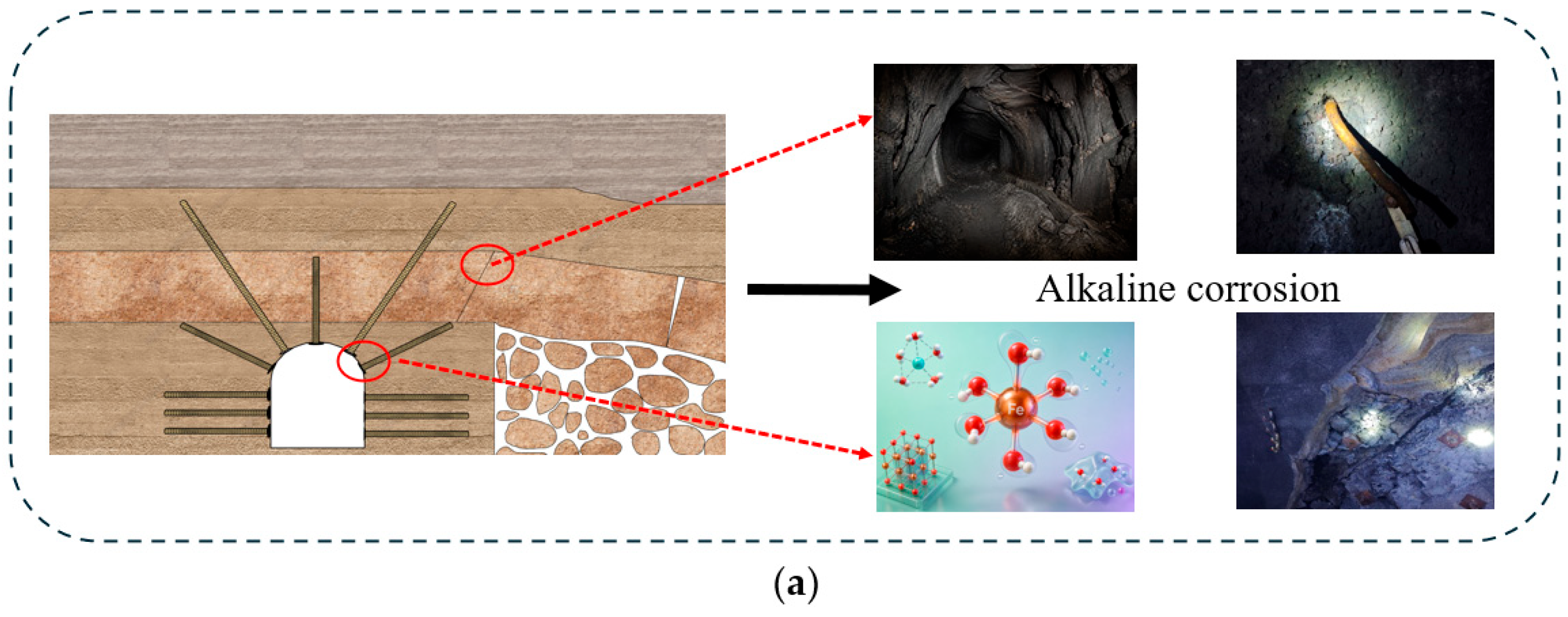
Figure 2. Schematic diagram of the research framework and experimental procedure: (a) schematic diagram of the overall research workflow; (b) Specimen Preparation and Testing.
Symmetry 18 00976 g002aSymmetry 18 00976 g002b
Figure 3. Electrochemical accelerated corrosion test setup: (a) Conceptual diagram; (b) Actual photograph.
Symmetry 18 00976 g003
Figure 4. Microcomputer-Controlled Universal Testing Machine.
Symmetry 18 00976 g004
Figure 5. Corrosion mass loss and corrosion rate of rock bolt specimens: (a) Corroded rock bolt specimens; (b) pH = 9; (c) pH = 11; (d) pH = 13.
Symmetry 18 00976 g005
Figure 6. Tensile test of rock bolt specimens: (a) Tensile test; (b) Mechanical properties of uncorroded rock bolt specimens.
Symmetry 18 00976 g006
Figure 7. Variation in mechanical properties of rock bolts under a pH = 9 corrosion environment: (a) Corrosion for 3 d; (b) Corrosion for 6 d; (c) Corrosion for 9 d; (d) Mass loss rate and yield load.
Symmetry 18 00976 g007
Figure 8. Variation in mechanical properties of rock bolts under a pH = 11 corrosion environment: (a) Corrosion for 3 d; (b) Corrosion for 6 d; (c) Corrosion for 9 d; (d) Mass loss rate and yield load.
Symmetry 18 00976 g008
Figure 9. Variation in mechanical properties of rock bolts under a pH = 13 corrosion environment: (a) Corrosion for 3 d; (b) Corrosion for 6 d; (c) Corrosion for 9 d; (d) Mass loss rate and yield load.
Symmetry 18 00976 g009
Figure 10. Effect of pH and corrosion duration on the mechanical properties of rock bolts: (a) Effect of corrosion duration on yield load; (b) Effect of pH on yield load.
Symmetry 18 00976 g010
Figure 11. The scheme of numerical model.
Symmetry 18 00976 g011
Figure 12. Horizontal displacement contours of the roadway surrounding rock under bolt deterioration levels derived from the accelerated electrochemical tests: (a) Uncorroded; (b) pH = 9; (c) pH = 11; (d) pH = 13.
Symmetry 18 00976 g012
Figure 13. Vertical displacement contours of the roadway surrounding rock under bolt deterioration levels derived from the accelerated electrochemical tests: (a) Uncorroded; (b) pH = 9; (c) pH = 11; (d) pH = 13.
Symmetry 18 00976 g013
Figure 14. Horizontal stress contours of the roadway surrounding rock under bolt deterioration levels derived from the accelerated electrochemical tests: (a) Uncorroded; (b) pH = 9; (c) pH = 11; (d) pH = 13.
Symmetry 18 00976 g014
Figure 15. Vertical stress contours of the roadway surrounding rock under bolt deterioration levels derived from the accelerated electrochemical tests: (a) Uncorroded; (b) pH = 9; (c) pH = 11; (d) pH = 13.
Symmetry 18 00976 g015
Figure 16. Plastic zone distribution of the roadway surrounding rock under bolt deterioration levels derived from the accelerated electrochemical tests: (a) Uncorroded; (b) pH = 9; (c) pH = 11; (d) pH = 13.
Symmetry 18 00976 g016
Table 1. Experimental design matrix for rock bolt corrosion under different pH values and corrosion durations.
Specimen No.pHCorrosion Time (d)Initial Mass (g)
1-19371.36
1-29371.32
1-39371.41
1-49671.25
1-59671.31
1-69671.33
1-79971.29
1-89971.35
1-99971.37
2-111371.47
2-211371.34
2-311371.29
2-411671.44
2-511671.38
2-611671.45
2-711971.32
2-811971.52
2-911971.23
3-113371.40
3-213371.35
3-313371.46
3-413671.24
3-513671.51
3-613671.28
3-713971.49
3-813971.37
3-913971.43
Table 2. Mechanical parameters of the rock mass in the numerical model.
LithologyDensity (kg·m−3)Young’s Modulus (Pa)Poisson’s RatioFriction Angle (°)Cohesion (Pa)Tensile Strength (Pa)
Fine sandstone26303.9 × 1090.22393.1 × 1062.2 × 106
Siltstone125103.1 × 1090.30331.25 × 1061.1 × 106
Mudstone20000.8 × 1090.34301.1 × 1051.2 × 104
Siltstone225303.3 × 1090.29341.35 × 1061.2 × 106
Table 3. Mechanical parameters of rock bolts.
Structural UnitReduction CoefficientEquivalent Yield Strength (Pa)Cross-Sectional Area (m2)Elastic Modulus (Pa)
Cable-Uncorroded12 × 1082.6 × 10−41.96 × 10¹¹
Cable-pH = 90.9551.91 × 1082.6 × 10−41.96 × 10¹¹
Cable-pH = 110.8901.78 × 1082.6 × 10−41.96 × 10¹¹
Cable-pH = 130.8251.65 × 1082.6 × 10−41.96 × 10¹¹
Disclaimer/Publisher’s Note: The statements, opinions and data contained in all publications are solely those of the individual author(s) and contributor(s) and not of MDPI and/or the editor(s). MDPI and/or the editor(s) disclaim responsibility for any injury to people or property resulting from any ideas, methods, instructions or products referred to in the content.