1. Introduction
Against the backdrop of the accelerating global energy transition toward cleaner and more distributed systems, DC microgrids have gradually emerged as a crucial technological solution for applications such as island power supply and energy provision in remote areas, owing to their advantages in efficient integration of distributed energy resources, improved power transmission efficiency, and optimized load compatibility [
1,
2]. However, in islanded operation mode, DC microgrids face a critical control challenge: how to achieve accurate current sharing among distributed power sources while maintaining the stability of the DC bus voltage, thereby avoiding voltage deviations that could compromise the normal operation of loads and the overall reliability of the system. This issue has become one of the key bottlenecks limiting the large-scale engineering application of DC microgrids, making research on targeted control strategy [
3] optimization both practically necessary and urgent.
Currently, DC microgrids widely adopt primary droop control strategies as the foundation for stable system operation [
4,
5,
6]. This method establishes a linear relationship between the reference voltage and the output current by introducing a droop coefficient, theoretically enabling proportional current sharing among multiple distributed units. However, this approach has inherent limitations: the selection of the droop coefficient involves a trade-off between current-sharing accuracy and voltage restoration capability. A coefficient that is too small leads to increased current-sharing deviations, making it difficult to meet load-balancing requirements [
7,
8]; conversely, a coefficient that is too large results in significant DC bus voltage deviations, preventing the voltage from being stabilized at its nominal value [
9] (e.g., 48 V) and thus negatively impacting power supply quality. Consequently, relying solely on primary control cannot simultaneously achieve the two core objectives of accurate current sharing and stable voltage restoration. It is therefore imperative to introduce higher-level secondary control for compensation, which represents a key focus in current research on optimizing control strategies for DC microgrids.
Reference [
10] employed a centralized secondary control method based on a Smith predictor, which compensates for communication delays by adjusting controller parameters to improve system recovery speed and control performance. However, this strategy relies on a central controller, introducing the risk of single-point failure. To address this limitation, this paper adopts a distributed secondary control strategy.
Although Reference [
11] proposed a distributed finite-time secondary control scheme that eliminates the coupling effect between current-sharing and voltage restoration processes, and Reference [
12] introduced a discrete-time distributed secondary control method grounded in virtual voltage drop averaging, both approaches target precise current sharing and bus voltage restoration in single-bus DC microgrids. While these strategies avoid the single-point failure limitations of centralized control, their algorithms require frequent communication, leaving room for further improvement. Therefore, although distributed secondary control strategies can effectively coordinate unit operations and enhance control accuracy, their implementation heavily depends on continuous information exchange among units. In practical systems, challenges such as limited communication bandwidth, transmission delays, and network congestion are common. The secondary control strategy based on pinning gain proposed in Reference [
13] adopts distributed control, avoiding the single-point failure issue present in Reference [
10] and effectively reducing the communication burden in microgrids through selective communication, compared to Reference [
11]. However, traditional distributed secondary control generally employs a time-triggered mechanism. Its inherent periodic sampling and communication mode not only leads to redundant communication resource usage but may also shorten controller lifespan due to frequent activations [
14]. Traditional periodic communication mechanisms not only increase network load [
15,
16,
17] but may also cause control system response delays and even significantly raise deployment and operational costs in areas with poor communication quality. Therefore, reducing communication frequency and alleviating network burden while ensuring control performance [
18,
19] has become a critical issue in transitioning DC microgrid control from theoretical research to practical engineering applications.
Reference [
20] makes a valuable contribution to addressing cybersecurity concerns in microgrids by proposing a centralized reconfiguration strategy based on Stackelberg game theory, which effectively balances security enhancement and operational cost-effectiveness to mitigate cyber-attacks. The work demonstrates insightful and constructive ideas in leveraging game-theoretic approaches for secure microgrid management, achieving commendable performance in terms of both attack mitigation and economic efficiency. Inspired by this study, our work explores a complementary perspective, focusing on reducing communication frequency while maintaining system resilience against disturbances. Reference [
21] proposes a distributed event-triggered sliding mode control for AC microgrids, using a dynamically regulated threshold to reduce communication burden while avoiding Zeno behavior. Inspired by their integration of event-triggered schemes and robust control, our work extends this concept to DC microgrids with an adaptive triggering mechanism, balancing communication savings and control accuracy.
Recent studies have highlighted the critical role of event-triggered mechanisms in addressing communication efficiency and security challenges in distributed microgrid control. In [
22], a hybrid event-triggered secondary control strategy is proposed for islanded microgrids under disturbances, which reduces communication frequency while strictly avoiding Zeno behavior by constructing a hybrid closed-loop model and deriving Lyapunov-based stability conditions. Meanwhile, work in [
23,
24] further extends this line of research to networked microgrids under denial-of-service (DoS) attacks, developing a robust dynamic event-triggered control framework that mitigates both communication congestion and attack-induced disruptions. Together, these studies demonstrate that event-triggered control not only significantly reduces redundant communication burden compared to periodic sampling but also enhances system resilience against disturbances and cyber threats, making it a key enabling technology for reliable and efficient microgrid operation.
To address the dual challenges of control and communication outlined above, this study aims to enhance both the precision of system control and the efficiency of communication. It focuses on distributed secondary control and its triggering mechanisms [
25], with the main contributions and innovative advantages reflected in the following three aspects:
- (1)
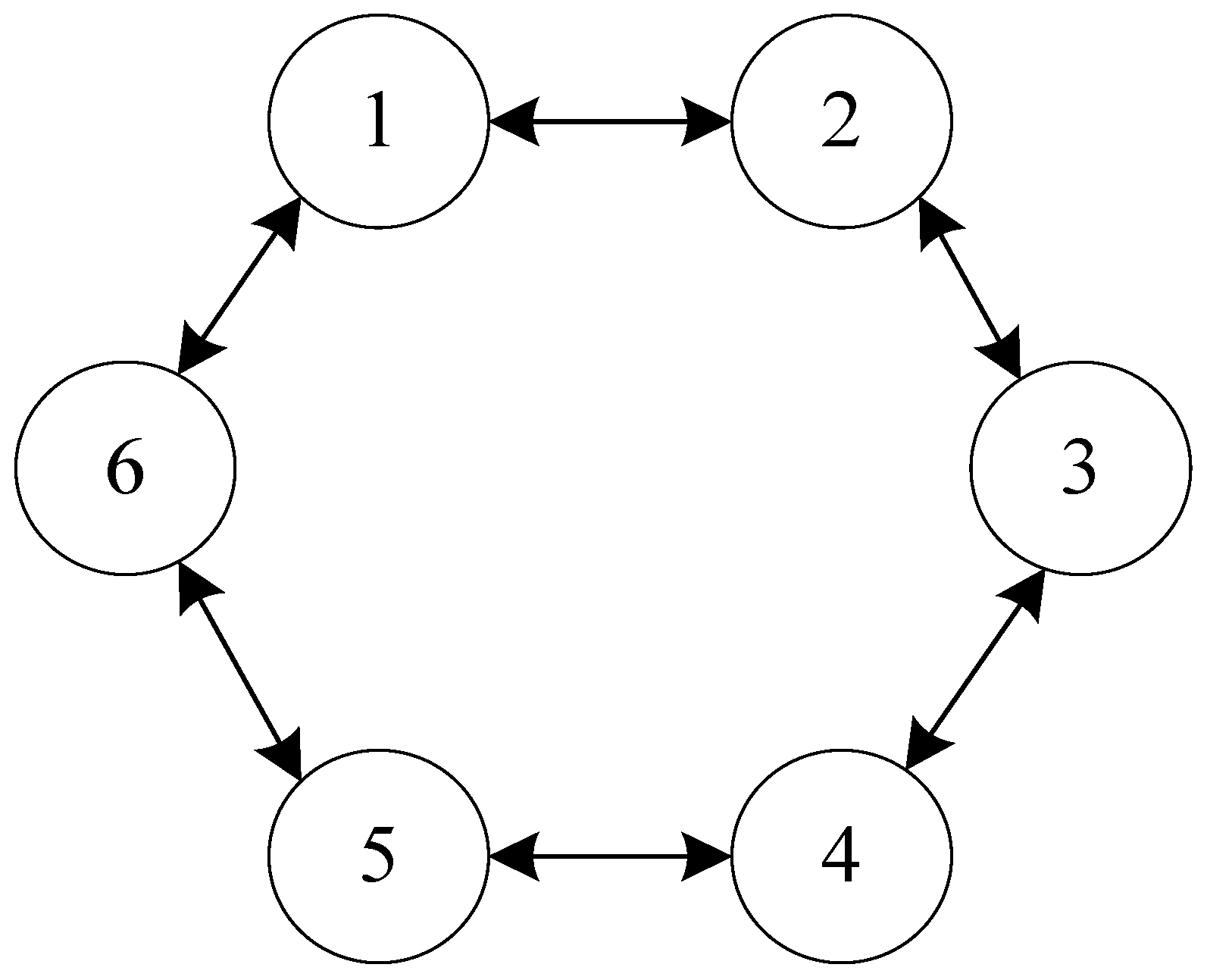
A distributed secondary control strategy based on a discrete dynamic consensus algorithm (DCA) is proposed. This strategy dynamically corrects the reference voltage in the primary control by designing voltage and current compensation terms. Relying on a bidirectional ring communication network, the control structure achieves global coordination through information exchange only between adjacent nodes, offering advantages in flexibility and strong robustness.
- (2)
Event-triggering conditions are designed for the output currents of distributed power sources. This ensures that the DC bus voltage can be regulated to its nominal value while maintaining accurate proportional current sharing. Simultaneously, it significantly reduces unnecessary communication resource waste and substantially improves communication efficiency.
- (3)
In contrast to existing research, which predominantly relies on averaging output voltages and currents followed by PI control, this study employs averaging and a dynamic consensus algorithm for voltage and current regulation, respectively. By assigning each algorithm a distinct control objective, the computational efficiency and accuracy of the DGs are improved. Moreover, the dynamic event-triggered mechanism proposed in this paper offers greater flexibility than the periodic triggering commonly adopted in the literature. The proposed triggering condition determines activation instants based on real-time discrepancies and the degree of gradient variation, rather than at fixed intervals. Consequently, it avoids unnecessary communication during steady-state periods and increases communication frequency during transients to mitigate system output errors.
In summary, this paper constructs a hierarchical control architecture characterized by primary control as the foundation, DCA-based secondary control for optimization, and an event-triggering mechanism for enhanced efficiency. This framework systematically addresses the dual challenges of voltage-current coordinated control and constrained communication resources in islanded DC microgrids, providing theoretical support and a technical pathway for their efficient and reliable operation. The adopted distributed control strategy avoids the single-point failure risk associated with centralized approaches and supports plug-and-play functionality. In the ring bidirectional communication topology adopted in this paper, potential communication delays include transmission delays caused by the physical propagation of data through communication links, as well as network congestion delays resulting from increased network load under frequent and redundant communication conditions. To address the first type of lag, this paper employs a discrete-time dynamic consensus algorithm, which exchanges information only with neighboring nodes, avoids global broadcasting, and thereby shortens the transmission path and reduces transmission delay. For the second type of lag, this study adopts an adaptive event-triggered mechanism to replace traditional periodic triggering, allowing communication only when the state changes significantly. This significantly reduces redundant data transmission and alleviates network congestion delays. The proposed event-triggering mechanism sets triggering conditions based on the output currents of individual distributed units. Communication updates are initiated only when the current estimation error and consensus error exceed predefined thresholds, thereby significantly reducing the transmission and processing of non-essential data. By constructing a Lyapunov function and rigorously analyzing the lower bound of the triggering intervals, the feasibility of excluding Zeno behavior in the system is proven.
4. Distributed Secondary Control Based on Event-Triggered Scheme
Given the high communication resource consumption in grid control network systems [
26], this section introduces an event-triggered scheme built upon the improved DCA for secondary control, further optimizing the distributed secondary control of the DC microgrid. This approach significantly reduces the communication frequency among distributed units.
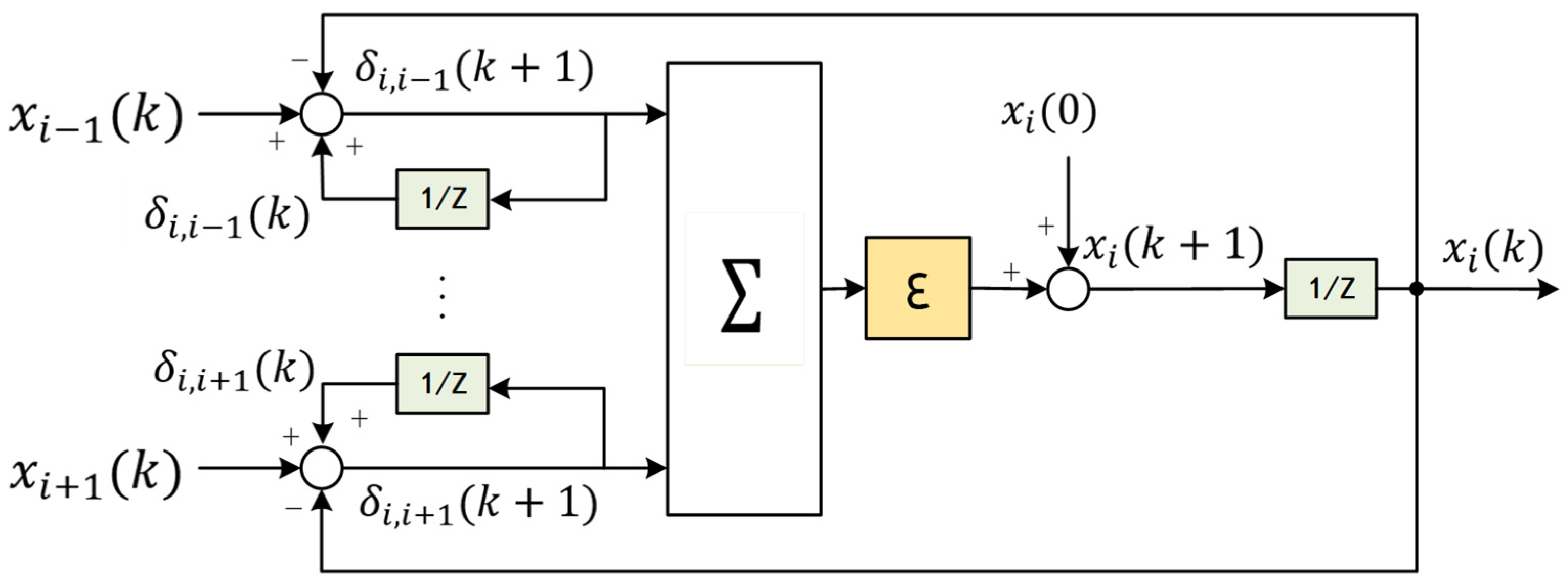
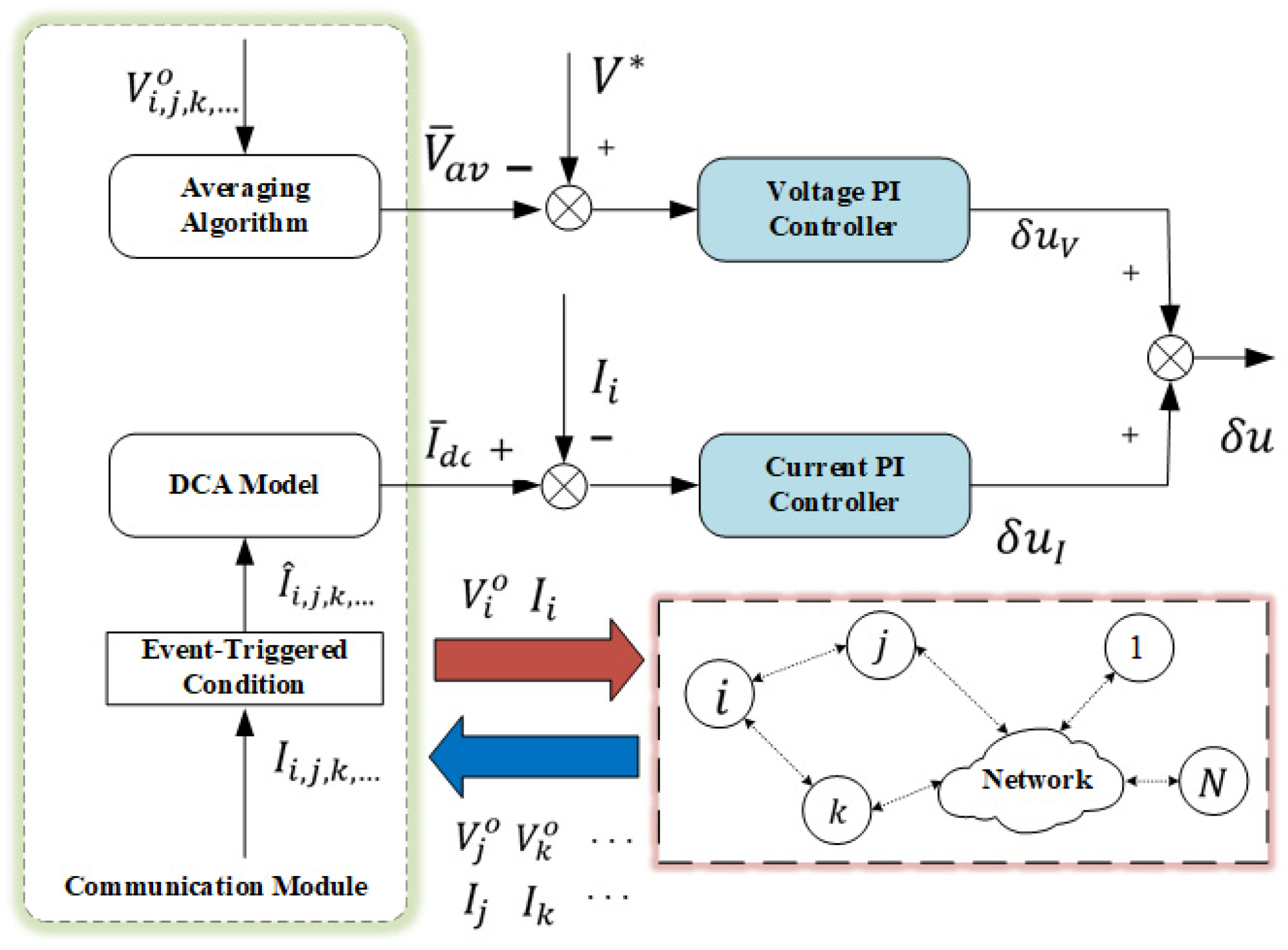
The event-triggered mechanism designed in this paper is illustrated in
Figure 7 below. Building upon
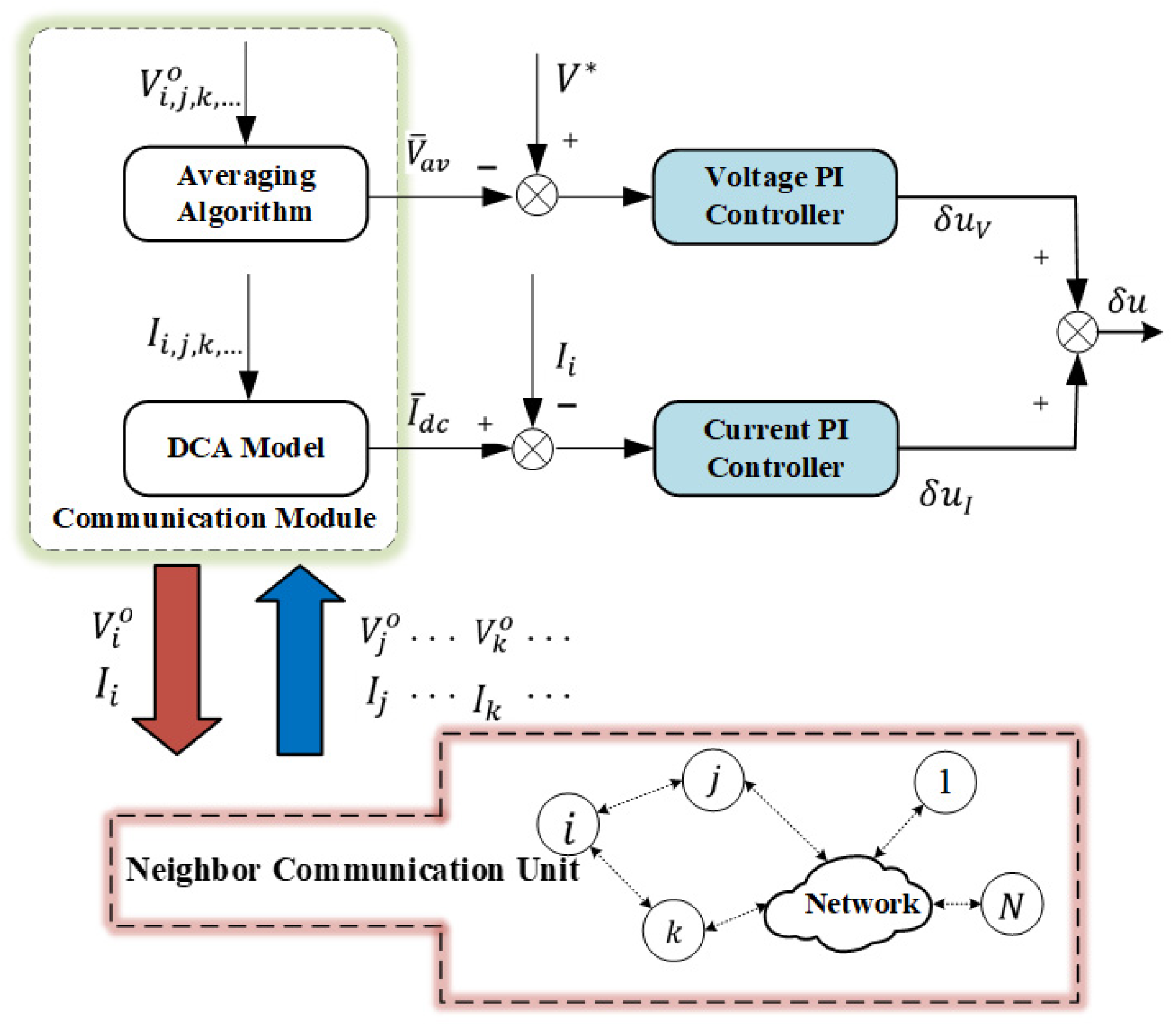
Figure 5, this mechanism is applied to the output currents of each distributed unit—specifically, to the input currents before they enter the DCA model. Additionally, to distinguish from the original output currents, the currents processed by the event-triggered mechanism are denoted as
.
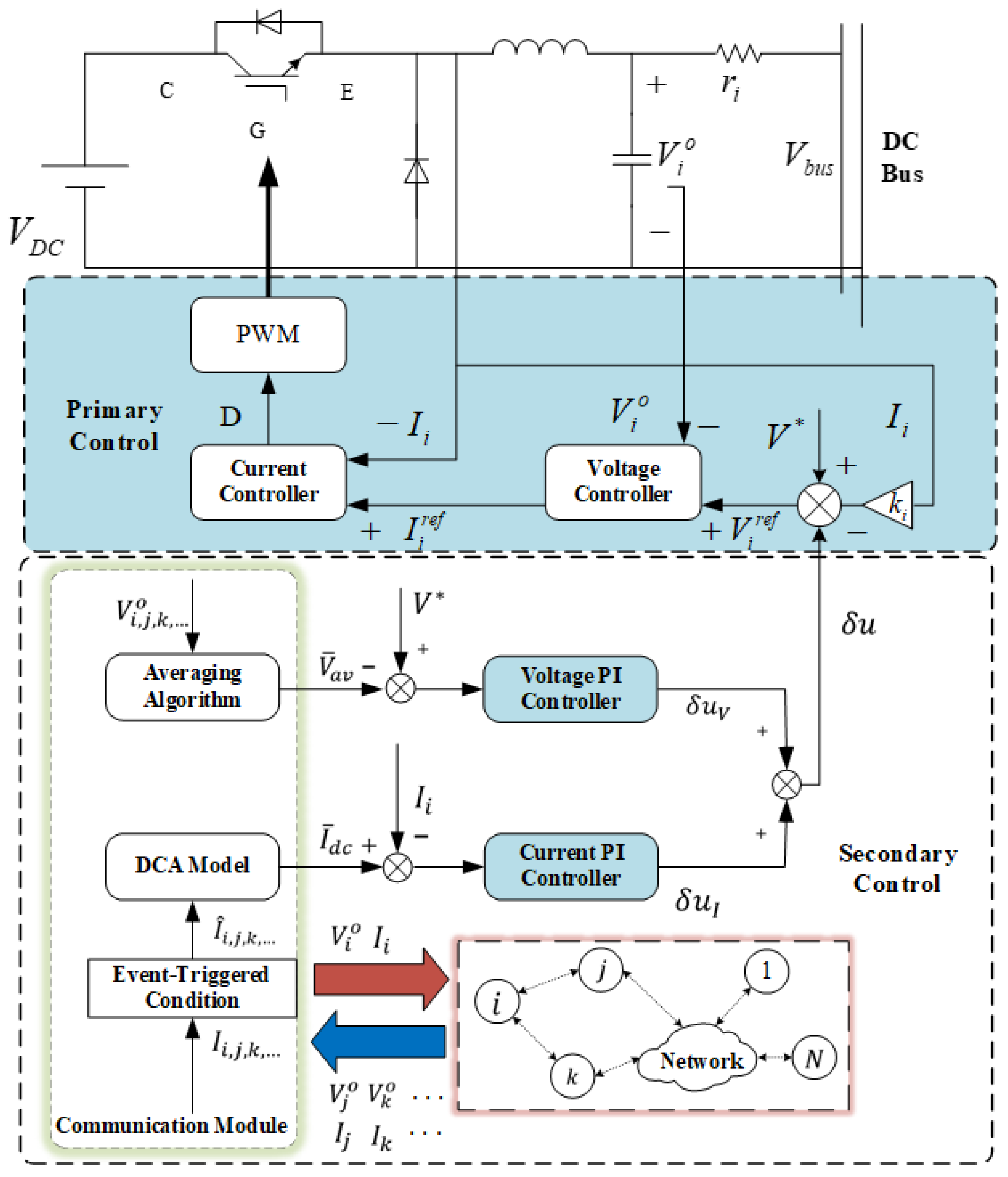
Combining with the above discussion, the control block diagram of the microgrid based on the event-triggered scheme can be derived as shown in
Figure 8.
4.1. Design of the Event-Triggered Mechanism
During the communication process, due to the event-triggered mechanism, the trigger only activates and enables information transmission when specific conditions are met. Let
denote the moment when the trigger occurs on the
-th DG unit converter, which can be described as:
where
, the superscript
indicates that the event triggering is applied to the current, and
,
are the corresponding coefficients representing constants under the condition of the
-th DG converter, satisfying
. Other variables are defined below.
is the adaptive threshold, the magnitude of which is positively correlated with the dynamic error of the system. It is specifically defined as:
where
is the sensitivity coefficient, and
is the base threshold. The sensitivity coefficient
adjusts the event-trigger threshold to balance communication savings and control accuracy. When α is small, the triggering threshold is stricter, resulting in more frequent communication and control updates, and vice versa. Together, they form a dynamically adjusted triggering threshold that varies with the system state.
is the anti-jitter coefficient, used to prevent false triggering caused by noise or minor fluctuations.
is the current estimation error, expressed as:
where
represents the variable processed by the trigger on
. Similarly,
in the following text has the same meaning.
Since this paper adopts a discrete dynamic consensus algorithm, the forward difference of Equation (11) can be obtained as follows:
where
is the consensus error when processed by the trigger, and the edge coefficient
in the difference formula is a constant greater than 0. Therefore, it can be considered together with
as follows:
The event-triggered condition is designed based on current estimation error and consensus error, which are directly linked to control accuracy. This event-triggered mechanism ensures that when the system is disturbed, the current error increases, which in turn raises . This loosens the triggering conditions and reduces unnecessary communication overhead. Conversely, as the system approaches a steady state, the current error decreases, causing to drop and tightening the triggering conditions, thereby improving control precision. New data is broadcasted by a DG unit to adjacent nodes only when the triggering condition (20) is satisfied, significantly conserving communication resources.
4.2. Validation of Feasibility for Event-Triggered Control
The feasibility of the trigger designed based on the triggering conditions must be theoretically verified by proving the absence of Zeno behavior. According to the event-triggered mechanism defined in Equation (20), the Lyapunov function is selected as:
where
is the current consensus value of the
-th DG unit, and
is the actual output current of the
-th DG. Taking the derivative of this function yields:
Combined with the core of the DCA, which drives system convergence through the current error between adjacent DGs, its dynamic equation can be expressed as:
Under the event-triggered mechanism,
remains constant during non-triggering intervals. By combining this property with the previously discussed convergence analysis of the DCA, the error between
and
gradually converges to zero. Leveraging the error interaction among adjacent nodes within the algorithm and the energy dissipation characteristics of the consensus algorithm [
27,
28], it can be derived that:
Substituting Equation (28) into Equation (26) yields:
Based on Lyapunov stability criteria and the asymptotic stability property of the consensus algorithm, there must exist a constant
such that:
where
is the attenuation rate coefficient of the system.
In conclusion, the trajectory-based attenuation relationship is ultimately given by Equation (30). Since the constant , the asymptotic stability of the system is guaranteed.
Since is globally asymptotically stable, the state variables of the system are bounded. Under the power constraints of the microgrid, the current is bounded; i.e., there exists such that . In a stable system, the derivative of the state variable, i.e., the rate of change in the current , is also bounded, meaning there exists such that . Furthermore, based on the convergence of the DCA, the interaction error does not grow unbounded. Therefore, the consensus error is bounded; i.e., there exists such that .
During the non-triggering interval
, the current variable
remains fixed and constant. Thus, the derivative of the error is given by:
Combining this with the boundedness of
(i.e.,
), we obtain:
Combining the above with the Mean Value Theorem and considering that the error is reset to zero at each triggering moment
(i.e.,
), the following holds during the non-triggering interval:
When the triggering moment
satisfies the triggering condition in Equation (20), the following can be derived:
Given that
, and to ensure rigor in the proof process, we may take the minimum value
. Rearranging the expression yields:
Let
. Combining Equations (33) and (35) at
yields:
Simplifying Equation (36) yields:
where
. Since all parameters are positive,
.
The inter-event time interval for all DG units is bounded below by . Within any finite time interval , the maximum number of triggering events is upper-bounded by . This confirms that the event-triggered mechanism proposed in this paper is free of Zeno behavior.
4.3. Theoretical Comparative Analysis of Zeno Behavior
To verify the superiority of the proposed adaptive event-triggered strategy, a traditional simple event-triggered condition is introduced for comparison:
where σ is any constant greater than 0.
Similar to the above proof process, by the mean value theorem, we obtain:
That is, a situation may arise such that:
When at steady state, , from Equation (31), we obtain , and thus . approaches zero infinitely at steady state, leading to infinitely frequent triggering, which is the so-called Zeno phenomenon. This means that the triggering intervals gradually approach zero, resulting in continuous high-frequency triggering and typical Zeno behavior.
In contrast, under the proposed adaptive event-triggered condition:
with
and
. The triggering interval has a strict positive lower bound
. Thus, Zeno behavior is completely avoided.
5. Simulation Analysis
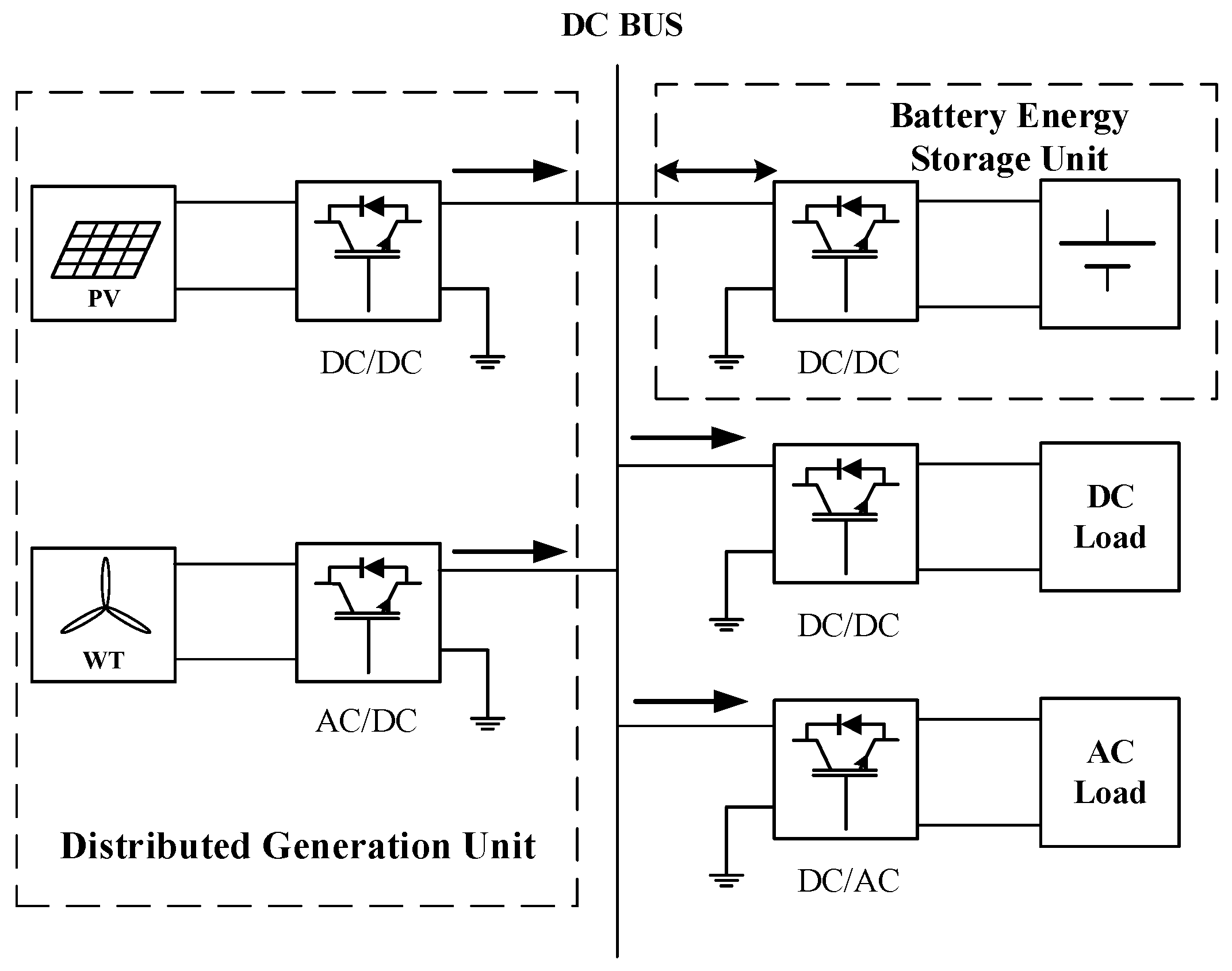
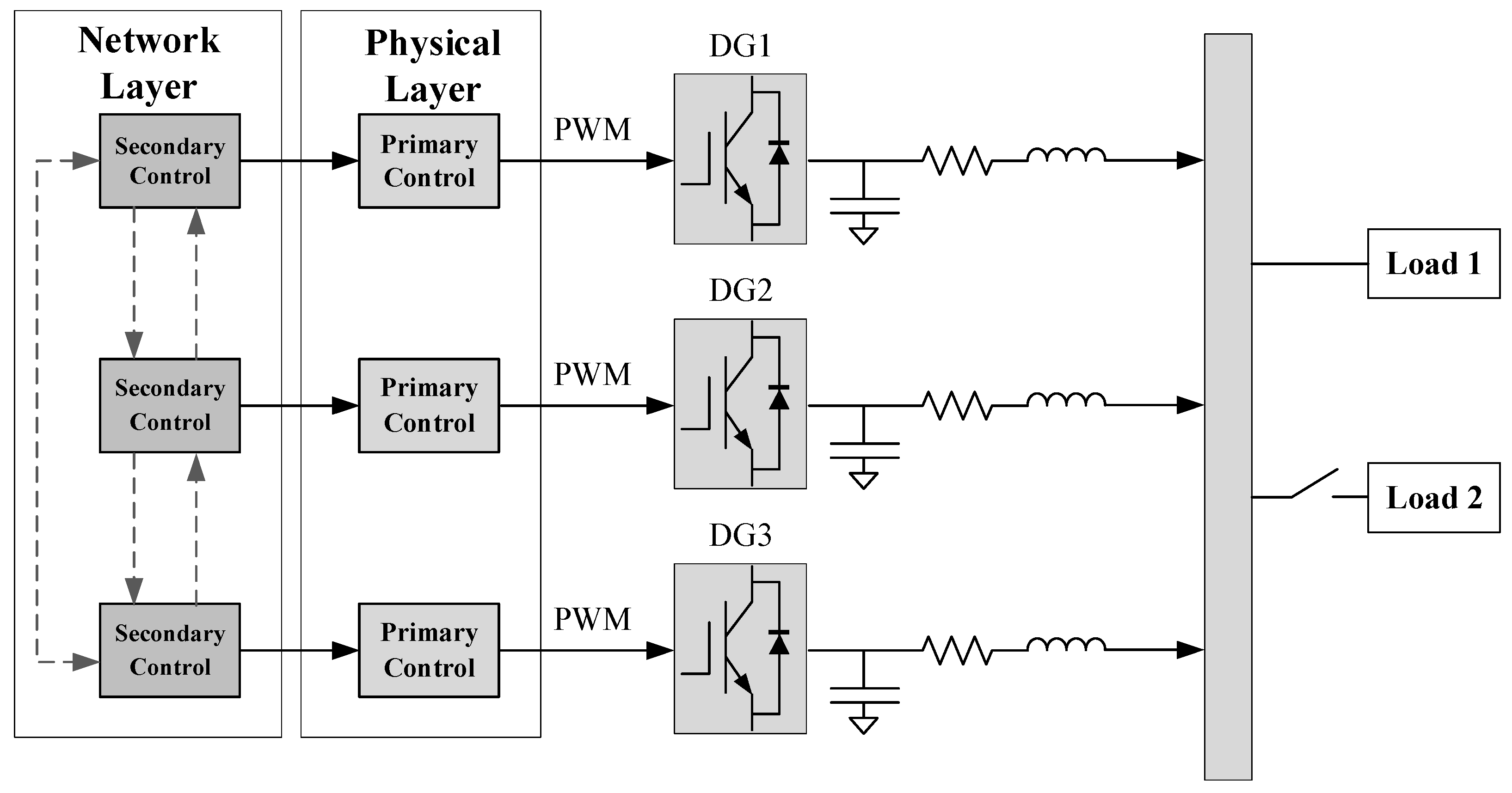
To further verify the efficacy of the distributed control scheme put forward in this work, a simulation model of the DC microgrid system was established in MATLAB R2023a with Simulink, as shown in
Figure 9. The physical layer and network layer of the model correspond to the primary control and secondary control of the system, respectively. The line impedances of the distributed generation units DG1, DG2, and DG3 are configured as 0.01 Ω, 0.02 Ω, and 0.03 Ω, respectively. Load 1 and Load 2 are both resistive loads with a resistance of 5 Ω, where Load 2 is employed to simulate the impact of load variations on the system operating state.
This paper conducts simulation validation on an islanded DC microgrid with three DG units, as illustrated in the figure. All three DG units employ buck rectifier converters with identical parameters. The key simulation parameters are summarized in
Table 1. The droop gains are configured as
.
In this section, simulations verify the effectiveness of the proposed algorithm in achieving precise voltage restoration and accurate current sharing. The system response is evaluated after the introduction of secondary control and under load transients. Furthermore, the disconnection of DG2 is simulated to mimic a scenario where a distributed generation unit is disconnected from the grid. Finally, simulated current waveforms under the event-triggered mechanism intuitively illustrate the impact of the designed adaptive mechanism on the communication process.
5.1. Secondary Control and Load Change Process
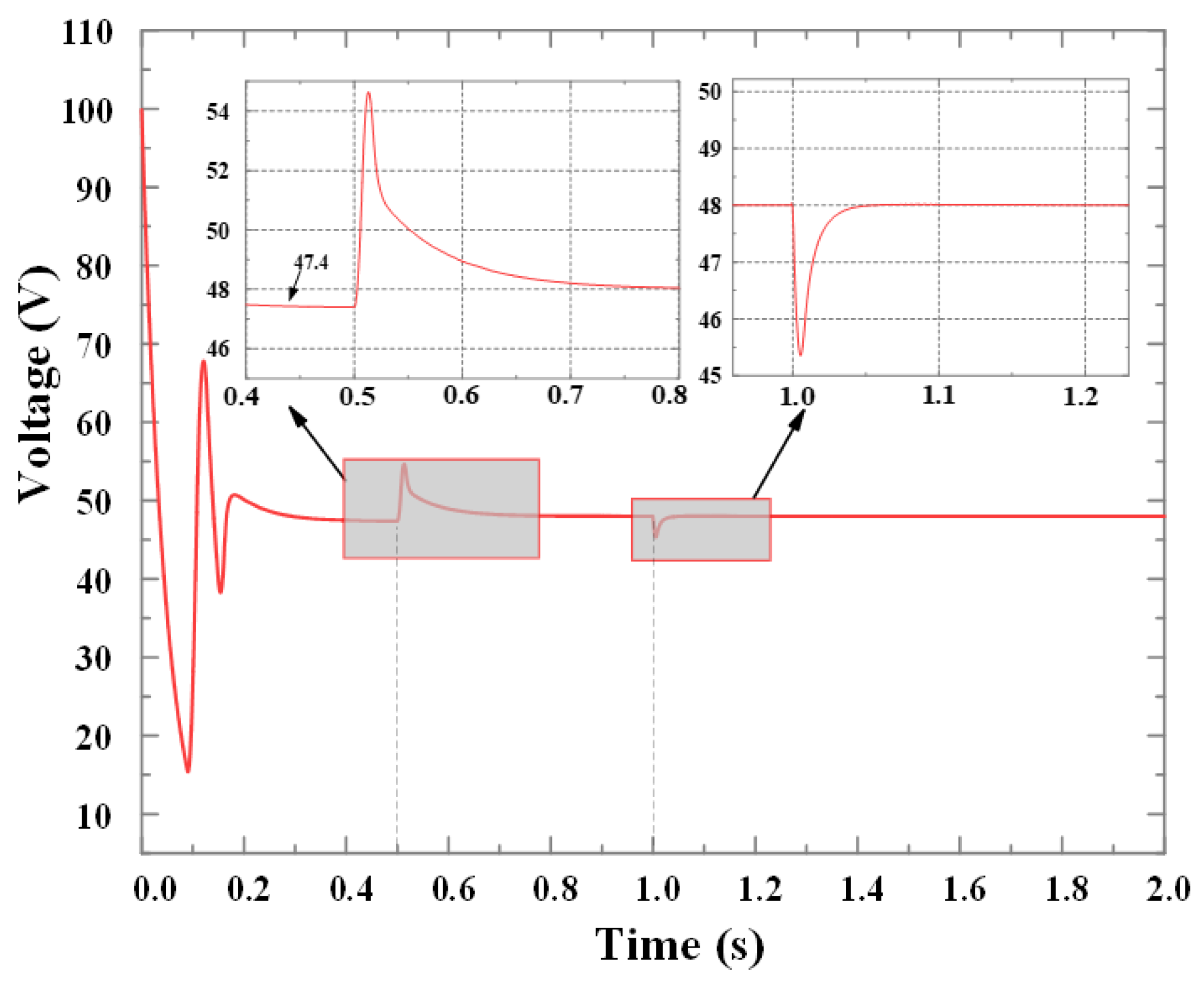
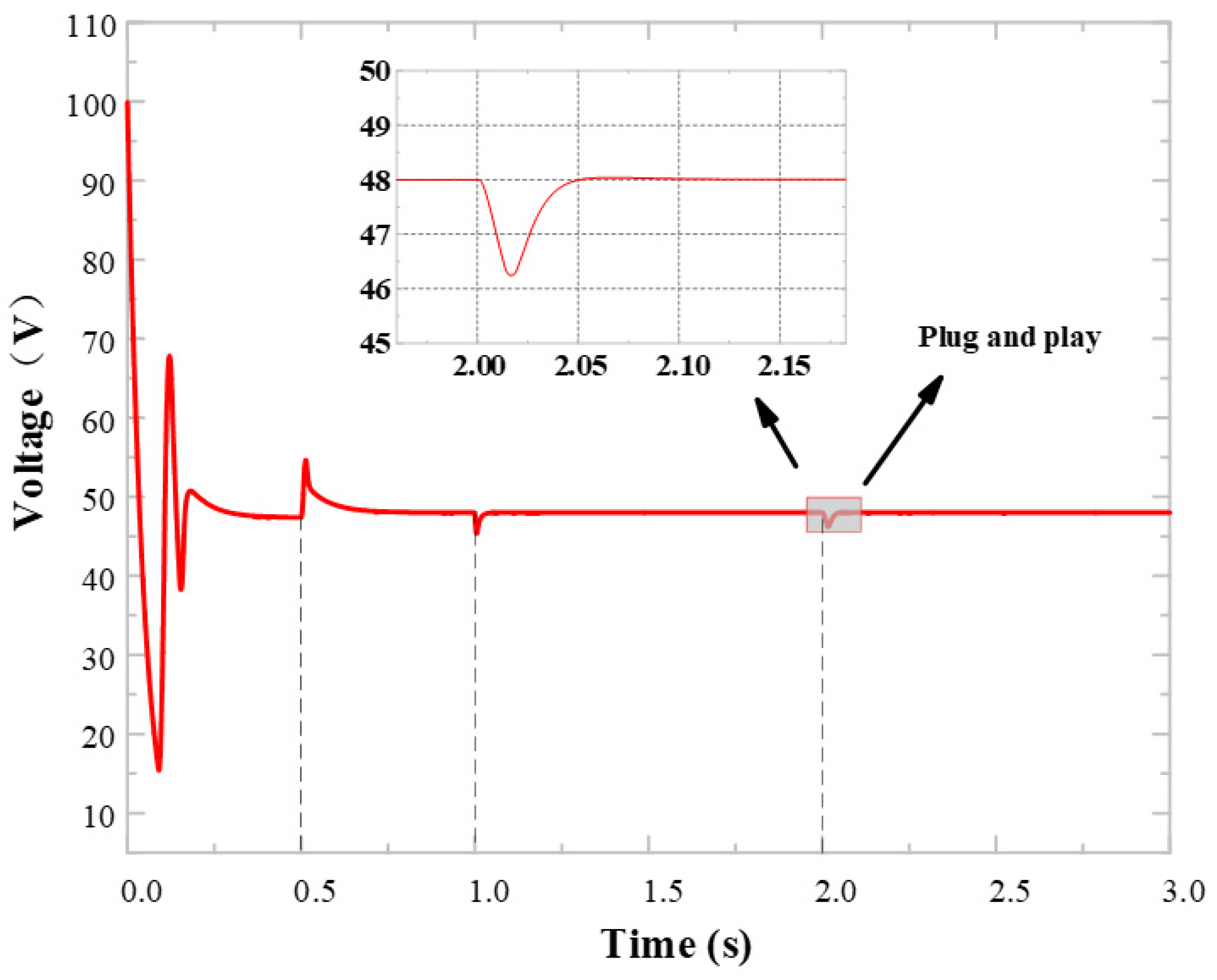
First, to verify the voltage recovery effect of the distributed secondary control scheme put forward in this work in addressing the voltage deviation induced by primary droop control, as well as the system response during load changes, the specific results are shown in
Figure 10.
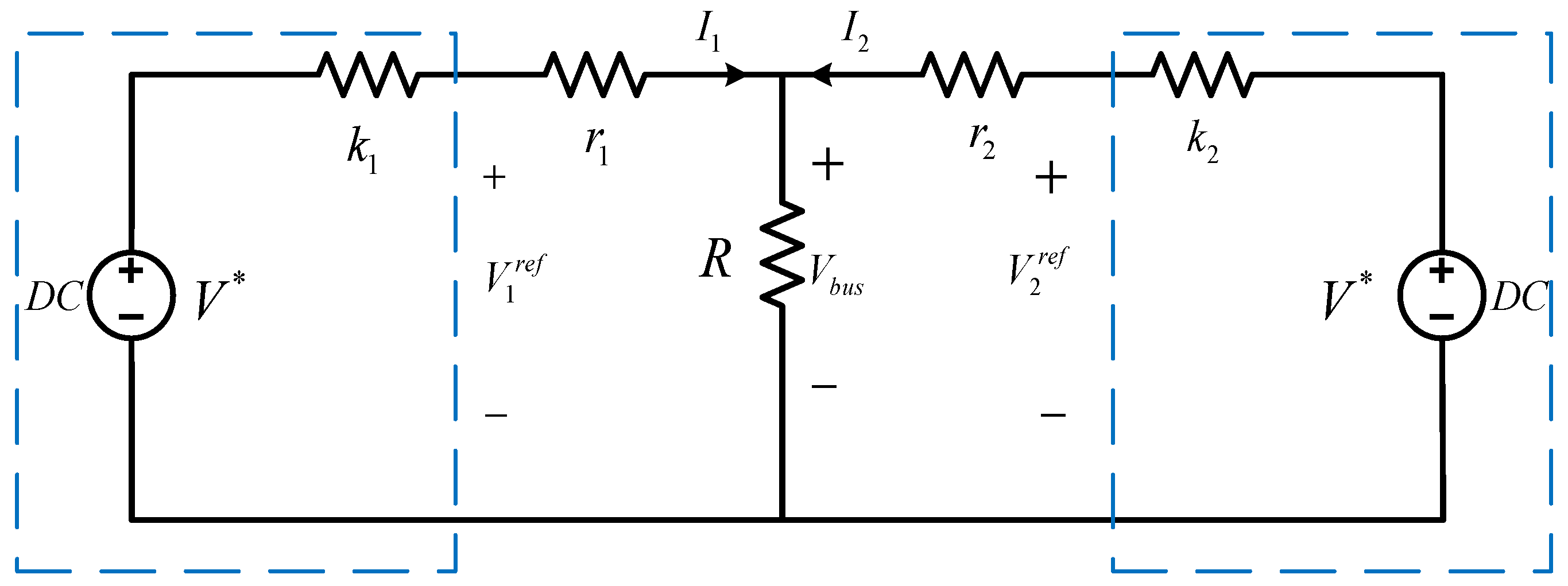
In the figure, the process from 0 to 0.3 s represents the transition from startup to steady state under primary control. Under the influence of droop control, the bus voltage reaches 47.4 V. At t = 0.5 s, secondary control based on DCA is enabled, and the bus voltage recovers to 48 V within a short period. This demonstrates that the secondary control strategy can effectively eliminate voltage deviations caused by droop control. To further validate the efficacy of the proposed control scheme during load changes, at t = 1 s, Load Resistor 2 is connected in parallel to the circuit. The subsequent process after 1 s reflects the dynamic response of the control system. Even after the load change, the bus voltage can still recover to the set value, and the system returns to a stable operating state.
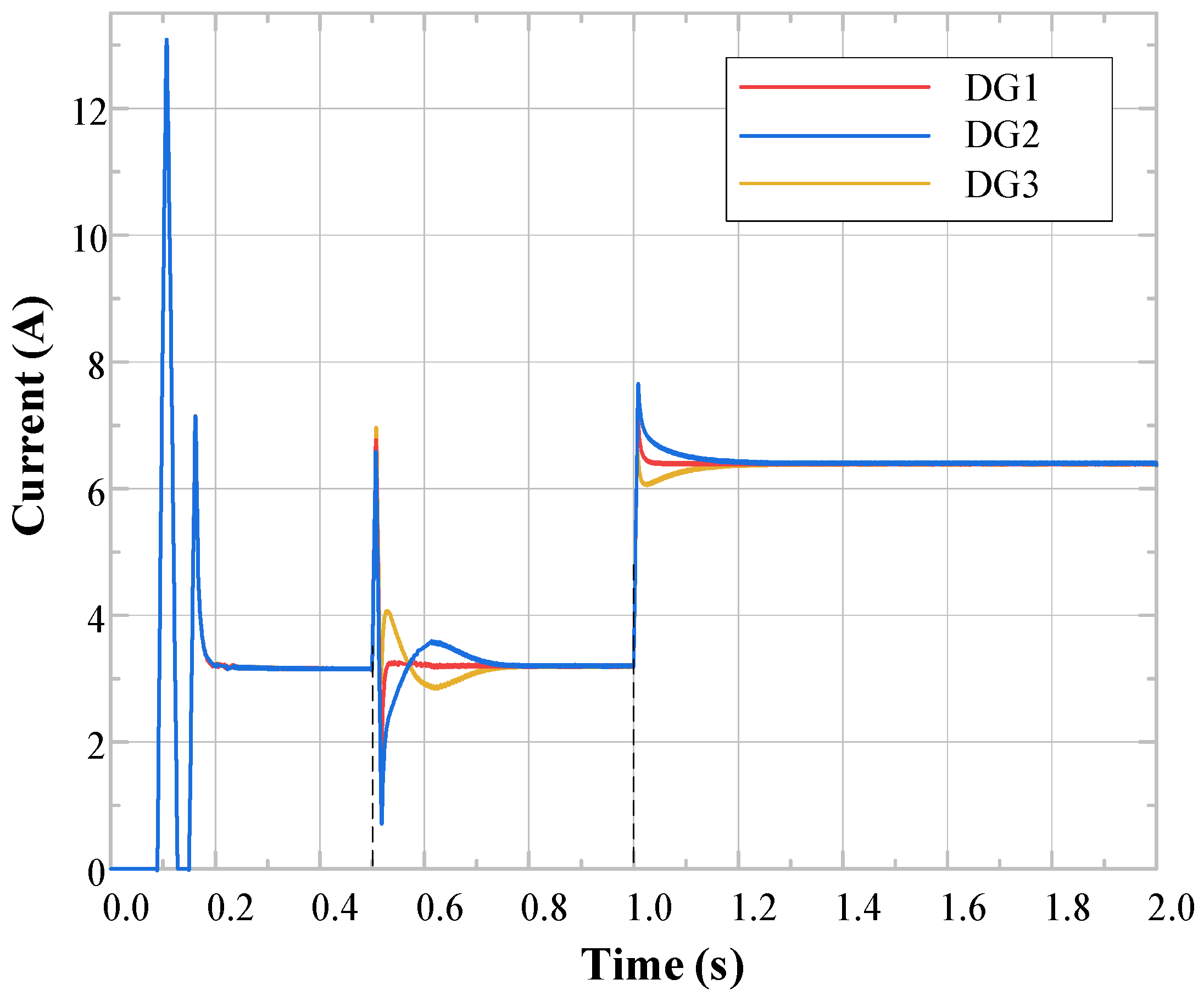
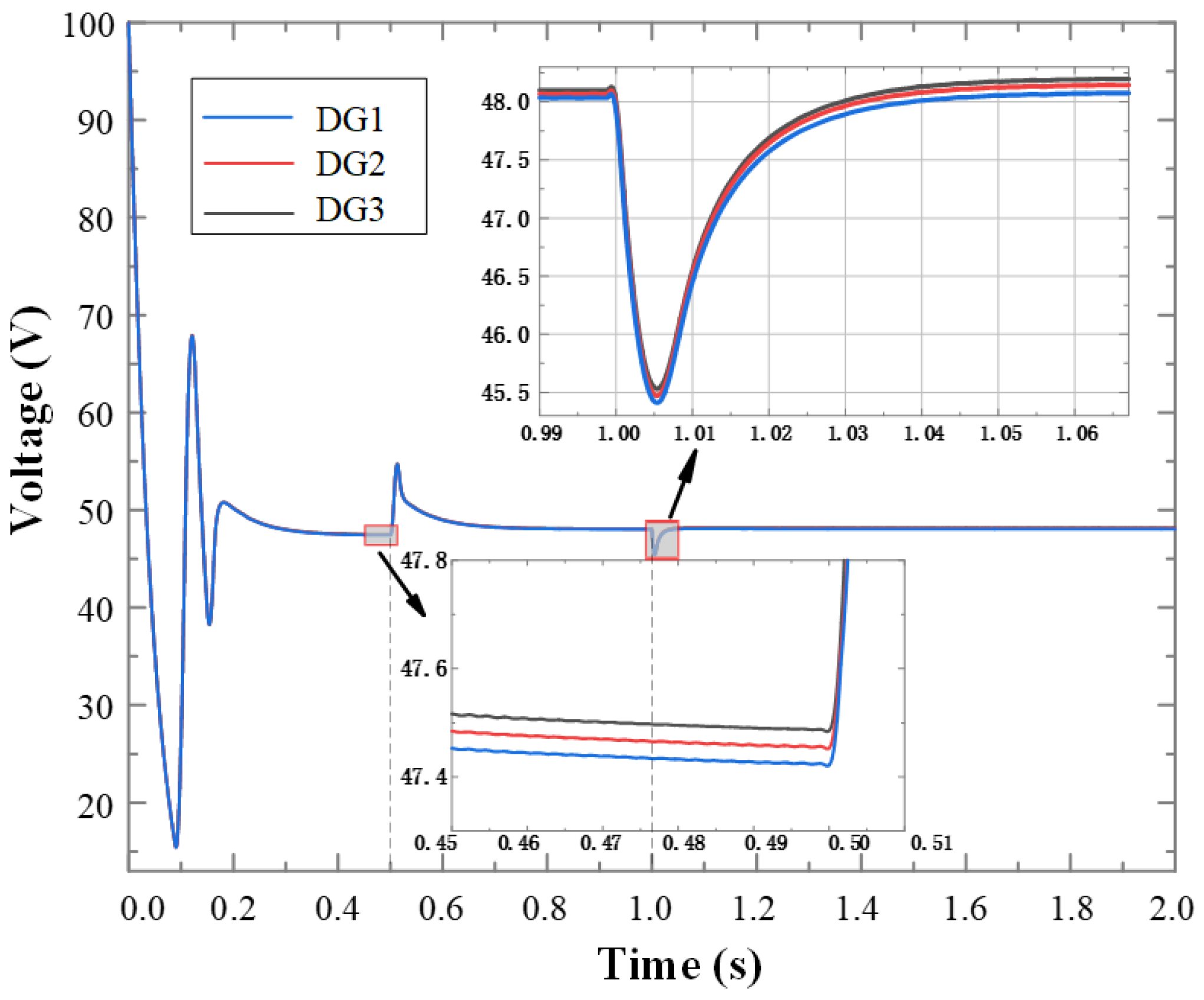
Figure 11 and
Figure 12 show the current and voltage variations of each DG unit during the same period, respectively.
As shown in
Figure 11, when the droop coefficients among the DGs are identical, their output currents remain consistent under steady-state conditions. The system’s steady state is only disrupted at t = 0.5 s and t = 1 s—the moments when secondary control is activated and the load changes—causing minor fluctuations in the currents. Subsequently, the system quickly returns to steady state, and the output currents of the DGs restore stability while maintaining proportional sharing.
Figure 12 shows that the output voltages of the DGs are distributed around 48 V due to slight differences in line impedances among the units. However, under the regulation of the secondary controller, the bus voltage
can still be maintained stably at its nominal value.
The above results demonstrate that the secondary control based on the event-triggered DCA used in this paper can effectively address the two core challenges of DC microgrids: voltage restoration and current sharing.
5.2. Current Variation Before and After the Introduction of Event Triggering
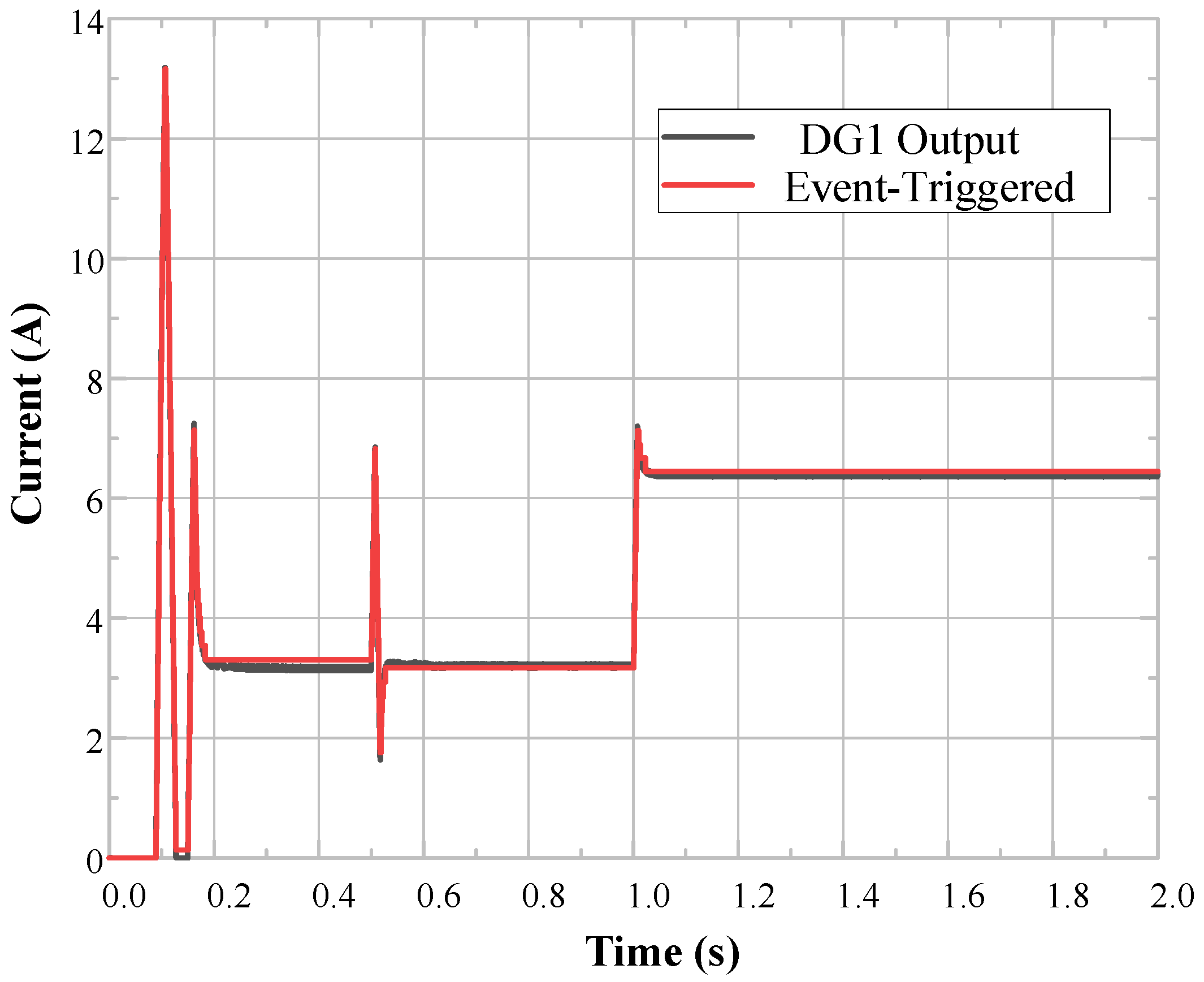
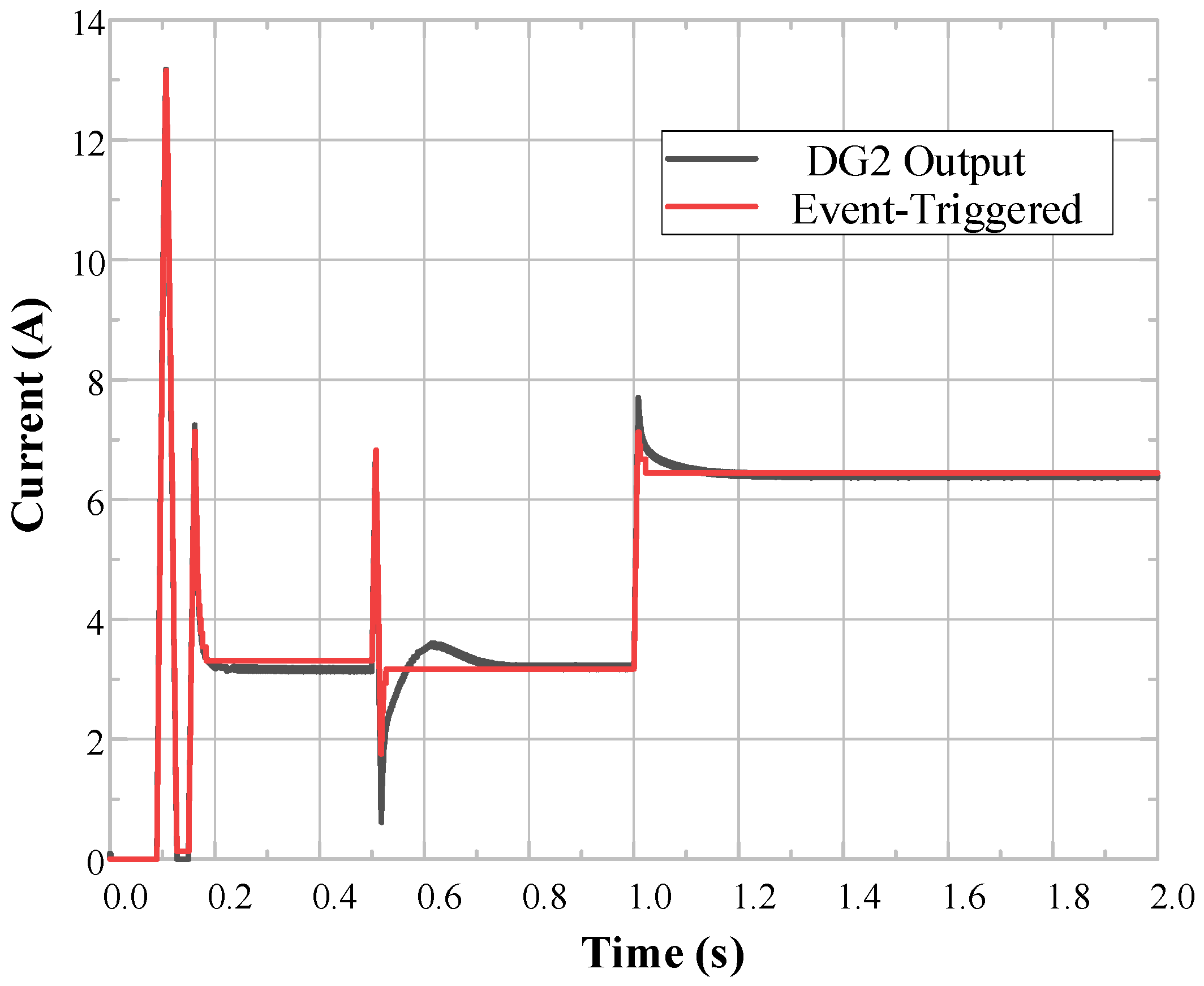
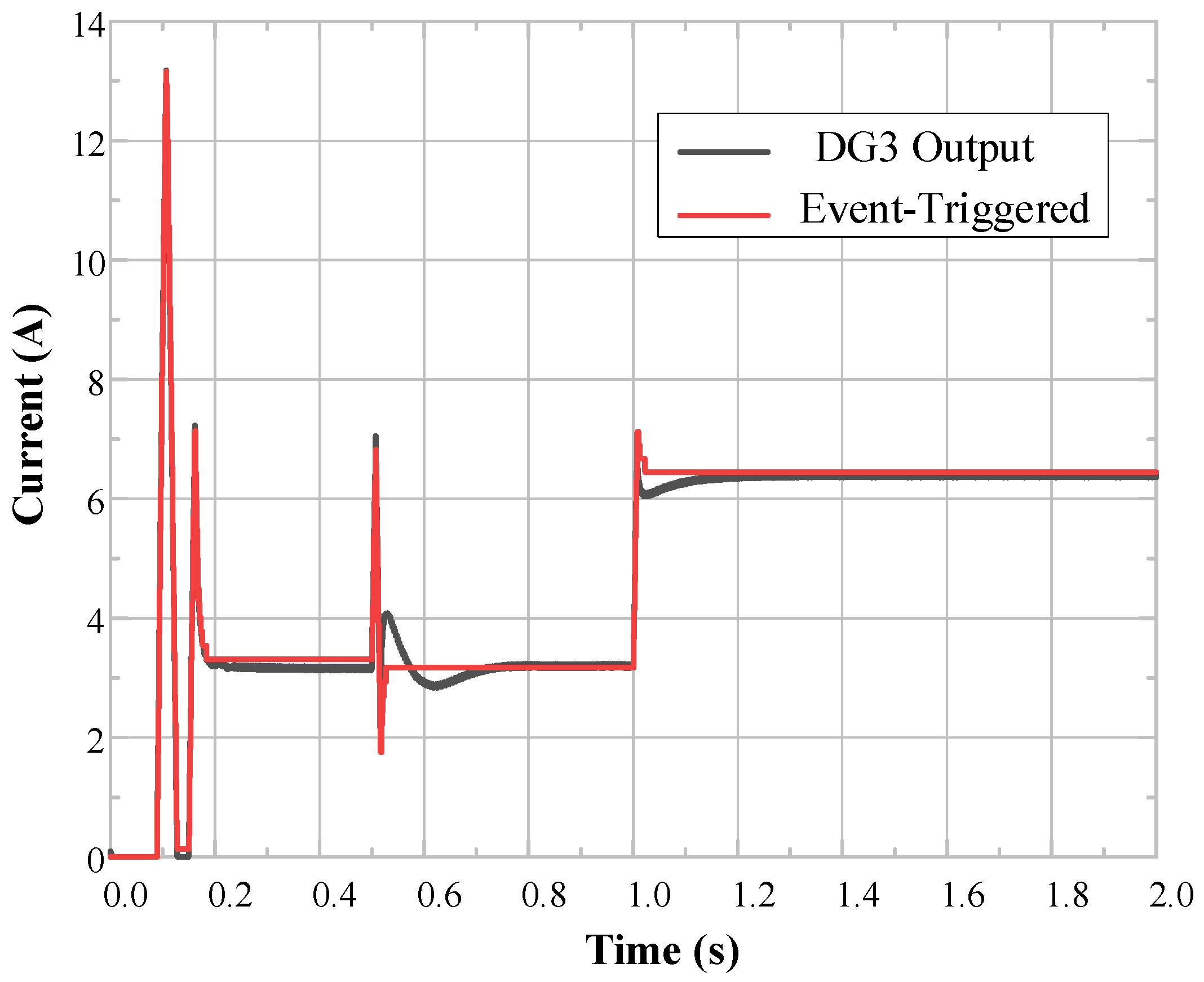
The following
Figure 13,
Figure 14 and
Figure 15 respectively show the output current waveforms of DG1, DG2, and DG3 under event-triggered conditions and without the application of event triggering.
From the three figures above, it can be observed that under the influence of event triggering, the current curves exhibit a stepwise pattern, whereas without event triggering, the currents vary smoothly as continuous curves. To more intuitively illustrate the effect of event triggering, taking DG1 as an example,
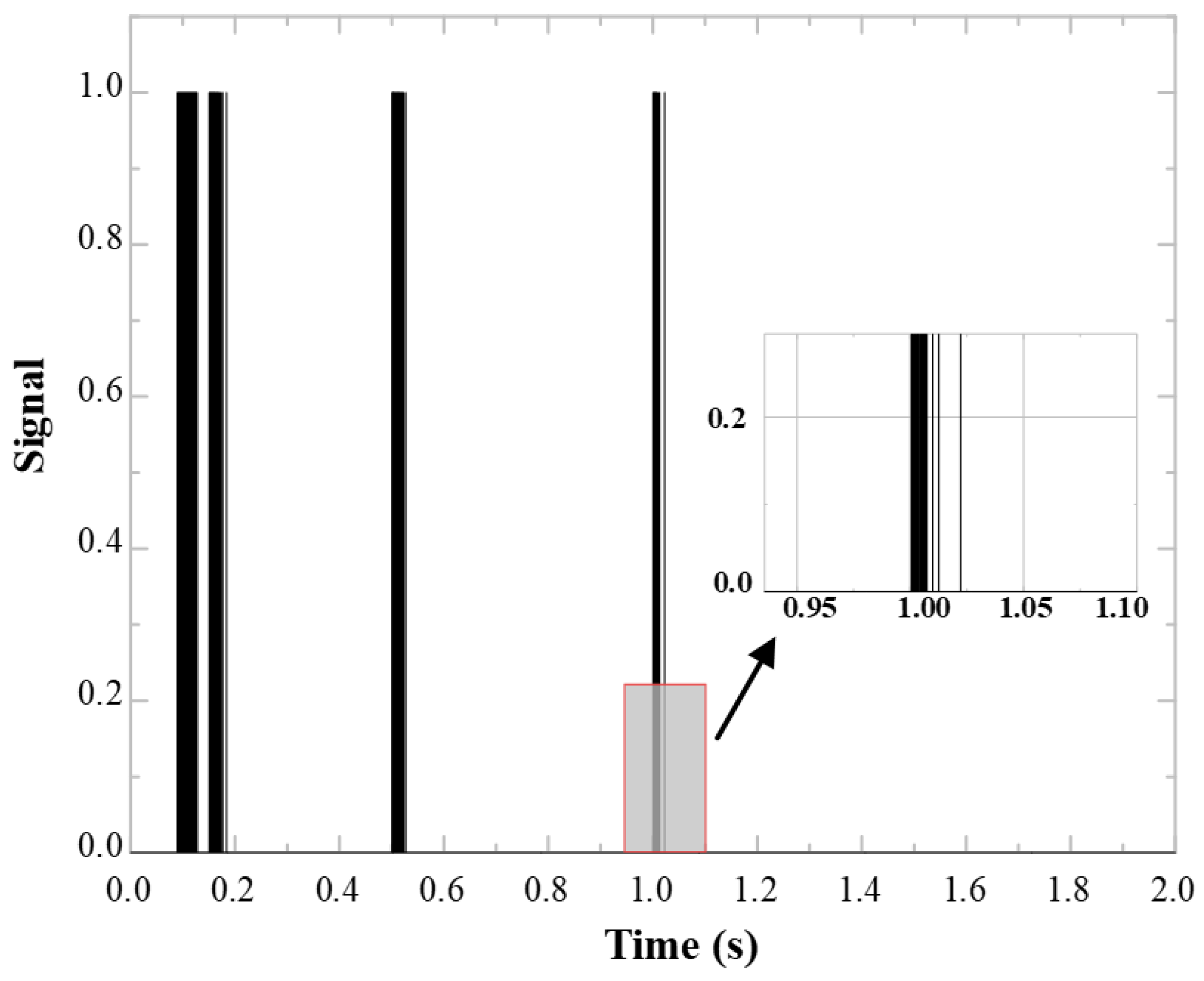
Figure 16 shows the timing diagram of communication instants for DG1’s output current under triggered conditions.
In
Figure 16, a value of 1 indicates that communication is active, while 0 indicates no communication. That is, when the event-triggering condition in Equation (20) is satisfied during system operation, the triggered control initiates sampling and updates the latest current value. This enables communication sampling only when necessary, thereby avoiding excessive occupation of communication resources. Combined with the current waveforms, it can be observed that frequent communication occurs mainly during transient processes—such as from the start of the simulation until the primary control stabilizes, the moment secondary control is introduced, and during load changes—whereas almost no communication is required in steady-state conditions. As a result, the communication frequency and computational burden during microgrid operation are significantly reduced.
5.3. Simulation of Plug-and-Play Process
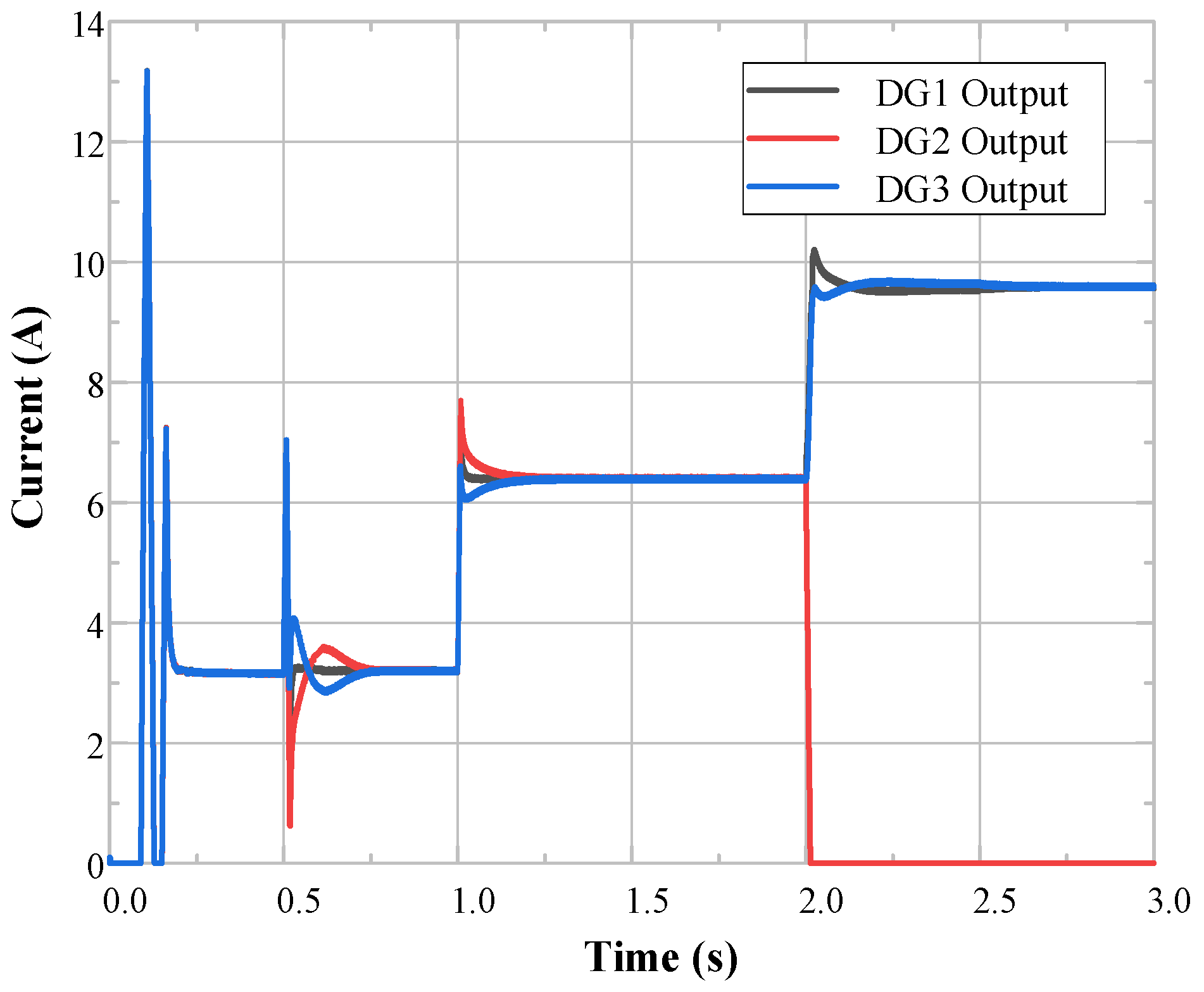
Finally, to validate the plug-and-play functionality, the disconnection of the DG2 line during stable microgrid operation is taken as an example to observe whether the system can restore stability, whether the bus voltage can return to its nominal value, and how the output currents of the DG units change. As shown in
Figure 17 and
Figure 18, within the 0–1.5 s interval, the processes of primary control, secondary control, and load changes described above are still ongoing. At the 2 s mark after stability is achieved, DG2 is disconnected from the parallel units. It can be observed that the bus voltage can still recover to the nominal value of 48 V. Meanwhile, the output current of the disconnected DG2 unit drops to 0, while DG1 and DG3 maintain their proportional current sharing after reaching a new steady state. Simulation results verify that the proposed control scheme achieves reliable plug-and-play operation of DG units without extra reconfiguration or manual intervention.
5.4. Comparison of Adaptive Event-Triggered Control with Existing Schemes
A detailed qualitative comparison of the proposed adaptive event-triggered secondary control with representative existing methods is provided in
Table 2, highlighting its unique features in balancing communication efficiency and control performance.
To quantitatively evaluate the performance, key indices, including voltage regulation Mean Squared Error (MSE), current-sharing Mean Absolute Error (MAE), and communication efficiency, are compared in
Table 3.
Comparing the conventional periodic triggering case under the same simulation duration, the periodic sampling frequency is 100 Hz and the duration is 2 s, so the total number of periodic triggering events during the simulation period is 200. In the proposed method, the triggering events are mainly concentrated around 0.1–0.2 s, near 0.5 s, and near 1 s. After multiple simulation verifications, the average total number of triggering events is stable at 54. Then, by analyzing the obtained bus voltage fluctuation range and the output current sharing of each DG, the performance index data are derived.
The results demonstrate that the proposed consensus-based scheme achieves significantly higher control accuracy while reducing communication burden by approximately 73%.
5.5. Simulation Case of Zeno Behavior Scenario
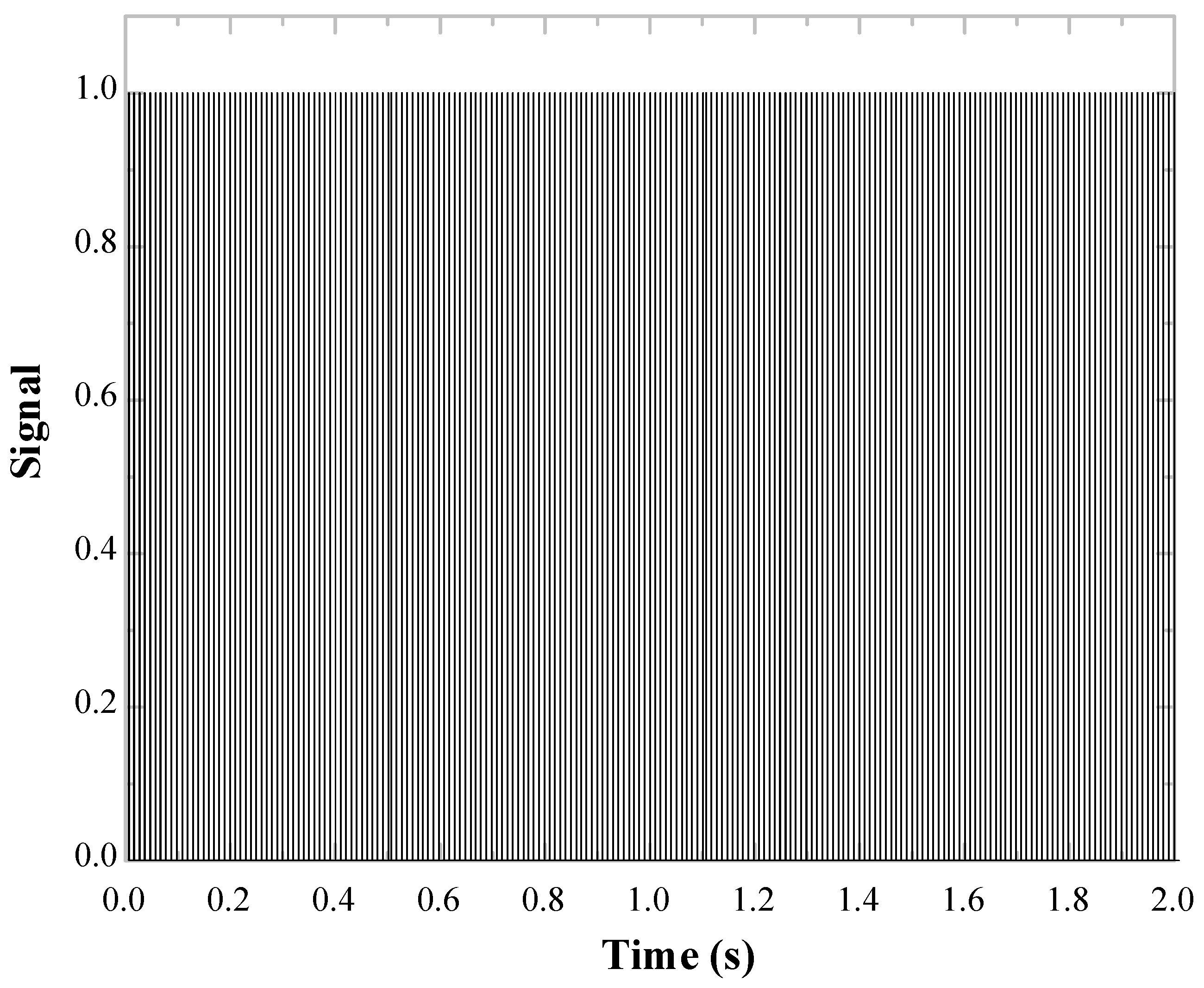
Based on the Zeno behavior example presented in
Section 4.3, a simulation experiment is conducted to demonstrate the communication burden caused by such behavior. With a fixed sampling frequency of 100 Hz, the system is forced to communicate at the maximum possible rate when Zeno behavior cannot be avoided. The resulting communication instants are shown in
Figure 19, where frequent and nearly continuous triggering events lead to excessive communication frequency, which will inevitably impose a heavy burden on the network and consume unnecessary communication resources.
Therefore, compared with
Figure 16, it is intuitively evident that the proposed event-triggered control without Zeno behavior can effectively reduce unnecessary communication, achieve triggering only at the necessary communication instants, improve communication efficiency, and significantly alleviate the communication burden.
6. Conclusions
This paper focuses on bus voltage recovery and current sharing in DC microgrids and proposes a distributed secondary control strategy grounded in an adaptive event-triggered dynamic consensus algorithm. This strategy mitigates the voltage deviation induced by conventional primary droop control in microgrids and further addresses the communication frequency issue during secondary control. The key findings are outlined below:
- (1)
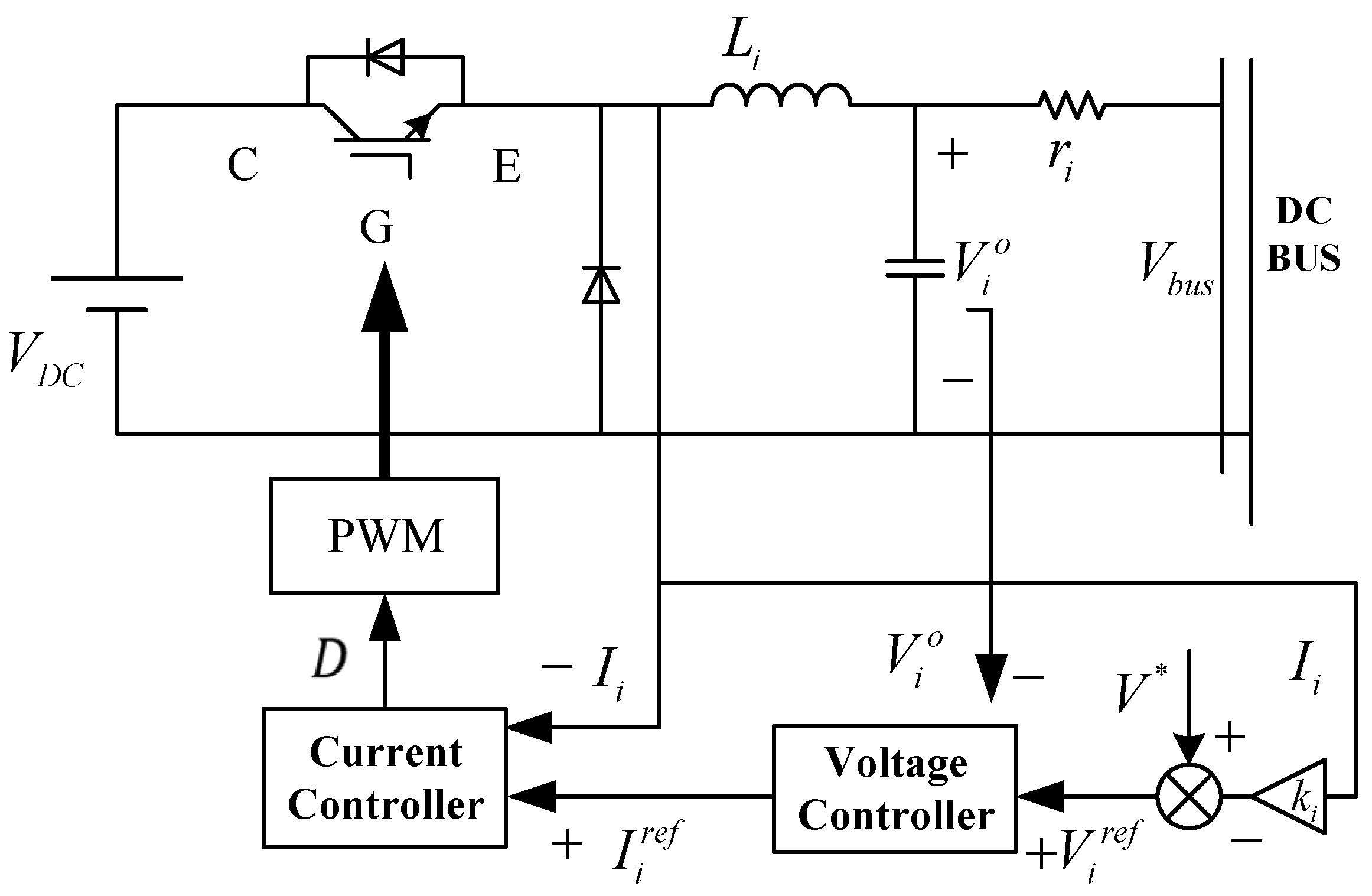
By adopting the average voltage method and consensus-based current convergence algorithm, secondary control compensation signals are generated. These signals are then integrated with primary control to form PWM signals acting on IGBT modules, realizing the control goals of bus voltage regulation and precise current sharing.
- (2)
While ensuring that the DC microgrid voltage reaches its nominal value and current is proportionally allocated, the system performance is tested under scenarios such as load variations and distributed power source disconnection. The results indicate that the system can rapidly revert to steady-state operation; after stabilization, the bus voltage and power source currents meet the specified requirements. This validates the robustness of the proposed secondary control algorithm in coping with load transients and distributed power source plug-and-play. The simulation results clearly confirm that the designed control scheme successfully realizes reliable plug-and-play operation of distributed generation units without additional reconfiguration or manual intervention.
- (3)
The designed adaptive event-triggered conditions effectively limit the communication frequency during secondary control, thereby minimizing communication redundancy. Implementing this adaptive event-triggered scheme under load fluctuations and unit plug-and-play scenarios also ensures the restoration of system stability. Theoretical analysis verifies the mechanism’s feasibility by proving the absence of Zeno behavior. By effectively reducing the communication frequency among distributed units, it alleviates the pressure on communication bandwidth and improves the stability and anti-interference ability of the networked control system.
The proposed adaptive event-triggered distributed secondary control strategy also exhibits significant engineering practical value for real-world DC microgrid applications. The plug-and-play capability allows flexible access or exit of distributed generation and energy storage units without re-tuning controller parameters or reconstructing the communication topology, which strongly supports the scalable and modular construction of DC microgrids. Meanwhile, the coordinated control of voltage restoration and current sharing helps prolong the service life of energy storage equipment, improve power supply quality, and enhance the operational economy and safety of actual DC microgrid projects. These advantages enable the proposed scheme to be conveniently applied in practical engineering scenarios such as industrial DC microgrids, ship DC power systems, and renewable energy distribution stations.
While the proposed method achieves satisfactory control and communication performance, it relies on a fixed ideal communication topology and ideal channel assumptions, and is verified only by simulation for islanded DC microgrids. These limitations provide clear guidance for future work, including extending to dynamic topologies, considering delays and packet loss, conducting hardware experiments, and expanding to grid-connected and hybrid microgrids, thus offering valuable experience for the engineering application of event-triggered distributed control. Sun et al. [
30] address reactive power-sharing errors caused by feeder impedance mismatches using a distributed adaptive virtual impedance method based on average consensus. Consensus algorithms are applied to tune virtual impedance and estimate average voltage, achieving accurate reactive power sharing and superior voltage regulation. For complex industrial microgrid scenarios with time-varying topologies, random interference, and large-scale time-varying delays, further improvements can be carried out in future research. Moreover, robust delay compensation algorithms and topology adaptive consensus strategies should be developed to adapt to dynamic network connection changes.