Article

Mathematical Modeling and Finite Element Analysis of the Puncture Process in Sewing Fabrics

1
Hubei Key Laboratory for Digital Textile Technology, Wuhan Textile University, Wuhan 430200, China
2
Innovation Center of Advanced Textile Technology (Jianhu Laboratory), Shaoxing 312000, China
3
Shaoyang Institute of Advanced Manufacturing Technology, Shaoyang 422000, China
*
Author to whom correspondence should be addressed.
Symmetry 2026, 18(4), 635; https://doi.org/10.3390/sym18040635
Submission received: 9 March 2026 / Revised: 2 April 2026 / Accepted: 7 April 2026 / Published: 9 April 2026
(This article belongs to the Section Engineering and Materials)

Abstract

The puncture force during sewing is a critical factor affecting sewing quality. In this study, the puncture process is divided into five stages, a mechanical model of the puncture process is established, and a quantitative expression is achieved. Using the ANSYS Explicit Dynamics method, a finite element analysis model of the penetration process was developed to investigate the influence of fabric structure (thickness and warp and weft density) and needle geometric parameters (point height, taper angle, and shank diameter) on penetration force. The results indicate the following: Two distinct force peaks occur during needle penetration—one at the instant of fabric piercing and another when the needle shaft enters the fabric. Increasing fabric thickness causes the former peak to rise significantly, while the latter peak increases more gradually. Puncture force decreases significantly with reduced warp and weft density. When density decreased from 85 × 85 TPI to 80 × 80 TPI, the first peak decreased by 18.5% and the second peak by 67.4%. A further decrease in warp and weft density to 75 × 75 TPI resulted in peak reductions of 58.48% and 20.64%, respectively. Additionally, the needle tip cone angle and tip height are critical parameters affecting the peak penetration force. The comparative analysis of improved standard needle tip cone angles and tip heights demonstrates that the modified machine needles exhibit lower peak penetration forces, confirming the effectiveness of the needle improvement methods proposed in this study. The research methodology and results presented herein provide an effective numerical simulation-based approach for needle selection and penetration force evaluation in fabric piercing and sewing.

1. Introduction

Industrial sewing is the most fundamental and widely applied joining process in textile manufacturing, and sewing quality depends largely on an appropriate match between the needle structure and fabric characteristics [1]. In practical production, an improper match between the needle model and the fabric type or thickness often leads to defects such as uneven puckering, prominent needle holes, unstable stitches, skipped stitches, and even needle breakage. These issues not only lead to a deterioration in the appearance and quality of the finished products but also reduce the stability and production efficiency of the sewing process.
From the perspective of mechanical response, the occurrence of the aforementioned sewing defects is closely related to the stress state experienced by the needle during the fabric penetration process. The penetration force between the needle and the fabric is a nonlinear transient contact response, the magnitude and evolution characteristics of which are jointly determined by fabric properties (e.g., thickness and warp and weft yarn density) and the geometric features of the needle (e.g., blade diameter, point angle, and profile shape) [2]. Therefore, investigating the mechanical behavior during the needle penetration process and analyzing the variation patterns of the penetration force with respect to fabric and needle parameters hold significant engineering value for guiding needle design, optimizing needle selection, and improving the overall sewing quality [3].
Previous studies have explored the factors influencing fabric penetration force and compared the penetration force responses of different weave structures using finite element methods (FEMs) or experimental approaches. These studies generally divide the penetration process into three stages, i.e., yarn tensioning, slippage, and breakage, thus laying the foundation for understanding the penetration mechanism [4]. It is widely acknowledged that warp and weft density and yarn spacing dictate the available space for yarn displacement and represent critical factors affecting the penetration force [5]. Concurrently, the penetration force exhibits a nonlinear trend in relation to parameters such as fabric modulus and thickness [6,7,8]. However, current research predominantly focuses on comparing the peak or average penetration forces under instantaneous or quasi-static conditions [9]. The dynamic evolution patterns of penetration force under various fabric structural parameters still require the establishment of precise analytical mechanical models for quantitative descriptions.
From the perspective of needle structure, needle specifications have a critical impact on the penetration response [10]. The literature indicates that the penetration force of a needle increases as the needle size increases [3] and suggests that the blade diameter may introduce a significant nonlinear enhancement effect [11]. Additionally, studies have found that penetration force is typically driven by a combination of localized compressive stress and friction between the needle and the fabric [12], which can be mitigated to some extent through the optimization of the needle point geometry or fabric pretreatment [13]. Nevertheless, existing research primarily emphasizes the direct influence of macroscopic needle dimensions on load amplitudes, paying relatively little attention to how specific geometric parameters (such as point length and cone angle) affect the penetration force. Consequently, the optimization of needle selection and the precise evaluation of penetration force in practical sewing processes still lack a rigorous theoretical foundation and systematic assessment methodologies [11].
To address the aforementioned limitations, this study divides the penetration process into five stages and accordingly establishes a piecewise mechanical model to describe the evolution of the penetration force. Simultaneously, the finite element simulation models of the needle–fabric penetration process under various parameters are constructed to obtain the penetration force–penetration depth curves. The influence of fabric structural parameters and needle geometric parameters on the penetration force is investigated, providing a reference for the design and rational selection of needles.

2. Analysis of Mechanical Behavior During the Puncture Process

To establish a mechanical model for the puncture process between the sewing machine needle and fabric during sewing, the following assumptions and simplifications are made under reasonable engineering approximations [14]: (1) the needle is treated as a rigid body; (2) a constant kinetic friction coefficient is applied between the needle and fabric; (3) fabric deformation is primarily attributed to the overall bending and localized yarn slippage/rearrangement; (4) no yarn damage occurs during the piercing process; and (5) compression effects in the fabric thickness direction are neglected, treating fabric thickness as constant.

2.1. Phasing of the Needle Puncture Process

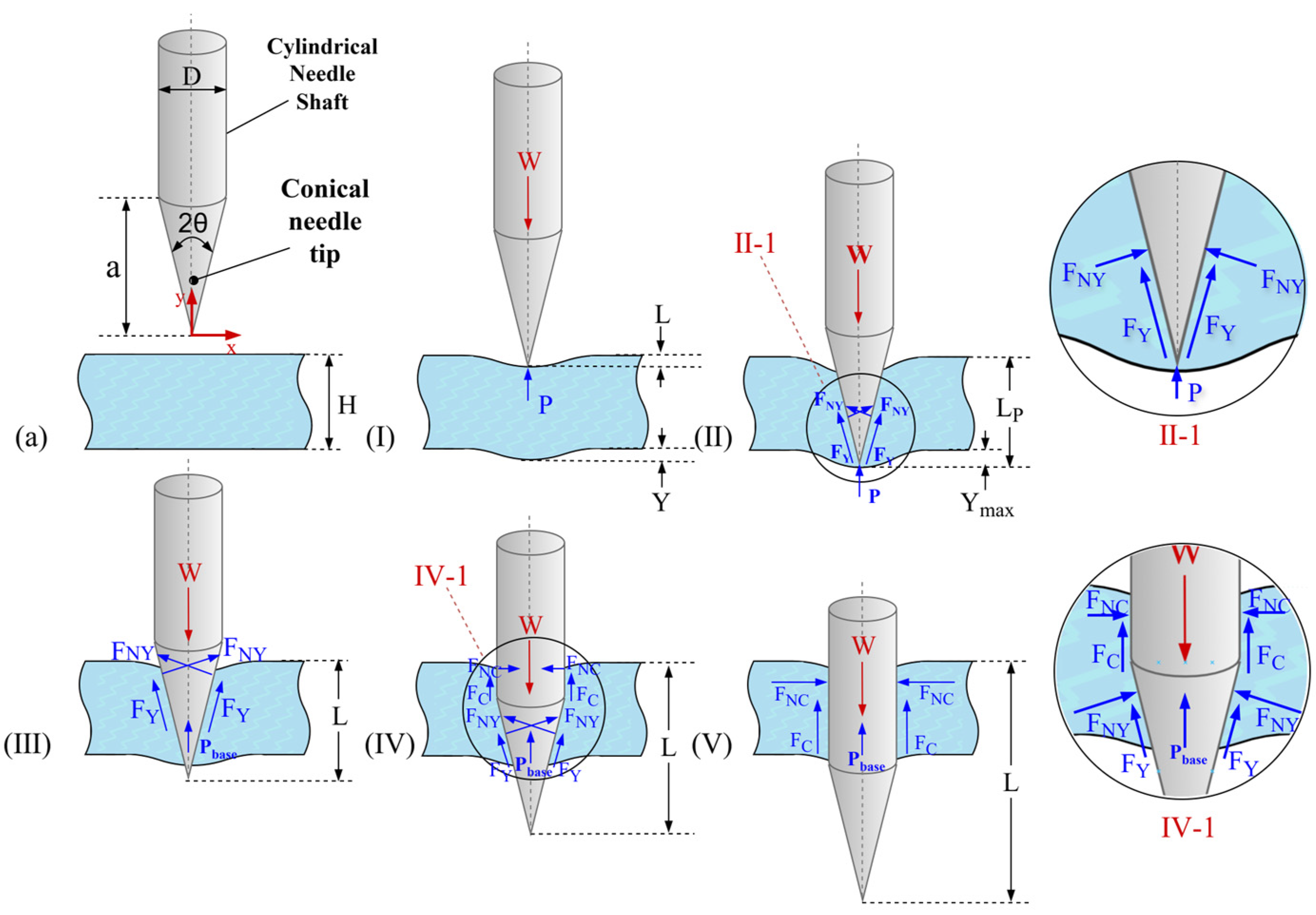
Establishing a mechanical analysis model for the needle puncture process is an effective approach to understanding the local force mechanisms in the fabric [15]. Although the needle puncture action is completed in an extremely short time, the puncture force versus puncture depth curve typically exhibits significant phased changes. This study divides the needle puncture process into five consecutive phases, as shown in Figure 1.
Stage I: As shown in Figure 1I, when the needle tip contacts the fabric surface but has not yet penetrated the fabric interior, the fabric primarily undergoes an overall downward deflection deformation.
Stage II: As shown in Figure 1II, the needle tip progressively penetrates the fabric interior; when the fabric reaches the critical puncture state, its axial deformation reaches its maximum value.
Stage III: As shown in Figure 1III, after fabric penetration, the needle tip cone continues downward; the needle hole expands, causing significant radial displacement and the rearrangement of surrounding yarns, while the axial deformation of the fabric decreases.
Stage IV: As shown in Figure 1IV, the contact area between the needle and needle hole transitions from the tip to the shank; the needle shank begins to generate friction with the hole wall.
Stage V: As shown in Figure 1V, the needle tip fully penetrates the fabric, and the needle shank continues to advance within the hole while maintaining sliding friction with the hole wall.
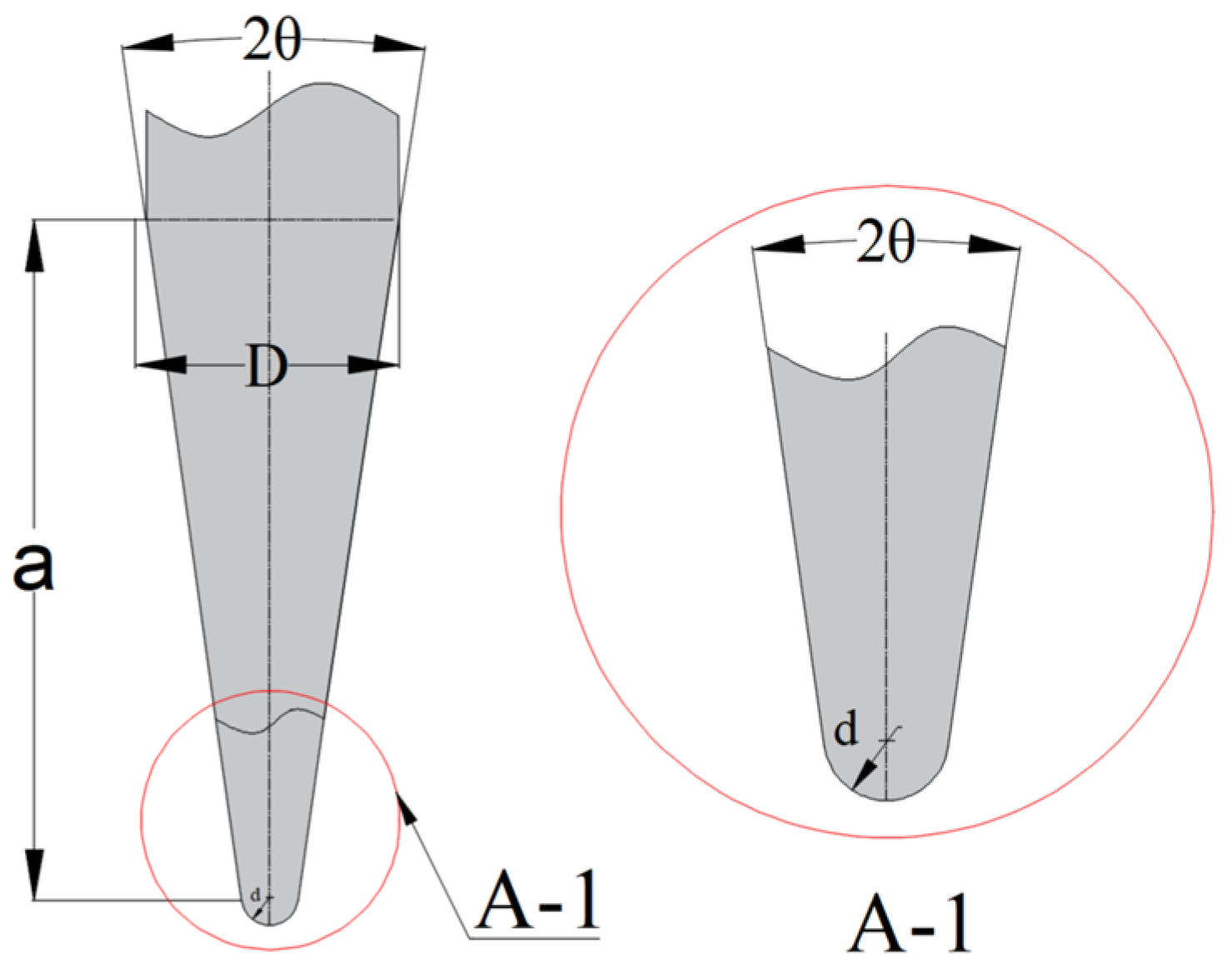
As shown in Figure 1, the needle is simplified as a rigid body composed of a cylindrical needle shaft and a conical needle tip. Its geometric parameters include the needle shaft diameter D , needle tip height a, and needle tip half-cone angle θ . Fabric thickness is denoted by H , and L p represents the critical penetration depth corresponding to needle penetration through the fabric.
During penetration, let L denote the penetration depth—the distance from the initial contact point between the needle and fabric surface to the needle tip—and let Y denote the axial deformation of the fabric during penetration.
During fabric penetration, the needle primarily experiences restraining force, normal pressure, and friction force [3,16,17]:
(1)
Restraining force: The resistance exerted by the fabric against the needle during penetration, arising from bending and tensile deformation under the needle’s action. This force results from the combined effects of the fabric’s bending stiffness and tensile stress. It can be divided into restraining force P and residual restraining force P b a s e ; P exists in Stages I and II, while P b a s e exists in Stages III, IV, and V.
(2)
Normal pressure: It refers to the normal pressure generated in the fabric under needle compression. Based on needle structural characteristics, it can be divided into needle cone surface normal pressure ( F N Y ) and needle cylindrical surface normal pressure ( F N C ). F N Y exists in Stages II, III, and IV; F N C exists in Stages IV and V.
(3)
Friction force: It refers to the frictional resistance generated during the relative movement between the needle and fabric due to the needle’s compression force on the fabric. The friction force between the fabric and the needle’s conical surface is denoted as F Y , while that between the fabric and the needle’s cylindrical surface is denoted as F C .

2.2. Analysis of Forces Acting on the Needle During the Puncture Process

In the following sections, mechanical models for the restraining force, normal pressure, and frictional force are established.

2.2.1. Restraining Force

After the needle contacts the fabric, the fabric within the contact area gradually transitions from a relaxed state to a tensioned state [4,18]. This process leads to an increase in the bending stiffness of the fabric; consequently, the restraining force gradually increases from near zero [3].
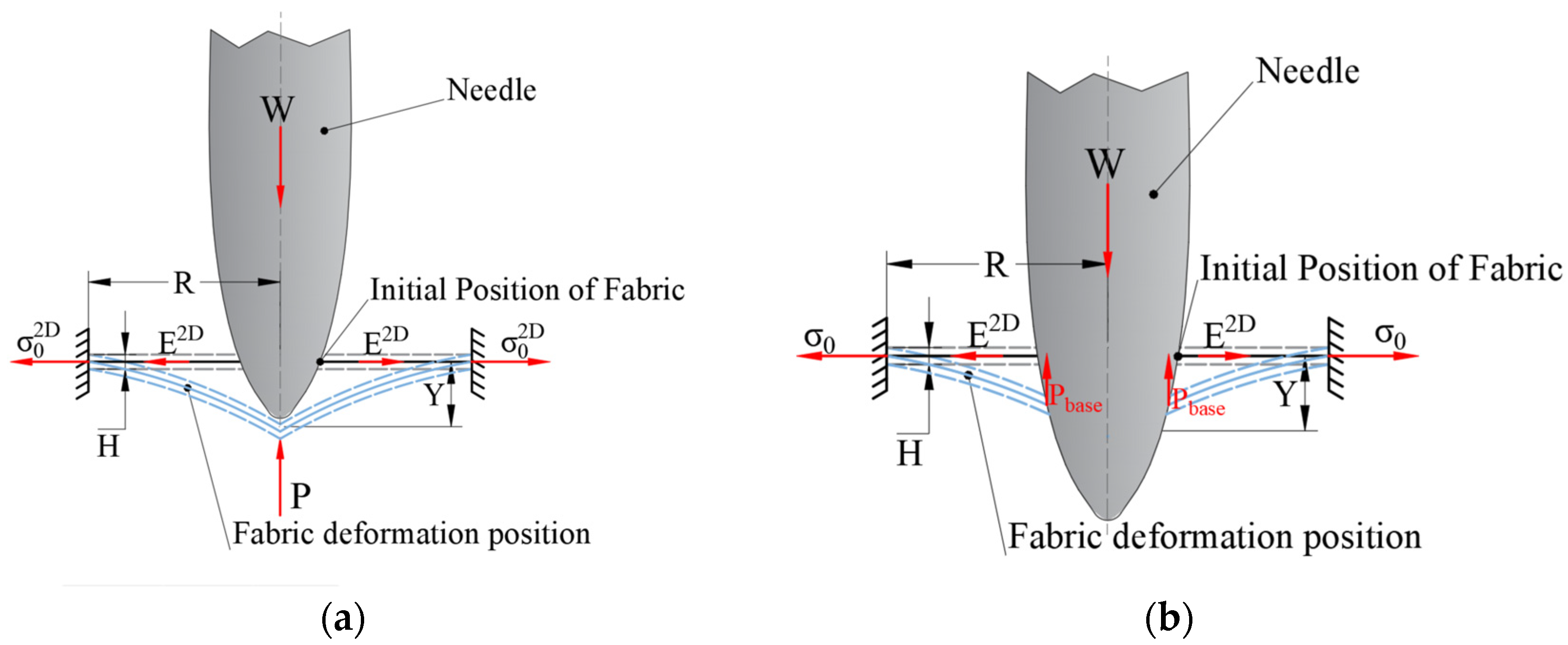
As shown in Figure 2a, after the needle point contacts the fabric ( 0   <   L     Y ), the restraining force is exerted by the fabric on the needle. Here, Y represents the deformation of the fabric along the needle axis at the point of contact, which is used to characterize the axial displacement induced by the penetration action. In the classical load–deflection relationship in the problem of a pre-tensioned circular membrane subjected to central local indentation, this restraining force is composed of a “linear term contributed by pre-tension” and a “nonlinear term contributed by in-plane fabric stretching.” Its analytical expression is given as follows [19]:
P = π σ 0 2 D Y + E 2 D v 3 R 2 Y 3
where σ 0 2 D represents the equivalent two-dimensional (2D) planar unit pre-tension (unit: N/m), reflecting the fabric tension level induced by the sewing clamping components; E 2 D represents the equivalent 2D planar tensile stiffness (unit: N/m), indicating the fabric’s resistance to deformation under tension, which is correlated with the fabric thickness; R is the radius of the needle plate hole on the sewing penetration device (unit: m), which is generally 1.5 times the needle diameter [20]; and ν is a dimensionless coefficient related to Poisson’s ratio.
As shown in Figure 2b, after the puncture occurs ( L > Y + H ), the yarns near the needle hole undergo slippage and rearrangement. A portion of the elastic deformation that previously accumulated in the penetration zone is released, the axial deformation Y decreases, and the restraining force P disappears. The penetration resistance caused by fabric deformation after the puncture is characterized by the residual restraining force P b a s e .
In summary, when 0 < L < Y m a x + H , Equation (1) is valid. When the penetration depth reaches L P , the deformation Y reaches its maximum value, denoted as Y m a x . Subsequently, when L > Y m a x + H , the needle penetrates through the fabric, and the restraining force P decreases sharply. At this point, only the force exerted on the needle by the bending deformation of the fabric yarns remains, which is denoted as the residual restraining force P b a s e .

2.2.2. Normal Pressure

(1)
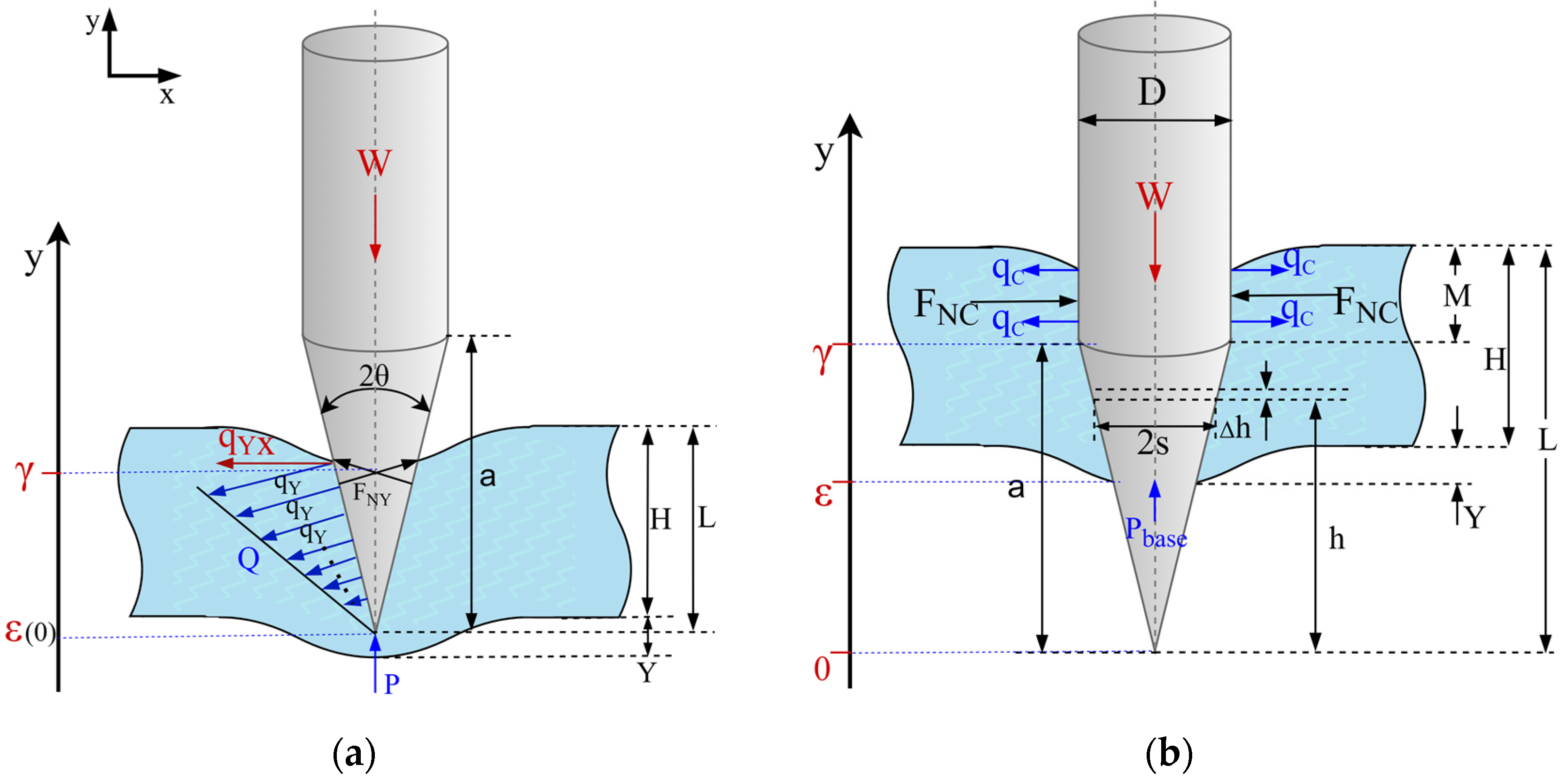
When the conical surface of the needle point contacts the fabric ( Y < L < Y + H   + a), let the normal pressure per unit area generated on the contact surface between the needle and the fabric be q Y (unit: Pa), and its component along the x-axis is q Y x = q Y · cos θ (see Figure 3a). q Y x exhibits a linear relationship with the fabric radial displacement [3], i.e., q Y x = k · s , where k denotes the equivalent proportionality coefficient related to the fabric structure and material, and s denotes the horizontal radial displacement caused by the needle compressing the fabric. On the needle point cone, taking the needle tip as the origin of coordinates, the radial displacement of any point at height h can be expressed through geometric relationships as s = h · tan θ . Therefore, the normal pressure per unit area on the conical section of the needle point can be expressed as follows:
q Y   =   k h   t a n   θ c o s   θ
While the conical section of the needle point has not yet completely penetrated the fabric, its radial cross-sectional radius increases with the distance from the needle tip; therefore, the normal force F N Y increases as the penetration depth L increases. As shown in Figure 3b, considering an annular differential element with a thickness of d h at a distance h from the needle tip, and assuming the radius of this annular element is s , the force analysis on it is calculated using the following equation:
d F N Y = 2 π   s   q Y d h cos θ
By integrating the above equation over the contact region between the needle and the fabric, the total compressive force exerted on the needle can be obtained as follows:
F N Y = ε γ 2 π k h 2 t a n 2 θ c o s 2 θ d h
where ε and γ represent the boundary values of the contact surface between the conical section of the needle and the fabric along the y-axis, with the needle tip taken as the origin of coordinates, when the needle penetration depth is L .
(2)
As shown in Figure 3b, when the cylindrical needle blade enters the needle hole ( L   >   Y   +   a ), the contact between the cylindrical surface of the blade and the fabric generates a normal pressure F N C . Let the normal pressure per unit area generated on the contact surface between the needle and the fabric be q C , directed along the x -axis. The deformation of the fabric in the x-axis direction caused by the compression of the needle blade is D / 2 . According to Hooke’s law, the normal pressure per unit area on the cylindrical needle blade section can be obtained as follows [3,17]:
q C = k · D 2
where k denotes the equivalent normal elastic coefficient per unit area of the fabric, which is related to the fabric properties.
Then, the normal pressure exerted by the fabric on the cylindrical needle blade during penetration is calculated as follows:
F N C = k π D 2 M 2
where M denotes the height of the contact surface between the cylindrical needle blade and the fabric. When Y   +   a   <   L   <   Y   +   H   +   a , M   =   L a Y ; when L     Y   +   H   +   a , M   =   H .
In summary, the normal pressure on the conical surface of the needle point, F N Y , is expressed by Equation (4) and is valid when the penetration depth is Y   <   L   <   Y   +   H   + a; the normal pressure on the cylindrical surface of the needle blade, F N C , is expressed by Equation (6) and is valid when L   >   Y   +   a .

2.2.3. Frictional Force

(1)
After the needle penetrates the fabric ( Y   <   L ), the frictional force between the needle and the fabric continuously exists. The frictional force between the conical surface of the needle point and the fabric can be expressed as follows:
F Y = μ F N Y
(2)
When the needle blade enters the fabric, the frictional force F C corresponding to the unit axial length of the needle at this time is expressed as follows:
F C = μ · F N C

2.3. Mechanical Modeling of the Various Penetration Stages

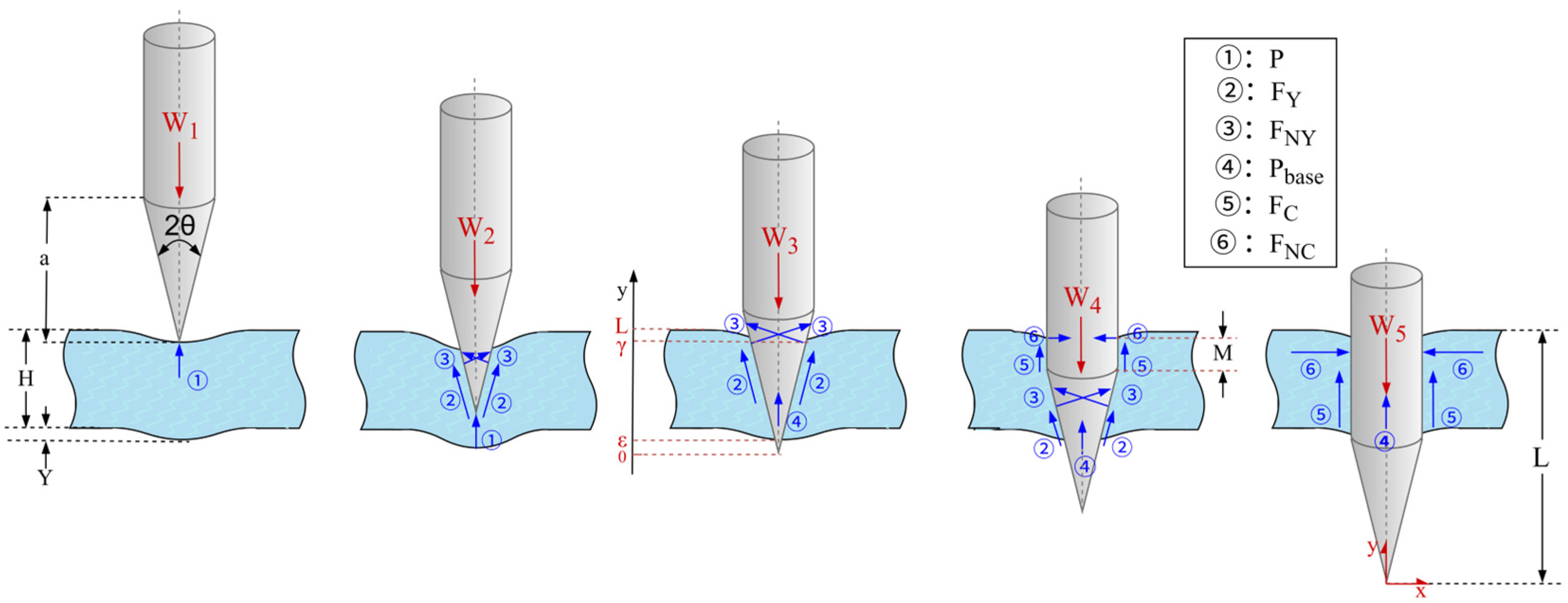
As mentioned above, the entire penetration process is divided into five distinct stages. A coordinate system is established along the needle axis, with the needle tip taken as the origin. By resolving the component forces of each penetration stage along the axial direction of the needle, the penetration force for each stage, as illustrated in Figure 4, can be expressed as follows:
  • Stage I: Contact stage ( 0 < L Y )
The needle tip contacts the fabric but has not yet penetrated into the yarns. The penetration force is dominated by the restraining force P :
W 1 = P
  • Stage II: Initial penetration stage (Y < LY + H)
The restraining force approaches its peak. In addition to overcoming the restraining force P , the penetration force must also overcome the effects of compression and friction:
W 2 = P + sin θ · F N Y + cos θ · F Y
where the integration limits for F N Y are ε = 0   a n d   γ = L Y .
  • Stage III: Puncture and hole-expansion stage (Y + H < L Y + a )
The restraining force P transitions into the residual restraining force P b a s e , and the normal pressure gradually becomes dominant:
W 3 = P b a s e + sin θ · F N Y + cos θ · F Y
where the integration limits for F N Y are ε = L ( Y + H ) and γ = L Y .
  • Stage IV: The complete penetration stage of the needle point cone ( Y + a < L Y + H + a )
Both the conical section of the needle point and the needle blade act on the fabric simultaneously. The penetration force is expressed as follows:
W 4 = P b a s e + sin θ · F N Y + cos θ · F Y + F C
where the integration limits for F N Y are ε = L ( Y + H ) and γ = a ; and the height of the contact surface between the needle blade and the fabric is M   =   L a Y .
  • Stage V: Stable friction stage (Y + H + a < L )
At this point, the needle is only subjected to the frictional force F C generated by the normal pressure from the fabric at the needle blade, along with the residual restraining force   P b a s e .
W 5 = P b a s e + F C
At this stage, the height of the contact surface between the needle blade and the fabric in the formula for F C is M   =   H .
Noteworthily, in Equations (9)–(13), the component forces in the expressions for each stage are defined as follows: the restraining force P is given by Equation (1), the normal force on the conical surface F N Y is described by Equation (4), the normal pressure on the cylindrical surface F N C is represented by Equation (6), and the frictional forces F Y and F C are given by Equations (7) and (8), respectively.
In summary, by dividing the penetration process into five distinct stages, the corresponding analytical expressions for the penetration force can be constructed, thereby providing a theoretical foundation for subsequent quantitative analysis.

3. Finite Element Modeling and Analysis of the Needle–Fabric Penetration Process

The finite element method (FEM) has been widely utilized to predict the mechanical responses of fiber assemblies under conditions of large deformation and severe contact [21]. In this study, the explicit dynamic finite element method is employed to numerically simulate the high-speed needle penetration process, aiming to investigate the needle–fabric interactions and the variations in penetration force.

3.1. Geometric Modeling of the Needle and Fabric

The geometric model of the sewing machine needle was established in accordance with the standard QB/T 2255.1-2010 “Industrial Sewing Machines—Sewing Machine Needles” [22]. Taking a size 12 sewing machine needle as an example, the needle can be regarded as a symmetrical solid composed of a cylindrical needle shank and a needle point, as shown in Figure 5. A J-shaped round-point needle is used, with the needle tip being an arc with radius d and a tangent angle of 2θ. According to the QB/T 2255.1-2010 standard, the radius d of the needle tip arc is taken as 0.05D [22]. The relationship between the needle tip half-cone angle and the needle tip height is expressed in the following equation:
θ = arctan D 2 d a
The commonly used needle sizes for sewing shirts range from No. 12 to No. 18 [23]. In this study, these commonly used needles for sewing shirts are taken as examples for modeling. The needle parameters are presented in Table 1, where Nd1 to Nd7 represent the model codes for needles with different parameters. By adjusting the point length of the standard No. 12 needle to match the point lengths of other commonly used needles, the needle models Nd1, Nd3, and Nd4 are established.
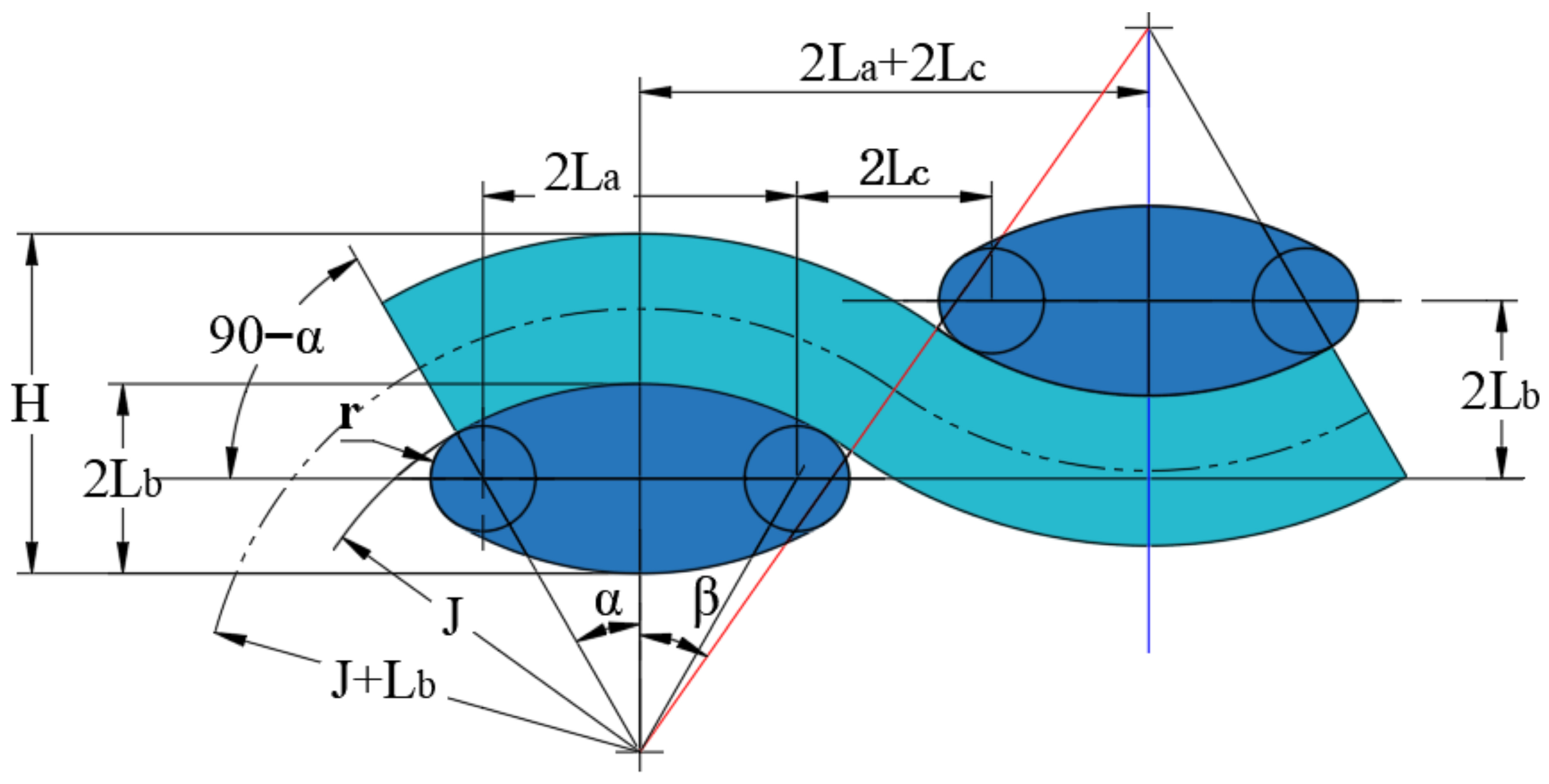
In this study, a plain woven fabric is taken as an example for structural modeling. Considering that the yarn cross-section at the meso-scale may deviate from a circular shape due to flattening, this study refers to the parametric modeling approach in the related research [24,25]. The yarn cross-section is simplified into an ellipse to characterize the flattening effect, and a parametric geometric model is employed to construct the fabric unit cell (of a symmetrically structured plain weave), as illustrated in Figure 6. The meso-morphology of this fabric model is controlled by three geometric variables: the yarn half-width parameter L a , the yarn half-height parameter L b , and the yarn half-spacing parameter L c . To accurately describe the spatial path and curvature characteristics of the yarns at the interlacing points, intermediate geometric parameters (such as the arc radius J , the radius of curvature r , and the characteristic angles α and β ) are introduced based on the aforementioned fundamental variables. Their geometric constraint relationships and calculation logic are shown in Equations (15)–(18), where the fabric thickness is H = 4 L b , and the yarn spacing is Δ = 2 L a + 2 L c [7].
J = L a + L c 2 L b 2 2 L b
r = J L a 2 + J L b 2
α = a r c s i n L a J r
β = a r c s i n L a + L c J + L b
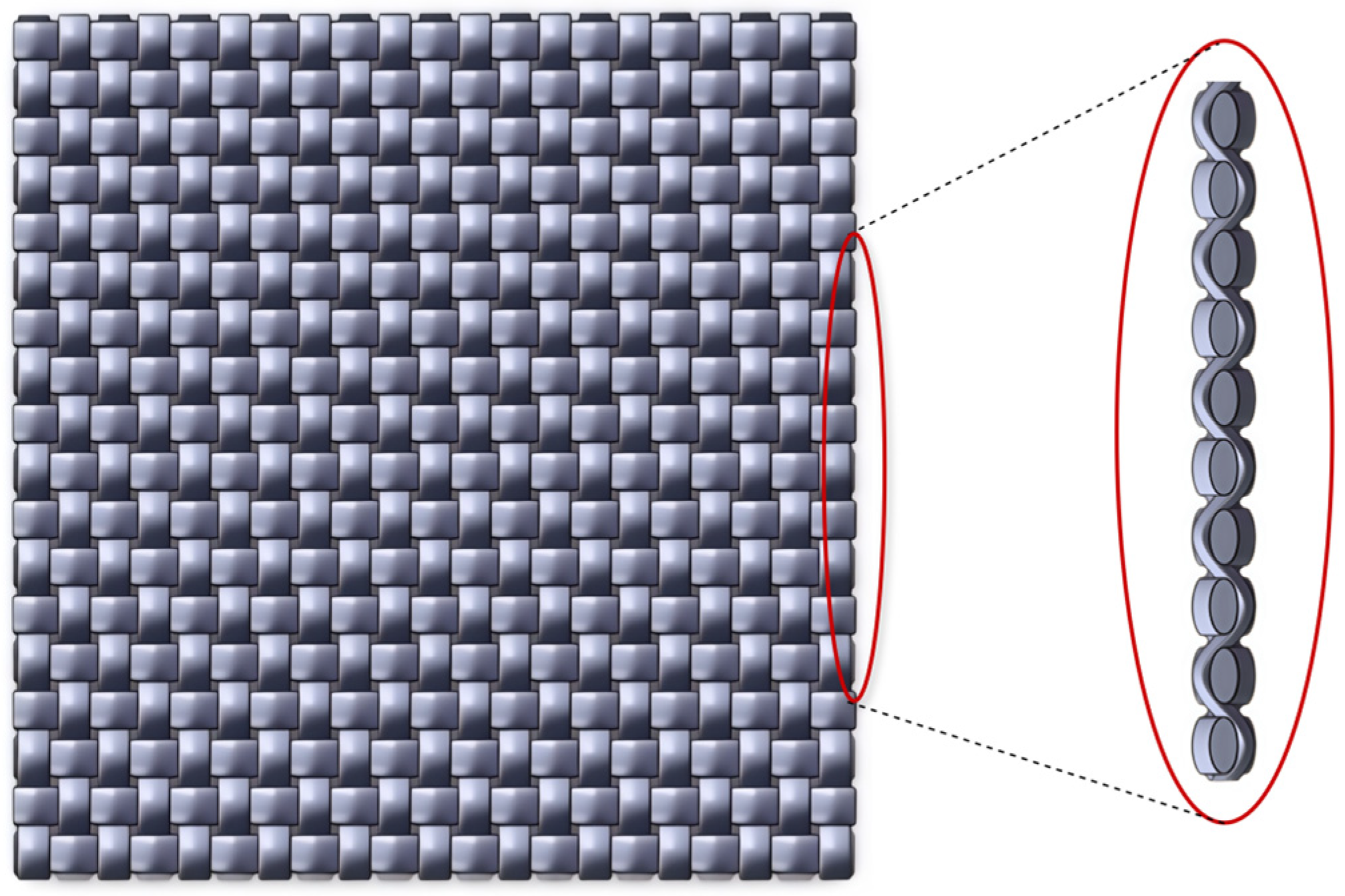
The fabric model is established with reference to the parameter proportions of a specific fabric model [7]. During the modeling process, it is assumed that the yarns exhibit ideal uniform geometric characteristics along the axial direction. According to the study by Nilakantan et al. on the size effect of fabric finite element models, for the needle–fabric penetration model, the fabric dimensions should ensure that the stress waves generated by the penetration have sufficient space to attenuate before reaching the boundaries, thereby avoiding the interference of boundary reflections on the results [26,27,28]. Comprehensively considering the sizes of yarn spacing, yarn diameter, and needle diameter, and to ensure that the finite element model contains sufficient interlacing points, this study selects the fabric for modeling. Figure 7 illustrates the fabric model with a fabric thickness of 0.2 mm, a yarn spacing of 0.3 mm, and the corresponding half-width parameters.
For typical shirts, the commonly used fabric’s thickness ranges from 0.1 to 0.3 mm, and its warp and weft density is typically 70 to 90 TPI [23], which corresponds to a yarn spacing of 0.28 to 0.34 mm in the fabric models of this study. Considering commonly used shirt fabrics as an example, this study selects plain woven shirt fabrics with various thicknesses and warp and weft densities for modeling. The key parameters are detailed in Table 2. In this study, Fb1 to Fb7 denote the codes for fabric models with varying structural parameters.
The mechanical properties of the materials play a crucial role in the dynamic penetration response of the fabric. In the process of establishing the fabric finite element model, the influence of material variability can be reflected by defining the yarn material properties [29]. Based on the mechanical property test results for polyester plain woven fabrics reported by Yue et al., the yarn material property parameters of the fabric are set as shown in Table 3a [30]. The material parameters of the needle are defined according to the properties of standard steel [31], as detailed in Table 3b.

3.2. Meshing, Contact, and Boundary Condition Settings of the Finite Element Model

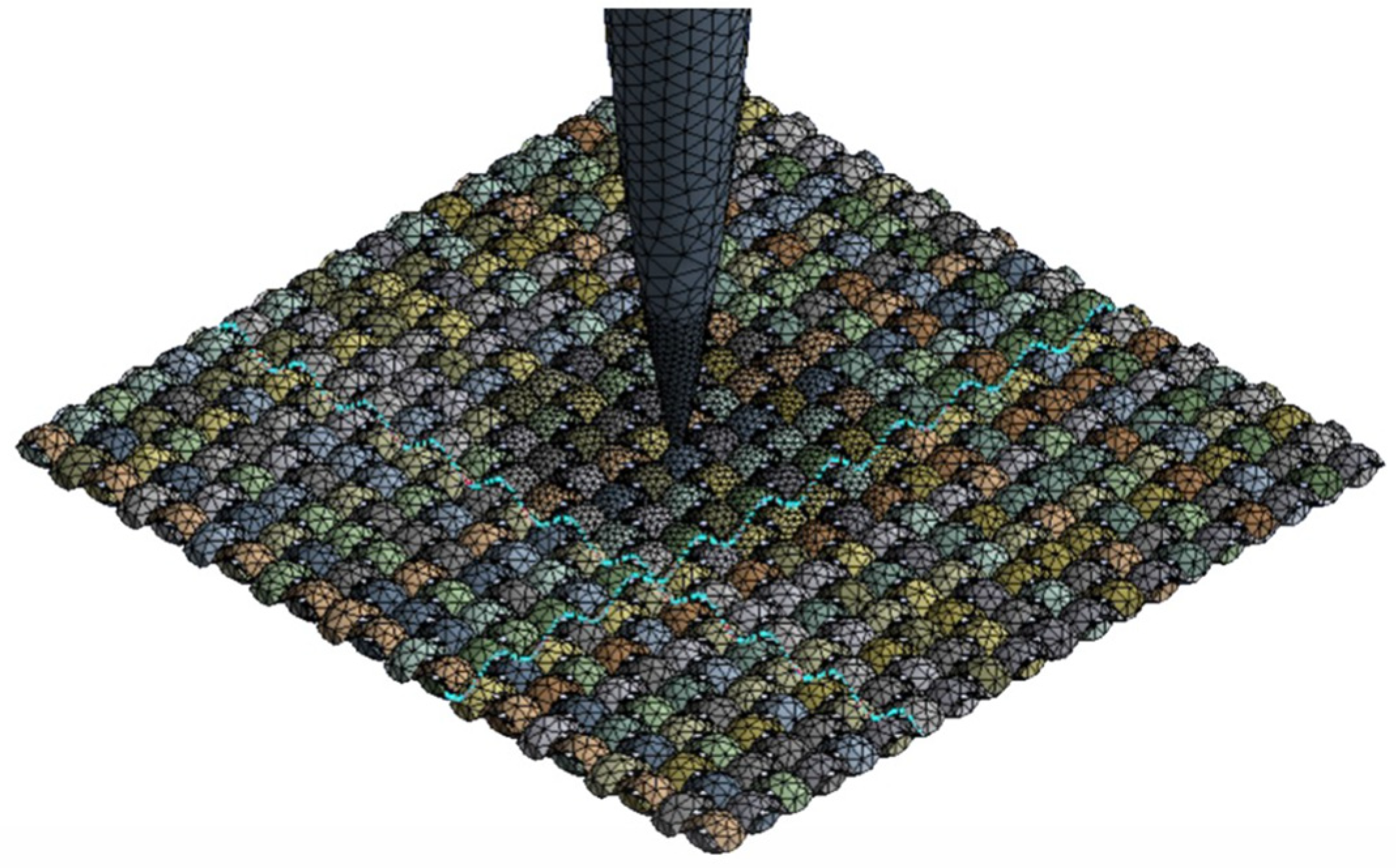
The quality of meshing is a critical factor determining the accuracy and stability of explicit dynamic numerical simulations. Given the significant contact gradients in the needle point–fabric contact zone, this study employs tetrahedral solid elements to discretize the model, applying local mesh refinement to both the needle point region and the central penetration area of the fabric. The characteristic element size in the refined zones is set to 0.065 mm, while a 0.12 mm mesh is adopted for the remaining areas to balance computational efficiency and accuracy. Subsequently, a mesh sensitivity analysis is conducted using the maximum penetration force as the evaluation metric. When this metric exhibits no significant variation upon further mesh refinement, it indicates that the mesh discretization error has been controlled within an acceptable range. The overall meshing is illustrated in Figure 8.
The numerical calculations are conducted within the ANSYS (2022 R1) Explicit Dynamics module. The boundary conditions are established as follows: fully fixed constraints are applied to the yarn end faces along the four edges of the fabric, restricting all their translational and rotational degrees of freedom. The contact relationships are defined utilizing the general contact algorithm, and the interactions between the needle and the yarns, as well as between the yarns themselves within the system, are all designated as frictional contacts. The needle penetration velocity is set to 5 m/s [32] to equivalently simulate the dynamic process of the high-speed needle penetration into the fabric during actual sewing. Furthermore, the needle penetration depth is set to 5 mm, which corresponds to a solution time of 1 ms. This setup ensures that the needle can completely penetrate the fabric while balancing computational efficiency.

4. Results and Discussion

4.1. Simulation Results of the Penetration Process

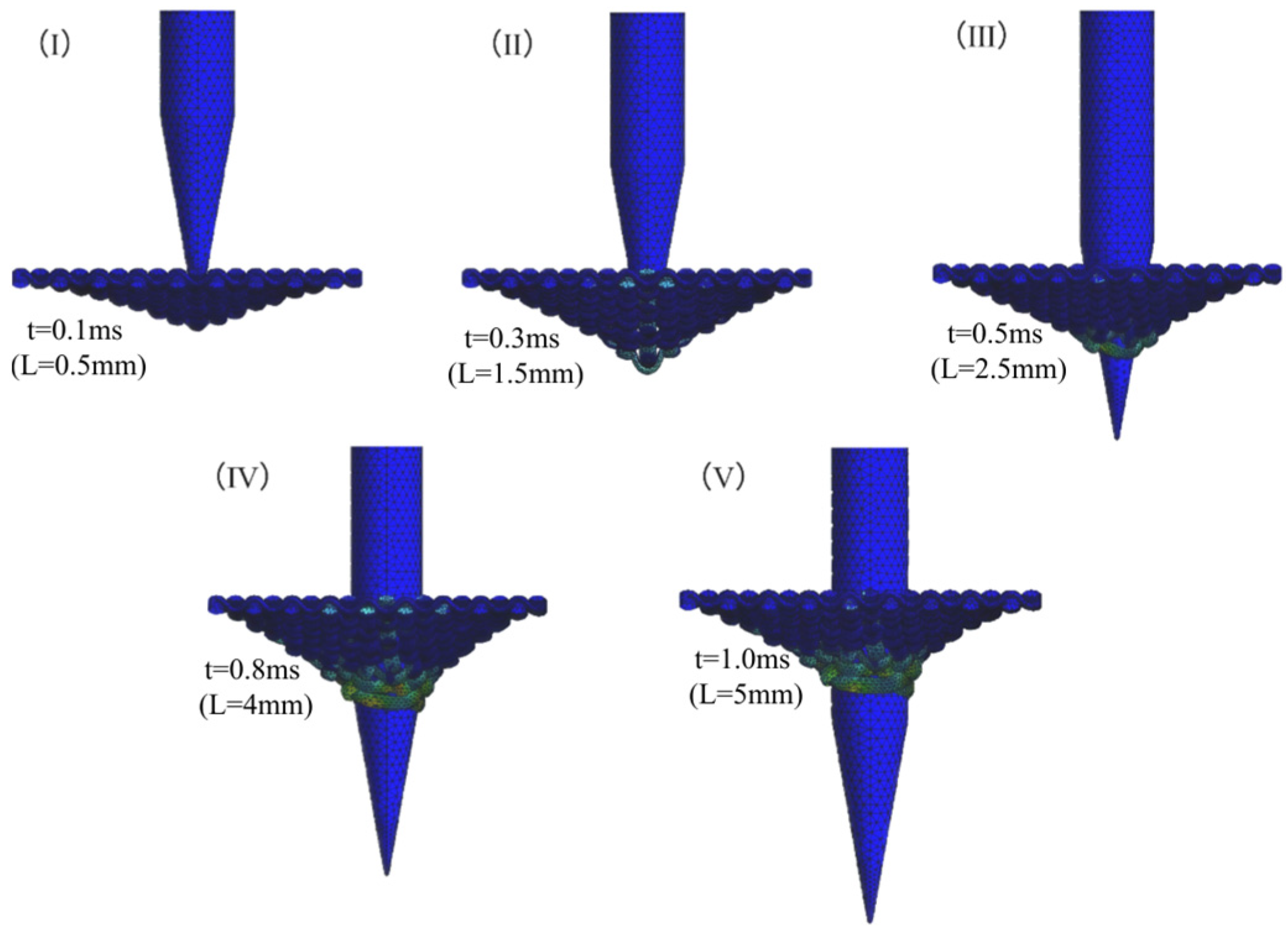
Considering a typical penetration process as an example (the fabric model Fb3 in Table 2 and the needle model Nd2 in Table 1), an explicit dynamic finite element simulation of the penetration process was conducted. The simulation results illustrating the five penetration stages of the needle–fabric contact are shown in Figure 9.
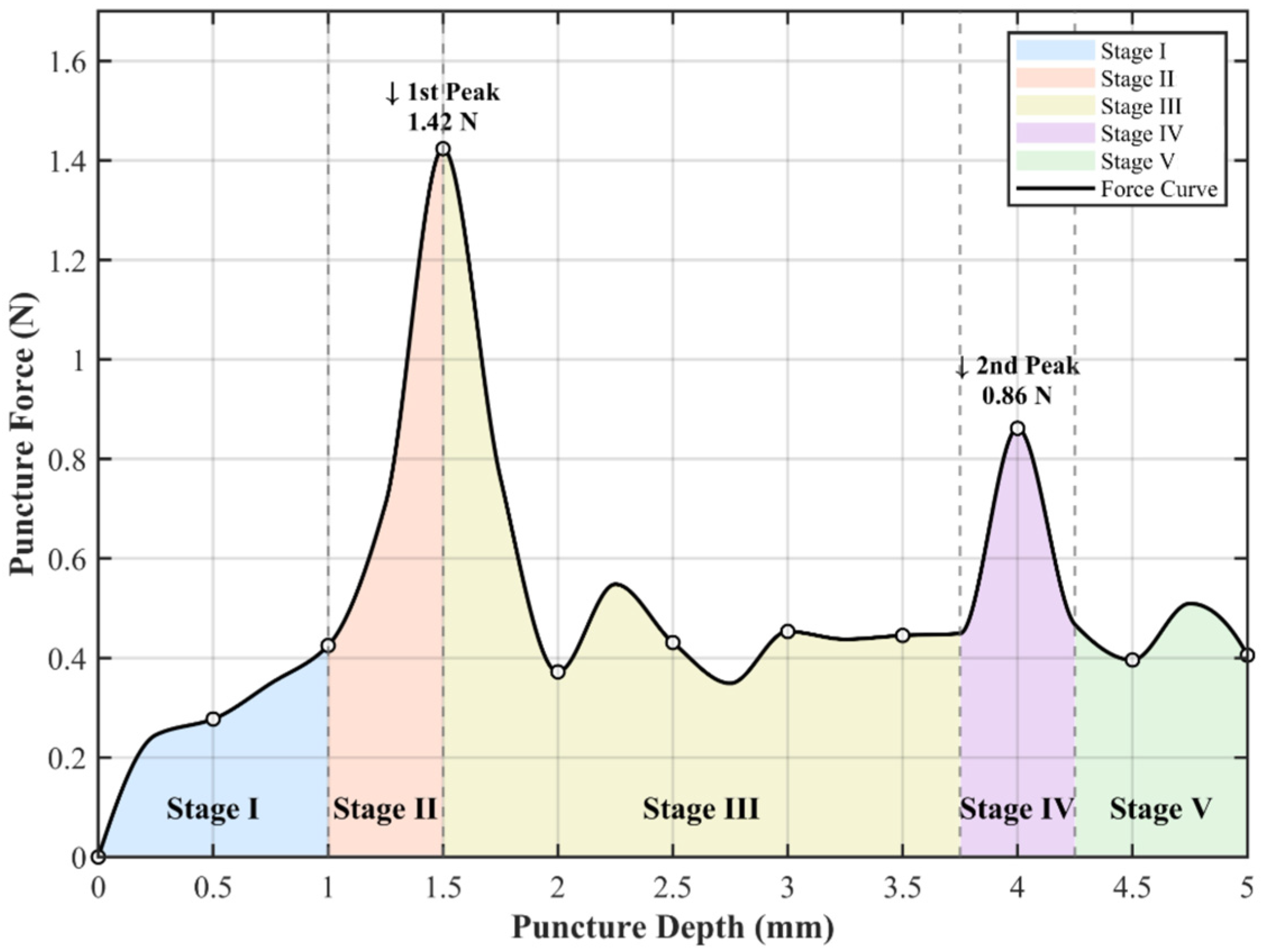
As illustrated in Figure 10, the penetration force exhibits a nonlinear variation with the penetration depth across the various penetration stages, and the penetration force–depth curve exhibits an “M-shaped” bimodal profile. This result is consistent with the findings from Wang’s study on the modeling of sewing needle penetration into fabric [32]. Combined with the morphological diagrams of the penetration process shown in Figure 9, it is evident that the first peak of the penetration force occurs at the instant the needle punctures the fabric (Stage II), whereas the second peak emerges when the cylindrical needle blade enters the fabric (Stage IV).
Stage I and II: Initial penetration stages ( L < 1.5   m m )
The penetration force is dominated by the restraining force P and exhibits a super-linear growth with the fabric deformation Y . When the deformation reaches Y m a x (at the end of Stage II), the penetration force reaches its first peak (approximately 1.42 N).
Stage III: Puncture and hole-expansion stage ( L = 1.5 3.75   m m )
The needle tip penetrates the fabric, and the slippage and rearrangement of the yarns release the accumulated deformation energy, causing the restraining force to drop back to the residual value P b a s e .
Stage IV: The complete penetration stage of the needle point cone ( L 3.75 4.25   m m )
When the end of the needle point cone completely penetrates into the fabric, the compression effect of the conical surface on the yarns reaches its maximum. This causes the normal pressure F N Y and the frictional resistance to reach their maximum values, which induces the second peak of the penetration force (approximately 0.86 N).
Stage V: Stable friction stage ( L > 4.25   m m )
The penetration force consists of the residual restraining force P b a s e and the sliding frictional force F C of the needle blade. The penetration force no longer fluctuates significantly with the increase in penetration depth.

4.2. Influence of Fabric Structural Parameters on Penetration Force

4.2.1. Influence of Fabric Thickness on Penetration Force

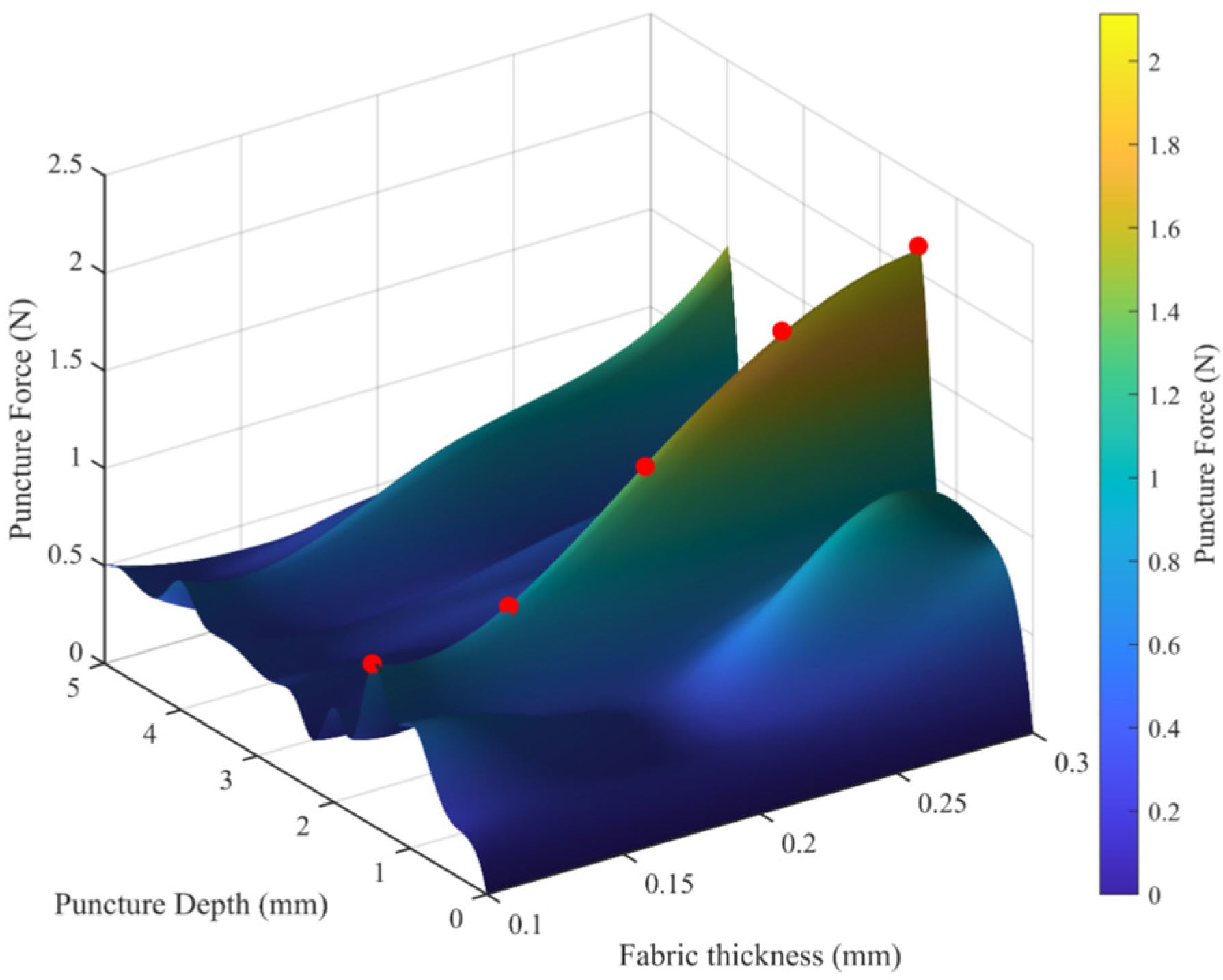
To systematically investigate the influence of fabric thickness on penetration characteristics, the Nd2 needle model shown in Table 1 was selected to conduct the finite element analyses of the penetration process on five plain woven fabric models with different thicknesses (Fb1 to Fb5, as listed in Table 2). The penetration force–depth curves obtained from the simulations were further subjected to surface fitting, and the fitting results are shown in Figure 11, In the figure, the red dots represent the peak penetration forces when the needle pierces fabrics of different thicknesses.
The results demonstrate a positive correlation between the penetration force and the fabric thickness during the penetration process. As illustrated in Figure 11, an increase in fabric thickness leads to an overall elevation in the penetration force, while the penetration force–penetration depth curves consistently maintain their “M-shaped” bimodal characteristics. Table 4 summarizes the penetration forces under various thickness conditions, where all the rates of change are calculated using the results obtained at a thickness of 0.10 mm as the comparative baseline.
As shown in Table 4, when the fabric thickness increases from 0.1 mm to 0.3 mm, the increase in the first peak of the penetration force (Stage II) is significantly greater than that of the second peak (Stage IV). This occurs because the increase in thickness not only expands the load-bearing area of the fabric but also causes its bending stiffness to increase super-linearly [33]. According to Equation (1), an enhancement in the fabric’s bending stiffness leads to a rapid increase in the restraining force P . Since this restraining force P exists exclusively during Stages I and II, it consequently results in a substantial elevation of the first penetration force peak (Stage II).

4.2.2. Influence of Fabric Warp and Weft Density

The structural parameters of a fabric play a critical role in its penetration resistance [34]. Studies have shown that the equivalent mechanical properties of fabrics (such as Poisson’s ratio) decrease with a reduction in warp and weft density [35]. The fabric warp and weft density indicates the number of yarns arranged per unit length; the higher the fabric density, the smaller the spacing between adjacent yarns.
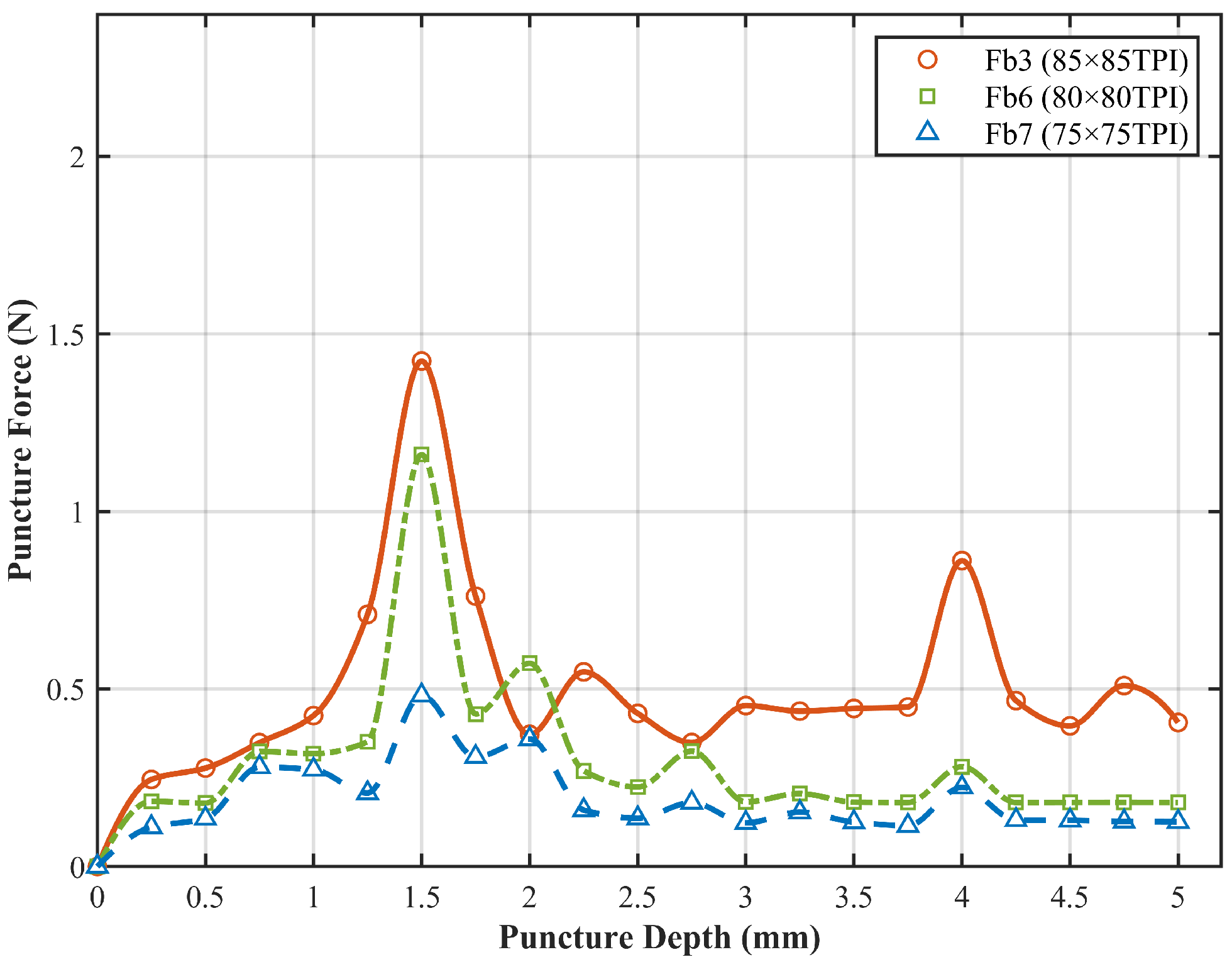
Considering plain woven fabrics with equal warp and weft densities as an example, three fabric models with different warp and weft densities (Fb3, Fb6, and Fb7, as listed in Table 2) were selected. The Nd2 needle model from Table 1 was employed to conduct a finite element analysis of the penetration process. The resulting penetration force–penetration depth curves under different warp and weft density conditions are presented in Figure 12.
The simulation results show that two peaks of the penetration force appear when the needle penetrates the fabric and when the needle bar enters the fabric. However, as the warp and weft densities of the fabric increase, both peaks increase, but their variation patterns are different, as shown in Figure 12. Gurarda tested the penetration force of plain woven fabrics with weft densities of 29, 32, and 35 (threads/cm), respectively. The results showed that the penetration force increases according to a certain pattern with the increase in the fabric warp and weft densities. The simulation results in this paper are basically consistent with the variation pattern obtained from the experimental tests in the literature [5]. Table 5 presents the variations in penetration force under different fabric warp and weft density conditions, where the relative rate of change represents the variation in penetration force between fabrics with adjacent warp and weft densities.
The data indicate that the penetration force not only increases with the fabric warp and weft density, but its sensitivity to the fabric warp and weft density also exhibits distinct stage-dependent characteristics.
When the fabric warp and weft density decreases from 85 × 85 TPI to 80 × 80 TPI, the reduction in the second peak of the penetration force (Stage IV) is as high as 67.4% ( 0.281 0.862 0.862 × 100 % 67.4 % ), which far exceeds the 18.5% reduction observed in the first peak (Stage II). This phenomenon can be explained by Equations (10) and (12): a reduction in fabric density significantly alleviates the compression state between the needle and the yarns [36]. Since the second peak of the penetration force (Stage IV) is primarily governed by the normal pressure, the decrease in normal pressure leads to a significant reduction in the second peak of the penetration force.
When the fabric warp and weft density further decreases from 80 × 80 TPI to 75 × 75 TPI, the first peak of the penetration force (Stage II) is significantly reduced by 58.48%, whereas the second peak decreases by 20.64%. This phenomenon occurs because, with the decrease in fabric warp and weft density and the consequent increase in yarn spacing, the yarns are more prone to slippage when the needle penetrates the fabric [36], which leads to a decrease in the restraining force P . As deduced from Equation (10), the first peak of the penetration force decreases concurrently with the reduction in the restraining force P .

4.3. Influence of Needle Geometric Parameters on Penetration Force

4.3.1. Influence of Needle Point Cone Dimensions on Penetration Force

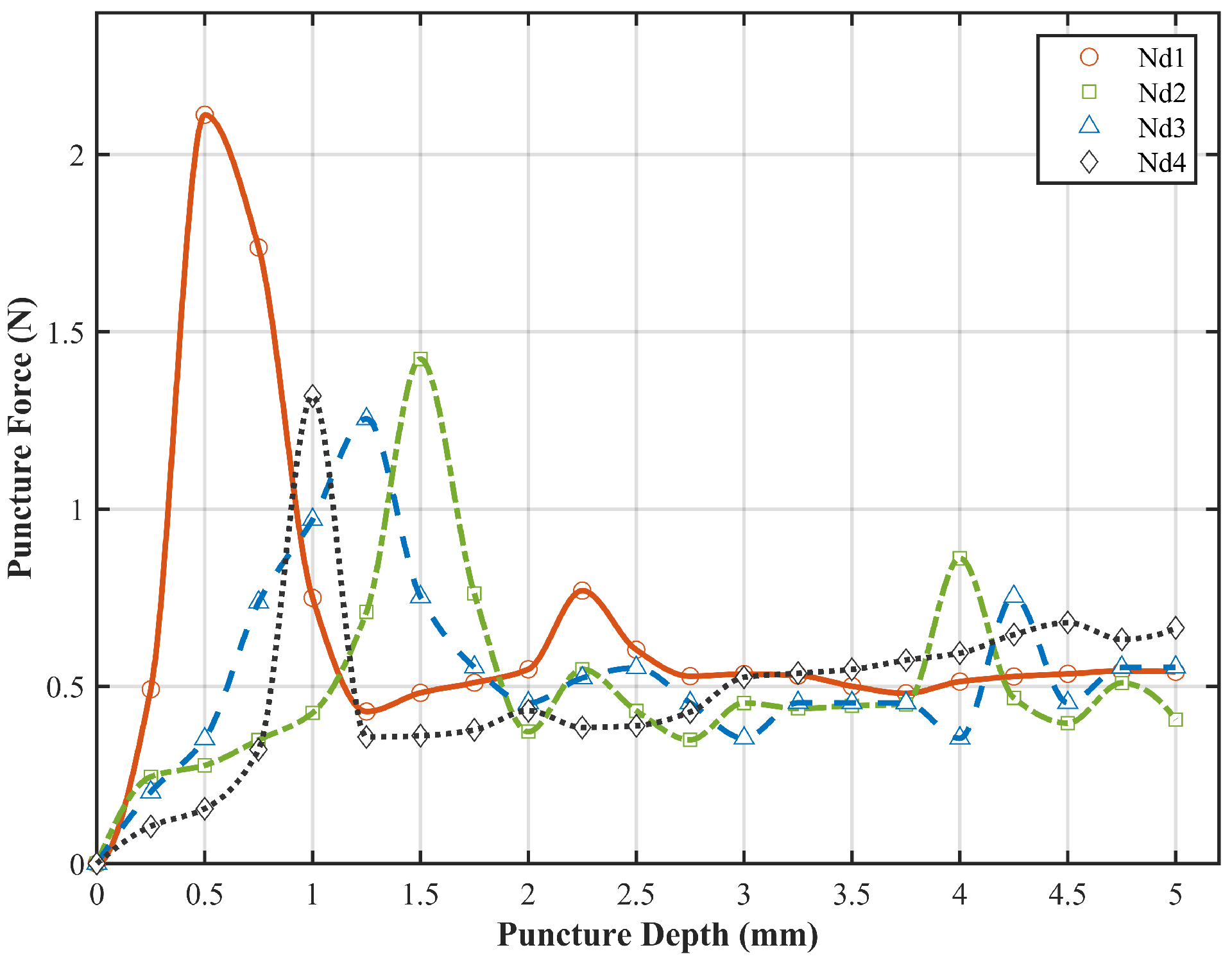
Previous studies have demonstrated that the geometric shape of the needle point cone significantly affects the response characteristics of the penetration force versus the penetration depth [37]. Provided the needle blade diameter remains constant, optimizing the cone design can accommodate diverse penetration process requirements [12,13]. Based on this fact, this study characterizes the different dimensions of the needle point cone by adjusting two key parameters: the point length a and the cone angle 2 θ . While maintaining a constant needle blade diameter and considering the size 12 needle Nd2 as a reference, three needle models, Nd1, Nd3, and Nd4, were constructed by adjusting a and 2 θ (parameters are shown in Table 1). Subsequently, finite element simulation analyses were conducted for the process of these needles penetrating fabric Fb3 (see Table 2). Penetration force–depth curves under different cone conditions were obtained, as illustrated in Figure 13.
The simulation results indicate that the variation in the dimensions of the needle tip conical surface has a significant impact on the first peak of the penetration force when the needle penetrates the fabric. Helder Carvalho embedded a piezoelectric sensor in the needle bar of a high-speed industrial sewing machine to measure the penetration force of needles with different geometric dimensions. The results showed that the change in needle tip sharpness caused by needle wear leads to an increase in the penetration force according to a certain pattern [38]. The simulation results in this paper are basically consistent with the variation pattern of the penetration force obtained from the experimental measurements in the literature. Table 6 shows the variation in the penetration force for needles with different tip conical surfaces.
The data indicate that the needle Nd3, obtained by increasing the point length and decreasing the cone angle of the size 12 needle, exhibits the lowest penetration force peak (approximately 1.25 N). This is primarily attributed to the fact that a sharper needle point profile can more easily enter the yarn interstices and induce the lateral rearrangement of the yarns, thereby reducing the mutual compressive force between the needle and the fabric [36]. This trend can be further explained by combining Equations (4) and (10): a smaller cone angle 2 θ weakens the effective component of the normal pressure F N Y along the needle axis, consequently reducing the total penetration force.

4.3.2. Influence of Needle Body Parameters on Penetration Force

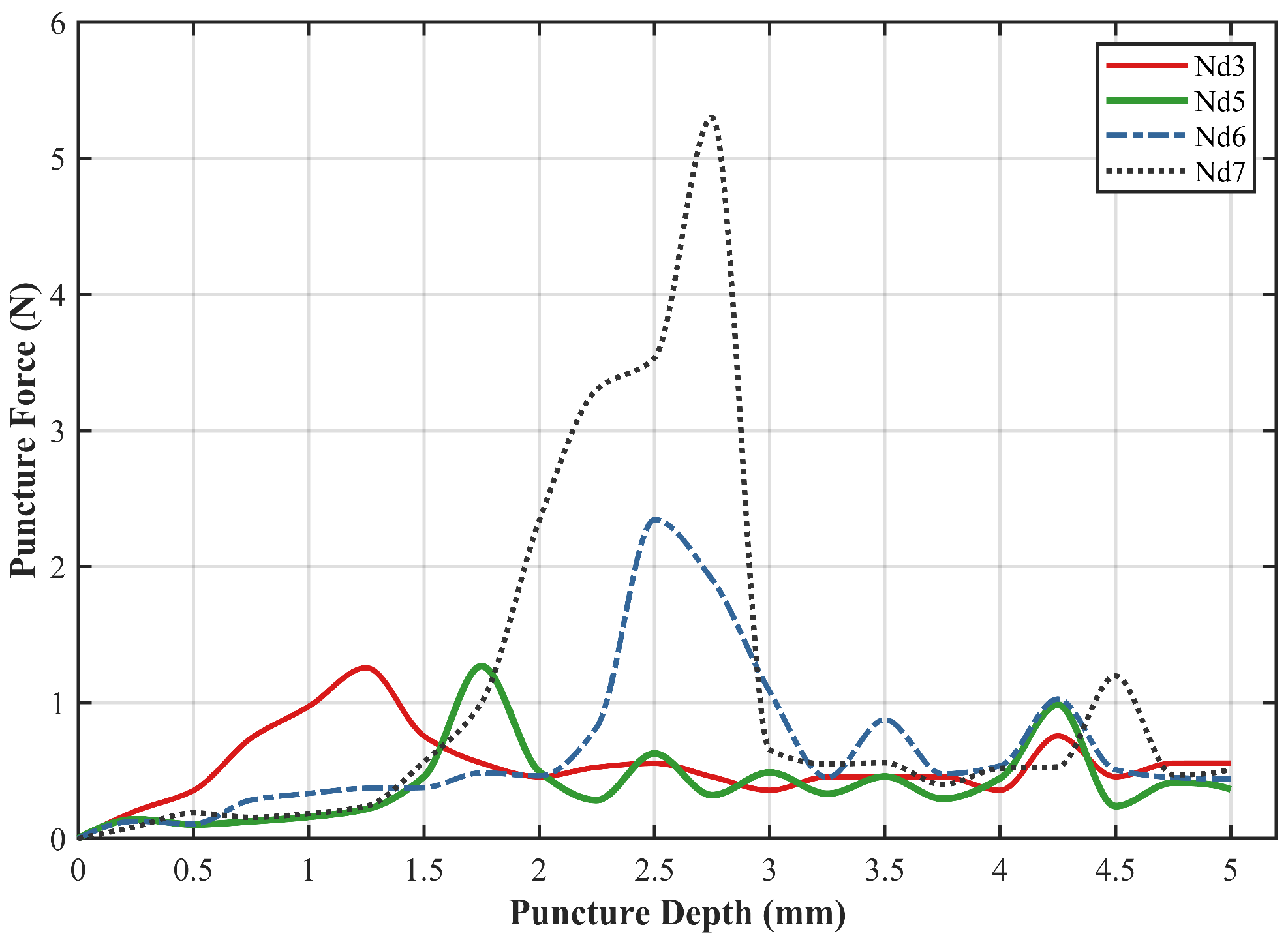
To investigate the comprehensive influence of the overall needle geometric configuration on the penetration response, this study characterizes the needle geometric features using three core parameters, i.e., the needle blade diameter D , point length a , and cone angle 2 θ , and establishes the corresponding models based on the physical dimensions of actual industrial needles. Employing the finite element method, simulation analyses were conducted on the process of three needles commonly used for shirt sewing (Nd5, Nd6, and Nd7, as shown in Table 1), penetrating fabric Fb3 (see Table 2). The results were then compared with the penetration force curve of needle Nd3 penetrating fabric Fb3 from the previous section. Through this comparison, while evaluating the influence of needle body parameters on the penetration force, a needle scheme with better compatibility for fabric Fb3 within the scope of this study was identified. The penetration force–penetration depth curves of different needles penetrating the same fabric are shown in Figure 14.
The simulation results indicate that the maximum penetration forces of needles Nd3 and Nd5 are at a comparable level, whereas the peak penetration forces of Nd6 and Nd7 exhibit a significant increase. A detailed comparison of the penetration force parameters is presented in Table 7, where all relative rates of change are calculated using the penetration results of Nd3 as the baseline.
Comparative analysis reveals that both the first and second penetration force peaks of the Nd3 needle (No. 12(b)) are lower than those of other comparative needle models. Research indicates that lower penetration force during needle penetration typically signifies superior process adaptability, reduced fabric damage, and enhanced needle penetration performance [39,40]. Conversely, excessively high penetration force may lead to yarn breakage, needle wear, and needle breakage [2].
In summary, for the fabric Fb3 (H = 0.2 mm, warp/weft density: 85 × 85 TPI) examined in this study, a finite element analysis model of the penetration process was established for the improved needle based on the modifications to the needle tip height and cone angle. The results indicate that the improved needle Nd3 (No. 12(b)) further reduces the peak penetration force, and the needle Nd3 demonstrated superior process adaptability. These findings provide a valuable reference for needle selection and design.

5. Conclusions

In this study, the complex needle–fabric penetration process was divided into five distinct stages and analytical expressions were established for the penetration force at each stage. Using the ANSYS Explicit Dynamics simulation analysis, a simulation model and methodology were developed for the needle–fabric penetration process under varying parameters. The influence of fabric thickness, warp and weft density, and needle geometric parameters (including needle tip height, needle tip taper angle, and needle shank diameter) on penetration force was investigated. The key findings of this study are as follows: (1) Both cylindrical needle shank and cylindrical needle shaft penetration exhibit peak variations in force (first peak and second peak, respectively). Increasing fabric thickness significantly elevates the overall penetration force, with the first peak showing a greater increase than the second peak. (2) Puncture force peaks decrease significantly with reduced fabric warp and weft density. When warp and weft density decreased from 85 × 85 TPI to 80 × 80 TPI, the first and second peaks decreased by 18.5% and 67.4%, respectively. A further reduction in warp and weft density to 75 × 75 TPI resulted in peak decreases of 58.48% and 20.64%. (3) The needle tip cone angle and needle tip height are the key parameters influencing the peak penetration force. The comparative analysis of the penetration process indicates that modifying the needle tip cone angle and height can effectively reduce penetration force. In summary, the research methodology and results presented herein provide an effective numerical simulation-based approach for needle selection and penetration force evaluation in the penetration sewing of fabrics with varying specifications.

Author Contributions

Conceptualization, H.G.; methodology, H.G.; validation, H.G., G.F. and X.D.; formal analysis, B.X.; investigation, Z.C. and H.G.; resources, S.M.; data curation, H.G.; writing—original draft preparation, H.G.; writing—review and editing, S.M.; visualization, H.G. and B.X.; supervision, S.M. and Z.C.; project administration, S.M.; funding acquisition, S.M. All authors have read and agreed to the published version of the manuscript.

Funding

This research was funded by “The Project of Key Laboratory of Intelligent Manufacturing Technology for Textile and Clothing in Ningbo City, grant number 2024ZDSYS-A-001”, “The National Key Research and Development Program, grant number SQ2023YFB4600241”, “Hubei Province Sc. & Tech. Plan, grant number 2024DJA027”, and “Innovation Base, grant number 111HTE2022002”.

Data Availability Statement

The original contributions presented in this study are included in the article. Further inquiries can be directed to the corresponding author.

Acknowledgments

The authors would like to thank their laboratories for their support and help during this study.

Conflicts of Interest

The authors declare no conflicts of interest.

Abbreviations

The following abbreviations are used in this manuscript:
NdNeedle
FbFabric

References

  1. Domjanıć, J.; Kovačevıć, S.; Ujevıć, D. An investigation of fabric properties and needle penetration force during tailoring. Text. Appar. 2016, 26, 100–108. [Google Scholar]
  2. Choudhary, A.K.; Sikka, M.P.; Bansal, P. The study of sewing damage and defects in garments. Res. J. Text. Appar. 2018, 22, 109–125. [Google Scholar] [CrossRef]
  3. Wen, J.; Li, X.; Li, X.; Wu, L. Modeling of Sewing Process Parameters for Automated Sewing of Garment Fabrics. J. Text. Res. 2023, 44, 158–167. (In Chinese) [Google Scholar] [CrossRef]
  4. Sun, B.; Wang, Y.; Wang, P.; Hu, H.; Gu, B. Investigations of puncture behaviors of woven fabrics from finite element analyses and experimental tests. Text. Res. J. 2011, 81, 992–1007. [Google Scholar] [CrossRef]
  5. Gurarda, A. Investigation of the seam performance of PET/nylon-elastane woven fabrics. Text. Res. J. 2008, 78, 21–27. [Google Scholar] [CrossRef]
  6. Li, T.-T.; Fang, J.; Huang, C.-H.; Lou, C.-W.; Lin, J.-Y.; Lin, M.-C.; Chen, Y.-S.; Lin, J.-H. Numerical simulation of dynamic puncture behaviors of woven fabrics based on the Finite Element Method. Text. Res. J. 2017, 87, 1308–1317. [Google Scholar] [CrossRef]
  7. Wang, L.; Zhang, S.; Gao, W.; Wang, X. FEM analysis of knife penetration through woven fabrics. Comput. Model. Eng. Sci. 2007, 20, 11–20. [Google Scholar]
  8. Nayak, R.; Padhye, R.; Gon, D.P. Sewing performance of stretch denim. J. Text. Appar. Technol. Manag. 2010, 6, 1–9. [Google Scholar]
  9. Wang, F.-F.; Ma, Y.-L.; Xu, L.; Wang, P.; Zhang, Y. Numerical simulation of semi-blunt puncture behaviors of woven fabrics based on the finite element method. Fibers Polym. 2018, 19, 2402–2410. [Google Scholar] [CrossRef]
  10. Sauri, R.M.; Manich, A.M.; Barella, A.; Lloria, J.; Etayo, J.; Rasanas, J. A factorial study of seam resistance: Woven and knitted fabrics. Indian J. Text. Res. 1987, 12, 188–193. [Google Scholar] [CrossRef]
  11. Khan, R.; Hersh, S.; Grady, P. Simulation of needle-fabric interactions in sewing operations. Text. Res. J. 1970, 40, 489–498. [Google Scholar] [CrossRef]
  12. Capek, L.; Hamrikova, P.; Dzanova, S.; Lenfeldova, I.; Kolcavova-Sirkova, B.; Chvojka, J. Needle penetration forces into textile prostheses and skin: Experimental study. J. Text. Inst. 2022, 113, 1723–1730. [Google Scholar] [CrossRef]
  13. Karypidis, M.; Savvidis, G. Analysis of Factors Influencing Needle Penetration Force through Woven Fabrics. J. Text. Assoc. India 2018, 80, 89–97. [Google Scholar]
  14. Gotlih, K. Sewing needle penetration force study. Int. J. Cloth. Sci. Technol. 1997, 9, 241–248. [Google Scholar] [CrossRef]
  15. Karimi, H.; Jeddi, A.A.; Rastgoo, A. Theoretical analysis of load–extension behaviour of plain-weft-knitted fabric. J. Text. Inst. 2009, 100, 18–27. [Google Scholar] [CrossRef]
  16. Wang, H. Research on Key Technologies of Variable-Thickness Sewing Machines Based on Virtual Prototyping. Master’s Thesis, Zhejiang University of Technology, Hangzhou, China, 2007. (In Chinese) [Google Scholar]
  17. Wu, L. Research on Collaborative Sewing Robots Based on Force-Field Coupling. Master’s Thesis, Tiangong University, Tianjin, China, 2022. (In Chinese) [Google Scholar]
  18. El Messiry, M.; Eltahan, E. Stab resistance of triaxial woven fabrics for soft body armor. J. Ind. Text. 2016, 45, 1062–1082. [Google Scholar] [CrossRef]
  19. Bertolazzi, S.; Brivio, J.; Kis, A. Stretching and breaking of ultrathin MoS2. ACS Nano 2011, 5, 9703–9709. [Google Scholar] [CrossRef]
  20. New Cloth, M. Avoiding Fabric Holes Caused by Needle Cuts and Other Variables; Fibre2Fashion: Ahmedabad, India, 2011. [Google Scholar]
  21. Vadood, M.; Dehghan Manshadi, D. Modeling the shear behavior of spunbond nonwoven fabrics using the finite element method. J. Text. Inst. 2025, 116, 189–197. [Google Scholar] [CrossRef]
  22. QB/T 2255.1-2010; Industrial Sewing Machine-Sewing Needle Part 1: The Type of GC and GN. China Light Industry Press: Beijing, China, 2010.
  23. Fan, J.; Yu, W.; Yu, W.W.-m.; Hunter, L. Clothing Appearance and Fit: Science and Technology; Woodhead Publishing: Cambridge, UK, 2004. [Google Scholar]
  24. Sun, Y.; Zheng, T. Research Progress on 3D Modeling of Yarns. J. Zhongyuan Univ. Technol. 2010, 21, 51–55. (In Chinese) [Google Scholar] [CrossRef]
  25. Zheng, T.; Cui, S. Research on the Construction of 3D Yarn Models Using B-spline Surfaces (I): Construction of 3D Yarn Models with Different Cross-sections. J. Text. Res. 2006, 27, 53–57. (In Chinese) [Google Scholar] [CrossRef]
  26. Nilakantan, G.; Keefe, M.; Bogetti, T.A.; Adkinson, R.; Gillespie, J.W., Jr. On the finite element analysis of woven fabric impact using multiscale modeling techniques. Int. J. Solids Struct. 2010, 47, 2300–2315. [Google Scholar] [CrossRef]
  27. Nilakantan, G.; Nutt, S. Effects of fabric target shape and size on the V50 ballistic impact response of soft body armor. Compos. Struct. 2014, 116, 661–669. [Google Scholar] [CrossRef]
  28. Tan, V.; Lim, C.; Cheong, C. Perforation of high-strength fabric by projectiles of different geometry. Int. J. Impact Eng. 2003, 28, 207–222. [Google Scholar] [CrossRef]
  29. Bruniaux, P.; Ngoc, C.N. Nonlinear model of a fabric warp and weft. Adv. Complex Syst. 2006, 9, 99–120. [Google Scholar] [CrossRef]
  30. Yue, X.; Wang, L.; Sun, F.; Pan, R.; Gao, W. Finite element simulation of same-face opposing bending of plain woven fabrics based on ABAQUS. J. Text. Res. 2024, 45, 165–172. (In Chinese) [Google Scholar] [CrossRef]
  31. Wu, X.; Shentu, B.; Ma, Q.; Jin, L.; Zhang, W.; Xie, S. Finite Element Analysis of the Structural Failure Mechanism of 3D Orthogonal Woven Fabrics Under Spherical Projectile Impact. J. Text. Res. 2020, 41, 32–38. (In Chinese) [Google Scholar] [CrossRef]
  32. Wang, J. Research on Needle Penetration Motion Analysis and Control System of Integrated Sewing Equipment for Shirt Sleeve Plackets. Master’s Thesis, Wuhan Textile University, Wuhan, China, 2023. (In Chinese) [Google Scholar]
  33. Hearle, J.W.S.G.; Backer, S.; Grosberg, P.B. Structural Mechanics of Fibers, Yarnsand Fabrics; John Wiley & Sons Inc.: Hoboken, NJ, USA, 1969; Volume 1. [Google Scholar]
  34. Xie, M.; Chen, G.; Chen, C.; Zhu, M.; Li, H.; Hu, Z. Numerical simulation of air flow through micrometer-sized monofilament woven fabrics: Effect of fabric structure. J. Text. Inst. 2025, 116, 3045–3057. [Google Scholar] [CrossRef]
  35. Shahabi, N.E.; Saharkhiz, S.; Varkiyani, S.M.H. Effect of fabric structure and weft density on the Poisson’s ratio of worsted fabric. J. Eng. Fibers Fabr. 2013, 8, 155892501300800208. [Google Scholar] [CrossRef]
  36. Galuszynski, S. 31—Some aspects of the mechanism of seam slippage in woven fabrics. J. Text. Inst. 1985, 76, 425–433. [Google Scholar] [CrossRef]
  37. Stylios, G.; Xu, Y. An investigation of the penetration force profile of the sewing machine needle point. J. Text. Inst. 1995, 86, 148–163. [Google Scholar] [CrossRef]
  38. Carvalho, H.; Rocha, A.M.; Monteiro, J.L. Measurement and analysis of needle penetration forces in industrial high-speed sewing machine. J. Text. Inst. 2009, 100, 319–329. [Google Scholar] [CrossRef][Green Version]
  39. Haghighat, E.; Etrati, S.M.; Najar, S.S. Evaluation of woven denim fabric sewability based on needle penetration force. J. Eng. Fibers Fabr. 2014, 9, 47–60. [Google Scholar] [CrossRef]
  40. Atta, R.M.; El-Sayed, I.; Mohamed, A.A.H. Fabric properties measurements using real-time sewing machine motor current signature. Measurement 2021, 173, 108669. [Google Scholar] [CrossRef]
Figure 1. The five-stage evolution of the puncture process. (a) Schematic diagram of the needle and fabric; (I) Schematic diagram of forces during puncture Stage I; (II) Schematic diagram of forces during puncture Stage II; (III) Schematic diagram of forces during puncture Stage III; (IV) Schematic diagram of forces during puncture Stage IV; (V) Schematic diagram of forces during puncture Stage V.
Symmetry 18 00635 g001
Figure 2. (a) The analysis of the restraining force when the fabric is deformed by needle compression; (b) the analysis of the residual restraining force after the needle penetrates the fabric.
Symmetry 18 00635 g002
Figure 3. Force analysis during machine needle puncture: (a) puncture force analysis when the machine needle has not penetrated the fabric; (b) puncture force analysis after the machine needle has penetrated the fabric.
Symmetry 18 00635 g003
Figure 4. The mechanical analysis of each stage of the puncture process.
Symmetry 18 00635 g004
Figure 5. The three-dimensional model of a sewing machine needle.
Symmetry 18 00635 g005
Figure 6. The repeating unit of the plain woven fabric [7].
Symmetry 18 00635 g006
Figure 7. The three-dimensional model of the 0.2 mm thick plain woven fabric.
Symmetry 18 00635 g007
Figure 8. The grid division effect of the sewing machine needle and fabric.
Symmetry 18 00635 g008
Figure 9. Needle–fabric morphological diagrams of the penetration process. (I) When the puncture time t is 0.1 ms; (II) When the puncture time t is 0.3 ms; (III) When the puncture time t is 0.5 ms; (IV) When the puncture time t is 0.8 ms; (V) When the puncture time t is 1.0 ms.
Symmetry 18 00635 g009
Figure 10. The puncture force–puncture depth curve (H = 0.2 mm).
Symmetry 18 00635 g010
Figure 11. The fitting surface for the puncture force of fabrics with different thicknesses.
Symmetry 18 00635 g011
Figure 12. The schematic diagram of the puncture force at different warp and weft densities of the fabric.
Symmetry 18 00635 g012
Figure 13. The force–penetration depth curves for different needle tip cone angles.
Symmetry 18 00635 g013
Figure 14. The puncture force curves for different parameters when the machine needle punctures the fabric Fb3.
Symmetry 18 00635 g014
Table 1. The key parameters and models of different machine needle types.
Corresponding Machine Needle Model D (mm) a (mm) θ (mm) d (mm)Machine Needle Model
No. 12 (a)0.83.95.270.040Nd1
No. 120.84.15.020.040Nd2
No. 12 (b)0.84.24.900.040Nd3
No. 12 (c)0.84.34.790.040Nd4
No. 140.94.25.510.045Nd5
No. 161.04.45.840.050Nd6
No. 181.14.66.140.055Nd7
Table 2. The key parameters and models for different fabric geometric structures.
Thread per Inch (TPI)H/(mm) L a /(mm) L b /(mm) L c /(mm) /(mm)Fabric Model
85 × 85 0.10.1250.0250.0250.3Fb1
85 × 85 0.150.3750.0250.3Fb2
85 × 85 0.20.050.0250.3Fb3
85 × 85 0.250.06250.0250.3Fb4
85 × 85 0.30.0750.0250.3Fb5
80 × 80 0.20.050.0350.32Fb6
75 × 75 0.20.050.0450.34Fb7
Table 3. Mechanical Properties of Fabric Yarns and Sewing Machine Needles.
(a) The mechanical properties of the sewing fabric yarns.
ParameterSymbolValue
Densityρ1.38 g·cm−3
Young’s ModulusE212 MPa
Poisson’s Ratioν0.3
Tensile Strength-20.589 N
Elongation at Break-14.02%
Friction Coefficientμ0.2
(b) The mechanical properties of the sewing needle.
DensityYoung’s ModulusPoisson’s Ratio
7850 (kg/m3)210 (GPa)0.3
Table 4. The puncture force variation across different fabric thicknesses (machine needle model: Nd2; yarn spacing: 0.3 mm).
Fabric Thickness (mm)Mid-Height Parameters
Lb (mm)
Average Puncture ForcePenetration Force (First Peak)Rate of Change (First Peak)Penetration Force (Second Peak)Rate of Change (Second Peak)
0.10.0250.327 N0.73 NBenchmark for comparison0.61 NBenchmark for comparison
0.150.03750.352 N0.92 N+26%0.73 N+19.7%
0.20.050.403 N1.42 N+94.5%0.86 N+41.0%
0.250.06250.499 N1.85 N+153.4%1.06 N+73.8%
0.30.0750.594 N2.04 N+179.5%1.16 N+90.2%
Table 5. The variations in puncture force of machine needles through different fabrics (needle model: Nd3).
Fabric ModelWeave Density (TPI)Yarn Spacing (mm)Average Puncture ForcePenetration Force (First Peak)Relative Rate of Change (First Peak)Penetration Force (First Peak)Relative Rate of Change (First Peak)
Fb385 × 850.30.4961.424-0.862-
Fb680 × 800.320.2901.161−18.5%0.281−67.4%
Fb775 × 750.340.1850.482−58.48%0.223−20.64%
Table 6. The variation in puncture force for different machine needles puncturing fabric (fabric model: Fb3).
Machine Needle ModelTip Radius, dNeedle Tip Height, aNeedle Tip Cone Angle, θ First Peak of Penetration ForceSecond Peak of Penetration Force
Nd10.043.90 mm5.27°2.11 N0.734
Nd20.044.10 mm5.02°1.42 N0.862
Nd30.044.20 mm4.90°1.25 N0.753
Nd40.044.30 mm4.79°1.32 N0.680
Table 7. The variations in puncture force for different machine needle models (fabric model: Fb3).
ProjectNd3Nd5Nd6Nd7
Corresponding machine needle modelNo. 12 (b)No. 14No. 16No. 18
Tip radius, d (mm)0.040.0450.0500.055
Needle tip height, a (mm)4.24.24.44.6
Needle tip cone angle, θ (°)4.905.515.846.14
Needle rod diameter, D (mm)0.80.91.01.1
First peak puncture force (N)1.2541.2672.3445.299
First peak puncture force relative rate of change (N)-+1.02%+86.87%+323.40%
Second peak puncture force (N)0.75340.98371.02541.1947
Second peak puncture force relative rate of change (N)-−30.57%+36.10%+58.57%
Disclaimer/Publisher’s Note: The statements, opinions and data contained in all publications are solely those of the individual author(s) and contributor(s) and not of MDPI and/or the editor(s). MDPI and/or the editor(s) disclaim responsibility for any injury to people or property resulting from any ideas, methods, instructions or products referred to in the content.