1. Introduction
As the new generation of power systems continues to evolve toward greater intelligence, digitalization, and informatization, power communication networks are encountering unprecedented challenges and opportunities. Traditional power communication systems primarily served low-rate services such as telemetry and remote signaling. However, contemporary application scenarios are increasingly extending toward high-concurrency, diversified, and multimedia services, including high-definition video surveillance, distributed control, remote positioning, and protection. These emerging services impose more stringent requirements on communication systems, including higher data throughput, improved reliability, lower latency, and stronger anti-interference capabilities [
1].
Against this backdrop, spectrum resources—critical to the performance of power communication networks—have become a bottleneck, with spectrum efficiency emerging as a key issue in urgent need of breakthrough. However, spectrum resources are inherently limited, and the potential for capacity expansion within the currently allocated bands is extremely constrained. Therefore, exploring novel modulation schemes that enable both reliable and efficient communication under limited spectral conditions has become a major focus of current research in the field of power communications.
In recent years, Non-Orthogonal Multiple Access (NOMA) [
2] and Chirp Modulation [
3] technologies have garnered increasing attention from both academia and industry. NOMA enhances spectrum reuse efficiency by permitting non-orthogonal signal overlapping in domains such as power, codewords, or time-frequency. Chirp modulation, on the other hand, is widely applied in radar, sonar, and Internet of Things (IoT) communications due to its strong resistance to multipath effects and inherent frequency diversity [
4]. However, conventional NOMA approaches often require complex successive interference cancellation with risks of error propagation, while orthogonal chirp systems are restricted in concurrency and spectrum reuse. Such orthogonal designs, though effective in low-density scenarios, struggle to support high user density in spectrum-constrained environments and suffer from limited spectrum efficiency. While some existing studies have explored non-orthogonal overlapped chirp systems, challenges remain in effectively mitigating interference due to signal overlap, reducing demodulation complexity, and improving system robustness [
5].
Thanks to their favorable frequency diversity and resilience to multipath propagation, chirp modulation techniques have seen broad adoption in radar, sonar, ultra-wideband communications, and low-power wide-area networks such as LoRa [
6]. Dual-mode chirp spread spectrum modulation has also been explored to provide flexible trade-offs between rate and robustness [
7]. Traditional chirp communication systems are typically based on orthogonal design principles, ensuring zero cross-correlation among different signals through controlled time, frequency, or phase manipulation, thereby simplifying receiver-side processing. However, driven by the growing demand for high-density access and enhanced spectrum efficiency, the limitations of orthogonal design in terms of resource utilization are becoming increasingly apparent.
To improve spectral efficiency, researchers have begun incorporating non-orthogonal transmission concepts into chirp communication systems, proposing techniques such as overlapped transmission and sub-band multiplexing. In [
8], the authors achieved resource reuse in the time or frequency domain by superimposing multiple chirp signals within the same frequency band. However, due to the lack of a well-designed interference control mechanism among the signals, the system exhibited degraded bit error performance. Subsequently, ref. [
9] introduced the concept of non-orthogonal multiple access by differentiating chirp signals in the power domain and employing iterative detection to mitigate inter-symbol interference. Nevertheless, the high demodulation complexity of this approach limited its practical applicability.
In recent years, the academic community has turned its attention to lower-complexity designs more suitable for physical-layer non-orthogonal overlapping. For instance, ref. [
10] proposed enhancing the distinguishability between different chirp signals via phase rotation, which improved signal separability at the receiver to some extent. From a matrix computation perspective, ref. [
11] analyzed the structure of the correlation matrix formed by the expansion of chirp bases and developed a low-complexity linear estimation method, significantly reducing computational overhead. Moreover, in the context of oversampling enhancement, ref. [
12] demonstrated that increasing the dimensionality of the received signal can effectively mitigate the rank-deficiency problem caused by overlapping chirp signals, thereby improving reception robustness.
In summary, existing studies have preliminarily demonstrated the potential of non-orthogonal overlapped chirp communication systems in enhancing spectral efficiency. However, most of these approaches still suffer from high demodulation complexity, weak interference mitigation mechanisms, and insufficiently systematic modulation structure designs. Consequently, there remains an urgent need to establish a comprehensive communication system architecture that integrates signal structure design, interference control, and demodulation optimization to support highly concurrent and reliable transmission under complex environments.
To address the demands for high concurrency and high reliability in power communication networks, this paper proposes and investigates a novel communication system design based on Non-Orthogonal Overlapped Chirp (NOOC) modulation. While preserving the advantages of chirp signals, the proposed system significantly enhances spectral utilization by introducing a non-orthogonal overlapping mechanism. Meanwhile, to ensure demodulation efficiency and system robustness, this study conducts a systematic investigation from both modulation design and receiver algorithm perspectives, with the main contributions summarized as follows:
- (1)
A non-orthogonal overlapped chirp communication system architecture is constructed, incorporating a continuous orthogonal phase modulation sequence to enhance inter-signal correlation and avoid ill-conditioned correlation matrices, thereby reducing the risk of error propagation during demodulation;
- (2)
A low-complexity demodulation method based on correlation matrix computation is proposed, which substantially reduces the computational burden in the demodulation process and is well-suited for resource-constrained terminal devices;
- (3)
Theoretical analysis and experimental validation are conducted to demonstrate the system’s performance gains under oversampling conditions, showing that oversampling effectively improves the output signal-to-noise ratio of the demodulator.
2. System Model and Signal Design
The non-orthogonal overlapped chirp communication system investigated in this paper is designed to enhance spectral efficiency and system reliability. It primarily consists of three components: a modulator module, a channel module, and a receiver module. The system block diagram is shown in
Figure 1. At the transmitter side, the input bitstream is first encoded by a channel encoder and then mapped into a sequence of modulation symbols. These modulation symbols are further converted into multiple overlapped chirp signals, which are weighted and superimposed to form a non-orthogonal composite signal. This signal is then transmitted over the wireless channel via digital-to-analog conversion and a radio frequency (RF) front end.
On the receiver side, a low-complexity demodulation algorithm based on correlation matrix computation is employed. Combined with oversampling and continuous orthogonal phase modulation design, it enables accurate estimation and detection of the target signals.
Chirp signals are a class of waveforms whose frequency varies linearly with time, exhibiting excellent frequency diversity and resistance to multipath propagation [
13]. A basic chirp signal can be expressed as:
where
is the signal amplitude,
is the initial frequency,
is the chirp rate (frequency sweep rate), and
is the signal duration.
When multiple chirp signals are superimposed in a non-orthogonal manner, the resulting composite signal can be written as:
Here, is the modulation coefficient for the -th symbol, represents the base chirp signal associated with the -th symbol, and denotes its time delay, which is used to achieve non-orthogonal overlapping. The parameter denotes the number of symbols superimposed per group (i.e., the degree of concurrency).
To support the transmission of more concurrent symbols under spectrum-constrained conditions, this work adopts a non-orthogonal overlapping strategy, in which multiple time-shifted chirp signals are allowed to overlap within each symbol duration. Specifically, the symbol duration is divided into several sub-intervals, and in each sub-interval, a chirp symbol with a designated time offset is superimposed. While this method significantly enhances spectral reuse, it also introduces inter-symbol interference due to non-zero cross-correlation among signals.
To control interference and improve signal separability at the receiver, this paper proposes a continuous orthogonal phase modulation method. Specifically, during the construction of each
, symbols are differentiated not only in the frequency domain but also by introducing a specific phase rotation angle in the initial phase, thereby enhancing the discriminability of inter-signal cross-correlation. The signal can be expressed as:
At the receiver, to further enhance signal extraction capability, an oversampling mechanism is introduced. Assuming that the system sampling rate is
times the symbol bandwidth, the oversampled received signal can be represented as:
In Equation (4) the dimensions of the vectors and matrices and the relation between continuous time and discrete time are not fully transparent. You state that the oversampled received vector has length , but you have not defined a sampling interval, and earlier appears as a symbol duration rather than a dimensionless count. Clarify whether is a number of samples or a time Dimensions and continuous/discrete relation in Equation (4).
Clarified after Equation (4) in
Section 2:
with
(
samples per symbol duration
,
in seconds),
with discretized oversampled columns.
Where y ∊ ℂ{N×1} with ( is the number of base samples per symbol duration ), α ∈ ℂ{N×1}, H ∈ ℂ{N×K} whose -th column is the discretized oversampled vector of, and n ~ ℂℕ(0, σ2I). To prevent inter-symbol interference across consecutive symbol groups, guard intervals (5–10% overhead) or cyclic extensions are employed.
Since , the system exhibits non-orthogonal characteristics. However, when the matrix is well-conditioned and the signals are sufficiently distinguishable, the symbol vector can be estimated using least squares or matrix inversion of the correlation matrix.
3. Design of Non-Orthogonal Overlapped Chirp Modulation Scheme
To further improve the spectral efficiency and anti-interference capability of chirp communication systems, traditional orthogonal chirp modulation faces structural limitations, especially in high-concurrency, multi-user scenarios where simultaneous transmission of multiple symbols is required. This section investigates non-orthogonal overlapped modulation mechanisms and proposes a non-orthogonal overlapped chirp modulation design method that supports high concurrency. To ensure both system capacity and reliability, the design incorporates Continuously Orthogonal Phase Modulation (COPM) to enhance signal distinguishability.
Consider transmitting
different modulation symbols within each symbol duration
, where each symbol corresponds to an independent chirp subcarrier. The chirp signal corresponding to the
-th subcarrier is expressed as
Here, is the amplitude modulation factor, is the phase rotation of the -th symbol, is the time offset of the symbol on the time axis, is the duration of a single chirp symbol, and is the time offset between adjacent chirp signals.
Due to the temporal overlap among chirp subcarriers, the signals are no longer orthogonal, and their cross-correlation function is given by:
In a non-orthogonal overlapping design, , indicating the presence of inter-symbol interference. Therefore, the receiver must possess interference cancellation and symbol detection capabilities. The continuously orthogonal phase modulation mechanism proposed in this section is designed to enhance signal separability under such conditions.
The goal of COPM is to finely control the initial phase angle to increase the distinguishability among chirp signals and reduce the interference caused by overlapping. The core idea is to maintain time-domain overlap while ensuring that phase rotation angles are uniformly distributed on the complex plane. This ensures that the resulting correlation matrix maintains a well-conditioned structure, thereby enhancing the invertibility and stability of demodulation at the receiver.
Specifically, the phase angles for the
concurrent symbols are assigned as:
This uniform spacing on the unit circle maximizes the minimum chordal distance, yielding a near-unitary correlation matrix structure and low condition number. Sensitivity analysis comparing uniform, random, and Grassmannian-optimized phases confirms that uniform spacing achieves near-optimal conditioning with zero computational cost [
14].
Let the signal matrix constructed from oversampled signals at the receiver be:
where
is the sampled vector corresponding to the
-th chirp-modulated symbol. The correlation matrix is then defined as:
The use of continuous phase modulation ensures that the matrix exhibits diagonal dominance and that its condition number remains within a controllable range, thus improving demodulation performance. A smaller condition number indicates more stable matrix inversion and stronger noise resistance of the system.
Spectral Efficiency Analysis
The spectral efficiency η (bits/s/Hz) of NOOC is formally defined as η = (K · log2 Mmod)/(B · Ts), where Mmod is the modulation order, B ≈ μ T is the bandwidth of a single chirp, and Ts ≈ T due to full overlap.
Normalizing B · Ts = 1 (common in chirp system analysis), η = K · log2 Mmod.
For orthogonal systems, K = 1 and η = log
2 M
mod. Numerical examples are provided in
Table 1.
Extended simulations for K = 20 and K = 24 confirm continued linear scaling of η, albeit with gradual BER degradation due to increased interference. COPM goes beyond simple fixed-phase codes by tying uniform spacing to time-offset structure and oversampling, ensuring well-conditioned matrices in high-dimensional overlapping scenarios.
4. Low-Complexity Receiver Design Based on Correlation Matrix
Although the non-orthogonal overlapped chirp modulation system significantly enhances spectral efficiency and system capacity, its non-orthogonal nature introduces strong inter-symbol interference (ISI) at the receiver. While the traditional Maximum Likelihood (ML) detection method offers optimal performance, its computational complexity increases exponentially with the concurrency level, making it impractical for deployment in actual power communication terminal devices [
15].
To address this, this section proposes a low-complexity receiver architecture based on correlation matrix computation. By exploiting the structured correlation among chirp signals, the receiver approximates optimal demodulation through matrix operations. In addition, oversampling is employed to increase the dimensionality of the received signal, thereby enhancing symbol discriminability.
To estimate the modulation symbol vector in Equation (4), the overall architecture of the receiver is illustrated in
Figure 2 and comprises the following key modules:
- (1)
Oversampler: Digitizes the received signal at a sampling rate of ;
- (2)
Chirp Basis Expansion Module: Constructs the matrix by correlating the received vector with all known chirp basis functions;
- (3)
Correlation Matrix Construction and Solution Module: Computes and , and performs linear estimation to solve for the symbol vector;
- (4)
Decision Module: Applies decision logic to the estimated symbol vector and maps the results to a bitstream.
The chirp basis matrix , where is the discretized oversampled vector of the phase-rotated and time-shifted chirp . The decision module performs component-wise hard decision on the estimated symbol vector â (nearest constellation point for QPSK or sign detection for BPSK), followed by bit demapping.
4.1. Computational Complexity Analysis
The proposed receiver requires O(K2 N + K3) operations per symbol (dominated by computation and regularized inversion). This is significantly lower than maximum-likelihood detection O(MmodK) (exponential in K), while higher than orthogonal chirp modulation O(N), but justified by the K-fold capacity gain.
4.2. Synchronization Sensitivity
Timing errors increase the condition number of R and degrade BER. Simulations show that offsets within ±5% of symbol duration cause <1 dB loss at BER = 10{−4}, indicating moderate robustness comparable to LoRa-like systems.
5. Simulation Results and Performance Analysis
5.1. Simulation Setup
To evaluate the performance of the proposed non-orthogonal overlapped chirp (NOOC) communication system, this section conducts Monte Carlo simulations in MATLAB R2025b, analyzing the system’s bit error rate (BER) and spectral efficiency under different configuration parameters. The main simulation parameters are summarized in
Table 2.
The comparative schemes include the conventional Orthogonal Chirp Modulation (OCM) system and a system based on Orthogonal Frequency Division Multiplexing (OFDM).
BER vs. SNR curves are plotted on semi-log scale for better visibility of low-error regions. The chirp duration of 64 samples follows common spreading practices for processing gain, and the rate ensures bandwidth containment. Oversampling M = 4 is feasible with modern DSP/SDR hardware (e.g., >100 MSps ADCs in power communication devices).
5.2. Simulation Results and Discussion
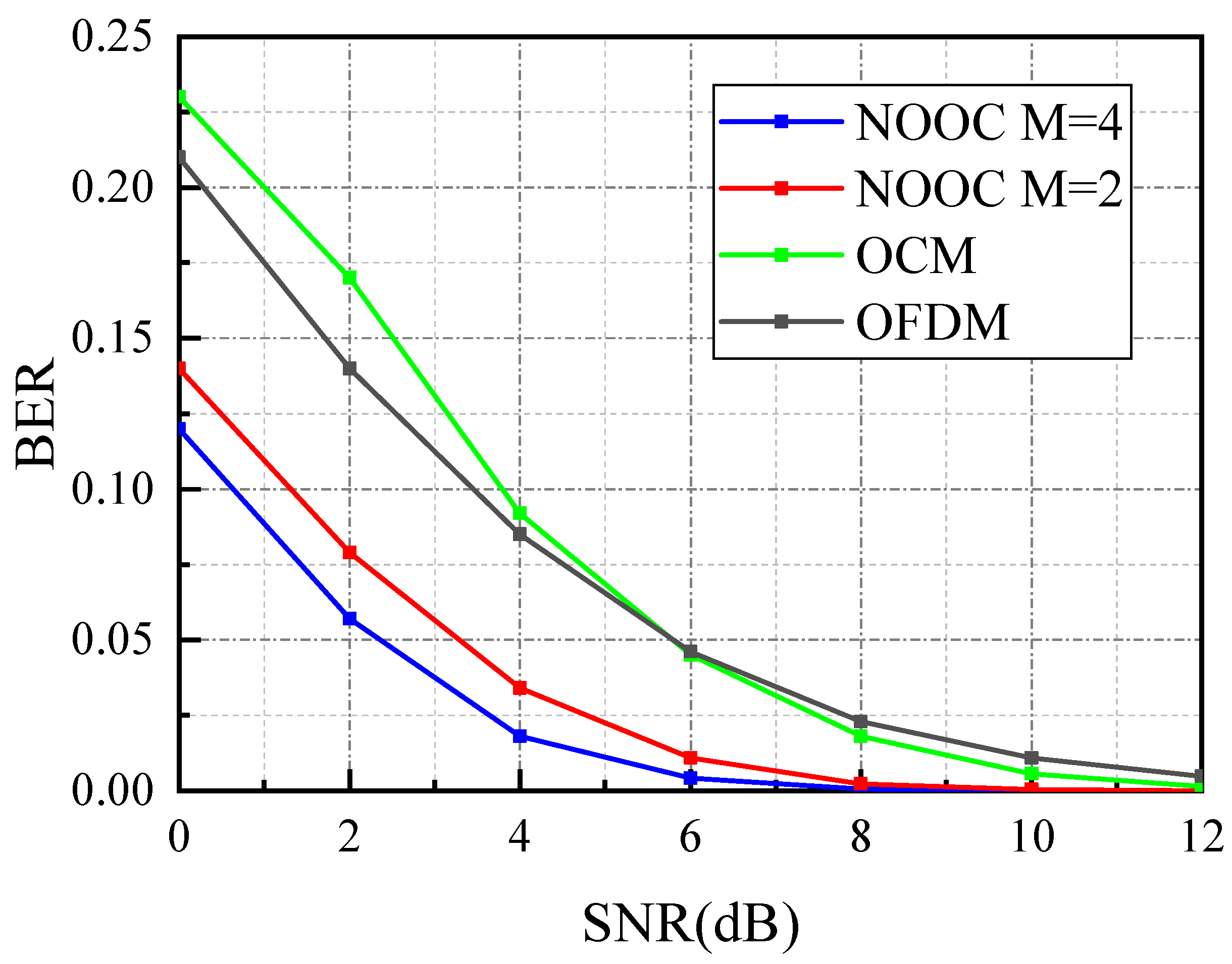
Figure 3 illustrates the BER performance of various systems under BPSK modulation as a function of signal-to-noise ratio (SNR). The proposed NOOC system demonstrates a significantly reduced BER when SNR ≥ 4 dB, clearly outperforming the traditional OCM. In particular, when the oversampling rate is
, the enhanced signal separability leads the NOOC system to reach a BER of
around 8 dB, approximately 3 dB earlier than OCM. Compared with the OFDM system, NOOC exhibits stronger interference resistance in the low-to-medium SNR range, indicating better robustness. Although increasing the concurrency level
improves spectral efficiency, it also intensifies signal interference, resulting in a slight elevation of the BER curve.
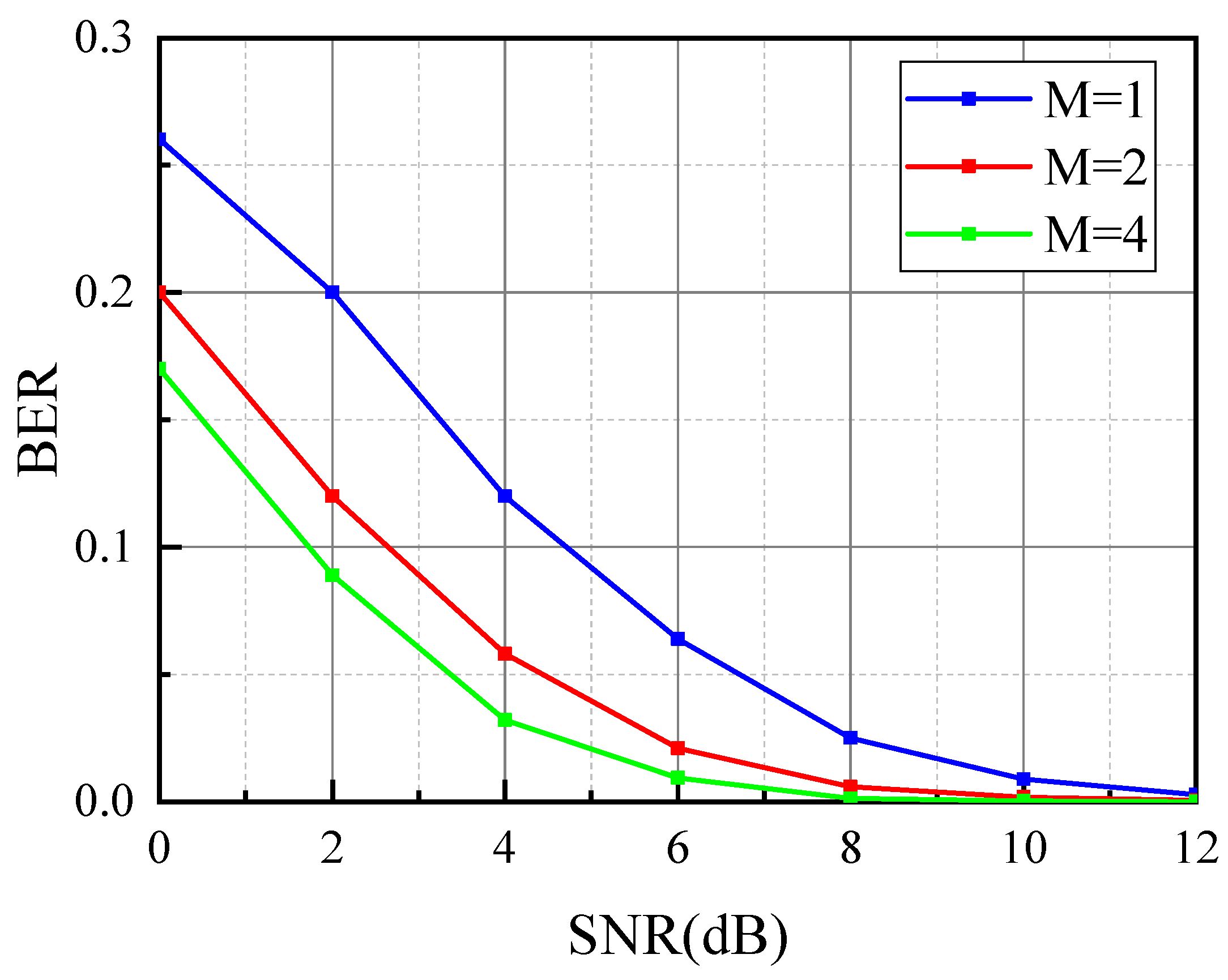
Figure 4 presents the impact of different oversampling rates
on BER performance under QPSK modulation with a concurrency level of
. As the oversampling rate increases, the system’s demodulation accuracy steadily improves, especially in the medium-to-high SNR region. When
, the correlation matrix exhibits a large condition number, leading to unstable estimation and persistently high BER. At
, a clear performance gain is observed, while
yields performance convergence, with diminishing marginal benefits from further sampling rate increases. These results validate the oversampling enhancement mechanism discussed in
Section 4, effectively mitigating the inter-symbol interference induced by non-orthogonality.
5.3. Performance Under Realistic Grid Communication Channels
Additional simulations incorporate multipath fading (3–5 paths, exponential delay profile) and impulsive noise (Middleton Class A) typical of power grid environments. Results show NOOC retains ~2–3 dB gain over OCM due to chirp frequency diversity, though requiring 5–7 dB higher SNR than AWGN for equivalent BER.
6. Conclusions
In response to the urgent demands of future power communication networks for higher spectral efficiency, stronger interference resilience, and multi-service support capability, this paper proposes a novel Non-Orthogonal Overlapped Chirp (NOOC) communication system. The aim is to overcome the performance limitations of traditional orthogonal modulation schemes and realize high-concurrency, highly reliable communication. The main contributions and findings of this study are summarized as follows: On one hand, a system architecture based on a non-orthogonal overlapping mechanism is designed. By introducing multiple time-shifted chirp waveforms within a symbol period, the system achieves concurrent multi-symbol superposition, effectively improving spectral reuse efficiency—representing an innovation in modulation methodology. On the other hand, a continuous orthogonal phase modulation mechanism is developed, wherein specific initial phase rotations are applied to each chirp waveform to enhance cross-correlation discriminability. This approach avoids ill-conditioned correlation matrices and supports stable demodulation performance. In addition, a low-complexity receiver architecture based on correlation matrix computation is proposed. By integrating regularized least squares algorithms and oversampling techniques, the design significantly reduces computational complexity while maintaining demodulation accuracy, making it well-suited for resource-constrained terminals. Performance simulations based on Monte Carlo experiments demonstrate that the proposed NOOC system outperforms traditional orthogonal chirp and OFDM systems in key metrics such as bit error rate (BER) and spectral efficiency. In particular, in low-to-medium SNR regions, the system exhibits strong interference resilience and robustness.
Despite the progress achieved in system design and simulation validation, this work still has several limitations and identifies future research directions:
- (1)
Channel Model Limitations: Current simulations are based on an additive white Gaussian noise (AWGN) channel, and do not yet account for complex channel effects such as multipath propagation, impulsive noise, and time-varying interference commonly found in power wireless communication environments. Future work should incorporate realistic power communication channel models to analyze system robustness.
- (2)
Symbol Detection Algorithm Enhancement: The study adopts a linear least-squares-based detection method, which meets complexity constraints but does not yet incorporate advanced techniques such as soft decision-making or multi-user detection. Future research could explore iterative detection algorithms or deep learning-assisted receiver architectures to further enhance system performance [
16].