Article

Deformation Response of Corrugated Steel Pipe Arch Bridges Under Differential Foundation Settlement
1
Tai’an Highway Development Center, Tai’an 271000, China
2
School of Highway, Chang’an University, Xi’an 710064, China
*
Author to whom correspondence should be addressed.
Symmetry 2026, 18(2), 267; https://doi.org/10.3390/sym18020267 (registering DOI)
Submission received: 6 January 2026 / Revised: 26 January 2026 / Accepted: 28 January 2026 / Published: 31 January 2026
(This article belongs to the Special Issue Symmetry and Finite Element Method in Civil Engineering)

Abstract

To investigate the deformation behavior of corrugated steel pipe arch bridges subjected to differential foundation settlement, this study examines a ten-span continuous corrugated steel pipe arch bridge as the engineering background. A one-year field monitoring program was conducted to record the settlement of each span, and the spatial distribution pattern, annual cumulative settlement, and settlement growth rate were evaluated. Numerical analyses were then performed to compare the deformation response of the bridge under ideal foundation conditions, differential foundation settlement, and vehicle loading. Based on the numerical results, the effectiveness of a concrete lining installed inside the corrugated steel pipe was further assessed. The results show that the settlement of the side spans is significantly larger than that of the middle spans due to the differential foundation settlement in the mining area. The maximum annual cumulative settlement at the side span (span 2) reaches 21.66 mm, which is approximately 4.1 times that of the middle span (span 6). During the monitoring period, the settlement growth rate was high in the early stage (1~3 months), reaching up to 30 percent, and gradually stabilized to about 10 percent per month in the later stage. Compared with the ideal foundation condition, differential settlement increases the pipe stress by a factor of 3.4 and amplifies the deformation by a factor of 9.1. Vehicle loading has a pronounced effect on the deformation of the pipe crown, increasing the settlement by approximately 9 percent, while its influence on the pipe invert is relatively small, with an increase of about 4 percent. Installing a 100 mm thick concrete lining inside the corrugated steel pipe has limited influence on the overall load-carrying behavior but reduces the deformation by 10~20 percent. This reinforcement method is suitable for applications in existing bridges.

1. Introduction

Corrugated steel pipe arch bridges offer several advantages, including low structural weight, high stiffness, rapid construction, and strong deformation capacity [1,2,3]. Owing to these merits, they have been widely adopted for medium- and small-span bridges and culverts in complex geological environments, such as forested areas, mountainous regions, and mining zones [4,5,6]. Under stable geological conditions, these structures generally demonstrate satisfactory in-service performance and comply with both serviceability and ultimate limit state requirements. However, construction in mining areas, particularly within zones affected by historical underground extraction, presents distinct challenges. The foundations in such regions often consist of fractured strata and disturbed geological structures with complex mechanical properties. These conditions result in ground settlement that exhibits significant spatial and temporal variations [7,8,9]. Consequently, differential foundation settlement can impose substantial additional stresses on the superstructure, leading to localized deformation or even triggering global instability, which poses a serious threat to bridge safety [10,11].
Extensive research has been conducted on the mechanical behavior of corrugated steel pipe structures. Field monitoring and scaled model testing have been widely employed to investigate their structural responses [12,13,14]. Sezen et al. [15] performed both dynamic and static load tests on four in-service pipe arch culverts and demonstrated the nonlinear influence of backfill height on structural deformation. The results indicated that deformation decreased exponentially with increasing backfill height and that the maximum dynamic deformation was 10~20% lower than that observed under static loading. Through multi-scale physical model tests, Yeau et al. [16] found that when the backfill height was less than 2.5 m, significant bending developed at the pipe crown, with the maximum deflection reaching up to 1.8 times the critical value. Beben et al. [17] reported that under vehicle loading, settlement at the pipe crown and at the quarter points along the side walls was markedly greater than at other locations, with a maximum stress concentration factor of 2.3. Liu et al. [18] employed advanced sensing technologies to monitor corrugated steel arch culverts subjected to vehicle loading and found substantial discrepancies between measured structural responses and current design specifications, suggesting that existing codes were insufficient for ensuring safety under conditions of differential foundation settlement.
Owing to the large scale of full-size bridge structures, existing monitoring techniques can only infer global structural behavior indirectly, either from deformation measurements at a limited number of monitoring points or from scaled model tests [19,20,21]. This limitation often led to conservative evaluations of structural performance. To facilitate more detailed and reliable analysis, numerical simulation has therefore been widely adopted [22,23,24,25]. For instance, Bao et al. [26] employed a two-dimensional fluid–structure interaction model to investigate the deformation evolution of multi-span corrugated steel culverts during construction and under cyclic vehicle loading and identified pronounced stress concentrations near the arch haunch. Liu et al. [27] proposed an efficient numerical modeling strategy and parameter calibration method and validated its effectiveness through laboratory experiments. Sutubadi et al. [28] examined the influence of soil properties on the stability of soil–steel culverts, demonstrating that the ultimate bearing capacity increased with increasing soil elastic modulus, whereas Poisson’s ratio and the dilatancy angle had negligible effects. Chen et al. [1] investigated the local buckling stability of the straight segments of corrugated steel pipe arches embedded in soil. By developing a refined local finite element model, they analyzed the effects of plate thickness, corrugation geometry, aspect ratio, and curvature on the local buckling resistance, revealing that the actual rotational restraint at the pipe–soil interface is negative. Wu et al. [29] showed that foundation stiffness, backfill height, and culvert geometric parameters exert significant influences on the stress and deformation responses of highway corrugated steel culverts. Their results further indicated that larger corrugation wavelengths increase deformation, whereas greater corrugation height and wall thickness enhance structural stiffness and reduce overburden pressure. Zhang et al. [30] combined field measurements and numerical simulations to assess the effectiveness of circumferential concrete reinforcement in improving the structural performance of large-span multi-cell corrugated steel pipe arch culverts.
Although extensive studies have been conducted on the mechanical behavior of corrugated steel pipe structures, existing research has predominantly focused on single-span configurations. The mechanical response and deformation characteristics of multi-span continuous corrugated steel pipe structures under non-uniform foundation conditions have received relatively limited attention. Moreover, systematic investigations into strengthening schemes and their effectiveness for such multi-span structures subjected to differential foundation settlement are still lacking. To address these research gaps, this study takes a ten-span continuous corrugated steel pipe arch bridge located in a mined-out area and affected by differential foundation settlement as the engineering background. Long-term settlement monitoring data were utilized to obtain displacement time histories at key measurement points, and a finite element model incorporating soil–steel interaction and geometric nonlinearity was established. By comparatively analyzing the deformation evolution of the structure before and after settlement, the settlement characteristics and displacement response mechanisms of the multi-span continuous structure under non-uniform foundation conditions were systematically revealed. On this basis, a corresponding structural strengthening scheme was proposed, and its strengthening effectiveness was quantitatively evaluated. The findings of this study can provide theoretical support and practical guidance for the safety assessment, disaster early warning, and strengthening design of multi-span corrugated steel pipe structures in mined-out areas.

2. Settlement Monitoring and Analysis

2.1. Project Background

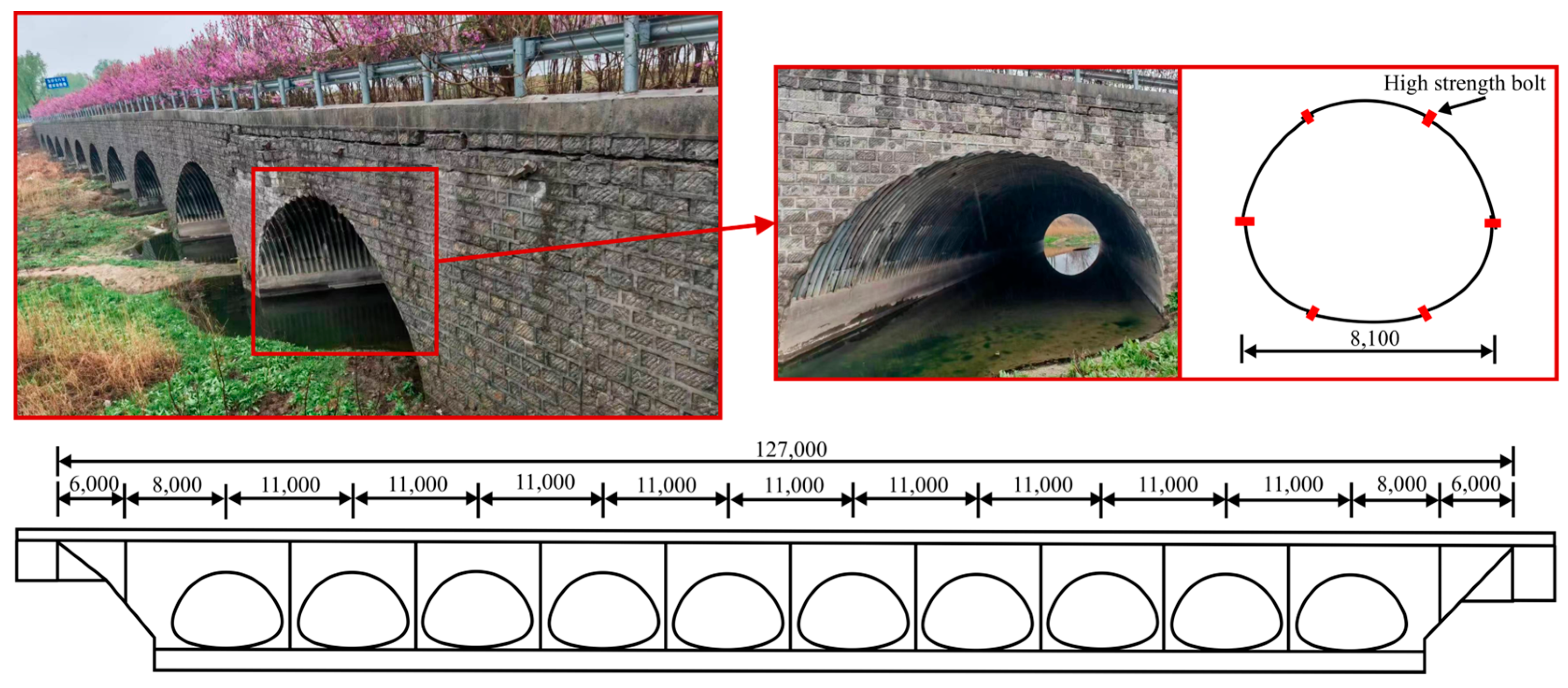
This study focuses on a corrugated steel pipe arch bridge located in Shandong Province, China. The bridge layout is shown in Figure 1. The structure is a ten-span continuous arch bridge with a total length of 127 m, and the maximum span of a single arch is 11 m. The soil cover above the pipe crown is 1.9 m, and the bridge width is 36.5 m. Corrugated steel pipes serve as the primary load-bearing components of the bridge. Each pipe has a span of 8.1 m and a rise of 5.6 m. To enhance interaction with the overlying backfill, all spans are constructed using corrugated steel pipes with a wall thickness of 6.0 mm, a corrugation height of 55 mm, and a corrugation pitch of 2000 mm. The pipes are fabricated from Q345 steel and galvanized to ensure durability, with a minimum coating mass of 600 g/m2 and a minimum coating thickness of 84 μm. Each pipe is assembled from six corrugated plates connected by high-strength bolts. The joints are sealed using PVC foam boards and sealant, and both the interior and exterior surfaces are coated with anticorrosion paint.
The underlying mining area was located approximately 120 m beneath the bridge. Historical coal extraction had resulted in a discontinuous geological structure, characterized by extensively developed fractures within the fractured rock zone, where the rock mass fragmentation rate reached up to 35%. Regional geological investigations revealed pronounced spatial variability in the overburden strata. On the southern side, the overburden consisted of an 8.2 m thick layer of silty clay interbedded with sand and gravel, whereas on the northern side it comprised a 9.4 m thick layer of clay with crushed stone. These heterogeneous conditions led to significant differences in foundation bearing capacity. Affected by stratum subsidence in the mined-out area, the corrugated steel pipe arch bridge experienced approximately 300 mm of differential settlement, which resulted in severe deck deformation and seriously impaired normal traffic operation. Based on the evaluation system specified in the relevant standard [31], the bridge was classified as Class 3. Field inspections indicated a maximum downward deflection of approximately 200 mm at the pipe crown near the skewed entrance of span 8. In addition, a V-shaped compression crack with a width of 3~5 mm developed at the junction of the end wall and the arch ring. At the right end wall of span 10, a 14 m long diagonal crack accompanied by a vertical offset of 20 mm was observed. These structural defects had severely compromised the traffic safety of the bridge.

2.2. Monitoring Scheme

To accurately evaluate the effects of differential foundation settlement on the bridge and to analyze its structural behavior for the development of an effective strengthening scheme, an online real-time displacement monitoring system was installed. The system integrated multiple sensing functions, including automated video transmission, strain measurement, and settlement monitoring. Field data were transmitted in real time to a cloud-based bridge health monitoring platform through mobile communication networks, enabling continuous, unmanned monitoring. Through this platform, engineers can remotely assess the structural condition of the bridge and predict its future performance.
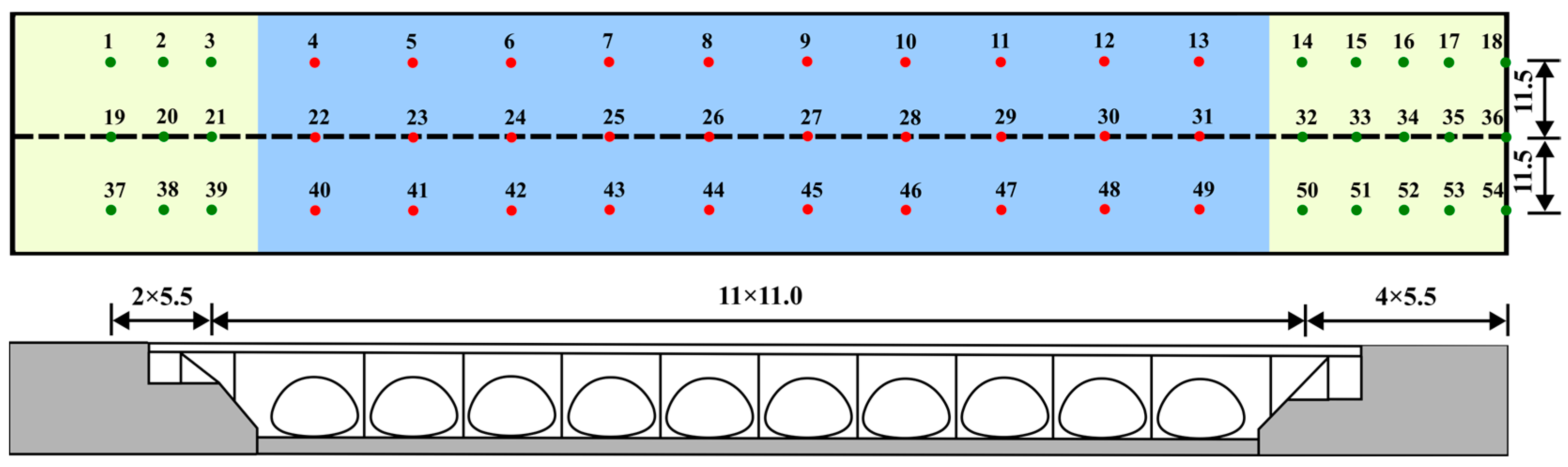
A total of 54 monitoring points were installed and arranged in three transverse rows across the bridge deck. The first and third rows were located near the bridge edges, while the second row was positioned along the deck centerline. The longitudinal spacing between adjacent monitoring points within each row was 11 m. All monitoring points on the bridge deck were located directly above the pipe crown of each span. The transverse monitoring data were used to evaluate the settlement behavior of individual spans, whereas the longitudinal data provided insight into the interaction and continuity of settlement among adjacent spans. To capture settlement characteristics at the approach sections, additional monitoring points were installed at both ends of the bridge. The numbering scheme and layout of the monitoring points are illustrated in Figure 2. During the monitoring process, the installation and operation of all measuring devices strictly followed the manufacturers’ instructions, and the measurement accuracy satisfied the requirements of the relevant standard [32].
A continuous monitoring campaign spanning one year was conducted, yielding a substantial volume of data. For the subsequent analysis, the cumulative monthly settlement data were adopted as the representative dataset.

2.3. Analysis of Monitoring Results

The displacement data recorded at each monitoring point over the one-year period are summarized in Table 1. Overall, the bridge exhibits a pattern of slow and continuous settlement. The annual cumulative settlement generally ranges from 12 mm to 22 mm, with no abrupt changes observed, indicating a stable and controllable deformation process. The maximum cumulative settlement occurs at point 12, reaching 21.66 mm, whereas the minimum value of 5.34 mm is recorded at point 44. Consequently, the maximum differential settlement between these two points is 16.32 mm.
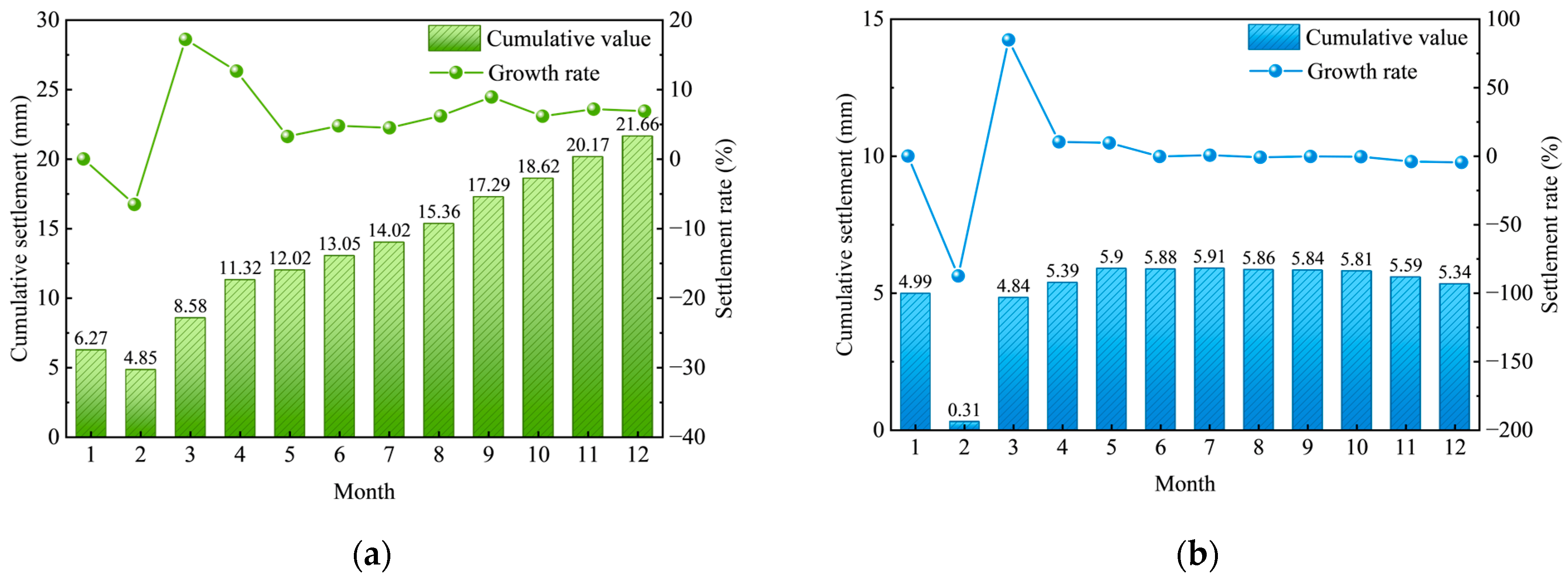
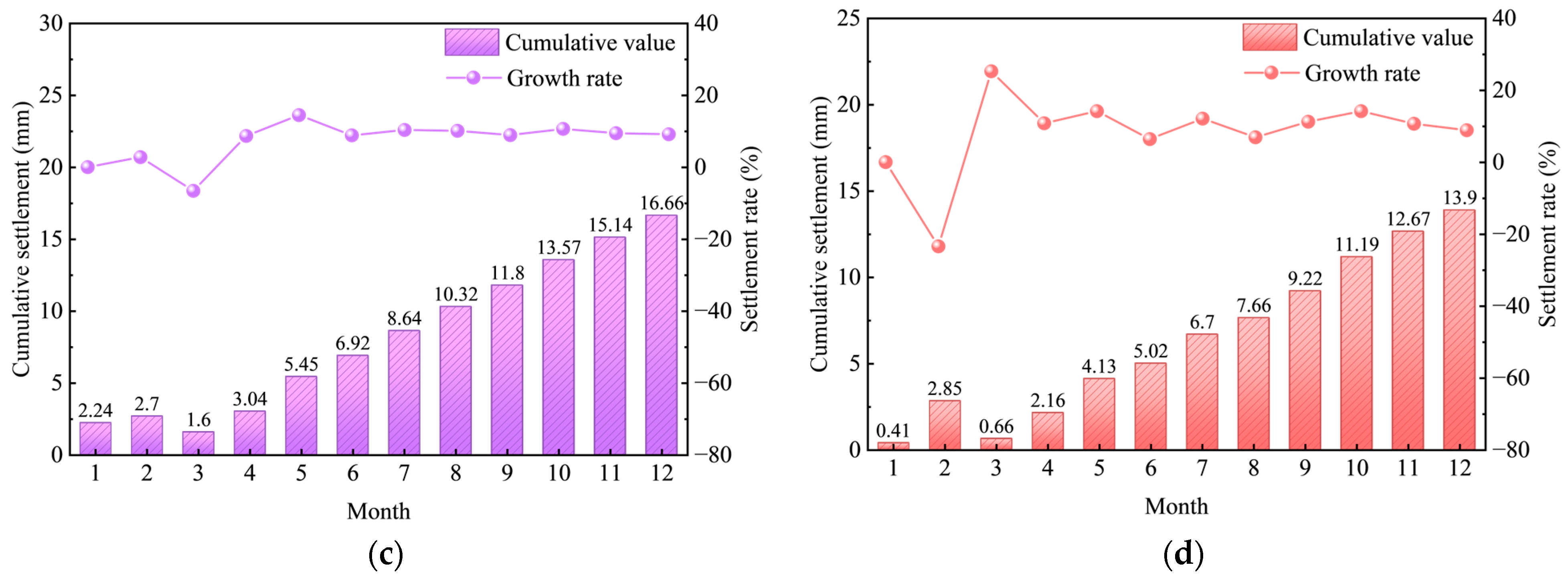
To examine the monthly settlement trends, several representative monitoring points were selected based on their cumulative settlement magnitudes and spatial distribution. These points included (1) point 12, which experienced the largest settlement; (2) point 44, which recorded the smallest settlement; (3) point 23, located near the centerline of span 9; and (4) point 13, located along the northern edge of span 1. The monthly cumulative settlement and corresponding growth rates at these points are presented in Figure 3. As illustrated, all selected points exhibit a typical time-dependent settlement pattern, characterized by rapid settlement during the initial stage, followed by a gradual reduction in settlement rate and eventual stabilization.
Point 12 exhibited the most pronounced settlement, with cumulative increments of 6.27 mm, 4.85 mm, and 8.58 mm during the first three months, indicating rapid settlement development in the initial stage. Subsequently, the settlement rate gradually decreased, and from months 9 to 12, the monthly increment stabilized at approximately 1 mm. In contrast, point 44 experienced the smallest settlement, with the cumulative value increasing slowly from 4.99 mm to 5.34 mm over the one-year period. Except for an abnormally high growth rate observed in the second month, settlement at this location remained minimal and stable during the remaining months. Point 23, located at mid-span, exhibited a settlement pattern consistent with the structural load-bearing characteristics. During the early stage (months 1~3), the monthly increment ranged from 2.24 mm to 3.04 mm, after which the settlement rate gradually declined. In the later stage (months 9~12), the monthly increment remained below 1 mm. Point 13, located at the bridge edge, also demonstrated rapid early settlement during the early period, followed by a gradual reduction, with the cumulative settlement increasing modestly from 12.67 mm to 13.90 mm during the final stage. Based on these monitoring trends, the future annual settlement of the structure is expected to remain within approximately 10 mm. However, given that uneven settlement of about 20 mm had already occurred prior to the initiation of monitoring, further investigation of the structural response is necessary to support timely and effective reinforcement measures.
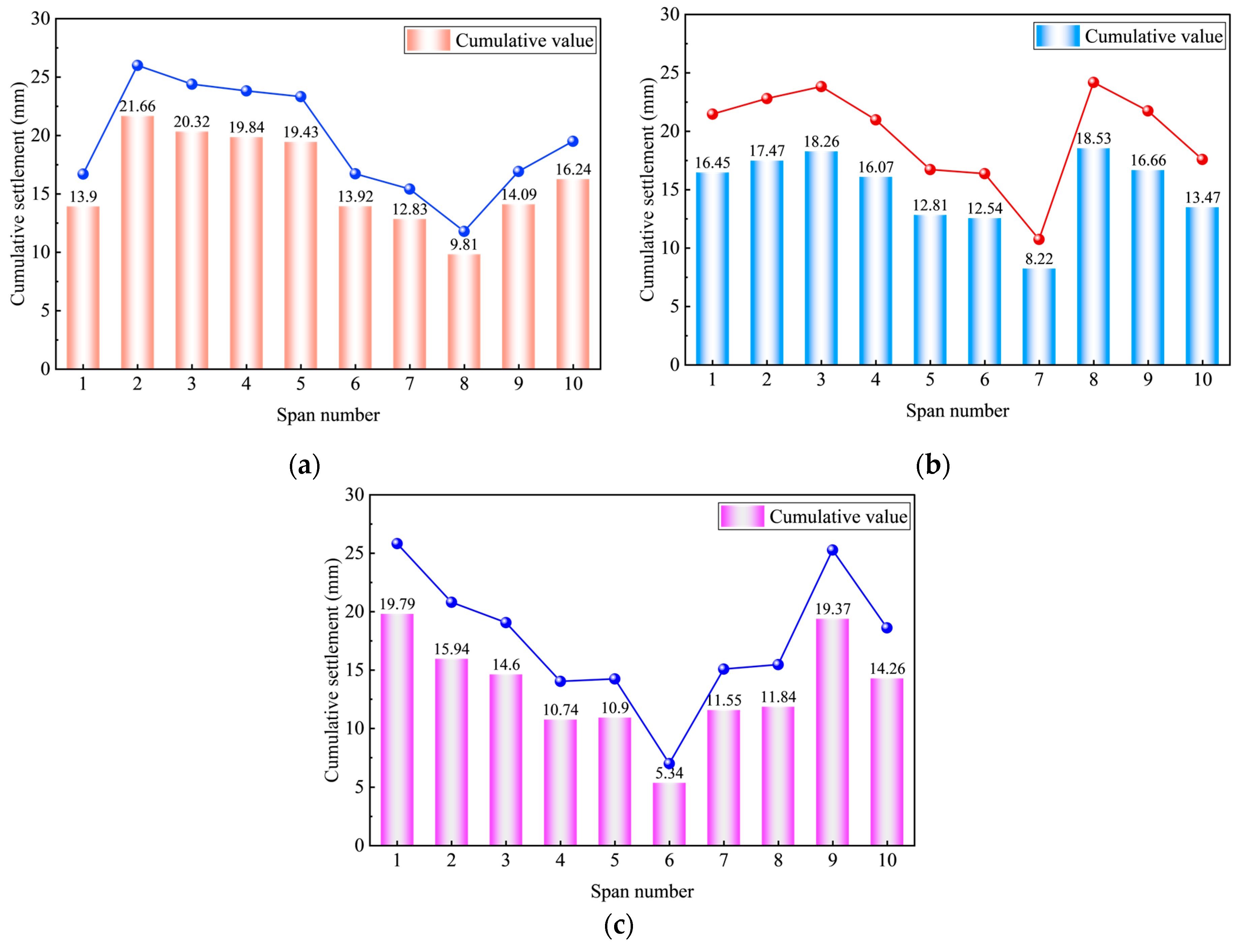
To investigate the longitudinal distribution of settlement, the one-year cumulative settlement recorded at monitoring points along the north side, the bridge deck centerline, and the south side was analyzed, as shown in Figure 4. The results show that all three rows exhibit a consistent “dish-shaped” distribution, characterized by relatively smaller settlement in the middle spans and larger settlement toward both ends of the bridge.
For the north-side measurement points, the cumulative settlement reaches its maximum value of 21.66 mm at span 2 and then decreases progressively along the bridge, reaching a minimum of 9.81 mm at span 8. The settlement then increases again toward span 10, reaching 16.24 mm. Along the bridge deck centerline, the cumulative settlement peaks at 18.26 mm at span 3, decreases to a minimum of 8.22 mm at span 7, and then rises sharply to 18.53 mm at span 8 before gradually decreasing toward span 10. The distribution pattern of the south-side measurement points is similar to the other two rows. Significant settlements of 19.79 mm and 19.37 mm occur at spans 1 and 9, respectively, while the minimum value of 5.34 mm appears at span 6, representing the smallest settlement across the entire bridge. Overall, the longitudinal settlement patterns of the three measurement rows show strong consistency. A distinct settlement trough is observed in the middle region (spans 6~7), while localized settlement concentration occurs at the edge spans (spans 2~3 and 8~9). These results indicate that the bridge has experienced pronounced differential settlement along its longitudinal direction.
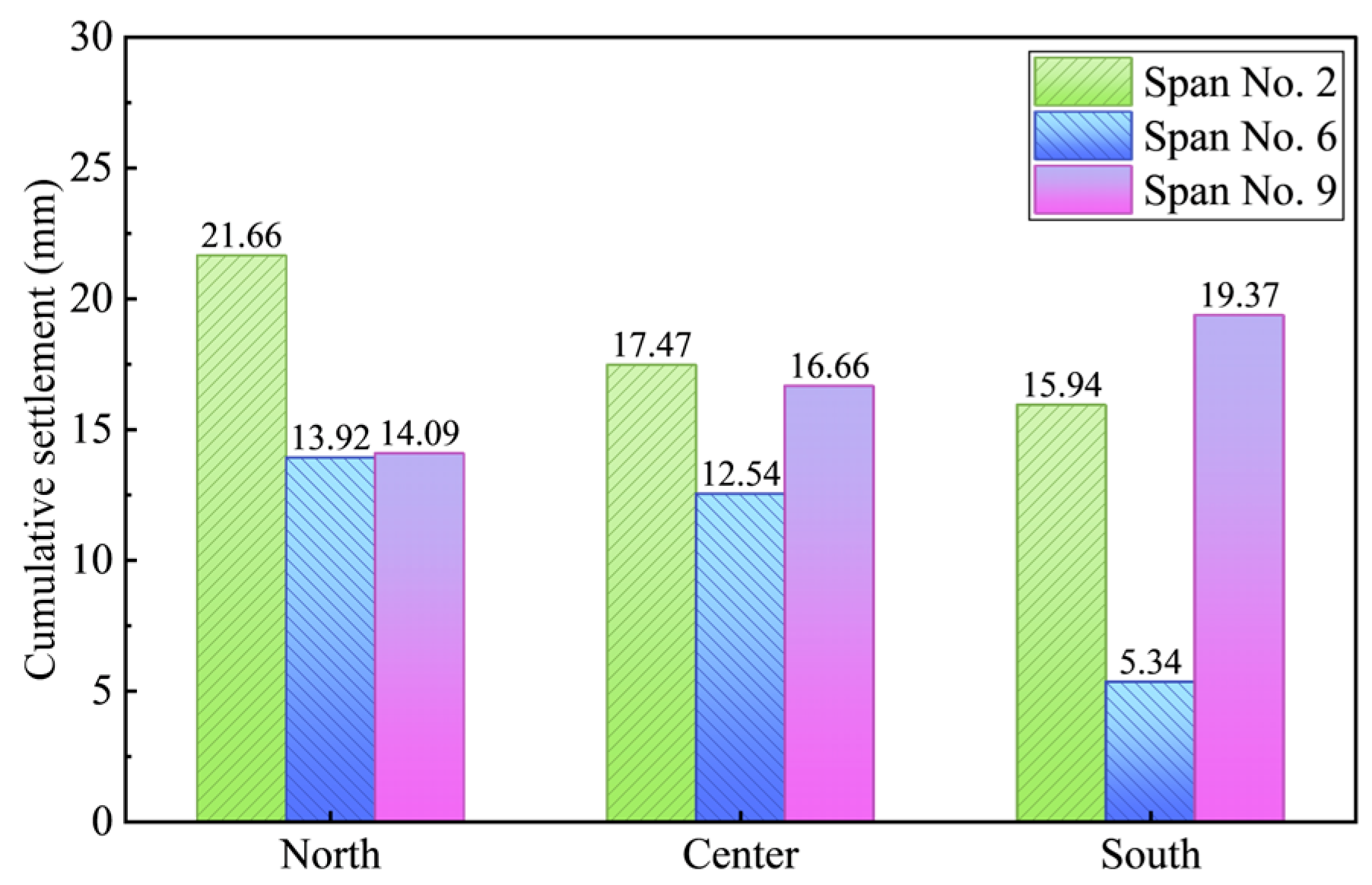
To examine the transverse distribution of settlement, the annual cumulative settlement at the mid-span (span 6) and two edge spans (spans 2 and 9) was analyzed, as shown in Figure 5. At span 2, the north-side measurement point recorded the largest cumulative settlement of 21.66 mm. The settlement decreased toward the centerline and south side, with values of 17.47 mm and 15.94 mm, respectively, showing a trend of gradually decreasing settlement from north to south. At span 6, the cumulative settlement values on the north side and centerline were 13.92 mm and 12.54 mm, while the south side settlement was only 5.34 mm. This pronounced transverse difference indicates that the foundation on the south side is relatively stable and exhibits limited settlement. In contrast, span 9 shows an opposite pattern, with the south side experiencing the largest settlement of 19.37 mm, followed by the centerline at 16.66 mm and the north side at 14.09 mm, reflecting a decreasing trend from south to north. Considering the results from all three spans, it is evident that the transverse settlement distribution exhibits clear lateral bias. The cumulative settlement at the centerline generally lies between the values recorded on both sides, whereas the side with the larger settlement varies between spans. This behavior indicates significant differences in foundation conditions and superstructure stiffness in both the longitudinal and transverse directions. These variations should be given particular attention in future maintenance and structural strengthening design.
The spans of a continuous arch bridge interact with each other, and differential deformation along the longitudinal direction can significantly influence the internal force distribution among spans, thereby affecting structural serviceability and safety. The bridge deck has already experienced approximately 20 mm of uneven settlement, leading to traffic closure. Based on the observed settlement trends, continued deformation is expected if no strengthening measures are implemented, which may ultimately threaten the stability of the entire bridge. Therefore, it is necessary to investigate the structural performance under differential settlement, develop an appropriate strengthening scheme, and verify its feasibility.

3. Numerical Analysis of Settlement Behavior of Corrugated Steel Pipe Arch Bridges Under Differential Foundation Settlement

3.1. Finite Element Model Development

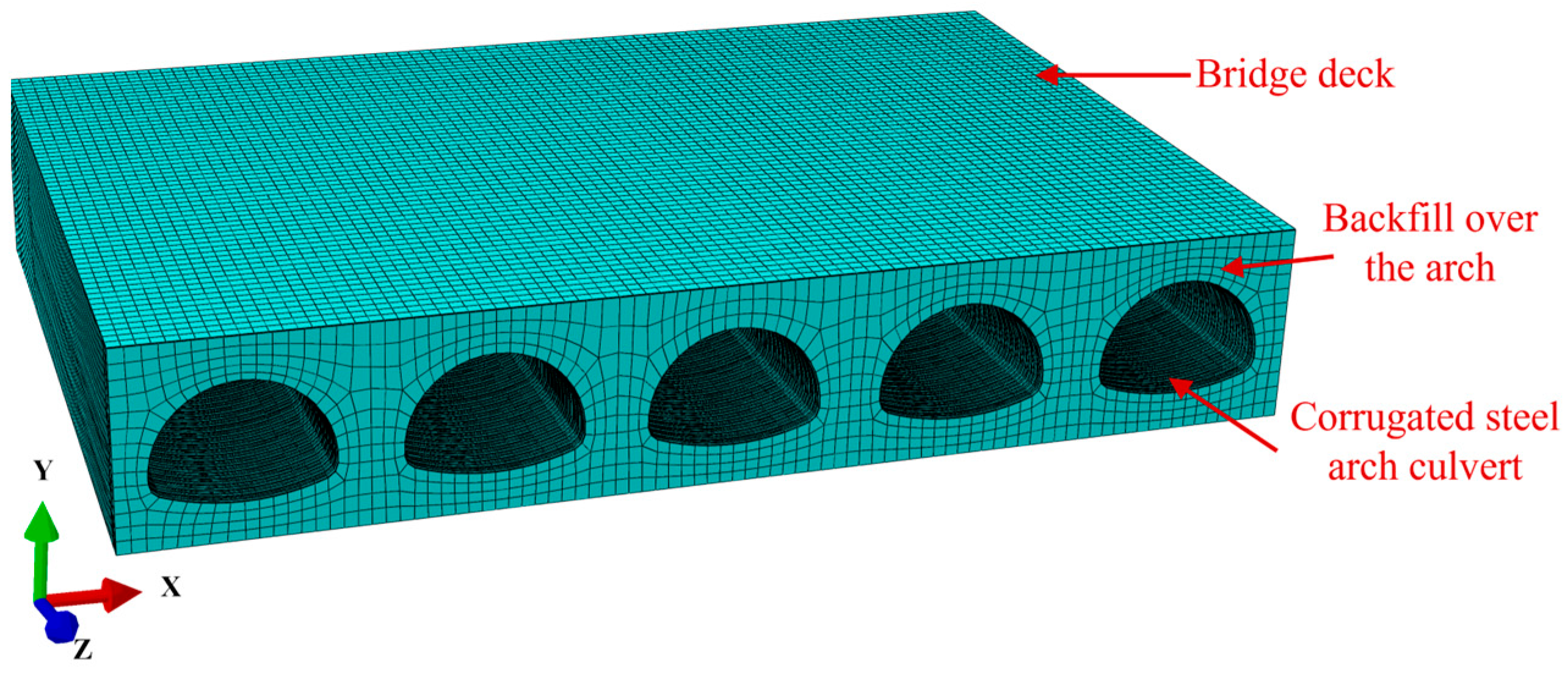
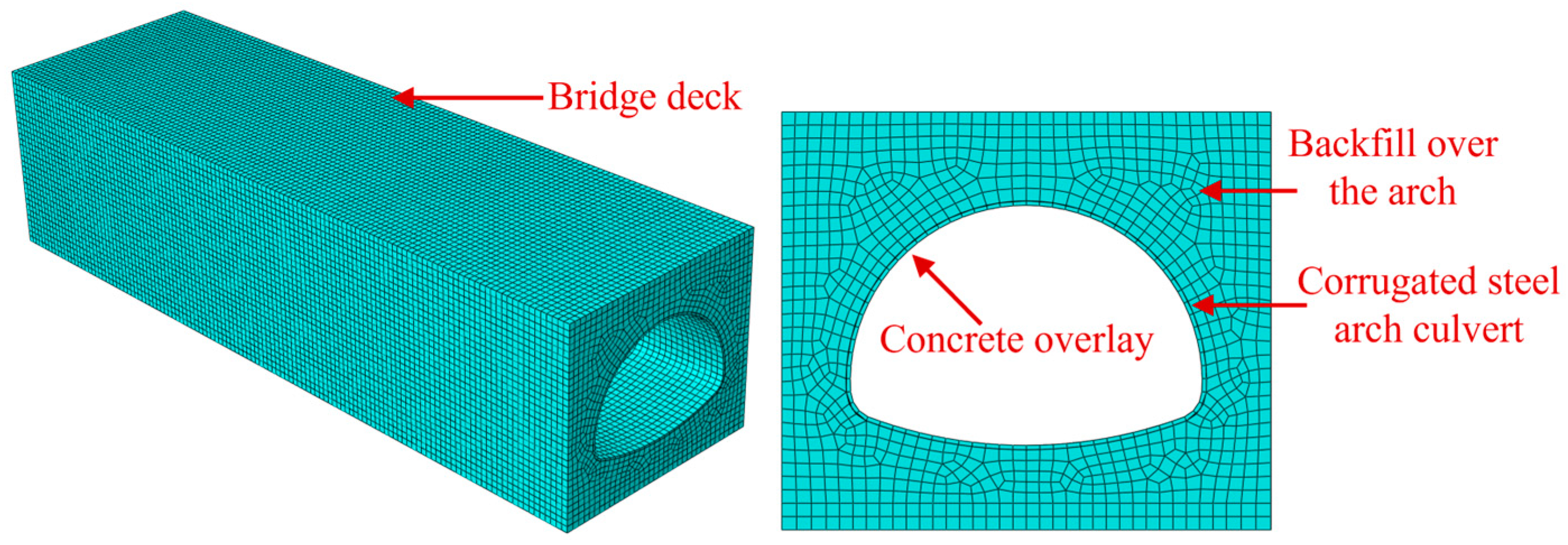
Due to the large size of the actual bridge, full-scale model testing is not feasible, and deformation data obtained from a limited number of measurement points cannot fully represent the structural response. Therefore, a detailed finite element model of the bridge was developed using ABAQUS 2019 to conduct a refined numerical analysis. Because the bridge is geometrically symmetrical, spans 1~5 were selected for simulation to reduce computational demand. The finite element model is shown in Figure 6, with a total length of 55 m (5 × 11 m) and a width of 36.5 m, consistent with the dimensions of the actual structure.
To accurately simulate the influence of the backfill above the arch and the cushion soil below the arch on the mechanical behavior of the corrugated steel pipe arch, the backfill height above the pipe was set to 2 m, and the cushion soil thickness below the pipe was set to 1.8 m, based on the design parameters and site investigation results. Because the bridge deck is relatively wide and the self-weight of the deck slab and pavement layer is considerable, a 30 mm thick concrete deck slab was modeled above the backfill layer to account for its structural effects.

3.1.1. Material Properties

According to the bridge design specifications, the corrugated steel pipes are made of Q345 steel with an elastic modulus of 2.06 × 10⁵ MPa, a Poisson’s ratio of 0.3, and a unit weight of 78.0 kN/m3. The mechanical properties of soil are influenced by multiple random factors, and it is impractical to fully account for all these effects in a finite element model. Therefore, to simplify the analysis, the soil was modeled using the Duncan–Chang nonlinear elastic hyperbolic model, following the study of Maleska et al. [22]. The material parameters adopted in the analysis include an elastic modulus of 100 MPa, a Poisson’s ratio of 0.25, and a unit weight of 19 kN/m3. The concrete bridge deck consists of C50 concrete, which has an elastic modulus of 3.5 × 10⁴ MPa, a Poisson’s ratio of 0.2, and a unit weight of 25 kN/m3. Bridge health evaluation shows that the structure has not reached its ultimate limit state; therefore, the entire system is assumed to behave elastically.

3.1.2. Element Types and Mesh Schemes

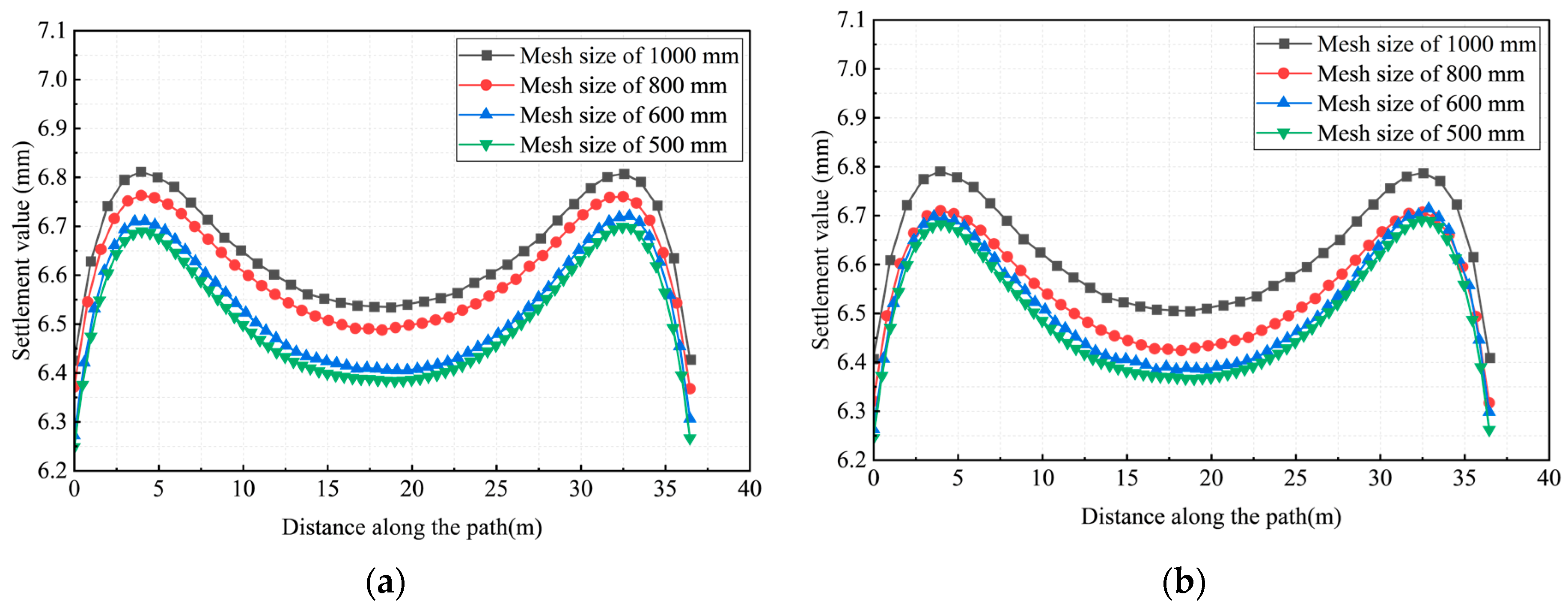
The corrugated steel plates have dimensions of 200 mm × 55 mm × 6 mm (wavelength × corrugation height × wall thickness). Because the wall thickness is much smaller than the overall structural dimensions, the corrugated steel pipe arch is modeled using S4R shell elements. To account for the interaction between the backfill, the bridge deck, and the steel pipe arch, and given the relatively large thickness of the backfill above the pipe, both the concrete deck and the backfill are modeled using C3D8R solid elements. Given the large scale of the finite element model of the entire bridge, a relatively coarse mesh was adopted for the concrete structures and the backfill above the arch in order to balance computational efficiency and numerical accuracy. To more accurately capture the stress characteristics and deformation behavior of the corrugated steel pipe arch, local mesh refinement was applied in this region. To determine an appropriate mesh size, a mesh sensitivity analysis was conducted. The deformation values at the bridge deck located above the pipe crown of the first and third spans were compared for mesh sizes of 1000 mm, 800 mm, 600 mm, and 500 mm, respectively, as shown in Figure 7. The results indicate that when the mesh size is reduced to 600 mm, the settlement response becomes much less sensitive to further mesh refinement, and the numerical results gradually converge. Considering both computational accuracy and efficiency, the mesh size for the concrete structures and the backfill above the arch was finally set to 600 mm. A finer mesh was adopted for the corrugated steel pipe arch, with the element size taken as one-third of the overall mesh size, i.e., 200 mm.

3.1.3. Interaction Simulation

Maleska et al. [22] performed extensive research on the interaction between soil and corrugated steel structures. Their studies demonstrated that the interface can be effectively simulated using normal hard contact and tangential Coulomb friction. This approach has been validated through experimental and numerical comparisons. Following their recommendations, the same contact formulation is adopted in this study to model the interfaces between the concrete deck and the backfill, as well as between the backfill and the corrugated steel pipe arch. A Coulomb friction coefficient of 0.2 is used.

3.1.4. Loads and Boundary Conditions

To realistically represent the in-service conditions of the bridge, fixed constraints are applied at both ends of the model to restrict translational and rotational degrees of freedom. Because the numerical model represents half of the full structure, symmetry constraints are applied at the mid-span. When differential foundation settlement is not considered, the translational degrees of freedom in the x, y, and z directions at the base of the model are fully restrained. When differential settlement is included, the translational degree of freedom in the vertical direction is released, and the prescribed settlement values are applied to the base nodes. Since self-weight constitutes a major portion of the total load for this type of structure, gravity loading is applied using a gravitational acceleration of g = 9800 mm/s2.

3.2. Structural Deformation Characteristics Under Ideal Foundation Conditions

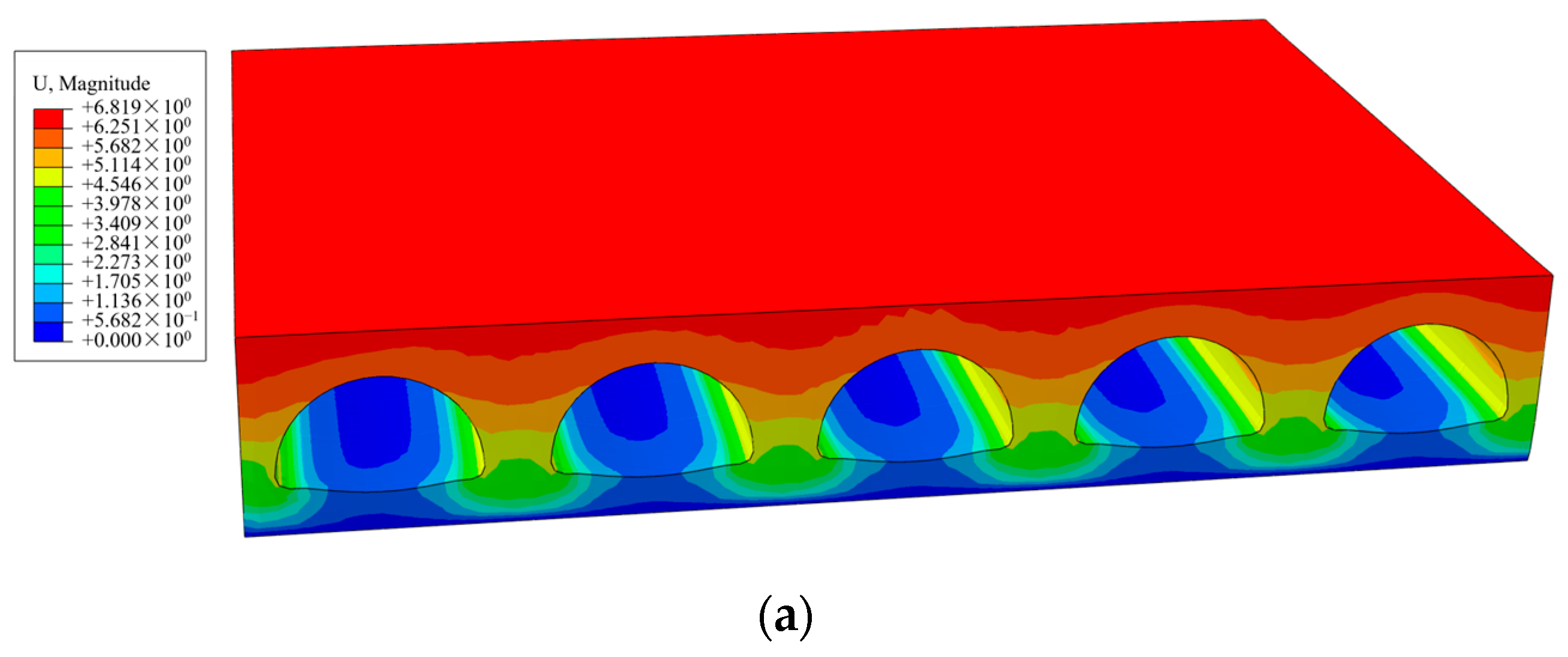
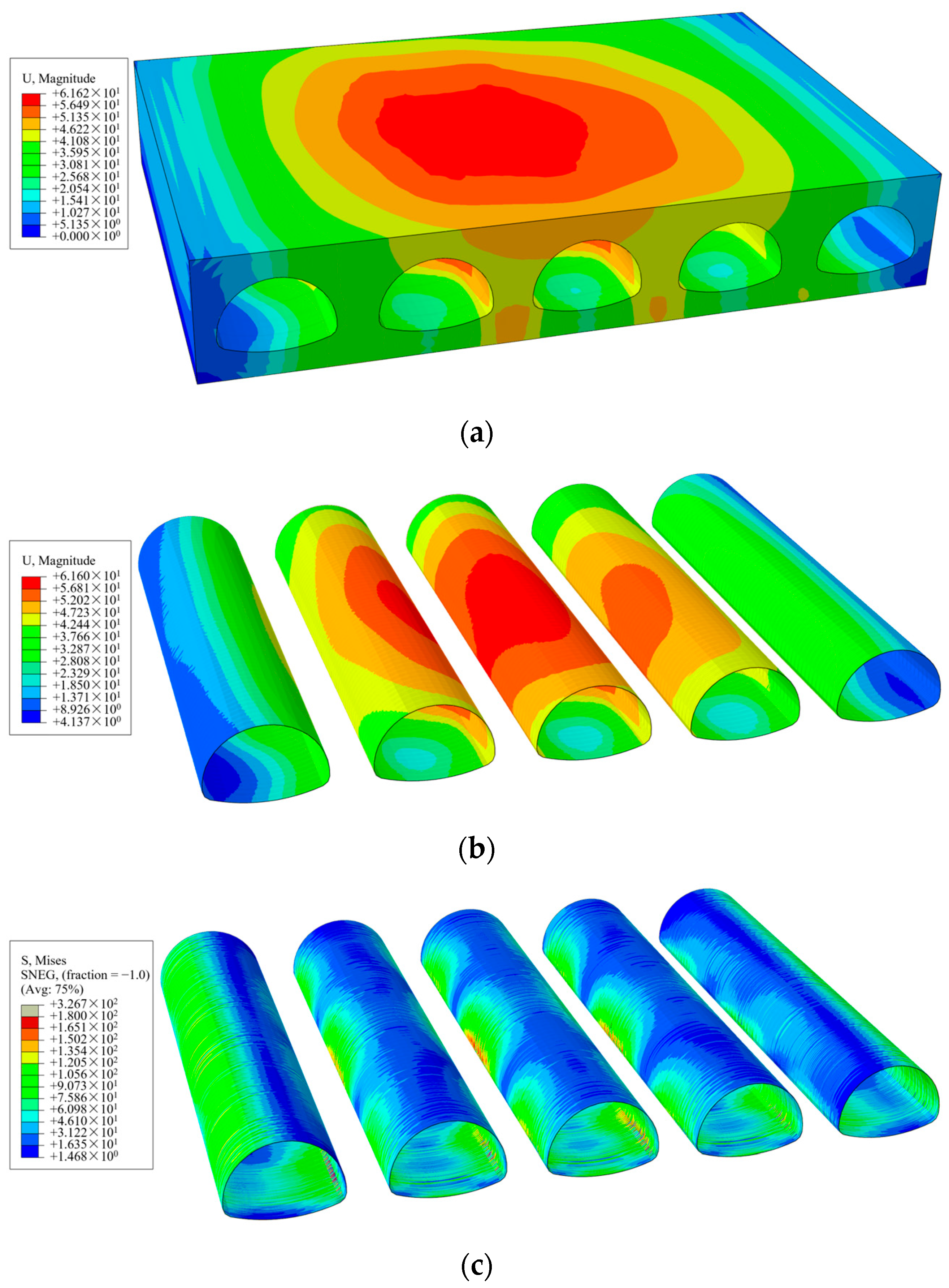
The deformation pattern of the structure and the stress distribution in the corrugated steel pipe under self-weight are shown in Figure 8. As illustrated in Figure 8a, the displacement field of the upper backfill exhibits a clear vertical gradient. The largest displacement, approximately 6.8 mm, occurs near the ground surface. The displacement decreases progressively toward the arch crown, where a distinct settlement basin forms. The displacement at the base of the foundation is nearly zero, indicating that self-weight-induced settlement is primarily concentrated within the upper backfill and the region above the arch crown.
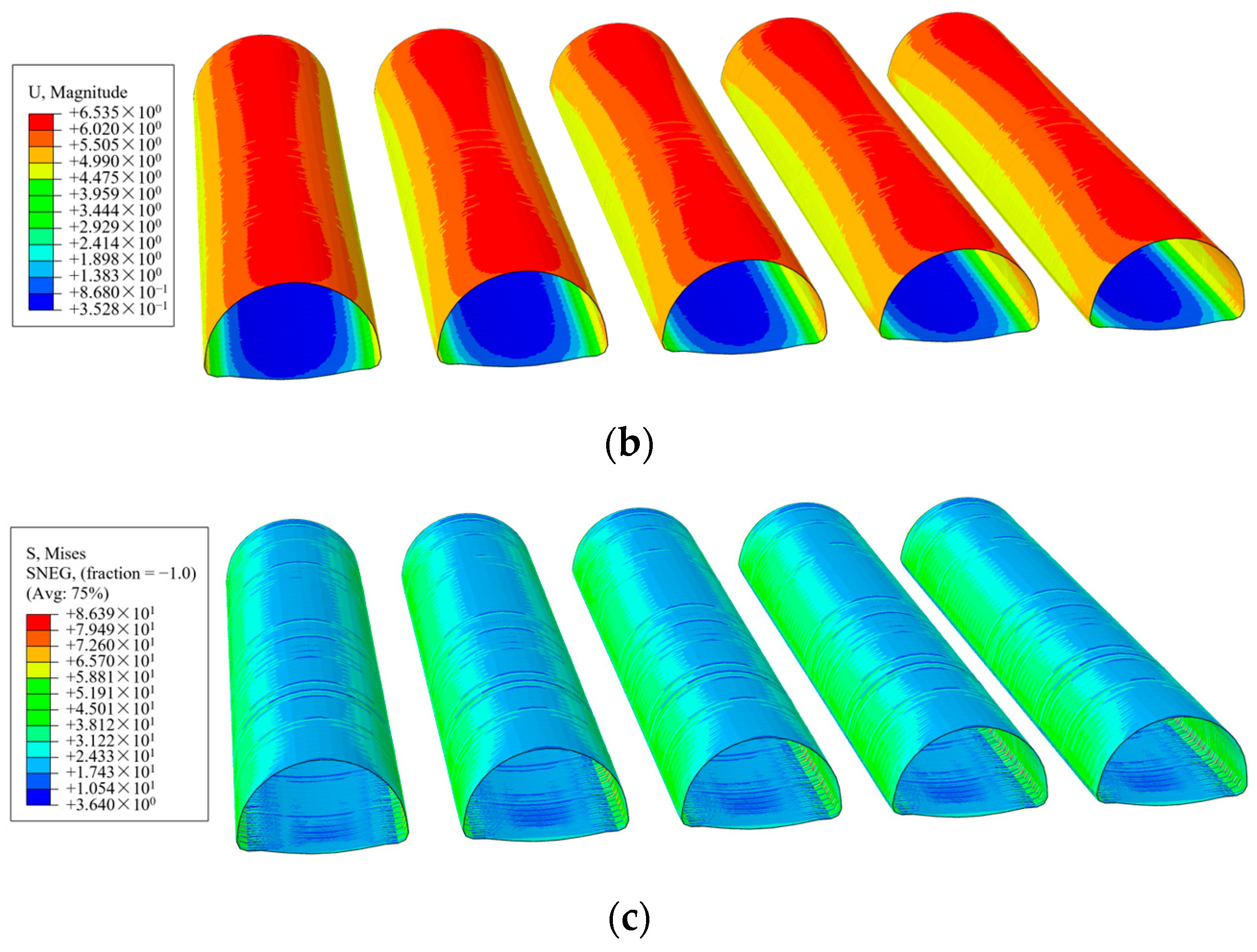
Figure 8b shows that the corrugated steel pipe undergoes downward deflection. The maximum displacement occurs at the arch crown, reaching about 6.5 mm. The displacement decreases smoothly along the arch toward the haunches and the sidewalls, with the displacement near the arch foot and bottom plate being only about 0.3 mm. The overall deformation pattern is continuous, and no local buckling or abrupt deformation is observed.
The equivalent stress contours in Figure 8c indicate that the longitudinal Mises stress distribution is relatively uniform. However, significant variations appear along the circumferential direction. Stress concentrations occur at the arch foot and arch haunch, where the maximum equivalent stress reaches approximately 86 MPa. In contrast, the arch crown and pipe invert exhibit much lower stress levels, falling within the blue-green region of the contour plot.

3.3. Structural Deformation Characteristics Under Differential Foundation Settlement

To investigate the structural mechanical response and deformation characteristics under differential foundation settlement, the annual cumulative settlement values corresponding to spans 1–5 in Table 1 were applied to the bottom surface of the foundation in the numerical model. Considering that, in the monitoring program, the settlement measured at a given point is used to represent the settlement within the surrounding monitored area, an analogous approach was adopted in the finite element model: the model base was partitioned into multiple discrete regions, and the corresponding vertical settlement value was imposed on each region.
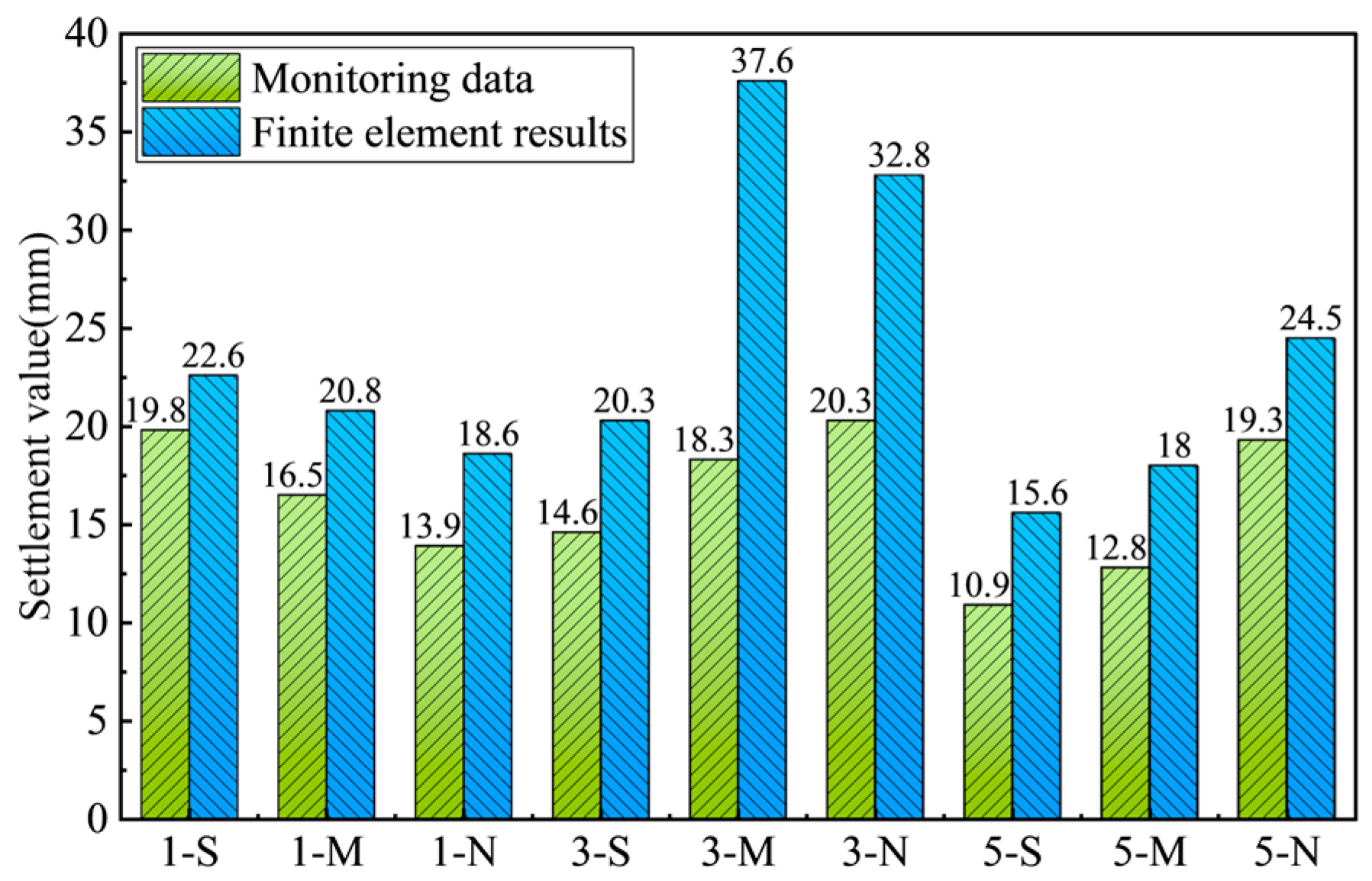
To verify the effectiveness of this method, the finite element results were extracted at locations coincident with the field monitoring points in spans 1, 3, and 5. A comparison between the field monitoring data and the finite element results is presented in Figure 9. In the figure, 1-S denotes the monitoring point on the south side of span 1, 1-M denotes the monitoring point at the deck centerline of span 1, and 1-N denotes the monitoring point on the north side of span 1. As shown in Figure 9, except for relatively large discrepancies at points 3-M and 3-N, the maximum deviation between the finite element predictions and the measured data at the other monitoring points is less than 30%. Therefore, the proposed modeling approach can be considered capable of effectively capturing the settlement characteristics of the structure under differential foundation settlement.
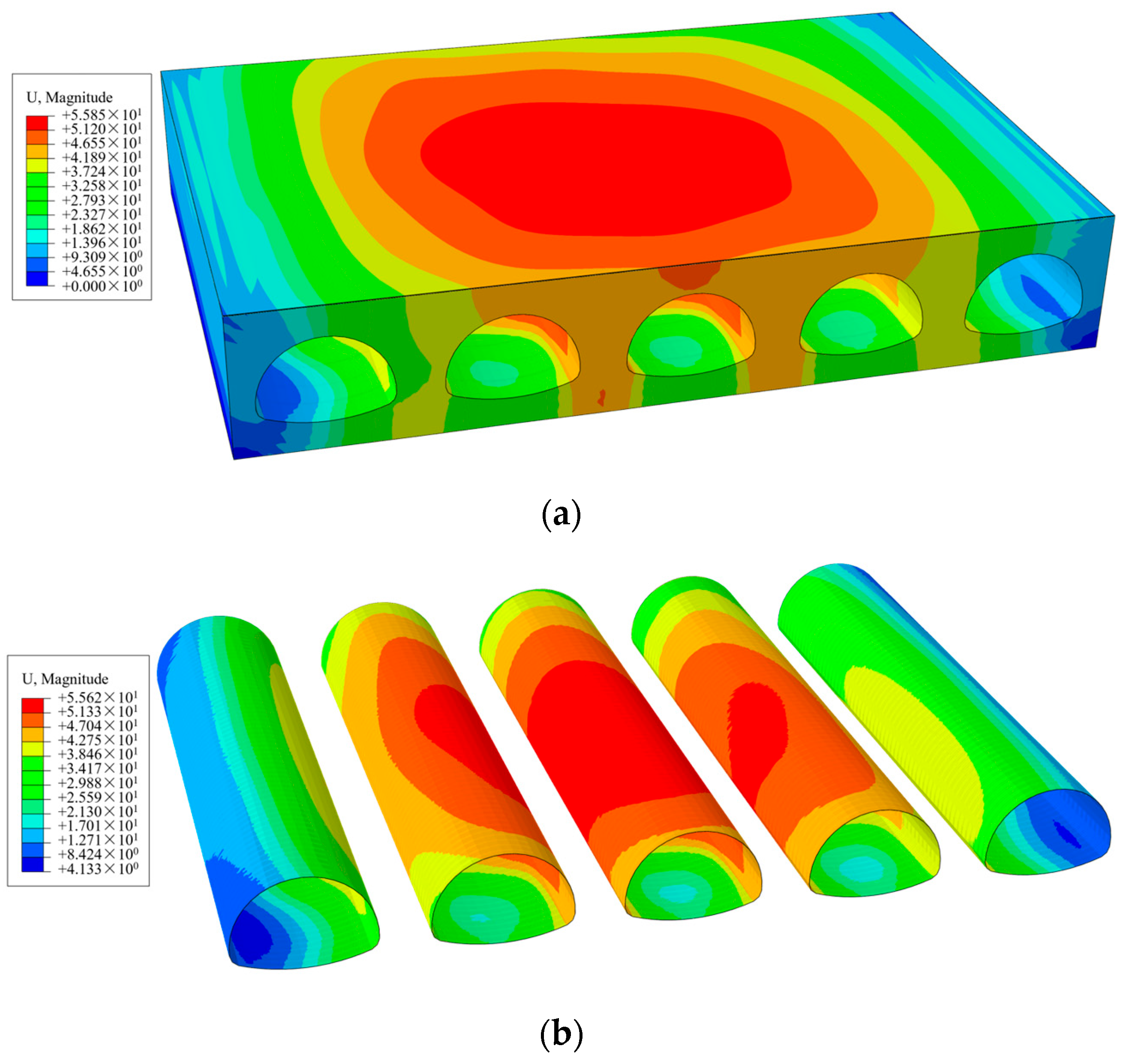
To examine the structural stress and deformation behavior under differential foundation settlement, the annual cumulative settlement values for spans 1~5 listed in Table 1 were applied to the bottom boundary of the foundation. The resulting deformation and stress distributions under the combined action of self-weight and differential settlement are shown in Figure 10.
As illustrated in Figure 10a, the displacement field of the backfill above the arch exhibits a pronounced dish-shaped pattern. The central settlement zone is wider and deeper, with a maximum vertical displacement of 55.85 mm. Clear longitudinal variation is observed, indicating that the non-uniform foundation settlement induces global bending deformation in the bridge structure.
Figure 10b shows that the deformation characteristics vary significantly among the five corrugated steel pipes due to this global bending. The edge span experiences relatively small deformation, while the central span undergoes much larger displacement. Along the pipe axis, the deformation exhibits a periodic fluctuation pattern, with the maximum displacement occurring near the mid-length of the pipe and reaching approximately 50 mm. The displacement decreases markedly toward both pipe ends. Along the circumferential direction, the largest deformation appears at the pipe crown and gradually reduces toward the invert.
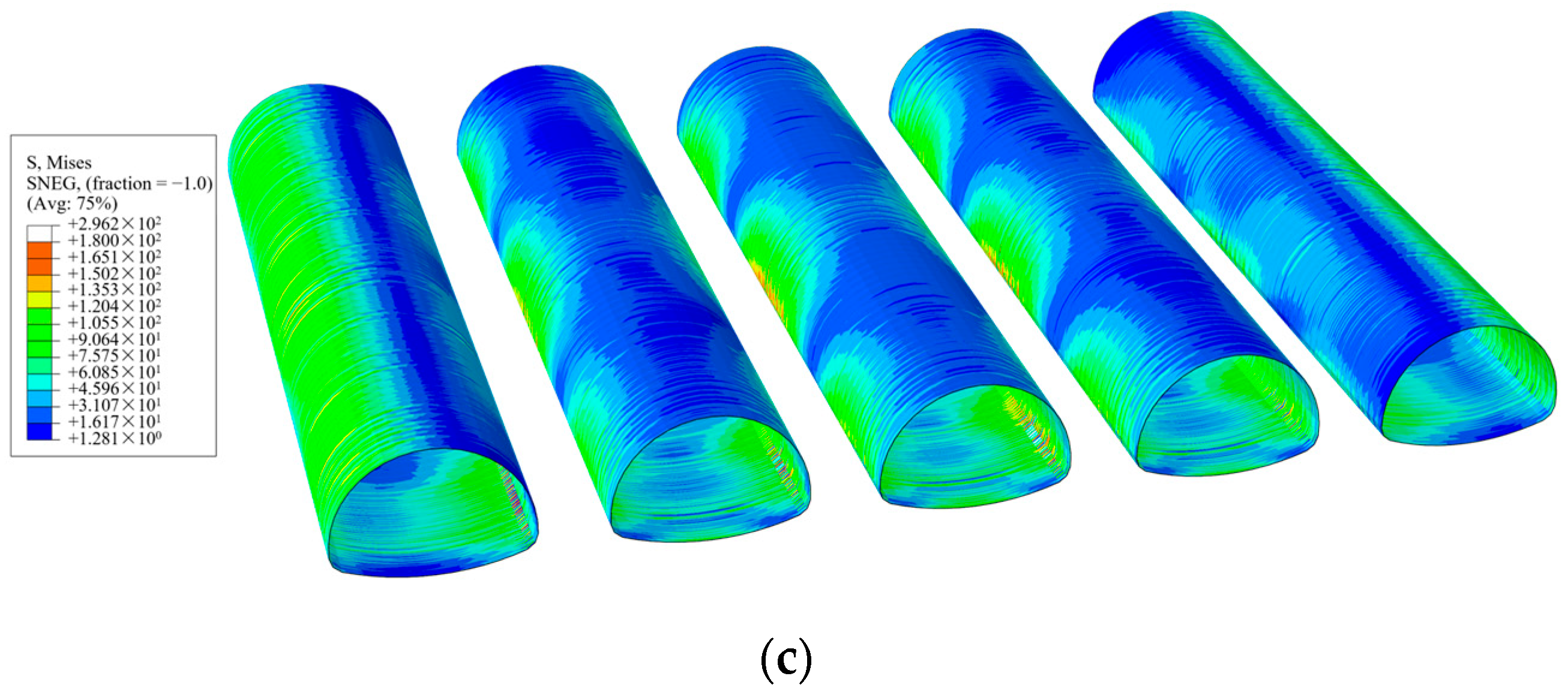
As shown in Figure 10c, the stress distribution along both the circumferential and longitudinal directions becomes highly non-uniform under differential settlement. Significant stress concentrations develop at the arch haunches and the arch foot within the regions of large settlement. The maximum equivalent stress reaches 296.20 MPa, which is markedly higher than the value of approximately 86.39 MPa observed under self-weight alone in Figure 8.
A comparison between Figure 8 and Figure 10 confirms that differential foundation settlement substantially increases structural deformation and changes the stress distribution from a relatively uniform pattern to one dominated by localized concentrations. These results demonstrate that differential settlement poses a considerable threat to the long-term safety of corrugated steel pipe arch structures. Therefore, timely strengthening measures are necessary once such a settlement is detected in practice.

3.4. Structural Deformation Characteristics Under Vehicle Loading

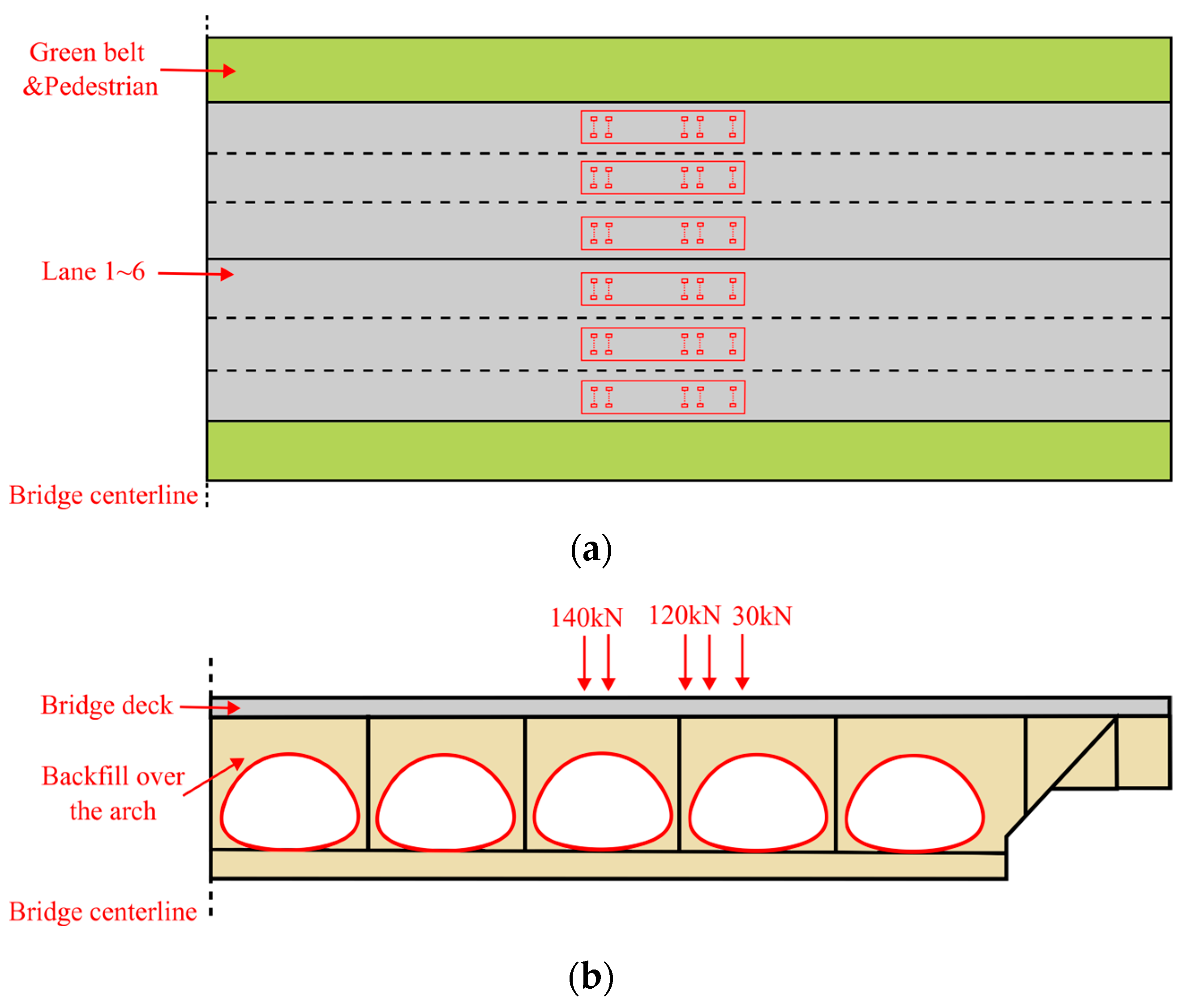
To evaluate the structural behavior under vehicle loading, the bridge was sub-jected to vehicular loads following the relevant standard [33]. The bridge carries six traffic lanes in two directions; therefore, six standard design vehicles were placed transversely. Longitudinally, the rear-wheel centerlines were positioned above the arch crown of span 3, which corresponds to the location of maximum settlement, as shown in Figure 11. Since the objective of this analysis is to simulate the most unfavorable load condition, lane reduction factors were not applied.
The deformation and stress distributions under the combined effects of vehicle loading and differential settlement are presented in Figure 12. The overall deformation pattern is similar to that observed under differential settlement alone; however, both displacement and stress levels increase markedly when vehicle load is included. The maximum settlement of the backfill reaches 61.62 mm, while the maximum deformation of the corrugated steel pipe reaches 61.60 mm. The peak stress increases to 326.70 MPa. Compared with the condition involving only self-weight and differential foundation settlement (Figure 10), vehicle loading has no significant influence on the distribution pattern of structural deformation, but it does lead to a moderate increase in deformation magnitude. The maximum increment in deformation is less than 10%, and this effect is more pronounced at the pipe crown than at the pipe invert. This response differs markedly from the influence of differential foundation settlement, which dominates the overall deformation behavior of the structure.

3.5. Comparative Analysis of Structural Response Under Different Loading Conditions

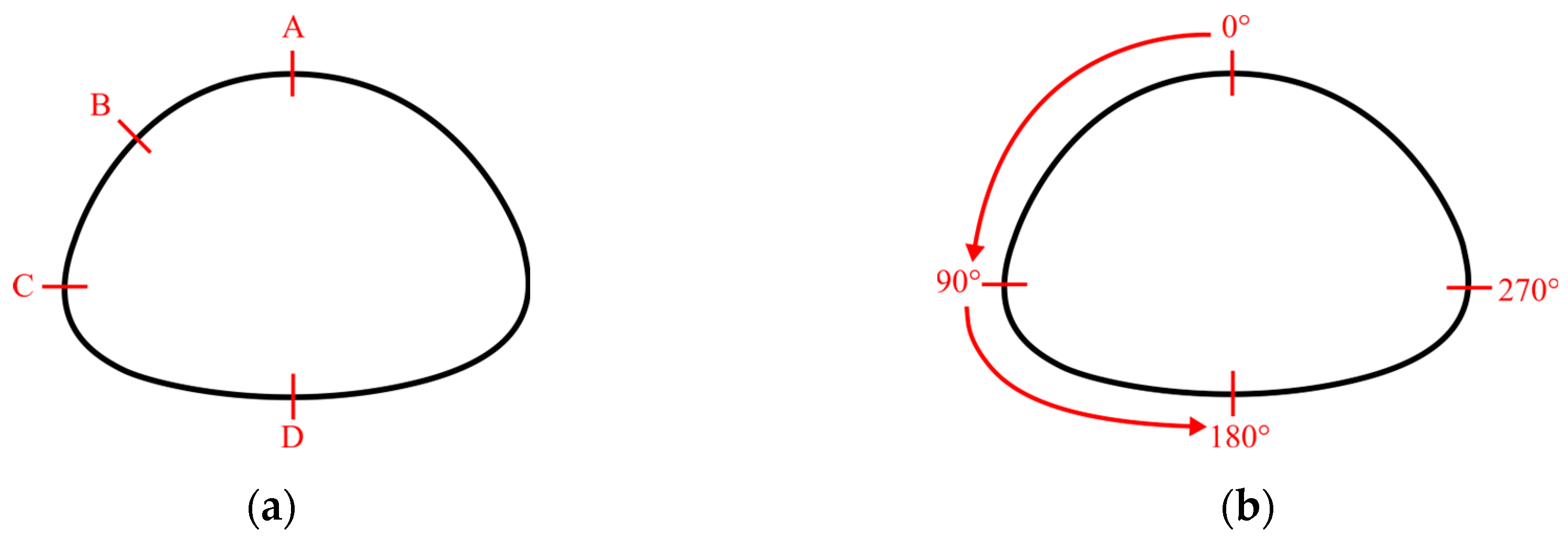
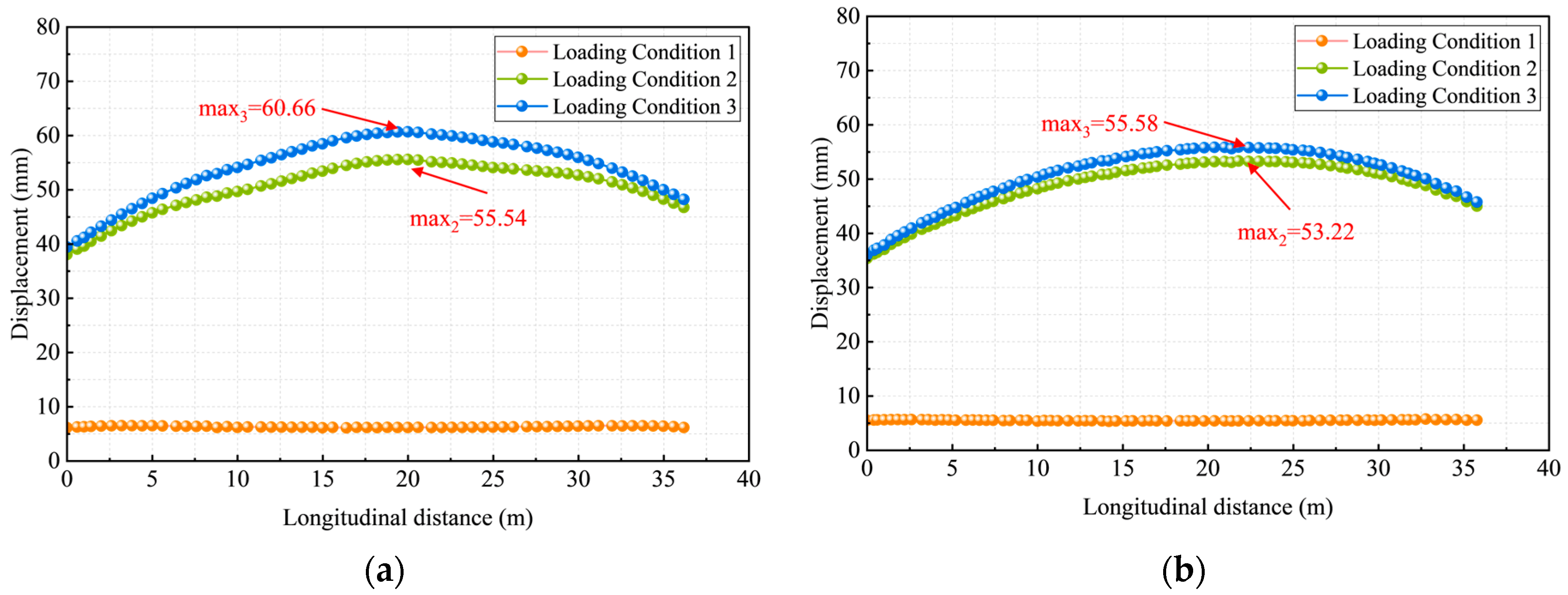
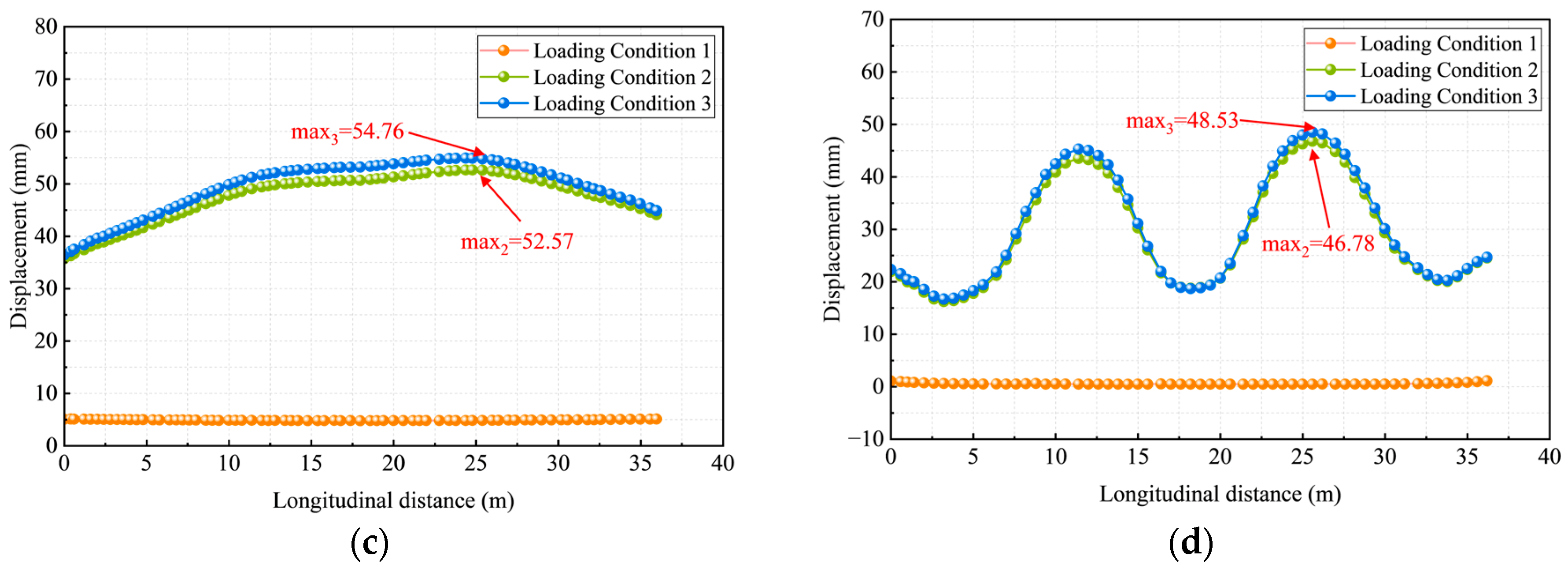
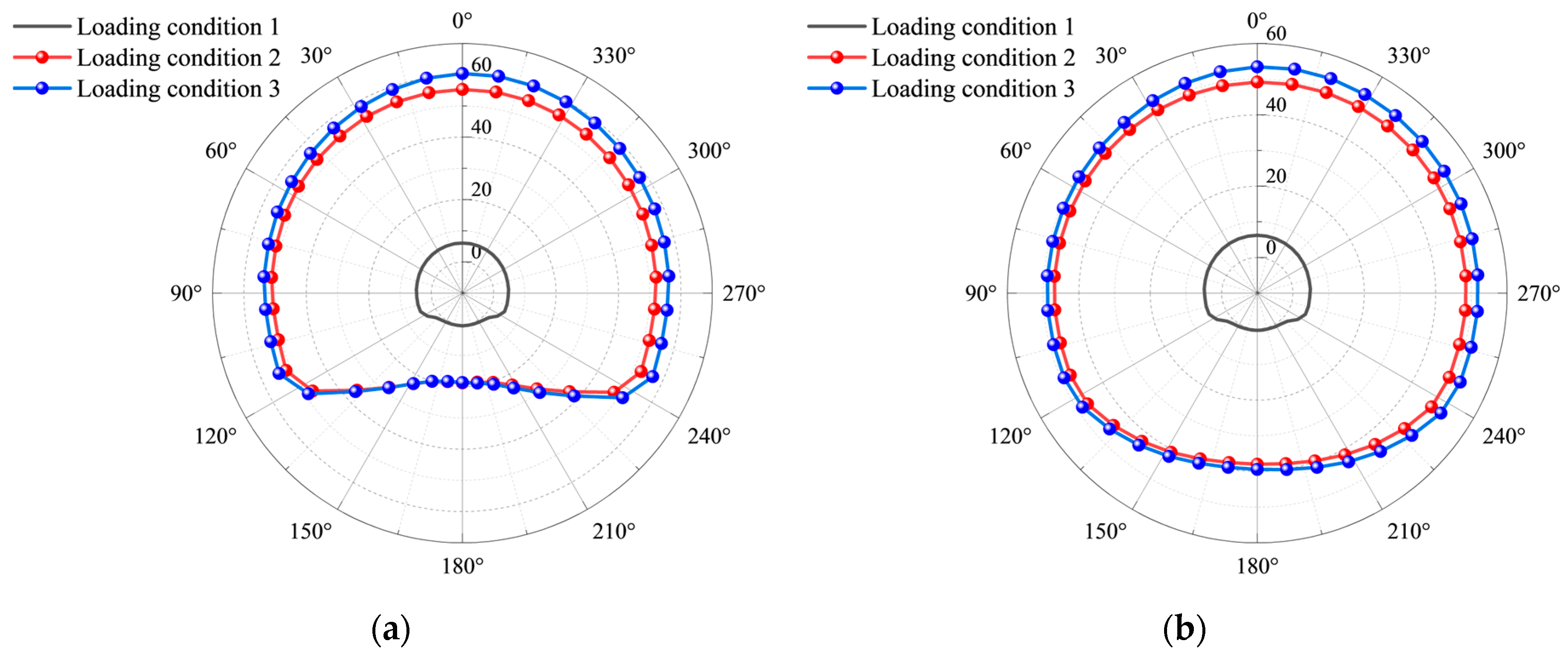
To compare the deformation behavior of the corrugated steel pipe under different loading conditions, four key cross-sectional locations were selected, as shown in Figure 13a: the crown (A), the 45-degree side (B), the side (C), and the invert (D). Deformation data were extracted along the pipe axis. In addition, circumferential deformation was obtained along the path shown in Figure 13b for both the mid-span section and the quarter-span section. For ease of comparison and to control variables, the mid-span corrugated steel pipe under three loading conditions was selected for analysis. Loading condition 1 corresponds to an ideal foundation condition, under which the structure is subjected only to self-weight. Loading condition 2 corresponds to a differential foundation settlement condition, under which the structure is subjected only to self-weight. Loading condition 3 corresponds to a differential foundation settlement condition, under which the structure is subjected to both self-weight and vehicle loads.
The axial deformation distributions for each section are presented in Figure 14. Under ideal foundation conditions (loading condition 1), the displacement curves for all sections are nearly horizontal, with maximum deformations of approximately 5~6 mm. The axial variation is mild, indicating that the structure experiences only small overall deformation. In contrast, under loading conditions 2 and 3, differential foundation settlement governs the deformation mode. The displacement curves exhibit clear arch-shaped or wave-like profiles, with peak deformation occurring near the mid-span. The maximum displacement at the crown reaches 55.54 mm and 60.66 mm under conditions 2 and 3, respectively. The approximately 9 percent increase under condition 3 indicates that vehicle loading further amplifies deformation at the crown.
The maximum deformation at the 45-degree side and the side sections is slightly smaller than that at the crown, with an increase of roughly 4 percent from condition 2 to condition 3. This suggests that the vehicle load has a reduced amplification effect on lateral deformation. The invert section shows the smallest peak displacement, at 46.78 mm and 48.53 mm for conditions 2 and 3, and displays a bimodal distribution. This indicates that deformation at the pipe invert is primarily governed by the differential settlement pattern of the foundation, with limited influence from vehicle loading. Overall, the comparisons among the four cross-sections show that differential foundation settlement is the dominant factor causing large structural deformation, while vehicle load primarily increases deformation at the crown and upper regions. Along the pipe axis, deformation decreases progressively from the crown to the invert.
The circumferential deformation distributions at the mid-span and quarter-span sections under different loading conditions are shown in Figure 15. Under ideal foundation conditions, the upper half of the corrugated steel pipe experiences larger settlement than the lower half, resulting in a “scallop-shaped” deformation pattern. Under loading conditions 2 and 3, circumferential deformation increases substantially, with peak values reaching up to ten times those under ideal foundation conditions. At the mid-span section, the deformation pattern under differential settlement remains similar to that under ideal conditions, with larger deformation at the crown and smaller deformation at the invert. At the quarter-span section, the upper deformation resembles that at the mid-span, but deformation at the lower part increases significantly, producing an approximately circular deformation profile.
This response is consistent with the settlement data in Table 1, which shows that the mid-span experiences less settlement than the end spans. As a result, the foundation provides additional vertical support to the invert at the mid-span. These observations demonstrate that differential foundation settlement strongly influences the deformation characteristics of the bridge. Moreover, different settlement patterns lead to distinct structural response mechanisms, which must be considered in structural evaluation and safety assessment.

4. Evaluation of the Structural Reinforcement Scheme

As discussed earlier, differential foundation settlement has caused considerable deformation of the corrugated steel pipe and pronounced uneven settlement of the bridge deck, which poses a serious threat to the serviceability and safety of the structure. Reinforcement is therefore required. For bridges of this type, reinforcement strategies generally fall into two categories: foundation strengthening and structural strengthening. Because this bridge is located in a mining subsidence area with complex geological conditions, site investigations indicate that foundation reinforcement is not feasible. Considering similar engineering applications, as well as reinforcement cost and expected performance, a strengthening scheme using a 100 mm thick internal concrete lining for the corrugated steel pipe was selected.

4.1. Reinforcement Scheme and Numerical Analysis Method

To evaluate the effectiveness of the reinforcement scheme, both the original bridge model and the strengthened model were developed using the numerical analysis approach described earlier. A comparative analysis was conducted to assess the deformation characteristics of the two models under differential foundation settlement. Previous results showed that the third span experiences the largest settlement; therefore, this span was selected for detailed analysis.
The strengthened model adopts the same material properties, element types, mesh configuration, and interface definitions as the original model. The added concrete lining is modeled with C3D8R solid elements. The interface between the concrete lining and the corrugated steel pipe is modeled using a tie constraint. The finite element model incorporating the reinforcement layer is shown in Figure 16. As demonstrated in previous sections, differential foundation settlement has the predominant influence on structural behavior, while vehicle loading has a comparatively minor effect. Therefore, vehicle loads are omitted in this analysis, and only the effects of differential foundation settlement and structural self-weight are considered.

4.2. Analysis of Reinforcement Effectiveness

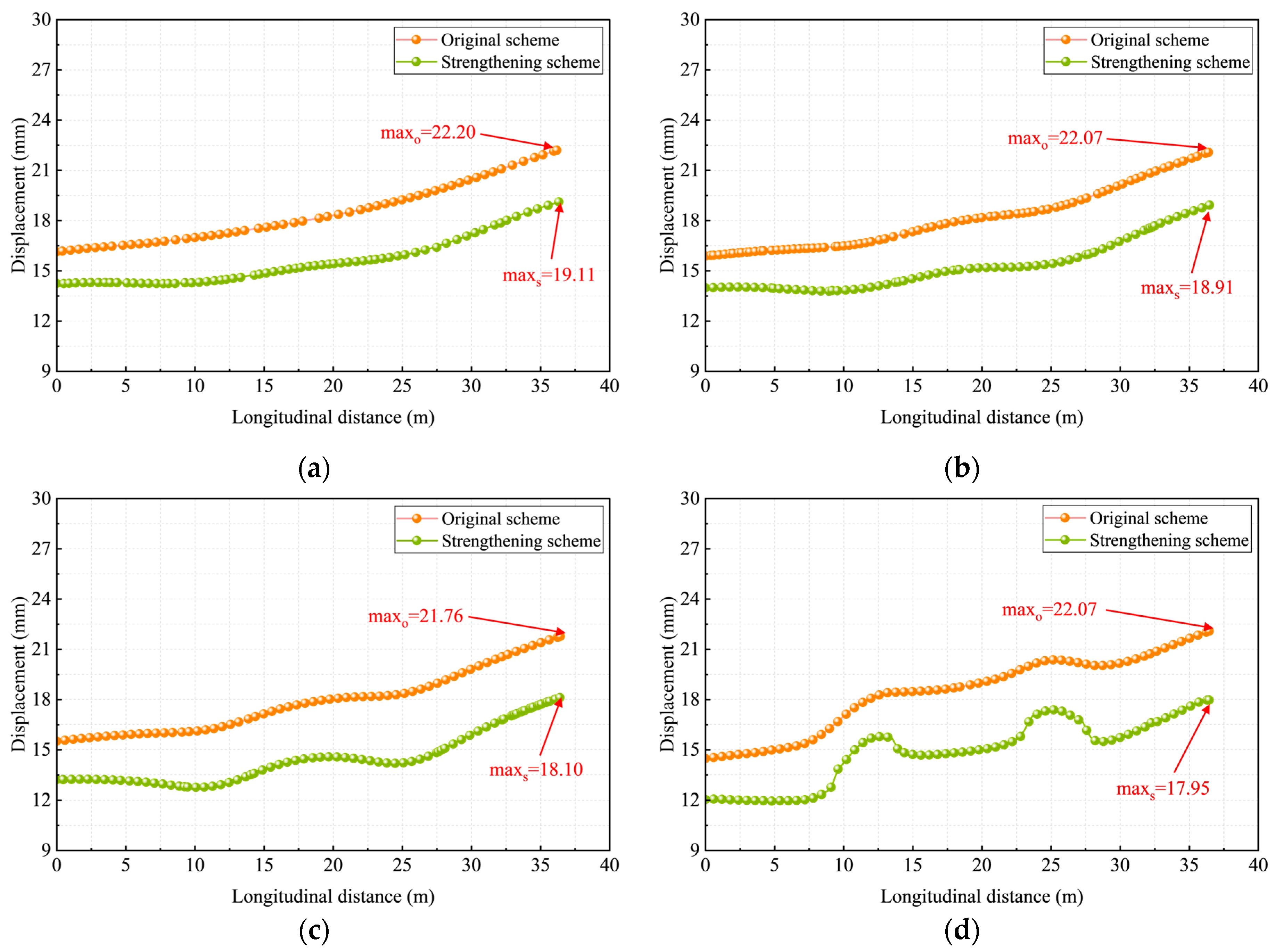
To evaluate the effectiveness of the reinforcement scheme, deformation data were extracted along the axial and circumferential paths shown in Figure 13. The deformation distributions along the pipe axis and around the circumference are presented in Figure 17 and Figure 18. As shown in Figure 17, the axial deformation patterns at the four representative sections remain similar for both the original and reinforced configurations, with displacement increasing monotonically from the south end to the north end. However, deformation levels are consistently lower after reinforcement. For instance, at the crown section A (Figure 17a), the maximum deformation decreases from 22.20 mm to 19.11 mm, representing a reduction of approximately 13.9 percent. At the 45-degree side section B and the side section C (Figure 17b,c), the maximum displacement decreases from 22.07 mm and 21.76 mm to 18.91 mm and 18.10 mm, corresponding to reductions of about 14.3 percent and 16.8 percent. The most pronounced decrease occurs at the invert section D (Figure 17d), where the maximum displacement is reduced from 22.07 mm to 17.95 mm, a reduction of approximately 18.7 percent. These results indicate that the concrete lining effectively suppresses axial deformation at all sections, with the greatest improvement observed at the lower sections, where stresses are more adverse.
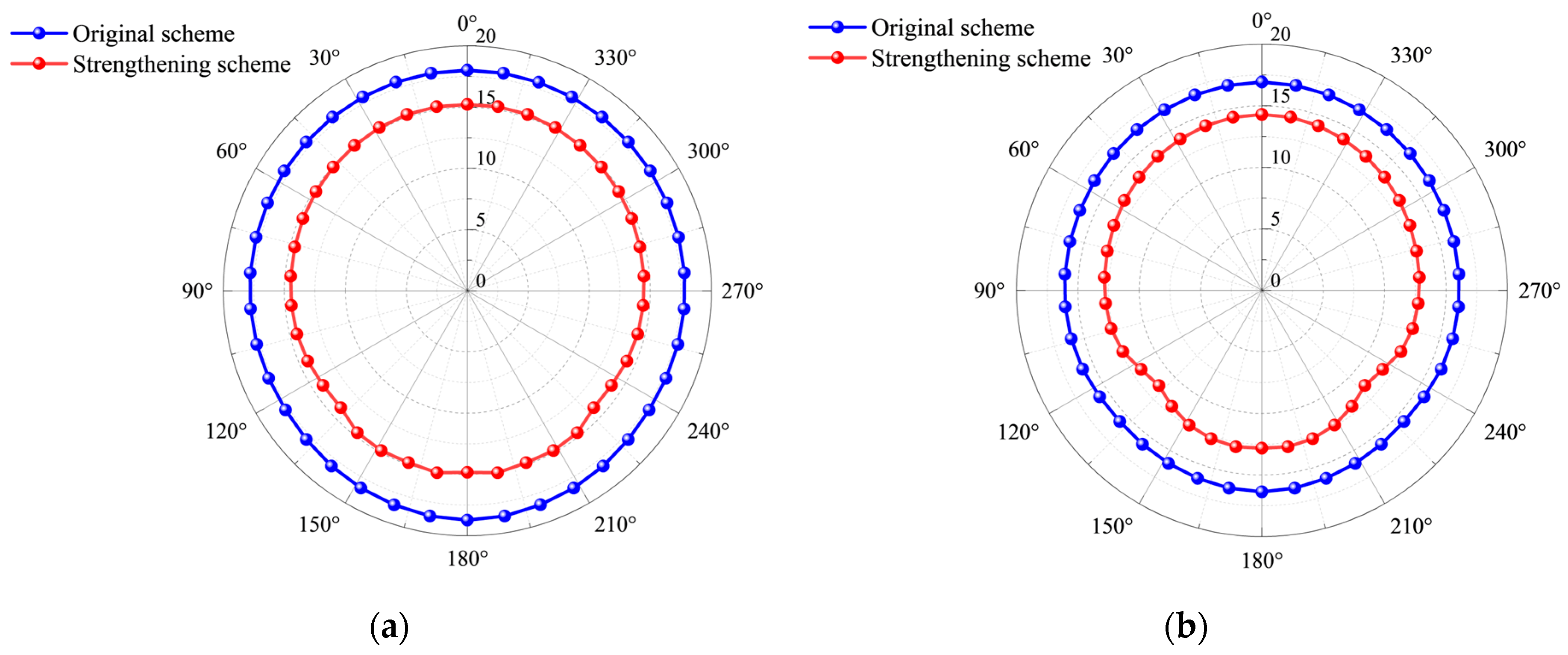
Figure 18 presents the circumferential deformation distributions at the mid-span and quarter-span sections. For both sections, the deformation curves of the reinforced model lie entirely within those of the original model, and the curve shapes are nearly identical. This shows that the reinforcement does not alter the deformation mode but instead provides an approximately uniform reduction in deformation at all circumferential positions.
Overall, both the axial (Figure 17) and circumferential (Figure 18) comparisons demonstrate that the reinforcement scheme significantly improves the deformation performance of the corrugated steel pipe under adverse loading conditions. After reinforcement, a displacement reduction of 10–20 percent is achieved at the representative sections, with lower peak deformation and more uniform deformation distribution. These improvements effectively mitigate the localized deformation concentration observed at critical regions such as the arch crown and invert in the original configuration. The results confirm that the reinforcement measures enhance the overall stiffness and stability of the structure without altering its fundamental load-bearing mechanism, improving the cooperative axial-circumferential response and increasing the structural safety margin under long-term service conditions. Therefore, the proposed reinforcement scheme is considered feasible and of significant engineering value.

5. Conclusions

This study investigated the settlement and deformation behavior of a ten-span continuous corrugated steel pipe arch bridge located in a mining subsidence area. A one-year continuous monitoring program was conducted to characterize the bridge’s structural response under differential foundation settlement. A full-scale finite element model was then developed to compare the deformation characteristics under three loading scenarios: ideal foundation conditions, differential foundation settlement, and combined vehicle loading. Finally, the structural effectiveness of an internal concrete lining was evaluated for the most unfavorable span. The following conclusions can be drawn from this study:
  • Field monitoring results show that the settlement of the edge spans is significantly greater than that of the mid-span. Over one year, the maximum cumulative settlement reached 21.66 mm at point 12 in span 2, while the minimum settlement was 5.34 mm at point 44 in span 6.
  • The settlement data indicate that during the early stage of monitoring (Months 1–3), the growth rate of structural settlement was rapid, with a maximum monthly increase of approximately 30 percent. The settlement rate then gradually decreased and stabilized at about 10 percent per month.
  • Compared with ideal foundation conditions, differential settlement increased the maximum stress in the corrugated steel pipe from 86.39 MPa to 296.20 MPa and increased structural deformation from 6.10 mm to 55.54 mm. The stress increased by a factor of 3.4, and the settlement deformation increased by a factor of 9.1. Differential foundation settlement in mining subsidence areas poses a severe threat to the long-term safety of corrugated steel pipe arch bridges.
  • Vehicle loading has a notable effect on deformation at the pipe crown but a relatively small influence at the pipe invert. Under differential settlement, vehicle loading increases crown deformation by approximately 9 percent and invert deformation by approximately 4 percent. The influence of vehicle load decreases progressively from the crown to the invert.
  • Applying a 100 mm thick internal concrete lining effectively suppresses the settlement-induced deformation of the corrugated steel pipe. After reinforcement, deformation at typical cross-sections is reduced by 10~20 percent, with lower deformation peaks and a more uniform distribution. This improvement demonstrates that the reinforcement enhances overall stiffness and stability without altering the structural load-transfer mechanism.
Due to limitations in experimental conditions, this study only conducted a numerical analysis of the structural strengthening effects, and post-strengthening settlement monitoring of the actual bridge has not yet been performed. Future studies should compare the strengthening performance of the reinforced bridge with the corresponding numerical analysis results. This study verified the effectiveness of an internally sprayed concrete layer in strengthening the corrugated steel pipe arch bridge. However, the applicability and effectiveness of this strengthening method for other types of structures still require further investigation and validation.

Author Contributions

Conceptualization, K.S. and L.J.; methodology, Y.S.; software, L.C. and Y.S.; validation, Z.N., M.W. and T.L.; formal analysis, L.J.; investigation, C.H.; resources, K.S.; data curation, K.S.; writing—original draft preparation, Y.S.; writing—review and editing, L.J.; visualization, Z.N.; supervision, M.W.; project administration, T.L.; funding acquisition, K.S. All authors have read and agreed to the published version of the manuscript.

Funding

This research was funded by the Science and Technology Program of the Shandong Provincial Department of Transportation (2024B38–02).

Data Availability Statement

The original contributions presented in this study are included in the article. Further inquiries can be directed to the corresponding author.

Conflicts of Interest

Authors Kaixuan Sun, Zhaomin Ning, Mingyue Wang, and Tao Li were employed by Tai’an Highway Development Center. The remaining authors declare that the research was conducted in the absence of any commercial or financial relationships that could be construed as a potential conflict of interest.

References

  1. Chen, T.; Su, M.; Pan, C.; Zhang, L.; Wang, H. Local buckling of corrugated steel plates in buried structures. Thin-Walled Struct. 2019, 144, 106348. [Google Scholar] [CrossRef]
  2. Canto-Perello, J.; Curiel-Esparza, J. Assessing governance issues of urban utility tunnels. Tunn. Undergr. Space Technol. 2013, 33, 82–87. [Google Scholar] [CrossRef]
  3. Wang, T.; Tan, L.; Xie, S.; Ma, B. Development and applications of common utility tunnels in China. Tunn. Undergr. Space Technol. 2018, 76, 92–106. [Google Scholar] [CrossRef]
  4. Du, G.; Pettersson, L.; Karoumi, R. Soil–steel composite bridge: An alternative design solution for short spans considering LCA. J. Clean. Prod. 2018, 189, 647–661. [Google Scholar] [CrossRef]
  5. Tang, G.; Yin, L.; Guo, J.; Cui, J. Finite element analysis and experimental research on mechanical performance of bolt connections of corrugated steel plates. Int. J. Steel Struct. 2015, 15, 193–204. [Google Scholar] [CrossRef]
  6. Bao, X.; Bao, Z.; Shen, J.; Wu, S.; Yang, S.; Chen, X. Study on the performance of twin shield tunnel excavation below existing multi–arch culvert bridge in close vicinity. Appl. Sci. 2023, 13, 12285. [Google Scholar] [CrossRef]
  7. Li, P.; Du, S.J.; Ma, X.F.; Yin, Z.Y.; Shen, S.L. Centrifuge investigation into the effect of new shield tunnelling on an existing underlying large–diameter tunnel. Tunn. Undergr. Space Technol. 2014, 42, 59–66. [Google Scholar] [CrossRef]
  8. Gajdzicki, M.; Perliński, W.; Michalak, B. Stability analysis of bi–directionally corrugated steel plates with orthotropic plate model. Eng. Struct. 2018, 160, 519–534. [Google Scholar] [CrossRef]
  9. Jiang, Z.Q.; Niu, Z.Y.; Zhang, A.L.; Liu, X.C. Design method of axial compression stability for cross–section corrugated plate steel special–shaped column. Thin-Walled Struct. 2024, 194, 111243. [Google Scholar] [CrossRef]
  10. Sherzer, G.L.; Alghalandis, Y.F.; Peterson, K.; Shah, S. Comparative study of scale effect in concrete fracturing via Lattice Discrete Particle and Finite Discrete Element Models. Eng. Fail. Anal. 2022, 135, 106062. [Google Scholar] [CrossRef]
  11. Kang, J.; Parker, F.; Yoo, C.H. Soil–structure interaction for deeply buried corrugated steel pipes Part I: Embankment installation. Eng. Struct. 2008, 30, 384–392. [Google Scholar] [CrossRef]
  12. Zhang, Y.; Liu, B.; Meng, L. Structural behavior and soil arching state of underground corrugated steel utility tunnel. J. Constr. Steel Res. 2023, 203, 107798. [Google Scholar] [CrossRef]
  13. Jin, J.; Su, M.; Lang, K.; Zhang, H.; Ye, X.; Shi, W. Load–bearing behavior of pipe–arch corrugated steel pipes during backfilling. J. Struct. Eng. 2025, 151, 04025175. [Google Scholar] [CrossRef]
  14. Okafor, C.C.; Rojas, O.L.; Liu, B.; Turner, K.; Anderson, J.B.; Davidson, J.S. Load rating corrugated metal culverts with shallow soil cover. J. Perform. Constr. Facil. 2023, 37, 04023005. [Google Scholar] [CrossRef]
  15. Sezen, H.; Yeau, K.Y.; Fox, P.J. In–situ load testing of corrugated steel pipe–arch culverts. J. Perform. Constr. Facil. 2008, 22, 245–252. [Google Scholar] [CrossRef]
  16. Yeau, K.Y.; Sezen, H.; Fox, P.J. Load performance of in situ corrugated steel highway culverts. J. Perform. Constr. Facil. 2009, 23, 32–39. [Google Scholar] [CrossRef]
  17. Beben, D. Corrugated steel plate culvert response to service train loads. J. Perform. Constr. Facil. 2014, 28, 376–390. [Google Scholar] [CrossRef]
  18. Liu, Y.; Hoult, N.A.; Moore, I.D. Structural performance of in–service corrugated steel culvert under vehicle loading. J. Bridge Eng. 2020, 25, 04019142. [Google Scholar] [CrossRef]
  19. Flener, E.B. Soil–steel interaction of long–span box culverts—Performance during backfilling. J. Geotech. Geoenviron. Eng. 2010, 136, 823–832. [Google Scholar] [CrossRef]
  20. Nakhostin, E.; Kenny, S.; Sivathayalan, S. Numerical performance assessment of buried corrugated metal culvert subject to service load conditions. Can. J. Civ. Eng. 2021, 48, 99–114. [Google Scholar] [CrossRef]
  21. Miśkiewicz, M.; Sobczyk, B.; Tysiac, P. Non–destructive testing of the longest span soil–steel bridge in Europe—Field measurements and FEM calculations. Materials 2020, 13, 3652. [Google Scholar] [CrossRef]
  22. Maleska, T.; Beben, D. Numerical analysis of a soil–steel bridge during backfilling using various shell models. Eng. Struct. 2019, 196, 109358. [Google Scholar] [CrossRef]
  23. Beyabanaki, A.R.; Gall, W. 3D numerical parametric study of the influence of open–pit mining sequence on existing tunnels. Int. J. Min. Sci. Technol. 2017, 27, 459–466. [Google Scholar] [CrossRef]
  24. Zheng, G.; Yang, X.; Zhou, H.; Du, Y.; Sun, J.; Yu, X. A simplified prediction method for evaluating tunnel displacement induced by laterally adjacent excavations. Comput. Geotech. 2018, 95, 119–128. [Google Scholar] [CrossRef]
  25. Che, C.; Hu, P.; Shi, F.; Xu, P.; Liu, J.; Li, K. Local stability analysis of a composite corrugated steel plate pipe–arch in soil. Buildings 2024, 14, 3290. [Google Scholar] [CrossRef]
  26. Bao, X.; Wu, X.; Shen, J.; Wu, S.; Chen, X.; Cui, H. Performance analysis of multiple steel corrugated pipe arch culvert under construction and periodic vehicle load. Appl. Sci. 2023, 13, 9441. [Google Scholar] [CrossRef]
  27. Liu, Y.; Moore, I.D.; Hoult, N.A.; Lan, H. Numerical investigation of the structural behavior of corrugated steel culverts under surface load tests using three–dimensional finite–element analyses. J. Pipeline Syst. Eng. Pract. 2023, 14, 04023002. [Google Scholar] [CrossRef]
  28. Sutubadi, M.H.; Khatibi, B.R. Effect of soil properties on stability of soil–steel culverts. Turk. J. Eng. Environ. Sci. 2013, 37, 79–90. [Google Scholar]
  29. Wu, G.; Xie, Y.; Wei, J.; Yin, Z.; Yue, X. Effects of corrugated steel pipe parameters on the stress and deformation of a highway subgrade culvert. Int. J. Steel Struct. 2023, 23, 1294–1304. [Google Scholar] [CrossRef]
  30. Zhang, X.; Chen, K.; Lu, X.; Xu, G.; Chen, T. Constructional behavior of multi–span corrugated steel arch culverts stiffened by concrete rings. J. Constr. Steel Res. 2024, 218, 108751. [Google Scholar] [CrossRef]
  31. JTG/T H21–2011; Technical Condition Assessment Standards for Highway Bridges. People’s Communications Publishing House: Beijing, China, 2011.
  32. GB 50026–2020; Standard for Engineering Surveying. China Planning Press: Beijing, China, 2020.
  33. JTG–60–2004; General Design Specifications for Highway Bridges and Culverts. People’s Communications Publishing House: Beijing, China, 2004.
Figure 1. Bridge schematic diagram (units: mm).
Symmetry 18 00267 g001
Figure 2. Layout of measurement point (units: m).
Symmetry 18 00267 g002
Figure 3. Monthly cumulative settlement at typical measurement points: (a) measurement point 12; (b) measurement point 44; (c) measurement point 23; (d) measurement point 13.
Symmetry 18 00267 g003aSymmetry 18 00267 g003b
Figure 4. Longitudinal settlement distribution of the bridge: (a) north-side measurement points; (b) centerline measurement points; (c) south-side measurement points.
Symmetry 18 00267 g004
Figure 5. Transverse settlement distribution of the bridge.
Symmetry 18 00267 g005
Figure 6. Finite element model.
Symmetry 18 00267 g006
Figure 7. Mesh sensitivity analysis: (a) effect of mesh size on the settlement distribution of the first span; (b) effect of mesh size on the settlement distribution of the third span.
Symmetry 18 00267 g007
Figure 8. Structural deformation and stress under self-weight load: (a) deformation of the backfill soil; (b) deformation of the corrugated steel pipe; (c) stress of the corrugated steel pipe.
Symmetry 18 00267 g008aSymmetry 18 00267 g008b
Figure 9. Comparison of finite element results and monitoring data.
Symmetry 18 00267 g009
Figure 10. Structural deformation and stress under differential foundation settlement: (a) deformation of the backfill soil; (b) deformation of the corrugated steel pipe; (c) stress of the corrugated steel pipe.
Symmetry 18 00267 g010aSymmetry 18 00267 g010b
Figure 11. Vehicle load arrangement: (a) top view; (b) elevation view.
Symmetry 18 00267 g011
Figure 12. Structural deformation and stress under vehicle load: (a) deformation of the backfill soil; (b) deformation of the corrugated steel pipe; (c) stress of the corrugated steel pipe.
Symmetry 18 00267 g012
Figure 13. Deformation analysis path: (a) axis extraction path; (b) circumferential extraction path.
Symmetry 18 00267 g013
Figure 14. Structural deformation distribution along the axial path: (a) path A; (b) path B; (c) path C; (d) path D.
Symmetry 18 00267 g014aSymmetry 18 00267 g014b
Figure 15. Structural deformation distribution along the circumferential path: (a) mid-span sections; (b) quarter-span sections.
Symmetry 18 00267 g015
Figure 16. Finite element model of the reinforced structure.
Symmetry 18 00267 g016
Figure 17. Structural deformation distribution along the axial path: (a) path A; (b) path B; (c) path C; (d) path D.
Symmetry 18 00267 g017
Figure 18. Structural deformation distribution along the circumferential path: (a) mid-span sections; (b) quarter-point sections.
Symmetry 18 00267 g018
Table 1. Settlement monitoring data at each measurement point (mm).
ID123456789101112Total
4−2.090.1−2.27−0.86−1.05−1.61−1.50−1.51−0.75−1.62−1.81−1.27−16.24
5−4.250.25−0.67−1.67−0.90−0.23−0.50−1.38−1.03−0.99−1.37−1.35−14.09
6−2.840.77−2.81−0.58−0.89−0.22−0.12−0.20−1.16−0.38−0.56−0.82−9.81
7−4.251.08−2.84−0.25−1.35−0.49−0.18−0.81−1.28−0.90−0.77−0.79−12.83
8−3.491.46−3.56−0.73−0.56−0.45−0.85−0.97−1.64−1.34−0.84−0.95−13.92
9−5.600.54−3.62−0.92−1.05−0.6−1.16−1.29−1.60−1.15−1.52−1.46−19.43
10−5.971.36−3.03−0.90−1.36−0.99−0.89−1.82−1.46−1.33−1.96−1.49−19.84
11−5.180.01−3.53−1.43−1.97−0.77−1.18−1.12−1.42−1.21−1.15−1.37−20.32
12−6.271.42−3.73−2.74−0.70−1.03−0.97−1.34−1.93−1.33−1.55−1.49−21.66
13−0.413.26−3.51−1.50−1.97−0.89−1.68−0.96−1.56−1.97−1.48−1.23−13.90
220.170.22−3.11−0.80−0.56−1.50−1.38−1.26−1.65−1.25−1.08−1.27−13.47
23−2.24−0.461.10−1.44−2.41−1.47−1.72−1.68−1.48−1.77−1.57−1.52−16.66
24−4.040.14−4.36−0.59−2.73−0.73−0.50−0.84−0.76−1.12−1.58−1.42−18.53
25−3.062.37−3.91−1.17−0.71−0.15−0.16−0.14−0.24−0.27−0.43−0.35−8.22
26−5.004.32−6.18−0.73−1.42−0.35−0.39−0.42−0.37−0.52−0.61−0.87−12.54
27−4.532.74−3.89−0.79−1.70−0.63−0.42−0.66−0.88−0.69−0.62−0.74−12.81
28−4.100.50−3.44−1.62−1.15−0.83−0.94−0.85−1.14−0.77−0.99−0.74−16.07
29−4.350.24−2.77−1.35−1.90−1.12−1.28−0.83−0.96−1.22−1.43−1.29−18.26
30−4.362.32−4.86−1.73−1.62−0.88−0.60−1.06−1.33−1.03−1.28−1.04−17.47
31−3.042.55−4.94−1.67−1.48−1.33−1.32−1.22−0.95−1.42−0.85−0.78−16.45
40−2.801.88−3.82−0.52−0.48−0.80−1.43−0.97−1.29−1.15−1.45−1.43−14.26
41−6.601.19−2.92−1.41−0.98−1.13−0.72−1.82−1.52−1.20−1.04−1.22−19.37
42−3.801.17−4.24−1.63−1.32−0.52−0.31−0.15−0.11−0.14−0.38−0.41−11.84
43−5.082.03−4.07−0.39−2.18−0.37−0.19−0.15−0.14−0.12−0.44−0.45−11.55
44−4.994.68−4.53−0.55−0.510.02−0.030.050.020.030.220.25−5.34
45−4.623.48−5.01−0.82−0.77−0.37−0.58−0.59−0.37−0.36−0.42−0.47−10.90
46−1.873.23−4.35−0.89−1.23−0.69−0.79−0.89−0.72−0.80−0.82−0.92−10.74
47−4.492.92−3.53−1.09−1.08−1.60−0.66−0.75−1.15−0.83−1.07−1.27−14.60
48−2.871.03−4.11−1.09−1.29−0.96−1.05−1.28−0.82−1.13−1.15−1.22−15.94
49−4.832.38−5.56−1.04−1.76−1.23−1.34−1.14−0.97−1.23−1.72−1.35−19.79
Disclaimer/Publisher’s Note: The statements, opinions and data contained in all publications are solely those of the individual author(s) and contributor(s) and not of MDPI and/or the editor(s). MDPI and/or the editor(s) disclaim responsibility for any injury to people or property resulting from any ideas, methods, instructions or products referred to in the content.