1. Introduction
In the SGWD mission designs, such as Laser Interferometer Space Antenna (LISA), Taiji, and TianQin, a three-satellite symmetrical formation is adopted, with inter-satellite distances ranging from several hundred thousand kilometers to several million kilometers. The laser heterodyne interferometry principle is applied to perform pairwise interactive interferometry between satellites [
1,
2,
3]. Through the interferometric links, functions such as inter-satellite relative ranging, absolute ranging, communication, and clock noise transfer can be achieved. This requires simultaneous phase extraction of the main beat-note, upper sideband, and lower sideband in the heterodyne signals generated by the inter-satellite interferometers, as well as synchronization, demodulation, and despreading of the ranging and communication codes coupled into the main beat-note [
4]. The core function of inter-satellite laser heterodyne interferometry is the phase extraction of the main beat-note. According to the mission requirements of LISA and the Taiji Program, the frequency dynamic range of the main beat-note is 5–25 MHz, and the required phase extraction precision is approximately
[
5,
6]. To reduce the impact on SGWD signals and to effectively suppress higher-order sideband components, the main beat-note accounts for 90% of the total power. The ranging and communication codes coupled into the main beat-note have a modulation depth of 0.1 rad (accounting for 1% of the total power), while the sidebands have a modulation depth of 0.45 rad, with the upper and lower sidebands each accounting for 5% of the total power. The ranging and communication codes, as well as the upper and lower sidebands, are all modulated into the interferometric link via an Electro-Optic Modulator (EOM) [
7,
8].
Internationally, verification schemes for the phase extraction function and performance of phasemeters can be broadly classified into two categories: the first is to establish an electronic experimental environment, in which commercial signal generators or self-developed beat-note simulation devices are used to emulate beat-notes, phase measurement is performed using a digital phase locked loop, and a pilot tone is introduced to suppress sampling jitter noise, thereby completing the validation of phase extraction precision [
9,
10,
11,
12]. The second is to build a dedicated laser interferometric optical experimental platform for phasemeter performance evaluation, where LISA proposed a hexagonal optical bench configuration with three laser inputs, and pairwise interference among the lasers generates a total of two groups of beat-notes (each group containing three beat-notes with different frequencies), which are used for testing phasemeter functions such as phase measurement, ranging, and communication, as well as for performance evaluations including
measurement and nonlinearity measurement [
13,
14].
Based on the research team’s previous work on phasemeters, an electronic experimental environment was established, in which a heterodyne signal simulation system is used to emulate the beat-notes generated by the science interferometer. The phasemeter performs phase measurements on the beat-notes, and the phase extraction precision is experimentally verified. The results demonstrate that the performance meets the mission requirements for SGWD [
15].
Building on previous research work, the development of the hexagonal optical bench was completed, and the corresponding optical experimental setup was established. The objectives and methods of testing using the hexagonal optical bench in this paper differ from those of LISA. LISA primarily employs three-signal-based measurement to conduct nonlinear noise testing of the phasemeter [
14], where the hexagonal optical bench generates three beat-notes with distinct frequencies, and these beat-notes do not contain information associated with coupled auxiliary functions. In contrast, in this paper, the hexagonal optical bench is utilized to generate the main beat-notes of both coupled and uncoupled inter-satellite ranging and communication modulation phases. The main beat-notes cover a dynamic frequency range from 5 MHz to 25 MHz. A fixed-frequency pilot tone is adopted to suppress sampling timing jitter noise, and the split measurement method is applied to test the phase noise. The split measurement enables common-mode rejection of noise sources such as frequency noise and optical path disturbances in the two channels, thereby facilitating the evaluation of non-common-mode noise of the phasemeter. Through four experimental stages, the phasemeter is employed to perform phase measurements on the main beat-notes, and the phase extraction precision is verified. Experimental results demonstrate that the phase extraction precision meets the index requirement of
for SGWD missions. These results provide an important reference for the validation of the engineering applicability of the phasemeter. In addition, the experiments also verify the stability of the optical experimental environment constructed using the hexagonal optical bench, as well as the feasibility of function extension verification and performance evaluation of the phasemeter based on this platform.
2. Phasemeter Design Scheme
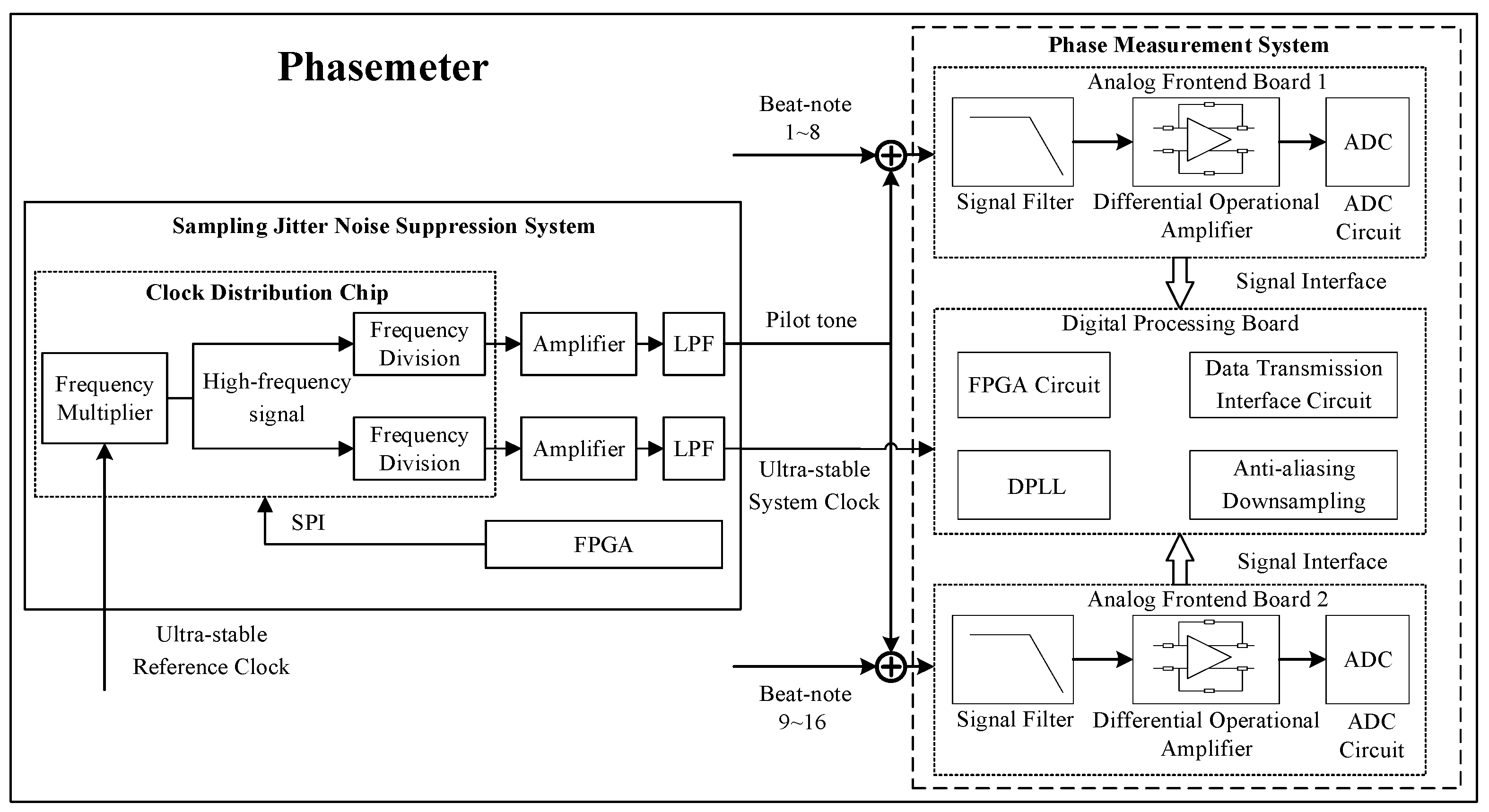
The phasemeter design scheme is illustrated in
Figure 1 and mainly consists of two parts: a sampling jitter noise suppression system and a phase measurement system. The sampling jitter noise suppression system is referenced to an ultra-stable reference clock and generates an ultra-stable system clock (80 MHz) and a low phase noise pilot tone (37.5 MHz) through frequency multiplication and division. The signals are then sequentially processed by amplifiers for amplitude adjustment and low-pass filters for high-frequency noise suppression, ensuring that the signal quality satisfies the input requirements of the phase measurement system. The phase measurement system, referenced to the ultra-stable system clock, performs synchronous sampling and phase extraction of the input beat-note and pilot tone, thereby achieving high-precision phase measurement.
2.1. Sampling Jitter Noise Suppression System
The ultra-stable system clock and the low phase noise pilot tone provide an essential foundation for achieving micro-radian-level phase extraction precision in the phasemeter [
16]. Considering multiple factors, including full frequency band coverage, configurable outputs, and low noise characteristics, the sampling jitter noise suppression system employs the Texas Instruments (TI) LMK04828 (Dallas, TX, USA) as the clock distribution chip. The amplifier selected is the ZX60-33LNR-S+ from Mini-Circuits (Brooklyn, NY, USA), which features a low noise figure over the 50 MHz–3 GHz frequency range, effectively suppressing link noise and improving the signal dynamic range. The low-pass filters adopt a fourth-order passive LC π-type topology, with two separate filters designed for the pilot tone and the system clock, respectively [
17]. Specifically, for the 37.5 MHz pilot tone, the design parameters include a passband cutoff frequency of 40 MHz, a passband ripple of less than 0.01 dB, and a stopband starting frequency of 80 MHz. For the 80 MHz system clock, the parameters include a passband cutoff frequency of 90 MHz, a passband ripple of less than 0.01 dB, and a stopband starting frequency of 180 MHz.
2.2. Phase Measurement System
The architecture of the phase measurement system is shown in
Figure 1, and the overall design is divided into three main parts: an analog front-end board responsible for interferometric signal acquisition, a digital processing board that performs data processing and system control, and a high-speed communication interface board connecting the two. The system supports parallel processing of 16 interferometric channels, including two analog front-end boards (each supporting 8 channels), one digital processing board, and one interface board.
The overall workflow of phase extraction [
17] is as follows: the beat-note and the pilot tone are combined by a coupler (ZFSC-2-6+ from Mini-Circuits) and then fed into the analog board, where the signal sequentially passes through a low pass filter (RLP-83+ from Mini-Circuits), a differential operational amplifier (AD8138), and an Analog to Digital Converter (AD9253). After analog-to-digital conversion, the signal is transmitted at high speed through the interface board to the FPGA platform on the digital processing board, where key processing modules such as a Digital Phase Locked Loop (DPLL) and data down-sampling are implemented, ultimately yielding high-precision phase measurement results.
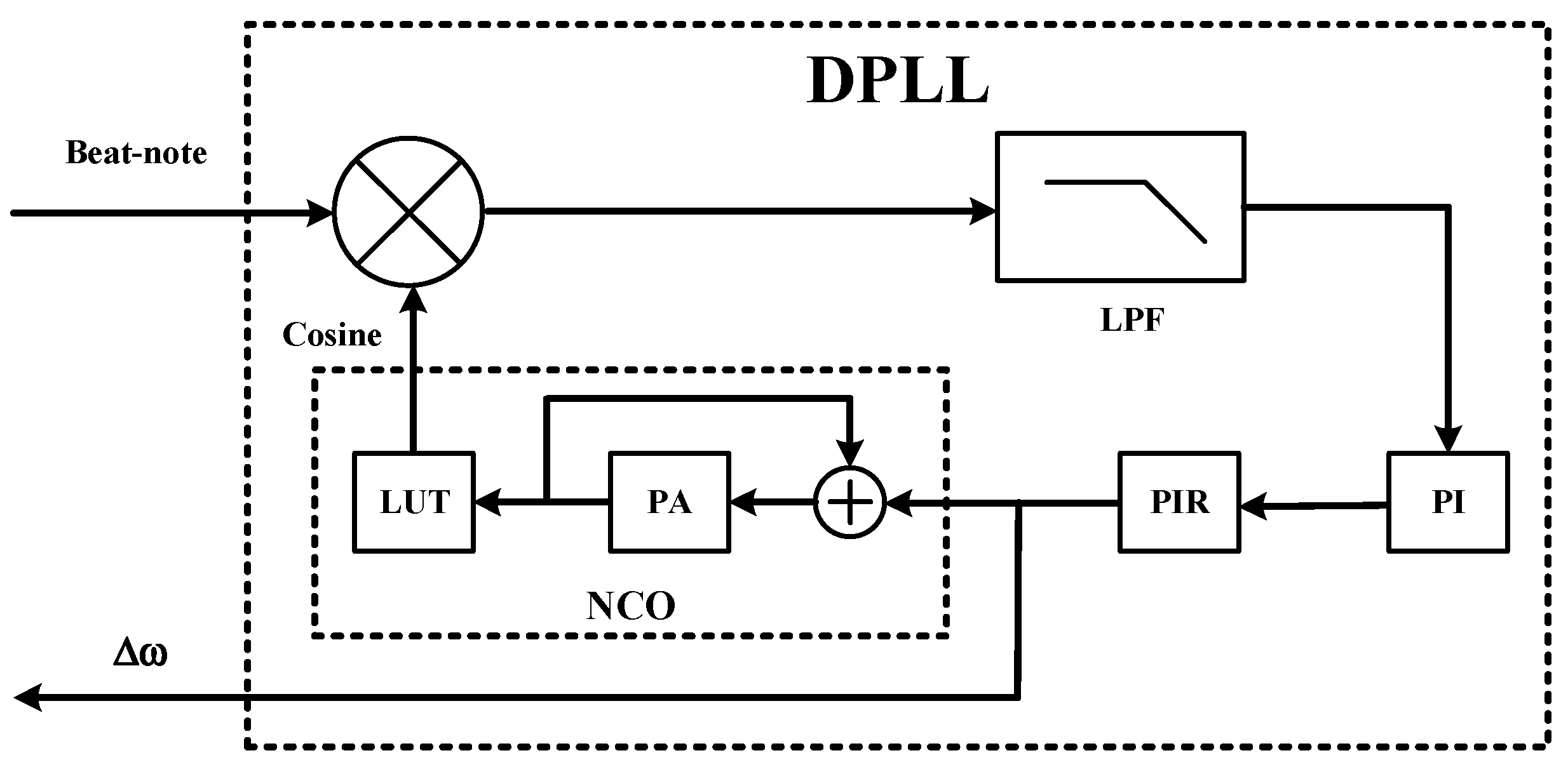
The operating principle of the DPLL is illustrated in
Figure 2. If there exists a frequency difference
between beat-note and Numerically Controlled Oscillator (NCO), the measured phase can be expressed as
. By calculating the rate of change in the phase, the frequency difference
between beat-note and NCO can be obtained. This difference is then fed back to the NCO through a feedback control loop, ultimately achieving phase locking between the two. If the frequency of beat-note fluctuates, the frequency variation can be obtained by recording the changes in
, and the corresponding phase fluctuation information of beat-note is finally derived through integration.
3. Hexagonal Optical Bench
This section presents an ultra-stable hexagonal optical bench developed to evaluate the performance of a phasemeter. The hexagonal optical bench is constructed using a Zerodur substrate integrated with fused silica components and produces three independent laser beat signals via a symmetrical hexagonal optical path configuration. This design facilitates the assessment of the phasemeter’s nonlinearity and phase noise under conditions of high dynamic range. Critical assembly processes employ hydroxide-catalysis bonding technology, enabling high-strength, thin-layer covalent bonds between optical elements, thereby ensuring long-term system stability and displacement precision at the picometer scale. Beam angle deviation introduces a linear phase gradient on the photodetector surface, while position deviation induces the overlap integral of Gaussian mode fields, resulting in the attenuation of interference contrast. Through tolerance simulation analysis and precision assembly, the hexagonal optical bench must satisfy the design specifications, achieving beam angle and position deviations below 100 and 100 , respectively.
3.1. Functional Requirements and Performance Specifications
The hexagonal optical bench serves as a highly stable optical testing apparatus, purpose-built to assess the linearity and phase extraction precision of the phasemeter. Its principal function involves generating three independent beat-notes through pairwise interference within a three-signals testing framework, thereby facilitating the identification of nonlinear errors and phase noise in the phasemeter under conditions of high dynamic range [
14]. The hexagonal optical bench is required to satisfy several critical performance criteria: maintaining phase noise below a defined threshold and accommodating heterodyne frequencies in the range of 5 to 25 MHz. Furthermore, the system must attain picometer-level displacement stability with respect to both thermal and mechanical influences. This is achieved by utilizing a Zerodur baseplate and fused silica beam splitters to mitigate thermal drift, alongside a symmetrical hexagonal configuration designed to minimize common-mode noise. Collectively, these features establish a robust validation framework for ultra-high-precision phase measurements pertinent to SGWD missions.
3.2. Hydroxide-Catalysis Bonding Technology
Hydroxide-catalysis bonding represents a method for joining two materials through the formation of a silicate network at their interface. This technique was developed by Gwo at Stanford University and subsequently patented [
18]. It has been effectively implemented in high-precision applications such as Stanford University’s Gravity Probe B mission [
19] and the European Space Agency’s LISA Pathfinder mission [
20]. The hydroxide-catalysis bonding process facilitates the creation of novel covalent bonds between disparate materials via hydration and hydrolysis reactions, thereby fulfilling critical requirements for space optical systems, including enhanced structural integrity, reliability, and the achievement of ultra-thin adhesive layers.
This bonding approach is applicable to any materials capable of generating silicate-like networks through catalytic hydration and hydrolysis. Specifically, bonding between two silicon-based (Si-O) substrates is achieved using an alkaline solution; the bonding interface must exhibit a surface finish with a Peak-to-Valley (PV) deviation of less than 0.1 wavelength, and stringent cleanliness standards must be maintained to prevent contamination. The hydroxide-catalysis reaction proceeds primarily through three sequential stages:
Hydration and Surface Erosion: Hydroxide ions (
) interact with the silicate framework present on the material surface, resulting in the formation of silanol groups (
). This reaction activates the surface and generates reactive sites, as represented by the equation:
Polymerization Process: The silicate ions, such as
, undergo dissociation and subsequently form siloxane linkages (
), progressively constructing a three-dimensional network structure:
As water gradually evaporates or diffuses from the material, these siloxane chains further crosslink and cure, resulting in the formation of a robust and resilient bonding layer, typically less than 100 nm in thickness:
Upon formation, the siloxane chains exhibit inherent bonding strength.
- 3.
Dehydration Stage: This phase involves the removal or evaporation of water. As dehydration advances, the thickness of the adhesive layer diminishes, while its mechanical strength correspondingly increases [
21,
22,
23].
In contrast to conventional optical epoxy adhesives, hydroxide-catalysis bonding does not introduce extraneous materials between the bonded surfaces. This characteristic mitigates issues such as vacuum outgassing and volatile contamination within the adhesive layer, thereby reducing stray light interference. The hexagonal optical bench components assembled in the present study also employ covalent bonding. This method facilitates precise alignment and stable fixation of optical elements, substantially enhancing both the displacement measurement precision and the long-term reliability of the system [
24].
3.3. Scheme Design
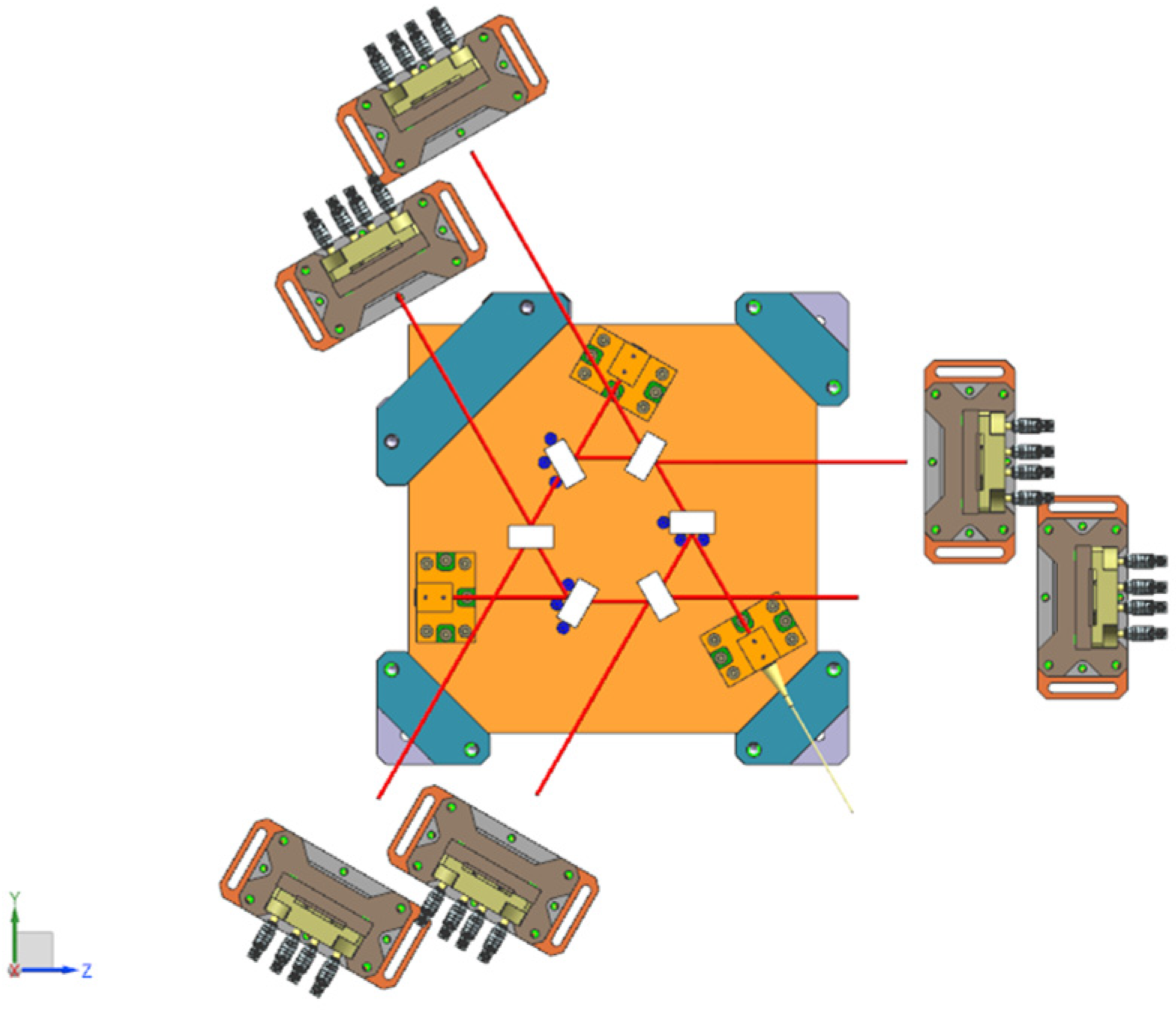
In order to calibrate the phasemeter, it is essential to conduct synchronous measurement of three beat-notes produced by the optical bench. Accordingly, an ultra-stable hexagonal optical bench is designed to simultaneously capture six beat-notes. As illustrated in
Figure 3, it primarily comprises six 1:1 Beam Splitters (BS) and three Fiber Collimators (FIOS). To ensure system stability, all optical components are mounted on a smooth microcrystalline glass substrate. The incident beams from the three FIOS, each operating at distinct frequencies
,
,
respectively, are initially divided by the first BS positioned before each FIOS, and subsequently directed through the optical arrangement for paired recombination. The beat-note resulting from the combination of two beams is expressed by the following formula:
, denote the intensities of two light beams; represents the initial phase difference; and denotes the difference between the frequencies of the two interfering beams (, etc.). Under ideal conditions, the frequencies of beat-notes generated after beam combination are labeled as , , and detected by Quadrant Photodetector (QPD), which converts these optical signals into electrical voltage outputs. Each output port of the QPD is equipped with a complementary terminal. Subsequently, the multiple voltage signals are simultaneously fed into a phasemeter for processing, enabling the synchronous measurement of the three beat-notes.
3.4. Measurement
3.4.1. Tolerance Allocation
Due to the phasemeter’s exceptionally low noise characteristics, stringent stability criteria are imposed on the hexagonal optical bench’s structural design to ensure precise calibration of the phasemeter. Inevitably, structural inaccuracies arise during the manufacturing and assembly processes. Consequently, this section presents a simulation-based analysis of the optical structure tolerances within the hexagonal optical bench, aiming to systematically allocate permissible manufacturing and assembly errors.
An ideal hexagonal optical bench’s optical path is modeled using optical simulation software (Ansys Zemax OpticStudio 2024 R1.00). The light intensity resulting from the superposition of two coherent beams is expressed as follows:
represents the average light intensity, denotes the visibility of the interference fringes, and corresponds to the phase difference.
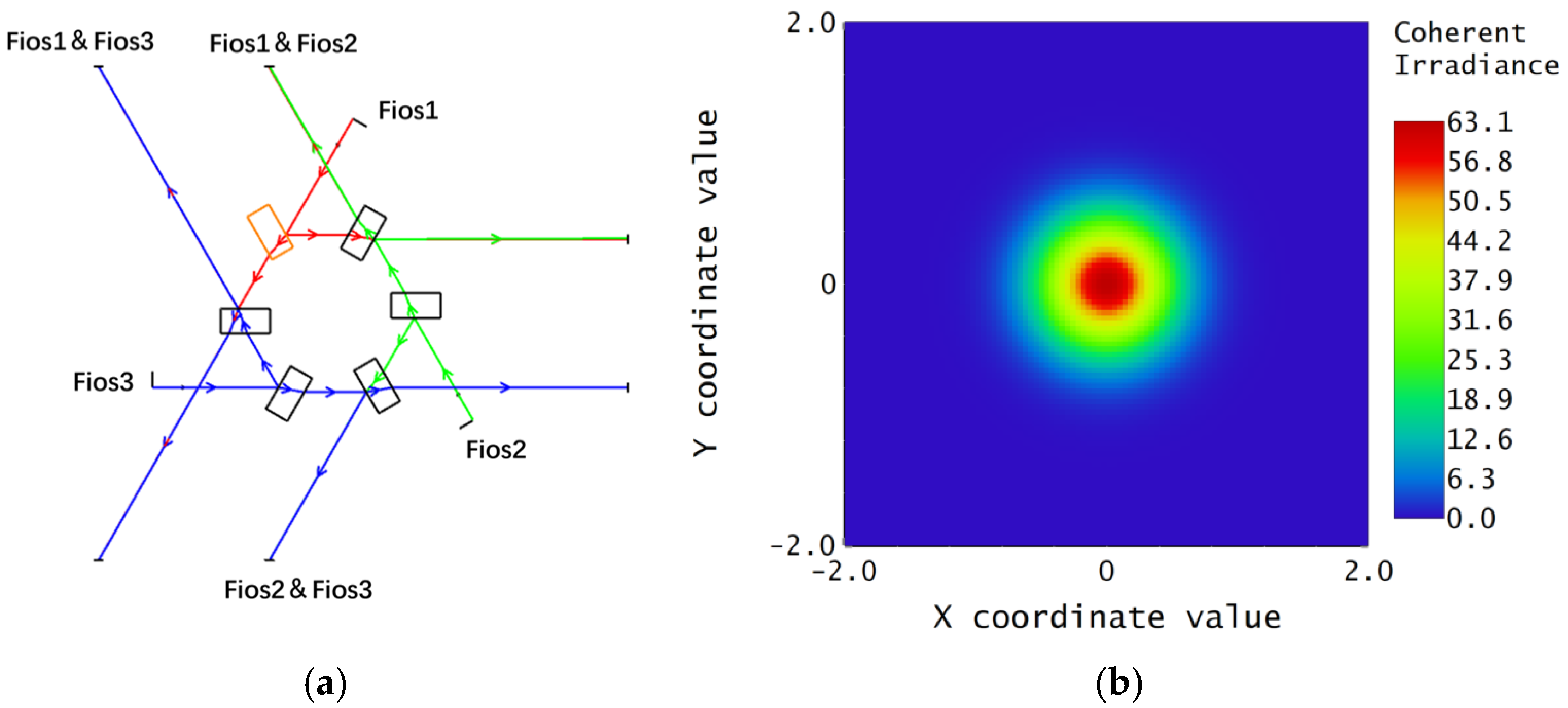
As illustrated in
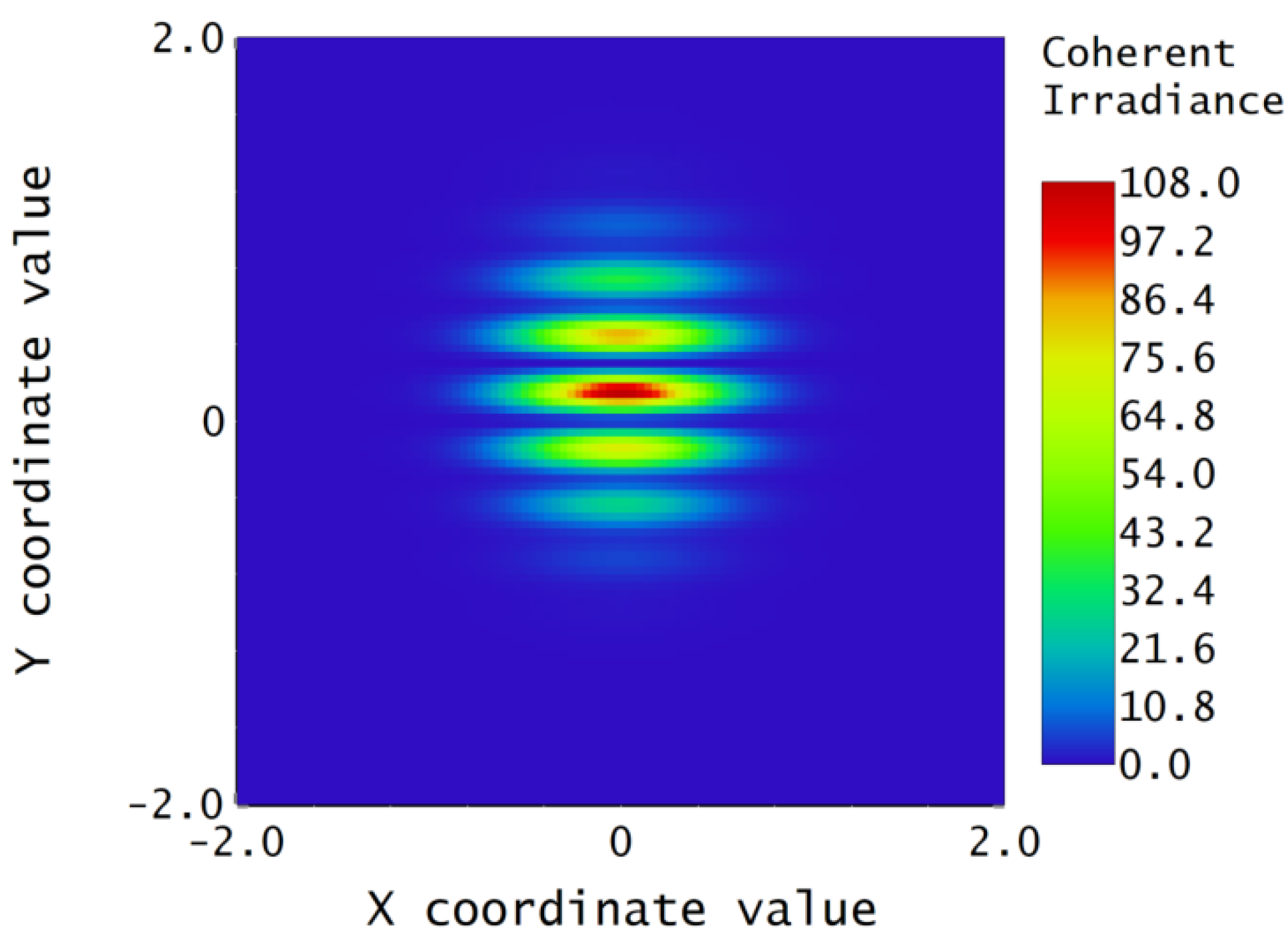
Figure 4. When there is no angular deviation, the detector surface exhibits a uniform circular light spot. However, in the presence of surface figure errors or positional inaccuracies in the BS, the optical path length of the interferometer arms varies, resulting in the appearance of interference fringes on the detector surface, as shown in
Figure 5. Variations in arm length
caused by manufacturing and alignment errors introduce phase gradient noise
within the interferometric link:
where
represents the laser wavelength. The phase noise in question directly impacts the precision of phase measurements in the beat-note.
According to the design specifications, the angular separation between the two interfering beams must be less than 100
, and the positional deviation of the beams should not exceed 100
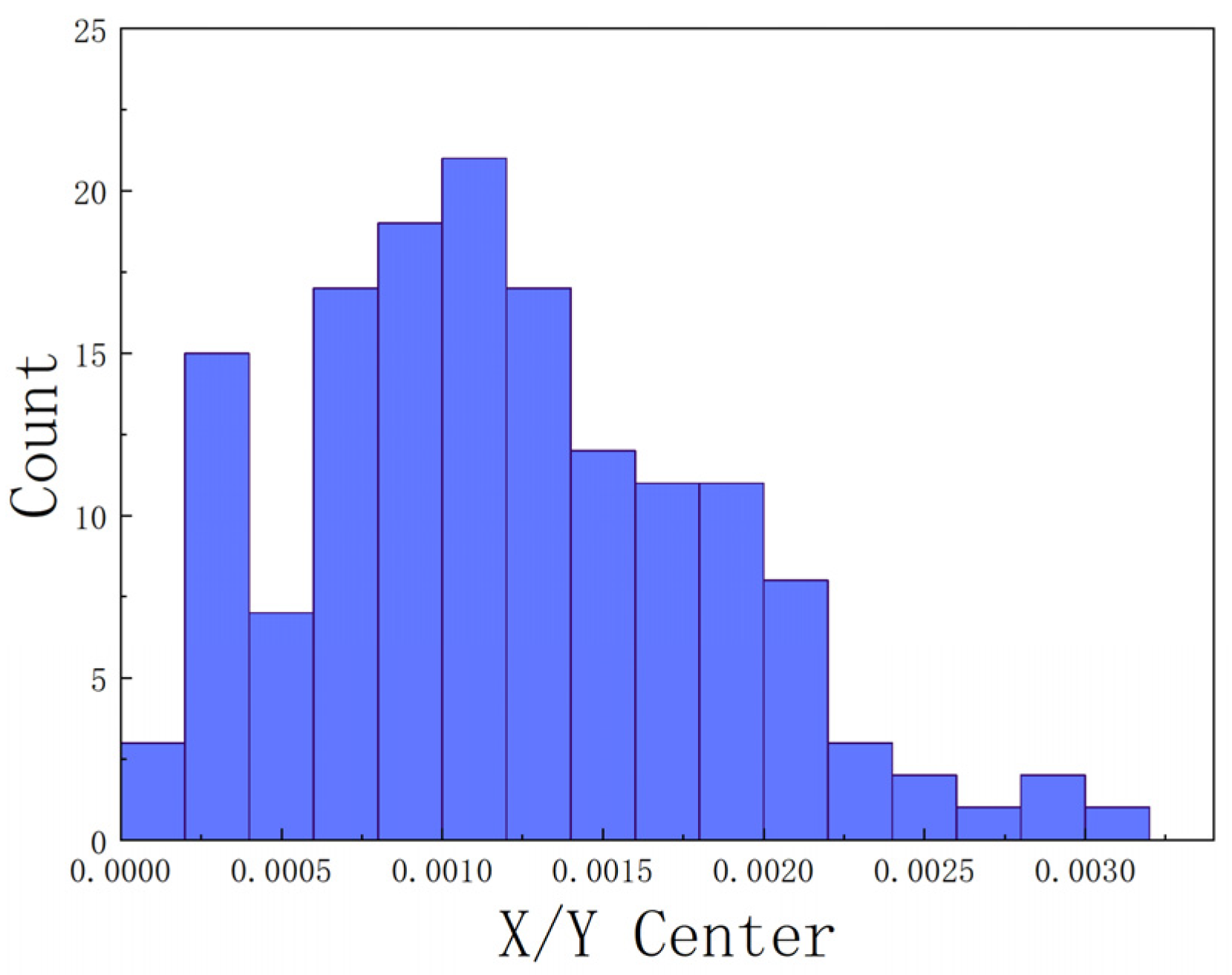
. The primary manufacturing error of the hexagonal optical bench pertains to the perpendicularity deviation between the BS surface and its substrate. Measurements conducted using a white light interferometer indicate that the angular error of the coated BS surface typically remains below 4 arcseconds. Assembly errors refer to the positional and angular deviations of the BS in the horizontal direction during the bonding process with the substrate. These tolerances were treated as variables in a Monte Carlo analysis, assuming a uniform distribution of errors. Using the distance and angular variation between the two beam spots as evaluation metrics, the analysis, as illustrated in
Figure 6, reveals that the spot displacement on the detector surface is predominantly influenced by the angular deviation of the BS, while it exhibits low sensitivity to positional errors of the BS. Provided that the positional errors remain within a reasonable range and the angular deviation is controlled within 10
, the maximum error can still satisfy the design requirements.
3.4.2. Assembly, Integration, and Testing
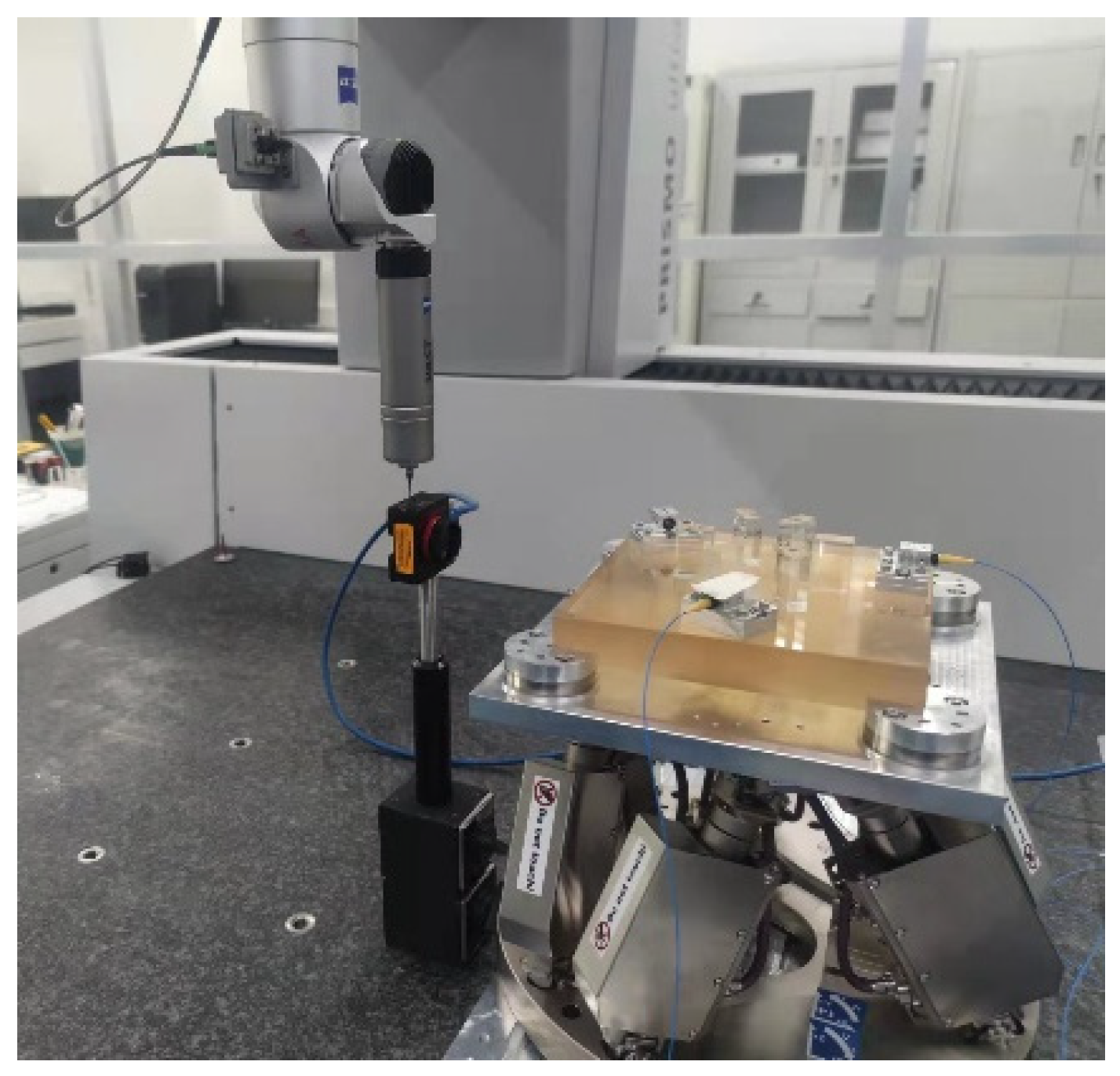
The hexagonal optical bench was assembled using hydroxide-catalysis bonding technology. The substrate material was selected as microcrystalline glass, while the optical components were fabricated from fused silica. The bonding process was accomplished through coordinated positioning using a coordinate measuring machine in conjunction with a robotic arm. Following the bonding procedure, measurements of the positional and angular relationships between two laser spots were conducted in a constant-temperature, cleanroom environment using a beam quality analyzer, as illustrated in
Figure 7. The hexagonal optical bench was mounted on a high-precision translation stage, and the beam quality analyzer was translated longitudinally. The spatial relationship between the analyzer and the interferometer was precisely maintained through the combined use of the coordinate measuring machine and the translation stage. The measurement results obtained from the beam quality analyzer are summarized in
Table 1 and met the design specifications, exhibiting angular deviations within 100
and positional deviations within 100
.
4. Experimental Setup
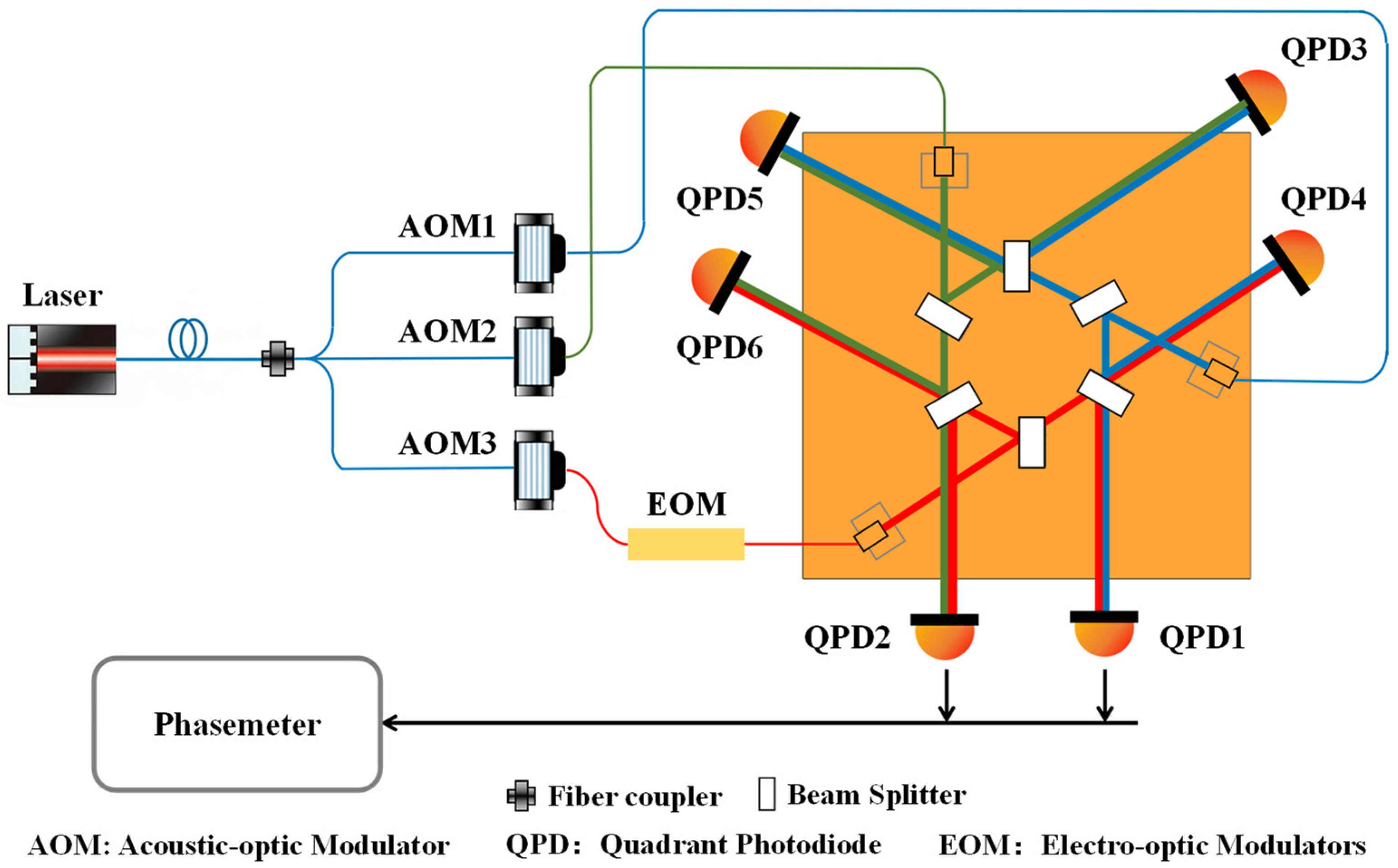
An optical experimental environment for the phasemeter is established based on a hexagonal optical bench to verify the phase extraction precision in a constant-temperature atmospheric environment. The schematic of beat-note generation and phase measurement principles is shown in
Figure 8. The 1064 nm laser is delivered via optical fibers to a three-channel Acousto-Optic Modulator (AOM1, AOM2, AOM3). By configuring the parameters of the three AOM channels, the three laser beams are injected into the hexagonal optical bench, where pairwise interference among the lasers generates beat-notes with three different frequencies, denoted as
,
, and
. The beat-notes are then converted into voltage signals after processing by QPDs, including signal conditioning, filtering, and Trans Impedance Amplifier (TIA) stages, and are subsequently fed into the phasemeter for beat-note phase measurement.
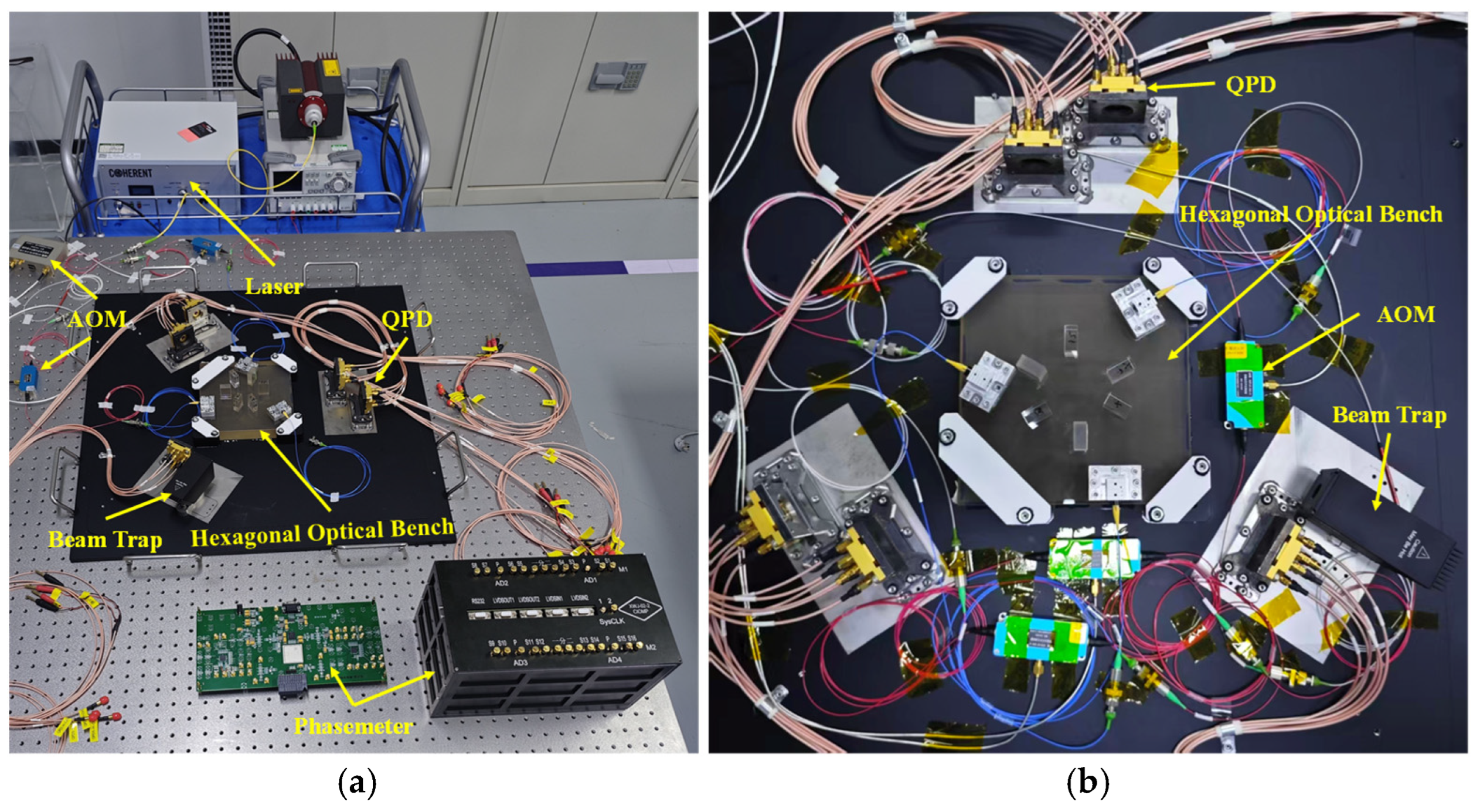
The output of AOM3 is connected via optical fiber to an Electro-Optic Modulator (EOM). A signal generator produces a Pseudo Random Noise (PRN) signal that is applied to the EOM to achieve phase modulation of the third laser, thereby coupling the PRN code into the phase of the beat-note. A photograph of the experimental setup is shown in
Figure 9, in which QPD1, QPD2, QPD3, QPD4, and QPD5 are installed, while the position of QPD6 is occupied by a beam trap.
5. Experimental Scheme and Results Analysis
Based on the hexagonal optical bench, the main beat-note generated by inter-satellite interferometer with a frequency dynamic range of 5 MHz–25 MHz is simulated, and the phasemeter performs phase measurement on the main beat-note to verify whether the phase extraction precision meets the SGWD requirement of .
By configuring the parameters of the three AOM channels, the hexagonal optical bench can generate beat-notes with a frequency dynamic range of 5 MHz–25 MHz; meanwhile, by setting the PRN sequence output from a signal generator to simulate inter-satellite ranging and communication codes and driving the EOM with the PRN sequence, phase modulation of the beat-note is achieved, thereby completing the simulation of the main beat-note generated by the inter-satellite interferometer.
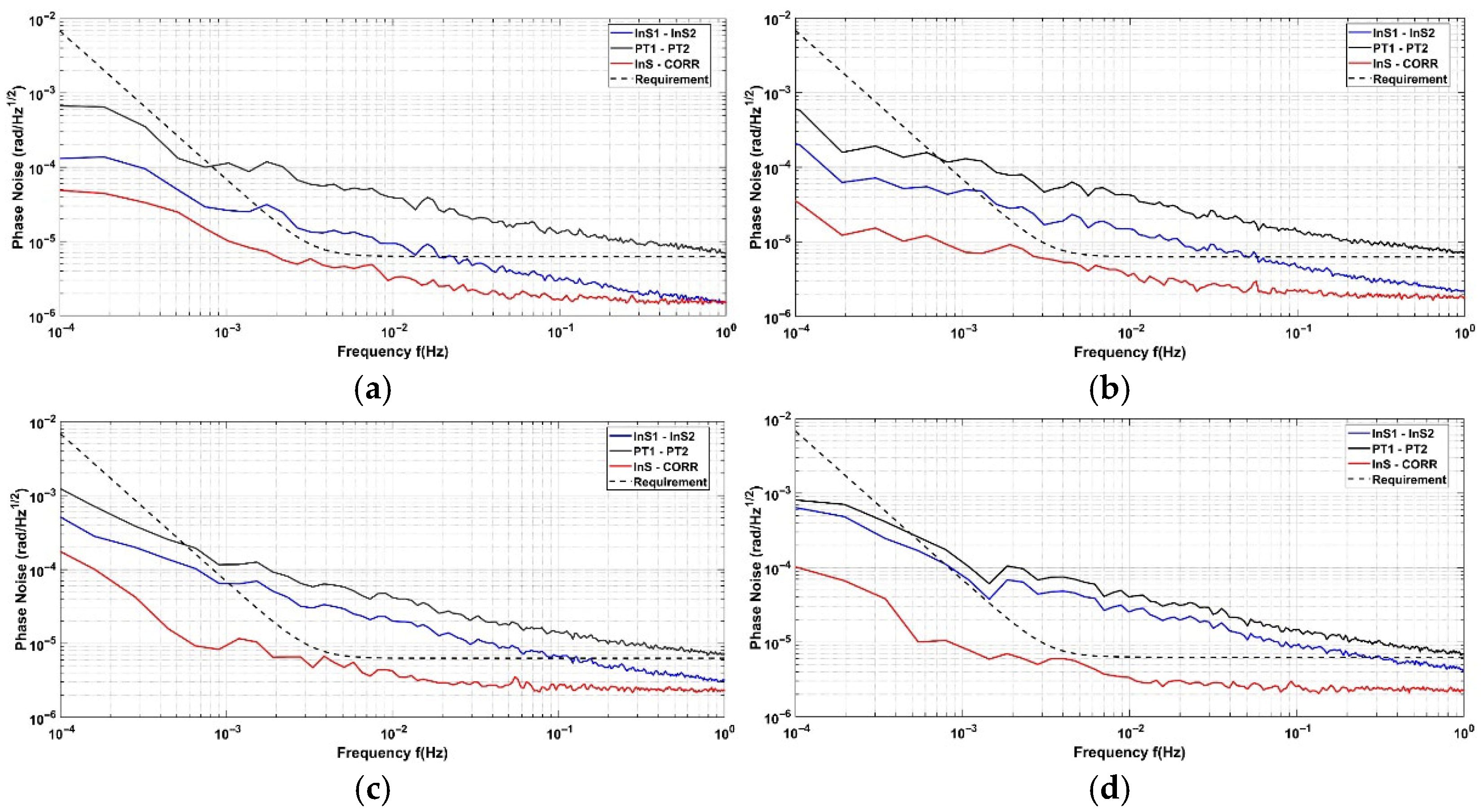
The phase extraction precision is verified through four experimental stages, with the pilot tone frequency set to 37.5 MHz.
- (a)
First experimental stage: No EOM is applied for laser phase modulation. Phase measurements are performed on the beat-notes acquired by five detectors, namely QPD1, QPD2, QPD3, QPD4, and QPD5. The beat-note frequency is set to 5 MHz to verify the phase extraction precision of five interferometric links.
- (b)
Second experimental stage: The laser output from AOM3 is phase-modulated using an EOM. Phase measurements are carried out on the beat-notes acquired by three corresponding interferometric link detectors, QPD1, QPD2, and QPD4. The beat-note frequency is set to 5 MHz to verify the phase extraction precision of the three interferometric links with laser phase modulation applied.
- (c)
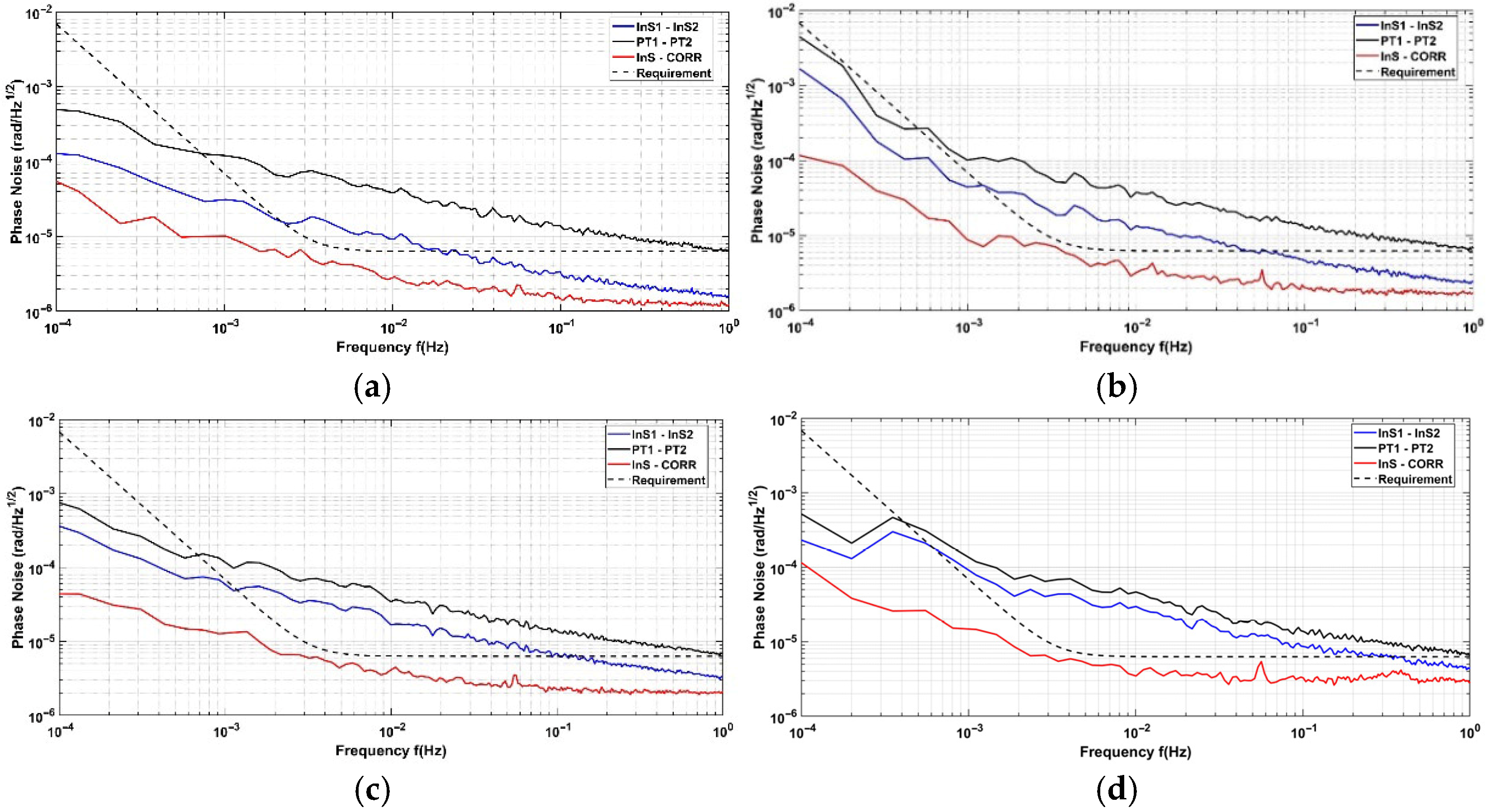
Third experimental stage: No EOM is applied for laser phase modulation. Phase measurements are performed on the beat-note acquired by QPD5, with the beat-note frequency set to 5 MHz, 10 MHz, 15 MHz, 20 MHz, and 25 MHz, respectively. This stage verifies the phase extraction precision of a single interferometric link when the laser is not phase modulated, and the beat-note frequency covers the full dynamic range of 5 MHz–25 MHz.
- (d)
Fourth experimental stage: The laser output from AOM3 is phase-modulated using an EOM. Phase measurements are performed on the beat-note acquired by QPD1, with the beat-note frequency set to 5 MHz, 10 MHz, 15 MHz, 20 MHz, and 25 MHz, respectively. This stage verifies the phase extraction precision of a single interferometric link when laser phase modulation is applied, and the beat-note frequency covers the full dynamic range of 5 MHz–25 MHz.
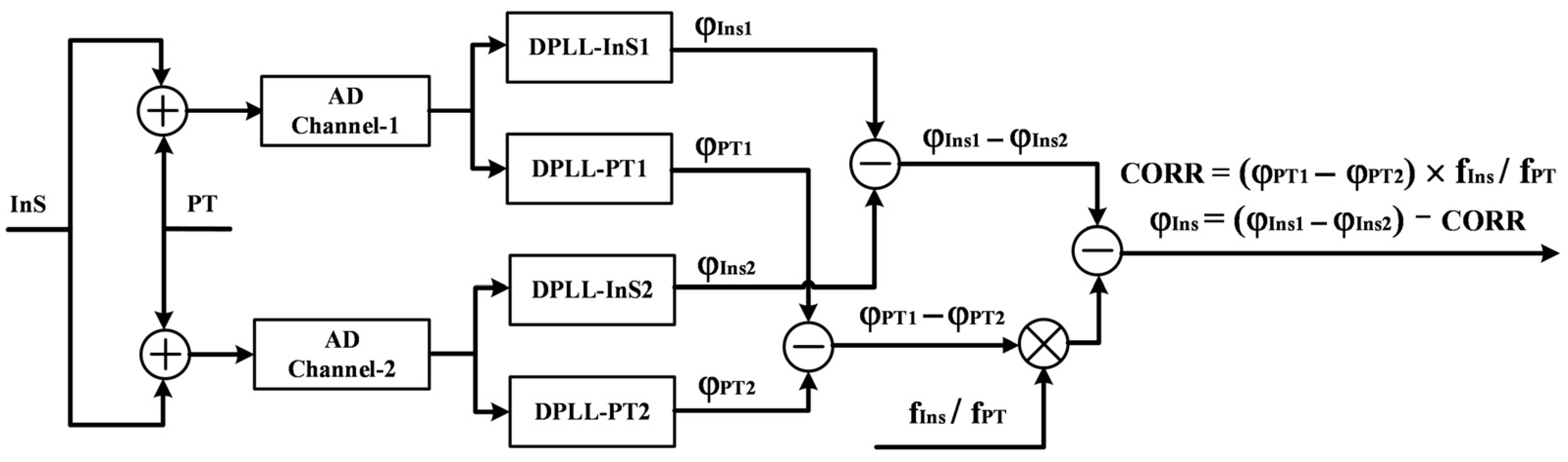
A split measurement method combined with a pilot-tone-based sampling jitter noise suppression amplitude spectral density evaluation approach is adopted [
25]. The detailed procedure is shown in
Figure 10, and the LISA Technology Package Data Analysis (LTPDA) toolbox developed by the Albert Einstein Institute (AEI), Germany, is used to smooth the amplitude spectral density evaluation curves [
26]. The split measurement, also referred to as zero measurement, separates the main beat-note
into two signals,
and
, and the pilot tone
into two signals,
and
. These four signals are fed into four independently configured DPLL modules for phase extraction, yielding four phase outputs
,
,
and
. The differences
and
are taken as the common mode (i.e., noise that is correlated between the two split signal paths) phase measurement noise of the main beat-note and the pilot tone, respectively, and their evaluation results are helpful for identifying and suppressing uncorrelated noise sources in the two measurement chains. Based on the main beat-note’s frequency
and the pilot tone’s frequency
, the error term CORR introduced by sampling jitter is calculated and used to compensate for the common-mode phase measurement result of the main beat-note, thereby obtaining the accurate phase
after sampling jitter noise suppression.
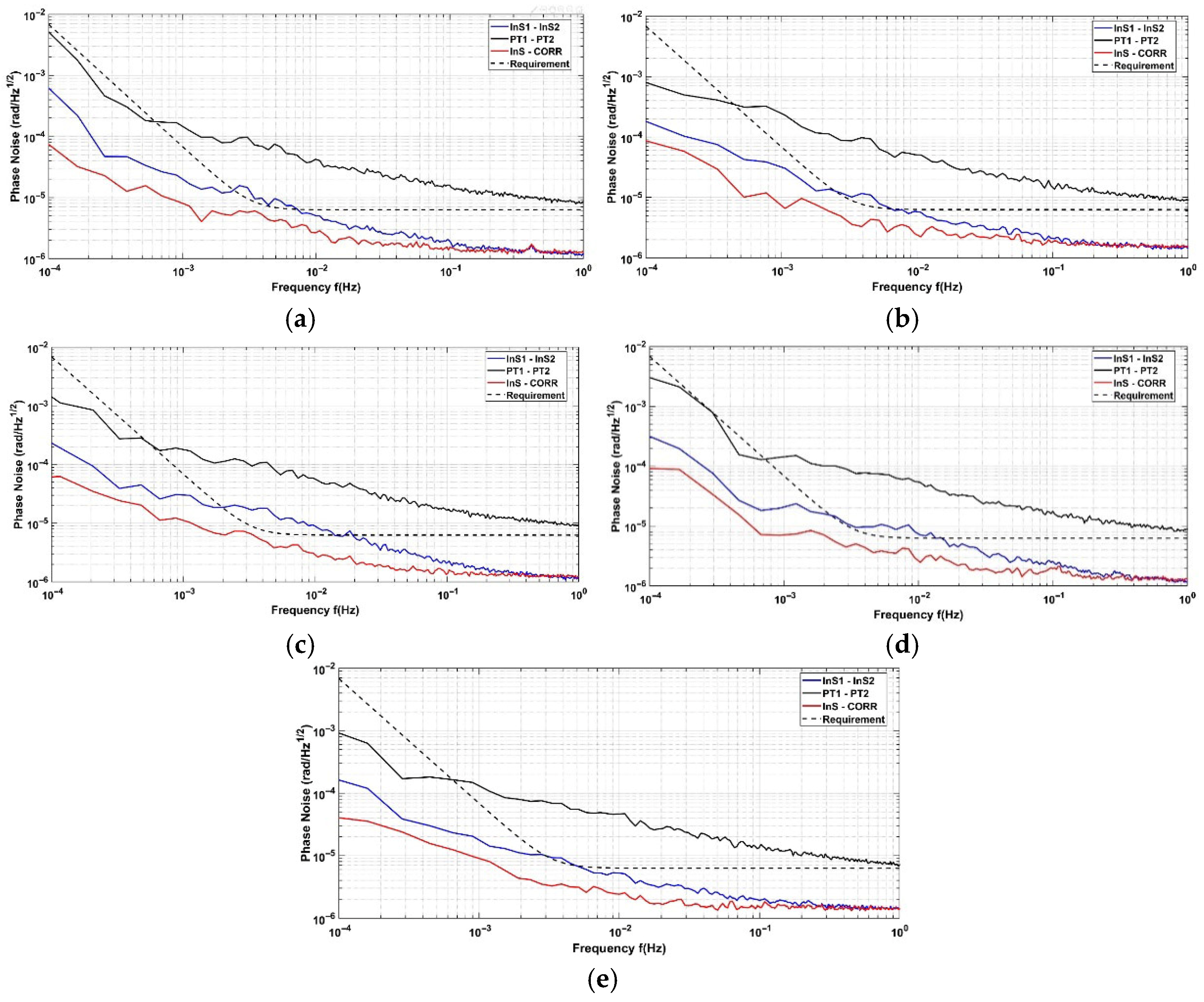
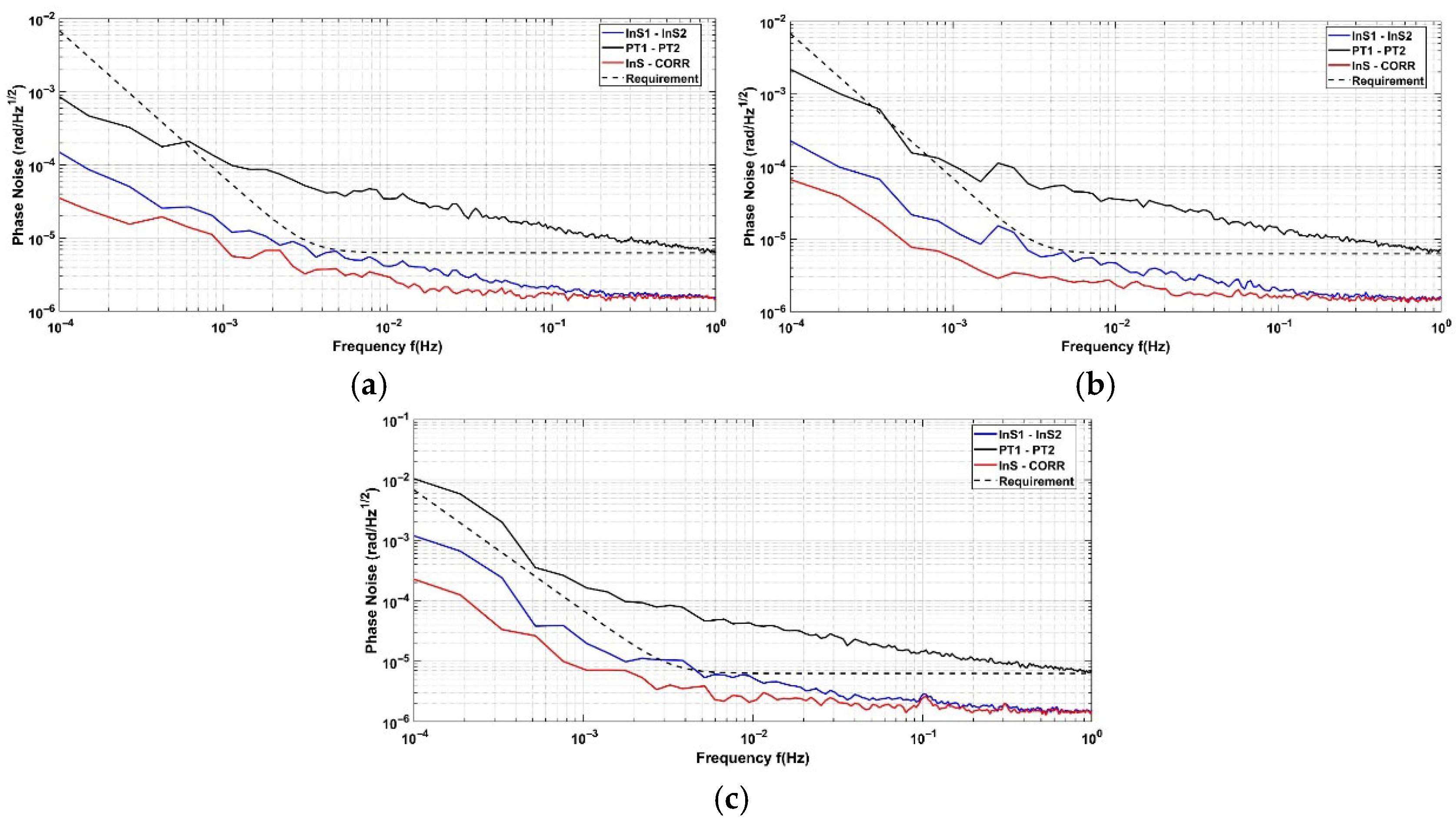
The phase noise measurement results of the four experimental stages are presented in the form of amplitude spectral density curves. The curve represents the common-mode phase measurement noise of the main beat-note, while the curve represents the common-mode phase measurement noise of the pilot tone. The curve denotes the result of the main beat-note after common-mode phase measurement and sampling jitter noise suppression, and the curve indicates the mission specifications for the 0.1 mHz–1 Hz frequency band of SGWD.
5.1. Analysis of the First Experimental Stage Results
By setting the AOM frequency parameters, the beat-notes acquired by QPD1, QPD2, QPD3, QPD4, and QPD5 are all set to 5 MHz. No EOM is applied for laser phase modulation. Phase measurements are performed on the beat-notes acquired by the five QPDs, and the measurement results are shown in
Figure 11. The phase noise after sampling jitter noise suppression satisfies the SGWD mission requirements.
5.2. Analysis of the Second Experimental Stage Results
The output of AOM3 is connected to an EOM (EXAIL NIR-MPX-LN-10) via optical fiber, and a PRN sequence generated by a signal generator (KEYSIGHT 33622A) is used to drive the EOM to achieve laser phase modulation. According to the mission requirement that the optical power ratio between the main beat-note and the phase modulation term coupled into the main beat-note is 90:1, the PRN parameters are set with an amplitude of 85 mVpp and a frequency of 1.6 MHz. By setting the AOM frequency parameters, the beat-notes acquired by QPD1, QPD2, and QPD4 are all set to 5 MHz. Phase measurements are performed on the beat-notes acquired by the three QPDs, and the measurement results are shown in
Figure 12. The phase noise after sampling jitter noise suppression satisfies the SGWD mission requirements.
5.3. Analysis of the Third Experimental Stage Results
By setting the AOM frequency parameters, the beat-notes acquired by QPD5 are set to 5 MHz, 10 MHz, 15 MHz, 20 MHz, and 25 MHz, respectively. No EOM is applied for laser phase modulation. Phase measurements are performed on the beat-notes acquired by QPD5, and the measurement results are shown in
Figure 13 (the phase extraction precision of the 5 MHz beat-note was already verified in the first experimental stage). The phase noise after sampling jitter noise suppression satisfies the SGWD mission requirements.
5.4. Analysis of the Fourth Experimental Stage Results
By setting the AOM frequency parameters, the beat-notes acquired by QPD1 are set to 5 MHz, 10 MHz, 15 MHz, 20 MHz, and 25 MHz, respectively. EOM (EXAIL NIR-MPX-LN-10) is applied to perform phase modulation on the laser output from AOM3 (the fiber connection and parameter settings of the EOM are the same as those in the second experimental stage). Phase measurements are performed on the beat-notes acquired by QPD1, and the measurement results are shown in
Figure 14 (the phase extraction precision of the 5 MHz beat-note was already verified in the second experimental stage). The phase noise after sampling jitter noise suppression satisfies the SGWD mission requirements.
6. Conclusions and Discussion
In this paper, an ultra-stable hexagonal optical bench was developed using hydroxide-catalysis bonding technology. Experimental verification showed that both the beam angle deviation and position deviation met the design specifications (less than 100 μrad and 100 μm, respectively). Building on the existing application of the hexagonal optical bench for three-signal and π measurements in LISA, this study extended its application to phase noise evaluation under multi-functional coupling conditions. An optical test environment for the phasemeter was constructed based on this bench, and this environment was used to simulate the main beat-note generated by the inter-satellite scientific interferometer. The bench successfully generated main beat-notes (dynamic frequency range: 5–25 MHz) for standalone phase measurement and phase measurement coupled with inter-satellite ranging and communication functions. Experimental results from four test stages confirm that the phase extraction precision () met the index requirement for SGWD missions. This study expands the application scope of the hexagonal optical bench and provides a reliable experimental platform for phasemeter verification in inter-satellite laser interferometry, laying a foundation for subsequent SGWD research.
These results are of great engineering significance for verifying the phasemeter’s applicability and confirm the feasibility of constructing its optical test environment based on the ultra-stable hexagonal optical bench. Beyond supporting phase extraction precision validation via the split measurement method, the bench’s design scheme can be applied to phasemeter balance detection and nonlinearity testing using π and three-signal measurement methods under vacuum environments. Furthermore, the ultra-stable hexagonal optical bench enables expanded research on laser ranging and communication, clock noise transfer, and weak-light phase locking. It also provides an ultra-stable optical verification environment for validating the phasemeter’s engineering feasibility under multi-functional coupling, which expands the testing of current phasemeter performance in complex inter-satellite scenarios. A limitation of this study is that the current test environment is established under laboratory conditions; future research will focus on verifying the bench’s performance in high vacuum environments.
Author Contributions
Conceptualization, T.Y.; methodology, T.Y.; software, T.Y., K.X., H.L., and M.L.; validation, T.Y., K.X., H.L., M.L., and C.F.; formal analysis, T.Y., K.X., H.L., M.L., and Y.L.; investigation, T.Y. and M.L.; resources, T.Y., C.F., and Y.L.; data curation, T.Y.; writing—original draft preparation, T.Y.; writing—review and editing, T.Y., K.X., H.L., and M.L.; visualization, T.Y.; supervision, C.F. and Y.L.; project administration, C.F. and Y.L.; funding acquisition, T.Y., C.F. and Y.L. All authors have read and agreed to the published version of the manuscript.
Funding
This work was supported by National Key Research and Development Program of China (2021YFC2202401), National Key Research and Development Program of China (2020YFC2200604) and National Key Research and Development Program of China (2022YFC2203901).
Data Availability Statement
The data presented in this study are not publicly available due to privacy concerns, and access can be requested from [
yut@ciomp.ac.cn] upon reasonable request.
Conflicts of Interest
The authors declare no conflicts of interest.
References
- Armano, M.; Audley, H.; Auger, G.; Baird, J.T.; Bassan, M.; Binetruy, P.; Born, M.; Bortoluzzi, D.; Brandt, N.; Caleno, M. Sub-femto-g free fall for space-based gravitational wave observatories: LISA pathfinder results. Phys. Rev. Lett. 2016, 116, 231101. [Google Scholar]
- Hu, W.R.; Wu, Y.L. The Taiji Program in Space for gravitational wave physics and the nature of gravity. Natl. Sci. Rev. 2017, 4, 685–686. [Google Scholar] [CrossRef]
- Luo, J.; Chen, L.S.; Duan, H.Z.; Gong, Y.G.; Hu, S.; Ji, J.; Liu, Q.; Mei, J.; Milyukov, V.; Sazhin, M. TianQin: A space-borne gravitational wave detector. Class. Quantum Gravity 2016, 33, 035010. [Google Scholar] [CrossRef]
- Barke, S.; Brause, N.; Bykov, I. LISA Metrology System—Final Report; PubMan Inc.: Atlanta, GA, USA, 2014. [Google Scholar]
- Bode, C.H. Noise in the LISA Phasemeter. Ph.D. Thesis, Gottfried Wilhelm Leibniz Universität Hannover (QUEST-Leibniz-Forschungsschule), Hannover, Germany, 2024. [Google Scholar]
- Zhang, J.; Yang, Z.; Ma, X.; Peng, X.; Liu, H.; Tang, W.; Zhao, M.; Gao, C.; Qiang, L.E.; Han, X. Inter-spacecraft offset frequency setting strategy in the Taiji program. Appl. Opt. 2022, 61, 837–843. [Google Scholar] [CrossRef] [PubMed]
- Yamamoto, K.; Vorndamme, C.; Hartwig, O. Experimental verification of intersatellite clock synchronization at LISA performance levels. Phys. Rev. D 2022, 105, 042009. [Google Scholar] [CrossRef]
- Heinzel, G.; Esteban, J.J.; Barke, S. Auxiliary functions of the LISA laser link: Ranging, clock noise transfer and data communication. Class. Quantum Gravity 2011, 28, 094008. [Google Scholar] [CrossRef]
- Liang, Y.R. Note: A new method for directly reducing the sampling jitter noise of the digital phasemeter. Rev. Sci. Instrum. 2018, 89, 036106. [Google Scholar] [CrossRef] [PubMed]
- Kullmann, J. Development of a Digital Phase Measuring System with Microradian Precision for LISA. Ph.D. Thesis, Gottfried Wilhelm Leibniz Universität Hannover, Hanover, Germany, 2012. [Google Scholar]
- Huang, X.; Wang, G.; Yang, M. Study on picometer-level laser interferometer readout system in TianQin project. Opt. Laser Technol. 2023, 161, 109185. [Google Scholar] [CrossRef]
- Zhang, Q.T.; Liu, H.S.; Luo, Z.R. Multi-Channel Phase Measurement System for the Space Laser Interferometry. China. Opt. 2023, 16, 1089–1099. [Google Scholar]
- Schwarze, T.S. Phase Extraction for Laser Interferometry in Space: Phase Readout Schemes and Optical Testing. Ph.D. Thesis, Institutionelles Repositorium der Leibniz Universität Hannover, Hanover, Germany, 2018. [Google Scholar]
- Schwarze, T.S.; Fernández Barranco, G.; Penkert, D. Picometer-stable hexagonal optical bench to verify LISA phase extraction linearity and precision. Phys. Rev. Lett. 2019, 122, 081104. [Google Scholar] [CrossRef] [PubMed]
- Yu, T.; Xue, K.; Long, H.Y. Simulation of Heterodyne Signal for Science Interferometers of Space-Borne Gravitational Wave Detector and Evaluation of Phase Measurement Noise. Photonics 2025, 12, 879. [Google Scholar] [CrossRef]
- Zeng, H.; Yan, H.; Xie, S. Experimental demonstration of weak-light inter-spacecraft clock jitter readout for TianQin. Opt. Express 2023, 31, 34648–34666. [Google Scholar] [CrossRef] [PubMed]
- Gwo, D.H. Ultraprecision bonding for cryogenic fused-silica optics. In Cryogenic Optical Systems and Instruments VIII; SPIE: Bellingham, WA, USA, 1998; Volume 3435, pp. 136–142. [Google Scholar]
- Gwo, D.H. Ultra Precision and Reliable Bonding Method. U.S. Patent 6284085 B1, 4 September 2001. [Google Scholar]
- Gwo, D.H.; Wang, S.; Bower, K.A. The Gravity Probe-B star-tracking telescope. Adv. Space Res. 2003, 32, 1401–1405. [Google Scholar] [CrossRef]
- Bogenstahl, J.; Tröbs, M. Design and construction of a telescope simulator for LISA optical bench testing. In Proceedings of the International Conference on Space Optics—ICSO 2012, Ajaccio, France, 9–12 October 2012; Volume 10564, pp. 832–836. [Google Scholar]
- Pan, G.; Deng, X.; Gao, R.; Wang, S. Multi-parameter optimisation of optical bonding for the ultra-stable optical measurement bench in space-based platform. Opt. Laser Technol. 2025, 188, 112977. [Google Scholar] [CrossRef]
- Elliffe, E.J.; Bogenstahl, J.; Deshpande, A.; Hough, J. Hydroxide-catalysis bonding for stable optical systems for space. Class. Quantum Gravity 2005, 22, S257–S267. [Google Scholar] [CrossRef]
- Haughian, K.; Van Veggel, A.A.; Cunningham, L.; Hough, J.; Murray, P.G. Effect of heat treatment and aging on the mechanical loss and strength of hydroxide catalysis bonds between fused silica samples. Phys. Rev. D 2017, 96, 042003. [Google Scholar] [CrossRef]
- Preston, A.; Thorpe, J.I.; Miner, L. Quasi-monolithic structures for spaceflight using hydroxide-catalysis bonding. In Proceedings of the 2012 IEEE Aerospace Conference, Big Sky, MT, USA, 3–10 March 2012; pp. 1–8. [Google Scholar] [CrossRef]
- Gerberding, O. Phase Readout for Satellite Interferometry. Ph.D. Thesis, Technische Informationsbibliothek und Universitätsbibliothek Hannover (TIB), Hannover, Germany, 2014. [Google Scholar]
- Hewitson, M.; Armano, M.; Benedetti, M.; Bogenstahl, J.; Bortoluzzi, D.; Bosetti, P.; Brandt, N.; Cavalleri, A.; Ciani, G.; Cristofolini, I. Data analysis for the LISA Technology Package. Class. Quantum Gravity 2009, 26, 094003. [Google Scholar] [CrossRef]
| Disclaimer/Publisher’s Note: The statements, opinions and data contained in all publications are solely those of the individual author(s) and contributor(s) and not of MDPI and/or the editor(s). MDPI and/or the editor(s) disclaim responsibility for any injury to people or property resulting from any ideas, methods, instructions or products referred to in the content. |