Article

Research on Evaluation Methods of Complex Product Design Based on Hybrid Kansei Engineering Modeling


1
School of Design Art and Media, Nanjing University of Science and Technology, Nanjing 210094, China
2
School of Art and Design, Nanjing Institute of Technology, Nanjing 211167, China
3
School of Art, Anhui University, Hefei 230011, China
*
Authors to whom correspondence should be addressed.
Symmetry 2025, 17(2), 306; https://doi.org/10.3390/sym17020306
Submission received: 31 December 2024 / Revised: 7 February 2025 / Accepted: 13 February 2025 / Published: 18 February 2025
(This article belongs to the Section F: Engineering and Materials)

Abstract

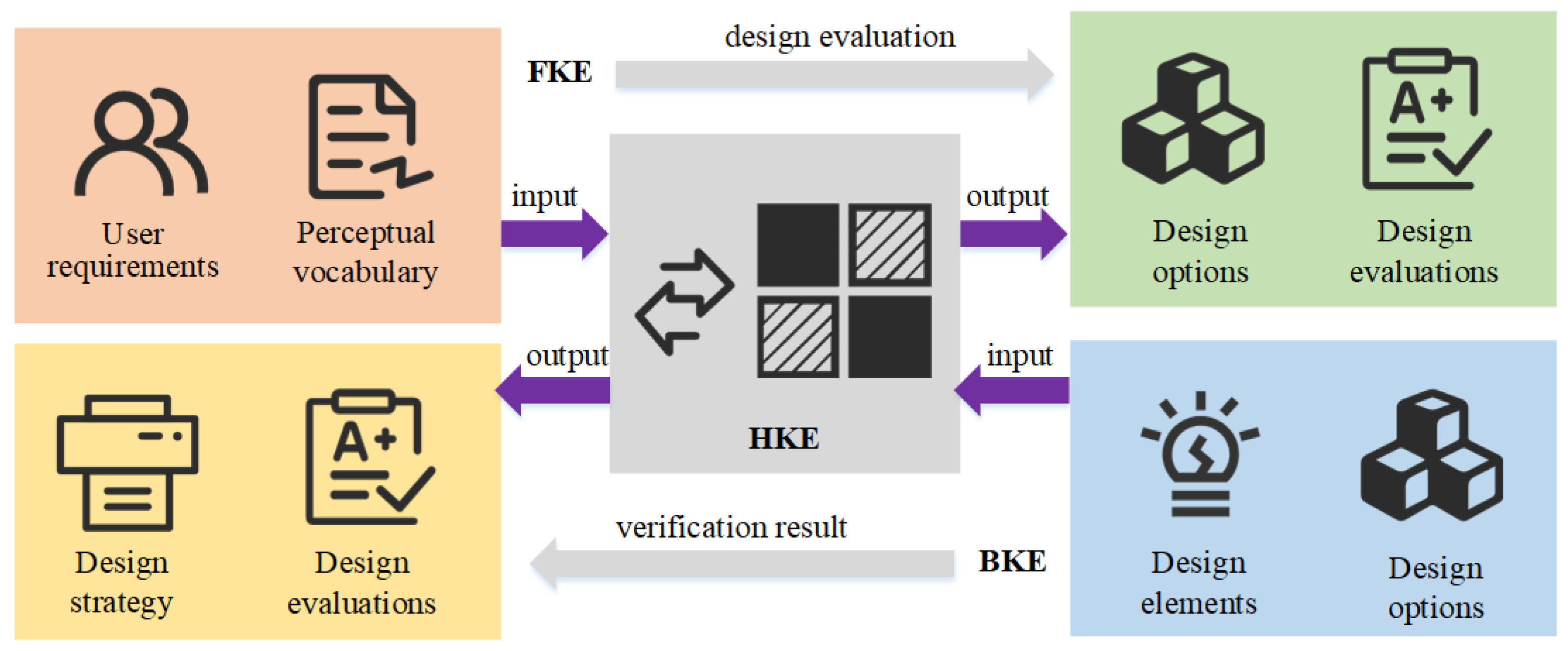
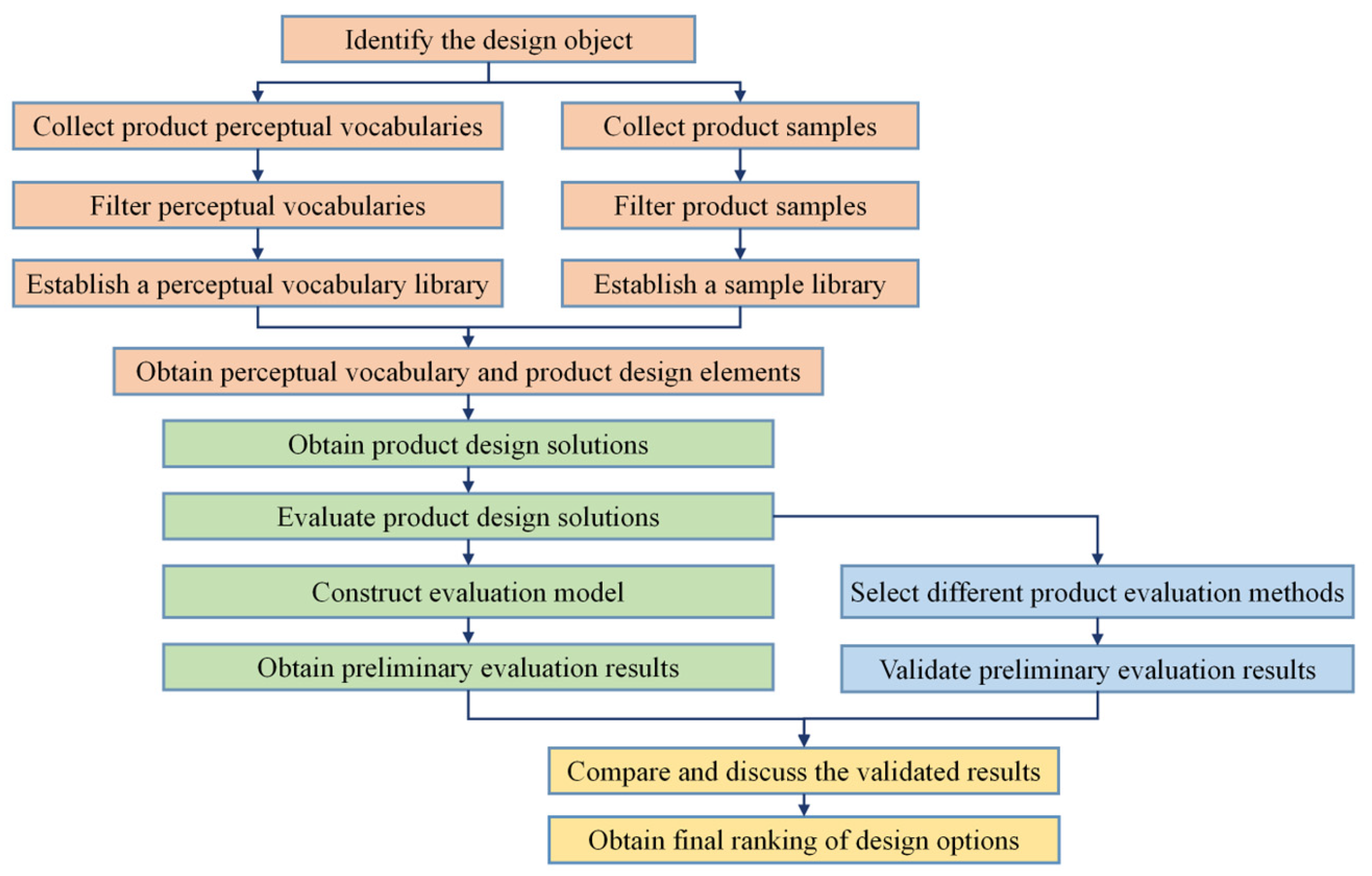
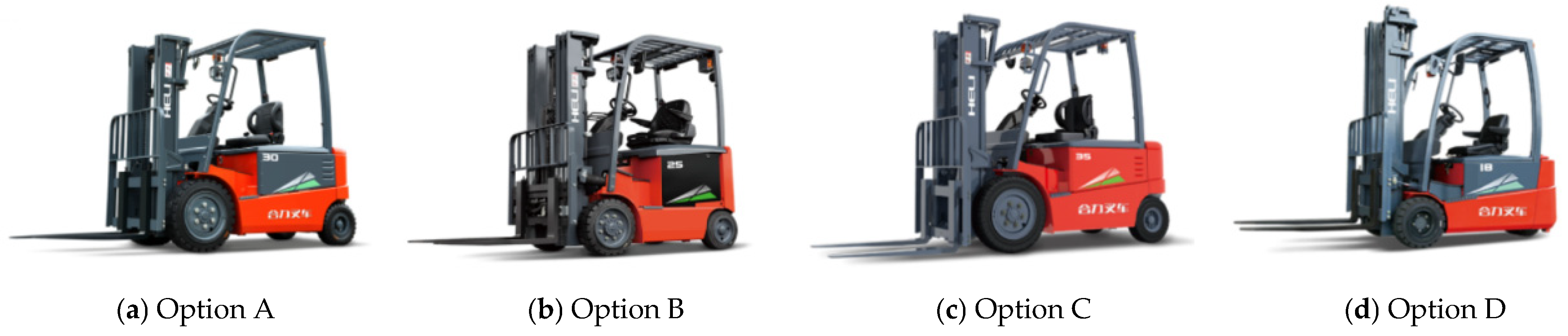
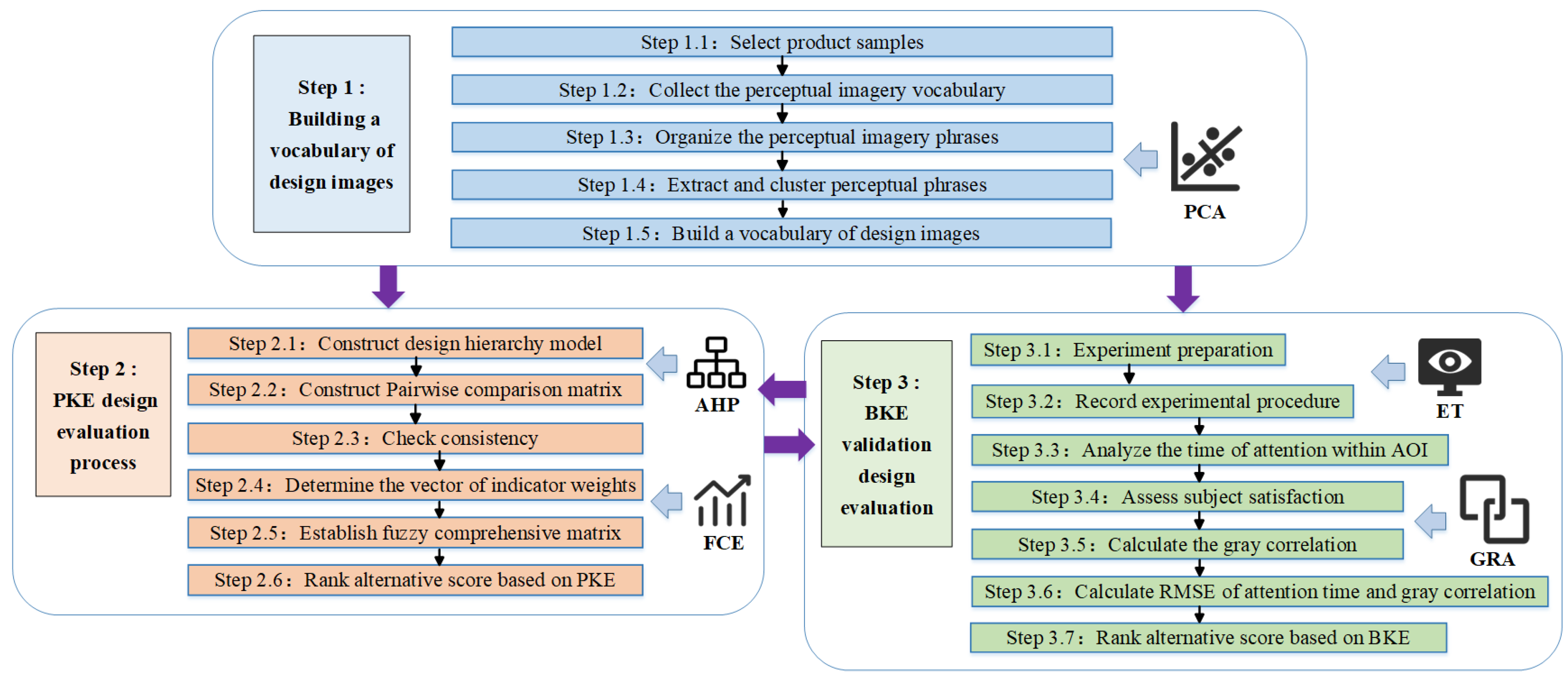
The field of complex product design evaluation can attract high ambiguity due to difficulties in establishing indicators and the subjectivity of expert evaluation scoring. Indeed, traditional Kansei Engineering (KE) relies on user requirements and feedback for design evaluation, which may not fully and effectively validate the design evaluation results, let alone determine whether they apply to complex products with more evaluation index systems. To overcome these drawbacks, this study proposes an evaluation method based on Hybrid Kansei Engineering (HKE) modeling for complex product design evaluation. HKE modeling consists of two parts, namely Forward Kansei Engineering (FKE) and Backward Kansei Engineering (BKE). In this study, four electric forklift designs are used as an example. The FKE system adopts the multi-attribute decision evaluation method; obtains the evaluation indexes of the forklift product imagery and then establishes the perceptual word collection; constructs the evaluation index system of the forklift via the Analytic Hierarchy Process (AHP); calculates the weights of the evaluation indexes of each level and their rankings; and calculates the final rankings of the four electric forklift design solutions by adopting the Fuzzy Comprehensive Evaluation (FCE) method. The BKE system adopts eye tracking (ET) to extract the attention time, visual attention hotspot, and other eye movement index data, and the Gray Relation Analysis (GRA) method was used to validate the model to derive the ranking, which verifies the effectiveness and scientific validity of the evaluation method. The results of this study show that the two-way evaluation of HKE modeling can effectively avoid subjective factors in product design, improve the scientific nature of the design, and guarantee the logical rigor of the perceptual design procedure.
Keywords: product design evaluation; hybrid Kansei engineering; complex product design; fuzzy comprehensive evaluation; eye tracking product design evaluation; hybrid Kansei engineering; complex product design; fuzzy comprehensive evaluation; eye tracking