1. Introduction
Intelligent decision-making in big data and AI-generated content, as well as in large-scale network environments, is a primary part of establishing trust, efficiency, and security in modern digital ecosystems. Smart decision-making in this area means the ability of the system to analyze, grade and rank huge amounts of AI-generated data and network activity with automated analysis models. As generative AI is growing very fast, autonomous computing, cyber–physical structures, and cloud networks are facing a velocity of data as never before, as well as heterogeneity and uncertainty. Search engines, social networks, cybersecurity centers and content moderation engines (among other platforms) are constantly processing text, imagery, videos and interactive data streams and must have advanced mechanisms to determine what can be deemed as reliable information, as well as manipulated and low-quality information, and optimize network performance and user experience. Therefore, smart decision-learning in massive data AI-based content and networks has emerged as a critical area of research focus in ensuring that information integrity and reliable computing environments are maintained.
The significance of smart decision-making in big-data, AI-generated content and networks is even greater when the dynamism of current information ecosystems is taken into account. The AI-generated content can be based on credible information and creative content, or misleading and even harmful media, which requires a strong screening and ranking system. On the same note, digital networks should be able to judge routing efficiency, allocate resources, decrease latency, and minimize privacy risk, cyber threats and energy consumption in real time. Traditional algorithms do not react well because they contain a great deal of information ambiguity, uncertainty in the expert ratings, and a speedy change in the patterns of content generation. This, in turn, implies that any effective decision-making tools need to include uncertainty modeling and focus on several conflicting criteria that need to take priority at the same time, which, in turn, encourages the adoption of multi-criteria decision-making (MCDM) frameworks.
The intelligent decision-making of big data and AI-generated content in the MCDM universe deals with the methodical assessment of options based on varying criteria, including authenticity, relevance, performance of computations, dependability of the system, and system security. The MCDM models provide guided rationale to guide real-time decision-making in intelligent environments, enabling digital systems to choose the best processing tactics, classify data, identify anomalies and provide stable network processes. Nonetheless, professional decision contexts frequently involve incomplete judgments, conflicting decisions, and indecisiveness in the expert judgments, and crisp or classical MCDM is not adequate. Thus, more sophisticated fuzzy-based MCDM techniques are being used to better represent realistic decision behaviors in digital systems of high uncertainty and symmetry.
The most important thing in this regard is to manage the uncertainty. Traditional crisp decision models presuppose deterministic judgments and given preferences which cannot appropriately be used in the dynamics of contemporary uncertain systems. Fuzzy Sets (FSs) were proposed by Zadeh [
1], in which the membership degrees (MDs) are values in [0, 1], and hence allow one to represent vagueness, but not hesitation in particular. Intuitionistic Fuzzy Sets (IFSs) with both MDs and non-membership degrees (NMDs) were later introduced by Atanassov [
2] with the extra condition that the sum of the two falls within [0, 1] to provide more options in decisions. It was further developed by Yager [
3], with Pythagorean Fuzzy Sets (PyFSs), so that the squared sum of MD and NMD was constrained to [0, 1], which enhanced the modeling of high-uncertainty cases. This was later generalized by the q-Rung Orthopair Fuzzy Sets (q-ROFSs) [
4], which varied the capability of uncertainty by a flexible parameter. More recently, Cuong [
5] updated to Picture Fuzzy Sets (PFSs) with acceptance, rejection, and abstention degrees, which not only capture hesitation but also allow a neutral or refusal option, offering a richer representation of uncertainty than FSs, IFSs or PyFSs. This makes PFSs particularly suitable for AI-generated content and dynamically networked environments, where ambiguity, indecisiveness, and partial opinions are frequent.
Numerous MCDM methods are available to solve multi-attribute decisions, among others, such as TOPSIS, WASPAS, CODAS, and EDAS. Nevertheless, the work takes the FUCA strategy, which is the French term Faire Un Choix Adequat, which can be translated as Make an Appropriate Choice. FUCA is more rational, balanced, symmetric, and context-appropriate when choosing among several competing alternatives. It is naturally adapted to complex decision situations with conflicting criteria and uncertainty. In picture fuzzy settings, the PF-FUCA model combines the fair-choice philosophy of FUCA with the enhanced capability to identify acceptance, rejection, and abstention opinions when uncertain. This improves the process of evaluation, in which intelligent computing systems with AI-generated content and network-based decisions often face hesitation by experts, biassed acceptance, and neutrality. FUCA also has good interpretability, ranking stability, and the ability to adapt to expert preference structures, which makes it an effective tool in terms of intelligent decision support in dynamic big-data settings.
The given decision model, according to PF-FUCA, implies a new list of calculations that evaluate intelligent decisions in digital environments where uncertainty is a common issue. The reason behind its use of the PF-FUCA method is that, unlike IFS or spherical fuzzy sets, PFS can enable representation of acceptance, rejection and abstention simultaneously, and thus a much more accurate way of modeling the process of hesitation and uncertainty. The PF-FUCA approach was applied in the paper in a practical example of determining the most successful strategies in the analysis of AI-generated material and network optimization under different conditions and decision-makers. The originality of the study is that, for the first time in the computing case, the PF decision theory was applied together with FUCA, and the accuracy of the stable ranking, the increased ability to model the uncertainty of decision hesitations, and increased flexibility of sensitivity were achieved compared to the approaches applied to the PF-MCDM applications. The conceptual sketch of the current paper has integrated the setting the background of the problem, the development of the PF-FUCA methodology, application of the method to a multi-criteria problem which is inspired by a real-life problem, analysis of the behavior of ranking, benchmark comparison of the method with other well-known MCDM methods and sensitivity analysis as a robustness tool. These findings have shown that the framework can be successfully utilized in making decisions under ambiguous, uncertain or hesitant information to ensure usefulness in real-time intelligent computing, big-data decision support, network intelligence, and AI-driven content quality governance.
Structure of the Study
The remainder of this paper will be organized as follows:
Section 2 will provide a review of related works in MCDM, FUCA, and PFS. The preliminaries are found in
Section 3.
Section 4 provides the proposed PF-FUCA-MCDM methodology.
Section 5 presents a case study on intelligent decision-making in big-data, AI-generated content and networks.
Section 6 presents the findings of the sensitivity analysis, validation, and comparison. Lastly,
Section 7 summarizes the research and outlines the future directions of the study.
2. Literature Review
2.1. Existing Studies on AI-Generated Content and Networked Cyber Systems
The emergence of artificial intelligence and the development of large-scale network infrastructures have occurred at a very high pace and altered the context of online communication, online security, and automated content platforms. AIGC is now a major facilitator of automated intelligence and also a significant threat to trust and security in interconnected systems. Indicatively, the article [
6] has noted the rise in the use of AIGC in highly sophisticated social-engineering attacks, indicating how the deepfake technology and the AI-generated phishing messages can control users and bypass conventional defense points within the current networked landscape. Equally, an in-depth survey in [
7] investigated the opportunities and challenges associated with ChatGPT-4, focusing on the necessity of systematic control and safe knowledge-exchange procedures when AI systems communicate within both enterprise and consumer networks. There is significant literature on the evil use of AIGC to attack the cyber world. The paper in [
8] examined countermeasures in neural networks to identify the AI-generated malicious content in real time, highlighting the advancement of machine-generated deceit. In addition, a study in [
9] investigated AI-improved cyber-threat detection to defend against critical infrastructures, which discusses how cascading vulnerability risks manifest in a system with interconnected cyber–physical networks when confronted by AI-enabled attackers. As noted in the related study in [
10], adversarial AI-based cyber threats were investigated, and it was found that deepfake misinformation and network malpractice are capable of bypassing conventional anomaly detection systems and require more resistant and dynamic protection systems. In addition to security-related issues, recent publications have also paid attention to the aspect of governance, as well as policy evaluation of AIGC. The integrative decision framework in [
11] that presented the rules of operating and controlling the use of ChatGPT reveal the significance of designed decision-support mechanisms and MCDM techniques in making the deployment of AI responsible in the networked ecosystems. In the meantime, AIGC has been applied to the creative industry, as the example of [
12] demonstrates, with packaging-design methodologies guided by AI being studied. The paper acknowledged the lack of creativity in AI-based designs and the need to incorporate decision-making processes that can harness human tastes, emotional issues and ambiguous design decisions. On the whole, the current literature proves that the opportunities and threats associated with AI-generated material and cyber-connected ecological environments require intelligent, multi-criteria, and uncertainty-tolerant decision models. Although significant improvements have been achieved, the existing solutions continue to struggle with ambiguity, contradictory opinions of experts, and dynamic online behaviors, and in this regard, there is a need to integrate advanced fuzzy-based MCDM frameworks to improve the reliability of decisions in complex AIGC and network environments.
2.2. FUCA Method and Its Applications in MCDM Problems
The FUCA approach has been progressively used in recent years in the field of multi-criteria decision-making to solve complex evaluation and optimization issues in various fields of engineering and industry. The researchers have been keen to support the strength, accuracy, symmetry, and comparative benefits of FUCA compared to the conventional MCDM techniques. Do [
13] established that the FUCA method was better than the WSA technique in the context of mechanical machining decision-making, and had a better capability of generating more consistent and reliable rankings. This was extended by Hoang [
14], who used the FUCA method of the multi-objective optimization of turning processes incorporating four different weighting methods, which were used to confirm the flexibility and robustness of the method in the determination of optimal machining parameters. More developments were presented by Truong and Thinh [
15], who integrated the PIPRECIA weighting method with an altered FUCA method to assess the lathe selection. Their work not only shows the improvement in the performance but also deals with the crucial deficiencies in the original FUCA algorithm, suggesting changes aimed at improving the accuracy of the decisions. In a similar manner, Nguyen [
16] combined FUCA with CURLI and other weighting models to facilitate technical product selection in decision-making, indicating that it can be used in consumer-oriented engineering solutions, such as the analysis of household appliances and UAVs. Trung et al. [
17] are much more recent and further extended the evaluation range by comparing FUCA to the PSI process of mini water pump selection. They found that FUCA-ranked options were more stable, which means that they have good discriminatory ability when dealing with close-rated alternatives. Taken together, these studies support the assumption that the FUCA approach is an effective and promising MCDM technique with consistent ranking results, allowing its combination with other weighting models, and high performance in the mechanical, industrial, and product evaluation scenarios.
2.3. Research Gap Analysis
The literature available demonstrates that the issue of the security of AI-generated content and developing more advanced MCDM approaches, including the FUCA one, is of high academic interest. The studies of AI-generated content have primarily been done in terms of threat characterization, detection, and the issue of cybersecurity in network systems, with a particular focus on the threats of deepfakes, phishing, social engineering under AI, and negative cyber tactics. However, many of these works concentrate on the defensive and regulatory setting without directly incorporating structured decision-making structures to approximate and prioritize risks or response actions in intelligent cyber systems. Similarly, research undertaken on the FUCA approach has contributed significantly to engineering, optimization of manufacturing, and evaluation of technical products. The level of methodological rigor, recovery with weighting methods, and performance compared to other MCDM methods are good in the available literature on FUCA. But to a great extent, these applications are confined to industrial and mechanical areas, and there is very little that concerns digital security spaces or systems that are AI-heavy.
That is why there is a research gap that has been evident at the intersection of AI-generated content security and advanced decision-making strategies. Specifically, no previous literature has:
Integrated FUCA into cybersecurity or AI-based content analysis to assess the systematic risks.
Applied PFS to the FUCA model, although PFS can capture uncertain, ambivalent and dark responses typical of AI-based networks.
This lack points to a critical methodological failure in which classical fuzzy-, intuitionistic fuzzy- or spherical fuzzy-based FUCA models cannot retain multi-attitudinal information that is important to intelligent cyber ecosystems.
This gap indicates the need to establish a new framework that would use the uniformity of the decisions made by FUCA to prioritize and analyze the security shortcomings and issues in the AI-generated content regulation. The given PF-FUCA model will directly fill these gaps by integrating FUCA with the expressive uncertainty-handling capacity of PFS, which is a more realistic and holistic way to analyze the risks and decision options within the framework of AI-generated content. The modern paper bridges this gap by introducing the application of FUCA to AI-security, which offers methodological and practical input to intelligent networked systems.
2.4. Objectives of the Study
The given research is supposed to create a smart decision-making architecture to deal with uncertainty in AI-generated content and networked cyber systems within the PF-FUCA framework. The key objectives are as follows:
In order to deal with the complexity and uncertainty involved in assessing AI-generated content and connected digital networks.
Include PFS in the FUCA approach to manage the hesitation and neutrality in expert judgments.
To employ the PF-FUCA model of making smart and trustworthy choices in AI settings based on big data.
To draw parallels between the performance of the suggested approach and the known MCDM methods based on qualitative and sensitivity analysis.
To deliver a more precise, transparent, and consistent decision support framework for real-life intelligent computing and cybersecurity-oriented applications.
2.5. Motivation and Contributions of the Study
The fast-growing AI-generated content and internet networks have presented new complex decision-making scenarios with data uncertainty, ambiguity, and high-dimensional information prevailing. Conventional MCDM and crisp decision systems are unable to handle this uncertainty, especially when experts exhibit indecisiveness and emotional impartiality. This drives the need for a robust decision support system tailored for intelligent computing environments. PFS provides a comprehensive framework for managing uncertain and indecisive information, yet its integration into FUCA remains largely unexplored. Existing fuzzy and intuitionistic fuzzy models fail to simultaneously capture acceptance, rejection, and neutrality, frequently encountered in AI-generated network data, making conventional approaches insufficient for realistic multi-attitudinal decision environments.
Therefore, integrating PFS with FUCA is essential to preserve richer uncertainty information and enhance the discriminatory capability of the decision model.
Out of this necessity, the study will make the following contributions:
Development of the novel PF-FUCA model for improved smart decision-making in AI-based content and networking.
Systematic combination of PFS with FUCA to capture and process hesitation, neutrality, and multidimensional preferences.
Construction of a sophisticated assessment framework for complex digital ecosystems under big data and cyber uncertainty.
Benchmarking and comparative analysis demonstrate enhanced accuracy, stability, and soundness over classical MCDM methods.
Practical application example showing decision-making in intelligent computing and cybersecurity contexts.
These submissions make the PF-FUCA model an effective method to be used in high-uncertainty situations of decision-making, furthering the fuzzy-supported MCDM research within intelligent computing and intelligent systems.
3. Preliminaries and Theoretical Background
The concept of FS is one of the mathematical models of uncertainty dealing that was developed by Zadeh. Nevertheless, it is strong when dealing with circumstances that are ambiguous, such as the case of MD, but incorrect in situations of NMD or any ambiguity of circumstances. In order to address such weaknesses, Atanassov proposed another method referred to as IFSs. When both abstinence and indeterminacy are to be considered, Cuong [
5] developed the PFSs. In a bid to match the objectives of FSs, PFSs present not only the MD, NMD, and refusal degree (RD) but also AD.
Definition 1 ([
5])
. Consider a fixed universe and its subset PFS where represents MD, represents AD, and represents NMD. These degrees satisfy the following condition: Additionally, the RD for each PFS
is defined as follows:
Definition 2 ([
5])
. Let , be two picture fuzzy numbers (PFNs) and , be any scalar number, then it satisfies the following operations:
Definition 3 ([
5])
. For any PFNs denoted by
, then score function is defined as follows:where
4. Development of the Picture Fuzzy FUCA (PF-FUCA) Method
The PF-FUCA method combines PFSs and FUCA in order to improve uncertainty management in MCDM. In PFSs, expert judgments are stated in three independent membership components, i.e., MD, AD and NMD, and hesitation is implicitly established. This multidimensional model gives a more detailed model of human thinking than the conventional crisp ratings. The language terms (LTs) are mathematically converted into PFNs so that qualitative measures can be made through a mathematically rigid framework. The FUCA approach is a compromise-ranking method which ranks alternatives under each criterion, weights them and adds scores without necessarily having to normalize them. Though FUCA is computationally easy and an effective tool, its classical crisp version is unable to model the vagueness, hesitation, and neutrality that are often present in expert opinion, particularly in digital and intelligent settings. These limitations can be resolved by incorporating FUCA into the PFS framework to provide a more realistic model of uncertainty, greater precision of decision-making and better ranking reliability. In this way, the PF-FUCA mechanism helps a great deal to make complex MCDM issues more flexible, robust, and interpretable. Its potential is especially useful in new areas that involve subtle cognitive assessment, e.g., smart decision-making in big-data AI-generated content, cybersecurity governance, and management of digital ecosystems.
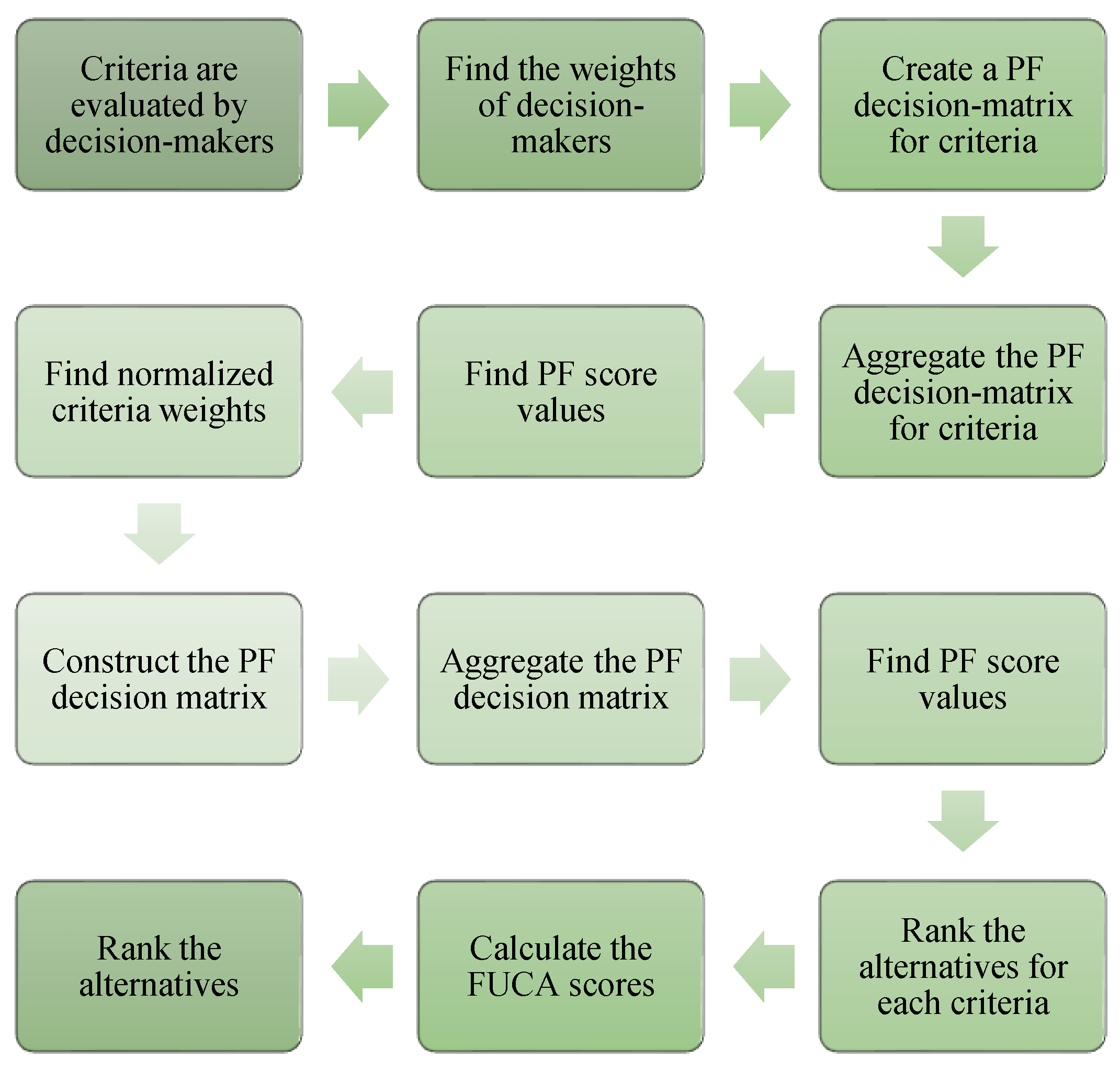
Figure 1 shows the procedural flow of the PF-FUCA framework.
Step 1. The criteria are assessed, and the weights of DMs are computed by the experts.
Table 1 presents the linguistic evaluations of the criterion and the DMs.
, denotes the set of decision makers (DMs) with weights represented by
and
.
Step 2. Create an aggregated PF decision matrix for criteria and decision-makers.
Considering a group of decision-makers, assume that is a PF decision matrix. In this case, refers to the assessment of with respect to DMs the criteria. PFNs use and it may be defined as .
The aggregated PF decision matrix is denoted as
where
.
Step 3. Find the criteria weights by using PF scores.
The PF score is calculated using Equation (1). It is mentioned that the finalized weights are computed by applying normalization Equation (4), and the total weights should equal
.
criteria exist, and the weight of
, denoted as
exists.
Step 4. Develop a PF decision matrix of alternatives, criteria, and decision-makers.
The linguistic evaluations of the alternatives are performed by means of
Table 2.
Step 5. Create an aggregated PF decision matrix.
Apply Equation (3). The decision matrix of the PF is to be aggregated.
Step 6. Find score values.
Calculate the values of scores of the aggregated PF decision matrix using Equation (1).
Step 7. Rank the alternatives for each criterion.
The picture fuzzy score values lie within the range , both positive and negative values naturally occur during the PF-FUCA aggregation process. A higher value indicates stronger positive assessment, while lower (including negative) values reflect weaker evaluation or stronger hesitation/negative membership.
For benefit criteria, alternatives are ranked in descending order, since higher composite PF scores represent better performance. For cost criteria, alternatives are ranked in ascending order, because lower composite PF scores indicate more desirable performance.
Step 8. Calculate the PF-FUCA scores.
Divide (5) to obtain the number of points on each alternative. In this case,
is the rank of criterion
of alternative
as calculated in Step 6:
Step 9. Rank the alternatives in descending order according to PF-FUCA scores.
5. Case Study: Intelligent Decision-Making in Big Data AI-Generated Content and Networks
The blistering appearance of digital ecosystems has led to a wave of large and dense streams of data, AI-based content, and highly interrelated network environments. Smart decision-making within big-data, AI-generated content, and computer networks has thus constituted a vital requirement, especially as organizations grow more dependent on automated and data-driven systems for classification, verification, cybersecurity, content rating and systems optimization. Artificial intelligence content has become an embedded and significant part of web media, automated communication, and digital systems; therefore, finding trustworthy information, ensuring secure network communication, and choosing the most trustworthy intelligent computing systems in any uncertain situations entails a sound computational approach. Picture fuzzy environments are a logical choice in such environments because they can represent positive, negative, and neutral preferences as well as the refusal information, which can reflect the hesitation and uncertainty of decision makers in extremely dynamic digital environments.
The choice of decision strategies to be used in intelligent computing environments is highly critical since wrong decisions can cause the misclassification of AI-generated content, loss of network stability, symmetry, or inefficient resource allocation in big-data processing architecture. When the uncertainty levels are high and the factors to be considered in the decision-making process are multidimensional, then the traditional deterministic methods cannot be used. Since contemporary computing is largely reliant on validated content, authorized communication systems, and adaptive learning models, an ordered and intelligent decision-making model is required. The proper decision-making in AI-generated content screening, trust classification, and network optimization guarantees authenticity, privacy, secure communication, and fairness and efficiency of the system. Therefore, it is clear that a complex methodology that can manage incomplete, imprecise and ambiguous information is needed to support large-scale intelligent systems.
MCDM has become a formidable solution in such a difficult field in solving ranking, classification and selection problems in cases where numerous conflicting indicators are involved. Many MCDM applications, including TOPSIS, VIKOR, AHP, PROMETHEE, MARCOS and WASPAS, have been extensively used in intelligent systems but will not work adequately when uncertainty exists in AI-generated content and network-based systems. To address these challenges, this study proposes a PF-FUCA model, which captures uncertainty and synthesizes partial expertise to produce reliable and robust decisions. The integration of picture fuzzy theory with FUCA enhances the accuracy and stability of decisions when content validity, data trust, and system reliability are uncertain.
To illustrate the proposed PF-FUCA model, a decision-making scenario is constructed, in which four experts (, , , and ) evaluate intelligent computing solutions aimed at enhancing AI-generated content verification, big-data analytics, and network security. This scenario is specifically designed to reflect real-world challenges faced by IT managers and decision-makers in modern digital ecosystems, where trust, efficiency, and reliability are critical for operational success. The seven criteria applied to this case study are five indicators based on benefits (–) and two indicators based on costs (–). The criteria are selected to capture both technical performance and practical implementation concerns relevant to organizations adopting intelligent computing solutions. The criteria are defined as follows:
Fifteen other intelligent computing solutions are evaluated, which are as follows:
To capture uncertainty in trust, network conditions, and algorithm performance, the decision-makers take into account all the options under the PF conditions because such assessments are common to IT professionals in practice. The summation of the PF decision matrices is then performed, and the PF-FUCA model is used in determining the prioritization of alternatives. Such a strategy has the effect of making sure that the chosen smart computing solution is the most appropriate to the organizational goal of ensuring maximum detection accuracy, computational efficiency, security flexibility, and reliability and minimizing the cost and response time. Through the provided PF-FUCA approach, the most qualified intelligent computing paradigm in terms of big-data, AI-assisted content verification, and safe network operations is determined, which proves the practicality and the intended usage of the study by the decision-makers in digital ecosystems.
Step 1: The consideration of these fifteen options based on the seven criteria is operationalized using a step-by-step model.
Table 1 and
Table 2 indicate the linguistic terms and the PFNs of the benefit and cost criteria, respectively.
Table 3, in its turn, gives the weights of the four decision-makers in accordance with the implementation of the evaluation process, which allocates importance to the decision-making process.
Step 2: The results of the decision-makers in each of the criteria are then summarized in
Table 4, and the linguistic verdicts are placed in it. The following language is then translated into
Table 5, which is made up of PFNs, and used to build the PF decision matrix. Lastly,
Table 6 demonstrates how group evaluations work with the PFWA operator, which relies on the implementation of the equation. Equivalent to the current PF-FUCA approach, the input of the proposed one (3) will be provided.
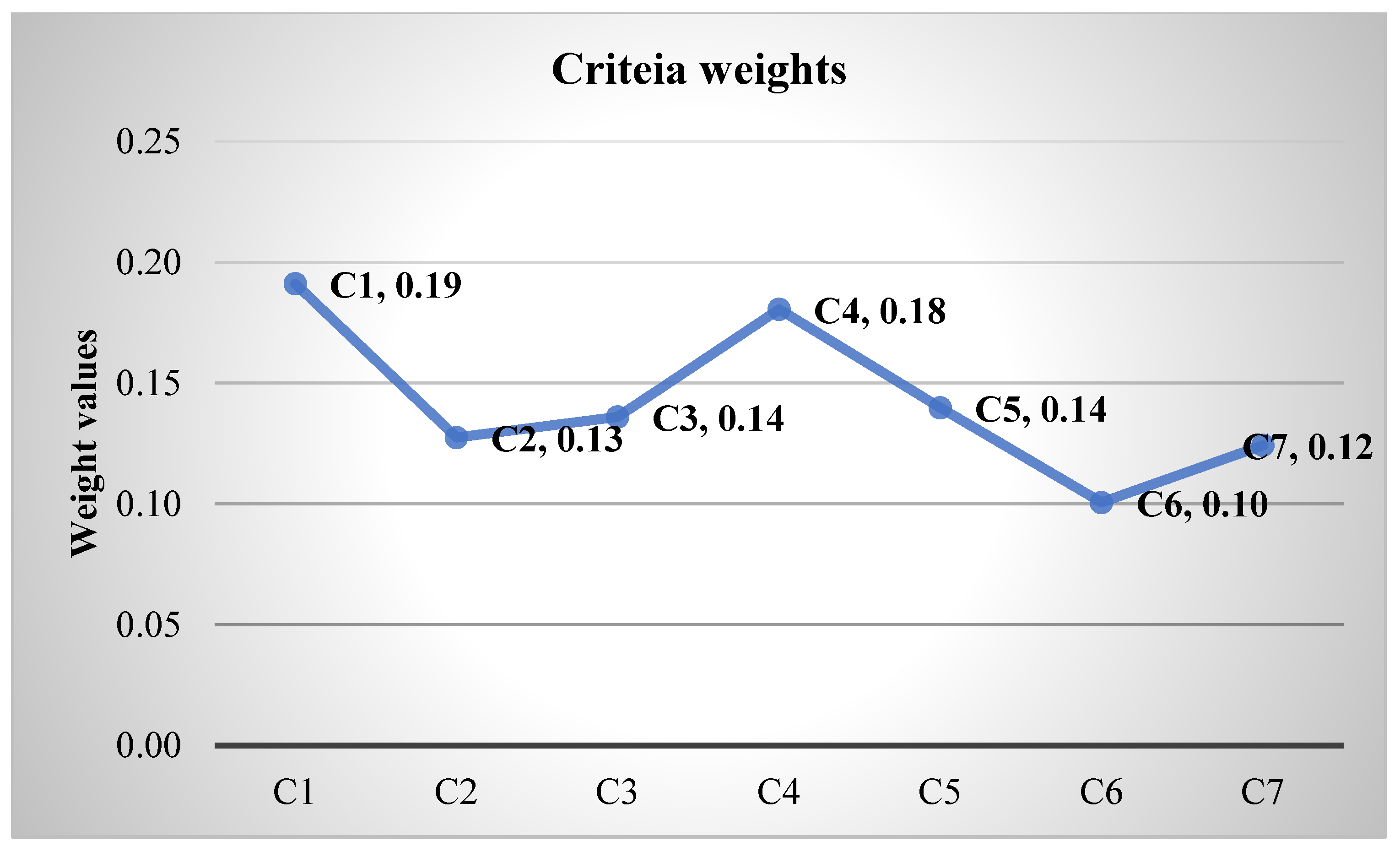
Step 3: Table 7 shows the weighting of the criteria (
–
) by using Equation (4). In
Figure 2, the weight of the criteria is graphically presented, and this gives a natural perspective of the significance of a given factor.
Step 4: The assessment of the alternatives on the basis of the criteria was performed in the form of linguistic statements by the four decision-makers, as shown in
Table 8. The above linguistic scale is used to create
Table 2.
Table 9 is the translation of
Table 8 of linguistic words into the PFNs, which consist of the PF decision matrix.
Step 5: The sum of
Table 10 is the decision matrix, and that was obtained by operating the PFWA operator to obtain individual judgments as a group decision.
Step 6: Table 11 also employs the PF information to compute the score values of the alternatives based on Equation (1), which gives an initial ranking of the other alternatives.
Step 7: Table 12 further selects this process through ranking the alternatives in each criterion and gives the possibility to study the performance further in
–
.
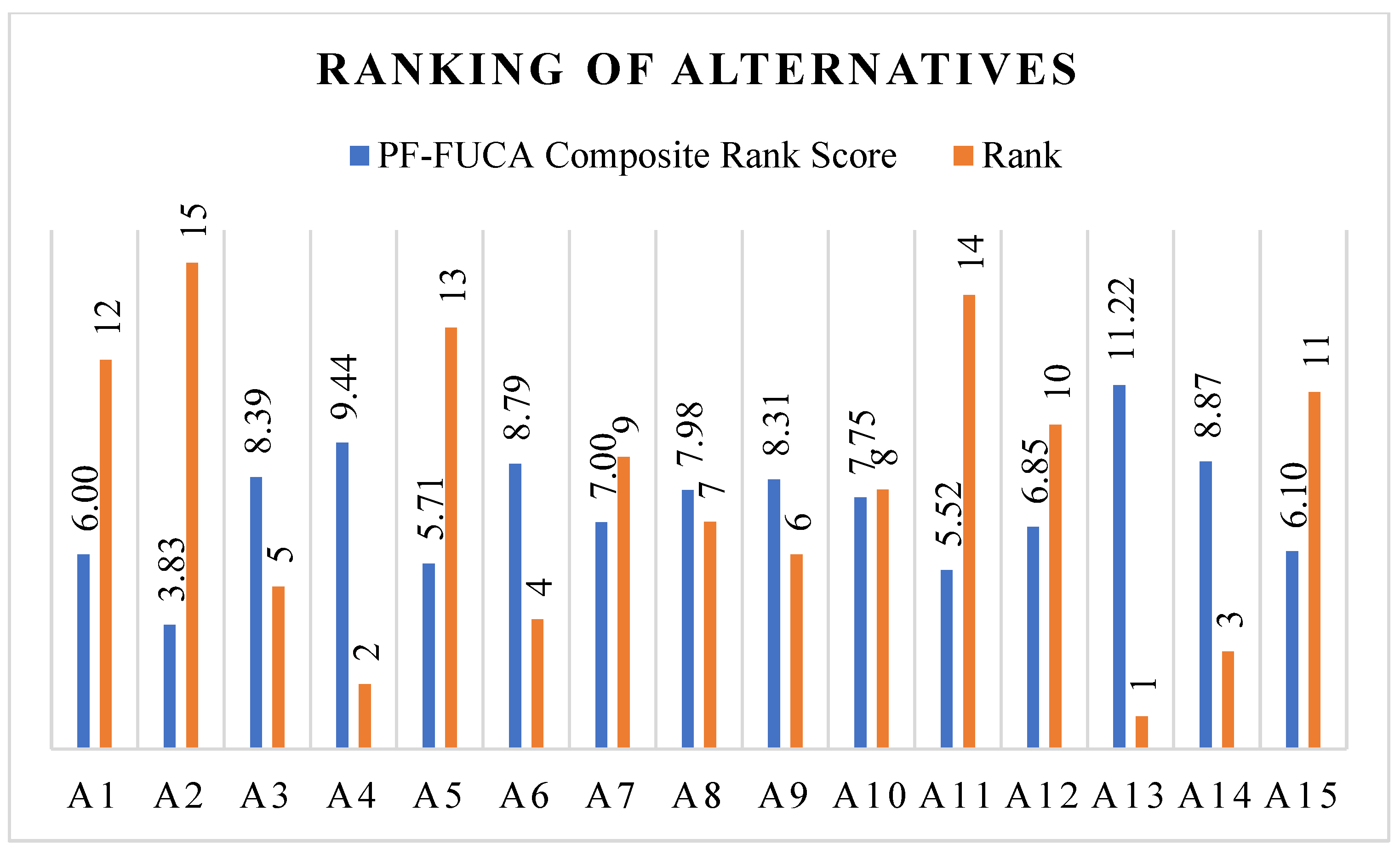
Step 8: Finally,
Table 13 indicates the PF-FUCA scores, the final scores obtained by multiplying the interaction of the criteria by the final scores, as an instrument for obtaining a holistic assessment of the alternatives.
Figure 3 shows the results of the ranking given in a graphic manner, giving a specific comparative analysis of the performance of each of the alternatives in the optimization process.
Results Discussion
The results gained indicate the relative performance of fifteen intelligent computing options measured within the context of the PF-FUCA framework in decision-making in big-data, AI-generated content, and networked intelligence settings. Based on the ranking results, (Autonomic Cyber Defence and Monitoring System) takes the first place, proving its greater functionality with respect to responding to threats in real time, adaptive defense policies, and automated surveillance features needed by digital ecosystems that have to work with large flows of data and AI-based content enhancement. (Hybrid Federated Learning Analytics System) and (Context-Aware Content Authenticity Classifier) are ranked second and third, respectively, which means that distributed learning, data privacy protection, and content authenticity identified based on context are the focus of next-generation intelligent systems. (AI-Driven Network Intrusion Recognition Tool) and (Deep Neural Content Detection Engine) take fourth and fifth place, indicating the relevance of AI-based threat detection and deep learning-enabled content analysis in protecting online communication and data verification in the media. Other options , and are placed mid-range with reasonable scalability, intelligent pattern learning and multi-agent collaboration, but with a slightly lower performance in adaptability and content trust authentication. In the meantime, solutions such as , , and are positioned on the lower axis because they are more computationally expensive, slow-responsive, or inefficient in the case of large-scale decentralized systems. Blockchain-Enhanced AI Content Filter, , is given the last rank, 15th, which means that, although blockchain provides trust and transparency, it has a high price tag in terms of computational cost and latency issues that make the system inappropriate for high-speed, high-volume real-time intelligent computing. It is important to note that while the PF-FUCA computations involve multiple steps, including PF matrix aggregation, normalization, weighting, and ranking, all these calculations are fully automated using computational tools, ensuring practical feasibility even for large-scale problems. On the whole, the obtained results indicate that the decision options with a focus on autonomy, federated learning, adaptive cybersecurity, and context intelligence perform better than others, which proves the efficiency of the offered PF-FUCA approach in finding the most successful intelligent computing strategy in case of uncertainty.
6. Sensitivity Analysis
This section examines the robustness of the suggested PF-FUCA model and evaluates the extent to which the weights given to the decision-makers and the weights to the criteria will influence the ultimate conclusion. It also looks into whether the significance and rank of criteria in one situation are stable in order to guarantee that the decision-making process is similar in other situations.
6.1. Influence of Change in DMs’ Weight Values on Criteria Weight Values
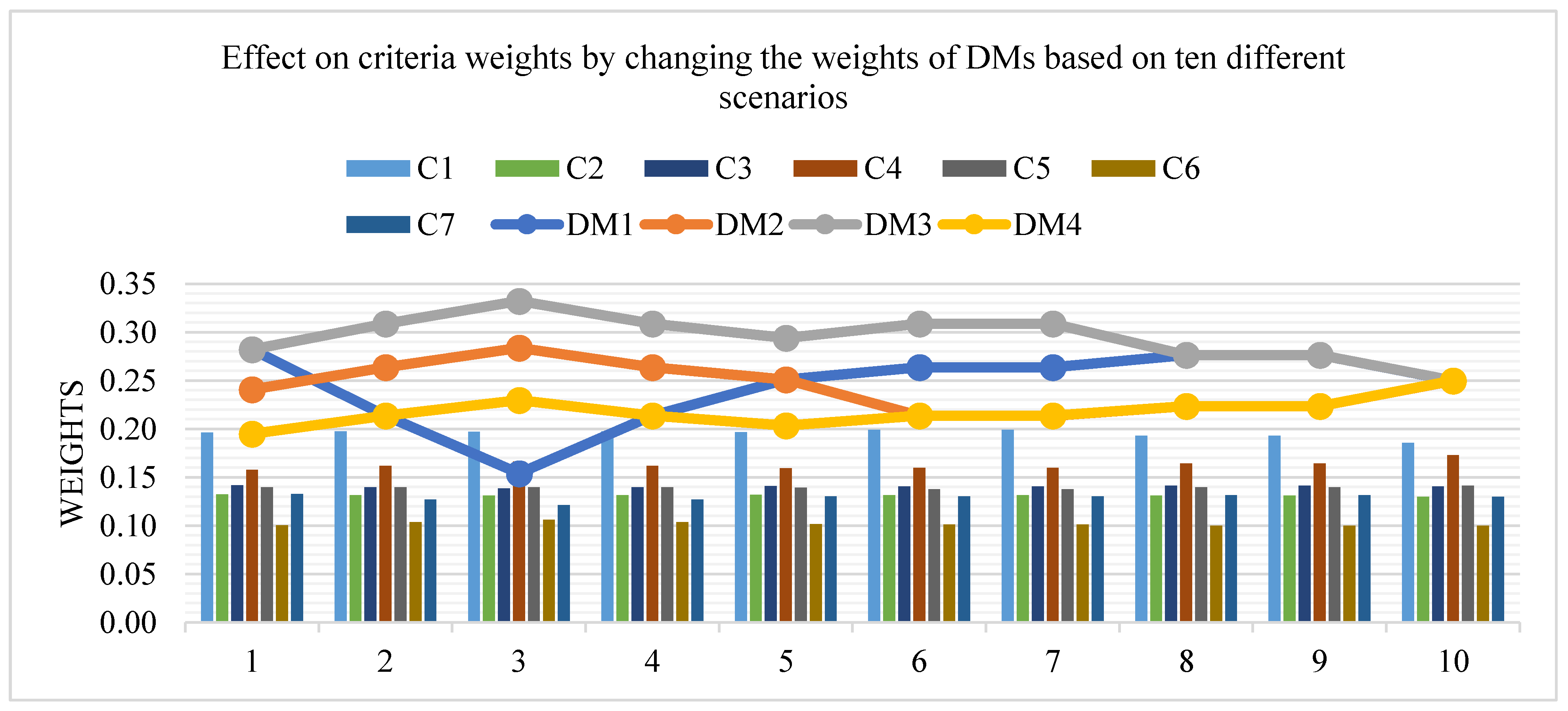
To compute the strength and stability of the proposed method of PF-FUCA, the weights of the decision makers were varied across various scenarios in a controlled manner, and the resultant effect on the weights of the criteria was monitored. As
Figure 4 shows, although there was a significant variation in the weights of the decision makers, the weights of the criteria are quite stable with little variation in the weights between the cases analyzed. This tendency shows that the shift in the weight of individual decision-makers does not lead to a strong deviation in the overall weight distribution of criteria. Specifically, benefit-based criteria ensure similar levels of priority over the variations, whereas the cost-based criteria also show the same weight patterns. The fact that the profile of criteria weights remains the same despite the change in preferences of decision-makers confirms that the PF-FUCA model exhibits high resilience and well-balanced aggregation characteristics. The manner is, therefore, effective in avoiding dominance of a particular decision maker and provides the results of decisions in dynamic judgments that are reliable and unbiased.
6.2. Impact of Change in Criteria Weight Values on Ranks of the Alternatives
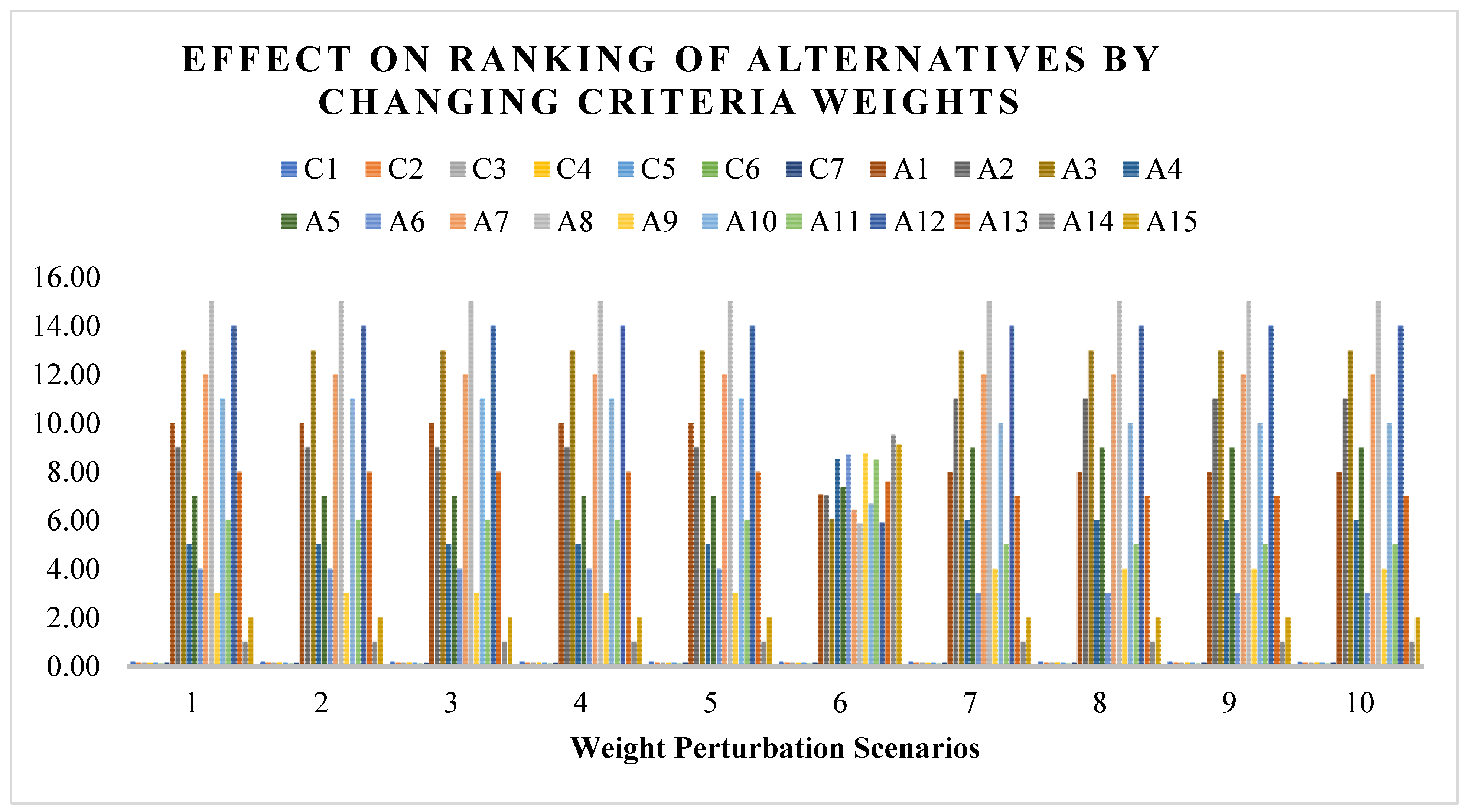
In order to investigate the strength of the suggested PF-FUCA framework further, the weights of the criteria were manipulated in a systematic manner in a series of test conditions, and the change in the ranking of the alternatives was monitored. The rankings do not change much due to changes in the importance of the criteria, as shown in
Figure 5, which proves that the PF-FUCA approach offers stable and reliable results of the decision-making process in the shifting decision context. The best options remain on top of the performance list in the majority of cases, which means that the approach is efficient in terms of recognizing the solutions with excellent aggregate performance in the context of intelligent computing, big-data, AI-generated content assessment, and cybersecurity demands. Small changes in rankings are noted between some middle-level alternatives with some changes in the weight, which is predictable in real-world decision-making, where the relevance of criteria can change based on system goals and situational attributes. Notably, the most ranked alternatives also share the consistent positioning across the scenarios, which proves that there is no reversal issue in ranking, and the stability is high even when making a perturbation in the criteria. These findings confirm that the PF-FUCA-based model can maintain the reliability of decisions and provide a strong ranking performance, which is appropriate in challenging real-life conditions where decision priorities can be dynamically changed.
6.3. Comparison Analysis with Existing PF-MCDM Approaches
In order to prove the efficiency of the offered PF-FUCA approach, a comparative analysis was carried out with the most famous picture fuzzy MCDM methods, PF-CoCoSo [
18], PF-MARCOS [
19], and PF-CRADIS [
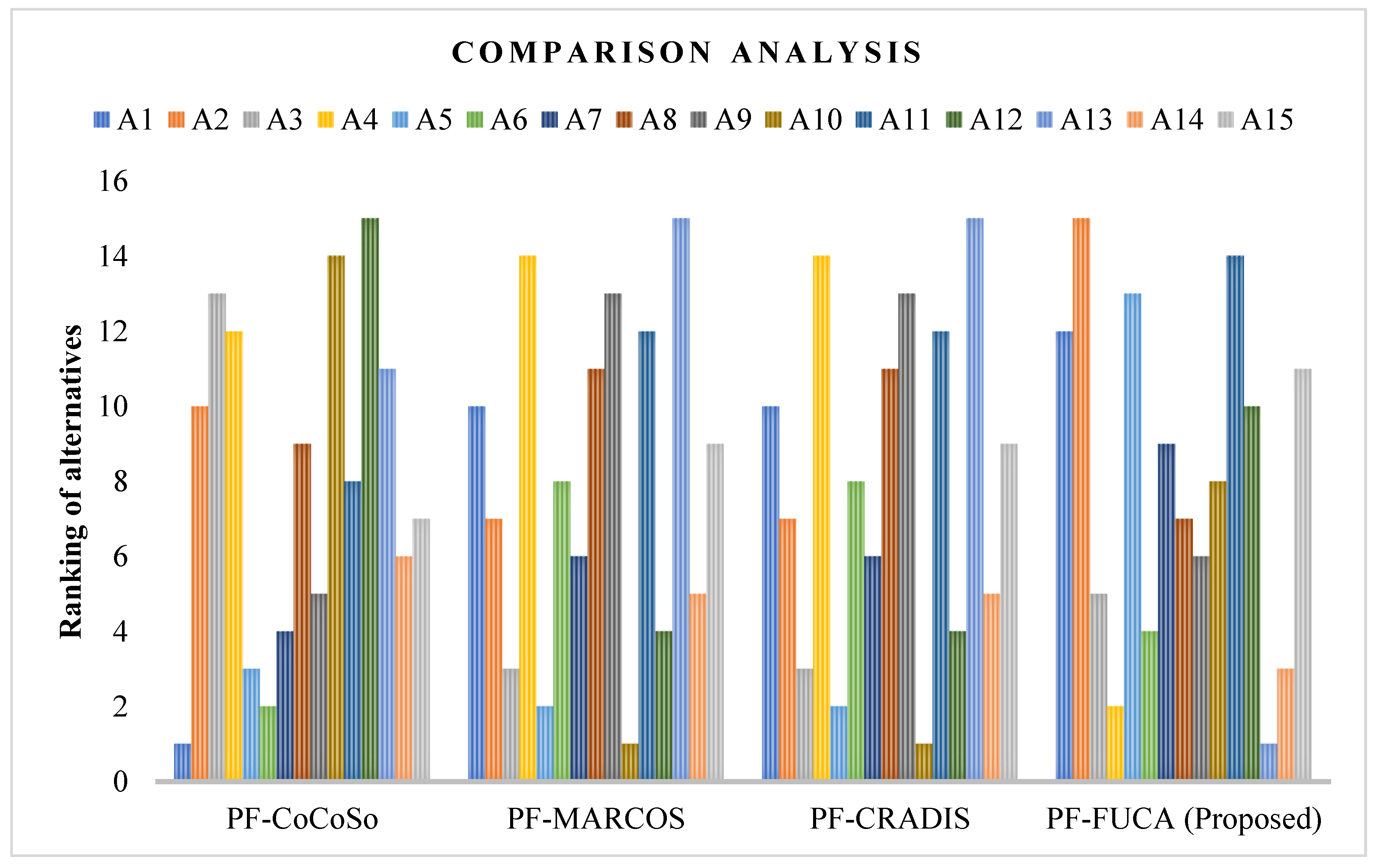
20]. The findings associated with the comparison made in
Table 14 and
Figure 6 reveal that there were evident differences in ranking in the different approaches, as well as the significance of including complex aggregation structures in situations with high levels of uncertainty in the decision environment. Although there is significant flexibility in the ranking patterns of the existing PF-MCDM models, the PF-FUCA approach gives a more consistent and valuable ranking of alternatives, demonstrating its superiority in real-world decision contexts.
It is interesting to mention that the solutions, which score highest in multidimensional digital intelligence characteristics, such as adaptive threat monitoring, distributed learning and content authenticity analysis, are ranked higher by the given approach that demonstrates more realistic and accurate evaluation of intelligent computing performance. Conversely, the base approaches are more inclined to over-emphasize performance characteristics at a given time or cannot detect the vacillation patterns of decision-makers, which causes fluctuation and the distortion of the dominant options. The advantage of PF-FUCA is also in its sophisticated fuzzy aggregation process that is more resilient to uncertainty, more realistic concerning the hesitation and neutrality and refusal of the experts, and has more stable, symmetric and context-specific ranking. These advantages ensure that PF-FUCA is especially applicable to complex systems such as big-data analytics, AI-generated content analysis, and intelligent network security systems. Thus, the benchmarking analysis proves the fact that the proposed PF-FUCA approach is evidently better than the currently existing PF-MCDM framework, offering more powerful, more credible, and contextually significant decision outputs.
As the qualitative comparison in
Table 15 shows, the suggested PF-FUCA-based decision-making model performs much better in terms of various assessment dimensions compared to conventional methods of MCDM like TOPSIS [
21], WASPAS [
22], CODAS [
23], EDAS [
24] and OPARA [
25]. Unlike classical models, which have limited capabilities in handling high uncertainty and do not fully support PF information, the proposed PF-FUCA approach is highly robust in managing indeterminate, conflicting, and vague data, which are common in intelligent computing and AI-generated content environments.
Moreover, PF-FUCA ensures uniform ranking, increased flexibility in a variety of decision-making approaches and high computational performance, and thus, is especially applicable to real-world applications that utilize big data, automated content processing, and network-based decision-making processes. Although the benefits of computational efficiency are qualitatively comparable in this comparison, in subsequent work, a numerical analysis of computational complexity will be implemented to offer explicit order-of-complexity information to further confirm the efficiency of PF-FUCA. In sum, the outstanding functionality of the suggested system in all the criteria of quality precondition the suitability of this tool, as well as its credibility and excellence, as a modern decision-supporting instrument of the emerging intelligent technologies.
As
Table 14 indicates, PF-FUCA has more realistic and precise rankings of alternatives than the current approaches used in PF-MCDM.
Table 15 further supports this by demonstrating that PF-FUCA is also qualitatively good in dealing with high uncertainty, managing PF information and the consistency of ranking and robustness, and has flexibility in dealing with different decision situations. A combination of these findings indicates the superiority of PF-FUCA, both practically and methodologically, which confirms its reliability and applicability to intelligent computing and decision-making by networks based on AI.
6.4. Practical and Managerial Implications
The results of the research have significant practical and managerial consequences on organizations and environments with high levels of AI-generated content and big-data networks. The PF-FUCA framework provides the decision-maker, including the data governance officer, AI operations manager, and digital policy strategist, with a carefully designed, intelligent system to weigh and rank network-driven content solutions during uncertainty. The picture fuzzy modeling allows this to be successful at capturing hesitation, neutrality, and conflicting views, and thus, allows managers to have more balanced, transparent, and risk-aware decision-making in settings where only traditional crisp or intuitionistic decision-making tools are inadequate. In practical terms, this helps them to make better-informed decisions when it comes to choosing AI moderation systems, implementing content verification models, optimization of data routing systems, and investing in reliable content-generation systems. The methodology also helps leaders design ethical content pipelines, construct responsible AI, and ensure regulatory compliance in digital ecosystems. Finally, introducing the PF-FUCA model will enable institutions to enhance the levels of reliability, transparency, and efficiency in the AI-based network infrastructures, which will result in overall increased performance, lower operational risks, and enhanced control over automated content ecosystems.
6.5. Advantages of the Study
The current research provides a number of crucial benefits which considerably lead to the development of multi-criteria decision-making in unpredictable and dynamic situations. To begin with, Picture Fuzzy Sets are combined with the FUCA framework to improve decision accuracy, as it effectively captures approval, disapproval, neutrality, and hesitation in the judgments of experts, which is usually not the case with conventional MCDM models. This gives rise to more realistic, flexible, and comprehensive assessments. Second, the recommended model has high robustness and stability, as shown by sensitivity analysis and benchmark comparison, which will give dependable rankings even when the criteria weights or decision conditions change. Third, it is computationally efficient and scalable, and therefore, more applicable in large-scale and complexity-rich decision situations, particularly those involving AI-enabled and data-driven environments. The study also offers a clear and understandable decision pipeline, which allows practitioners to trace and justify results in a clear, concise manner, thereby facilitating informed policy and strategic decision-making. Lastly, the study presents a novel hybrid instrument that not only fills the gaps in the methodology but also provides a practical map of application in the real world, which substantiates its worth in both academic study and managerial practice.
6.6. Limitations of the Study
Despite the high performance and practical applicability of the proposed PF-FUCA-based decision-making framework, there are some limitations that are to be considered. First, the model assumes consistency and reliability in the judgements of the expert, but still, there is a possibility that the judgment of humans will be affected by cognitive bias or subjectivity and then affect the results of the highly sensitive decision environment. Second, although the approach is effective at dealing with uncertainty and complicated information formats, it necessitates basic knowledge about the PF theory and FUCA computation steps, which can cause some decision-makers with little familiarity with advanced fuzzy models to be reluctant to adopt it. Third, the validation of the study is founded on a definite real-world case, and even though benchmark comparisons were made, further generalizability could be enhanced by generalizing the study to other industries and datasets. Also, the criteria and alternatives are pre-specified, and changing decision factors in dynamic environments might need adaptive or real-time extensions. Lastly, computational efficiency is still contingent upon the size of the dataset and human interest, which implies that extremely large-scale applications can be presumed to have scalability issues. Nevertheless, the framework has a solid basis for subsequent improvement and additional applicability in the intelligent decision-making settings despite these shortcomings.
7. Conclusions
This paper addressed the urgent issue of smart decision-making in AI-generated content and network conditions of big data, where finding reliable, symmetric, effective, and secure substitutes is crucial to control the digital ecosystem in great numbers. Starting with a scenario based on a real-life situation, with fifteen options of choice and seven criteria of evaluation, the study uses PF-FUCA to better model the multidimensional behavior of decision-making by taking MD, AD and NMD information into consideration simultaneously. The implementation of the PF-FUCA framework was effective in ensuring that the best strategies were identified for executing AI-content trust assessment and network intelligence management. The results of the analysis have proven that the proposed method has provided better ranking accuracy, stability, and robustness than some of the existing methods of MCDM. Sensitivity and comparative measurements also supported the fact that the developed model has a consistent ranking with different weighting schemes and accuracy of decisions in uncertainties and variable complex information. In general, the results indicate that picture fuzzy logic combined with the FUCA mechanism is a strong and adaptable decision-support framework for new AI-based ecosystems. The given framework provides a methodological improvement that is applicable in modern computational environments, which brings a better understanding of the intricate patterns of information and unclear judgments of experts. This study provides solid ground for the use of picture fuzzy-based MCDM methods in intelligent computing, content validation, smart networking, and data-intensive areas in general.
The suggested PF-FUCA framework can be improved in future studies to meet the needs of the uncertainty management in collaboration with spherical fuzzy sets to manage uncertainty efficiently, as recommended by Mahmood et al. [
26], and flexible criteria operation which can be provided by complex picture fuzzy aggregation operators, as proposed by Nazeer et al. [
27], to better serve the needs of the framework. Additionally, it can be suggested that the interval-valued T-spherical fuzzy information [
28] should be taken into account along with PF-FUCA in order to use less accurate or uncertain information in the education process. Academic stress and mental health problems are also student-centered challenges that can be solved with the help of fuzzy MCDM methods. Furthermore, the proposed PF-FUCA methodology can be extended to distributed and decentralized data processing over multi-agent networks, enhancing scalability, robustness, and real-time decision-making in complex networked environments. These guidelines would render the PF-FUCA more robust, specific, and applicable, assisting in decision-making in education reforms to make them better and comprehensive.