1. Introduction
The study of fluid queueing systems with limitless space is not only crucial for its relevance in modern applications but also for its theoretical significance in understanding complex systems. Symmetry plays a vital role in simplifying analyses and providing generalized solutions. These systems are not only found in communication networks and manufacturing systems but also in biological systems and ecological models, highlighting the broad spectrum of their applications. For example, in an ATM environment, this modeling approach has been found to be quite effective because all the information is transported using small fixed-sized cells that are statistically multiplexed, and the interarrival time between cells at the time of generation is constant for several contiguous cells. For further reading on the theoretical foundations and practical applications of fluid queues, readers are encouraged to explore the works [
1,
2,
3,
4,
5].
Researchers have made significant strides in understanding fluid queues driven by endless queueing systems by employing various mathematical and analytical techniques. Sherif Ammar [
6] is one such researcher who contributed by deriving closed-form formulae using modified Bessel functions for fluid queues driven by an
queue. Ammar’s work is particularly notable for its use of a spectral expansion technique to determine the distribution of the exact buffer occupancy, providing detailed insight into the behavior of such systems. El-Paoumy and Radwan discussed a fluid queue driven by a truncated queue with discouraged arrivals using the efficient matrix technique [
7]. Darwiesh et al. [
8] also made significant contributions by using a simple series form to determine the joint stationary distribution of the buffer occupancy for a fluid queue with an unlimited buffer capacity. Their work sheds light on the dynamics of fluid queues where the buffer is continuously filled and depleted by a fluid at constant rates. Additionally, Parthasarathy, Vijyashree, and Lenin [
9] proposed innovative strategies for a fluid queue fed by an external source, adding to the repertoire of methodologies for analyzing such systems.
In a different direction, Mao and colleagues [
10] explored a fluid model featuring single and multiple exponential vacations powered by a simple queue. Their study has broader implications for understanding the impact of system downtime and vacation periods on the overall performance of fluid queues. Viswanathan et al. [
11] also made significant contributions by studying the buffer occupancy distribution in high-speed networks, showcasing the applicability of fluid queue models in modern networking contexts.
Furthermore, researchers have examined fluid queues fueled by birth–death processes, incorporating concepts such as holidays and natural calamities. Numerous researchers have contributed to this area of research, highlighting the diverse range of applications and methodologies within the study of fluid queues [
12,
13,
14,
15,
16].
In recent years, there has been a growing interest in the practical applications of fluid queueing models in various fields. For instance, Magalhães and Melo [
17] provided significant insights into fluid approximations for Markovian queues with batch arrivals and phase-type services, offering valuable theoretical foundations. Similarly, Breuer and Baum [
18] contributed to the understanding of queueing theory and matrix-analytic methods, which are essential for analyzing complex systems. He and Zhang [
19] discussed Erlang loss models with Markov-modulated arrivals, which are relevant for our study of fluid models controlled by Erlangian arrivals. Additionally, Stanford and Zazanis [
20] explored queueing models in healthcare, demonstrating the broad applicability of these models in real-world scenarios.
Recent advancements in the mathematical tools used for analyzing fluid queueing systems are also noteworthy. Blanc and Kim [
21] provided a detailed steady-state analysis of fluid queueing systems with finite buffer space, while Nielsen and Nielsen [
22] explored the moment-generating function of the waiting time distribution in the M/G/1 queue. These studies have enhanced our understanding of the theoretical underpinnings and practical implications of fluid queueing models.
Furthermore, Adan, Kulkarni, and Lee [
23] offered a comprehensive survey of fluid and diffusion approximations for queues, highlighting potential methods and applications that could guide future research. Baccelli and Foss [
24] discussed the fluid approximation of fluid queueing networks, providing insights that are crucial for understanding the behavior of such systems. These references collectively enrich the theoretical and practical frameworks of fluid queueing systems, offering a robust foundation for further exploration.
The practical applications of fluid queueing systems with Erlangian arrivals are particularly noteworthy. These models are essential in telecommunications for managing data traffic with varying arrival rates, as described by He and Zhang [
19]. In healthcare operations, Stanford and Zazanis [
20] showed how such models can optimize patient flow and reduce waiting times. Furthermore, Magalhães and Melo [
17] discussed applications in manufacturing, where fluid queues can help in the analysis of production lines with batch processing. This model’s ability to handle varying arrival patterns and service times makes it distinct from standard models, which often assume simpler arrival and service processes.
Our fluid queue model driven by a non-truncated Erlangian service queue offers significant advantages in telecommunications, particularly in managing data traffic in ATM environments. Unlike standard models that often assume simpler arrival and service processes, our model can handle small fixed-sized cells transported using statistical multiplexing with constant interarrival times for several contiguous cells. This level of granularity and precision is crucial for optimizing bandwidth utilization and minimizing packet loss in high-speed networks.
In manufacturing, fluid queue models are essential for analyzing production lines with batch processing. Traditional models typically assume Poisson arrivals and exponential service times, which may not accurately reflect real-world scenarios, where service times follow an Erlangian distribution involving multiple stages. Our model accommodates these complexities, providing more accurate predictions of system performance, including throughput and mean buffer content, thus enabling better planning and resource allocation.
Fluid queueing models are increasingly applied in healthcare to optimize patient flow and reduce waiting times. Our model’s ability to handle Erlangian service times, as opposed to the exponential service times in standard models, allows for a more realistic representation of patient treatment processes, which often involve multiple stages. This leads to more accurate assessments of system performance and aids in improving patient care and resource management.
In ecological systems, fluid queue models can be used to represent the flow of resources or organisms within an environment. Our approach, which incorporates Erlangian service times, is particularly useful for modeling processes that involve multiple phases, such as the growth stages of a population. This provides a deeper understanding of the dynamics within the ecosystem and informs conservation and management strategies.
In this study, the authors focused on a fluid model controlled by a queue with Poisson arrivals and Erlangian service, which has practical implications for various real-world scenarios. The subsequent sections in this paper delve into the mathematical formulations and analytical solutions for the steady-state distribution of buffer occupancy, providing valuable insight into the performance metrics of the system. Through numerical illustrations and conclusions, this study aims to contribute to the broader understanding of fluid queueing systems and their applications in diverse fields.
2. Model Description
Assume that there is a fluid model driven by a single-server queueing process with Poisson arrival and Erlang-distributed service involving k stages of service. The model is formulated based on an infinite buffer, where the flow of fluid is controlled by the state of the background queueing system. The symmetrical nature of the Erlang distribution, with its multiple stages of service, is key in simplifying the analysis and deriving the steady-state distribution of the buffer content. The background queueing system is represented by the triple , where values in the state space are . Here,
refers to the number of customers in the system at time t;
denotes the stage of the customer undergoing service at time t;
represents the content of the buffer (i.e., the amount of fluid in the buffer) at time t.
Theorem 1. Stability for Queueing Systems
A queueing system is stable if the arrival rate is less than the service rate, ensuring that the system will not grow indefinitely over time (Gross et al. [25]). Let
and depict the average arrival rate and service rate, respectively, when there is a queue. Arrivals are assumed to follow a Poisson distribution, while service times are Erlangian. The service discipline is first in first out (FIFO), ensuring that the customer who has been waiting the longest is the next to be served.
Theorem 2. Poisson Processes
The Poisson process is a type of stochastic process that models random events occurring independently over time, characterized by the exponential interarrival times (Kingman [26]). Theorem 3. Erlang Distributions
Erlang distributions are used to model the time between events in a Poisson process and are particularly useful in modeling the service times in multistage processes (Tijms [27]). When the system is in state n, the buffer content changes at the net input rate , where the input rate is equal to the output rate and can be positive or negative. For example, if the buffer is empty and the Markov process is in a state with , the buffer remains empty. We assume and if .
Theorem 4. Markov Process
A Markov process describes a sequence of possible events where the probability of each event depends only on the state attained in the previous event (Norris [28]). The 3-dimensional process forms a Markov process with a unique stationary distribution under a suitable stability condition (). The time change in the buffer content is described by the following differential equation: The limit distribution for exists as , and the stationary net input rate must be negative; that is,where , .
Therefore, , where are stationary probabilities corresponding to the background processes of birth and death. We assume that the above stability conditions are met.
Theorem 5. Kolmogorov Forward Equations
The Kolmogorov forward equations (or differential Chapman–Kolmogorov equations) describe the time evolution of the probability distribution of a Markov process (Gardiner [29]). The Kolmogorov forward equations for the Markov process
are represented as follows:
Assume that the process is in an equilibrium state
and
. Hence, the above system in Equations (5)–(7) is reduced to a set of ordinary differential equations (ODEs):
The buffer cannot remain empty because the buffer content increases with the net input rate of fluid flow into the buffer. Therefore, the solution to the above ODEs in Equations (10)–(14) must satisfy the boundary conditions as follows:
and
The stationary probability of the empty fluid queue is expressed as follows:
Moreover, the following relation should also be satisfied:
3. Stationary Solution of a Fluid Queue Driven by M/Ek/1 Queue
In this section, we investigate the fluid model discussed in the previous section when it has a background process represented by an queue with mean arrival and service rates and , respectively.
Let denote the moment-generating function of and the Laplace–Stieltjes transform of .
Definition 1. Moment-Generating Function
The moment-generating function (MGF) of a random variable is defined as , where denotes the expected value. The MGF provides a way to encode all the moments of a random variable into a single function (Florescu & Tudor [30]). Definition 2. Laplace–Stieltjes Transform
The Laplace–Stieltjes transform (LST) of a random variable with cumulative distribution function is defined as The LST generalizes the Laplace transform to functions of cumulative distributions (Schiff [31]). We have the following: with .
Multiplying Equation (10) through Equation (14) for each queue by the corresponding power of
z and summing over all integer values of
n, we obtain the following differential equation:
The solution to Equation (19) can be expressed as follows:
The function
embedded in the solution for the generating function (20) can be written as follows:
with
and
.
Here, the generalization of the second type of modified Bessel function is given by
Replacing the expression for in the solution for the generating function and comparing the coefficients of on both sides, we obtain the following expressions for :
For
Laplace-transforming Equation (19) with respect to
x simplifies to the following result:
Note that the denominator in Equation (24) is a polynomial of degree k + 1 in z, so the root is k + 1. However, according to Rouch’s theorem, there is only one zero within the unit circle (say ).
As
should also satisfy the numerator of
, it follows that
After some simplifications, Equation (25) leads to the following:
and
With an inversion of Equation (24), we obtain
and
Here, denotes the n-fold convolution.
The proposed method by Luchak [
32,
33] can be used for the calculation of the inverse Laplace transform.
where
and
.
Therefore, the closed-form expressions for
of both models as given by Equations (21) and (22) are obtained analytically. Therefore, the stationary distribution of the buffer content is given as follows:
Furthermore, all joint steady-state probabilities are explicitly determined by a new generalization of the modified Bessel function of the second kind.
6. Conclusions
In this work, a fluid queue model driven by an
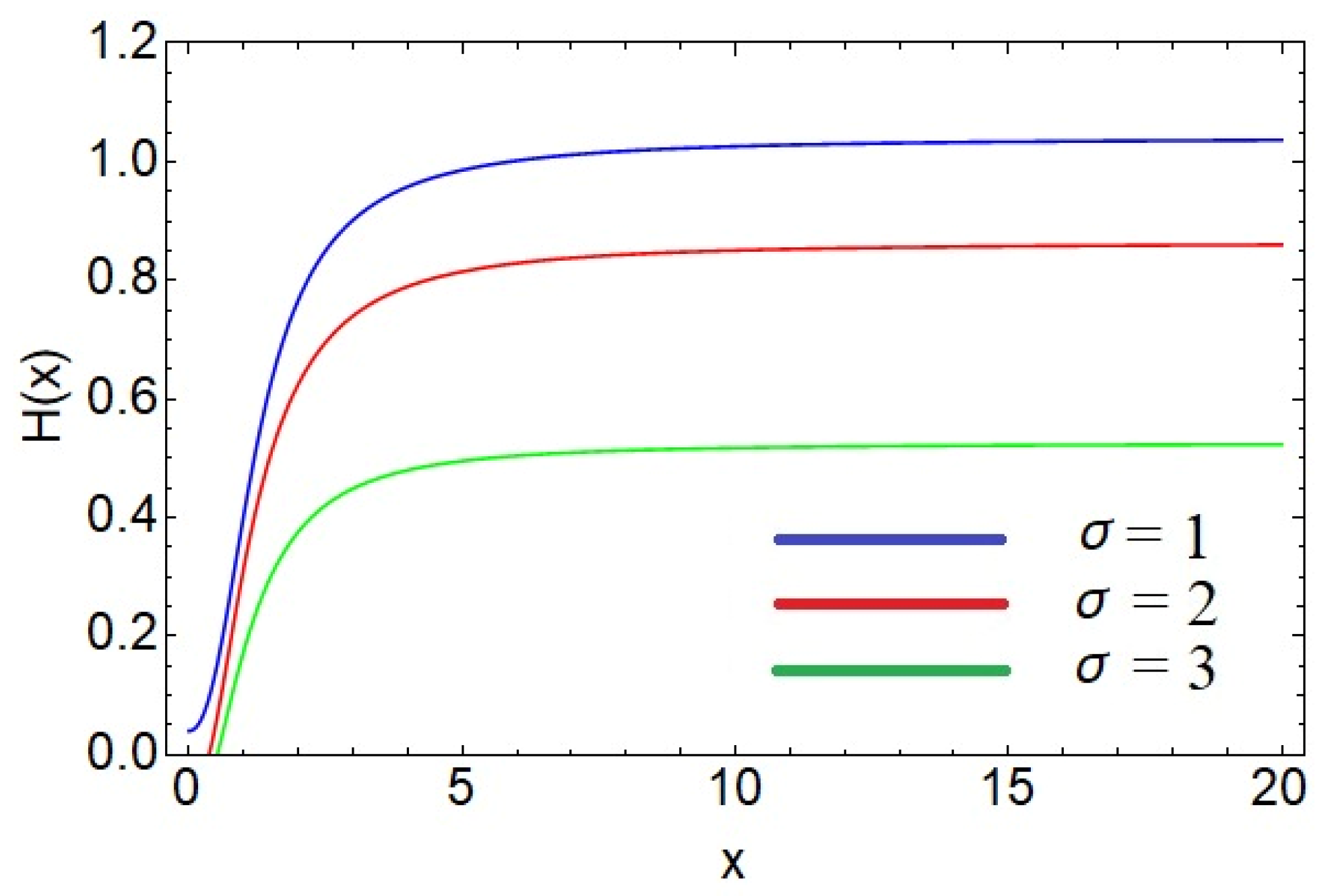
queue was investigated with discouraged arrivals. The symmetrical properties inherent in the Erlang distribution and the queueing process are crucial in simplifying the analysis. Using the computable generating function method, the steady-state distribution of buffer occupancy was derived in terms of a new generalization of the modified Bessel function of the second kind. As shown in
Figure 1,
H(x) is an increasing function; as the waiting space limit increases, the distribution of the buffer content decreases
. For the cumulative distribution function of buffer occupancy, it was observed that there is a positive mass at
and
converges to 1 as
tends to infinity. Therefore, this means that the buffer occupancy has a mixed distribution, and
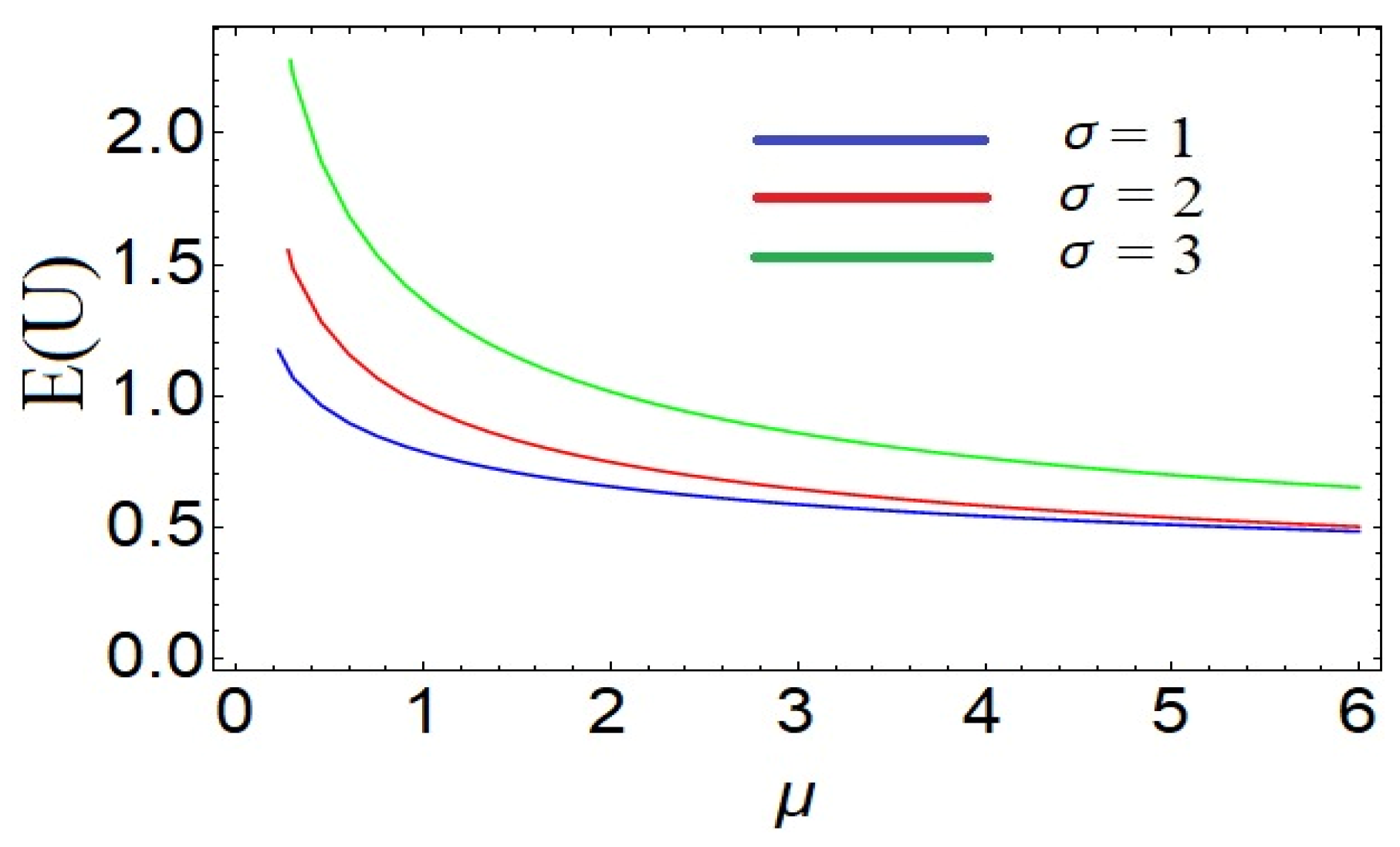
Figure 2 shows the mean of the stationary buffer content with service rate
. Also,
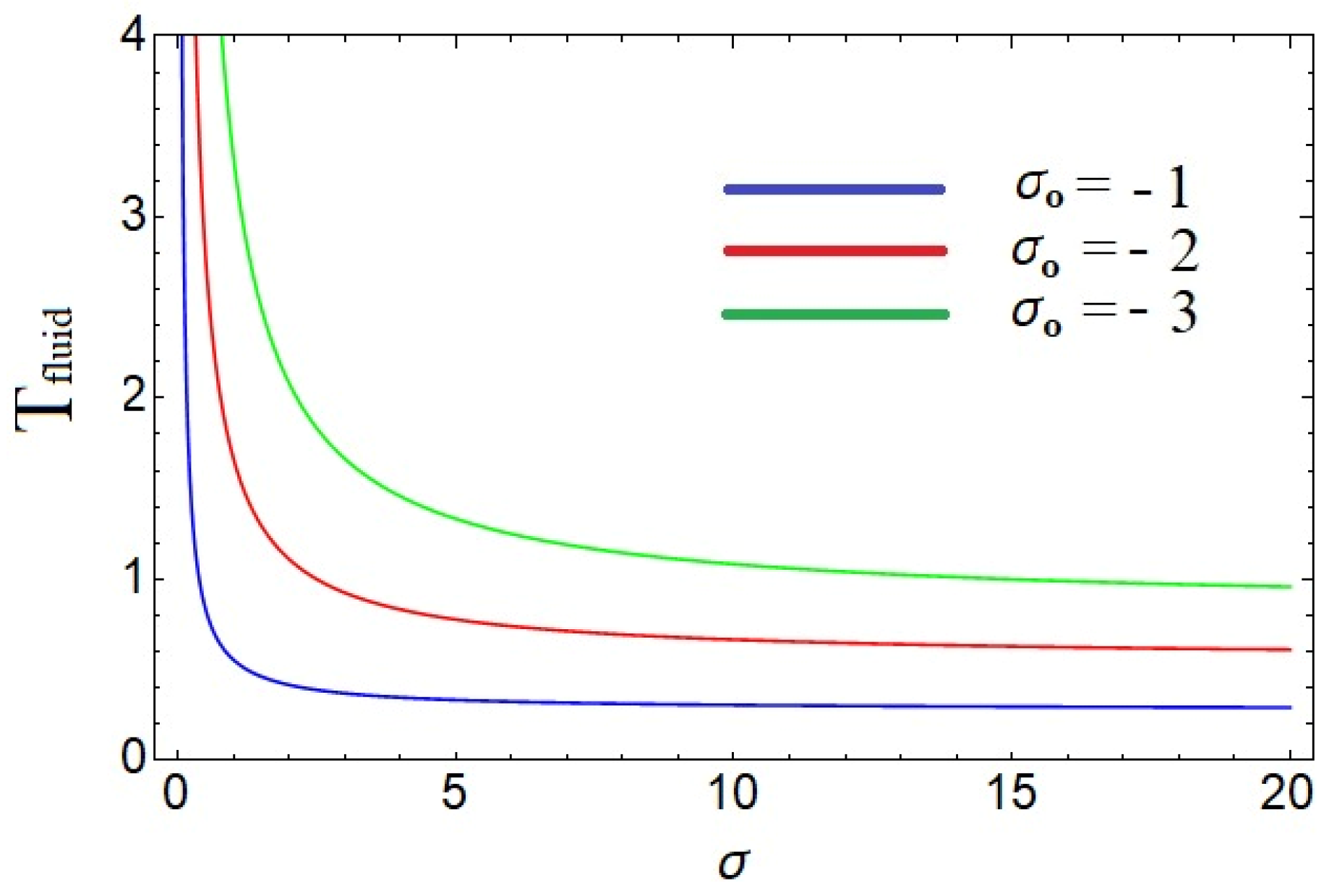
Figure 3 shows the T
Fluid with the net input rate
. Finally, some performance metrics such as server utilization, mean buffer content, and fluid commodity throughput in the fluid queue were obtained.
Future Research Directions
To further advance the study of fluid queueing systems driven by queues, we plan to explore several avenues of research.
We aim to extend the current model to multiclass queueing systems, where different classes of customers have distinct arrival and service processes. This would involve analyzing how the presence of multiple customer classes affects the fluid buffer dynamics and deriving the corresponding performance metrics.
- 2.
Incorporation of Priority Schemes
This involves investigating the impact of various priority schemes on the performance of fluid queues. By incorporating priority disciplines, such as preemptive and non-preemptive priorities, we can better understand how different scheduling policies influence the buffer content and system stability.
- 3.
Transient Analysis
We aim to develop a comprehensive transient analysis of the fluid queue. While our current work focuses on steady-state behavior, examining transient behavior will provide insights into the system’s performance during non-equilibrium states, particularly during periods of high variability in arrival and service rates.
- 4.
Impact of Network Topologies
We would like to extend the analysis to more complex network topologies, where multiple fluid queues are interconnected. Studying the interactions between different queues and their collective impact on overall system performance will be critical for applications in large-scale networked systems.
- 5.
Numerical and Simulation Studies
We will implement extensive numerical and simulation studies to validate our theoretical findings. These studies will help verify the accuracy of our models under various scenarios and provide practical insights into the behavior of fluid queues in real-world settings.
- 6.
Optimal Control Policies
We will explore optimal control policies for fluid queueing systems, including the dynamic adjustment of service rates and buffer management strategies to optimize performance metrics such as average delay, buffer occupancy, and system throughput.