Article

Navicular Drop Height Asymmetry as an Intrinsic Risk Factor for Lower Limb Injury in Male Recreational Athletes


by
Jarosław Domaradzki
Department of Biological Principles of Physical Activity, Wroclaw University of Health and Sport Sciences, 51-612 Wrocław, Poland
Symmetry 2024, 16(10), 1390; https://doi.org/10.3390/sym16101390
Submission received: 2 October 2024 / Revised: 15 October 2024 / Accepted: 17 October 2024 / Published: 18 October 2024
(This article belongs to the Special Issue Symmetry/Asymmetry in Life Sciences: Feature Papers 2024)

Abstract

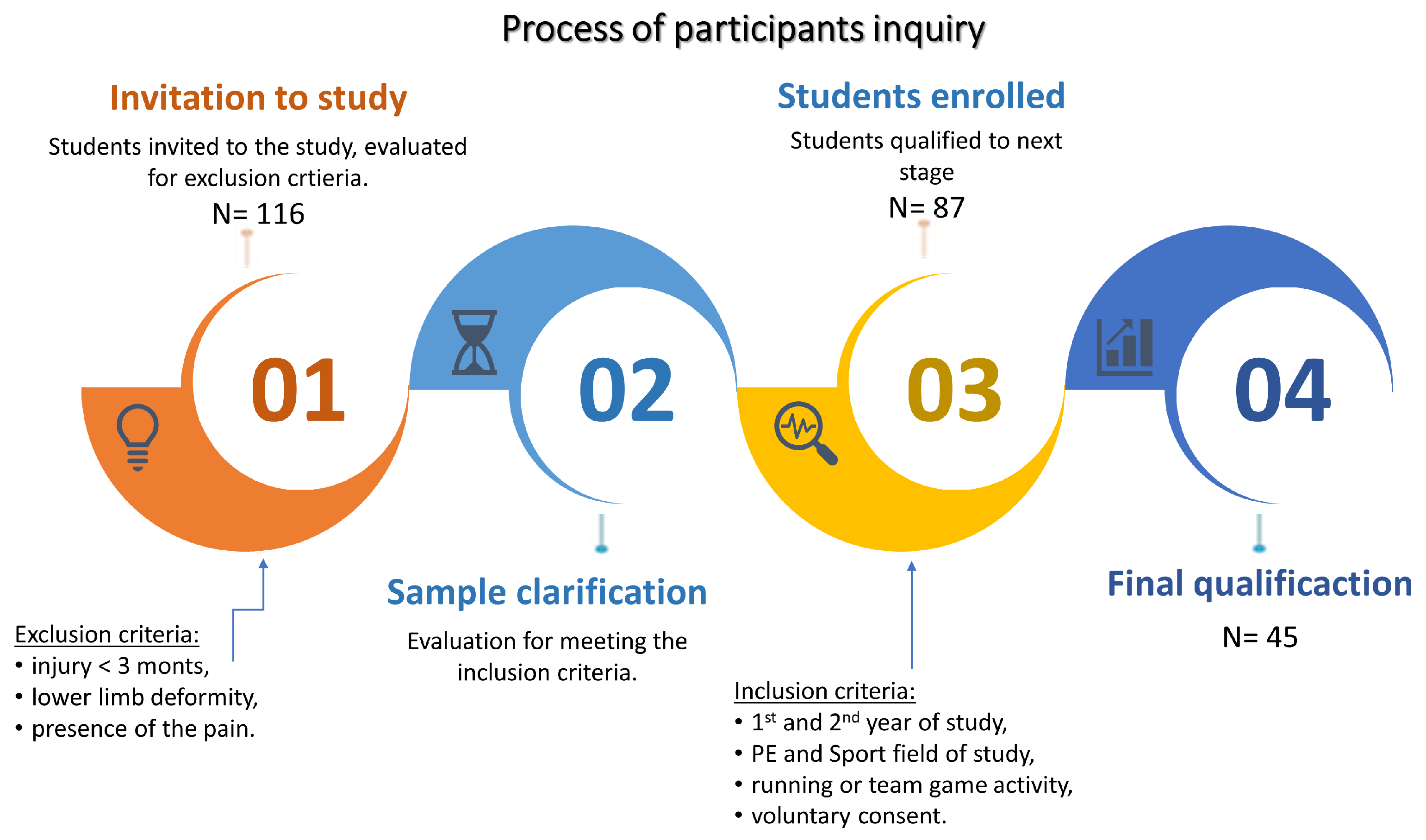
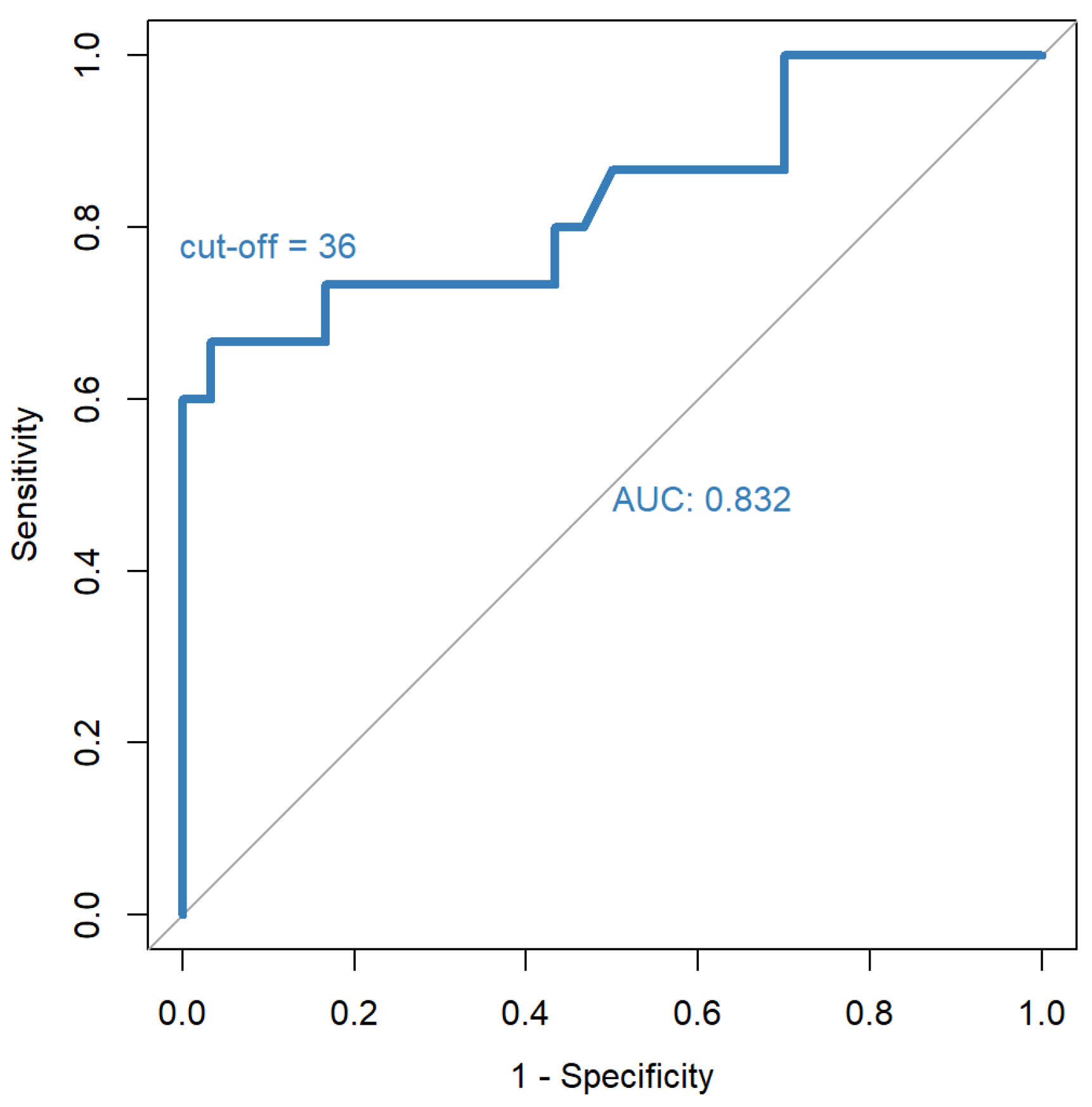
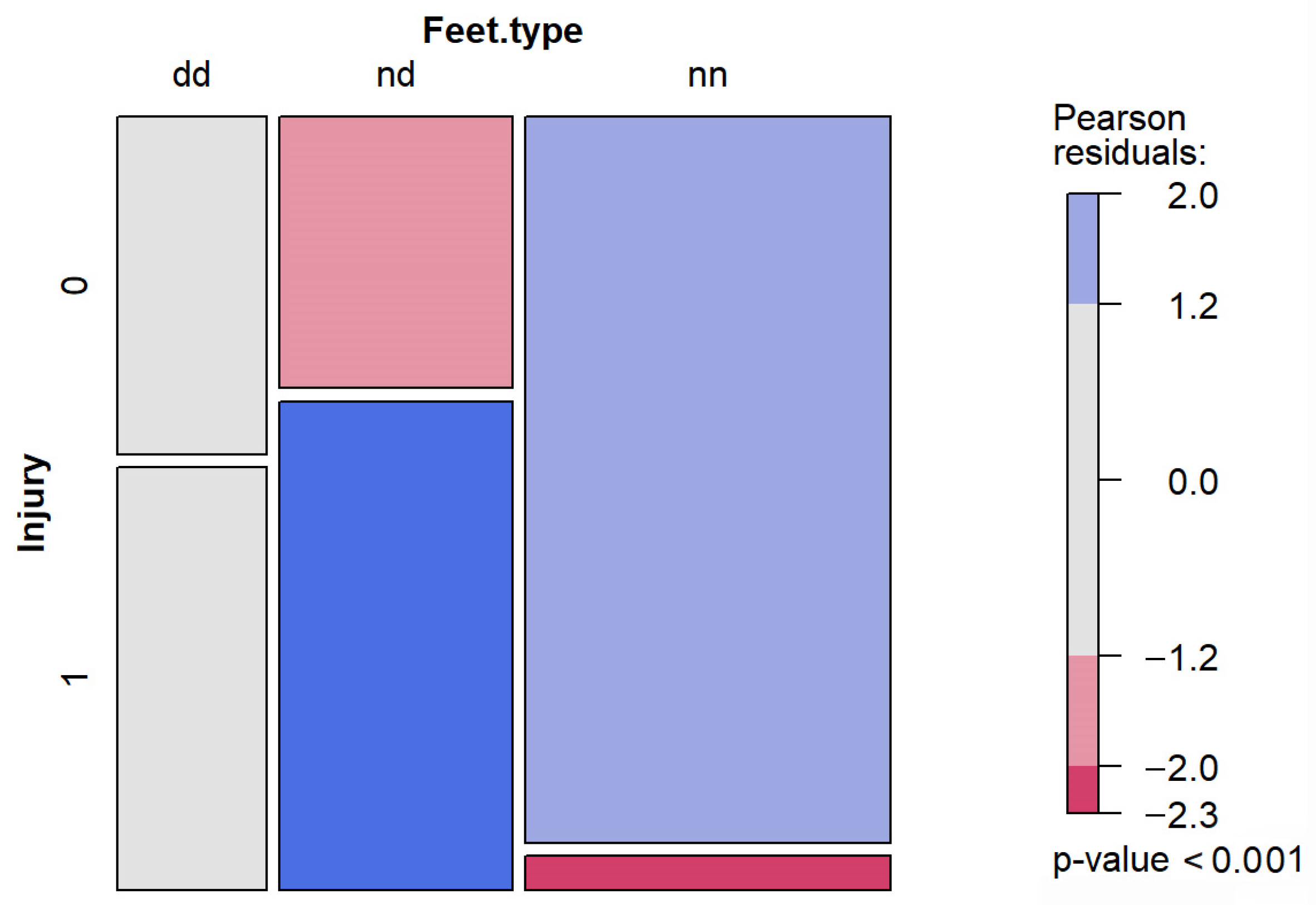
Morphological and functional asymmetry of the lower limbs is a well-recognized factor contributing to musculoskeletal injuries among athletes across different levels. However, limited research exists on evaluating foot mobility asymmetry as a potential predictor of such injuries. This study aimed to (1) assess the frequency of foot mobility asymmetries among amateur athletes, (2) investigate the predictive value of foot mobility asymmetry (measured via navicular height drop) for injury risk, and (3) explore the relationship between foot type and injury occurrence. A cross-sectional sampling method was employed to select 45 physically active male amateur athletes (runners and team sports practitioners) from a university. Injury history was retrospectively recorded, and a modified navicular drop test was conducted to classify foot arch height. The predictive power of navicular height drop asymmetry was analyzed using ROC curves, and the relationship between foot type (neutral and defective combinations—pronated or supinated) and injury occurrence was examined using chi-square tests for independence. Multiple logistic regression was applied to calculate injury risk odds ratios across different foot type subgroups. The results revealed a significant frequency (51.1%) of participants with at least one defective foot, including 31.1% with one neutral and one defective foot and 20% with both feet defective. Navicular height drop asymmetry emerged as a valuable predictor of injuries, with a 36% asymmetry identified as the cut-off for increased injury risk (AUC = 0.832, 95% CI: 0.691–0.973, p < 0.001). A significant relationship was found between foot type and injury occurrence. Only one out of 22 participants with neutral feet (4.55%) experienced an injury, compared to 9 out of 14 (64.29%) with one neutral and one defective foot and 5 out of 9 (55.56%) with both feet defective. These differences were statistically significant (χ2 = 16.24, p < 0.001, Cramer’s V = 0.60). The odds ratio for injury risk was 37.8 (p = 0.016) for those with asymmetry (one neutral and one defective foot) and 26.3 (p = 0.102) for those with both feet defective, compared to participants with both feet neutral. In clinical practice, these findings suggest that routine screenings for physically active individuals should incorporate foot mobility asymmetry assessment. However, it is essential to integrate this factor with other risk indicators. For individuals exhibiting high asymmetry, general foot defect correction programs may be beneficial, but injury prevention strategies should adopt a more comprehensive approach, focusing on overall fitness and tailored interventions for high-risk individuals.
Keywords: amateur athletes; physical activity; injury; navicular drop height; asymmetry; injury prediction; ROC curve amateur athletes; physical activity; injury; navicular drop height; asymmetry; injury prediction; ROC curve