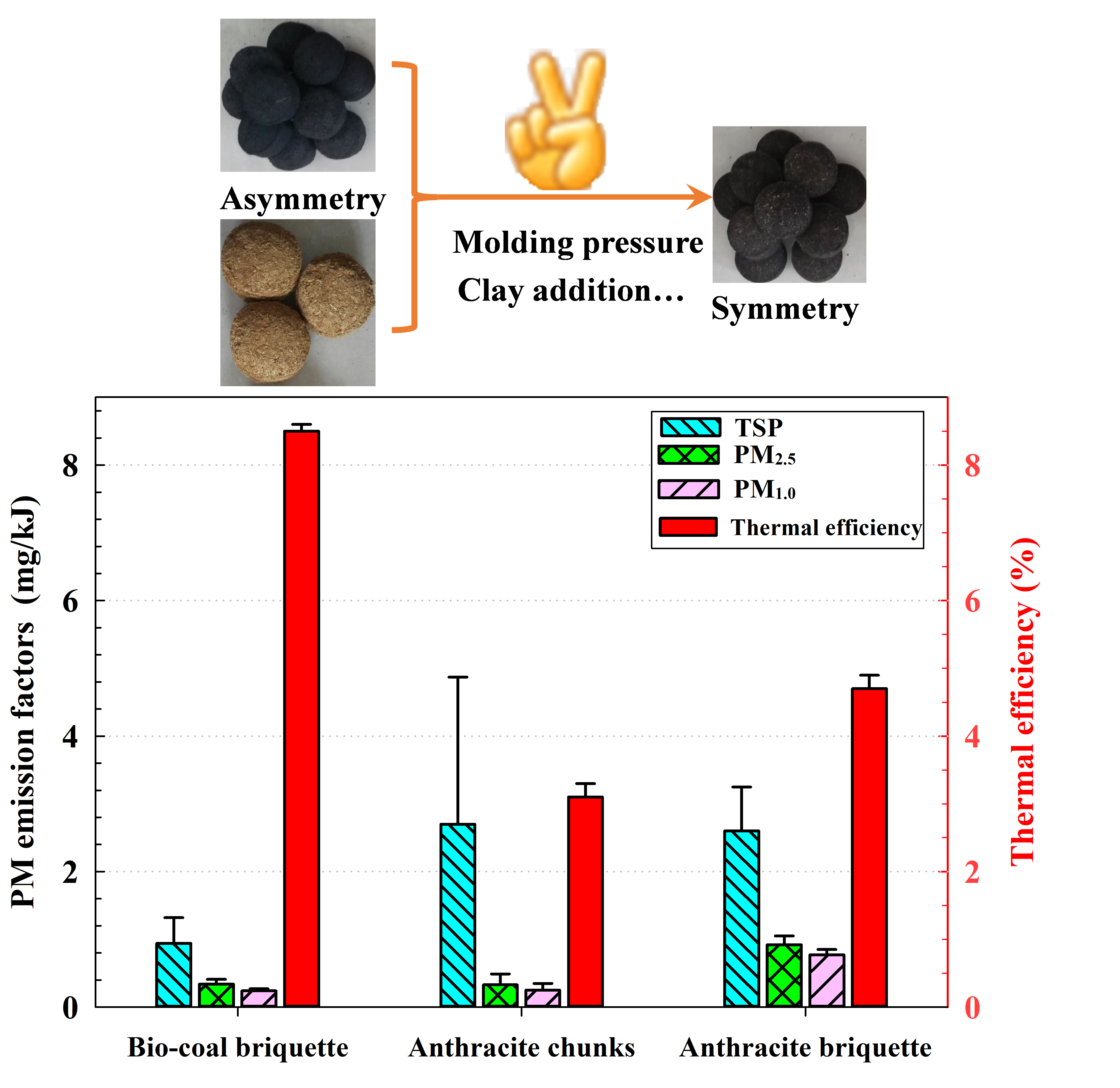
Influence of Molding Technology on Thermal Efficiencies and Pollutant Emissions from Household Solid Fuel Combustion during Cooking Activities in Chinese Rural Areas
Abstract
1. Introduction
2. Materials and Methods
2.1. Solid Fuel Samples
2.2. Household Cooking Stove and the Measurement of TEs
2.3. Pollutant Collection System and Analysis Methods
3. Results
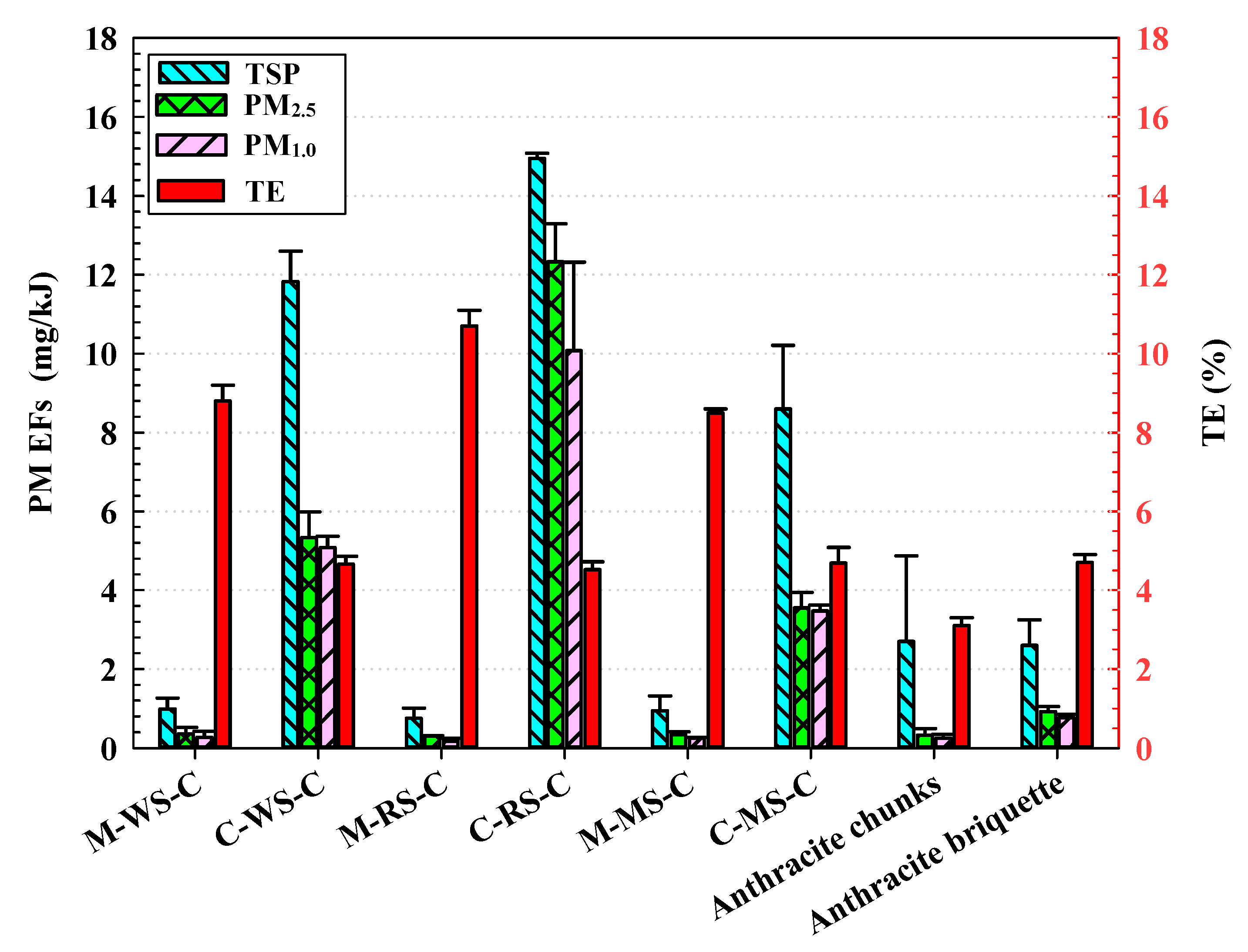
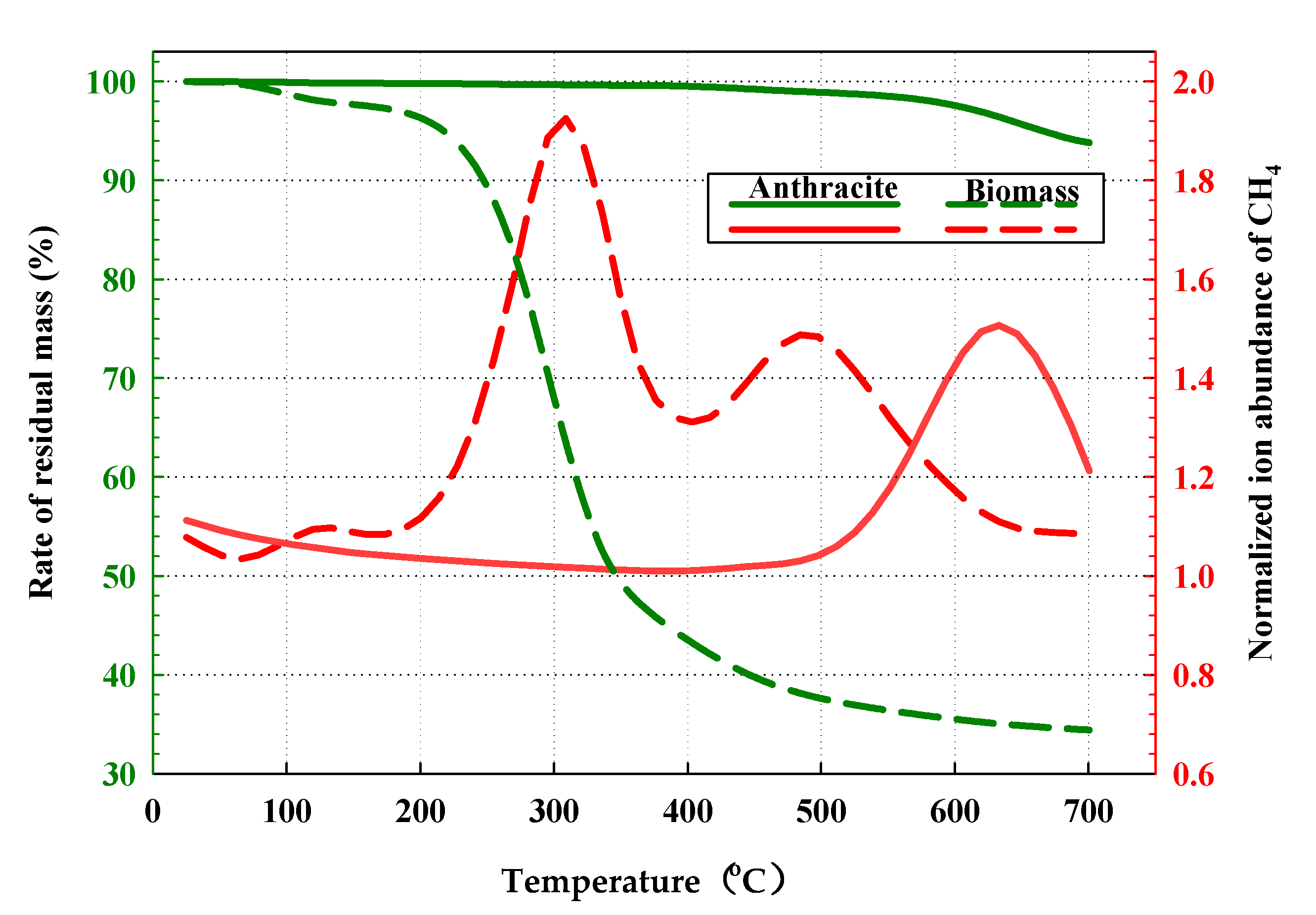
3.1. Combustion Properties of Bio-Coal Briquettes: High TEs and Low PM EFs
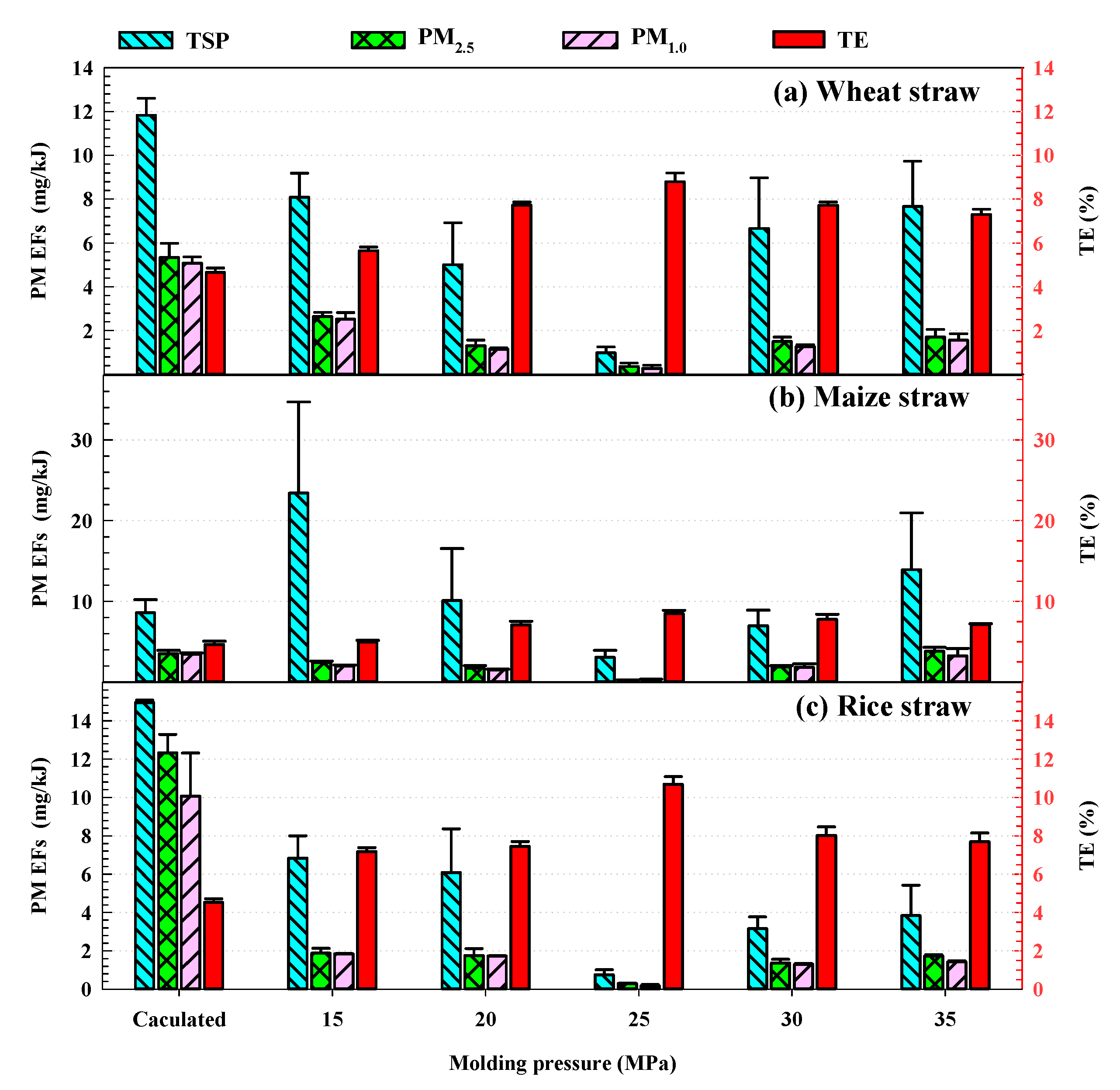
3.2. Influence of Molding Pressure on PM EFs and TEs of Bio-Coal Briquettes
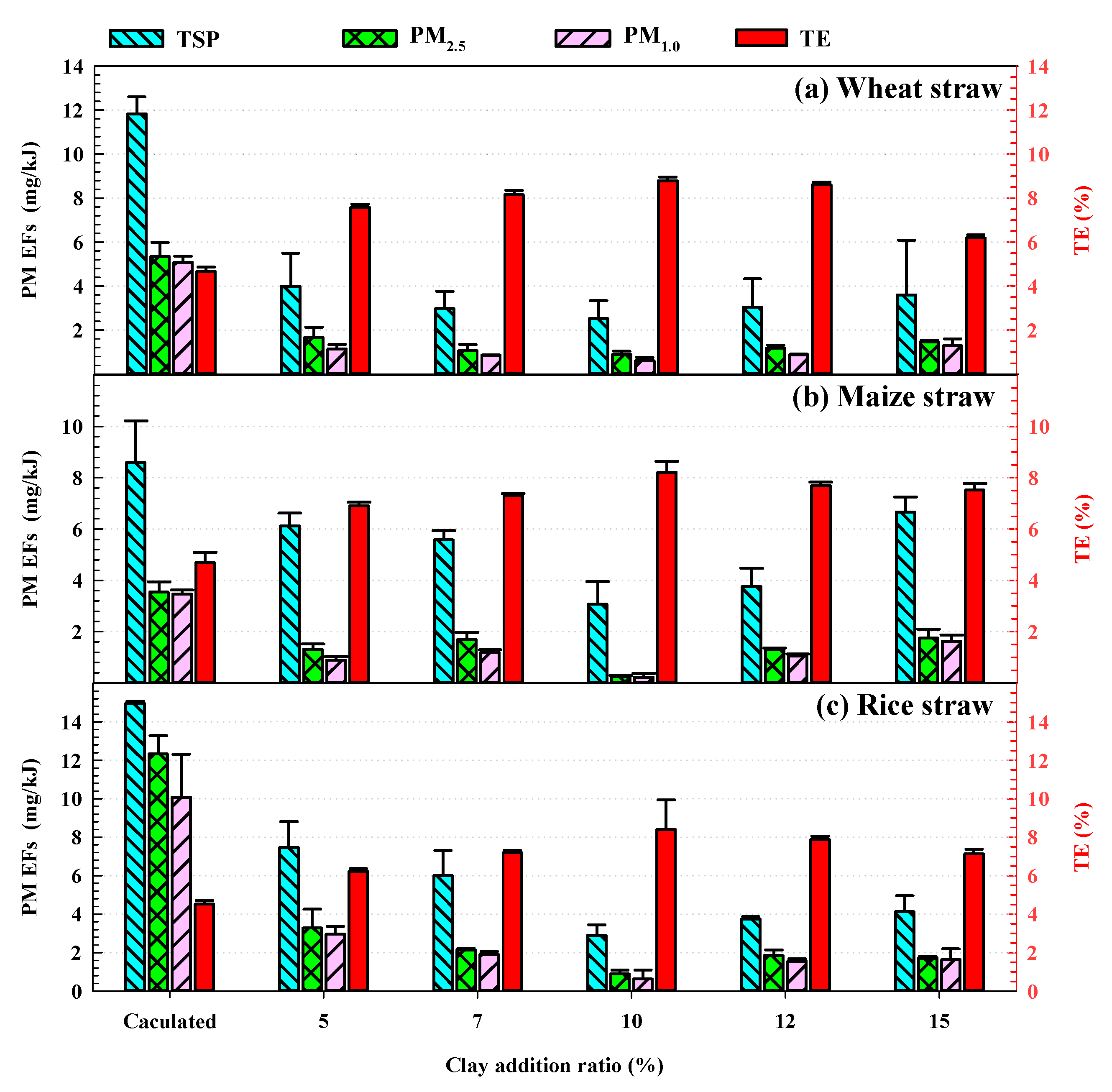
3.3. Influence of Clay Addition Ratio on PM EFs and TEs of Bio-Coal Briquettes
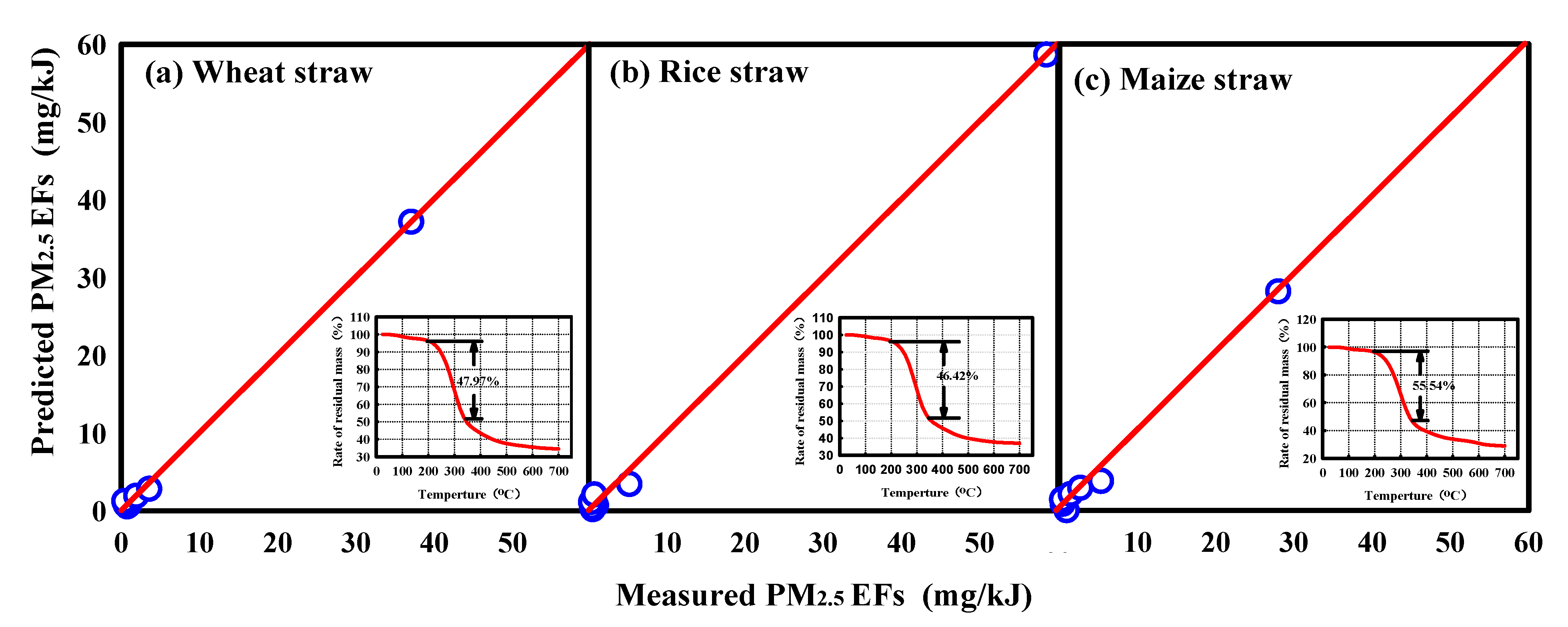
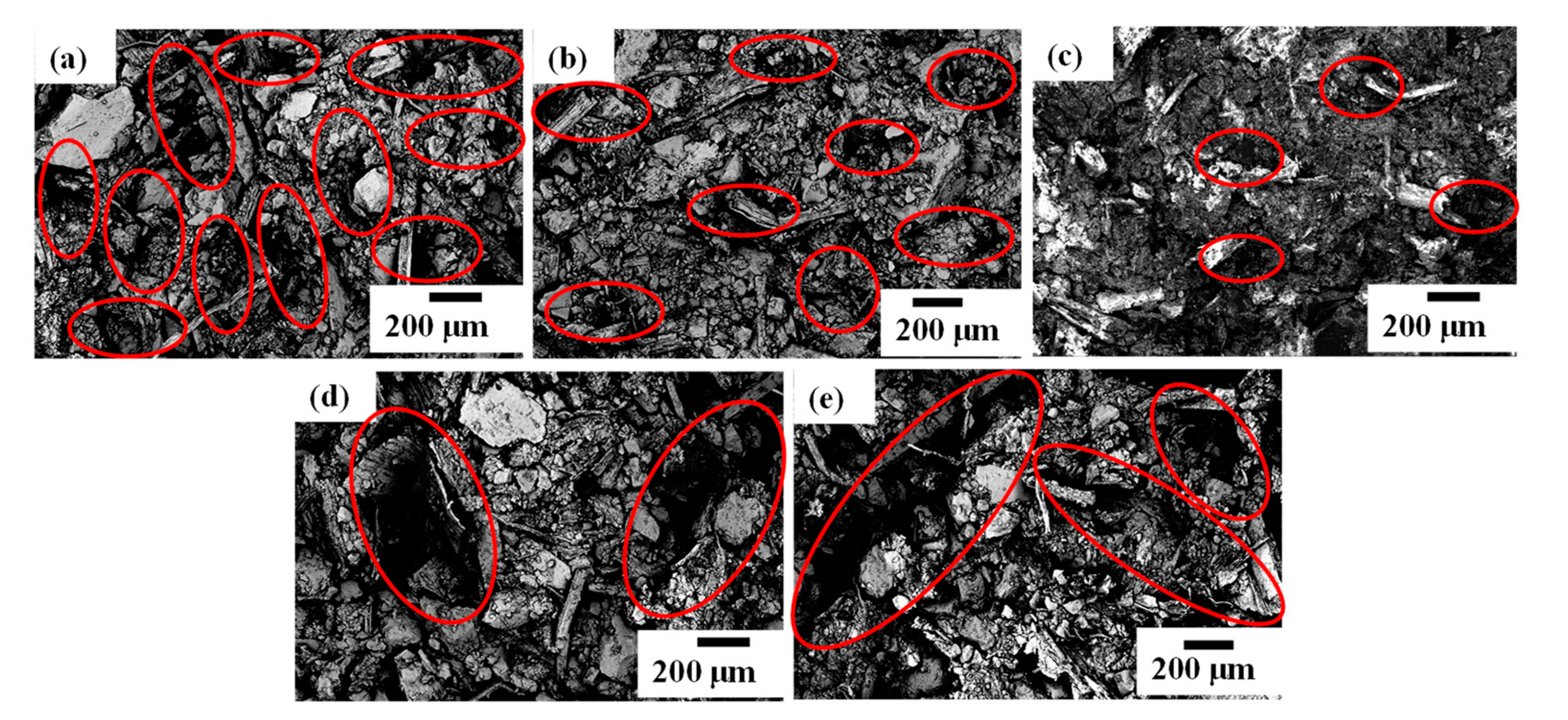
4. Discussion
5. Conclusions
Supplementary Materials
Author Contributions
Funding
Institutional Review Board Statement
Informed Consent Statement
Data Availability Statement
Acknowledgments
Conflicts of Interest
References
- Tao, S.; Ru, M.Y.; Du, W.; Zhu, X.; Zhong, Q.R.; Li, B.G.; Shen, G.F.; Pan, X.L.; Meng, W.J.; Chen, Y.L. Quantifying the rural residential energy transition in China from 1992 to 2012 through a representative national survey. Nat. Energ. 2018, 3, 567–573. [Google Scholar] [CrossRef] [Scilit]
- Shen, H.; Chen, Y.; Russell, A.G.; Hu, Y.; Shen, G.; Yu, H.; Henneman, L.R.F.; Ru, M.; Huang, Y.; Zhong, Q. Impacts of rural worker migration on ambient air quality and health in China: From the perspective of upgrading residential energy consumption. Environ. Int. 2018, 113, 290–299. [Google Scholar] [CrossRef] [Scilit]
- Kant, Y.; Shaik, D.S.; Mitra, D.; Chandola, H.C.; Babu, S.S.; Chauhan, P. Black carbon aerosol quantification over north-west Himalayas: Seasonal heterogeneity, source apportionment and radiative forcing. Environ. Pollut. 2020, 257, 113446. [Google Scholar] [CrossRef] [Scilit] [PubMed]
- Chen, Y.; Du, W.; Shen, G.; Zhuo, S.; Zhu, X.; Shen, H.; Huang, Y.; Su, S.; Lin, N.; Pei, L.; et al. Household air pollution and personal exposure to nitrated and oxygenated polycyclic aromatics (PAHs) in rural households: Influence of household cooking energies. Indoor Air 2016, 27, 169–178. [Google Scholar] [CrossRef] [Scilit]
- Wang, S.X.; Zhao, B.; Cai, S.Y.; Klimont, Z.; Nielsen, C.; Mcelroy, M.B.; Morikawa, T.; Woo, J.H.; Kim, Y.; Fu, X. Emission trends and mitigation options for air pollutants in East Asia. Atmos. Chem. Phys. 2014, 14, 2601–2674. [Google Scholar] [CrossRef] [Scilit]
- Du, W.; Yun, X.; Fu, N.; Qi, M.; Wang, W.; Wang, L.Z.; Chen, Y.C.; Shen, G.F. Variation of indoor and outdoor carbonaceous aerosols in rural homes with strong internal solid fuel combustion sources. Atmos. Pollut. Res. 2020, 11, 992–999. [Google Scholar] [CrossRef] [Scilit]
- Chafe, Z.A.; Brauer, M.; Klimont, Z.; Van Dingenen, R.; Mehta, S.; Rao, S.; Riahi, K.; Dentener, F.; Smith Kirk, R. Household Cooking with Solid Fuels Contributes to Ambient PM2.5 Air Pollution and the Burden of Disease. Environ. Health Persp. 2014, 122, 1314–1320. [Google Scholar] [CrossRef] [Scilit]
- Bond, T.C.; Doherty, S.J.; Fahey, D.W.; Forster, P.M.; Berntsen, T.; Deangelo, B.J.; Flanner, M.G.; Ghan, S.; Kärcher, B.; Koch, D. Bounding the role of black carbon in the climate system: A scientific assessment. J. Geophys. Res. Atmos. 2013, 118, 5380–5552. [Google Scholar] [CrossRef] [Scilit]
- Wu, D.; Qi, J.; Li, Q.; Chen, J.; Chen, Y.; Chen, J. Extreme Exposure Levels of PCDD/Fs Inhaled from Biomass Burning Activity for Cooking in Typical Rural Households. Environ. Sci. Technol. 2021, 55, 7299–7306. [Google Scholar] [CrossRef] [Scilit] [PubMed]
- Luo, Z.H.; Zhang, L.; Li, G.; Du, W.; Chen, Y.C.; Cheng, H.F.; Tao, S.; Shen, G.F. Evaluating co-emissions into indoor and outdoor air of EC, OC, and BC from in-home biomass burning. Atmos. Res. 2021, 248, 105247. [Google Scholar] [CrossRef] [Scilit]
- Onifade, M.; Genc, B. Spontaneous combustion of coals and coal-shales. Int. J. Min. Sci. Technol. 2018, 28, 94–101. [Google Scholar] [CrossRef] [Scilit]
- Zhang, C.; Liu, C.; Li, X.; Liu, P.; Zhang, Y.; Du, Q.; Liu, J.; Zhuo, W.; Zhuo, Y.; Yang, J.; et al. A novel clean combustion technology for solid fuels to efficiently reduce gaseous and particulate emissions. J. Clean. Prod. 2021, 320, 128864. [Google Scholar] [CrossRef] [Scilit]
- Bond, T.C.; Covert, D.S.; Kramlich, J.C.; Larson, T.V.; Charlson, R.J. Primary particle emissions from residential coal burning: Optical properties and size distributions. J. Geophys. Res. Atmos. 2002, 107, ICC 9-1–ICC 9-14. [Google Scholar] [CrossRef] [Scilit]
- Duan, X.L.; Jiang, Y.; Wang, B.B.; Zhao, X.G.; Shen, G.F.; Cao, S.Z.; Huang, N.; Qian, Y.; Chen, Y.T.; Wang, L.M. Household fuel use for cooking and heating in China: Results from the first Chinese Environmental Exposure-Related Human Activity Patterns Survey (CEERHAPS). Appl. Energ. 2014, 136, 692–703. [Google Scholar] [CrossRef] [Scilit]
- Chen, Y.J.; Tian, C.G.; Feng, Y.L.; Zhi, G.R.; Li, J.; Zhang, G. Measurements of emission factors of PM2.5, OC, EC, and BC for household stoves of coal combustion in China. Atmos. Environ. 2015, 109, 190–196. [Google Scholar] [CrossRef] [Scilit]
- Li, Q.; Jiang, J.K.; Zhang, Q.; Zhou, W.; Cai, S.Y.; Duan, L.; Ge, S.; Hao, J.M. Influences of coal size, volatile matter content, and additive on primary particulate matter emissions from household stove combustion. Fuel 2016, 182, 780–787. [Google Scholar] [CrossRef] [Scilit]
- Wang, S.X.; Wei, W.; Li, D.; Aunan, K.; Hao, J.M. Air pollutants in rural homes in Guizhou, China—Concentrations, speciation, and size distribution. Atmos. Environ. 2010, 44, 4575–4581. [Google Scholar] [CrossRef] [Scilit]
- Zhang, H.F.; Zhu, T.; Wang, S.X.; Hao, J.M.; Mestl, H.; Alnes, L.; Aunan, K.; Dong, Z.Q.; Ma, L.Y.; Hu, Y. Indoor Emissions of Carbonaceous Aerosol and Other Air Pollutants from Household Fuel Burning in Southwest China. Aerosol. Air Qual. Res. 2015, 14, 1779–1788. [Google Scholar] [CrossRef] [Scilit]
- Onifade, M.; Genc, B. A review of research on spontaneous combustion of coal. Int. J. Min. Sci. Technol. 2020, 30, 303–311. [Google Scholar] [CrossRef] [Scilit]
- Ravichandran, P.; Corscadden, K. Comparison of gaseous and particle emissions produced from leached and un-leached agricultural biomass briquettes. Fuel Process. Technol. 2014, 128, 359–366. [Google Scholar] [CrossRef] [Scilit]
- Qi, J.; Li, H.; Wang, Q.; Han, K. Combustion Characteristics, Kinetics, SO 2 and NO Release of Low-Grade Biomass Materials and Briquettes. Energies 2021, 14, 2655. [Google Scholar] [CrossRef] [Scilit]
- Shen, G.F.; Xue, M. Comparison of Carbon Monoxide and Particulate Matter Emissions from Residential Burnings of Pelletized Biofuels and Traditional Solid Fuels. Energ. Fuel 2014, 28, 3933–3939. [Google Scholar] [CrossRef] [Scilit]
- Chen, Y.J.; Zhi, G.R.; Feng, Y.L.; Tian, C.G.; Bi, X.H.; Li, J.; Zhang, G. Increase in polycyclic aromatic hydrocarbon (PAH) emissions due to briquetting: A challenge to the coal briquetting policy. Environ. Pollut. 2015, 204, 58–63. [Google Scholar] [CrossRef] [Scilit] [PubMed]
- Shen, H.Z.; Huang, Y.; Wang, R.; Zhu, D.; Li, W.; Shen, G.F.; Wang, B.; Zhang, Y.Y.; Chen, Y.C.; Lu, Y.; et al. Global Atmospheric Emissions of Polycyclic Aromatic Hydrocarbons from 1960 to 2008 and Future Predictions. Environ. Sci. Technol. 2013, 47, 6415–6424. [Google Scholar] [CrossRef] [Scilit]
- Rahmanian, B.; Safaei, M.R.; Kazi, S.N.; Ahmadi, G.; Oztop, H.F.; Vafai, K. Investigation of pollutant reduction by simulation of turbulent non-premixed pulverized coal combustion. Appl. Therm. Eng. 2014, 73, 1222–1235. [Google Scholar] [CrossRef] [Scilit]
- Sadeghinezhad, E.; Kazi, S.N.; Sadeghinejad, F.; Badarudin, A.; Mehrali, M.; Sadri, R.; Reza Safaei, M. A comprehensive literature review of bio-fuel performance in internal combustion engine and relevant costs involvement. Renew. Sustain. Energ. Rev. 2014, 30, 29–44. [Google Scholar] [CrossRef] [Scilit]
- Soudagar, M.E.M.; Khan, H.M.; Khan, T.M.Y.; Razzaq, L.; Asif, T.; Mujtaba, M.A.; Hussain, A.; Farooq, M.; Ahmed, W.; Shahapurkar, K.; et al. Experimental Analysis of Engine Performance and Exhaust Pollutant on a Single-Cylinder Diesel Engine Operated Using Moringa Oleifera Biodiesel. Appl. Sci. 2021, 11, 7071. [Google Scholar] [CrossRef] [Scilit]
- Wategave, S.P.; Banapurmath, N.R.; Sawant, M.S.; Soudagar, M.E.M.; Mujtaba, M.A.; Afzal, A.; Basha, J.S.; Alazwari, M.A.; Safaei, M.R.; Elfasakhany, A.; et al. Clean combustion and emissions strategy using reactivity controlled compression ignition (RCCI) mode engine powered with CNG-Karanja biodiesel. J. Taiwan Inst. Chem. E 2021, 124, 116–131. [Google Scholar] [CrossRef] [Scilit]
- Qi, J.; Li, Q.; Wu, J.J.; Jiang, J.K.; Miao, Z.Y.; Li, D.S. Biocoal Briquettes Combusted in a Household Cooking Stove: Improved Thermal Efficiencies and Reduced Pollutant Emissions. Environ. Sci. Technol. 2017, 51, 1886–1892. [Google Scholar] [CrossRef] [Scilit] [PubMed]
- Yuan, M.; Wang, C.; Zhao, L.; Zhu, Z.; Che, D. Evaluation and optimization of preparation for semi-coke briquette with alkali-heat treated wheat straw binder. Int. J. Coal Prep. Util. 2020, 1–13. [Google Scholar] [CrossRef] [Scilit]
- Wang, Y.J.; Zuo, H.B.; Zhao, J.; Zhang, W.L. Using HyperCoal to prepare metallurgical coal briquettes via hot-pressing. Int. J. Miner. Metall. Mater. 2019, 26, 547–554. [Google Scholar] [CrossRef] [Scilit]
- Sun, J.; Shen, Z.; Niu, X.; Zhang, Y.; Cao, J. Cytotoxicity and Potential Pathway to Vascular Smooth Muscle Cells Induced by PM 2.5 Emitted from Raw Coal Chunks and Clean Coal Combustion. Environ. Sci. Technol. 2020, 54, 14482–14493. [Google Scholar] [CrossRef] [Scilit] [PubMed]
- Chen, Y.; Shen, G.; Liu, W.; Du, W.; Su, S.; Duan, Y.; Lin, N.; Zhuo, S.; Wang, X.; Xing, B. Field measurement and estimate of gaseous and particle pollutant emissions from cooking and space heating processes in rural households, northern China. Atmos. Environ. 2016, 125, 265–271. [Google Scholar] [CrossRef] [Scilit]
- Krerkkaiwan, S.; Fushimi, C.; Tsutsumi, A.; Kuchonthara, P. Synergetic effect during co-pyrolysis/gasification of biomass and sub-bituminous coal. Fuel Process. Technol. 2013, 115, 11–18. [Google Scholar] [CrossRef] [Scilit]
- Dong, K.P.; Sang, D.K.; Lee, S.H.; Lee, J.G. Co-pyrolysis characteristics of sawdust and coal blend in TGA and a fixed bed reactor. Bioresour. Technol. 2010, 101, 6151–6156. [Google Scholar]
- Zhang, L.A.; Ninomiya, Y. Emission of suspended PM10 from laboratory-scale coal combustion and its correlation with coal mineral properties. Fuel 2006, 85, 194–203. [Google Scholar] [CrossRef] [Scilit]

| Fuel Form | Mar | Ad | Vd | Vdaf | FCd | St, d | N | C | H | Qnet,ar | |
|---|---|---|---|---|---|---|---|---|---|---|---|
| (%) | (%) | (%) | (%) | (%) | (%) | (%) | (%) | (%) | (MJ/kg) | ||
| Wheat straw | Raw | 5.68 | 8.97 | 74.04 | 81.34 | 16.99 | 0.33 | 0.61 | 42.72 | 6.16 | 14.90 |
| Briquette | 15.78 | 14.01 | 81.20 | 94.43 | 4.78 | 0.28 | 1.49 | 34.29 | 4.67 | 13.41 | |
| Rice straw | Raw | 6.36 | 10.38 | 74.31 | 82.92 | 15.31 | 0.28 | 0.68 | 41.27 | 6.21 | 13.42 |
| Briquette | 7.28 | 22.87 | 69.85 | 90.56 | 7.28 | 0.22 | 1.26 | 36.33 | 4.34 | 12.08 | |
| Maize straw | Raw | 5.44 | 5.03 | 80.58 | 84.85 | 14.39 | 0.37 | 0.90 | 43.70 | 6.36 | 15.04 |
| Briquette | 7.14 | 17.93 | 74.61 | 90.91 | 7.46 | 0.19 | 1.39 | 37.66 | 4.65 | 13.54 | |
| Anthracite | Chunk | 4.77 | 13.10 | 6.25 | 7.19 | 80.65 | 0.35 | 1.13 | 78.51 | 3.06 | 28.79 |
| Briquette | 4.46 | 20.51 | 11.34 | 14.27 | 68.16 | 0.32 | 1.13 | 71.95 | 2.36 | 25.91 | |
| Blends with coal | Wheat straw | 3.45 | 18.95 | 23.04 | 28.42 | 58.01 | 0.31 | 1.06 | 64.92 | 2.75 | 23.13 |
| Rice straw | 5.11 | 20.11 | 26.20 | 32.80 | 53.69 | 0.26 | 1.18 | 65.05 | 3.01 | 22.84 | |
| Maize straw | 3.90 | 19.89 | 19.59 | 24.45 | 60.52 | 0.33 | 1.16 | 67.77 | 2.88 | 23.85 | |
Publisher’s Note: MDPI stays neutral with regard to jurisdictional claims in published maps and institutional affiliations. |
© 2021 by the authors. Licensee MDPI, Basel, Switzerland. This article is an open access article distributed under the terms and conditions of the Creative Commons Attribution (CC BY) license (https://creativecommons.org/licenses/by/4.0/).
Share and Cite
Qi, J.; Wu, J.; Zhang, L. Influence of Molding Technology on Thermal Efficiencies and Pollutant Emissions from Household Solid Fuel Combustion during Cooking Activities in Chinese Rural Areas. Symmetry 2021, 13, 2223. https://doi.org/10.3390/sym13112223
Qi J, Wu J, Zhang L. Influence of Molding Technology on Thermal Efficiencies and Pollutant Emissions from Household Solid Fuel Combustion during Cooking Activities in Chinese Rural Areas. Symmetry. 2021; 13(11):2223. https://doi.org/10.3390/sym13112223
Chicago/Turabian StyleQi, Juan, Jianjun Wu, and Lei Zhang. 2021. "Influence of Molding Technology on Thermal Efficiencies and Pollutant Emissions from Household Solid Fuel Combustion during Cooking Activities in Chinese Rural Areas" Symmetry 13, no. 11: 2223. https://doi.org/10.3390/sym13112223
APA StyleQi, J., Wu, J., & Zhang, L. (2021). Influence of Molding Technology on Thermal Efficiencies and Pollutant Emissions from Household Solid Fuel Combustion during Cooking Activities in Chinese Rural Areas. Symmetry, 13(11), 2223. https://doi.org/10.3390/sym13112223