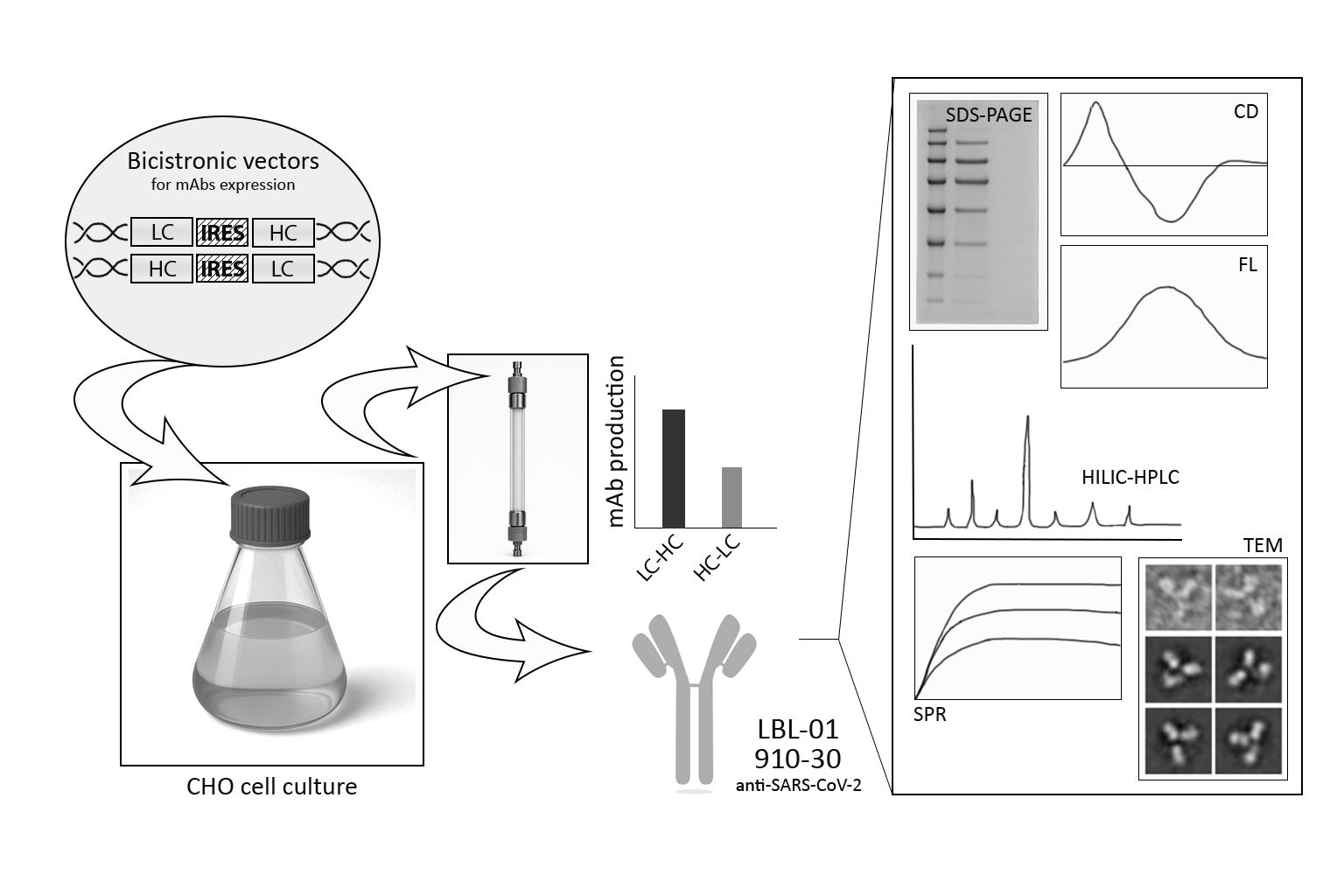

Structural and Functional Characterization of Anti-SARS-CoV-2 Spike Monoclonal Antibodies Produced via Bicistronic Expression in CHO Cells

 , , ,
, , ,  , and
, and Abstract
Share and Cite
Marsili, F.F.; de Aquino, F.B.; Arruda, H.R.d.S.; Marques, M.A.; Cabral, K.M.d.S.; Almeida, M.d.S.; de Oliveira, G.A.P.; Maranhão, A.Q.; Carvalho, R.S.; Castilho, L.d.R. Structural and Functional Characterization of Anti-SARS-CoV-2 Spike Monoclonal Antibodies Produced via Bicistronic Expression in CHO Cells. Antibodies 2025, 14, 86. https://doi.org/10.3390/antib14040086
Marsili FF, de Aquino FB, Arruda HRdS, Marques MA, Cabral KMdS, Almeida MdS, de Oliveira GAP, Maranhão AQ, Carvalho RS, Castilho LdR. Structural and Functional Characterization of Anti-SARS-CoV-2 Spike Monoclonal Antibodies Produced via Bicistronic Expression in CHO Cells. Antibodies. 2025; 14(4):86. https://doi.org/10.3390/antib14040086
Chicago/Turabian StyleMarsili, Federico Francisco, Fernanda Bittencourt de Aquino, Hiam Rodrigo da Silva Arruda, Mayra Amorim Marques, Katia Maria dos Santos Cabral, Marcius da Silva Almeida, Guilherme Augusto Piedade de Oliveira, Andrea Queiroz Maranhão, Renato Sampaio Carvalho, and Leda dos Reis Castilho. 2025. "Structural and Functional Characterization of Anti-SARS-CoV-2 Spike Monoclonal Antibodies Produced via Bicistronic Expression in CHO Cells" Antibodies 14, no. 4: 86. https://doi.org/10.3390/antib14040086
APA StyleMarsili, F. F., de Aquino, F. B., Arruda, H. R. d. S., Marques, M. A., Cabral, K. M. d. S., Almeida, M. d. S., de Oliveira, G. A. P., Maranhão, A. Q., Carvalho, R. S., & Castilho, L. d. R. (2025). Structural and Functional Characterization of Anti-SARS-CoV-2 Spike Monoclonal Antibodies Produced via Bicistronic Expression in CHO Cells. Antibodies, 14(4), 86. https://doi.org/10.3390/antib14040086