Article

An Interactive and Open Dashboard for BIM-Based Participatory Urban Neighborhood Management

by
Dimitra Andritsou
*,
Konstantinos Lazaridis
and
Chryssy Potsiou
School of Rural, Surveying and Geoinformatics Engineering, National Technical University of Athens, 15780 Athens, Greece
*
Author to whom correspondence should be addressed.
Land 2026, 15(3), 369; https://doi.org/10.3390/land15030369
Submission received: 13 January 2026 / Revised: 18 February 2026 / Accepted: 19 February 2026 / Published: 25 February 2026

Abstract

The objective of this paper is to develop an adaptable and affordable technical tool for managing small urban areas. It demonstrates a low-cost, reliable, and fast method for integrating BIMs, IFC data, and GIS to support fit-for-purpose, crowdsourcing, and participatory applications through an online dashboard. Open data and existing geoportals are used to create the necessary geospatial infrastructure. Geometric information such as building area size and volume is combined with other data from multiple sources such as market values and CO2 emissions, which can be updated dynamically through real-time interactions. A case study is presented for a small urban neighborhood in Athens.

1. Introduction

1.1. Objective of the Research

Rapid urbanization has led to complex urban environments that cannot be easily addressed, monitored, and serviced by local authorities due to a lack of geospatial data and weak land administration. This has resulted in emerging ecological, economic, and social challenges such as greenhouse gas emissions, environmental pollution, energy scarcity, poor services, lack of affordable and accessible housing, unplanned urban development leading to informal settlements, infrastructure chaos, extreme poverty, etc. [1]. In particular, in the post-1989 era (year of the political and economic change in eastern European region), it is estimated that over fifty thousand people live in informal self-made urban settlements that are characterized as “self-made cities”. Self-made cities are rapidly developing urban areas with both formal and informal constructions that often lack titling and/or compliance with regulations. Such areas face challenges like limited services, increased disaster risks, unregistered constructions and/or residents, incomplete cadastral records, missing geospatial information, poor management of real-estate, informal real-estate markets, and unregulated economies [2]. International and national efforts to improve land administration geospatial ecosystems have been implemented to address such challenges and support authorities [2,3]. The fact that built construction has rapidly expanded on the vertical axis resulting in high-rise and multi-story infrastructures with clashing land uses and complex legal properties has introduced a demand for 3D cadastres [4,5]. Rapidly urbanized areas in countries with advanced land administration geospatial ecosystems are gradually showing improvement towards digital transformation and the gradual transition into smart cities while in the rest of the world, urban management challenges are increasing [6,7,8].
The United Nations (UN) Sustainable Development Agenda 2030 Goal 11 “Sustainable Cities and Communities” refers to enhancing inclusive and sustainable urbanization and capacity for participatory and integrated human settlement planning and management (Target 11.3) [9]. It also states that policies and plans towards inclusion, resource efficiency, mitigation, risk management, adaptation to climate change, etc., should be implemented by the UN member states for good governance purposes (Target 11.b) [9]. Furthermore, it encourages countries to address the challenge of informal settlements (Target 11.b) [9], so that no one is left behind [10]. According to [11,12], modern cadastral and land administration geospatial ecosystems are broadly recognized to be the backbone of National Spatial Data Infrastructures (NSDIs) to support the implementation of several Sustainable Development Goals (SDGs) and Targets of the Agenda, as well as the monitoring of its progress. A NSDI is a data infrastructure implementing a framework of geographic data, metadata, users, and tools that are interactively connected in order to use spatial data in an efficient and flexible way at national coverage.
Academic research aiming to support and accelerate the implementation of the Agenda in various countries has led to new trends in NSDIs such as the introduction of Volunteered Geographic Information (VGI) and the merging of authoritative data with crowdsourced land administration data in a bottom-up approach. This aims to uncover inequalities and better serve data-driven decision-making and evidence-based policy-making [11]. This trend highlights the need for validating crowdsourced data [13,14]. Concerning 3D land administration, VGI and NSDIs present new methods for collecting, maintaining, analyzing, visualizing, and monitoring geospatial data that can be used for the good management of urban areas [12]. In parallel, VGI also helps towards developing 3D land administration systems (LASs) to manage complex urban areas lacking formal geospatial infrastructures, to accelerate the implementation of 3D cadastres in less-developed ecosystems [15,16]. Additionally, the integration of Building Information Models (BIMs) of complex buildings into land administration is currently being investigated [17]. So far, the implementation of BIM for all existing constructions and its integration into land administration systems is still under research. BIMs of existing buildings can be constructed by using existing official 2D floor plans. When 2D floor plans are not available, practical approaches for the approximate compilation of BIMs have been developed, using open data and available platforms [18,19,20].
BIM is a standard regarding 3D building modeling and volumetric virtual representations mainly developed and utilized in the Architecture, Engineering and Construction (AEC) sectors to support efficient building information management in complex urban environments [21]. BIMs are mainly applied to manage information in newly built large constructions (commercial or administrative) that accommodate complex activities and large populations. IFC is the distributional format of BIM and it is highly interoperable, establishing BIM as a 3D modeling and urban land management tool [22]. However, GIS and IFC are still not fully compatible, making the implementation of BIMs in land administration a complicated task due to the structural differences in the standards [23]. IFC export is also tedious regarding the preservation of georeference and positioning information, as examined in detail in Section 1.2. Various methods for merging the two standards have been introduced but they usually require expertise, great computational power, or even advanced programming skills; examples are given in Section 1.2.
Aligned with the above global framework and the research trends in land administration and taking into consideration the weaknesses of the self-made cities in urban management as mentioned at the beginning of Section 1, the main objective of this paper is the creation of a cloud-based CDE (Common Data Environment) in the form of a dashboard to enable citizen participation and bottom-up urban 3D real-estate data collection and sharing. This data can be used for land administration and management purposes in small urban neighborhoods that lack developed geospatial documentations and services. Prerequisite to that is the reliable integration of approximate or accurate BIMs with land administration ArcGIS, ensuring that they are correctly georeferenced and they contain all architectural information of each individual BIM as structured.
The methodology for achieving the objective of this research includes the following:
(a).
Literature review;
(b).
Modeling of BIMs;
(c).
Transforming the BIMs into online hosted features;
(d).
Creating the widgets, functionalities, and components of the dashboard;
(e).
Populating the widgets with data;
(f).
Running a simulation of the structured dashboard.
The created dashboard should support crowdsourced and citizen-driven urban data governance applications in an effort to support local authorities and also engage society. In self-made cities, local authorities lack updated geospatial data and digital urban management tools; therefore, most decision-making is not evidence-based. The proposed methodology can aid in tackling urban challenges, especially in the areas with less developed geospatial ecosystems that usually lack personnel, data, and services.
The deliverable of this research aims to contribute to the following major current research fields:
(a).
Improvement of governance in urban areas through citizen participation, especially in the informally developed self-made cities with underdeveloped geospatial national infrastructures and insufficient geospatial ecosystems.
(b).
Establishment of new approaches for supporting participatory trends for efficient land administration and security of tenure for all.
(c).
Support the development of sustainable real-estate markets.

1.2. Literature Review

1.2.1. Integration of BIMs into Land Administration GIS Integration

IFC/BIM and GIS integration is a technically demanding subject still under research with several proposed solutions and methodologies that require either significant computational and rendering capabilities or sophisticated programming. BIM and GIS are two differently structured standards regarding data modeling, layering, storing, and exchange. BIM focuses on 3D volumetric modelling while GIS is based on geospatial geoprocessing. BIM is object-oriented and includes a wide range of 3D elements that are directly co-dependent, while GIS relies on simpler geospatial structures such as geodatabases and shapefiles. The IFC schema serves as the intermediate parameter between the two standards that can be inserted into GIS-based software.
A study by [24] suggests constructing a workflow to establish custom middleware or coding scripts to translate IFC metadata such as coordinates into a GIS compatible format. Another study by [25] presents an “IFC-to-shapefile” methodology that transfers the necessary metadata between the two standards in the form of relational tables, allowing the data in ArcGIS to be correlated with the original Revit file. Other studies, such as [26], have focused on creating tailor-made algorithms for transforming IFC schemas into shapefiles and specifically reforming complex geometric definitions in 3D boundaries such as edges and vertices without losing information. These studies cover methodologies for converting IFC into GIS compliant datasets, mainly focusing on extracting metadata or geometry from IFC and converting them into shapefiles and relational tables.
The main challenge in the IFC/GIS approach is preserving the georeference, geolocation, and correct positioning of 3D models on GIS basemaps. Efficient and satisfactory IFC conversion through Feature Manipulation Engines (FMEs) has been demonstrated in [27]. Another study [28] presents a “three-step” methodology for aggregating a BIM, generating a simplified 3D mesh and further reducing this mesh in order to produce a GIS-compatible lightweight model. A programming approach has also been developed based on algorithms and practical conversion methods for translating BIMs and related features into shapefiles or geodatabases [29]. This approach showcases ArcGIS Pro workflows for spatial analysis and asset management.
An easy-to-follow and reliable methodology for directly merging BIMs and ArcGIS Pro is presented in [19]. It preserves the georeference and geolocation of the BIMs, as well as 3D volumetric metadata such as 3D property units, in the form of a 3D geospatial database for crowdsourcing 3D cadastral registration and management. Another study [30] proposes merging BIM and crowdsourced land records in GIS through the LADM (ISO 19152 [31]) standard. In summary, IFC conversion to data formats compatible with GIS environments is a complicated and challenging technical procedure with no straightforward answer.

1.2.2. Creation of Common Data Environments (CDEs) for Optimal Urban Land Administration

To further improve the above-mentioned issue, ref. [32] proposes the creation of web platforms and CDEs for merging IFC/BIM and GIS without the straining computational transformation that advanced mathematical and programming work require. ESRI offers a wide range of tools, platforms, and software that can be utilized in creating CDEs for various purposes such as optimal urban management, land planning, facility monitoring, crowdsourcing, and cooperative projects. The ESRI suite can significantly aid in the structure of homogenous data-driven virtual environments by merging IFC/BIM and GIS in more comprehensive and approachable methods. In [33], an end-to-end methodology has been proposed for integrating IFC files in the ArcGIS Online platform by transforming the first into CityGML LoD 3 (Level of Detail) datasets and utilizing the “Data Interoperability” geoprocessing tools of ArcGIS Pro. Refs. [22,34] present an indirect method of merging BIMs, volumetric property units, and land use prisms with 2D available data and open geoportals in ArcGIS Experience Builder through URLs and embedded content for 3D cadastral and land administrative fit-for-purpose and crowdsourcing procedures. This method avoids georeference and geolocation problems by utilizing external could-based hubs for uploading and fetching the BIMs in the ArcGIS Online interface. Ref. [35] highlights the significance of web-based and communicative virtual environments such as GeoBIM for moving past the common ETL (Extract, Transform and Load) workflows, thus promoting data linkage and interconnection. Ref. [36] proposes the potential creation of a dynamic DT for 5D geo-modeling, energy performance analyses, optimizing renovation initiatives, improving urban planning, etc.
As of now, international research integrates BIM/IFC with GIS (either ArcGIS or other types of GIS) online software for the creation of interactive, cloud-based and cooperative interfaces. A direct comparison between the above published work and the work presented in this paper may not be feasible. However, this paper is not just using one ready-to-use commercial command or several of those. It presents an easy-to-use pipeline of streamlined ready-to-use geoprocessing tools of ESRI. This pipeline is created and tested by the authors to merge a large number of BIMs with ArcGIS appropriately so that they will be reliably georeferenced and all BIMs will maintain all their internal detailed data as originally structured, to be processed online in the ArcGIS environment as needed. The suggested pipeline is proven to be reliable and can transfer large numbers of BIMs into ArcGIS for CDE applications in the form of a dashboard.

1.2.3. Creation of Dashboards for 3D Land Administration Purposes in Modern Cities

Dashboards can be created either by deploying the functionality of ArcGIS Online or by manually extending GIS standards and creating a new modular method. Ref. [37] presents the use of ArcGIS for creating a smart dashboard that enables the real-time monitoring of urban facilities through dynamic indicators and graphs. “My city dashboard” was proposed in 2017 to compile GIS with real-time IoT data and smartphone operations to create a user-friendly digital smart dashboard [38]. Information Communication Technologies (ICTs) have also been deployed and utilized for creating smart local governing dashboards to constantly capture and monitor environmental parameters such as temperature, air pollution, and traffic volume [39]. Dashboards based on ArcGIS Online can be structured and facilitated quickly without requiring high-cost actions, as demonstrated in [40] for a case study on real-time visualization, tracking, and registration of COVID-19 incidents. Ref. [41] presents the merging of BIM and GIS to create an asset management dashboard for complex buildings. Ref. [42] showcases a methodology for merging 3D BIMs, 3D maps, crowdsourced data, and tabular information into a homogenous personalized online dashboard that eliminates the need for desktop applications for real-time project management.
Ref. [43] presents an online BIM-GIS dashboard for non-expert stakeholders to view building reports and information at any construction stage by hosting BIM data on ArcGIS Online. Ref. [44] presents a dashboard that is part of a proposed “ACTION” (Automation, Compliance, Tracking, Inspection and Owner Notification) system that aims to bridge the gap between the needs of communities and regulatory frameworks by engaging citizens through a secure self-service. Ref. [45] presents an analytical framework for compiling BIM and IoT data in a web-based dashboard for the constant monitoring of KPIs (Key Performance Indicators) such as building energy consumption and indoor environmental quality based on APIs (Application Programming Interfaces). Ref. [46] proposes a dashboard interface that merges BIM, mobile field data, and crowdsourcing for optimal building maintenance and monitoring purposes. Ref. [47] showcases a highly interactive method that implements AR (Augmented Reality), VR (Virtual Reality), and MR (Mixed Reality) in a dashboard for immersive urban planning and management. In summary, the compilation of IFC/BIM and GIS for dashboard creation is a vast scientific and technical subject with many established methodologies.
This paper presents a fit-for-purpose but reliable methodology for creating a dashboard by utilizing openly available data to achieve optimal urban neighborhood management.

1.2.4. Examples of Urban Land Administration Dashboard Applications

As presented above, dashboards can contribute to optimal data governance, crowdsourced land planning, smart city reformation, preventive management of built structures and networks, real-time monitoring of urban facilities, scenario analysis, and decision-making. Dashboards provide a data-driven and evidence-based overview of the urban environment that can strengthen policy-making, governing bodies, and citizen participation [48]. They also focus on integrating heterogeneous data from multiple sources such as social, fiscal, traffic, environmental, and energy consumption to create a virtual living ecosystem for optimal and transparent data governance and administration [49]. The concept of dashboards is based on providing administrative and governing services in the form of unified and cloud-based platforms through open data and APIs for collective and communicative insights [50]. The standardized structure of dashboards is based on BI (Business Intelligence) and has three distinct layers:
(1)
The data layer for data acquisition from multiple sources;
(2)
The analysis layer for KPIs and indicators that carry out calculations and quantitative analyses through metrics and graphs [51];
(3)
The presentation layer for the GUI (Graphical User Interface) and the end-user [52].
Urban data governance is characterized by international standardizations and guidelines regarding the protection and distribution of personal information. Dashboards created and utilized for local, regional, or national administrative, governing, and management purposes should comply with these standards. Urban data governance must be based on officially licensed personal data protection, privacy standardization, and security protocols. Urban data governance focuses on safe-guarding data interoperability, reusability, security, and ethics [53]. The proposal is based on IFC (ISO 16739 [54]) for communicating and implementing BIM datasets [55]. For future expansions of the proposal, implementing standard series such as ISO/IEC 27000 [56] (Information Security Management) and more specifically 27001 are prerequisites [57]. The General Data Protection Regulation (GDPR) may also be applied as it sets the standards for handling data of both European and global citizens [58].
The global urban planning software market value is set to grow at a 6.5% compound annual growth rate (CAGR) by 2034, indicating a rising trend in the sector [58]. Other numerical factors such as the employment rates of urban planners and smart city software development are also projected to rise rapidly between 2025 and 2034 [58]. These statistics indicate the continuously increasing need for empowered and advanced geospatial infrastructures and digital ecosystems to promote optimal urban planning, management, and monitoring as well as serving citizens, relevant professionals, and administrative bodies [58].
This paper presents a dashboard constructed according to the above-mentioned standardizations complying with the presented scientific and research trends.

2. Materials and Methods

The technical aspects of the methodology include:
  • Creating the 3D BIMs by utilizing two different methodologies based on the availability of 2D official plans and national geoportals;
  • Transferring the BIM datasets in IFC format to ArcGIS Pro while preserving the georeference;
  • Managing the IFC as a geospatial database;
  • Conducting necessary geospatial transformations to align the 3D BIMs with the Geographic Reference System (GRS) of ArcGIS Online (Version February 2026);
  • Converting the 3D buildings into web-based scene features;
  • Uploading the BIMs online;
  • Creating a 3D basemap for the dashboard;
  • Adding data tables and widgets to the dashboard.
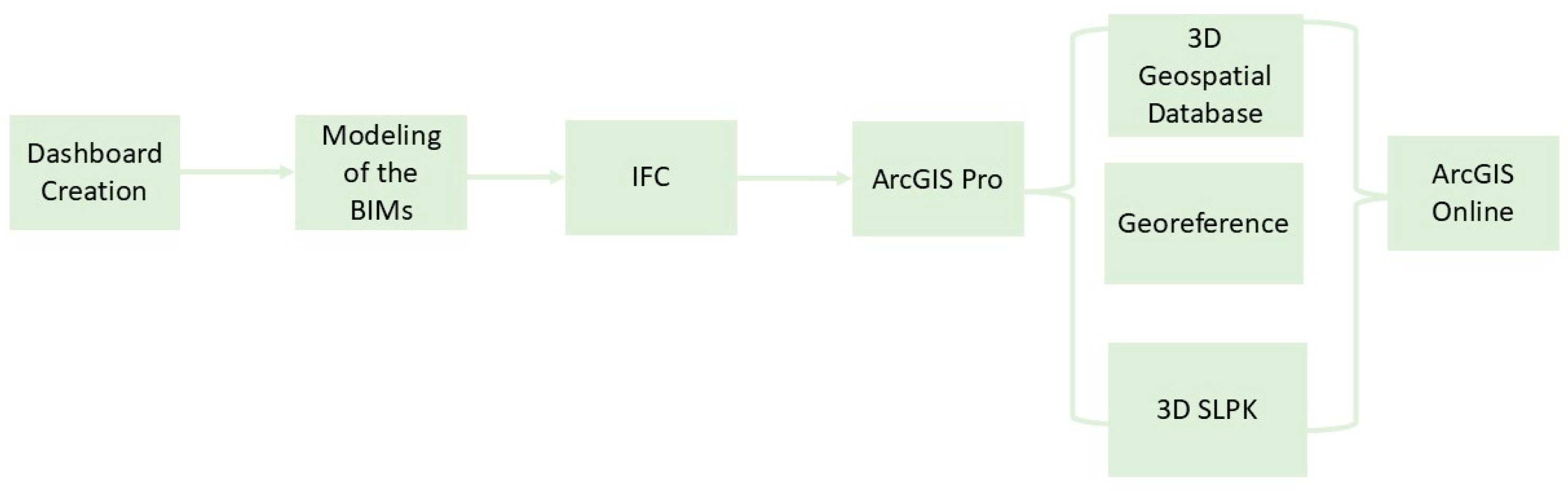
Figure 1 illustrates the phases of the methodology mentioned above. Each phase consists of smaller technical steps which will be detailed in the following sections.
The individual BIMs are accurately positioned at ground level. However, the primary challenge lies in preserving the georeference and geolocation of the original BIM files in the GIS. The pipeline is validated in Section 3.
By adjusting to the existing geoportals of each country and available data, this methodology can accommodate various data volumes and different city contexts.
The first technical step is the modeling of the BIMs. Two distinct, already published workflows for structuring the BIMs have been utilized. The BIMs have been created either using official architectural and accurate floor plans provided by the owner as established in 2022 [59] or an approximate method is used in the case of a lack of accurate floor plans. This methodology expands on the 2D research published in [14] regarding 3D fit-for-purpose, crowdsourcing, and low-cost applications.
The approximate method includes the following steps:
(1)
Crowdsourced 2D digitalization of the parcels and building footprints.
(2)
Developing BIMs based on the digitized building footprints using approximate open data derived from National Cadastral Orthophotos, Google Earth Pro, and Streetview as researched and published in 2023 [19].
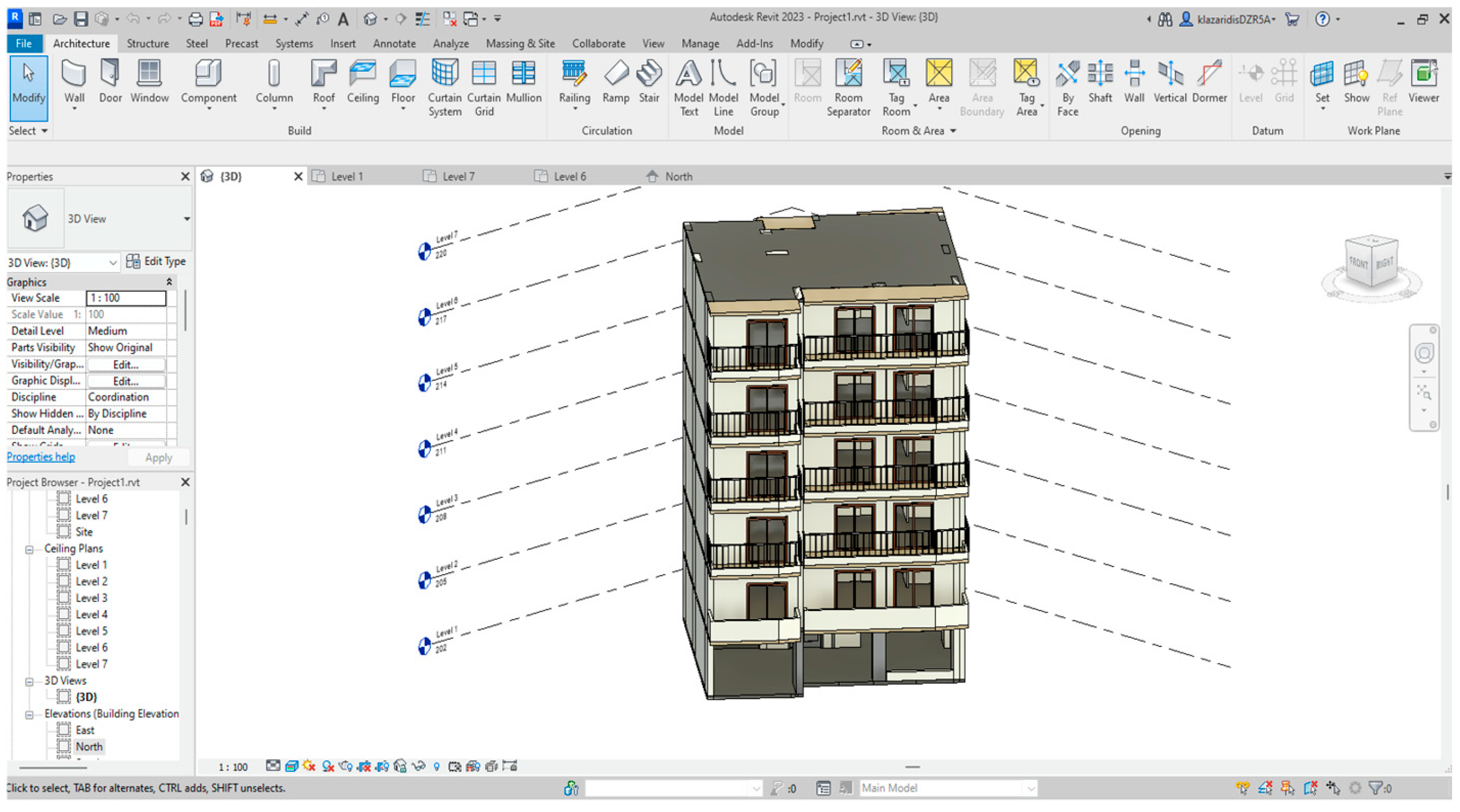
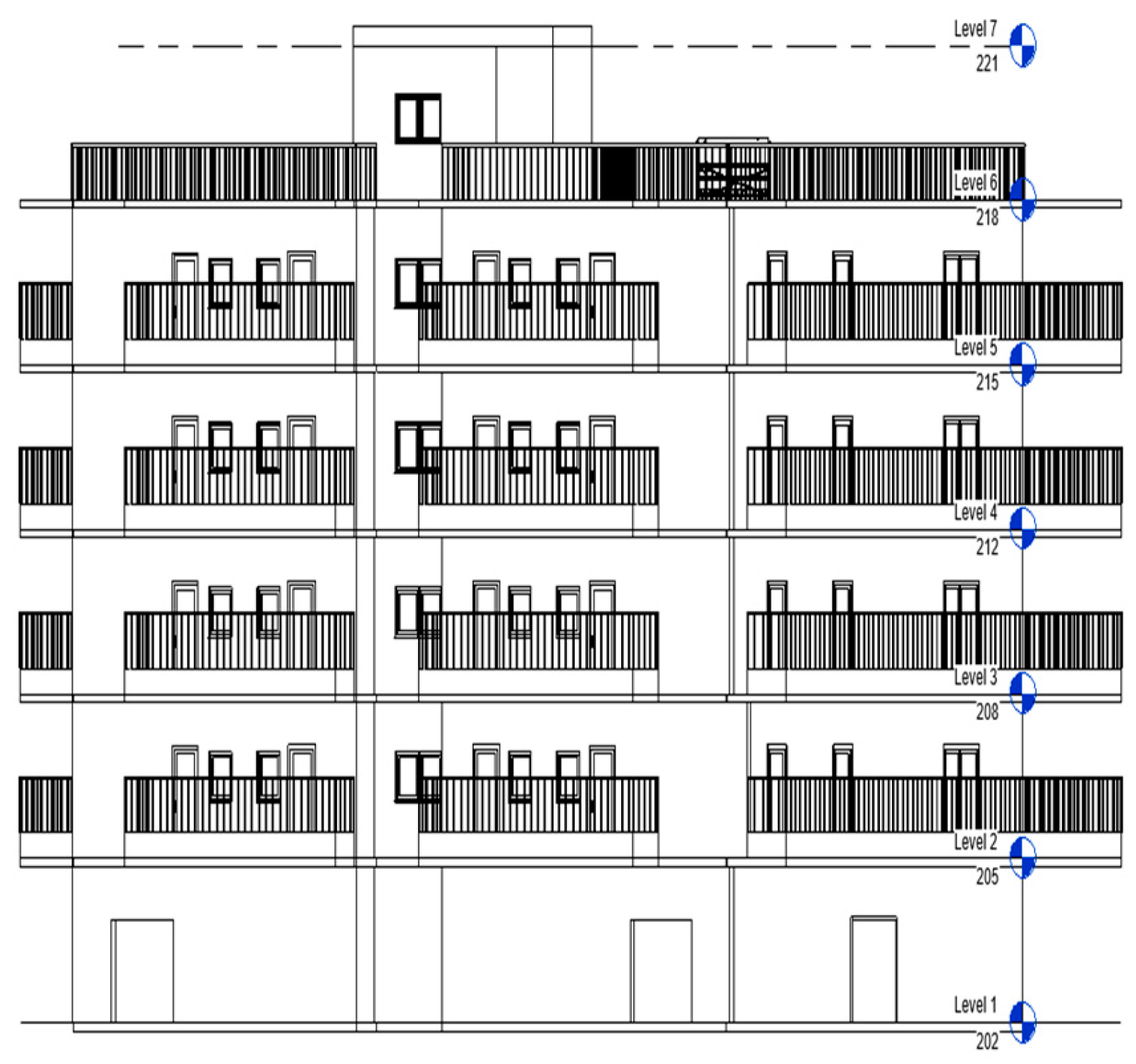
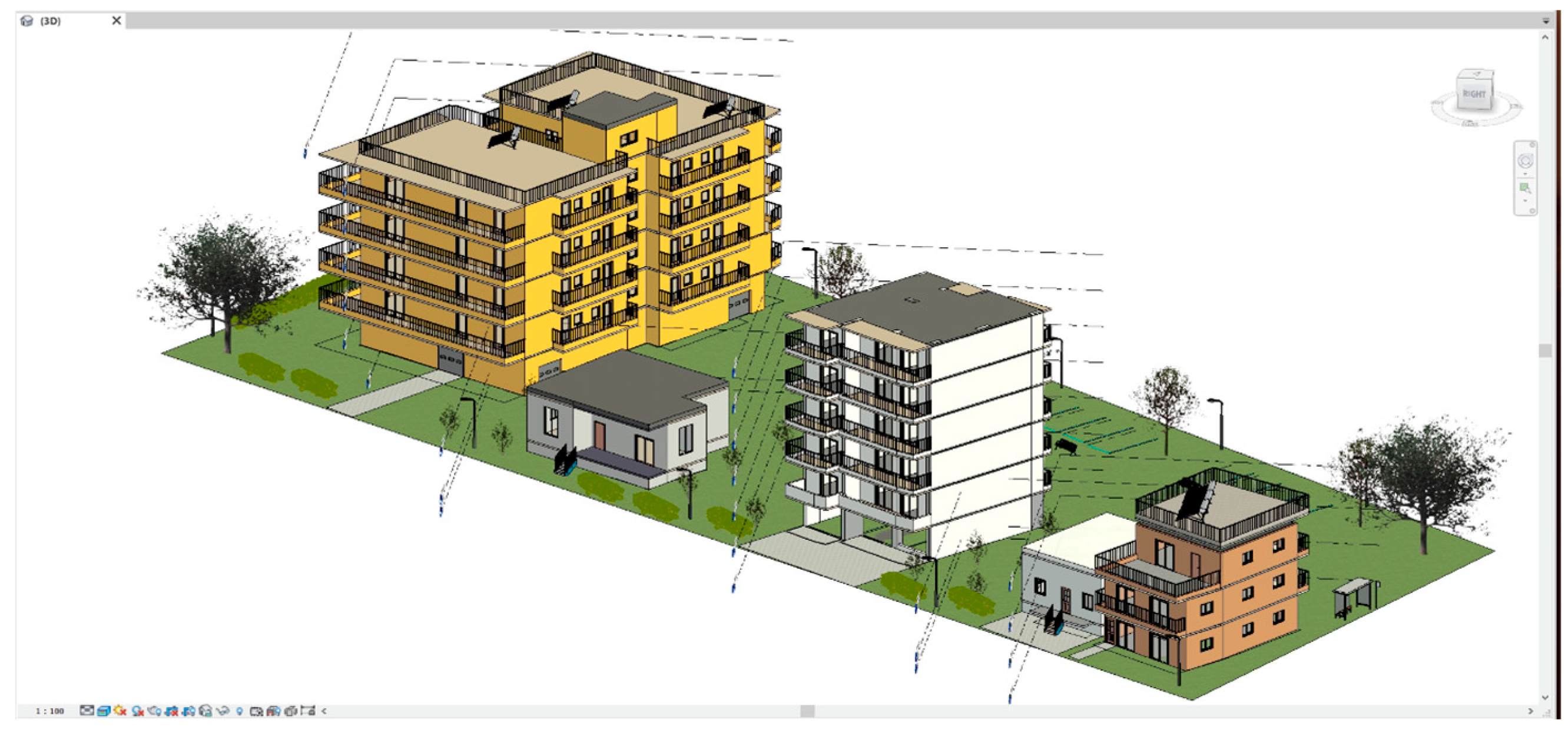
The structured BIMs are shown in Figure 2, Figure 3 and Figure 4. The final 3D model contains the structured BIMs, the urban plot, and various environmental elements such as street furniture. The BIMs are exported as IFC files preserving all architectural, structural, geometrical, semantic, and georeference metadata as in [59].
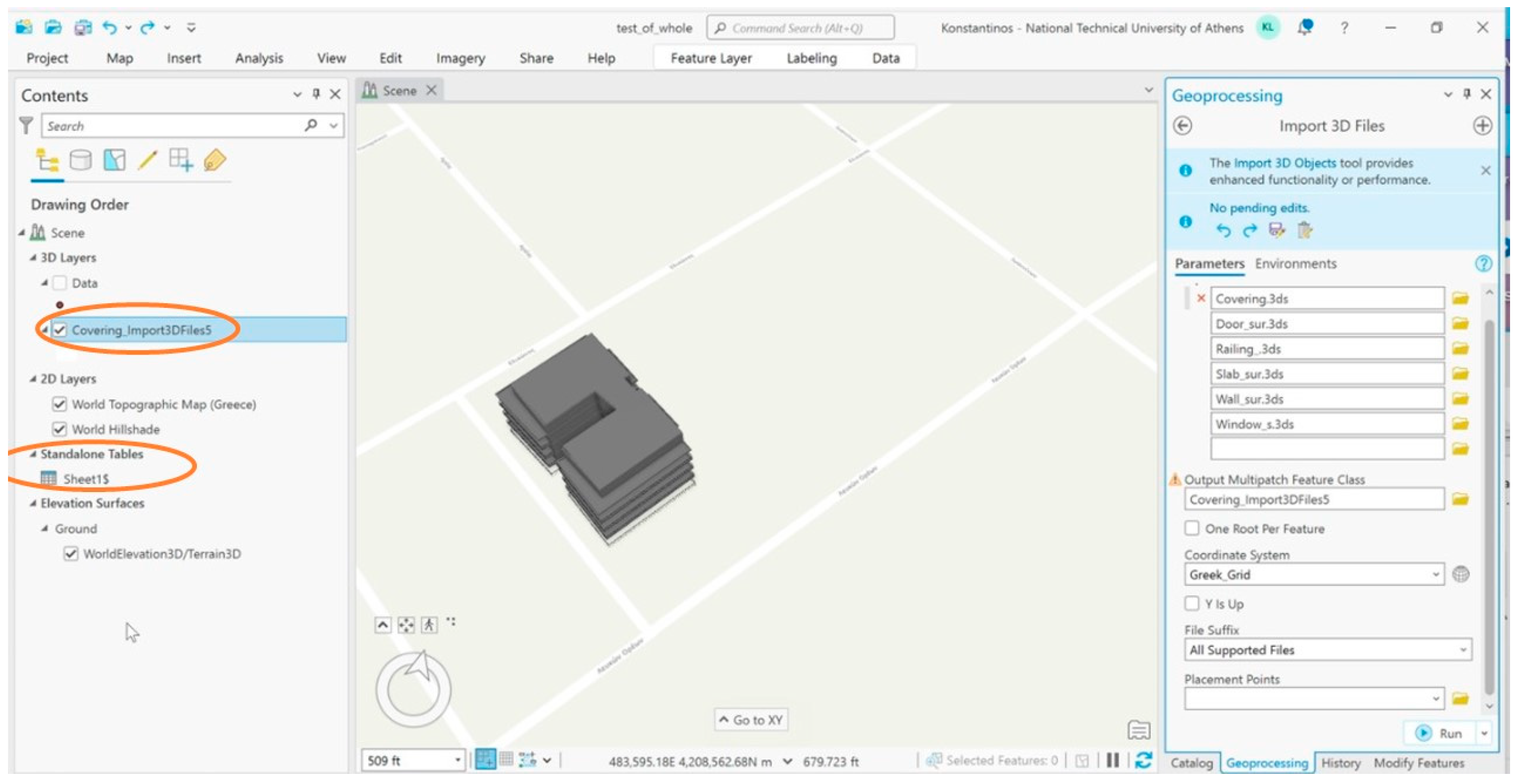
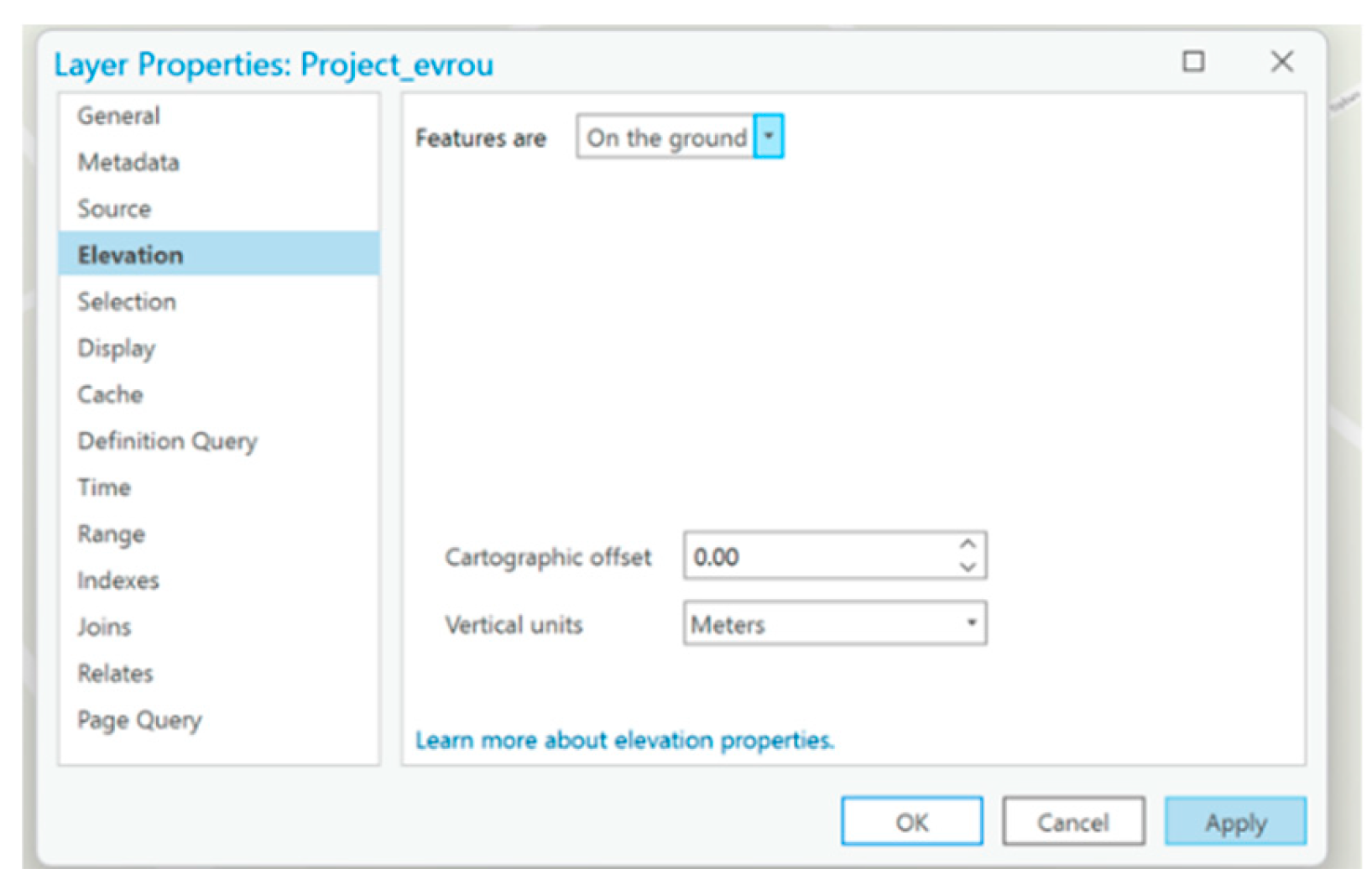
The BIMs are imported as IFC files into ArcGIS Pro for the creation of a 3D geospatial database (Figure 5). This database includes the georeference and geolocation as well as the 3D architectural and structural information of the BIMs. It is essentially a table containing 3D detailed structures of each BIM. The 3D models are placed at the ground level in ArcGIS Pro using absolute elevation (Figure 6).
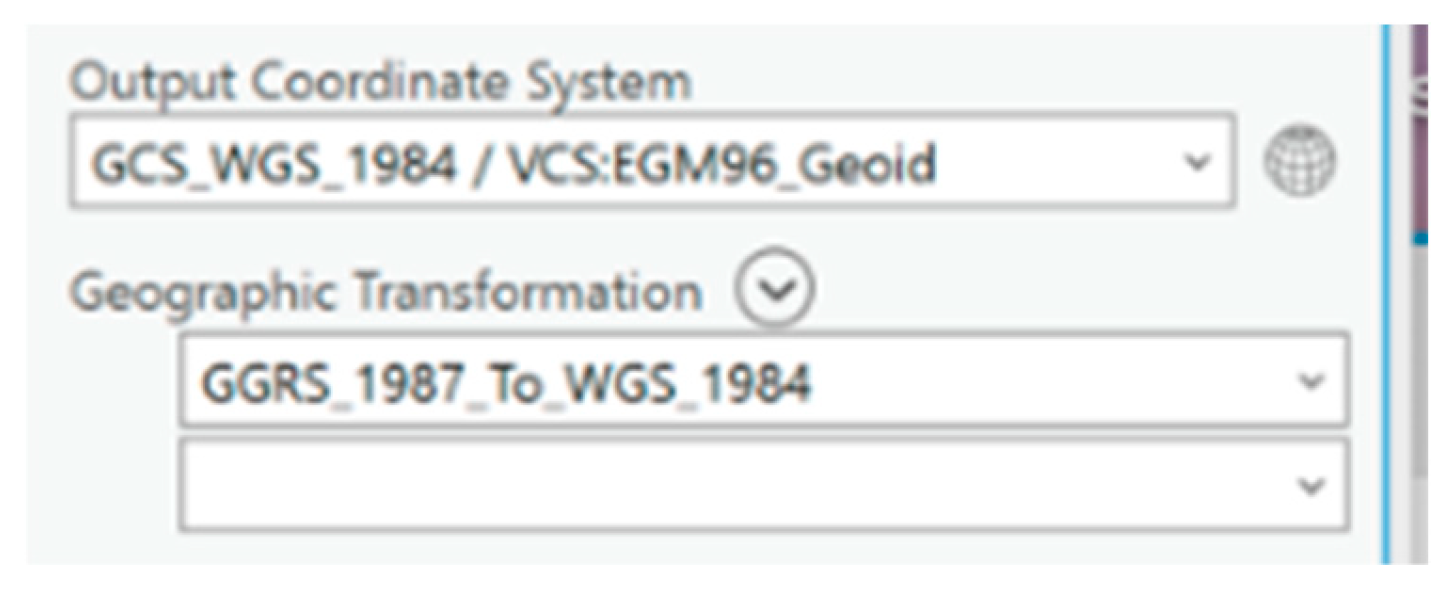
For this specific application, in Greece, the Greek Grid (GGRS ‘87) is used as the reference system. A geodetic transformation is required because ArcGIS Online utilizes WGS 1984, as illustrated in Figure 7. Successfully and efficiently inserting the BIMs into ArcGIS Pro (Version 3.2.1) serves as proof-of-concept for the methodology.
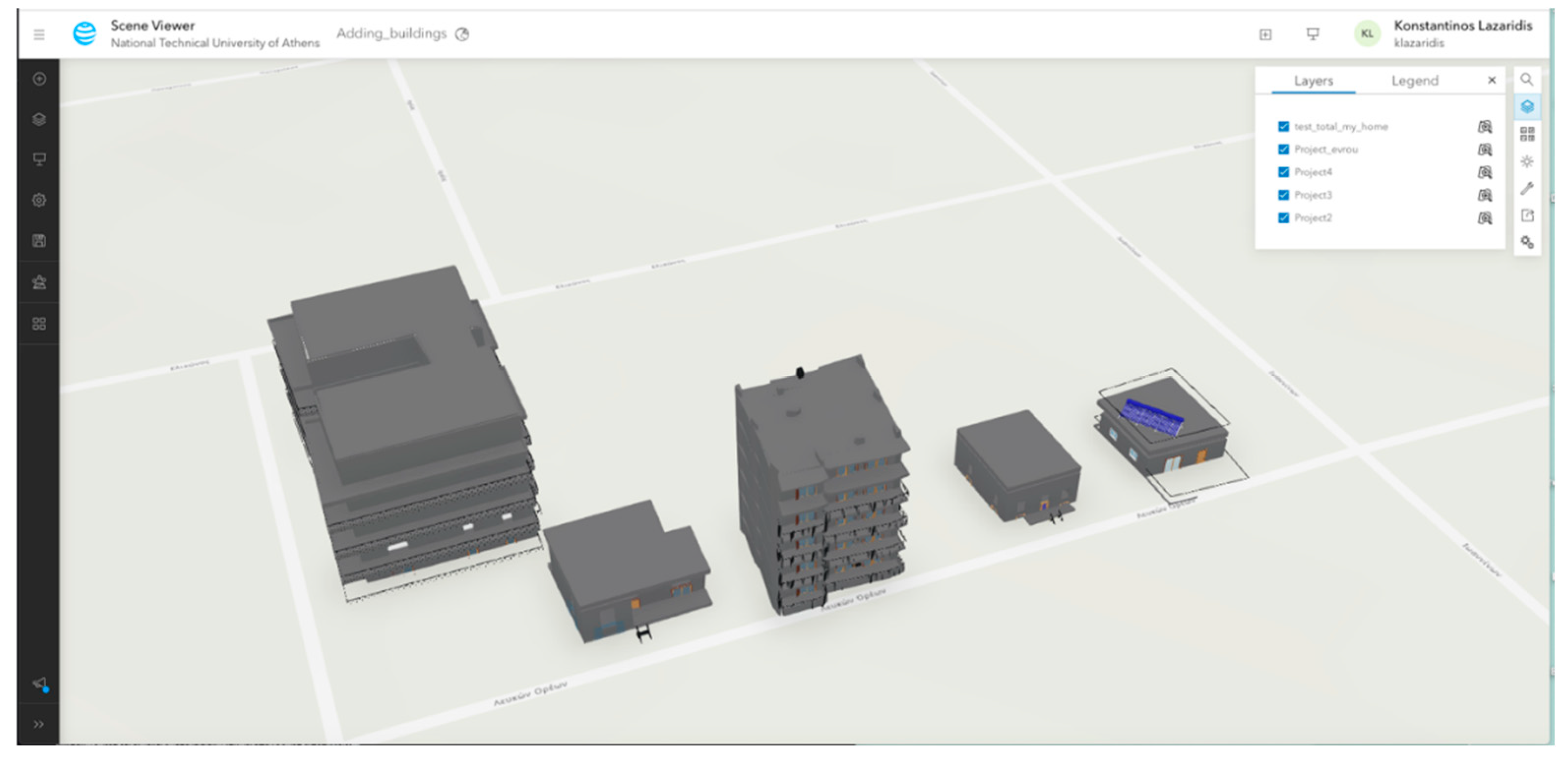
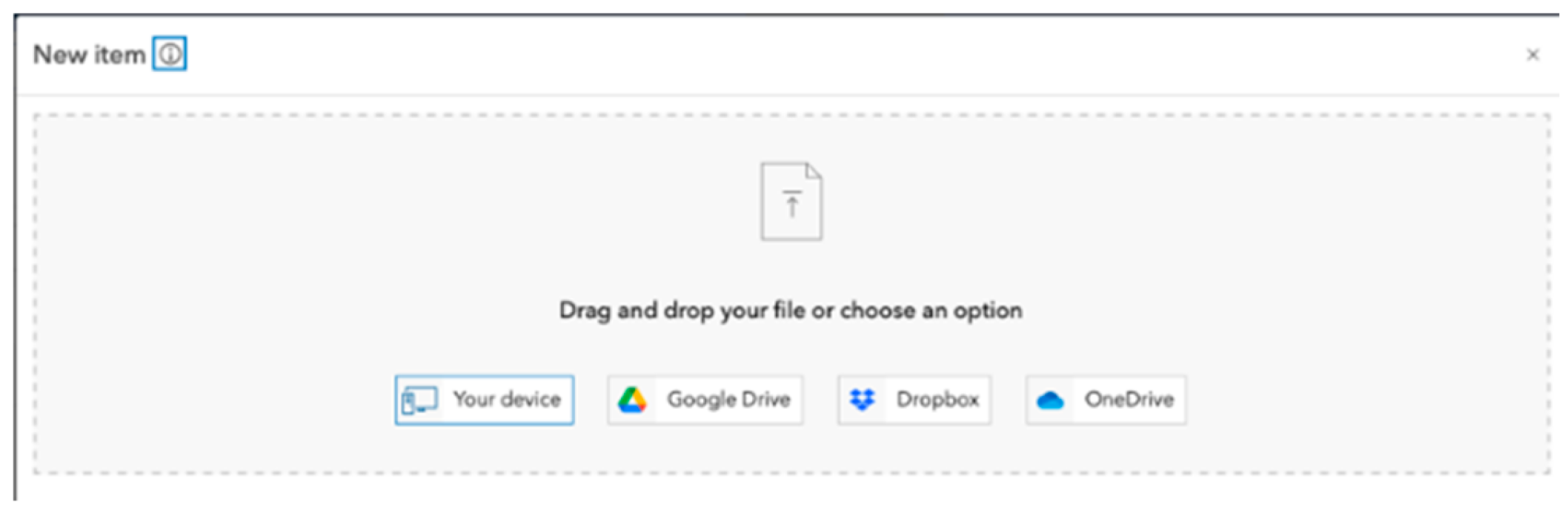
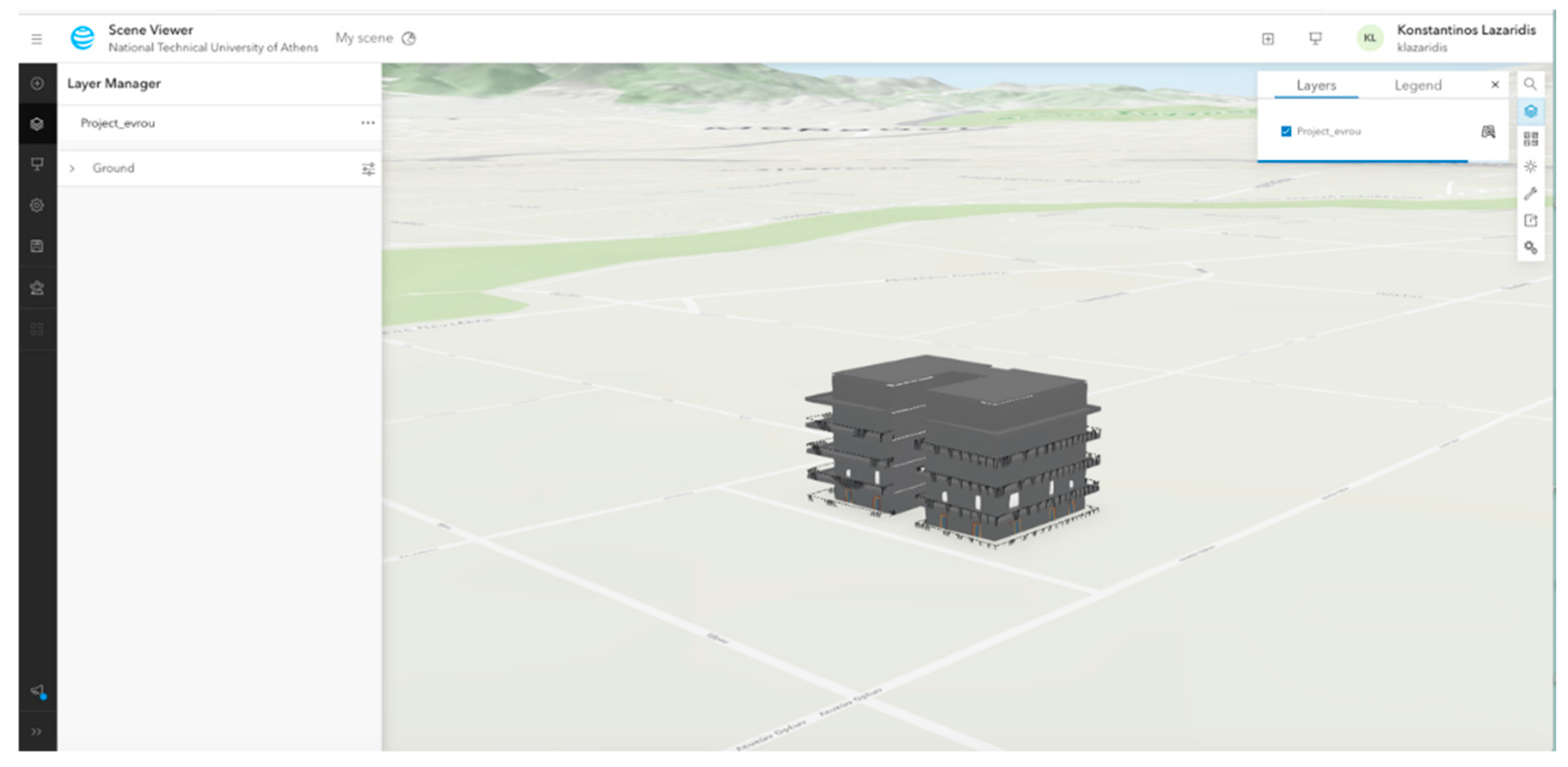
The 3D models are transformed in ArcGIS Pro and uploaded to ArcGIS Online as “Scene Layer Packages” (Figure 8). This step publishes the BIMs on the online repository of ESRI as a cloud hosted layer, successfully interconnecting the two standards (Figure 9). The 3D map for the proposed dashboard is structured by calling the BIMs from the cloud-based repository of ESRI and automatically positioning them on an online “Scene Viewer” by reading the coordinates (Figure 10).
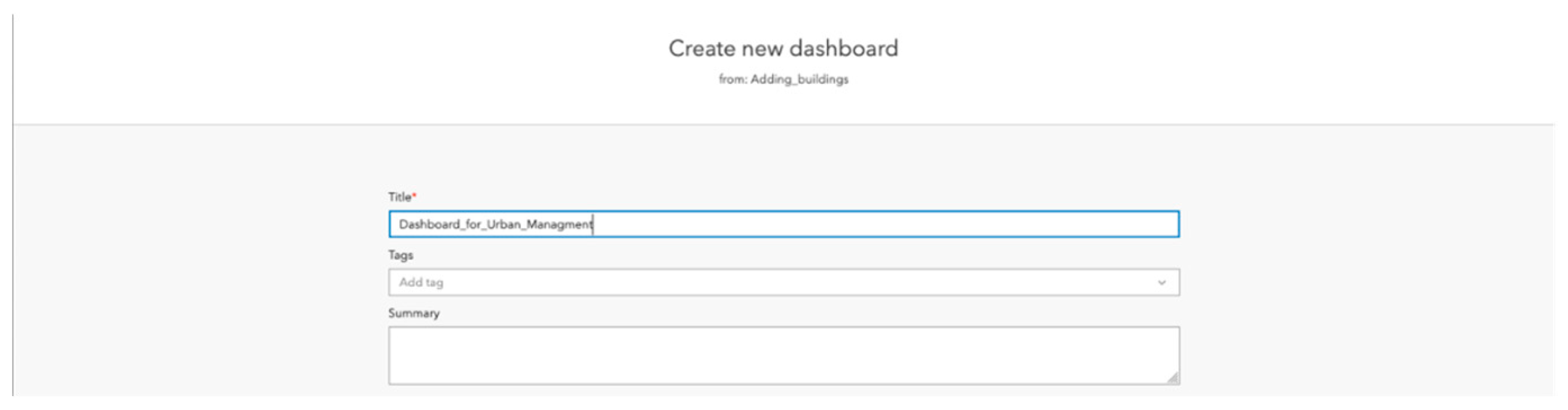
The ArcGIS Dashboard will be created by utilizing the aforementioned webscene with the BIMs (Figure 11).
  • The data table serves as the semantic link between the BIMs and the urban management information that is inserted including legal, cadastral, economic, structural, and energy consumption data. Additionally, the table provides information to the graphs, gauges, and diagrams on the dashboard.
  • The data table is connected to the 3D BIMs through the unique identifiers of IFC (GUIDs) that are contained within each 3D BIM inserted into the dashboard. The IFC GUID serves also as the primary key of the data table, allowing for a connection between the GUID of the data table and the corresponding 3D BIM.
  • Data acquisition is carried out through both crowdsourcing and open geoportals, ensuring that the data is continuously updated through dynamic interactions and user inputs. This allows for the depiction of the current state of each BIM automatically with relevant changes reflected on the dashboard widgets. Depending on urban needs, the data table can be enriched with additional information about each building such as IFC GUID; year of construction; land tenure; property rights and right holders; restrictions; land use; number of property units; number of floors; construction height (m); total area (m2); building regulations; market value; structural details (such as elevators, stairs, emergency exits, solar panels, etc.); environmental class of construction; ownership status; CO2 emissions; etc.
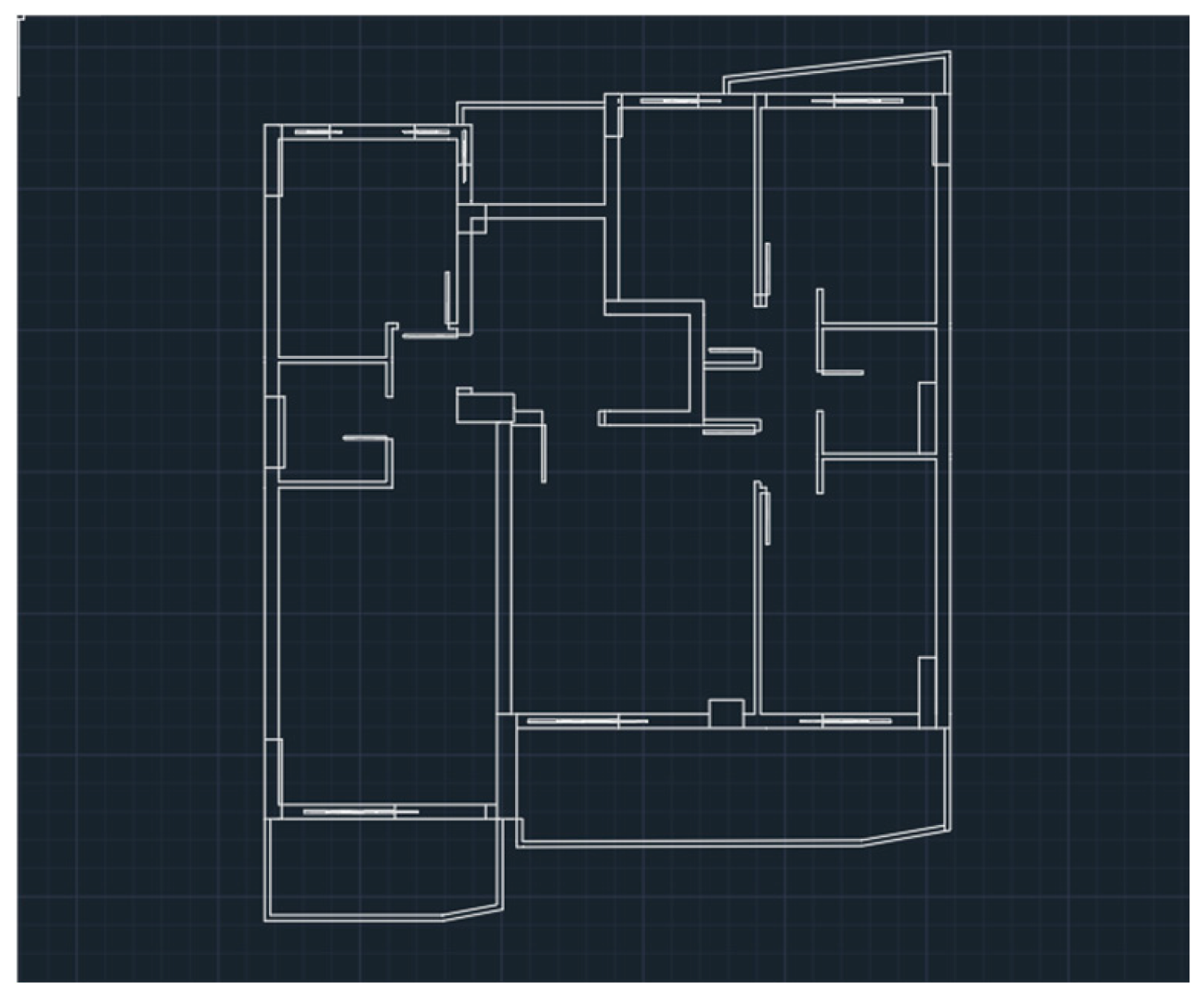
  • Specifically, energy consumption and CO2 emissions are provided by tenants through their electricity bills. CO2 emissions can be calculated by multiplying the total energy consumption of each property, in “kWh”, by the standardized parameter of “404.25”. Structural information can be obtained from building permits and topographical and architectural plans, as shown in Figure 12.
Figure 12. Building permit.
Land 15 00369 g012
5.
The legal and cadastral information is available on the Official National Cadastral Portal (Figure 13), as shown in [22].
6.
The market value can be obtained from official real-estate websites as shown in Figure 14.
The data table in Figure 15 contains domain-specific information for the optimal management of each BIM. The table is also enriched with additional operational and functional details.
Additional applications in various city contexts and for different purposes will be included in the next phase of this research.

3. Results

The widgets created are as follows: indicator; list; gauge; chart; and pop-up windows with embedded content.
These widgets simulate virtual control panels and contribute to the structure of a dynamic and interactive data-driven interface. Some widgets are activated by real-time data while others are static. The indicator connects the BIMs with the data table through the IFC GUID of each 3D building model. It can present any desired information from the data table and indicates the number of floors of each BIM.
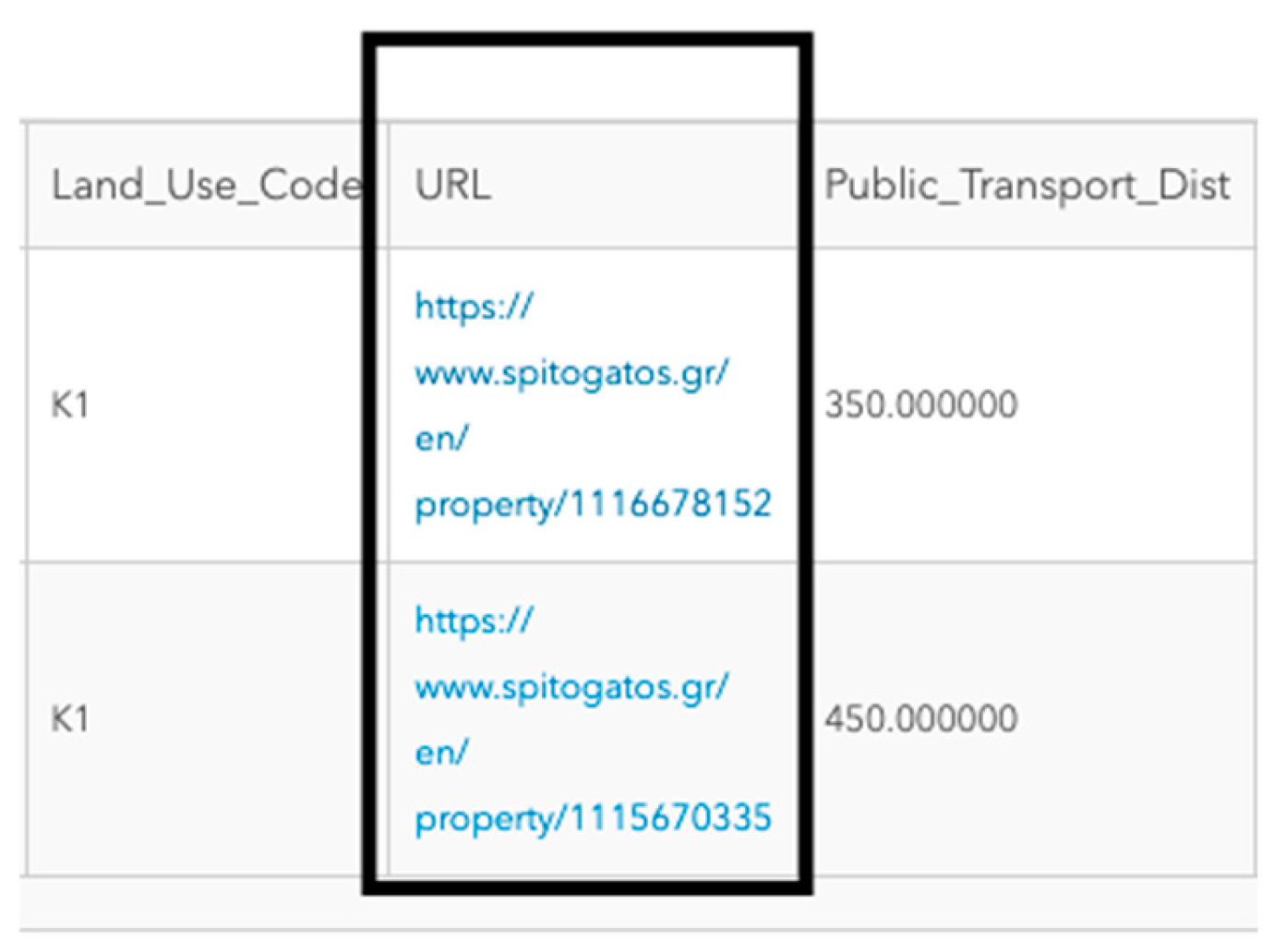
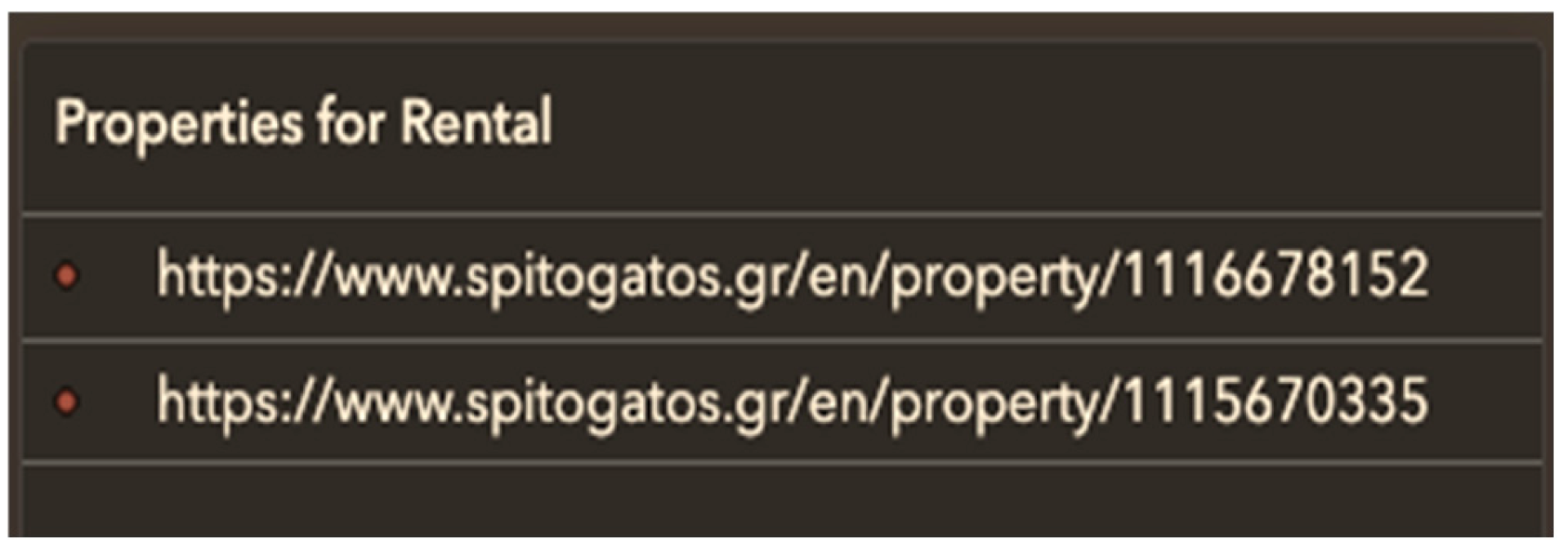
The list provides information about the properties available for rent or sale in the urban block of the neighborhood. It includes Uniform Resource Locators (URLs) that automatically redirect official real-estate portals, calling, in real-time, the feature services of these websites. The list is a real-time enabled widget. The URLs, as shown in Figure 16, act as hyperlinks that correspond to the official real-estate websites feeding the list widget (Figure 17). These URLs are interconnected with the coordinates of the BIMs, thus enabling a dynamic update of information. A custom code was programmed to check and validate in real-time the functionality and credibility of the inserted URLs. This ensures that only updated hyperlinks are shown and utilized.
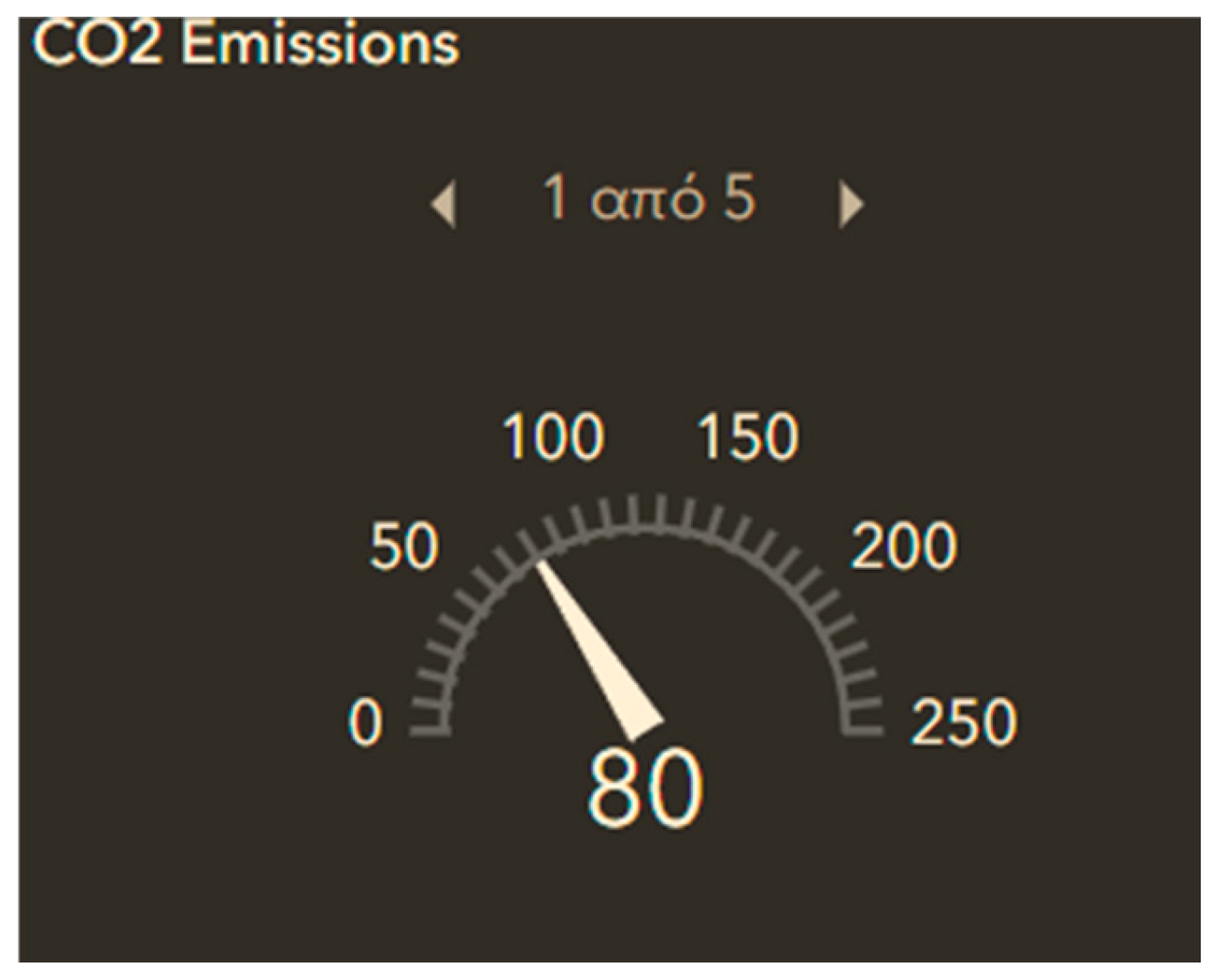
The gauge is created by linking the “CO2 Emission” column of the holistic data table with the BIMs. The gauge monitors the CO2 emissions for each BIM (Figure 18). The data on the gauge is automatically updated based on user interactions with the BIMs, showing the current status of each 3D building. This particular widget contains static data gathered through crowdsourcing methods. In future applications, smart devices, if established and connected, could allow for real-time updates.
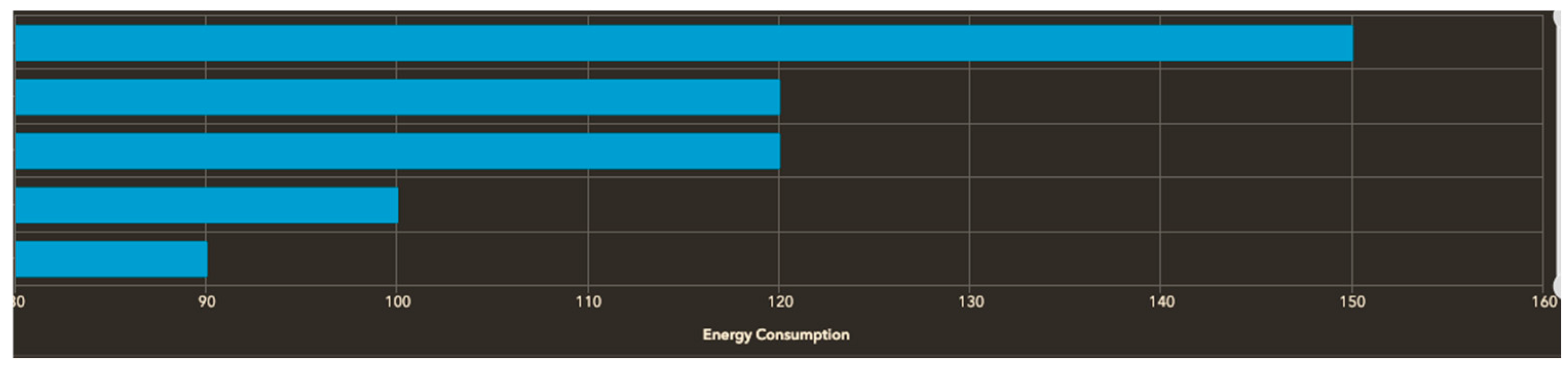
The energy consumption chart, shown in Figure 19, was created by inputting the relevant information obtained from the corresponding field in the data table. The chart and the gauge are linked to the BIMs by inserting the coordinates.
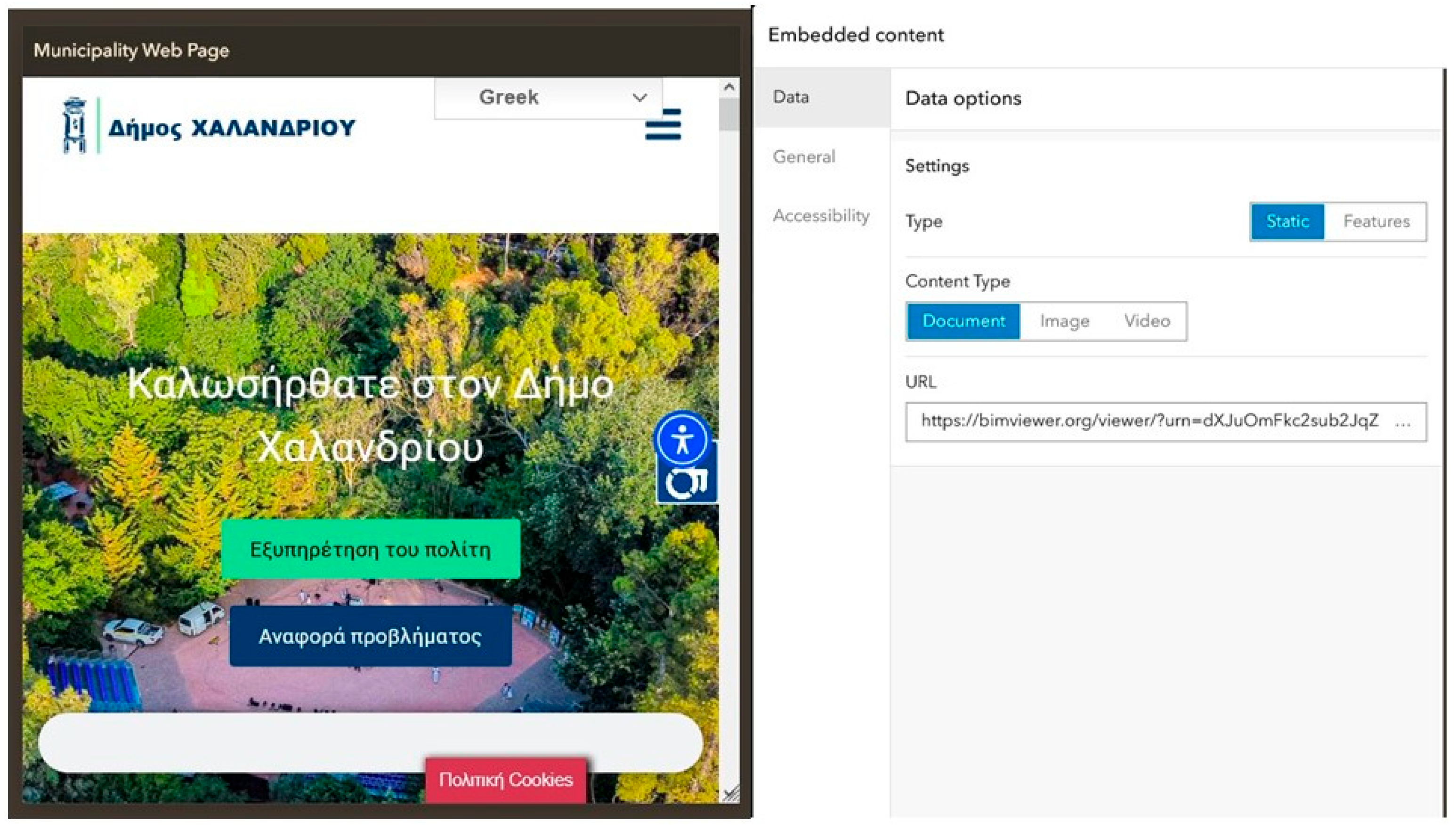
The pop-up window widgets displaying the official websites are shown in Figure 20. The hyperlinks of the websites have been inserted in the form of embedded content using a URL format. The pop-up windows allow for dynamic and live interactions with the embedded websites without redirecting to another interface.
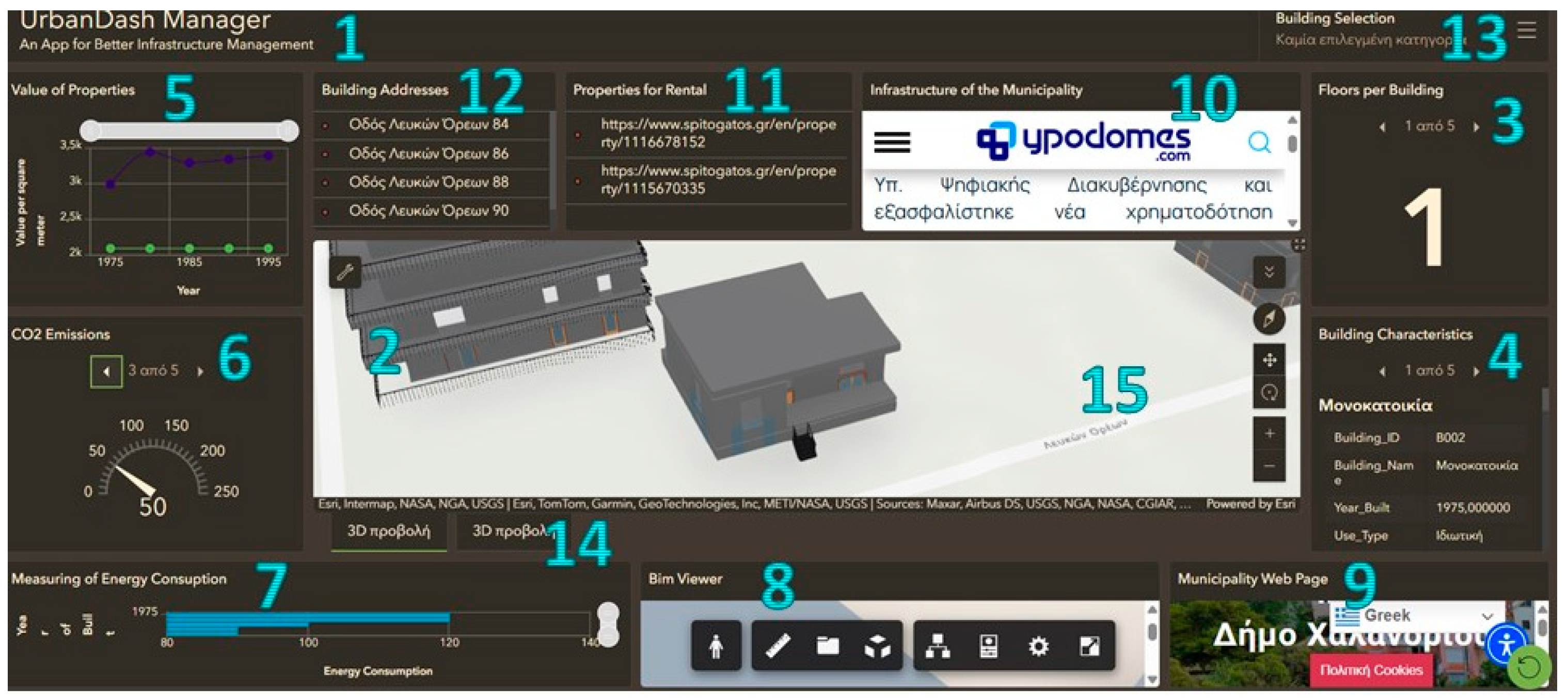
An example of the simulation of an urban block in the Municipality of Chalandri, in Athens, Greece is shown in Figure 21. It includes:
(1)
A header;
(2)
3D BIMs;
(3)
An indicator depicting the floors of each building;
(4)
A data table;
(5)
A market value chart;
(6)
A CO2 gauge;
(7)
An energy consumption chart;
(8)
An embedded interactive portal for uploading the BIMs;
(9)
A municipality webpage;
(10)
A municipality 3D infrastructure webpage;
(11)
A list of properties that are available for rental;
(12)
A list with the addresses of the BIMs;
(13)
A BIM selection panel;
(14)
A 3D map viewer.
Figure 21. UrbanDash Manager dashboard.
Land 15 00369 g021
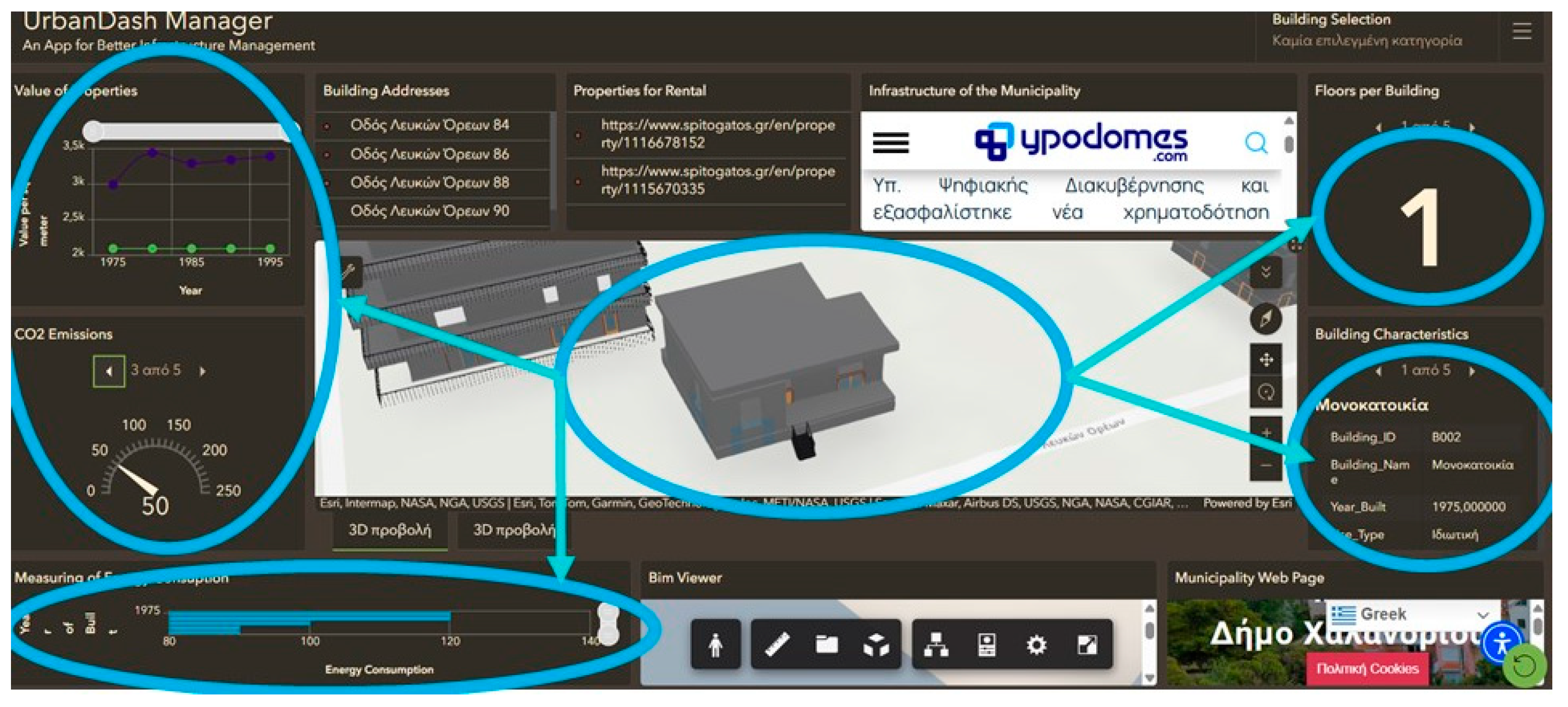
The dashboard updates all widgets according to real-time and dynamic user interactions, presenting the relevant information for each selected BIM as shown in Figure 22.
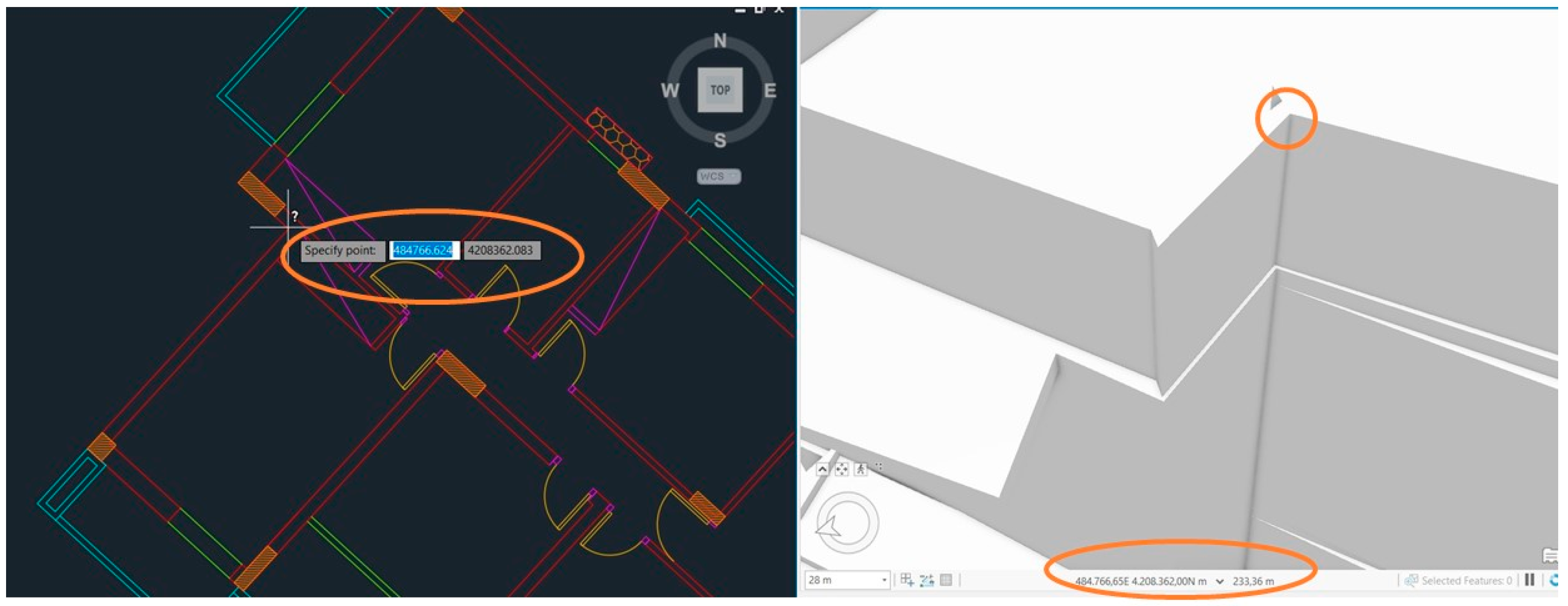
The presented outcome achieves the main objective of creating of a cloud-based CDE (Common Data Environment) in the form of a dashboard to facilitate citizen participation and bottom-up urban 3D real-estate data collection and sharing. This data can be utilized for land administration and management in small urban neighborhoods that lack developed geospatial documentation and services. A prerequisite for the visualization and management of the BIMs in GIS is the preservation of georeference by utilizing the created pipeline. As shown in (Figure 23), a point on the outer balcony has coordinates of “X: 484,766.62 and Y: 4,208,362.08” in the 2D plan (Figure 23 left). The same point maintains its coordinates in ArcGIS Pro with minimal deviation, “X: 484,766.65 and Y: 4,208,362.00”.

4. Discussion

Regarding the research objective of this paper, the following considerations can be derived. As mentioned in the literature review, a methodology has been published for creating dashboards for visualizing and monitoring COVID-19 incidents, in almost real-time. Ref. [40] proposes the utilization of graphs, gauges, diagrams, and pop-up windows for analyzing COVID-19 healthcare information. The paper extended the above-mentioned widgets to monitor the market value, energy consumption, and CO2 emissions of urban buildings. Published research shows that BIMs are integrated in GIS as georeferenced building masses containing geometric and semantic parameters through complex tailor-made workflows with sophisticated programming, while the suggested pipeline in this paper involves inserting BIMs into GIS, through a workflow developed using simple commercial geoprocessing tools, as 3D building models (not as masses) that actually preserve all architectural and structural details such as balconies, railings, penthouses, etc., as well as legal information, land uses, and values.
Potentially, the developed dashboard presented in this paper can be improved in the following sectors:
(1)
Crowdsourced and participatory decision-making; the dashboard can be integrated with “Survey 1,2,3” of ArcGIS Online for crowdsourcing purposes. Crowdsourcing seminars can be organized to engage citizens, professionals, and academics in testing realistic urban land management scenarios. This initiative could aim to strengthen the capability and efficiency of the developed dashboard as well as to promote communicative and participatory urban land administration and management in urban neighborhoods.
(2)
So far in this paper the dashboard has used existing data. As a future improvement, the dashboard can be enhanced with real-time data feedback through the addition of APIs and Machine Learning (ML) models for real-time feedback derived from IoT networks.
(3)
The application presented in this paper is not applied in a real-world scenario. In case it is applied and tested in the future, issues like personal data protection should be considered. ArcGIS Online authentication tools, such as “OAuth 2.0”, can be utilized to establish a secure “sign-in” system to promote data protection, as mentioned in Section 2.

5. Conclusions

This paper presents a new simple, low-cost, efficient, and fast method for compiling IFC/BIM and GIS data. This method serves as the geospatial data infrastructure to support participatory urban management through an open dashboard. The entire approach is simple, affordable, and suitable for managing small urban areas in rapidly developing cities that lack authoritative geospatial infrastructures and well-developed local services.
The dashboard aims to integrate crowdsourcing, participatory, and transparent procedures into urban land administration and management. The dashboard includes:
(a).
Real-time tools (such as URL validation code);
(b).
Real-time services like dynamic updates;
(c).
Interactive actions (such as pop-up-embedded websites for full intervention);
(d).
Quantitative analyses (such as the CO2 emission gauge and energy consumption graph);
(e).
3D visualization through inserted BIMs;
(f).
Semantic data exchange between the table and the BIMs.
Developing experience in utilizing open data, open geospatial infrastructures, available geospatial platforms, and a wide variety of existing commercial geoprocessing tools may lead to the development of low-cost and fit-for-purpose applications for improving urban land administration and management.

Author Contributions

Conceptualization, C.P. and D.A.; methodology, C.P. and D.A.; software, K.L. and D.A.; validation, D.A., C.P. and K.L.; formal analysis, D.A. and C.P.; investigation, C.P. and D.A.; resources, D.A.; data curation, D.A.; writing—original draft preparation, D.A. and C.P.; writing—review and editing, C.P. and D.A.; visualization, D.A.; supervision, C.P.; project administration, C.P. and D.A. All authors have read and agreed to the published version of the manuscript.

Funding

The research has received no funding. All the deployed data and software are free-to-use and openly available.

Data Availability Statement

The dashboard is distributed on the ArcGIS Online cloud-based repository but it was chosen not to be completely published in the entire network yet as it is part of the pending PhD of D.A.

Conflicts of Interest

The authors declare no conflict of interest.

References

  1. Doytsher, Y.; Kelly, P.; Khouri, R.; McLaren, R.; Mueller, H.; Potsiou, C. Rapid Urbanization and Mega Cities: The Need for Spatial Information Management. In Proceedings of the FIG—Congress 2010 “Facing the Challenges—Building the Capacity”, Sydney, Australia, 11–16 April 2010. [Google Scholar]
  2. Potsiou, C. Formalizing the Informal: Challenges and Opportunities of Informal Settlements in South-East Europe; United Nations and FIG Publication: Copenhagen, Denmark, 2015; ISBN 978-87-92853-32-5. [Google Scholar]
  3. Potsiou, C.; Nystrom, S.; Wouters, R.; Figueiredo, A. Guidelines for the Formalization of Informal Constructions; United Nations Economic Commission for Europe: Geneva, Switzerland, 2019; ISBN 978-92-1-117234-8. [Google Scholar]
  4. Atazadeh, B.; Kalantari, M.; Rajabifard, A.; Ho, S.; Ngo, T. Building Information Modelling for High-rise Land Administration. Trans. GIS 2017, 21, 91–113. [Google Scholar] [CrossRef]
  5. Oosterom, P. Best Practices 3D Cadastres Extended Version; FIG: Copenhagen, Denmark, 2018; ISBN 978-87-92853-64-6. [Google Scholar]
  6. Mitrea, D.A.; Marian, C.V.; Iacob, M.; Vasilateanu, A.; Cali, U.; Cazan, C.A. Design and Implementation of an Integrated Framework for Smart City Land Administration and Heritage Protection. Heritage 2025, 8, 510–528. [Google Scholar] [CrossRef]
  7. Yeung, D.; Tong, K.; Leung, L. Enrichment of Land Information Database for Smart City Development. In Proceedings of the FIG e-Working Week 2021 “Smart Surveyors for Land and Water Management—Challenges in a New Reality”, Amsterdam, Netherlands, 21–25 June 2021. [Google Scholar]
  8. Abbott, V.; Potsiou, C.; Riekkinen, K.; Garcia, P.V.; Taltavull, P.; Bayer, C.T.; Nizalov, D.; Müller, H. Ecosystems and Security for Future Land Administration Arrangements; UNECE: Geneva, Switzerland, 2025; ISBN 978-92-1-003491-3. [Google Scholar]
  9. SDG 11 Make Cities and Human Settlements Inclusive, Safe, Resilient and Sustainable. Available online: https://sdgs.un.org/goals/goal11 (accessed on 19 November 2025).
  10. Universal Values. Principle Two: Leave No One Behind (LNOB). Available online: https://unsdg.un.org/2030-agenda/universal-values/leave-no-one-behind (accessed on 26 November 2025).
  11. Cetl, V.; Ioannidis, C.; Dalyot, S.; Doytsher, Y.; Felus, Y.; Haklay, M.; Müller, H.; Potsiou, C.; Rispoli, E.; Siriba, D. New Trends in Geospatial Information: The Land Surveyors Role in the Era of Crowdsourcing and VGI; FIG: Copenhagen, Denmark, 2019; ISBN 978-87-92853-86-8. [Google Scholar]
  12. Potsiou, C.; Louwsma, M.; Rispoli, E.; Scorza, M.G. The Role of Land Administration Data in the Real Estate Sector. In Geospatial Data in the 2020s—Transformative Power and Pathways to Sustainability; Chapter 6; FIG Commission 3; FIG: Copenhagen, Denmark, 2022. [Google Scholar]
  13. Potsiou, C. Ensuring the Rapid Response to Change Ensuring the Surveyor of Tomorrow. 2015. Available online: https://www.fig.net/resources/proceedings/fig_proceedings/fig2015/ppt/opening_potsiou.pdf (accessed on 21 November 2025).
  14. Apostolopoulos, K.; Potsiou, C. How to Improve Quality of Crowdsourced Cadastral Surveys. Land 2022, 11, 1642. [Google Scholar] [CrossRef]
  15. Gkeli, M.; Potsiou, C.; Ioannidis, C. Crowdsourced 3D cadastral surveys: Looking towards the next 10 years. J. Geogr. Syst. 2019, 21, 61–87. [Google Scholar] [CrossRef]
  16. Basiouka, S.; Potsiou, C. A Proposed Crowdsourcing Cadastral Model: Taking Advantage of Previous Experience and Innovative Techniques. In European Handbook of Crowdsourced Geographic Information; Ubiquity Press: London, UK, 2016; ISBN 978-1-909188-80-8. [Google Scholar]
  17. Rajabifard, A.; Atazadeh, B.; Kalantari, M. BIM and Urban Land Administration; CRC Press: Boca Raton, FL, USA, 2019; ISBN 9781138491687. [Google Scholar]
  18. Gkeli, M.; Potsiou, C. 3D crowdsourced parametric cadastral mapping: Pathways integrating BIM/IFC, crowdsourced data and LADM. Land Use Policy 2023, 131, 106713. [Google Scholar] [CrossRef]
  19. Andritsou, D.; Soile, S.; Potsiou, C. Merging BIM, Land Use and 2D Cadastral Maps into a Digital Twin Fit—For—Purpose Geospatial Infrastructure. In Recent Advances in 3D Geoinformation Science; Kolbe, T.H., Donaubauer, A., Beil, C., Eds.; 3DGeoInfo 2023; Lecture Notes in Geoinformation and Cartography; Springer: Cham, Switzerland, 2024. [Google Scholar] [CrossRef]
  20. Andritsou, D.; Alexiou, C.; Potsiou, C. BIM, 3D Cadastral Data and AI for Weather Conditions Simulation and Energy Consumption Monitoring. Land 2024, 13, 880. [Google Scholar] [CrossRef]
  21. RICS. International BIM Implementation Guide; RICS: London, UK, 2014; ISBN 978-1-78321-077-0. [Google Scholar]
  22. Andritsou, D.; Potsiou, C. CadaSPACE: A Cloud Based Platform for a low-cost 3D visualization of property rights available in a 2D cadastral registry. An example for urban multi-storey buildings. In ISPRS Annals of the Photogrammetry Remote Sensing and Spatial Information Sciences; ISPRS: Hannover, Germany, 2024; Volume X-4/W5-2024. [Google Scholar] [CrossRef]
  23. Karan, E.P.; Irizarry, J.; Haymaker, J. BIM and GIS Integration and Interoperability Based on Semantic Web Technology. J. Comput. Civ. Eng. 2015, 30, 04015043. [Google Scholar] [CrossRef]
  24. Piras, G.; Muzi, F.; Zylka, C. Integration of BIM and GIS for the Digitization of the Built Environment. Appl. Sci. 2024, 14, 11171. [Google Scholar] [CrossRef]
  25. Gabriele, M.; Previtali, M. HBIM-GIS Integration with an IFC-To-Shapefile Approach: The Palazzo Trotti Vimercate Pilot Case Study. In ISPRS Annals of the Photogrammetry Remote Sensing and Spatial Information Sciences; ISPRS: Hannover, Germany, 2021; Volume VIII-4/W2-2021. [Google Scholar] [CrossRef]
  26. Zhu, J.; Wang, X.; Chen, M.; Wu, P. Integration of BIM and GIS: IFC geometry transformation to shapefile using enhanced open-source approach. Autom. Constr. 2019, 106, 102859. [Google Scholar] [CrossRef]
  27. Noardo, F.; Harrie, L.; Arroyo Ohori, K.; Biljecki, F.; Ellul, C.; Krijnen, T.; Eriksson, H.; Guler, D.; Hintz, D.; Jadidi, M.A.; et al. Tools for BIM-GIS Integration (IFC Georeferencing and Conversions): Results from the GeoBIM Benchmark 2019. ISPRS Int. J. Geo Inf. 2020, 9, 502. [Google Scholar] [CrossRef]
  28. Wang, N.; Cheng, R.; Chen, J.; Zhang, M. Streamlining BIM models for GIS integration: An advanced approach to building envelope extraction. Int. J. Digit. Earth 2024, 17, 2368708. [Google Scholar] [CrossRef]
  29. Dawkins, O.; Kitchin, R.; Young, G.; Zawadzki, T. City Dashboards and 3D Geospatial Technologies for Urban Planning and Management; SAGE: London, UK, 2022. [Google Scholar] [CrossRef]
  30. Gkeli, M.; Potsiou, C.; Soile, S.; Vathiotis, G. A BIM-IFC Technical Solution for 3D Crowdsourced Cadastral Surveys Based on LADM. Earth 2021, 2, 605–621. [Google Scholar] [CrossRef]
  31. ISO 19152:2012; Land Administration An international 2D and 3D Representation Standard. ISO: Geneva, Switzerland, 2012.
  32. Basir, A.; Majid, Z.B.; Ujang, U.; Chong, A. Integration of GIS And BIM Techniques in Construction Project Management—A Review. In ISPRS—International Archives of the Photogrammetry, Remote Sensing and Spatial Information Sciences; ISPRS: Hannover, Germany, 2018; Volume XLII-4/W9, pp. 307–316. [Google Scholar] [CrossRef]
  33. Donkers, S.; Ledoux, H.; Zhao, J.; Stoter, J. Automatic conversion of IFC datasets to geometrically and semantically correct CityGML LOD3 buildings. Trans. GIS 2016, 20, 547–569. [Google Scholar] [CrossRef]
  34. Andritsou, D.; Potsiou, C. BIM-GIS Integration for Interactive, Open and Low-Cost 3D Land Use Registration and Urban Neighborhood Management. Teh. Glas. 2024, 18, 67–74. [Google Scholar] [CrossRef]
  35. Pedo, B.; Tezel, A.; Goethals, D.; Koskela, L. BIM and GIS integration: Lessons learned from multiple case studies. In Proceedings of the 2023 EC3 Conference, Heraklion, Greece, 10–12 July 2023. [Google Scholar] [CrossRef]
  36. Elshaboury, N.; ALMetwaly, W.M.; Hesham, A.; Abbas, A. Integrated BIM-GIS framework for holistic building stock assessment using 5D geo-modeling and digital twin concepts. J. Build. Eng. 2025, 111, 113391. [Google Scholar] [CrossRef]
  37. Jing, C.; Du, M.; Li, S.; Liu, S. Geospatial Dashboards for Monitoring Smart City Performance. Sustainability 2019, 11, 5648. [Google Scholar] [CrossRef]
  38. Usurelu, C.C.; Pop, F. My City Dashboard: Real-time Data Processing Platform for Smart Cities. J. Telecommun. Inf. Technol. 2017, 67, 89–100. [Google Scholar] [CrossRef]
  39. Suakanto, S.; Supangkat, S.H.; Suhardi, S.; Saragih, R. Smart city dashboard for integrating various data of sensor networks. In Proceedings of the International Conference on ICT for Smart Society, Jakarta, Indonesia, 13–14 June 2013; IEEE: Piscataway, NJ, USA, 2013; pp. 1–5. [Google Scholar] [CrossRef]
  40. Bhatia, T.S.; Singh, H.; Litoria, K.P.; Pateriya, B. Development of Geographic Information System based COVID-19 Dashboards using Operations Dashboard for ArcGIS. J. Inf. Technol. Sci. 2021, 7, 8–14. [Google Scholar] [CrossRef]
  41. Meschini, S.; Pellegrini, L.; Locatelli, M.; Accardo, D.; Tagliabue, L. Toward cognitive digital twins using a BIM-GIS asset management system for a diffused university. Front. Built Environ. 2022, 8, 959475. [Google Scholar] [CrossRef]
  42. Castonguay, N.; Valinejadshoudi, M.; Corneau-Gauvin, C.; Valdivieso, F. Maximizing the Project Efficiency Through Comprehensive BIM Coordination and GIS Integration. Int. J. Eng. Res. Technol. 2024, 13, 2241–2248. [Google Scholar]
  43. Narindri, B.P.K.; Nugroho, A.S.B.; Aminullah, A. Developing Building Management System Framework using Web-based-GIS and BIM Integration. Civ. Eng. Dimens. 2022, 24, 71–84. [Google Scholar] [CrossRef]
  44. Manganelli, B.; Tataranna, S.; Vona, M.; Del Giudice, F.P. An Innovative Approach for the Enhancement of Public Real Estate Assets. Sustainability 2022, 14, 8309. [Google Scholar] [CrossRef]
  45. Kang, K.; Lin, J.; Zhang, J. BIM- and IoT-based monitoring framework for building performance management. J. Struct. Integr. Maint. 2018, 3, 254–261. [Google Scholar] [CrossRef]
  46. Khan, S.; Panuwatwanich, K.; Usanavasin, S. Integrating Building Information Modeling with Augmented Reality: Application and Empirical Assessment in Building Facility Management. Eng. Constr. Archit. Manag. 2023, 31, 2809–2828. [Google Scholar] [CrossRef]
  47. Barille, V.; Foresta, F.; Calcagno, S.; Genovese, E. Innovative System for BIM/GIS Integration in the Context of Urban Sustainability. Appl. Sci. 2024, 14, 8704. [Google Scholar] [CrossRef]
  48. Kitchin, R.; Lauriault, T.P.; McArdle, G. Knowing and governing cities through urban indicators, city benchmarking and real-time dashboards. Reg. Stud. Reg. Sci. 2015, 2, 6–28. [Google Scholar] [CrossRef]
  49. Zhang, X.; Chen, W.; Li, Y.; Sun, H. Real-Time Data Visualization Tools for Smart City Applications. In Proceedings of the 2025 Smart City Tech Forum, Singapore, 12–14 February 2025. [Google Scholar] [CrossRef]
  50. Barns, S. Smart cities and urban data platforms: Designing interfaces for smart governance. City Cult. Society 2018, 12, 5–12. [Google Scholar] [CrossRef]
  51. Wyatt, J. Scorecards, dashboards, and KPIs keys to integrated performance measurement. Healthc. Financ. Manag. 2024, 58, 76–80. [Google Scholar]
  52. The Role of Scorecards and Dashboards in Performance Management. Available online: https://www.researchgate.net/publication/353307344_THE_ROLE_OF_DASHBOARDS_IN_BUSINESS_DECISION_MAKING_AND_PERFORMANCE_MANAGEMENT (accessed on 19 October 2025).
  53. Kitchin, R. The ethics of smart cities and urban science. Philos. Trans. A Math. Phys. Eng. Sci. 2016, 374, 20160115. [Google Scholar] [CrossRef] [PubMed]
  54. ISO 16739-1:2024; Industry Foundation Classes (IFC) for Data Sharing in the Construction and Facility Management Industries. ISO: Geneva, Switzerland, 2024.
  55. ISO/IEC 27001:2022; Information Security, Cybersecurity and Privacy Protection—Information Security Management Systems—Requirements. ISO: Geneva, Switzerland, 2022.
  56. ISO 37106:2021; Sustainable Cities and Communities—Guidance on Establishing Smart City Operating Models for Sustainable Communities. ISO: Geneva, Switzerland, 2021.
  57. ISO 37122:2019; Sustainable Cities and Communities—Indicators for Smart Cities. ISO: Geneva, Switzerland, 2019.
  58. Global Market Insights (GMI). Urban Planning Software and Services Market, by Component, by Deployment Model, by Application, by End Use Growth Forecast 2025–2034; Report ID: GMI13119; GMI (Global Market Insights): Selbyville, DE, USA, 2025. [Google Scholar]
  59. Andritsou, D.; Gkeli, M.; Soile, S.; Potsiou, C. A BIM/IFC—LADM Solution Aligned to the Greek Legislation. In Proceedings of the ISPRS Archives, Nice, France, 6–11 June 2022; ISPRS: Hannover, Germany, 2022; Volume XLIII-B4-2022XXIV. [Google Scholar]
Figure 1. Workflow of the created pipeline.
Land 15 00369 g001
Figure 2. 3D visualization of a multi-story residential building.
Land 15 00369 g002
Figure 3. The detailed architectural structure of the constructed BIM.
Land 15 00369 g003
Figure 4. The complete 3D BIM of the area under study.
Land 15 00369 g004
Figure 5. Insertion of the IFC in ArcGIS Pro as a 3D geospatial database and a 3D model as it is highlighted in the orange cycles.
Land 15 00369 g005
Figure 6. Positioning of the 3D models on the ground.
Land 15 00369 g006
Figure 7. Mandatory coordinate conversion from Greek Grid to WGS ‘84.
Land 15 00369 g007
Figure 8. Uploading the scene layer package containing the 3D BIMs on ArcGIS Online.
Land 15 00369 g008
Figure 9. BIM and ArcGIS Online standards successfully merged.
Land 15 00369 g009
Figure 10. Implementation of the rest of the BIMs in Scene Viewer.
Land 15 00369 g010
Figure 11. Creation of the dashboard.
Land 15 00369 g011
Figure 13. Official National Cadastral Portal.
Land 15 00369 g013
Figure 14. Official real-estate website for obtaining the market value.
Land 15 00369 g014
Figure 15. Indicative snippet of the table widget.
Land 15 00369 g015
Figure 16. The URL column of the data table.
Land 15 00369 g016
Figure 17. The list widget.
Land 15 00369 g017
Figure 18. The Gauge Meter widget.
Land 15 00369 g018
Figure 19. The chart for measuring energy consumption.
Land 15 00369 g019
Figure 20. The embedded site of the municipality of the area under study through URL insertion.
Land 15 00369 g020
Figure 22. The widgets change according to the interactions of the user for each BIM.
Land 15 00369 g022
Figure 23. Alignment of the coordinates between on the 2D plan (left) and the 3D BIM in ArcGIS Pro (right) for the exact same point.
Land 15 00369 g023
Disclaimer/Publisher’s Note: The statements, opinions and data contained in all publications are solely those of the individual author(s) and contributor(s) and not of MDPI and/or the editor(s). MDPI and/or the editor(s) disclaim responsibility for any injury to people or property resulting from any ideas, methods, instructions or products referred to in the content.