


Morphology-Adaptive Spatial Analysis of Urban Green Spaces: A Homogeneous Unit of Building Morphology (HUBM)-Based Framework for Ecosystem Service and Resilience Assessment in High-Density Cities

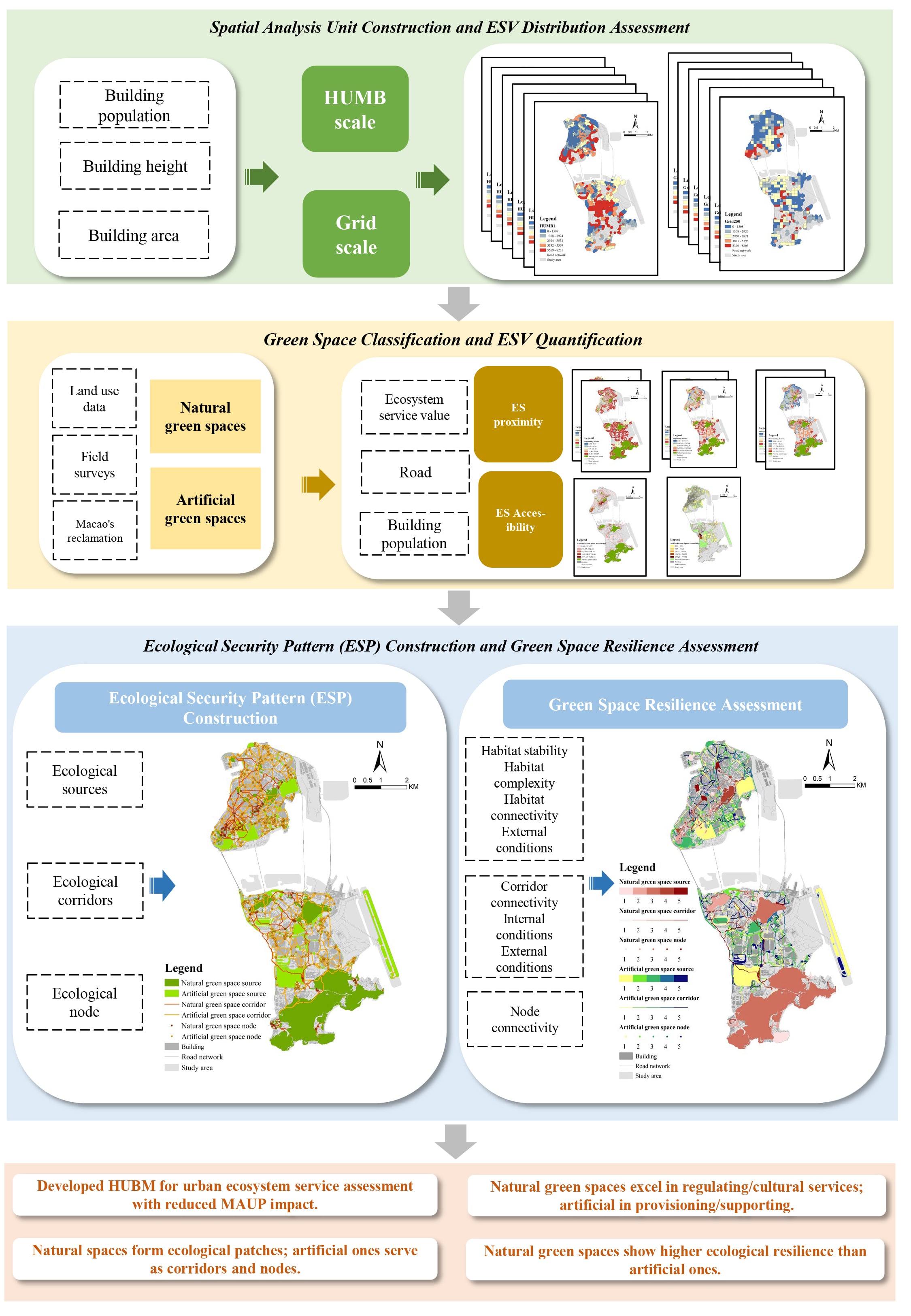
Abstract
Share and Cite
Zhu, H.; Cheng, J.; Zhou, L.; Shen, G.; Loon, L. Morphology-Adaptive Spatial Analysis of Urban Green Spaces: A Homogeneous Unit of Building Morphology (HUBM)-Based Framework for Ecosystem Service and Resilience Assessment in High-Density Cities. Land 2026, 15, 6. https://doi.org/10.3390/land15010006
Zhu H, Cheng J, Zhou L, Shen G, Loon L. Morphology-Adaptive Spatial Analysis of Urban Green Spaces: A Homogeneous Unit of Building Morphology (HUBM)-Based Framework for Ecosystem Service and Resilience Assessment in High-Density Cities. Land. 2026; 15(1):6. https://doi.org/10.3390/land15010006
Chicago/Turabian StyleZhu, Huiyu, Jialin Cheng, Long Zhou, Guoqiang Shen, and Leehu Loon. 2026. "Morphology-Adaptive Spatial Analysis of Urban Green Spaces: A Homogeneous Unit of Building Morphology (HUBM)-Based Framework for Ecosystem Service and Resilience Assessment in High-Density Cities" Land 15, no. 1: 6. https://doi.org/10.3390/land15010006
APA StyleZhu, H., Cheng, J., Zhou, L., Shen, G., & Loon, L. (2026). Morphology-Adaptive Spatial Analysis of Urban Green Spaces: A Homogeneous Unit of Building Morphology (HUBM)-Based Framework for Ecosystem Service and Resilience Assessment in High-Density Cities. Land, 15(1), 6. https://doi.org/10.3390/land15010006
