Article

Spatial Distribution Characteristics and Cluster Differentiation of Traditional Villages in the Central Yunnan Region

School of Architecture and Planning, Yunnan University, Kunming 650504, China
*
Author to whom correspondence should be addressed.
Land 2025, 14(8), 1565; https://doi.org/10.3390/land14081565
Submission received: 27 May 2025 / Revised: 25 July 2025 / Accepted: 29 July 2025 / Published: 30 July 2025

Abstract

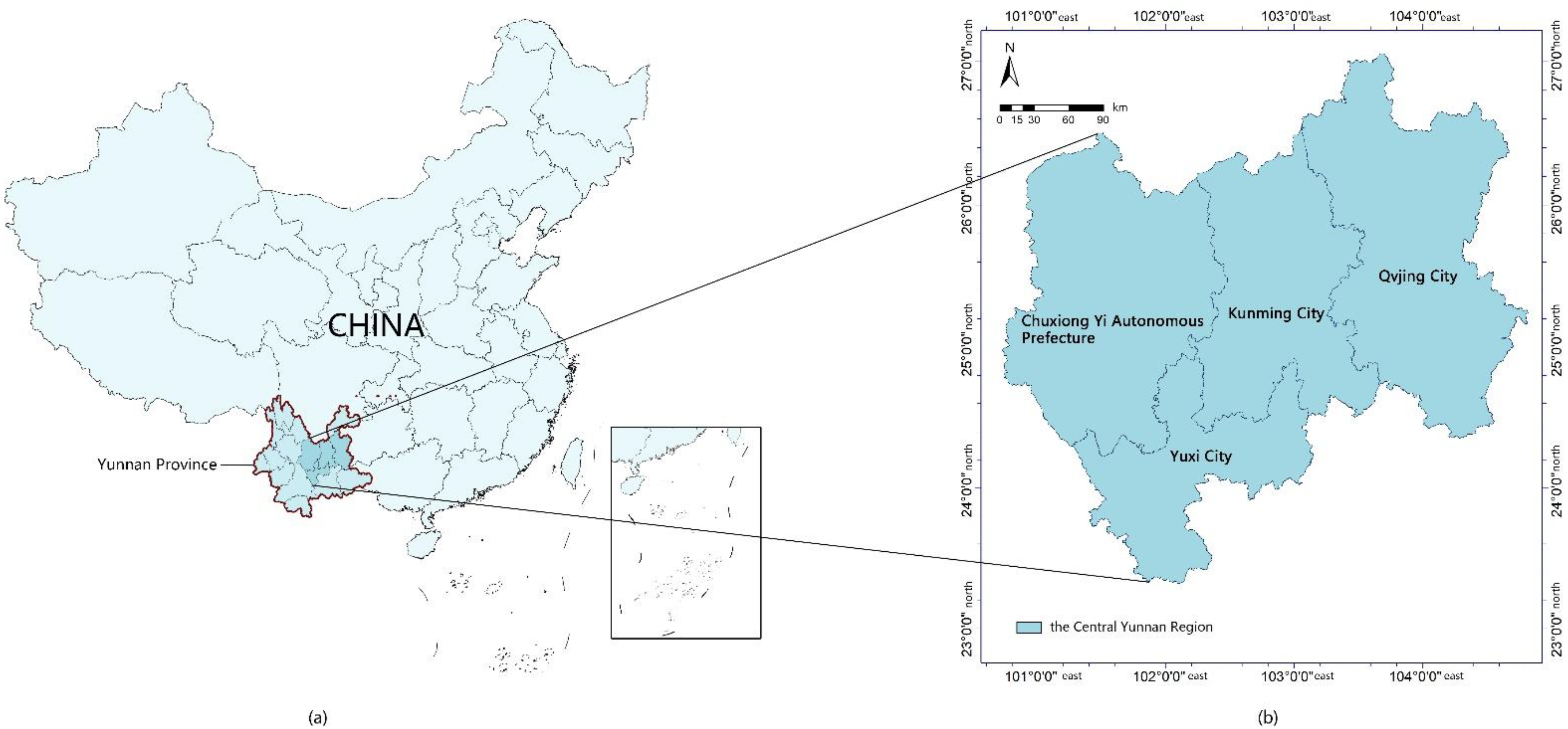
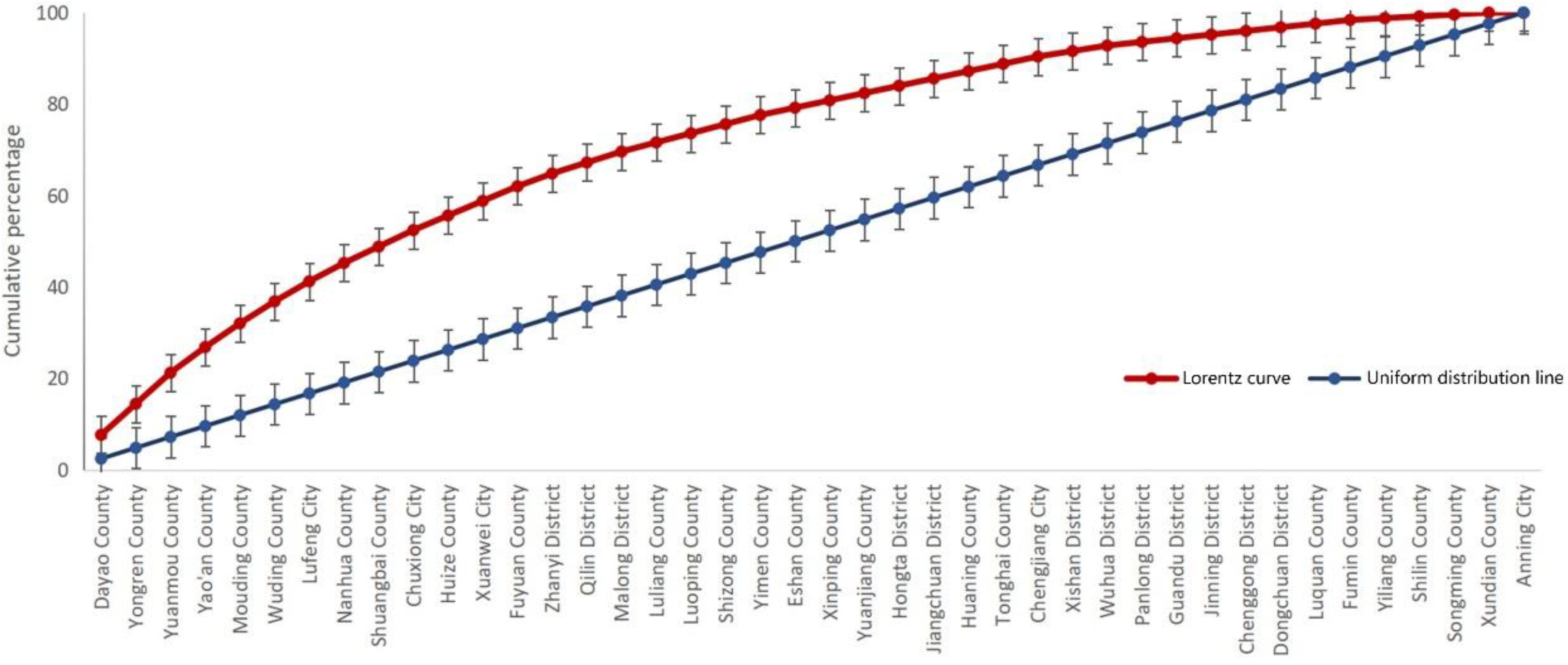
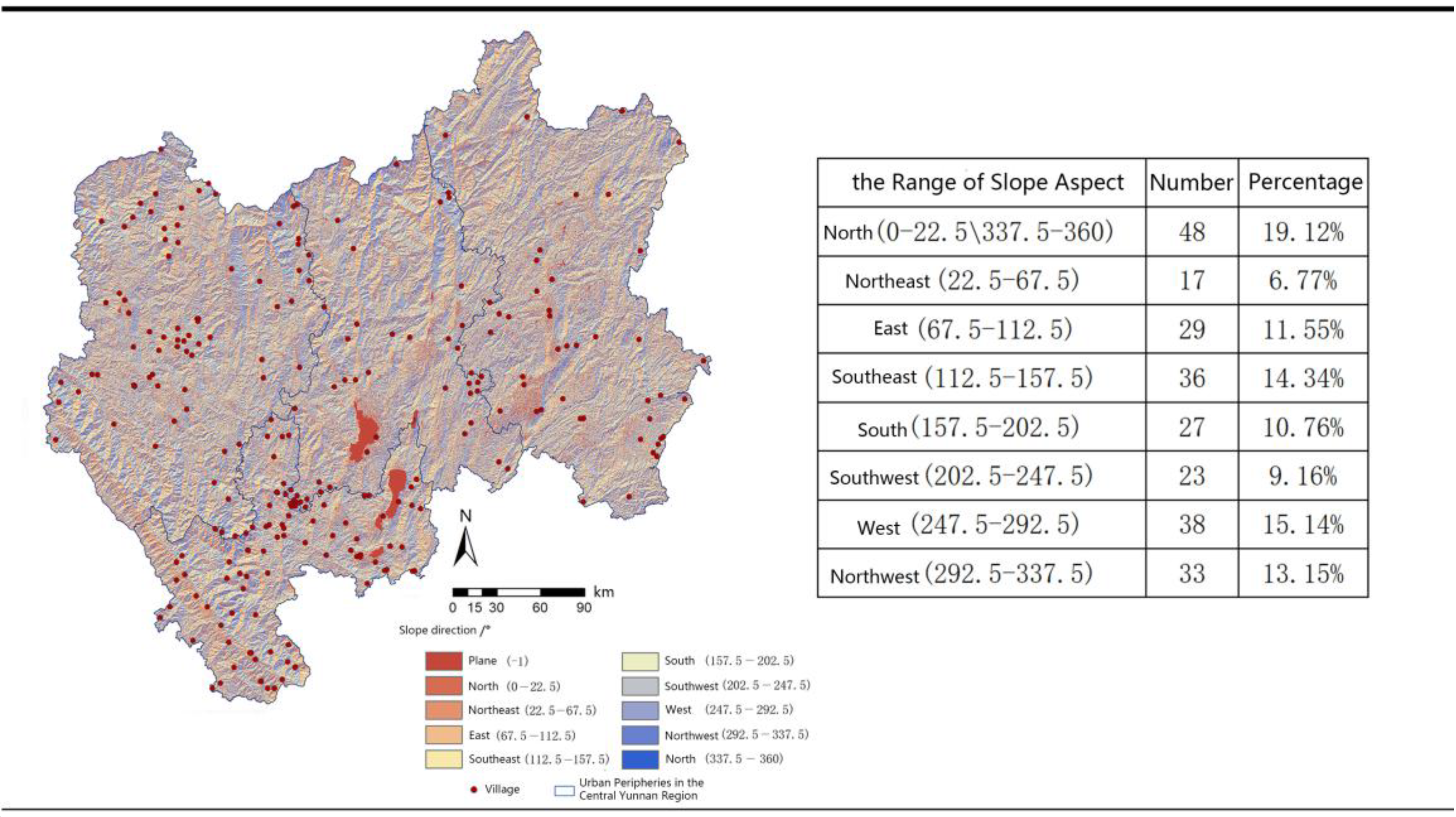
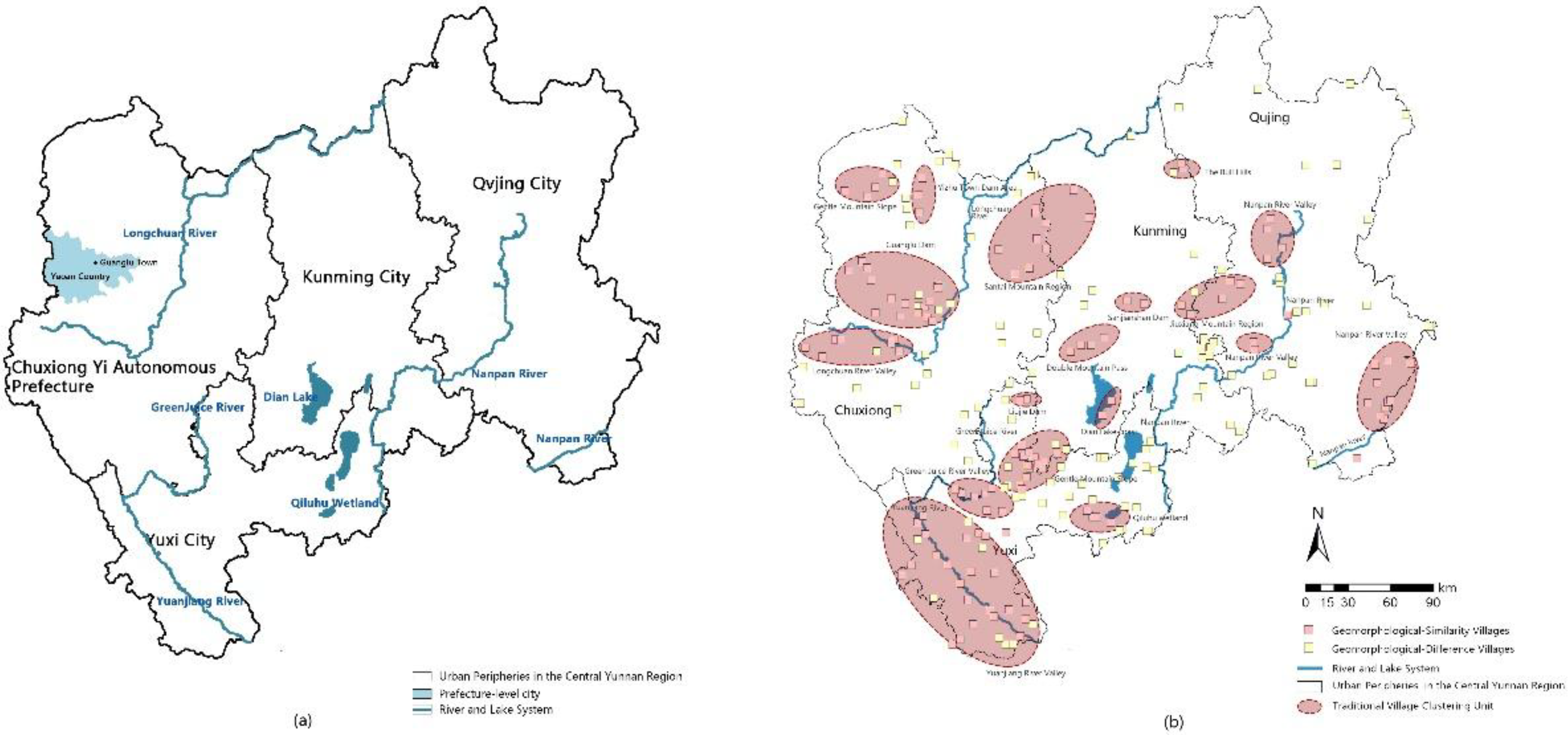
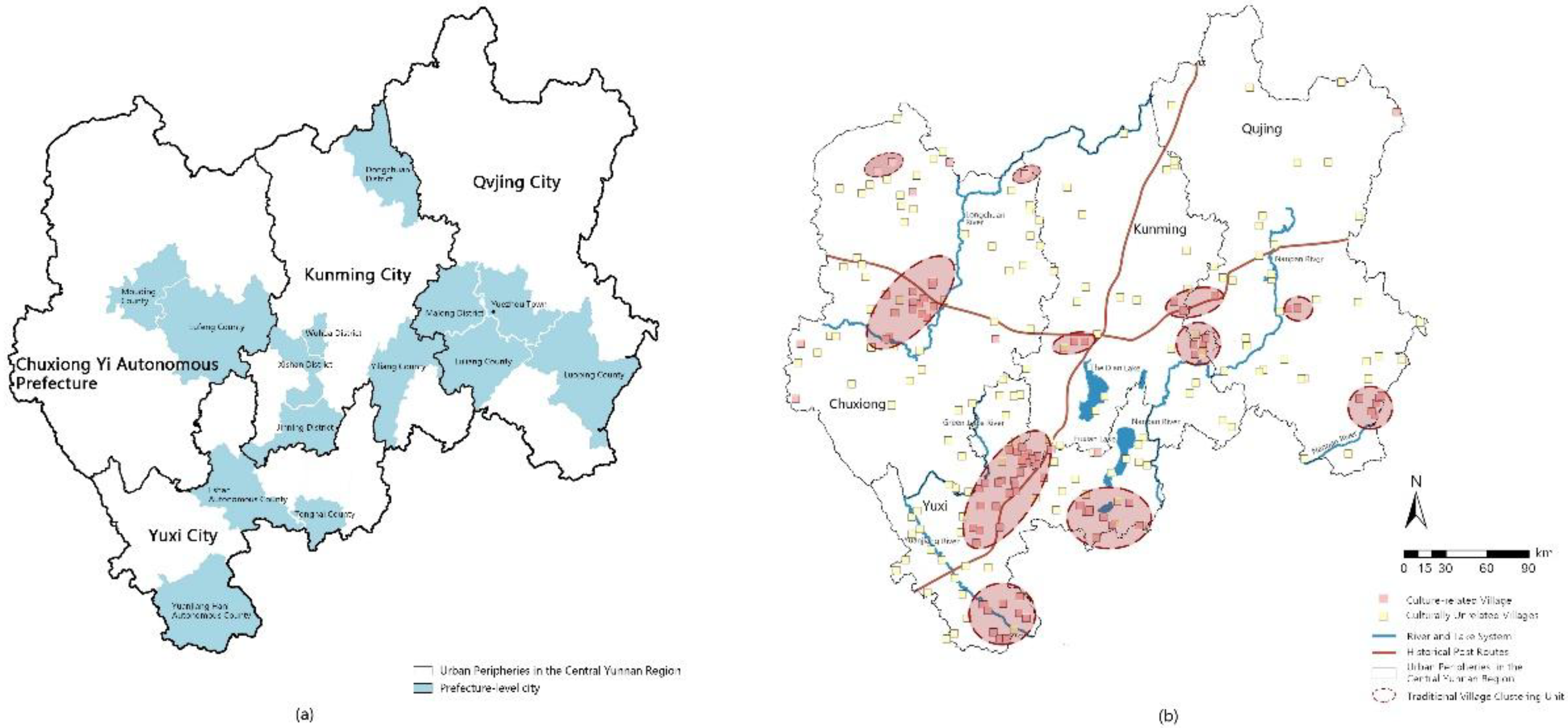
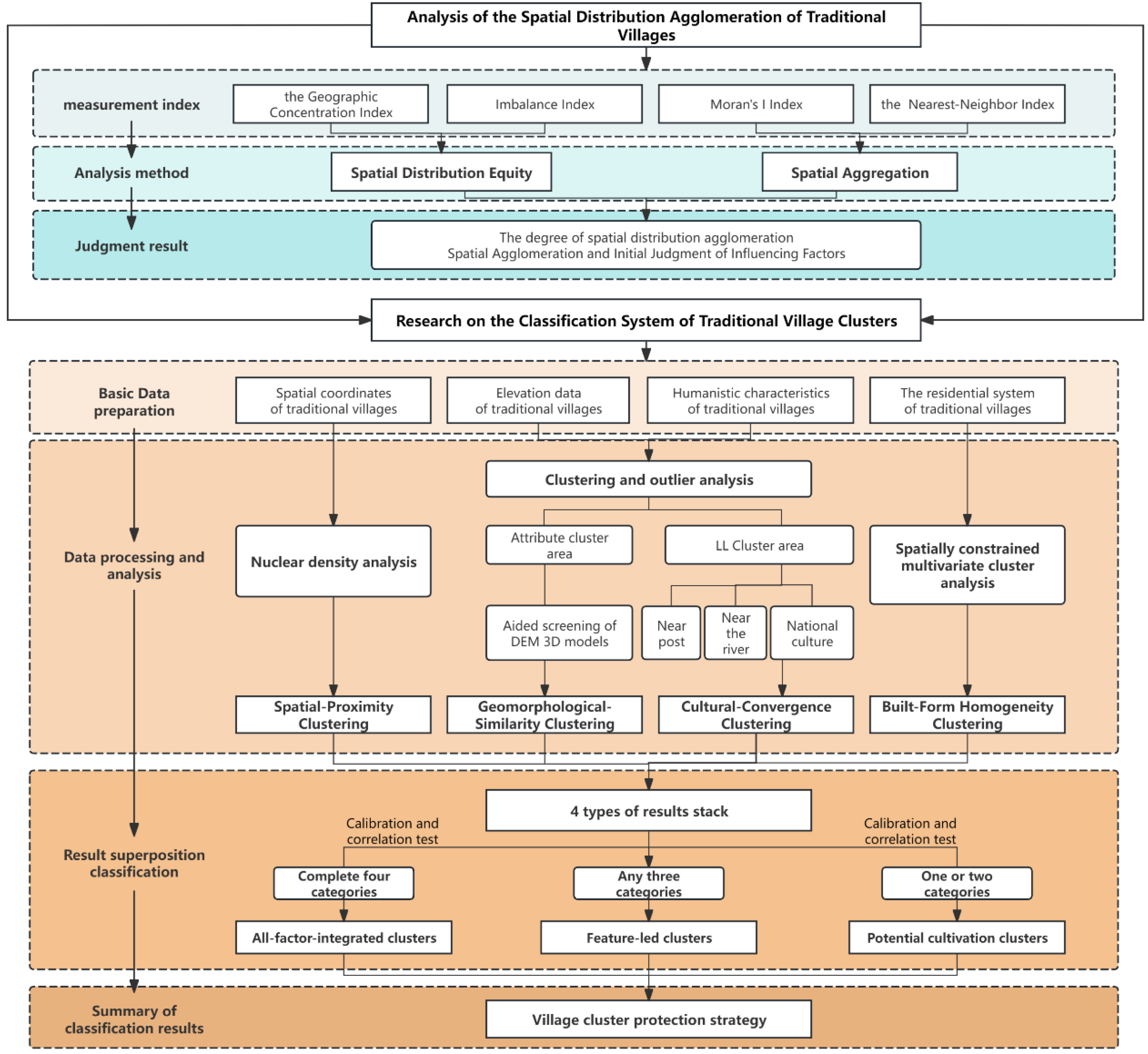
As an integral component of humanity’s cultural heritage, traditional villages universally confront challenges such as population loss and cultural discontinuity amid rapid urbanization. Cluster-based protection models have increasingly become the international consensus for addressing the survival crisis of such settlements. This study selects the Central Yunnan region of Southwest China—characterized by its complex geography and multi-ethnic habitation—as the research area. Employing ArcGIS spatial analysis techniques alongside clustering algorithms, we examine the spatial distribution characteristics and clustering patterns of 251 traditional villages within this region. The findings are as follows. In terms of spatial distribution, traditional villages in Central Yunnan are unevenly dispersed, predominantly aggregating on mid-elevation gentle slopes; their locations are chiefly influenced by rivers and historical courier routes, albeit with only indirect dependence on waterways. Regarding single-cluster attributes, the spatial and geomorphological features exhibit a composite “band-and-group” pattern shaped by river valleys; culturally, two dominant modes emerge—“ancient-route-dependent” and “ethnic-symbiosis”—reflecting an economy-driven cultural mechanism alongside latent marginalization risks. Concerning construction characteristics, the “Qionglong-Ganlan” and Han-style “One-seal” residential features stand out, illustrating both adaptation to mountainous environments and the cumulative effects of historical culture. Based on these insights, we propose a three-tiered clustering classification framework—“comprehensive-element coordination”, “feature-led”, and “potential-cultivation”—to inform the development of contiguous and typological protection strategies for traditional villages in highland, multi-ethnic regions.
Keywords: traditional villages; spatial distribution; cluster identification; central Yunnan region traditional villages; spatial distribution; cluster identification; central Yunnan region