
Morphological and Structural Evolution of Peri-Urban Landscapes in Zhengzhou: Implications for Sustainable Peri-Urban Development


Abstract
1. Introduction
2. Materials and Methods
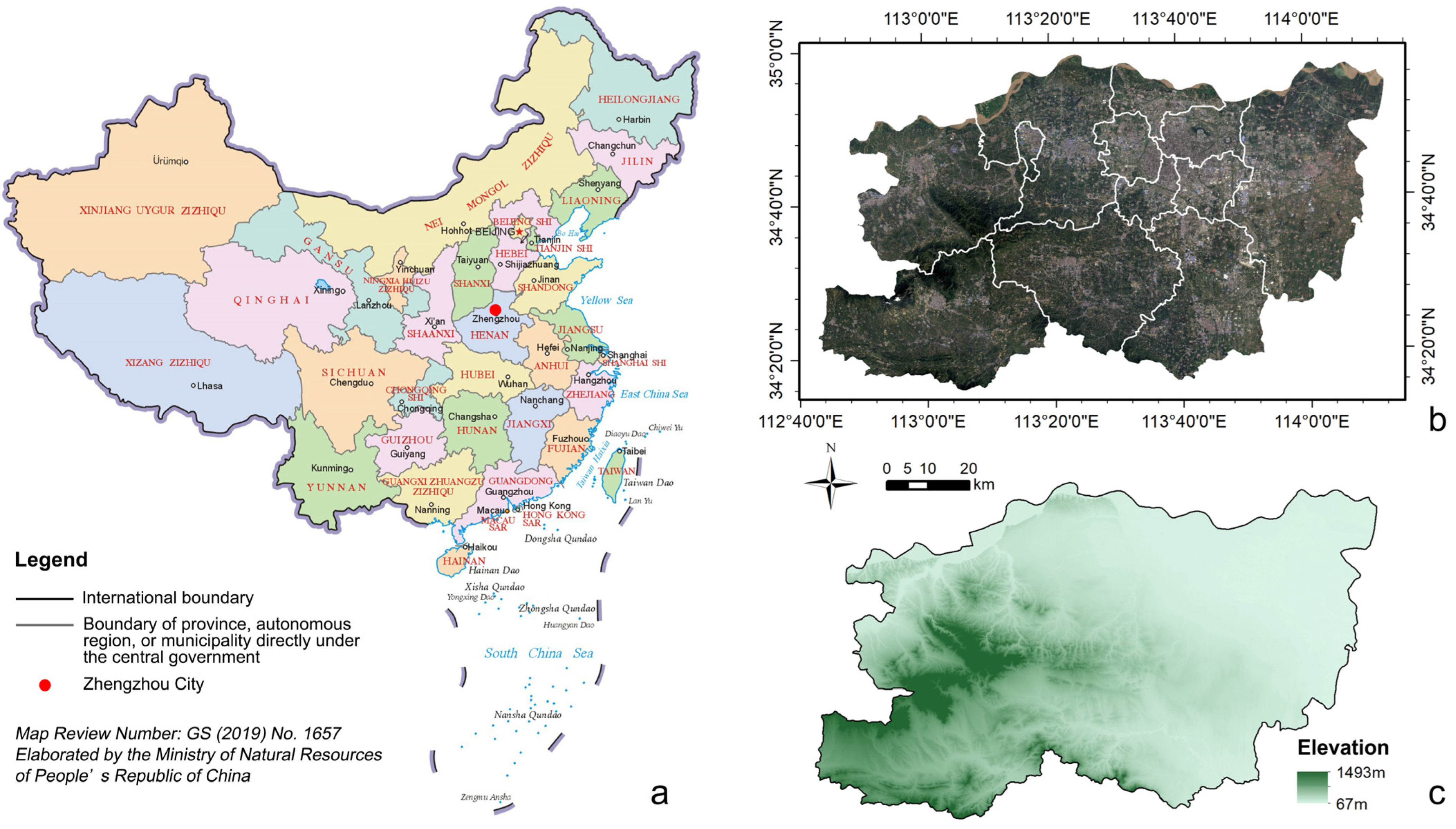
2.1. Study Area
2.2. Data and Processing
2.3. Land Cross Transfer Metrics
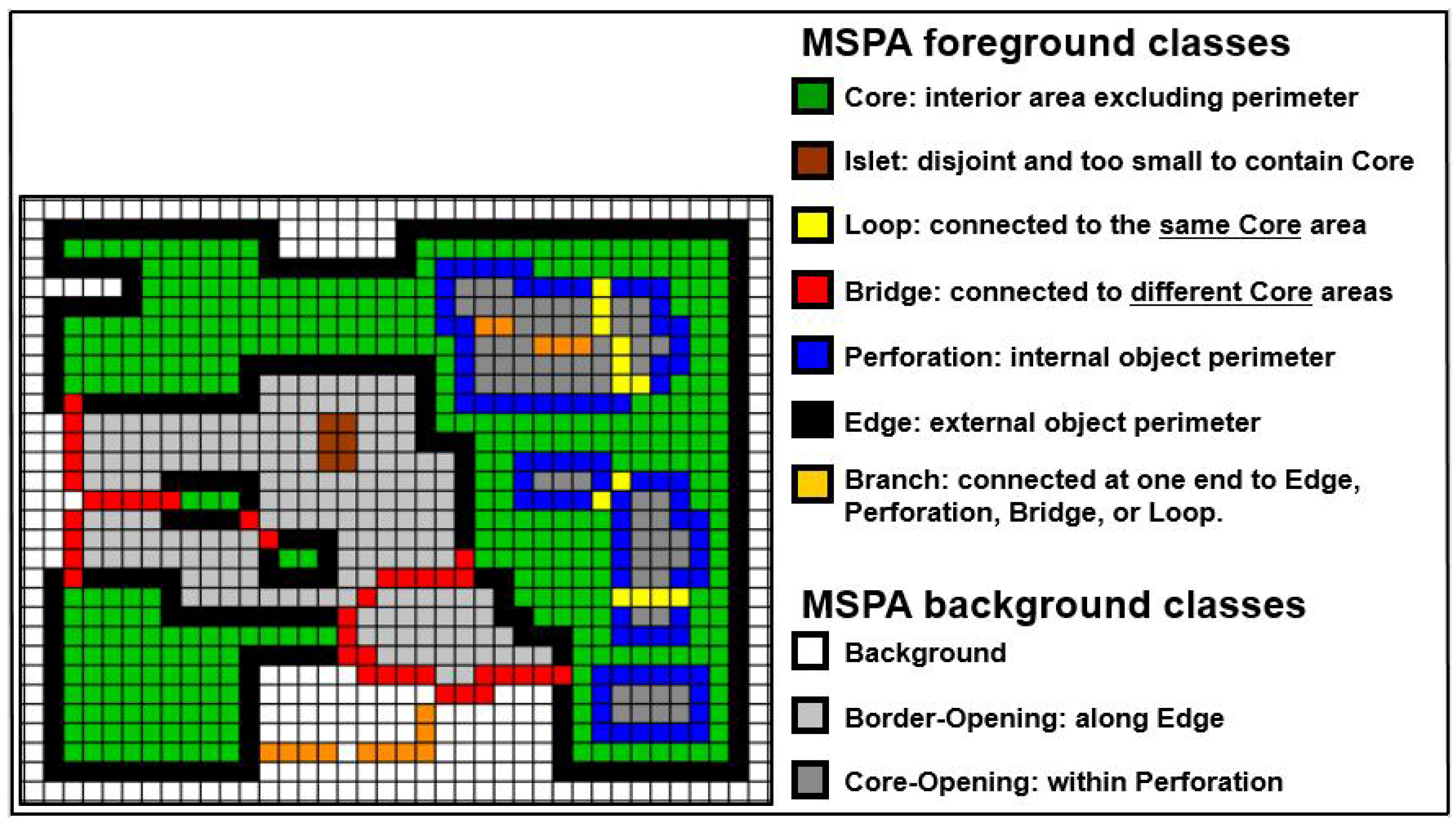
2.4. Morphological Spatial Pattern Analysis
2.5. Landscape Metrics
3. Results
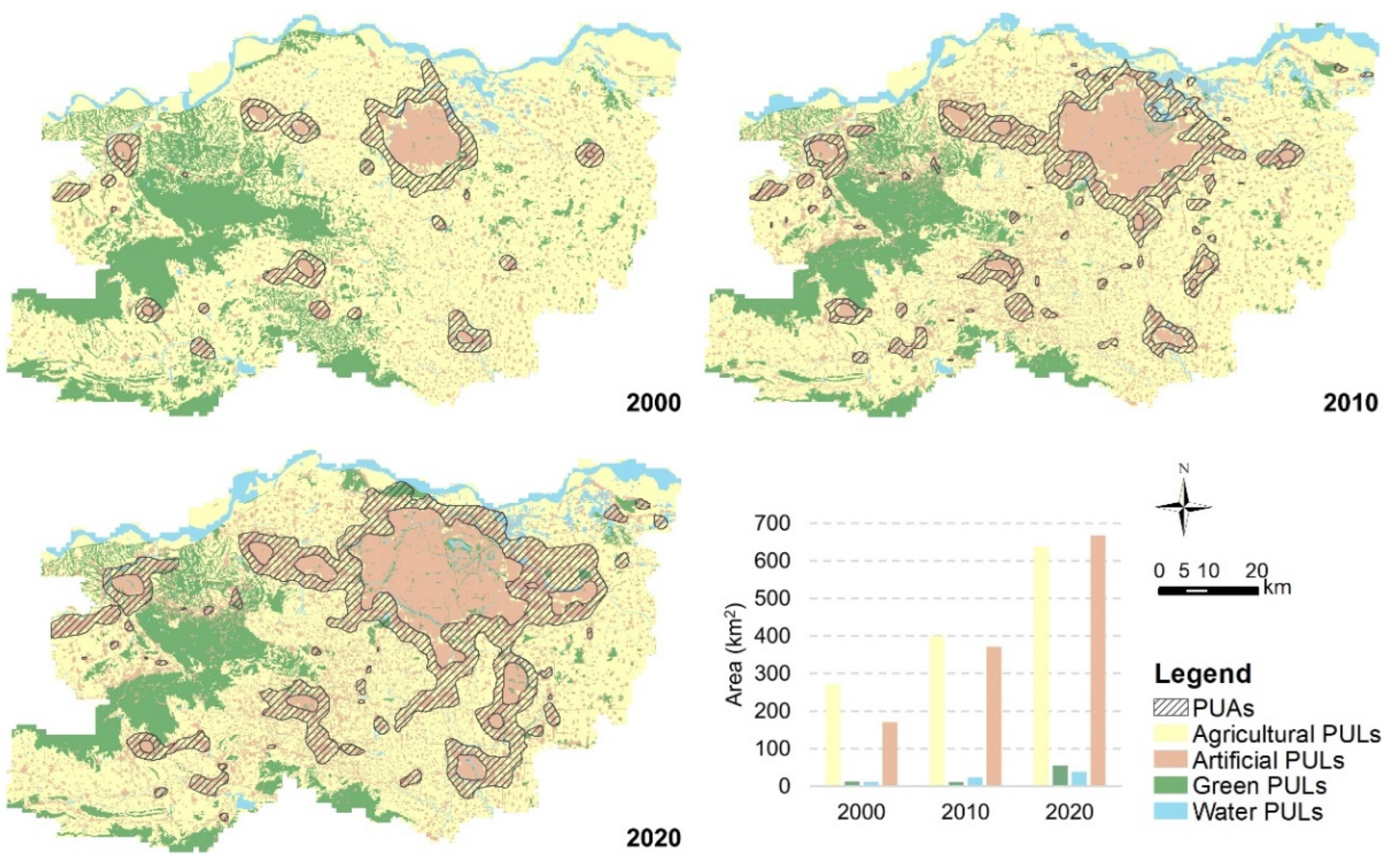
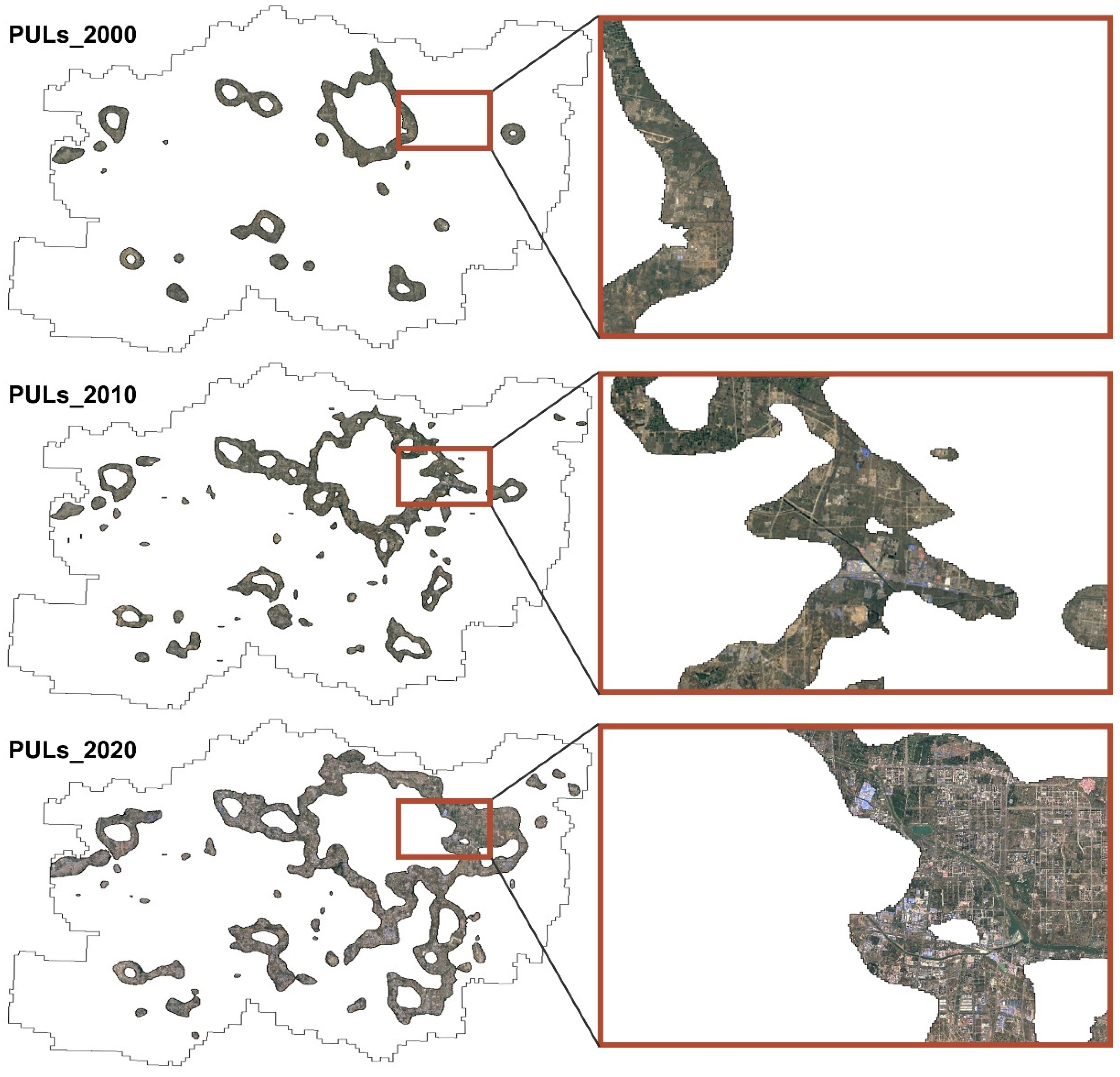
3.1. Evolution of PUL Types
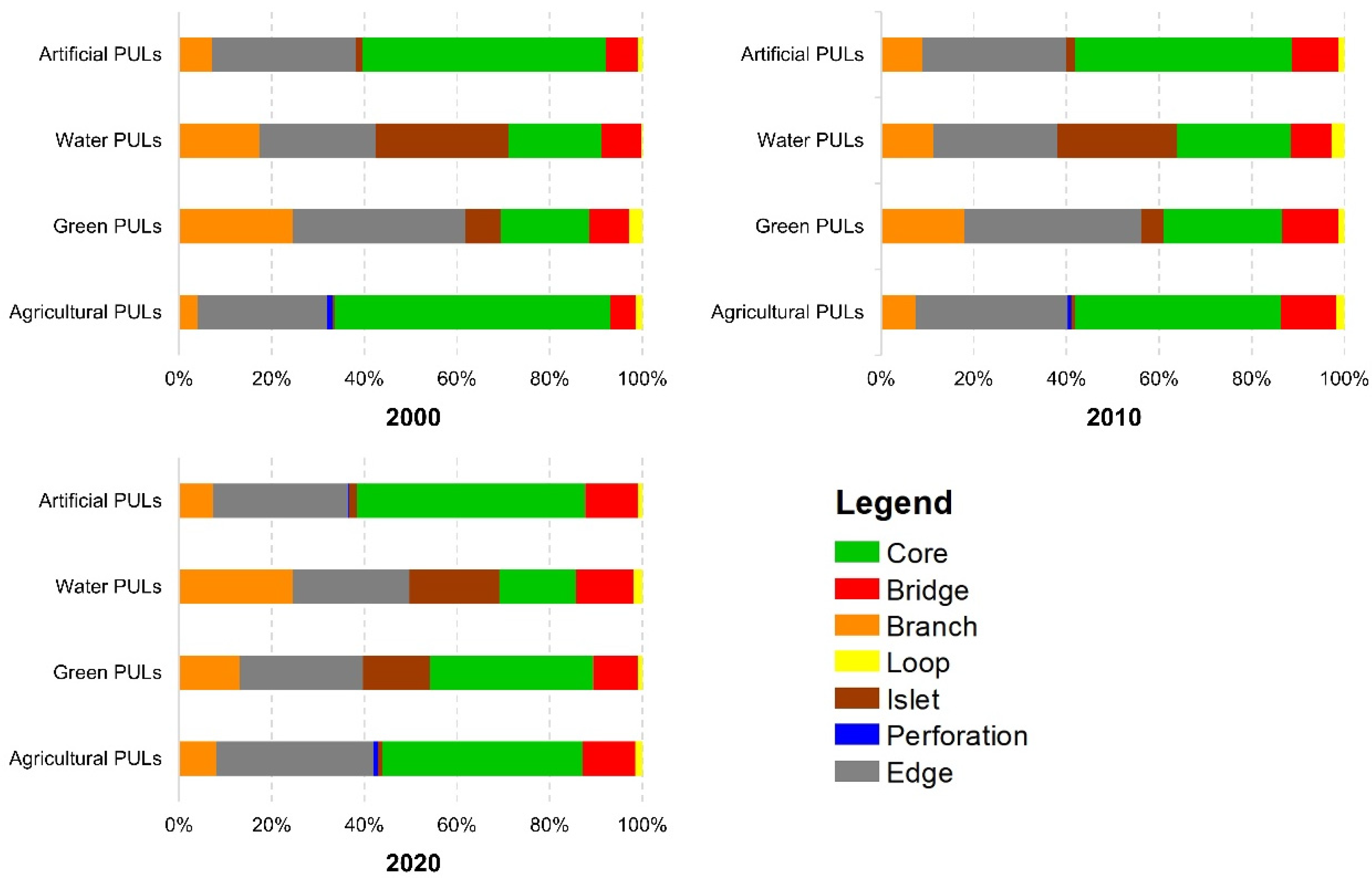
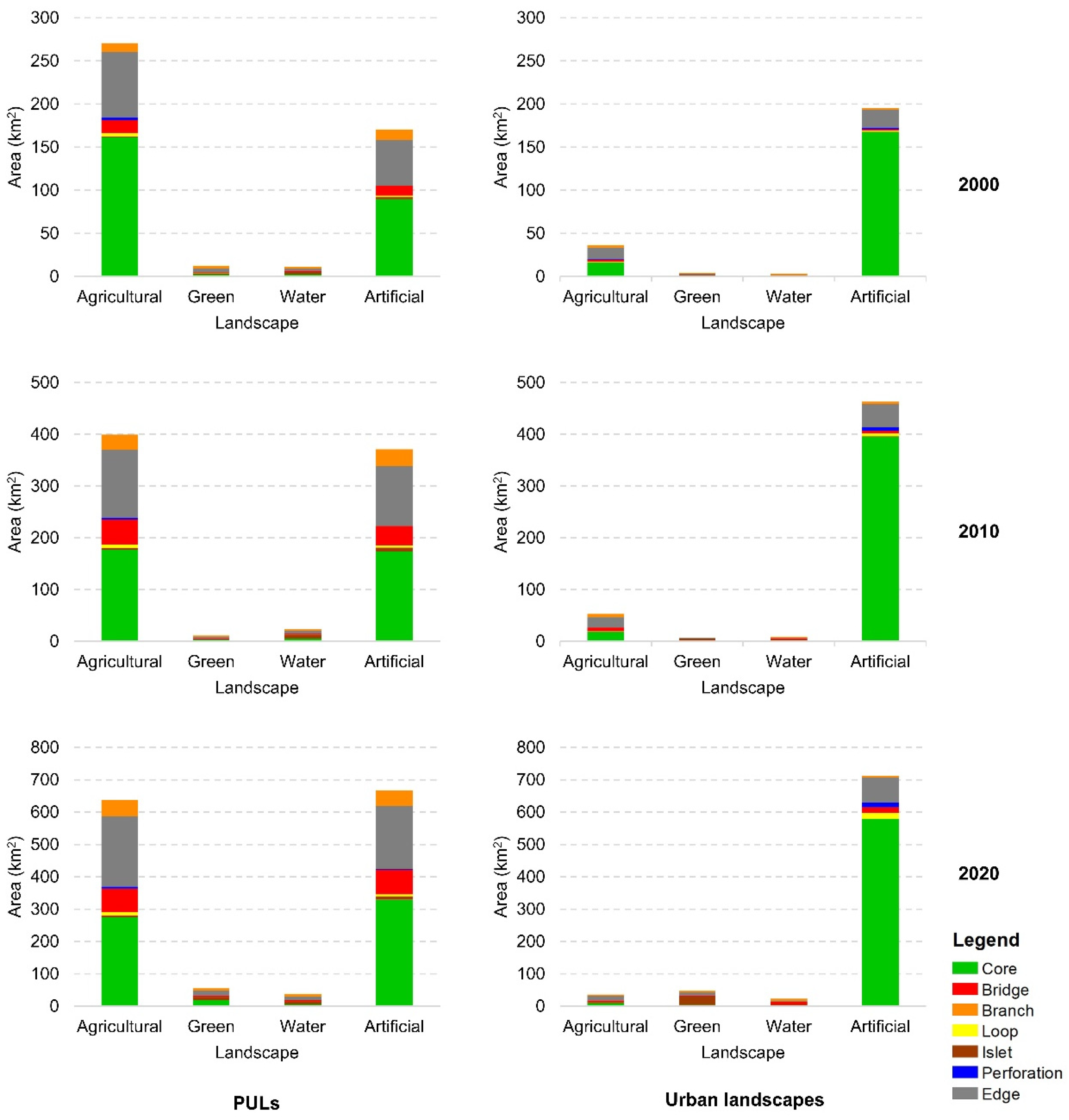
3.2. Morphological Spatial Pattern of PULs
3.3. Structure of PULs
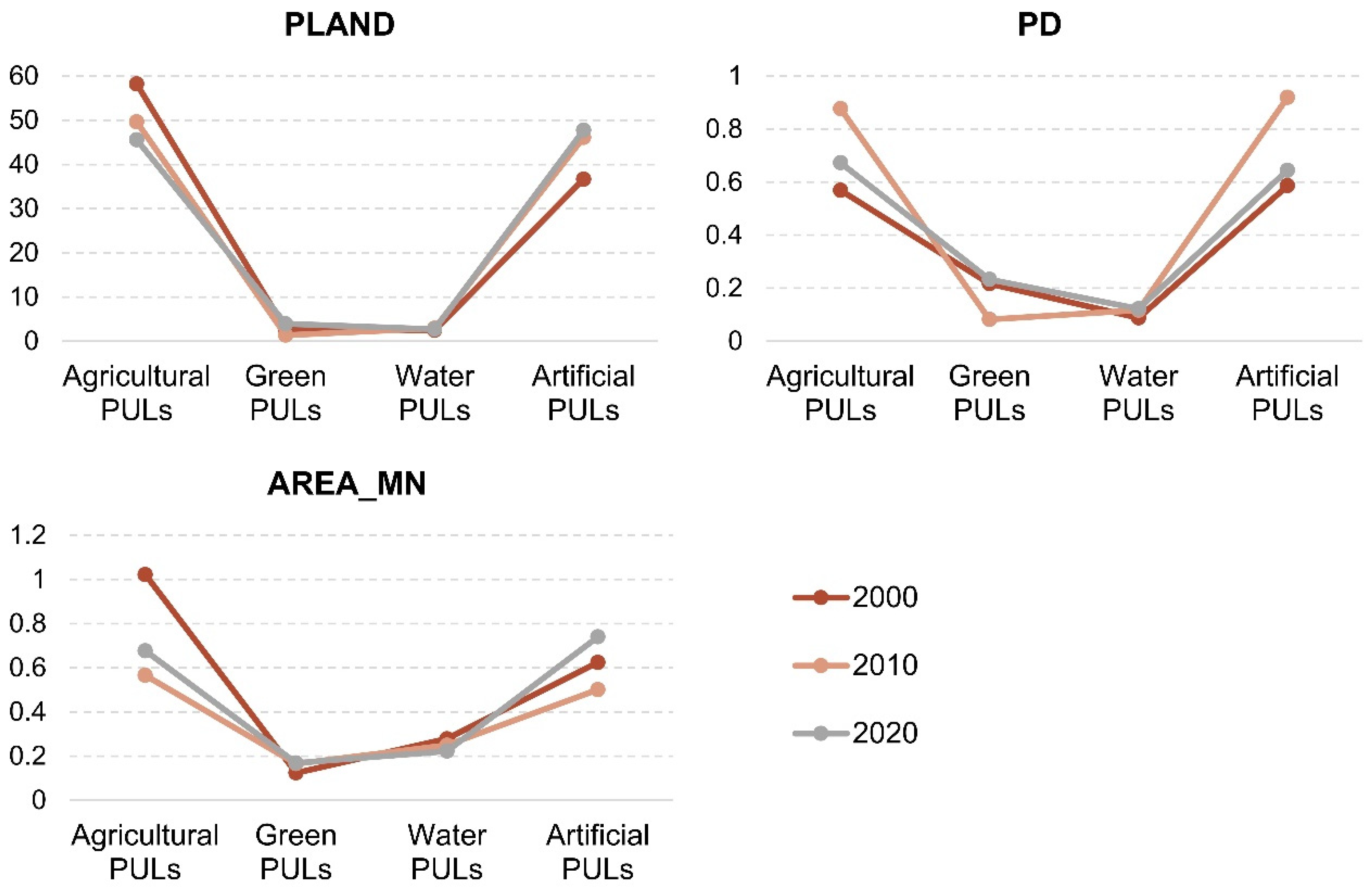
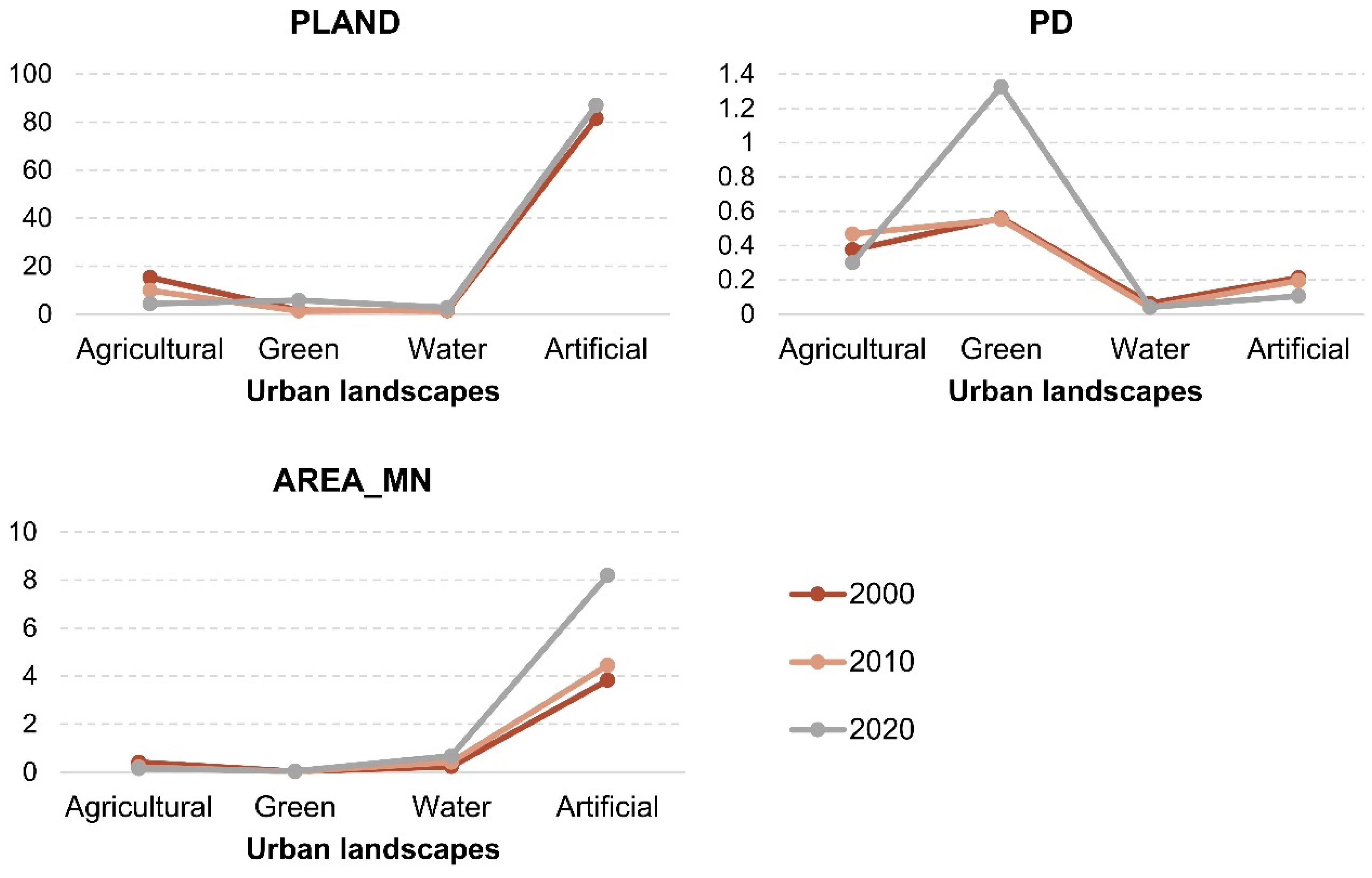
3.3.1. Composition Metrics
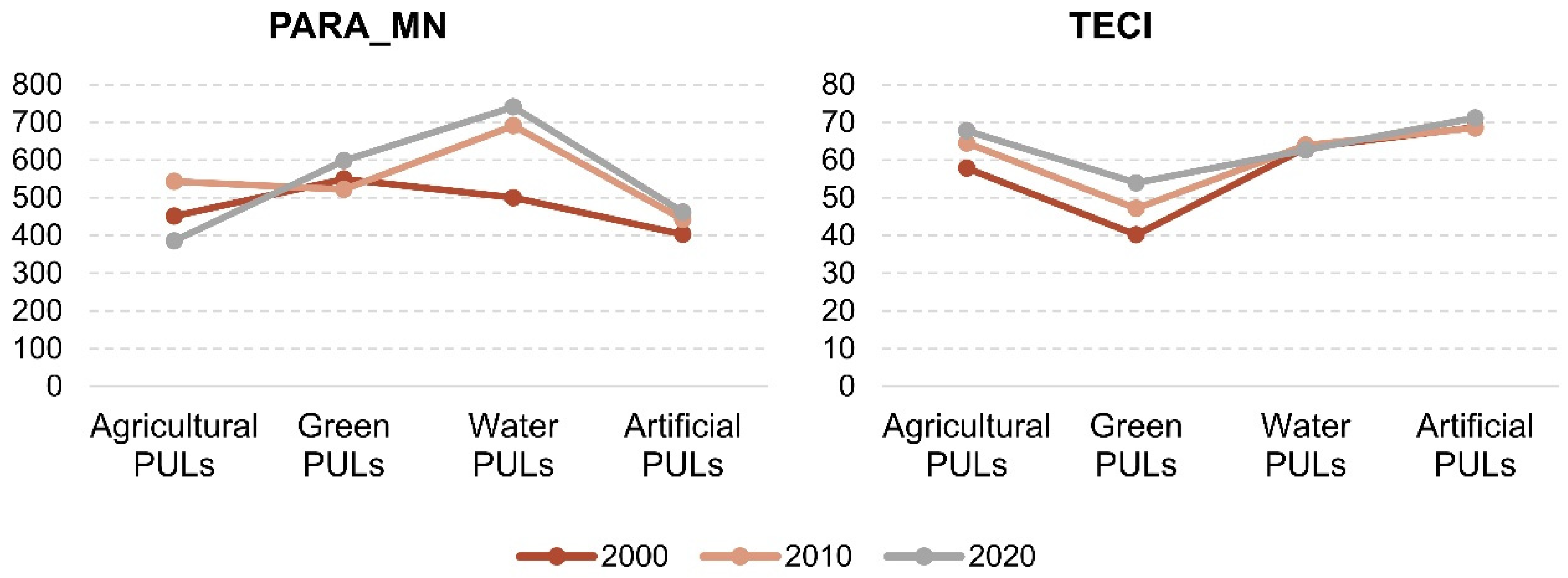
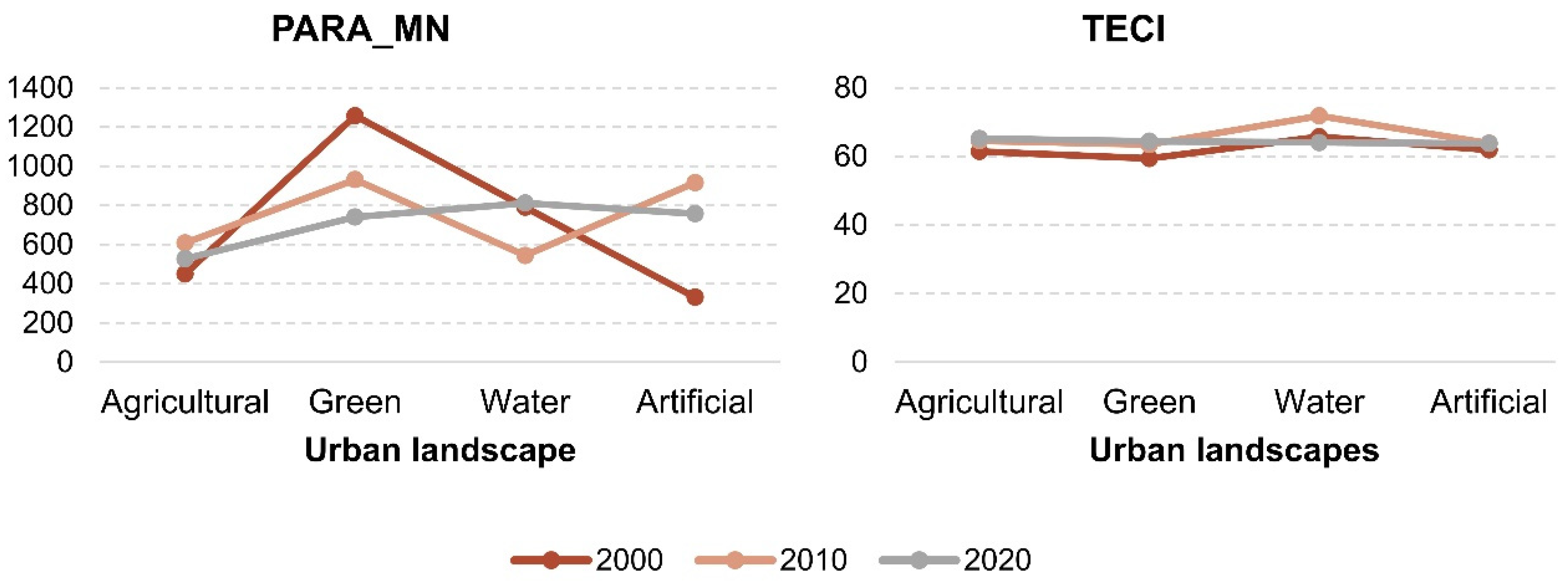
3.3.2. Configuration Metrics
4. Discussion
4.1. Morphology and Function of PULs
- (1)
- Morphology influences Function
- (2)
- Function drives Morphology
4.2. Fragmentation Phenomenon of PULs
4.3. Sustainable Planning Guidelines for PULs
- (a)
- Conducting spatial and land monitoring to predict future development.
- (b)
- Maintaining the morphological diversity of PULs.
- (c)
- Enhancing the connectivity of natural and semi-natural landscapes.
5. Conclusions
Author Contributions
Funding
Data Availability Statement
Conflicts of Interest
Abbreviations
| PULs | Peri-urban landscapes |
| PIAND | Percentage of Landscape |
| PD | Patch Density |
| AREA_MN | Mean Patch Area |
| SHDI | Shannon’s Diversity Index |
| PARA_MN | Mean Perimeter-Area Ratio |
| TECI | Total Edge Contrast Index |
| CONTAG | Contagion |
Appendix A

| Landscape Structure | Landscape Metrics | Annotation |
|---|---|---|
| Composition | Percentage of Landscape (PLAND) | PLAND measures the proportion of each category within a landscape. In PULs, changes in PLAND reveal shifts in landscape patterns by indicating the distribution and prevalence of land expansion. |
| Shannon’s Diversity Index (SHDI) | SHDI measures the diversity of landscape types. A higher value indicates a richer variety of different land cover types in the landscape, signifying greater landscape diversity. | |
| Patch Density (PD) | PD measures the spatial distribution of patches in the landscape. It represents the number of patches per unit area and reflects the degree of landscape fragmentation and heterogeneity. | |
| Mean Patch Area (AREA_MN) | AREA_MN measures the average patch size of a particular patch type. If the AREA_MN is small, it indicates that the landscape is fragmented. | |
| Configuration | Mean Perimeter-Area Ratio (PARA_MN) | PARA_MN measures the shape complexity of patches. A higher value suggests that the patches are irregular in shape with more complex boundaries. |
| Total Edge Contrast Index (TECI) | TECI reflects landscape heterogeneity and edge-effect intensity by measuring boundary contrast between patch types; higher values indicate stronger contrast and more pronounced edge effects. | |
| Contagion (CONTAG) | CONTAG measures the aggregation of patch types at the landscape scale; higher values indicate more clustered patches and a relatively intact landscape. |

References
- Lebrasseur, R. From green fingers and green ring to green mitten: Helsinki’s polycentric urbanization and its impact on green structure. Environ. Dev. Sustain. 2025, 22, 16717–16738. [Google Scholar] [CrossRef]
- Amirinejad, G.; Donehue, P.; Baker, D. Ambiguity at the peri-urban interface in Australia. Land Use Policy 2018, 78, 472–480. [Google Scholar] [CrossRef]
- Spyra, M.; Kleemann, J.; Calò, N.C.; Schürmann, A.; Fürst, C. Protection of peri-urban open spaces at the level of regional policy-making: Examples from six European regions. Land Use Policy 2021, 107, 105480. [Google Scholar] [CrossRef]
- Colglazier, W. Sustainable development agenda: 2030. Science 2015, 349, 1048–1050. [Google Scholar] [CrossRef]
- Forman, R.T. Land Mosaics: The Ecology of Landscapes and Regions; Cambridge University Press: Cambridge, UK, 1995; p. 652. [Google Scholar]
- Ronchi, S.; Pontarollo, N.; Serpieri, C. Clustering the built form at LAU2 level for addressing sustainable policies: Insights from the Belgium case study. Land Use Policy 2021, 109, 105642. [Google Scholar] [CrossRef]
- Spyra, M.; Cortinovis, C.; Ronchi, S. An overview of policy instruments for sustainable peri-urban landscapes: Towards governance mixes. Cities 2025, 156, 14. [Google Scholar] [CrossRef]
- Jabareen, Y.R. Sustainable urban forms: Their typologies, models, and concepts. J. Plan. Educ. Res. 2006, 26, 38–52. [Google Scholar] [CrossRef]
- Butt, A. Sustainable, resilient, regenerative? The potential of Melbourne’s peri-urban region. Front. Sustain. Cities 2024, 6, 8. [Google Scholar] [CrossRef]
- Potapov, P.; Hansen, M.C.; Pickens, A.; Hernandez-Serna, A.; Tyukavina, A.; Turubanova, S.; Zalles, V.; Li, X.; Khan, A.; Stolle, F. The global 2000–2020 land cover and land use change dataset derived from the Landsat archive: First results. Front. Remote Sens. 2022, 3, 856903. [Google Scholar] [CrossRef]
- Kudas, D.; Wnęk, A.; Tátošová, L. Land use mix in functional urban areas of selected central European Countries from 2006 to 2012. Int. J. Environ. Res. Public Health 2022, 19, 15233. [Google Scholar] [CrossRef]
- European Commission. Guidelines on Best Practice to Limit, Mitigate or Compensate Soil Sealing; European Commission: Brussels, Belgium, 2012. [Google Scholar]
- Gardi, C.; Panagos, P.; Van Liedekerke, M.; Bosco, C.; De Brogniez, D. Land take and food security: Assessment of land take on the agricultural production in Europe. J. Environ. Plan. Manag. 2015, 58, 898–912. [Google Scholar] [CrossRef]
- Rozas-Vásquez, D.; Spyra, M.; Jorquera, F.; Molina, S.; Caló, N.C. Ecosystem services supply from peri-urban landscapes and their contribution to the sustainable development goals: A global perspective. Land 2022, 11, 2006. [Google Scholar] [CrossRef]
- Crossman, N.D.; Bryan, B.A.; Ostendorf, B.; Collins, S. Systematic landscape restoration in the rural-urban fringe: Meeting conservation planning and policy goals. Biodivers. Conserv. 2007, 16, 3781–3802. [Google Scholar] [CrossRef]
- Shi, Z.; Liu, M.; Tian, G.; Kovács, K.F. Web of science-based literature review of peri-urban areas: A comparison between Europe and China. Eur. J. Remote Sens. 2024, 57, 2414475. [Google Scholar] [CrossRef]
- Salem, M.; Tsurusaki, N. Impacts of Rapid Urban Expansion on Peri-Urban Landscapes in the Global South: Insights from Landscape Metrics in Greater Cairo. Sustainability 2024, 16, 2316. [Google Scholar] [CrossRef]
- Ortiz-Báez, P.; Freire, M.J.; Bogaert, J. Analysis of peri-urban landscape composition and its spatio-temporal transformations: The case of the metropolitan district of Quito. J. Arch. Urban 2023, 47, 1–11. [Google Scholar] [CrossRef]
- Mu, B.; Mayer, A.L.; He, R.; Tian, G. Land use dynamics and policy implications in Central China: A case study of Zhengzhou. Cities 2016, 58, 39–49. [Google Scholar] [CrossRef]
- Zhengzhou Bureau of Statistics; Zhengzhou Survey Team of the National Bureau of Statistics of China 2021. Zhengzhou Statistical Yearbook 2021; China Statistics Press: Beijing, China, 2021; p. 23. [Google Scholar]
- Aguilar, A.G.; Ward, P.M.; Smith, C., Sr. Globalization, regional development, and mega-city expansion in Latin America: Analyzing Mexico City’s peri-urban hinterland. Cities 2003, 20, 3–21. [Google Scholar] [CrossRef]
- Zhang, X.; Liu, L.; Zhao, T.; Gao, Y.; Chen, X.; Mi, J. GISD30: Global 30-m impervious-surface dynamic dataset from 1985 to 2020 using time-series Landsat imagery on the Google Earth Engine platform. Earth Syst. Sci. Data Discuss. 2022, 14, 1831–1856. [Google Scholar] [CrossRef]
- Chen, Z.; Yu, B.; Yang, C.; Zhou, Y.; Yao, S.; Qian, X.; Wang, C.; Wu, B.; Wu, J. An extended time series (2000–2018) of global NPP-VIIRS-like nighttime light data from a cross-sensor calibration. Earth Syst. Sci. Data 2021, 13, 889–906. [Google Scholar] [CrossRef]
- Xu, X.; Liu, J.; Zhang, S.; Li, R.; Yan, C.; Wu, S. China’s Multi-Period Land Use Land Cover Remote Sensing Monitoring Data Set (CNLUCC); Resource and Environment Science Data Platform: Beijing, China, 2018; Available online: http://www.resdc.cn/DOI (accessed on 8 September 2024).
- WorldPop; Center for International Earth Science Information Network (CIESIN); Columbia University. The Spatial Distribution of Population in 2000, 2010, 2020 with Country Total Adjusted to Match the Corresponding UNPD Es-Timate, China. WorldPop (School of Geography and Environmental Science UoSDoGaG, University of Louisville; Departement de Geographie, Universite de Namur) and Center for International Earth Science Information Network (CIESIN), Columbia University. 2018. Available online: www.worldpop.org (accessed on 8 September 2024).
- Shi, Z.; Liu, M.; Wang, Y.; Kovács, K.F. Comparative study of quantitative identification methods for peri-urban areas based on a multi-indicator system. Sci. Rep. 2024, 14, 29516. [Google Scholar] [CrossRef]
- Mamun, M.M.A.; Nijhuis, S.; Newton, C. Sustainable Urban Planning Challenges in the Peri-Urban Landscape: Evaluating LULC Dynamics and the Policy Effectiveness of the Chattogram Metropolitan Region, Bangladesh. Land 2024, 13, 1157. [Google Scholar] [CrossRef]
- Soille, P.; Vogt, P. Morphological segmentation of binary patterns. Pattern Recognit. Lett. 2009, 30, 456–459. [Google Scholar] [CrossRef]
- Valeri, S.; Zavattero, L.; Capotorti, G. Ecological connectivity in agricultural green infrastructure: Suggested criteria for fine scale assessment and planning. Land 2021, 10, 807. [Google Scholar] [CrossRef]
- Leitao, A.B.; Ahern, J. Applying landscape ecological concepts and metrics in sustainable landscape planning. Landsc. Urban Plan. 2002, 59, 65–93. [Google Scholar] [CrossRef]
- Cervelli, E.; Pindozzi, S. The historical transformation of peri-urban land use patterns, via landscape GIS-Based analysis and landscape metrics, in the Vesuvius area. Appl. Sci. 2022, 12, 2442. [Google Scholar] [CrossRef]
- Kaminski, A.; Bauer, D.M.; Bell, K.P.; Loftin, C.S.; Nelson, E.J. Using landscape metrics to characterize towns along an urban-rural gradient. Landsc. Ecol. 2021, 36, 2937–2956. [Google Scholar] [CrossRef]
- Akın, A.; Erdoğan, M.A. Analysing temporal and spatial urban sprawl change of Bursa city using landscape metrics and remote sensing. Model. Earth Syst. Environ. 2020, 6, 1331–1343. [Google Scholar] [CrossRef]
- Yu, D.; Wang, D.; Li, W.; Liu, S.; Zhu, Y.; Wu, W.; Zhou, Y. Decreased landscape ecological security of peri-urban cultivated land following rapid urbanization: An impediment to sustainable agriculture. Sustainability 2018, 10, 394. [Google Scholar] [CrossRef]
- Zhou, Y.; Chen, T.; Feng, Z.; Wu, K. Identifying the contradiction between the cultivated land fragmentation and the construction land expansion from the perspective of urban-rural differences. Ecol. Inf. 2022, 71, 101826. [Google Scholar] [CrossRef]
- McGarigal, K. FRAGSTATS: Spatial Pattern Analysis Program for Quantifying Landscape Structure; US Department of Agriculture, Forest Service, Pacific Northwest Research Station: Portland, OR, USA, 1995; p. 351. [Google Scholar]
- Singh, S.K.; Pandey, A.C.; Singh, D. Land use fragmentation analysis using remote sensing and Fragstats. In Remote Sensing Applications in Environmental Research; Srivastava, P., Mukherjee, S., Gupta, M., Islam, T., Eds.; Springer: Cham, Switzerland, 2014; pp. 151–176. [Google Scholar]
- Li, P.; Lyu, F.; Zhou, Y.; Yu, Z. Assessing whether peri-urban agricultural land or plantation forest is a better green infrastructure for ground arthropods at local and landscape scales. Ecol. Indic. 2024, 158, 111499. [Google Scholar] [CrossRef]
- Rolf, W.; Diehl, K.; Zasada, I.; Wiggering, H. Integrating farmland in urban green infrastructure planning. An evidence synthesis for informed policymaking. Land Use Policy 2020, 99, 104823. [Google Scholar] [CrossRef]
- Joniak-Lüthi, A. Roads in China’s Borderlands: Interfaces of spatial representations, perceptions, practices, and knowledges. Mod. Asian Stud. 2016, 50, 118–140. [Google Scholar] [CrossRef]
- Zambrano, L.; Aronson, M.F.; Fernandez, T. The consequences of landscape fragmentation on socio-ecological patterns in a rapidly developing urban area: A case study of the National Autonomous University of Mexico. Front. Environ. Sci. 2019, 7, 152. [Google Scholar] [CrossRef]
- Hardt, E.; Pereira-Silva, E.F.; Dos Santos, R.F.; Tamashiro, J.Y.; Ragazzi, S.; Lins, D.B.d.S. The influence of natural and anthropogenic landscapes on edge effects. Landsc. Urban Plan. 2013, 120, 59–69. [Google Scholar] [CrossRef]
- Recanatesi, F. Variations in land-use/land-cover changes (LULCCs) in a peri-urban Mediterranean nature reserve: The estate of Castelporziano (Central Italy). Rend. Lincei 2015, 26, 517–526. [Google Scholar] [CrossRef]
- Magidi, J.; Ahmed, F. Assessing urban sprawl using remote sensing and landscape metrics: A case study of City of Tshwane, South Africa (1984–2015). Egypt. J. Remote Sens. Space Sci. 2019, 22, 335–346. [Google Scholar] [CrossRef]
- Fenta, A.A.; Yasuda, H.; Haregeweyn, N.; Belay, A.S.; Hadush, Z.; Gebremedhin, M.A.; Mekonnen, G. The dynamics of urban expansion and land use/land cover changes using remote sensing and spatial metrics: The case of Mekelle City of northern Ethiopia. Int. J. Remote Sens. 2017, 38, 4107–4129. [Google Scholar] [CrossRef]
- Abedini, A.; Khalili, A. Determining the capacity infill development in growing metropolitans: A case study of Urmia city. J. Urban Manag. 2019, 8, 316–327. [Google Scholar] [CrossRef]
- Cheng, L.; Xia, N.; Jiang, P.; Zhong, L.; Pian, Y.; Duan, Y.; Huang, Q.; Li, M. Analysis of farmland fragmentation in China Modernization Demonstration Zone since “Reform and Openness”: A case study of South Jiangsu Province. Sci. Rep. 2015, 5, 11797. [Google Scholar] [CrossRef]
- Pribadi, D.O.; Pauleit, S. The dynamics of peri-urban agriculture during rapid urbanization of Jabodetabek Metropolitan Area. Land Use Policy 2015, 48, 13–24. [Google Scholar] [CrossRef]
- Zheng, S.; Mao, Y.; Li, Z.; Wu, J.; Tian, Y.; Wu, G.; Qiu, Q.; Sun, R.; Li, W.; Wu, B. Evidence on the exposure Index’s substitution effect in assessing brook pollution risk in urban–rural fringe. Ecol. Indic. 2024, 160, 111910. [Google Scholar] [CrossRef]
- Bartels, L.E.; Bruns, A.; Simon, D. Towards situated analyses of uneven peri-urbanisation: An (Urban) Political Ecology perspective. Antipode 2020, 52, 1237–1258. [Google Scholar] [CrossRef]
- Huang, Z.; Du, X.; Castillo, C.S.Z. How does urbanization affect farmland protection? Evidence from China. Resour. Conserv. Recycl. 2019, 145, 139–147. [Google Scholar] [CrossRef]
- Food and Agriculture Organization (FAO). World Food and Agriculture—Statistical Yearbook 2022; Food and Agriculture Organization (FAO): Rome, Italy, 2022. [Google Scholar]
- Hu, Y.; Kong, X.; Zheng, J.; Sun, J.; Wang, L.; Min, M. Urban expansion and farmland loss in Beijing during 1980–2015. Sustainability 2018, 10, 3927. [Google Scholar] [CrossRef]
- Song, W.; Pijanowski, B.C.; Tayyebi, A. Urban expansion and its consumption of high-quality farmland in Beijing, China. Ecol. Indic. 2015, 54, 60–70. [Google Scholar] [CrossRef]
- Wu, Y.; Shan, L.; Guo, Z.; Peng, Y. Cultivated land protection policies in China facing 2030: Dynamic balance system versus basic farmland zoning. Habitat. Int. 2017, 69, 126–138. [Google Scholar] [CrossRef]
- Cegielska, K.; Kukulska-Koziel, A.; Hernik, J. Green Neighbourhood Sustainability Index—A measure of the balance between anthropogenic pressure and ecological relevance. Ecol. Indic. 2024, 160, 15. [Google Scholar] [CrossRef]
- Noszczyk, T. Land use change monitoring as a task of local government administration in Poland. J. Ecol. Eng. 2018, 19, 170–176. [Google Scholar] [CrossRef]
- Sapena, M.; Ruiz, L.Á. Analysis of land use/land cover spatio-temporal metrics and population dynamics for urban growth characterization. Comput. Environ. Urban Syst. 2019, 73, 27–39. [Google Scholar] [CrossRef]


| Landscape Type | Agricultural Landscape | Green Landscape | Water Landscape | Artificial Landscape |
|---|---|---|---|---|
| Agricultural landscape | 0 | 0.4 | 0.6 | 0.8 |
| Green landscape | 0.4 | 0 | 0.5 | 0.7 |
| Water landscape | 0.6 | 0.5 | 0 | 0.9 |
| Artificial landscape | 0.8 | 0.7 | 0.9 | 0 |
| Land Use Type | 2020 | ||||
|---|---|---|---|---|---|
| Agricultural PULs | Green PULs | Water PULs | Artificial PULs | ||
| 2000 | Agricultural PULs (km2) | 558.0508 | 33.4272 | 21.6550 | 435.7255 |
| Green PULs (km2) | 20.3759 | 14.8186 | 0.3830 | 24.8437 | |
| Water PULs (km2) | 8.4161 | 4.2290 | 14.5486 | 16.5706 | |
| Artificial PULs (km2) | 50.6231 | 2.6594 | 1.4741 | 190.4850 | |
| Composition Metrics | PULs | Urban Landscapes | ||||
|---|---|---|---|---|---|---|
| 2000 | 2010 | 2020 | 2000 | 2010 | 2020 | |
| PD | 1.4612 | 1.9954 | 1.6735 | 1.2120 | 1.2562 | 1.7756 |
| AREA_MN | 0.6844 | 0.5011 | 0.5976 | 0.8251 | 0.7960 | 0.5632 |
| SHDI | 0.8714 | 0.8662 | 0.9367 | 0.5842 | 0.4757 | 0.5242 |
| Configuration Metrics | PULs | Urban Landscapes | ||||
|---|---|---|---|---|---|---|
| 2000 | 2010 | 2020 | 2000 | 2010 | 2020 | |
| PARA_MN | 449.4351 | 504.8489 | 470.6326 | 819.8294 | 796.4909 | 707.1565 |
| TECI | 52.1633 | 57.0871 | 61.4966 | 53.3828 | 57.0433 | 59.0934 |
| CONTAG | 65.3926 | 64.9592 | 62.2445 | 76.9827 | 80.9089 | 78.5820 |
Disclaimer/Publisher’s Note: The statements, opinions and data contained in all publications are solely those of the individual author(s) and contributor(s) and not of MDPI and/or the editor(s). MDPI and/or the editor(s) disclaim responsibility for any injury to people or property resulting from any ideas, methods, instructions or products referred to in the content. |
© 2025 by the authors. Licensee MDPI, Basel, Switzerland. This article is an open access article distributed under the terms and conditions of the Creative Commons Attribution (CC BY) license (https://creativecommons.org/licenses/by/4.0/).
Share and Cite
Shi, Z.; Zhang, X.; Kovács, K.F. Morphological and Structural Evolution of Peri-Urban Landscapes in Zhengzhou: Implications for Sustainable Peri-Urban Development. Land 2025, 14, 2339. https://doi.org/10.3390/land14122339
Shi Z, Zhang X, Kovács KF. Morphological and Structural Evolution of Peri-Urban Landscapes in Zhengzhou: Implications for Sustainable Peri-Urban Development. Land. 2025; 14(12):2339. https://doi.org/10.3390/land14122339
Chicago/Turabian StyleShi, Zhen, Xiaoyan Zhang, and Krisztina Filepné Kovács. 2025. "Morphological and Structural Evolution of Peri-Urban Landscapes in Zhengzhou: Implications for Sustainable Peri-Urban Development" Land 14, no. 12: 2339. https://doi.org/10.3390/land14122339
APA StyleShi, Z., Zhang, X., & Kovács, K. F. (2025). Morphological and Structural Evolution of Peri-Urban Landscapes in Zhengzhou: Implications for Sustainable Peri-Urban Development. Land, 14(12), 2339. https://doi.org/10.3390/land14122339