Article

Asynchronous Morphological Transformation and Hybrid Blocks in Old Beijing City

School of Sciences for Human Habitat, University of Chinese Academy of Sciences, Beijing 100190, China
*
Author to whom correspondence should be addressed.
Land 2026, 15(9), 1740; https://doi.org/10.3390/land15091740 (registering DOI)
Submission received: 11 August 2026 / Revised: 12 September 2026 / Accepted: 14 September 2026 / Published: 18 September 2026

Abstract

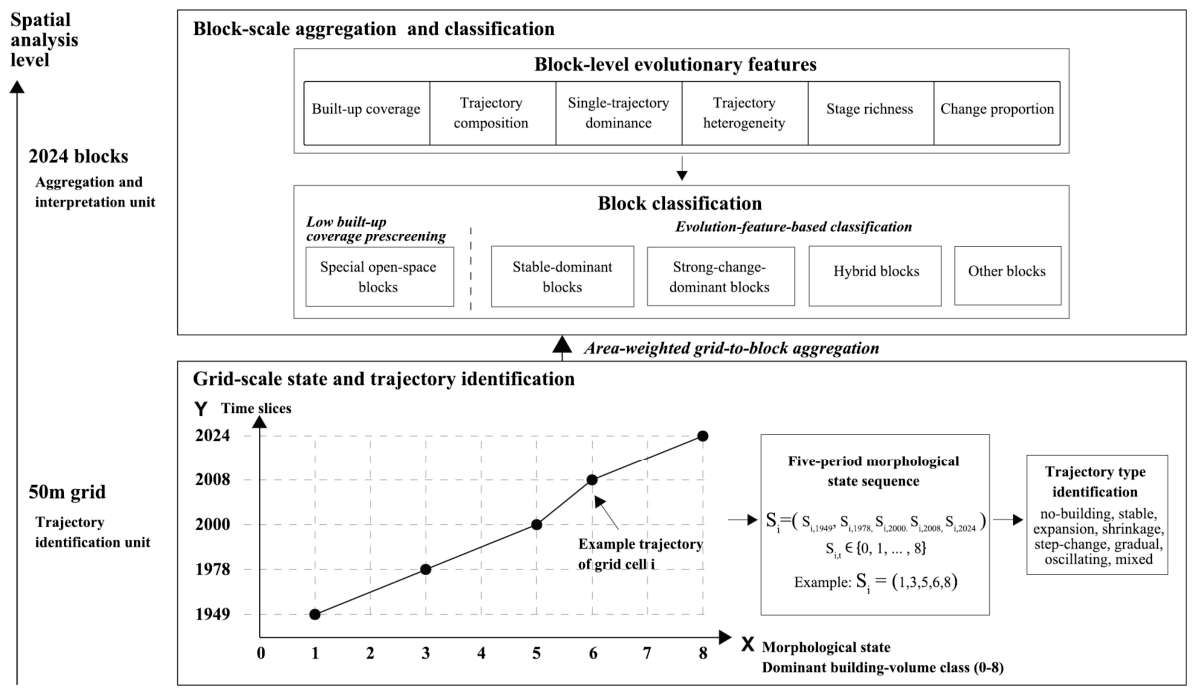
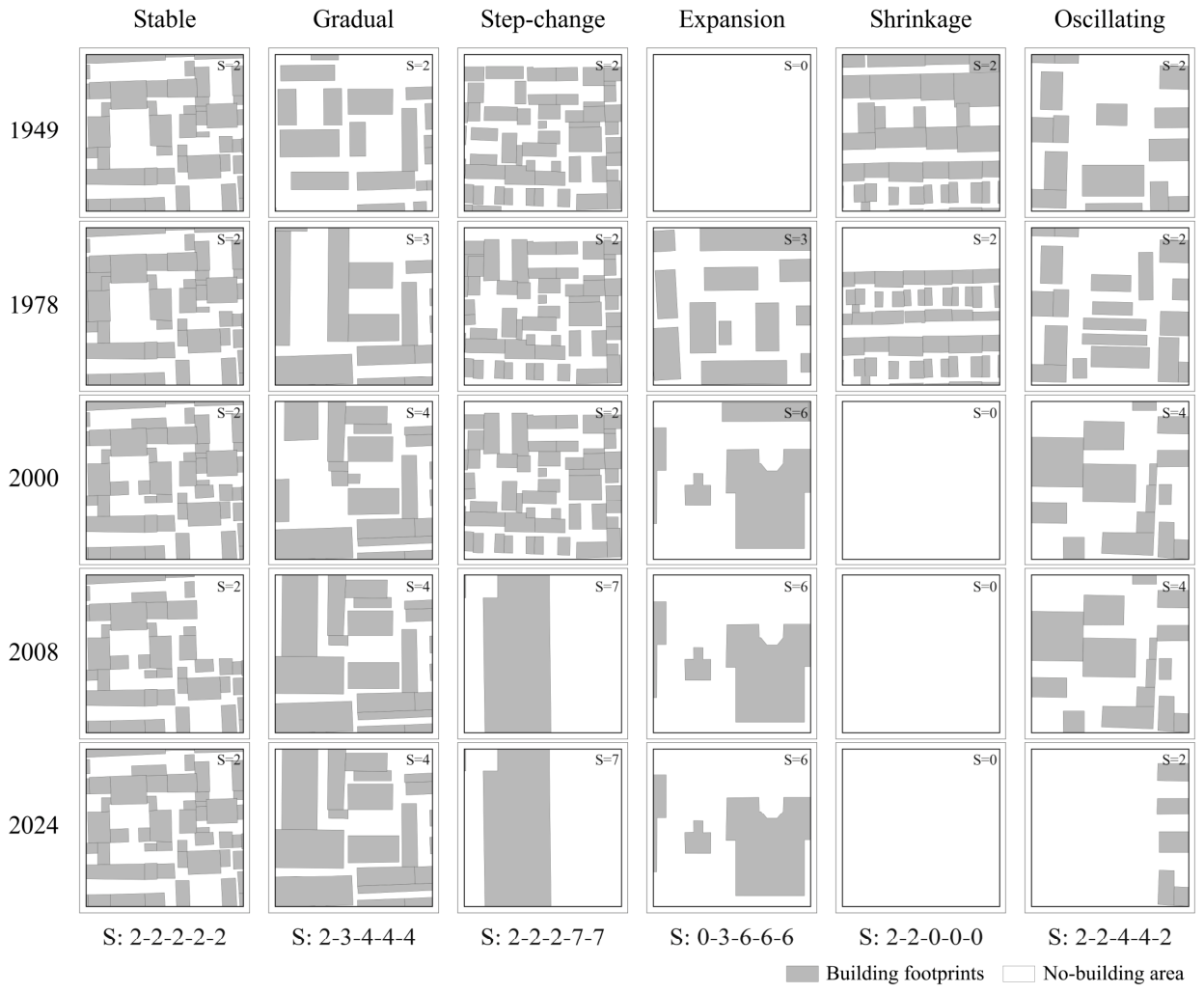
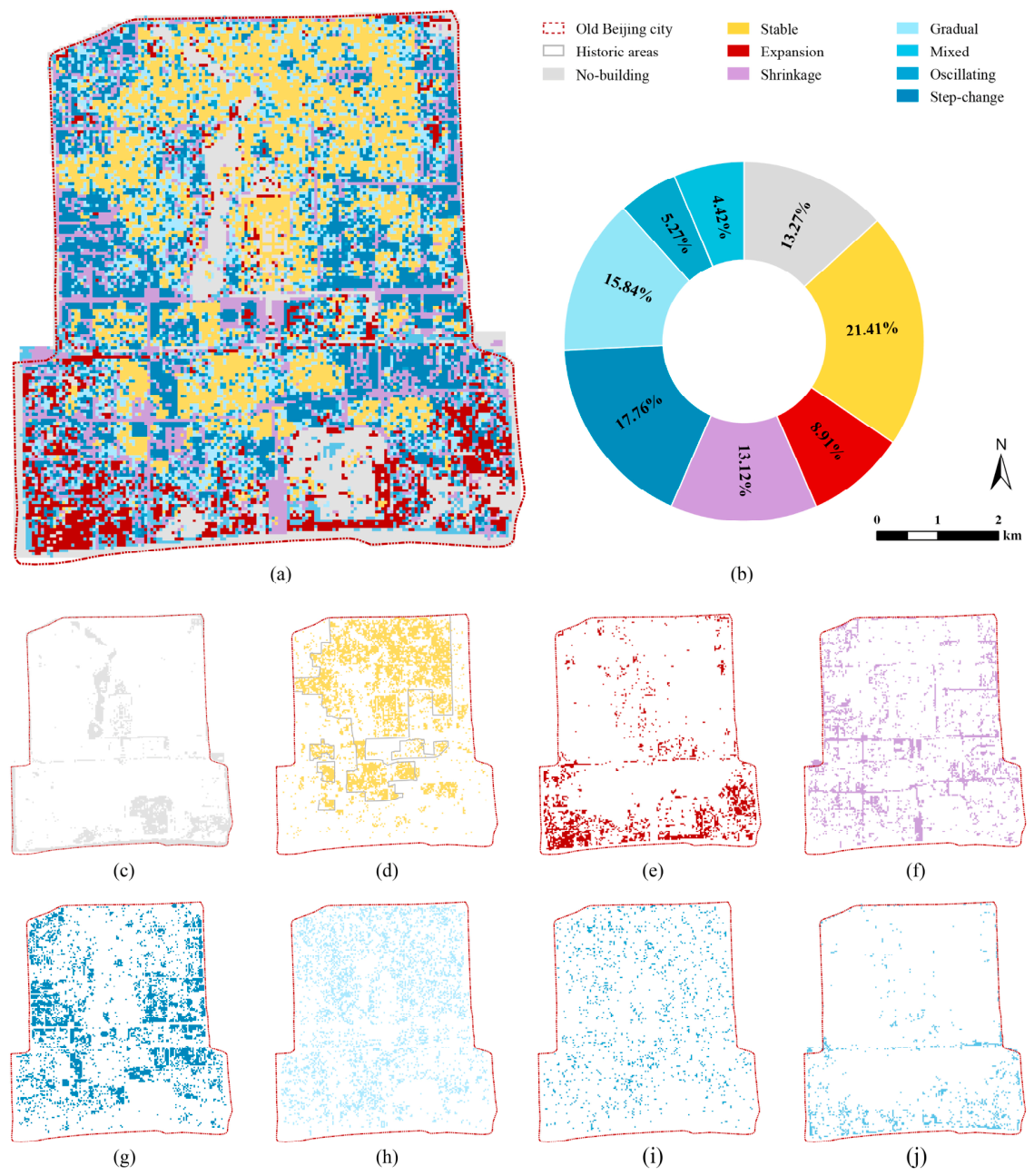
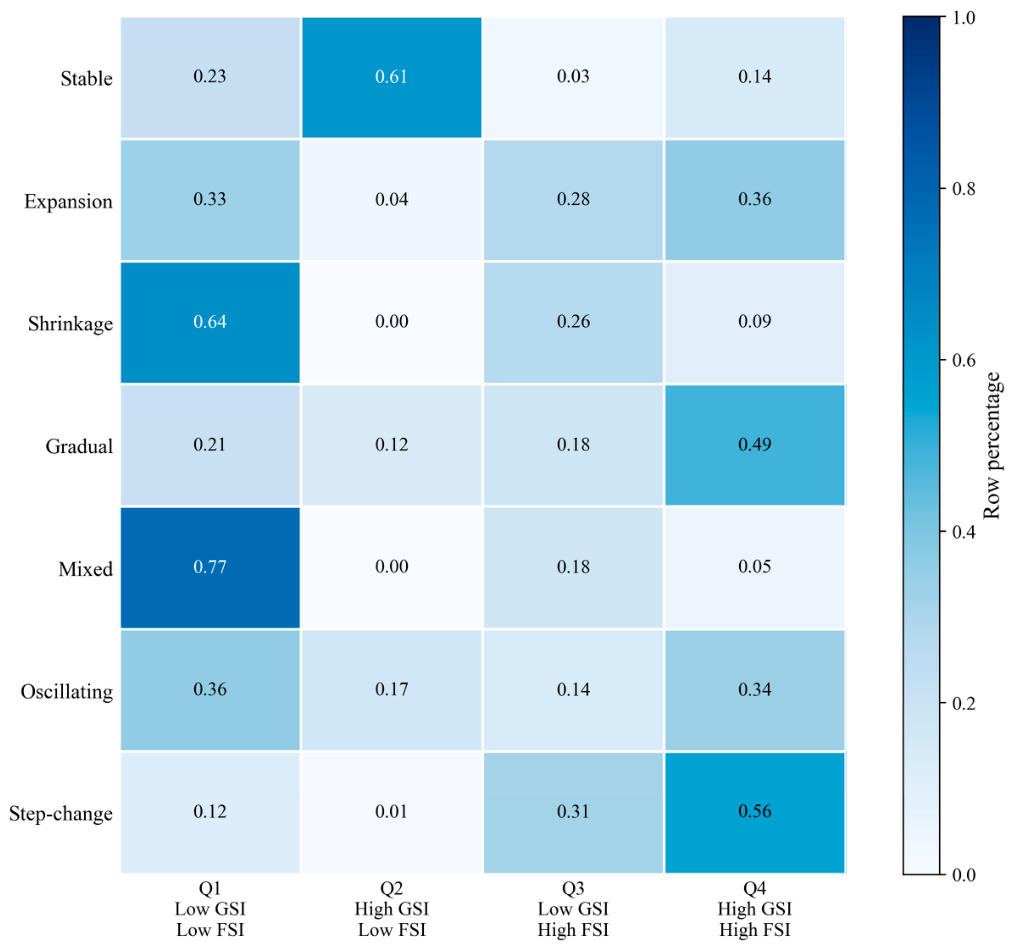
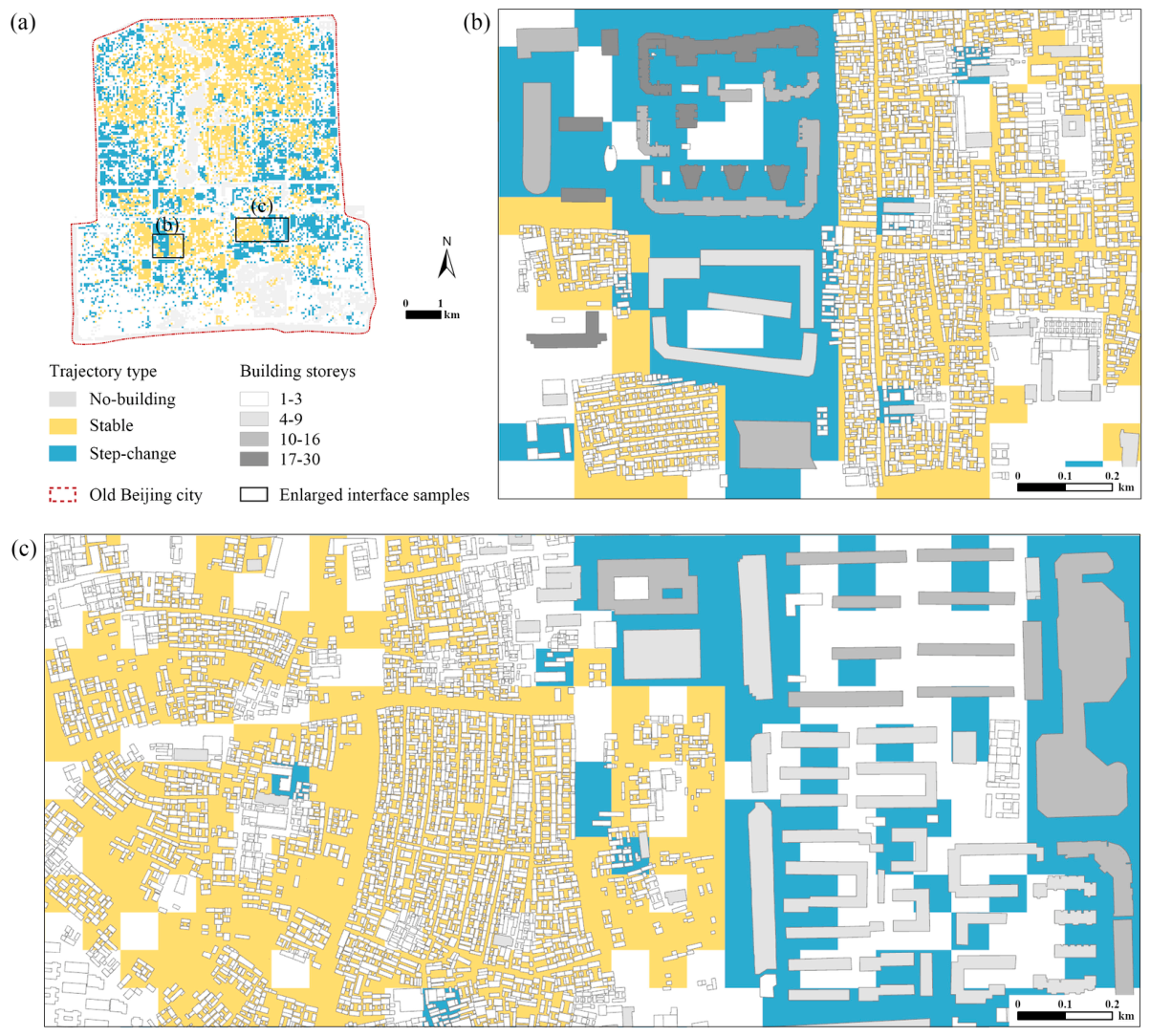
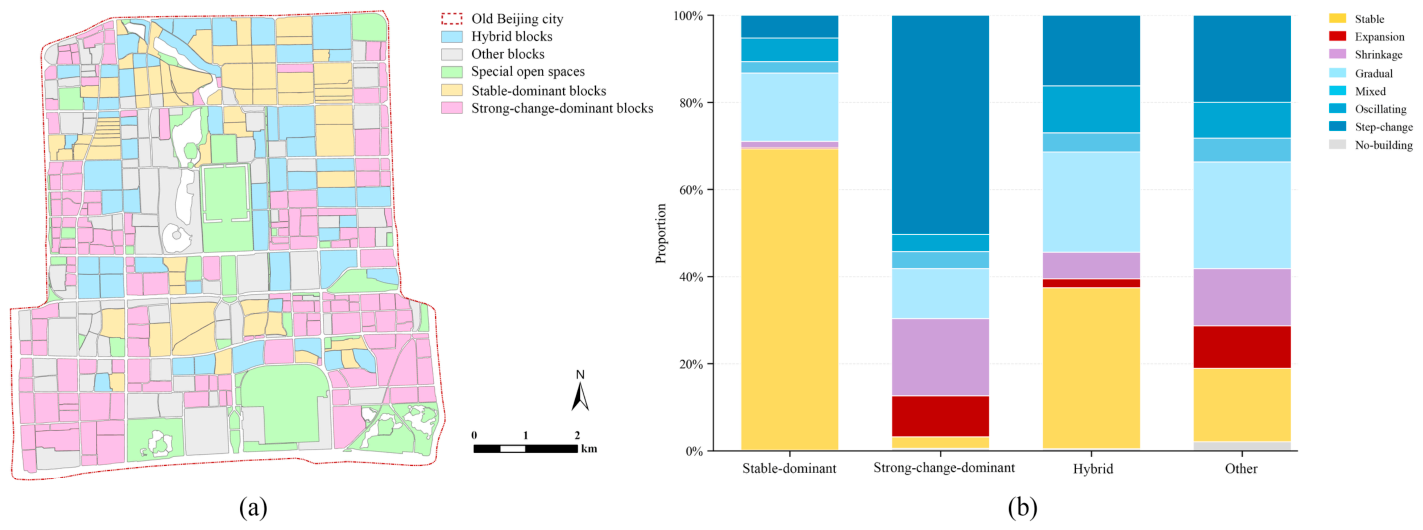
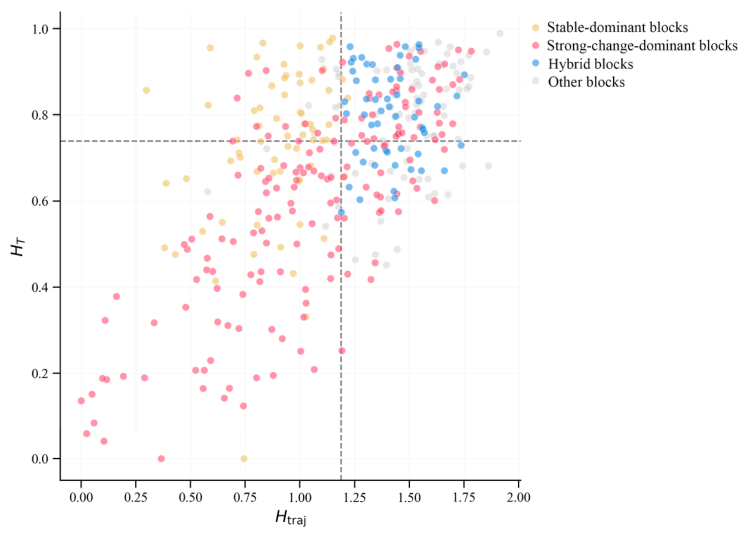
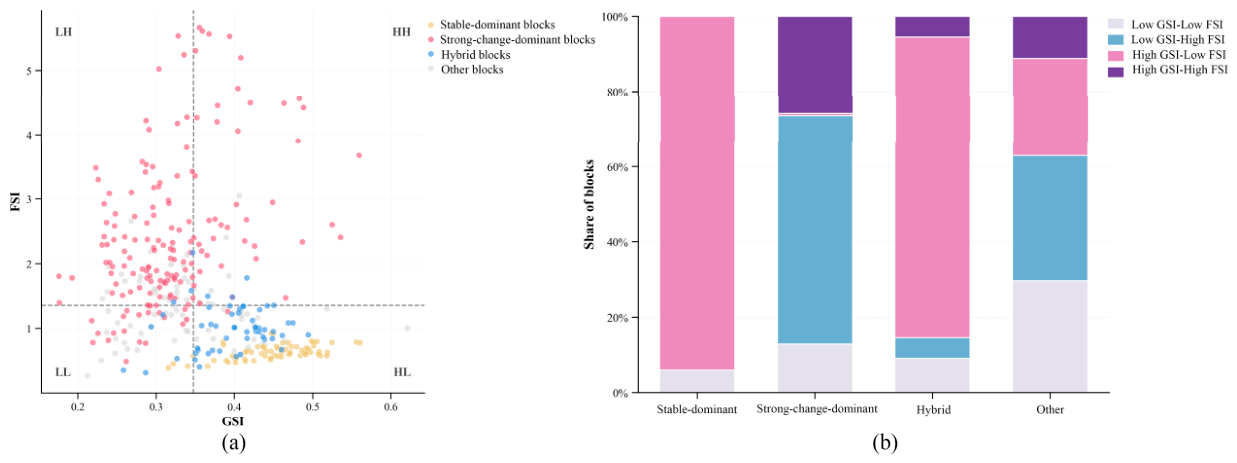
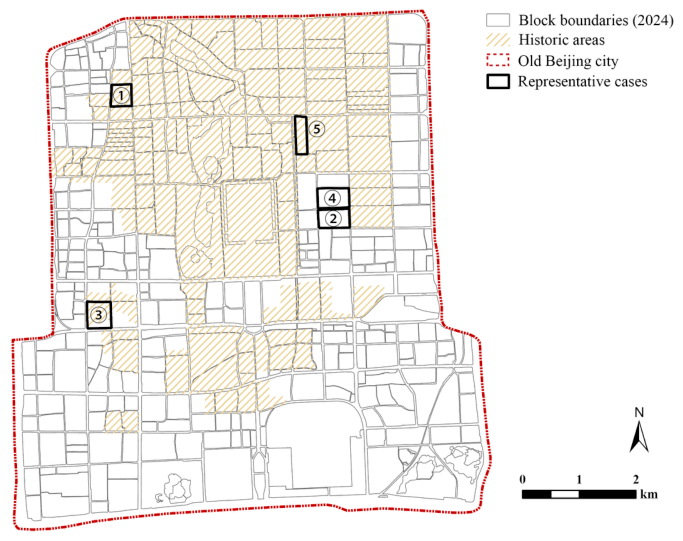
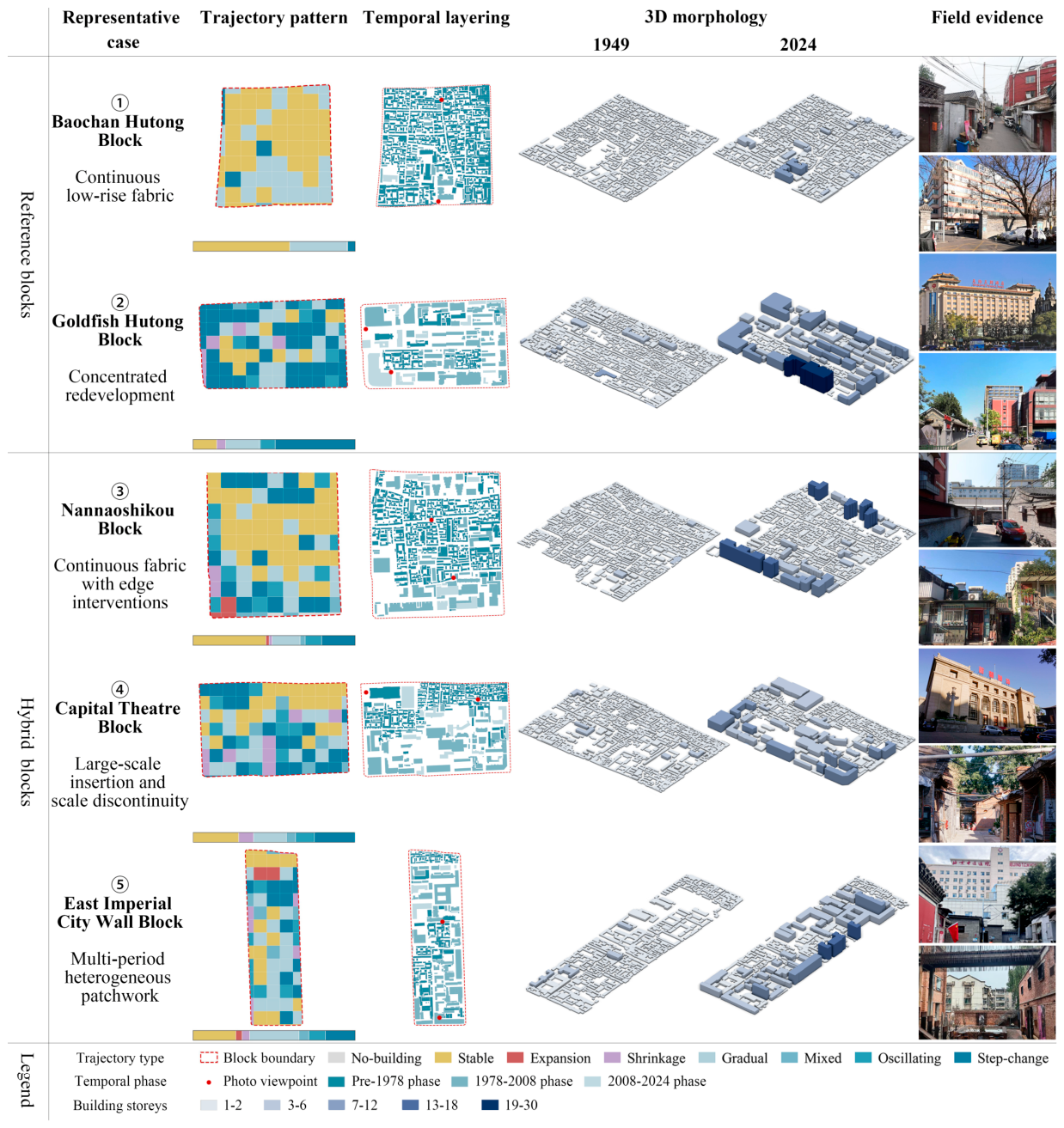
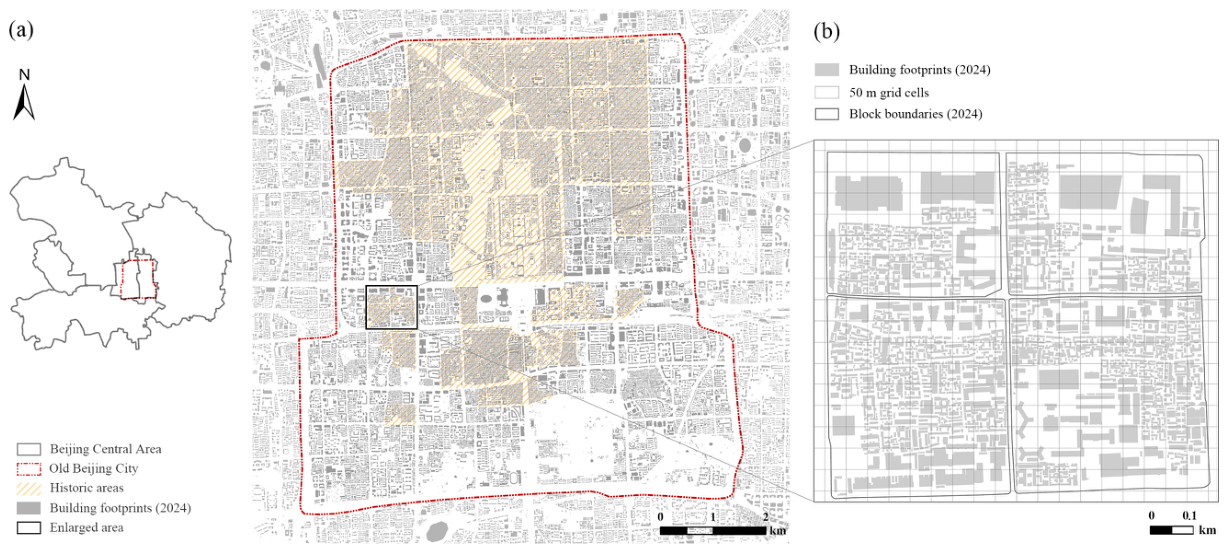
Historic cities are shaped by long-term continuity, incremental adjustment, and localized redevelopment, yet single-period morphological assessments cannot explain how these processes accumulate within contemporary blocks. This study develops a process-based multiscale framework linking multi-temporal building morphology to block-level diagnosis in old Beijing city. Building data from 1949, 1978, 2000, 2008, and 2024 were analyzed on 50 m grids to identify eight morphological trajectories, which were then aggregated into 428 contemporary blocks. Stable, step-change, and gradual trajectories accounted for the largest area shares and showed clear spatial selectivity. Stable trajectories were concentrated in high-coverage, low-rise areas, whereas step-change trajectories were associated with road corridors, functional nodes, and project-led redevelopment. The analysis identified 55 hybrid blocks in which a relatively persistent morphological base coexists with change units formed at different periods. Three recurrent configurations were observed: continuous fabric with edge intervention, scale discontinuity from large-unit insertion, and heterogeneous patchwork. The findings show that old Beijing city has evolved through asynchronous superposition of continuity and localized restructuring rather than wholesale, synchronous replacement, providing a process-based basis for diagnosing block morphology and supporting differentiated regeneration in historic urban areas.
Keywords: urban morphology; morphological trajectory; hybrid block; historic urban areas; urban regeneration; old Beijing city urban morphology; morphological trajectory; hybrid block; historic urban areas; urban regeneration; old Beijing city