Article

Near-Complete Service Breadth, Uneven Local Travel: Mapping Provision–Travel Alignment Across Three Eastern Chinese Cities

1
School of Public Administration and Sociology, Jiangsu Normal University, Xuzhou 221116, China
2
School of Economics and Management, China University of Mining and Technology, Xuzhou 221116, China
*
Author to whom correspondence should be addressed.
Land 2026, 15(9), 1737; https://doi.org/10.3390/land15091737 (registering DOI)
Submission received: 3 August 2026 / Revised: 10 September 2026 / Accepted: 11 September 2026 / Published: 17 September 2026
(This article belongs to the Special Issue Urban Planning for a Sustainable Future)

Abstract

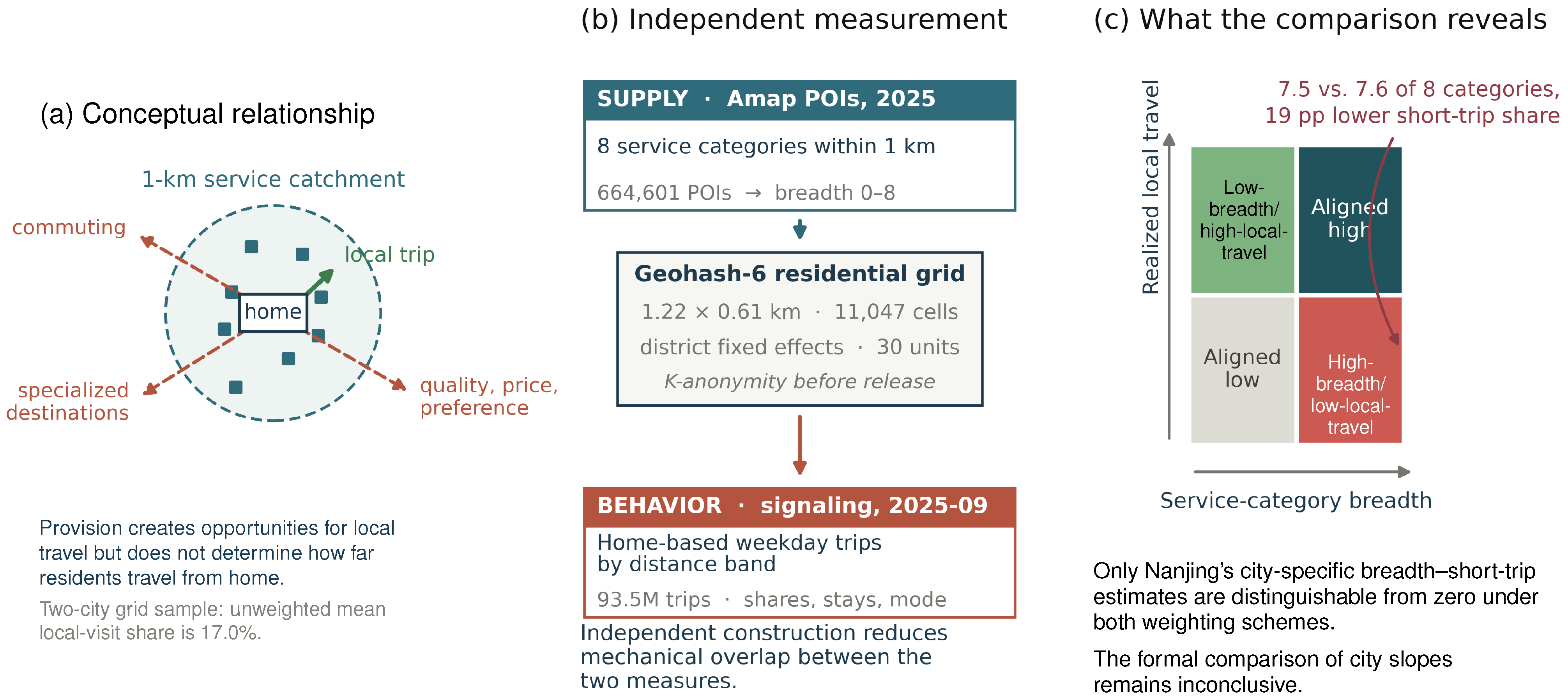
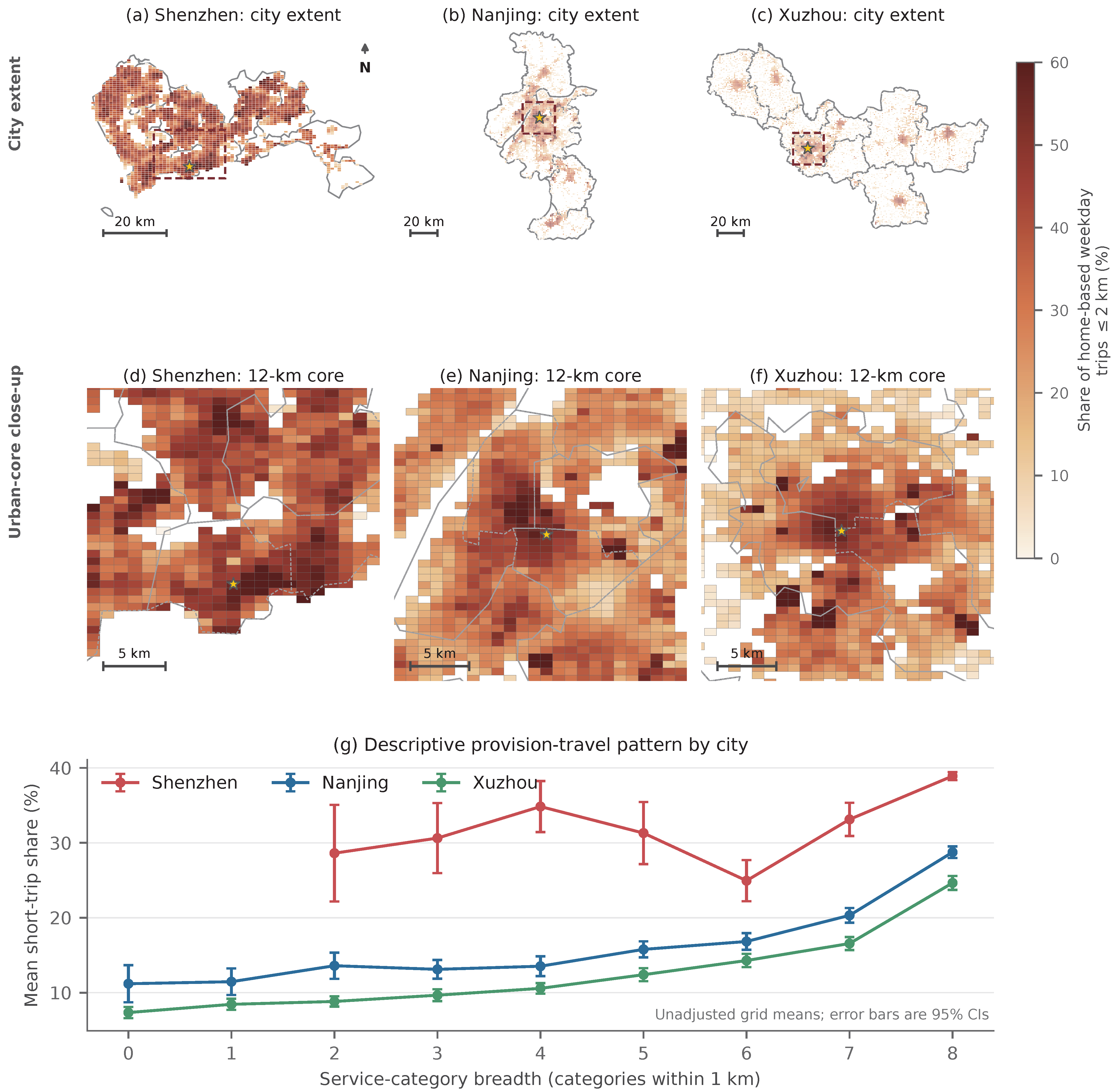
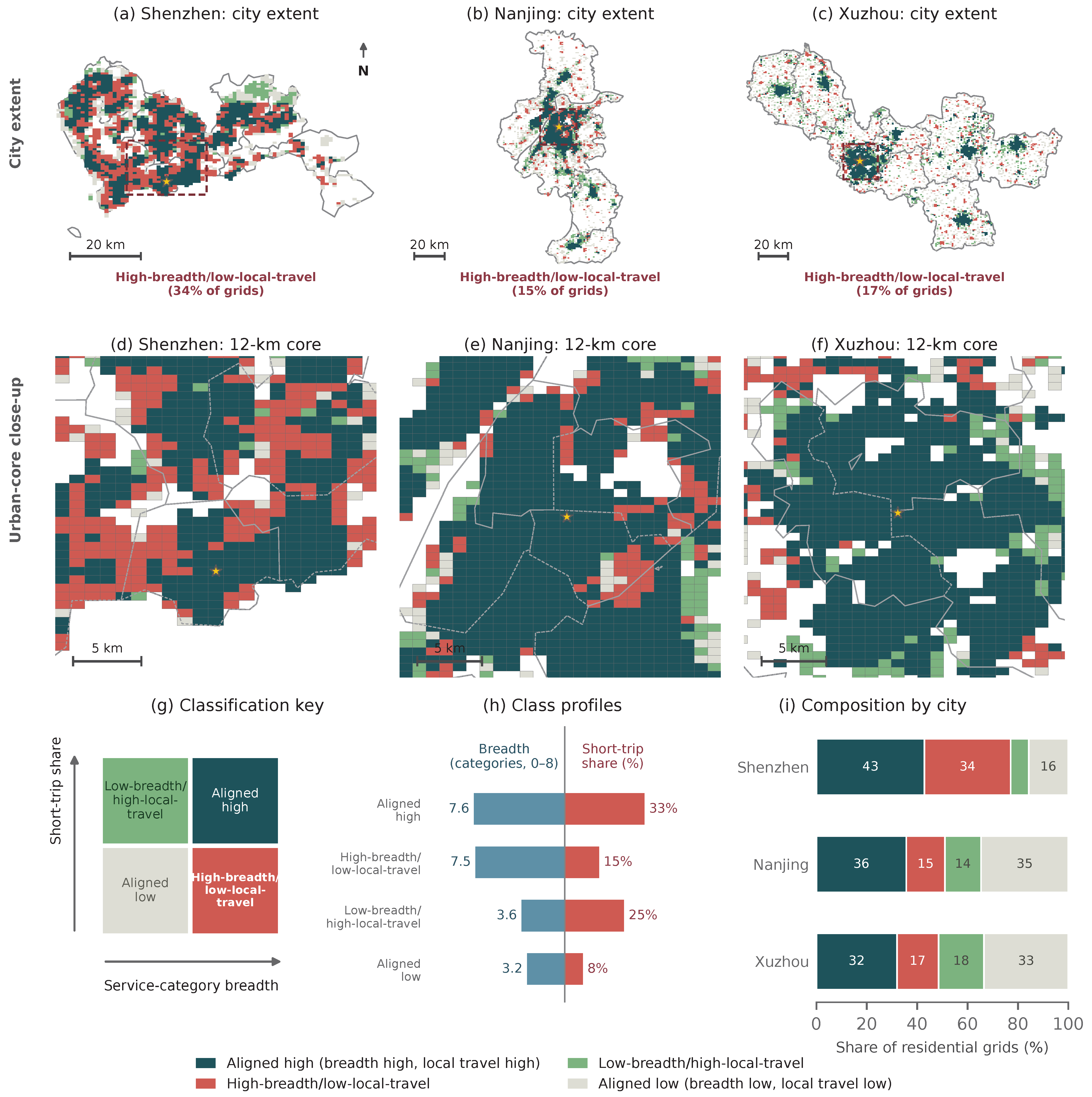
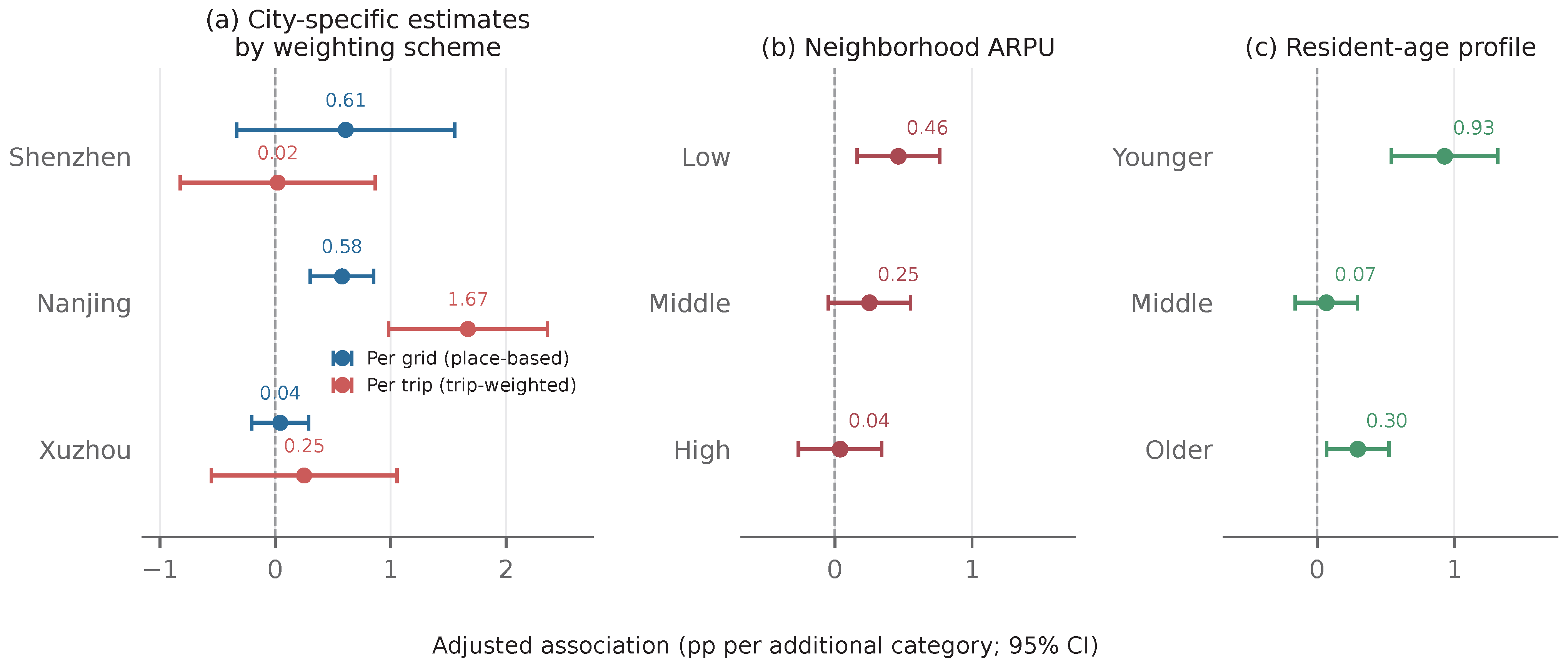
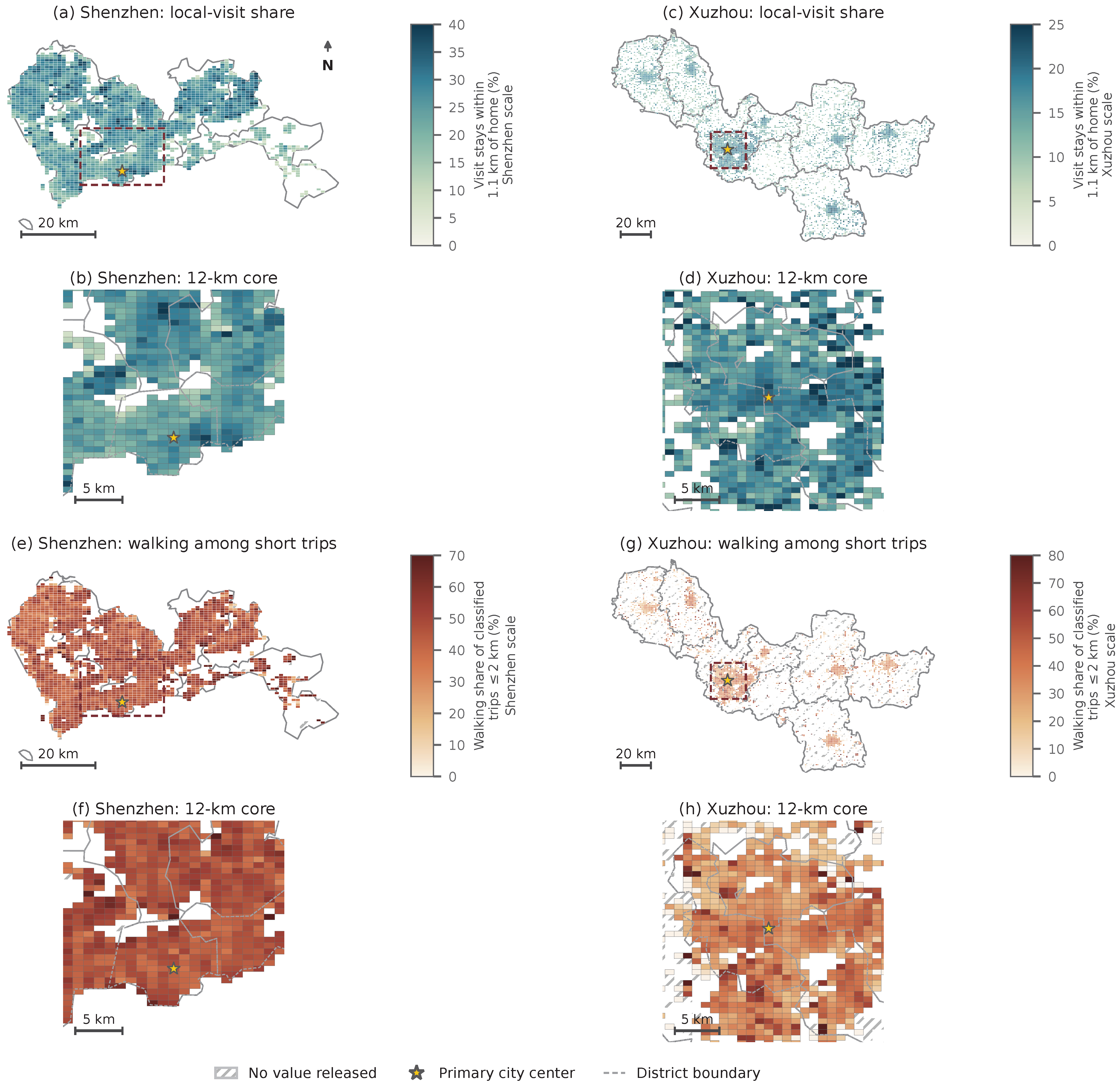
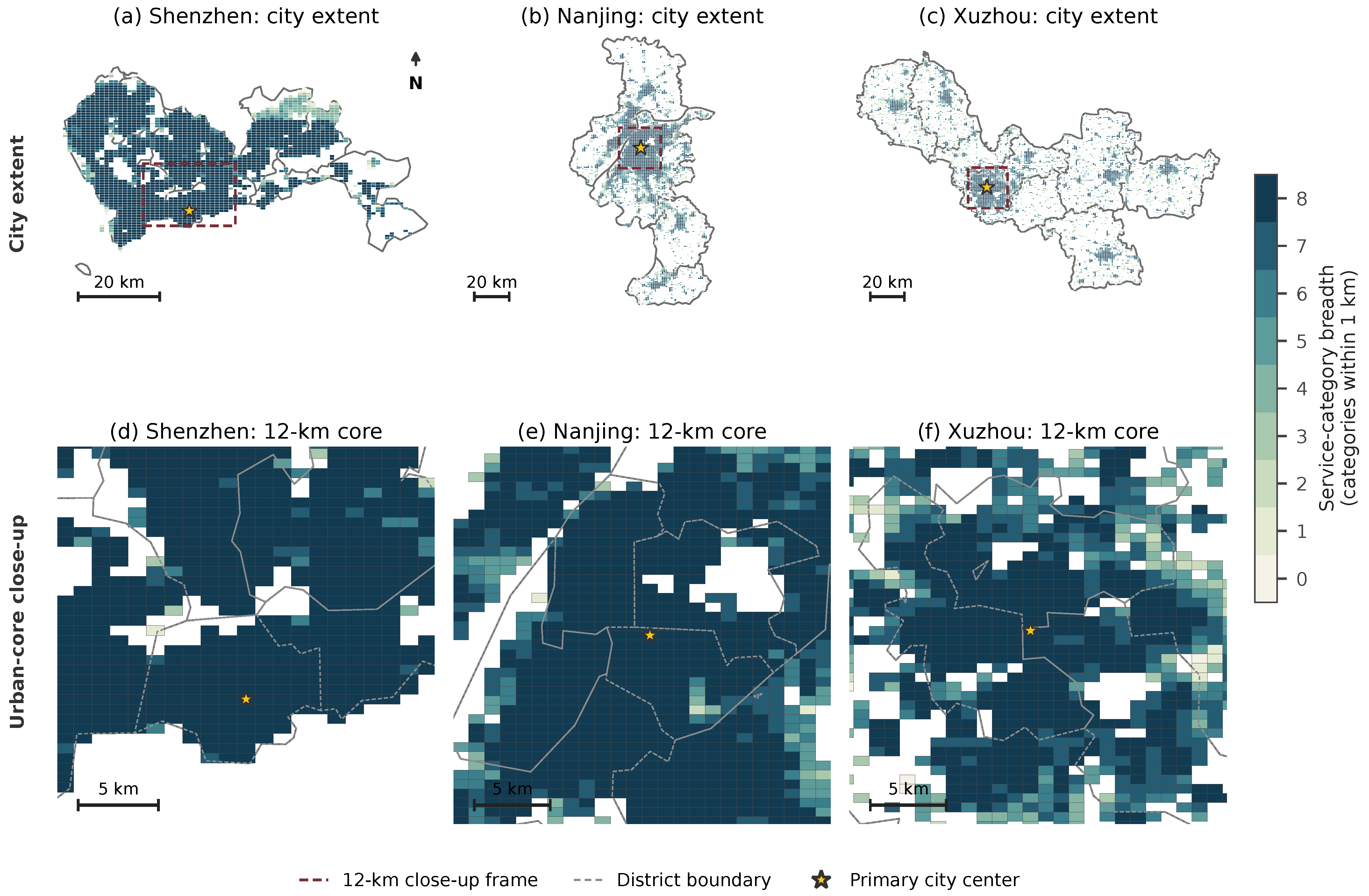
Supply-side assessments show what services are available nearby, but not how far residents travel from home. We examine alignment between neighborhood service breadth and realized local travel across Shenzhen, Nanjing and Xuzhou using 93.5 million home-based weekday trips and point-of-interest (POI) data for 11,047 residential grids. Service breadth counts how many of the eight service categories are represented within 1 km; local travel is the percentage of home-based weekday trips no farther than 2 km. Because trips are not linked to POIs, this outcome measures travel proximity rather than verified service use. A high-breadth/low-local-travel screening group, identified using within-city percentile ranks, accounts for 19.3% of grids. Its mean breadth is close to that of aligned-high grids, but its short-trip share is about 19 percentage points lower. After adjustment for observed covariates and district fixed effects, each additional category is associated with a 0.30-percentage-point higher short-trip share, about 90% below the raw gradient. Among the city-specific trip-weighted estimates, only Nanjing’s is statistically distinguishable from zero. A joint test does not resolve whether the city slopes differ, and the pooled estimate should not be interpreted as a common association across all three cities. Count-sensitive scores also show positive pooled associations, but collinearity prevents separating the contributions of breadth and POI intensity. The framework identifies where independently measured provision and local travel diverge without establishing causality or service use. It provides a spatial diagnostic for further local investigation across the three eastern Chinese city contexts.
Keywords: community life circle; neighborhood service breadth; realized local travel; provision–travel alignment; mobile phone signaling; urban China community life circle; neighborhood service breadth; realized local travel; provision–travel alignment; mobile phone signaling; urban China