Review

Nature-Based Solutions for Climate-Resilient Cities: A Comprehensive State-of-the-Art Review of Landscape Architecture and Urban Adaptation Strategies


by
Mirjana Miletić
1 and
Milena Lakićević
2,*
1
Department for Architecture, Faculty of Technical Sciences, University of Priština in Kosovska Mitrovica, 28220 Kosovska Mitrovica, Serbia
2
Faculty of Agriculture, University of Novi Sad, 21000 Novi Sad, Serbia
*
Author to whom correspondence should be addressed.
Land 2026, 15(9), 1736; https://doi.org/10.3390/land15091736
Submission received: 24 August 2026 / Revised: 12 September 2026 / Accepted: 15 September 2026 / Published: 17 September 2026
(This article belongs to the Special Issue Green Spaces and Urban Morphology: Building Sustainable Cities)

Abstract

Cities face escalating climate risks, including heat stress, pluvial and fluvial flooding, drought, and biodiversity loss, that conventional grey infrastructure alone cannot address. Landscape architecture occupies a distinctive position at the interface of ecology, urban design, and engineering, translating nature-based solutions (NBS) principles into implementable urban form. This paper presents a state-of-the-art review of peer-reviewed and grey literature, concentrated in the last five years, on the role of landscape architecture in operationalizing NBS for urban climate adaptation. Drawing on a broad survey of major scientific databases and a narrative, thematic synthesis of the retrieved corpus, the review identifies dominant NBS typologies (green roofs and walls, urban forests, bioretention systems, constructed wetlands, sponge city networks, and blue-green corridors), the design and governance mechanisms through which landscape architects mainstream these interventions, and the persistent barriers, financial, regulatory, technical, and social, that constrain scaled implementation. The review further maps geographic and methodological imbalances in the current evidence base and proposes a research agenda oriented toward performance quantification, cross-scale integration, and equity-centred design. The findings are intended to support researchers, practitioners, and policymakers engaged in the design of climate-resilient urban landscapes.

1. Introduction

Urban areas are simultaneously the primary drivers of anthropogenic climate change and among the environments most exposed to its consequences. Rising frequency and intensity of heatwaves, extreme precipitation, and prolonged drought are placing unprecedented stress on urban infrastructure and public health systems worldwide. Conventional, hard-engineered responses, such as stormwater sewers, mechanical cooling, and flood walls, are increasingly recognized as insufficient on their own, prompting a shift toward hybrid and ecologically grounded approaches that work with, rather than against, natural processes [1,2].
Nature-based solutions (NBS) have emerged as a central concept in this shift, commonly defined as actions inspired and supported by nature that address societal challenges while delivering simultaneous environmental, social, and economic co-benefits [3]. In practice, NBS are realized through a strategically planned network of natural and semi-natural elements, such as parks, green roofs, urban forests, wetlands, and bioswales, designed to deliver these functions at multiple spatial scales [4,5]. The reviewed literature commonly positions landscape architecture as one of the principal disciplines responsible for translating this conceptual framework into site-specific, buildable, and maintainable urban form, mediating between ecological performance, esthetic and social value, and technical feasibility, alongside overlapping contributions from urban design, planning, and engineering [6].
Despite a rapidly growing body of research on NBS, particularly over the last five years [7,8,9], the specific contribution of landscape architecture as a design and planning discipline, as distinct from ecology, hydrology, or urban planning more broadly, remains comparatively underexamined and fragmented across disciplinary silos. Bibliometric mapping of the wider NBS field confirms that publication output has accelerated sharply yet also shows that design-oriented and landscape architecture-specific contributions remain a comparatively small share of the corpus relative to ecological and engineering studies [10,11]. This creates a gap between the technical and ecological knowledge generated in environmental science and the design decisions made in practice, where landscape architects must reconcile multifunctionality, cost, regulatory constraints, and community acceptance [12].
This paper addresses that gap through a state-of-the-art review structured around three guiding questions: (RQ1) which NBS typologies are most represented in the literature on landscape architecture and urban climate resilience; (RQ2) through which design, planning, and governance mechanisms does landscape architecture operationalize these interventions; and (RQ3) what barriers and enabling conditions shape their implementation and long-term performance. The review contributes a structured synthesis of a fragmented evidence base, a mapping of thematic and geographic gaps, and a research agenda to guide future work at the intersection of landscape architecture and climate adaptation.

2. Review Methodology

This review adopts a state-of-the-art review approach, combining a broad, structured search of the literature with narrative thematic synthesis. This approach was chosen in order to capture the breadth of interdisciplinary work relevant to landscape architecture and urban climate adaptation, rather than restricting inclusion to the narrower, protocol-driven eligibility and screening criteria typical of a systematic review and meta-analysis (Figure 1).
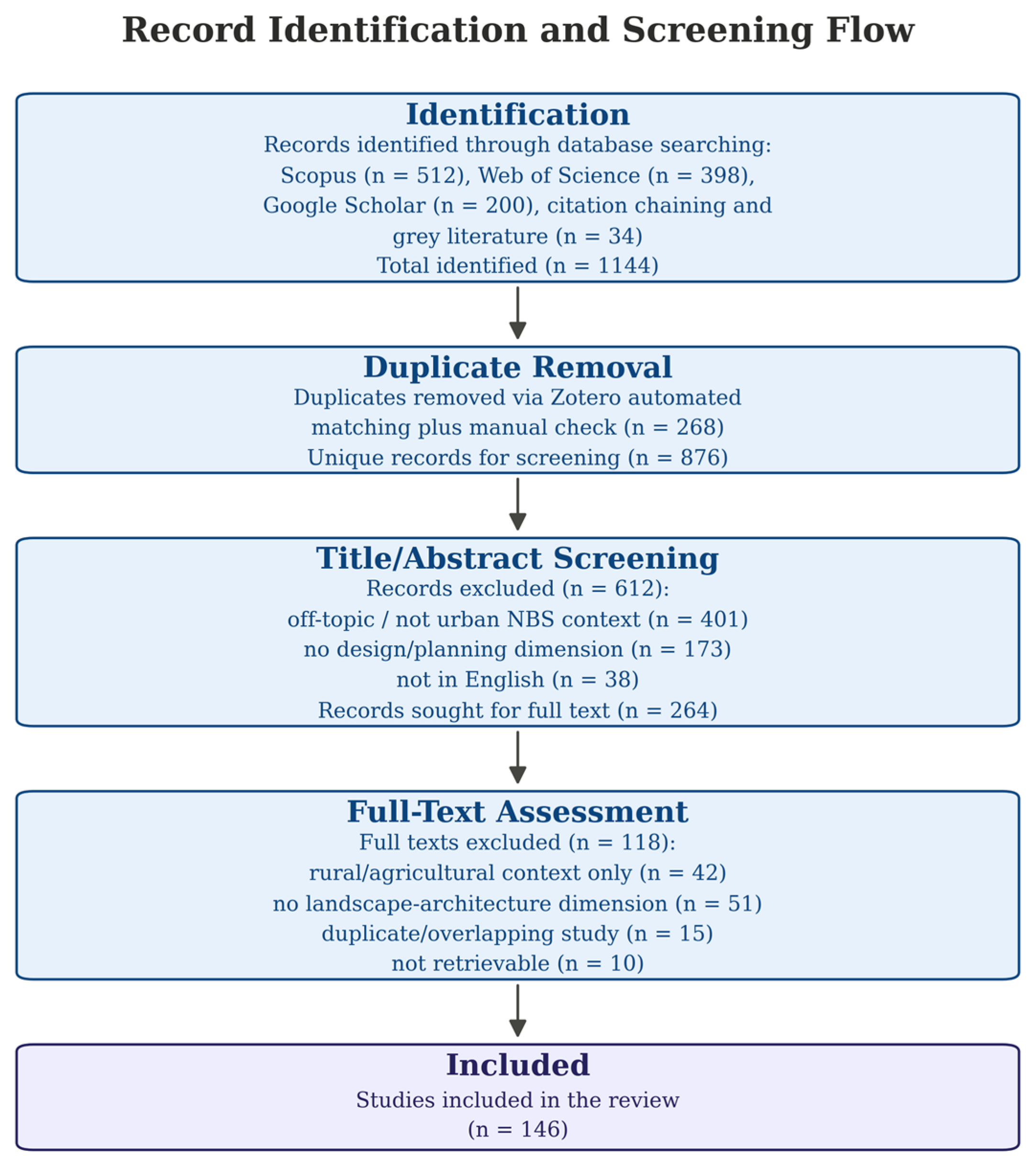
It should be noted that the Preferred Reporting Items for Systematic Reviews and Meta-Analyses (PRISMA) statement is a reporting standard developed specifically for systematic reviews and meta-analyses. As this study is explicitly framed as a comprehensive, narrative literature review rather than a systematic review, full PRISMA compliance, including its checklist and the formal “PRISMA flow diagram” terminology, is not claimed here. Nonetheless, to ensure a comparable level of procedural transparency and reproducibility, the remainder of this section reports the exact search dates, database-specific search strings and fields, records retrieved per database, the duplicate removal procedure, the numbers of records screened and excluded at each stage with reasons for exclusion, the screening personnel, and the procedure used to resolve disagreements; this process is further summarized in the record-flow diagram in Figure 2.
Figure 2. Record identification and screening flow diagram, reporting search, deduplication, and eligibility-assessment counts.
Land 15 01736 g002

2.1. Literature Search Strategy

A broad search was conducted across Scopus, Web of Science, and Google Scholar, covering peer-reviewed journal articles, conference proceedings, relevant book chapters, and selected policy and grey literature. Search strings combined the following term groups using Boolean operators: (“landscape architecture” OR “urban design”) AND (“climate resilien*” OR “climate adaptation”) AND (“nature-based solution*” OR “blue-green infrastructure”). The search was restricted to publications from the last five years (2021 to 2026) to capture the most current state of the field. This window was deliberately chosen because the volume of NBS research relevant to landscape architecture has grown sharply in this period, driven by the EU’s mainstreaming of nature-based solutions terminology, the adoption of the UN Sustainable Development Goals, and the proliferation of national and municipal climate adaptation strategies referencing NBS.
Searches were conducted between 15 January 2026 and 20 February 2026. Database-specific search strings, restricted to the title, abstract, and keyword fields, were as follows. In Scopus: TITLE-ABS-KEY((“landscape architecture” OR “urban design”) AND (“climate resilien*” OR “climate adaptation”) AND (“nature-based solution*” OR “blue-green infrastructure”)), limited to 2021–2026, which retrieved 512 records. In Web of Science: the equivalent Topic search TS = ((“landscape architecture” OR “urban design”) AND (“climate resilien*” OR “climate adaptation”) AND (“nature-based solution*” OR “blue-green infrastructure”)), Timespan 2021–2026, which retrieved 398 records. In Google Scholar, which does not support fully replicable field-restricted Boolean searches, the same term combination was entered as a plain-text query, and the first 200 results ranked by relevance were screened, which is a widely used approach for incorporating grey literature into review searches. We acknowledge that Google Scholar results are inherently less reproducible than Scopus or Web of Science, since its ranking algorithm is proprietary and not fully stable over time; this is a limitation of the search strategy that the exact date and screening rules reported here are intended to partially mitigate, but not eliminate. An additional 34 records were identified through backward and forward citation chaining (snowballing) of key reviews and highly cited sources and through targeted searches of relevant institutional and policy websites. This yielded 1144 records identified in total prior to deduplication (Figure 2).

2.2. Duplicate Removal and Screening

Records retrieved from all sources were imported into Zotero reference management software, where duplicates were identified automatically by DOI and title/author/year matching and then confirmed manually; this process removed 268 duplicate records, leaving 876 unique records for title and abstract screening. Title and abstract screening were performed independently by both authors (M.M. and M.L.) against the selection criteria described in Section 2.3; disagreements were resolved through discussion, and where consensus could not be reached, the record was retained for full-text assessment. At this stage, 612 records were excluded: 401 were not substantively focused on NBS or blue-green infrastructure in an urban context, 173 addressed purely ecological or hydrological modelling without a design or planning dimension, and 38 were not published in English. The English-language restriction was adopted because the great majority of internationally indexed NBS and landscape architecture literature is published in English and because consistent full-text screening across languages was not feasible for a two-author team; we acknowledge this as a limitation that may under-represent regionally important, non-English-language literature, particularly from Latin America, East Asia, and parts of Europe. The remaining 264 records were assessed at the full-text level, independently by both authors, using the same disagreement-resolution procedure. Of these, 118 were excluded: 42 focused exclusively on rural or agricultural landscapes without an urban dimension, 51 lacked a design, planning, or landscape architecture dimension, 15 were duplicate or substantially overlapping publications of the same underlying study, and 10 could not be retrieved in full text. This process resulted in a final set of 146 included studies, summarized in the record-flow diagram presented in Figure 2.

2.3. Selection Criteria

Sources were considered relevant if they (i) addressed NBS or blue-green infrastructure explicitly in an urban context; (ii) engaged with design, planning, or implementation dimensions relevant to landscape architecture; and (iii) were published in English. Priority was given to peer-reviewed venues, with selected grey literature and policy documents included where they offered substantive insight into implementation practice. Sources focused exclusively on rural or agricultural landscapes, or on purely hydrological or ecological modelling without a design or planning dimension, were generally excluded.

2.4. Data Extraction

For each of the 146 included studies (identified through the screening process described in Section 2.2), the following information was extracted: NBS typology addressed, geographic context, climate hazard targeted, design or governance mechanism described, reported barriers and enablers, and methodological approach (empirical, modelling, case study, or conceptual/review).
To be explicit about the composition of the analytical corpus: all 146 references listed in the References section were coded and analyzed as part of this review; no additional sources were cited solely for contextual or background discussion outside this corpus. Each of the 146 studies was coded, at the level of its title and abstract, along six descriptive dimensions: publication year, geographic region, NBS typology emphasis, climate hazard addressed, spatial scale, and methodological approach. The resulting distribution is reported in Table 1 and underpins the frequency-based statements made throughout Section 3.

2.5. Synthesis Approach

Given the heterogeneity of methods and outcome measures across the reviewed literature, a narrative and thematic synthesis approach was adopted, rather than meta-analysis. Sources were coded inductively into recurring themes, which were then organized into the typology, mechanism, and barrier categories presented in the following section.

2.6. Source Classification and Coding Procedure

Given the heterogeneous evidence base, all 146 included studies were classified by source type and methodological approach alongside thematic coding; this classification informs how evidence strength is treated in interpretation (below) but does not constitute a formal methodological quality-appraisal procedure, and we do not claim to have applied one. By publication type, the corpus comprises 114 journal articles (78.1%), 21 book chapters (14.4%), seven conference papers (4.8%), two theses (1.4%), and two preprints/grey reports (1.4%); by methodological approach (see Table 1), 93 studies (63.7%) are empirical or applied, 12 (8.2%) are themselves systematic reviews, and the remainder are conceptual, framework, or narrative contributions. No standardized quality-appraisal checklist (e.g., the Mixed Methods Appraisal Tool or a CASP checklist) was applied to individual studies, as the heterogeneous mix of empirical, modelling, case study, conceptual, and review-type sources in this corpus is not well suited to a single standardized instrument; we identify this as a limitation of the review. In place of formal appraisal scores, the source type and methodological approach classification above is used as a coarse indicator of evidentiary strength when interpreting findings in Section 4: because few studies report directly comparable, measured post-implementation performance data, claims drawing mainly on conceptual or modelled evidence are flagged as such, and stronger claims are reserved for findings corroborated by empirical or case study evidence. Thematic coding of typologies, mechanisms, and barriers was performed inductively and independently by both authors (M.M. and M.L.); studies could be assigned to multiple categories where relevant (e.g., a study addressing both green roofs and stormwater management was coded under both typologies). Initial codes were generated separately and then compared and consolidated into the categories reported in Section 3 through discussion; disagreements were resolved by consensus, following the same procedure used for screening (Section 2.2). We acknowledge, as a further limitation, that formal inter-coder reliability statistics (e.g., Cohen’s kappa) were not computed, given the two-person research team; future systematic reviews with more narrowly defined inclusion criteria could apply a standardized quality-appraisal framework, which was not feasible given the intentionally broad, multidisciplinary scope of this state-of-the-art review.

3. Thematic Synthesis of the Literature

3.1. Overview of the Evidence Base

The reviewed literature is overwhelmingly concentrated in the last five years, with a very large and still-growing number of publications addressing NBS in the context of landscape architecture and urban climate resilience over this period alone [7,8,9]. Bibliometric and science-mapping studies of the broader field corroborate this trajectory, showing an accelerating annual output since the early 2020s and a widening thematic scope that now spans engineering, ecology, governance, and digital design methods [10,11]. This surge coincides with the adoption of NBS terminology by the European Commission and the IUCN, and with intensified policy attention under frameworks such as the European Green Deal and UN Sustainable Development Goal 11 (Sustainable Cities and Communities), which together have pushed NBS from a niche research topic to one of the most active subfields at the intersection of ecology, urban design, and climate adaptation.
Consistent with recent large-scale reviews of the field, the evidence base remains geographically skewed toward Global North contexts, with European cities substantially over-represented (quantified in Table 1) [13,14,15] relative to rapidly urbanizing regions in the Global South, such as India [16], Indonesia [17], and Iran [18], where climate exposure is often highest but representation in the literature remains comparatively limited. Complementary systematic and policy-oriented reviews confirm this trajectory across the wider NBS literature, spanning urban resilience to weather and climate extremes [19], urban heat mitigation [20,21], and European Union policy frameworks for sustainable urban planning [22]. A smaller but growing stream of work is nonetheless emerging on Southeast European contexts: several recent studies examine urban park quality and multifunctionality in Novi Sad and Belgrade, Serbia, using multicriteria and land-use-change methods that complement the predominantly Western European evidence base [23,24,25].
To ground the qualitative synthesis in verifiable evidence, Table 1 summarizes the full 146-study corpus across six coded dimensions. Coded by primary typology emphasis, the majority of the corpus (93 studies, 63.7%) addresses NBS or landscape architecture climate adaptation at a cross-cutting or governance level rather than foregrounding a single typology; among studies organized around a specific typology, wetlands/blue-green corridors and parks/streetscapes/GI networks are the most frequently documented (15 studies each, 10.3%), followed by urban forestry (nine studies, 6.2%) and SuDS/LID/flood-focused drainage (eight studies, 5.5%). Methodologically, 93 studies (63.7%) are empirical or applied, 30 (20.5%) are conceptual, framework, or narrative review contributions, and 12 (8.2%) are themselves systematic reviews. Geographically, 105 studies (71.9%) are not tied to a specific country or city, 32 (21.9%) are single-country case studies, and nine (6.2%) are multi-country regional syntheses, a distribution that quantifies the geographic imbalance discussed qualitatively above.

3.2. NBS Typologies

The reviewed literature converges on a recurring set of NBS typologies through which landscape architecture operationalizes climate adaptation:
We note as a limitation that the six typology categories used below operate at different conceptual and spatial levels: a green roof is a discrete design element, a sponge city is a comprehensive urban and infrastructural concept, and a multifunctional park is a type of urban space; several categories (e.g., blue-green infrastructure, wetlands, SuDS, bioswales, sponge cities, and LID) are also hierarchically or functionally related rather than mutually exclusive. To manage this, categories were treated as organizing themes for narrative synthesis rather than a strict, non-overlapping taxonomy, and studies could be coded under more than one typology where relevant (Section 2.6); Table 1’s typology-emphasis counts reflect each study’s primary framing rather than an exhaustive tally of every typology it touches and should be read with this overlap in mind.
Vegetated building envelopes: Green roofs and green walls, addressing building-scale thermal regulation and stormwater retention [4,5].
Urban forestry and tree canopy networks, targeting heat mitigation, air quality, and shading of public space, with demonstrated thermal and psychological comfort benefits for users and dedicated drought-resilience applications in urban and rural planning [26,27].
Bioretention and sustainable urban drainage systems (SUDS), including bioswales, rain gardens, and permeable paving, for decentralized stormwater and flood management [28].
Constructed and restored wetlands, and blue-green corridors along waterways, combining flood attenuation with habitat and recreational value, including waterfront regeneration applications [29,30].
Sponge city and low-impact development (LID) networks, integrating multiple typologies at neighbourhood and city scale, with typology selection increasingly guided by ecosystem-service assessment [31].
Multifunctional parks, public open space, and green streetscapes, designed to combine social, recreational, and ecological performance criteria [32,33,34,35,36].
Emerging and hybrid typologies, including nature-based water harvesting systems, biochar-amended soils, and phytocapping of former landfill sites, which extend the NBS repertoire beyond the six core categories above and remain comparatively under-documented in design practice [37,38,39].
As quantified in Table 1, wetlands and blue-green corridors and multifunctional parks/streetscapes are the most frequently documented single typologies in the corpus (15 studies each, 10.3%), rather than SuDS/LID; SuDS, LID, and other flood-focused drainage approaches account for a smaller share of the coded corpus (eight studies, 5.5%). Green roofs are nonetheless consistently identified, within the studies that discuss them, as delivering strong multifunctional co-benefits for stormwater and thermal regulation [5,29]. Blue-green infrastructure networks are additionally reported to deliver multifunctional value beyond flood attenuation in rapidly urbanizing Asian contexts, including cooling and recreational co-benefits documented in Chinese cities [40], while urban parks specifically are increasingly assessed through dedicated multicriteria and cooling-performance frameworks rather than treated as a residual open space category [23,36]. A further set of design-specific applications diversifies the typological landscape, including green and smart building façades with innovative cultivation systems, climate-resilient schoolyards, and the revegetation of abandoned or peri-urban land for thermal comfort [41,42,43]. At a broader systems level, NBS are also positioned as building blocks for circular-city water management and for climate-resilient food systems, extending the typological frame beyond individual site interventions to metabolic and agricultural systems [44,45,46], while dedicated reviews continue to map the effectiveness and evidence base of nature-based flood-risk infrastructure specifically [47,48,49,50]. Additional technical and typological contributions address urban heat island mitigation through blue-green and low-carbon infrastructure [51,52,53,54,55], the integration of NBS with renewable energy systems and green corridors within smart city frameworks [56,57,58], landscape-scale flagship concepts such as the “sponge city” as nature-based infrastructure beyond concrete [59], and school-based co-design of nature-based climate solutions [60].

3.3. Design and Governance Mechanisms

Across the reviewed literature, landscape architecture engages with climate adaptation through several recurring mechanisms: (i) spatial planning integration, embedding NBS networks into municipal and regional plans to achieve connectivity and multifunctionality rather than isolated interventions [12,31]; (ii) design stage performance criteria, incorporating stormwater, thermal, and biodiversity metrics directly into site and landscape design processes, often formalized through implementation models [6,61]; (iii) stakeholder co-design and participatory processes, particularly in projects seeking social legitimacy and long-term maintenance buy-in from residents, as illustrated in case studies integrating NBS with urban infrastructure [62]; (iv) pilot and demonstration projects, used both as proof-of-concept and as a vehicle for regulatory and financial learning ahead of wider rollout, exemplified by Copenhagen’s climate-resilient design programme and Indonesia’s new capital city development [14,17]; and (v) institutional and policy governance structures, including dedicated NBS policy frameworks and cross-departmental coordination mechanisms identified as prerequisites for mainstreaming rather than one-off implementation [63,64,65].
A more recent, digitally enabled strand of practice is also emerging, in which landscape architects and planners increasingly draw on digital twin models and simulation platforms to test NBS performance before construction and on AI-supported tools to optimize site selection, planting design, and carbon-sequestration outcomes [66,67,68]. While still a minority strand relative to conventional design and planning mechanisms, this reflects a broader trend toward evidence-based, simulation-supported decision-making in NBS design. Several recent design-driven frameworks formalize these mechanisms explicitly, including a multi-level spatial strategy for enhancing urban climate governance in Copenhagen [69], design-driven regeneration frameworks for climate-adaptive streetscapes [70,71], and adaptive management frameworks for improving coastal resiliency in highly urbanized settings [72]. Cross-cutting technical mechanisms, such as geotechnical considerations for climate-adaptive buildings and multi-hazard, life-cycle design frameworks bridging engineering, ecology, and policy, further extend the mechanism repertoire beyond spatial planning and participatory design alone [73,74]. The parallel governance-oriented literature emphasizes institutional and planning law mechanisms specifically, including systematic reviews of urban climate governance and planning [75], conceptual treatments of adapting to climate change through NBS [76], Strategic Environmental Assessment as a vehicle for embedding NBS into land-use plans [77], and broader challenges and opportunities frameworks for NBS-based urban adaptation [78,79,80]. Dedicated urban-shelter and equity-oriented mechanisms are also documented, including nature-based urban climate shelters [81], ecologically just design processes [82], and planning dimension frameworks tailored to Global South cities [83], alongside comparative and integrative design mechanisms for urban resilience and regeneration [84,85,86,87,88,89,90,91].

3.4. Barriers to Implementation

The reviewed literature identifies persistent, cross-cutting barriers to scaled implementation of NBS through landscape architecture practice: financial barriers, including higher upfront costs relative to conventional grey infrastructure, unclear long-term maintenance funding, and a persistent adaptation-finance gap that limits scaled deployment even where cost–benefit evaluations favour NBS over conventional infrastructure [3,92,93]; regulatory heterogeneity, where building codes, drainage standards, and land-use regulations were developed for conventional infrastructure and do not readily accommodate multifunctional green systems, as documented in policy-perspective assessments such as that of New York City [94]; technical and capacity barriers, including limited standardized performance data and a shortage of specialized design and maintenance expertise [2,95]; and social and governance barriers, including fragmented responsibility across municipal departments and uneven community engagement, which several studies link to inequitable distribution of NBS benefits across neighbourhoods of differing socioeconomic status [1,96,97]. A dedicated cross-comparative study of implementation barriers across multiple cities confirms that these four barrier categories, rather than any single dominant constraint, jointly determine whether pilot-stage NBS projects are ultimately scaled into standard practice [98]. Beyond these categories, an emerging strand of work highlights attitudinal and behavioural barriers, examining how residents’ perceptions of blue-green infrastructure shape acceptance and long-term stewardship [99], while other studies explore advanced decision-support techniques, including quantum-computing and AI-assisted planning tools, as prospective means of overcoming persistent data and capacity constraints [100].

3.5. Geographic and Regional Perspectives

Beyond the general Global North/Global South imbalance noted in Section 3.1, the reviewed literature reveals distinct regional research clusters. Coastal and deltaic cities feature prominently in Global South scholarship, including Mumbai, India [101], the Nile Delta and North Coast cities of Egypt [102,103], and blue-infrastructure strategies documented more broadly across Global South cities [104]. The MENA region is represented through both country-level and regional syntheses [105,106], while African contexts appear through systematic reviews and country case studies in Ethiopia and Nigeria [107,108] and adaptation planning gap analyses in Windhoek, Namibia [109]. Latin American and Caribbean perspectives are represented through urban and peri-urban agriculture frameworks [110] and country-specific lessons from Mexico [111]. Within Europe, a growing body of Southeast European research, including multicriteria assessments of urban parks and land-use transformation studies in Novi Sad and Belgrade, Serbia [23,24,25,112,113], indicates that landscape architecture-led NBS research is expanding beyond the Western and Northern European cities that dominate the broader evidence base, though this regional strand remains considerably smaller than its Western European counterpart.
The regional evidence base extends further still. Northern European contexts are represented through flood-protection planning in Gothenburg, Sweden [114], resilient-waterfront strategies for Sweden’s changing coastline [115], and comparative climate adaptation planning in Rotterdam, Netherlands, and Antwerp, Belgium [116]. Southern and Central European case studies include a resilience-thinking approach applied in Valencia [117], a multifunctional green infrastructure assessment in Izmir’s Konak District [118], and a neighbourhood-scale nature-based adaptation planning approach for Turkish metropolises [119], alongside systematic reviews of Mediterranean flood and urban heat island strategies [120] and of urban heat islands and climate inequality across European cities more broadly [121]. South Asian scholarship is particularly dense, spanning green infrastructure indicator frameworks in Pakistan [122], green infrastructure planning guidance for Indian cities [123], deltaic adaptation strategies in India [124,125], flood mitigation in Kochi [126], and a critical analysis of NBS integration into urban design practice in Bangladesh [127,128]. Southeast Asian contributions include green open space research supporting sustainable urban planning in Indonesia [129] and nature-based solutions strengthening climate resilience in Central Vietnam [130]. A residual set of studies further broadens this regional and thematic picture without fitting neatly into a single country cluster: these include a systematic review of urban green space benefits, most likely spanning African urban contexts [131], an integrative treatment of sustainable cities blending nature-based principles with smart technologies [132], a proposed framework for urban ecological landscape design [133], and innovative environmental practices for climate adaptation in urban landscapes more generally [134]. Sector- and topic-specific contributions include climate-resilient strategies for the tourism built environment [135], grand-challenge framings of urban greening for climate-resilient cities [136], nature-based tourism and ageing-population vulnerability in protected urban and natural areas [137], sustainable streetscape implementation [138], transition pathways in nature-based solutions [139], the integration of urban planning with IPCC-like city climate assessments [140], and the incidental public exposure to invasive forest pests through mainstream media, a reminder that urban forestry-based NBS interact with ecological risks beyond climate adaptation alone [141]. This regionally dispersed but individually thin body of country-level evidence reinforces the pattern already noted in Section 3.1: NBS research is genuinely global in reach yet remains unevenly deep, with most non-European and non-North American contexts represented by only one or two studies each. Cross-tabulating the coded dimensions in Table 1 by region shows genuine, if modest, differences rather than a uniform pattern: single-country case studies address coastal/sea-level hazards proportionally more often (six of 32, 18.8%) than the corpus as a whole (nine of 146, 6.2%), consistent with the deltaic and coastal cities noted above (Egypt, India, Bangladesh, Vietnam), whereas globally framed studies are more heat-focused (5 of 105) and design-generic. Single-country studies also skew toward regional/national and city scales (nine and 15 of 32, respectively) rather than the building-scale or purely conceptual framings common among globally framed studies (18 and 14 of 105, respectively), suggesting that geographically specific work tends to engage more directly with governance-relevant scales of implementation. Among the 32 single-country studies, India (6) and Serbia (4) are the two most represented countries; the Serbian cluster therefore reflects a genuine, if small, concentration within the coded corpus rather than a disproportionate emphasis relative to other single-country contexts and is discussed accordingly rather than as a distinct regional focus of the review.

4. Discussion

4.1. Answers to the Research Questions

RQ1—Which NBS typologies are most represented? As quantified in Table 1, the majority of the corpus (93 studies, 63.7%) addresses NBS at a cross-cutting or governance level without foregrounding a single typology. Among studies organized around a specific typology, wetlands/blue-green corridors and multifunctional parks/streetscapes are the most frequently documented (15 studies each, 10.3%), followed by urban forestry (9 studies, 6.2%) and SuDS/LID/flood-focused drainage (8 studies, 5.5%); building-scale and emerging typologies (green roofs and walls, water harvesting, biochar, phytocapping) remain the smallest coded group (six studies, 4.1%) [5,28,29,31,32,36]. Emerging typologies such as water harvesting systems, biochar-amended soils, and phytocapping remain represented by only a handful of studies each, indicating an active but still-narrow frontier of the typological repertoire [37,38,39].
RQ2—Through which mechanisms does landscape architecture operationalize NBS? Five recurring mechanisms structure practice: integration of NBS networks into formal spatial planning; the embedding of performance criteria at the design stage, often via structured implementation models; participatory, stakeholder-driven co-design; pilot or demonstration projects that de-risk wider rollout by generating regulatory and financial learning; and, in an emerging strand of practice, institutional/policy governance structures increasingly supported by digital twin and AI-assisted design tools [6,12,14,17,62,64,66]. Collectively, these five mechanisms draw on 36 distinct studies across the coded corpus (Section 3.3), providing a traceable evidence base rather than narrative judgement alone, though most individual studies illustrate only one mechanism at a time and no study systematically compares all five.
RQ3—What barriers and enabling conditions shape implementation? Financial constraints (upfront cost, unclear maintenance funding, and a broader adaptation-finance gap), regulatory heterogeneity (codes built for grey infrastructure), technical and data limitations (absent standardized performance metrics), and social/governance fragmentation (dispersed municipal responsibility and uneven, inequitable distribution of benefits) consistently emerge as the primary barriers, and a dedicated cross-comparative study confirms that these categories operate jointly rather than singly in determining whether pilot projects scale into standard practice [1,2,3,92,94,96,97,98]. Participatory governance, standardized performance metrics, and dedicated financing mechanisms, increasingly supported by cost–benefit evidence favouring NBS over conventional infrastructure, are the most frequently cited enabling conditions [93]. These four barrier categories are jointly supported by 12 distinct studies in the coded corpus (Section 3.4); this is a modest evidentiary base relative to the corpus as a whole, and the barrier categories should accordingly be read as recurring themes in the available literature rather than as statistically dominant patterns.

4.2. Interpretation

Within the reviewed corpus, landscape architecture is frequently positioned as a central translational discipline between ecological and hydrological science, on one hand, and buildable, governable urban form, on the other; because the search strategy included “urban design” alongside “landscape architecture”, and much of the retrieved literature also originates from planning, architecture, engineering, and environmental management venues, this positioning reflects a recurring framing within the literature rather than a disciplinary attribution independently verified by this review. Its distinctive contribution lies less in generating new ecological knowledge than in resolving the multifunctionality problem: reconciling stormwater performance, thermal comfort, biodiversity, esthetic quality, cost, and long-term maintainability within a single, site-specific design solution.
We note, as a limitation, that this conclusion is partly a consequence of how the review sample was constructed: because the search strategy explicitly included the terms “landscape architecture” and “urban design”, the corpus was predisposed to retrieve and foreground literature that already frames these disciplines centrally, rather than independently establishing their relative importance against planning, architecture, engineering, or environmental management.
At the same time, the review surfaces a significant gap between conceptual and typological maturity, which is well established, and the maturity of implementation evidence, which is still comparatively thin. Much of the literature remains descriptive or case study-based, with limited longitudinal performance data on how NBS interventions perform once realized, maintained, and subjected to real climate stress over multi-year timescales [2]. This constrains the ability of practitioners and policymakers to make evidence-based design and investment decisions with confidence.
The pronounced geographic imbalance toward Global North contexts is a second key limitation of the current evidence base. Cities in the Global South, and particularly those facing compound climate and rapid urbanization pressures, are simultaneously the most exposed to climate risk and the least represented in the literature guiding design practice [16,17,18], a gap with direct implications for the transferability and equity of existing design guidance.
Finally, the review highlights that barriers to implementation are rarely purely technical; they are as often institutional and social, rooted in fragmented governance responsibility and regulatory frameworks poorly suited to multifunctional green systems [94,96]. This suggests that advancing the field requires landscape architecture to engage as much with planning law, financing mechanisms, and participatory governance as with ecological design itself.

5. Future Research Directions

The recommendations below are tied directly to gaps quantified in Table 1, rather than reflecting unstructured researcher interest: emerging and building-scale typologies such as water harvesting, biochar, and phytocapping are recommended for further study because they remain the smallest coded typology group (six studies, 4.1%); digital and AI-supported design tools are recommended because they were identified only within the small, emerging mechanism strand described in Section 3.3, rather than in a substantial share of the 146-study corpus. Future research should prioritize longitudinal, post-occupancy performance monitoring of realized NBS projects in order to build the quantitative evidence base that is currently missing from case study-dominated literature [2]. Equally important is expanded research coverage of Global South and rapidly urbanizing contexts, including arid and deltaic cities facing compound climate risk [16,18]. Further, standardized, cross-comparable performance metrics for multifunctional NBS interventions are needed, enabling design decisions to be benchmarked across typologies and climates, potentially informed by urban-metabolism frameworks [142]. Considerable potential also lies in the integration of digital and AI-supported tools, including GIS-based suitability modelling, digital twin simulation, and AI-assisted landscape design, to support evidence-based site selection and design optimization [66,68,143,144,145,146]. Research on financing and governance models that address maintenance funding gaps and institutional fragmentation, identified as primary implementation barriers, is likewise needed, drawing on emerging adaptation-finance and cost–benefit frameworks [3,92,93]. Equity-focused research should examine the distribution of NBS benefits across neighbourhoods of differing socioeconomic status to inform more just adaptation planning [1,97]. The typological repertoire itself also warrants extension beyond the six core categories to cover emerging applications such as nature-based water harvesting, biochar-amended soils, phytocapping, and NBS integration with peri-urban agriculture, which remain thinly documented from a design perspective [37,38,39,110]. Finally, comparative, cross-regional research is needed to connect the Southeast European evidence base, including Serbian case studies, with the more extensive Western European literature in order to test the transferability of design guidance across differing institutional and climatic contexts [23,24,25]. Behavioural and attitudinal research is similarly needed to understand how residents perceive and steward blue-green infrastructure over time, complementing the design- and policy-focused literature reviewed here [99].

6. Conclusions

This state-of-the-art review suggests that landscape architecture is commonly positioned, within the reviewed literature, as playing a central, translational role in operationalizing nature-based solutions for urban climate resilience, converting ecological and hydrological knowledge into implementable, multifunctional urban form; given the multidisciplinary composition of the corpus, this finding should be read as a pattern in how the literature frames the discipline’s role rather than as an independently verified disciplinary attribution. Drawing on a rapidly expanding evidence base concentrated in the last five years, the review identified six core NBS typologies, from green roofs and sustainable urban drainage systems to sponge city networks and multifunctional streetscapes, together with an emerging frontier of hybrid applications, including water harvesting systems, biochar-amended soils, and phytocapping, that remain thinly documented from a design perspective [37,38,39].
We emphasize that this paper should be read primarily as a broad narrative and thematic synthesis of the recent literature, organized to help researchers and practitioners orient themselves within a fragmented field, rather than as a quantitative determination of which NBS typologies, mechanisms, or barriers are objectively the most important; the frequency counts reported in Table 1 describe the composition of the reviewed corpus itself, not the prevalence of these phenomena in practice or in the wider literature beyond the corpus.
The synthesis further shows that landscape architecture operationalizes these typologies through five recurring mechanisms: spatial planning integration, design stage performance criteria, participatory co-design, pilot and demonstration projects, and, increasingly, institutional governance structures supported by digital twin and AI-assisted design tools [6,12,62,66]. Implementation, however, remains constrained by four persistent and interacting barrier categories, financial, regulatory, technical, and social/governance, that jointly determine whether pilot-stage projects scale into standard practice, alongside emerging attitudinal and behavioural barriers only beginning to receive sustained research attention [98,99].
The evidence base, while expanding rapidly, remains constrained by limited longitudinal performance data, a pronounced geographic imbalance toward Global North contexts, and persistent financial, regulatory, and institutional barriers to scaled implementation. This imbalance is not merely a gap in coverage but a gap in design guidance itself: cities in the Global South and in under-represented European regions, including the Southeast European and Serbian contexts highlighted in Section 3.5, are simultaneously among the most climate-exposed and the least served by transferable, evidence-based design guidance [16,17,23]. Addressing these gaps through standardized performance monitoring, expanded geographic coverage, governance- and finance-oriented research, and closer attention to how communities perceive and steward NBS over time will be essential to realizing the full climate-adaptive potential of landscape architecture in cities worldwide. As NBS research continues to mature from a predominantly typological and conceptual literature toward one grounded in longitudinal performance evidence, landscape architecture, among other built environment disciplines engaged in this literature, appears well positioned to contribute to the translation of that evidence into resilient, equitable, and place-specific urban form.

Author Contributions

Conceptualization, M.M. and M.L.; methodology, M.M. and M.L.; software, M.M. and M.L.; validation, M.M. and M.L.; formal analysis, M.M. and M.L.; investigation, M.M. and M.L.; resources, M.M. and M.L.; data curation, M.M. and M.L.; writing—original draft preparation, M.M. and M.L.; writing—review and editing, M.M. and M.L.; visualization, M.M. and M.L.; supervision, M.M. and M.L. All authors have read and agreed to the published version of the manuscript.

Funding

This research received no external funding.

Data Availability Statement

The original contributions presented in this study are included in the article. Further inquiries can be directed to the corresponding author.

Acknowledgments

The authors have reviewed and edited the output and take full responsibility for the content of this publication. This research is supported by the Ministry of Science, Technological Development and Innovation of the Republic of Serbia which funded the scientific research work, contract no. 451-03-34/2026-03/200155, realized by the Faculty of Technical Sciences in Kosovska Mitrovica, University of Pristina, contract no. 451-03-33/2026-03/200117, and realized by the Faculty of Agriculture, University of Novi Sad.

Conflicts of Interest

The authors declare no conflicts of interest.

References

  1. Rezvani, S.M.; de Almeida, N.M.; Falcão, M.J. Climate adaptation measures for enhancing urban resilience. Buildings 2023, 13, 2163. [Google Scholar] [CrossRef] [Scilit]
  2. Diaz, C.G.; Zambrana-Vasquez, D.; Bartolome, C. Building resilient cities: A comprehensive review of climate change adaptation indicators for urban design. Energies 2024, 17, 1959. [Google Scholar] [CrossRef] [Scilit]
  3. Boateng, E.A.; Asibey, M.O.; Cobbinah, P.B.; Adutwum, I.O.; Blija, D.K. Enabling nature-based solutions: Innovating urban climate resilience. J. Environ. Manag. 2023, 332, 117433. [Google Scholar] [CrossRef] [Scilit]
  4. Sommese, F. Nature-based solutions to enhance urban resilience in the climate change and post-pandemic era: A taxonomy for the built environment. Buildings 2024, 14, 2190. [Google Scholar] [CrossRef] [Scilit]
  5. Xiao, Z.; Ge, H.; Lacasse, M.A.; Wang, L.; Zmeureanu, R. Nature-based solutions for carbon neutral climate resilient buildings and communities: A review of technical evidence, design guidelines, and policies. Buildings 2023, 13, 1389. [Google Scholar] [CrossRef] [Scilit]
  6. Yılmaz, D.G. Nature-based Solutions for climate-resilient cities: A proposal of a model for successful implementation. J. Des. Resil. Archit. Plan. 2023, 4, 189–203. [Google Scholar] [CrossRef] [Scilit]
  7. Vazin, F.; Chan, D.W.; Hanaee, T.; Sarvari, H. Nature-based solutions and climate resilience: A bibliographic perspective through science mapping analysis. Buildings 2024, 14, 1492. [Google Scholar] [CrossRef] [Scilit]
  8. RezaeiRad, H.; Sheikhi, S. Passive and Nature-Based Design Innovations for Climate Resilient Cities: A Systematic Literature Review. In Design Innovation for Climate-Resilient Cities and Built Environments; Springer: Singapore, 2026; pp. 11–55. [Google Scholar]
  9. Seidu, S.; Chan, D.W.; Edwards, D.J.; Owusu-Manu, D.G. A systematic review of green infrastructure and ecosystem-based technologies for climate resilience: Development trends, research outlook and future projections. Environ. Res. Lett. 2025, 20, 083001. [Google Scholar] [CrossRef] [Scilit]
  10. Li, L.; Cheshmehzangi, A.; Chan, F.K.S.; Ives, C.D. Mapping the research landscape of nature-based solutions in urbanism. Sustainability 2021, 13, 3876. [Google Scholar] [CrossRef] [Scilit]
  11. Adarsh, T.; KP, H.S. Trends and insights in Nature-Based Solutions: A bibliometric study. Int. J. Disaster Stud. Clim. Resil. 2025, 1, 22–34. [Google Scholar] [CrossRef] [Scilit]
  12. Farhadi, R.; Soltanifard, H.; Alizadeh, B. Enhancing climate resilience through urban landscape design: Strategies for green infrastructure and adaptation. In Urban Climate and Urban Design; Springer Nature: Singapore, 2025; pp. 117–128. [Google Scholar]
  13. Sommese, F.; Diana, L.; Colajanni, S.; Bellomo, M.; Sciuto, G.; Lombardo, G. Towards a regenerative and climate-resilient built environment: Greening lessons from European cities. Buildings 2025, 15, 1878. [Google Scholar] [CrossRef] [Scilit]
  14. Negrello, M. Designing with nature climate-resilient cities: A lesson from Copenhagen. In International Conference on Technological Imagination in the Green and Digital Transition; Springer International Publishing: Cham, Switzerland, 2022; pp. 853–862. [Google Scholar]
  15. Kopp, M.; Montfort, S.; Pflieger, G.; Wagner, N.; Kyrychenko, O.; Nogherotto, R.; Zharova, A.; Baklanov, A.; Cheval, S.; Nair, A.; et al. Climate mitigation and adaptation strategies tailored for different types of European cities: A typology and associated systematic review. Environ. Res. Lett. 2026, 21, 143001. [Google Scholar] [CrossRef] [Scilit]
  16. Tomar, S.; Kulkarni, K.S. Reclaiming cities in India: Nature-based approaches for climate-resilient urban design. Theor. Appl. Climatol. 2025, 156, 510. [Google Scholar] [CrossRef] [Scilit]
  17. Mustofa, I.; Mistoro, N.H.; Suharyanto, H.H.R.; Hasanah, A.U.; Prawitasari, D.A. Nature-based Solutions for Climate-Resilient Urban landscapes: Implementation in the New Capital City of Indonesia. In IOP Conference Series: Earth and Environmental Science; IOP Publishing: Bristol, UK, 2025; Volume 1447, p. 012019. [Google Scholar]
  18. Tayyebi, A. Nature-Based Urban Design for Climate-Resilient Cities: The Case of Dezful, Iran. In Nature-Based Urbanism; Springer Nature: Singapore, 2026; pp. 31–49. [Google Scholar]
  19. Akinsanola, A.A.; Singhai, P.; Taguela, T.N.; Folorunsho, A.H.; Adeyeri, O.E.; Morakinyo, T.E.; Adebiyi, A.A. A review of urban resilience to weather and climate extremes. City Built Environ. 2025, 3, 24. [Google Scholar] [CrossRef] [Scilit]
  20. Fu, Q.; Zheng, Z.; Sarker, M.N.I.; Lv, Y. Combating urban heat: Systematic review of urban resilience and adaptation strategies. Heliyon 2024, 10, e37001. [Google Scholar] [CrossRef] [Scilit]
  21. Bai, Y.; Xing, Y. Harnessing green infrastructure for urban heat island mitigation: Evidence-based strategies for sustainable and climate-resilient cities. Sustain. Cities Soc. 2025, 133, 106843. [Google Scholar] [CrossRef] [Scilit]
  22. De Luca, C.; Naumann, S.; Davis, M.; Tondelli, S. Nature-based solutions and sustainable urban planning in the European environmental policy framework: Analysis of the state of the art and recommendations for future development. Sustainability 2021, 13, 5021. [Google Scholar] [CrossRef] [Scilit]
  23. Srdjevic, B.; Lakicevic, M.; Srdjevic, Z. Fuzzy AHP assessment of urban parks quality and importance in Novi Sad City, Serbia. Forests 2023, 14, 1227. [Google Scholar] [CrossRef] [Scilit]
  24. Lakićević, M.; Dedović, N.; Gazdić, M.; Reynolds, K.M. Study of the functions of urban parks: A case study of Novi Sad (Serbia). Urban Sci. 2025, 9, 175. [Google Scholar] [CrossRef] [Scilit]
  25. Miletić, M.; Lakićević, M.; Firanj Sremac, A. Urban Transformation of the Belgrade Riverfront: Land Use and Vegetation Change from 1990 to 2024. Earth 2026, 7, 67. [Google Scholar] [CrossRef] [Scilit]
  26. Rastkhadiv, A.; Rahimi, A.; Russo, A. Assessing the impact of climate-resilient trees as nature-based solutions on users’ thermal and psychological comfort in an urban garden. J. Environ. Manag. 2025, 389, 126121. [Google Scholar] [CrossRef] [Scilit]
  27. Lakićević, M.; Dedović, N.; Marto, M.; Reynolds, K.M. Urban Parks in Novi Sad (Serbia)—Insights from Landscape Architecture Students. Urban Sci. 2024, 8, 99. [Google Scholar] [CrossRef] [Scilit]
  28. Mabrouk, M. Toward climate-resilient cities: A review of nature-based solutions for urban flood management. Adv. Sustain. 2025, 5, 28–39. [Google Scholar] [CrossRef] [Scilit]
  29. Przestrzelska, K.; Wartalska, K.; Rosińska, W.; Jurasz, J.; Kaźmierczak, B. Climate resilient cities: A review of blue-green solutions worldwide. Water Resour. Manag. 2024, 38, 5885–5910. [Google Scholar] [CrossRef] [Scilit]
  30. Amado, M.; Santos, J.; Rembiski, F.; Salvalaio, R.; Alvarez, C. Contributions of sustainable planning to climate action plans in Brazil. City Environ. Interact. 2026, 29, 100293. [Google Scholar] [CrossRef] [Scilit]
  31. Rodrigues, B.N.; Favoreti, A.L.F.; Molina Júnior, V.E.; Silva, C.M.; Canteras, F.B. Green infrastructure for urban climate mitigation and adaptation: Methods, strategies, and typology selection based on ecosystem services. Int. J. Environ. Sci. Technol. 2025, 22, 17383–17404. [Google Scholar] [CrossRef] [Scilit]
  32. Macaione, I.; Raffa, A.; Andaloro, B. Climate-adaptive nature-based regenerative urban green streetscapes: Design exploration from the city of matera. Sustainability 2024, 16, 6811. [Google Scholar] [CrossRef] [Scilit]
  33. Macaione, I.; Trapani, F.; Raffa, A.; Andaloro, B. Nature-Based, Climate-Adaptive Urban Regeneration of Streetscapes: Challenges and Opportunities for a Design-Oriented Framework. In International Conference on Green Urbanism; Springer Nature: Cham, Switzerland, 2024; pp. 163–185. [Google Scholar]
  34. Macaione, I.; Raffa, A.; Andaloro, B. Design Climate-Adaptive Urban Green Regeneration: Nbs Strategies for Future-Proof Streetscapes. In Game Changher? Planning for Just and Sustainable Urban Regions; AESOP: Melbourne, Australia, 2024; Volume 1, pp. 1578–1604. [Google Scholar]
  35. Mbugua, J.K. Urban greening and nature based solutions potential in mitigating climate change impacts in municipalities. J. Cities Infrastruct. 2025, 1, 1–8. [Google Scholar] [CrossRef] [Scilit]
  36. Wiwoho, B.S.; Lubis, D.P.; Hendrowati, R.; Astuti, I.S.; Rahma, M.J. Urban parks as nature-based infrastructure for climate resilient tropical cities: Insights from cooling, carbon, and culture. Urban Clim. 2026, 65, 102790. [Google Scholar] [CrossRef] [Scilit]
  37. Coraglia, U.M.; Prati, D.; Wurzer, G.; Ruscica, G. Nature-Based Water Harvesting Systems for Climate-Resilient Buildings: A Scoping Literature Review. Land 2026, 15, 943. [Google Scholar] [CrossRef] [Scilit]
  38. Mbugua, J.K. Biochar for Urban Climate Resilience in Nature-Based Solutions: A Bibliometric Review of Trends and Outlooks. J. Clim. Change Pollut. 2026, 2, 34–40. [Google Scholar] [CrossRef] [Scilit]
  39. Bulathge, N.; Jinadasa, S.; Suntharavadivel, T.G.; Taylor, B.; Koech, R. A Review of Performance, Constraints and Policy Pathways to Reframe Phytocapping as a Nature-Based Strategy for Climate-Resilient Urban Landfill Closure. Urban Sci. 2026, 10, 374. [Google Scholar] [CrossRef] [Scilit]
  40. Siehr, S.A.; Sun, M.; Aranda Nucamendi, J.L. Blue-green infrastructure for climate resilience and urban multifunctionality in Chinese cities. Wiley Interdiscip. Rev. Energy Environ. 2022, 11, e447. [Google Scholar] [CrossRef] [Scilit]
  41. Lassandro, P.; Capotorto, S.; Mammone, V. Nature-Based Solutions: Green and Smart Façade with an Innovative Cultivation System for Sustainable Buildings and More Climate-Resilient Cities. Sustainability 2025, 17, 4580. [Google Scholar] [CrossRef] [Scilit]
  42. Díaz-López, C.; Muñoz-González, C.M.; Morales-Ruiz, A.; Mora-Esteban, R. Climate-Resilient Schoolyards: Comparative Strategies and Priorities for Urban Climate Adaptation. Environments 2026, 13, 188. [Google Scholar] [CrossRef] [Scilit]
  43. Nobar, Z.; Rahimi, A.; Russo, A. Assessing the Potential of Revegetating Abandoned Agricultural Lands Using Nature-Based Typologies for Urban Thermal Comfort. Land 2025, 14, 1938. [Google Scholar] [CrossRef] [Scilit]
  44. Oral, H.V.; Carvalho, P.; Gajewska, M.; Ursino, N.; Masi, F.; Hullebusch, E.D.V.; Kazak, J.K.; Exposito, A.; Cipolletta, G.; Andersen, T.R.; et al. A review of nature-based solutions for urban water management in European circular cities: A critical assessment based on case studies and literature. Blue-Green Syst. 2020, 2, 112–136. [Google Scholar] [CrossRef] [Scilit]
  45. Keesstra, S.; Veraart, J.; Verhagen, J.; Visser, S.; Kragt, M.; Linderhof, V.; Appelman, W.; Berg, J.v.D.; Deolu-Ajayi, A.; Groot, A. Nature-based solutions as building blocks for the transition towards sustainable climate-resilient food systems. Sustainability 2023, 15, 4475. [Google Scholar] [CrossRef] [Scilit]
  46. Ullah, I.; Aruga, K. Exploring the role of nature-based solutions for climate adaptation in the agriculture sector. Discov. Agric. 2026, 4, 266. [Google Scholar] [CrossRef] [Scilit]
  47. Chausson, A.; Turner, B.; Seddon, D.; Chabaneix, N.; Girardin, C.A.; Kapos, V.; Key, I.; Roe, D.; Smith, A.; Woroniecki, S.; et al. Mapping the effectiveness of nature-based solutions for climate change adaptation. Glob. Change Biol. 2020, 26, 6134–6155. [Google Scholar] [CrossRef] [Scilit]
  48. Esraz-Ul-Zannat, M.; Dedekorkut-Howes, A.; Morgan, E.A. A review of nature-based infrastructures and their effectiveness for urban flood risk mitigation. Wiley Interdiscip. Rev. Clim. Change 2024, 15, e889. [Google Scholar] [CrossRef] [Scilit]
  49. Murtaza, N.; Rezzoug, A.; Pasha, G.A.; Almutairi, O.E.; Akbar, Z. Nature-Based Solutions for Sustainable Flood Management: A Comprehensive Analysis. Water Resour. Manag. 2026, 40, 399. [Google Scholar] [CrossRef] [Scilit]
  50. Daud Khan, M.J.; Khan, Z. Resilient Cities through Integrated Drainage: Bridging Hydraulics, GIS, and Nature-Based Strategies. Int. J. Transl. Sci. Res. 2026, 2, 1–12. [Google Scholar]
  51. Hayes, A.T.; Jandaghian, Z.; Lacasse, M.A.; Gaur, A.; Lu, H.; Laouadi, A.; Ge, H.; Wang, L. Nature-based solutions (NBSs) to mitigate urban heat island (UHI) effects in Canadian cities. Buildings 2022, 12, 925. [Google Scholar] [CrossRef] [Scilit]
  52. Jandaghian, Z.; Gaur, A.; Laouadi, A.; Lu, H.; Lacasse, M.A. Integrating Nature-Based Solutions for Urban Resilience in the Pursuit of Sustainable Built Environments. CIB Conf. 2025, 1, 285. [Google Scholar] [CrossRef] [Scilit]
  53. Gruber, M.; Kirchmair, S. Green Innovation in Urban Infrastructure: A Path Toward Climate-Resilient Cities. Int. J. Emerg. Trends Innov. IJETI 2025, 1, 22–33. [Google Scholar] [CrossRef] [Scilit]
  54. Adeel, A.; Shivaji, P.P.; Patil, S.T.; Ahadi, A. Low-Carbon and Climate-Resilient Cities. In Climate Change and Sustainable Development; CRC Press: Boca Raton, FL, USA, 2025; pp. 193–206. [Google Scholar]
  55. Malik, A.; Singh, H. Urban Green Spaces and Blue-Green Infrastructure: Pathways to Carbon Neutrality and Building Sustainable Cities. In Forestry for a Carbon-Neutral and Sustainable Future: A Scientific Perspective; Springer Nature: Cham, Switzerland, 2026; pp. 433–452. [Google Scholar]
  56. Panori, A.; Komninos, N.; Latinopoulos, D.; Papadaki, I.; Gkitsa, E.; Tarani, P. Blending nature with technology: Integrating NBSs with RESs to foster carbon-neutral cities. Designs 2025, 9, 60. [Google Scholar] [CrossRef] [Scilit]
  57. Vlachogiannis, D.; Zarikos, I.; Sfetsos, A.; Rimlinger, J.; Jaumouillé, A.; Freissinet, C.; Santala, V.; Tzempelikos, D.; Dubovik, M. A Uniform Framework for Climate Change Adaptation of Critical Infrastructure Using Nature-Based Solutions. Infrastructures 2026, 11, 65. [Google Scholar] [CrossRef] [Scilit]
  58. Chojey, N.; Jamba, N. Green corridors as climate-resilient infrastructure in smart cities: A systematic review using PRISMA guidelines. Smart Cities Reg. Dev. SCRD J. 2026, 10, 21–33. [Google Scholar] [CrossRef] [Scilit]
  59. Yu, K. Sponge Planet: Nature-based infrastructure for climate adaptation beyond concrete. Landsc. Archit. Front. 2025, 13, 5. [Google Scholar] [CrossRef] [Scilit]
  60. Baró, F.; Camacho, D.A.; Perez del Pulgar, C.; Ruiz-Mallén, I.; García-Serrano, P. Nature-based climate solutions in European schools: A pioneering co-designed strategy towards urban resilience. In Urban Resilience to the Climate Emergency: Unravelling the Transformative Potential of Institutional and Grassroots Initiatives; Springer International Publishing: Cham, Switzerland, 2022; pp. 125–146. [Google Scholar]
  61. Prado, H.A.D. Integrating Nature-Based Solutions into Climate Adaptation Strategies in Cities. Ph.D. Thesis, Universidade do Estado do Rio de Janeiro, Rio de Janeiro, Brazil, 2025. [Google Scholar]
  62. Sádaba, J.; Luzarraga, A.; Lenzi, S. Designing for climate adaptation: A case study integrating nature-based solutions with urban infrastructure. Urban Sci. 2025, 9, 74. [Google Scholar] [CrossRef] [Scilit]
  63. Mishra, A.; Bajpai, S.; Bhadwal, S. Nature-based solutions for climate-resilient development: A technical, policy, and governance perspective. In Handbook of Nature-Based Solutions to Mitigation and Adaptation to Climate Change; Springer Nature: Cham, Switzerland, 2025; pp. 1831–1854. [Google Scholar]
  64. Sanusi, B.O. Integration of nature-based solutions in urban planning: Policy, governance, and institutional frameworks. J. Mech. Civ. Ind. Eng. 2024, 5, 10–25. [Google Scholar] [CrossRef] [Scilit]
  65. Russo, A.; Baresi, U.; Cheshmehzangi, A. Nature-Based Solutions in Urban Regeneration: A Review of Methods, Governance, and Future Directions. Urban Sci. 2026, 10, 130. [Google Scholar] [CrossRef] [Scilit]
  66. Mabrouk, M.; Mahran, M.G.N.; Saleh, D.; AbouKorin, S.A.A. Digital twin cities for climate-resilient urban planning: A systematic review of frameworks, applications, and future perspectives. Adv. Sustain. 2025, 5, 58–75. [Google Scholar]
  67. Ashifa, K.M.; Vettriselvan, R.; Khunga, V.S.; Savitha, V.; Ranganathan, S. Digital and Nature-Based Innovations for Climate-Resilient Urban Infrastructure: Smart Technologies and Sustainable Design. In Innovations and Future Pathways for Sustainable and Resilient Civil Engineering; IGI Global Scientific Publishing: Hershey, PA, USA, 2027; pp. 357–380. [Google Scholar]
  68. Islam, F.S. Artificial intelligence-driven optimization of nature-based carbon sequestration: A scalable architecture for urban climate resilience. Int. J. Environ. Clim. Change 2025, 15, 252–277. [Google Scholar] [CrossRef] [Scilit]
  69. Li, Y.; Mahmoud, I. Designing Nature as an Infrastructure—A Multi-Level Spatial Strategy for Designing Nature-Based Solutions in Copenhagen to Enhance Urban Climate Governance. Sustainability 2026, 18, 7582. [Google Scholar] [CrossRef] [Scilit]
  70. Macaione, I.; Andaloro, B.; Raffa, A. Designing urban streetscapes in the climate crisis: A design-driven framework for nature-based urban regeneration. Sustainability 2026, 18, 3544. [Google Scholar] [CrossRef] [Scilit]
  71. Raffa, A.; Moscatelli, M. Urban Green Regeneration: Design Exploration for Climate-Resilient Streetscapes through NbS. TECHNE-J. Technol. Archit. Environ. 2025, 29, 229–239. [Google Scholar] [CrossRef] [Scilit]
  72. McQueen, A.; Suedel, B.; Copp Franz, S.; Cardona, T.; McDermott, M.; Collins, S.; Magar, V.; Herzog, J. Application of a nature-based solution adaptive management framework for improving coastal resiliency in a highly urbanized environment. Front. Ecol. Evol. 2025, 13, 1608372. [Google Scholar] [CrossRef] [Scilit]
  73. Dehghanian, K.; Muftuoglu, T.D.; Oral, H.V. Geotechnical Considerations for Climate-Adaptive Buildings and Nature-Based Solutions: Implementing Sustainable Solutions. In The Palgrave Handbook of Nature-Based Solutions; Springer Nature: Cham, Switzerland, 2026; pp. 1–31. [Google Scholar]
  74. Srivastava, R.K.; Ojha, L. Adaptive Multi-Hazard Life-Cycle Design for Climate-Resilient Infrastructure A Unified Framework Bridging Engineering, Ecology, and Policy. Res. Sq. 2026. [Google Scholar] [CrossRef] [Scilit]
  75. Lorenz Fontolan, B.; Jorge, S.; Gonçalves, J. Urban Climate Governance and Urban Planning: A Systematic Review of Recent Literature (2020–2025). Sustainability 2026, 18, 2362. [Google Scholar] [CrossRef] [Scilit]
  76. Mohanty, A. Adapting to a Changing Climate Through Nature-Based Solutions. In The Palgrave Encyclopedia of Urban and Regional Futures; Springer International Publishing: Cham, Switzerland, 2023; pp. 6–21. [Google Scholar]
  77. Casteli Figueiredo Gallardo, A.L.; Bond, A. A Nature-based Solutions framework for embedding climate change mitigation and adaptation into urban land use plans through Strategic Environmental Assessment (SEA). Environ. Manag. 2025, 75, 256–271. [Google Scholar] [CrossRef] [Scilit]
  78. Castelo, S.; Amado, M.; Ferreira, F. Challenges and opportunities in the use of nature-based solutions for urban adaptation. Sustainability 2023, 15, 7243. [Google Scholar] [CrossRef] [Scilit]
  79. Cheshmehzangi, A.; Zuo, J.; Sharifi, A.; Zhang, R.; Bafarasat, A.Z.; Zhao, J. Nature-Based and Climate Responsive Design for Urban Systems; Springer: Singapore, 2026. [Google Scholar]
  80. Salman, M.; Najid, S.V.P.; Ali, U.; Khairoowala, Z.; Siddiquee, T.A.R. Building for Tomorrow: Climate-Resilient Infrastructure Strategies for Urban Sustainability. In Urbanization, Climate Change, and Health: Integrating Strategies for Sustainable and Resilient Cities; Springer Nature: Cham, Switzerland, 2025; pp. 291–311. [Google Scholar]
  81. Caldarice, O.; Pincegher, B.; Pizzorni, M.; Tollin, N. Urban Climate Shelters: A nature-based solution for urban resilience. In Nature-Based Solutions for Urban and Peri-Urban Areas: For Resilient and Sustainable Urbanization; Springer Nature: Singapore, 2025; pp. 103–121. [Google Scholar]
  82. Pineda-Pinto, M.; Frantzeskaki, N.; Nygaard, C.A. The potential of nature-based solutions to deliver ecologically just cities: Lessons for research and urban planning from a systematic literature review. Ambio 2022, 51, 167–182. [Google Scholar] [CrossRef] [Scilit]
  83. Mirsafa, M.; Castaldo, A.G.; Lemes de Oliveira, F. Enabling nature-based solutions for climate adaptation in cities of the Global South: Planning dimensions and cross-cutting pathways for implementation. Environ. Dev. Sustain. 2025. [Google Scholar] [CrossRef] [Scilit]
  84. Marucci, A.; Tomei, V. Nature-Based Solutions for Urban Resilience and Regeneration: A Comparative Analysis of Case Studies and Application Perspectives. In International Conference on Innovation in Urban and Regional Planning; Springer Nature: Cham, Switzerland, 2025; pp. 311–323. [Google Scholar]
  85. Marzio, S.; Tosi, J.; Poggi, F.; Amado, M. Nature-based solutions for urban waterfront regeneration. City Environ. Interact. 2026, 29, 100281. [Google Scholar]
  86. Privitera, R.; Jelo, G. Built heritage preservation and climate change adaptation in historic cities: Facing challenges posed by nature-based solutions. Sustainability 2025, 17, 5693. [Google Scholar] [CrossRef] [Scilit]
  87. Ramnath, V.; Jain, N.; Rahul, A.G.P.; Shikha, P.S. Building Resilient Cities Through Ecological Infrastructure and Nature-Based Urban Planning Approaches. J. Anim. Environ. 2026, 18, 727–737. [Google Scholar]
  88. Mujtaba, A.; Miglani, S.; Anwar, O. Nature-Based Solutions for Climate-Resilient Cities: Integrating Green Infrastructure in Urban Planning. In Proceedings of the International Conference on Sustainable Development Goals—Challenges, Issues & Practices (ICSDG-CIP-2025); Teerthanker Mahaveer University: Moradabad, India, 2025; pp. 1–16. Available online: https://tmimtinternationaljournal.com/wp-content/uploads/2025/05/22.-Ali-Mujtaba-BBA-2nd-Year-TMIMT.pdf (accessed on 14 September 2026).
  89. Dubey, P.; Roy, A. Nature-based solutions for climate change mitigation. In Frontiers in Sustainability. Biodiversity Conservation in a Changing Climate; Springer: Cham, Switzerland, 2026; pp. 169–192. [Google Scholar]
  90. Kinol, A.D.; Arango-Quiroga, J.; Kuhl, L. Opportunities for nature-based solutions to contribute to climate-resilient development pathways. Curr. Opin. Environ. Sustain. 2023, 62, 101297. [Google Scholar] [CrossRef] [Scilit]
  91. Pathak, A.; Hilberg, L.E.; Hansen, L.J.; Stein, B.A. Key considerations for the use of nature-based solutions in climate services and adaptation. Sustainability 2022, 14, 16817. [Google Scholar] [CrossRef] [Scilit]
  92. Meraj, G.; Hashimoto, S. Bridging the adaptation finance gap: The role of nature-based solutions for climate resilience. Sustain. Sci. 2025, 20, 1093–1107. [Google Scholar] [CrossRef] [Scilit]
  93. Rathod, V.; Rupapara, S.; Agrawal, H.; Manek, P.; Halder, N.; Kumar, D. Nature-Based Solutions vs Conventional Infrastructure: Cost-benefit and Sustainability Evaluations in Built Environments. Asian J. Environ. Ecol. 2026, 25, 169–200. [Google Scholar] [CrossRef] [Scilit]
  94. Ranasinghe, P.R. Nature-Based Solutions for Urban Climate Resilience: Assessment of Environmental Planning & Policy Perspective in New York City. Ph.D. Thesis, University of Texas at Arlington, Arlington, TX, USA, 2025. [Google Scholar]
  95. Ilugbusi, B.S.; Adisa, O.; Obi, O.; Awonuga, K.F.; Adelekan, O.A.; Asuzu, O.F.; Ndubuisi, N.L. Urban resilience to climate change: A review of adaptation strategies and infrastructure innovations. Ecofeminism Clim. Change 2024, 5, 18–23. [Google Scholar] [CrossRef] [Scilit]
  96. Raffa, A. Design urban climate-resilience with nature-based solutions and green infrastructures: Challenges, issues, and best practices for neighborhood-scale regeneration. Anu. d’Arquitectura Soc. 2023, 3, 234–266. [Google Scholar] [CrossRef] [Scilit]
  97. Cousins, J.J. Just nature-based solutions and the pursuit of climate resilient urban development. Landsc. Urban Plan. 2024, 247, 105054. [Google Scholar] [CrossRef] [Scilit]
  98. Tannous, J.S. Strategies to Overcome Implementation Barriers of Urban Nature-Based Solutions for Climate Change Adaptation: A Global Overview from a Cross Comparative Study. Master’s Thesis, American University of Beirut, Beirut, Lebanon, 2024. Available online: http://hdl.handle.net/10938/24335 (accessed on 14 September 2026).
  99. Wang, J.; Foley, K. Promoting climate-resilient cities: Developing an attitudinal analytical framework for understanding the relationship between humans and blue-green infrastructure. Environ. Sci. Policy 2023, 146, 133–143. [Google Scholar] [CrossRef] [Scilit]
  100. Chauhan, A.; Kumari, M.; Sethi, M.; Pandey, G.; Devi, S.; Rocha, L.S.; Singh, M.V. Role of advanced techniques to adapt climate resilience. In Climate Resilience: Impact of Quantum Computing and Artificial Intelligence on Urban Planning; Springer Nature: Cham, Switzerland, 2025; pp. 209–229. [Google Scholar]
  101. Shirke, V.; Nabar, A.; Achari, A. Enhancing Urban Coastal Resilience Using Nature Based Solutions: A Study of Mumbai, India. In Environmentally Sustainable and Socially Resilient Urban Development and Management; Springer: Cham, Switzerland, 2025; pp. 789–820. [Google Scholar]
  102. Mohammed, M.T.; Hasan, A.; Al-Hagla, K.S. Towards climate resilient coastal cities: A framework to deploy nature-based solutions in the urban planning strategies of the North Coast cities in Egypt. In Proceedings of the REAL CORP 2022, 27th International Conference on Urban Development, Regional Planning and Information Society, Vienna, Austria, 14–16 November 2022; CORP–Competence Center of Urban and Regional Planning: Vienna, Austria, 2022; pp. 859–871. [Google Scholar]
  103. Abdou, I.; Yousry, A.; Osman, T. A hybrid methodological approach for assessing nature-based solutions within urban coastal resilience planning in the Nile Delta. J. Eng. Appl. Sci. 2025, 72, 274. [Google Scholar] [CrossRef] [Scilit]
  104. Pramanik, M.; Chakrabortty, R.; Mishuk, S.R.; Choudhari, P.; Singh, S.K.; Ben Hasher, F.F.; Pande, C.B.; Halder, B.; Moharir, K.N.; Zhran, M. Building Climate-Resilient cities integrating blue infrastructure in the cities of global South. Earth Syst. Environ. 2026, 10, 3589–3608. [Google Scholar] [CrossRef] [Scilit]
  105. Ben Hassen, T.; Hageer, Y. Urban climate resilience in MENA region: Opportunities and challenges of nature-based solutions. In Handbook of Nature-Based Solutions to Mitigation and Adaptation to Climate Change; Springer: Cham, Switzerland, 2025; pp. 1875–1897. [Google Scholar]
  106. Ramadan, E. Integrating Climate Change Adaptation into Urban Planning: Pathways for Resilient Cities in the MENA Region. In Disaster, Crisis and Emergency Management in the Middle East and North Africa; Springer Nature: Cham, Switzerland, 2026; pp. 87–103. [Google Scholar]
  107. Atinkut, H.; Dagnew, D.C.; Ketema, D.M.; Berhanu, A.A.; Taye, M.; Jin, Z. Harnessing Nature-Based Solutions for Climate Resilience and Disaster Risk Reduction in Ethiopia: A Systematic Review. SSRN 2025. [Google Scholar] [CrossRef] [Scilit]
  108. Terdoo, F.; Adekola, O.; Dogo, B.; Tyodzua, V.R.; Adibe, C.S. Exploring the role of nature-based solutions in reducing CO2 emissions and supporting urban climate resilience in Nigeria. In Handbook of Nature-Based Solutions to Mitigation and Adaptation to Climate Change; Springer Nature: Cham, Switzerland, 2025; pp. 1–23. [Google Scholar]
  109. Gaby, B.H.; Christina, A.B. Urban climate adaptation planning in Windhoek, Namibia: Gaps, challenges, and opportunities for Nature based Solutions. Land Use Policy 2026, 162, 107877. [Google Scholar] [CrossRef] [Scilit]
  110. Bertolini, A.M.; Di Giulio, G.; van den Bosch, M. Urban and peri-urban agriculture as a climate-adaptive nature-based solution: A framework for implementation in Latin America and the Caribbean. Urban For. Urban Green. 2026, 100, 129261. [Google Scholar] [CrossRef] [Scilit]
  111. Pérez, S.; Becerril, H. Nature-Based Solution for Climate-Resilient Cities: Lessons from Mexico. In SDGs in the Americas and Caribbean Region; Springer International Publishing: Cham, Switzerland, 2023; pp. 1345–1368. [Google Scholar]
  112. Lakicevic, M.; Srdjevic, B. An approach to developing the multicriteria optimal forest management plan: The “Fruska Gora” national park case study. Land 2022, 11, 1671. [Google Scholar] [CrossRef] [Scilit]
  113. Miletić, M.; Komatina, D.; Mosurović Ružičić, M. Climate responsive green building strategies in circular cities: A comparative study for two regions. Sustainability 2025, 17, 3469. [Google Scholar] [CrossRef] [Scilit]
  114. Egegård, C.H.; Lindborg, M.; Gren, Å.; Marcus, L.; Pont, M.B.; Colding, J. Climate proofing cities by navigating nature-based solutions in a multi-scale, social–ecological urban planning context: A case study of flood protection in the city of Gothenburg, Sweden. Land 2024, 13, 143. [Google Scholar] [CrossRef] [Scilit]
  115. Enderskog, M. Resilient Waterfronts: Climate Adaptation Strategies for Sweden’s Changing Landscapes. Master’s Thesis, Swedish University of Agricultural Sciences, Uppsala, Sweden, 2025. [Google Scholar]
  116. Van der Berg, A. Climate adaptation planning for resilient and sustainable cities: Perspectives from the city of Rotterdam (Netherlands) and the city of Antwerp (Belgium). Eur. J. Risk Regul. 2023, 14, 564–582. [Google Scholar] [CrossRef] [Scilit]
  117. Garcia-Blanco, G.; Navarro, D.; Feliu, E. Adopting resilience thinking through nature-based solutions within urban planning: A case study in the city of valència. Buildings 2023, 13, 1317. [Google Scholar] [CrossRef] [Scilit]
  118. Kambur, B.; Salata, S. Evaluating the Multi-Functional Benefits of Urban Green Infrastructure for Climate Adaptation: A Nature-Based Approach in Konak District, Izmir. Athens J. Sci. 2025, 12, 251–284. [Google Scholar] [CrossRef] [Scilit]
  119. Kalaycı Kadak, M. Towards a climate-resilient metropolis: A neighborhood-scale nature-based urban adaptation planning approach. Sustainability 2025, 17, 7356. [Google Scholar] [CrossRef] [Scilit]
  120. Thomas, S.; Elissavet, F.; George, H. Mitigation and adaptation strategies for flooding and Urban Heat Island in Mediterranean cities: A systematic review. Euro-Mediterr. J. Environ. Integr. 2026, 11, 187, Correction in Euro-Mediterr. J. Environ. Integr. 2026, 11, 226. [Google Scholar] [CrossRef] [Scilit]
  121. Buffoli, M.; Sala, R.M.; Arruzzoli, S.; Capolongo, S. Urban Heat Islands and Climate Inequality: A Systematic Review of Nature-Based Solutions and Spatial Approaches in European Cities. Preprints 2025, 2025051157. [Google Scholar] [CrossRef] [Scilit]
  122. Rayan, M.; Gruehn, D.; Khayyam, U. Frameworks for urban green infrastructure (UGI) indicators: Expert and community outlook toward green climate-resilient cities in Pakistan. Sustainability 2022, 14, 7966. [Google Scholar] [CrossRef] [Scilit]
  123. Saxena, P.; Sonwani, S.; Gupta, A.K.; Ratnoo, S.R.; Acharya, M.P. Natural Infrastructure and Resilient Cities: Role of Green Infrastructure in Urban Planning for Adaptation to Climate Change in India; National Institute of Disaster Management: Delhi, India, 2025; p. 26. [Google Scholar]
  124. Tyagi, P.; Jain, C.; Shrivastava, B. Sustainable Urban Strategies for Deltaic Environments: An Interdisciplinary Review of Planning and Design Approaches. In Deltas Resilience. Nature-Based Solutions for Sustainable Development in India; Springer Nature: Cham, Switzerland, 2026; pp. 737–752. [Google Scholar]
  125. Sharma, S.N.; Dehalwar, K. Nature-Based Solutions for Climate Mitigation in Indian Deltas. In Microclimate Monitoring, Mitigation and Adaptation in Deltas; Springer Nature: Cham, Switzerland, 2026; pp. 117–154. [Google Scholar]
  126. Aloscious, A.A.; Artuso, M.; Torabi Moghadam, S. Nature-based solutions for flood mitigation: The case study of Kochi. Sustainability 2025, 17, 1983. [Google Scholar] [CrossRef] [Scilit]
  127. Ahmad, M.I. A Critical Analysis of the Integration of Nature-Based Solutions into Urban Design Practices in Bangladesh. Master’s Thesis, Universidade do Porto, Porto, Portugal, 2024. [Google Scholar]
  128. Islam, S.; Anzum, F.; Kamal, A.B.; Akter, M.; Rezaie, A.M.; Khan, M.R. The integration of nature-based solutions into climate adaptation policy and planning in Bangladesh. J. Sci. Policy Gov. 2021, 18, 2. [Google Scholar] [CrossRef] [Scilit]
  129. Kurniawan, E. Green Open Space Research in Supporting Sustainable Urban Planning Efforts: Focused Literature Review. Nusant. Hasana J. 2025, 5, 136–153. [Google Scholar]
  130. Jache, J.; Scheuer, S.; Stolpe, F.; Sumfleth, L.; Dao, T.M.; Hoang, T.B.M.; Vo, Y.; Nguyen, D.H.L.; Zschiesche, M.; Haase, D. GreenCityLabHuế: Nature-Based Solutions to Strengthen Climate Resilience of Urban Regions in Central Vietnam; Humboldt-Universität zu Berlin: Berlin, Germany, 2021; Final Report for the Definition Phase of the Joint Research Project. [Google Scholar]
  131. Eshetu, A.A.; Mekonnen, A.A. Enhancing urban resilience: A systematic review on the multifaceted benefits of urban green spaces in the context of a changing climate. Curr. Res. Environ. Sustain. 2026, 12, 100370. [Google Scholar] [CrossRef] [Scilit]
  132. Onwude, A.M.; Ehizokhale, A.F.; Abel, I.; Princess, O.E.; Arasomwan, A.O.; Chiwuzulum, O.J. Sustainable Cities: Integrating Nature-Based Principles with Smart Technologies. In Urban Sustainability; CRC Press: Boca Raton, FL, USA, 2026; pp. 53–65. [Google Scholar]
  133. Rahdar, F.; Hoveyzavi, A.; Darabi, H. Toward a Sustainable Framework for Urban Ecological Landscape Design. Planning 2023, 13, 31. [Google Scholar]
  134. Pawar, M.; Pawar, P.; Dhote, M. Protecting Urban Landscapes: Innovative Environmental Practices for Climate Adaptation and Mitigation. SPACE SPA J. Plan. Archit. 2020, 24, 2–11. [Google Scholar]
  135. Bozkurt, E. Sustainable Design in a Changing Climate: Resilience and Adaptation Strategies for Tourism’s Built Environment. Curr. Issues Tour. 2025, 1–16. [Google Scholar] [CrossRef] [Scilit]
  136. Kumar, P.; Sahani, J.; Corada Perez, K.; Ahlawat, A.; Andrade, M.D.F.; Athanassiadou, M.; Cao, S.-J.; Collins, L.; Dey, S.; Di Sabatino, S.; et al. Urban greening for climate resilient and sustainable cities: Grand challenges and opportunities. Front. Sustain. Cities 2025, 7, 1595280. [Google Scholar] [CrossRef] [Scilit]
  137. Marković Vukadin, I.; Zovko, M.; Mandić, A.; Zovko, D. Climate Change, Nature-Based Tourism, and Aging: Assessing Vulnerability and Resilience in Urban and Natural Protected Areas–Semi-Systematic Review. Urban Sci. 2025, 9, 543. [Google Scholar] [CrossRef] [Scilit]
  138. Johansson, M. Importance of Implementing Sustainable Streetscapes: Green Urban Nature-Based Solutions for Resilient Cities; Department of Service Studies, Lund University: Lund, Sweden, 2024; p. 27. Available online: https://www.interregnorthsea.eu/sites/default/files/2024-01/M%20Johansson%202024%20Importance%20of%20implementing%20sustainable%20streetscapes_2.pdf (accessed on 14 September 2026).
  139. Viljanen, A.; Harju, C.; Harmanen, J.; Lähtinen, K.; Toppinen, A. Toward resilient urban environments: Transition pathways in nature-based solutions. Futures 2025, 169, 103595. [Google Scholar] [CrossRef] [Scilit]
  140. Ye, X.; Yigitcanlar, T.; Xu, Y.; Head, M.; Hang, Y.; Sanchez, T.; Gong, W.; Niyogi, D. Urban planning and IPCC-like city assessments integration for climate-resilient cities. Environ. Plan. B Urban Anal. City Sci. 2025, 52, 1549–1556. [Google Scholar] [CrossRef] [Scilit]
  141. Castagneyrol, B.; Augustinus, B.A.; Devetak, Z.; Dogan, T.; Drenkhan-Maaten, T.; Gagić-Serdar, R.; Groznik, E.; Grubač, M.; Jukić, A.; Lakicevic, M.; et al. On the incidental exposure of the general public to invasive forest pests through mainstream media. Urban For. Urban Green. 2026, 120, 129403. [Google Scholar] [CrossRef] [Scilit]
  142. Wen, Y.; O’Donnell, E.; Song, L.; Long, T.; Lobo, J.; Chen, W.Q.; Chan, F.K.S. Urban metabolism as a pathway to advance Nature-based Solutions for climate-resilient cities. Landsc. Urban Plan. 2026, 272, 105665. [Google Scholar] [CrossRef] [Scilit]
  143. Datta, U.; Raman, R. Climate-responsive urban design: Integrating nature-based solutions in smart cities. In Future Smart Cities; Elsevier: Amsterdam, The Netherlands, 2026; pp. 193–224. [Google Scholar]
  144. Bibri, S.E.; Mahmoud, I.H. Emerging Practices and Artificial Intelligence Innovations in Green Urbanism: Nature-Based Solutions, Climate Resilience, and Environmental Strategies. In International Conference on Green Urbanism; Springer Nature: Cham, Switzerland, 2024; pp. 1–19. [Google Scholar]
  145. Yurtseven, B. Examining Climate Change Resilient Urban Areas with Artificial Intelligence (AI)-Supported Landscape Design. Artvin Çoruh Üniversitesi Orman. Fakültesi Derg. 2026, 27, 294–323. [Google Scholar] [CrossRef] [Scilit]
  146. John, C.K.; Ajibade, F.O.; Ajibade, T.F.; Kumar, P.; Adelodun, B.; Ugya, A.Y.; Kumwimba, M.N.; Lasisi, K.H.; Adewumi, J.R. Nature-based solutions for climate change adaptation in a smart city paradigm in climate-related disasters and urban resilience. In Urban Sustainability; CRC Press: Boca Raton, FL, USA, 2026; pp. 69–120. [Google Scholar]
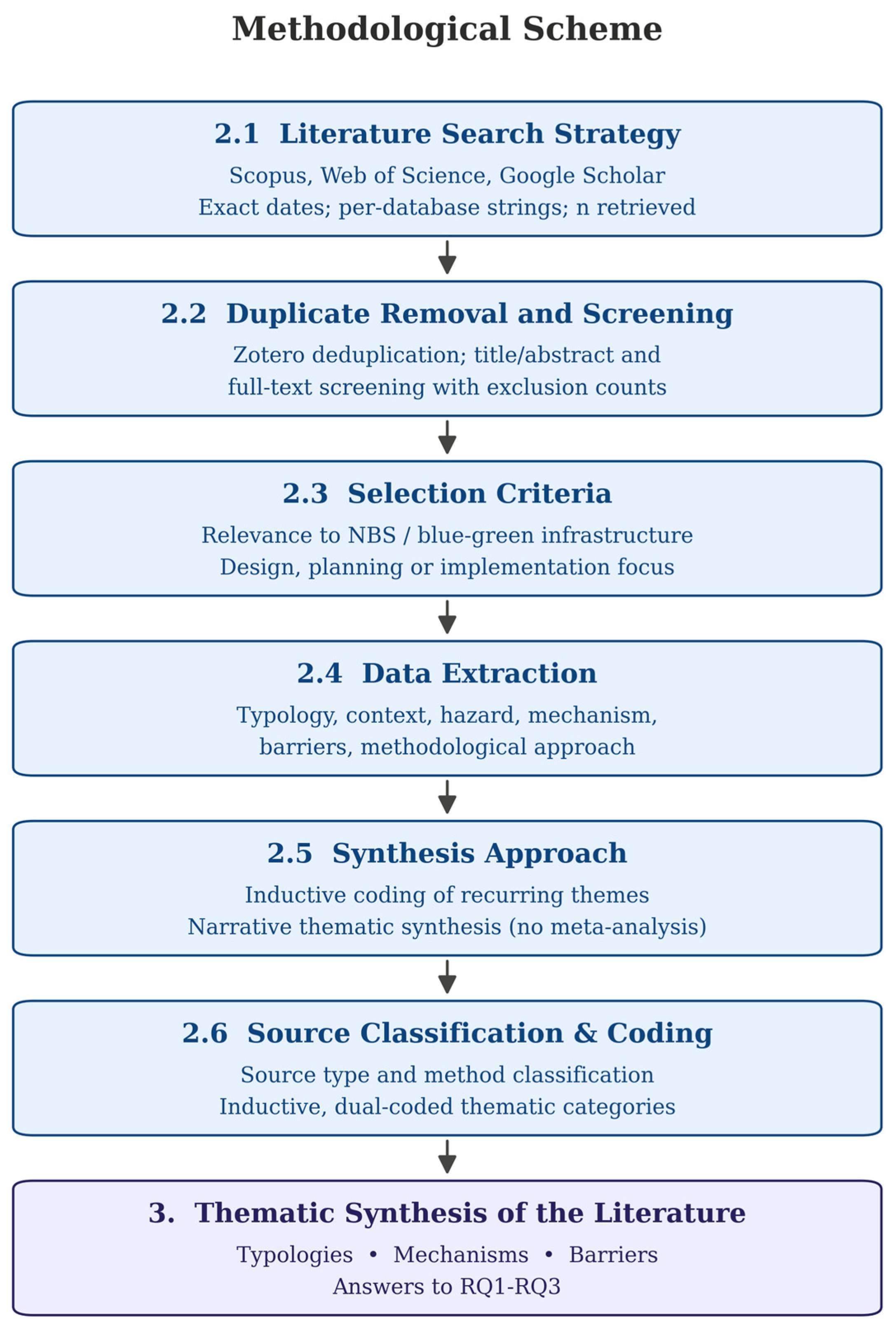
Figure 1. Methodological scheme of the literature review process.
Land 15 01736 g001
Table 1. Characteristics of the 146 included studies, coded by publication year, geographic region, NBS typology emphasis, climate hazard, spatial scale, and methodological approach.
DimensionCategoryn%
Publication year 20255537.7%
20264027.4%
20241711.6%
2020–20221510.3%
2023149.6%
Geographic regionGlobal/not region-specific10571.9%
Single-country case study3221.9%
Multi-country/regional synthesis96.2%
NBS typology emphasisCross-cutting/governance/multiple9363.7%
Wetlands/blue-green corridors1510.3%
Parks, streetscapes & GI networks1510.3%
Urban forestry96.2%
SuDS, LID & flood-focused drainage85.5%
Building-scale & emerging typologies64.1%
Climate hazardMultiple/general resilience12384.2%
Coastal/sea-level96.2%
Heat74.8%
Flooding64.1%
Drought10.7%
Spatial scaleCity7954.1%
Building/site2114.4%
Regional/national2013.7%
Multi-scale/conceptual1812.3%
Neighbourhood/street85.5%
Methodological approachEmpirical/applied study9363.7%
Conceptual/framework/narrative review3020.5%
Systematic review128.2%
Case study64.1%
Bibliometric/science-mapping32.1%
Thesis21.4%
Disclaimer/Publisher’s Note: The statements, opinions and data contained in all publications are solely those of the individual author(s) and contributor(s) and not of MDPI and/or the editor(s). MDPI and/or the editor(s) disclaim responsibility for any injury to people or property resulting from any ideas, methods, instructions or products referred to in the content.