Accessibility Evaluation and Educational Implications for Ecological Civilization Education Fields: A Case Study of the Tibet Autonomous Region, China




Abstract
1. Introduction
2. Materials and Methods
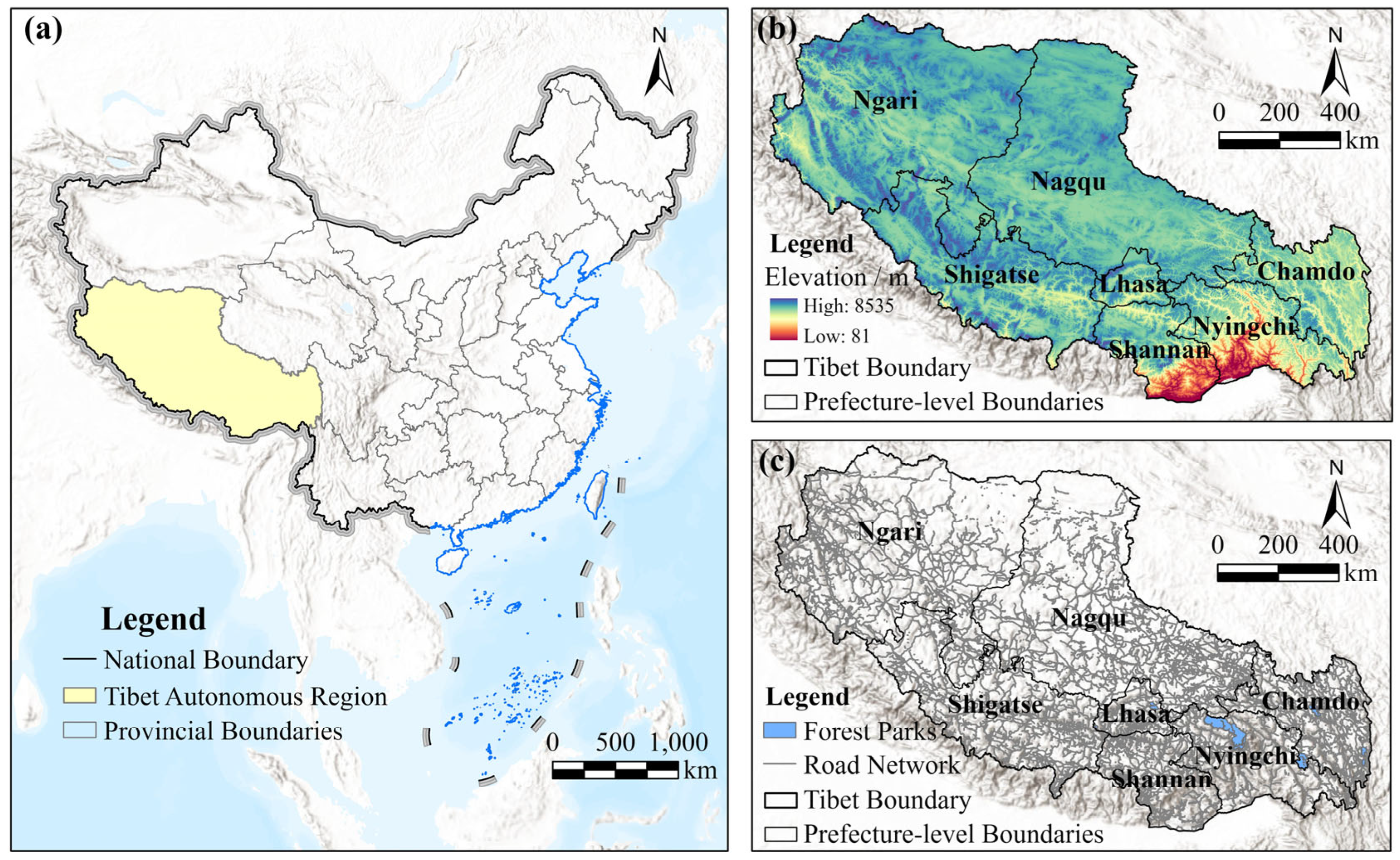
2.1. Study Area
2.2. Data Sources
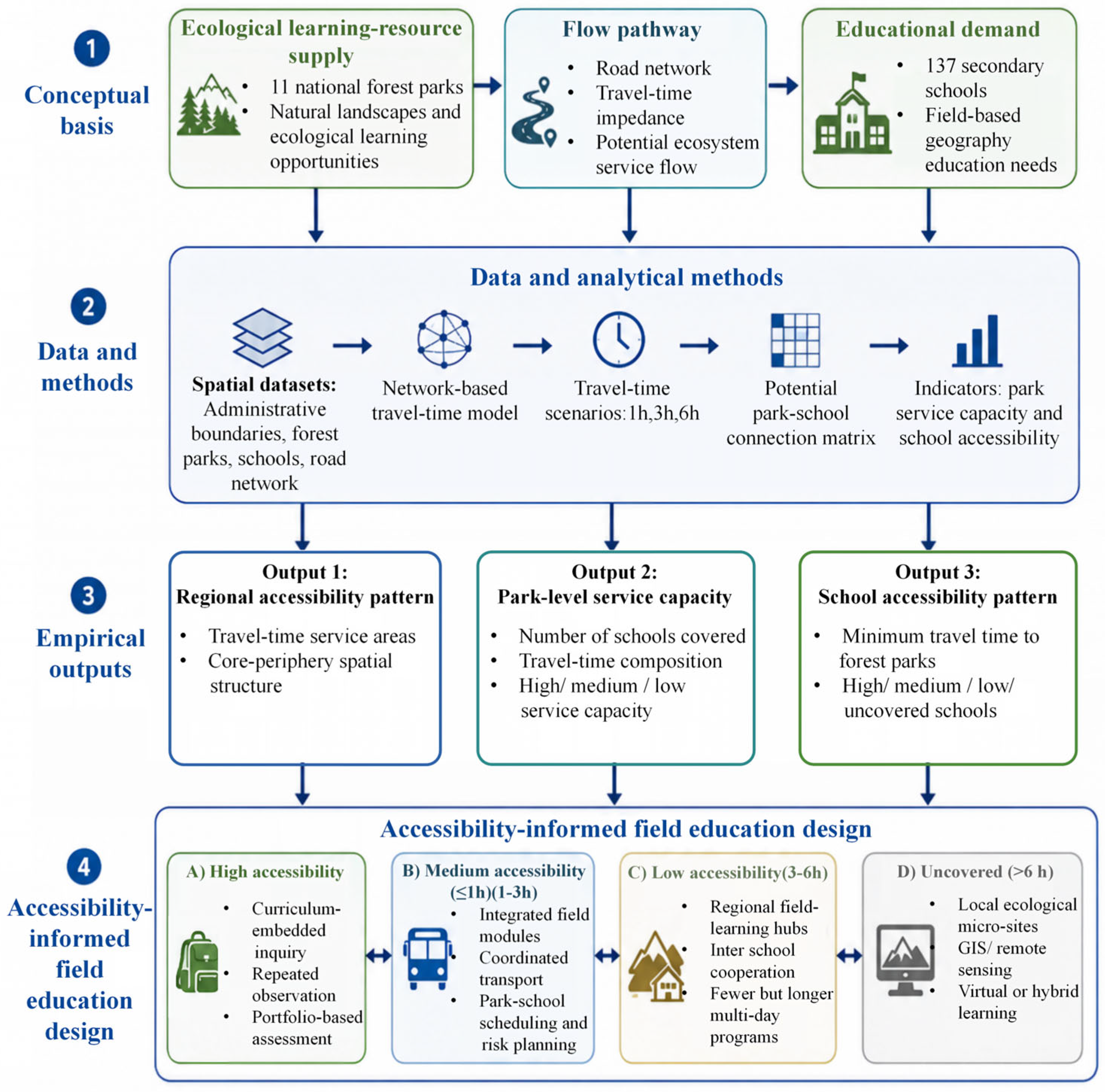
2.3. Research Framework
2.4. Methods
2.4.1. Ecosystem Service Flow and Park–School Accessibility
2.4.2. Network-Based Travel Time Accessibility Model
2.4.3. Service Area Construction
2.4.4. Educational Service Capacity of Forest Parks
2.4.5. Accessibility Evaluation of Secondary Schools
3. Results
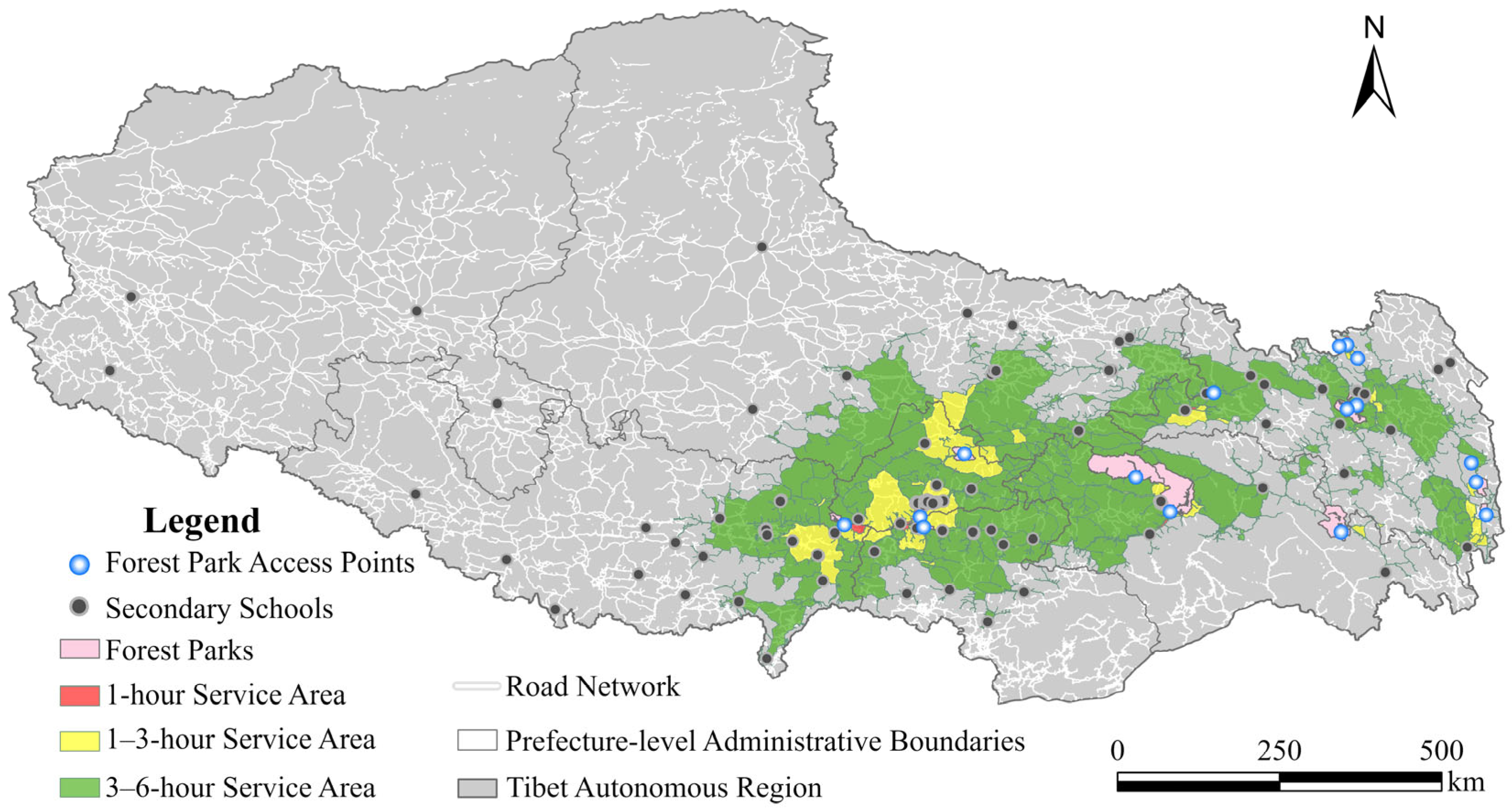
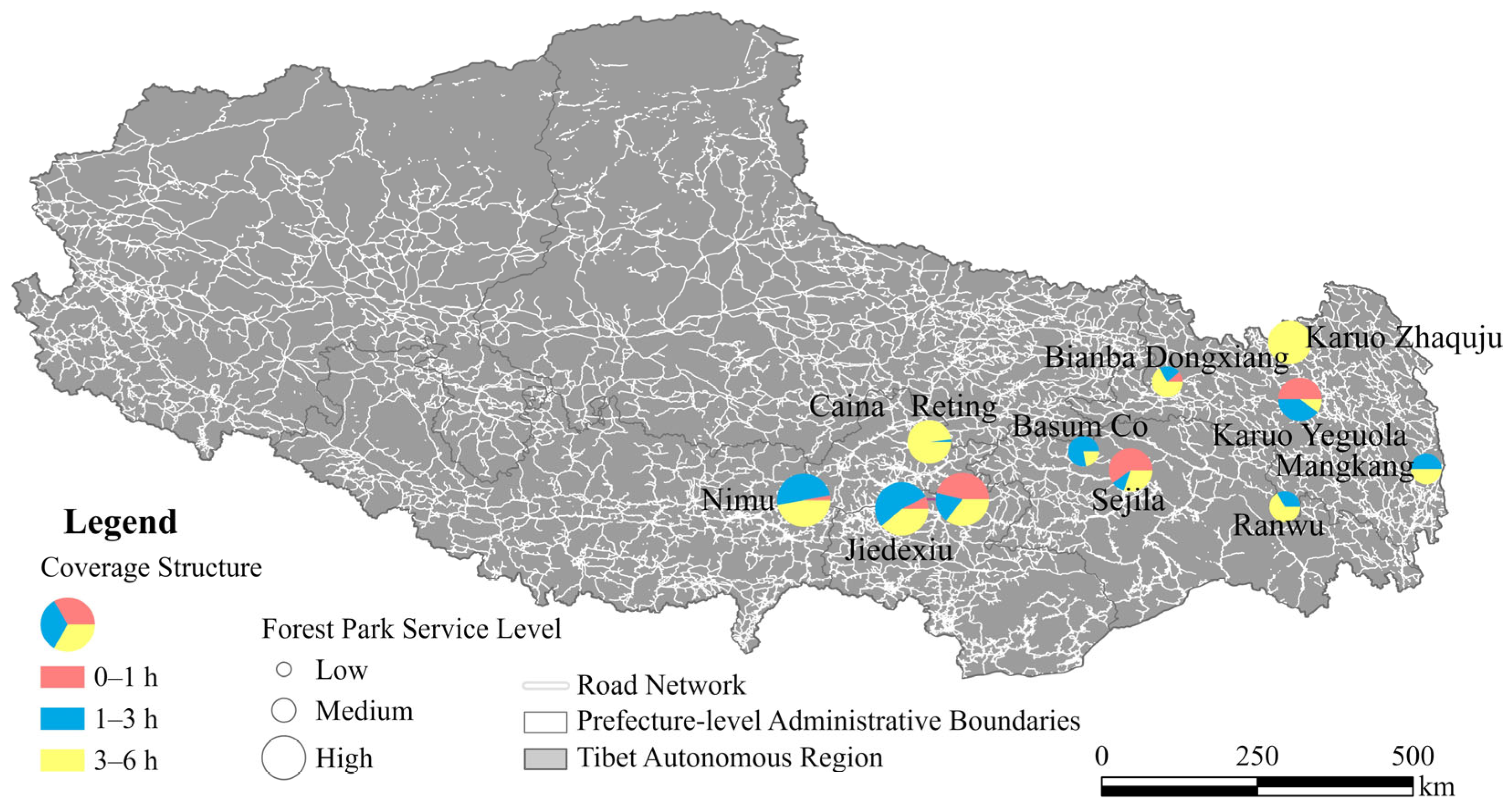
3.1. Regional Pattern of Forest Park Travel-Time Accessibility
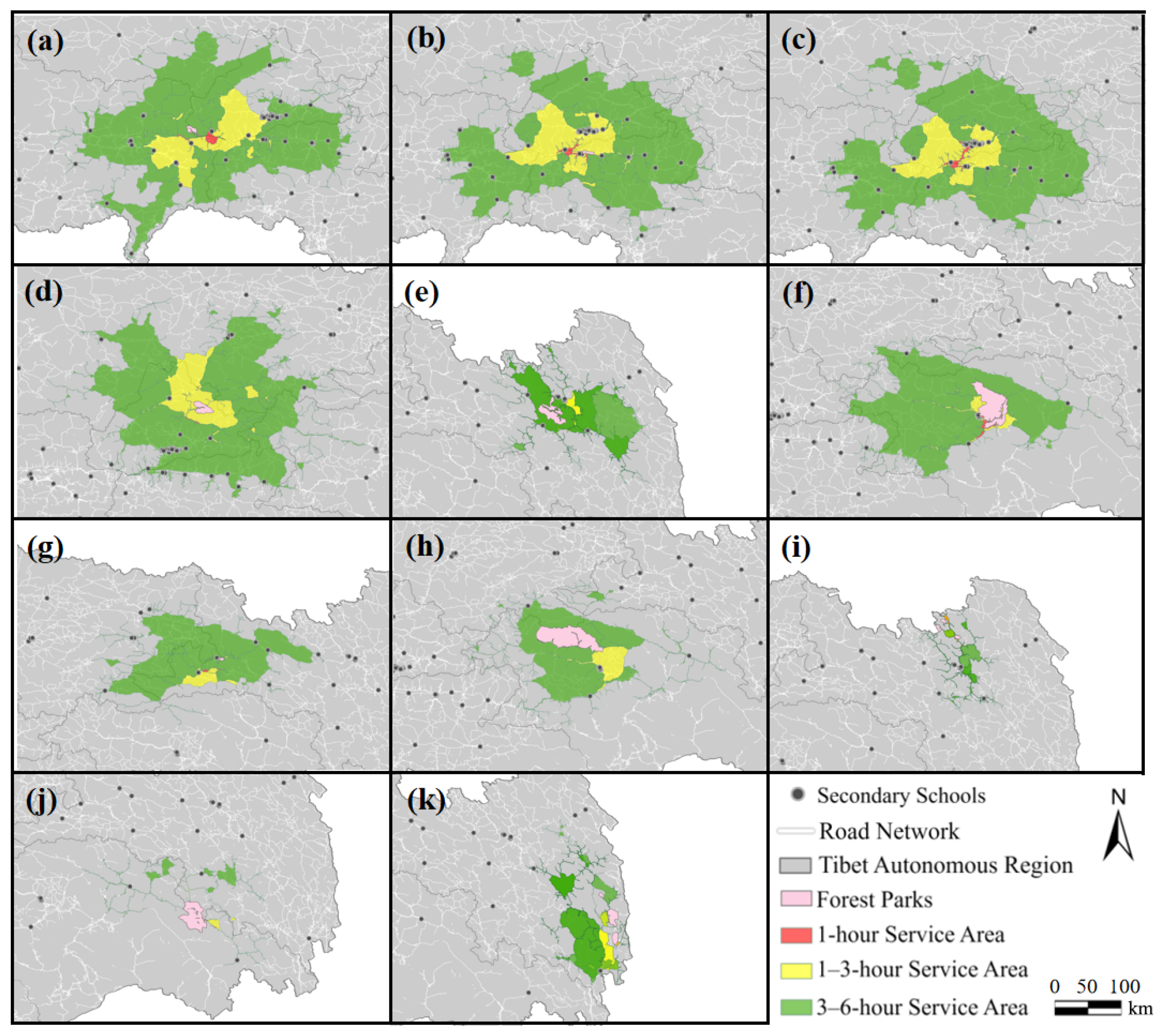
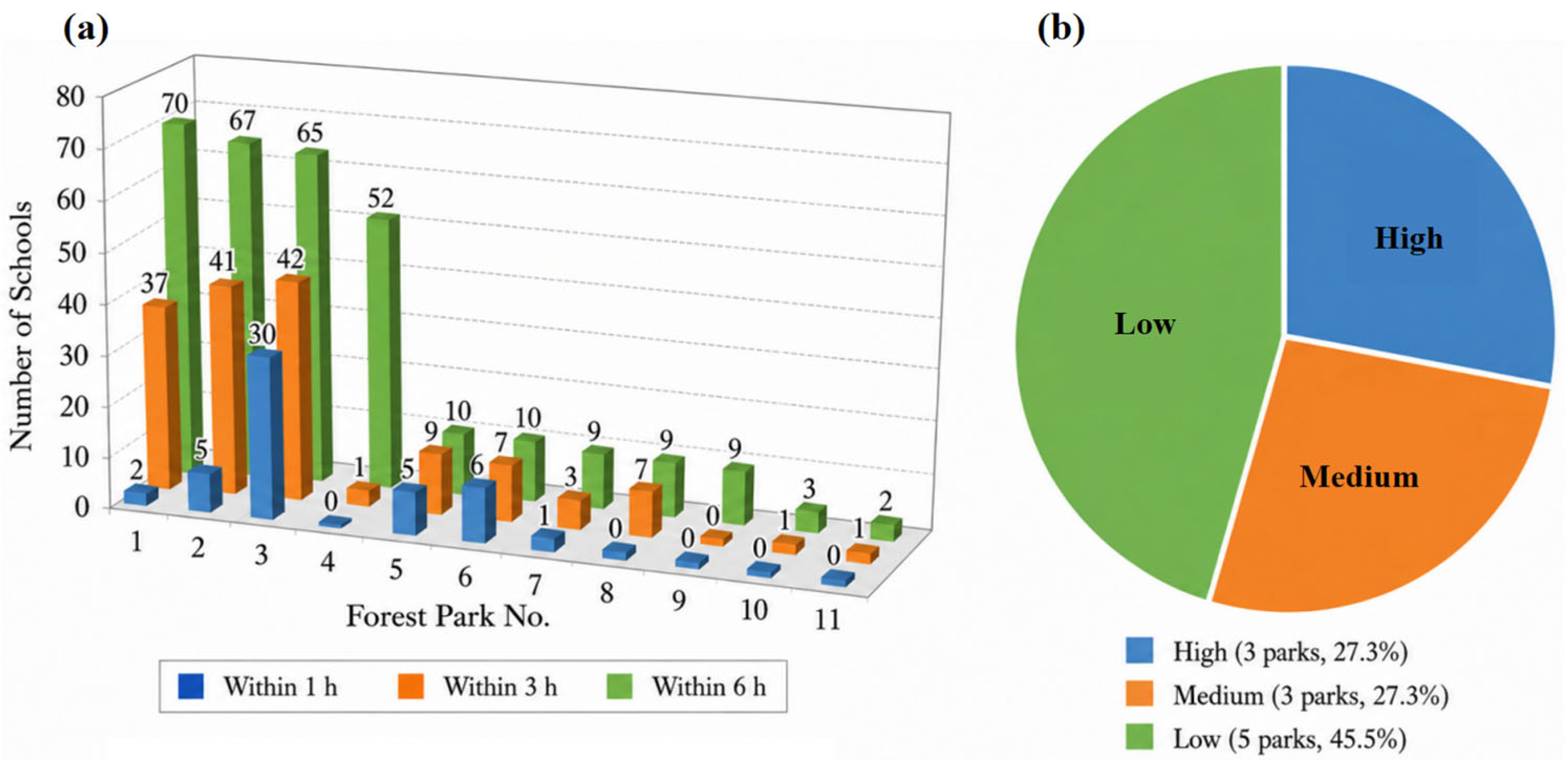
3.2. Park-Level Differences in Educational Service Capacity
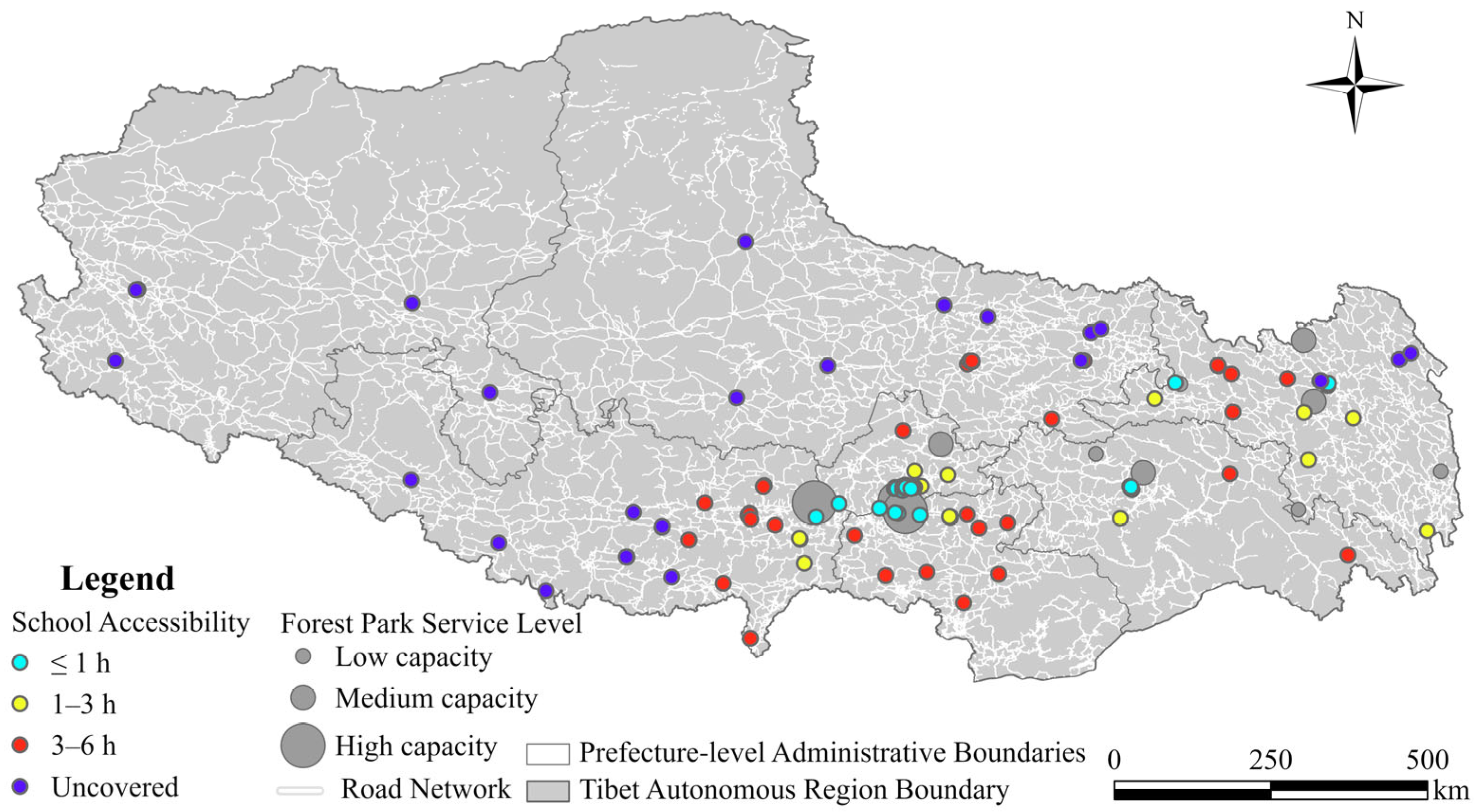
3.3. Accessibility Pattern of Secondary Schools
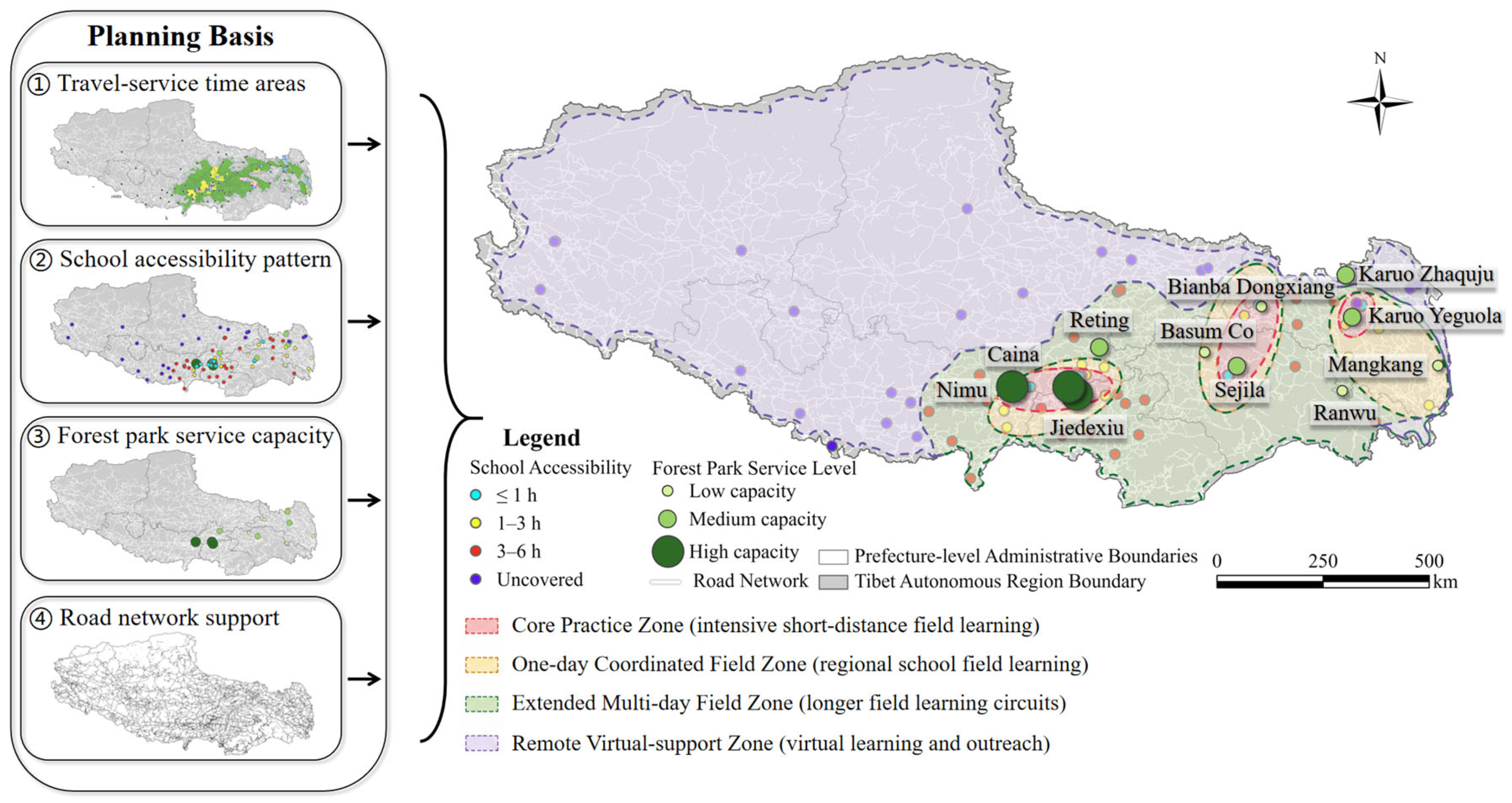
3.4. Accessibility-Informed Educational Implications and Field Education Design
4. Discussion
4.1. Spatial Inequality and Its Geographical Drivers
4.2. Interpreting Educational Accessibility Through Ecosystem Service Flows
4.3. Transferability and Implementation Conditions
4.4. Limitations and Future Research
5. Conclusions
Author Contributions
Funding
Data Availability Statement
Conflicts of Interest
References
- Zhang, D.; Peng, J.; Yang, Z. Identifying Urban Agglomeration’s Range: Integrating Clustering and Accessibility Analysis. Cities 2026, 171, 106708. [Google Scholar] [CrossRef]
- Toor, G.; Tater, N.G.; Chandra, T. Exploring Recent Trends in Integrating Urban Planning and Ecology. Environ. Dev. Sustain. 2024, 26, 19093–19111. [Google Scholar] [CrossRef]
- Li, Y.; Tang, Y.-T.; Tan-Mullins, M.; Ives, C.D. Exploring the Potential Opportunities of China’s Environmental Agenda, Ecological Civilization, on Global Sustainable Development. Sustainability 2023, 15, 5135. [Google Scholar] [CrossRef]
- Wu, M.; Liu, C.-C. What Could and Should Ecological Civilization Education Be? Sustainability 2021, 13, 11735. [Google Scholar] [CrossRef]
- Perkins, N.; Hazelton, E.; Erickson, J.; Allan, W. Place-Based Education and Geographic Information Systems: Enhancing the Spatial Awareness of Middle School Students in Maine. J. Geogr. 2010, 109, 213–218. [Google Scholar] [CrossRef]
- Mann, J.; Gray, T.; Truong, S.; Brymer, E.; Passy, R.; Ho, S.; Sahlberg, P.; Ward, K.; Bentsen, P.; Curry, C.; et al. Getting Out of the Classroom and Into Nature: A Systematic Review of Nature-Specific Outdoor Learning on School Children’s Learning and Development. Front. Public Health 2022, 10, 877058. [Google Scholar] [CrossRef] [PubMed]
- Becker, C.; Lauterbach, G.; Spengler, S.; Dettweiler, U.; Mess, F. Effects of Regular Classes in Outdoor Education Settings: A Systematic Review on Students’ Learning, Social and Health Dimensions. Int. J. Environ. Res. Public Health 2017, 14, 485. [Google Scholar] [CrossRef] [PubMed]
- Millward, A.A.; Borisenoka, I.; Bhagat, N.; LeBreton, G.T.O. Environmental Education during the COVID-19 Pandemic: Lessons from Ontario, Canada. Front. Educ. 2024, 9, 1430882. [Google Scholar] [CrossRef]
- Wu, N.; Liang, Z.; Liu, M.; Zhang, J.; Guo, Y.; Qiao, J. Regional drivers or local constraints? Spatial patterns and development pathways of specialized villages in Henan, China. J. Rural Stud. 2026, 121, 103877. [Google Scholar] [CrossRef]
- Wang, Z.; Jian, Y.; Huang, Z.; Qureshi, S.; Cheng, K.; Bai, Z.; Zhang, Q. Transforming Research on Recreational Ecosystem Services into Applications and Governance. Land 2023, 12, 509. [Google Scholar] [CrossRef]
- Mao, J.; Wang, Z.; Ding, Z. Evaluating and Identifying Influencing Factors of the Development Level of Regional Red Tourism Scenic Spots: A Case Study of the Central Plains Region. Reg. Ecol. Manag. 2026, 1, 5. [Google Scholar] [CrossRef]
- Ma, X.; Cui, F. Perceived Accessibility: Literature Review and Future Prospects. J. Transp. Land Use 2024, 17, 827–847. [Google Scholar] [CrossRef]
- Luo, W.; Chen, H.; Yang, Z.; Liu, J. Accessibility and Equity of Park Green Spaces: Considering Differences in Walking Speeds Across Age Groups. Land 2024, 13, 2240. [Google Scholar] [CrossRef]
- Wang, Z.; Liu, S.; Liu, M.; Wang, W.; Li, Y.; Fan, J.; Lin, J.; Tian, Z.; Mao, J.; Wu, G. Coupling Relationships between Water-Carbon Ecosystem Service Flows under the Integrated Perspective of “Three Waters”: A Case Study in Guizhou Province. Ecol. Front. 2025, 45, 1774–1783. [Google Scholar] [CrossRef]
- Fan, Q.; Lu, Q.; Yang, X. Spatiotemporal Assessment of Recreation Ecosystem Service Flow from Green Spaces in Zhengzhou’s Main Urban Area. Humanit. Soc. Sci. Commun. 2025, 12, 97. [Google Scholar] [CrossRef]
- Sun, X.; Liu, H.; Liao, C.; Nong, H.; Yang, P. Understanding Recreational Ecosystem Service Supply-Demand Mismatch and Social Groups’ Preferences: Implications for Urban–Rural Planning. Landsc. Urban Plan. 2024, 241, 104903. [Google Scholar] [CrossRef]
- Morse, W.C.; Cerveny, L.K.; Blahna, D.J. Coordinating and Standardizing Outdoor Recreation Supply and Demand Databases to Facilitate Management and Promote Conservation, Health, and Accessibility. J. Park Recreat. Adm. 2022, 40, 175–194. [Google Scholar] [CrossRef]
- Wang, Z.; Shi, Z.; Zhu, W.; Mao, J.; Liu, S. Policy Orientations Reshape Landscape Connectivity in Mountainous Regions: Simulation and Spatial Optimization in Funiu Mountain Area in Central China. Glob. Ecol. Conserv. 2026, 66, e04105. [Google Scholar] [CrossRef]
- Zhou, C.; Zhang, D.; He, X. Transportation Accessibility Evaluation of Educational Institutions Conducting Field Environmental Education Activities in Ecological Protection Areas: A Case Study of Zhuhai City. Sustainability 2021, 13, 9392. [Google Scholar] [CrossRef]
- Mao, J.; Liu, Y.; Wang, C.; Wu, H.; Sha, L.; Wang, Z. Mapping ecological civilization education from a geographical education perspective: Knowledge structure, thematic evolution, and pedagogical implications. J. Eur. Acad. Open Univ. 2026, 2. [Google Scholar] [CrossRef]
- Lu, T.; Li, C.; Zhou, W.; Liu, Y. Fuzzy Assessment of Ecological Security on the Qinghai–Tibet Plateau Based on Pressure–State–Response Framework. Remote Sens. 2023, 15, 1293. [Google Scholar] [CrossRef]
- Liu, L.; Zhang, S.; Liu, W.; Qu, H.; Guo, L. Spatiotemporal Changes and Simulation Prediction of Ecological Security Pattern on the Qinghai–Tibet Plateau Based on Deep Learning. Land 2024, 13, 1073. [Google Scholar] [CrossRef]
- Gao, X.; Sun, D. Transport Accessibility and Social Demand: A Case Study of the Tibetan Plateau. PLoS ONE 2021, 16, e0257028. [Google Scholar] [CrossRef] [PubMed]
- Wu, S.; Liu, K.; Zhang, W.; Dou, Y.; Chen, Y.; Zhang, T.; Li, D. An Integrated Analysis Framework of Supply, Demand, Flow, and Use to Better Understand Realized Ecosystem Services. Ecosyst. Serv. 2024, 69, 101649. [Google Scholar] [CrossRef]
- Burkhard, B.; Kandziora, M.; Hou, Y.; Müller, F. Ecosystem Service Potentials, Flows and Demands—Concepts for Spatial Localisation, Indication and Quantification. Landsc. Online 2014, 34, 1–32. [Google Scholar] [CrossRef]
- Higgins, C.; Palm, M.; DeJohn, A.; Xi, L.; Vaughan, J.; Farber, S.; Widener, M.; Miller, E. Calculating Place-Based Transit Accessibility: Methods, Tools and Algorithmic Dependence. J. Transp. Land Use 2022, 15, 95–116. [Google Scholar] [CrossRef]
- Delamater, P.L.; Messina, J.P.; Shortridge, A.M.; Grady, S.C. Measuring Geographic Access to Health Care: Raster and Network-Based Methods. Int. J. Health Geogr. 2012, 11, 15. [Google Scholar] [CrossRef] [PubMed]
- Florath, J.; Chanussot, J.; Keller, S. Road Accessibility during Natural Hazards Based on Volunteered Geographic Information Data and Network Analysis. ISPRS Int. J. Geo-Inf. 2024, 13, 107. [Google Scholar] [CrossRef]
- Liu, Y.; Gu, H.; Shi, Y. Spatial Accessibility Analysis of Medical Facilities Based on Public Transportation Networks. Int. J. Environ. Res. Public Health 2022, 19, 16224. [Google Scholar] [CrossRef] [PubMed]
- Wang, Z.; Shen, X.; Mao, J.; Yao, Z.; Liu, S. Spatiotemporal evolution and driving factors of land economic density at township scale: A case study of Anyang City, China. Land 2025, 14, 2227. [Google Scholar] [CrossRef]
- Kelobonye, K.; Zhou, H.; McCarney, G.; Xia, J. Measuring the Accessibility and Spatial Equity of Urban Services under Competition Using the Cumulative Opportunities Measure. J. Transp. Geogr. 2020, 85, 102706. [Google Scholar] [CrossRef]
- Yang, Y.; He, R.; Tian, G.; Shi, Z.; Wang, X.; Fekete, A. Equity Study on Urban Park Accessibility Based on Improved 2SFCA Method in Zhengzhou, China. Land 2022, 11, 2045. [Google Scholar] [CrossRef]
- Meena, D.K.; Tripathi, R.; Agrawal, S. An Evaluation of Primary Schools and Its Accessibility Using GIS Techniques: A Case Study of Prayagraj District, India. GeoJournal 2023, 88, 1921–1951. [Google Scholar] [CrossRef] [PubMed]
- Jiang, J.; Wang, Z.; Yong, Z.; He, J.; Yang, Y.; Zhang, Y. Spatial Distribution and Accessibility Analysis of Primary School Facilities in Mega Cities: A Case Study of Chengdu. Sustainability 2024, 16, 723. [Google Scholar] [CrossRef]
- Sakti, A.D.; Rahadianto, M.A.E.; Pradhan, B.; Muhammad, H.N.; Andani, I.G.A.; Sarli, P.W.; Abdillah, M.R.; Anggraini, T.S.; Purnomo, A.D.; Ridwana, R.; et al. School Location Analysis by Integrating the Accessibility, Natural and Biological Hazards to Support Equal Access to Education. ISPRS Int. J. Geo-Inf. 2021, 11, 12. [Google Scholar] [CrossRef]
- Ellington, A.; Prado, C. Connecting Schools and Communities: A Look at Place-Based Learning and Equitable Access in SF Bay Area Outdoor Environmental Education. Environ. Educ. Res. 2024, 30, 1327–1347. [Google Scholar] [CrossRef]
- Villamagna, A.M.; Angermeier, P.L.; Bennett, E.M. Capacity, Pressure, Demand, and Flow: A Conceptual Framework for Analyzing Ecosystem Service Provision and Delivery. Ecol. Complex. 2013, 15, 114–121. [Google Scholar] [CrossRef]
- Mead, C.; Buxner, S.; Bruce, G.; Taylor, W.; Semken, S.; Anbar, A.D. Immersive, Interactive Virtual Field Trips Promote Science Learning. J. Geosci. Educ. 2019, 67, 131–142. [Google Scholar] [CrossRef]



| No. | Forest Park | Schools Within 1 h | Schools Within 3 h | Schools Within 6 h | Service Capacity Level |
|---|---|---|---|---|---|
| 1 | Tibet Nimu National Forest Nature Park | 2 | 37 | 70 | High |
| 2 | Tibet Jiedexiu National Forest Nature Park | 5 | 41 | 67 | High |
| 3 | Tibet Caina Autonomous Region-Level Forest Nature Park | 30 | 42 | 65 | High |
| 4 | Tibet Reting National Forest Nature Park | 0 | 1 | 52 | Medium |
| 5 | Tibet Karuo Yeguola Autonomous Region-Level Forest Nature Park | 5 | 9 | 10 | Medium |
| 6 | Tibet Sejila National Forest Nature Park | 6 | 7 | 10 | Medium |
| 7 | Tibet Bianba Dongxiang Autonomous Region-Level Forest Nature Park | 1 | 3 | 9 | Low |
| 8 | Tibet Basum Co National Forest Nature Park | 0 | 7 | 9 | Low |
| 9 | Tibet Karuo Zhaquju Autonomous Region-Level Forest Nature Park | 0 | 0 | 9 | Low |
| 10 | Tibet Ranwu National Forest Nature Park | 0 | 1 | 3 | Low |
| 11 | Tibet Mangkang Autonomous Region-Level Forest Nature Park | 0 | 1 | 2 | Low |
| Accessibility Level | Travel Time | Educational Meaning | Suggested Teaching Strategy |
|---|---|---|---|
| High | ≤1 h | Routine or half-day use potentially feasible | Curriculum-embedded inquiry; repeated observation; portfolio assessment |
| Medium | 1–3 h | Full-day to extended-day/overnight planning, depending on exact time and logistics | Integrated field module; coordinated transport; park–school scheduling and risk planning |
| Low | 3–6 h | Multi-day or regional-hub field learning | Inter-school consortium; pooled costs; fewer, longer thematic programs; hybrid preparation and follow-up |
| Uncovered | >6 h/not covered | Direct forest-park access highly constrained | Local ecological micro-sites; virtual fieldwork; GIS/remote sensing; remote park interpretation |
Disclaimer/Publisher’s Note: The statements, opinions and data contained in all publications are solely those of the individual author(s) and contributor(s) and not of MDPI and/or the editor(s). MDPI and/or the editor(s) disclaim responsibility for any injury to people or property resulting from any ideas, methods, instructions or products referred to in the content. |
© 2026 by the authors. Licensee MDPI, Basel, Switzerland. This article is an open access article distributed under the terms and conditions of the Creative Commons Attribution (CC BY) license.
Share and Cite
Mao, J.; Wang, Z.; Liu, S. Accessibility Evaluation and Educational Implications for Ecological Civilization Education Fields: A Case Study of the Tibet Autonomous Region, China. Land 2026, 15, 1389. https://doi.org/10.3390/land15081389
Mao J, Wang Z, Liu S. Accessibility Evaluation and Educational Implications for Ecological Civilization Education Fields: A Case Study of the Tibet Autonomous Region, China. Land. 2026; 15(8):1389. https://doi.org/10.3390/land15081389
Chicago/Turabian StyleMao, Jiayuan, Zechen Wang, and Shiliang Liu. 2026. "Accessibility Evaluation and Educational Implications for Ecological Civilization Education Fields: A Case Study of the Tibet Autonomous Region, China" Land 15, no. 8: 1389. https://doi.org/10.3390/land15081389
APA StyleMao, J., Wang, Z., & Liu, S. (2026). Accessibility Evaluation and Educational Implications for Ecological Civilization Education Fields: A Case Study of the Tibet Autonomous Region, China. Land, 15(8), 1389. https://doi.org/10.3390/land15081389