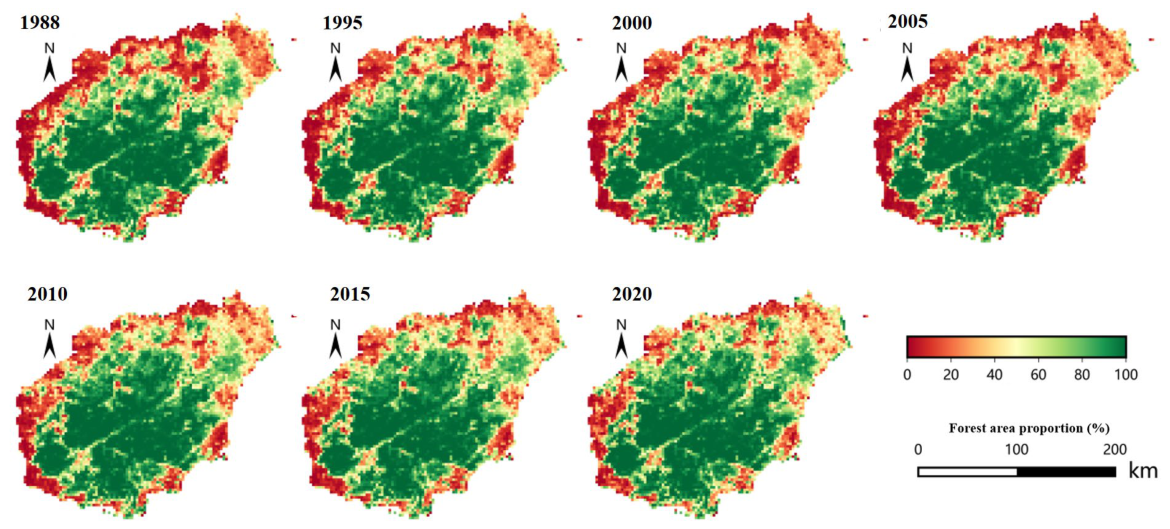
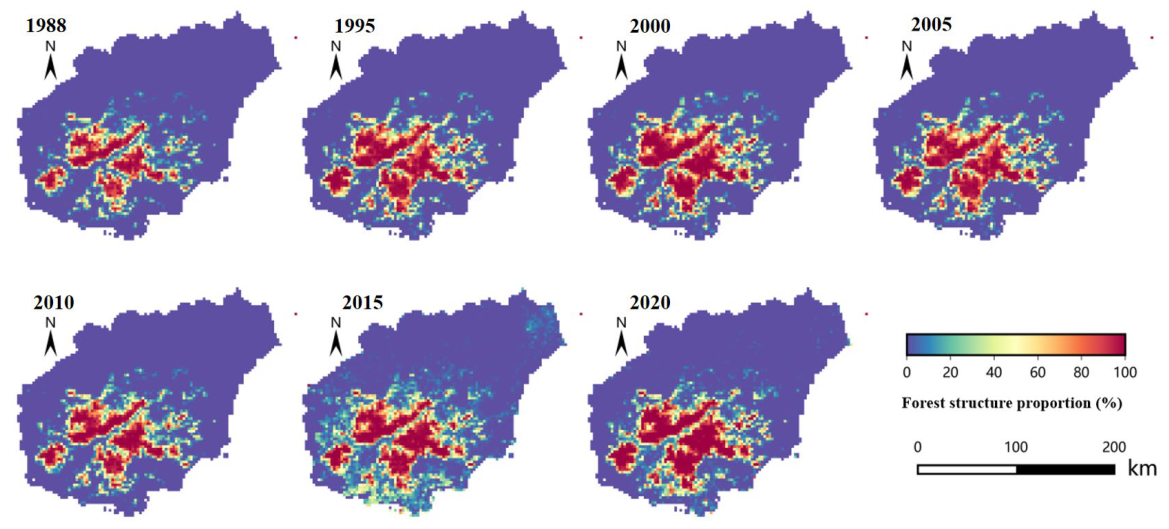
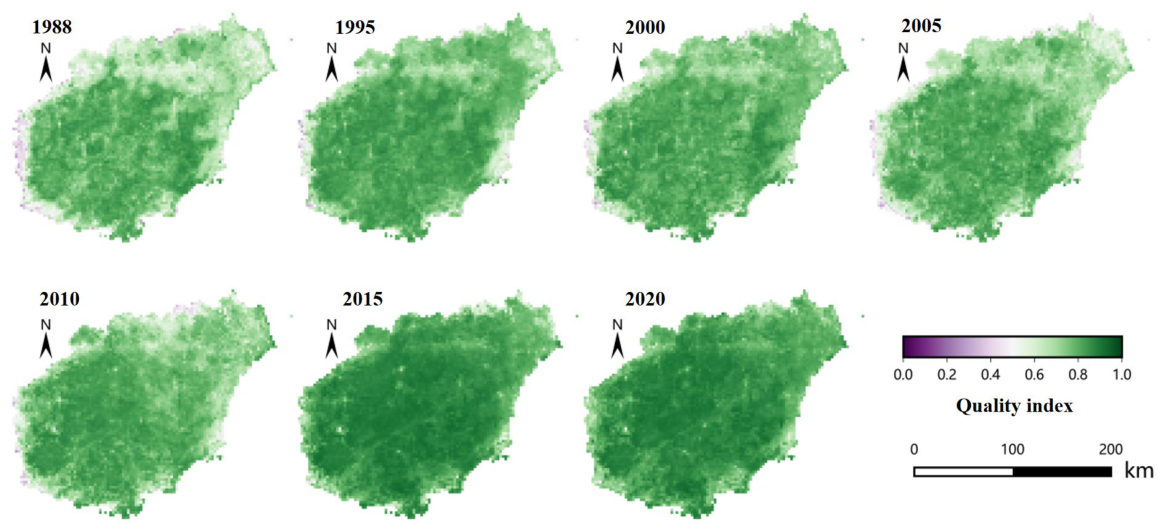
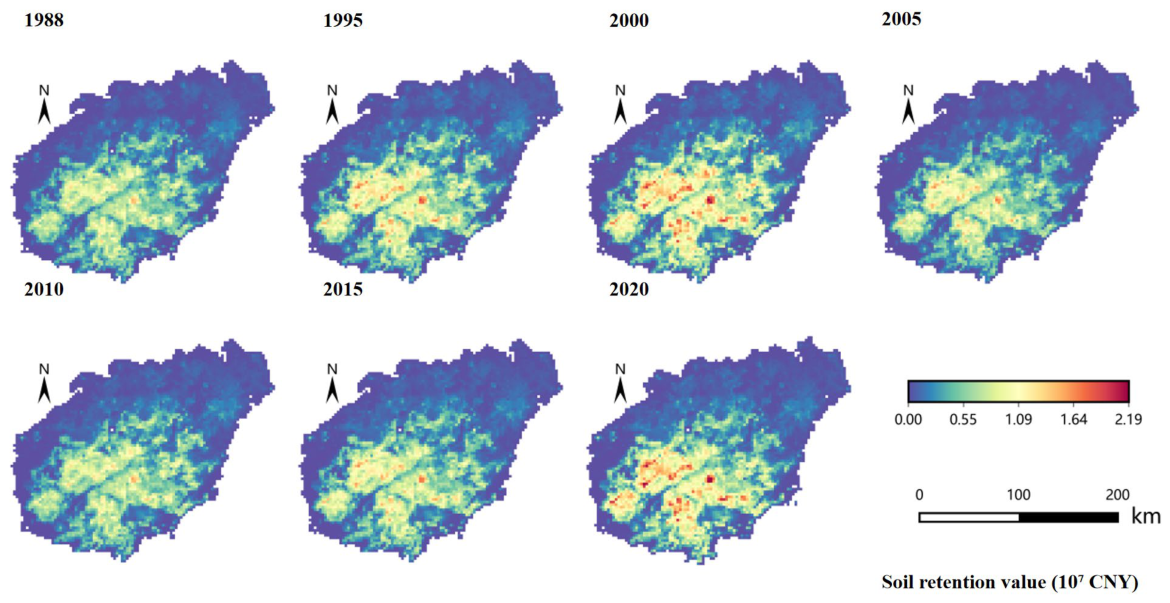
Forest Transition and Its Ecological and Environmental Effects in Hainan, China


Abstract
1. Introduction
2. Materials and Methods
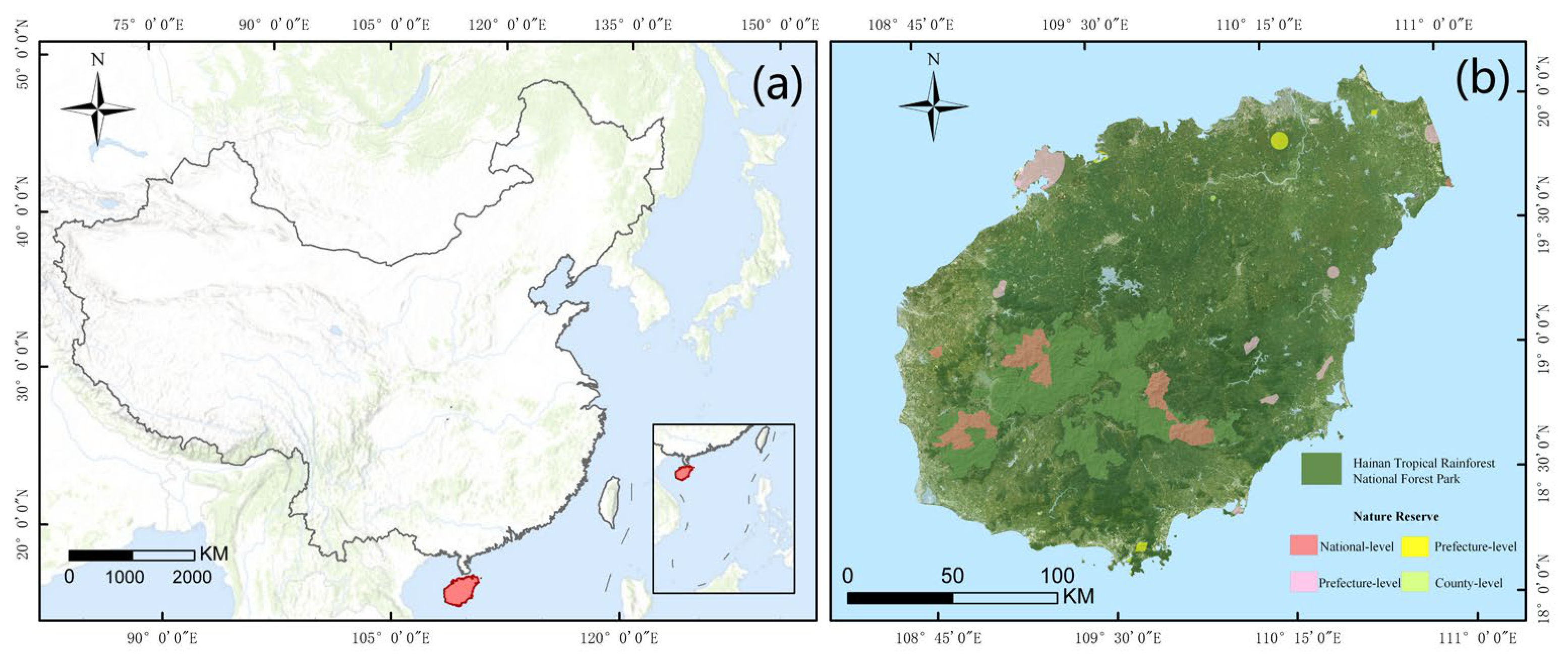
2.1. Study Area
2.2. Data Sources
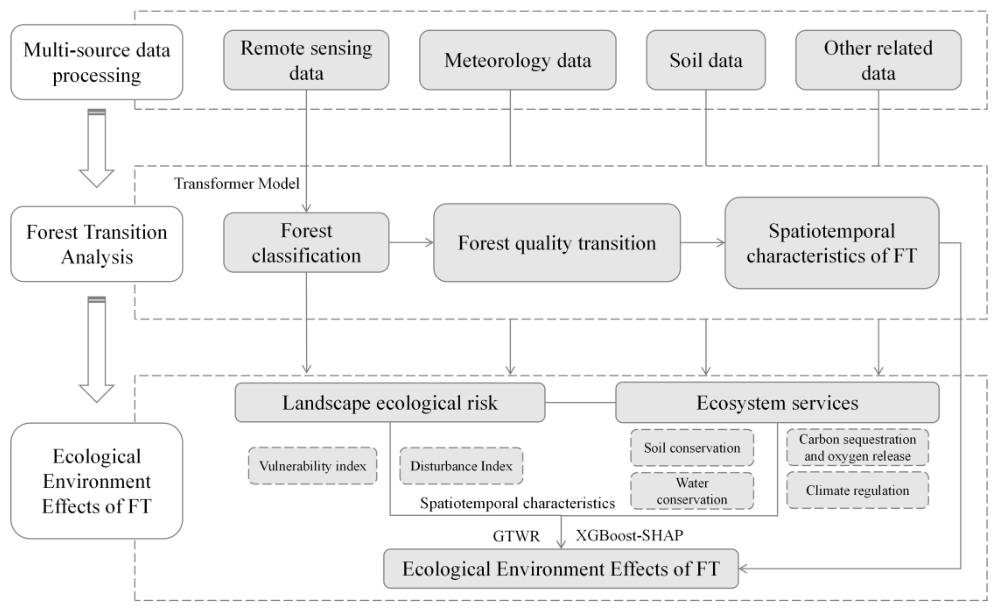
2.3. Research Framework
2.4. Research Methodology
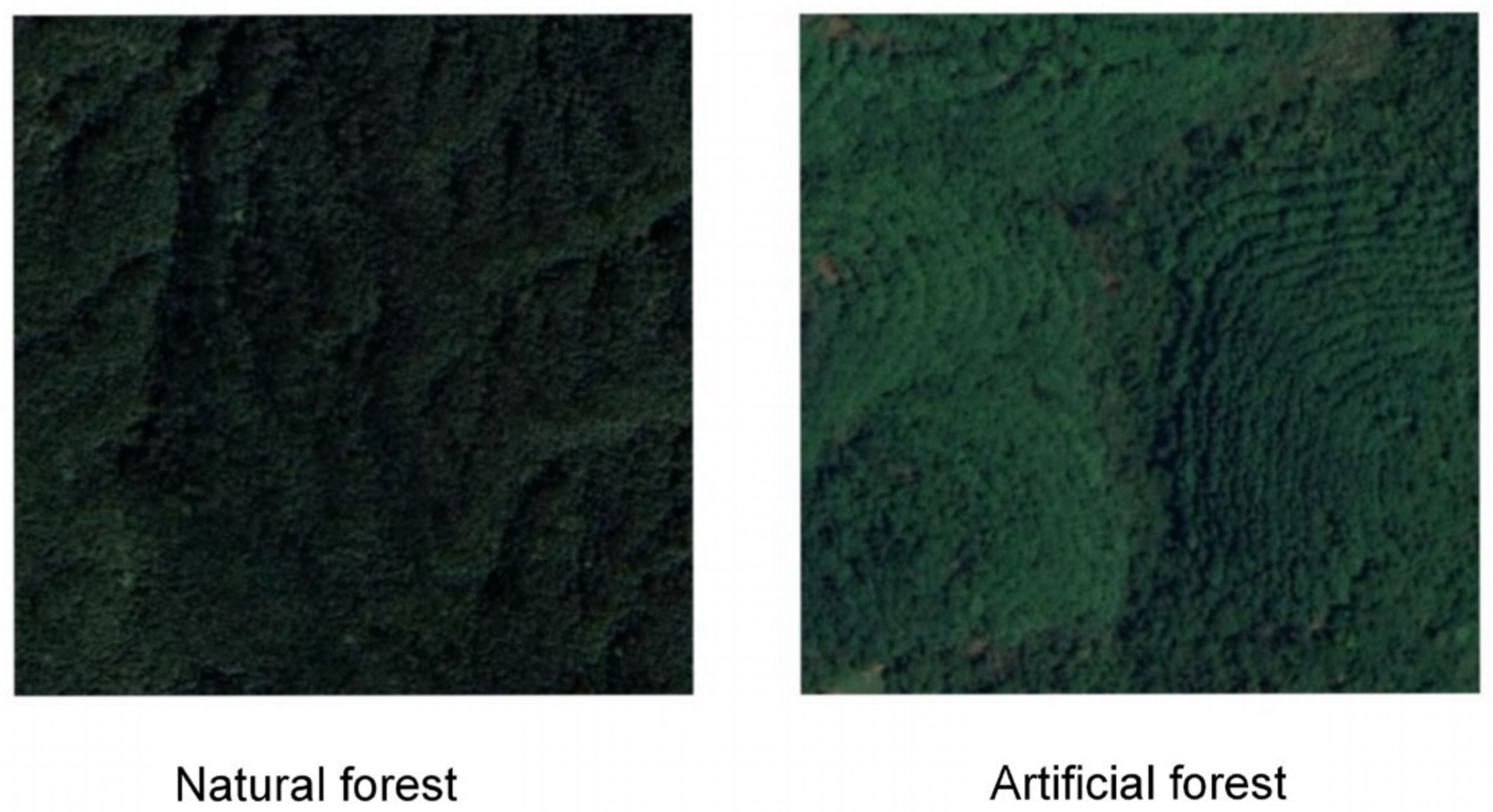
2.4.1. Transformer-Based Forest Image Reclassification
2.4.2. Landscape Ecological Risk Assessment
- (1)
- Landscape Ecological Risk Index
- (2)
- Landscape Disturbance Index
- (3)
- Landscape vulnerability index
2.4.3. Quantification and Valuation of Ecosystem Services
- (1)
- Soil retention
- (2)
- Water conservation
- (3)
- Carbon sequestration and oxygen release
- (4)
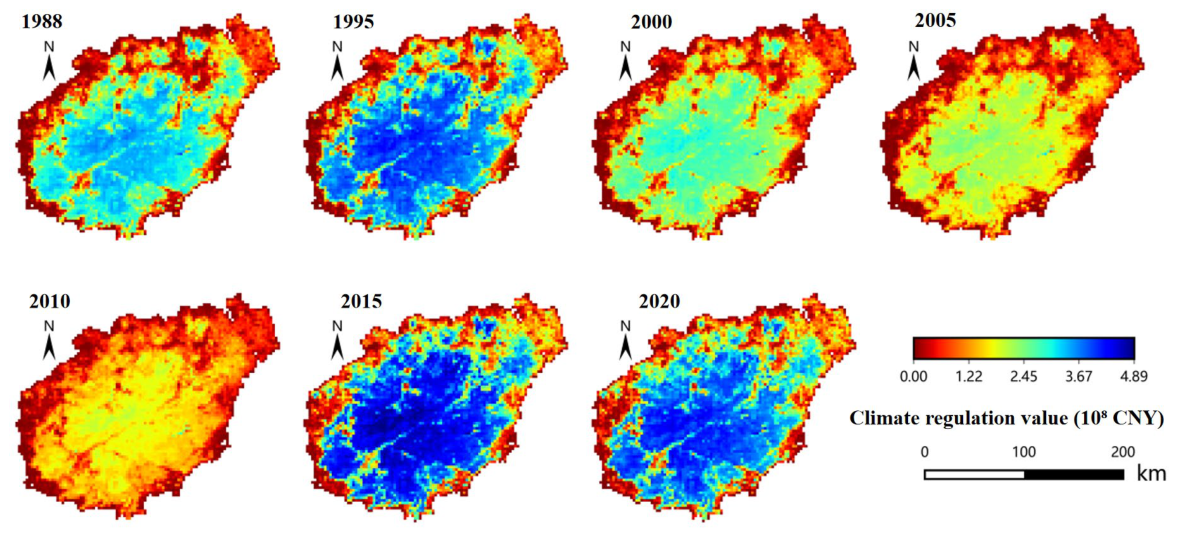
- Climate regulation
- (5)
- Total ecosystem service value
2.4.4. Geographically and Temporally Weighted Regression
2.4.5. Pixel-Level Net Effect Decomposition with XGBoost–SHAP
3. Results
3.1. Classification Results and Accuracy Validation of Plantations and Natural Forests
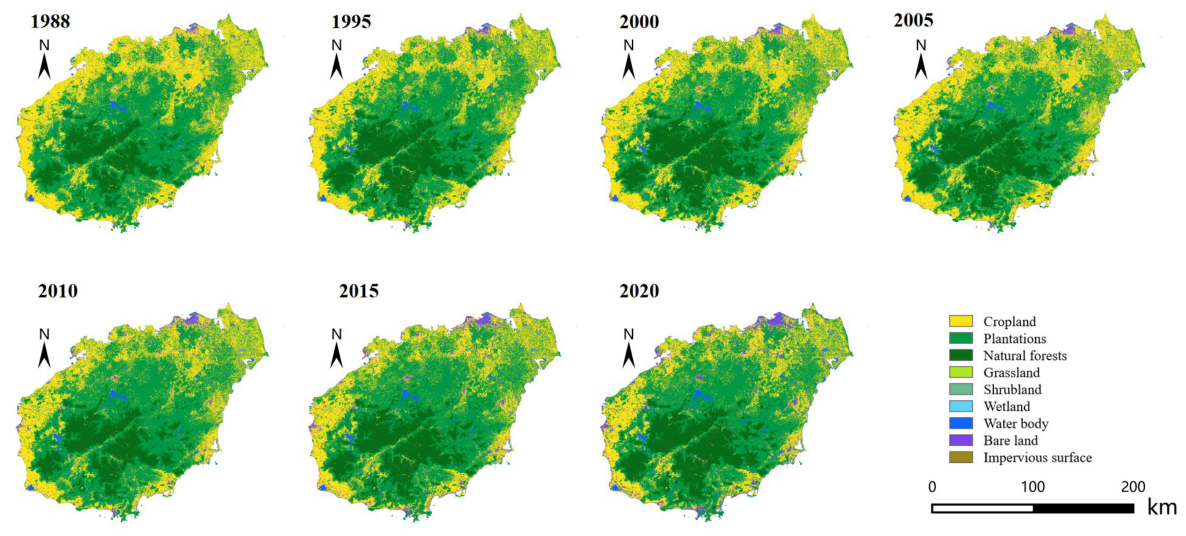
3.2. Analysis of Forest Transition Characteristics in Hainan Province
3.2.1. Analysis of the Evolution of Quantity Characteristics During Forest Transition
3.2.2. Analysis of the Evolution of Structure Characteristics During Forest Transition
3.2.3. Analysis of the Evolution of Quality Characteristics During Forest Transition
3.3. Landscape Ecological Risk Dynamics in Hainan Province Under Forest Transition
3.3.1. Overall Level and Grade Structure Characteristics of Landscape Ecological Risk
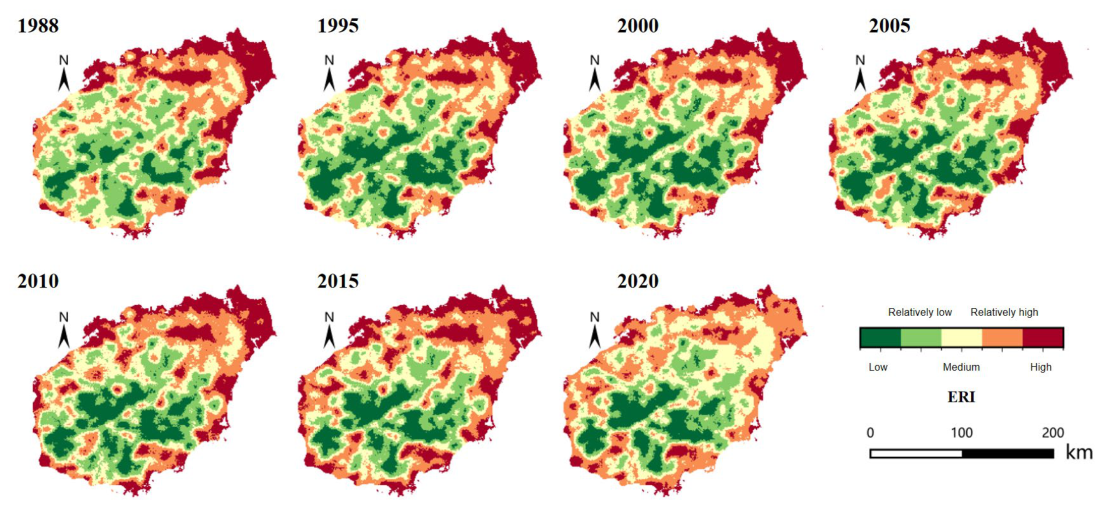
3.3.2. Spatial Pattern of Landscape Ecological Risk in Hainan Province
3.4. Ecosystem Service Functions and Value Dynamics in Hainan Province
3.4.1. Soil Retention Service
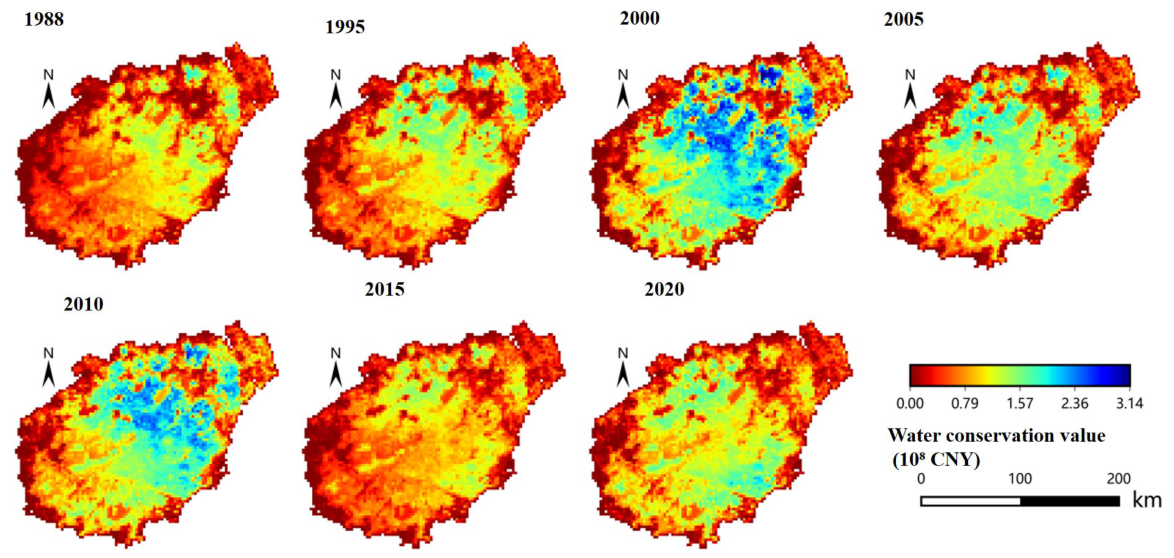
3.4.2. Water Conservation Service
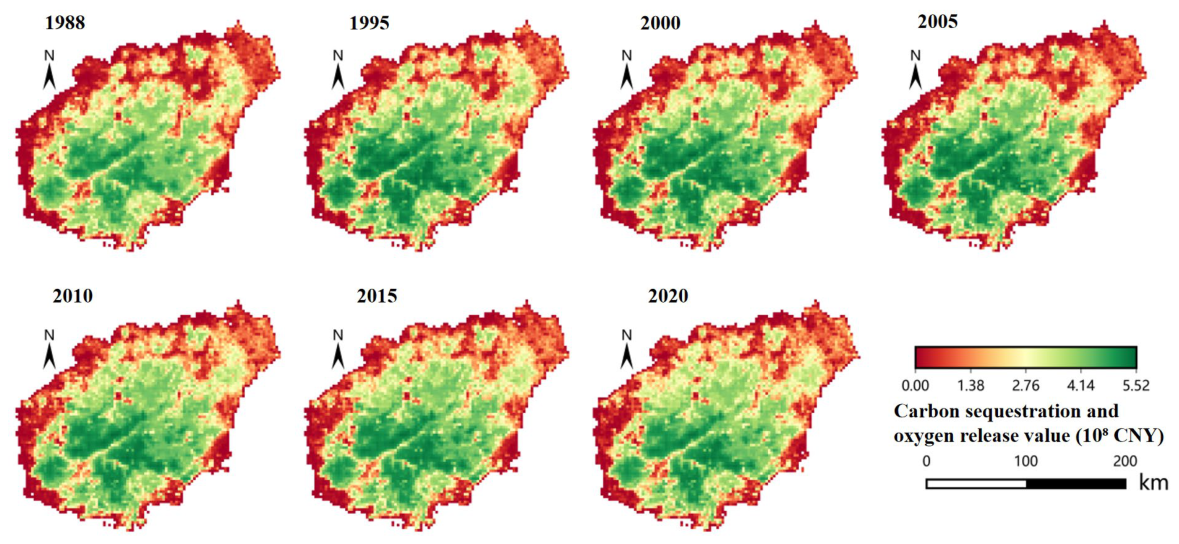
3.4.3. Carbon Sequestration and Oxygen Release Service
3.4.4. Climate Regulation Service
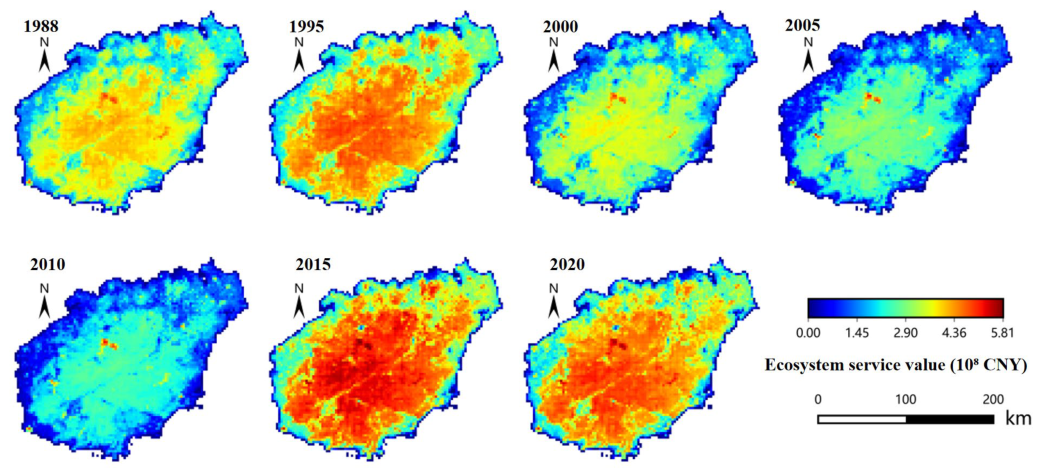
3.4.5. Total Ecosystem Service Value
3.5. Analysis of the Eco-Environmental Effects of Forest Transition in Hainan Province
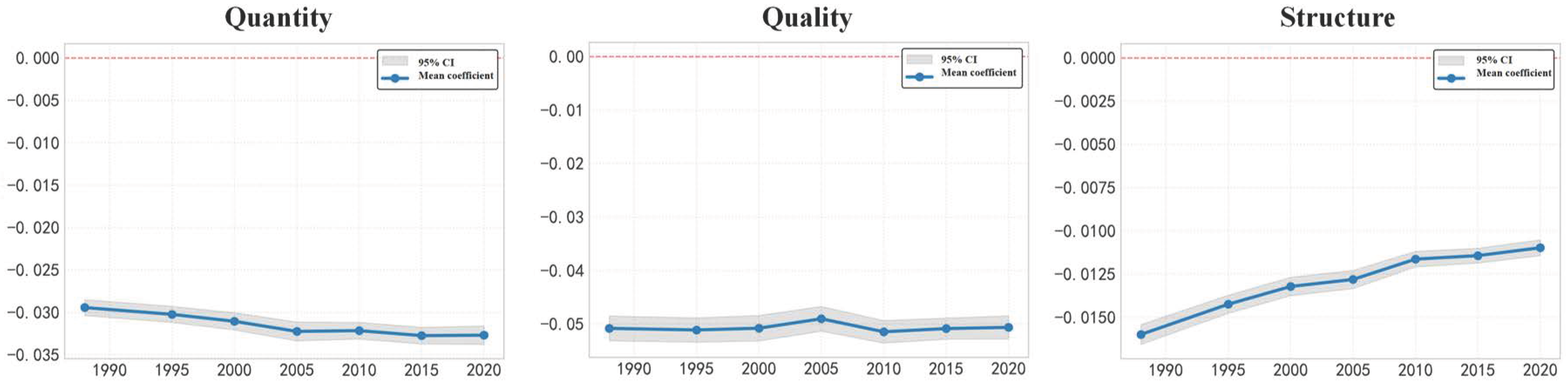
3.5.1. Relationship Between Forest Transition and Ecological Risk
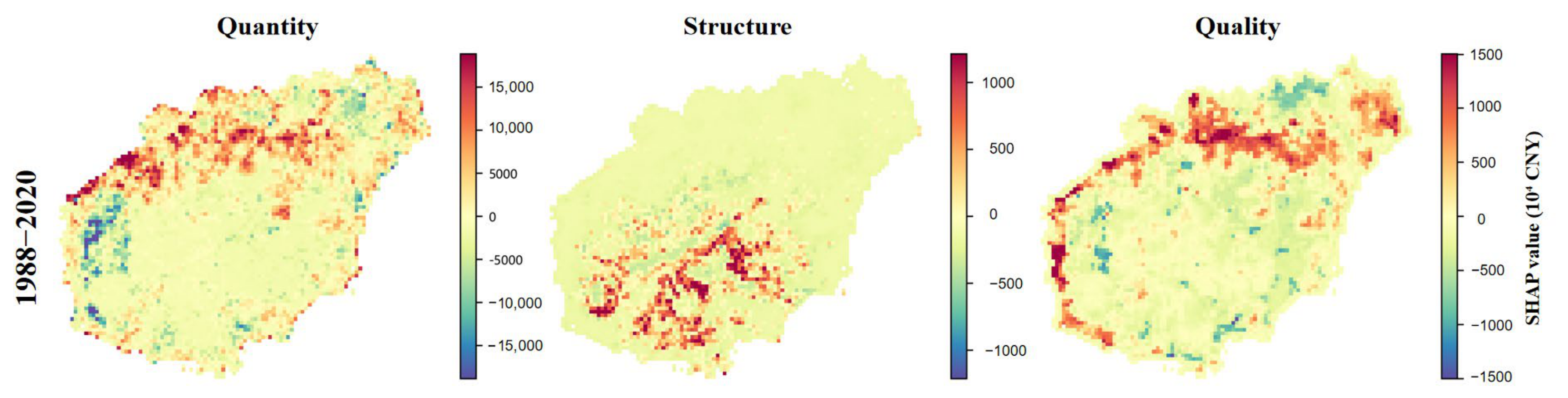
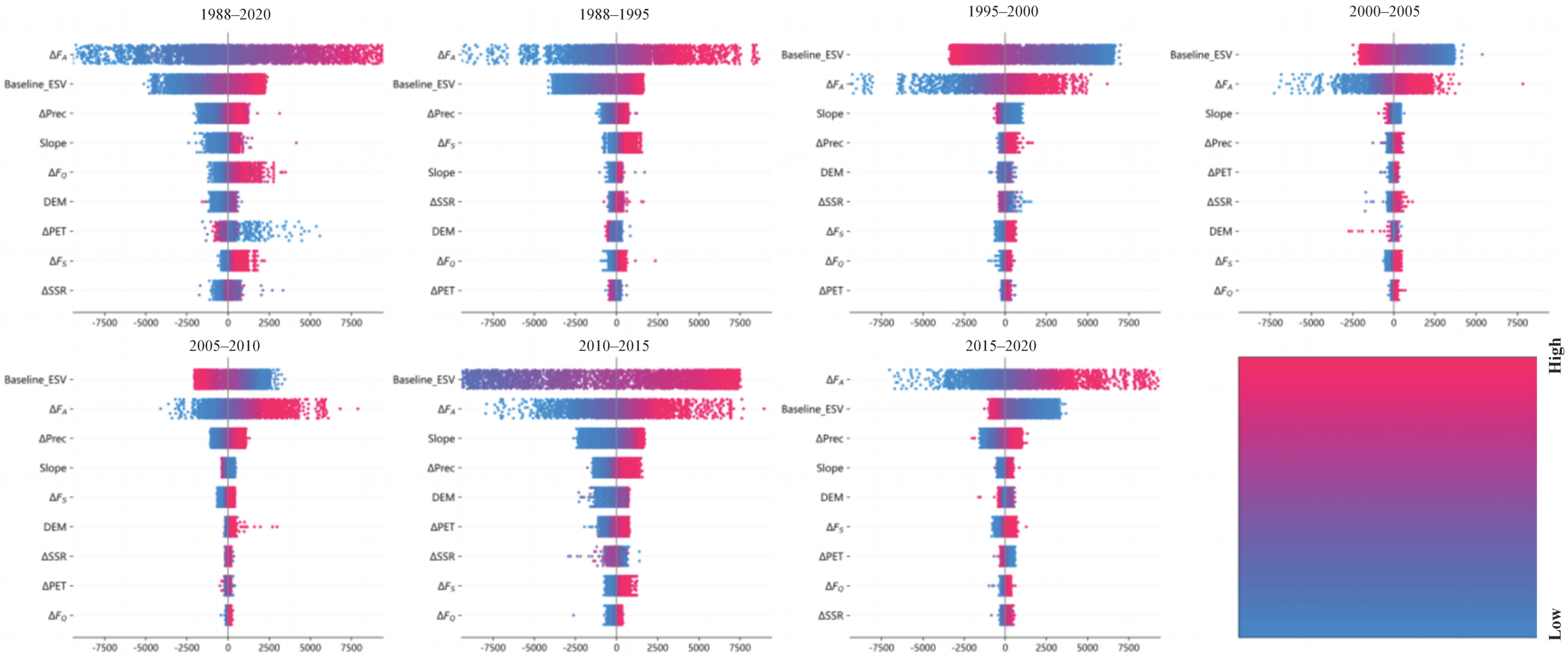
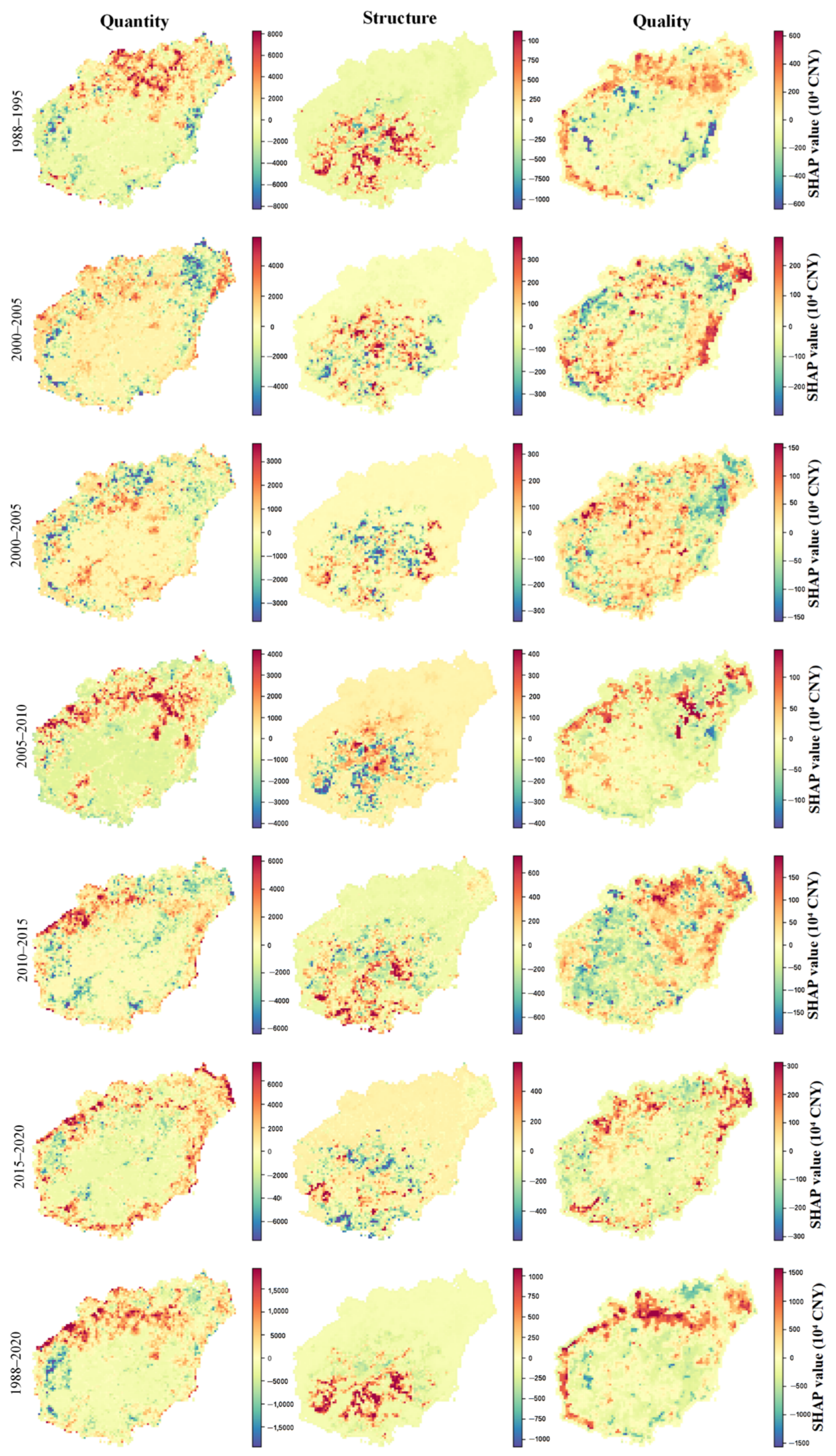
3.5.2. Spatiotemporal Effects of Forest Transition on Ecosystem Service Value
4. Discussion
5. Conclusions
- (1)
- The overall classification accuracy for each period exceeded 85%, and the Kappa coefficient remained above 0.75, confirming that the forest reclassification accuracy meets application requirements. The spatial pattern of forest quantity was generally stable, persistently exhibiting high values in the interior and low values at the periphery. Forest structure displayed a pattern of higher values in the central-south and lower values in the periphery, with its evolution dominated by reorganization in core areas and transitional zones. Forest quality maintained a stable framework of higher values in the interior and lower values at the margins, but experienced pronounced phased fluctuations; after 2005 it began a general recovery, and from 2015 to 2020 it entered a phase of stabilization at a high level.
- (2)
- The ERI persistently displayed a concentric zonation pattern of low values in the interior and high values in the periphery. The area proportion of low-risk zones reached its peak in 1995 and then shrank continuously; by 2020, the area proportion of high-risk zones plummeted from 20.68% to 9.17%, while medium- and relatively high-risk zones expanded markedly, together accounting for nearly 59%. Ecological pressure thus manifested as a shift and diffusion of risk forms rather than overall alleviation.
- (3)
- High-ESV areas largely coincided with the concentrated distribution of natural forests in the central-south. The per-unit-area ESV of natural forests was significantly higher than that of plantations, with the difference being particularly pronounced for key services such as climate regulation, soil retention, and carbon sequestration with oxygen release. This highlights the clear limitation of evaluating ecological benefits solely based on forest area expansion.
- (4)
- GTWR results demonstrated that forest quantity, structure, and quality all exerted stable inhibitory effects on ecological risk. The structural factor showed the strongest effect and the greatest temporal stability, the inhibitory effect of the quantity factor strengthened during the latter part of the study period, and the marginal contribution of the quality factor tended to converge. XGBoost–SHAP decomposition revealed that forest area change was the dominant driver of ESV variation, with its contribution exhibiting a bidirectional effect that varied with the direction of area change.
- (5)
- The spatially differentiated management philosophy of “consolidating the core, restoring the transition and managing the periphery” proposed in this study can provide a quantitative basis for departments such as the Hainan Forestry Bureau and the Department of Natural Resources and Planning to formulate differentiated forest management policies—particularly for determining differentiated ecological compensation standards for natural forests and plantations. The quantitative findings regarding the differential effects of forest quantity, structure and quality on ecological risk and ecosystem service value can supply data support for setting the priority order of ecological restoration sub-tasks in county- and city-level territorial spatial planning. The analytical framework established here—the three-dimensional characterization of forest transition in terms of “quantity–structure–quality” and the dual-perspective effect assessment based on “pattern–function”—provides a replicable analytical paradigm for tropical regions facing a similar natural-forest–plantation coexistence pattern.
Author Contributions
Funding
Data Availability Statement
Conflicts of Interest
Abbreviations
| ERI | Landscape Ecological Risk Index |
| ESV | Ecosystem service value |
| GTWR | Geographically and Temporally Weighted Regression (GTWR) model |
| XGBoost | eXtreme Gradient Boosting |
References
- Thapa, S.; Gibson, D.J.; Li, R. Forest Transition Under Climate Pressure: Land Use Land Cover Change in the Greater Shawnee National Forest. Remote Sens. 2026, 18, 1079. [Google Scholar] [CrossRef]
- Wang, B.; He, W.; An, M.; Fang, X.; Ramsey, T.S. Natural capital accounting of land resources based on ecological footprint and ecosystem services value. Sci. Total Environ. 2024, 914, 170051. [Google Scholar] [CrossRef] [PubMed]
- Bottalico, F.; Pesola, L.; Vizzarri, M.; Antonello, L.; Barbati, A.; Chirici, G.; Corona, P.; Cullotta, S.; Garfì, V.; Giannico, V.; et al. Modeling the influence of alternative forest management scenarios on wood production and carbon storage: A case study in the Mediterranean region. Environ. Res. 2016, 144, 72–87. [Google Scholar] [CrossRef] [PubMed]
- Rammer, W.; Seidl, R. Coupling human and natural systems: Simulating adaptive management agents in dynamically changing forest landscapes. Glob. Environ. Change 2015, 35, 475–485. [Google Scholar] [CrossRef]
- Belay, K.T.; Van Rompaey, A.; Poesen, J.; Van Bruyssel, S.; Deckers, J.; Amare, K. Spatial Analysis of Land Cover Changes in Eastern Tigray (Ethiopia) from 1965 to 2007: Are There Signs of a Forest Transition? Land Degrad. Dev. 2015, 26, 680–689. [Google Scholar] [CrossRef]
- Ellis, E.A.; Angélica, N.; Martha, G. Drivers of forest cover transitions in the Selva Maya, Mexico: Integrating regional and community scales for landscape assessment. Land Degrad. Dev. 2021, 32, 3122–3141. [Google Scholar] [CrossRef]
- Marcos-Martinez, R.; Bryan, B.A.; Schwabe, K.A.; Connor, J.D.; Law, E.A. Forest transition in developed agricultural regions needs efficient regulatory policy. For. Policy Econ. 2018, 86, 67–75. [Google Scholar] [CrossRef]
- Meyfroidt, P.; Lambin, E.F. Forest transition in Vietnam and its environmental impacts. Glob. Change Biol. 2008, 14, 1319–1336. [Google Scholar] [CrossRef]
- Perz, S.G.; Skole, D.L. Social determinants of secondary forests in the Brazilian Amazon. Soc. Sci. Res. 2003, 32, 25–60. [Google Scholar] [CrossRef]
- Rudel, T.K.; Meyfroidt, P.; Chazdon, R.; Bongers, F.; Sloan, S.; Grau, H.R.; Van Holt, T.; Schneider, L. Whither the forest transition? Climate change, policy responses, and redistributed forests in the twenty-first century. Ambio 2020, 49, 74–84. [Google Scholar] [PubMed]
- Rudel, T.K.; Schneider, L.; Uriarte, M. Forest transitions: An introduction. Land Use Policy 2009, 27, 95–97. [Google Scholar] [CrossRef]
- Mather, A.S.; Needle, C.L.; Coull, J.R. From resource crisis to sustainability: The forest transition in Denmark. Int. J. Sustain. Dev. World Ecol. 1998, 5, 182–193. [Google Scholar] [CrossRef]
- Jianguo, L.; Shuxin, L.; Zhiyun, O.; Christine, T.; Xiaodong, C. Ecological and socioeconomic effects of China’s policies for ecosystem services. Proc. Natl. Acad. Sci. USA 2008, 105, 9477–9482. [Google Scholar] [CrossRef] [PubMed]
- Mather, A.S. Recent Asian Forest Transitions in Relation to Forest-Transition Theory. Int. For. Rev. 2007, 9, 491–502. [Google Scholar] [CrossRef]
- Lu, L.H.; Marcos-Martinez, R.; Xu, Y.Q.; Huang, A.; Duan, Y.M.; Ji, Z.X.; Huang, L. The spatiotemporal patterns and pathways of forest transition in China. Land Degrad. Dev. 2021, 32, 5378–5392. [Google Scholar] [CrossRef]
- Rudel, T.K.; Coomes, O.T.; Moran, E.; Achard, F.; Angelsen, A.; Xu, J.C.; Lambin, E. Forest transitions: Towards a global understanding of land use change. Glob. Environ. Change 2005, 15, 23–31. [Google Scholar] [CrossRef]
- Liu, J. Some opinions on forestry construction in Hainan Island. Ecol. Sci. 1983, 81–85. Available online: https://kns.cnki.net/kcms2/article/abstract?v=hUjjRxyvaVOc0OZHLZusRZIRo7ERjJU2zvH5Bs7R8Cu-VZlQInCFOsKt_0mh1ctclV3Q3L4Blp1Lu9KasGI2k7krq0-LZW48STAFkWzqfS8PCWJkVHepLHW_I3GGWSqA7UxamQTzo0Wu9fT3SLlQfar5W4WNg1A4l2k6CIjm9qWdXR8-MNeVKQ==&uniplatform=NZKPT&language=CHS (accessed on 10 July 2026).
- Jiang, Z.; Jiang, E. Biodiversity: The Natural Capital of Hainan Island. For. Hum. 2021, 31–33. Available online: https://kns.cnki.net/kcms2/article/abstract?v=hUjjRxyvaVO5YNydM7Yr7WXue76tzTf4JmAogoRVeW-HQnPQA-aDAgKIGoW3WC68kOuMXuISqr5eYize-ApVwrMIXYCTIm1KXE6d6YCB3A9rUgJ5-wxeWTXYPvhZKhr708QPBFaRxLIhMmRHZXQVWaNt-mlHZ-bxDRH9xTD4y3qK6hsviNGRkg==&uniplatform=NZKPT&language=CHS (accessed on 10 July 2026).
- Zhang, Y.; Uusivuori, J.; Kuuluvainen, J. Econometric analysis of the causes of forest land use changes in Hainan, China. Can. J. For. Res. 2000, 30, 1913–1921. [Google Scholar] [CrossRef]
- Zhai, D.; Xu, J.; Dai, Z.; Schmidt-Vogt, D. Lost in transition: Forest transition and natural forest loss in tropical China. Plant Divers. 2017, 39, 149–153. [Google Scholar] [CrossRef] [PubMed]
- Mather, A.S. Forest transition theory and the reforesting of Scotland. Scott. Geogr. J. 2004, 120, 83–98. [Google Scholar] [CrossRef]
- Longhui, L.; Yueqing, X.; An, H.; Chao, L.; Raymundo, M.M.; Ling, H. Influences of Topographic Factors on Outcomes of Forest Programs and Policies in a Mountain Region of China: A Case Study. Mt. Res. Dev. 2020, 40, R48–R60. [Google Scholar] [CrossRef]
- Brockerhoff, E.G.; Barbaro, L.; Castagneyrol, B.; Forrester, D.I.; Gardiner, B.; González-Olabarria, J.R.; Lyver, P.O.B.; Meurisse, N.; Oxbrough, A.; Taki, H.; et al. Forest biodiversity, ecosystem functioning and the provision of ecosystem services. Biodivers. Conserv. 2017, 26, 3005–3035. [Google Scholar] [CrossRef]
- Dezhi, W.; Penghua, Q.; Bo, W.; Zhenxiu, C.; Quanfa, Z. Mapping α- and β-diversity of mangrove forests with multispectral and hyperspectral images. Remote Sens. Environ. 2022, 275, 113021. [Google Scholar] [CrossRef]
- Liu, X.; Frey, J.; Munteanu, C.; Denter, M.; Koch, B. Tree species diversity mapping from spaceborne optical images: The effects of spectral and spatial resolution. Remote Sens. Ecol. Conserv. 2024, 10, 463–479. [Google Scholar] [CrossRef]
- Lu, L.; Sun, Z.; Qimuge, E.; Ye, H.; Huang, W.; Nie, C.; Wang, K.; Zhou, Y. Using Remote Sensing Data and Species—Environmental Matching Model to Predict the Potential Distribution of Grassland Rodents in the Northern China. Remote Sens. 2022, 14, 2168. [Google Scholar] [CrossRef]
- Huang, L.; Yuan, L.; Xia, Y.; Yang, Z.; Luo, Z.; Yan, Z.; Li, M.; Yuan, J. Landscape ecological risk analysis of subtropical vulnerable mountainous areas from a spatiotemporal perspective: Insights from the Nanling Mountains of China. Ecol. Indic. 2023, 154, 110883. [Google Scholar] [CrossRef]
- Cui, L.; Zhao, Y.H.; Liu, J.C.; Han, L.; Ao, Y.; Yin, S. Landscape ecological risk assessment in Qinling Mountain. Geol. J. 2018, 53, 342–351. [Google Scholar] [CrossRef]
- Ju, H.; Niu, C.; Zhang, S.; Jiang, W.; Zhang, Z.; Zhang, X.; Yang, Z.; Cui, Y. Spatiotemporal patterns and modifiable areal unit problems of the landscape ecological risk in coastal areas: A case study of the Shandong Peninsula, China. J. Clean. Prod. 2021, 310, 127522. [Google Scholar] [CrossRef]
- Lu, L.; Huang, A.; Xu, Y.; Marcos-Martinez, R.; Duan, Y.; Ji, Z. The Influences of Livelihood and Land Use on the Variation of Forest Transition in a Typical Mountainous Area of China. Sustainability 2020, 12, 9359. [Google Scholar] [CrossRef]
- Nyakatawa, E.Z.; Reddy, K.C.; Lemunyon, J.L. Predicting soil erosion in conservation tillage cotton production systems using the revised universal soil loss equation (RUSLE). Soil Tillage Res. 2001, 57, 213–224. [Google Scholar] [CrossRef]
- Chen, S.; Li, L.; Li, X.; Li, D.; Wu, Y.; Ji, Z. Identification and Optimization Strategy for the Ecological Security Pattern in Henan Province Based on Matching the Supply and Demand of Ecosystem Services. Land 2023, 12, 1307. [Google Scholar] [CrossRef]
- Ryan-Keogh, T.J.; Tagliabue, A.; Thomalla, S.J. Global decline in net primary production underestimated by climate models. Commun. Earth Environ. 2025, 6, 75. [Google Scholar] [CrossRef] [PubMed]
- Chen, S.; Ji, Z.; Lu, L. A Method for Identifying Key Areas of Ecological Restoration, Zoning Ecological Conservation, and Restoration. Land 2025, 14, 1439. [Google Scholar] [CrossRef]
- Naghdi, M.; Erfani, A. Multimodal and Temporal Modeling of Highway–Rail Grade Crossing Crash Severity Using Explainable Artificial Intelligence. Reliab. Eng. Syst. Saf. 2026, 277, 113081. [Google Scholar] [CrossRef]
- Wang, T.; Zhang, M.; Li, Z. Explainable machine learning links erosion damage to environmental factors on Gansu rammed earth Great Wall. npj Herit. Sci. 2025, 13, 366. [Google Scholar] [CrossRef]
- Gibson, L.; Lee, T.M.; Koh, L.P.; Brook, B.W.; Gardner, T.A.; Barlow, J.; Peres, C.A.; Bradshaw, C.J.A.; Laurance, W.F.; Lovejoy, T.E.; et al. Correction: Corrigendum: Primary forests are irreplaceable for sustaining tropical biodiversity. Nature 2014, 505, 710. [Google Scholar]
- Jane, W.S.; John, S.; Ricardo, G.; Sofía, N.A.; Sean, S. Forest ecosystem-service transitions: The ecological dimensions of the forest transition. Ecol. Soc. 2017, 22, art38. [Google Scholar] [CrossRef]







| Data Format | Data Name | Spatial Resolution | Data Source |
|---|---|---|---|
| Excel | Socioeconomic data | - | Hainan Statistical Yearbook |
| Vector data | Basic geographic data | - | National Geomatics Center of China (https://www.ngcc.cn/ (accessed on 2 June 2026)) |
| Vector data | Land cover dataset (ALCC) | 30 m | Zenodo (https://zenodo.org/communities/gtnum/about (accessed on 2 June 2026)) |
| Vector data | Digital elevation model (DEM) | 30 m | Google Earth Engine (GEE) |
| Vector data | Remote sensing imagery | 30 m | Google Earth Engine (GEE) |
| Vector data | Soil data | 1 km | Harmonized World Soil Database (HWSD) (https://iiasa.ac.at/models-tools-data/hwsd (accessed on 2 June 2026)) |
| Vector data | Meteorological data | 1 km | Institute of Tibetan Plateau Research Chinese Academy of Sciences (https://data.tpdc.ac.cn/home) |
| Feature | Access Method |
|---|---|
| Blue | Remote sensing image |
| Green | Remote sensing image |
| Red | Remote sensing image |
| NIR | Remote sensing image |
| SWIR1 | Remote sensing image |
| SWIR2 | Remote sensing image |
| NDVI | |
| EVI | |
| NDWI | |
| NDBI | |
| Elevation | Digital Elevation Model |
| Slope | Digital Elevation Model |
| Spectral coefficient of variation (CV) |
| Overall Accuracy (%) | Kappa Coefficient | Natural Forest UA (%) | Natural Forest PA (%) | Plantation UA (%) | Plantation PA (%) | |
|---|---|---|---|---|---|---|
| 2020 | 89.2 | 0.785 | 89.3 | 89.1 | 89.2 | 89.4 |
| 2015 | 88.0 | 0.760 | 86.9 | 89.2 | 89.1 | 86.8 |
| 2010 | 88.2 | 0.764 | 87.5 | 89 | 88.9 | 87.5 |
| 2005 | 88.1 | 0.761 | 86.6 | 89.7 | 89.6 | 86.5 |
| 2000 | 88.5 | 0.769 | 88.1 | 88.4 | 88.8 | 88.5 |
| 1995 | 88.3 | 0.765 | 88.5 | 87.9 | 88.1 | 88.6 |
| 1988 | 87.8 | 0.756 | 88.0 | 87.7 | 87.6 | 87.9 |
| Quantity | Structure | Quality | Forest Contribution | ||||
|---|---|---|---|---|---|---|---|
| Positive | Negative | Positive | Negative | Positive | Negative | ||
| 1988–1995 | 34.53 | 65.47 | 20.34 | 79.66 | 44.24 | 55.76 | 34.53 |
| 1995–2000 | 71.45 | 28.55 | 23.32 | 76.68 | 51.29 | 48.71 | 71.45 |
| 2000–2005 | 70.08 | 29.92 | 81.55 | 18.45 | 65.00 | 35.00 | 70.08 |
| 2005–2010 | 33.26 | 66.74 | 84.26 | 15.74 | 25.73 | 74.27 | 33.26 |
| 2010–2015 | 58.65 | 41.35 | 29.38 | 70.62 | 45.98 | 54.02 | 58.65 |
| 2015–2020 | 40.89 | 59.11 | 72.48 | 27.52 | 31.11 | 68.89 | 40.89 |
| 1988–2020 | 39.13 | 60.87 | 15.87 | 84.13 | 32.99 | 67.01 | 39.13 |
Disclaimer/Publisher’s Note: The statements, opinions and data contained in all publications are solely those of the individual author(s) and contributor(s) and not of MDPI and/or the editor(s). MDPI and/or the editor(s) disclaim responsibility for any injury to people or property resulting from any ideas, methods, instructions or products referred to in the content. |
© 2026 by the authors. Licensee MDPI, Basel, Switzerland. This article is an open access article distributed under the terms and conditions of the Creative Commons Attribution (CC BY) license.
Share and Cite
Lu, L.; Dai, Y.; Chen, S.; Ye, H. Forest Transition and Its Ecological and Environmental Effects in Hainan, China. Land 2026, 15, 1307. https://doi.org/10.3390/land15071307
Lu L, Dai Y, Chen S, Ye H. Forest Transition and Its Ecological and Environmental Effects in Hainan, China. Land. 2026; 15(7):1307. https://doi.org/10.3390/land15071307
Chicago/Turabian StyleLu, Longhui, Yu Dai, Shuaiqi Chen, and Huichun Ye. 2026. "Forest Transition and Its Ecological and Environmental Effects in Hainan, China" Land 15, no. 7: 1307. https://doi.org/10.3390/land15071307
APA StyleLu, L., Dai, Y., Chen, S., & Ye, H. (2026). Forest Transition and Its Ecological and Environmental Effects in Hainan, China. Land, 15(7), 1307. https://doi.org/10.3390/land15071307