Perspectives for Ecological Restoration in the Agricultural Frontier: Challenges and Possibilities for the Socio-Environmental Conservation of the Brazilian Cerrado

Abstract
1. Introduction
2. Literature Review: Cerrado Appropriation and Degradation
2.1. Cerrado: Agricultural Frontier, Land and Territory in Dispute
2.2. Methodology for Researching Ecological Degradation of the Cerrado
3. Results and Discussion of Social and Environmental Consequences
3.1. Modernization and the Agricultural Frontier and the Socio-Environmental Consequences in the Cerrado
3.2. The MST Struggle and Perspectives for Socio-Ecological Restoration
3.3. The Emergence of Perspectives for the Socio-Ecological Restoration of Cerrado Landscapes
4. Notes for a Conclusion
Author Contributions
Funding
Data Availability Statement
Acknowledgments
Conflicts of Interest
Abbreviations
| 2,4-D | 2,4-Dichlorophenoxyacetic Acid |
| ABAG | Brazilian Association of Agribusiness |
| ANA | National Water Agency |
| APP | Permanent Preservation Area |
| CAR | Rural Environmental Registration |
| CONTAG | National Confederation of Workers in the Agriculture |
| COP16 | 16th United Nations Convention on Biological Diversity |
| COP30 | 30th United Nations Climate Change Conference |
| CPT | Pastoral Commission on Land |
| DataSUS | Ministry of Health Public Data Service |
| FAO | UN Food and Agriculture Organization |
| FPA | Parliamentary Caucus on Agriculture and Livestock |
| INCRA | National Institute of Colonization and Agrarian Reform |
| MATOPIBA | Acronym referring to the Brazilian agricultural frontier formed by the states of Maranhão, Tocantins, Piauí, and Bahia |
| MMA | Brazilian Ministry of the Environment and Climate Change |
| MS | Brazilian Ministry of Health |
| MST | Movement of Landless Rural Workers |
| PCTs | Traditional Peoples and Communities |
| PLANAVEG | National Plan for the Recovery of Native Vegetation |
| PRA | Program for Environmental Recovery |
| RL | Legal Reserve |
| SICAR | Rural Environmental Registration System |
| TFFF | Tropical Forests Forever Fund |
| UN | United Nations |
| UNEP | United Nations Environment Program |
| WEF | World Economic Forum |
| 1 | These characteristics exclude the Cerrado biome from FAO’s definition of “forest” [15], defining a “forest” area with trees taller than five (5) meters and a canopy cover greater than 10% of the total canopy area. This definition prevents the use of TFFF resources for Cerrado preservation [9,10,14]. |
| 2 | There has also been an increase in the illegal use of fire, facilitating land grabbing and the expulsion of countryside people from the territories [21]. These—associated with climate change, longer droughts, low humidity, and accumulated dry biomass—have turned the Cerrado into a burning territory, increasing incidents of fire, loss of native vegetation, and crops, animals and infrastructure of rural communities [7,9,18]. |
| 3 | The term hotspot is used to define a territory or biome with a high concentration of endemic species (over 1500) that are under threat of habitat and environmental destruction. This classification makes the biome a priority for biodiversity conservation [11]. |
| 4 | “Povos do campo” or “countryside people” is used here to avoid a long political–conceptual debate on naming the populations that live and work in the Brazilian countryside [17,23]. The 2006 law defined ”family farming”, but several countryside communities do not identify themselves as family farmers or peasants. Thus, the decree on Traditional Peoples and Communities (PCTs) recognizes and names 28 different ways of living, working, and relating to the land, including indigenous people and Quilombolas communities (hinterland settlements, originally founded by escaped enslaved people, recognized as ethno-racial communities with relations with the land) [23,24]. |
| 5 | The Green Revolution package is based on high mechanization (intensive use of tractors), use of hybrid seeds (later genetically modified seeds and plants), agrochemical (pesticides, herbicides) and chemical fertilizers, and hormones, amongst other technical innovations [25]. |
| 6 | The political power of landowners is historical in Brazil, but the agrarian elite has gained a “modern shape” during the 1990s [25] with the creation of the Brazilian Association of Agribusiness (ABAG) and use of “agribusiness” as a synonym for “modernization” and even “industrialization of agriculture” [22,28]. |
| 7 | This acronym MATOPIBA of four states is a geographical limit of 337 municipalities, mapped based on the existence of Cerrado’s “empty spaces” [17]. According to the Technical Note, this territory was defined by the existence “in the states of Maranhão, Tocantins, Piauí and Bahia, of thousands of hectares occupied by a low productivity agriculture and of low income” [29] (p. 3). |
| 8 | |
| 9 | According to Sauer and Borras Jr. [30], land grabbing is a phenomenon of appropriation of large tracks of land and natural resources by national or foreign investors. Processes of appropriation—investments, purchases, leasing, renting, and concessions—are leading to control over land and to capital accumulation. They are political mechanisms of dispossession that encompass “green grabbing”—investments and processes of appropriation based on narratives of sustainability and solutions for the climate emergency—shaping a “green land grabbing” phenomenon [23,28,33]. |
| 10 | This dossier highlights some of the 13 substances identified as banned in the European Union. The risks to the population’s health prohibited the use, but not the production and export, allowing its excessive use in other countries [6]. Another finding of the study was the presence of a “cocktail” of various agrochemicals in the waters that supply the population. Due to the scarcity of studies linking the impact of combinations of various additives on health, it is necessary to conduct studies, e.g., on the persistence or accumulation of these substances in the human body and the environment [6]. |
| 11 | The indigenous people were the main victims of murder (five) in 2024, followed by landless persons (three). The list of murdered people was also formed by two persons from agrarian settlements, a small-land owner, a posseiro (a person who has the tenure rights but not the ownership status) and a Quilombola. According to data from CPT, in most cases, the category of landowners is the main one responsible for the murders (46%) [21]. |
| 12 | The symbolic violence is done, for example, through marketing, such as the campaign “Agri is tech, Agri is pop, Agri in everything”, since it announces agribusiness as the only one able to feed society, providing food, energy and fiber, attributing to itself the whole countryside production, if everything would be from the “agribusiness lands”. This agri(business) forcefully appropriates all other productive forms as its own package, ignoring and destroying socio-productive, cultural and economic differences, as well as relations with nature [55]. |
| 13 | The Leagues’ leaders were persecuted, tortured, murdered and other rural organizations like the then-recently created National Confederation of Workers at the Agriculture (CONTAG) suffered intervention. The military regime named an intervener in 1964 that controlled CONTAG for eight years, and the local rural unions were controlled and suffered political and organizational restrictions (see [56]). |
| 14 | Differently from the notion of “untouchable nature”, climate and environmental negationism feeds from biases, e.g., ideas that nature constitutes a blockage to development or economic growth, which was widely disseminated in the debates in the Parliament during the reform of better loosening the rules of the Forest Code in 2011/2012 [58]. |
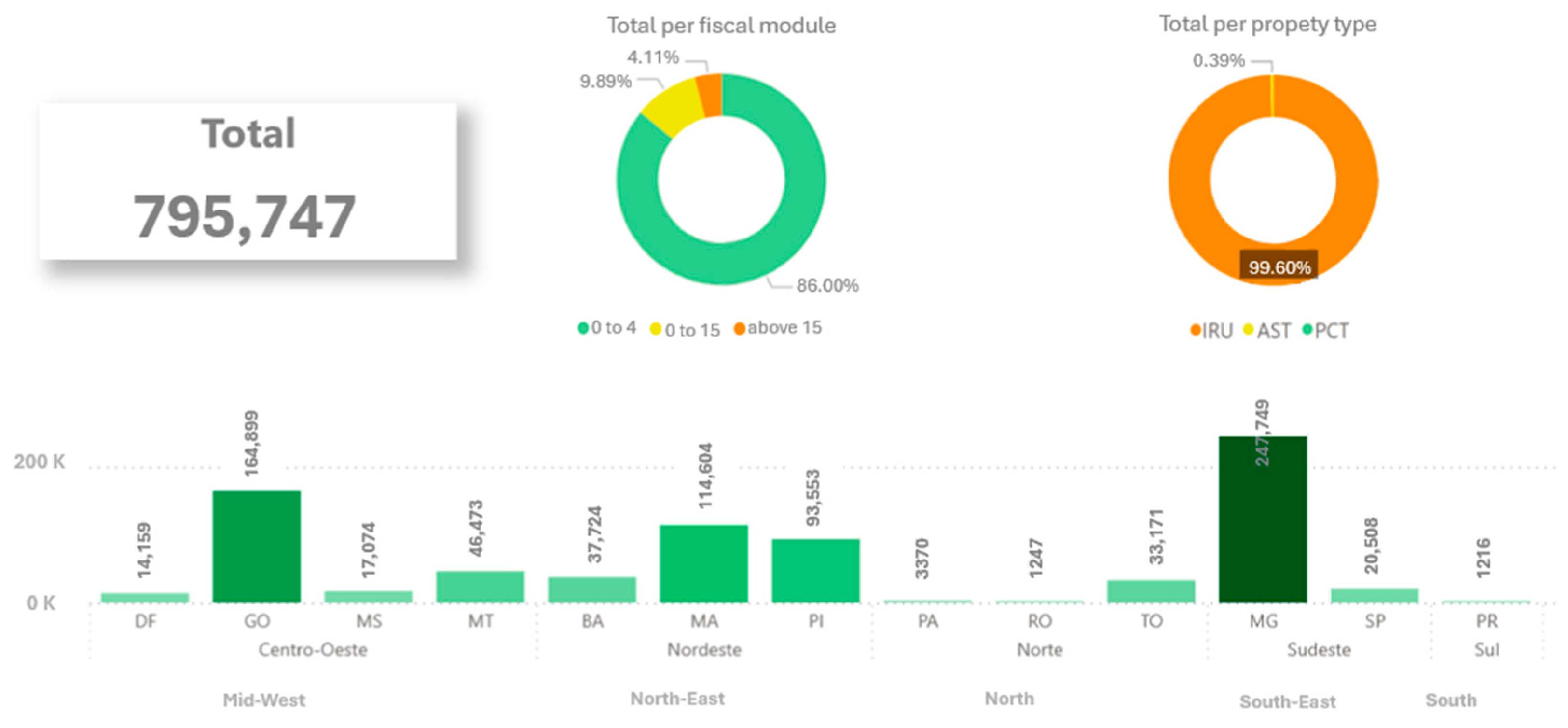
| 15 | Created by the Forest Code in 2012, the SICAR is a mandatory but self-declared national electronic register for all rural properties, established to enable environmental regularization, monitoring the existence and conservation of protected areas, deforestation, and land use. |
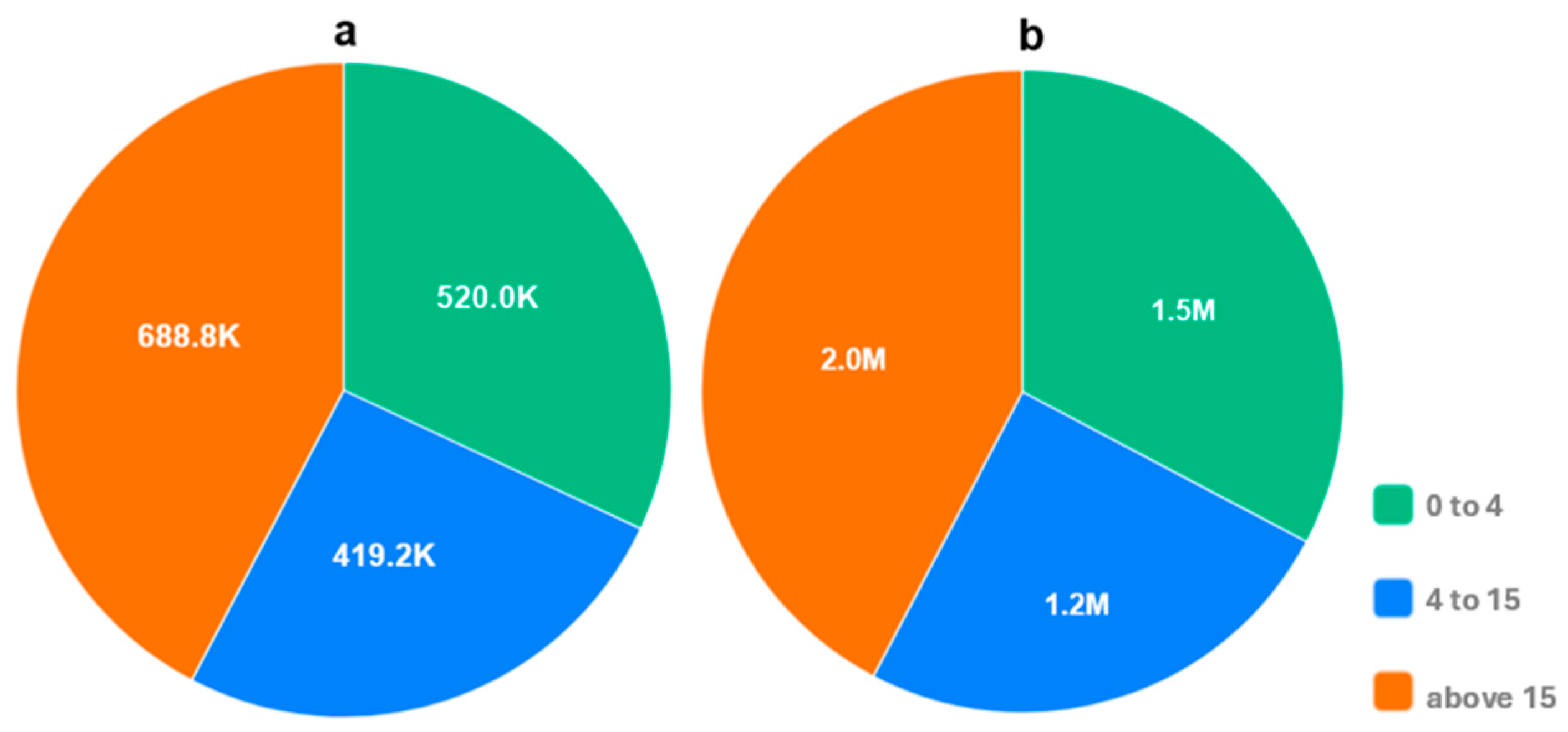
| 16 | Established in 1964 by the National Institute of Colonization and Agrarian Reform (INCRA), a “fiscal module” is an area of land, defining a minimum of hectares required for a family to live, work and thrive in the countryside of each municipality around Brazil. |
| 17 | The PRA is a mandatory program designed to bring farms into compliance with the Forest Code by restoring illegally cleared areas. It allows farmers to restore Legal Reserves (RLs) or Permanent Preservation Areas (APPs) to correct liabilities from deforestation occurring before 22 July 2008. |
| 18 | The Legal Reserve (RL) is a mandatory conservation area of native vegetation corresponding to 20% of each farm in the Cerrado and 80% in the Amazon. The Permanent Preservation Areas (APAs acronym in Portuguese) are sensitive ecological areas such as riparian buffers (marginal strips along rivers and streams), areas surrounding springs and perennial water eyes, hilltops, slopes with an inclination greater than 45°, and edges of plateaus [5,8]. |
References
- UNEP; FAO. About the United Nations Decade. UN Decade on Ecosystem Restoration (2021–2030). 2019. Available online: https://www.decadeonrestoration.org/about-un-decade (accessed on 8 March 2024).
- MMA. Plano Nacional de Recuperação da Vegetação Nativa (PLANAVEG): Rota Estratégica para Recuperação de 12 Milhões de Hectares (2025–2028); MMA: Brasília, Brazil, 2024. Available online: https://www.gov.br/mma/pt-br/composicao/sbio/dflo/plano-nacional-de-recuperacao-da-vegetacao-nativa-planaveg/planaveg_2025-2028_2dez2024.pdf (accessed on 8 May 2025).
- MMA. Estratégia e Plano de Ação Nacionais para a Biodiversidade (2025–2030); Ministério do Meio Ambiente: Brasília, Brazil, 2025. Available online: https://www.gov.br/mma/pt-br/centrais-de-conteudo/publicacoes/biodiversidade-e-biomas/epanb-2025-2030.pdf (accessed on 5 January 2026).
- Chazdon, R.L.; Chaves, R.B.; Calmon, M.; Siqueira, L.P.; Junqueira, R.G.P. Experiências de governança da restauração de ecossistemas e paisagens no Brasil. Estud. Av. 2022, 36, 221–237. [Google Scholar] [CrossRef]
- Sauer, S.; Cabral, L. Martyrdom of the Cerrado: An agri-food territory in need of justice. In IDS Policy Brief; Institute of Development Studies: Brighton, UK, 2022; pp. 1–6. [Google Scholar] [CrossRef]
- Lopes, H.R.; Gurgel, A.M.; Melo, L.C. Vivendo em Territórios Contaminados: Um Dossiê Sobre Agrotóxicos nas Águas do Cerrado; APATO: Palmas, Brazil, 2023. [Google Scholar]
- Cabral, L.; Sauer, S.; Shankland, A. Frontier territories: Countering the green revolution legacy in the Brazilian Cerrado. IDS Bull. 2023, 54, 1–145. [Google Scholar] [CrossRef]
- Balbinot, L.; Pereira, L.C.; Matus, G.N.; Silva, D.C.C.; Nnadi, E.O.; Tonello, K.C. Linking vegetation indices and land tenure to assess passive restoration dynamics in the Brazilian Cerrado. Land Use Policy 2025, 158, 107760. [Google Scholar] [CrossRef]
- Rodrigues, A.A.; Macedo, M.N.; Silvério, D.V.; Maracahipes, L.; Coe, M.T.; Brando, P.M.; Bustamante, M.M.C. Cerrado deforestation threatens climate and water availability for agriculture and ecosystems. Glob. Change Biol. 2022, 28, 6807–6822. [Google Scholar] [CrossRef] [PubMed]
- Bustamante, M.M.C.; Silva, J.S.; Scariot, A.; Sampaio, A.B.; Mascia, D.L.; Garcia, E.; Sano, E.; Fernandes, G.W.; Durigan, G.; Roitman, I.; et al. Ecological restoration as a strategy for mitigating and adapting to climate change: Lessons and challenges from Brazil. Mitig. Adapt. Strateg. Glob. Chang. 2019, 24, 1249–1270. [Google Scholar] [CrossRef]
- MMA. Cerrado. 2024. Available online: https://www.gov.br/mma/pt-br/assuntos/biodiversidade-e-biomas/biomas-e-ecossistemas/biomas/cerrado (accessed on 5 January 2026).
- IBGE. Biomas e Sistema Costeiro-Marinho do Brasil; IBGE: Rio de Janeiro, Brazil, 2024. Available online: www.ibge.gov.br/apps/biomas/#/home (accessed on 10 February 2025).
- Reatto, A.; Correia, J.R.; Spera, S.T.; Martins, E.S. Solos do bioma Cerrado: Aspectos pedológicos. In Cerrado: Ecologia e Flora; Sano, S.M., Almeida, S.P., Ribeiro, J.F., Eds.; Embrapa: Brasília, Brazil, 2008; pp. 107–150. [Google Scholar]
- Terra, M.C.N.S.; Nunes, M.H.; Souza, C.R.; Ferreira, G.W.D.; Prado-Junior, J.A.; Rezende, V.L.; Mello, J.M. The inverted forest: Aboveground and notably large belowground carbon stocks and their drivers in Brazilian savannas. Sci. Total Environ. 2023, 867, 161320. [Google Scholar] [CrossRef] [PubMed]
- FAO. FRA 2015: Terms and Definitions; FAO: Rome, Italy, 2012; Available online: https://www.fao.org/4/ap862e/ap862e00.pdf (accessed on 8 May 2025).
- Porto-Gonçalves, C.W. A Globalização da Natureza e a Natureza da Globalização; Civilização Brasileira: Rio de Janeiro, Brazil, 2006. [Google Scholar]
- Leite, A.Z.; Sátiro, G.; Sauer, S. Conflitos socioambientais no Matopiba: Expropriação, exploração e acumulação na fronteira agrícola brasileira. In A Fronteira do Matopiba: As Novas Faces da Expansão do Capital e Seus Conflitos; Marques, M.I.M., Alves, V.E.L., Eds.; USP: São Paulo, Brazil, 2024; pp. 409–435. [Google Scholar] [CrossRef]
- Bustamante, M.M. Tropical Forests and Climate Change Mitigation: The Decisive Role of Environmental Governance. Georgetown Journal of International Affairs. 20 March 2020, pp. 18–21. Available online: https://gjia.georgetown.edu/global-governance/tropical-forests-climate-change-mitigation-role-of-environmental-governance/ (accessed on 8 March 2026).
- Lima, J.E.F.W.; Silva, E.M. Estimativa da contribuição hídrica superficial do Cerrado para as grandes regiões hidrográficas brasileiras. In Anais do Simpósio Brasileiro de Recursos Hídricos, 17th ed.; SBRH: Florianópolis, Brazil, 2007. [Google Scholar]
- ICMBio. Cerrado. Brasilia, MMA, 2025. Available online: https://www.gov.br/icmbio/pt-br/assuntos/biodiversidade/unidade-de-conservacao/unidades-de-biomas/cerrado (accessed on 10 February 2025).
- CPT/CDDTB. Conflitos no Campo 2024; CPT Nacional: Goiânia, Brazil, 2025. [Google Scholar]
- Sauer, S.; Oliveira, K.R.A. Extractivismo agrario en el Cerrado brasileño. In Extractivismo Agrario en América Latina; McKay, B.M., Alonso-Fradejas, A., Ezquero-Cañete, A., Eds.; CLACSO: Buenos Aires, Argentina, 2022; pp. 125–162. [Google Scholar]
- Sauer, S.; Castro, L.F.P.; Leite, A.Z. Cerrado, savanas e povos do campo: Conflitos socioambientais e direitos na fronteira agrícola do Matopiba. Research Gate. 2025. Available online: https://www.researchgate.net/publication/398657973_CERRADO_SAVANAS_E_POVOS_DO_CAMPO_conflitos_socioambientais_e_direitos_na_fronteira_agricola_do_Matopiba?channel=doi&linkId=693da41c9aa6b4649dc0685c&showFulltext=true (accessed on 15 June 2026).
- Oliveira, A.U. A longa marcha do campesinato brasileiro: Movimentos sociais, conflitos e reforma agrária. In A Questão Agrária no Brasil; Stedile, J.P., Ed.; Outras Expressões: São Paulo, Brazil, 2016; Volume 9, pp. 329–360. [Google Scholar]
- Delgado, G.C. Do Capital Financeiro na Agricultura à Economia do Agronegócio: Mudanças Cíclicas em Meio Século; Editora UFRGS: Porto Alegre, Brazil, 2012. [Google Scholar]
- Hershaw, E.; Sauer, S. Land and investment dynamics along Brazil’s ‘final frontier’: The financialization of the Matopiba at a political crossroads. Land Use Policy 2023, 131, 106675. [Google Scholar] [CrossRef]
- Petersen, P. Agroecologia e a superação do paradigma da modernização. In Agroecologia: Práticas, Mercados e Políticas para uma Nova Agricultura; Niederle, P.A., Almeida, L., Vezzani, F.M., Eds.; Kairós: Curitiba, Brazil, 2013; pp. 69–104. [Google Scholar]
- Sauer, S. Terra no século XXI: Desafios e perspectivas da reforma agrária. Retratos Assentamentos 2016, 19, 69–97. [Google Scholar] [CrossRef]
- Miranda, E.E.; Magalhães, L.A.; Carvalho, C.A. Proposta de Delimitação Territorial do MATOPIBA. Nota Técnica nº 1; Embrapa: Campinas, Brazil, 2014; Available online: https://www.infoteca.cnptia.embrapa.br/infoteca/bitstream/doc/1037313/1/NT1DelimitacaoMatopiba.pdf (accessed on 6 January 2026).
- Sauer, S.; Borras, S., Jr. ‘Land grabbing’ e ‘green grabbing’: Uma leitura da ‘corrida na produção acadêmica’ sobre a apropriação global de terras. Rev. Campo-Territ. 2016, 11, 6–42. [Google Scholar] [CrossRef]
- WEF. The Cerrado: Production and Protection. White Papers. 2024. Available online: https://www.weforum.org/publications/the-cerrado-production-and-protection/ (accessed on 10 February 2024).
- Conab. Acompanhamento da Safra Brasileira de Grãos: Safra 2025/26 (2º Levantamento); Conab: Brasília, Brazil, 2025. Available online: https://www.gov.br/conab/pt-br/atuacao/informacoes-agropecuarias/safras/safra-de-graos/boletim-da-safra-de-graos/2o-levantamento-safra-2025-26/2o-levantamento-safra-2025-26 (accessed on 6 January 2026).
- Sauer, S. Eco-agrarian question: Agrarian extractivism, climate change and deforestation in Brazil. Rev. NERA 2024, 27, 69–97. [Google Scholar] [CrossRef]
- Egger, D.S.; Rigotto, R.M.; Lima, F.A.N.S.; Costa, A.M.; Aguiar, A.C.P. Ecocídio nos Cerrados: Agronegócio, espoliação das águas e contaminação por agrotóxicos. Desenvolv. Meio Ambiente 2021, 57, 16–54. [Google Scholar] [CrossRef]
- MAPBiomas. Relatório Anual do Desmatamento no Brasil 2024; Mapbiomas: São Paulo, Brazil, 2025; Available online: https://alerta.mapbiomas.org/wp-content/uploads/sites/17/2025/11/RAD2024_28_10.pdf (accessed on 5 January 2026).
- Fazenda, I.C.A.; Tavares, D.E.; Godoy, H.P. Interdisciplinaridade na Pesquisa Científica; Papirus: Campinas, Brazil, 2015. [Google Scholar]
- Harvey, D. O Novo Imperialismo, 2nd ed.; Loyola: São Paulo, Brazil, 2005. [Google Scholar]
- Ehrnstöm-Fuentes, M.; Kröger, M.; Ollinaho, O.; Hagolani-Albov, S.; Annala-Tesfaye, L.; Vuola, M.; Sauer, S. Ecological restoration proposals: Transformative potentials against ‘green’ extractivism to just socio-environmental transformations. Environ. Plan. D Soc. Space, 2026; under revision. [CrossRef]
- MAPBiomas. Projeto Mapbiomas: Mapeamento da Superfície de Água no Brasil 1985–2023 (Coleção 3). 2024. Available online: https://brasil.mapbiomas.org/wp-content/uploads/sites/4/2024/06/Fact_MapBiomas_Agua_2023_25.06.24.pdf (accessed on 5 February 2025).
- MST. Programa Agrário do MST; MST: São Paulo, Brazil, 2013. [Google Scholar]
- MST. Por Reforma Agrária Popular: Plantar Árvores, Produzir Alimentos Saudáveis. Cadernos de Agroecologia. 2022, Volume 2, pp. 16–27. Available online: https://mst.org.br/download/caderno-de-agroecologia-vol-02 (accessed on 12 February 2025).
- Bombardi, L.M. Agrotóxicos e Colonialismo Químico; Elefante: São Paulo, Brazil, 2023. [Google Scholar]
- Medeiros, L.S. Repressão e resistências no campo no regime empresarial militar. In Lutas, Memórias e Violações no Campo Brasileiro; Sauer, S., Ed.; Outras Expressões: São Paulo, Brazil, 2020; pp. 7–28. [Google Scholar]
- Foster, J.B. A Ecologia de Marx: Materialismo e Natureza; Civilização Brasileira: Rio de Janeiro, Brazil, 2005. [Google Scholar]
- van der Ploeg, J.D. Camponeses e Impérios Alimentares: Lutas por Autonomia e Sustentabilidade na era da Globalização; UFRGS: Porto Alegre, Brazil, 2008. [Google Scholar]
- Sauer, S.; Moreira, J.M.C.; Sátiro, G.; Castro, L.F.P.; Silva, A.A.; Oliveira, K.R.A.; Leite, A.Z. Conflitos Socioambientais: Concepções e Aplicação no Observatório Matopiba; UnB: Brasília, Brazil, 2021. [Google Scholar]
- FPA. Todos os Membros. Available online: https://fpagropecuaria.org.br/todos-os-membros/ (accessed on 8 February 2025).
- FAO. FAOSTAT: Pesticides Use, 2023. Available online: https://www.fao.org/faostat/en/#data/RP/visualize (accessed on 18 January 2026).
- Hess, S.C.; Nodari, R. Agrotóxicos no Brasil: Panorama dos produtos entre 2019 e 2022. Ambientes Mov. 2022, 2, 39–52. [Google Scholar] [CrossRef]
- MS. Intoxicação Exógena: Intoxicações Registradas no Sinan Net Brasil—DATASUS. 2026. Available online: http://tabnet.datasus.gov.br/cgi/deftohtm.exe?sinannet/cnv/Intoxbr.def (accessed on 18 January 2026).
- ANA. Atlas Irrigação: Uso da Água na Agricultura Irrigada, 2nd ed.; ANA: Brasília, Brazil, 2021. [Google Scholar]
- Guimarães, D.P.; Landau, E.C. Agricultura Irrigada por Pivôs Centrais no Brasil em 2024 (Boletim 261); Embrapa: Sete Lagoas, Brazil, 2024. [Google Scholar]
- Moura, L.H.G. Ruptura do metabolismo socioecológico. In Dicionário de Agroecologia e Educação; Dias, A.P., Stauffer, A.B., Moura, L.H.G., Vargas, M.C., Eds.; Expressão Popular: São Paulo, Brazil, 2021; pp. 659–668. [Google Scholar]
- Miranda, J.G.; Sauer, S. Green extractivism and the invention of ‘carbon territories’ in the Brazilian Amazon. Third World Q. 2025, 1–18. [Google Scholar] [CrossRef]
- Santos, A.D.G.; Silva, D.V.; Maciel, K.N. A campanha “Agro é tech, agro é pop, agro é tudo” da Rede Globo de Televisão como difusora da propaganda sobre o agronegócio no Brasil. Rev. Eptic 2019, 21, 45–61. Available online: https://periodicos.ufs.br/eptic/article/view/10910 (accessed on 6 March 2026).
- Porto, C.A.M.; Teixeira, M.A. Ação e resistência da Contag na ditadura civil-militar no Brasil. In Lutas, Memórias e Violações No Campo Brasileiro; Sauer, S., Ed.; Outras Expressões: São Paulo, Brazil, 2020; pp. 259–279. [Google Scholar]
- Diegues, A.C. O Mito Moderno da Natureza Intocada; Expressão Popular: São Paulo, Brazil, 2023. [Google Scholar]
- Sauer, S.; França, F.C. Código Florestal, função socioambiental e soberania alimentar. Cad. CRH 2012, 25, 285–307. [Google Scholar] [CrossRef]
- SICAR. Painel de Regularização Ambiental. 2026. Available online: https://app.powerbi.com/view?r=eyJrIjoiZmRiM2QwZDQtYjUxZi00YWI0LWFjNGEtZTIxNjg1YWFkNmZlIiwidCI6ImViMjJjMjU4LWQ0ZWQtNGZmMC04Y2Y2LTI4NmQ2Mjc3OTQ5ZSJ9 (accessed on 19 January 2026).
- Mansourian, S. Ecosystem Restoration and Indigenous Peoples and Local Communities: Learning from Protected and Conserved Areas. Restor. Ecol. 2026, 34, e70288. [Google Scholar] [CrossRef]



Disclaimer/Publisher’s Note: The statements, opinions and data contained in all publications are solely those of the individual author(s) and contributor(s) and not of MDPI and/or the editor(s). MDPI and/or the editor(s) disclaim responsibility for any injury to people or property resulting from any ideas, methods, instructions or products referred to in the content. |
© 2026 by the authors. Licensee MDPI, Basel, Switzerland. This article is an open access article distributed under the terms and conditions of the Creative Commons Attribution (CC BY) license.
Share and Cite
Rocha, F.B.; Sauer, S. Perspectives for Ecological Restoration in the Agricultural Frontier: Challenges and Possibilities for the Socio-Environmental Conservation of the Brazilian Cerrado. Land 2026, 15, 1241. https://doi.org/10.3390/land15071241
Rocha FB, Sauer S. Perspectives for Ecological Restoration in the Agricultural Frontier: Challenges and Possibilities for the Socio-Environmental Conservation of the Brazilian Cerrado. Land. 2026; 15(7):1241. https://doi.org/10.3390/land15071241
Chicago/Turabian StyleRocha, Francis Barbosa, and Sérgio Sauer. 2026. "Perspectives for Ecological Restoration in the Agricultural Frontier: Challenges and Possibilities for the Socio-Environmental Conservation of the Brazilian Cerrado" Land 15, no. 7: 1241. https://doi.org/10.3390/land15071241
APA StyleRocha, F. B., & Sauer, S. (2026). Perspectives for Ecological Restoration in the Agricultural Frontier: Challenges and Possibilities for the Socio-Environmental Conservation of the Brazilian Cerrado. Land, 15(7), 1241. https://doi.org/10.3390/land15071241