Article

Perspectives for Ecological Restoration in the Agricultural Frontier: Challenges and Possibilities for the Socio-Environmental Conservation of the Brazilian Cerrado

by
Francis Barbosa Rocha
1 and
Sérgio Sauer
2,*
1
Center for Sustainable Development (CDS), The Observatory of Social and Environmental Conflicts in Matopiba, University of Brasilia (UnB), Brasilia 70910-900, Brazil
2
Center for Sustainable Development (CDS), The Observatory of Social and Environmental Conflicts in Matopiba, the Center Brazil-China for Family Farming, University of Brasilia (UnB), Brasilia 70910-900, Brazil
*
Author to whom correspondence should be addressed.
Land 2026, 15(7), 1241; https://doi.org/10.3390/land15071241
Submission received: 19 May 2026 / Revised: 28 June 2026 / Accepted: 2 July 2026 / Published: 10 July 2026
(This article belongs to the Section Land Use, Impact Assessment and Sustainability)

Abstract

In 2019, the United Nations’ General Assembly established 2021 to 2030 as the Decade on Ecosystem Restoration, and ecological restoration should be adopted by the member nations. In 2015, Brazil had already committed to restoring (replanting) twelve million hectares of forests, and this commitment was reaffirmed in the National Plan for the Recovery of Native Vegetation in 2017 and relaunched at COP16 on diversity in 2024. Despite Brazil’s leadership in establishing the Tropical Forests Forever Fund (TFFF) in 2023, which was launched at COP30 in Belem in 2025, the expansion of the agricultural frontier remains the main driver of deforestation in the Amazon/Rain Forest and the Cerrado biomes. This article aims to examine the social and ecological consequences of the capitalist occupation and expansion of the agricultural frontier in the Cerrado. It will also study the counterpoint of the land struggles and initiatives of peasant organizations focused on conservation and restoration as possibilities and perspectives for the social and ecological restoration of the Cerrado landscapes. Based on an interdisciplinary approach, the specialized literature, and official agricultural data, the study shows that, in addition to degrading nature (deforestation, water and soil contamination, and desertification) and threatening the historical ways of life of countryside peoples, the frontier’s expansion blocks possibilities for restoration and hinders initiatives to protect the remaining nature of Brazil’s second-largest biome. On the other hand, resistance to expropriation and appropriation, and struggles for land and territory, have emerged as possibilities for socio-environmental restoration, beyond reforestation and the recovery of destroyed nature, by transforming landscapes, ways of life, and production, and by creating conditions for food sovereignty and sustainability in the countryside. Therefore, agroecological actions by agrarian movements and rural organizations in general, and those of the Movement of Landless Rural Workers (MST) in particular, have become emblematic in opposing agrarian extractivism and unsustainable monocrops imposed upon and disseminated throughout the Brazilian Cerrado.

1. Introduction

In 2019, the General Assembly of the United Nations (UN) established the Decade on Ecosystem Restoration. This initiative to recover damaged and degraded ecosystems was launched globally in 2021, with the Food and Agriculture Organization (FAO) and the Environment Program (UNEP) as the two UN agencies leading its implementation between 2021 and 2030. Measures and actions to prevent further degradation and reverse past environmental damages should be taken by signatory nations, including Brazil, aiming to reverse degradation and restore ecosystems worldwide [1].
Brazil had already committed to environmental restoration in the Paris Agreement of 2015, when a goal was set to restore and replant twelve million hectares of forest by 2030. This commitment—as part of the goals to reduce greenhouse gas emissions—was established through the National Plan for the Recovery of Native Vegetation in 2017 [2]. This Planaveg was reviewed and relaunched during the 16th Conference of the Parties of the UN Convention on Biological Diversity (COP16), hosted in Cali, Colombia, in November 2024, reaffirming the goal of restoring twelve million hectares [3]. Alongside these commitments and goals, Brazil has been leading efforts since 2023 to establish the Tropical Forest Forever Facility (TFFF). Created at COP30 in Belem in 2025, the TFFF is a fund designed to finance and reward countries that preserve tropical forests [2,3].
Despite these conservation and restoration commitments and initiatives, Brazil has a historical debt to its Cerrado, the second-largest biome in South America [4]. Since the mid-20th century, the implementation of the Green Revolution package and the incentives for the expansion of the agricultural frontier—driven by public policies, especially subsidized credit—have been the main causes of deforestation, contamination, destruction of biodiversity, and socio-environmental conflicts in the Cerrado [5,6]. Unlike the notions of “modernization” or even “industrialization of agriculture”, this process of capitalist appropriation of land and depletion of nature is defined as “agrarian extractivism”—a hegemonic model of agricultural production and a predatory, export-oriented mechanism of capital accumulation that comes at the expense of social and ecological systems [7]. Combined with this historical debt and the incentives for agrarian extractivism, Brazilian environmental legislation and many initiatives for protection and restoration have been implemented in other biomes, leaving the Cerrado to be “sacrificed” [7]. Due to its ecosystemic characteristics, Cerrado restoration is even more complex, going beyond technical and economic issues [8,9]. Consequently, preventive and conservative actions would be much more effective in the efforts to maintain this valuable biome, highlighting the urgent need for a broader understanding of how countryside peoples and communities contribute to the social and environmental conservation and restoration of the Cerrado biome [4,8,10].
This article aims to examine capitalist appropriation and the expansion of the agricultural frontier, highlighting the social and environmental consequences of agrarian extractivism in the Cerrado. These consequences have been met with peasant resistance, struggles for land, and actions toward environmental conservation and restoration. These popular initiatives, especially the actions of the Movement of Landless Rural Workers (MST), represent paths and possibilities for socio-ecological development and the transformation of the land and life in the countryside. Therefore, revisiting the debate on different proposals for environmental restoration, this article discusses the challenges and perspectives of popular conservation initiatives, not only for achieving committed ecological goals, but also for the socio-environmental conservation of Brazilian nature and the countryside.

2. Literature Review: Cerrado Appropriation and Degradation

2.1. Cerrado: Agricultural Frontier, Land and Territory in Dispute

The Brazilian Cerrado is classified as “savanna” or “savanna-type vegetation” [11], and occupies the country’s central region, covering an area over 200 million hectares—23.3%, or nearly a quarte, of the Brazilian territory – making it the second-largest biome in Latin America, and bordering other important Brazilian biomes such as the Amazon and the Pantanal [9,12]. The Cerrado soils are diverse, but the most common are the latosols (varying between the red, yellow-red and yellow), naturally acidic and with high amounts of aluminum, which can be toxic to most crops [13]. It possesses rich flora, with a landscape formed by a vegetation mosaic ranging from forest areas to plain fields and typical savanna landscapes. This landscape is mainly characterized by tree fields and low bushes with gnarled trunks and branches, but with extremely deep roots [9,13]. The roots can reach down twenty meters deep, allowing the biome to stock substantive quantities of carbon and to concentrate up to five times more carbon below than above the soil, being considered an “upside-down forest” [14]1. The Cerrado terrain consists, predominantly, of relatively high and flat lands, the so-called “chapadas”, with elevations projected in the landscape. These plateaus are flat and can stretch for kilometrers [16], commonly used for large-scale mechanized monocrops, taking advantage of their natural topography for the use of large agricultural machines [17,18].
Despite its soil and vegetation, the region is rich in water, especially underground. The Cerrado has the capacity to retain water and form large reservoirs, which is attributed to a distinguished root depth of its vegetation and its porous soil, which made it known as Brazil’s “water tank” [16]. The Cerrado waters supply important water springs and basins such as the São Francisco and Araguaia/Tocantins rivers and basins. In addition, its waters run to not fewer than eight out of the twelve Brazilian massive water basins, including the Amazon basin [19]. This contrasts with its climate, which is very characteristic, featuring cold and dry winters, practically without rain for long periods, even reaching six months of dry season, and another summer season, hot and rainy between October and April. The precipitation can reach up to 1400 mm/year, and the temperatures can exceed 40 °C in some areas during the hottest days. The relative humidity ranges between 60% and 90% during rainy seasons but can be below 20% during the dry season [20]2.
These characteristics allowed the development of a rich biodiversity, making the biome the world’s most biologically rich savanna [9]. The biome hosts over 11.6 million identified plant species and a wide variety of endemic animals and plants. The Cerrado is therefore considered a hotspot for global preservation [11,20]3. The biological diversity, including the diversity of landscapes, created unique conditions, which facilitated the emergence of a rich socio-biodiversity. There is a myriad of countryside peoples and traditional communities, such as indigenous peoples and Quilombolas communities, which are traditional rural communities with different ways of life and access to, use of, and occupation of the Cerrado lands [16,22]4.
This biome has been transformed especially since the 1964 coup, with the political integration and economic growth plans of the military regimes (1964–1984), with the goal of adapting the country to capitalist modernity [25]. The dictatorial military regime modernized agriculture and livestock, with the implementation of the Green Revolution package5 [26], intensifying the logic of capitalist production. This technical modernization was implemented, though, without altering, democratizing or “modernizing” the unequal distribution of land [7], shaping a contradictory notion of “conservative modernization”, namely technical innovation based on land concentration [25].
This conservative modernization [25,27] interred any possibility of agrarian justice, since it blocked any redistribution policy, promoting access to land on the frontier through colonization projects [5,7,23]. It encouraged landless families and small-scale producers to migrate to Cerrado and Amazonian regions searching for land in the colonization projects. This migration process moved part of the dispute for land to the agricultural frontier, resulting in new conflicts and denials of territory rights to people that, for generations, have commonly and communally used the high and flat lands, the chapadas [16]. The military dictatorial governments did not recognize the common use of these plateaus—used for raising cattle and smaller animals (sheep, goats, nannies) by the traditional peoples and communities—nor the historical and ancestral occupation of the most fertile lands in the Cerrado valleys, known as veredas [16,26].
The Cerrado was incorporated into the capitalist logic of extensive cattle ranching and monocrops [25], especially after the 1970s. The implementation of the Green Revolution—via government incentives, e.g., cheap and abundant credit—encouraged landlords, major producers, multinationals and large enterprises to appropriate large tracks of “free lands” in the agricultural frontier [5,26]. Therefore, the livestock and agriculture modernization were made via appropriation and privatization of public and communal lands, consequently privatizing nature at the expense of a common social organization of the territories [16,23,27].
These appropriations and capitalist incorporation of land, with the expansion of monocrops for export, started to be called “agribusiness” in the 1990s, a sector that has been amplifying and consolidating its historical political power [22]6. In the 2000s, the increase in agricultural and livestock commodity prices in global markets attracted international investment and capital, expanding the participation of transnational companies and investment funds in the Cerrado, especially in MATOPIBA7 [17,30].
According to the World Economic Forum (WEF) report in 2024, 60% of all agricultural production in the country was concentrated in the Cerrado, which accounts for nearly 22% of the global soybean exports and 23% of sugar cane [31]. The grain crops expansion and use of a central pivot irrigation system—technology that requires high investments, energy and water – has led to crops and production of up to three harvests per year [32].
The National Supply Company (Conab) shows a geographical expansion of the monocrops in Cerrado in general, and particularly in MATOPIBA. According to Conab’s second harvest survey of 2025, there was an “[…] increase of 3.3% in cultivated area in comparison with the 2024/25 harvest, a total of 84.4 million hectares. This increase represents the inclusion of 2.7 million hectares in the national farming” [32] (p. 7). The cultivation of soybean crops exceeded 49 million hectares, with an increase of 3.6% of planted area, and MATOPIBA hosts almost 20% of that soybean area, with almost ten million hectares. The soybean area growth in 2025/26 has been followed by the fall in rice and bean farming, since the cropping areas with rice went down 7.1% and beans 7.3% compared to the cropping area of 2024/2025 [32] (p. 8).
A large part of this growth—and the transformations in the use of the Cerrado’s land—is related to the international boom in commodity prices, which happened from the years 2000 until the middle of the 2010s [22,26,30]. The global livestock and agricultural commodity market started heating up again as of 2020, enhancing the Brazilian agricultural export matrix. That increased the role and weight of livestock and agricultural commodities in the export agenda, moving from 13% of the total value in 2000 to 32% of the country’s total exports in 2022 [26,31].
The expansion of monocrops and the increase in commodities’ export are combined and promote the accelerated degradation of the Cerrado biome and its historical ways of producing, social reproduction and life in the territory [9,26] being the main characteristics of agrarian extractivism [7,28,33]. This modernization, therefore, is not based on an “industrial logic”, but on the extraction and exhaustion of nature, exploiting, depleting and exhausting natural resources, such as soil contamination and water poisoning, aquifer drainage and depletion of springs and rivers, soil erosion, deforestation and destruction of wildlife [22]. This is highlighted in the WEF’s report, stating that “[…] the transformation of the Cerrado biome, combined with a more fragile Amazon, threatens the ecological equilibrium of the region, on which the agricultural production’s sustainability depends in the long term” [31] (p. 5)8.
As far as the agribusiness model expanded [25], mostly for commodity production, the deforested vegetation gave way to monocrops for exporting [33]. It is estimated that more than half of Cerrado’s natural vegetation is already lost [9,35]. Yet, Cerrado hosts what is considered the “world’s largest agricultural frontier” in MATOPIBA [26] and has been suffering intense changing processes in the soil use by deforestation, pasture implementation and extensive grain crops [17].
The frontier expansion—and changes in soil use [32], based on agribusiness logic—and accelerated nature degradation are important challenges to the Cerrado restoration [5,9]. They are added up to the great ecological challenge of the century, which is fighting (discussion, restoration, mitigation, adaptation) climate change and the planet’s atmospheric heating [4,10,33].

2.2. Methodology for Researching Ecological Degradation of the Cerrado

This study adopts an interdisciplinary qualitative approach, grounded in Political Economy, Political Ecology, and Critical Agrarian Studies, to analyze the environmental and social consequences of agrarian extractivism and the expansion of the agricultural frontier in the Brazilian Cerrado [16,23,36,37]. The study does not aim to evaluate ecological restoration based on performance indicators but rather focuses on the relationship between ecological restoration initiatives, the conservative modernization in the agricultural frontier, and peasant and countryside peoples’ proposals for the Cerrado biome [4,8,10,28,38].
Based on official data—especially agricultural censuses from the Brazilian Institute of Geography and Statistics (IBGE), crop surveys from the National Supply Company CONAB, information from the National Water Agency (ANA) and registers of the System of Rural Environmental Cadaster (SICAR)—and monitoring from MapBiomas and FAOSTAT, it systematizes, reflects on, and analyzes environmental damage and productive costs of frontier expansion of monocrops [12,32,39]. It analyzes ecological degradation in relation to the social and productive expropriation of rural populations. Based on documentary information, it studies possibilities and political proposals for rural development [9,16,36,37], critically analyzing restoration policies and proposals defended by rural social movements [4,10,28,38].
The analysis of documents examined materials produced by national and international organizations, including United Nations resolutions on the Decade on Ecosystem Restoration (2021–2030) [1], Brazilian environmental and restoration policies, and official documents related to the National Plan for the Recovery of Native Vegetation (PLANAVEG) [2] and the commitments presented at COP16 and COP30 [3]. The analysis also incorporated documents drafted and published by peasant organizations and social movements, particularly those from the Movement of Landless Rural Workers (MST) [40,41] and the Pastoral Commission on Land (CPT [21]) on land conflicts, tree planting, agroecology, ecological restoration and territorial management. The literature review was not systematic, and the research in the specialized literature is combined with analysis of government reports and information [2,3,11,12] and social organizations and agrarian movement documents [21,27,40,41]. The bibliographic research included academic studies such as scientific articles, books, dissertations, and theses, which address conservative modernization, agrarian extractivism, land grabbing, frontier expansion and ecosystem and landscape restoration in ecological and social dimensions [19,25,27,34]. The study analyzes the consequences of environmental degradation and ecological destruction [9,33,34,38], but also the social demands of countryside peoples and struggles for land and social rights, championed by grassroots social movements [21,24,33,34,38], particularly by the MST [41].
The official data used were the most recent available, showing the capitalist expansion of monocrops and extractive practices, including data on environmental damage of the Cerrado landscapes, like deforestation, changes in land use, and ecological loss [35,39,41], as well as environmental and social data, like changes in natural cycles, socio-environmental conflicts, and pesticide contamination [31,34,42].
These sources were studied using qualitative thematic analysis, with three analytical categories guiding it: (i) the driving factors of the ecological degradation associated with the expansion of the agricultural frontier and agrarian extractivism; (ii) the contradictions between restoration policies and the dominant model of agricultural development in the Cerrado; and (iii) ecological restoration initiatives from peasant struggles and resistance to expropriation in the Cerrado. These categories allowed for an integrated examination of restoration both as ecological processes and as sociopolitical practices, pointing to socioecological restoration for sustainable development of the Brazilian countryside.
The theoretical framework aimed to provide a critical interdisciplinary analysis to establish a dialog among the degradation of the Cerrado biome, socio-environmental conflicts, and the possibilities of socioecological restoration arising from social movements’ activities and resistance [16,27,33]. The premise was that the historical occupation of the Cerrado did not occur exclusively under a capitalist logic dominated by the agribusiness model, but also through peasant communities whose struggles and forms of organization were guided by the principles of food sovereignty and, later, by agroecology as well. This helped to reclaim their historical relationship with nature through practices of resistance, protection, and restoration of the Cerrado [43,44,45].
It is important to note that, within the scope of this analysis, the expansion of agribusiness into the Cerrado is a relatively recent phenomenon and was essentially imposed (through violent and authoritarian means) [43], driven by commercial interests (the commodity-based agro-export model) [16,46]. Despite this, its persistence and expansion are evident even during a democratic period, a pattern that can be explained by the political and economic hegemony of agribusiness in Brazil [22,47]. However, marginalized populations, whose rights and recognition are constantly violated, are fighting and resisting to protect and restore the Cerrado [23,24]. This is because part of the peasants’ social relations depends on and is historically intertwined with the natural cycles of this environment, which has been degraded by the expansive and aggressive nature of an economic model that, contradictorily, destroys the ecological foundations of its own environmental sustainability [28,31].

3. Results and Discussion of Social and Environmental Consequences

3.1. Modernization and the Agricultural Frontier and the Socio-Environmental Consequences in the Cerrado

In the last few years, the discussion around ecological restoration was powered not only by the UN Decade on Ecosystem Restoration but also by the growth of degraded regions, landscapes and environments in the planet. In the Cerrado, this degradation has a close relation with the expansion of monocrops and commodity exports [16]. The agribusiness was responsible for pushing the main changes in the use of land during the 21st century, accelerating environmental degradation and land grabbing9 in Brazil [28,33].
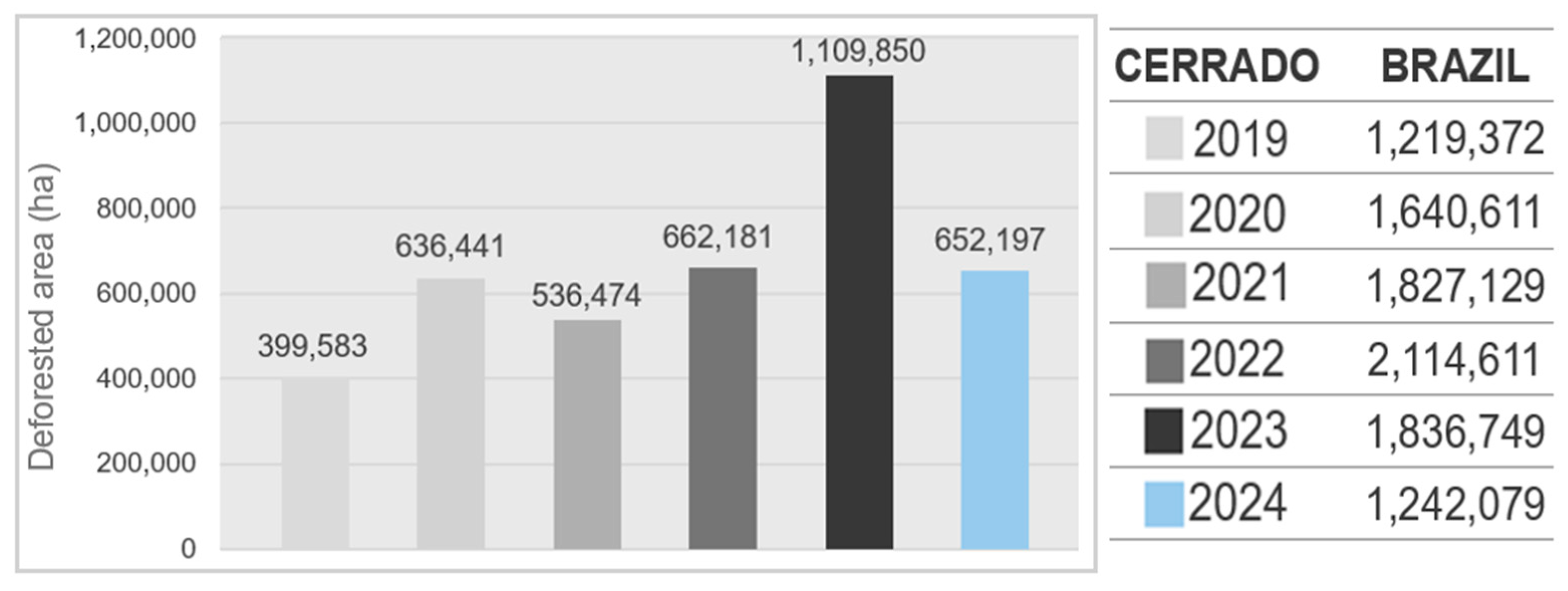
According to the Annual Deforestation Report (RAD), the deforestation rates showed a general growth tendency until 2022, with a drop from 2023 on [35]. However, in 2023, the Cerrado registered a peak of over 1,1 million hectares deforested, representing more than 60% of the total registered in the entire country, which was 1,836,749 hectares (Figure 1). The Cerrado biome’s deforested area surpassed, for the first time, the total area deforested in the Amazon biome, which had a decrease of 454,230 hectares of forest. In 2024, there was a 32.4% reduction in the deforested area across the country. The Cerrado remained the most deforested biome amongst all the other Brazilian biomes, with a suppression of 652,197 hectares of native vegetation, 52.5% of Brazil’s entire deforested area, 1,242,079 hectares in 2024 [35].
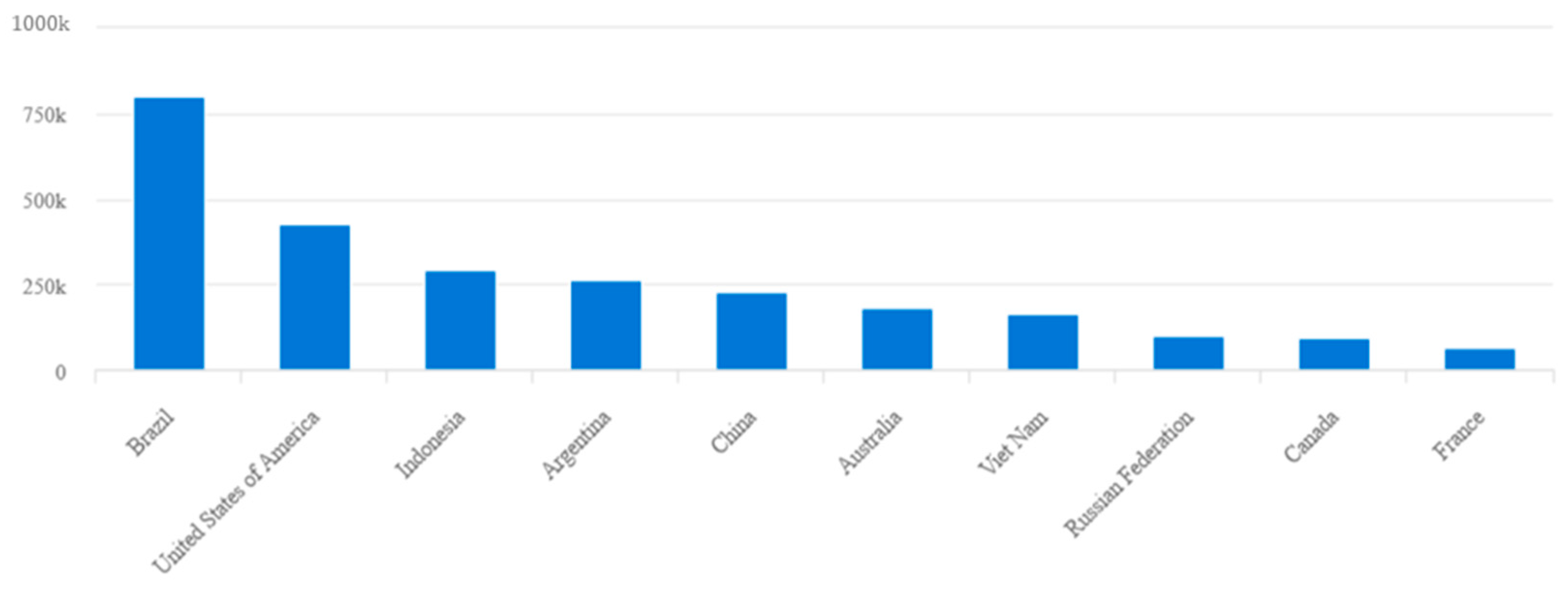
The deforestation, however, is not the only predatory and unsustainable action of agribusiness [9]. Another concern is the degradation caused by agrochemical use [30,42]. Brazil has become the largest consumer in recent decades, reaching a trade volume of 800,652 tons in 2023 (Figure 2) [48]. It represents almost double the amount consumed by the second place, the United States of America, which commercialized 429,501 tons. Thus, Brazil and the USA consumed around 33% of all agricultural chemicals, when the world consumed around 3.73 million tons of chemicals in 2023.
It is estimated that from all the agrochemicals used in Brazil, the major part is used in soybean crops (52%), corn (10%) and sugar cane (7%) [49]. Only during 2018, around 600 million liters of agrochemicals were used in the Cerrado, i.e., 73% of total national consumption [34]. Despite the inexistence of more detailed data about agrochemical use per biome, the Cerrado holds the largest number of extensive grain crops, especially soybean; therefore, it became a consumer or sinkhole of those poisons that contaminate the earth, air, water, vegetation, fauna and the people [34,42].
This poison consumption was described by Bombardi [42] as a “chemical colonialism”, because the economic and political power inequality allows toxic substances to be thrown away in peripheral countries, produced and controlled by countries from the center of capitalism. Some of those substances, although prohibited or limited due to their contamination risk and risks to human and environmental health in the core countries, are produced and exported by multinationals, creating the chemical colonialism [42].
According to the Brazilian Ministry of Health (MS), as reported on its DataSUS website, between 2015 and 2025, notifications of agrochemical intoxication reached 59,169 people in Brazil [50]. Despite these alarming cases of intoxication, studies suggest that these numbers are underestimated by a factor of one to fifty. Therefore, the number of cases is considerably higher due to intoxication underreporting [42].
The data reflect not only the deepening of the Cerrado’s degradation, but also the degradation of human lives and their ways of living. According to Lopes et al. [6], in the dossier about water contamination in the Cerrado in the states of Piauí, Maranhão, Bahia, Tocantins, Goiás, Mato Grosso and Mato Grosso do Sul, 13 different active ingredients were found in the rivers and water springs that supply seven communities. In all of those communities, in over 70% of the 93 places it was collected, the presence of some type of agrochemical was detected in the water. The most found substances were glyphosate, atrazine and 2.4D. Glyphosate was found in samples from all states, indicating its widespread use and the contamination and degradation of the Cerrado [6]10.
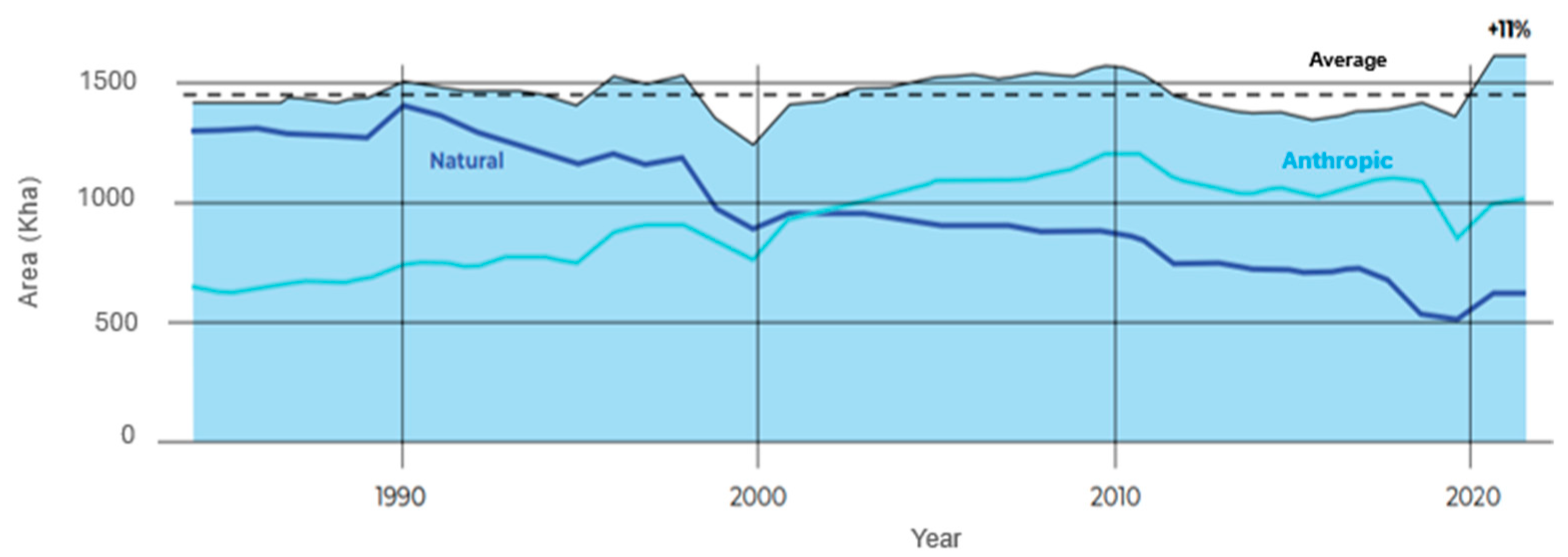
Another significant impact on the Cerrado is the drastic landscape changes (deforestation and the establishment of large-scale irrigation), affecting the biome’s water landscape. The MAPBiomas report [39] pointed out that, in the last 40 years, the Cerrado showed an increase in body of water area (Figure 3), differently from the rest of the country, which registered a loss. The main gain was in anthropic areas, with a 363 thousand hectares increase, especially due to the construction of water reservoirs for hydroelectric power stations and irrigation. This increase was followed by a critical drop of natural area covered with water, with a drop in the 696 thousand hectares [39]. This shift coincides with the accelerating period of the region’s exploitation to respond to the international agricultural commodities market after 2000, and the amplification of large-scale irrigation (Figure 3).
According to the National Water Agency (ANA) [51], irrigated agriculture is responsible for Brazil’s largest water use, corresponding to 46% of the water taken from springs and 67% of the country’s total consumption. Until 2021, there was an installed irrigation capacity of 6.95 million hectares of Brazil. It is worth highlighting that a major part of water collection for irrigation uses electric energy, whereas the current legislation subsidizes the farmers from 60% to 90% of the costs of irrigation, as long as it is used during less demanding times of the day.
In the Cerrado region, the main method of irrigation is by the center-pivot system. The geographical conditions, especially the terrain, facilitate its use, just like the extensive, almost flat areas and the vast water reservoirs, especially subterranean. Among the 33.846 center-pivots installed until 2024, which irrigate around 2,200,960 hectares, over 70% of the equipment was in the Cerrado. Of this total irrigated area, 72.1% of this kind of equipment and irrigation system (with high water and energy consumption) was used in the biome, with around 1,586,892 hectares of irrigation [52].
These elements show how the Cerrado is under pressure from exploitation and degradation, which also stresses common territories. Those “vulnerability processes” [34] do not result only in the biome’s environmental degradation, but also in the destruction of its ways of living in the country, especially for the peoples that have a deep relation with nature [27]. The Cerrado degradation, led by an extractive, predatory and concentrated model, has been breaking the metabolic historical connection between these peoples and the Cerrado [44,53]. On a larger scale, it has been contributing to the alienation of society regarding the nature that sustains it, reinforcing the concerns with the ecosystem conditions, expressed in the definition of the UN Decade on Ecosystem Restoration.
According to Egger et al. [34], this “vulnerability process” is also associated with the constant threatening presence of private property over communal territories, creating latent or explicit situations and conditions of socio-environmental conflicts. This analysis is also highlighted by Sauer et al. [46] who analyze the socio-environmental conflicts in the MATOPIBA region. The expansion of the agricultural frontier, as a form of predatory development, exacerbates conflicts and disputes over water and land, as well as other forms of violence.
The growth of these conflicts is documented in the Annual Report on Agrarian Conflicts in Brazil by the Pastoral Commission on Land—CPT [21]. According to that research, a total of 18,568 conflicts and 398 murders were listed in the countryside between 2015 and 2024. During 2024, there were 2185 conflicts registered, with 13 murders, affecting over 1.1 million people11. This 2024 report draws attention to an “ecological question” of the land’s conflicts [23] (p. 30), “underneath the agrarian violence” [21] (p. 29), e.g., conflicts and land disputes, including disputes over water, forests and other natural assets [33].
Despite not listing the data per biome, the report shows increasing conflicts related to nature, such as conflicts involving water (266 occurrences in 2024). These conflicts range from the destruction, pollution, and contamination of water springs by agrochemicals to the obstruction of water access or the disregard of legal agreements and procedures, amongst others [21]. The report alerts to the indiscriminate, orchestrated and systematic use of illegal deforestation and forest fires as types of violence in the Cerrado, which have been occurring more often. These conflicts tend to increase as the agricultural frontier expands, since a large portion of these conflicts are associated with resistance, responses and reactions to the injustices and inequalities imposed to the people and communities that live, work and interact with nature and its ways of living [34].
It leaves countryside peoples susceptible to speculative attacks by financial capital, particularly in large market carbon-sink projects and commercial restoration. Companies bargain precisely on the promise of nature protection (as a source of life and community existence) and quality-of-life improvement. Thus, the communities are bound to contacts which are almost always fraudulent and abusive, whereas the promises of improvement rarely occur [34,54]. It is necessary to recognize that those who destroy nature cannot protect it, because those companies and agribusiness, in essence, represent both sides of a coin. This integration between productive capital and financial/speculative is a way to diversify the capital, diminish risks and rise profits, and, at the same time, make it harder to be blamed for the degradation. In this way, it allows companies in these sectors to act outside the law, hide assets and profits, and increase accumulation, putting peasants and other land peoples in a condition of always needing to “restore” to keep “re-existing” [34].
The large-scale agribusiness based on extraction, appropriation and exhaustion of natural resources—both human labor and non-human nature—is “agrarian extractivism” [33]. This extractive logic, combined with speculative capital, acts in predatory, fraudulent, violent12 ways, materializing processes defined by Harvey [37] as “accumulation by dispossession” or by “spoliation”.
According to Sauer and Oliveira [22], the effect of agrarian accumulation and extractivism deepened the inequalities, reflecting on the worsening of socio-environmental conflicts due to the quick decline of natural assets in the agricultural frontier expansion. Therefore, capitalism and financialization establish “new” connections between the land question—the struggle for access, use, and life on the land—and the ecological crises that result in an eco-agrarian question [33].
This connection is important, since it reveals something not yet deeply explored or understood which is how the degradation, the predatory appropriation and the destruction of nature, apart from the conflicts and disputes, affect human life in the land, considering its ways of life and its relationship with nature. It is through the land that a territory is made (a lived place), and that the land peoples and communities appropriate the nature, not through destruction, but through protecting and caring [27].
The notion of agrarian extractivism leads to understanding and realizing how capitalist relations, imposed by agribusiness, are not creative, but rather degrade the Cerrado’s own sociability, decisively affecting those who live in the land [23]. Still, it also compromises the living conditions of the rest of society by undermining or even preventing any advance that guarantees nature’s protection. To ensure the Cerrado’s protection and restoration, it is essential to acknowledge, protect, and guarantee the social, political, and economic well-being of those who have always protected nature and allowed the Cerrado to remain alive well into the 21st century.

3.2. The MST Struggle and Perspectives for Socio-Ecological Restoration

The period before the military coup in 1964 was characterized by social mobilizations and political restlessness, demanding access to land through agrarian reform. The demonstrations were seen as a threat by the conservative sectors, especially since they were supported by the country’s Presidency. João Goulart, after his predecessor’s resignation, took office in 1961, promising structural reforms to develop Brazil [43]. With the workers’ political strength ascending, in March 1964, Goulart held a speech making a commitment to include the long-dreamed agrarian reform amongst others. However, on the last day of that month, a military coup was staged, supported by the economic elites [43]. The coup, however, foreclosed any prospect for agrarian reform, which might have been the best opportunity Brazil has ever had to redistribute land [24,30].
The Peasant Leagues, the largest and most famous political organization until the 1960s, were dismantled, hunted down, imprisoned and tortured during the military dictatorship, as well as other land organizations [30,43]13. In the mid-1980s, in the context of struggles for political redemocratization, the working class regained the rights for organization, protest, and participation. The countryside peoples—peasants, small-scale producers, squatters (posseiros), and other rural workers—returned to social mobilization (strikes, work stoppage, demonstrations, marches), especially the struggle for land, demanding the recognition of communal and collective territories. Some of these people founded the Landless Workers Movement (MST) in 1984/85, which organized massive land occupation and demanded agrarian reform. A member of Via Campesina, the MST is an internationally recognized agrarian movement, leading land struggles and fighting for rights in the countryside [24].
Forty years of existence have shaped the MST into a political force critical to capitalist labor exploitation and land expropriation [40,41]. Its existence, organization and struggles have been set among the excluded, expelled, landless people and proletarian workers, demanding land and the constitutional rights of agrarian reform [24]. Its critical position is also upon the agriculture and livestock model based on conservative modernization and agribusiness. The extensive and predatory production of commodities—monocropping and extensive cattle farming—and the private appropriation of lands are at the base of wealth accumulation and nature destruction. According to the MST’s agrarian program, “…there is a notable offensive in the entry of both foreign and fictitious capital that migrated from the Northern to the Southern Hemisphere. These capitals were invested in agriculture, in the private appropriation of nature (lands, water, hydroelectric power stations, energy sources, ore, ethanol plants) as well as in the commodities’ …” [40] (pp. 10–11).
Thus, for the MST, in addition to reestablishing social justice in the land distribution, agrarian reform is a way out of socio-ecological issues imposed by agribusiness. It is also a solution to restoring socio-ecological relations between human beings and nature. The agrarian reform would face the largest factors and causes of environmental degradation, i.e., private property and the hegemonic extractive model of agribusiness: “Agrarian reform integrates broad relations between human beings and nature, which involves different processes that represent nature’s social reappropriation, such as denying the private appropriation of nature done by the capitalists. It results in a new production model and technological development that sets foot in a relation of co-production man [woman] and nature, in the productive diversification able to invigorate and promote biodiversity and a new political comprehension of cohabiting and social use of nature” [41] (p. 33).
Coproduction is one of the defining elements of being a peasant, of living, working and cohabiting with nature [45]. Coproduction is part of what is called “peasant condition”, “peasant way of doing agriculture”, because it is about “the interaction and constant mutual transformation between man [woman] and living nature” [45] (p. 40). Different from nature being exterior to humans, built by the agribusiness expropriative production model, the MST sees the countryside people as part of the socio-biodiversity, of the creation of what is called the Cerrado [5,40,41].
It is a paradigmatic idea that seeks to overcome the conservative notion of an untouched, wild nature. Try to move beyond conservative or negationist ideas that exclude humans as part of nature [57], deny the countryside people’s protagonism, and ignore and minimize the socio-ecological metabolism that has historically maintained a large preserved part of the Cerrado [52,57]14.
This paradigmatic way of thinking was assumed by MST [41] when it launched the national plan “to plant trees, to produce healthy food” in 2020. The goal is to plant one hundred million trees by 2030, giving a new meaning to the struggle for agrarian reform in the contemporary ecological crisis and challenges. The MST [41] (p. 22) states “besides denouncing and fighting against the agribusiness and its impacts, we have the task as a popular movement of pointing the way of changing. Therefore, planting trees is also the announcement of the possibilities of re-existing in our territories”.
An agrarian reform with a new paradigm and meaning for the relationship between humans and nature also demands rethinking the environmental policies and conservation measures, including the concept of ecological restoration [38]. The MST proposal includes the agrarian reform as an ecological policy and a large-scale socio-environmental restoration strategy [41]. Similarly to agribusiness, which did not build itself, but was rather a combination of public policies and private investments, the agrarian reform and the combination of suitable public policies in the long term will allow a transition from a predatory agriculture to sustainable systems, or to an agroecological transition [41], in alignment with the agroecological needs and climate emergency [27,33].
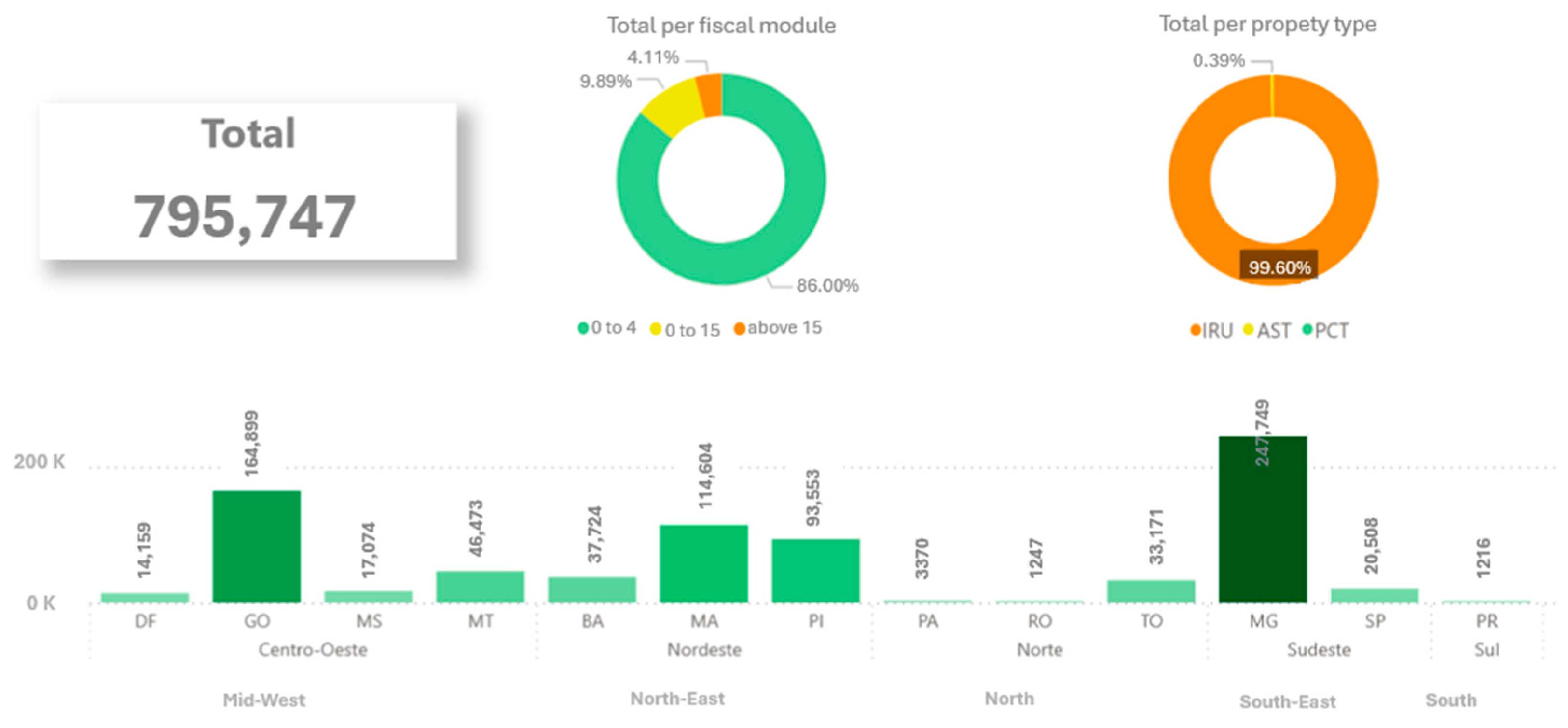
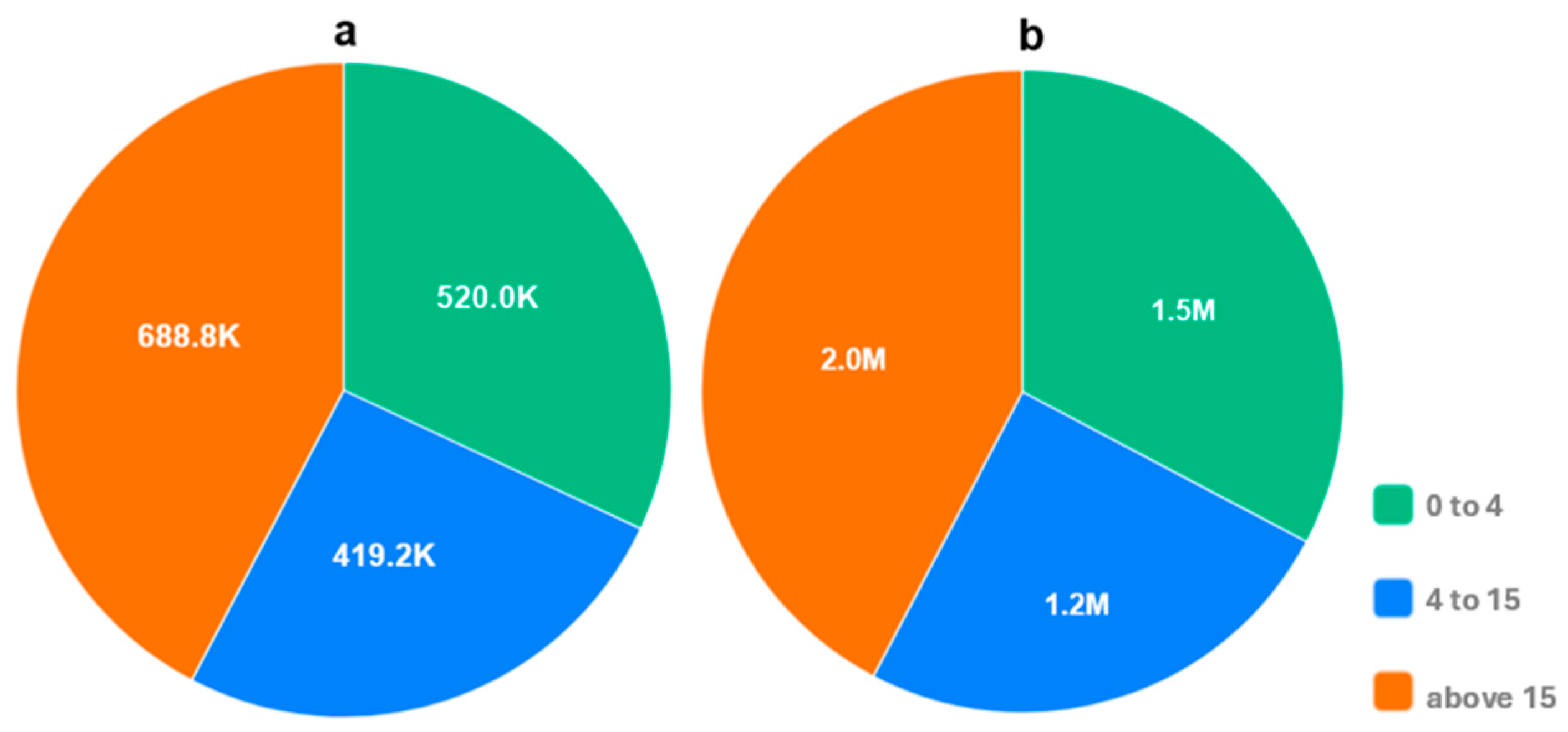
The close relations between the land peoples, small-scale production and nature preservation can be seen in the Rural Environmental Registration System (SICAR)15. A datum that draws attention in the SICAR [59] is the number of properties, tenure land, and areas smaller than four fiscal modules16, enlisted in the Rural Environmental Registration (CAR), that are declared to be open to or already signed up for the Program for Environmental Recovery (PRA)17. It represents the so-called “family farming”, being around 684,342 farming units, representing 85.38% of the Cerrado total agricultural area, interested or willing to take part in the PRA government recovery program (Figure 4). Nationally, there are more than 4.46 millions of these family units, tenure land and small areas registered in SICAR [59], showing the commitment to the conservationist perspective.
In total, these properties and family areas declared a need to restore vegetation across over two million hectares in the Cerrado biome. That is if the deficits of Permanent Preservation Areas (APPs) and Legal Reserve (RL)18 are added, i.e., around 32% of total (Figure 5) [59].
These data are relevant, showing (i) the pent-up demand for restoration and (ii) the ecological potential that could be used if land tenure was guaranteed to family farming and countryside people through agrarian reform programs [17,23,41]. In addition to helping the fight against the huge inequality that affects the country, a wide-ranging program could be developed for nature restoration. As well as peasants planting food, why can they not plant forests? Or, in this case, could peasants not restore the Cerrado?
Thus, recognizing the magnitude of this challenge, it is impossible not to be solidary with MST’s peasant families, who decided to fight for people and nature, making their struggle more contemporary than ever. To overcome inequality and the ecological challenges of climate change and the planet’s heating requires courage and audacity. The families organized by MST have been proof of that, engaging in an idea debate for paradigm shifts related to production, natural assets and the interaction between humans and nature. Agroecology [27], together with land struggle, emerges as a key element for reflecting on this path. In the face of the socio-ecological challenges of the 21st century, the agribusiness usurper model is seen as archaic, and the MST is the face of modernity that humanity needs and should orient itself to.

3.3. The Emergence of Perspectives for the Socio-Ecological Restoration of Cerrado Landscapes

The degradation of the Cerrado is not only the result of inadequate practices in the use of natural resources, but also of the expansion of agricultural extractivism [22,26] and the increasing financialization of nature, agricultural commodities and land [17]. Degradation is a systematic process and a development model, involving green land grabbing, land disputes and struggles for the control of natural resources. This predatory relationship with nature includes the expropriation and dispossession of rural communities and countryside peoples [37], intensifying socio-environmental conflicts and deepening the ecological crisis in Brazil. These processes of appropriation of land and natural resources with the expropriation of countryside people materialize the eco-agrarian question [33,46].
The socio-ecological restoration of Cerrado ecosystems and landscapes would be more effective through conservation practices that go beyond recovering biophysical processes to address the structural causes and social consequences [5,46,58]. Ecological practices and sciences are based on a Western worldview, which disregards the knowledge, wisdom, and interactions of countryside peoples and communities with nature [60]. Therefore, there is little information regarding the role and initiatives of countryside people in ecological restoration processes and sustainable practices [10,22,33].
Peasant experiences and MST practices help broaden the meaning of ecological restoration, including its social, cultural, and political dimensions [10,38]. Unlike approaches focused exclusively on the recovery of vegetation cover—planting trees in extensive monocultures—and ecosystems, peasant initiatives and actions tend to associate ecosystem restoration with improvements in social, cultural, and political conditions in the countryside [38,60]. These are fundamental for improving living conditions and social reproduction in the territories. Ecosystem restoration must be associated with strengthening social relations, political autonomy, the protection of territories, and the guarantee of rights and dignified living conditions for countryside peoples [16,45,60].
Consequently, the knowledge and practices of countryside communities are essential in restoration processes [60]. Nature is not a sphere separate from societal life [57]; therefore, ecosystems and landscapes are continuously coproduced and transformed by the interactions between humans and the environment and the land [33,44]. Therefore, restoration implies recovering not only species, ecological functions, and plants, but also the landscapes and social relations that have historically contributed to the management and protection of the Cerrado [4,8,10].
Peasant principles and initiatives point to the emergence of a socio-ecological restoration perspective. First is the critique of agrarian extractivism and the predatory modernization of agricultural production [16,28,34]. By denouncing the ecological damage, social harm, and expropriation resulting from the expansion of monocultures, the MST highlights environmental degradation, which cannot be dissociated from land concentration, land grabbing, private appropriation, and commodification of nature [40,41]. Socio-ecological restoration requires facing mechanisms and processes that continuously produce degraded areas, expropriate common goods and countryside peoples, and concentrate wealth and land. The MST, therefore, advocates for agrarian reform—democratization of access to and redistribution of land, recognition and demarcation of lands belonging to indigenous peoples and traditional communities, and the creation of environmentally protected areas [22,23,41].
The second element of the socio-ecological restoration is the co-production relationship between society and nature. According to Ploeg [45], historically, rural peoples have developed forms of production and social reproduction in permanent interaction with the ecological base, co-producing landscapes and territories. Therefore, nature is not understood as an economic resource to be appropriated and accumulated, but as a material condition of existence and way of life. This relationship contributes to the development of productive practices that integrate production, biodiversity conservation, and the restoration of ecological conditions, since food production and reproduction depend on it [27,45]. The participation of peasants in restoration processes is encouraged, in contrast to more conservative models that tend to limit or even prevent such participation [10,27,38].
A third element is the defense of common goods and the rights of countryside peoples [40,58]. The struggles for land, water, native seeds, and territorial rights reveal that socio-environmental restoration also involves disputes over who controls nature and its resources, and for what purposes it will be used. The protection of common goods represents not only an environmental demand but a fundamental condition for social reproduction, permanence in the countryside, and sustainable and lasting processes of socio-ecological restoration [16,33,34].
Agroecology is a fourth central element for sustainability and socio-environmental restoration. This restoration is not an activity separate from production and social reproduction, but integrates productive systems, social organization, the exercise of rights, and sustainable ways of life. Healthy food production systems are promoted to protect springs, water, and native vegetation, and to increase species diversity [10,60]. The adoption of agroecological practices simultaneously articulates environmental, cultural, economic, political, and social objectives. Agroecology is the science, practice and strategy capable of bringing conservation, production and social justice closer together in the countryside [27,28,41].
The peasant perspective introduces a dimension that is often neglected in debates about restoration: social justice associated with environmental and climate justice. Environmental degradation disproportionately affects populations that depend directly on ecosystems and nature to live, produce and reproduce [27,33]. Consequently, restoration cannot be reduced to recomposing ecological attributes without addressing the inequalities that condition access to land, water and other natural resources. The struggles for agrarian reform, food sovereignty, environmental conservation, and territorial rights are constituent and integral parts of socio-environmental restoration processes [7,38,45].
These elements and perspectives do not affirm a consolidated model or a reality of “peasant restoration”, but possibilities and potentialities based on agroecological practices, traditional and adapted knowledge, and social and political demands [4,10,60]. Existing experiences are diverse, heterogeneous, and marked by multiple contradictions and challenges [18,27]. However, they reveal important evidence and emerging perspectives that broaden the meanings and possibilities of socio-ecological restoration. Beyond restoring degraded ecosystems, these experiences, practices, and demands point to possibilities for restoring socio-ecological relationships, broken by historical processes of productive expropriation, social exploitation, environmental degradation, inequality and injustice [45,53,60].
Countryside people’s experiences, practices, and demands contribute to broadening the meaning of ecological restoration, adding a social dimension and coining the notion of socio-environmental restoration. This restoration brings back the debate on frequently marginalized issues such as, for example, who degrades (responsibilities), who restores (guardians and protectors), for whom it is restored (rights), who benefits and who is harmed (environmental justice) [33,40]. In the face of contemporary environmental and climate crises, restoration can constitute not only a response to the increasing degradation of ecosystems and landscapes, but also a set of political processes and social transformations in the countryside, building agroecological transitions, more just ways of life, and an ecologically sustainable future [4,10,41,60].

4. Notes for a Conclusion

The concept of agrarian extractivism shows how agribusiness has been alienating humans from nature, extracting natural wealth and creating subordination and dependency by the capitalist system. The agrarian extractivism in the Cerrado agricultural frontier shows that environmental degradation does not represent only the inadequate result of nature exploitation caused by agribusiness for commodity production. There is an ongoing ascendant spiral of degradation, inequality and exclusion, since the predatory and extractive actions deepen the concentration of wealth in the hands of an agrarian elite.
Social and ecological degradation are also affecting the ways of life of rural communities and countryside peoples, depleting the historical metabolic socio-ecological relations in the Cerrado [44,53,57]. This degradation forces the loss of autonomy from those who protect nature, the guardians of socio-biodiversity, causing poverty and exclusion, since they feel forced to cohabit in an increasingly hostile environment, without conditions to sustain it, aggravated by climate change [22]. Real and symbolic violence and degradation are forcing countryside people to lose their relationship with nature, a fundamental dimension of their existence and ways of living. It has destroyed humans’ autonomy and trust in the regular cycles of nature. It results in unsafe and unhealthy ways of living and no satisfaction of personal and collective needs, jeopardizing trust that the land can be a place for dignifying life, for family subsistence, for the possibility of developing and improving the quality of life, or for rights’ safekeeping and social justice [5,53].
The MST has been struggling and resisting agribusiness and its extractive and predatory agricultural practices, promoting agroecology and sustainable alternatives against the historical social and environmental injustice in Brazil, particularly in the Cerrado countryside. Therefore, land struggle has become a fight for sustainable ways of living, producing on the land [41] and the rights of the countryside peoples, becoming part of the social–environmental restoration [5,7,10,46].
A complex and challenging reality, accelerated by the climate emergency, has highlighted diverse perspectives and challenges for social and ecological restoration in the 21st century [16,37,44]. The ways have been between approaching the techno-economic paradigm only to restore the destroyed nature, or advancing, positioning oneself as a strategic tool also to restore human lives, the diversity of ways of living, and the Cerrado sociability that was ruptured. This sociability concerns the social relations and the metabolic socio-ecological relations that were historically part of the creation of the Cerrado landscape [27,33].
The MST and the countryside people in general, from their struggles and the critical development of the reality of the land, have been showing the need for boldness to set new paradigms. In this regard, they show that there is no separation between nature restoration and fighting social inequality. Therefore, to the peasants from MST, restoring nature also means restoring the Cerrado sociability that has been ruptured [27,33,41].
Intensifying the discussion in this direction points to more extensive processes of ecological restoration, better suitable to the socio-ecological demands of the 21st century, since it foresees that the ecosystem restoration process goes beyond a decade; it is a longer process (maybe permanent), with a combination of public policies and strengthening the land peoples, which reinforces the role of the agrarian reform to the territory demarcation. This contributes to broadening the discussion of socio-ecological restoration, highlighting new possibilities for co-production with nature, including perspectives on sustainable development, climate justice, and dignified life in rural areas [33,41,60].
Consequently, a political, social and economic formulation is needed, one that puts in the center those who always protected the Cerrado, in addition to trying to reorganize the uses of the rural space to meet the human and socio-ecological demands of this historic time. The public policy focused on funding, like the TFFF, is limited and exclusionary, defining the biomes that “deserve” protection and deciding who could be funded, and who should bear the financial burden. It always favors those who control capital, meaning that it does not prioritize those who have historically preserved nature.

Author Contributions

The two authors drafted the entire text collaboratively. The first author wrote an initial version based on his doctoral research. This version was then fully revised by the second author, who redrafted it, adding information, reflections, sources and literature. After, both authors revised the article to address the reviewers’ comments and suggestions. The second author conducted a second comprehensive review, including a review of the English. The authors have agreed to publish this version of the manuscript in the journal Land. All authors have read and agreed to the published version of the manuscript.

Funding

This research was funded by the Finnish Ministry of Foreign Affairs through a scholarship of the TreesForDev project, in cooperation with the University of Helsinki. The publication of this article is funded by the University of Brasilia (UnB) through its Edital DPI-BCE nº 001/2026, process SEI nº 23106.008757/2026-14.

Data Availability Statement

The databases consulted for this research are publicly available and provided by public and private entities.

Acknowledgments

This study was conducted as part of research project “Socio-ecological and politico-economic dynamics of ecological restoration through tree-planting programs in the Global South”, the TreesForDev project. Thanks to Camila Hespanhol for translating this article from Portuguese to English. Thanks to the University of Brasilia (UnB), whose support made the publication of this article possible.

Conflicts of Interest

The authors declare no conflicts of interest.

Abbreviations

The following abbreviations are used in this manuscript:
2,4-D2,4-Dichlorophenoxyacetic Acid
ABAGBrazilian Association of Agribusiness
ANANational Water Agency
APPPermanent Preservation Area
CARRural Environmental Registration
CONTAGNational Confederation of Workers in the Agriculture
COP1616th United Nations Convention on Biological Diversity
COP3030th United Nations Climate Change Conference
CPTPastoral Commission on Land
DataSUSMinistry of Health Public Data Service
FAOUN Food and Agriculture Organization
FPAParliamentary Caucus on Agriculture and Livestock
INCRANational Institute of Colonization and Agrarian Reform
MATOPIBAAcronym referring to the Brazilian agricultural frontier formed by the states of Maranhão, Tocantins, Piauí, and Bahia
MMABrazilian Ministry of the Environment and Climate Change
MSBrazilian Ministry of Health
MSTMovement of Landless Rural Workers
PCTsTraditional Peoples and Communities
PLANAVEGNational Plan for the Recovery of Native Vegetation
PRAProgram for Environmental Recovery
RLLegal Reserve
SICARRural Environmental Registration System
TFFFTropical Forests Forever Fund
UNUnited Nations
UNEPUnited Nations Environment Program
WEFWorld Economic Forum

Notes

1
These characteristics exclude the Cerrado biome from FAO’s definition of “forest” [15], defining a “forest” area with trees taller than five (5) meters and a canopy cover greater than 10% of the total canopy area. This definition prevents the use of TFFF resources for Cerrado preservation [9,10,14].
2
There has also been an increase in the illegal use of fire, facilitating land grabbing and the expulsion of countryside people from the territories [21]. These—associated with climate change, longer droughts, low humidity, and accumulated dry biomass—have turned the Cerrado into a burning territory, increasing incidents of fire, loss of native vegetation, and crops, animals and infrastructure of rural communities [7,9,18].
3
The term hotspot is used to define a territory or biome with a high concentration of endemic species (over 1500) that are under threat of habitat and environmental destruction. This classification makes the biome a priority for biodiversity conservation [11].
4
“Povos do campo” or “countryside people” is used here to avoid a long political–conceptual debate on naming the populations that live and work in the Brazilian countryside [17,23]. The 2006 law defined ”family farming”, but several countryside communities do not identify themselves as family farmers or peasants. Thus, the decree on Traditional Peoples and Communities (PCTs) recognizes and names 28 different ways of living, working, and relating to the land, including indigenous people and Quilombolas communities (hinterland settlements, originally founded by escaped enslaved people, recognized as ethno-racial communities with relations with the land) [23,24].
5
The Green Revolution package is based on high mechanization (intensive use of tractors), use of hybrid seeds (later genetically modified seeds and plants), agrochemical (pesticides, herbicides) and chemical fertilizers, and hormones, amongst other technical innovations [25].
6
The political power of landowners is historical in Brazil, but the agrarian elite has gained a “modern shape” during the 1990s [25] with the creation of the Brazilian Association of Agribusiness (ABAG) and use of “agribusiness” as a synonym for “modernization” and even “industrialization of agriculture” [22,28].
7
This acronym MATOPIBA of four states is a geographical limit of 337 municipalities, mapped based on the existence of Cerrado’s “empty spaces” [17]. According to the Technical Note, this territory was defined by the existence “in the states of Maranhão, Tocantins, Piauí and Bahia, of thousands of hectares occupied by a low productivity agriculture and of low income” [29] (p. 3).
8
From an ecological perspective, the opposite is also true, because the Cerrado’s fragility means instability in the Amazon, given the importance of these biomes to the water cycle and the country’s rainfall regulation [12,34].
9
According to Sauer and Borras Jr. [30], land grabbing is a phenomenon of appropriation of large tracks of land and natural resources by national or foreign investors. Processes of appropriation—investments, purchases, leasing, renting, and concessions—are leading to control over land and to capital accumulation. They are political mechanisms of dispossession that encompass “green grabbing”—investments and processes of appropriation based on narratives of sustainability and solutions for the climate emergency—shaping a “green land grabbing” phenomenon [23,28,33].
10
This dossier highlights some of the 13 substances identified as banned in the European Union. The risks to the population’s health prohibited the use, but not the production and export, allowing its excessive use in other countries [6]. Another finding of the study was the presence of a “cocktail” of various agrochemicals in the waters that supply the population. Due to the scarcity of studies linking the impact of combinations of various additives on health, it is necessary to conduct studies, e.g., on the persistence or accumulation of these substances in the human body and the environment [6].
11
The indigenous people were the main victims of murder (five) in 2024, followed by landless persons (three). The list of murdered people was also formed by two persons from agrarian settlements, a small-land owner, a posseiro (a person who has the tenure rights but not the ownership status) and a Quilombola. According to data from CPT, in most cases, the category of landowners is the main one responsible for the murders (46%) [21].
12
The symbolic violence is done, for example, through marketing, such as the campaign “Agri is tech, Agri is pop, Agri in everything”, since it announces agribusiness as the only one able to feed society, providing food, energy and fiber, attributing to itself the whole countryside production, if everything would be from the “agribusiness lands”. This agri(business) forcefully appropriates all other productive forms as its own package, ignoring and destroying socio-productive, cultural and economic differences, as well as relations with nature [55].
13
The Leagues’ leaders were persecuted, tortured, murdered and other rural organizations like the then-recently created National Confederation of Workers at the Agriculture (CONTAG) suffered intervention. The military regime named an intervener in 1964 that controlled CONTAG for eight years, and the local rural unions were controlled and suffered political and organizational restrictions (see [56]).
14
Differently from the notion of “untouchable nature”, climate and environmental negationism feeds from biases, e.g., ideas that nature constitutes a blockage to development or economic growth, which was widely disseminated in the debates in the Parliament during the reform of better loosening the rules of the Forest Code in 2011/2012 [58].
15
Created by the Forest Code in 2012, the SICAR is a mandatory but self-declared national electronic register for all rural properties, established to enable environmental regularization, monitoring the existence and conservation of protected areas, deforestation, and land use.
16
Established in 1964 by the National Institute of Colonization and Agrarian Reform (INCRA), a “fiscal module” is an area of land, defining a minimum of hectares required for a family to live, work and thrive in the countryside of each municipality around Brazil.
17
The PRA is a mandatory program designed to bring farms into compliance with the Forest Code by restoring illegally cleared areas. It allows farmers to restore Legal Reserves (RLs) or Permanent Preservation Areas (APPs) to correct liabilities from deforestation occurring before 22 July 2008.
18
The Legal Reserve (RL) is a mandatory conservation area of native vegetation corresponding to 20% of each farm in the Cerrado and 80% in the Amazon. The Permanent Preservation Areas (APAs acronym in Portuguese) are sensitive ecological areas such as riparian buffers (marginal strips along rivers and streams), areas surrounding springs and perennial water eyes, hilltops, slopes with an inclination greater than 45°, and edges of plateaus [5,8].

References

  1. UNEP; FAO. About the United Nations Decade. UN Decade on Ecosystem Restoration (2021–2030). 2019. Available online: https://www.decadeonrestoration.org/about-un-decade (accessed on 8 March 2024).
  2. MMA. Plano Nacional de Recuperação da Vegetação Nativa (PLANAVEG): Rota Estratégica para Recuperação de 12 Milhões de Hectares (2025–2028); MMA: Brasília, Brazil, 2024. Available online: https://www.gov.br/mma/pt-br/composicao/sbio/dflo/plano-nacional-de-recuperacao-da-vegetacao-nativa-planaveg/planaveg_2025-2028_2dez2024.pdf (accessed on 8 May 2025).
  3. MMA. Estratégia e Plano de Ação Nacionais para a Biodiversidade (2025–2030); Ministério do Meio Ambiente: Brasília, Brazil, 2025. Available online: https://www.gov.br/mma/pt-br/centrais-de-conteudo/publicacoes/biodiversidade-e-biomas/epanb-2025-2030.pdf (accessed on 5 January 2026).
  4. Chazdon, R.L.; Chaves, R.B.; Calmon, M.; Siqueira, L.P.; Junqueira, R.G.P. Experiências de governança da restauração de ecossistemas e paisagens no Brasil. Estud. Av. 2022, 36, 221–237. [Google Scholar] [CrossRef]
  5. Sauer, S.; Cabral, L. Martyrdom of the Cerrado: An agri-food territory in need of justice. In IDS Policy Brief; Institute of Development Studies: Brighton, UK, 2022; pp. 1–6. [Google Scholar] [CrossRef]
  6. Lopes, H.R.; Gurgel, A.M.; Melo, L.C. Vivendo em Territórios Contaminados: Um Dossiê Sobre Agrotóxicos nas Águas do Cerrado; APATO: Palmas, Brazil, 2023. [Google Scholar]
  7. Cabral, L.; Sauer, S.; Shankland, A. Frontier territories: Countering the green revolution legacy in the Brazilian Cerrado. IDS Bull. 2023, 54, 1–145. [Google Scholar] [CrossRef]
  8. Balbinot, L.; Pereira, L.C.; Matus, G.N.; Silva, D.C.C.; Nnadi, E.O.; Tonello, K.C. Linking vegetation indices and land tenure to assess passive restoration dynamics in the Brazilian Cerrado. Land Use Policy 2025, 158, 107760. [Google Scholar] [CrossRef]
  9. Rodrigues, A.A.; Macedo, M.N.; Silvério, D.V.; Maracahipes, L.; Coe, M.T.; Brando, P.M.; Bustamante, M.M.C. Cerrado deforestation threatens climate and water availability for agriculture and ecosystems. Glob. Change Biol. 2022, 28, 6807–6822. [Google Scholar] [CrossRef] [PubMed]
  10. Bustamante, M.M.C.; Silva, J.S.; Scariot, A.; Sampaio, A.B.; Mascia, D.L.; Garcia, E.; Sano, E.; Fernandes, G.W.; Durigan, G.; Roitman, I.; et al. Ecological restoration as a strategy for mitigating and adapting to climate change: Lessons and challenges from Brazil. Mitig. Adapt. Strateg. Glob. Chang. 2019, 24, 1249–1270. [Google Scholar] [CrossRef]
  11. MMA. Cerrado. 2024. Available online: https://www.gov.br/mma/pt-br/assuntos/biodiversidade-e-biomas/biomas-e-ecossistemas/biomas/cerrado (accessed on 5 January 2026).
  12. IBGE. Biomas e Sistema Costeiro-Marinho do Brasil; IBGE: Rio de Janeiro, Brazil, 2024. Available online: www.ibge.gov.br/apps/biomas/#/home (accessed on 10 February 2025).
  13. Reatto, A.; Correia, J.R.; Spera, S.T.; Martins, E.S. Solos do bioma Cerrado: Aspectos pedológicos. In Cerrado: Ecologia e Flora; Sano, S.M., Almeida, S.P., Ribeiro, J.F., Eds.; Embrapa: Brasília, Brazil, 2008; pp. 107–150. [Google Scholar]
  14. Terra, M.C.N.S.; Nunes, M.H.; Souza, C.R.; Ferreira, G.W.D.; Prado-Junior, J.A.; Rezende, V.L.; Mello, J.M. The inverted forest: Aboveground and notably large belowground carbon stocks and their drivers in Brazilian savannas. Sci. Total Environ. 2023, 867, 161320. [Google Scholar] [CrossRef] [PubMed]
  15. FAO. FRA 2015: Terms and Definitions; FAO: Rome, Italy, 2012; Available online: https://www.fao.org/4/ap862e/ap862e00.pdf (accessed on 8 May 2025).
  16. Porto-Gonçalves, C.W. A Globalização da Natureza e a Natureza da Globalização; Civilização Brasileira: Rio de Janeiro, Brazil, 2006. [Google Scholar]
  17. Leite, A.Z.; Sátiro, G.; Sauer, S. Conflitos socioambientais no Matopiba: Expropriação, exploração e acumulação na fronteira agrícola brasileira. In A Fronteira do Matopiba: As Novas Faces da Expansão do Capital e Seus Conflitos; Marques, M.I.M., Alves, V.E.L., Eds.; USP: São Paulo, Brazil, 2024; pp. 409–435. [Google Scholar] [CrossRef]
  18. Bustamante, M.M. Tropical Forests and Climate Change Mitigation: The Decisive Role of Environmental Governance. Georgetown Journal of International Affairs. 20 March 2020, pp. 18–21. Available online: https://gjia.georgetown.edu/global-governance/tropical-forests-climate-change-mitigation-role-of-environmental-governance/ (accessed on 8 March 2026).
  19. Lima, J.E.F.W.; Silva, E.M. Estimativa da contribuição hídrica superficial do Cerrado para as grandes regiões hidrográficas brasileiras. In Anais do Simpósio Brasileiro de Recursos Hídricos, 17th ed.; SBRH: Florianópolis, Brazil, 2007. [Google Scholar]
  20. ICMBio. Cerrado. Brasilia, MMA, 2025. Available online: https://www.gov.br/icmbio/pt-br/assuntos/biodiversidade/unidade-de-conservacao/unidades-de-biomas/cerrado (accessed on 10 February 2025).
  21. CPT/CDDTB. Conflitos no Campo 2024; CPT Nacional: Goiânia, Brazil, 2025. [Google Scholar]
  22. Sauer, S.; Oliveira, K.R.A. Extractivismo agrario en el Cerrado brasileño. In Extractivismo Agrario en América Latina; McKay, B.M., Alonso-Fradejas, A., Ezquero-Cañete, A., Eds.; CLACSO: Buenos Aires, Argentina, 2022; pp. 125–162. [Google Scholar]
  23. Sauer, S.; Castro, L.F.P.; Leite, A.Z. Cerrado, savanas e povos do campo: Conflitos socioambientais e direitos na fronteira agrícola do Matopiba. Research Gate. 2025. Available online: https://www.researchgate.net/publication/398657973_CERRADO_SAVANAS_E_POVOS_DO_CAMPO_conflitos_socioambientais_e_direitos_na_fronteira_agricola_do_Matopiba?channel=doi&linkId=693da41c9aa6b4649dc0685c&showFulltext=true (accessed on 15 June 2026).
  24. Oliveira, A.U. A longa marcha do campesinato brasileiro: Movimentos sociais, conflitos e reforma agrária. In A Questão Agrária no Brasil; Stedile, J.P., Ed.; Outras Expressões: São Paulo, Brazil, 2016; Volume 9, pp. 329–360. [Google Scholar]
  25. Delgado, G.C. Do Capital Financeiro na Agricultura à Economia do Agronegócio: Mudanças Cíclicas em Meio Século; Editora UFRGS: Porto Alegre, Brazil, 2012. [Google Scholar]
  26. Hershaw, E.; Sauer, S. Land and investment dynamics along Brazil’s ‘final frontier’: The financialization of the Matopiba at a political crossroads. Land Use Policy 2023, 131, 106675. [Google Scholar] [CrossRef]
  27. Petersen, P. Agroecologia e a superação do paradigma da modernização. In Agroecologia: Práticas, Mercados e Políticas para uma Nova Agricultura; Niederle, P.A., Almeida, L., Vezzani, F.M., Eds.; Kairós: Curitiba, Brazil, 2013; pp. 69–104. [Google Scholar]
  28. Sauer, S. Terra no século XXI: Desafios e perspectivas da reforma agrária. Retratos Assentamentos 2016, 19, 69–97. [Google Scholar] [CrossRef]
  29. Miranda, E.E.; Magalhães, L.A.; Carvalho, C.A. Proposta de Delimitação Territorial do MATOPIBA. Nota Técnica nº 1; Embrapa: Campinas, Brazil, 2014; Available online: https://www.infoteca.cnptia.embrapa.br/infoteca/bitstream/doc/1037313/1/NT1DelimitacaoMatopiba.pdf (accessed on 6 January 2026).
  30. Sauer, S.; Borras, S., Jr. ‘Land grabbing’ e ‘green grabbing’: Uma leitura da ‘corrida na produção acadêmica’ sobre a apropriação global de terras. Rev. Campo-Territ. 2016, 11, 6–42. [Google Scholar] [CrossRef]
  31. WEF. The Cerrado: Production and Protection. White Papers. 2024. Available online: https://www.weforum.org/publications/the-cerrado-production-and-protection/ (accessed on 10 February 2024).
  32. Conab. Acompanhamento da Safra Brasileira de Grãos: Safra 2025/26 (2º Levantamento); Conab: Brasília, Brazil, 2025. Available online: https://www.gov.br/conab/pt-br/atuacao/informacoes-agropecuarias/safras/safra-de-graos/boletim-da-safra-de-graos/2o-levantamento-safra-2025-26/2o-levantamento-safra-2025-26 (accessed on 6 January 2026).
  33. Sauer, S. Eco-agrarian question: Agrarian extractivism, climate change and deforestation in Brazil. Rev. NERA 2024, 27, 69–97. [Google Scholar] [CrossRef]
  34. Egger, D.S.; Rigotto, R.M.; Lima, F.A.N.S.; Costa, A.M.; Aguiar, A.C.P. Ecocídio nos Cerrados: Agronegócio, espoliação das águas e contaminação por agrotóxicos. Desenvolv. Meio Ambiente 2021, 57, 16–54. [Google Scholar] [CrossRef]
  35. MAPBiomas. Relatório Anual do Desmatamento no Brasil 2024; Mapbiomas: São Paulo, Brazil, 2025; Available online: https://alerta.mapbiomas.org/wp-content/uploads/sites/17/2025/11/RAD2024_28_10.pdf (accessed on 5 January 2026).
  36. Fazenda, I.C.A.; Tavares, D.E.; Godoy, H.P. Interdisciplinaridade na Pesquisa Científica; Papirus: Campinas, Brazil, 2015. [Google Scholar]
  37. Harvey, D. O Novo Imperialismo, 2nd ed.; Loyola: São Paulo, Brazil, 2005. [Google Scholar]
  38. Ehrnstöm-Fuentes, M.; Kröger, M.; Ollinaho, O.; Hagolani-Albov, S.; Annala-Tesfaye, L.; Vuola, M.; Sauer, S. Ecological restoration proposals: Transformative potentials against ‘green’ extractivism to just socio-environmental transformations. Environ. Plan. D Soc. Space, 2026; under revision. [CrossRef]
  39. MAPBiomas. Projeto Mapbiomas: Mapeamento da Superfície de Água no Brasil 1985–2023 (Coleção 3). 2024. Available online: https://brasil.mapbiomas.org/wp-content/uploads/sites/4/2024/06/Fact_MapBiomas_Agua_2023_25.06.24.pdf (accessed on 5 February 2025).
  40. MST. Programa Agrário do MST; MST: São Paulo, Brazil, 2013. [Google Scholar]
  41. MST. Por Reforma Agrária Popular: Plantar Árvores, Produzir Alimentos Saudáveis. Cadernos de Agroecologia. 2022, Volume 2, pp. 16–27. Available online: https://mst.org.br/download/caderno-de-agroecologia-vol-02 (accessed on 12 February 2025).
  42. Bombardi, L.M. Agrotóxicos e Colonialismo Químico; Elefante: São Paulo, Brazil, 2023. [Google Scholar]
  43. Medeiros, L.S. Repressão e resistências no campo no regime empresarial militar. In Lutas, Memórias e Violações no Campo Brasileiro; Sauer, S., Ed.; Outras Expressões: São Paulo, Brazil, 2020; pp. 7–28. [Google Scholar]
  44. Foster, J.B. A Ecologia de Marx: Materialismo e Natureza; Civilização Brasileira: Rio de Janeiro, Brazil, 2005. [Google Scholar]
  45. van der Ploeg, J.D. Camponeses e Impérios Alimentares: Lutas por Autonomia e Sustentabilidade na era da Globalização; UFRGS: Porto Alegre, Brazil, 2008. [Google Scholar]
  46. Sauer, S.; Moreira, J.M.C.; Sátiro, G.; Castro, L.F.P.; Silva, A.A.; Oliveira, K.R.A.; Leite, A.Z. Conflitos Socioambientais: Concepções e Aplicação no Observatório Matopiba; UnB: Brasília, Brazil, 2021. [Google Scholar]
  47. FPA. Todos os Membros. Available online: https://fpagropecuaria.org.br/todos-os-membros/ (accessed on 8 February 2025).
  48. FAO. FAOSTAT: Pesticides Use, 2023. Available online: https://www.fao.org/faostat/en/#data/RP/visualize (accessed on 18 January 2026).
  49. Hess, S.C.; Nodari, R. Agrotóxicos no Brasil: Panorama dos produtos entre 2019 e 2022. Ambientes Mov. 2022, 2, 39–52. [Google Scholar] [CrossRef]
  50. MS. Intoxicação Exógena: Intoxicações Registradas no Sinan Net Brasil—DATASUS. 2026. Available online: http://tabnet.datasus.gov.br/cgi/deftohtm.exe?sinannet/cnv/Intoxbr.def (accessed on 18 January 2026).
  51. ANA. Atlas Irrigação: Uso da Água na Agricultura Irrigada, 2nd ed.; ANA: Brasília, Brazil, 2021. [Google Scholar]
  52. Guimarães, D.P.; Landau, E.C. Agricultura Irrigada por Pivôs Centrais no Brasil em 2024 (Boletim 261); Embrapa: Sete Lagoas, Brazil, 2024. [Google Scholar]
  53. Moura, L.H.G. Ruptura do metabolismo socioecológico. In Dicionário de Agroecologia e Educação; Dias, A.P., Stauffer, A.B., Moura, L.H.G., Vargas, M.C., Eds.; Expressão Popular: São Paulo, Brazil, 2021; pp. 659–668. [Google Scholar]
  54. Miranda, J.G.; Sauer, S. Green extractivism and the invention of ‘carbon territories’ in the Brazilian Amazon. Third World Q. 2025, 1–18. [Google Scholar] [CrossRef]
  55. Santos, A.D.G.; Silva, D.V.; Maciel, K.N. A campanha “Agro é tech, agro é pop, agro é tudo” da Rede Globo de Televisão como difusora da propaganda sobre o agronegócio no Brasil. Rev. Eptic 2019, 21, 45–61. Available online: https://periodicos.ufs.br/eptic/article/view/10910 (accessed on 6 March 2026).
  56. Porto, C.A.M.; Teixeira, M.A. Ação e resistência da Contag na ditadura civil-militar no Brasil. In Lutas, Memórias e Violações No Campo Brasileiro; Sauer, S., Ed.; Outras Expressões: São Paulo, Brazil, 2020; pp. 259–279. [Google Scholar]
  57. Diegues, A.C. O Mito Moderno da Natureza Intocada; Expressão Popular: São Paulo, Brazil, 2023. [Google Scholar]
  58. Sauer, S.; França, F.C. Código Florestal, função socioambiental e soberania alimentar. Cad. CRH 2012, 25, 285–307. [Google Scholar] [CrossRef]
  59. SICAR. Painel de Regularização Ambiental. 2026. Available online: https://app.powerbi.com/view?r=eyJrIjoiZmRiM2QwZDQtYjUxZi00YWI0LWFjNGEtZTIxNjg1YWFkNmZlIiwidCI6ImViMjJjMjU4LWQ0ZWQtNGZmMC04Y2Y2LTI4NmQ2Mjc3OTQ5ZSJ9 (accessed on 19 January 2026).
  60. Mansourian, S. Ecosystem Restoration and Indigenous Peoples and Local Communities: Learning from Protected and Conserved Areas. Restor. Ecol. 2026, 34, e70288. [Google Scholar] [CrossRef]
Figure 1. Cerrado and Brazil total deforested area, in hectares per year, from 2019 to 2024 [35].
Land 15 01241 g001
Figure 2. Top ten countries by pesticide use in 2023 (ton). Source: FAO [48].
Land 15 01241 g002
Figure 3. Cerrado’s body water record [39].
Land 15 01241 g003
Figure 4. Number of registrations with interest in taking part in PRA for the Cerrado until December 2025 [59]. Observation: IRU—private properties, AST—rural settlements; PCT—traditional peoples and communities.
Land 15 01241 g004
Figure 5. Declared areas to restore to Cerrado biome: (a) declared APP area to recover; (b) declared Legal Reserve area to recover [59].
Land 15 01241 g005
Disclaimer/Publisher’s Note: The statements, opinions and data contained in all publications are solely those of the individual author(s) and contributor(s) and not of MDPI and/or the editor(s). MDPI and/or the editor(s) disclaim responsibility for any injury to people or property resulting from any ideas, methods, instructions or products referred to in the content.