Article

Sense of Place and the Residence Intention of On-Demand Platform Workers in China’s Megacities

1
School of Architecture, South China University of Technology, Guangzhou 510641, China
2
State Key Laboratory of Subtropical Building and Urban Science, South China University of Technology, Guangzhou 510641, China
3
Faculty of Arts and Social Sciences, National University of Singapore, Singapore 119077, Singapore
4
School of Public Administration, South China University of Technology, Guangzhou 510641, China
*
Author to whom correspondence should be addressed.
Land 2026, 15(7), 1208; https://doi.org/10.3390/land15071208
Submission received: 21 April 2026 / Revised: 19 May 2026 / Accepted: 25 May 2026 / Published: 6 July 2026

Abstract

This study examines the governance challenges posed by new forms of employment in the context of China’s new urbanization, focusing particularly on the widespread phenomenon of “residing without settling” among on-demand platform workers in megacities. Based on a survey of 1627 respondents in Guangzhou, the findings reveal a pronounced gradient stratification in on-demand platform workers’ residence intention. Specifically, 57.3% of respondents demonstrate positive short-term residence intention, whereas long-term residence intention is predominantly characterized by neutral attitudes (73.3%), and settlement intention exhibits a clearly negative tendency (67.8%). Structural Equation Modeling indicates that residential environment exerts the strongest positive effect on sense of place (β = 0.47), followed by economic foundation (β = 0.24), while social capital demonstrates the weakest promoting effect (β = 0.22). Scenario analysis using Bayesian Network further reveals that when place attachment reaches a high level, the probability of positive long-term residence intention among on-demand platform workers increases by 22.1%, whereas improvements in residential environment reduce the probability of negative settlement intention by 5.2 percentage points. The results demonstrate that the residence intention of on-demand platform workers arises from the interplay of socioeconomic conditions, material space and emotional embedding. Notably, the sense of place forms a critical emotional attachment mechanism through a mediating effect. Economic deprivation acts as the primary constraint, while environmental quality serves as a fundamental limiting factor. Conversely, social capital accumulation partially mitigates these barriers. The findings contribute to a nuanced understanding of urban inclusiveness and labor force stability in the digital economy. Moreover, this study provides policy insights for optimizing urban population structures and fostering socially sustainable development.

1. Introduction

Large-scale urbanization has served as a major driving force behind China’s economic transformation by enhancing productivity and sustaining economic growth [1]. Within this process, the rapid development of the digital economy has reshaped the structure of the labor market and further accelerated the spatial concentration of population in megacities such as Beijing, Shanghai and Guangzhou [2]. As digital technology infrastructure undergoes continuous upgrades, new forms of employment have increasingly transcended traditional employer-employee relationships [3,4]. According to the Ninth National Survey on the Status of the Workforce, China now has approximately 84 million workers engaged in new forms of employment. Among them, on-demand platform workers constitute a substantial group and are deeply involved in the daily socioeconomic activities of cities [5,6]. Compared with developed economies, platform employment in China is characterized by low entry barriers, flexible work schedules and a strong capacity to absorb labor. In particular, the maturity of the offline service infrastructure stands out, enabling platform work to play a crucial role as an employment buffer during economic transitions.
However, as key contributors to the provision of modern urban services, on-demand platform workers face a dual structural dilemma. On one hand, platform algorithm-driven “digital Taylorism” enables precise control over labor processes [7]. On the other hand, the non-standard nature of employment leads to “institutional liminality,” resulting in a systematic lack of labor rights protection [8]. This contradiction not only subjects on-demand platform workers to individual hardships such as limited career development and inadequate social security, but also gives rise to broader challenges in urban integration, including restricted access to public services and crises of social identity. At a critical juncture where the rate of urbanization in China has exceeded 65 percent, on-demand platform workers, although they play an indispensable role in sustaining the daily operation of urban systems, continue to face practical marginalization [9]. As a result, this marginalization not only undermines their residence intention in cities and their path toward urban citizenship, but also poses serious challenges to the equity and inclusiveness of urban governance [10].
The residence intention of on-demand platform workers is increasingly recognized as a critical factor influencing the quality of urbanization. It affects not only the efficiency of urban service provision, the structure of the housing market, and the allocation of public services, but also exerts a profound influence on the effectiveness of the “people-centered” new urbanization strategy. Viewed from the perspective of improving the quality and efficiency of new urbanization, residence intention also serves as a key indicator for forecasting changes in population size and structure. Existing studies on residence intention primarily rely on traditional statistical models [11], which identify linear relationships between variables [12] but often fail to capture the nonlinear interactions unique to specific populations. This issue is particularly salient in the context of the platform economy, where workers’ residence intentions are influenced by the interplay among individual characteristics, social networks and the built environment. Traditional methods, constrained by linear assumptions and path dependency, fail to adequately reveal the synergistic mechanisms among these factors, thereby limiting their explanatory power. To address these limitations, this study adopts a hybrid analytical approach combining Structural Equation Modeling with Bayesian Network [13,14,15]. Through parameter learning and probabilistic inference, this framework enables the identification of nonlinear interactions among variables and offers deeper insights into the decision-making mechanisms underlying the residence intentions of on-demand platform workers.
Building on this foundation, the study investigates the residence intentions of on-demand platform workers in Guangzhou, a representative megacity in China. The research proceeds in three stages. First, Structural Equation Modeling is employed to systematically analyze the influence pathways of key factors, including economic foundation, residential environment, social capital and sense of place, the latter comprising both place attachment and place identity. Second, a Bayesian Network model is used to identify nonlinear interactions among these variables. Conditional probability inference is then applied to simulate how these factors operate under different scenarios. Finally, the study proposes differentiated intervention strategies that may enhance the residence intention of on-demand platform workers in urban contexts. The research is guided by three key questions: (1) What factors shape the residence intention of on-demand platform workers with the rise in the platform economy? (2) What is the difference between the different types of residence intentions of on-demand platform workers, namely “short-term intention, long-term intention, settlement intention”? (3) How can visibility mediation influence the residence decision-making process of on-demand platform workers in the digital economy? The answers to these questions can provide scientific support for the development of new urbanization policies with the needs of digital governance.
The structure of this paper is as follows: The second reviews the relevant literature and presents the theoretical framework; the third describes the data and methodology; the fourth discusses the findings of this study; and finally, the last section concludes with a summary of the main findings.

2. Literature Review and Theoretical Framework

2.1. On-Demand Platform Workers

As a new form of employment in the digital economy, on-demand platform workers perform labor through internet-mediated platforms, distinguishing their work from traditional employment relationships. According to the International Labour Organization (ILO), these workers obtain tasks via a digital platform, with their labor processes managed and remunerated through algorithmic systems. This employment arrangement is characterized by platform-dependent workflows, the absence of a conventional employer-employee relationship, and highly flexible work schedules. Globally, such workers are typically referred to as online, whose essential attributes are embedded within the institutional framework of the gig economy [16]. Representative examples in the labor market include ride-hailing drivers, food delivery couriers and providers of on-demand household services such as maintenance and caregiving [16]. In the Chinese context, on-demand platform workers exhibit specific characteristics, including a high proportion of rural household registration, informal labor contracts, extended working hours, and significant employment instability [17]. According to the China Shared Economy Development Report (2021) released by the State Information Center, ride-hailing services account for 36.2% of the national taxi capacity, while food delivery platforms contribute 16.6% to the revenue of the catering industry. These figures demonstrate that on-demand platform workers, particularly ride-hailing drivers and food delivery couriers, have become deeply embedded in the urban economic system. They serve as critical cases in the structural transformation of China’s labor market. On this basis, this study focuses specifically on ride-hailing drivers and food couriers as the most representative subgroups of on-demand platform workers.

2.2. The Formation Process of Residence Intention Among On-Demand Platform Workers

The formation mechanism of residence intention among on-demand platform workers still follows the traditional logic of urban residence intention decision-making under institutional constraints. However, as a multidimensional and staged process of dynamic evaluation, it reflects unique characteristics specific to China’s urbanization process. In contrast to classical Western theories that conceptualize migration and settlement as simultaneous processes, the historical transition from “floating without migrating” to permanent settlement under China’s household registration (hukou) system should inherently demonstrate the multidimensionality and dynamic nature of residence intention. Nevertheless, existing research reveals a conspicuous internal contradiction that cannot be ignored: on the one hand, the literature generally acknowledges that residence intention is a multidimensional, staged process of dynamic evaluation; on the other hand, mainstream measurement approaches seriously lag behind this theoretical consensus, still relying on static single indicators such as settlement intention and home-purchasing intention [18]. This evident disconnect between theory and operationalization not only restricts the comprehensive grasp of population migration patterns [19], but also generates new explanatory dilemmas in the emerging population of on-demand platform workers—existing studies lack systematic comparisons of the relationships among different dimensions of residence intention. In other words, adhering to the traditional single-indicator framework not only fails to authentically capture the residence decision-making logic of on-demand platform workers but may also misjudge the genuine demands of this group in the urbanization process. In response, and in light of China’s distinctive institutional context and urbanization development path, this study conceptualizes on-demand platform workers’ residence intention as three key dimensions [20]: (1) Short-term intention, reflecting temporary survival adaptation for staying; (2) Long-term intention, representing medium- to long-term developmental assessment; (3) Settlement intention, indicating a shift in identity and aspiration for formal urban membership [21]. These three dimensions are progressively and intrinsically related yet structurally differentiated by institutional constraints, thus providing an important analytical framework for systematically examining the residence intentions of on-demand platform workers.

2.3. Theoretical Framework for Understanding Residence Intention Among On-Demand Platform Workers Through Sense of Place

In the digital economy, gig platforms exacerbate the employment precarity of on-demand platform workers by integrating sociocultural, institutional and labor process dynamics [22], which subsequently shapes their residence intention in cities [2]. Existing literature predominantly analyzes residence intention from three dimensions: economic foundation, residential environment, and social capital [23].
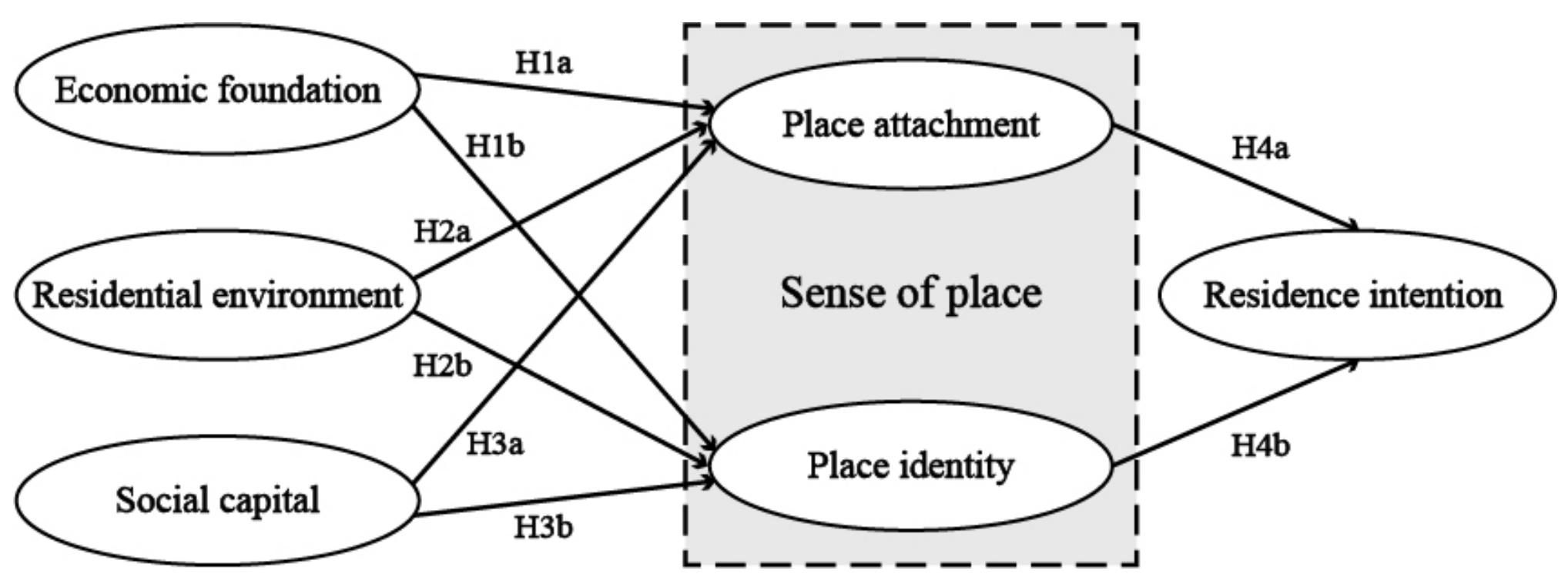
First, within the framework of neoclassical economic theory, the economic rationality of human capital serves as the core mechanism behind labor migration decisions. This theory posits that workers make optimal residence choices based on a systematic evaluation of their skill endowments and the expected returns in the labor market [24]. Empirical evidence shows a significant positive correlation between income level and residence intention, with high-income groups demonstrating markedly stronger intentions to stay compared to low- and middle-income individuals [25]. For on-demand platform workers, labor market performance influences residence intention through a dual pathway. The first pathway reflects instrumental functionality. Stable economic income not only satisfies basic survival needs but also shapes an affordable urban lifestyle, gradually transforming workers from transient urban sojourners into urban consumers, thereby fostering functional attachment to their place of residence. The second pathway reflects emotional transformation. Economic security reduces anxiety about future uncertainty, enabling workers to redirect psychological resources from survival maintenance toward relational investment. This generates both the willingness and the capacity to establish deep social connections, and through emotional attachment mechanisms, facilitates the formation of place identity, thereby reinforcing residence intention.
The study develops the following hypotheses:
Hypothesis 1a.
Economic foundation has a positive influence on place attachment.
Hypothesis 1b.
Economic foundation has a positive influence on place identity.
Second, environmental factors such as housing and living conditions have also been confirmed as foundational constraints affecting residence intention [26,27]. Person-environment interaction theory indicates that individuals continuously perceive and evaluate their residential environment through everyday spatial practices. This evaluation encompasses both functional satisfaction and emotional response, subsequently influencing the degree of their psychological attachment to a particular place. Research suggests that the residential environment serves not merely as a material carrier satisfying basic living needs, but also as a spatial foundation for establishing emotional connections between individuals and the city. Compared with conventional rural-to-urban migrants, on-demand platform workers, driven by algorithmic demands for immediate responsiveness, tend to select residences close to commercial districts despite lower quality. Urban villages and shared-rental apartments have become the predominant residential forms. Although this “functionality-first, quality-sacrificed” residential strategy reduces commuting costs, it may create a spatial dilemma for the cultivation of a sense of place—overcrowded living conditions and inadequate community amenities weaken the place-based foundation required for sustained social interaction. Conversely, high-quality environments and comprehensive public services exert a facilitative effect. For on-demand platform workers, improving the residential environment represents not only a means of enhancing quality of life but also a spatial intervention pathway for strengthening their residence intention in destination cities.
The study develops the following hypotheses:
Hypothesis 2a.
Residential environment has a positive influence on place attachment.
Hypothesis 2b.
Residential environment has a positive influence on place identity.
Third, social capital theory offers a distinctive sociological perspective for understanding residence decisions [28]. Social capital promotes collective action and individual well-being through three forms: trust, norms, and networks [29,30]. Unlike the individual resource accumulation perspective of economics, social capital theory focuses on the capacity to access resources embedded within social structures, positing that residence decisions are not isolated rational calculations but rather collective choices embedded within specific social relational networks. However, the platform economy context poses unique challenges to the accumulation of social capital. Unlike traditional manufacturing migrants who formed stable social networks through factory workshops and collective dormitories, on-demand platform workers experience an atomized labor process: algorithmic dispatch scatters individual workers across urban space, reducing opportunities for informal interaction in conventional workplaces. Consequently, they must engage in daily interactions with local residents or fellow hometown migrants to obtain emotional feedback and identity confirmation, thereby cultivating functional attachment to their place of residence, constructing a sustainable social support system, and ultimately enhancing residence intention.
The study develops the following hypotheses:
Hypothesis 3a.
Social capital has a positive influence on place attachment.
Hypothesis 3b.
Social capital has a positive influence on place identity.
Meanwhile, emotional attachment at the local level has also been found to significantly influence residence intention. Emotional attachment refers to the affective bond between individuals and their cities of residence [31]. This construct is typically conceptualized through the sense of place, comprising two core dimensions: place attachment and place identity. Place attachment reflects an individual’s emotional bond with a specific locale, independent of its objective attributes, and manifests as psychological connections on affective, cognitive and behavioral levels. In contrast, place identity represents the process of socialization through interaction with the place, in which individuals construct their position and decision-making orientation within society. This process unfolds through four subdimensions: self-esteem, self-efficacy, distinctiveness and continuity [32].
The study develops the following hypotheses:
Hypothesis 4a.
Place attachment has a positive influence on residence intention.
Hypothesis 4b.
Place identity has a positive influence on residence intention.
In summary, this socio-cultural construction process [33] underscores the role of sense of place as a crucial emotional link between individuals and the urban [34], does not independently influence residence intention but rather functions as a critical node in the interactive processes among economic, social, and material spatial factors. Specifically, the economic foundation provides the material precondition, the residential environment constitutes the spatial carrier, and social capital forms the relational network; together, these three dimensions jointly shape on-demand platform workers’ place-based experiences. Improvements in economic resources facilitate better housing conditions, which in turn strengthen a sense of place; high-quality residential environments can promote neighborhood interactions and consolidate social ties; and the accumulation of social capital contributes to building a sustainable social support system. The “survival rationality” of the economic dimension, the “dwelling experience” of the spatial dimension, and the “relational embeddedness” of the social dimension mutually reinforce one another. Through a long-term internalization process, they crystallize into a profound sense of place. This perspective can compensate for the insufficient understanding of emotional attachment mechanisms in existing studies and deepen the comprehension of labor geographical mobility in the digital economy era, thereby revealing the complex relationships among economic rationality, material environment, and sociocultural factors in the residence decisions of on-demand platform workers. Building upon conventional influencing factors, such as economic foundation, residential environment and social capital, this study introduces sense of place as a key mediating variable and integrates it into the theoretical framework [35]. Drawing on existing literature and theoretical deduction, the study proposes the following conceptual model (Figure 1).

3. Data and Methodology

3.1. Data

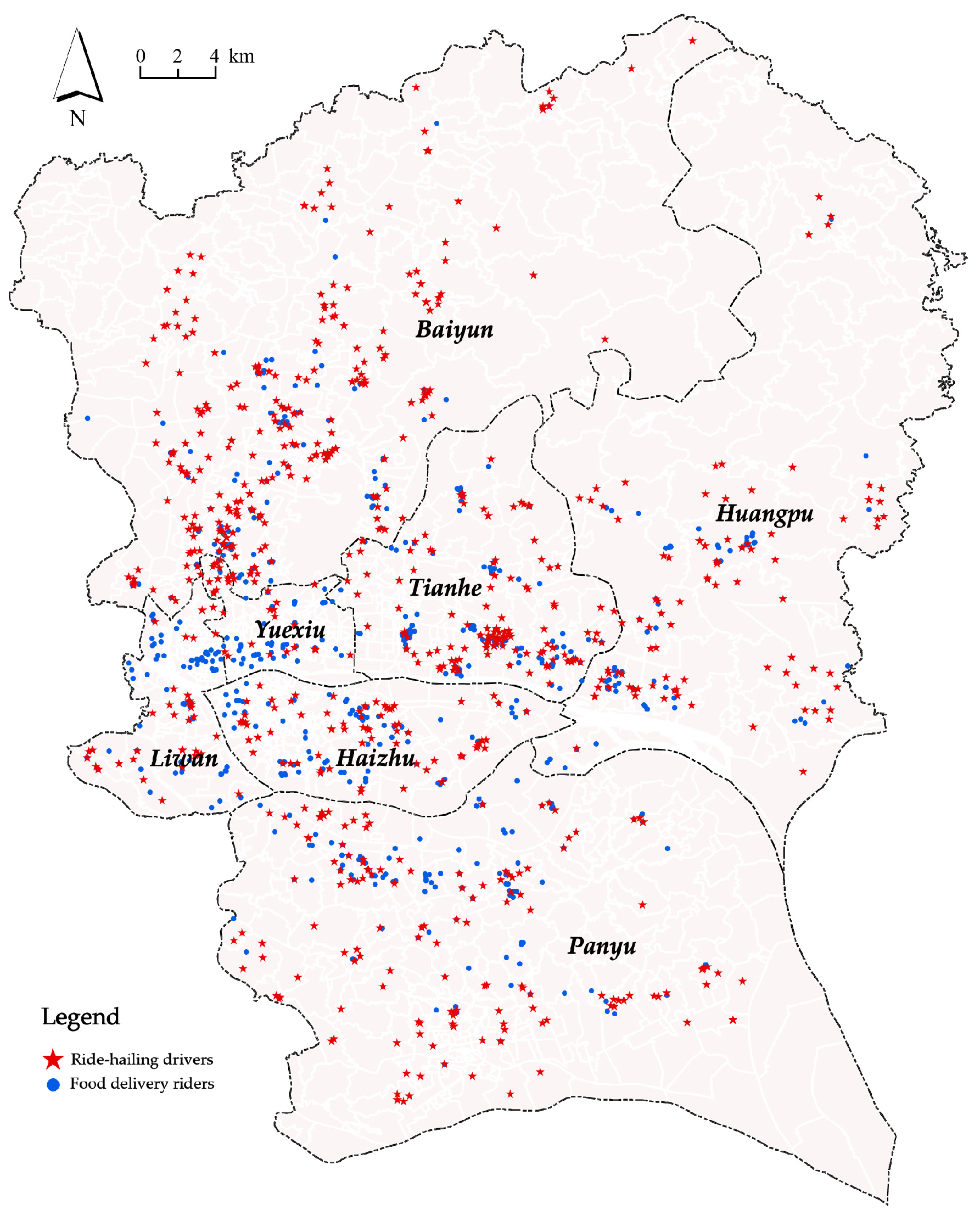
This study takes Guangzhou, a major megacity in China, as its empirical case. The city’s distinctive socioeconomic structure makes it an ideal setting for investigating new forms of employment under the platform economy. According to the latest data released by the Guangzhou Bureau of Statistics (2024), the city has a permanent population of 18.98 million, with the tertiary sector accounting for over 70% of its GDP. This industrial composition provides diverse employment opportunities for on-demand platform workers. The research data were collected through a structured survey conducted in December 2024, focusing on on-demand platform workers in Guangzhou. A stratified random sampling method was employed to ensure representativeness, and the sample size was determined based on the proportion of on-demand platform workers in the city, as reported by SmartSteps (2024). The survey focused on two representative groups: food delivery couriers and ride-hailing drivers. The questionnaire covered multiple dimensions, including socioeconomic characteristics, housing conditions, social networks, and residence intention. A total of 1627 valid responses were obtained (Figure 2).
Table 1 summarizes the key demographic characteristics of the sample. Regarding household registration, 75.85% (1234 individuals) hold a rural hukou. The sample tends to be relatively young, with 40.87% (665 individuals) aged under 30. In terms of educational attainment, the majority have received a moderate level of education, with 73.08% (1189 individuals) having completed either junior or senior high school. As for marital status, 45.67% (743 individuals) are unmarried, and 49.32% (791 individuals) don’t have children. In terms of work intensity, 84.51% (1375 individuals) report working more than nine hours per day on average.

3.2. Methodology

3.2.1. Structural Equation Modeling (SEM)

Structural Equation Modeling is a multivariate statistical method widely applied in the social sciences and urban studies [32]. Structural Equation Modeling consists of two main components: the measurement model and the structural model [15]. The measurement model assesses construct validity by capturing relationships between observed variables (measured on a five-point Likert scale) and their corresponding latent variables, while the structural model examines causal pathways among latent variables. As presented in Table 2, the model comprises five latent variables with nineteen observed variables. These relationships are typically expressed using the following three sets of linear equations:
Y = Λ y η + ε
X = Λ x ξ + δ
η = B η + Γ ξ + ζ
In the equations, the observed variables X and Y are associated with their respective latent variables ξ and η through the factor loading matrices Λ x and Λ y , respectively. The terms ε and δ represent the measurement errors for the observed variables. In the structural model, B denotes the path coefficient matrix among endogenous latent variables, while Γ represents the structural coefficient matrix between exogenous and endogenous latent variables. ζ indicates the residuals of the structural model.

3.2.2. Bayesian Network (BN)

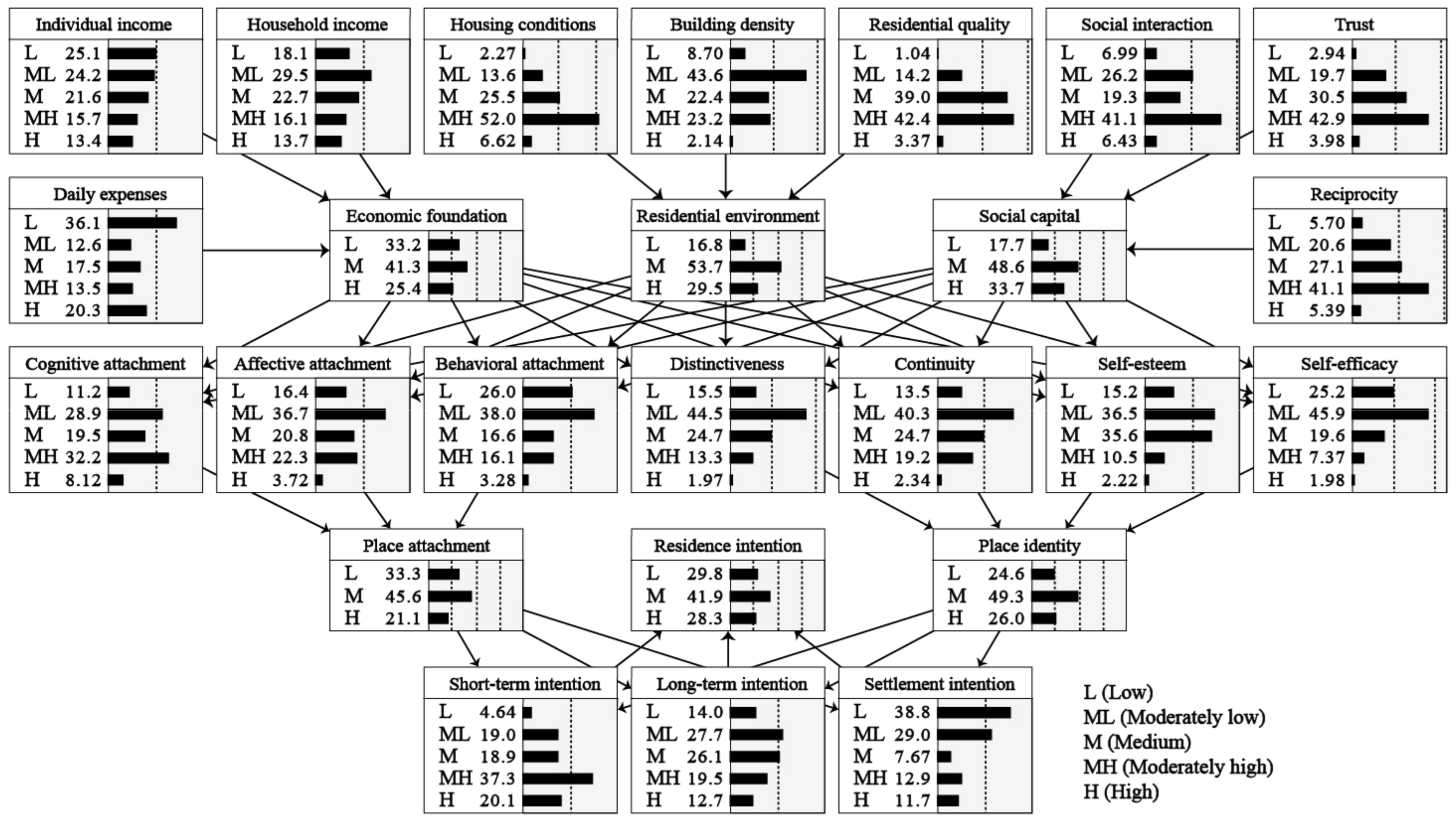
A Bayesian Network is a probabilistic graphical model composed of a directed acyclic graph (DAG) and a set of conditional probability tables (CPTs) associated with each node in the network. It effectively captures the complex probabilistic relationships among variables under conditions of uncertainty. Bayesian Networks involve two key components: structure learning and parameter learning. Structure learning determines the topology of the network by defining nodes (representing variables) and directed edges (representing dependencies). Parameter learning defines the joint probability distribution over the network structure, where the parameters reflect the conditional probability distributions between variables. As illustrated in Figure 4, the final Bayesian Network comprises 25 nodes connected by a series of directed edges. These directed links denote the causal dependencies among variables, while each node is associated with a conditional probability table that captures the probabilistic relationships under varying conditions.
In the network structure, if there is a directed edge from node v l to node v k , then v l is referred to as the parent node of v k , and v k is the child node of v l . In this case, P v k v l denotes the conditional probability of the child node v k given the parent node v l . Based on this, the joint probability distribution in a Bayesian Network is represented as follows:
P ( v 1 , v 2 , , v M ) = k = 1 M P v k P a ( v k )
In this equation, M represents the total number of nodes in the network, and P a ( v k ) denotes the set of all direct parent nodes of node v k .
The performance of the Bayesian Network can be evaluated from two key perspectives: (1) prediction and inference accuracy, assessed by calculating the confusion matrix; and (2) the degree of consistency between the constructed network and real-world scenarios, evaluated through sensitivity analysis. To measure the influence of changes in the probabilities of input nodes on the probability of the target node, this study adopts sensitivity metrics such as Mutual Information (MI) and Variance of Belief (VB). The corresponding formulas are as follows:
M I = H Q H Q E = q e P q , e log 2 P ( q , e ) P ( q ) P ( e )
V B = V Q V Q E = q P q X q q P q X q 2 q P q e X q q P q e X q 2
In the equation, q represents the state of the target node Q , and e denotes the states of the other node E . V corresponds to variance, and H refers to entropy. To facilitate comparison, the values are finally rescaled into relative values ranging from 0% to 100%.

3.2.3. Linking Structural Equation Modeling to Bayesian Network

Structural Equation Modeling and Bayesian Network exhibit significant differences in both methodological foundations and application scenarios [44]. Structural Equation Modeling is a theory-driven approach that tests hypothesized linear causal relationships through path analysis. However, it has limited capacity to model nonlinear relationships and is not well-suited for diagnostic analysis. In contrast, Bayesian Network, as a probabilistic graphical modeling approach, offers several methodological advantages: (1) it represents conditional dependencies among variables using directed acyclic graphs (DAGs) and handles uncertainty through conditional probability distributions; (2) it relaxes the assumption of linearity, allowing for the modeling of complex, nonlinear interactions; and (3) it supports the integration of prior knowledge to enhance model interpretability, making it particularly useful for prediction and diagnostic purposes. Nonetheless, it is important to acknowledge that the use of Bayesian Network for causal inference in the social sciences remains theoretically contested.
Building on the methodological strengths of both approaches, this study proposes a hybrid SEM-BN framework. First, Structural Equation Modeling is used to validate the causal relationships between economic foundation, social capital, residential environment, and on-demand platform workers’ residence intention, thereby ensuring the theoretical soundness of the hypothesized pathways. Subsequently, the validated path structure is translated into a Bayesian Network, where parameter learning quantifies the joint probabilistic influences of multiple factors on residence intention. This integrated method retains the theory-driven, confirmatory strengths of Structural Equation Modeling while leveraging the data-driven, nonlinear modeling capabilities of Bayesian Network. It thus offers a more robust and comprehensive analytical tool for examining on-demand platform workers’ residence intention in the context of the digital economy.

4. Results and Discussion

4.1. Validation of Causal Relationships Using Structural Equation Modeling

4.1.1. Assessment of Model Fit

The study employed SPSS 25.0 to test the reliability of the scales and used AMOS 25.0 to construct the structural equation model. Reliability analysis indicated that the Cronbach’s α coefficients for the latent variables ranged from 0.643 to 0.79, with an overall Cronbach’s α of 0.819 for the full scale (Table 3), suggesting good internal consistency. In addition, the composite reliability (CR) values ranged from 0.64 to 0.81, and the average variance extracted (AVE) values were between 0.38 and 0.59 (Table 4), indicating acceptable convergent validity. Given that the model exhibited a multivariate kurtosis of 28.171 and a critical ratio of 20.112, exceeding the threshold of 1.96 at the 95% confidence level, this confirmed a significant deviation from multivariate normality. Consequently, the Bollen-Stine bootstrap method was applied to correct for non-normality [45]. The adjusted model fit indices demonstrated that the structural validity of the model was acceptable (Table 5).

4.1.2. Analysis of Path Coefficients

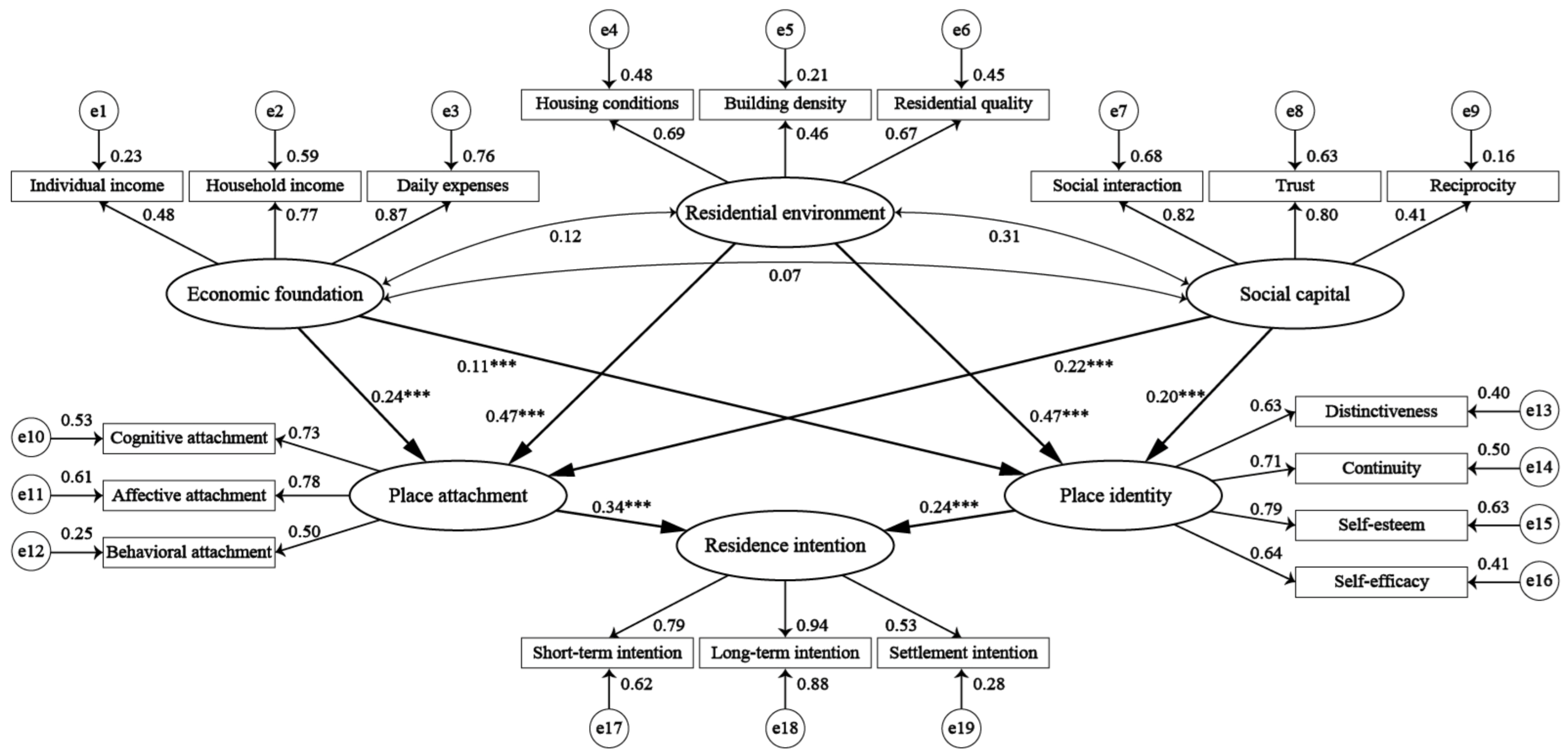
A structural equation model was constructed using the maximum likelihood estimation method to systematically investigate the mechanisms through which economic foundation, residential environment, and social capital influence the sense of place, as well as the pathways through which these factors shape on-demand platform workers’ residence intention. The empirical results show that: (1) improvements in economic foundation (β = 0.24), residential environment (β = 0.47), and social capital (β = 0.22) all have significant positive effects on place attachment. These factors also significantly enhance place identity, with standardized coefficients of 0.11, 0.47, and 0.20, respectively; (2) both dimensions of sense of place, place attachment (β = 0.34) and place identity (β = 0.24), significantly increase residence intention among on-demand platform workers, with the effect of place attachment being more pronounced. All hypothesized path coefficients were statistically significant, confirming the validity of research hypotheses H1a through H4b (Figure 3). This indicates that the structural foundation of the model is robust and can effectively support the subsequent development of the Bayesian network model.

4.2. Analysis of On-Demand Platform Workers’ Residence Intention Using a Bayesian Network

4.2.1. Model Development

In this study, a Bayesian Network model was constructed using Netica software (https://www.norsys.com), with the configuration of nodes and directed edges informed by the inter-variable relationships identified through the structural equation model. As illustrated in Figure 4, the final Bayesian Network comprises 25 nodes connected by a series of directed edges. Specifically, latent variable scores were calculated using AMOS 25.0 and then categorized into three levels, low (L), medium (M), and high (H), based on the natural breaks classification method. Observed variables retained their original five-point Likert scale and were discretized accordingly. Higher or high conditional probabilities were interpreted as indicative of a positive attitude, while lower or low probabilities were considered reflective of a negative attitude. The model’s structure and conditional probabilities were derived through parameter learning from the empirical data. In terms of result presentation, the probability distribution for each node is displayed in the form of belief bars, reflecting the percentage distribution across different states. For instance, the residence intention (RI) node shows that 28.3% of respondents are in the high-intention category, denoted as P (RI = H) = 28.3%, while 41.9% fall into the medium category and 29.8% into the low category (Figure 4).
The model results reveal a pronounced stratification in on-demand platform workers’ residence intention, with a stepwise decline from short-term residence intention (RI1) to long-term residence intention (RI2), and finally to settlement intention (RI3). Notably, these three dimensions exhibit distinct patterns of probability distribution. Specifically, the conditional probability table (CPT) for RI1 shows a pyramid-shaped distribution, dominated by a positive attitude (P (RI1 = MH/H) = 57.3%). In contrast, the CPT for RI2 presents an olive-shaped distribution, with a majority expressing neutral attitudes (P (RI2 = ML/M/MH) = 73.3%). The CPT for RI3, however, displays an inverted pattern, reflecting a clearly negative tendency (P (RI3 = L/ML) = 67.8%). These findings illuminate the dilemma of “residing without settling” among on-demand platform workers, corroborating that their residence decision constitutes a complex process progressing from functional adaptation toward emotional commitment, with the complexity of this dilemma potentially being more pronounced than that faced by conventional rural-to-urban migrants. Further analysis indicates that, aside from node PA1, all other nodes, such as PA2, PA3, and PI1 to PI4, exhibit a consistent pattern of positive inclination in their probability distributions. These findings suggest that on-demand platform workers generally possess a low sense of place, corroborating the conclusions of previous studies such as Sun and Zhao [17]. This highlights the structural challenges faced by on-demand platform workers in achieving urban integration under the new forms of employment. Specifically, under algorithmic control, their high-intensity, high-mobility labor mode traps them in a profound paradox of “continuous presence yet difficulty in taking root.”
The decline in residence intention among on-demand platform workers can be interpreted from three dimensions: economic foundation, residential environment, and social capital. Economically, on-demand platform workers generally face income constraints. Individual income shows a clear low-income tendency (P (ED1 = L/ML) = 49.32% > P (ED1 = MH/H) = 29.1%), with household income reflecting a similar pattern (P (ED2 = L/ML) = 47.6% > P (ED2 = MH/H) = 29.8%). In addition, daily expenditures remain at a relatively low level (P (ED3 = L/ML) = 48.7% > P (ED3 = MH/H) = 33.8%). This economic vulnerability hinders the development of a strong sense of place. This result may stem from income volatility caused by algorithmic dependence, making it difficult for on-demand platform workers to form stable economic expectations. This further indicates that the platform economy may be internalizing “income uncertainty” as a normalized mechanism, thereby influencing their residence intention and revealing the limitations of traditional neoclassical economic migration theory in explaining new forms of labor. In terms of the residential environment, on-demand platform workers are often compelled to live in crowded communities (P (RE2 = L/ML) = 52.3% > P (RE2 = MH/H) = 25.34%). However, they still express strong preferences for better housing conditions (P (RE1 = MH/H) = 58.62%) and higher residential quality (P (RE3 = MH/H) = 45.77%). By contrast, social capital presents a relatively favorable dimension. On-demand platform workers exhibit a high degree of positive orientation in terms of social interaction (P (SC1 = MH/H) = 47.53%), trust (P (SC2 = MH/H) = 46.88%), and reciprocity (P (SC3 = MH/H) = 46.49%), indicating substantial potential for social capital accumulation. These findings highlight the structural constraints posed by a limited economic foundation and suboptimal residential environment, while also underscoring the potential role of social capital in mitigating such barriers to urban integration.

4.2.2. Model Evaluation

The performance of the Bayesian Network can be evaluated by calculating the confusion matrix using cross-validation methods to assess the accuracy of prediction and inference. By computing the confusion matrix of relevant nodes, the model was validated using the dataset (Table 6). The results indicate that the model achieves an accuracy of 98.65% in predicting on-demand platform workers’ residence intention, suggesting a high level of reliability in its predictive outcomes.

4.2.3. Sensitivity Analysis

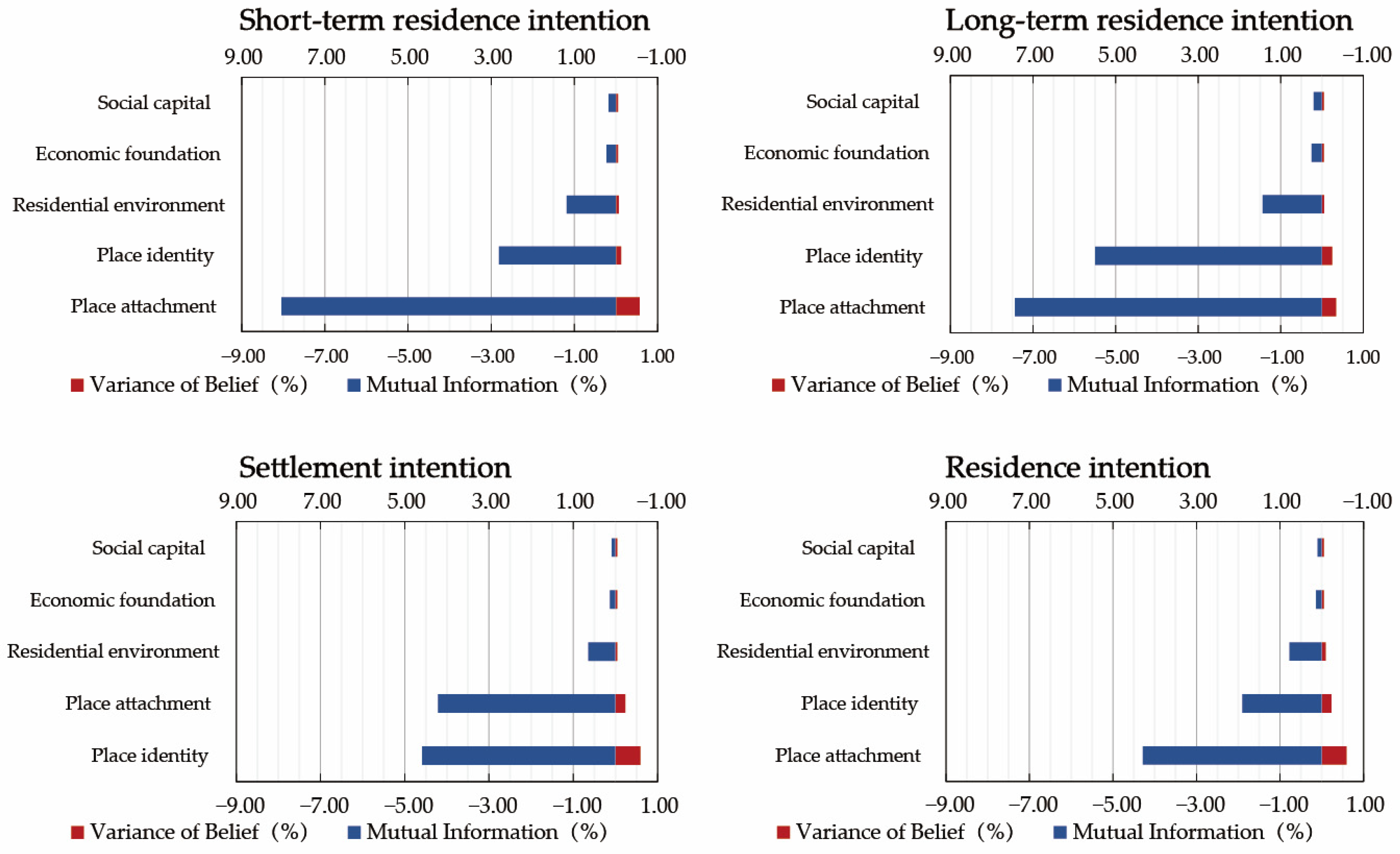
Since the ultimate goal of this study is to enhance the residence intention of on-demand platform workers, four nodes were selected as target variables for sensitivity analysis, namely short-term residence intention, long-term residence intention, settlement intention, and overall residence intention. The results show that mutual information (MI) and variance of belief (VB) exhibit consistent trends: the greater the mutual information and belief variance, the higher the sensitivity of the target variable. Moreover, the influence of a given node on the target diminishes as the number of intermediate variables between them increases. As shown in Figure 5, the sense of place emerges as the most influential factor affecting on-demand platform workers’ residence intention. Specifically, place attachment demonstrates the strongest explanatory power for short-term and long-term residence intentions, while place identity has a slightly greater impact on settlement intention. Among other influencing factors, economic foundation and social capital exert comparable levels of influence, whereas the impact of the micro-level residential environment is more pronounced.

4.2.4. Scenario-Based Analysis

After identifying the sensitivity of each factor, this section employs scenario analysis to further explore the mechanisms through which these factors influence residence intention. Scenario analysis, recognized as an effective approach for examining uncertainty [46], is implemented within the Bayesian Network model by adjusting the probability values of specific nodes to simulate different scenarios. When a probability disturbance occurs at a given node, the system automatically updates the conditional probability distributions of other nodes, thereby revealing the interactions among factors. This method, through both prediction (forward inference) and diagnosis (backward inference), systematically uncovers the mechanisms by which various factors influence residence intention under different scenarios.
Based on the forward inference function of the Bayesian Network model, which serves as a predictive mechanism, this section evaluates how changes in predefined input variables influence specific target outcomes. As shown in Table 7, when all five latent variables are set to a high level, the model calculates the adjusted conditional probabilities for residence intention across the three categories: low, medium, and high. The results show that place attachment exerts a significantly stronger effect on residence intention compared to place identity. Specifically, a high level of place attachment increases the probability of positive short-term and long-term residence intentions by 21.3% and 22.1%, respectively, while the corresponding increases resulting from place identity are only 10.8% and 13.1%. In addition, the analysis indicates that enhancements in place attachment and place identity have varying effects on long-term residence and settlement intentions across different groups. Although individuals with neutral attitudes exhibit limited changes, those who initially demonstrate reluctance toward long-term residence or settlement display significant shifts in their intentions. Among the three influencing factors, namely, economic foundation, residential environment, and social capital, the residential environment emerges as the most impactful. Enhancing the residential environment reduces the probability of negative short-term, long-term, and settlement intentions by more than 5%, while simultaneously increasing the likelihood of positive residence intentions in a significant manner.
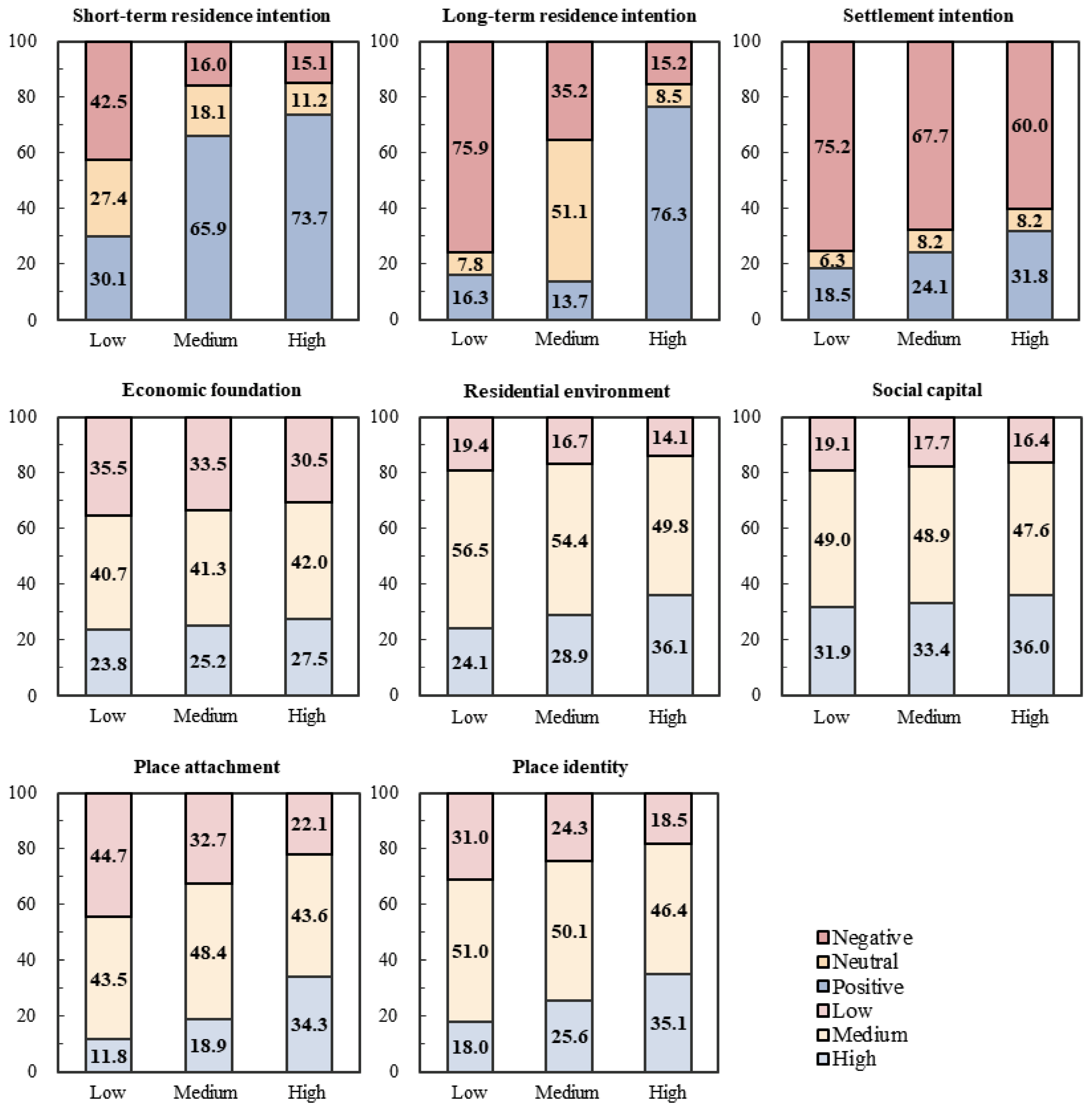
Based on the backward inference function of the Bayesian Network model, which serves as a diagnostic mechanism, this section investigates how different levels of residence intention can be attributed to underlying influencing factors. Figure 6 presents the results of categorizing residence intention into three levels (low, medium, and high) to examine the corresponding responses of related variables. The results indicate a clear stepwise increase in short-term residence intention as overall residence intention rises, with high-probability values of 30.1%, 65.9%, and 73.7%, respectively. Although settlement intention shows a similar upward trend, its high-probability values remain relatively low, at 18.5%, 24.1%, and 31.8%. Notably, long-term residence intention exhibits distinct characteristics. Under the high-level residence intention scenario, the probability of strong long-term residence intention reaches 76.3%, exceeding both short-term intention (73.7%) and settlement intention (31.8%). Even under the medium-level residence intention scenario, the probability of expressing a moderate level of long-term residence intention remains the highest at 51.1%, indicating that a preference for stable and sustained residence is a key characteristic among on-demand platform workers with medium to high residence intentions. Furthermore, the analysis indicates that across all residence intention levels, the probability of reluctance to settle consistently exceeds 50%. This pattern implies that the institutional barrier traditionally posed by the rural household registration system may no longer be the primary constraint on settlement decisions. This conclusion aligns with the findings of Zhu [47]. On-demand platform workers appear to be developing a de-hukou-ized residence strategy: they pursue long-term stable urban living yet actively distance themselves from the institutional bindings attached to household registration identity. This strategic choice may stem from a rational assessment of the marginal utility of hukou benefits (such as considerations regarding the retained value of rural land rights), or it may reflect low expectations regarding the actual sense of acquisition associated with urban citizenship. What is certain is that “long-term residence without settlement,” as an increasingly prevalent form of stable residence among on-demand platform workers, poses a challenge to the new urbanization policy evaluation system centered on “citizenization rate.”
Based on the quantitative findings, this study systematically investigates the multidimensional factors influencing on-demand platform workers’ urban residence intention and their differentiated mechanisms of action.
First, the economic foundation demonstrates a consistently stable effect. Across varying levels of residence intention, the probability of favorable labor market performance remains within a narrow range of 23.8% to 27.5%, indicating that once basic material needs are met, individual-level differences become less significant. Notably, amid the current economic downturn, on-demand platform workers often follow a “12 h survival, 8 h life” routine, which highlights the bottom-line necessity of meeting basic needs and further confirms the fundamental role of economic factors in shaping residence preferences [25]. However, the time poverty engendered by the platform economy is imbuing this proposition with new connotations: the flexibility of on-demand platform workers is essentially reverse flexibility, meaning that time is not autonomously controlled by individuals but is continuously compressed by algorithms. This implies that even when income surpasses the critical threshold, time deprivation may still block the transformation of economic capital into emotional capital. This constraint mechanism, stemming from the deep algorithmic domination of time allocation, represents precisely the institutional factor that traditional migration theories have overlooked.
Second, regarding the residential environment, improvements in micro-level housing conditions exert a more direct influence on residence intention. Under high-level residence intention scenarios, the probability of living in a favorable environment reaches 36.1%, suggesting that on-demand platform workers, who often face time poverty [6], are more sensitive to the residential environment. Further analysis reveals substantial age-based disparities: only 22.8% of on-demand platform workers under 35 live in a better residential environment, compared to 44.9% of those over 35, indicating that younger on-demand platform workers prioritize affordability, while older or long-term on-demand platform workers place more emphasis on residential quality. This age-differentiated pattern aligns with the expectations of life course theory: younger workers are in an exploratory phase, with mobility preferences leading them to accept lower-quality residences; older workers enter a stabilization phase, where residential quality becomes critical for maintaining family functioning and physical and mental well-being. However, the youth-oriented employment structure of the platform economy (with 40.87% under 30 in this study) may lock overall residential quality into a long-term low-level equilibrium, creating a vicious cycle of “youthization—low quality—high mobility.”
Third, in terms of social capital, the probability of high-level residence intention consistently exceeds 30%, whereas the probability of low residence intention stays below 20%, highlighting the importance of social interaction, trust, and reciprocity as crucial foundations for on-demand platform workers to integrate into urban life [10]. This finding must be understood against the backdrop of the restructuring of labor processes under the platform economy. Unlike traditional manufacturing migrants who formed stable networks through factory workshops and collective dormitories, on-demand platform workers experience dispersed labor spaces and fragmented time schedules, with algorithms distributing them across various locations throughout the city. This highly mobile state may substantially compress the time available for community participation and neighborhood interaction, thereby weakening the natural generation of social capital. Consequently, the positive effect of social capital on residence intention may not be a natural product of the labor process, but rather a strategic achievement through which on-demand platform workers actively counteract the atomization of labor.
Finally, place attachment and place identity, which are two core dimensions of sense of place, demonstrate similarly strong influences. Compared to low-level residence intention scenarios, the probability of strong place attachment increases by 2.9 times and strong place identity by 1.9 times under high residence intention. This significant difference further validates the role of sense of place as a crucial emotional nexus between individuals and the cities they inhabit, underscoring its importance in driving on-demand platform workers’ decisions to remain in urban areas [34,42].

5. Conclusions

This study examines the multidimensional nature of residence intention, ranging from short-term intention, long-term intention, to settlement intention, and systematically analyzes the mechanisms through the residence intentions of on-demand platform workers. The main findings are as follows: (1) Residence intention displays a clear gradient pattern. The intention of on-demand platform workers to temporarily stay, reside long-term, and settle permanently in cities follows a stepwise decline, reflecting the incremental nature of migration decision-making in the urbanization process. Notably, in contrast to conventional assumptions, the restrictive effect of the household registration (hukou) system on rural-hukou platform workers appears to be weakening, suggesting that new urbanization policies may be yielding the desired impact. (2) Insufficient economic foundation and time poverty jointly constitute a dual constraint. Traditional economic deprivation remains a central barrier preventing rural migrant workers from settling in cities. However, the unique time deprivation effect inherent in platform-based employment further reinforces this constraint. Compared with conventional rural-to-urban migrants, this study finds that the distinctive employment patterns of the platform economy—characterized by flexibility and instability—may exacerbate the urban residence dilemma faced by on-demand platform workers through the combined mechanisms of time poverty and economic constraints. It should be noted that this finding is based on samples from a specific city and specific platform-based occupations; its applicability to other sectors, such as online gig work and different regions, awaits further empirical examination. (3) Residential quality exerts a differentiated impact. Unlike prior studies that emphasize macro-level public services, this study finds that micro-level residential space quality plays a more prominent role in shaping residence intention among on-demand platform workers. Age-group analysis further reveals notable generational differences: younger workers prioritize residential convenience, whereas older workers place greater value on residential stability. However, constrained by the cross-sectional design and sample scope, these differences require cautious evaluation in future research incorporating longitudinal data and broader populations of platform workers. (4) Social capital provides a buffering effect. The accumulation of social capital, including promotion of social interaction, norms of reciprocity and trust-building at the community level, can effectively mitigate structural pressures. This finding not only confirms the applicability of social capital theory in the context of the platform economy but also offers new policy perspectives for addressing institutional barriers.
This study offers two key innovations. Methodologically, it introduces a novel integration of Structural Equation Modeling (SEM) and Bayesian Network (BN). While SEM is used to validate the causal paths among latent variables, BN enables parameter learning and probabilistic inference, thereby overcoming the limitations of traditional methods in causal inference. This hybrid approach captures nonlinear interactions among influencing factors and facilitates a paradigm shift from statistical correlation to causal reasoning. It provides a scientific and quantitative tool for optimizing urban citizenship policies and offers valuable insights for improving the governance systems of mobile populations in the digital era. Theoretically, it finds that the residence intention of on-demand platform workers is shaped by the combined effects of socioeconomic conditions, material space and emotional embedding, marking a departure from the patterns observed among rural-to-urban migrants under traditional employment relations. Notably, a sense of place, encompassing both place attachment and place identity, is confirmed as a key mediating variable in the formation of residence intention. The contributions of this research are twofold. First, it affirms the role of emotional attachment in residence decisions, revealing that on-demand platform workers in the digital economy are driven by both traditional economic rationality and emotional connections to the city fostered through a developed sense of place. Second, it expands the explanatory boundaries of classical migration theories by constructing a new knowledge framework tailored to on-demand platform workers. This framework links residence intention to economic foundation, residential environment and social capital, offering a robust and predictive analytical tool for understanding labor mobility decisions in the context of the digital economy.
Finally, based on the empirical analysis of on-demand platform workers’ residence intention, this study proposes policy recommendations from three key dimensions. First, in terms of platform governance, it is essential to establish minimum industry service standards to improve on-demand platform workers’ ability to maintain their urban livelihoods. Second, in the realm of housing security, a tiered housing supply system should be developed to meet the basic needs of low-income groups while offering long-term residents opportunities to improve their housing quality. This approach aligns with the objective of inclusive development, ensuring that newcomers gain access to housing while long-term residents attain higher living standards. Third, regarding institutional design, it is critical to optimize floating population management and services, as well as enhance social and emotional integration mechanisms. This will provide institutional support for a people-centered urbanization model in the digital era.

Author Contributions

Conceptualization, Y.A.; Methodology, Y.A.; Validation, Y.A.; Formal analysis, Y.L., S.W., Z.W. and N.Z.; Data curation, Y.A.; Writing—original draft, Y.A. and N.Z.; Writing—review & editing, Y.L., S.W. and Z.W.; Visualization, Y.A., S.W. and Z.W.; Supervision, Y.L., S.W., Z.W. and N.Z.; Funding acquisition, Y.L. All authors have read and agreed to the published version of the manuscript.

Funding

This research was funded by National Natural Science Foundation of China (42571235); Guangdong Basic and Applied Basic Research Foundation (2026A1515010403).

Data Availability Statement

Data will be made available on request.

Conflicts of Interest

The authors declare no conflict of interest.

References

  1. You, Z.; Yang, H.; Fu, M. Settlement intention characteristics and determinants in floating populations in Chinese border cities. Sustain. Cities Soc. 2018, 39, 476–486. [Google Scholar] [CrossRef]
  2. Ren, J.; Xu, Z.; Hu, M. Digital economy and settlement intention of migrants in urban China. Telecommun. Policy 2023, 47, 102666. [Google Scholar] [CrossRef]
  3. Meijerink, J.; Fisher, S.; McDonnell, A.; Wiblen, S. Two’s company, platforms make a crowd: Talent identification in tripartite work arrangements in the gig economy. Hum. Resour. Manag. Rev. 2024, 34, 101011. [Google Scholar]
  4. Tassinari, A.; Maccarrone, V. Riders on the storm: Workplace solidarity among gig economy couriers in Italy and the UK. Work. Employ. Soc. 2020, 34, 35–54. [Google Scholar]
  5. Sun, P. Your order, their labor: An exploration of algorithms and laboring on food delivery platforms in China. Chin. J. Commun. 2019, 12, 308–323. [Google Scholar] [CrossRef]
  6. Chen, J.Y.; Sun, P. Temporal arbitrage, fragmented rush, and opportunistic behaviors: The labor politics of time in the platform economy. New Media Soc. 2020, 22, 1561–1579. [Google Scholar] [CrossRef]
  7. Park, S.; Ryoo, S. How does algorithm control affect platform workers’ responses? Algorithm as a digital Taylorism. J. Theor. Appl. Electron. Commer. Res. 2023, 18, 273–288. [Google Scholar] [CrossRef]
  8. Weidenstedt, L.; Geissinger, A.; Leick, B.; Nazeer, N. Betwixt and between: Triple liminality and liminal agency in the Swedish gig economy. Environ. Plan. A Econ. Space 2023, 56, 1280–1297. [Google Scholar] [CrossRef]
  9. Cobb, A.; Mohan, A.; Harper, C.D.; Nock, D.; Michalek, J. Ride-hailing technology mitigates effects of driver racial discrimination, but effects of residential segregation persist. Proc. Natl. Acad. Sci. USA 2024, 121, e2408936121. [Google Scholar] [CrossRef] [PubMed]
  10. Zou, J.; Deng, X. To inhibit or to promote: How does the digital economy affect urban migrant integration in China? Technol. Forecast. Soc. Change 2022, 179, 121647. [Google Scholar] [CrossRef]
  11. Han, H.; Han, H. Urban residence intention of ethnic minority floating population. Soc. Indic. Res. 2024, 175, 779–806. [Google Scholar]
  12. Li, Y.; Yan, N.; Cheng, H.; Luo, J.; Zhou, Z. Hesitant or determined? The influence of social and environmental factors on settlement decision-making of rural in-migrants: Evidence from Dali, China. Humanit. Soc. Sci. Commun. 2024, 11, 710. [Google Scholar]
  13. Li, X.; Zhang, Y.; Guo, F.; Gao, X.; Wang, Y. Predicting the effect of land use and climate change on stream macroinvertebrates based on the linkage between structural equation modeling and Bayesian network. Ecol. Indic. 2018, 85, 820–831. [Google Scholar] [CrossRef]
  14. Liang, J.; Ding, J.; Zhu, Z.; Gao, X.; Li, S.; Li, X.; Yan, M.; Zhou, Q.; Tang, N.; Lu, L.; et al. Decoupling the heterogeneity of sediment microbial communities along the urbanization gradients: A Bayesian-based approach. Environ. Res. 2023, 238, 117255. [Google Scholar] [CrossRef] [PubMed]
  15. Lu, Y.; Liu, J.; Yu, W. Social risk analysis for mega construction projects based on structural equation model and Bayesian network: A risk evolution perspective. Eng. Constr. Archit. Manag. 2024, 31, 2604–2629. [Google Scholar]
  16. Vallas, S.; Schor, J.B. What do platforms do? Understanding the gig economy. Annu. Rev. Sociol. 2020, 46, 273–294. [Google Scholar] [CrossRef]
  17. Sun, P.; Zhao, Y. Platformed distinction work: Rethinking the migration and integration of food delivery workers in China. Environ. Plan. A Econ. Space 2022, 56, 1211–1226. [Google Scholar] [CrossRef]
  18. Dang, Y.; Zhan, D.; Chen, L.; Zhang, W. Impact of urban satisfaction on settlement intention: Differences in household registration and city size. Environ. Plan. B Urban Anal. City Sci. 2024, 52, 1567–1584. [Google Scholar]
  19. Lin, L.; Zhu, Y. Types and determinants of migrants’ settlement intention in China’s new phase of urbanization: A multi-dimensional perspective. Cities 2022, 124, 103622. [Google Scholar] [CrossRef]
  20. Chen, M.; Wu, Y.; Liu, G.; Wang, X. City economic development, housing availability, and migrants’ settlement intentions: Evidence from China. Growth Change 2020, 51, 1239–1258. [Google Scholar] [CrossRef]
  21. Yang, S.; Guo, F. Breaking the barriers: How urban housing ownership has changed migrants’ settlement intentions in China. Urban Stud. 2018, 55, 3689–3707. [Google Scholar] [CrossRef]
  22. Zhou, Y. Trapped in the platform: Migration and precarity in China’s platform-based gig economy. Environ. Plan. A Econ. Space 2022, 56, 1195–1210. [Google Scholar]
  23. Chen, S.; Liu, Z. What determines the settlement intention of rural migrants in China? Economic incentives versus sociocultural conditions. Habitat Int. 2016, 58, 42–50. [Google Scholar] [CrossRef]
  24. Wang, C.; Shen, J. How subjective economic status matters: The reference-group effect on migrants’ settlement intention in urban China. Asian Popul. Stud. 2023, 19, 105–123. [Google Scholar]
  25. Wang, C.; Shen, J. Settlement intention of migrants in urban China: The effects of labor-market performance, employment status, and social integration. Appl. Geogr. 2022, 147, 102773. [Google Scholar] [CrossRef]
  26. Huang, X.; Chen, M. Understanding the role of housing in rural migrants’ intention to settle in cities: Evidence from China. Habitat Int. 2022, 128, 102650. [Google Scholar] [CrossRef]
  27. Du, H.; Xu, M.; Wang, Y.; Chen, L. Housing wellbeing and settlement intentions of skilled migrants in China: The effects of subjective housing feelings and objective housing outcomes. Appl. Spat. Anal. Policy 2024, 17, 983–1015. [Google Scholar] [CrossRef]
  28. Huang, Y. Social capital and social trust in urban China. Chin. J. Sociol. 2018, 4, 481–505. [Google Scholar] [CrossRef]
  29. Liu, Z.; Wang, Y.; Chen, S. Does formal housing encourage settlement intention of rural migrants in Chinese cities? A structural equation model analysis. Urban Stud. 2016, 54, 1834–1850. [Google Scholar] [CrossRef]
  30. Tan, Y.; Xue, D.; Zhang, B. Neighbor interactions and settlement intentions of African Migrants in urban China: A case study of Guangzhou. Popul. Space Place 2022, 28, e2554. [Google Scholar] [CrossRef]
  31. Anderson, B. Forms and scenes of attachment: A cultural geography of promises. Dialogues Hum. Geogr. 2022, 13, 392–409. [Google Scholar] [CrossRef]
  32. Wang, Q.-C.; Liu, X.; Jian, I.Y.; Zhang, E.-J.; Hou, Y.-T.; Siu, K.W.M.; Li, Y.-B. Community resilience in city emergency: Exploring the roles of environmental perception, social justice and community attachment in subjective well-being of vulnerable residents. Sustain. Cities Soc. 2023, 97, 104745. [Google Scholar] [CrossRef]
  33. Lin, C.-C.; Lockwood, M. Forms and sources of place attachment: Evidence from two protected areas. Geoforum 2014, 53, 74–81. [Google Scholar] [CrossRef]
  34. Toruńczyk-Ruiz, S.; Brunarska, Z. Through attachment to settlement: Social and psychological determinants of migrants’ intentions to stay. J. Ethn. Migr. Stud. 2020, 46, 3191–3209. [Google Scholar]
  35. Lu, H.; Guo, X.; Li, C.; Qian, W. Social ties and urban settlement intention of rural-to-urban migrants in China: The mediating role of place attachment and the moderating role of spatial pattern. Cities 2024, 145, 104725. [Google Scholar] [CrossRef]
  36. Wang, Q.; Ren, T.; Liu, T. Training, skill-upgrading and settlement intention of migrants: Evidence from China. Urban Stud. 2018, 56, 2779–2801. [Google Scholar] [CrossRef]
  37. Zou, J.; Deng, X. Return intention, subjective social status and residential choices of rural migrant worker households: Evidence from China. Hous. Theory Soc. 2020, 37, 417–438. [Google Scholar]
  38. Kooiman, N. Residential mobility of couples around family formation in the Netherlands: Stated and revealed preferences. Popul. Space Place 2020, 26, e2367. [Google Scholar] [CrossRef]
  39. Guan, M.; Guan, H. Sense of community and residential well-being among rural-urban migrants in China. Humanit. Soc. Sci. Commun. 2024, 11, 345. [Google Scholar] [CrossRef]
  40. Chang, K.-C.; Wen, M.; Wang, G. Social capital and work among rural-to-urban migrants in China. Asian Popul. Stud. 2011, 7, 275–293. [Google Scholar] [CrossRef]
  41. Liu, S.; Zhang, F.; Wu, F. Contrasting migrants’ sense of belonging to the city in selected peri-urban neighbourhoods in Beijing. Cities 2022, 120, 103499. [Google Scholar] [CrossRef]
  42. Lynnebakke, B. ‘I felt like the mountains were coming for me.’—The role of place attachment and local lifestyle opportunities for labour migrants’ staying aspirations in two Norwegian rural municipalities. Migr. Stud. 2021, 9, 759–782. [Google Scholar]
  43. Bailey, E.; Devine-Wright, P.; Batel, S. Emplacing linked lives: A qualitative approach to understanding the co-evolution of residential mobility and place attachment formation over time. J. Community Appl. Soc. Psychol. 2021, 31, 515–529. [Google Scholar] [CrossRef]
  44. Gupta, S.; Kim, H.W. Linking structural equation modeling to Bayesian networks: Decision support for customer retention in virtual communities. Eur. J. Oper. Res. 2008, 190, 818–833. [Google Scholar] [CrossRef]
  45. Bollen, K.A.; Stine, R.A. Bootstrapping goodness-of-fit measures in structural equation models. Sociol. Methods Res. 1992, 21, 205–229. [Google Scholar] [CrossRef]
  46. Kayakutlu, G.; Daim, T.; Kunt, M.; Altay, A.; Suharto, Y. Scenarios for regional waste management. Renew. Sustain. Energy Rev. 2017, 74, 1323–1335. [Google Scholar] [CrossRef]
  47. Zhu, Y. China’s floating population and their settlement intention in the cities: Beyond the Hukou reform. Habitat Int. 2007, 31, 65–76. [Google Scholar] [CrossRef]
Figure 1. Conceptual model.
Land 15 01208 g001
Figure 2. Study area and residential locations of surveyed on-demand platform workers.
Land 15 01208 g002
Figure 3. Structural Equation Model parameter estimation, *** indicates p < 0.001.
Land 15 01208 g003
Figure 4. Bayesian network of residence intention among on-demand platform workers in Guangzhou.
Land 15 01208 g004
Figure 5. Sensitivity analysis of various target variables.
Land 15 01208 g005
Figure 6. Scenario analysis results for the state probability distribution (%) of variables along the residence intention.
Land 15 01208 g006
Table 1. Demographic characteristics of on-demand platform workers (n = 1627).
CharacteristicNumber%
Employment type
  Ride-hailing drivers86853.35
  Food delivery riders75946.65
Household registration
  Agricultural123475.85
  Non-agricultural26416.23
  Unified resident1297.93
Age
  18–2536522.43
  26–3030018.44
  31–3524314.94
  36–4022213.64
  41–451519.28
  >4534621.27
Education
  Primary school or below925.65
  Junior high school50731.16
  High school/technical68241.92
  College26516.29
  Bachelor’s degree or higher814.98
Marital status
  Single74345.67
  Married84551.94
  Divorced392.40
Children
  None79148.62
  1 child32519.98
  ≥2 children51131.41
Work hours/day
  <925215.49
  [9,11)50631.10
  [11,13)52432.21
  ≥1334521.20
Table 2. Summary statistics for variables used in the structural equation model.
Latent VariableObserved VariableAbbreviationDescriptionSource
Economic foundationIndividual incomeED1Average monthly income (RMB).Wang and Shen [24], Wang, Ren and Liu [36], Zou and Deng [37]
Household incomeED2Annual household income (RMB).
Daily expensesED3Monthly household expenditures, including support for parents, spouse, or children (RMB).
Residential environmentHousing conditionsRE1Perceived comfort of current housing conditions, including size, ventilation, lighting, and building quality.Kooiman [38], Guan and Guan [39], Du, Xu, Wang and Chen [27]
Building densityRE2Perceived building density in the community, including crowding, spatial openness, and proximity between buildings.
Residential qualityRE3Perceived residential quality in the community, including building maintenance, public facilities, and landscape design.
Social capital Social interactionSA1Degree of social interaction with relatives, fellow townspeople, colleagues, and friends.Chang, Ming and Wang [40], Liu, Zhang and Wu [41], Huang [28]
TrustSA2Degree of trust in people in the neighborhood, including fellow townspeople, colleagues, friends, neighbors, and locals.
ReciprocitySA3Perceived availability of help and support from others in times of difficulty, including from fellow townspeople, colleagues, friends, neighbors, and locals.
Place attachmentCognitive attachmentPA1Degree of familiarity with the community. Toruńczyk-Ruiz and Brunarska [34], Lynnebakke [42], Anderson [31]
Affective attachmentPA2Degree of affective attachment to the community.
Behavioral attachmentPA3Willingness to participate in community activities.
Place identityDistinctivenessPI1Perceived uniqueness of the community. Wang, Liu, Jian, Zhang, Hou, Siu and Li [32], Lin and Lockwood [33], Bailey, Devine-Wright and Batel [43]
ContinuityPI2Perceived continuity between personal life and the community.
Self-esteemPI3Sense of pride in being a community member.
Self-efficacyPI4Perceived ability to contribute to community development.
Residence intentionShort-term intentionRI1Willingness to reside on a short-term basis (within three years). Chen, Wu, Liu and Wang [20], Yang and Guo [21]
Long-term intentionRI2Willingness to reside on a long-term basis (five years or more).
Settlement intentionRI3Willingness to transfer household registration to Guangzhou if eligible for local settlement.
All observed variables were measured using a five-point Likert scale. For ED1, ED2, and ED3, the original continuous data were recoded into five equal-interval groups for analysis.
Table 3. Reliability of the measuring scale.
InventoryCronbach αNumber
Economic foundation0.7233
Residential environment0.6433
Social capital0.6913
Place attachment0.7013
Place identity0.7854
Residence intention0.7773
Total0.81919
Table 4. Factor determinacy results.
InventoryCRAVE
Economic foundation0.760.53
Residential environment0.640.38
Social capital0.730.49
Place attachment0.710.46
Place identity0.790.48
Residence intention0.810.59
Economic foundation0.760.53
Table 5. Model’s goodness of fit.
Model’s Goodness of Fitχ2/dfRMSEAGFIAGFINFITLICFI
Original value7.0520.0610.9420.9220.9000.8940.913
Corrected value by Bollen-Stine1.0900.0070.9850.9760.9850.9980.999
Ideal value1~3<0.080>0.900>0.900>0.900>0.900>0.900
Fitting evaluationIdealIdealIdealIdealIdealIdealIdeal
Table 6. Accuracy verification of the Bayesian Network model.
Actual Value CategoryPredicted Value Category
LowMediumHighTotal of Columns
Low509140523
Medium55241530
High02572574
Total5145405731627
Correct rate98.65%
Table 7. Posterior probability change table of on-demand platform workers’ residence intention in different scenarios.
StateShort-Term Residence IntentionLong-Term Residence IntentionSettlement Intention
P (Neg)P (Neu)P (Pos)P (Neg)P (Neu)P (Pos)P (Neg)P (Neu)P (Pos)
Prior23.618.957.541.726.132.267.87.624.6
EF = H21.717.960.438.825.935.366.07.526.5
RE = H18.6 ↓16.165.3 ↑33.9 ↓25.540.6 ↑62.6 ↓7.629.8 ↑
SC = H22.118.059.939.325.934.866.27.526.3
PA = H9.9 ↓11.3 ↓78.8 ↑22.1 ↓23.654.3 ↑54.4 ↓5.540.1 ↑
PI = H17.8 ↓13.9 ↓68.3 ↑28.6 ↓26.145.3 ↑53.9 ↓11.334.8 ↑
Positive (Pos): Moderately high/high state, Neutral (Neu): Medium state, Negative (Neg): Moderately low/low state. The indicator states are consistent with the node value states in Figure 3. Values (%) represent the probabilities of node state occurrences under different scenarios. ↑: Increase in posterior probability (>5%), ↓: Decrease in posterior probability (>5%).
Disclaimer/Publisher’s Note: The statements, opinions and data contained in all publications are solely those of the individual author(s) and contributor(s) and not of MDPI and/or the editor(s). MDPI and/or the editor(s) disclaim responsibility for any injury to people or property resulting from any ideas, methods, instructions or products referred to in the content.