1. Introduction
Landscape has become consolidated over recent decades as one of the central axes of territorial analysis, spatial planning and public policy formulation [
1,
2,
3]. Far from being conceived solely as a physical setting or an aesthetic resource, landscape is now understood as a complex construction resulting from the historical interaction between natural processes, socioeconomic dynamics and political decisions [
1,
2,
3]. Transformations such as agricultural abandonment, dispersed urbanisation, tourism intensification, infrastructure development, the energy transition or climate change are profoundly modifying both the material structure of territories and the cultural and symbolic values associated with them.
In this context, the need to observe, document and systematically analyse landscape changes has acquired increasing relevance. Traditional approaches, based on isolated analyses or static representations, have proven insufficient to capture the dynamic, multiscalar, cumulative, cultural and subjective nature of landscape transformations. Consequently, growing interest has developed in instruments capable of monitoring landscape evolution over time and generating useful knowledge for decision-making in territorial planning and environmental management [
4,
5]. In this study, landscape observatories are broadly understood as organised systems designed to document, analyse and communicate landscape change over time through repeated observation processes and the production of landscape knowledge. In this sense, observatories may also contribute to understanding landscape evolution as a cumulative and multi-scalar process shaped by the interaction between environmental dynamics, technological change, policy frameworks and human activities.
Beyond its visual and cultural dimensions, landscape may also be understood as a socio-ecological system resulting from continuous interactions between biophysical processes, land-use dynamics, infrastructure development, governance structures and human perceptions. From this perspective, landscape observatories are not only instruments for documenting visual change, but also potential platforms for monitoring long-term human-environment interactions, territorial resilience and landscape evolution under conditions of accelerated environmental and socio-economic transformation. This broader interpretation connects landscape observation with debates in human ecology, adaptive governance and socio-ecological monitoring systems.
Building upon the operational definition introduced above, a landscape observatory may be broadly understood as an organised system designed to document, analyse and communicate landscape change over time. Although observatories vary considerably in their institutional form and methodological approaches, they generally combine some form of repeated observation (e.g., repeat photography, indicators, spatial analysis or monitoring programmes) with the production and dissemination of knowledge about landscape dynamics. Unlike repositories or archives, whose primary function is the storage and dissemination of information, observatories are typically characterised by an explicit orientation towards the interpretation of landscape change. However, as shown throughout this paper, the boundaries between observatories, landscape study centres, repositories, and related initiatives are often blurred in practice.
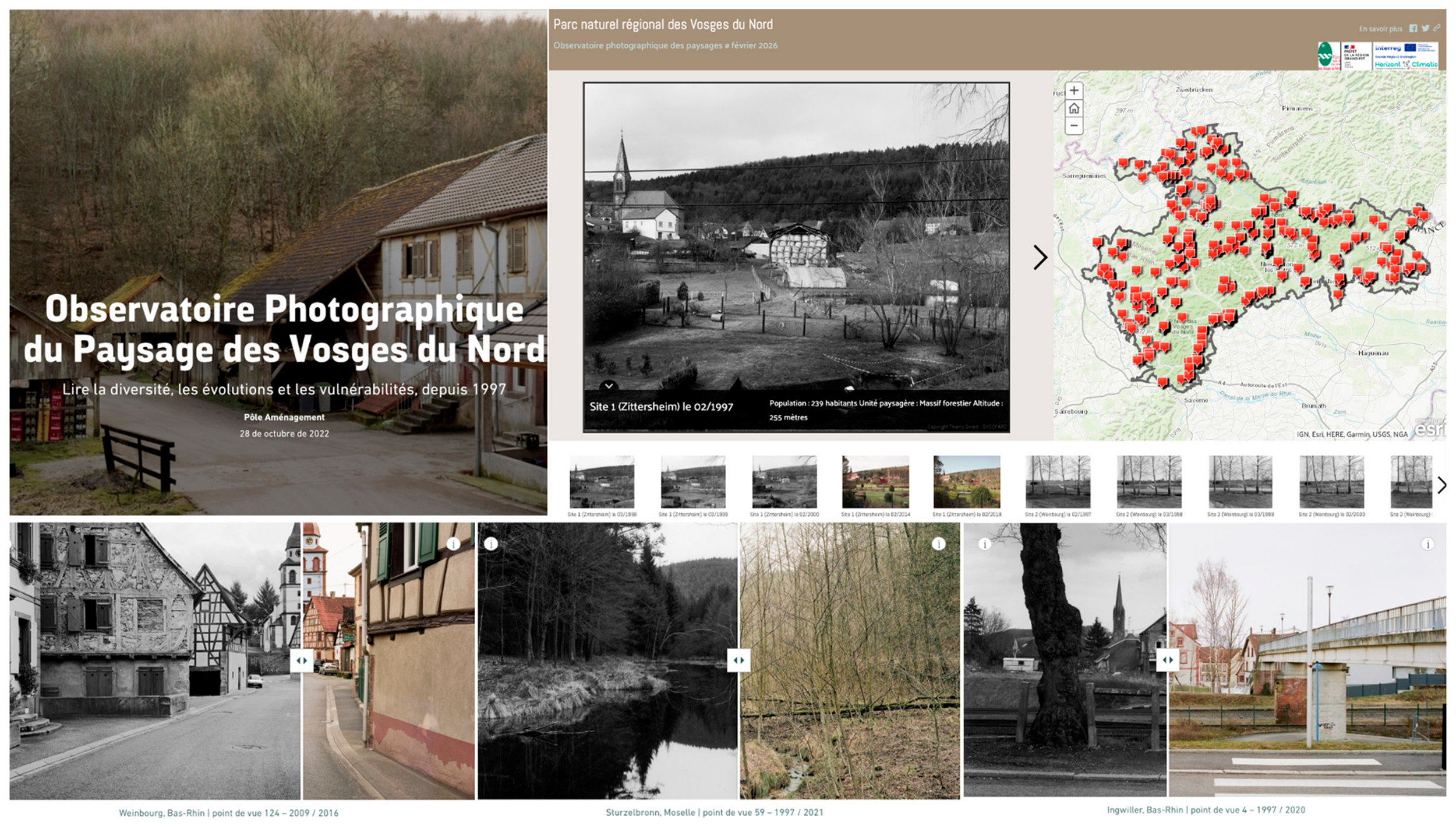
Figure 1 illustrates an example of a landscape observatory interface, while
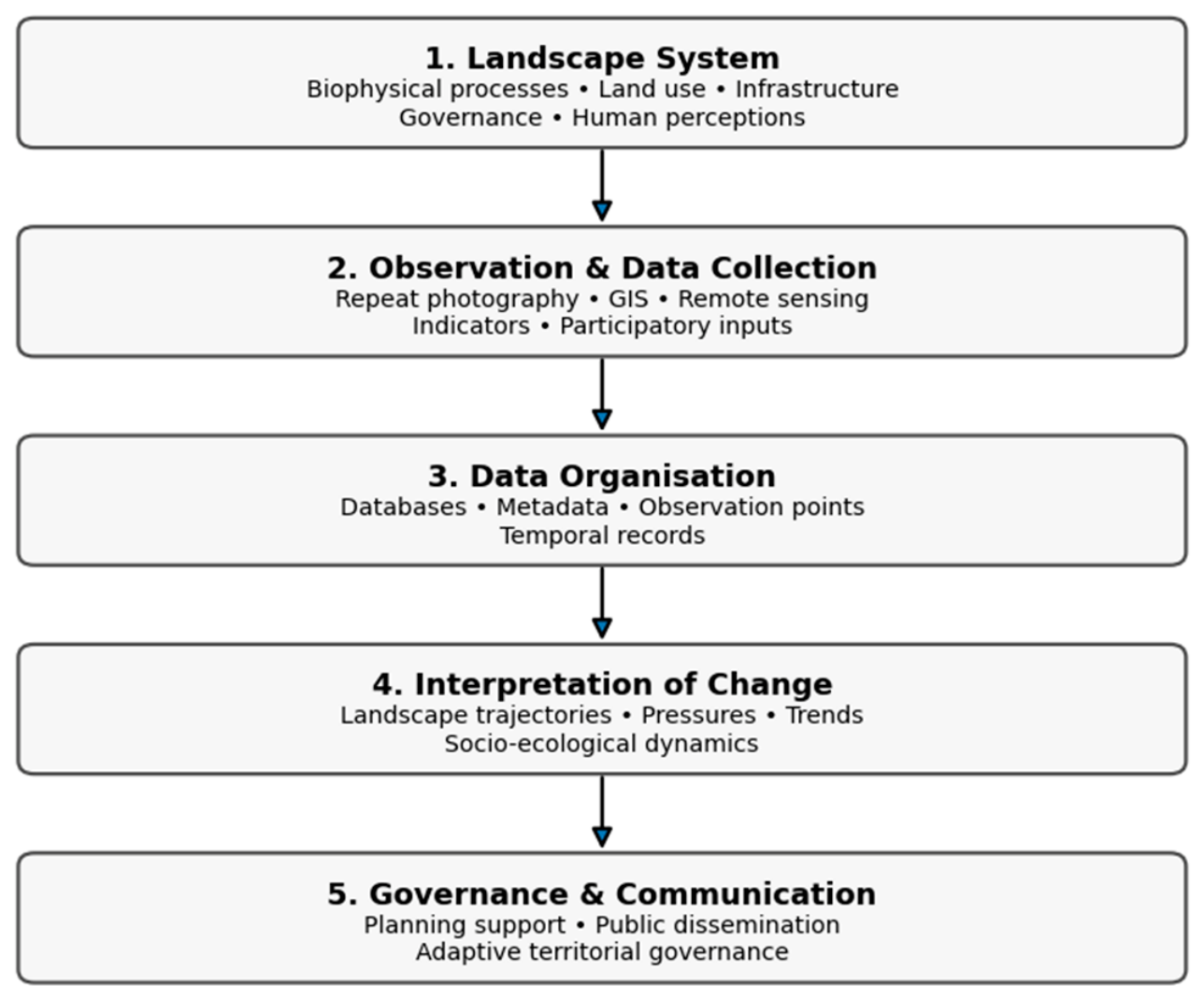
Figure 2 presents a simplified conceptual workflow summarising the principal functions and processes commonly associated with landscape observatories and related initiatives.
In Europe, this conceptual and operational shift is closely linked to the adoption of the European Landscape Convention (ELC) in 2000 [
1]. The ELC represented a paradigm shift by recognising landscape as an essential component of people’s living environment, a key element of cultural and natural heritage, and a determining factor in individual and collective well-being [
1]. Unlike previous approaches, the Convention extended the scope of landscape policies to the entirety of the territory, including ordinary and degraded landscapes, and explicitly introduced the obligation to identify, characterise, analyse and monitor landscapes, while also encouraging citizen participation in their management [
6]. This normative framework has been widely recognised as an important factor associated with the expansion of landscape observatories in several European countries [
2,
3]. More recent analyses continue to identify the ELC as a key driver of landscape institutionalisation, while also highlighting important differences in its implementation across national contexts and governance systems. Contemporary research emphasises that the Convention has contributed not only to the proliferation of landscape observatories and related initiatives, but also to broader transformations in landscape governance, public participation and planning practices [
2,
3,
7].
However, systematic landscape observation did not emerge exclusively as a result of the ELC. Prior to its adoption, there were already experiences aimed at monitoring landscape transformations, particularly through visual and documentary methodologies. In this regard, pioneering initiatives such as the photographic landscape observatories developed in France since the early 1990s demonstrated the potential of repeat photography as a tool for capturing long-term changes and facilitating dialogue among experts, managers and citizens [
8,
9]. These early experiences established the methodological foundations for many later observatories, although they remained relatively fragmented and weakly articulated at the international scale for many years.
From the 2000s onwards, and especially following the progressive ratification of the ELC by many European states, landscape observatories experienced remarkable expansion and diversification. Observatories were established at national, regional and local scales, linked to public administrations, universities, research centres and non-profit organisations. At the same time, the development of geographic information systems, remote sensing and digital platforms encouraged the emergence of web repositories, photographic archives and online databases which, although not always adopting the designation of “observatory”, perform similar functions in terms of the collection, analysis and dissemination of landscape information [
10,
11]. This process of expansion has been rapid and uneven depending on national contexts. Recent work also highlights the increasing role of digital infrastructures, open-data environments and interoperable information systems in reshaping the ways landscape information is collected, managed and disseminated. In this context, observatories are increasingly understood not only as monitoring devices, but also as dynamic knowledge infrastructures capable of integrating heterogeneous sources of territorial information and supporting collaborative forms of landscape analysis and governance [
12].
Recent scientific literature reflects this growth of interest in landscape observatories. Various studies have documented the sustained increase in publications related to this concept since the mid-2000s, as well as its marked geographical concentration in Western Europe, particularly in countries such as France, Italy and Spain [
4,
10,
13,
14]. These studies coincide in identifying landscape observatories as emerging knowledge infrastructures situated at the intersection between scientific research, territorial governance and social participation. However, they also highlight the existence of significant imbalances and knowledge gaps.
One of the principal challenges identified is the lack of a clear and shared operational definition of what exactly constitutes a landscape observatory. While some initiatives focus on quantitative monitoring through spatial and environmental indicators, others prioritise visual documentation, social awareness or the integration of citizens’ perceptions. In many cases, these dimensions coexist without explicit methodological articulation, making comparison between experiences and evaluation of their effectiveness difficult [
15,
16]. This conceptual ambiguity generates a certain degree of confusion in both academic and applied contexts.
Methodological heterogeneity constitutes another major challenge within the field. Landscape observatories employ a very broad range of tools, including GIS analysis, remote sensing, repeat photography, historical archives and participatory processes. At the same time, the development of geographic information systems, remote sensing technologies, spatial databases and digital platforms encouraged the emergence of new forms of landscape observation capable of integrating repeat photography, environmental indicators, land-cover analysis and multi-temporal spatial monitoring. In this context, landscape observatories have been increasingly conceptualised as hybrid socio-ecological information systems capable of combining visual, spatial and environmental data sources for the interpretation of territorial change and landscape evolution. Although numerous authors advocate the need for integrated and multimethod approaches, empirical evidence shows that many observatories depend on a limited number of techniques, constrained by institutional, financial or technical restrictions [
17,
18]. The systematic incorporation of social perception, often presented as one of the principal strengths of observatories, remains uneven and rarely evaluated comparatively [
19].
The temporal dimension of landscape monitoring also raises important questions. Although long-term observation is one of the declared objectives of most observatories, ensuring continuity over time proves particularly complex. Dependence on projects of limited duration, political changes and the lack of stable funding frequently compromise the periodicity of observations and the institutional sustainability of these initiatives [
20,
21]. As a consequence, many observatories are limited to documenting past transformations without playing an active role in anticipating future scenarios or in adaptive landscape governance. This temporal weakness reduces their analytical and operational capacity. This perspective is particularly relevant in the context of increasing environmental uncertainty, climate change and land-use transformation, where observatories may contribute to adaptive territorial governance and long-term socio-ecological monitoring.
Alongside landscape observatories in the strict sense, various repositories and digital platforms dedicated to landscape have proliferated in recent years, including photographic archives, thematic databases and specialised online journals. These initiatives contribute significantly to the production and dissemination of landscape knowledge, although they present substantial differences in terms of objectives, methodologies and levels of institutionalisation. Excluding them from comparative analyses may lead to an incomplete understanding of actual landscape observation practices, whereas assimilating them uncritically into institutional observatories may dilute the specificity of the concept [
15,
22,
23]. Addressing this duality therefore requires a careful analytical approach.
Previous attempts to compile information on landscape observatories and monitoring initiatives have been undertaken within the framework of the European Landscape Convention. Particularly noteworthy is the Council of Europe reference report on integrated approaches to landscape monitoring, which assembled a list of representative observatories and monitoring initiatives through literature searches, web exploration, surveys and expert consultation [
14]. Although this contribution provided an important overview of the field, it was not conceived as a curated analytical database and did not develop a comparative typological framework based on systematically coded variables. The present study builds upon and extends these earlier efforts through a broader inventory and a reproducible analytical protocol.
Despite growing academic interest in landscape observatories, most existing studies are based on analyses of individual cases or limited sets of experiences. There are very few works offering a broad, comparative and systematic empirical overview of a large number of observatories and repositories at the international scale. This deficiency hinders the identification of robust patterns, the evaluation of the degree of implementation of existing methodological recommendations, and the critical analysis of the real impact of observatories on landscape policies and territorial planning [
5,
24]. Recent contributions have also stressed the need for comparative analytical frameworks capable of moving beyond individual case studies and supporting the systematic evaluation of landscape observatories across different institutional and territorial contexts. While valuable conceptual advances have been made, the absence of large-scale empirical inventories continues to limit comparative assessment and the identification of broader organisational patterns [
25].
In this context, the present study adopts an empirical and comparative approach based on the analysis of a broad database of landscape observatories, repositories and related platforms identified through a systematic web search. Unlike reviews focused exclusively on scientific literature, this approach makes it possible to examine the actual operational characteristics of existing initiatives, including those that have not been extensively documented in academic publications. The strength of this strategy lies in its capacity to connect theoretical discourse with effective practice.
The present study contributes to the field of landscape observatory studies through the development and analysis of a curated and systematised international inventory of landscape observation and analysis initiatives (N = 113). While previous efforts have compiled lists of observatories and monitoring initiatives, most notably within the framework of the European Landscape Convention, the present study advances beyond these inventories by providing a transparent coding framework, a reproducible database of 113 initiatives, a comparative analysis of their characteristics, and an original typological synthesis based on monitoring continuity, methodological orientation and institutional functions. The manuscript is conceived as an empirical research article based on an original dataset, rather than as a literature review. Given the exploratory nature of the study, it is guided by a research question rather than by a formal hypothesis-testing framework. The main research question is: how are landscape observatories and related initiatives spatially distributed, institutionally organised, methodologically articulated and functionally differentiated at the international scale? Rather than testing predefined causal hypotheses, the study seeks to identify empirical patterns, organisational models and recurrent characteristics through a systematic comparative analysis of the collected initiatives. The general objective is therefore to provide a structured and critical overview of these initiatives by analysing their spatial distribution, temporal evolution, declared objectives, methodologies, operational scales and degrees of institutionalisation, while also assessing the levels of explicitness and transparency characterising this heterogeneous set of devices.
The original contribution of the study lies not simply in compiling an inventory, but in transforming a dispersed set of initiatives into a comparative analytical framework that reveals recurrent organisational models, methodological patterns and structural characteristics of the contemporary landscape observatory field.
More specifically, the following objectives are proposed:
1. To identify and classify landscape observatories and related repositories according to their geographical location, institutional context and year of establishment.
2. To analyse their temporal evolution, paying particular attention to the role of the year 2000 and the influence of the European Landscape Convention.
3. To examine the declared objectives and methodologies employed, identifying dominant patterns and hybrid configurations.
4. To explore differences in operational scale, periodicity and forms of result presentation, as well as their implications for long-term landscape monitoring.
5. To discuss the obtained results in light of the existing scientific literature on landscape observatories, identifying contributions, limitations and future lines of research.
Overall, this study seeks to contribute to the consolidation of the field of landscape observatories—including observatories, landscape study centres and other related initiatives, many of them developed in response to the European Landscape Convention—by providing a solid empirical basis for advancing towards more coherent, comparable and operationally effective approaches to landscape study and governance. Rather than simply cataloguing initiatives, the study develops an original typological framework that reveals recurrent organisational models, methodological patterns and structural characteristics across the international landscape observatory field.
3. Results and Discussion
3.1. Spatial Distribution and Typologies of Landscape Observatories and Repositories
The analysis of the set of initiatives included in the database (
Table S1) reveals a markedly uneven spatial distribution of landscape observatories, in the strict sense, and related repositories, landscape study centres and other initiatives. The spatial analysis is based on 106 initiatives with an explicitly identifiable country (
Table 2), within the aforementioned overall analytical universe of 113 initiatives. All results presented in
Section 3.1,
Section 3.2,
Section 3.3,
Section 3.4 and
Section 3.5 derive from the curated dataset included in
Table S1, which represents the principal empirical result of this research.
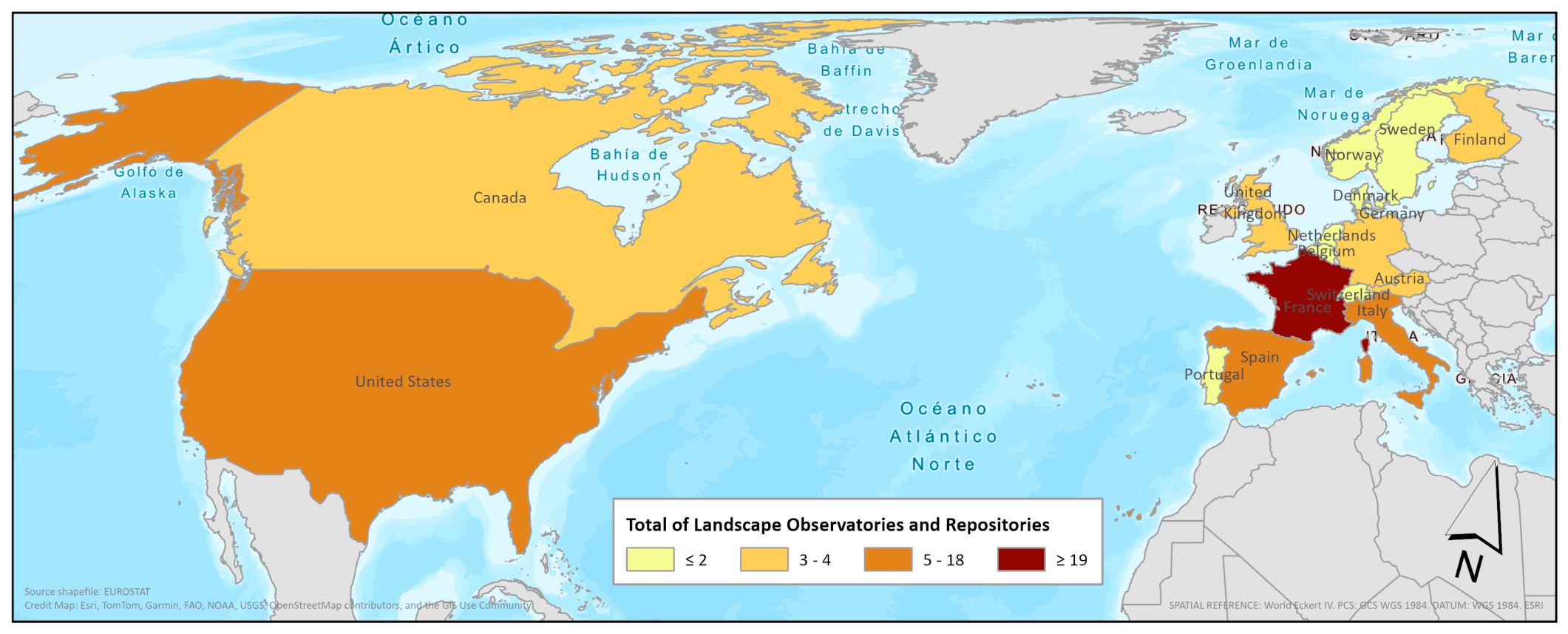
Figure 4 represents the distribution of initiatives aggregated at the country level rather than the precise location of individual observatories, as the available territorial references are heterogeneous and not consistently georeferenced across the dataset. As shown, there is a clear geographical concentration in Western Europe, with a particularly strong predominance of countries such as France, Italy and, to a lesser extent, Spain, while large regions of the world appear scarcely represented. This pattern empirically confirms the trends already identified in previous studies, which recognise Europe as the principal nucleus of institutionalisation for landscape observatories [
14].
A combined reading of
Figure 4 and
Table 2 allows this distribution to be examined in greater depth, showing not only the total number of initiatives per country, but also their disaggregation by typology. France emerges as the country with the highest absolute number of cases, both in terms of landscape observatories in the strict sense and associated repositories. This leadership may be interpreted in light of an early and sustained tradition of landscape policies, as well as the pioneering role played by French photographic observatories since the late twentieth century. Various authors have emphasised that these early experiences not only consolidated specific methodologies, but also contributed to institutionally legitimising the very notion of the “observatory” as a public policy tool in the field of landscape [
8,
9,
14].
Italy likewise presents a high number of initiatives, although with a different typological structure, predominantly linked to landscape study centres rather than observatories in the strict sense, despite the fact that some cases adopt that designation. Many Italian institutions are formally designated as landscape observatories, but their documented activities focus primarily on research, territorial analysis and planning support rather than on systematic observation and monitoring processes. As reflected in
Table 2, Italy exhibits a substantial concentration of initiatives operating at regional and local scales. This difference has been interpreted in the literature as a result of the Italian territorial organisation and the decentralisation of landscape-related competences, which favour more territorialised and contextual approaches [
51,
52]. This characteristic suggests that institutional scale directly influences the organisational forms adopted by landscape observatories and related initiatives.
In the case of Spain, although the total number of initiatives is lower, the typological diversity is notable.
Table 2 shows the coexistence of observatories linked to regional administrations, projects promoted from the academic sphere, and platforms associated with protected areas. Previous studies have highlighted that Spanish landscape observatories have played a relevant role as instruments supporting territorial planning and the implementation of the European Landscape Convention, although their continuity and institutional stability have been uneven [
2,
6,
45]. In some cases, dependence on specific projects has limited their consolidation as permanent structures.
Outside the European context,
Figure 4 reveals a much more fragmented presence of observatories and repositories. The initiatives identified in North America, Latin America and other regions appear in isolation and without the density observed in Europe. This geographical imbalance has been repeatedly highlighted in the literature and is usually attributed to the direct influence of the European Landscape Convention, as well as to the stronger European tradition of integrated territorial policies [
53]. Nevertheless, it should be noted that this apparent absence may also be related to terminological and conceptual differences, since functionally equivalent initiatives may not adopt the designation of “observatory” in other administrative or cultural contexts.
From a typological perspective, the results confirm considerable heterogeneity in the forms adopted by the analysed initiatives. Alongside landscape observatories in the strict sense, defined as structures with an explicit vocation for systematic landscape monitoring, the dataset includes landscape study centres, digital repositories, photographic galleries and dissemination platforms fulfilling partially similar functions. This coexistence of typologies reinforces the idea, widely discussed in the literature, that the concept of the landscape observatory is inherently flexible and has been adapted to highly diverse institutional and technological contexts [
14,
15,
25,
26]. Far from constituting an analytical weakness, this diversity highlights the plurality of functions performed by these initiatives, ranging from systematic monitoring to documentation and social awareness-raising.
The differentiated spatial distribution of typologies further suggests the existence of contrasting traditions in approaches to landscape observation. Whereas institutionalised observatories, closely linked to public policies and regulatory frameworks, predominate in Europe, repositories and platforms of an academic or private nature, mainly oriented towards the compilation and dissemination of information, carry greater weight in other contexts. Recent studies have pointed out that these differences are not neutral, since they condition the objectives, methodologies and target audiences of the initiatives, as well as their potential impact on territorial governance [
18,
20,
54].
From a critical perspective, this geographical and typological concentration raises important questions regarding the transferability of dominant landscape observatory models. The literature warns that the uncritical replication of models developed in European contexts may prove problematic in territories characterised by different institutional frameworks, cultural traditions and technical capacities [
5]. In this regard, the diversity of identified typologies may be interpreted not only as a source of analytical complexity, but also as an opportunity to explore alternative approaches more contextually adapted to landscape observation.
Overall, the integration of
Figure 4 and
Table 2 makes it possible to visualise and quantify clearly the geographical and typological asymmetries of the field. These results demonstrate that landscape observatories and related repositories do not constitute a homogeneous or universal phenomenon, but rather a set of practices profoundly shaped by specific regulatory contexts, institutional traditions and territorial capacities. Ultimately, the geography of observatories reflects international inequalities in the ways landscape is conceived and governed.
3.2. Temporal Evolution of Landscape Observatories and the Role of the European Landscape Convention
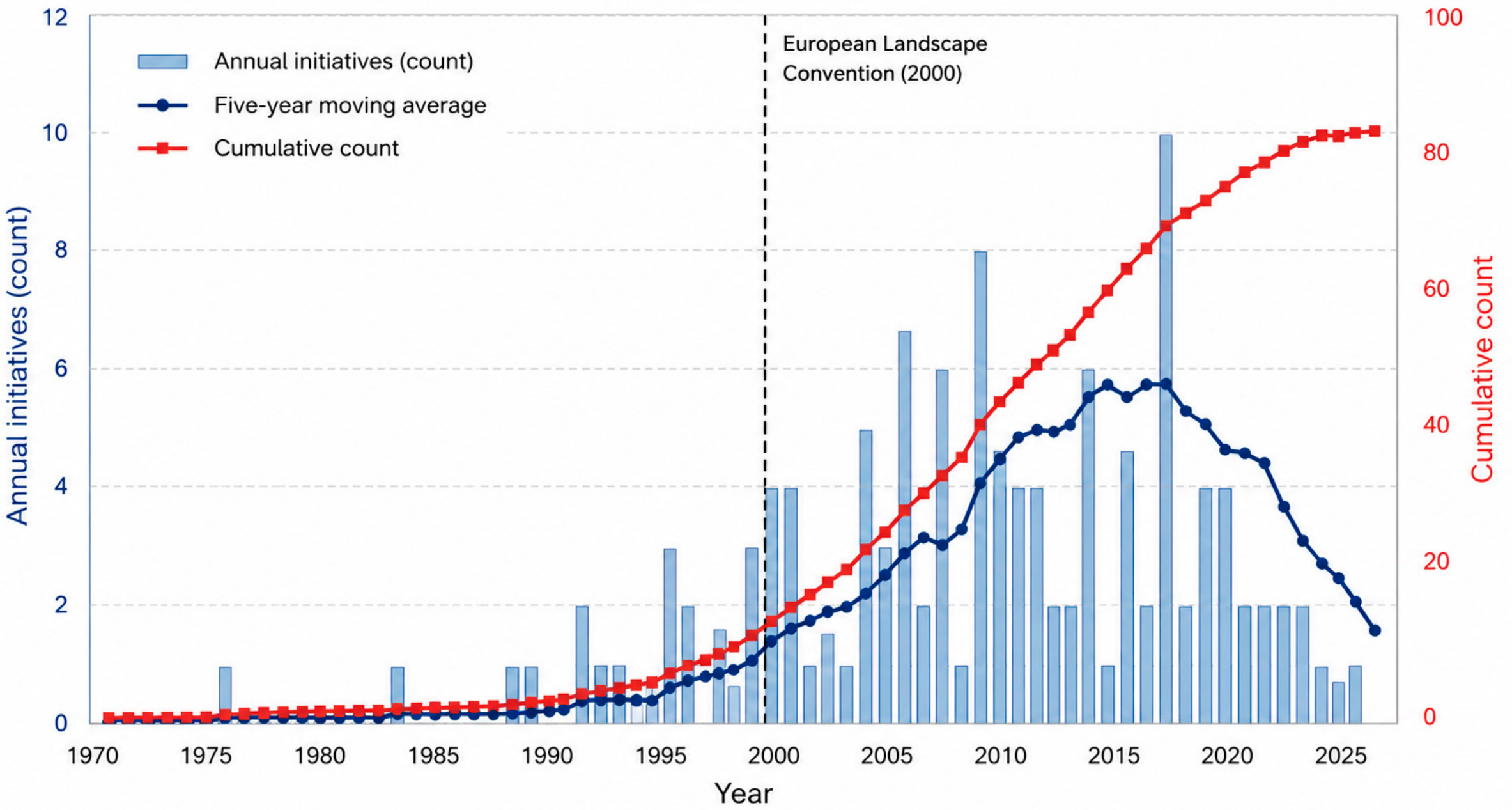
The temporal analysis of the collected initiatives reveals a clearly non-linear evolution in the creation of landscape observatories and related repositories. The temporal analysis is based on 84 initiatives with an identifiable foundation date or starting year of activity (
Figure 5), representing approximately 71% of the overall analytical universe. The remaining 29 initiatives, approximately 26% of the total inventory, did not provide sufficient chronological information and were therefore excluded from this specific analysis, in accordance with the criteria established in the Methodology. As shown in
Figure 5, most initiatives are concentrated in the period after the year 2000. This temporal pattern is consistent with the interpretation that the European Landscape Convention (ELC) contributed to the expansion of landscape observatories in Europe, although the existence of missing chronological information for approximately one quarter of the analysed initiatives means that this relationship should be interpreted with caution [
7,
14,
52]. The exploratory nature of the study does not allow causal inference regarding the drivers of observatory emergence, including the specific effects of the European Landscape Convention, although the observed temporal patterns are consistent with interpretations proposed in the previous literature.
Figure 5 makes it possible to distinguish at least three major phases in the temporal evolution of the phenomenon. A first phase, prior to the year 2000, is characterised by the existence of a limited number of initiatives, many of them pioneering in nature and with a strong experimental component. These early experiences, frequently linked to academic projects or specific visual documentation programmes, anticipated some of the methodologies that would later become widespread, such as repeat photography and the systematic archiving of landscapes [
9,
55,
56,
57]. However, their institutional and territorial scope was limited, and their continuity over time depended largely on specific local contexts. These early initiatives may therefore be regarded more as exceptions than as a consolidated model. The absence of temporal information in a significant proportion of initiatives constitutes, in itself, a relevant result, indicative of differing degrees of institutional formalisation and organisational consolidation.
A second phase began after the year 2000 and extended throughout the 2000s decade. This period coincides with the entry into force of the ELC and with the first efforts by signatory states to adapt their regulatory and administrative frameworks to the new landscape-related obligations. In this context, a progressive increase in the creation of landscape-observation initiatives can be observed, especially in countries such as France and Italy, where the ELC was rapidly incorporated into public policies [
7,
51,
52]. The literature has pointed out that, during this phase, observatories were conceived primarily as instruments of diagnosis and knowledge production, oriented towards the identification and characterisation of landscapes rather than their long-term monitoring [
2,
3].
The third phase developed from the 2010s onwards and continues to the present day. During this period, the number of initiatives remained significant, although it progressively began to decline following the initial efforts made after the emergence of the ELC. Nevertheless, this period coincides with greater maturity in European landscape policies, as well as with the development of new digital technologies facilitating the creation and dissemination of web platforms and online repositories. Various authors have emphasised that, at this stage, landscape observatories tend to assume more complex functions, combining monitoring, planning support, social awareness-raising and, in some cases, citizen participation [
18,
52,
54].
To explore the territorial dimension of this temporal evolution in greater depth, it is useful to disaggregate the data by country, as presented in
Table 3. This table shows the number of initiatives established during different temporal periods for the principal countries represented in the database. The results reveal differentiated national trajectories, with specific growth rhythms and turning points. France, for example, already presents a significant number of initiatives created before the year 2000, reflecting its pioneering role, but also experienced strong growth during the subsequent period, consolidating a dense and diversified network of observatories and related repositories. Italy, meanwhile, shows more marked growth from the first years following the ELC onwards, mainly through institutions formally designated as observatories but functionally closer to landscape study centres, consistent with the progressive integration of landscape into regional policies [
7,
51].
Spain presents a more irregular evolution, with a limited number of initiatives created during the early phases and moderate growth in later periods. This pattern has been interpreted in the literature as reflecting the uneven implementation of the ELC within the Spanish context, marked by territorial differences and by weaker institutionalisation of observatories compared with other European countries [
2,
3]. Dependence on specific projects and the absence of stable frameworks have conditioned this trajectory.
Beyond the European context,
Table 3 shows that the creation of initiatives in other countries does not necessarily follow the same temporal logic associated with the ELC. In these cases, the emergence of repositories and landscape-related platforms appears to respond more to specific academic, technological or cultural dynamics than to comparable regulatory frameworks. This divergence reinforces the idea that the ELC has had a significant, but territorially bounded, impact on the institutionalisation of landscape observatories [
55,
58].
From a critical perspective, these results invite reflection on the extent to which the quantitative increase in observatories after the year 2000 has translated into a qualitative improvement in landscape observation. Some authors warn that the proliferation of initiatives has not always been accompanied by methodological consolidation or guarantees of long-term continuity, raising questions regarding their real capacity to contribute to adaptive landscape governance [
18,
20,
59]. In this regard, the temporal analysis suggests that the current challenge lies not so much in the creation of new observatories as in the stabilisation, articulation and critical evaluation of existing ones. Numerical growth alone does not guarantee effective landscape observation.
Overall, the integration of
Figure 5 and
Table 3 makes it possible to situate the temporal evolution of landscape observatories and related repositories within a broad interpretative framework combining empirical analysis with theoretical discussion on landscape policies, institutionalisation and methodological change. The observed temporal pattern is consistent with the interpretation of the period following the year 2000 as an important phase in the expansion of landscape observatories and related initiatives. However, the exploratory nature of the study and the incomplete availability of chronological information do not allow this pattern to be attributed to any single causal factor. The European Landscape Convention may have contributed to this evolution, but other contemporaneous developments, including advances in digital technologies, web-based information systems and environmental monitoring networks, may also have played important roles.
3.3. Objectives and Methodologies of Observatories: Patterns, Combinations and Hybridization
The combined analysis of the declared objectives and methodologies employed by landscape observatories and related repositories reveals a complex matrix of combinations, highlighting both dominant patterns and emerging processes of methodological hybridisation. The results presented in this section should be interpreted bearing in mind that a significant proportion of the initiatives do not clearly specify either their objectives or the methodologies employed. This lack of definition does not merely constitute an informational deficiency but rather reflects substantive differences in the degree of structuring, institutional maturity and operational orientation of the analysed observatories and repositories. Unlike the previous sections, which focused on spatial and temporal dimensions, this analysis makes it possible to address the functional core of the initiatives and to evaluate the extent to which observatories respond to the conceptual and methodological principles advocated in the scientific literature [
24,
25,
46,
55]. Methodological information was unavailable or not explicitly reported for approximately 88% of the analysed initiatives (100 out of 113 cases). Consequently, the methodological patterns discussed in this section should be interpreted primarily as indicators of publicly documented methodological practices rather than as a comprehensive representation of all activities undertaken by the analysed initiatives.
As summarised in
Table 4, the most frequently declared objectives may be grouped into four broad categories: (i) monitoring and tracking landscape change; (ii) support for territorial planning and decision-making; (iii) landscape documentation, archiving and dissemination; and (iv) social awareness, education and participation. Although these categories are not mutually exclusive, their relative distribution provides an initial approximation of the declared functional orientations of the analysed observatories and repositories, while also revealing the high proportion of cases for which objectives are only weakly specified or not explicitly stated.
The results shown in
Table 4 indicate that landscape documentation and archiving constitute a clearly identifiable, although not numerically dominant, objective within the analysed sample. This orientation appears particularly associated with digital repositories and web platforms, whose role is often linked to the compilation and provision of landscape information rather than to systematic monitoring or direct integration into governance processes [
11,
54]. From a critical perspective, this documentary emphasis may be interpreted both as a strength, by facilitating public access to information, and as a limitation in terms of operational and transformative capacity.
In contrast, landscape observatories in the strict sense more frequently present explicit objectives related to change monitoring and planning support, especially in European contexts where these functions are linked to the implementation of the European Landscape Convention. Various authors have pointed out that these objectives respond to a conception of the observatory as a technical-political instrument capable of generating useful knowledge for public action and the evaluation of territorial policies [
2,
3,
19]. Nevertheless, the effective translation of these objectives into consistent methodological practices is not always guaranteed.
The cross-analysis between objectives and methodologies (
Table 5) is based on the information explicitly declared by the initiatives and should be interpreted taking into account two methodological considerations. First, a single initiative may employ more than one methodology, meaning that the analysis reflects functional combinations rather than exclusive categories. Second, the high frequency of the “methodology not specified” category should not be interpreted as a residual result, but rather as a structural characteristic of the analysed set, revealing the gap between programmatic discourses and the methodological practices actually declared. This table constitutes one of the key analytical elements of the study, as it makes it possible to evaluate the degree of coherence (or, in some cases, mismatch) between what observatories claim to pursue and the tools they effectively employ.
A particularly relevant result emerging from
Table 5 is the limited availability of methodological information. Methodologies were not explicitly specified for 100 of the 113 analysed initiatives (88.5%), indicating that the observed distributions reflect publicly documented methodologies rather than the full range of methods potentially employed across the field.
The methodological frequencies reported in
Table 5 should be interpreted with caution. Because the analysis relies exclusively on information explicitly available on institutional websites, the observed distribution reflects declared and documented methodologies rather than the full range of methods potentially employed by the initiatives. In particular, categories such as GIS, remote sensing or quantitative indicators may be underrepresented when these techniques are used operationally but are not described in sufficient detail on the analysed platforms.
The results reflected in
Table 5 show that repeat photography is strongly associated with objectives related to documentation and awareness-raising, as well as, to a lesser extent, the monitoring of landscape change. This association is consistent with the tradition of photographic landscape observatories widely documented in French and European literature, which highlights the value of visual series for capturing long-term transformations and facilitating communication of change [
8,
9,
15]. However, several authors warn that the analytical potential of repeat photography depends largely on its integration with other methods and on the existence of clear protocols for repetition and analysis [
9,
14].
Where explicitly reported, GIS/remote sensing appears in association with planning and management objectives, while quantitative indicators were not clearly documented in the analysed web sources. However, the very low number of explicitly reported cases should be interpreted with caution, since many initiatives do not disclose detailed methodological information on their websites. Consequently, the results presented here reflect publicly documented methodologies rather than the full range of techniques potentially employed by the analysed initiatives. This pattern reflects a more technocratic orientation towards landscape observation, in which emphasis is placed on measurement, spatial comparison and the generation of standardised diagnoses. The literature has pointed out that this approach may facilitate the integration of observatories into planning and policy evaluation processes, but also risks reducing landscape complexity to a limited set of quantifiable variables [
7,
16]. From a broader socio-ecological perspective, the integration of remote sensing, GIS and multi-temporal spatial analysis expands the role of observatories beyond visual documentation, enabling the interpretation of land-use trajectories, environmental pressures and long-term landscape evolution processes.
A particularly relevant result from
Table 5 is the growing presence of methodological combinations, especially between photography, spatial analysis and, in some cases, participatory tools. These hybrid configurations appear more frequently in observatories declaring multiple objectives, combining monitoring, planning and awareness-raising. This finding supports theoretical proposals advocating integrated and multimethod approaches as a means of capturing landscape complexity and overcoming the limitations of isolated methods [
20,
54,
60]. Nevertheless, methodological hybridisation remains more an aspiration than a fully consolidated practice.
Citizen participation and the incorporation of social perceptions appear much more limited in the objective-methodology cross-analysis. When present, they are generally associated with objectives related to awareness-raising and education rather than systematic monitoring or direct planning support. This result is consistent with previous observations pointing to the still incipient integration of the social dimension within many landscape observatories, despite its centrality in the discourse of the European Landscape Convention [
18]. From a critical perspective, this dissociation raises questions regarding the degree of coherence between the normative principles of the ELC and the effective practices of landscape observation.
Overall, the analysis presented in this section suggests that landscape observatories and related repositories are situated along a continuum ranging from predominantly documentary devices to structures oriented towards monitoring and territorial governance, with a growing number of initiatives exploring hybrid configurations.
Table 4 and
Table 5 make it possible to identify both consolidated patterns and unresolved tensions between objectives, methodologies and operational capacities. These tensions constitute one of the principal challenges for the future evolution of landscape observatories as effective instruments of knowledge and action.
A major finding of the inventory is the limited methodological transparency exhibited by many initiatives. Methodological information was unavailable or insufficiently specified for a substantial proportion of the analysed cases, limiting the possibility of robustly characterising the monitoring approaches employed across the field. Consequently, the results should not be interpreted as a direct representation of the actual methodological sophistication of landscape observatories and related initiatives, but rather as an assessment of the degree to which methodologies are publicly documented and made accessible through the analysed websites. This result should therefore be interpreted as a finding regarding public methodological transparency rather than as a definitive assessment of methodological practices. At the same time, the observed lack of methodological information highlights substantial differences in institutional maturity, transparency and operational formalisation across the landscape observatory field, while also pointing to the need for greater methodological explicitness in future observatory frameworks.
3.4. Scale of Action, Temporal Continuity and Models of Landscape Observation
The territorial scale of action and the manner in which the temporal continuity of activities is articulated constitute fundamental dimensions for evaluating the degree of institutionalisation and the functional nature of landscape observatories and related repositories. Unlike the previous sections, which focused on spatial, temporal and methodological distribution, this section allows a more in-depth examination of: (i) how initiatives are organised territorially and temporally; and (ii) the extent to which they may be considered continuous observation devices.
The analysis of the scale of action, summarised in
Table 6, is based on 111 initiatives with sufficient information regarding their territorial scope. The results show a clear predominance of regional-scale initiatives (82 cases), compared with those operating at national (14) or local (15) levels. This pattern confirms that most of the analysed observatories and repositories are situated at intermediate territorial scales, consistent with the decentralisation of landscape policies and with the implementation of the European Landscape Convention in regional and subnational contexts.
The predominance of the regional scale suggests that many of these devices may act as interfaces between expert knowledge and territorial management, providing analytical frameworks adapted to specific landscape realities. Nevertheless, this strong intermediate territorialisation also raises challenges in terms of comparability and articulation between initiatives, especially where clear coordination mechanisms at higher scales are lacking. The regional scale thus emerges as a privileged arena for landscape observation, but also as a potential source of analytical fragmentation.
Focusing specifically on the type of initiative and the degree of continuity of repeat photography, the analysed set may be grouped into five broad functional categories (
Table 7). Of the 113 initiatives considered, 32 correspond to landscape observatories with continuous repeat photography, while 27 carry out photographic repetitions limited to specific years or campaigns. Alongside these observation devices in the strict sense, 40 landscape study centres were identified, primarily oriented towards analysis, research or planning support, together with a smaller number of landscape repositories and other initiatives incorporating landscape photography in a secondary or non-systematic manner.
A particularly relevant aspect is the close relationship between the emergence of many of these initiatives and the implementation of the European Landscape Convention. A significant proportion of landscape observatories, and especially landscape study centres, may be interpreted as temporally and institutionally associated with the Convention’s requirements regarding the identification, characterisation and monitoring of landscapes. In the Italian context, many institutions formally designated as landscape observatories operate primarily as landscape study centres devoted to research, territorial analysis and planning support, illustrating the distinction between institutional denomination and functional classification adopted in this study. In this sense, these devices may be interpreted as operational instruments aimed at implementing the principles of the ELC beyond strict visual monitoring, through the production of knowledge, support for planning and institutional awareness-raising. Nevertheless, the extent to which these initiatives effectively fulfil the objectives of the ELC varies considerably, depending on their degree of institutionalisation, available resources and methodological clarity.
The temporal dimension, analysed on the basis of
Table 8 and complemented by the functional typology presented in
Table 7, highlights the coexistence of clearly differentiated observation models in terms of continuity, systematicity and purpose.
The analysis is based on 56 initiatives providing some explicit reference to the continuity or periodicity of their activities. Of these, only 15 declare a clearly established periodicity, concentrated predominantly within the French context. Only 56 of the 113 analysed initiatives (49.6%) provided sufficient information regarding temporal continuity or periodicity, highlighting substantial variation in the degree of public documentation across the field. The remaining initiatives are distributed among models with continuity over time but without formal periodicity (23 cases), sporadic repetitions in irregular years, and devices that do not undertake systematic monitoring of the same landscapes.
From a critical perspective, the limited presence of formalised periodicities restricts the capacity of many initiatives to undertake systematic long-term comparisons, one of the objectives traditionally associated with landscape observatories [
3,
19]. However, this apparent weakness must be qualified in light of the different approaches identified: while some devices prioritise repeated observation and temporal comparability, others are oriented towards punctual analysis, thematic knowledge production or support for planning and territorial reflection processes. Not all initiatives pursue, nor require, the same degrees of temporal continuity.
Overall, the analysis of the scale of action and temporal continuity makes it possible to identify differentiated organisational models within the broad set of analysed initiatives. Far from constituting a homogeneous group, landscape observatories and related repositories combine diverse scales and temporalities, reflecting different degrees of institutionalisation, available resources and strategic objectives. These results reinforce the need to advance towards analytical typologies capable of recognising this plurality without diluting the potential of the observatory concept as a tool for territorial knowledge and action.
3.5. Typological Synthesis and Emerging Patterns in Landscape Observatories
The results presented in the previous sections demonstrate that the set of analysed landscape observatories and related repositories does not constitute a homogeneous field nor one that can be easily reduced to a single operational definition. On the contrary, the combined analysis of their territorial distribution (
Section 3.1), temporal evolution (
Section 3.2), objectives and methodologies (
Section 3.3), as well as their scale of action and temporal continuity (
Section 3.4), reveals the existence of differentiated patterns and organisational models, which should be synthesised in an integrated manner. Based on the integration of the empirical results and the functional typology grounded in the continuity of repeat photography, an interpretative typological synthesis is proposed, enabling the analysed initiatives to be organised according to their degree of institutionalisation, functional orientation and capacity for landscape monitoring (
Table 9). The proposed typology is intended as a descriptive and interpretative classification of the initiatives identified in the inventory rather than as a normative framework for the design of new landscape observatories. Its purpose is to facilitate comparison, identify recurrent organisational patterns and support future analytical work, rather than to prescribe preferred institutional or methodological models.
This typological synthesis represents an interpretative framework derived from the inventory and comparative analyses presented in the previous sections. Its purpose is to organise and contextualise the diversity of identified initiatives by highlighting recurrent organisational models, functional orientations and monitoring configurations across the landscape observatory field. It moves the analysis beyond a descriptive inventory by integrating spatial distribution, temporal evolution, objectives, methodologies, scale of action and monitoring continuity into a comparative framework for interpreting how landscape observatories and related initiatives are currently configured.
A first transversal distinction emerges in relation to the degree of institutionalisation of the initiatives. Some of them, particularly those operating at regional or national scales, with explicit monitoring objectives and established periodicities, display characteristics typical of consolidated observatories in the classical sense of the term. These initiatives generally possess relatively clear methodological frameworks, continuity over time and a certain capacity to inform planning processes or the evaluation of public policies. Although they are not numerically predominant, their qualitative weight is considerable, and they tend to be concentrated in contexts where landscape policies benefit from strong institutional support, as occurs in several European cases [
10,
55]. The functional typology based on the continuity of repeat photography reinforces this distinction, showing that only a proportion of the initiatives may be considered photographic observatories with continuous monitoring, while another equally relevant group corresponds to landscape study centres, whose contribution is articulated more in analytical, interpretative or planning-support terms than through systematic visual monitoring.
In contrast to this group, a broad set of initiatives may be identified as hybrid devices for landscape observation and analysis. These initiatives combine, more or less explicitly, functions of documentation, thematic analysis, awareness-raising and, in some cases, non-systematic temporal monitoring. They usually operate at regional or local scales and exhibit continuity over time without formalised periodicities. Far from constituting a deficient model, this group reflects a flexible adaptation to diverse institutional and financial contexts and highlights the capacity of the observatory concept to accommodate heterogeneous practices. Hybridisation emerges here as a pragmatic strategy rather than as a methodological deficiency. These hybrid configurations may also be interpreted as emerging socio-ecological monitoring systems, capable of integrating environmental information, spatial analysis and social interpretation within adaptive territorial governance frameworks.
Another clearly identifiable pattern corresponds to repositories and platforms of a predominantly documentary nature, whose primary objective is the compilation, organisation and dissemination of information on landscapes. These initiatives generally lack explicit observation methodologies and do not necessarily pursue the monitoring of landscape changes over time. Their proliferation, particularly in Anglophone contexts, responds both to the development of digital infrastructures and to a conception of landscape as an object of archiving and communication. Although their contribution to systematic monitoring is limited, they play a relevant role in terms of information accessibility and the construction of landscape memory.
Across these typologies, the analysis has revealed a recurring gap between programmatic discourses and effectively declared practices. Numerous initiatives formulate ambitious objectives (such as monitoring change or supporting planning) without accompanying them with clearly specified methodologies or coherent temporal schemes. This dissociation, already highlighted in the literature [
60], should not be interpreted solely as a deficiency, but also as an indicator of the emergent and evolving nature of the field of landscape observatories.
This gap is particularly evident in relation to methodological transparency. The inventory shows that a large proportion of initiatives formulate ambitious objectives related to monitoring, governance or planning support while providing little or no information regarding the methods through which these objectives are pursued. From an analytical perspective, this lack of methodological explicitness should not be viewed merely as missing information, but as an empirical characteristic of the field itself, reflecting uneven levels of institutional development, documentation practices and accountability.
Likewise, the identified patterns show a strong dependence on institutional and territorial contexts. The concentration of observatories with established periodicities in certain countries, together with the predominance of regional scales in Europe, suggests that the configuration of these devices is closely linked to specific normative frameworks, administrative traditions and planning cultures. In this sense, landscape observatories cannot be understood as models that may be transferred uncritically, but rather as situated devices whose design and functioning respond to concrete local and regional conditions.
Recent discussions on landscape monitoring have also highlighted the growing potential of crowd-sourced information, volunteered geographic information and social media data as complementary sources for documenting landscape perception, use and change. These emerging data streams may expand the analytical capabilities of landscape observatories by incorporating near-real-time information and broader forms of public engagement. However, their integration also raises challenges regarding data quality, representativeness and long-term comparability. Because the present inventory was designed primarily to identify institutional observatories and related initiatives, these forms of digital participation were not included as a specific coding variable. Future versions of the database could explicitly examine the extent to which observatories incorporate crowd-sourced and social-media-derived information within their monitoring frameworks [
14].
The long-term sustainability of landscape observatories and related initiatives also depends on broader institutional, economic and political contexts. The results suggest that the continuity, methodological development and operational capacity of many initiatives are influenced not only by technical considerations, but also by the availability of stable funding, administrative support and political commitment to landscape governance. In this regard, observatories may be particularly vulnerable to changes in policy priorities, budgetary constraints or institutional restructuring. These factors help explain some of the discontinuities, methodological opacity and uneven levels of consolidation identified throughout the inventory. Future research should therefore examine more explicitly the relationships between observatory performance, governance arrangements and the socio-political contexts in which these initiatives operate.
Beyond their role as monitoring devices, many contemporary observatories increasingly function as intermediaries between landscape knowledge production and broader digital information infrastructures. Photographic archives, spatial databases, open-data portals and institutional repositories often provide the technical environment through which observations are stored, curated, shared and reused. In this sense, the distinction between observatories and repositories is not always absolute, since many initiatives combine monitoring functions with data management and dissemination roles. Understanding these interfaces constitutes an important avenue for future research on the governance and interoperability of landscape information systems.
Beyond the storage, management and dissemination of information, a central challenge for landscape observatories concerns the transformation of observations into socially and institutionally meaningful knowledge. Photographic archives, spatial databases and monitoring records do not automatically generate learning or influence decision-making processes. Their value depends on the extent to which observations are interpreted, communicated and integrated into planning, governance and public engagement processes. In this sense, observatories may be understood not only as monitoring systems but also as knowledge infrastructures that mediate between landscape change, information production and societal learning. Their long-term relevance therefore depends not only on data collection, but also on their capacity to translate observations into accessible narratives, analytical frameworks and decision-support resources capable of informing adaptive territorial governance.
Overall, the synthesis presented in this section contributes to a more nuanced understanding of the phenomenon of landscape observatories, moving away from singular normative definitions and recognising the coexistence of consolidated, hybrid and documentary models. This diversity, far from weakening the field, constitutes one of its principal structural characteristics and raises significant challenges for comparative evaluation, as well as for integration into landscape policies at different scales. The challenge lies not so much in homogenising existing initiatives as in clarifying their functions, strengthening their internal coherence and improving the transparency of their objectives and methodologies.
4. Conclusions
This study has presented a systematic and comparative analysis of landscape observatories and related repositories through the development of an inventory of 113 initiatives at the international scale. In contrast to the fragmentation and dispersion characterising this field, the study provides a solid empirical basis that makes it possible to move beyond descriptive approaches towards a more structured understanding of contemporary forms of landscape observation.
The results show that the phenomenon of landscape observatories is characterised by marked heterogeneity in terms of territorial distribution, temporal evolution, objectives, methodologies, scale of action and temporal continuity. From a spatial perspective, a clear European predominance is evident, with France playing a particularly prominent role and with a strong concentration of initiatives at regional scales, reflecting the influence of decentralised normative and administrative frameworks, as well as the temporal association between the expansion of observatories and the implementation of the European Landscape Convention. The temporal dimension, in turn, reveals a significant expansion of initiatives after the year 2000, although accompanied by a notable absence of chronological information for a substantial proportion of the analysed set.
The analysis of objectives and methodologies reveals a recurring gap between programmatic discourses and effectively specified practices. Although the monitoring of landscape change and support for territorial planning frequently appear among the declared objectives, a high number of initiatives do not clearly specify the methodologies employed or the temporal monitoring schemes adopted. This lack of explicitness is not homogeneous, but is concentrated particularly among those initiatives whose principal function is not continuous photographic observation, but rather landscape analysis, research or documentation, thereby reflecting different degrees of institutionalisation and functional orientation. The widespread absence of explicit methodological information should therefore be interpreted not only as a limitation for comparative analysis, but also as a relevant finding in itself, highlighting the need for greater transparency and methodological standardisation within the field.
The incorporation of a functional typology based on the continuity of repeat photography makes it possible to distinguish between observatories with continuous photographic monitoring, observatories with temporally limited repetitions, landscape study centres, documentary repositories and other initiatives involving non-systematic uses of photography. The resulting typological synthesis confirms that the field is organised as a continuum integrating consolidated observatories, hybrid observation and analysis devices, landscape study centres, documentary repositories and emerging or diffuse initiatives. Many of these initiatives may be interpreted as operational responses to the requirements of the European Landscape Convention, oriented towards the identification, characterisation and understanding of landscapes beyond strict visual monitoring. This diversity confirms that the concept of the observatory does not refer to a single model, but rather to a plural set of practices, and the proposed typology should therefore be understood as an analytical framework for comparison rather than as a prescriptive model for future observatories.
Beyond their documentary and analytical functions, some of the analysed initiatives suggest the potential for landscape observatories to evolve towards broader socio-ecological monitoring systems integrating environmental information, spatial analysis and governance processes. However, the inventory also reveals substantial methodological opacity, suggesting that this potential remains unevenly developed and insufficiently documented across the field.
Finally, this study highlights the need for clearer analytical and methodological frameworks capable of improving transparency, comparability and evaluation across landscape observatories and related initiatives. Rather than encouraging the homogenisation of existing models, the results underline the importance of strengthening coherence between objectives, methodologies and temporal monitoring schemes. The proposed inventory and analytical framework provide a replicable basis for future comparative research and for examining how observatories contribute to landscape governance under different institutional and territorial contexts. Ultimately, the value of landscape observatories lies not merely in documenting landscape change, but in transforming observations into knowledge, learning and governance capacities capable of supporting more informed territorial decision-making.